Le Dune Piscinas – Sardinia, Italy
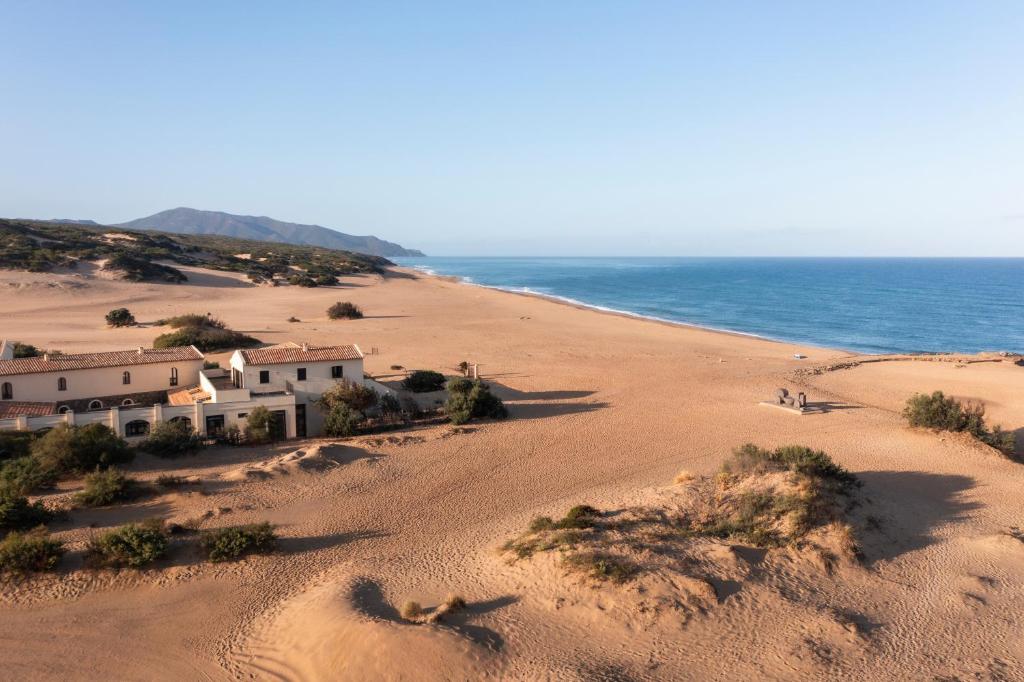
A former mining warehouse transformed into a 28-room retreat, alone between the monumental dunes of Sardinia’s Costa Verde and the Mediterranean.
Why DNA Hotels Loves It
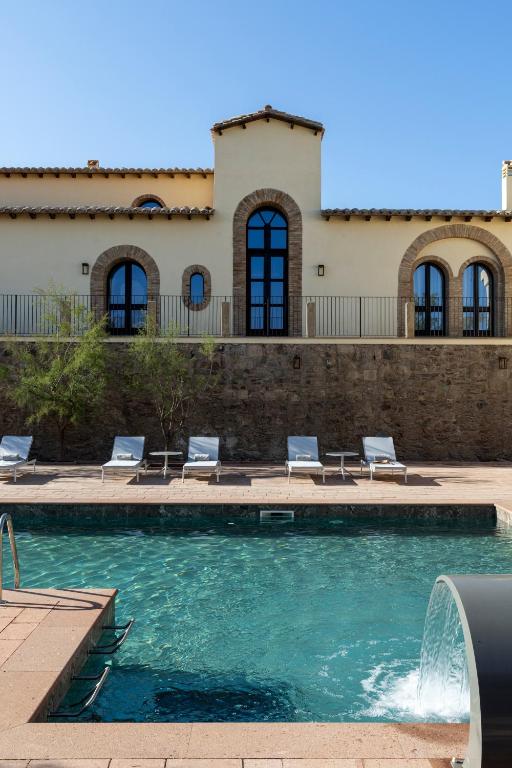
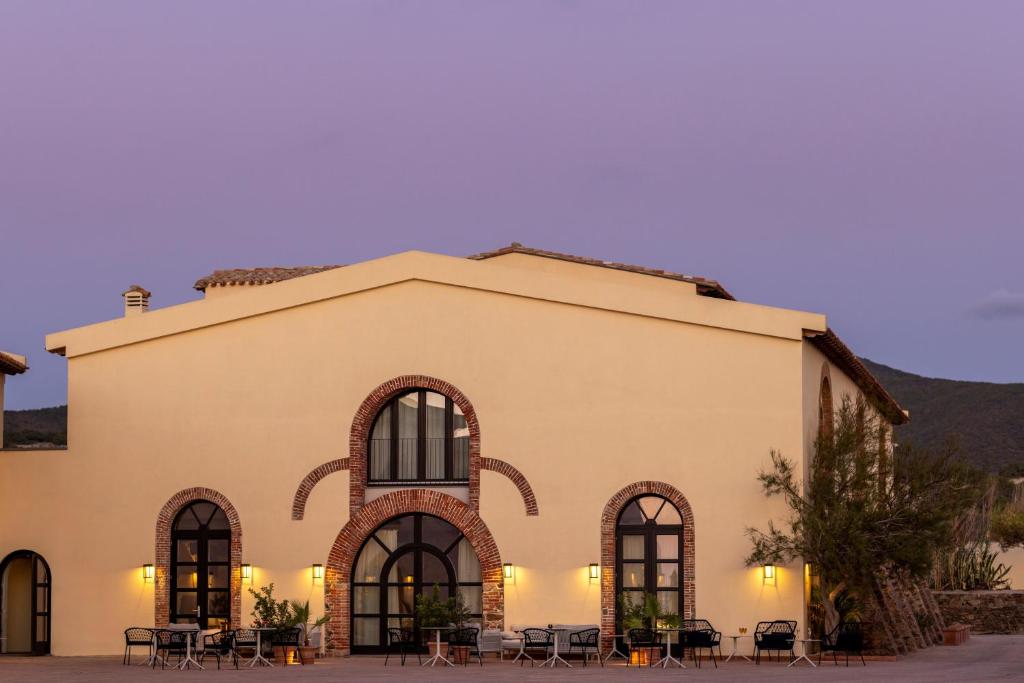
● A remarkable 19th-century mining warehouse given new life while retaining its massive stone walls, weathered rafters, flagstone floors and original cart tunnel.
● Sardinian craftsmanship runs throughout, from Orosei marble and handwoven textiles to cast iron, wicker and bespoke furniture, complemented by specially commissioned contemporary art.
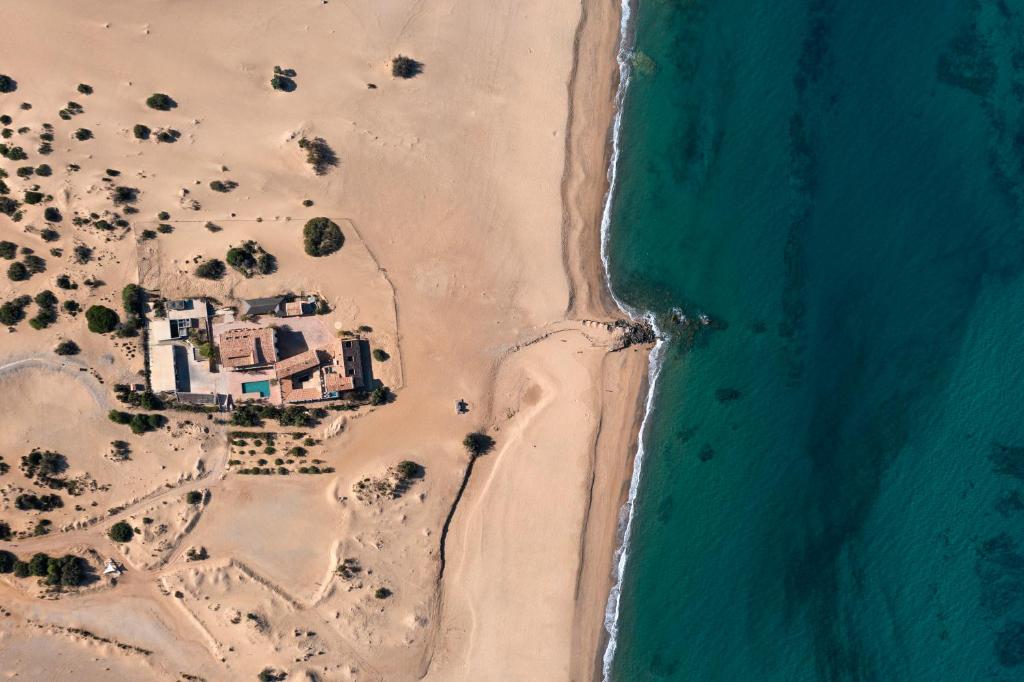
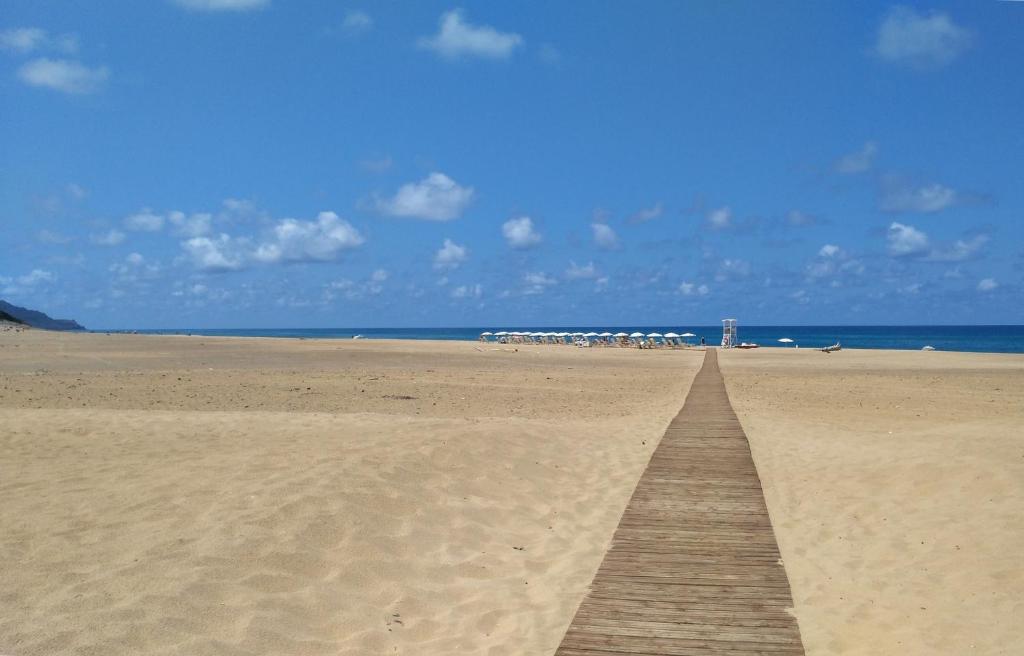
● The setting is extraordinary: the only hotel on this wild stretch of the Costa Verde, with dunes rising behind it and miles of largely untouched beach directly outside.
The Hotel at the End of the Road
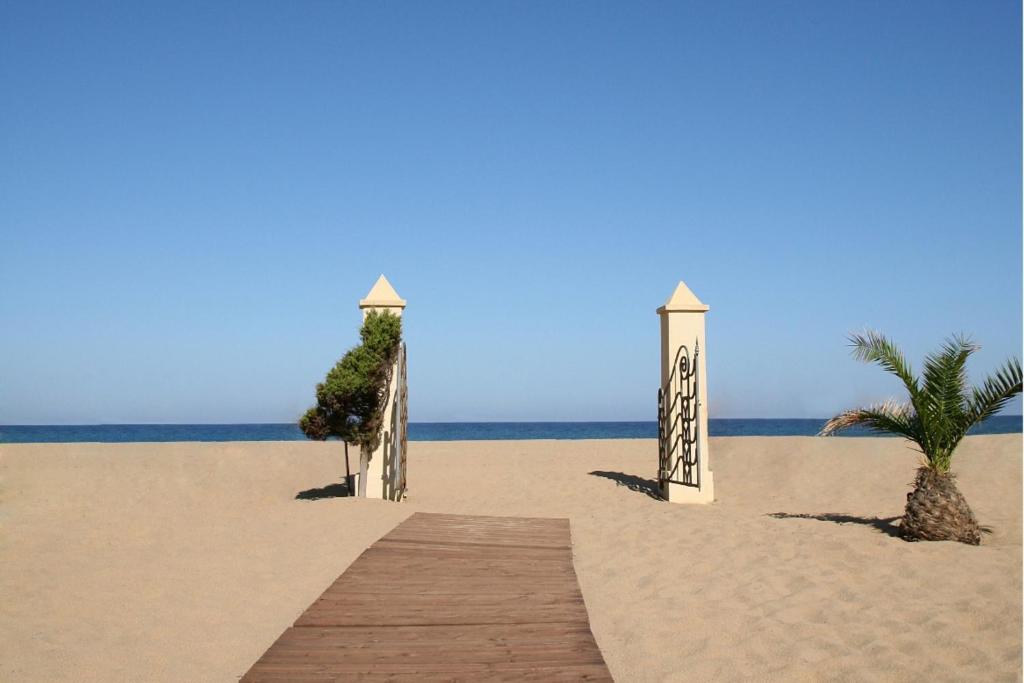
Getting to Le Dune Piscinas is part of the story. The road leaves conventional Sardinia behind and winds through the abandoned mining landscape of Ingurtosu, past ruined workers’ buildings and industrial relics slowly being reclaimed by vegetation. Eventually even the asphalt disappears. Then the dunes appear. Rising dramatically behind an almost empty Mediterranean beach, the Piscinas dune system creates a landscape that feels closer to North Africa than the polished resorts associated with much of Sardinia. And sitting alone between sand and sea is Le Dune Piscinas.
From Minerals to Five Stars
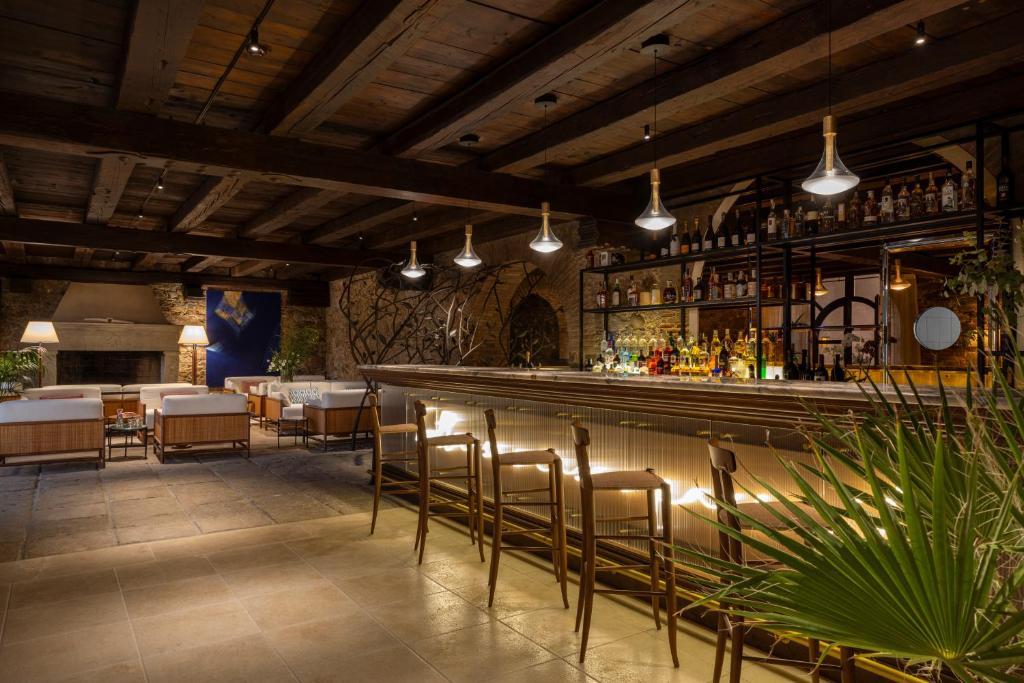
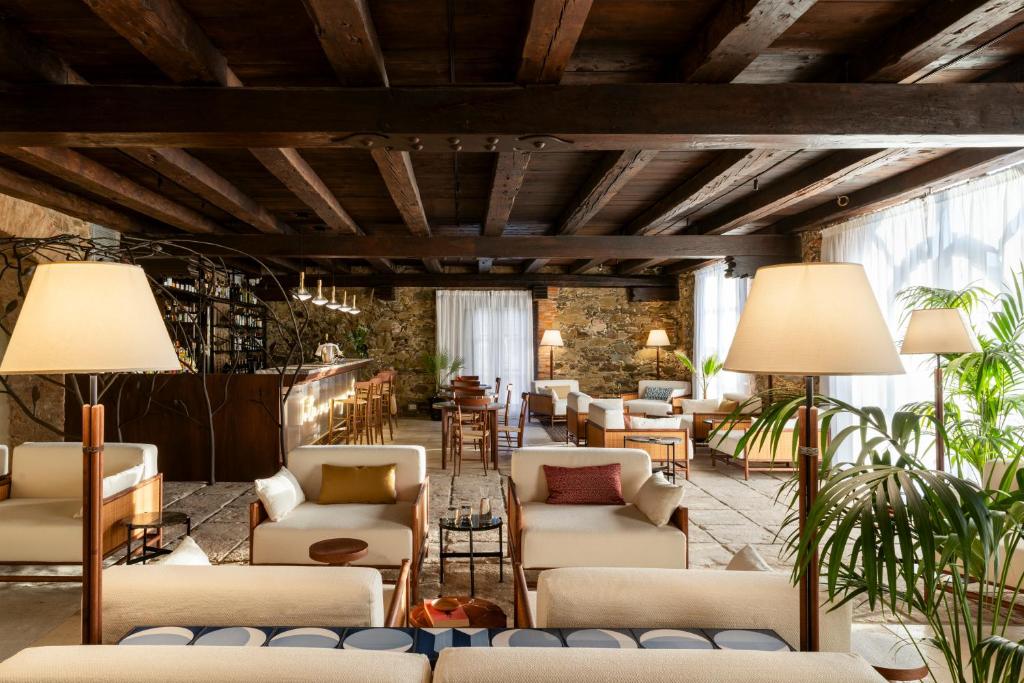
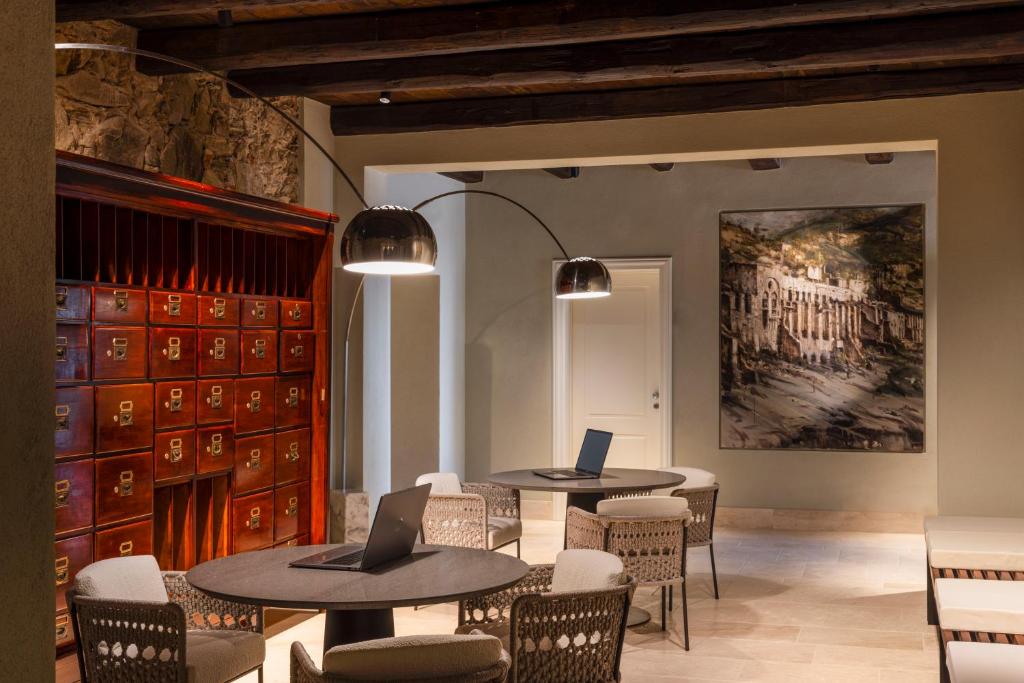
The building wasn’t created for tourism. It was once a storage depot serving Sardinia’s mining industry, connected to the mines by tracks along which minerals were transported towards the coast. Sand has long since swallowed much of that infrastructure, but the hotel deliberately keeps its industrial history visible. Following an extensive three-year renovation, the property reopened as a five-star retreat with just 28 rooms and suites. The transformation hasn’t attempted to erase what came before. Chunky stone walls remain exposed. Old timber rafters survive overhead. Flagstone floors and a monumental stone fireplace anchor the American bar, occupying what was once the warehouse itself. Even the former mining-cart tunnel has become part of the arrival experience. German artist Moritz Waldemeyer created flickering LED installations for the passage, turning a piece of industrial infrastructure into an atmospheric transition between the blinding Sardinian landscape and the darker interiors beyond.
Sardinia in the Details
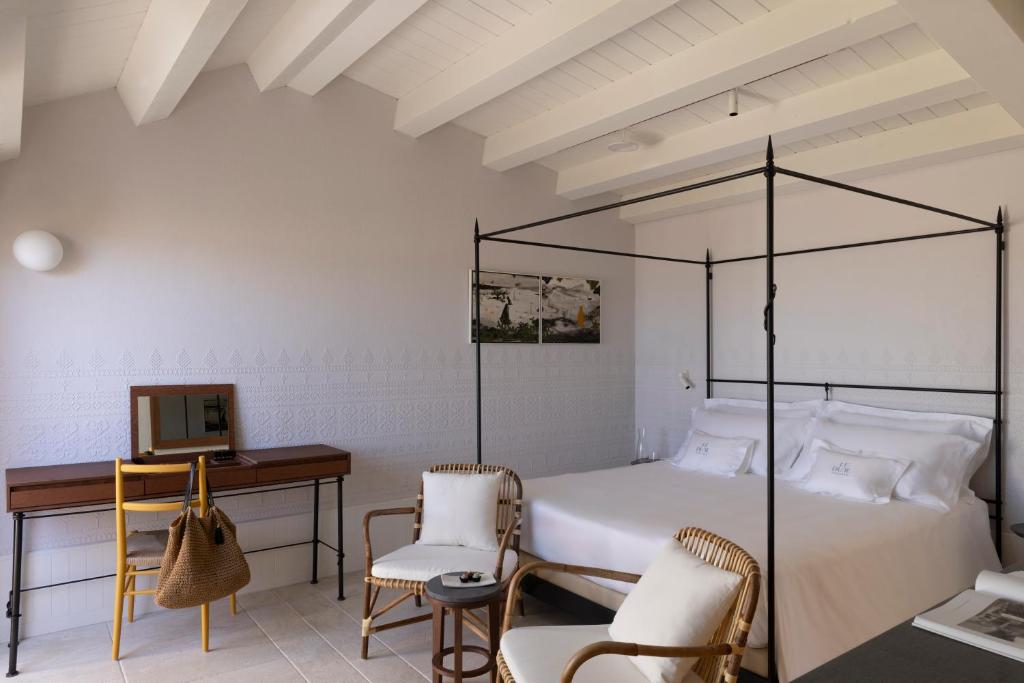
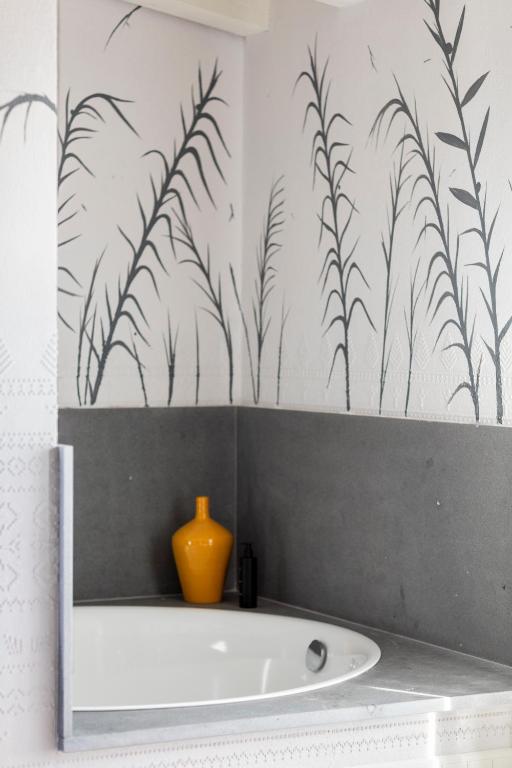
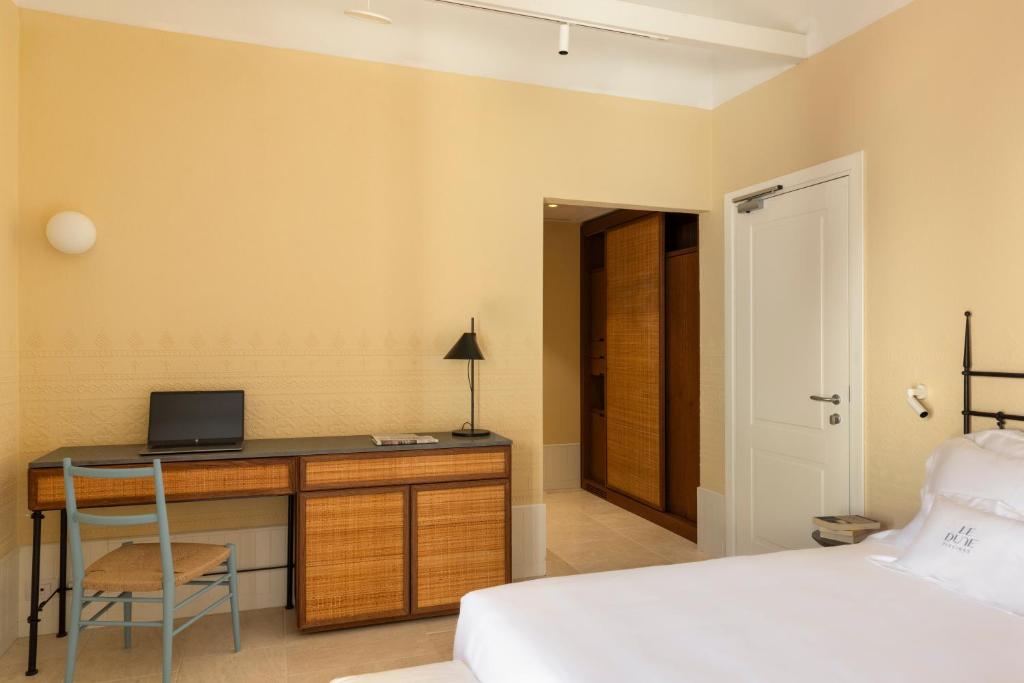
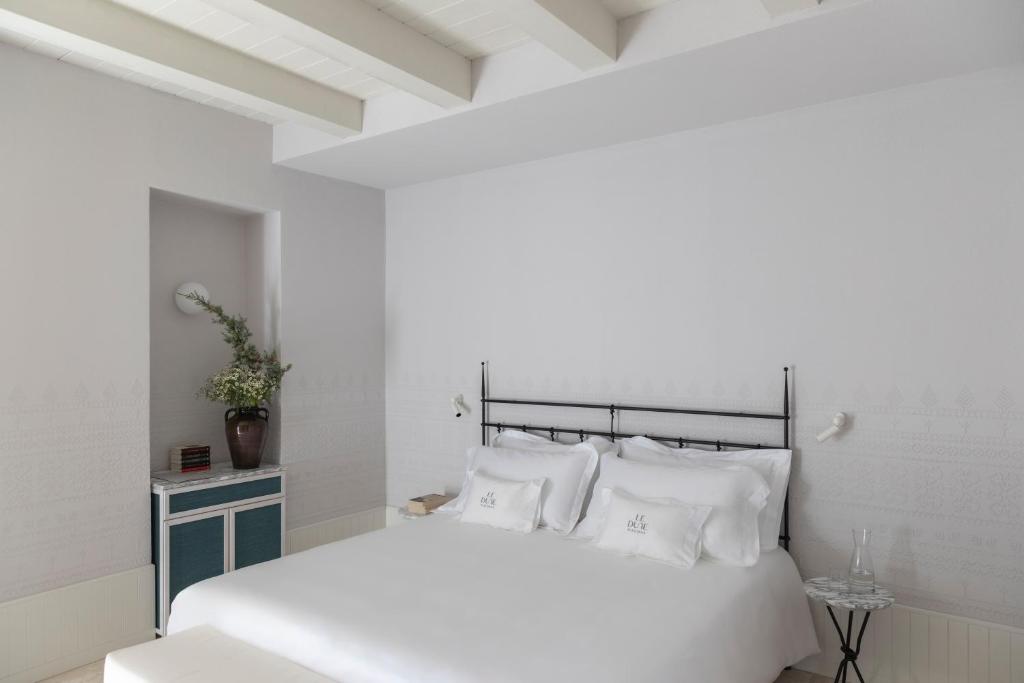
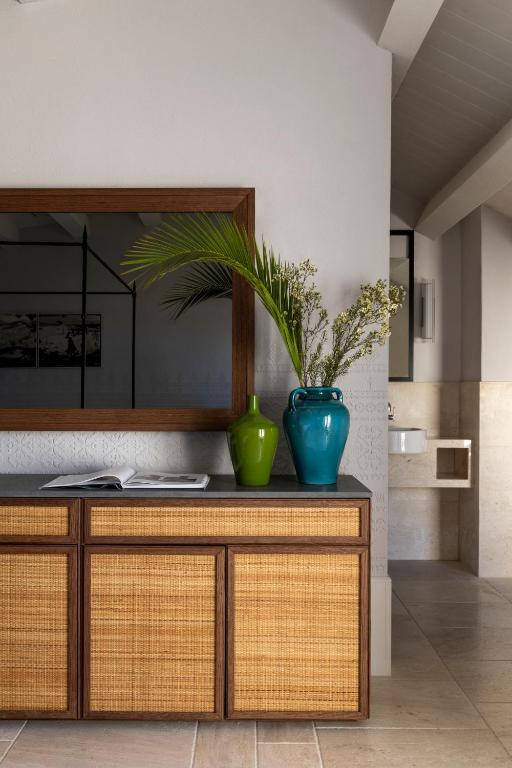
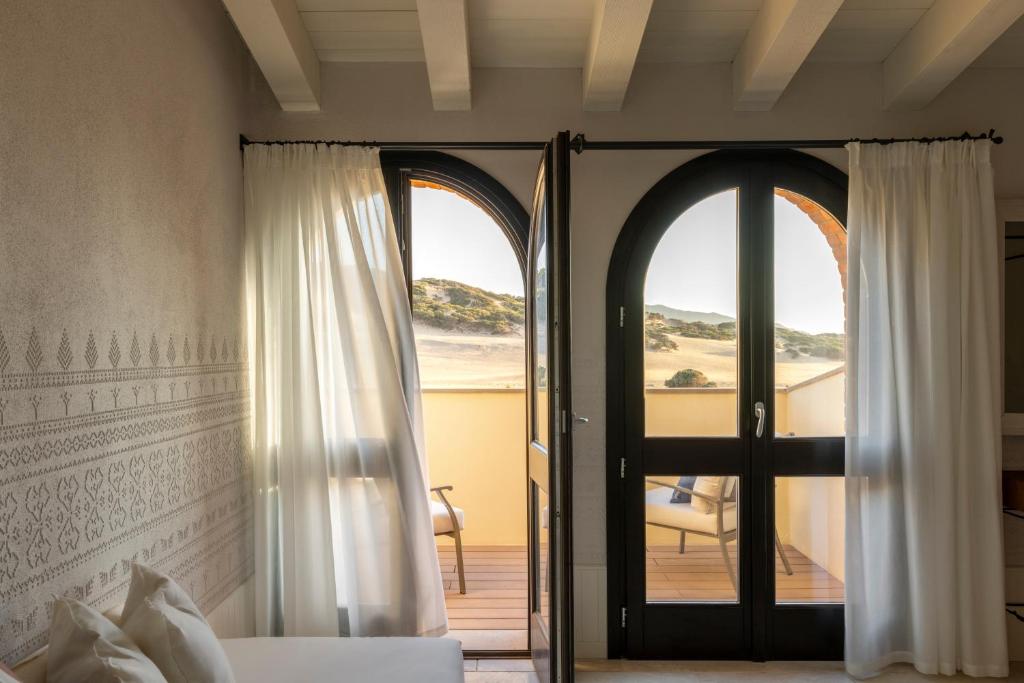
The new design introduces refinement without disconnecting the building from its surroundings. Sand, chalky white and pale aqua echo the colours outside, while bespoke furniture combines bleached timber, wicker, rope and cast iron. Local materials matter. Bathroom floors use Orosei marble from Sardinian quarries, while geometric bas-relief walls reference traditional island motifs. Textiles by Sardinian weaver Maria Antonia Urru bring another layer of local craft to the interiors, and a metal installation by artist Francesca Frau marks the passage into the American bar. It feels contemporary, but never generically Mediterranean. This is unmistakably Sardinian.
Rooms Between Dunes and Sea
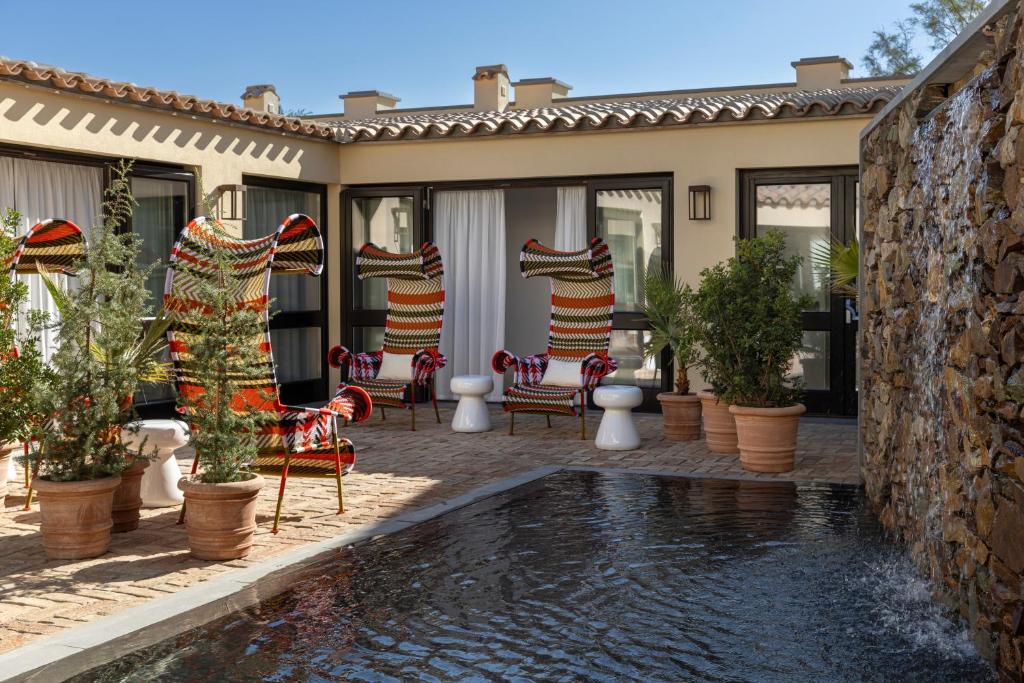
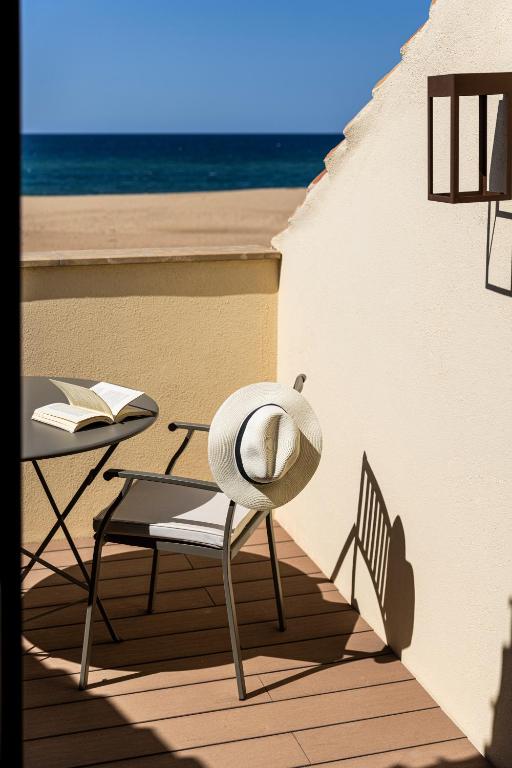
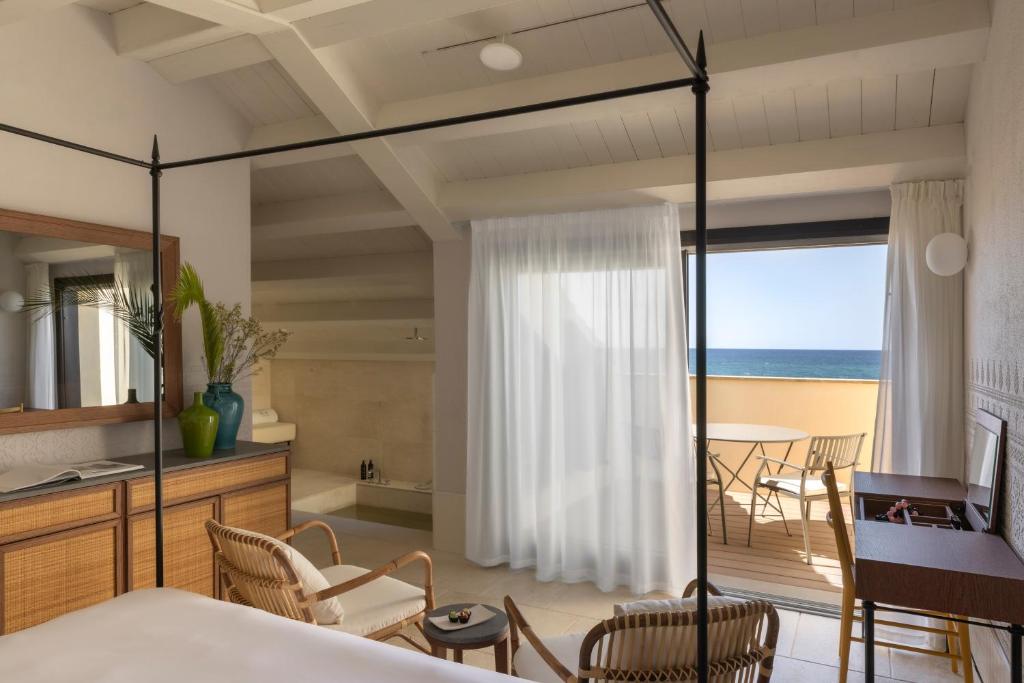
The 28 rooms — including nine suites — continue this elemental approach. Exposed beams, pale surfaces and handcrafted furniture create interiors that remain deliberately quiet, allowing the landscape to dominate. Many of the upper-floor rooms add balconies or small terraces overlooking the dunes and Mediterranean. At night, you can hear the waves. There are technological luxuries, too — televisions disappear into mirrors and integrated sound systems are discreetly incorporated — but nothing is allowed to compete visually with what lies outside. Here, the view is the decoration.
The American Bar
The hotel’s most atmospheric interior may be its American bar, I Gechi. Original stone walls, enormous flagstones and the warehouse’s fireplace give the room an almost primitive solidity, softened by contemporary furniture, Sardinian fabrics and pools of warm light. Doors open directly onto the terrace. This is where the hotel’s industrial past and its new identity come closest together: a space substantial enough to remember what the building once was, but comfortable enough to encourage you to stay for another Negroni. Outside, there is little beyond dunes, stars and the sound of the sea.
Dinner at the Edge of Sardinia
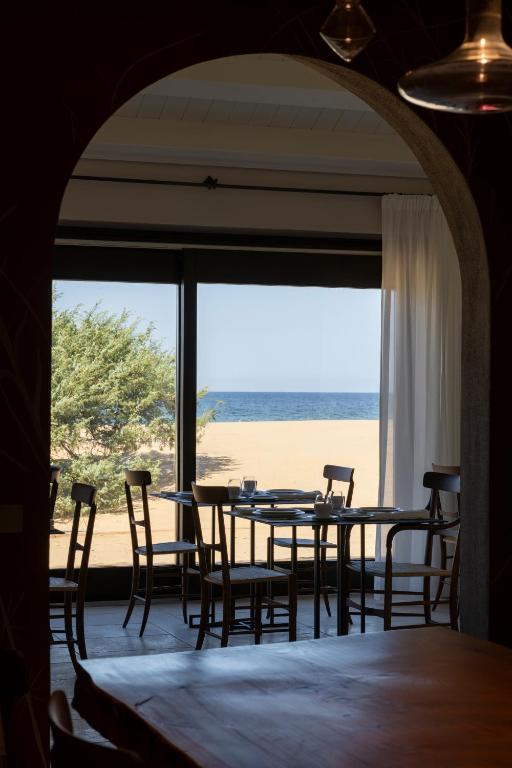
For somewhere so remote, food is taken seriously. Michelin-starred chef Fabio Ciervo oversees the hotel’s restaurants, building his menus around Sardinian ingredients and Mediterranean seafood. At Ginepro, the atmosphere remains relaxed, with a terrace opening almost directly onto the sand. Rosso Tramonto takes things further with tasting menus and wine pairings, while Sardinian staples such as fregola, pane carasau and Carloforte tuna keep the cooking connected to the island. There is something wonderfully incongruous about finding ambitious food here. Outside the restaurant windows there is no town, promenade or harbour. Just sand and sea.
Luxury Without Noise
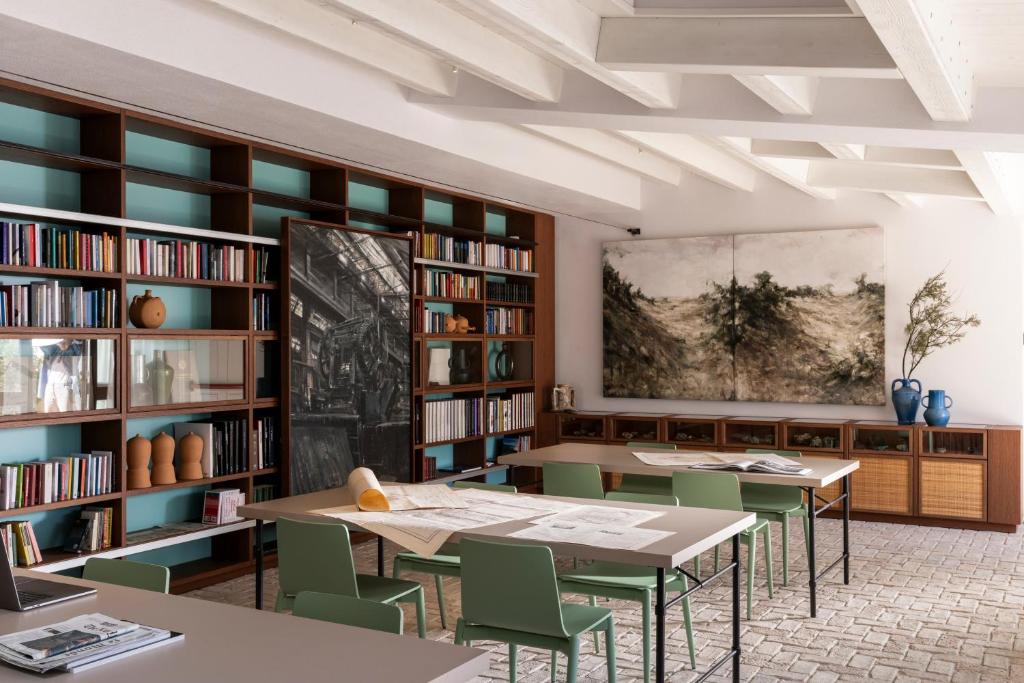
Le Dune Piscinas understands that its greatest asset is silence. Even its outdoor cinema is designed around it: guests watch films beneath a wooden pergola using individual headphones, preserving the stillness for everyone else. There’s also a small spa, sauna, gym, swimming pool, yoga sessions and a library devoted largely to Sardinian culture. But none is really the main attraction. Walk out of the hotel and you are immediately on one of Sardinia’s wildest beaches. Turn around and immense dunes rise behind you, dotted with Mediterranean scrub and remnants of the mining landscape. There are few places left around the Mediterranean where a five-star hotel can feel this isolated.
Why It Works
Le Dune Piscinas could easily have become another polished beach resort. Instead, its designers allowed the building’s scars, Sardinia’s craft traditions and the extraordinary Costa Verde landscape to define what luxury means here. The mining warehouse remains a mining warehouse. The dunes remain wild. The beach remains largely empty. The luxury comes from having access to all of it. Le Dune Piscinas is a rare example of a hotel becoming more sophisticated without becoming less authentic — transforming an abandoned piece of Sardinia’s industrial history into a deeply contemporary retreat while leaving the wildness around it almost entirely alone.