Else Kuala Lumpur | Malaysia
A 1930s Art Deco landmark transformed into a deeply atmospheric retreat above Chinatown
Why DNA Hotels Loves It
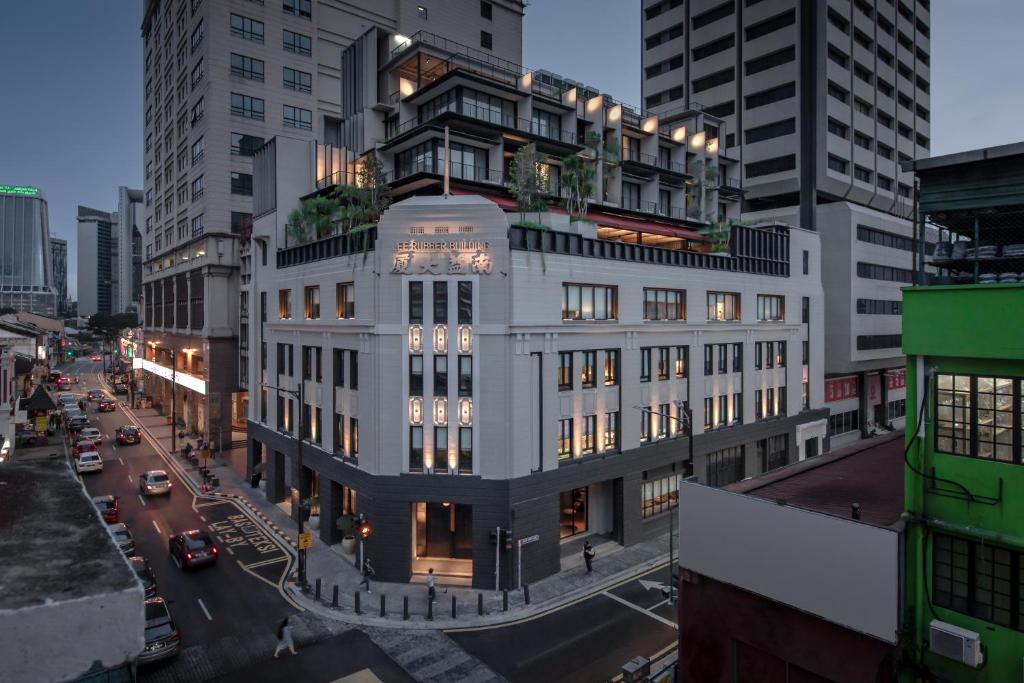
● The historic Lee Rubber Building has been restored with remarkable sensitivity, preserving its Art Deco identity while introducing a calm contemporary addition above.
● Studio Bikin’s interiors combine Malaysian craft, natural materials, regional art, and beautifully tactile design without reducing the experience to heritage nostalgia.
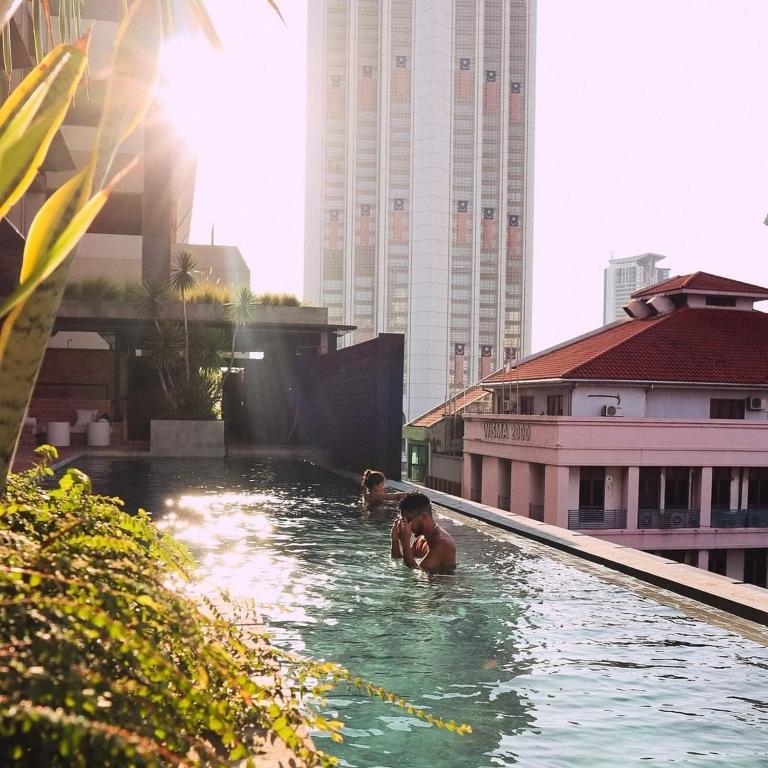
● The saltwater pool, destination restaurants, and meditative atmosphere create a rare sense of calm in one of Kuala Lumpur’s most energetic neighbourhoods.
An Art Deco Landmark, Awake Again
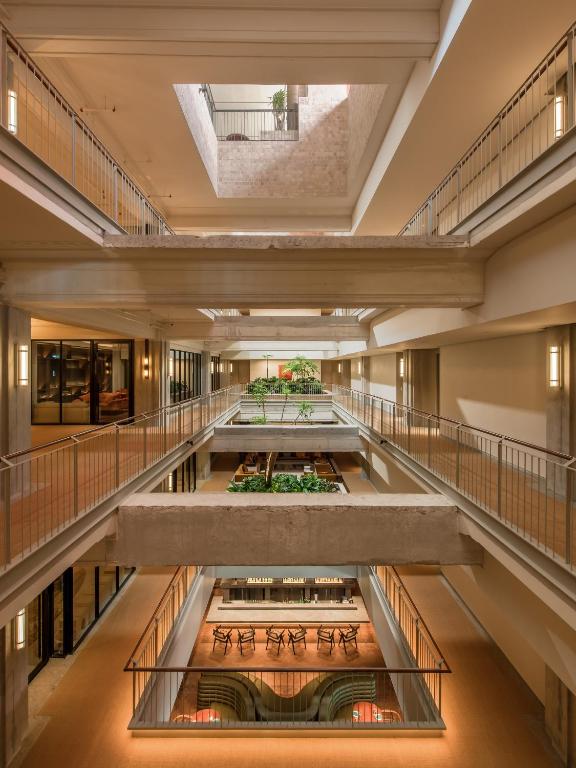
Kuala Lumpur is not short of new towers. Else chose something with a past. The hotel occupies the Lee Rubber Building, a 1930s Art Deco landmark in Chinatown that was once among the most prominent structures in the city. Over the decades, it served multiple lives, including commercial and wartime uses, before becoming widely known as the home of a much-loved bookshop. Today, its next chapter feels both respectful and confidently new. The original façade remains the architectural anchor, while two restrained contemporary floors rise above it in a composition of fins, columns, and clean geometry. History is preserved. But it is not frozen.
A Malaysian Story, Told Through Design
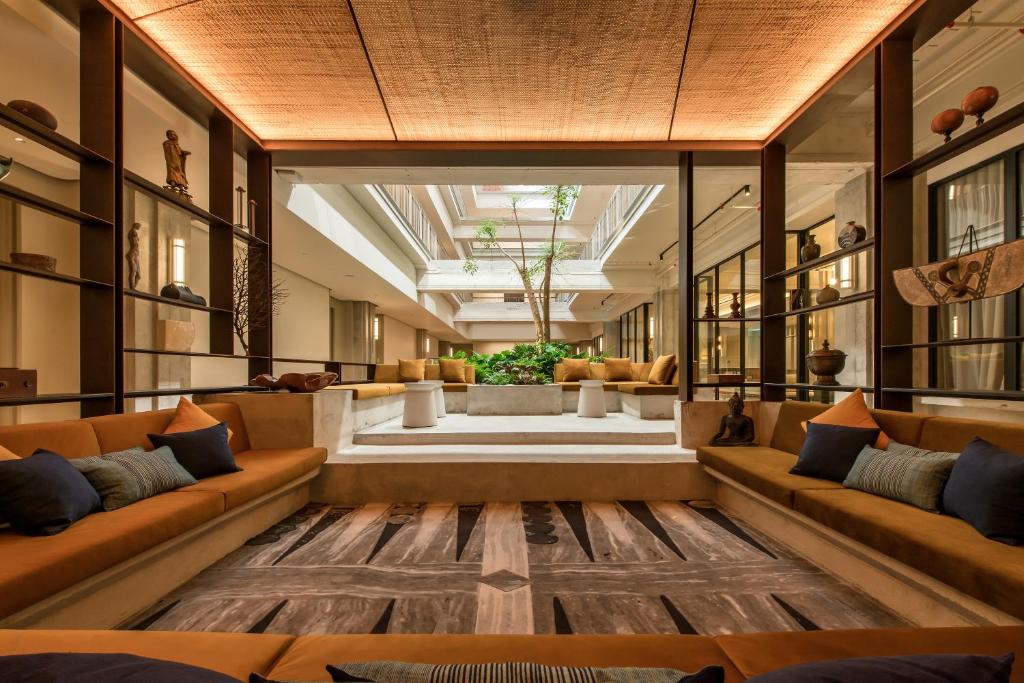
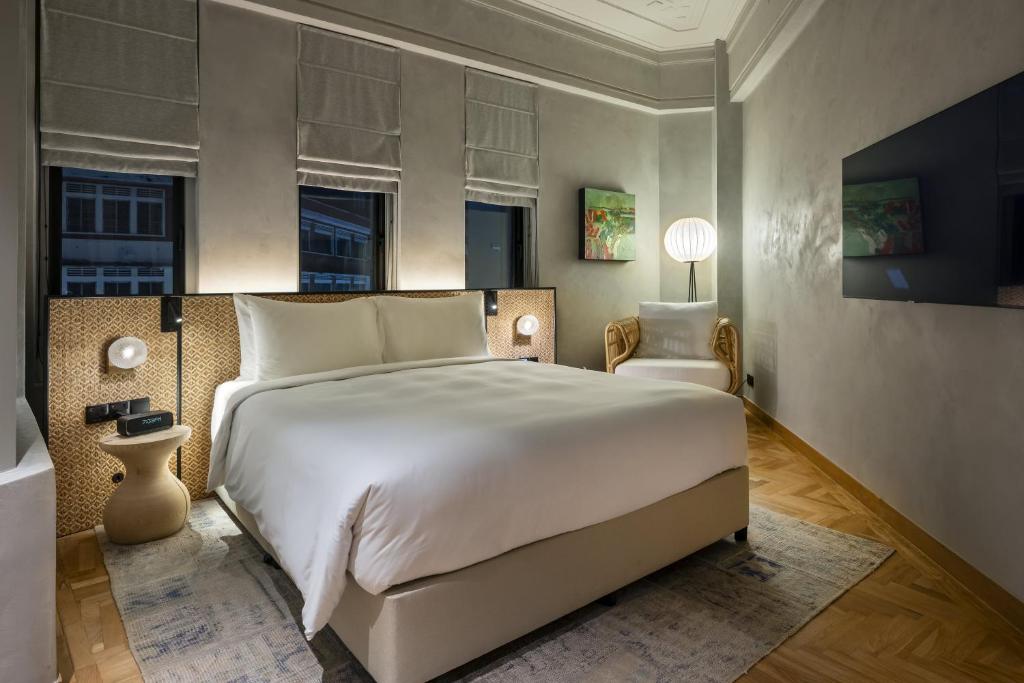
Founders Justin Chen and Javier Perez worked with local practice Studio Bikin to create interiors that feel grounded in Kuala Lumpur rather than imported from elsewhere. Rattan, timber, woven textiles, jute, brushed metal, stone, and earthy tones form the material vocabulary. Regional craft appears throughout, including handwoven pieces connected to Sarawak traditions, custom rugs, sculptural lighting, and work by contemporary Malaysian artists. The result is warm and layered. Nothing feels overdesigned. Objects are given space. Materials are allowed to age. Art feels integrated rather than displayed for effect. Else is globally sophisticated, but its identity remains unmistakably local.
Calm Above Chinatown
Step inside and the neighbourhood seems to fall away. Outside, Chinatown is all markets, traffic, food stalls, neon, and constant movement. Inside, Else slows everything down. The arrival spaces feel more like a private salon than a conventional lobby. Lighting is low and flattering. Furniture invites lingering. Circulation unfolds gradually through a building that alternates between social energy and near silence. That contrast becomes one of the hotel’s defining pleasures. Else doesn’t ignore Chinatown’s intensity. It creates a refuge within it.
Rooms for Slowing Down
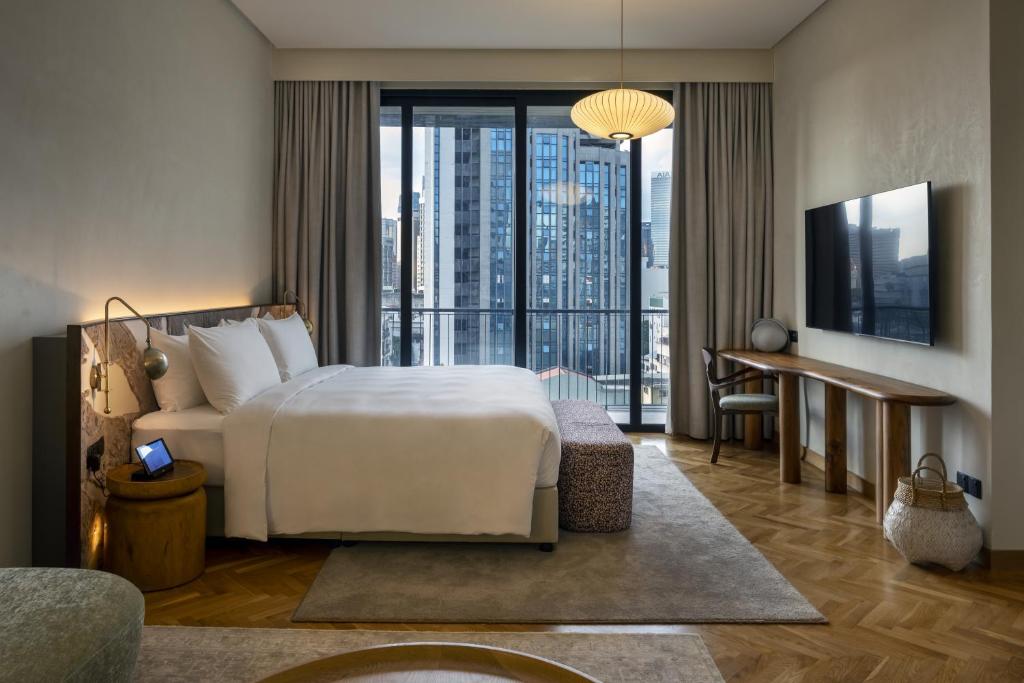
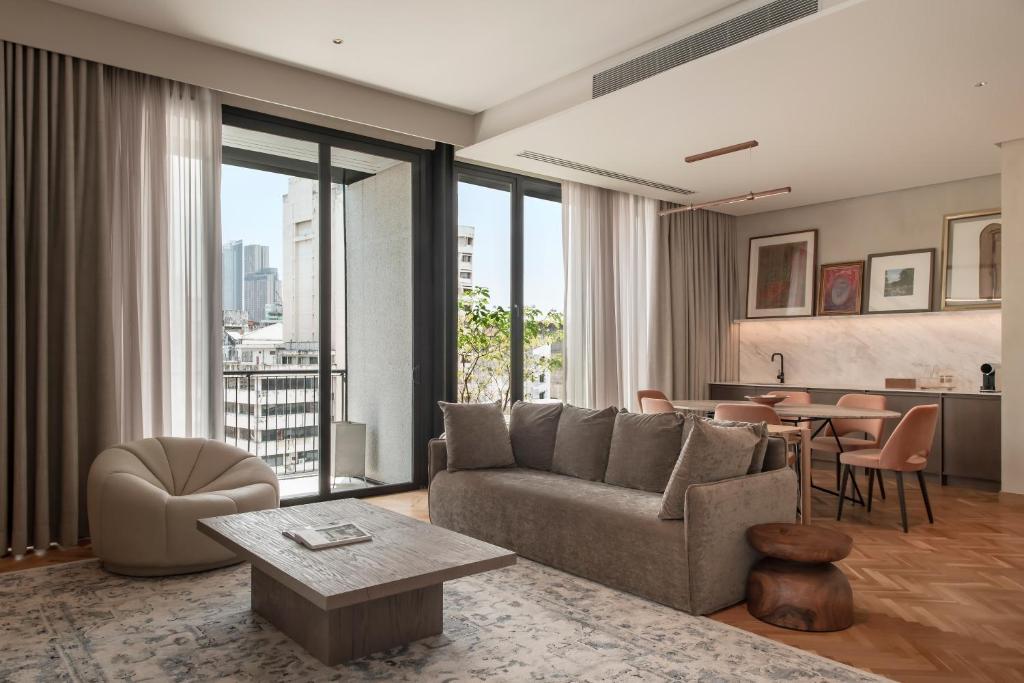
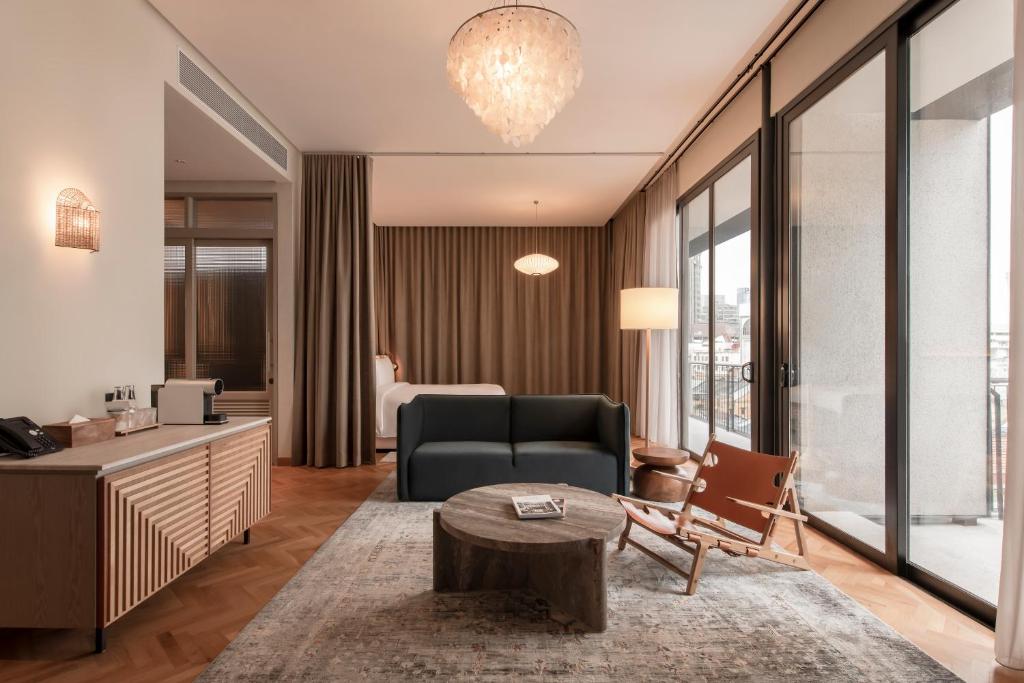
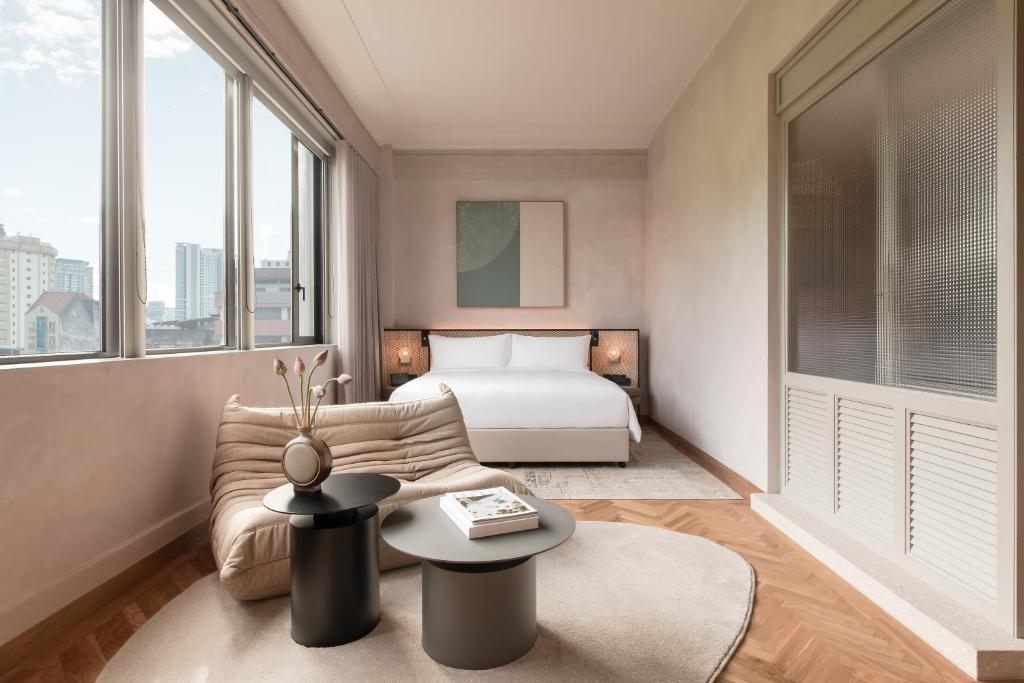
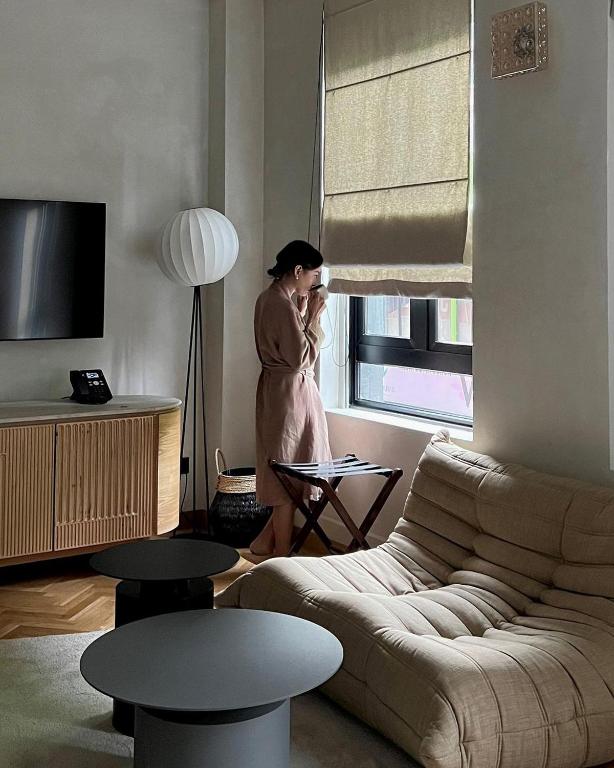
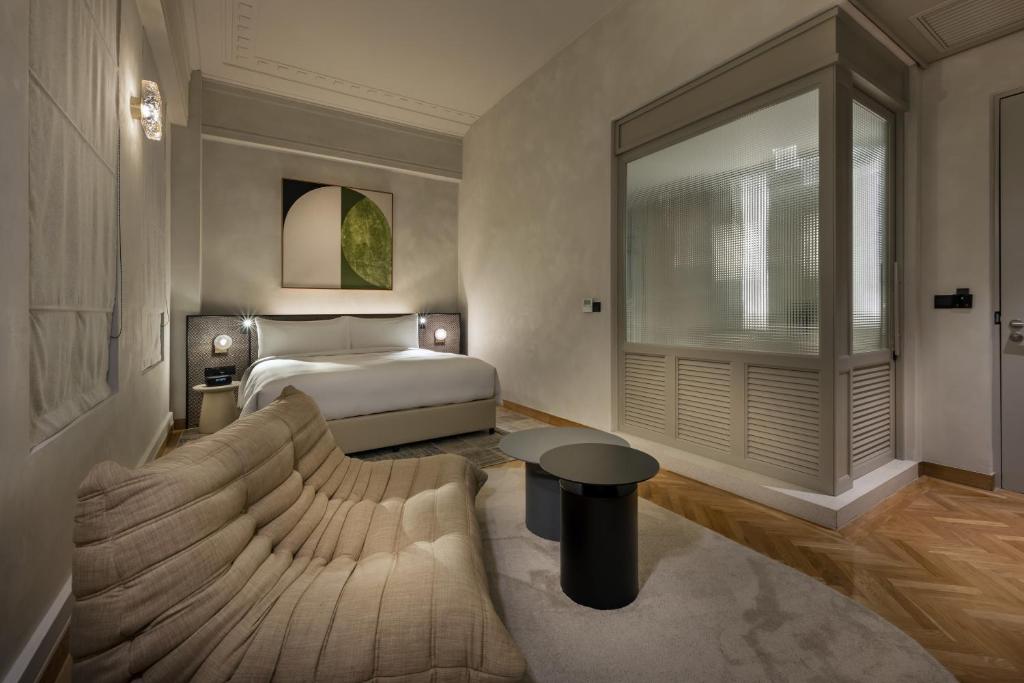
The guestrooms and suites are organized around ideas of pause and restoration, with names such as Mantra, Sanctuary, and Sutra reinforcing the hotel’s quieter philosophy. Natural textures, handcrafted headboards, layered rugs, sculptural furniture, handmade ceramics, and soft lighting create spaces that feel personal rather than staged. The colour palette remains warm and grounded, allowing the views and materials to do most of the work. Some rooms look across the dense historical fabric of Chinatown, others toward Kuala Lumpur’s newer skyline. The Else Suite brings both together from the upper levels, offering a more expansive perspective over the city. These are rooms designed less for display than for decompression.
A Pool Above the City
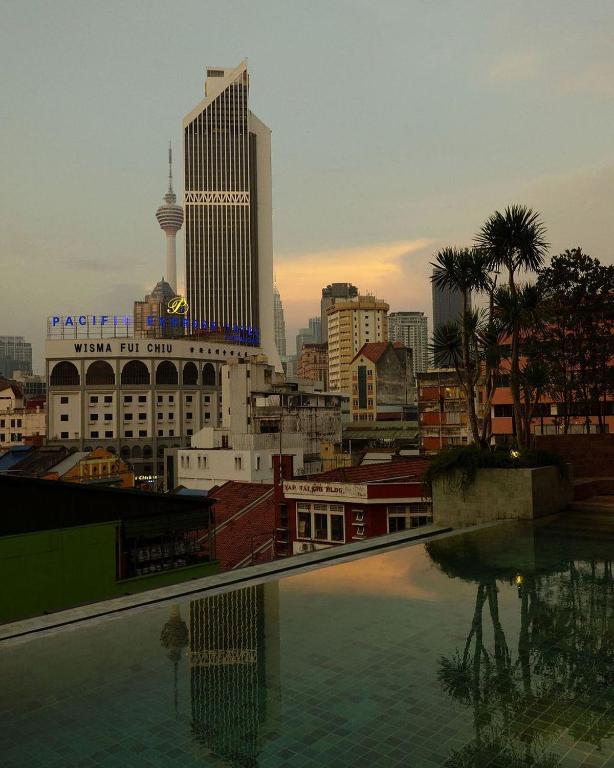
The fourth-floor saltwater infinity pool is one of Else’s strongest spaces. Set within a brick-lined terrace, it frames a layered Kuala Lumpur skyline of old shophouses, concrete towers, contemporary high-rises, and distant neon. Daybeds and cabanas encourage long afternoons, while the Pool House occasionally shifts the mood with music and performances. Even then, the atmosphere rarely feels overproduced. The pool remains what the entire hotel does best: a place where the city is present, but held at a distance.
Food with a Social Pulse
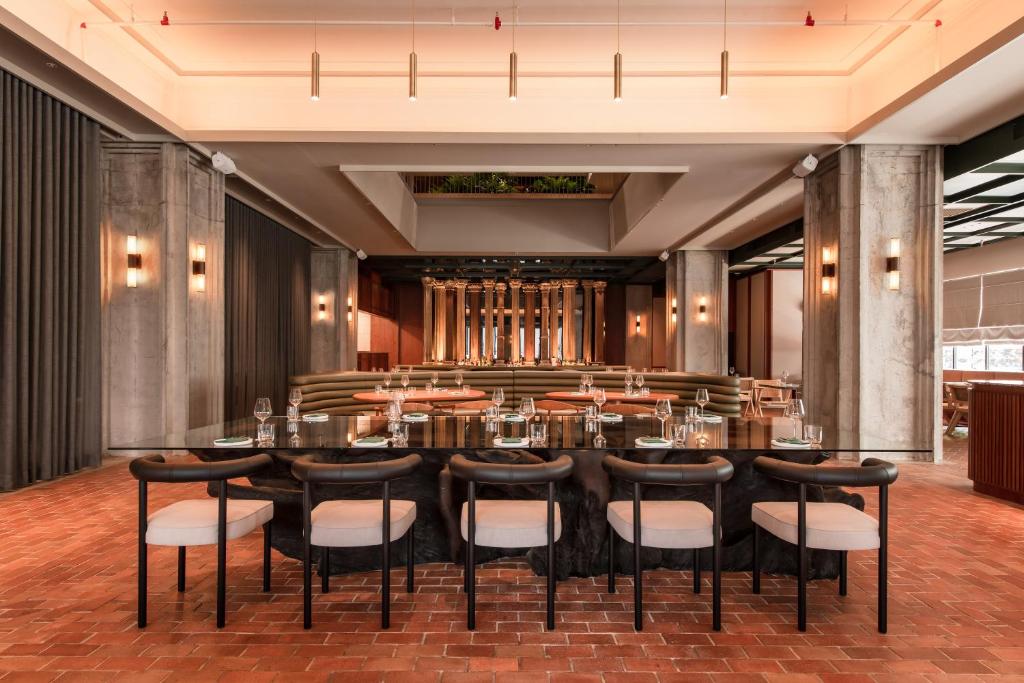
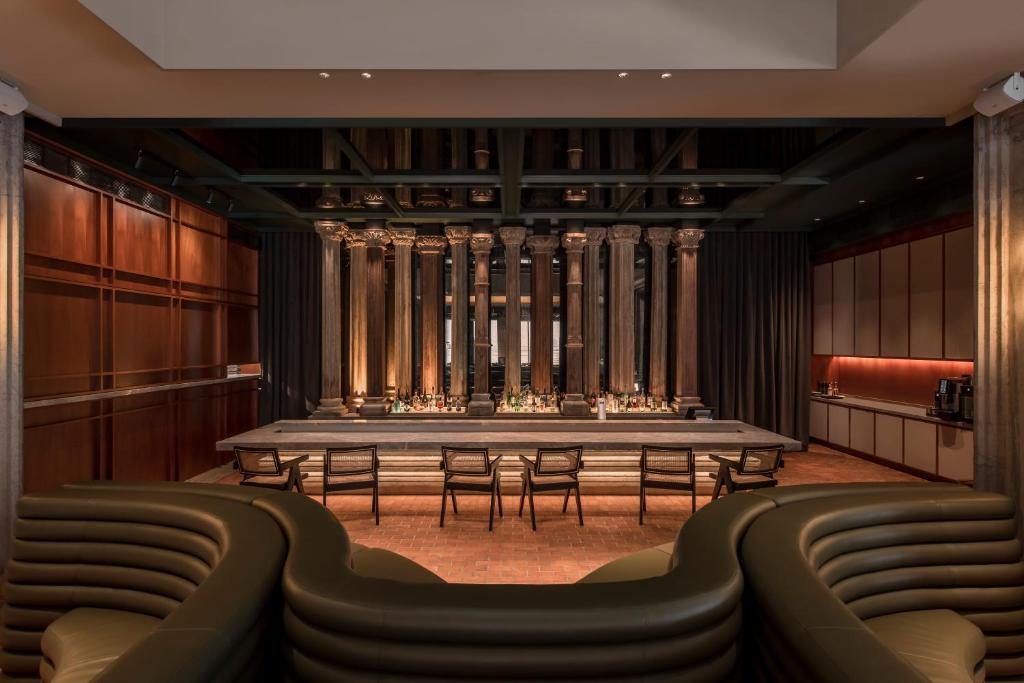
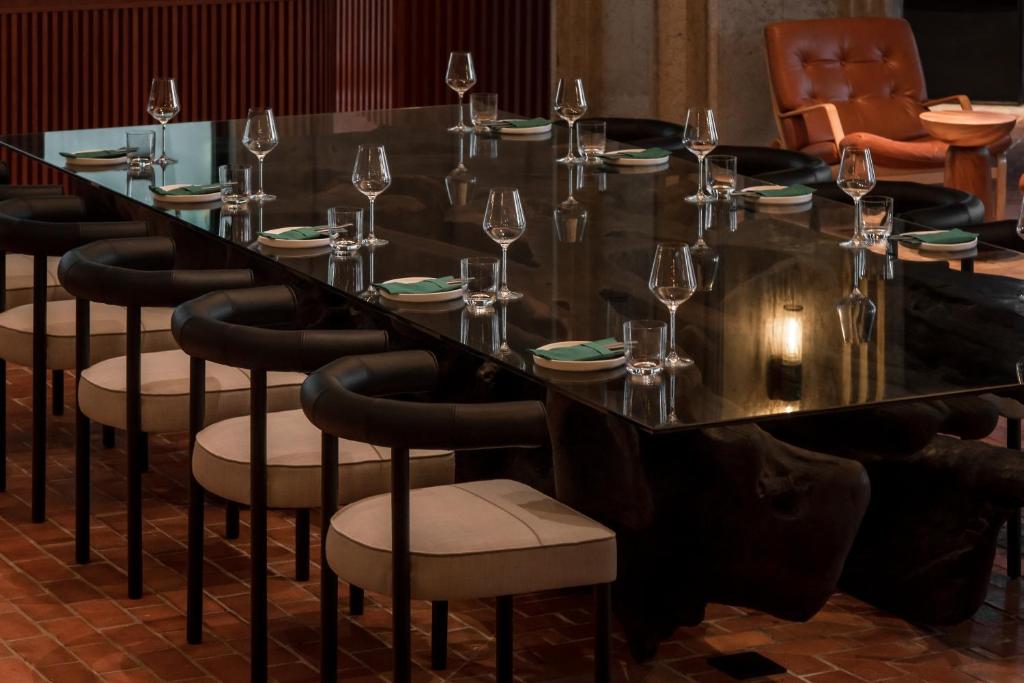
Dining brings more energy into the building. Raw Kitchen Hall is open, communal, and lively, with globally influenced dishes drawing on Asian, Latin American, and contemporary Malaysian flavours. It feels casual without becoming careless and social without becoming forced. Yellow Fin Horse offers a more intimate counterpoint, focusing on seafood, small plates, smoke, and Mediterranean influences under chef Jun Wong. Natural wines, strong cocktails, and locally sourced ingredients run through both experiences. The food is not separate from the hotel’s identity. It is one of the ways Else connects back to the city around it.
Wellness Without the Performance
Else avoids the predictable urban spa formula. Instead of an extensive treatment menu, the hotel focuses on quieter forms of restoration: sensory deprivation pods, movement, stillness, water, and carefully designed spaces that allow guests to recover at their own pace. That approach feels aligned with the architecture. Nothing is overexplained. Nothing is pushed. The hotel simply creates the conditions for calm.
Why It Works
Else Kuala Lumpur succeeds because it understands that heritage and contemporary design do not need to compete. The Lee Rubber Building provides history, gravity, and architectural character; Studio Bikin adds warmth, craft, art, and a distinctly Malaysian point of view. The result is not a nostalgic restoration, but a living urban retreat with real cultural depth. Intimate, tactile, and beautifully composed, Else offers something rare in central Kuala Lumpur: a hotel that feels both fully connected to the city and completely removed from its noise.