Finca La Bobadilla – Sierra de Loja, Andalusia, Spain
An Andalusian village in miniature, reborn by Único Hotels with local craft, olive-grove living and a new culinary identity.
Why DNA Hotels Loves It
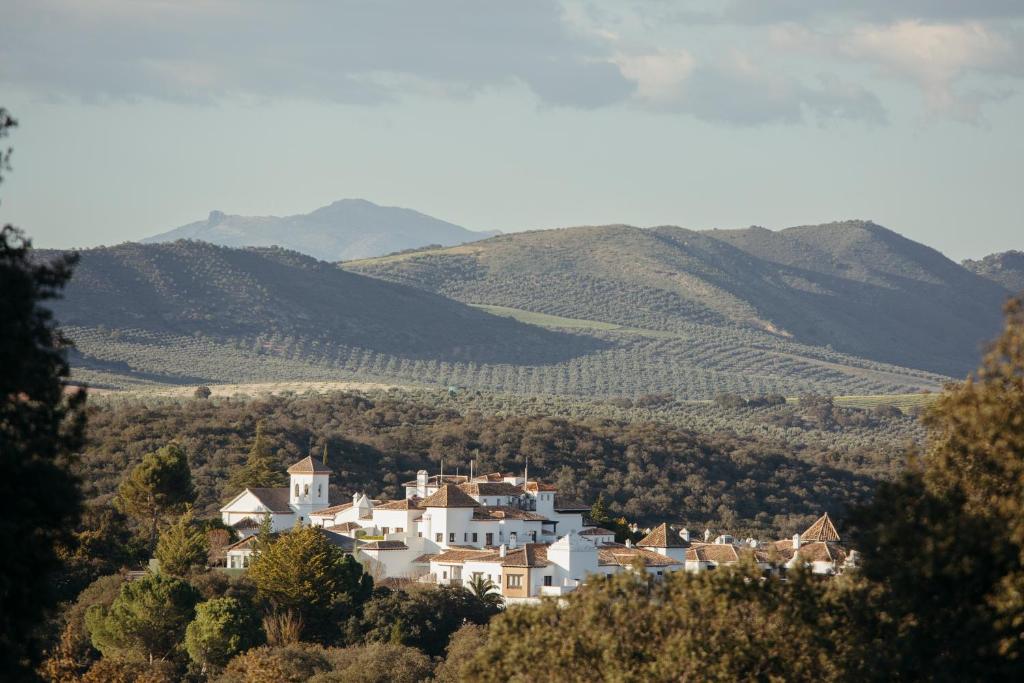
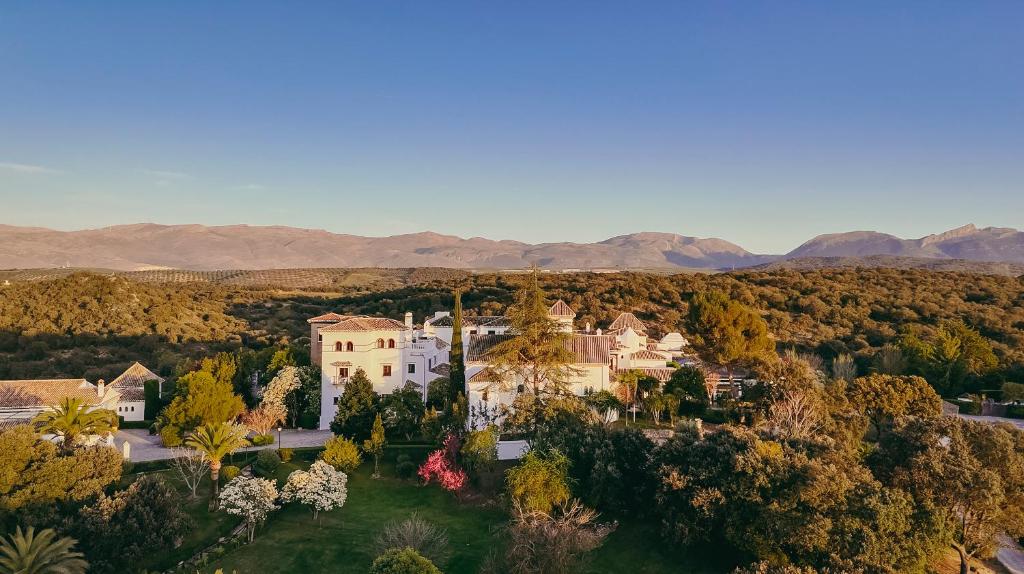
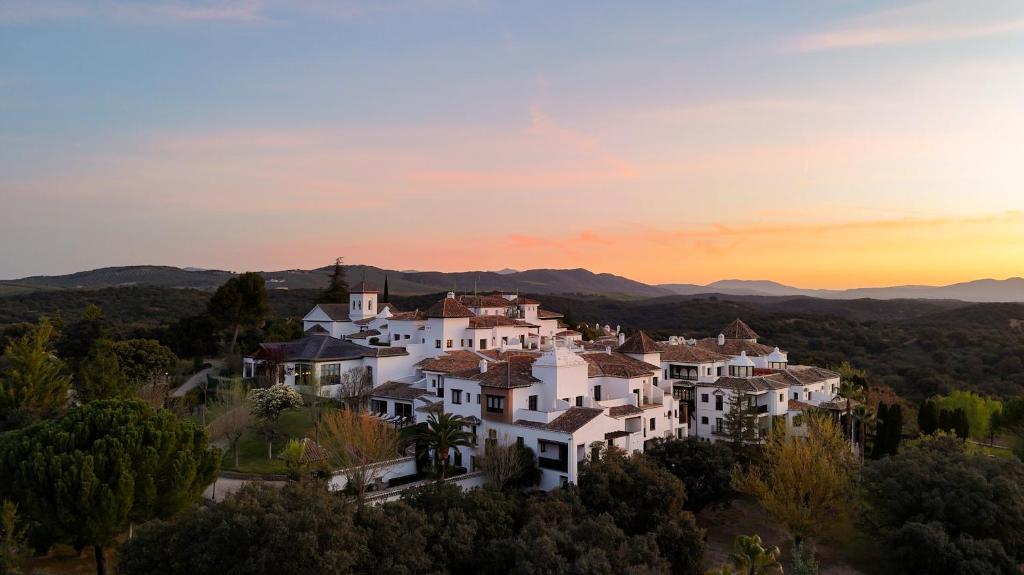
● A 73-room estate spread across 350 hectares of Mediterranean woodland and more than 2,000 ancient olive trees, conceived not as a conventional resort but as a whitewashed Andalusian village.
● Its 2026 transformation by Único Hotels, led by Pilar García-Nieto, replaces dated formality with wicker, raffia, rattan, timber, ceramics and handcrafted details deeply connected to Andalusia.
● Food has become a destination in itself, with two-Michelin-starred chef Óscar Velasco overseeing three restaurants built around local produce, regional recipes and the estate’s own olive oil.
An Andalusian Village, Reconsidered
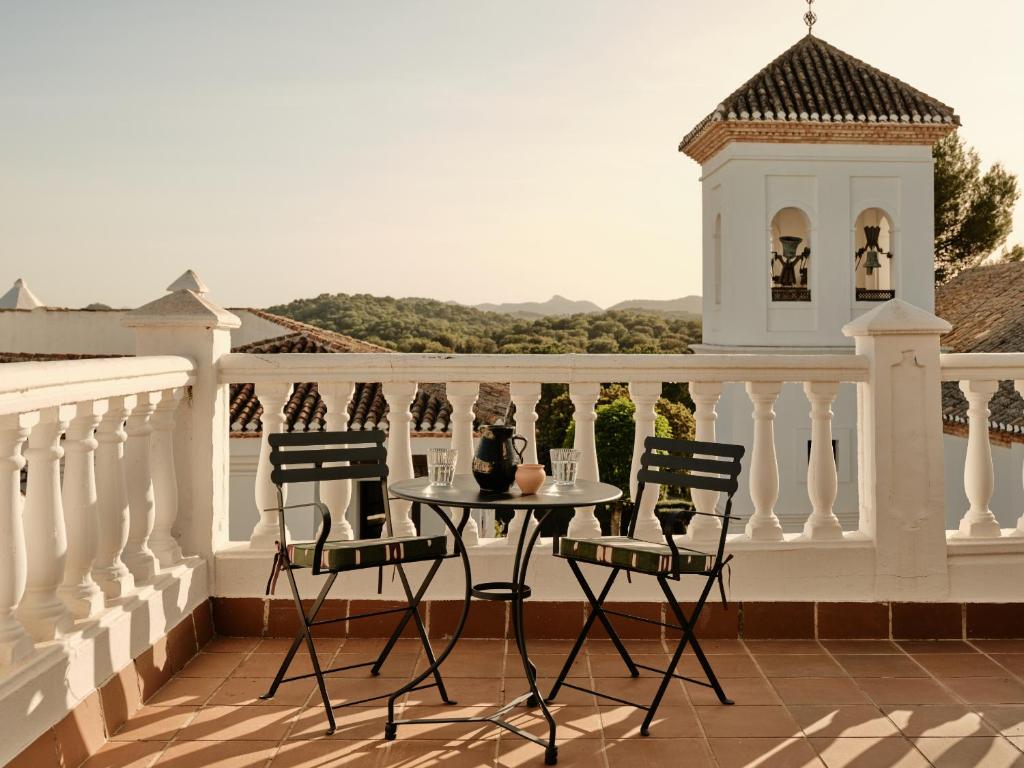
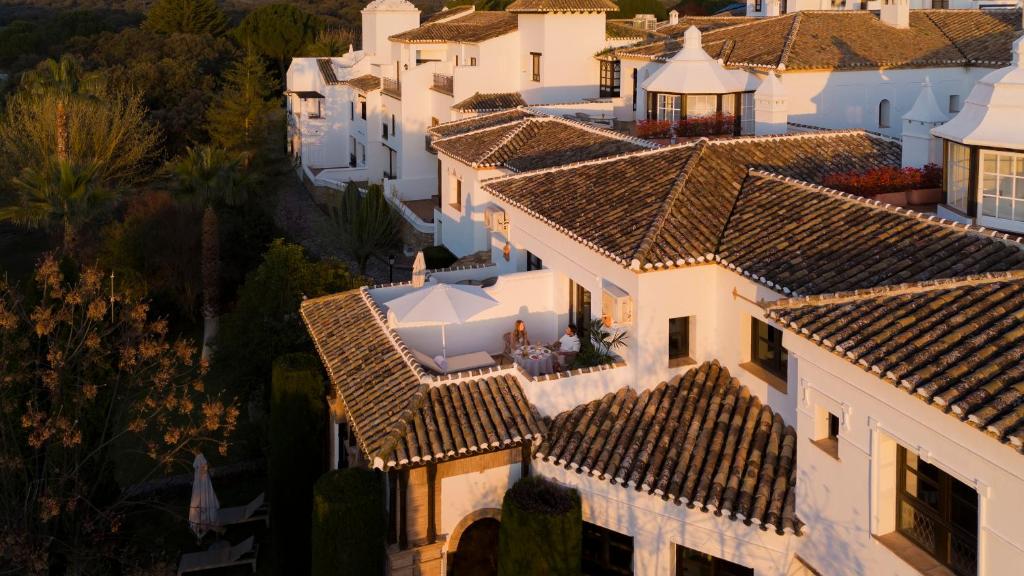
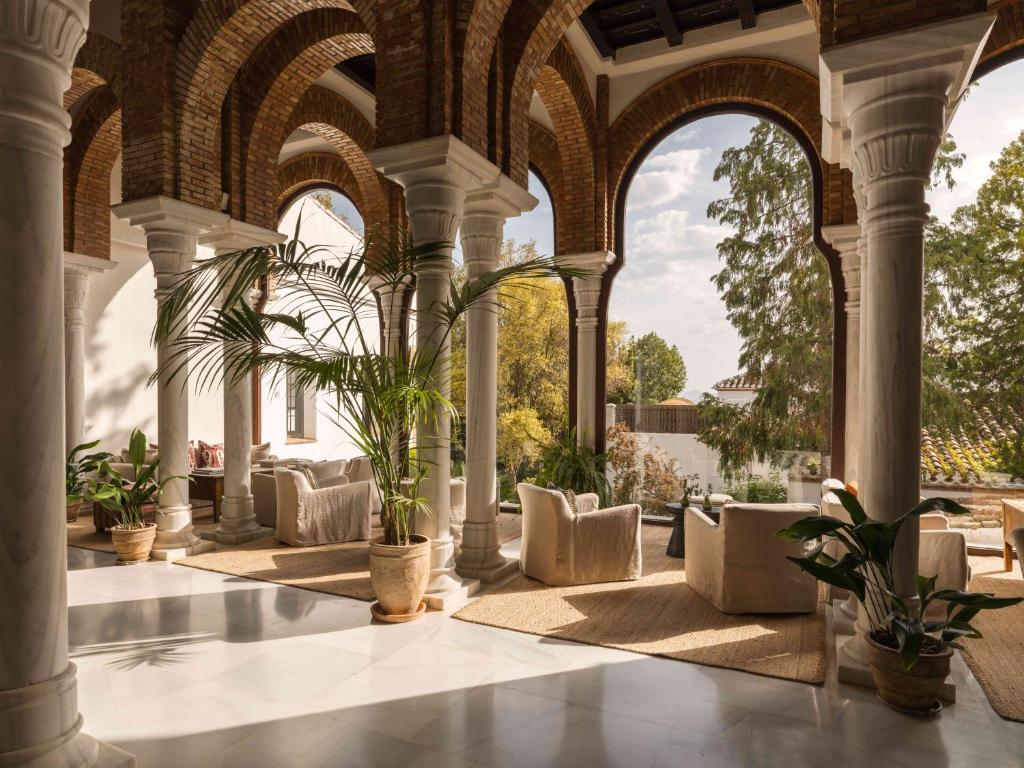
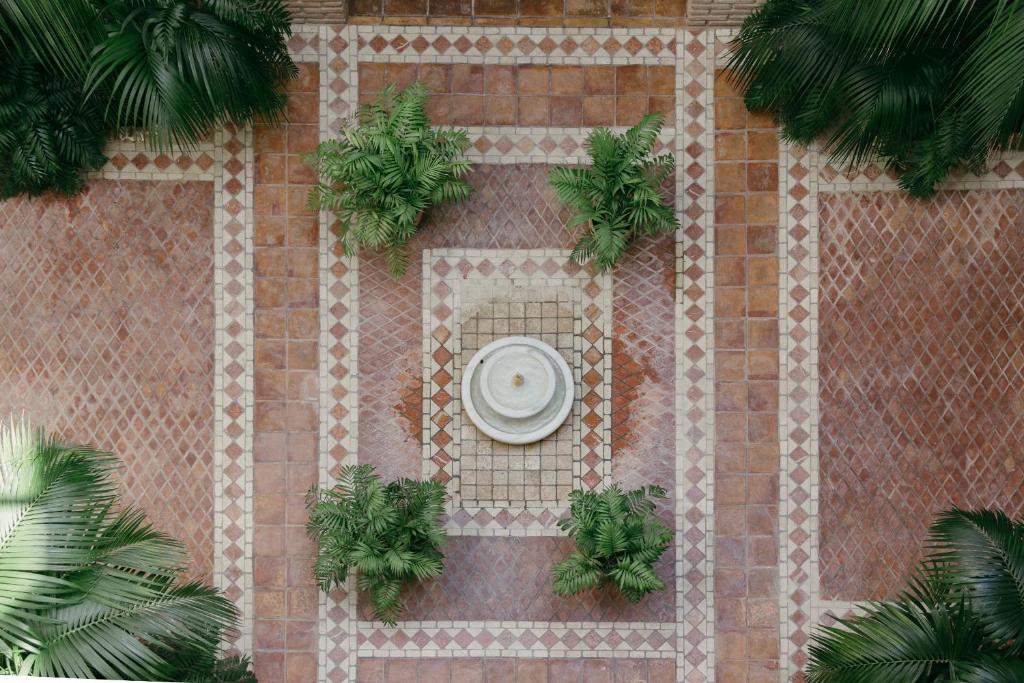
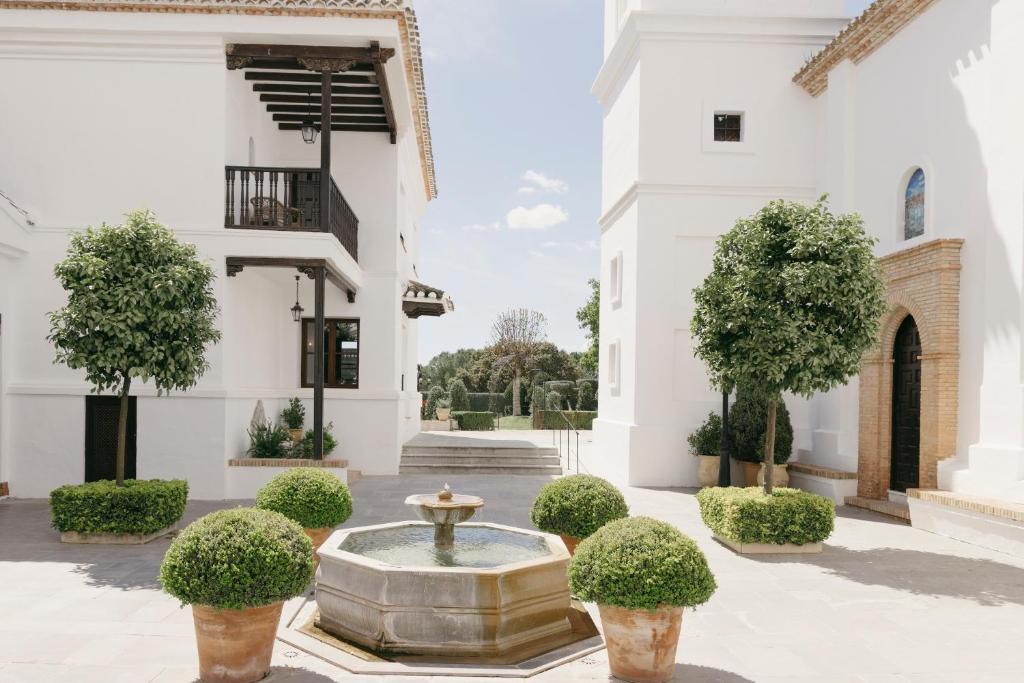
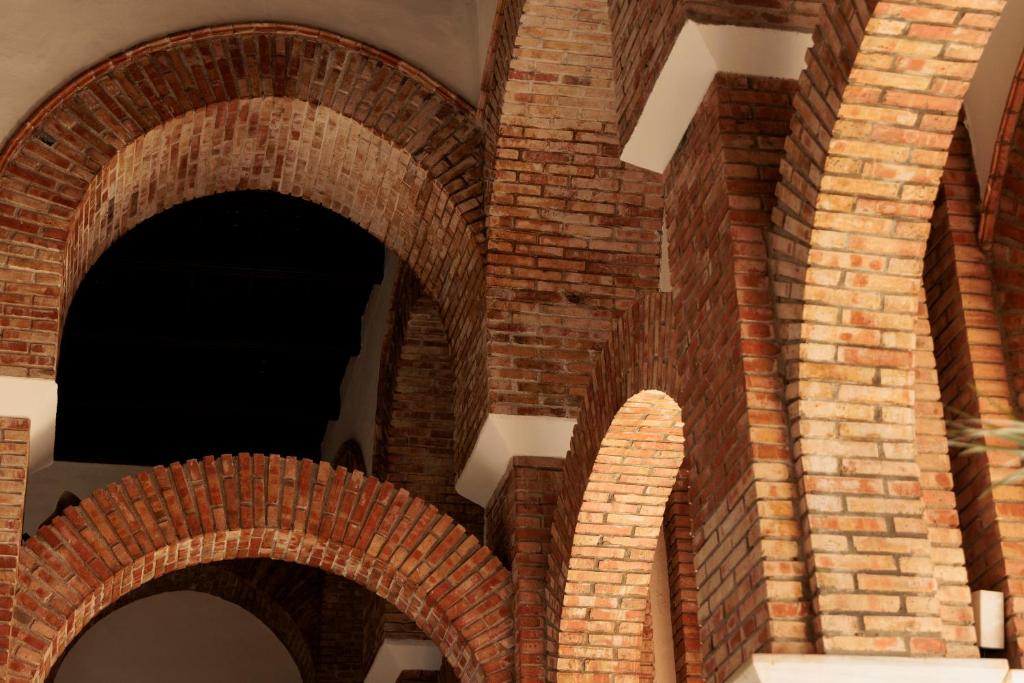
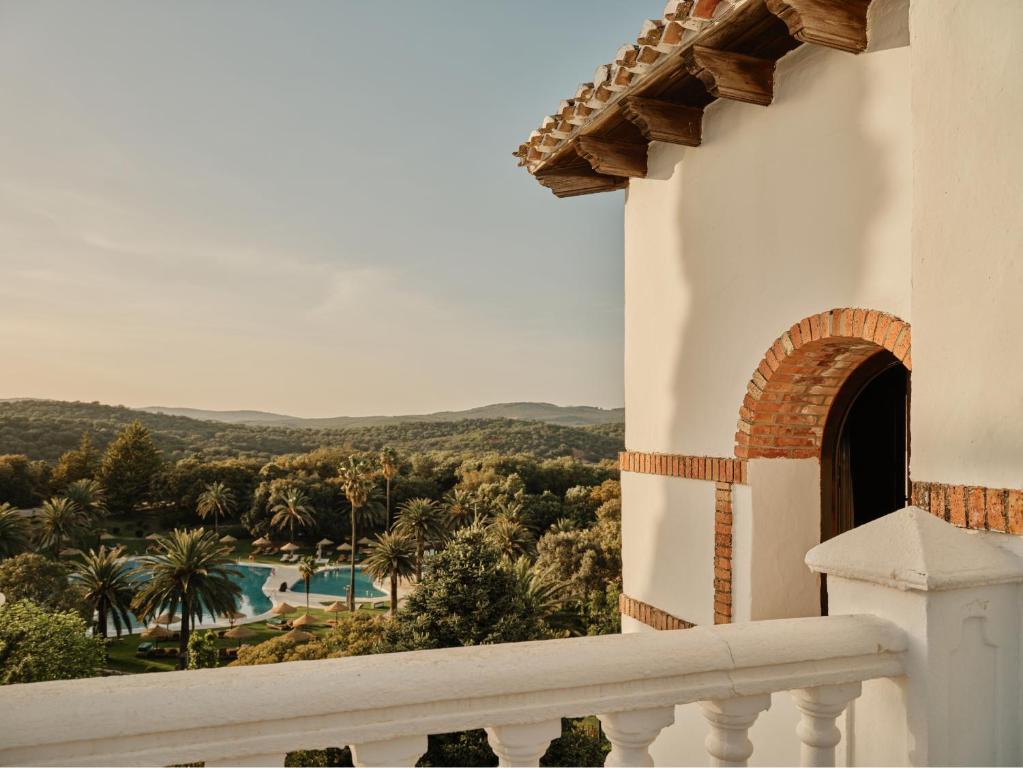
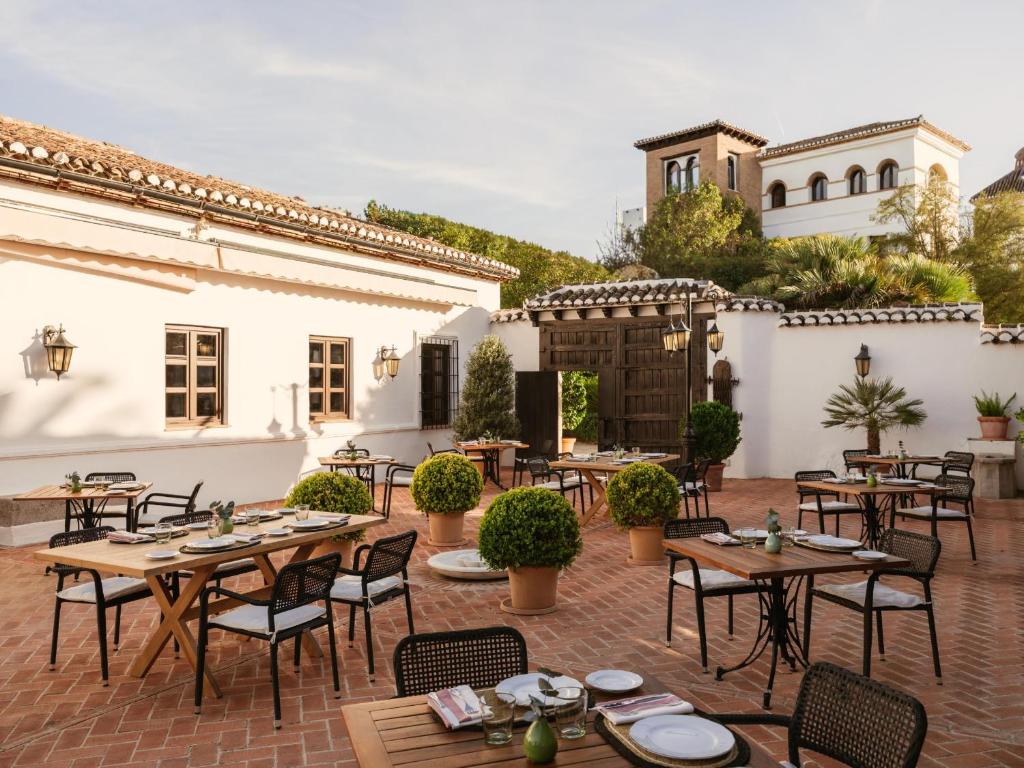
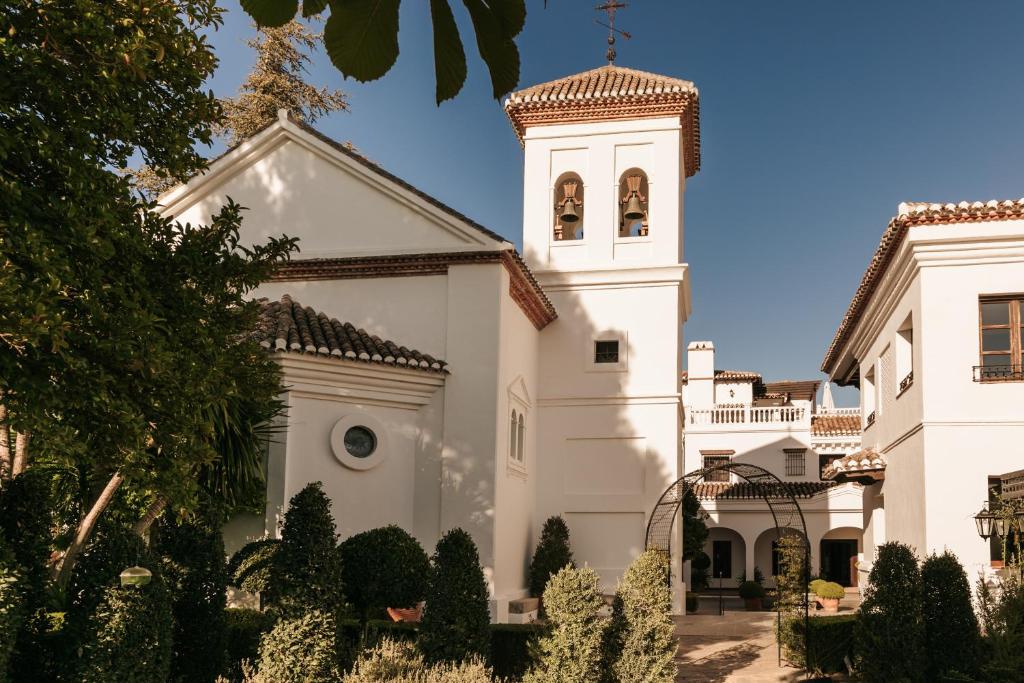
The first surprise at Finca La Bobadilla is its scale. From the entrance, the road continues for another 2.5 kilometres through olive groves, Mediterranean woodland and rolling countryside before the hotel finally appears. And even then, it doesn’t really look like a hotel. Built in the 1980s around an old farmhouse, La Bobadilla was deliberately conceived as an Andalusian village in miniature: whitewashed buildings gathered around cobbled courtyards, fountains and gardens, connected by narrow pathways, arches and shaded passages. A small chapel rises above the central plaza, while the extraordinary Mozarabic-inspired lobby takes its architectural cues from Córdoba’s Mosque-Cathedral. Elsewhere, reflecting pools and the constant sound of running water evoke the Alhambra. It may not be centuries old, but its references are unmistakably Andalusian. And following its acquisition by family-owned Único Hotels in 2025, this much-loved country retreat has entered an entirely new chapter.
A Softer Kind of Andalusia
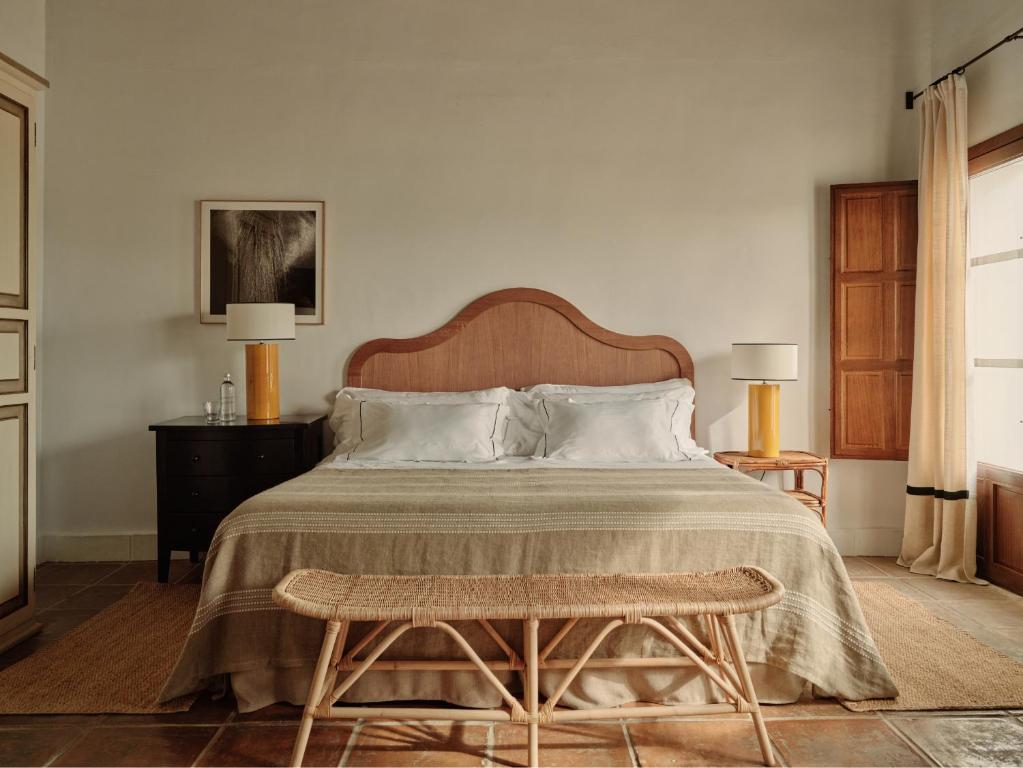
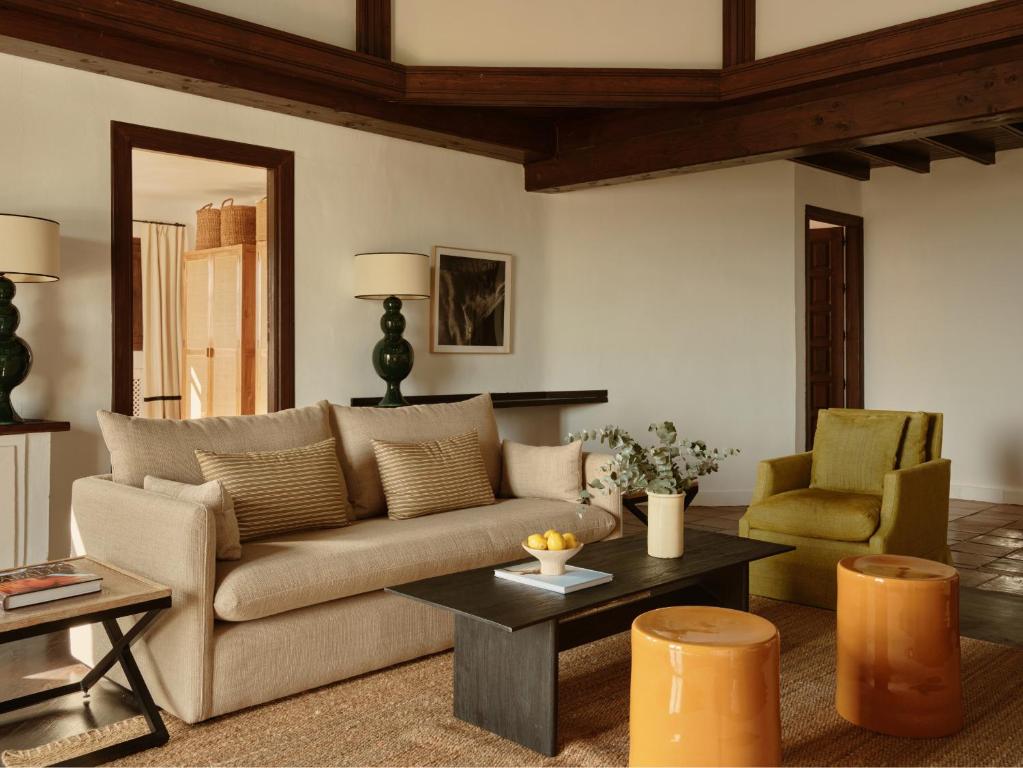
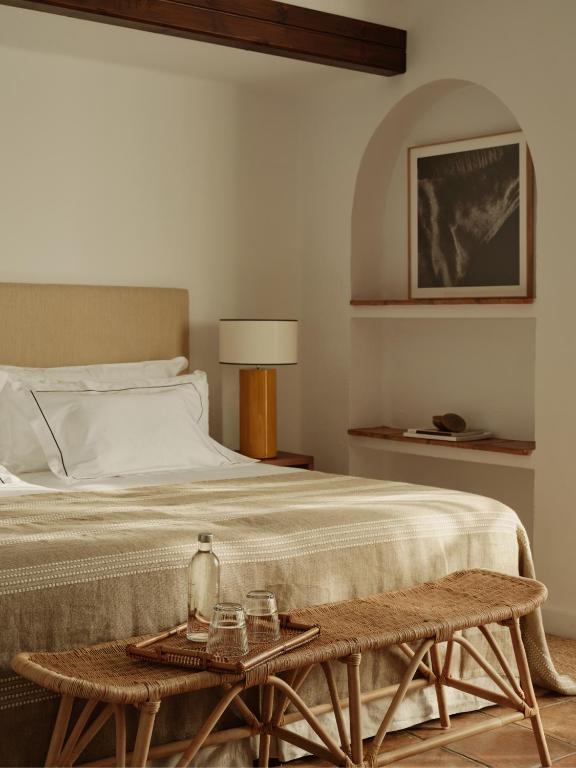
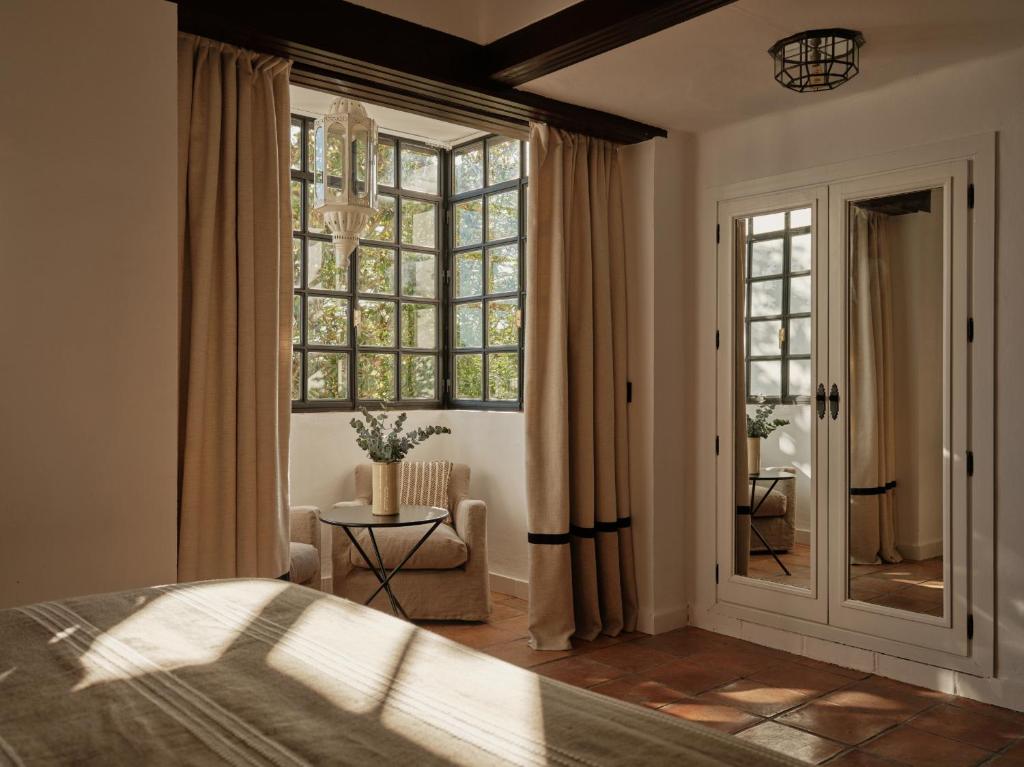
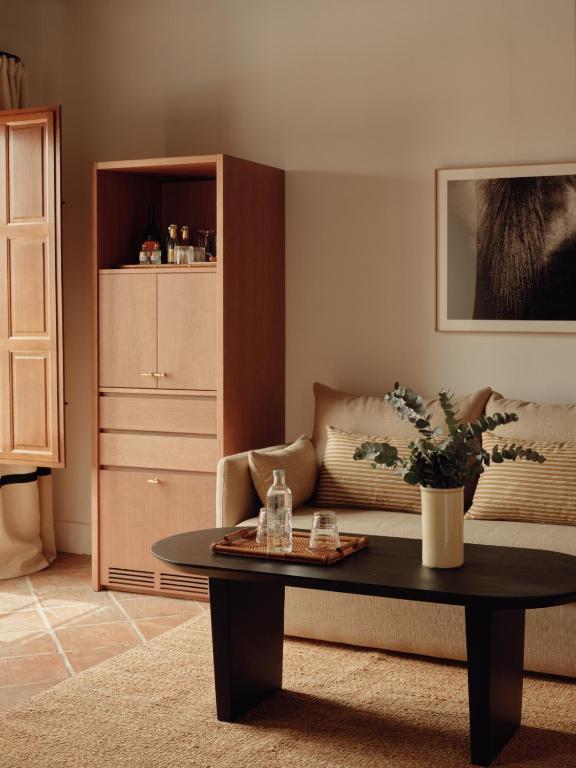
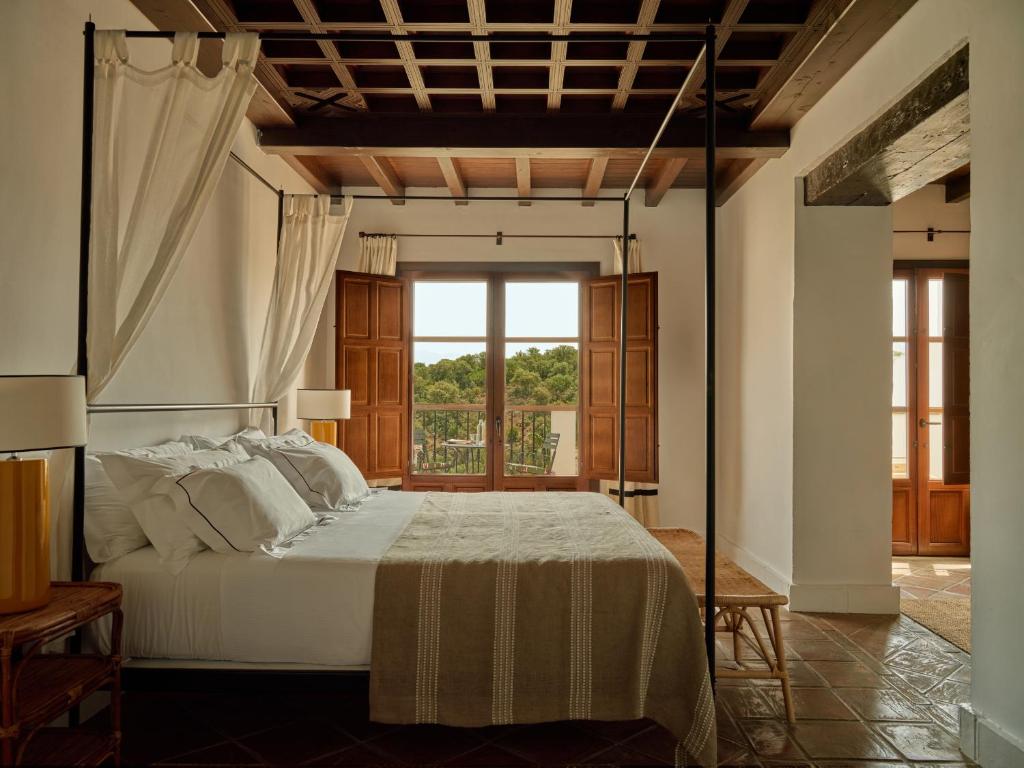
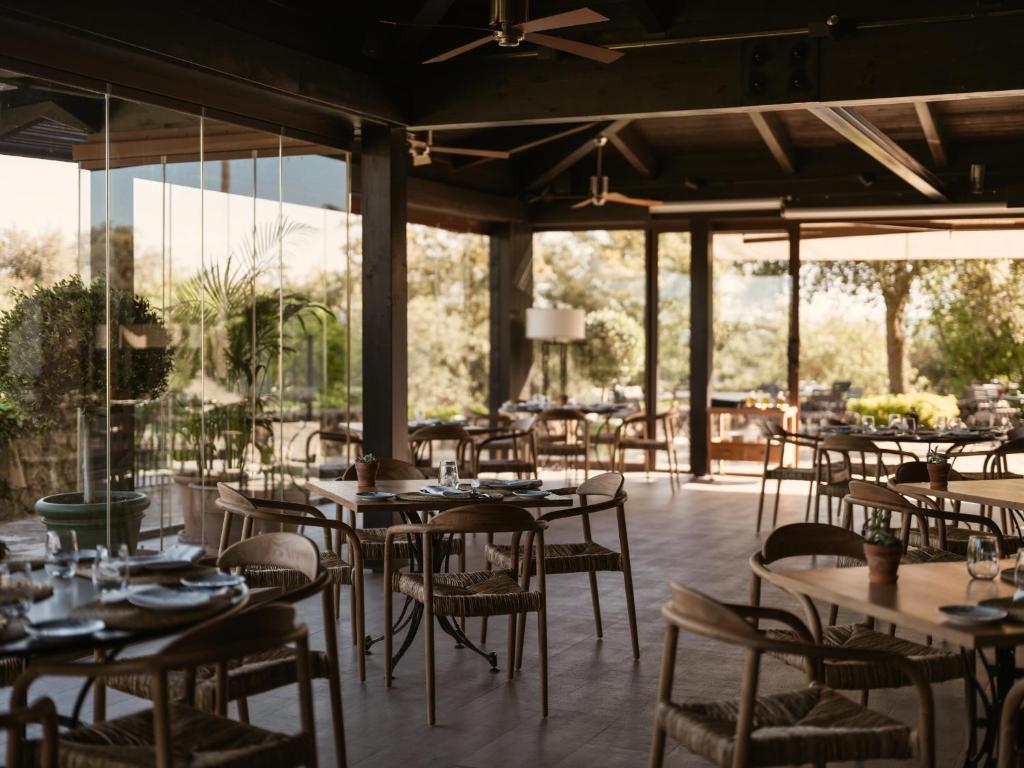
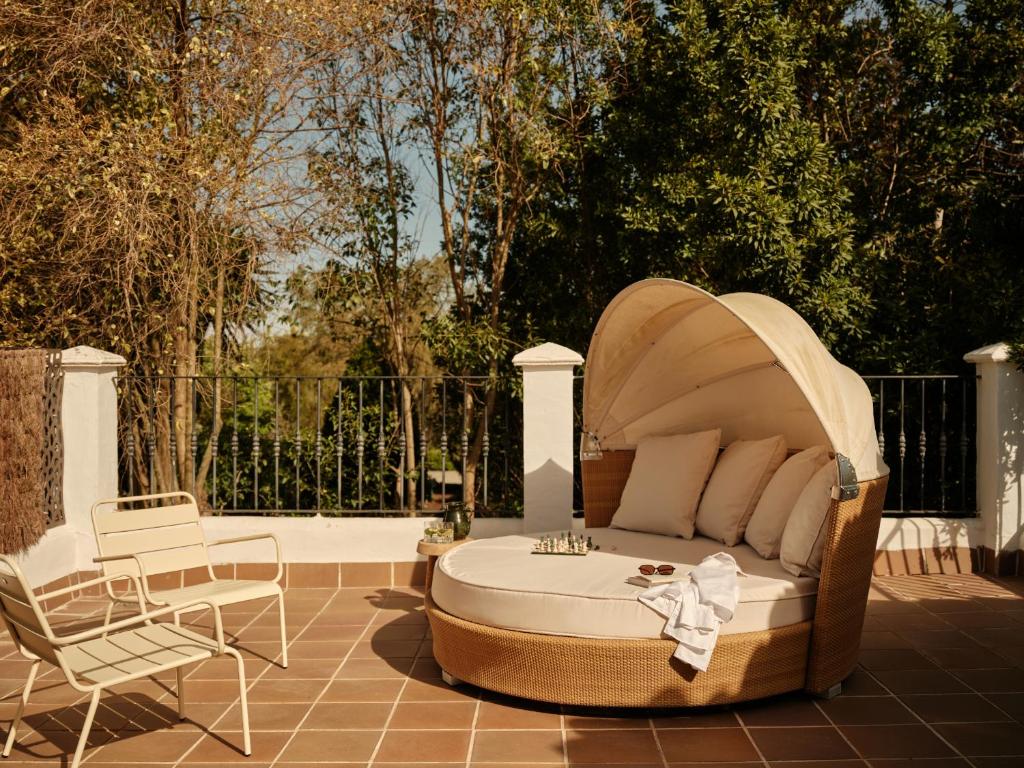
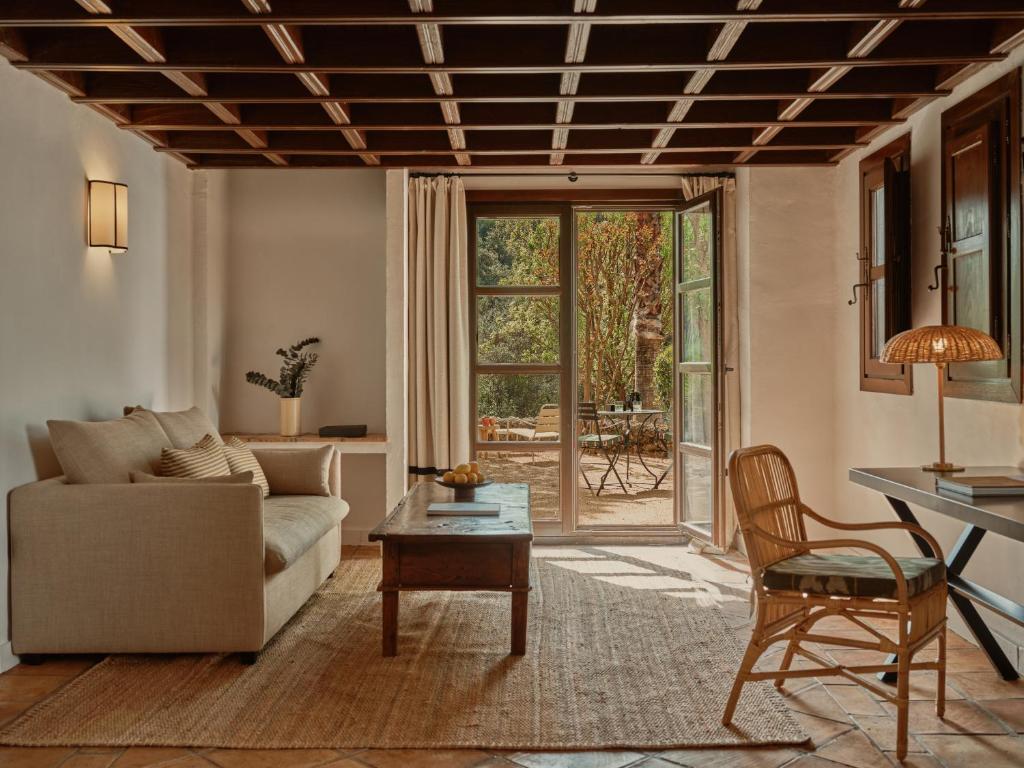
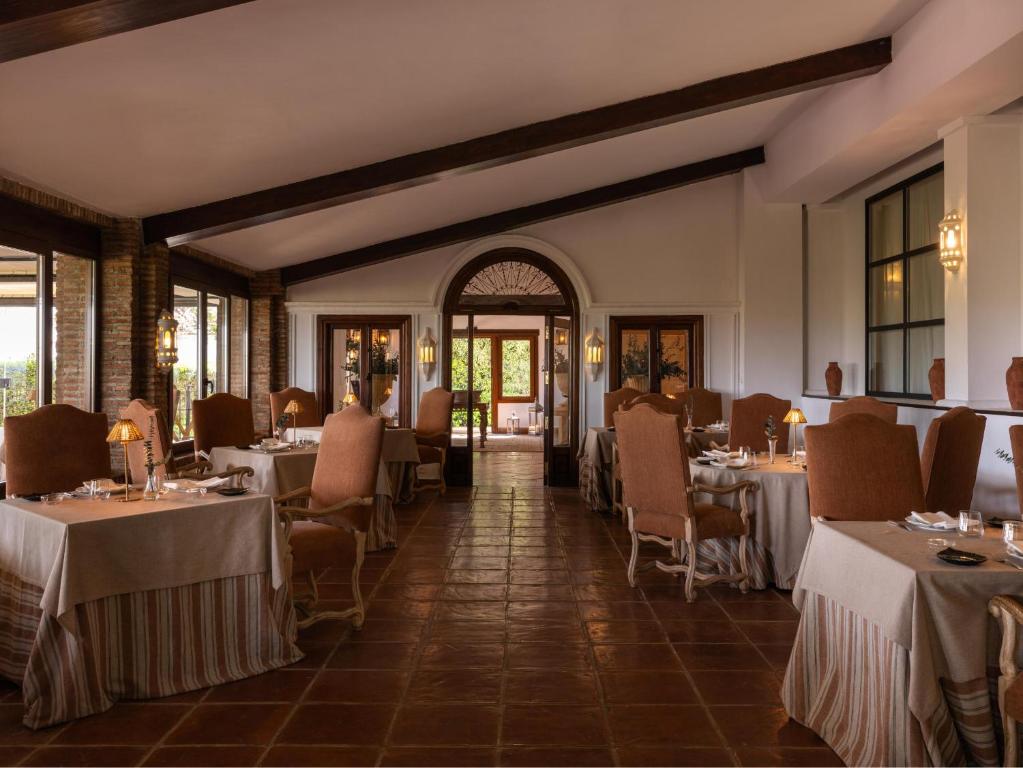
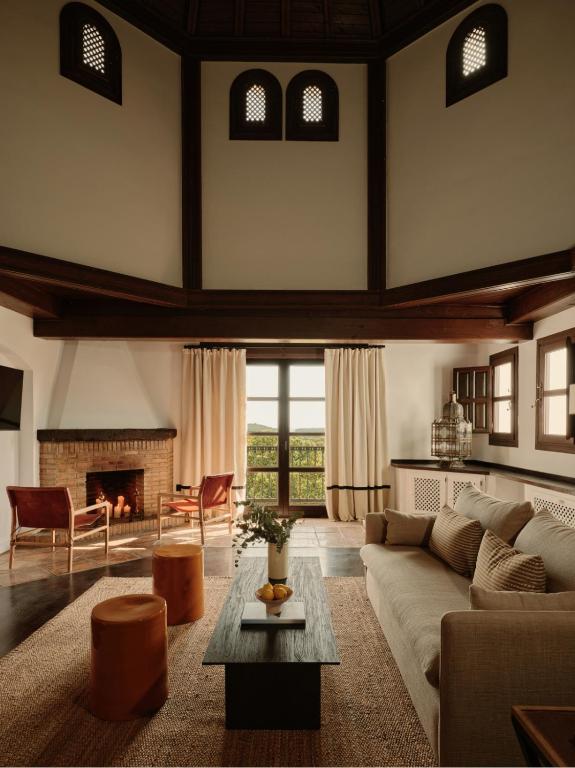
Rather than reinventing La Bobadilla, Único has edited it. The 2026 renovation was directed by the group’s in-house design team under Pilar García-Nieto, preserving the hotel’s distinctive architecture while stripping away some of its heavier decorative layers. The new palette is warmer, lighter and considerably more tactile. Wicker, raffia and rattan meet noble woods, natural stone, terracotta tones and handcrafted ceramics, much of it sourced from local artisans. Original wooden beams and tiled floors remain, joined by textured walls, bespoke rugs based on traditional motifs and wrought-iron lighting softened by coloured glass. It feels less like an idealised grand hotel and more like a sophisticated Andalusian country house. That distinction matters.
73 Rooms, No Two Quite Alike
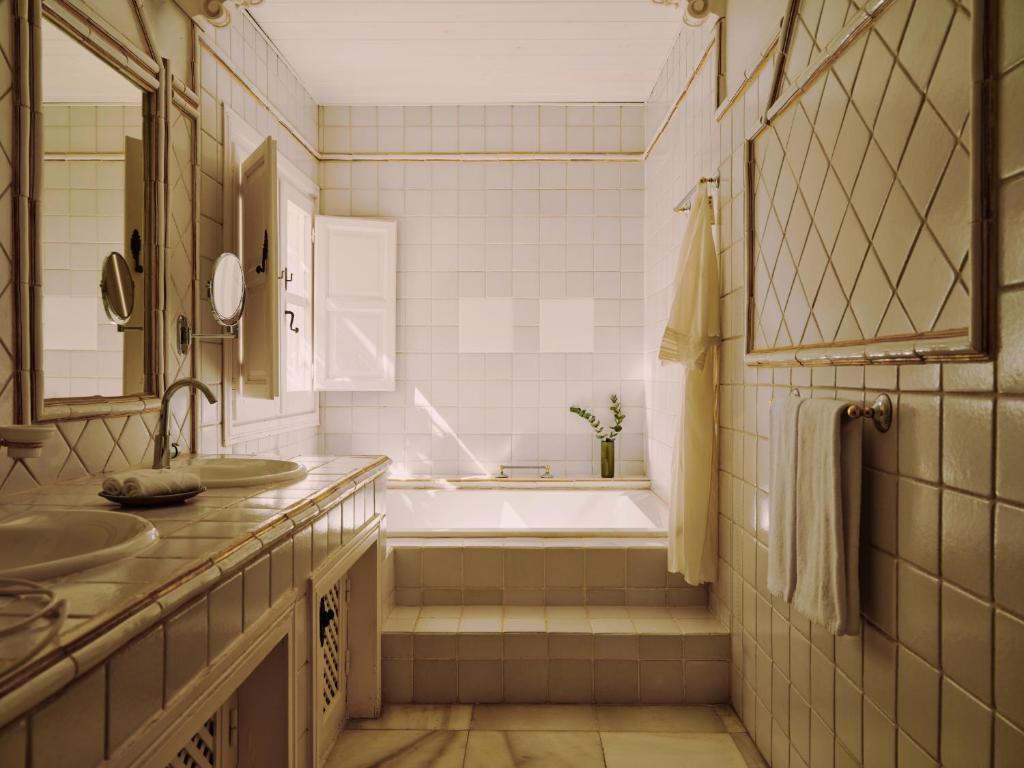
Because the rooms and suites are scattered through the village-like complex, their shapes, outlooks and proportions vary considerably. The renovation embraces that individuality. Residential seating areas make the larger rooms feel more like private apartments, while linen and cotton fabrics, custom furniture and layered lighting soften the architecture. Most rooms open onto a balcony or generous terrace overlooking gardens, courtyards or the surrounding Sierra de Loja. Bathrooms combine contemporary simplicity with handcrafted ceramics and existing details such as oversized baths, while Xavier Guardans’ Horses photography series brings the estate’s equestrian identity indoors. The result is polished without erasing the finca underneath.
The New Taste of La Bobadilla
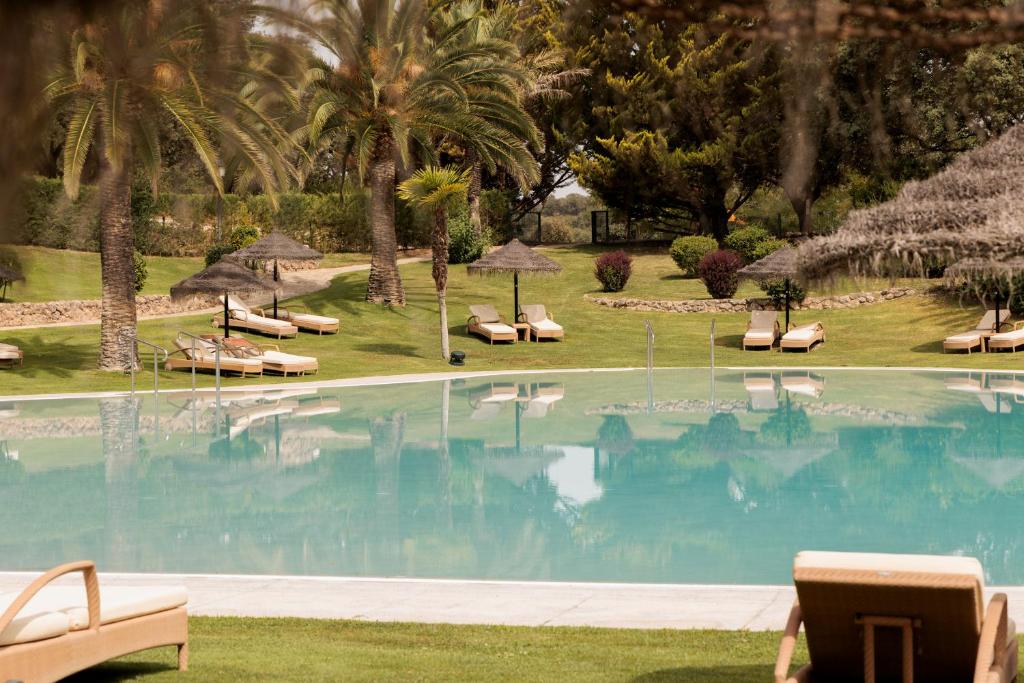
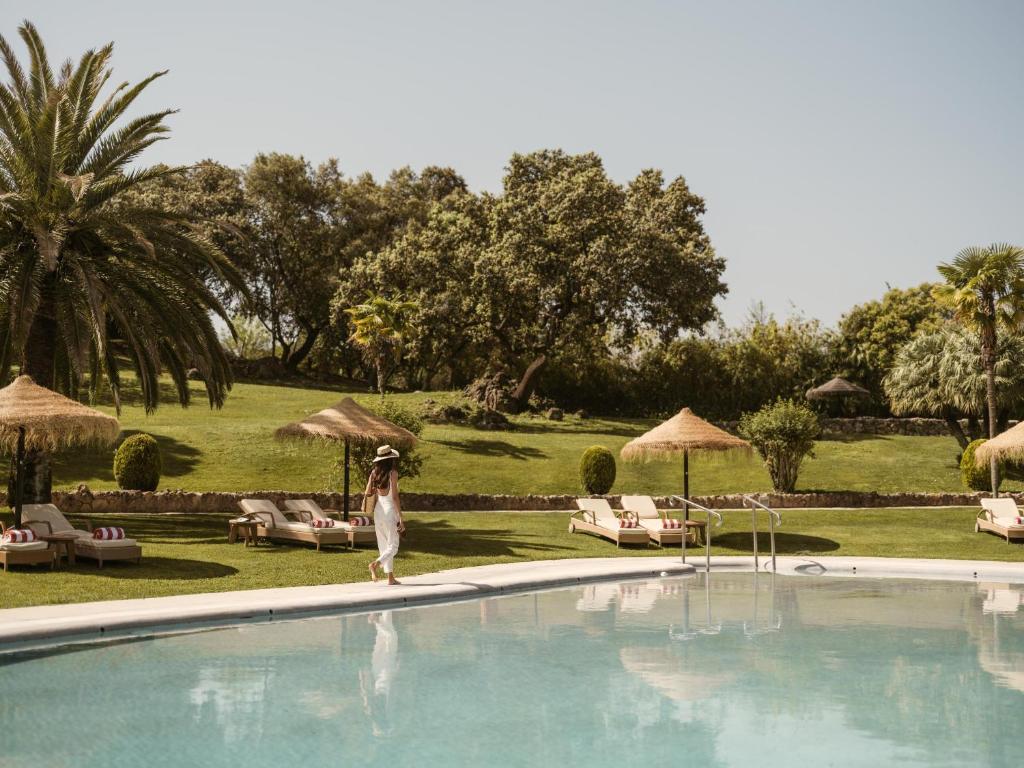
Food has always mattered here, but its new culinary direction gives La Bobadilla considerably more personality. Único brought in chef Óscar Velasco, best known for earning two Michelin stars at Madrid’s Santceloni, to oversee the estate’s three restaurants. At adults-only La Jara, Andalusian ingredients and traditions are interpreted with greater precision and ambition. El Cortijo takes a more relaxed approach to regional cooking, while poolside El Mirador is made for long lunches overlooking the gardens. The connecting thread is place. Olive oil comes from the estate. Produce is grown in its gardens or sourced locally. Málaga and Granada recipes provide inspiration, and the wine list increasingly looks towards southern Spain. Even breakfast tells the story: Antequera molletes and pastries arrive from the 70-year-old Tahona de Fuente Camacho bakery in nearby Loja, while sweets handmade by nuns at the Convent of Archidona appear in guestrooms. These are small details. They are also exactly the details that generic luxury hotels tend to forget.
2,000 Olive Trees and Six Andalusian Horses
There is little reason to rush away. The estate itself is the playground, with walking and cycling routes weaving through hundreds of hectares of countryside and a stable of Andalusian horses offering rides through the landscape. There are tennis, padel and pickleball courts, yoga, gardens and enormous outdoor pools surrounded by palms and olive-covered hills. The renovated Flow Spa provides the slower alternative, with heated hydrotherapy pools, dry and infrared saunas, steam facilities and treatments that include a ritual using La Bobadilla’s own olive oil. And then there are simpler pleasures. A long breakfast. A horse ride at sunrise. Reading beneath an olive tree. A gin and tonic in La Plaza as lanterns begin glowing around the courtyard. La Bobadilla works best when you stop treating time as something that needs filling.
Sustainability Starts with the Olive
One of the most interesting things about La Bobadilla predates its latest makeover. The hotel pioneered the use of olive-stone biomass to generate heating and hot water, turning a regional agricultural by-product into an energy source. Today that is complemented by an on-site photovoltaic plant, water-saving measures, organic kitchen gardens and the increased use of local materials and crafts. There is also a social dimension. Many employees come from the surrounding villages, including long-serving team members who have worked at La Bobadilla for decades. For a hotel built to evoke an Andalusian village, that continuity gives the place something design alone cannot manufacture.
Why It Works
There is an interesting contradiction at the heart of Finca La Bobadilla. It looks ancient, but isn’t. The hotel was created in the 1980s as an interpretation of Andalusia rather than inherited from some aristocratic past. Yet after four decades, thousands of returning guests and generations of local employees, it has accumulated a history of its own. Único Hotels seems to understand that. Rather than trying to make La Bobadilla newer, the renovation makes it more itself — calmer rooms, better craftsmanship, stronger local gastronomy and a closer relationship with the landscape. And perhaps that is the real luxury here. Not pretending to be an Andalusian village, but slowly becoming one.