Freehand New York | USA
Bohemian Manhattan Reimagined for a New Creative Generation
Why DNA Hotels Loves It
● A spirited reinvention of the historic 1928 George Washington Hotel by Roman and Williams.
● An unusually democratic mix of kings, suites, and bunk rooms that brings genuine style to a broader range of travellers.
● Art-filled public spaces, lively restaurants, and rooftop cocktails that make the hotel feel like part of New York rather than separate from it.
A Bohemian Landmark Reborn
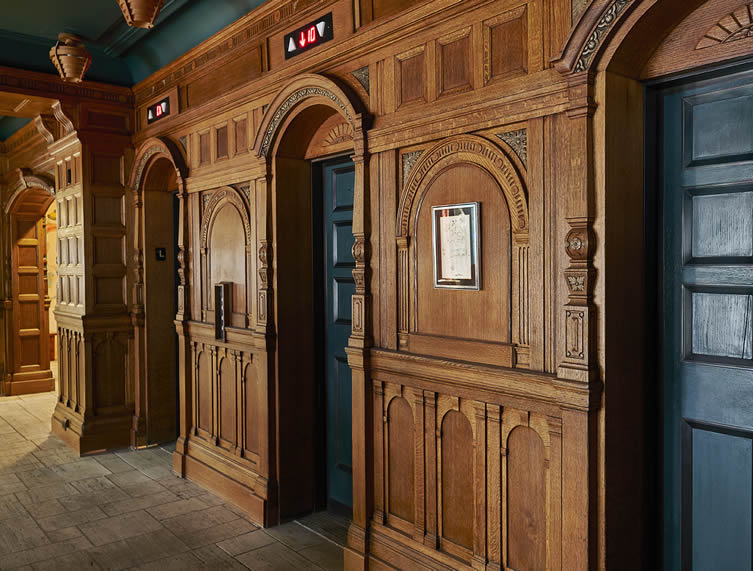
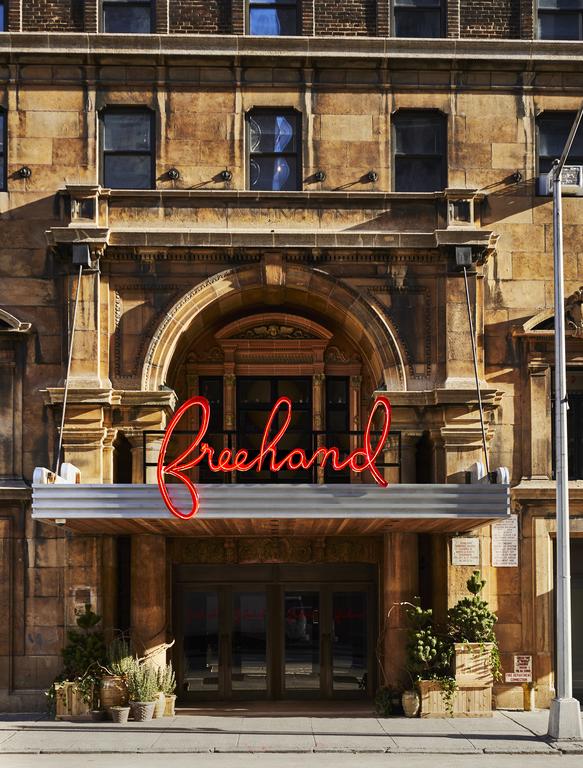
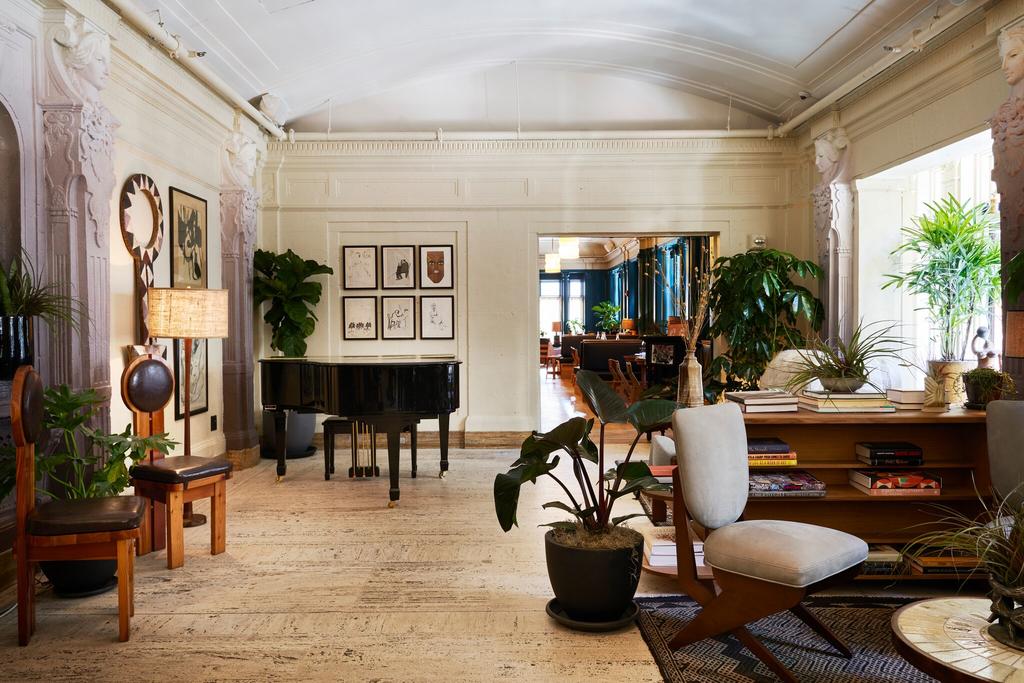
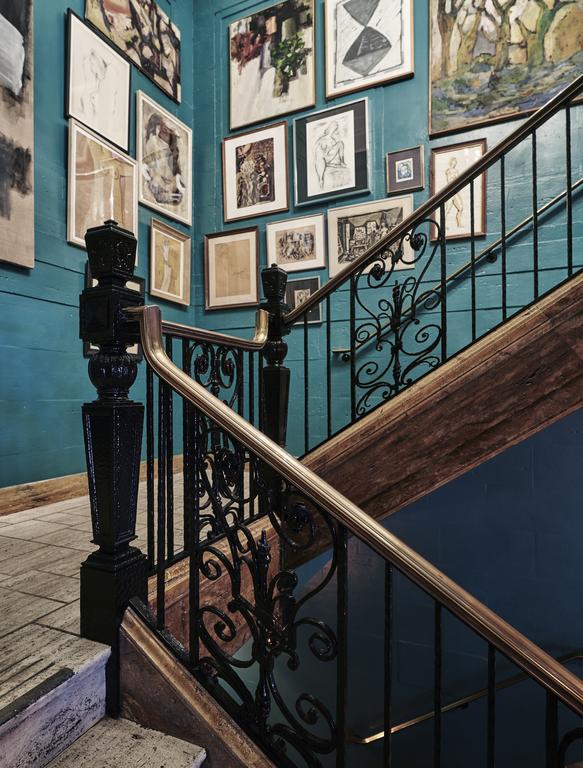
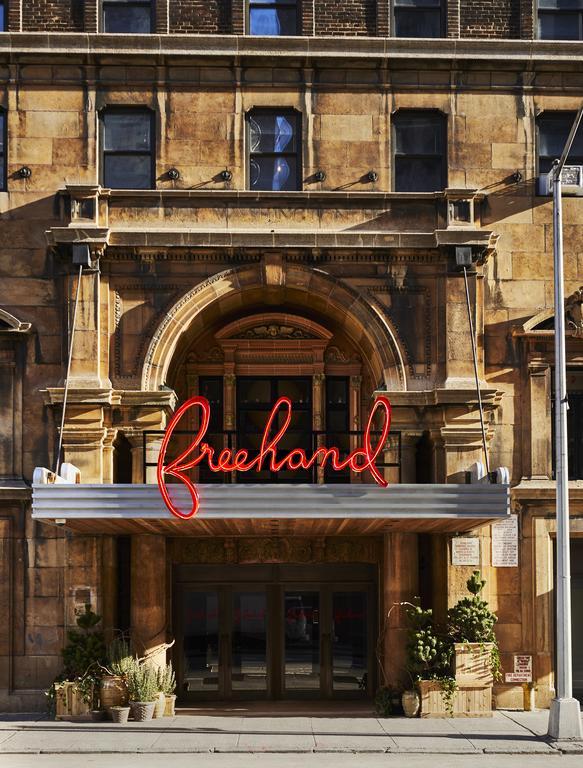
Freehand New York occupies a building with creative history already embedded in its walls. The former George Washington Hotel once welcomed generations of writers, musicians, and artists. Its transformation by the Sydell Group preserves that bohemian legacy while introducing a younger, more social interpretation of city hospitality. Original architectural details remain visible throughout. But nostalgia never takes over. The past simply provides a richer foundation for the present.
Roman and Williams at Their Most Playful
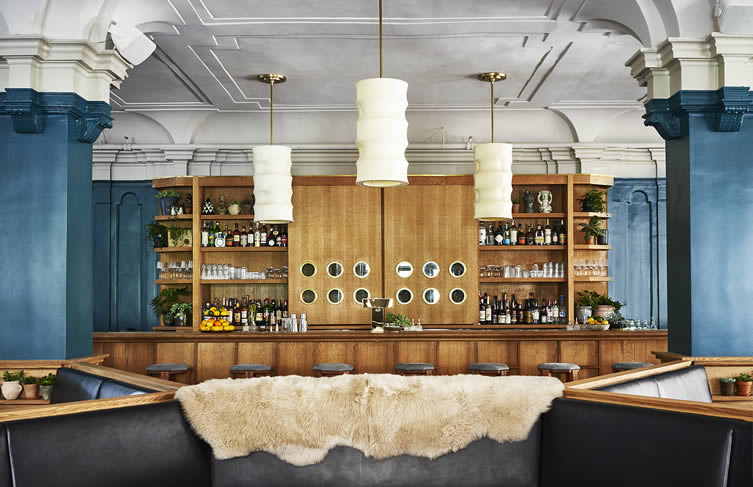
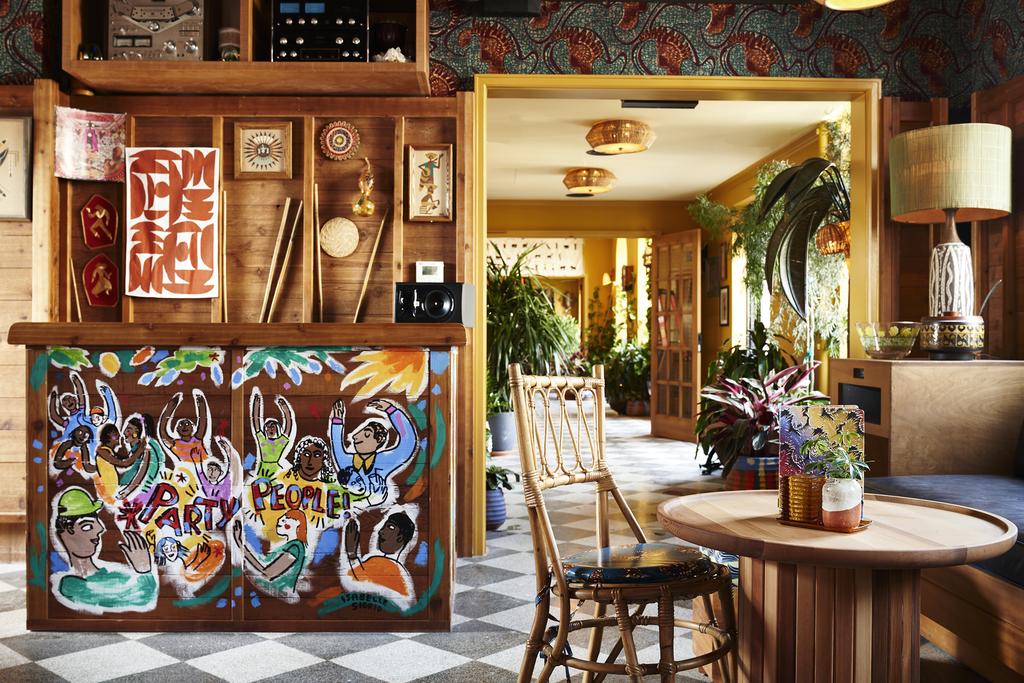
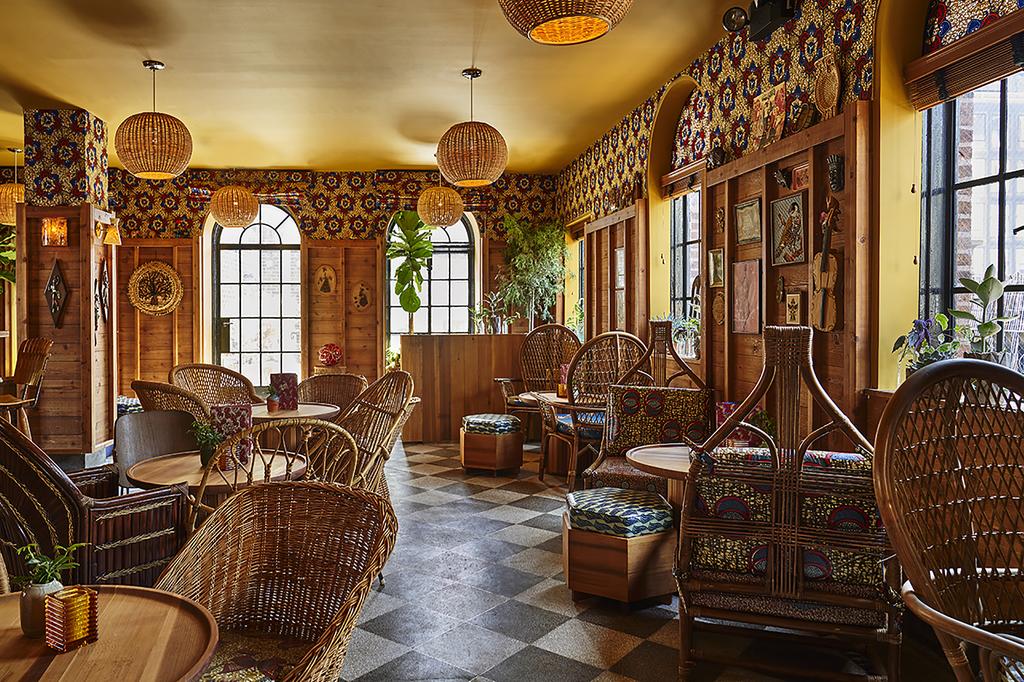
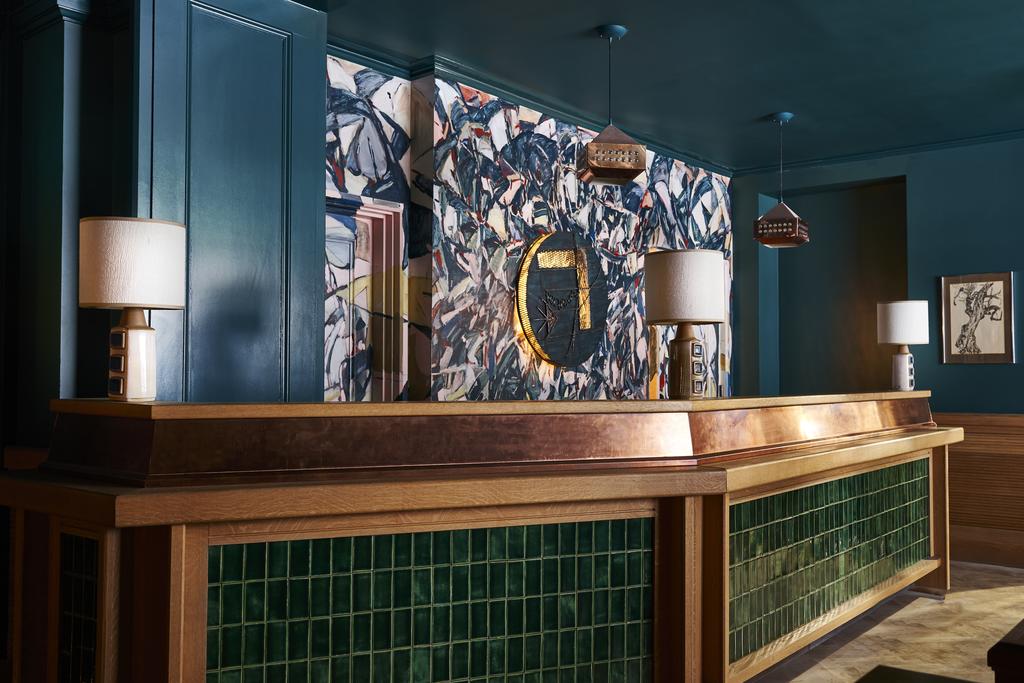
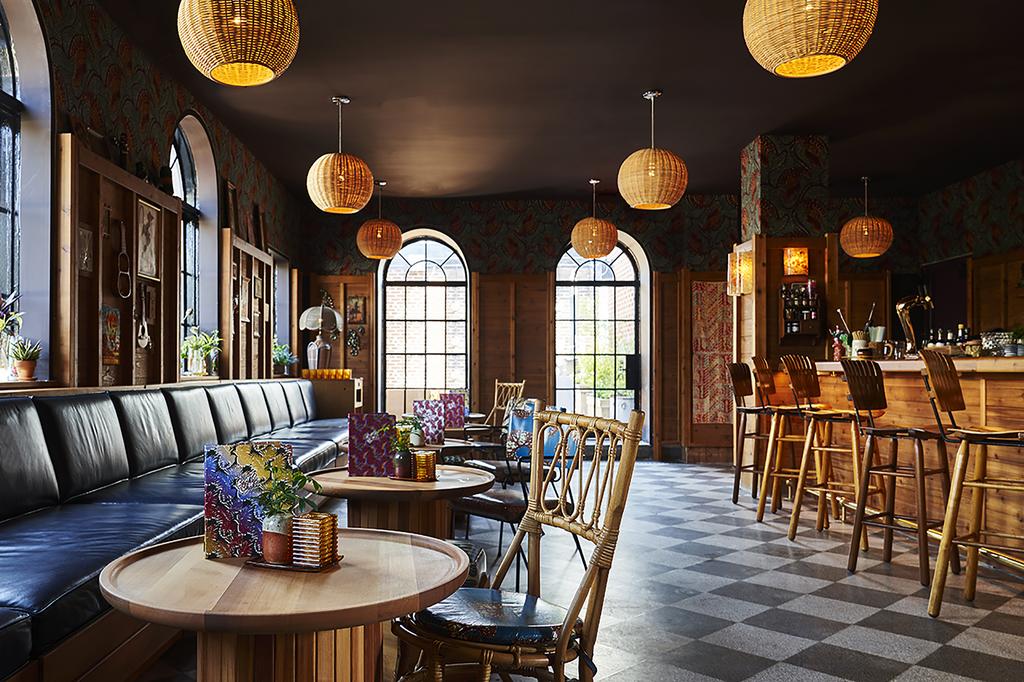
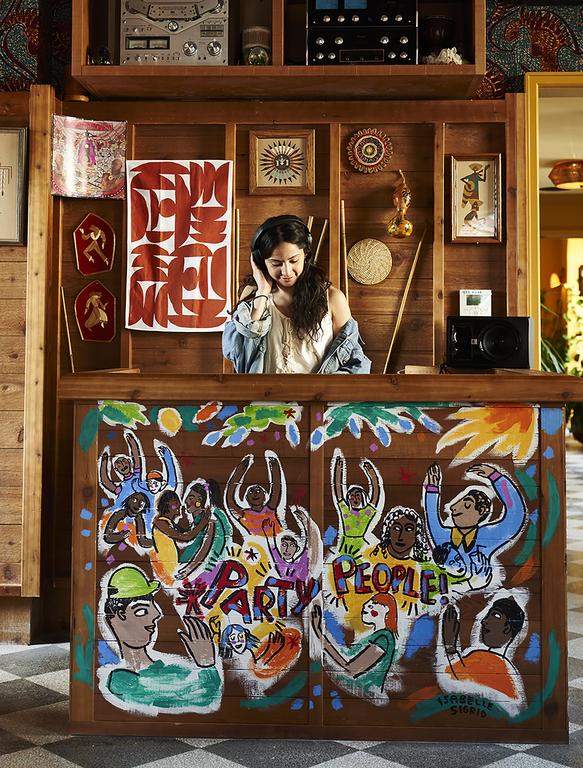
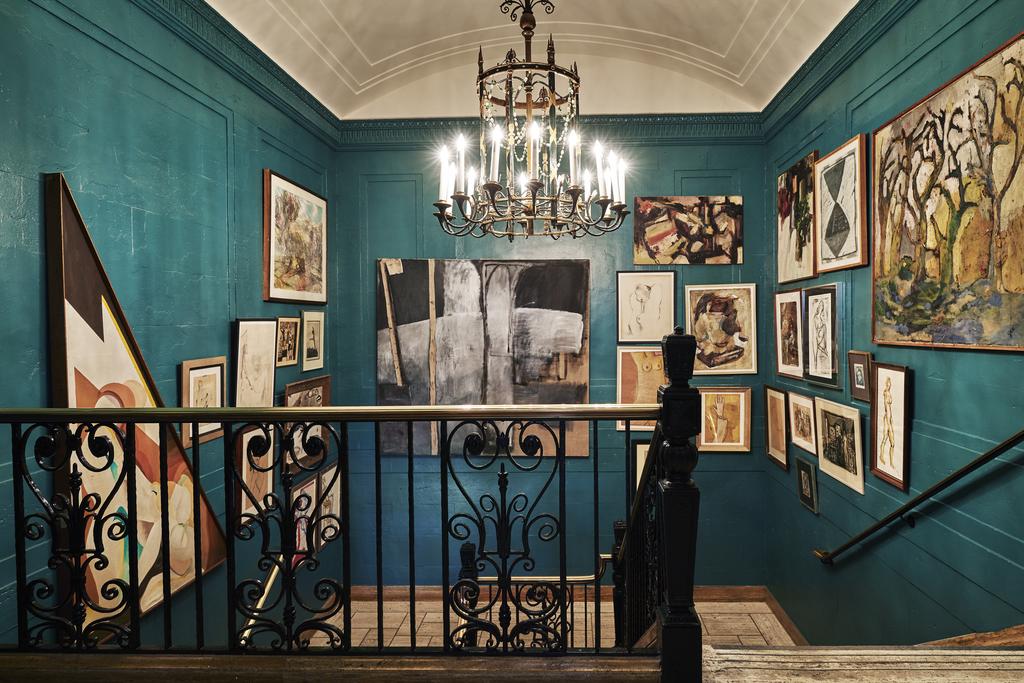
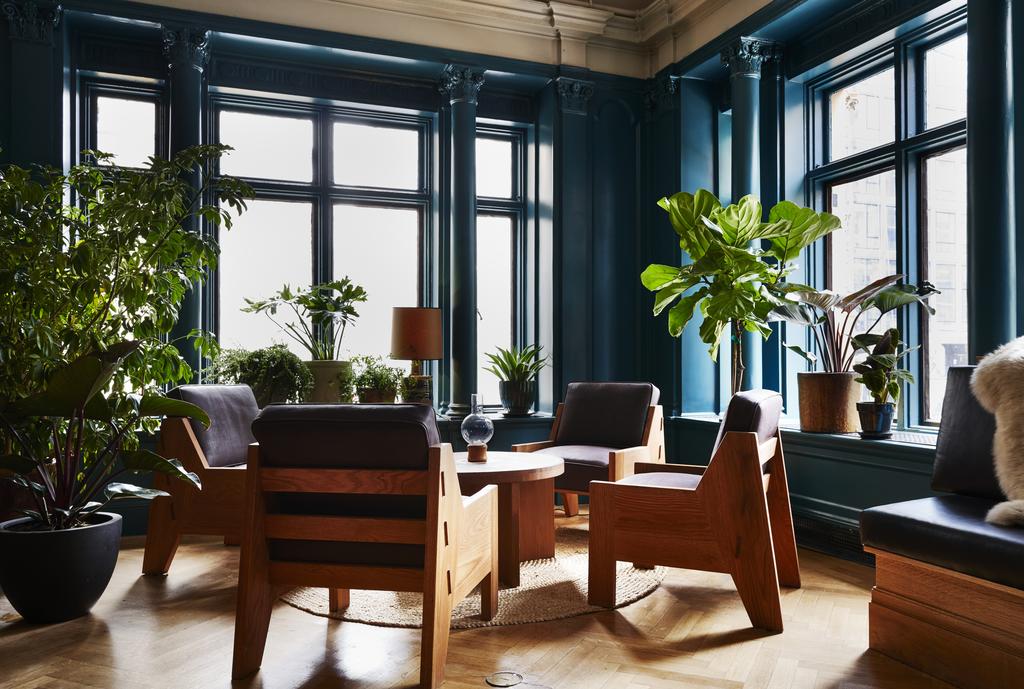
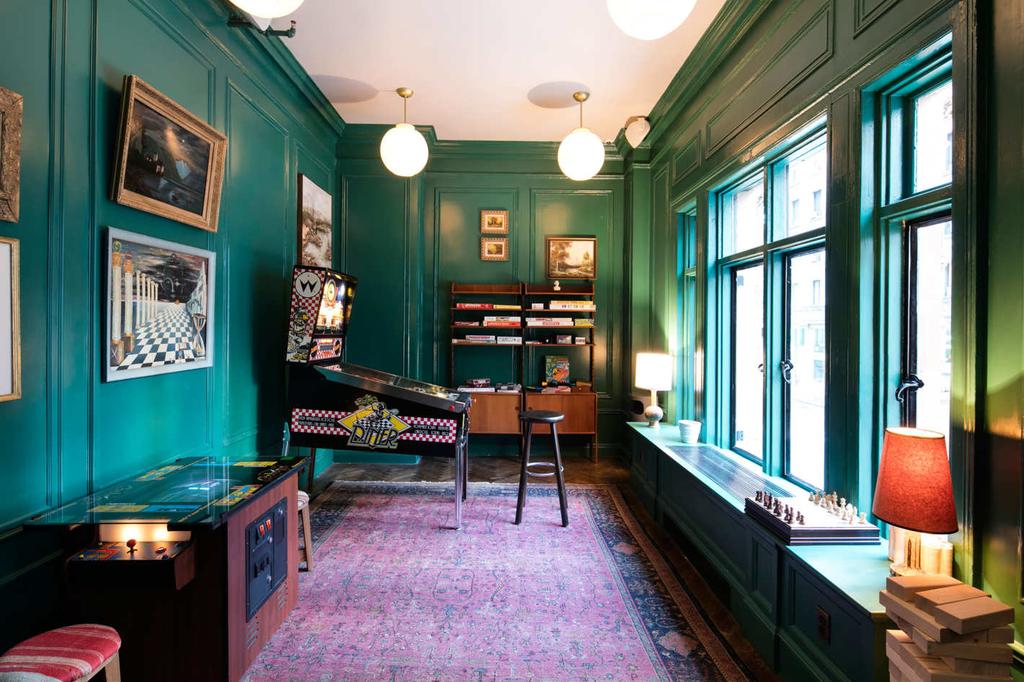
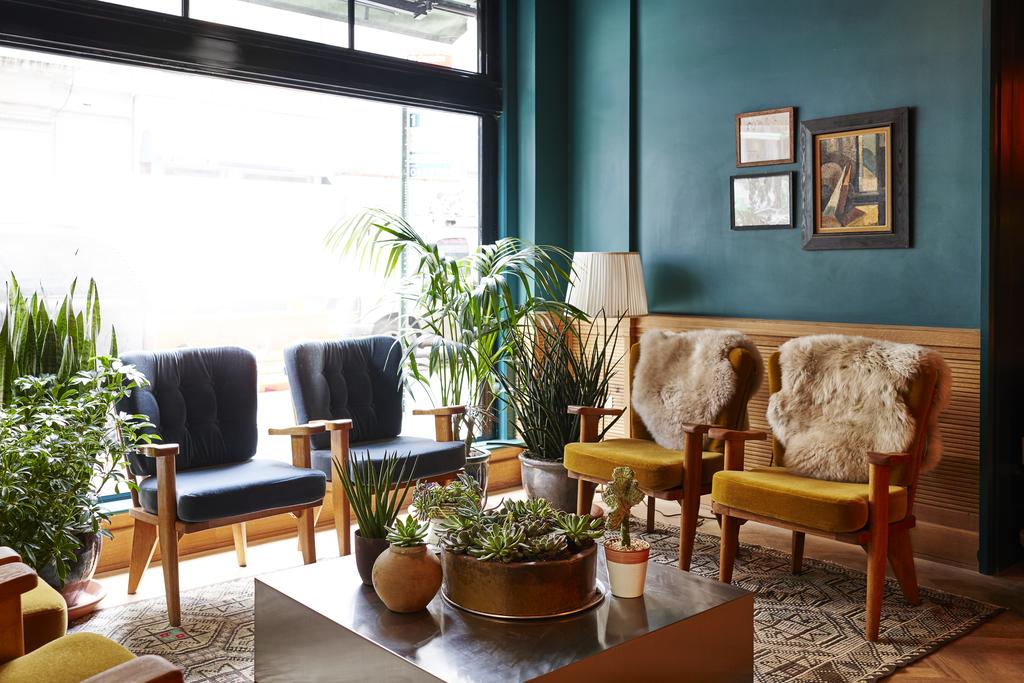
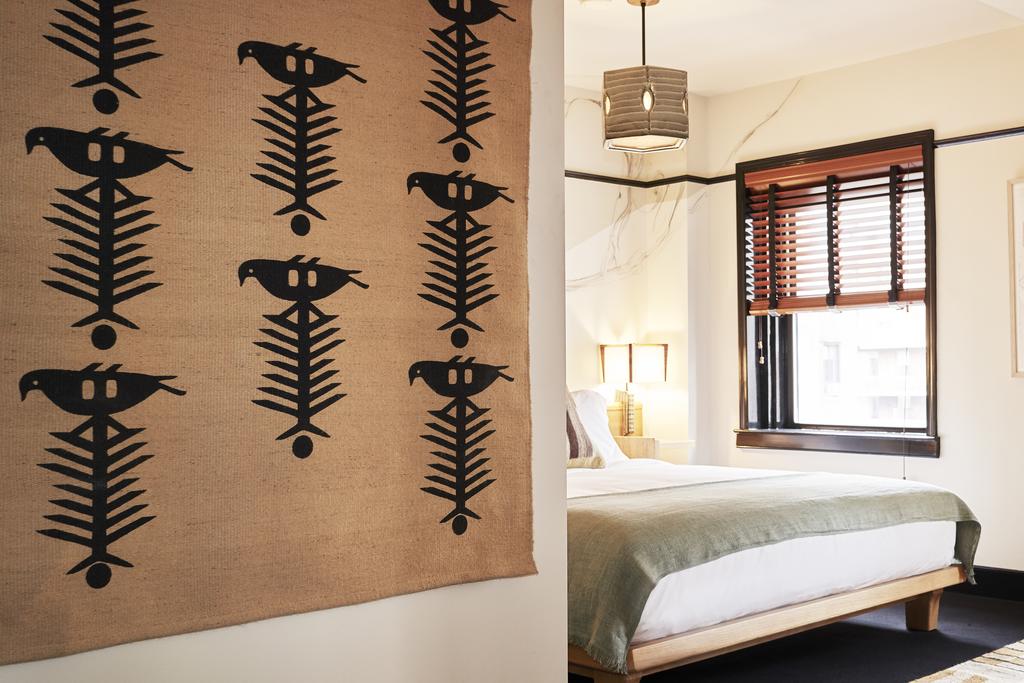
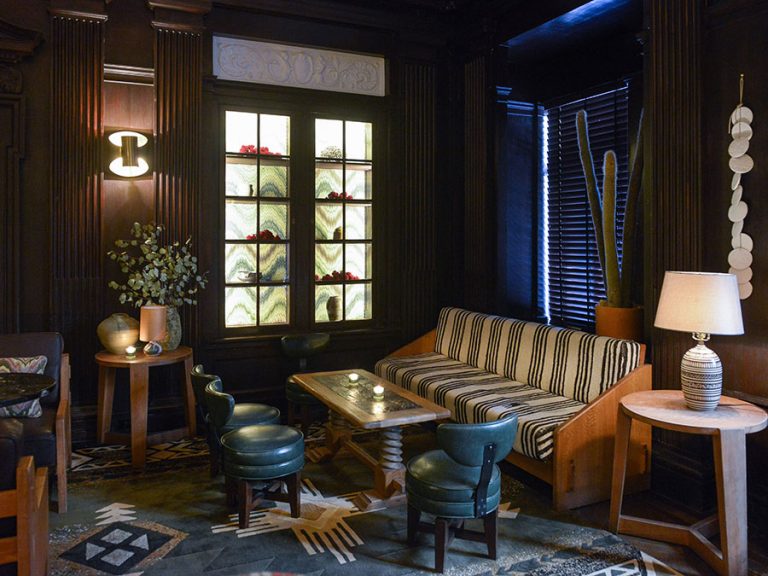
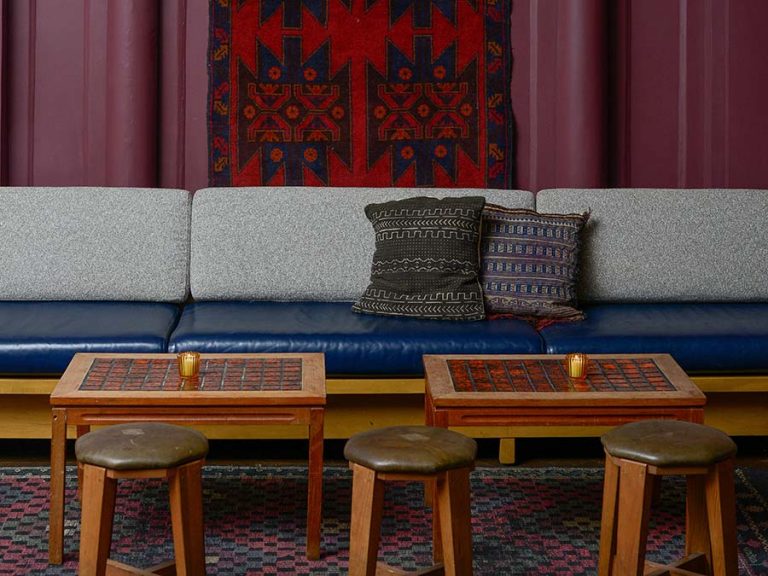
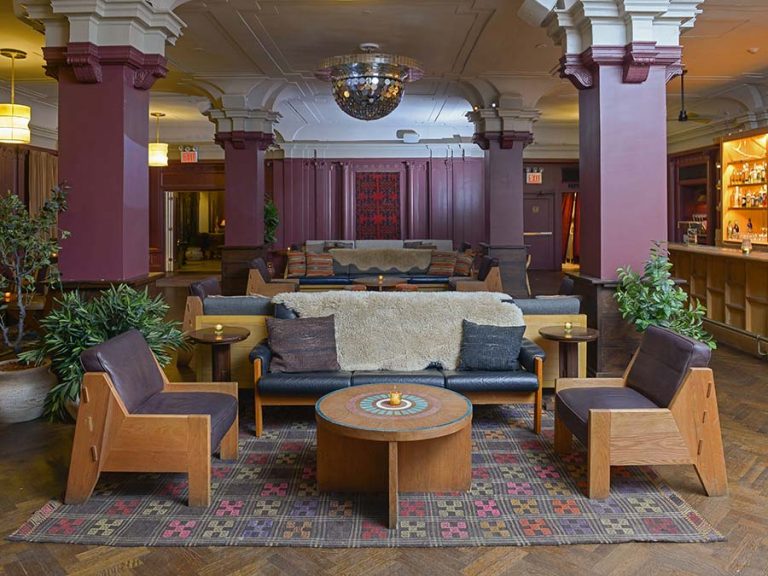
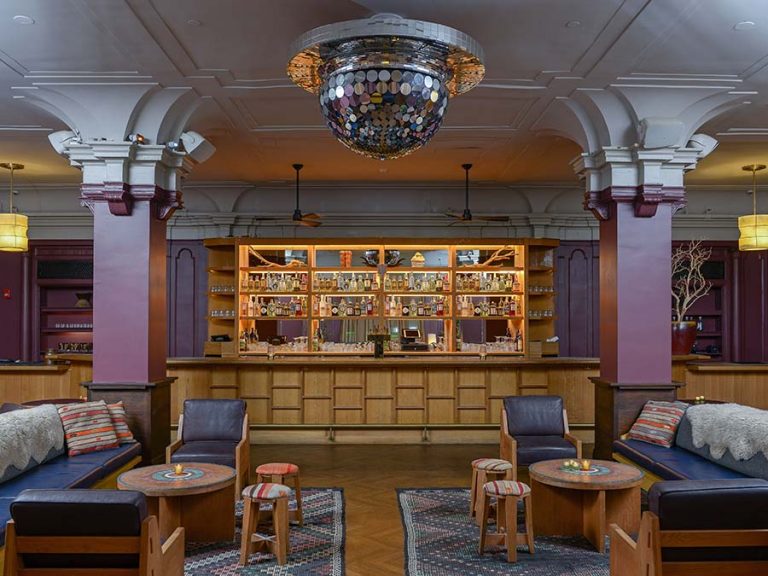
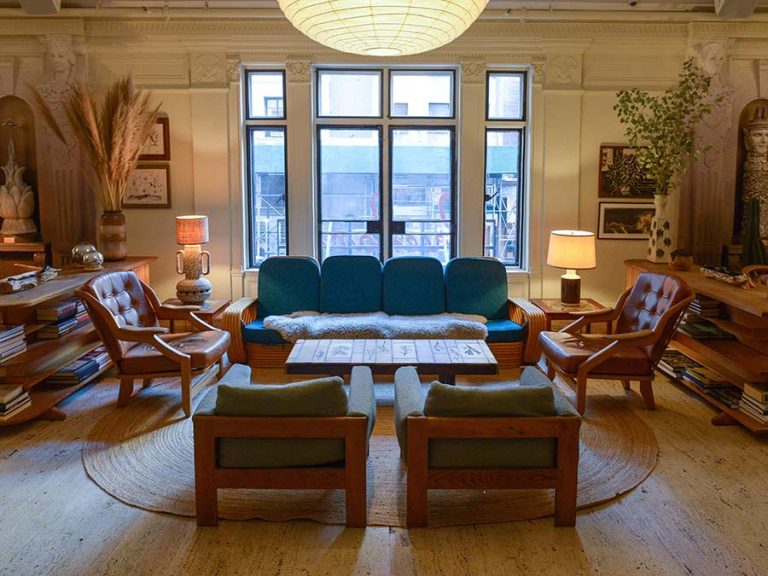
Roman and Williams approached the interiors as a layered collection rather than a polished composition. Pre-war proportions are combined with custom furniture, American craft references, found objects, patterned textiles, warm timber, plants, and theatrical lighting. The result feels eclectic and lived in, with the atmosphere of a particularly creative Manhattan apartment building. Art plays an equally important role. Works commissioned through Bard College’s Live Arts Program appear across walls and ceilings, while the Freehand Fellowship invited artists to live, work, and exhibit within the hotel itself. Creativity is not decoration here. It is part of the building’s daily life.
Rooms for One, Two, or the Whole Crew
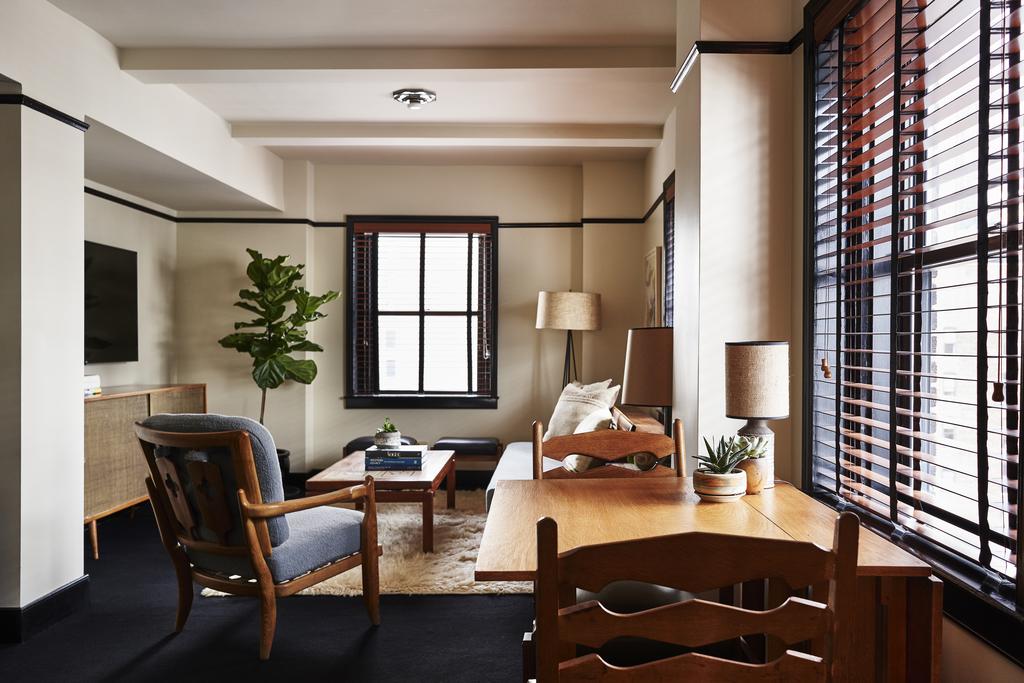
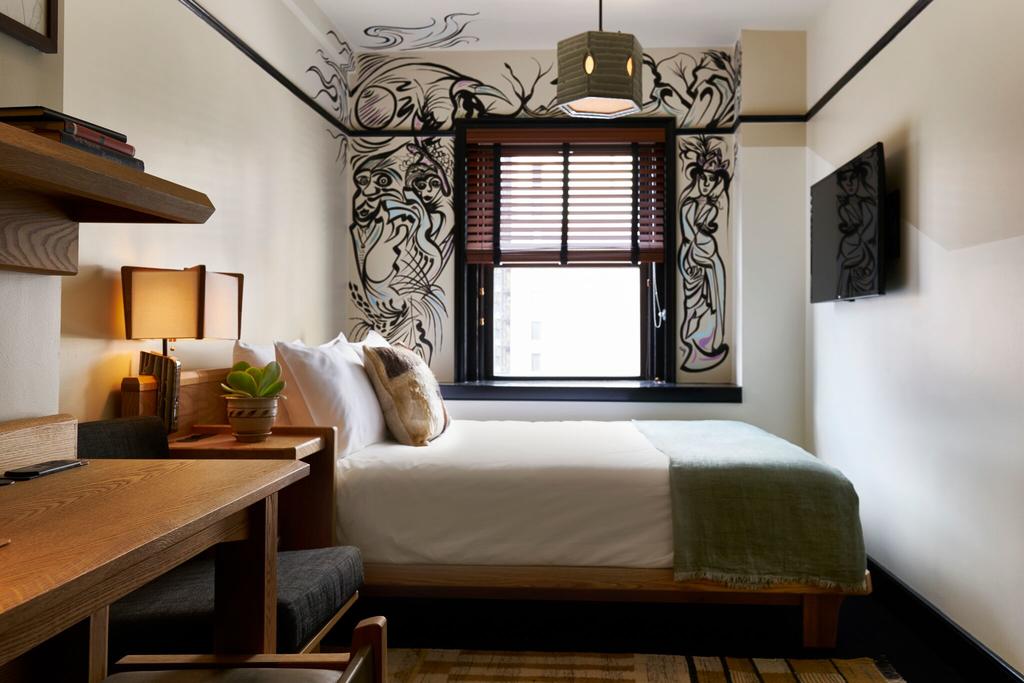
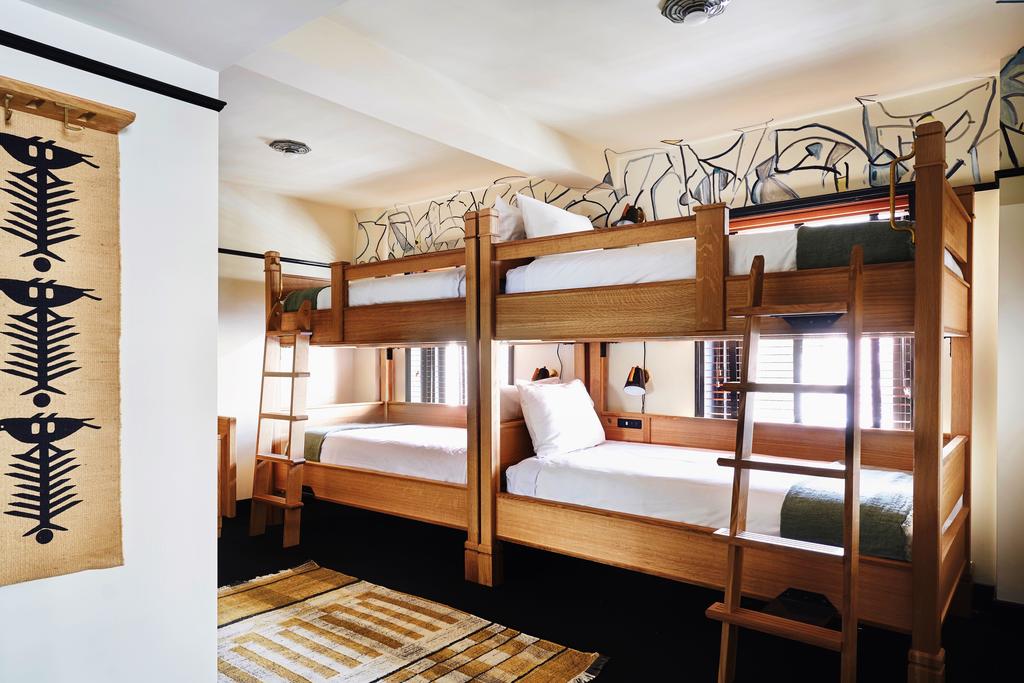
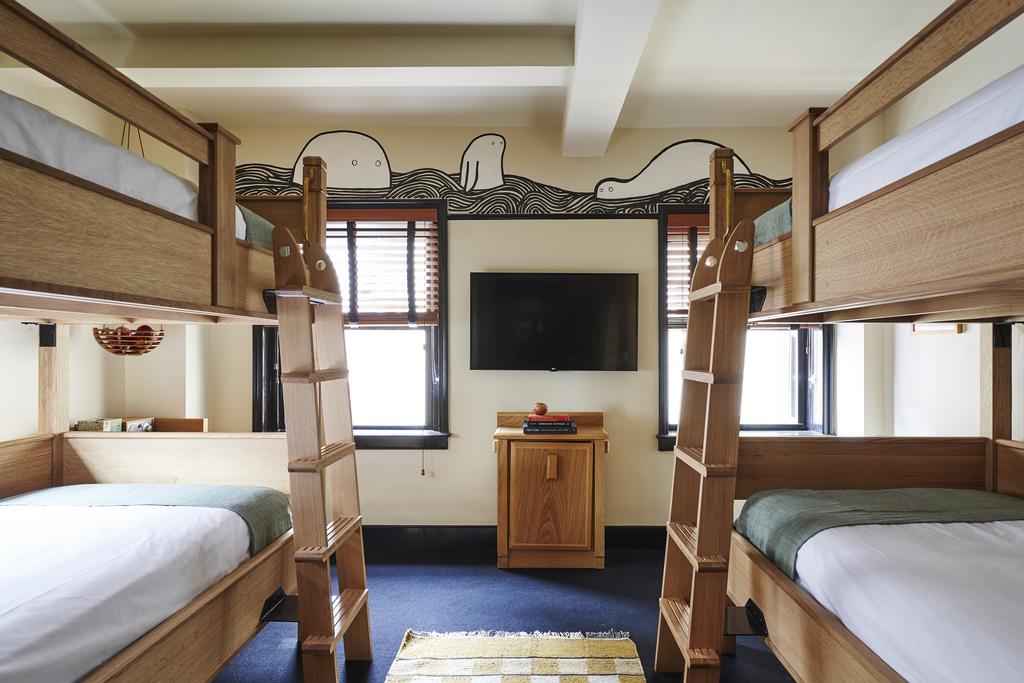
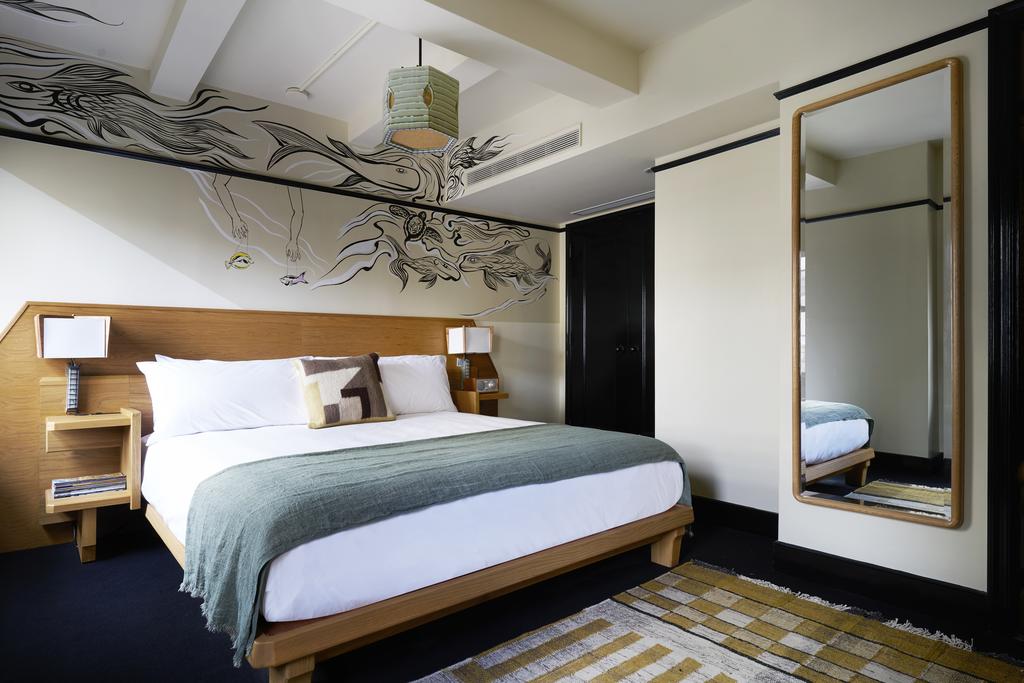
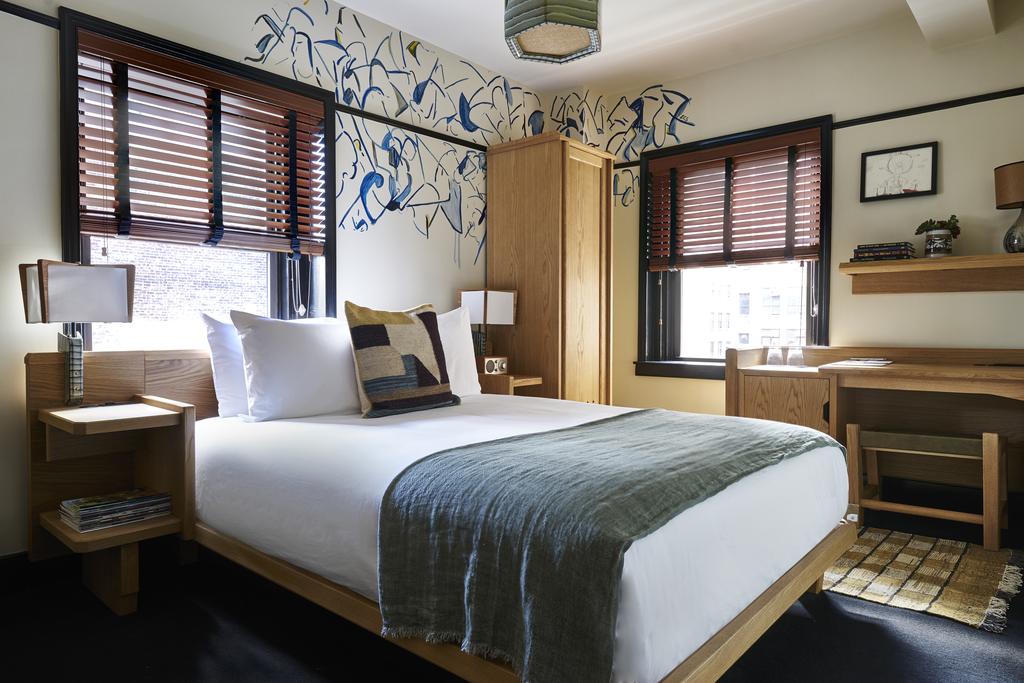
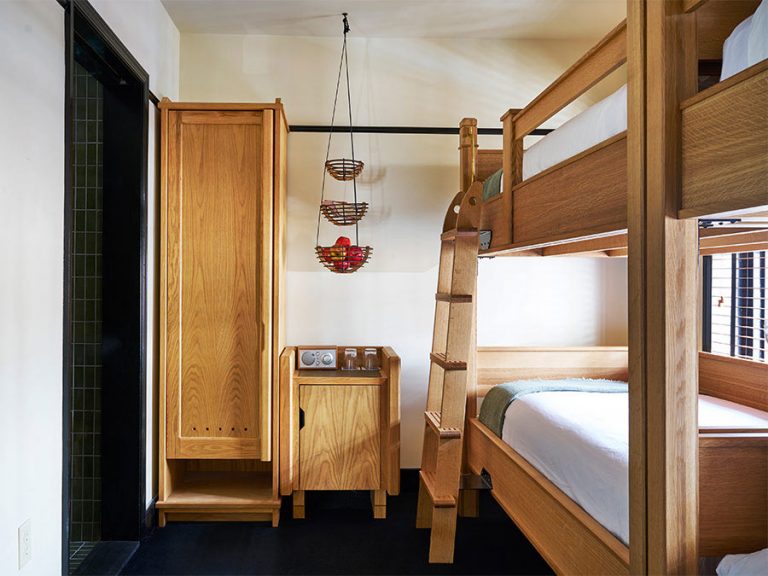
The guestrooms range from compact kings to suites and four-person bunk rooms. Their appeal lies less in space than in character: simple timber furniture, retro lighting, tactile walls, locally commissioned art, green-tiled bathrooms, and layouts designed to use every available metre intelligently. The bunk rooms introduce a rare sense of flexibility in Manhattan, making the hotel particularly suited to friends, families, and small groups. They are straightforward. But never anonymous. The most memorable details often appear directly on the walls, where original artworks turn individual rooms into small, private galleries.
A Hotel Built Around Gathering
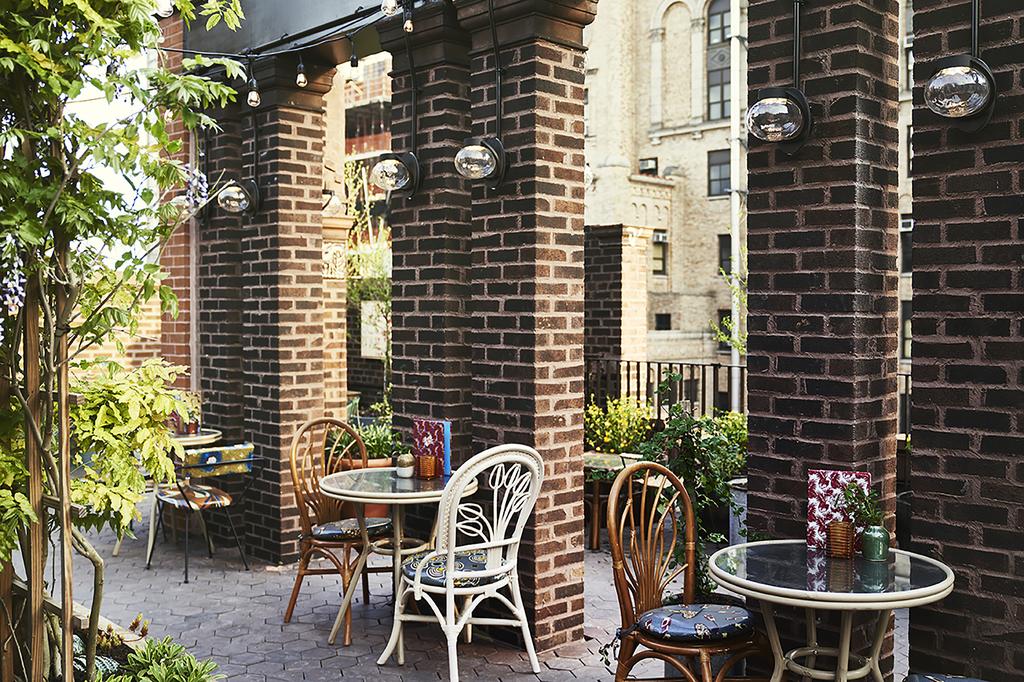
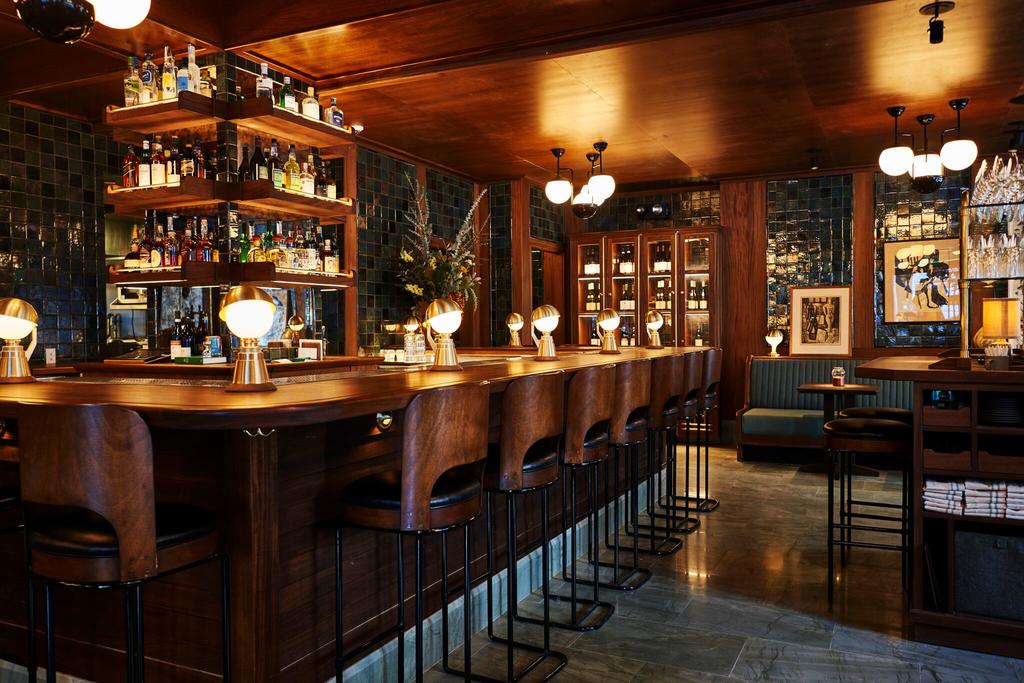
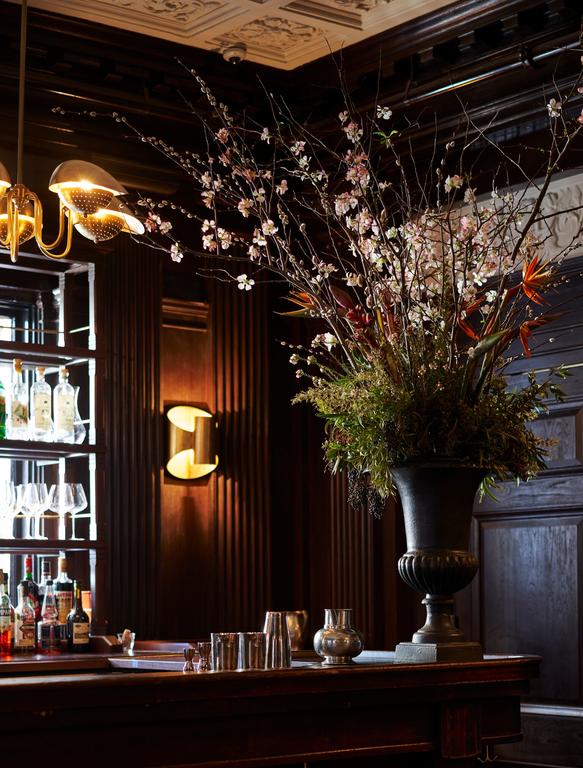
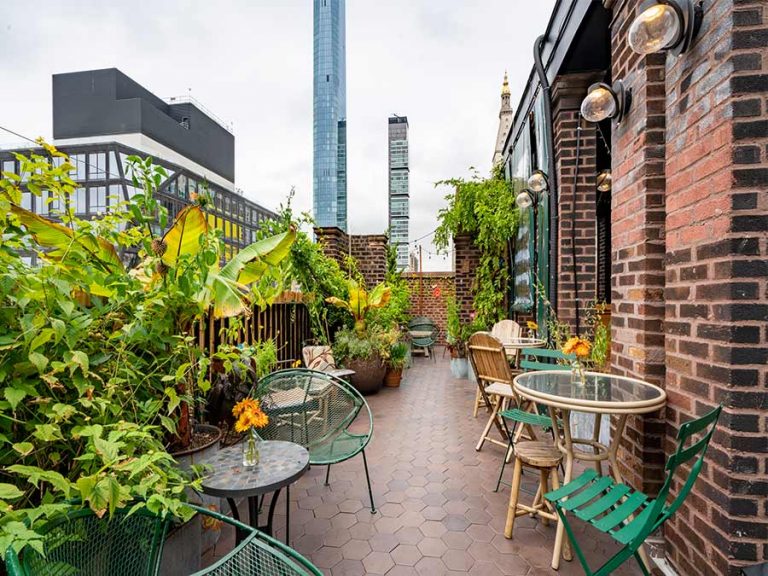
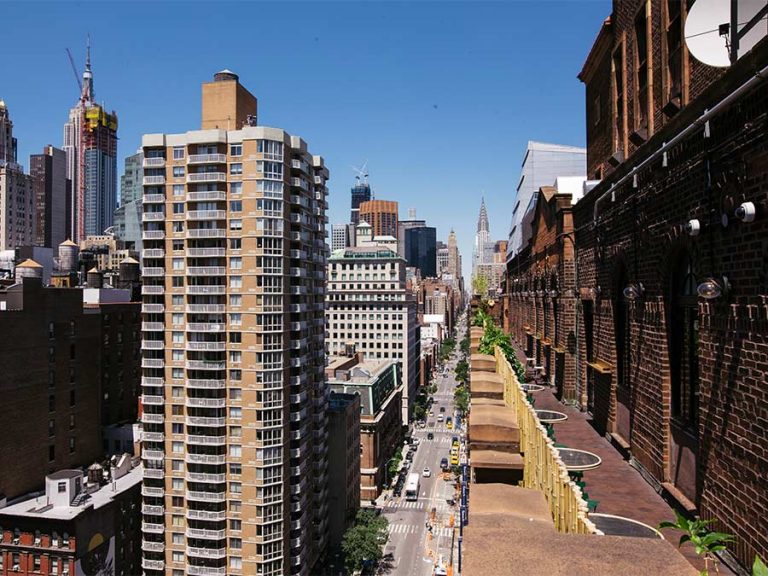
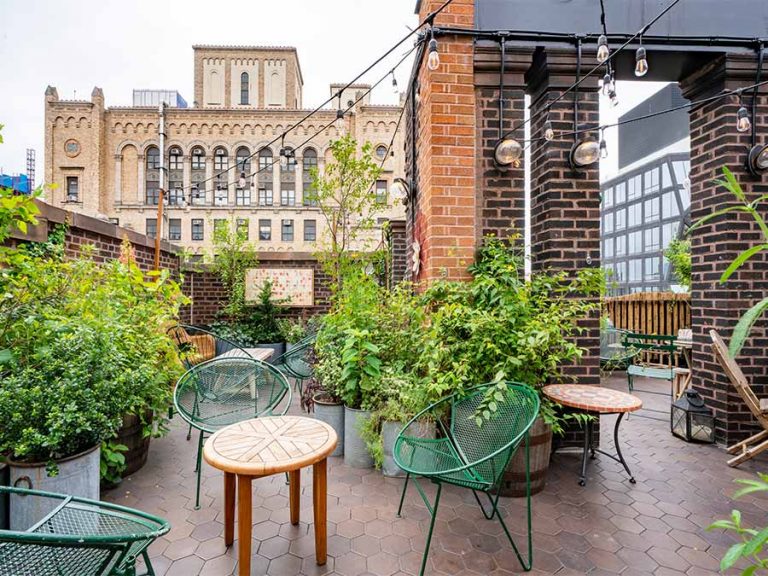
Freehand’s real energy is found in its public spaces. The mezzanine lounge works equally well as a place to read, work, meet, or begin the evening, while the hotel’s restaurants and bars draw a steady mix of guests and New Yorkers. Broken Shaker brings greenery, cocktails, small plates, and skyline views to the rooftop, creating a playful escape above Lexington Avenue. Elsewhere, cafés, dining rooms, and late-night spaces give the building a rhythm that changes throughout the day. The hotel never feels static. There is always somewhere else to go.
Flatiron Without the Formality
The location places guests between Manhattan’s competing energies. Flatiron and Gramercy provide architectural character and relative calm, while NoMad, Union Square, Madison Square Park, and the restaurants of lower Manhattan are all close at hand. Midtown is easily reached, but the hotel remains just removed enough from its intensity. That balance suits Freehand perfectly. Central, but not corporate. Social, but not overwhelming.
Why It Works
Freehand New York succeeds because it understands that affordability does not require the absence of imagination. Roman and Williams’ layered interiors, an active artistic programme, flexible room types, and genuinely animated public spaces give the hotel a strong cultural identity without becoming self-conscious. It feels youthful, communal, and unmistakably connected to the creative history of the building it inhabits.