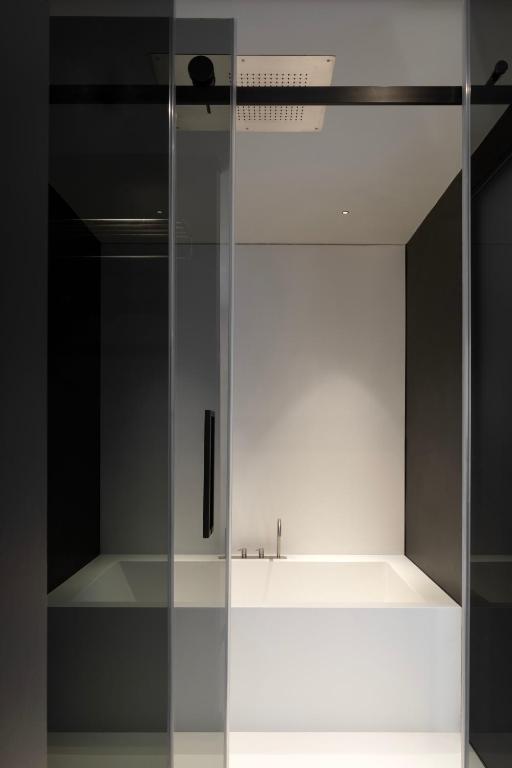
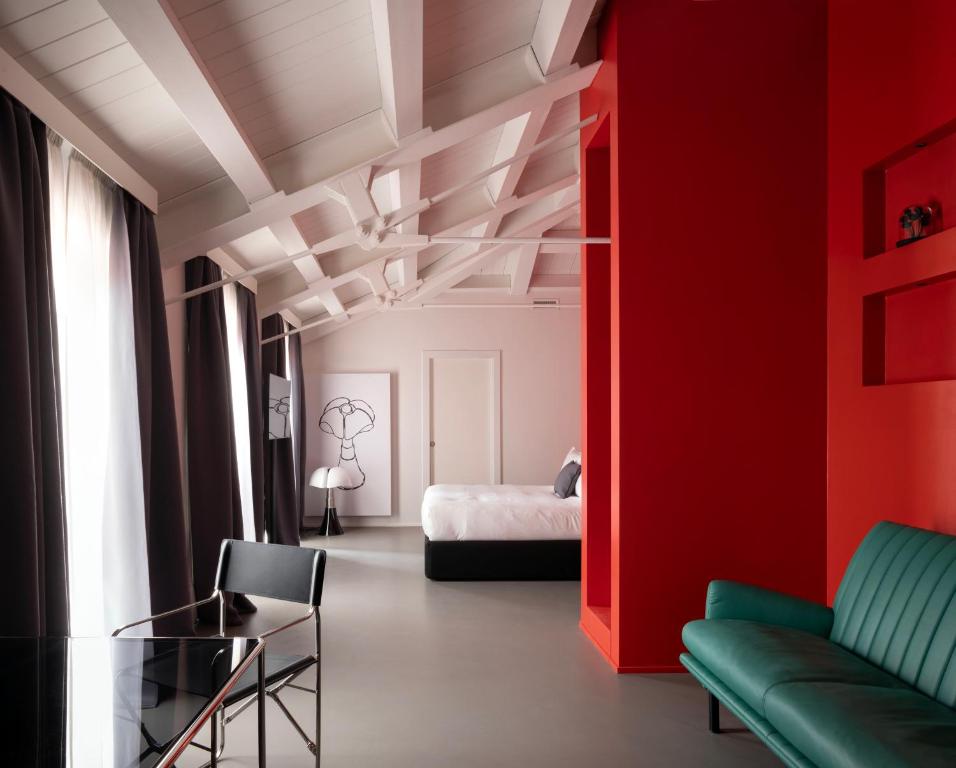
Interno Marche Design Experience Hotel – Tolentino, Marche, Italy
A living museum of Italian design, where 60 years of creative history become part of the stay
Why DNA Hotels Loves It
● A former leather factory and Poltrona Frau headquarters transformed into a 30-room casa-museo, with more than 400 pieces tracing six decades of Italian and international design.
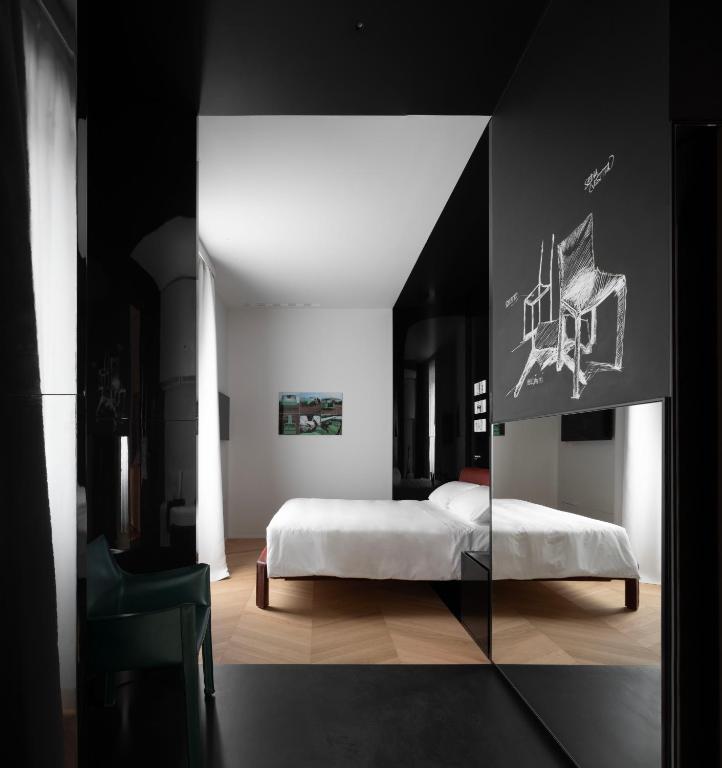
● Each room becomes its own design chapter, dedicated to figures including Gio Ponti, Gae Aulenti, Michele De Lucchi, Vico Magistretti, Achille Castiglioni and Marc Newson.
● Franco Moschini’s extraordinary personal connection to Poltrona Frau, Cassina, Cappellini, Zanotta and Gebrüder Thonet Vienna makes this much more than a hotel decorated with design classics — it is a place with genuine design DNA.
Sleep Inside Italian Design History
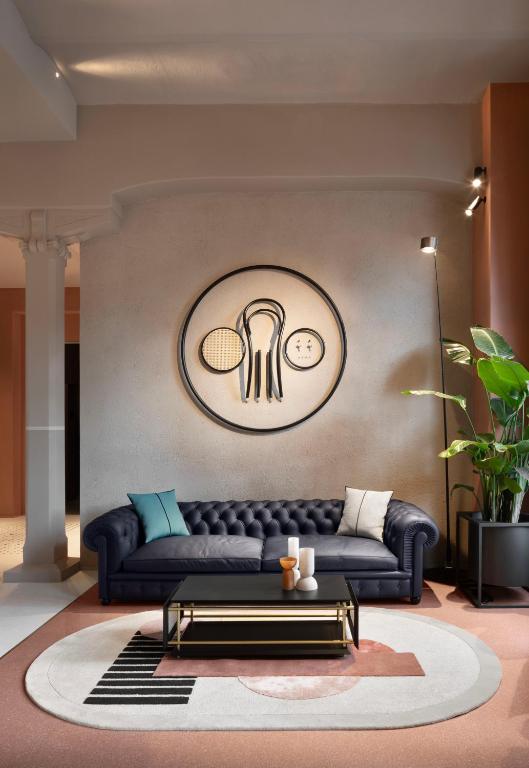
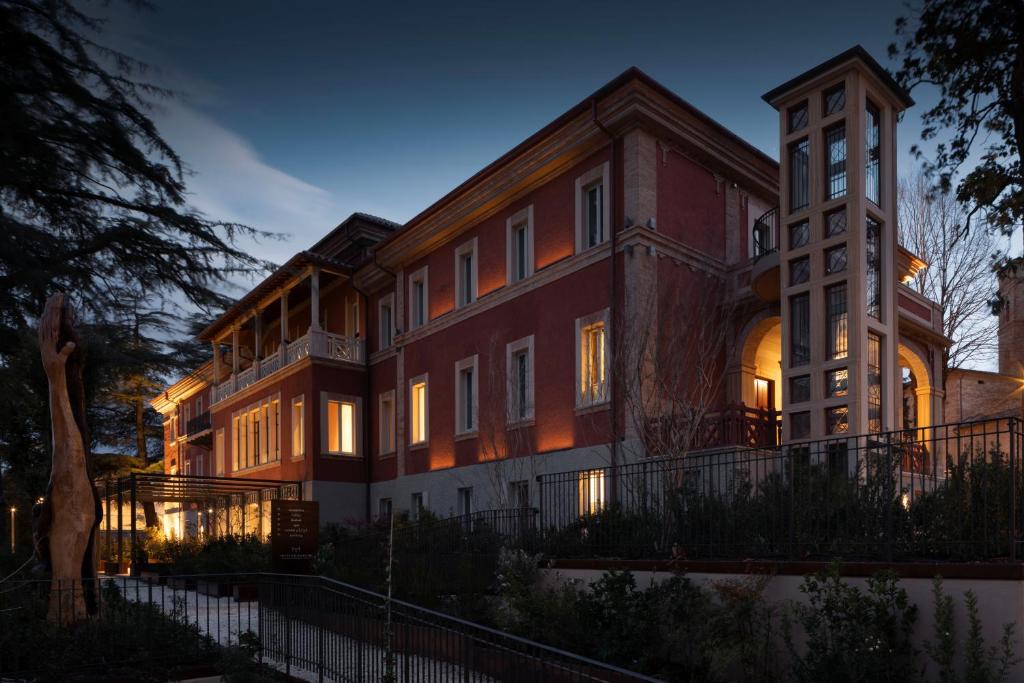
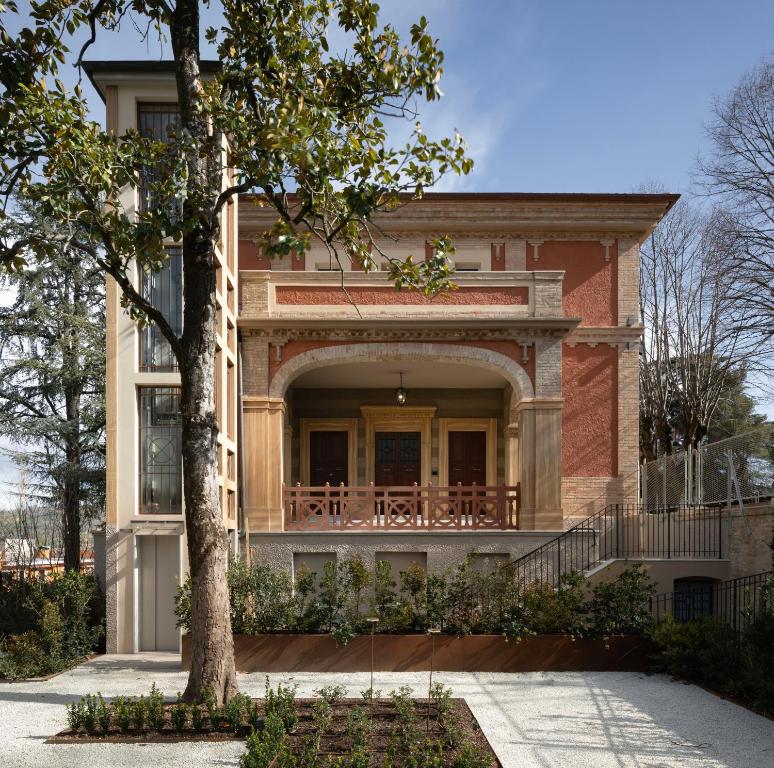
There are design hotels. And then there are hotels where the design actually has a story to tell. Interno Marche belongs firmly to the latter. In the small Marche town of Tolentino, Villa Gabrielli has been transformed into an extraordinary 3,600 m² hotel devoted to some 60 years of Italian and international design. But calling it a design hotel almost undersells it. This is a living casa-museo where you don’t simply look at important furniture. You sleep with it.
From Leather Factory to Poltrona Frau
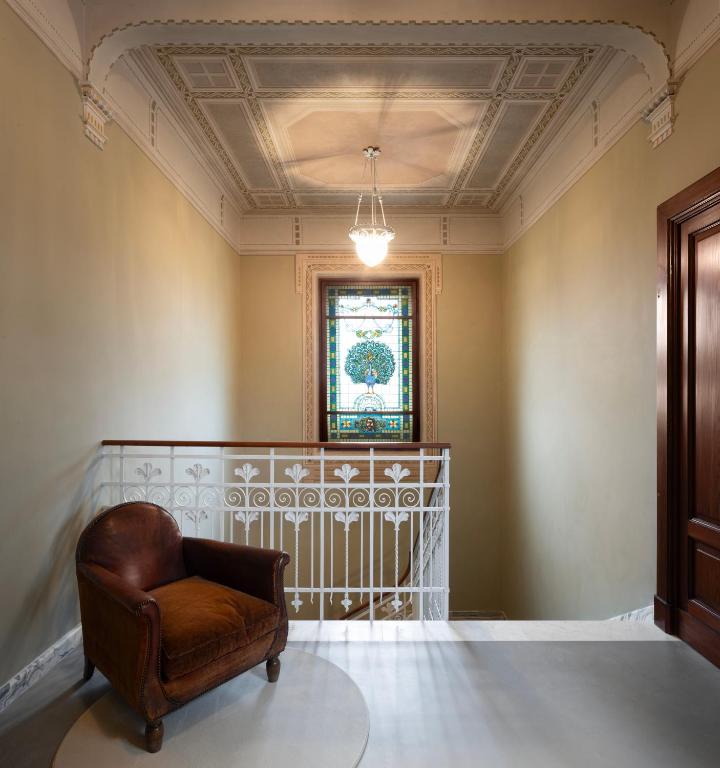
The building has design history embedded in its walls. Villa Gabrielli was constructed in the early 20th century in the late Liberty style as both factory and family residence for leather-goods company Nazareno Gabrielli. Generations of local women — remembered as the Gabrielline — worked here cutting and stitching leather. Then, in 1962, Poltrona Frau moved its production into the villa. Suddenly, this provincial Italian building became part of the story of one of the country’s most important furniture companies. Decades later, entrepreneur and design patron Franco Moschini would bring the circle back around.
L’Imprenditore del Bello
Moschini has been called l’imprenditore del bello — the entrepreneur of beauty. It’s difficult to imagine a more appropriate description. During his long career he helped turn Poltrona Frau into an international symbol of Italian craftsmanship and was closely connected with a remarkable constellation of design brands including Cassina, Cappellini, Zanotta and Gebrüder Thonet Vienna. He acquired Villa Gabrielli in 2016. Interno Marche became a way of bringing that lifetime of relationships, objects and ideas together under one roof. His guiding principle? Bello, buono, ben fatto. Beautiful, good, well made.
30 Rooms, 30 Design Stories
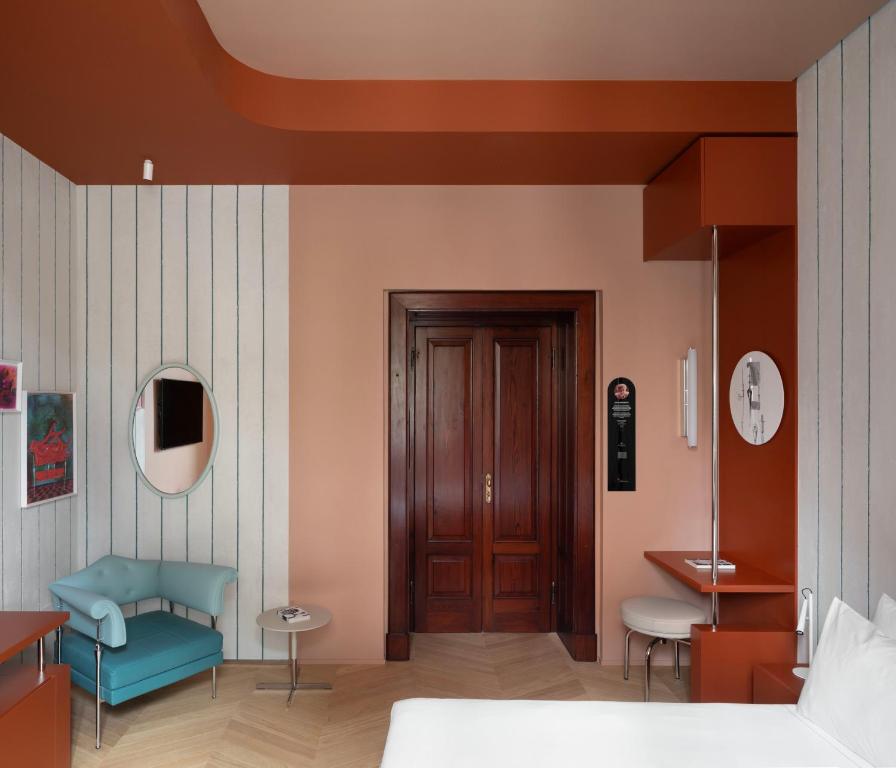
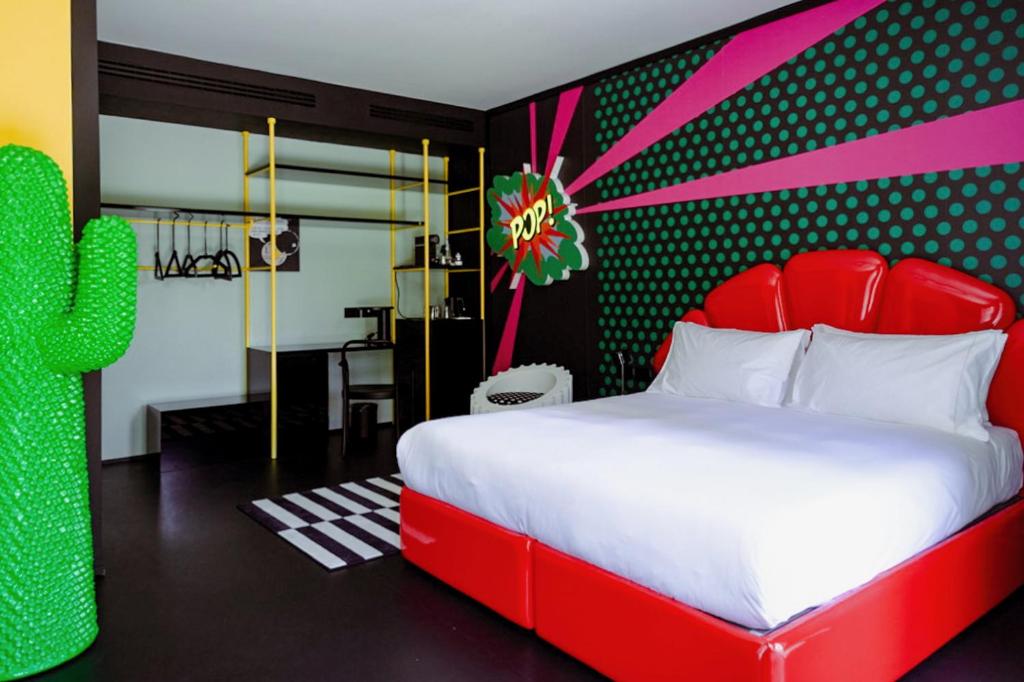
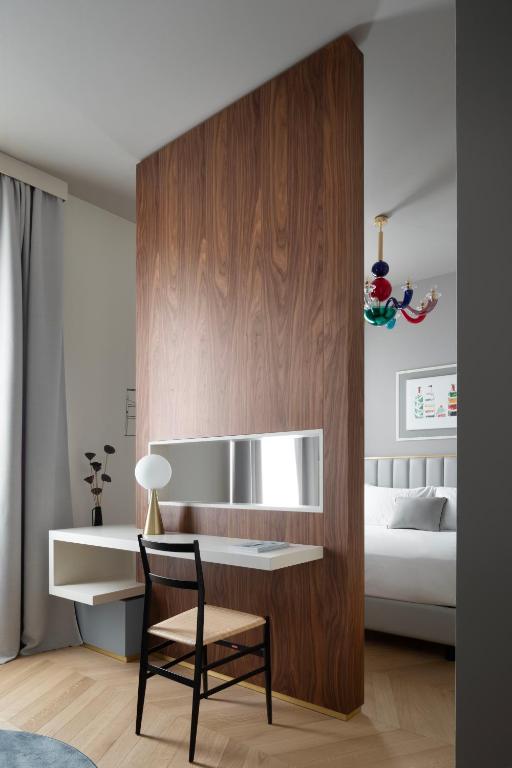
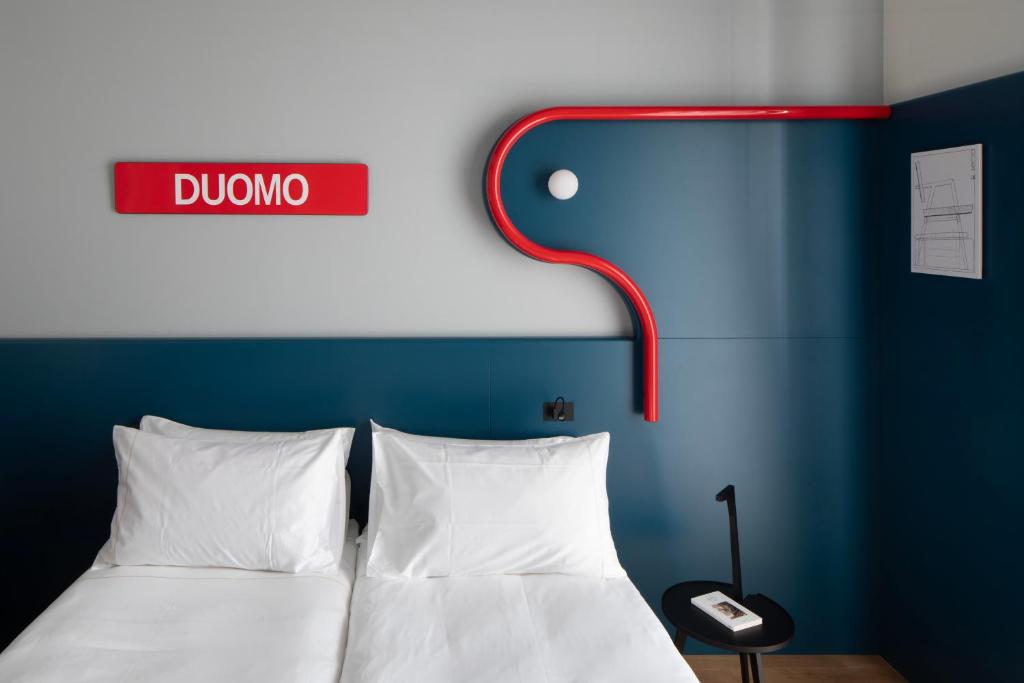
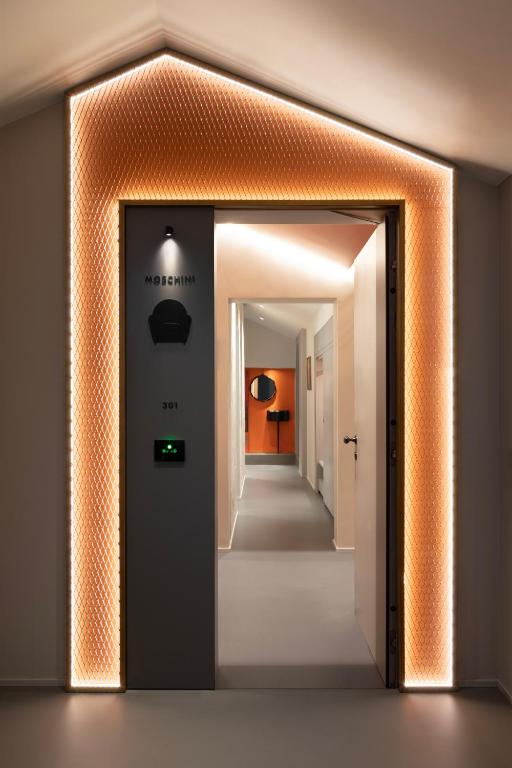
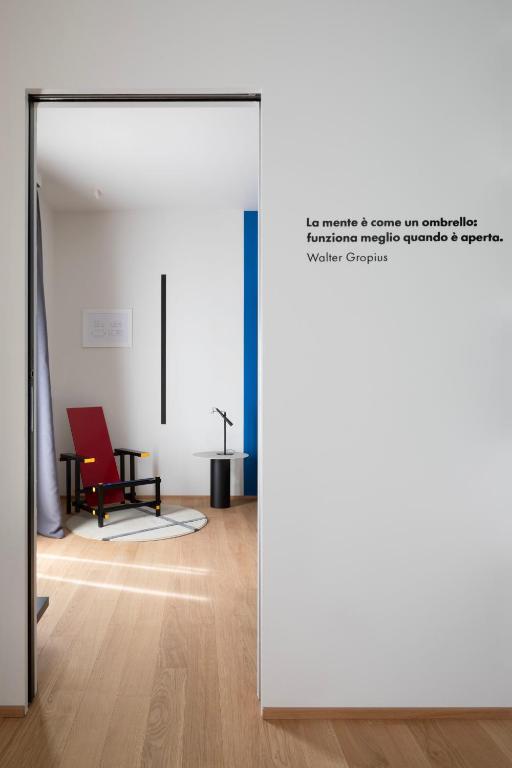
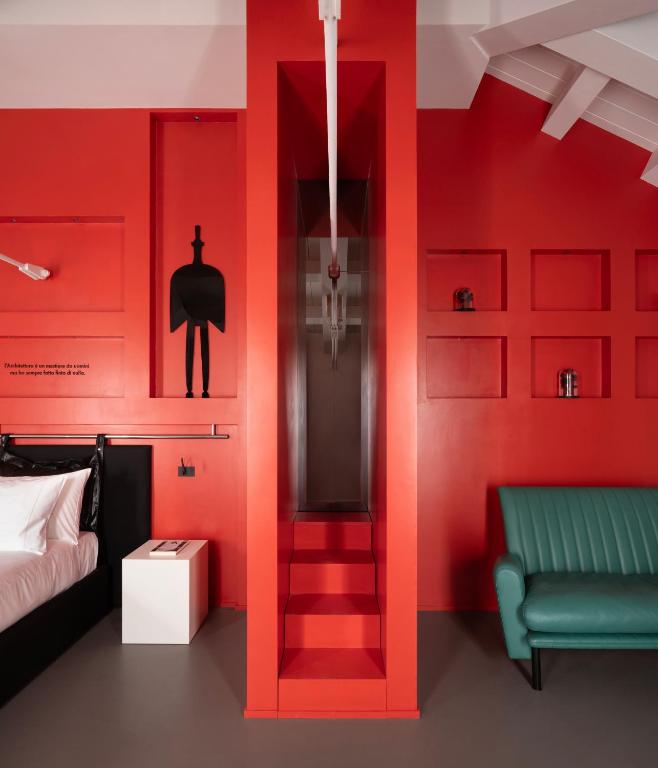
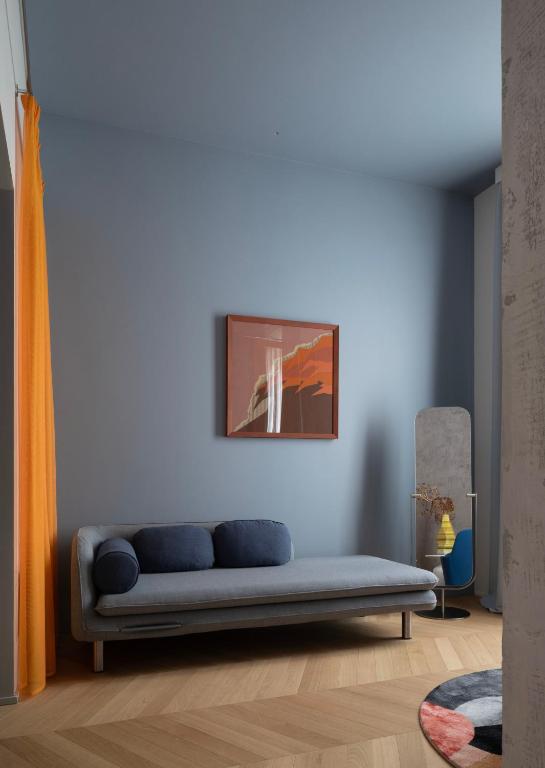
There are 25 individual rooms and five long-stay suites, and the idea is wonderfully simple: make every room different. The rooms celebrate designers and architects connected to Moschini and his companies, while the suites explore broader stylistic movements of the 20th century. The roll call is formidable. Gio Ponti. Gae Aulenti. Michele De Lucchi. Vico Magistretti. Achille Castiglioni. Marc Newson. Luigi Massoni. Marco Zanuso. Neri & Hu. Michael Thonet. Rather than hanging their names on doors and calling it a concept, Interno Marche fills the rooms with objects, furniture, colours and ideas that make those connections tangible.
Choose Your Designer
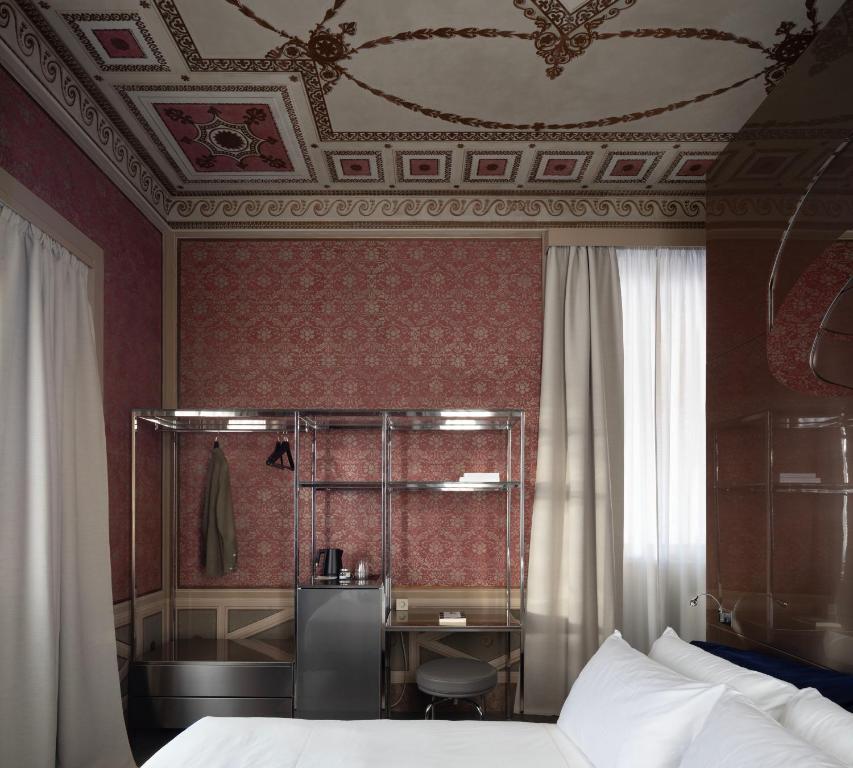
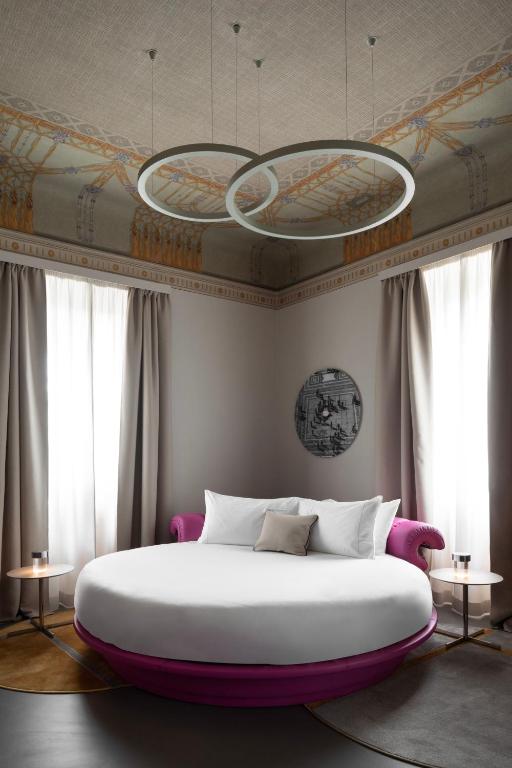
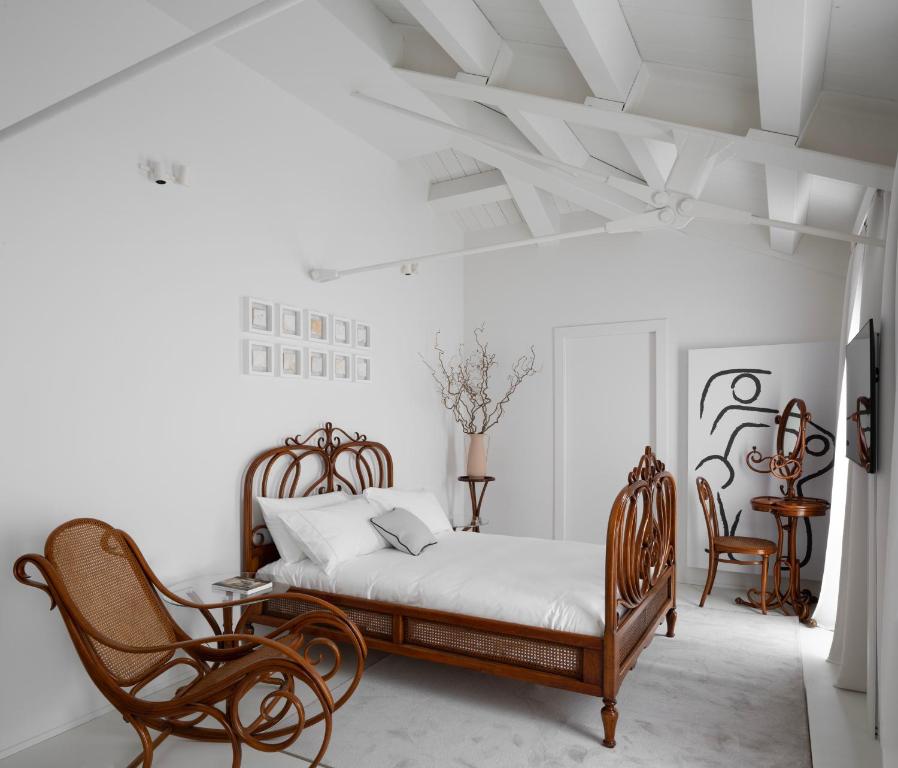
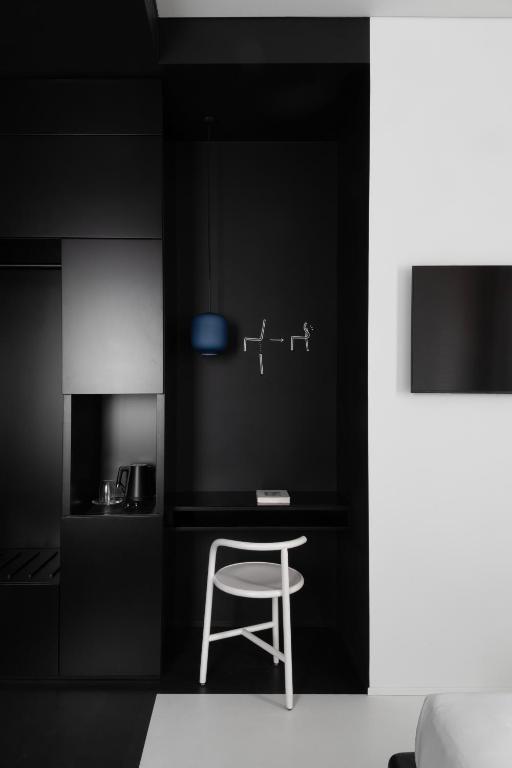
Part of the fun is deciding whose world you’d like to sleep in. The Gio Ponti room incorporates one of the earliest chairs Moschini commissioned from Ponti for Poltrona Frau. The almost entirely white Michael Thonet room places original 19th-century Thonet objects against an exceptionally restrained interior and opens onto a long balcony. In the Luigi Massoni room, his celebrated Lullaby design sits beneath restored ceiling frescoes. The Lazzeroni room features the Volare Bed. And in the Marco Zanuso room, a Woodline chair becomes part of the composition. This isn’t furniture selected because it matches the curtains. It’s the reason for the room.
Franco’s Room
Perhaps the most personal space occupies the villa’s turret. The Franco Moschini Suite sits beneath an original painted wooden ceiling and brings together objects Moschini himself loved. There’s Poltrona Frau’s iconic Vanity Fair armchair and Franco Albini’s extraordinary Veliero bookcase. The latter is precisely the kind of fragile, sculptural design object most hoteliers would never dream of putting in a guest room. Which is precisely why it belongs here.
More Than 400 Objects
Across Interno Marche are more than 400 pieces of furniture and design, combining historic originals, contemporary pieces and objects made specifically for the hotel. And you can go considerably deeper than simply admiring them. QR codes open a digital archive containing information about designers and objects, including sketches, photographs and provenance. The hotel therefore operates on two levels. Ignore all that and you still have an exceptionally handsome place to sleep. Get curious, and the building becomes a private design course.
The Factory Is Still There
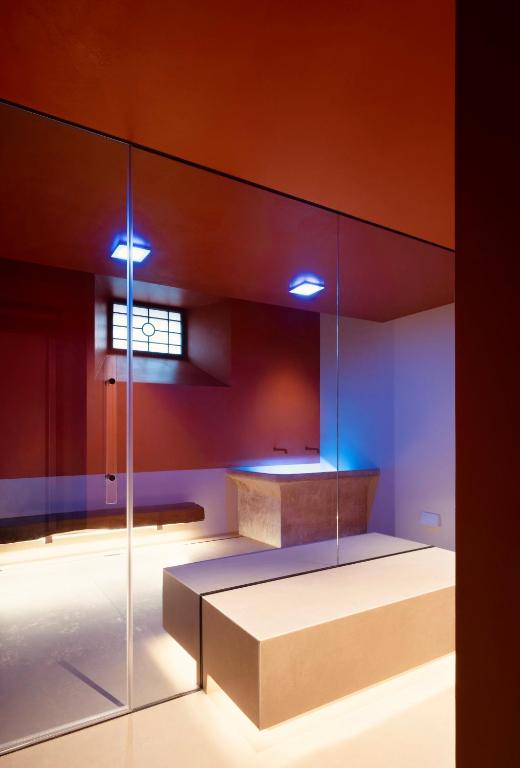
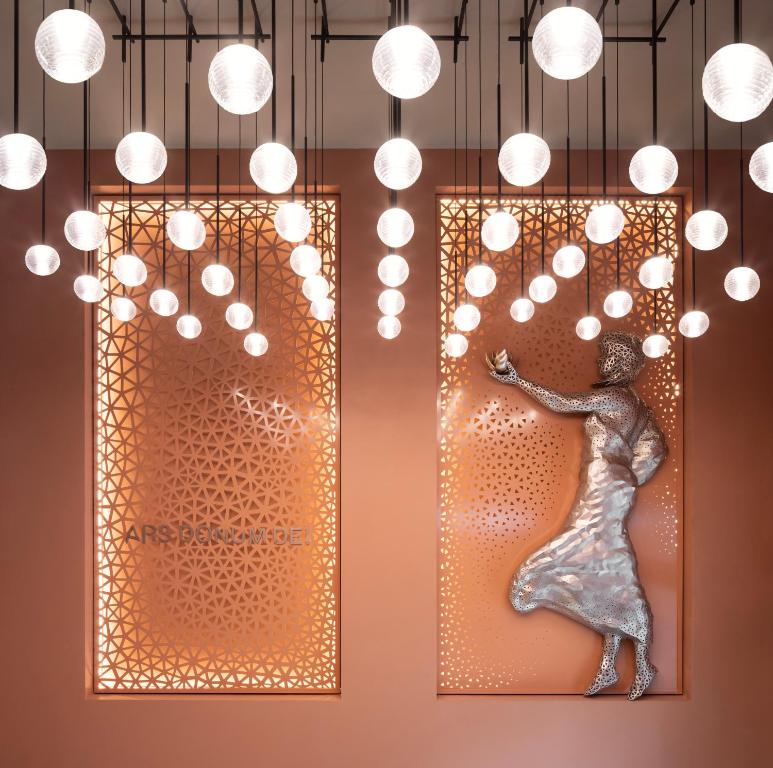
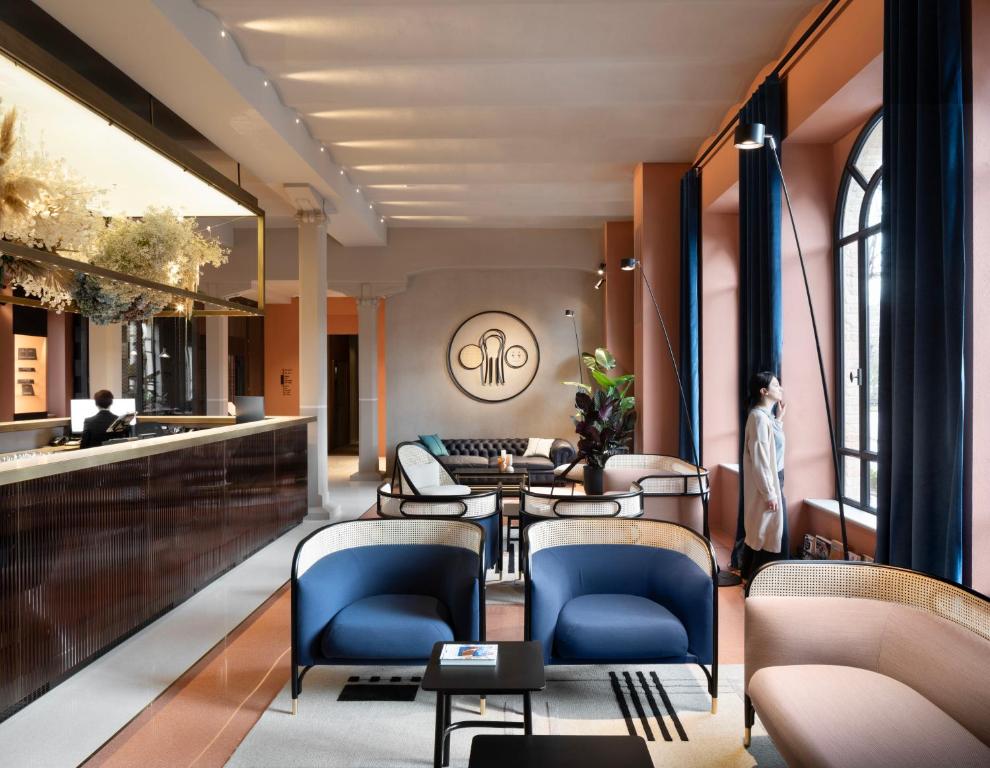
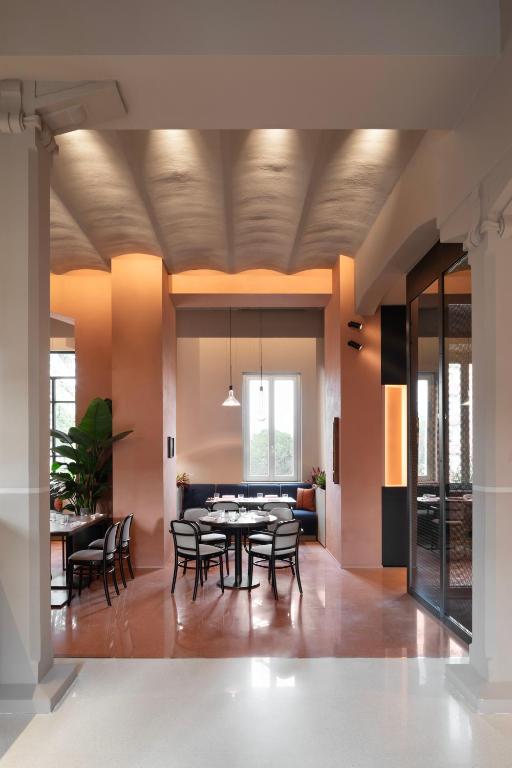
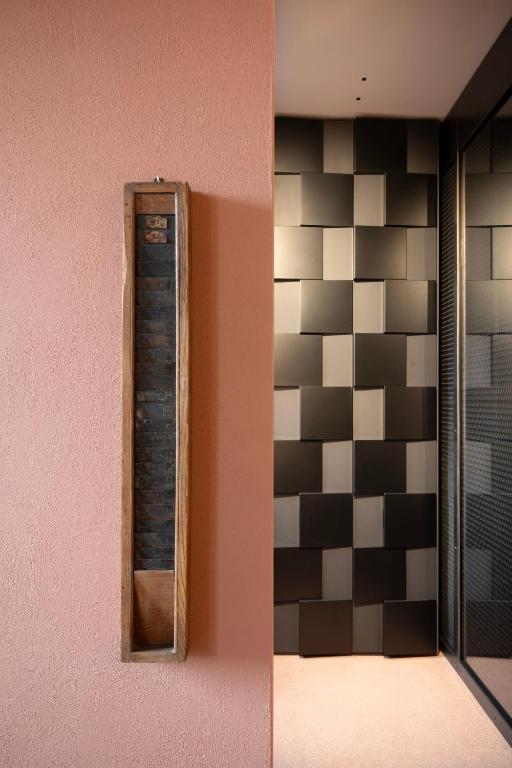
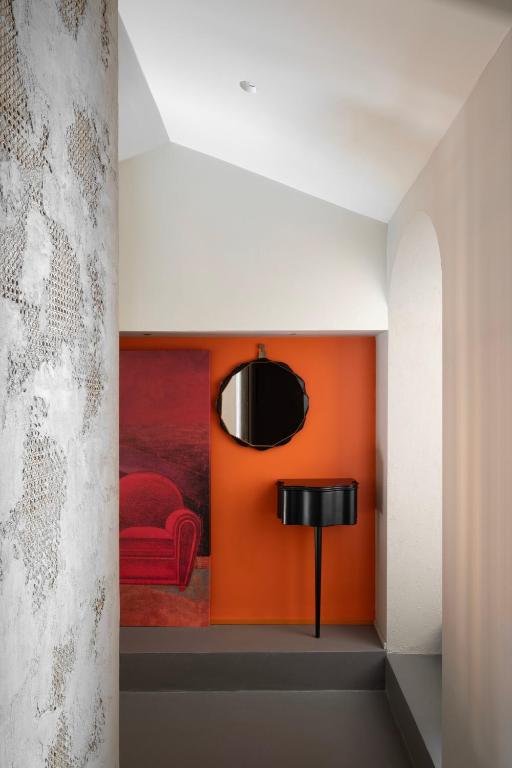
Architects ORAstudio spent three years restoring and adapting Villa Gabrielli rather than erasing its industrial past. Historic frescoes were recovered. Former tanning vats were incorporated. The generous early-20th-century factory spaces were retained and given new functions. Most impressive is the former three-bay production hall. Where factory lines once operated, you’ll now find the lobby, breakfast room and lounge bar. It’s a clever reversal: the industrial heart of the building remains its social heart. Even the spa references the property’s manufacturing history through metal surfaces and details.
L’Opificio
The name of the restaurant couldn’t be more appropriate. L’Opificio means workshop or factory. Here, another form of production takes over. The bistrot looks towards contemporary Marche cooking rather than attempting a nostalgic recreation of the past, reworking regional ingredients and flavours for a modern audience. Small leather pieces once produced in the building line the walls, quietly connecting dinner back to the workers and manufacturing history of Villa Gabrielli. Locals mix with hotel guests. That’s important. Interno Marche wants to be part of Tolentino, not a design bubble dropped into it.
From Factory Floor to Spa
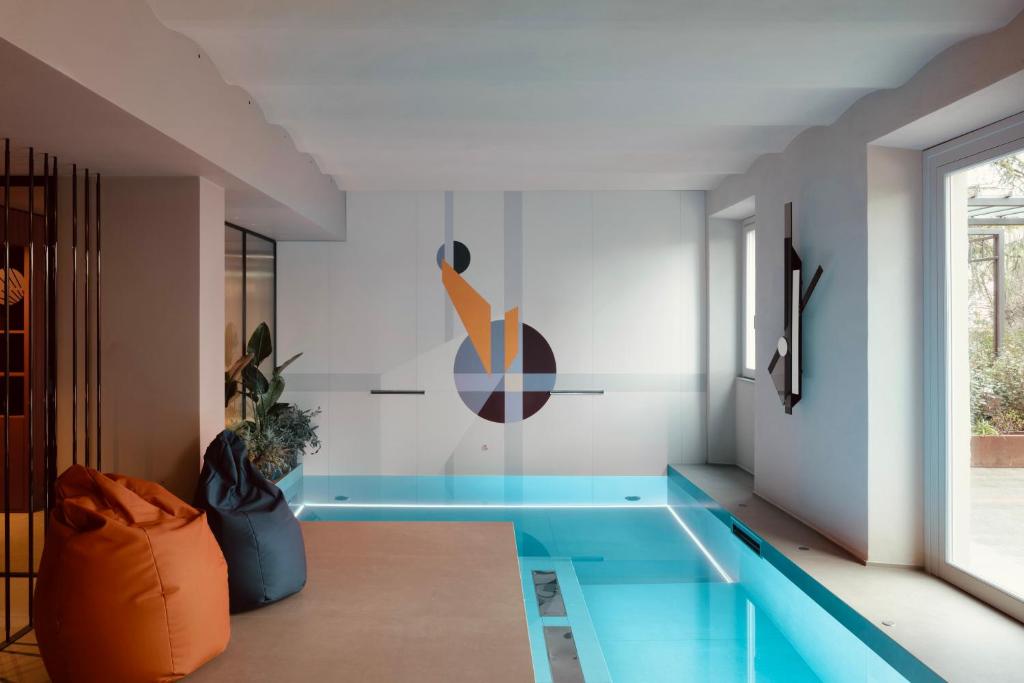
Downstairs, the industrial references continue into a contemporary spa with indoor pool, accompanied by a gym. It’s another good example of the hotel’s approach. History isn’t replicated literally. Instead, materials and architectural traces create connections between what the building was and what it has become. That philosophy extends into the project’s environmental ambitions: Interno Marche achieved both GBC Historic Building and LEED for Hospitality certifications, an unusually rigorous combination for the restoration of a historic hotel.
Why Tolentino Matters
And then there’s the location. Tolentino isn’t Florence, Milan or Rome. That’s rather the point. The town remains closely connected to Italian manufacturing and design — Poltrona Frau is still based here, complete with its own museum — but Interno Marche also wants guests to discover a less obvious part of central Italy. Beyond Tolentino lie the Sibillini Mountains, the Conero Riviera and hill towns including Urbisaglia, Elcito and San Ginesio. Closer to home are the Basilica of San Nicola, Castello della Rancia and the Politeama cultural centre, another Franco Moschini Foundation project, restored with Michele De Lucchi. Interno Marche isn’t merely telling visitors to explore the Marche. It gives them a very good reason to come here in the first place.
Nothing Comes From Nothing
High on Villa Gabrielli’s turret are the words: Ex nihilo nihil. Nothing comes from nothing. It’s difficult to think of a better manifesto for this hotel. Interno Marche isn’t a collection of famous chairs assembled to make an Instagrammable design hotel. Its objects, designers, building, leather-making past, Poltrona Frau history and Franco Moschini’s own life are interconnected. The design has provenance. And that’s what makes Interno Marche fascinating. You can sleep beneath frescoes, sit in a piece of Italian design history, scan its story over breakfast and spend the evening eating Marche food in the factory where generations once worked. A museum normally asks you not to touch. Interno Marche gives you the room key.