JW Marriott Hotel Qufu | China
Confucian philosophy translated into contemporary Chinese hospitality
Why DNA Hotels Loves It
● LTW Designworks rooted the entire design in Qufu and the teachings of Confucius rather than applying generic international five-star luxury.
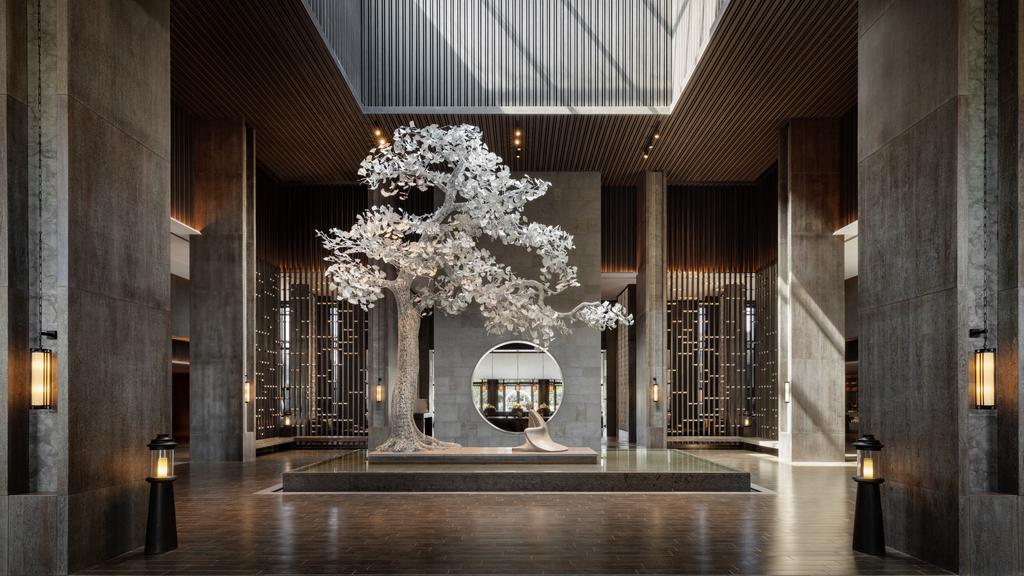
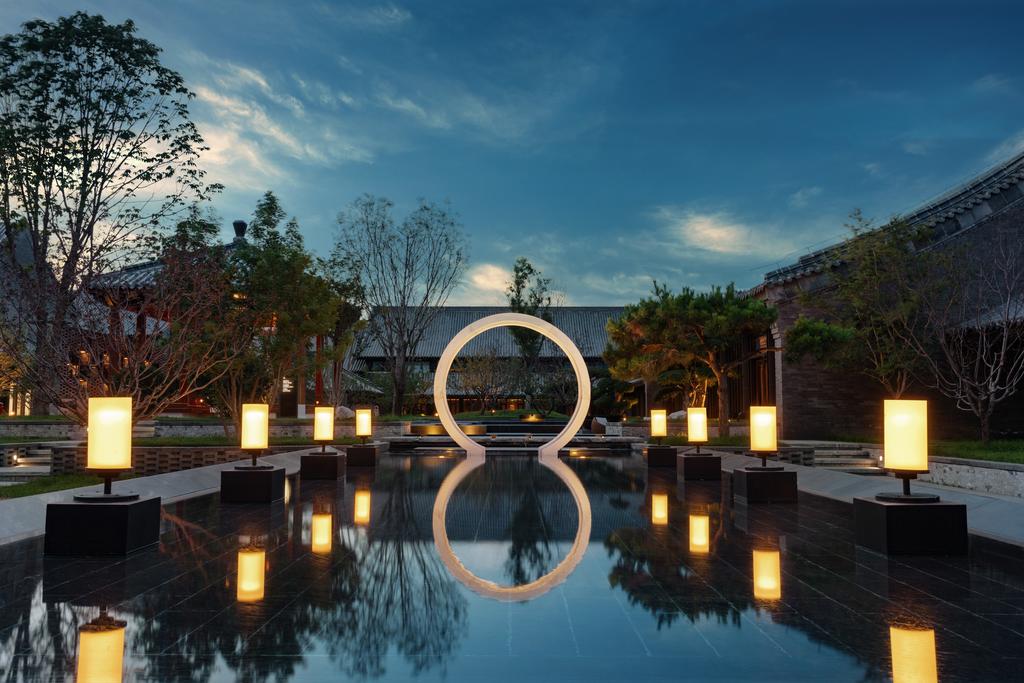
● The extraordinary atrium centres on a seven-metre ginkgo tree installation and a statue of Confucius, surrounded by water, stone and a monumental moon gate.
● With the UNESCO-listed Temple and Cemetery of Confucius and Kong Family Mansion on its doorstep, this is a rare chain hotel where architecture genuinely responds to its cultural setting.
Designing for the Birthplace of Confucius
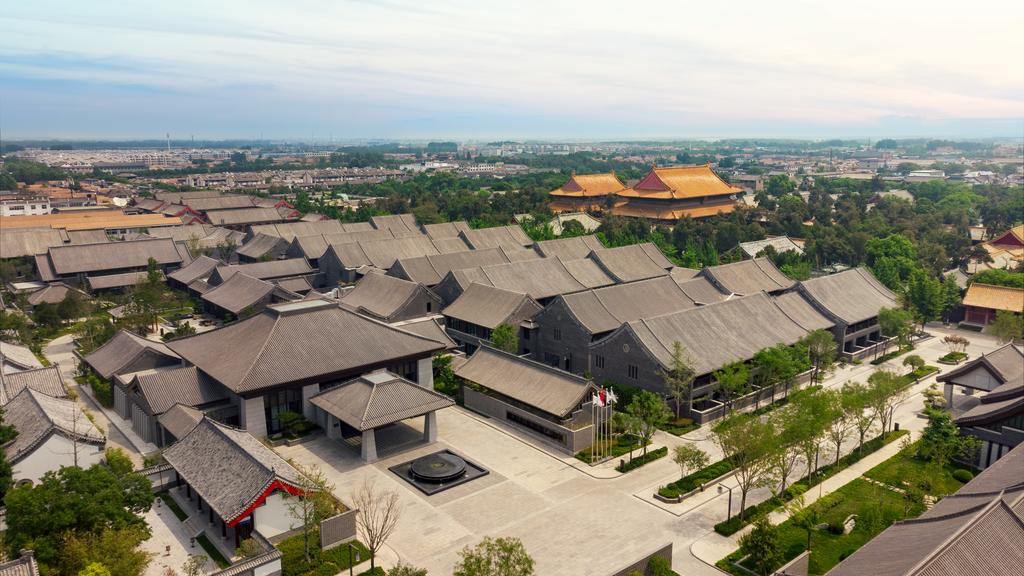
There are few places where context matters quite as much as Qufu. This city in Shandong is the birthplace of Confucius, and its Temple of Confucius, Cemetery of Confucius and Kong Family Mansion form one of China’s most significant cultural sites. Building a 197-room luxury hotel here therefore presented an unusual question. How do you create something contemporary beside buildings carrying more than two millennia of history without either ignoring them or turning the hotel into historical theatre? For Singapore-based LTW Designworks, the answer was interpretation rather than imitation.
Old Ideas, New Architecture
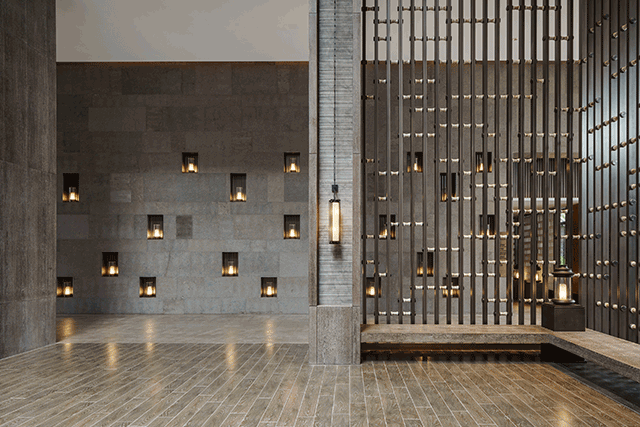
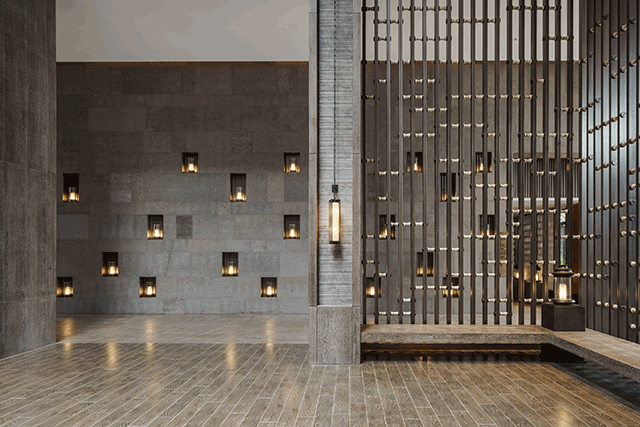
From outside, JW Marriott Hotel Qufu adopts the low-rise proportions, columns and traditional Chinese rooflines of its historic surroundings. Inside, the references become more abstract. Bronze latticework recalls traditional Chinese screens, but its pattern is contemporary. Slate, grey stone, dark timber and bronze replace the polished international glamour normally associated with a large luxury hotel. The palette is deliberately restrained. It reflects one of the ideas that guided designer HL Lim: Confucian teachings about humility. Luxury here is supposed to feel grounded rather than ostentatious.
Under the Ginkgo Tree
The hotel’s defining space is its atrium. A seven-metre-high ginkgo tree rises from a stone platform surrounded by water. Beneath it sits a kneeling representation of Confucius, illuminated by daylight from the glass roof above. The symbolism refers to the philosopher teaching his disciples beneath a tree. But there is also something wonderfully physical about the installation. The surrounding water is deliberately subtle. You may notice its sound before you notice the water itself. A monumental stone moon gate frames the composition and separates the atrium from the lounge beyond. For a JW Marriott, it is an unusually contemplative arrival.
The Six Arts
Look more closely and references to Confucian culture appear throughout the hotel. The design draws on the traditional Six Arts associated with Confucian education: rites, music, archery, charioteering, calligraphy and mathematics. Sixteen Chinese chimes appear at the entrance. Ancient-style scrolls, books and ceramics populate the interiors. A stone relief recounts episodes from Confucian history, while a golden reception wall abstracts falling ginkgo leaves. The first-floor public spaces even reinterpret the scholar halls of the neighbouring Confucius Temple. Yet LTW deliberately avoided literal historical reproduction. These are clues rather than costumes.
Mountains and Water
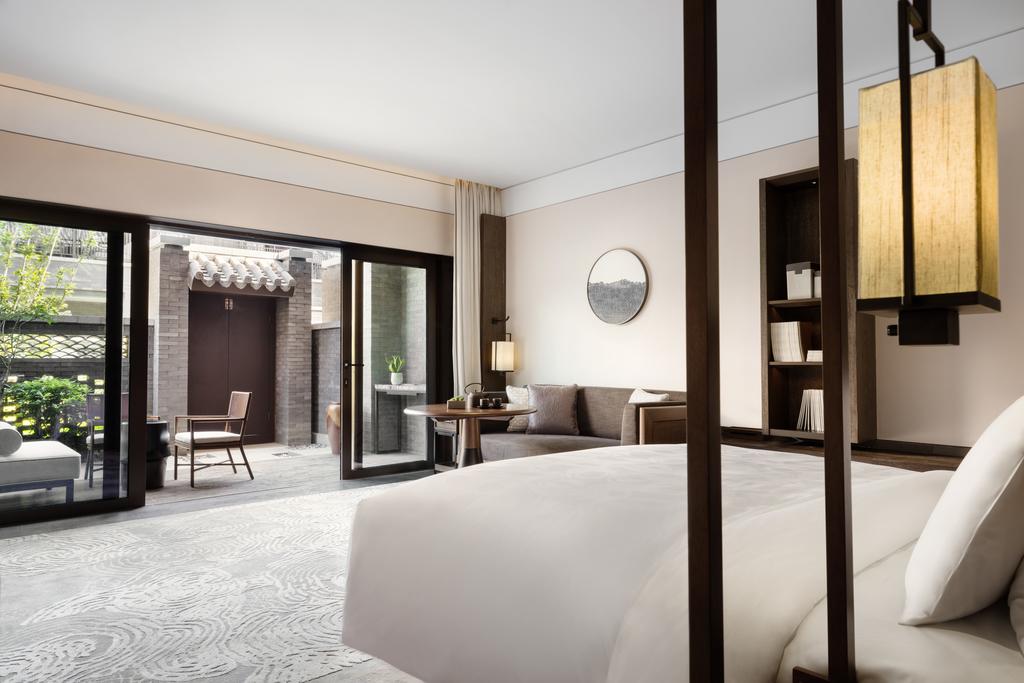
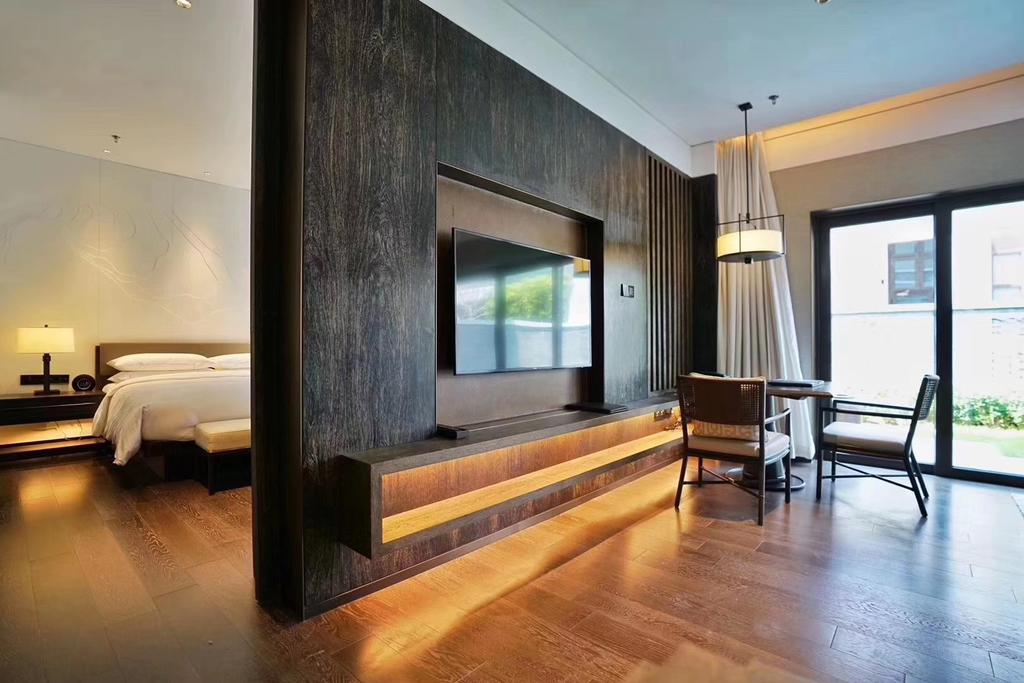
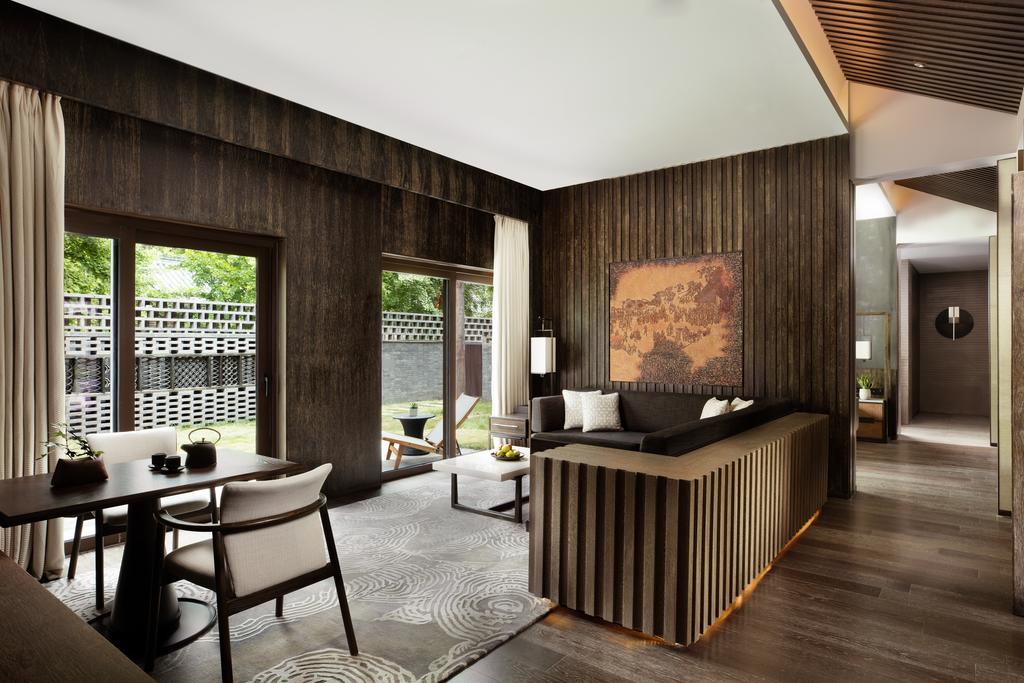
The same thinking continues through the 188 guestrooms and nine suites. Their contrasting brown-and-white palette was inspired by another Confucian idea: the solidity of mountains and fluidity of water. Dark walnut timber frames pale upholstery, stone, textiles and restrained gilded details. Chinese references appear in artwork and detailing rather than overwhelming the rooms. Some rooms extend into private courtyards or verandas enclosed by stone walls and planting, further softening the boundary between hotel room and traditional Chinese domestic architecture. The result feels quieter than you might expect from a hotel of this size.
Tea as Ritual
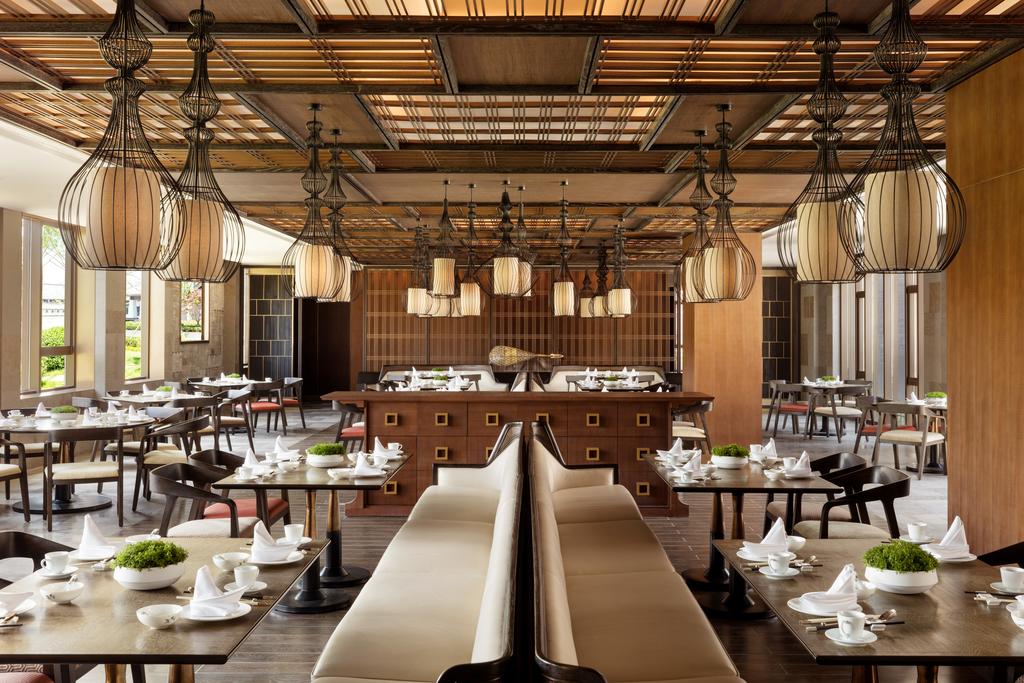
Perhaps the most convincing cultural space is also one of the simplest. The Tea Library combines shelves of books and tea wares with a garden-like setting, turning drinking tea into something closer to a quiet ritual. Guests can explore local tea culture with a tea master rather than simply ordering another pot from a hotel lounge. Elsewhere, Residence is a dramatic two-storey restaurant serving Shandong, Kongfu and Cantonese cooking, while the hotel’s dining spaces continue the wider architectural language of stone, timber and muted colour. Food, tea, books and conversation become part of the same cultural narrative.
A Different Kind of Chain Hotel
DNA Hotels usually looks for individuality, which can make a 197-room JW Marriott an unexpected inclusion. But Qufu demonstrates what can happen when an international hotel brand allows place to dictate design. Remove this building from Qufu and much of its meaning disappears. The ginkgo tree, moon gate, scholar halls, chimes, water, books and restrained material palette aren’t simply Chinese decorative motifs. Together they tell a very specific story about the man whose ideas shaped this city — and much of Chinese civilisation. JW Marriott Hotel Qufu proves that even a global luxury brand can possess a strong sense of place when the architecture starts by listening to where it is.