Le Coucou | Méribel, France
Pierre Yovanovitch turns Alpine tradition into a witty, art-filled mountain retreat
Why DNA Hotels Loves It
● Pierre Yovanovitch designed the architecture and interiors as one coherent project, creating more than 130 bespoke furniture and lighting pieces specifically for the hotel.
● Alpine references are present everywhere, but filtered through contemporary art, bold colour and Yovanovitch’s unmistakably playful sense of proportion.
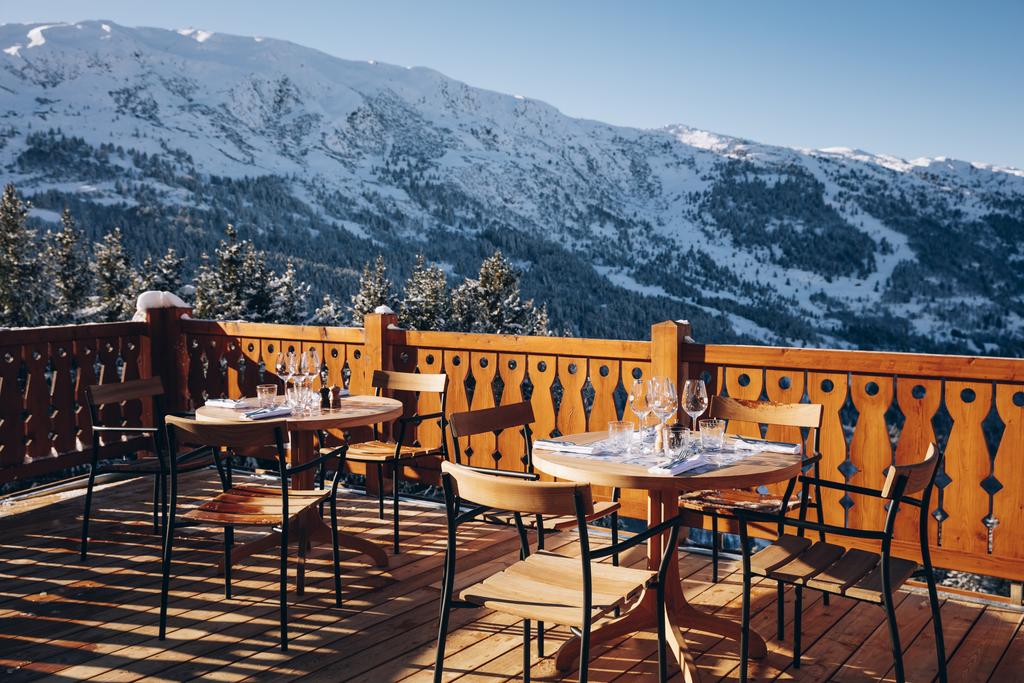
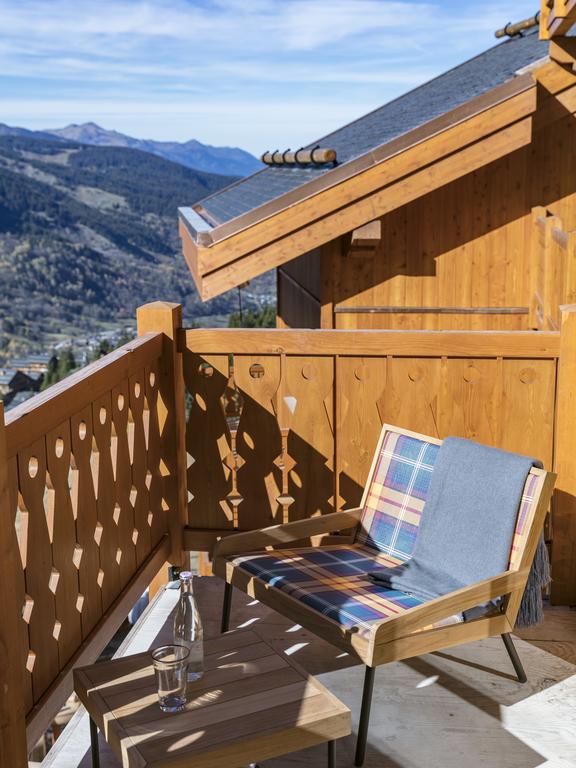
● The ski-in, ski-out setting, panoramic mountain views and indoor-outdoor pools make the landscape an integral part of the architecture rather than simply its backdrop.
A Chalet Built Around the View
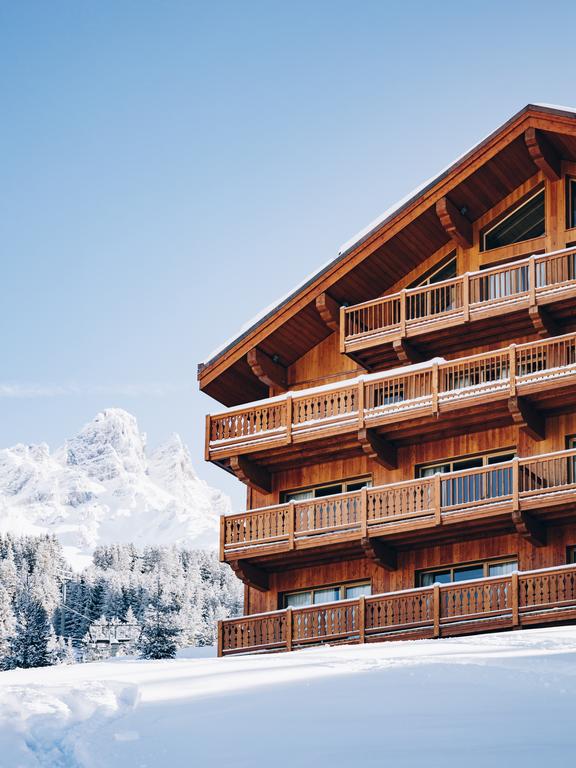
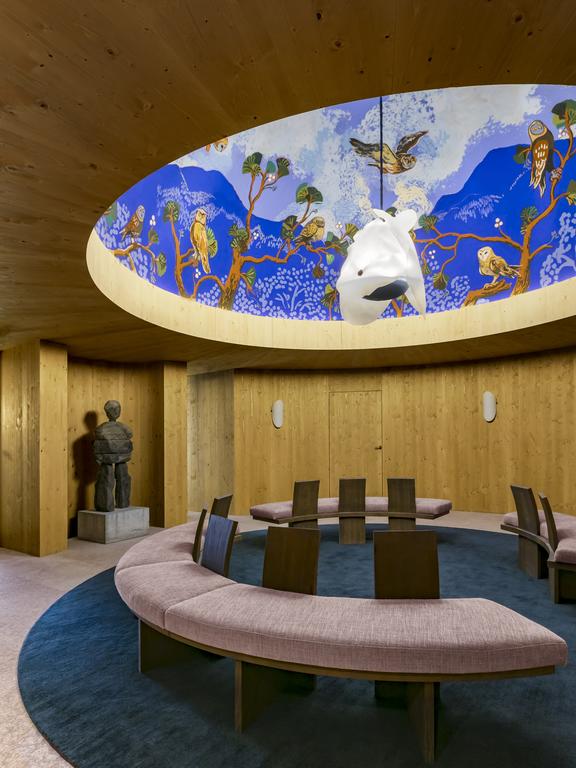
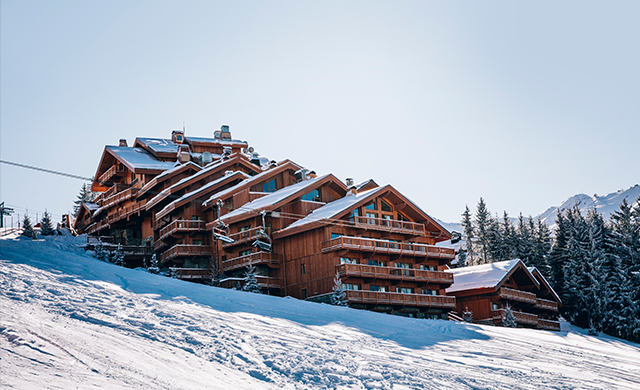
Perched high in Méribel’s Belvédère district, close to Le Rond-Point des Pistes, Le Coucou is conceived as a ten-level chalet stepping down the mountain rather than sitting heavily upon it. Strict local planning rules dictated a regionally appropriate architectural language, but Pierre Yovanovitch used those constraints intelligently. Rugged stone, timber and broad terraces root the building in Savoyard tradition, while the staggered massing opens virtually every room towards the surrounding peaks. For Yovanovitch, the view came first. The building follows it. Inside, the arrival immediately changes register. A five-metre-high domed ceiling, created after sacrificing an upstairs bedroom to gain additional volume, carries a fresco by artist Matthieu Cossé of owls, treetops and blue mountains. Beneath it hangs a chandelier resembling melting ice. Alpine architecture suddenly becomes theatre.
Yovanovitch Without Restraint
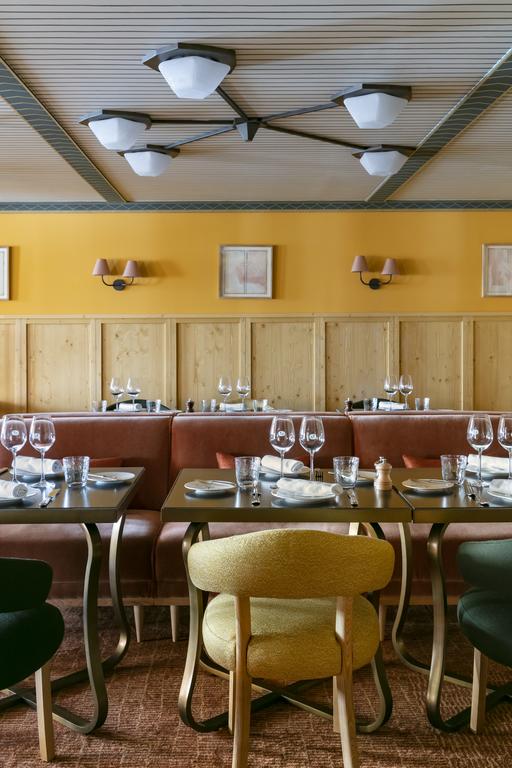
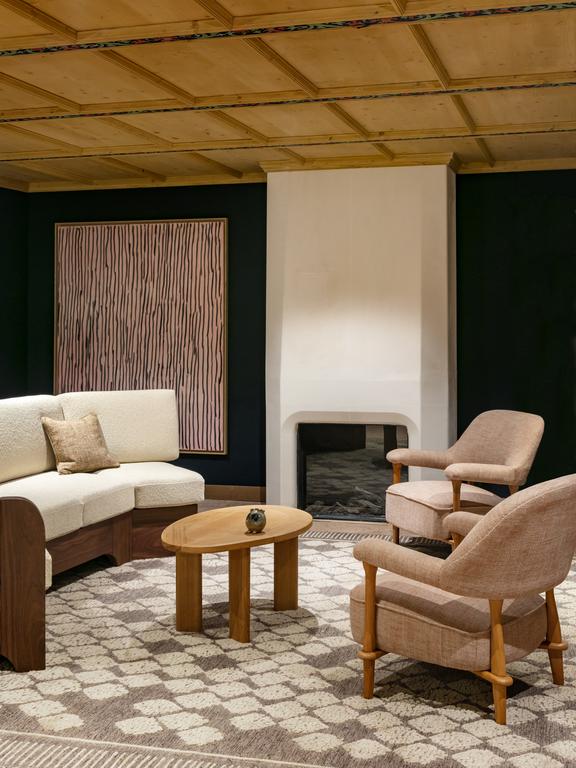
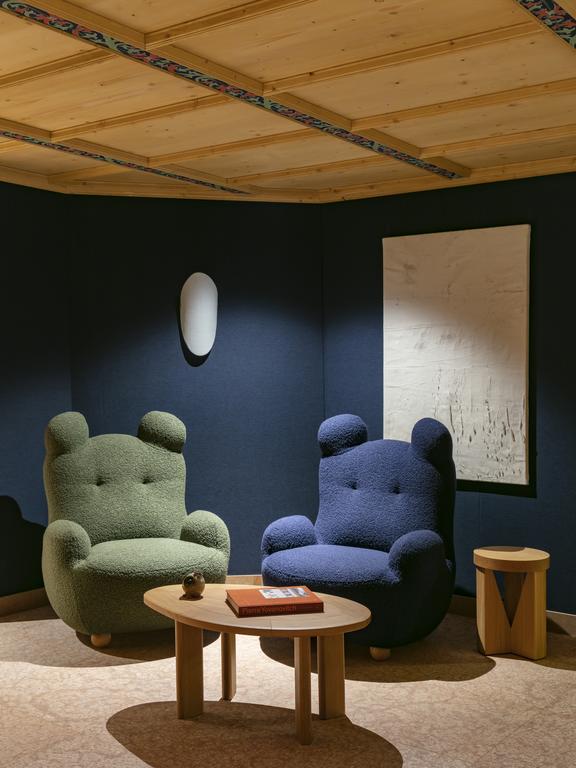
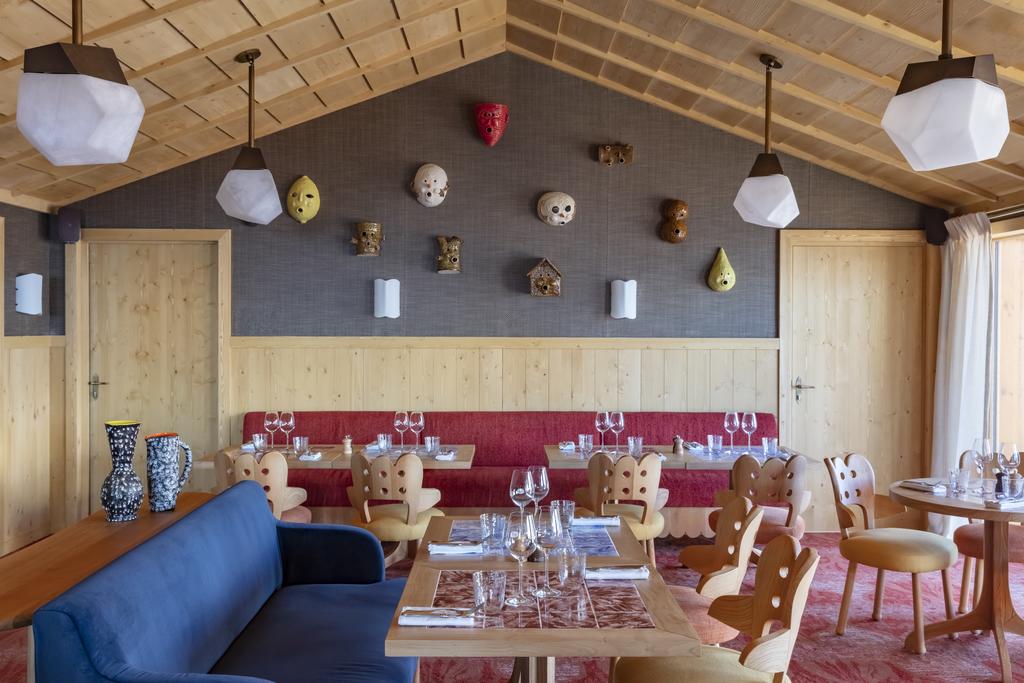
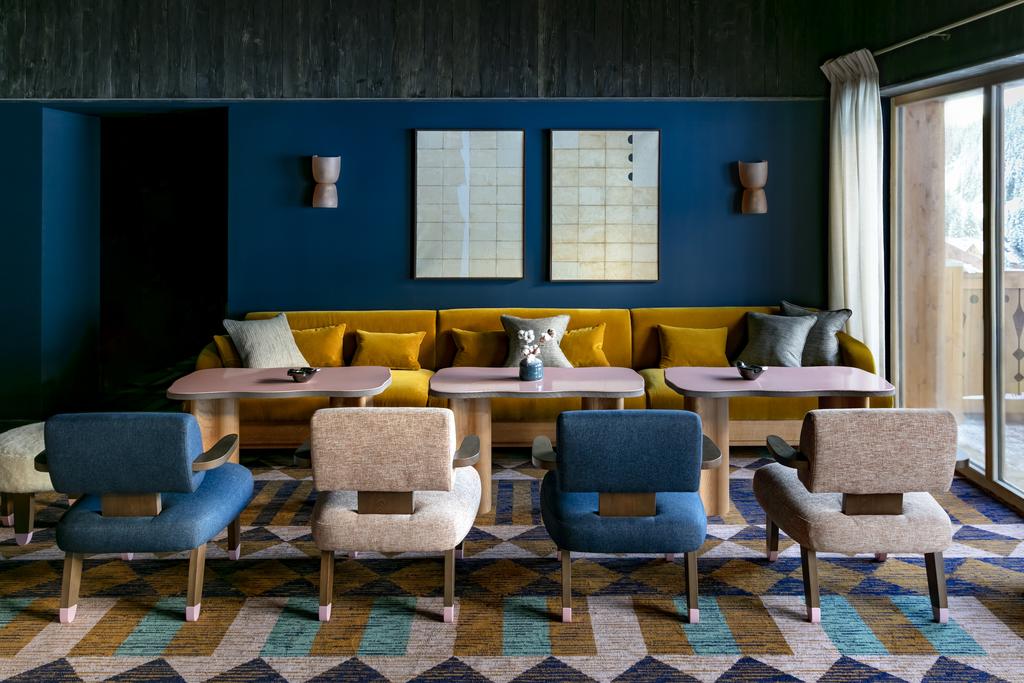
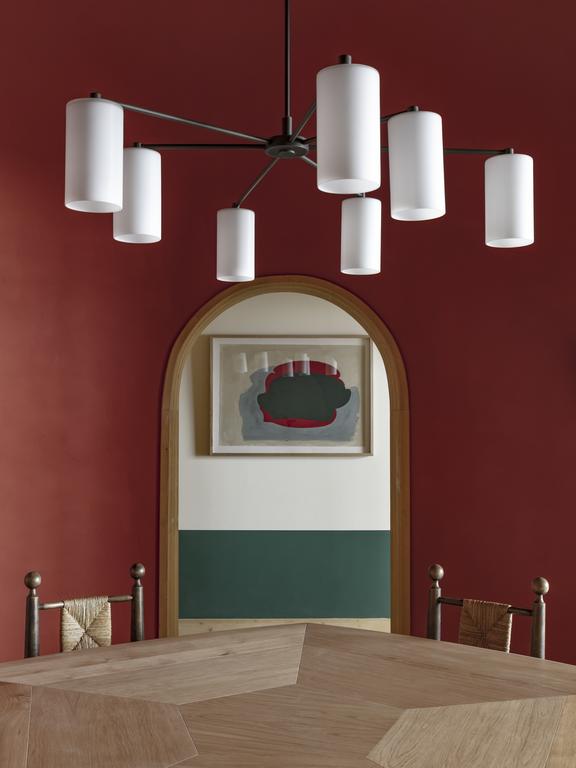
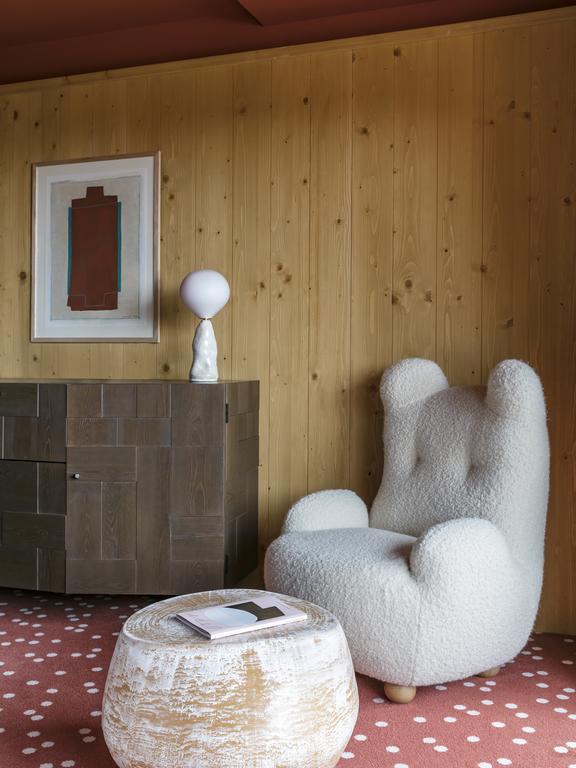
Le Coucou was one of Yovanovitch’s most ambitious hospitality projects, involving hundreds of bespoke details and more than 160 artworks selected for the property. His familiar Bear Chairs appear in the public spaces, alongside abstract furniture forms, geometric carpets, sculptural lighting and an eclectic palette of pink, mustard, blue and earthy mountain tones. Wood, leather, metal, ceramics and glass are layered with far more personality than the predictable timber-and-fur vocabulary of many ski hotels. The humour matters. At Beefbar, an entire wall of vintage cuckoo clocks turns the hotel’s name into an installation. Elsewhere, furniture subtly assumes animal forms and the owl motif reappears without becoming a theme. Tradition remains visible. It simply refuses to behave conventionally.
Rooms with Individual Character
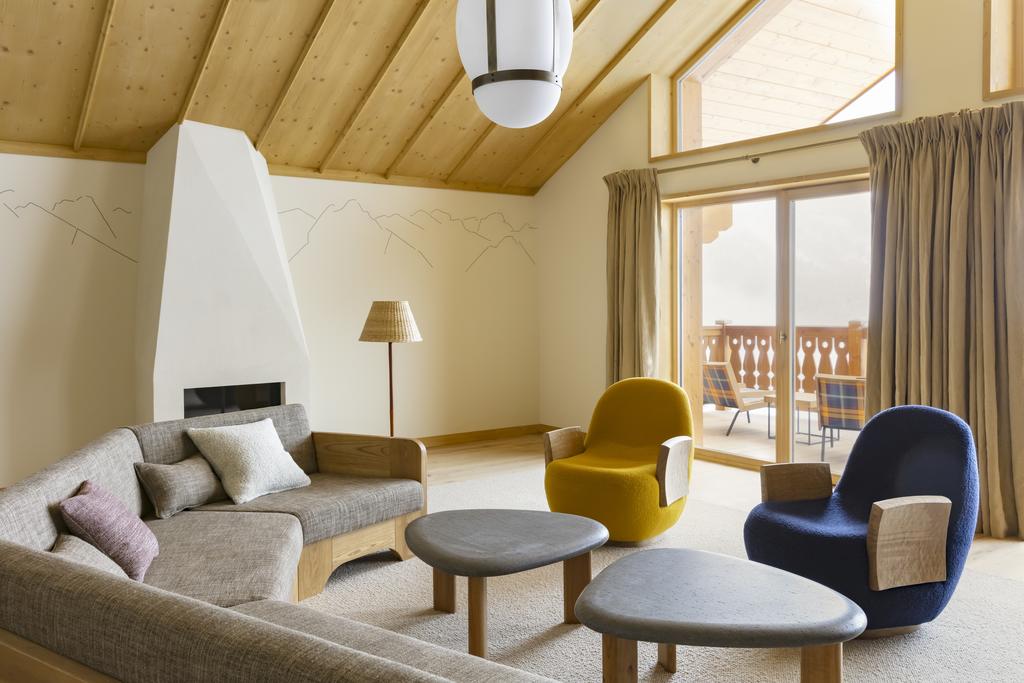
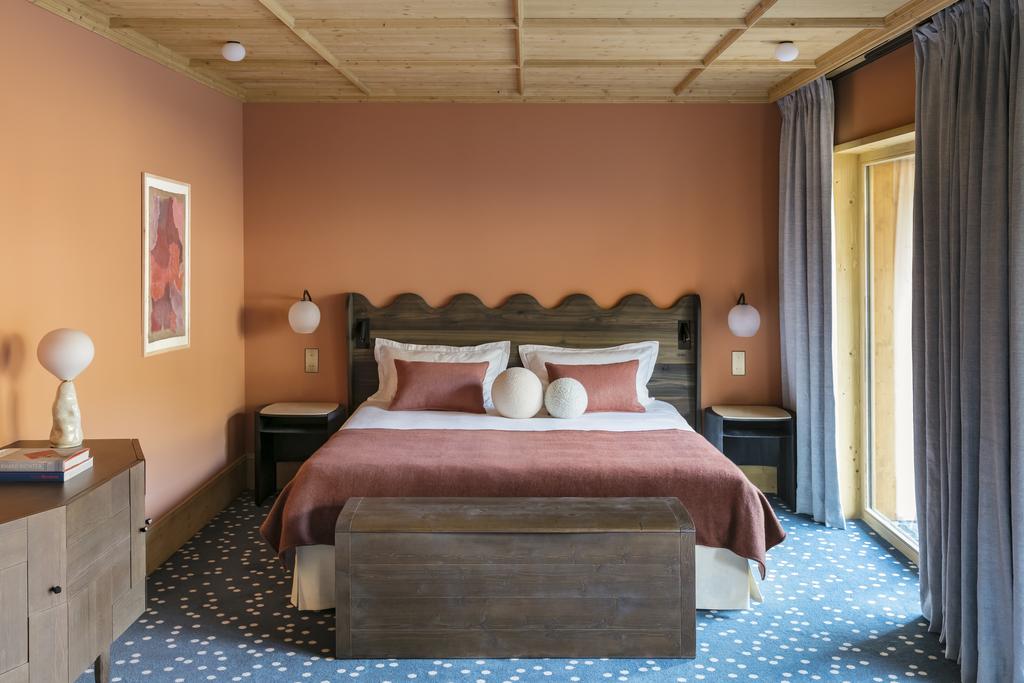
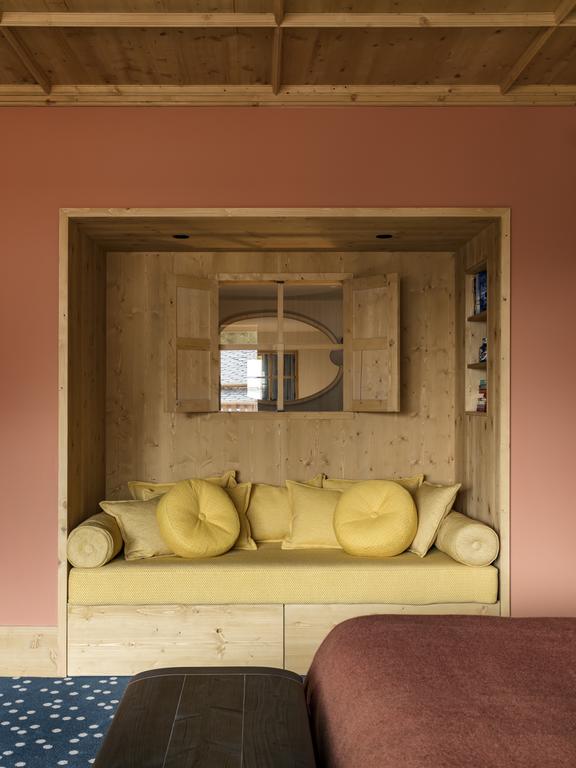
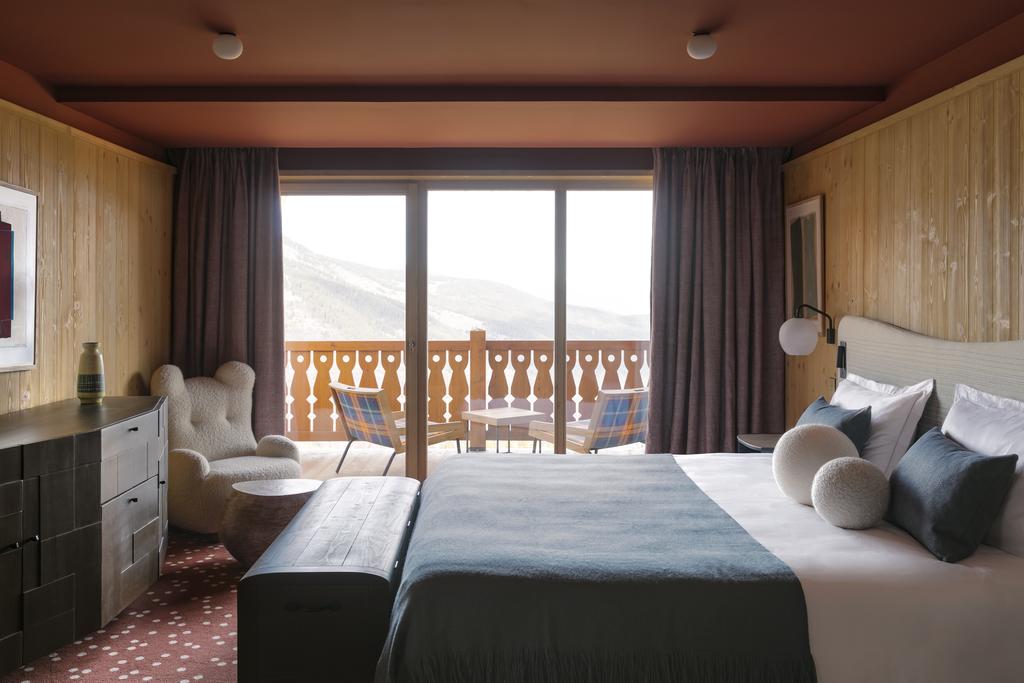
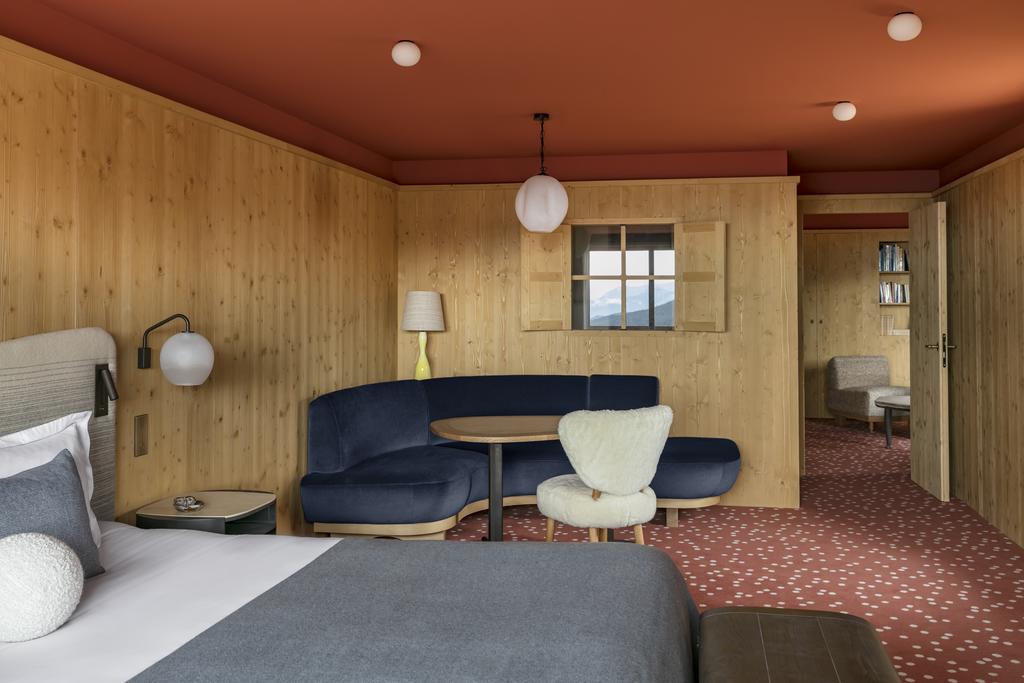
The 55 rooms and suites — 16 rooms and 39 suites — continue the same tension between Alpine familiarity and contemporary eccentricity. Rich colours and patterned carpets soften timber-lined spaces, while custom furniture, lighting, wallpaper and textiles ensure that rooms feel individually composed rather than replicated. Snow-inspired carpeting reinforces the mountain setting without resorting to decorative cliché. More importantly, each room has been arranged around the landscape. Large windows frame the Alps almost like artworks, reflecting Yovanovitch’s belief that sometimes the view matters more than the decoration itself. Two four-bedroom private chalets extend the concept further, each with its own ski room, living spaces, pool and spa. Luxury feels generous, but never anonymous.
Pools, Art and Après-Ski
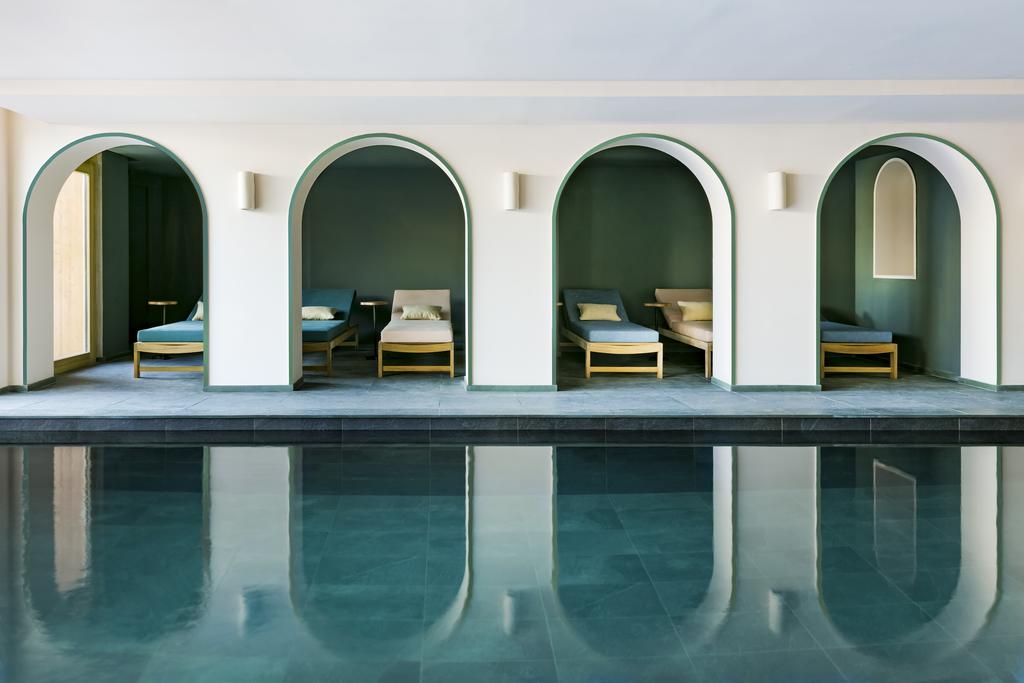
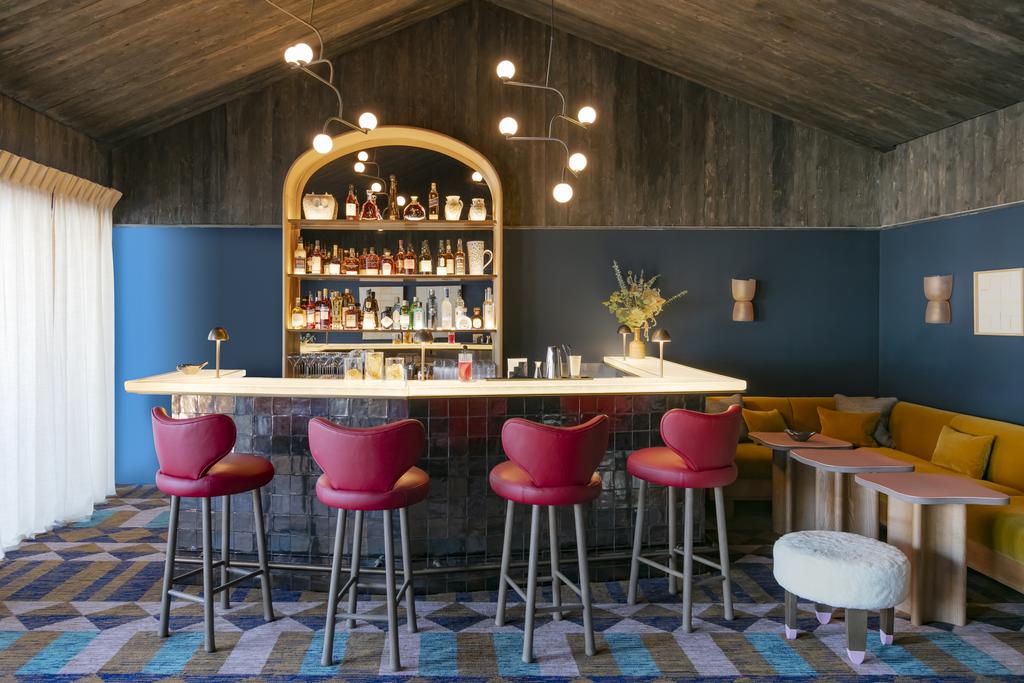
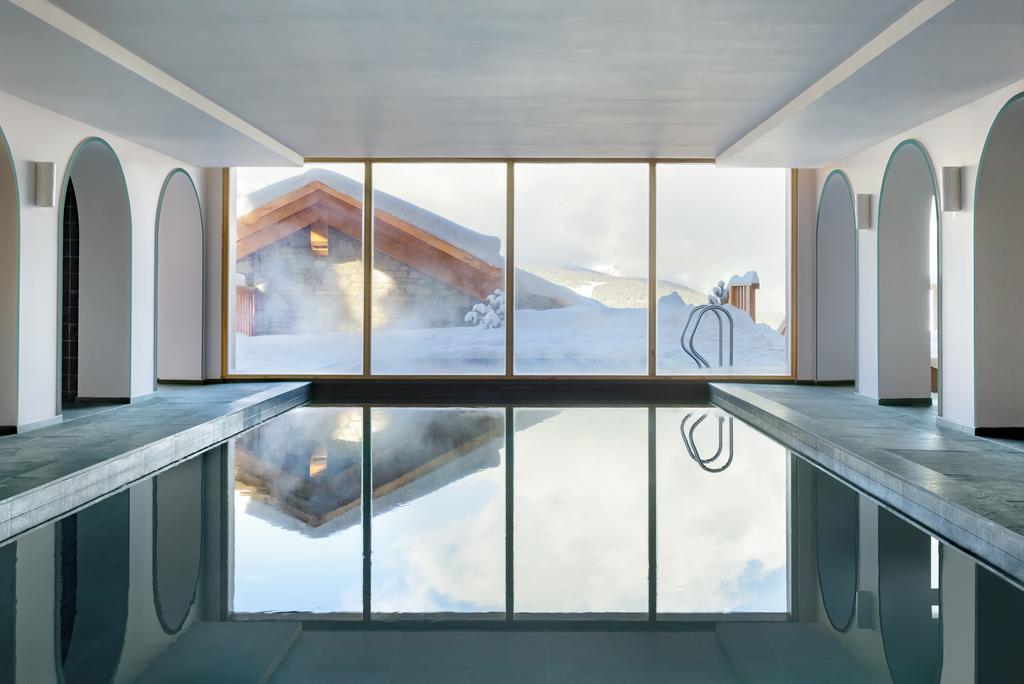
The spa creates one of the hotel’s strongest architectural moments. Indoor and outdoor pools align on either side of a vast glazed opening, producing a trompe-l’œil effect that visually merges water, architecture and snow-covered landscape. Sculpted arches create sheltered relaxation areas around the pool, while treatment rooms, sauna and fitness spaces turn the lower levels into a substantial post-ski retreat. Food and drink carry Yovanovitch’s design language into more social territory. Beefbar combines mountain views with playful cuckoo-clock references, while the hotel’s other dining spaces use richer colours, frescoes and materials to create more intimate evening settings. The bar, framed by floor-to-ceiling glass, brings the mountains directly into après-ski. Outside is spectacle enough. Inside, Yovanovitch adds character.
Why It Works
Le Coucou demonstrates what happens when a ski hotel is treated as an architectural and artistic project rather than a collection of Alpine tropes. Pierre Yovanovitch respects Méribel’s strict regional vocabulary but never allows it to become restrictive. Stone and timber provide continuity with the mountains; contemporary art, bespoke furniture, unexpected colour and moments of humour push the hotel somewhere entirely more personal. The architecture frames the Alps. The interiors challenge expectations. And between the two sits one of the most distinctive expressions of contemporary mountain hospitality in Les Trois Vallées.