La Maison Palmier – Abidjan, Ivory Coast
A palm-filled urban oasis bringing tropical modernism, Art Deco elegance and a distinctly West African spirit to Abidjan
Why DNA Hotels Loves It
● Conceived as Abidjan’s first boutique hotel, La Maison Palmier offers an intimate, design-led alternative to the city’s conventional international hotels.
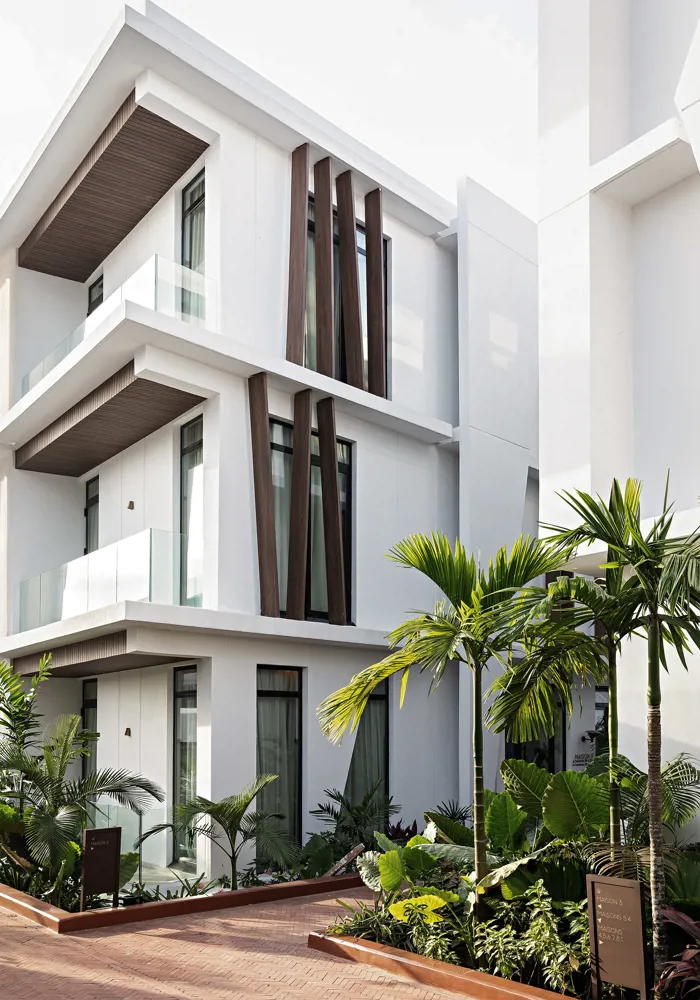
● Nine low-slung buildings disappear into gardens planted with more than 200 varieties of palms, creating an unusually lush relationship between architecture and landscape.
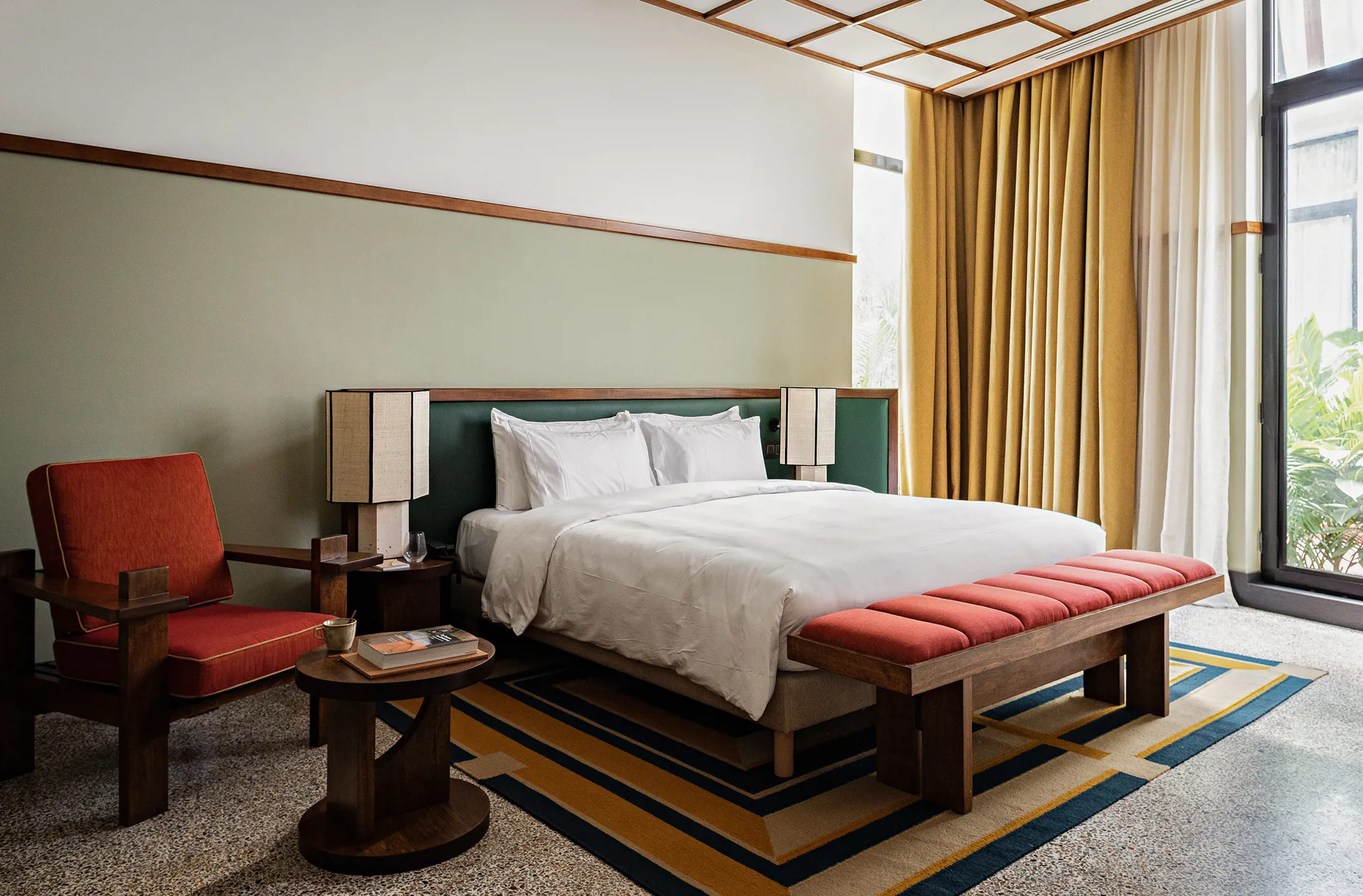
● Terrazzo, rich timber, bespoke furniture, Senegalese textiles and a spectacular green-marble pool give the hotel a strong identity that feels sophisticated without losing its sense of place.
Abidjan Gets a Boutique Hotel
In a city of energy, traffic, towers and tropical heat, La Maison Palmier does something rather clever. It hides. Behind the walls of its residential setting in Les Deux Plateaux, one of Abidjan’s leafier neighbourhoods, the city quickly gives way to gardens. Palms rise overhead. Pathways disappear between buildings. Terraces open onto dense vegetation. And suddenly Côte d’Ivoire’s largest city feels a long way away. Created as Abidjan’s first boutique hotel, La Maison Palmier introduced something different to the city’s hospitality landscape: smaller scale, strong design and a personality rooted in where you are.
200 Reasons for the Name
The clue is in the name. There are more than 200 varieties of palm trees throughout the property. Rather than constructing one imposing hotel block, La Maison Palmier is divided across nine low-rise structures, linked by pathways through the gardens. The architecture feels deliberately residential. Buildings appear and disappear behind vegetation, while indoor and outdoor spaces continually overlap. It gives the hotel the atmosphere of a private tropical compound rather than an urban resort.
Tropical Modernism, with a Little Deco
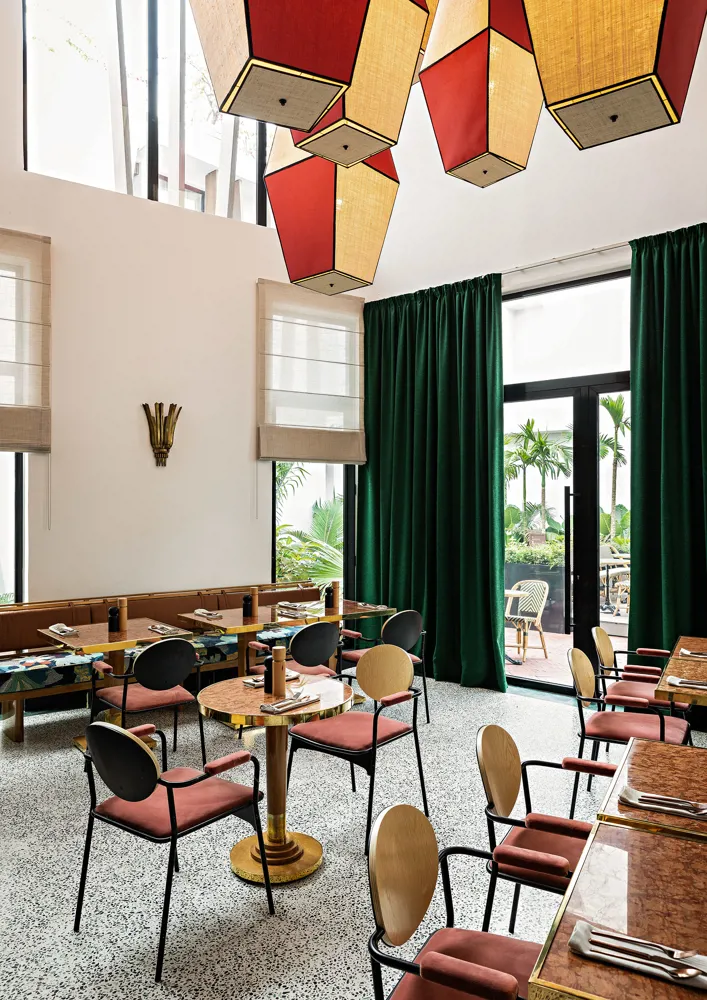
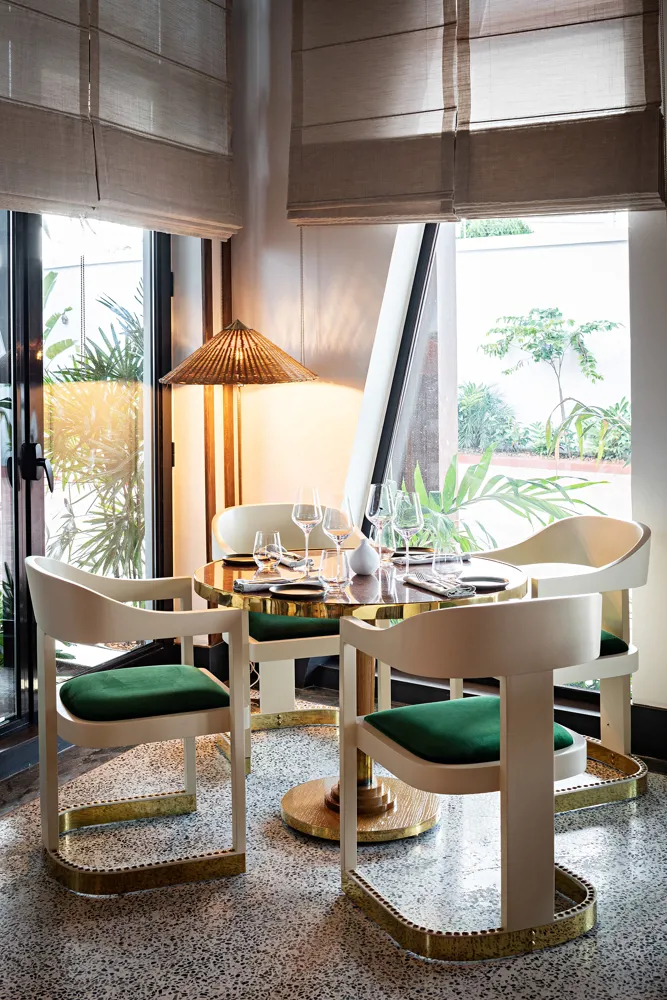
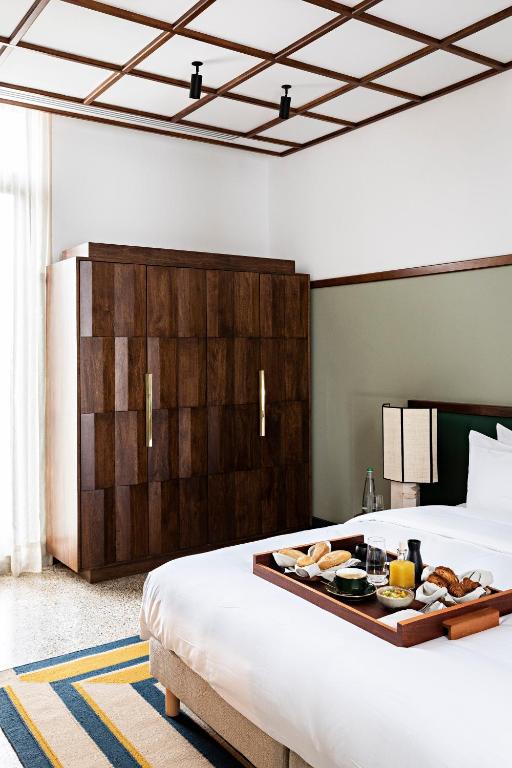
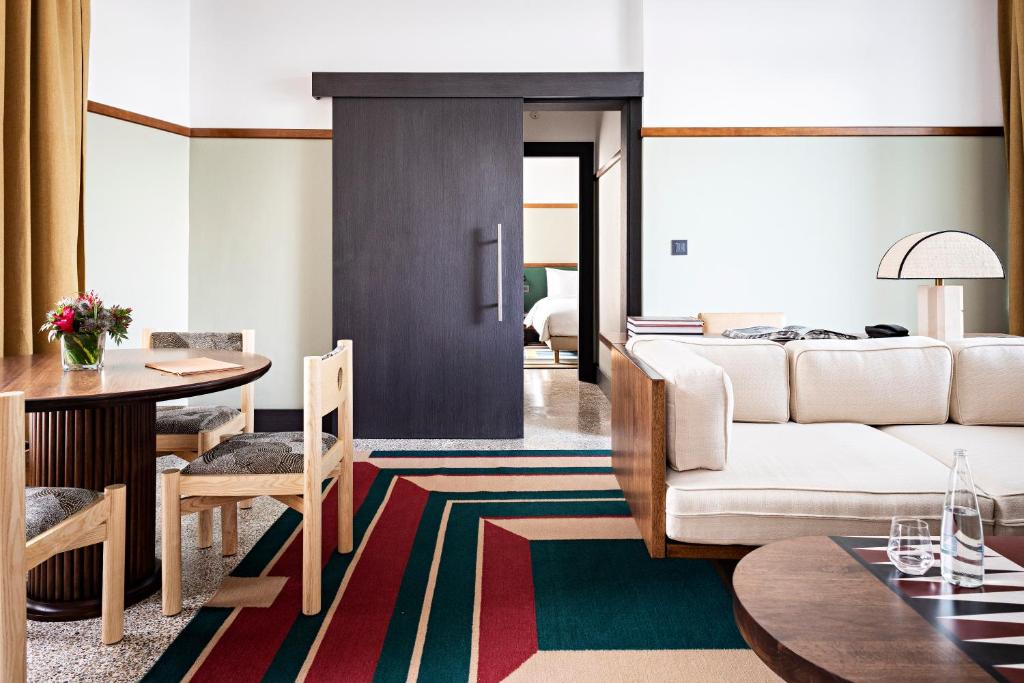
Inside, the architecture becomes more polished but remains restrained. Terrazzo floors, timber panelling, bespoke furniture and clean architectural lines provide the foundation, while vintage references and Art Deco details add glamour without turning the interiors into a period exercise. There is something wonderfully cinematic about it. A little Casablanca. A little tropical modernism. And very much contemporary Abidjan. The important thing is that the hotel doesn’t rely on a generic idea of African design to establish its identity.
African Design in the Detail
Local and regional references are woven into the interiors rather than applied as decoration afterwards. Textiles curated by a Senegalese designer introduce pattern and texture, while artworks and crafted pieces bring another layer of West African character. The balance is important. This is sophisticated contemporary hospitality, but it doesn’t feel as though the interiors could simply have been lifted from Paris, Miami or Marrakech and dropped into Côte d’Ivoire. Place matters here.
Rooms Looking into Green
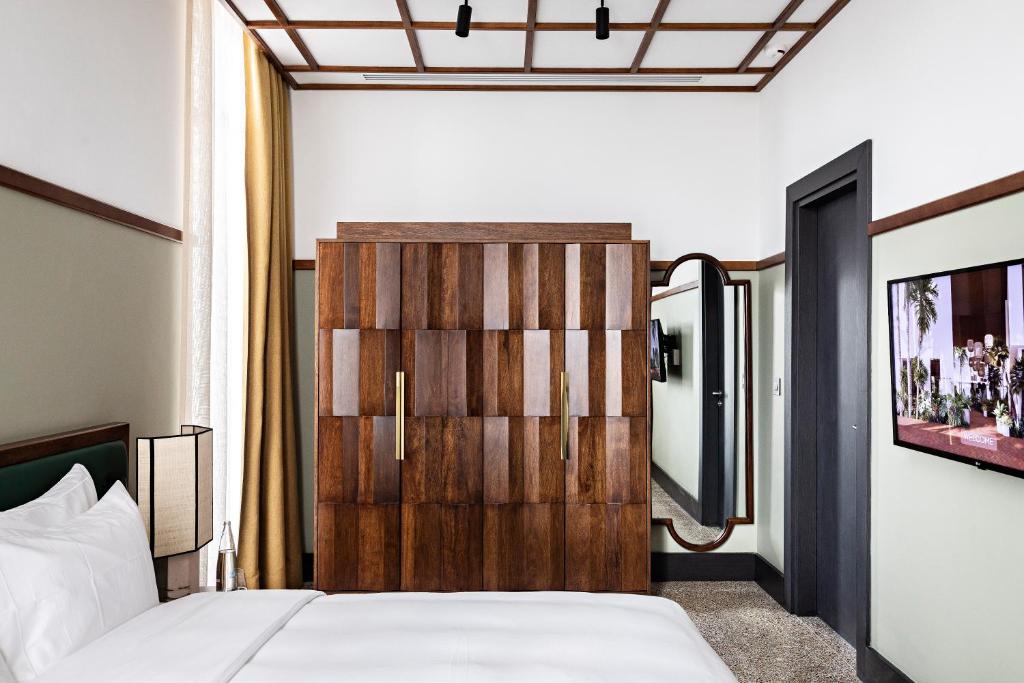
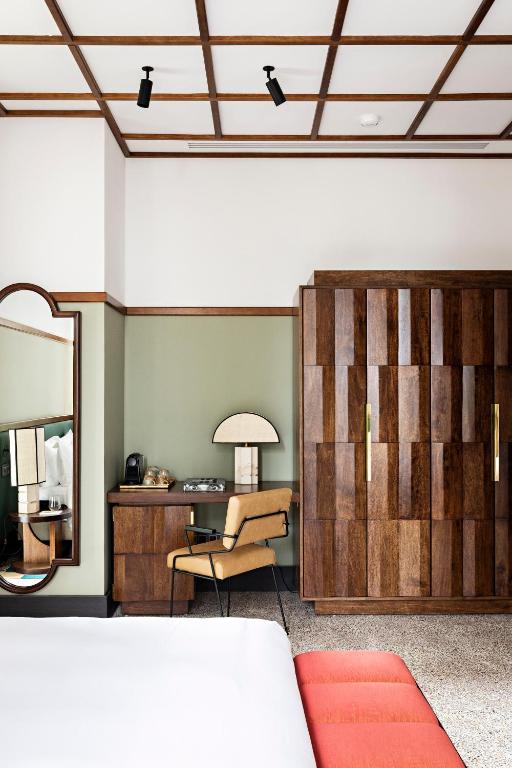
The guestrooms continue the same warm material language. Rich wood panelling and terrazzo are combined with bespoke furnishings and custom carpets in deep reds and greens. But the strongest feature may be considerably simpler. The windows. Large expanses of glass frame the gardens, allowing palms and tropical vegetation to become part of the room. After the intensity of Abidjan outside, that green outlook changes the entire atmosphere. The city hasn’t disappeared. It just feels temporarily held at a very comfortable distance.
Sage, Cream and Art Deco Curves
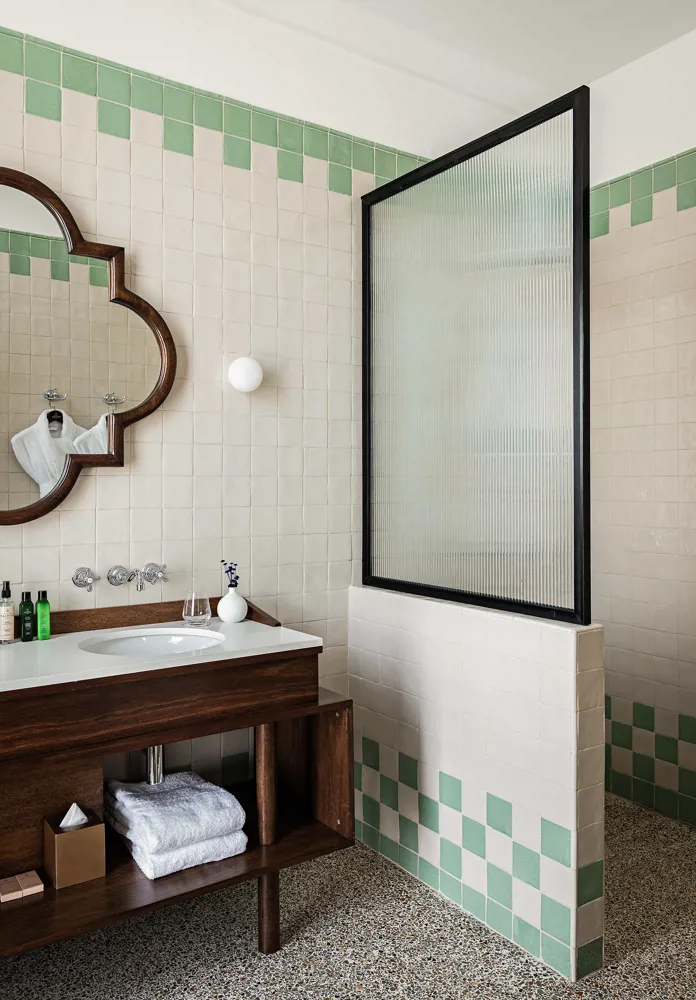
Bathrooms are particularly handsome. Cream and sage tiles create a softer palette, while elegant mirrors bring in the hotel’s Art Deco references. Natural light keeps everything fresh rather than overly glamorous. It’s another example of La Maison Palmier’s best trick: combining decorative richness with enough restraint that the spaces remain genuinely relaxing.
The Green Marble Pool
And then you find the pool. At the centre of the gardens, green marble gives the water an extraordinary jewel-like quality, surrounded by palms and low-slung architecture. It could easily be the hotel’s showpiece. But the pool is more than something photogenic. It forms the social heart of the property, with terraces, restaurant and bar life gathering around the gardens. Hotel guests aren’t the only ones who come here. Locals do too. And that’s usually a very good sign.
Le Bistro Palmier
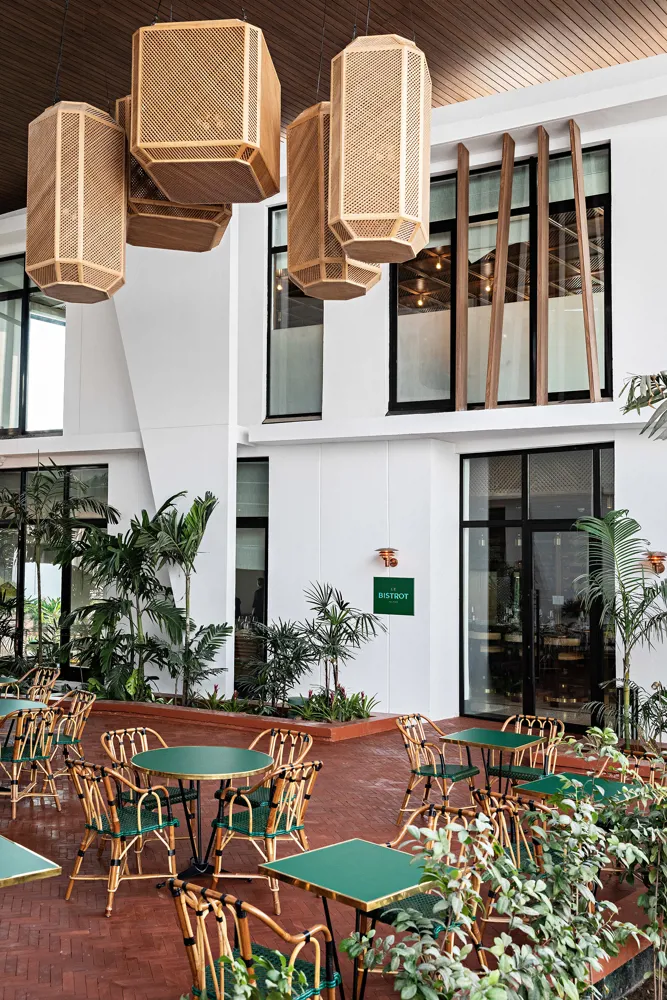
At Le Bistro Palmier, international influences meet local ingredients and flavours, with a seasonal approach rather than an enormous all-things-to-all-guests hotel menu. The indoor-outdoor setting is as important as what’s on the plate. Tables spill towards the tropical gardens, making lunch particularly easy to extend into the afternoon. Chef Matthieu Gasnier leads an international kitchen team, but the aim remains connected to Côte d’Ivoire rather than simply reproducing European bistro cooking.
Then There’s the Bar
Le Bar completes the picture. Classic and more inventive cocktails bring locals and visitors together, giving La Maison Palmier something every good city hotel needs: a reason to visit even when you’re not staying there. As evening arrives and the heat begins to ease, the gardens shift naturally from retreat to gathering place. Dinner becomes drinks. Drinks become another drink. The pool glimmers through the palms. No complaints from us.
An Oasis That Belongs to the City
Calling urban hotels “oases” has become one of hospitality’s more exhausted clichés. Here, it actually makes sense. La Maison Palmier uses landscape, low-rise architecture and intimate scale to create genuine separation from the city around it. But crucially, it doesn’t turn its back on Abidjan. Local guests use the restaurant and bar. West African design enters the interiors. Tropical planting defines the architecture. The hotel is both escape from the city and part of its contemporary culture.
A Boutique First
Perhaps that’s why its status as Abidjan’s first boutique hotel matters. Not because being first automatically makes a hotel interesting. But because La Maison Palmier demonstrated that sophisticated hospitality in Côte d’Ivoire could be small-scale, design-conscious and locally connected rather than another iteration of international corporate luxury. And it did so without losing the pleasure. There are palms everywhere. A green marble pool waiting outside. Cocktails at the bar. And behind those walls, Abidjan. Sometimes the best way to experience a big city is to find a very beautiful place to hide from it for a while.