Hotel Metropol Palace, Belgrade, Serbia
A monumental 1950s landmark where Yugoslav modernism, political history, and contemporary city life still overlap
Why DNA Hotels Loves It
● Designed by Dragiša Brašovan and opened in 1957, the Metropol remains one of Belgrade’s defining examples of post-war modernist ambition.
● Original elements including the stained glass, mosaic work, and Brašovan-commissioned decorative details preserve the building’s period identity beneath later luxury interventions.
● Its long history as a meeting place for politicians, actors, musicians, and international guests gives the hotel a cultural weight that newer luxury properties simply cannot manufacture.
Belgrade’s Modernist Grande Dame
The Metropol Palace was never intended to be modest. Opened in 1957, the hotel embodied the confidence of post-war Yugoslavia: large in scale, socially ambitious, and unmistakably modern. Architect Dragiša Brašovan gave Belgrade a building that felt international without becoming anonymous. Its white façade, strong geometry, monumental proportions, and carefully integrated decorative art made the hotel part architecture, part political statement. For decades, it became one of the city’s most visible stages.
A Hotel Built for History
The guest list reads like a compressed history of twentieth-century glamour. Sophia Loren. Jack Nicholson. Politicians, diplomats, artists, musicians, and members of Belgrade’s social elite. President Tito held celebrations here, and the hotel’s public spaces became synonymous with official events, high society, and international visitors arriving in the Yugoslav capital. That history still matters. Even after renovation, the Metropol does not feel like a blank luxury hotel dropped into Belgrade. The building carries too much memory for that.
What Survived
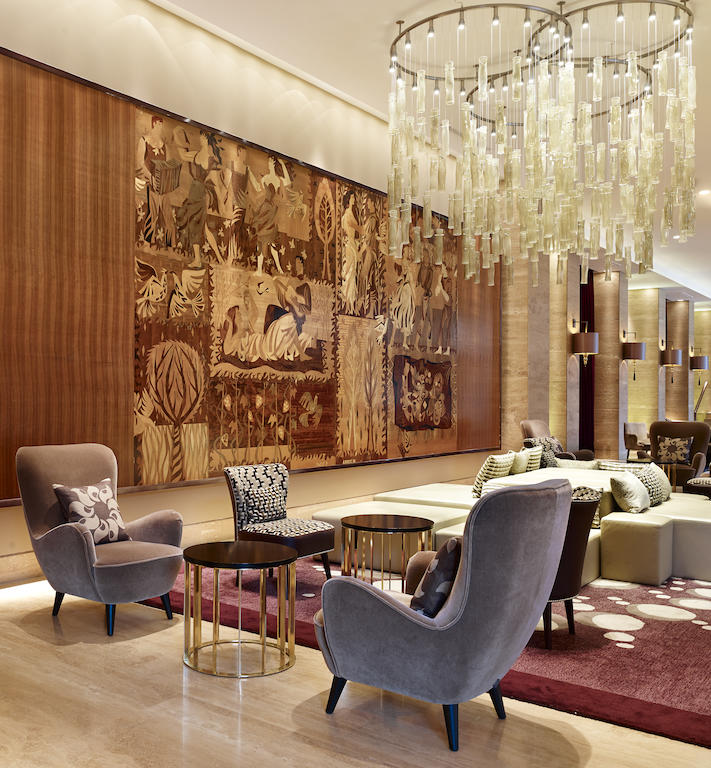
A major fire in 2007 closed the hotel for five years. Its subsequent restoration and reopening in 2012 introduced contemporary rooms, new hospitality infrastructure, and additional floors, but several important original elements survived. The stained-glass window remains one of the building’s defining visual features. Mosaic murals continue the relationship between architecture and art. And in the lobby, decorative work conceived under Brašovan’s original vision still anchors the arrival experience. These details matter more than decorative nostalgia. They connect the modern hotel directly to the building that opened in 1957.
Modern Luxury Inside Modernist Bones
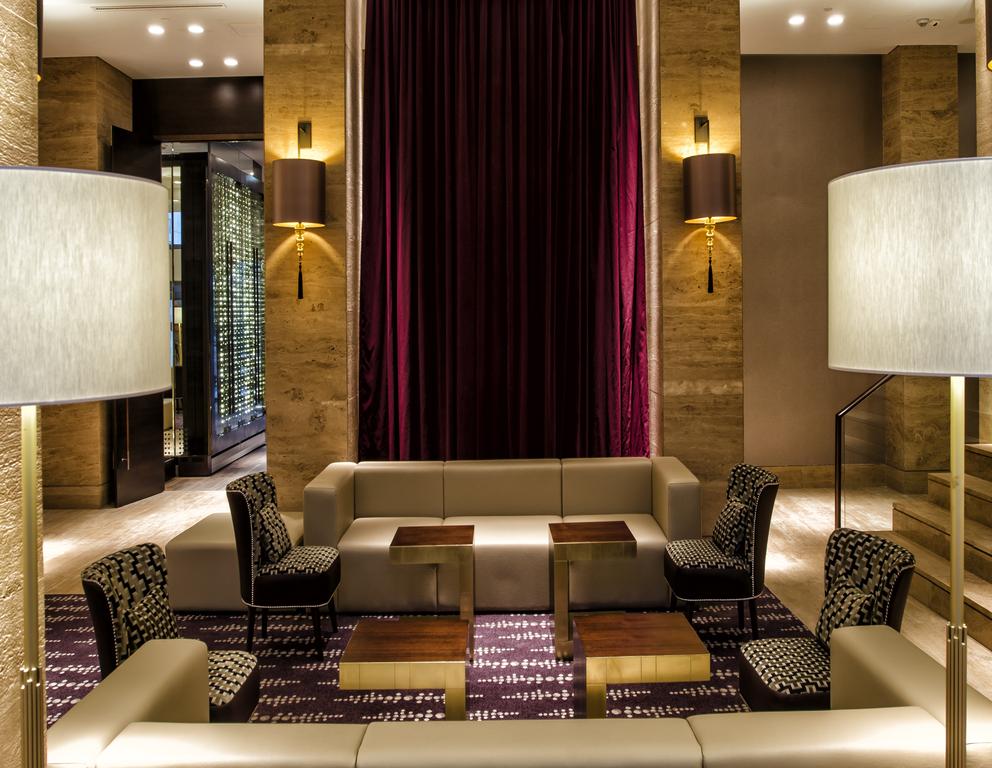
The current Metropol Palace is far more polished than its socialist-era predecessor. The rooms and suites have been reworked in a contemporary international luxury style, with softer materials, darker woods, restrained palettes, and all the technology expected of a large modern hotel. That creates a noticeable divide. The architecture outside speaks strongly of the 1950s. Much of the accommodation speaks more generically of twenty-first-century luxury. For design purists, that tension may be frustrating. But it also makes the surviving original spaces more valuable.
The Scale of a Grand Hotel
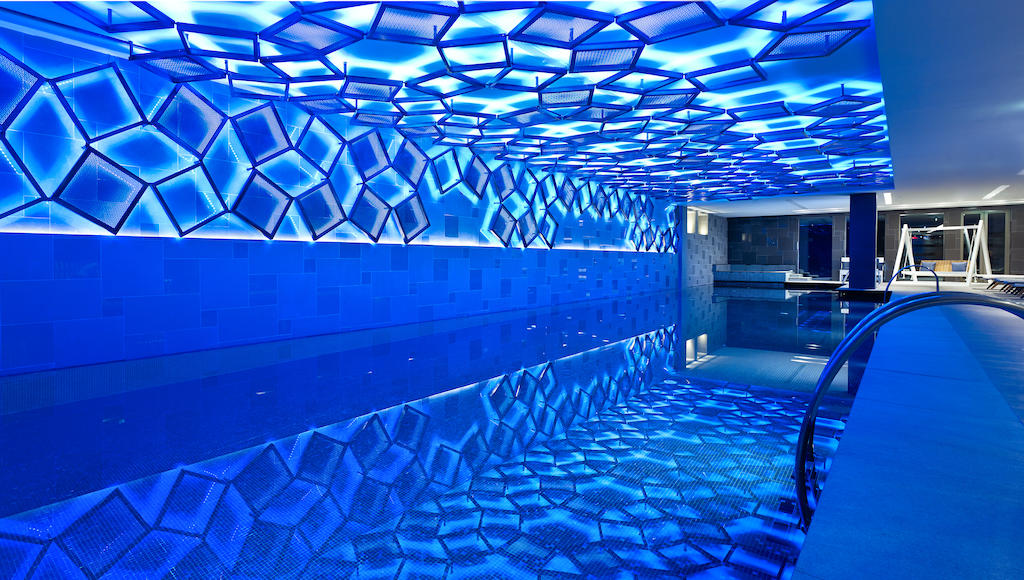
With more than 200 rooms and suites, the Metropol still operates with the confidence of a true city grande dame. The spa and fitness centre is substantial, with a 25-metre indoor pool, sauna, steam rooms, and treatment facilities. Restaurants, lounges, and rooftop spaces keep the hotel socially active rather than reducing it to accommodation. The rooftop venue adds one of the building’s strongest contemporary experiences. From above, Belgrade stretches out in every direction. The monumental hotel suddenly becomes a viewing platform for the city it has watched change for nearly seven decades.
A Building That Still Participates
That may be the Metropol’s greatest strength. It is not simply preserved. It is still used. Locals continue to meet here. Events still fill its public rooms. The hotel remains part of Belgrade’s cultural and social landscape rather than an architectural relic admired from a distance. Modernism survives best when it continues to function. Metropol proves the point.
Why It Works
Hotel Metropol Palace matters because it is more than a stylish place to stay. Dragiša Brašovan’s architecture, the surviving mosaics and stained glass, its extraordinary social history, and its continued role in Belgrade give the building genuine cultural significance. Not every later interior decision matches the strength of the original design, but the modernist bones remain impossible to ignore. Stay here for the architecture, the history, and the sense of inhabiting one of the city’s great twentieth-century landmarks.