Mondrian Bordeaux Les Carmes, France
Philippe Starck transforms a 19th-century wine landmark into a seductive dialogue between Bordeaux and Japan
Why DNA Hotels Loves It
● Philippe Starck and architect Jean-François Le Gal retain the neo-Gothic character of the former Calvet wine cellars while giving the interiors an unmistakably contemporary identity.
● Raw concrete, Bordeaux stone, brick, leather, boiled wool, dark timber, and diffused golden light create one of Starck’s most restrained and atmospheric hotel interiors.
● Masaharu Morimoto’s first European restaurant turns the East-meets-West concept into something tangible, pairing Japanese technique with French produce and an extraordinary wine cellar.
Wine Architecture, Rewritten
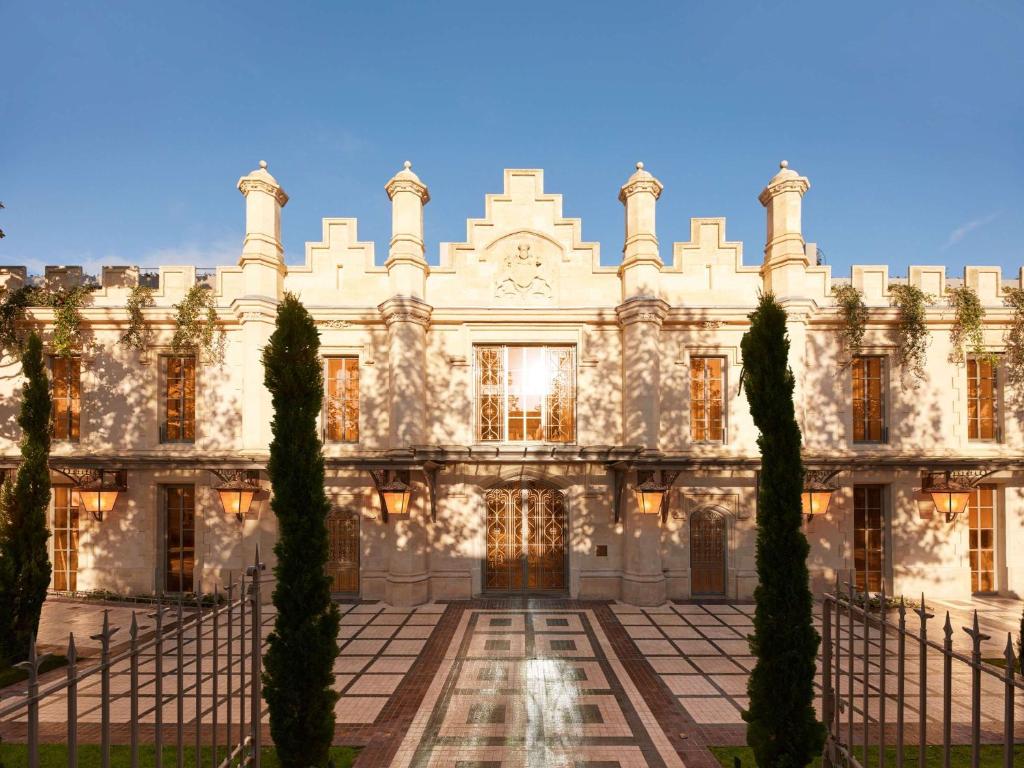
Long before it became a hotel, this was part of the machinery that made Bordeaux famous. Built in 1871 and extended a decade later by architect Charles Brun, the former cellars of Maison Calvet occupy a monumental neo-Gothic building in Chartrons, the district from which barrels of Bordeaux wine once travelled out towards the world. Its architecture remains deliberately imposing: thirteen crenellated bays, pointed openings, brick and stonework, and a gable bearing the British coat of arms — a reminder of Bordeaux’s historic commercial relationship with Britain. A devastating fire in 1996 destroyed the cellars and around a century’s worth of grands crus classés. When the Pichet family began the building’s next transformation, Philippe Starck was commissioned alongside Jean-François Le Gal of Advento to rethink it as a 97-room hotel. The shell survived. The warehouse became theatre.
Starck in a More Romantic Mood
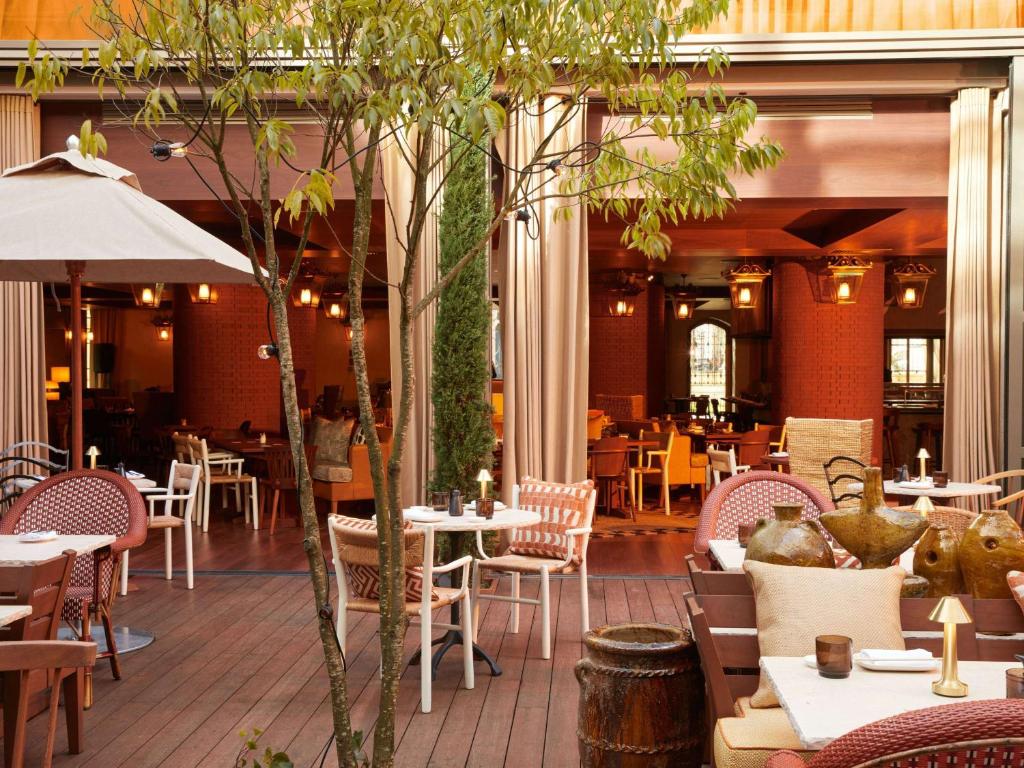
Anyone expecting Starck at his most provocative may be surprised. Mondrian Bordeaux Les Carmes is darker, quieter, and considerably more sensual. Local stone, brick, rough concrete, dark timber, leather, and boiled wool form the material vocabulary. Oversized carriage lamps cast pools of amber light across surfaces that deliberately retain a degree of rawness. Deep carpets introduce organic patterns beneath the heavier architecture. Starck describes the project as an encounter between East and West — not blended into a single aesthetic, but layered one over the other. That distinction matters. Japanese references appear through proportion, lighting, restraint, calligraphy, and contemplative spaces rather than obvious decoration. Bordeaux remains firmly present underneath. History becomes the foundation rather than the theme.
Cocoons of Stone, Wool and Shadow
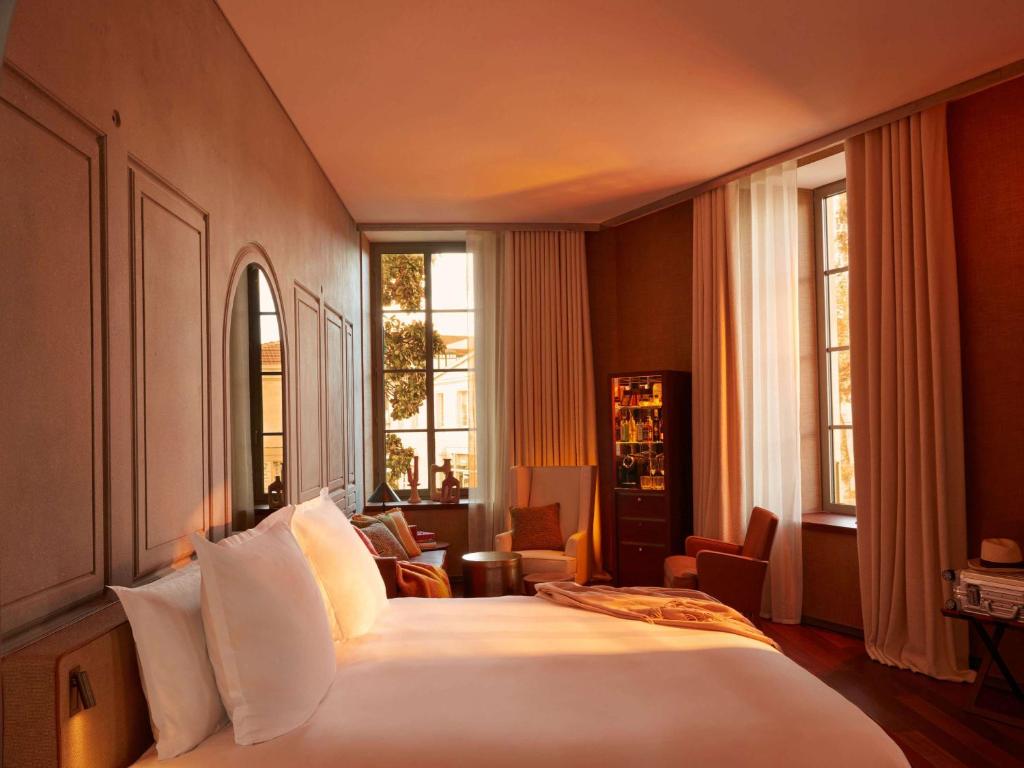
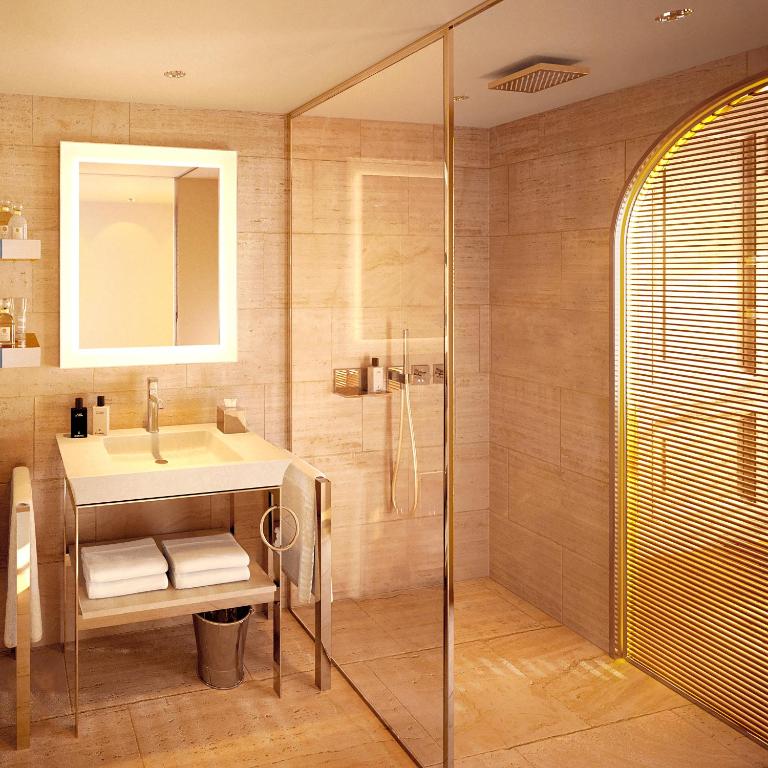
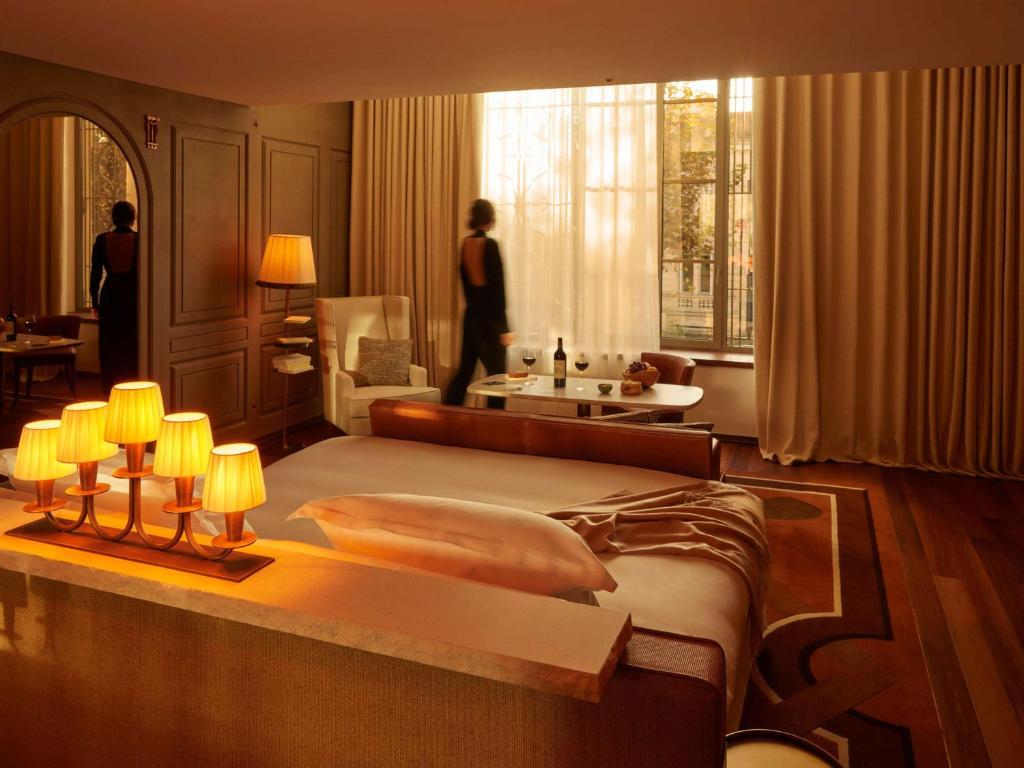
The 97 rooms and suites continue the darker, more intimate register. Starck conceived them as cocoons. Sienna tones, wooden doors, leather seating, heavy boiled-wool curtains, reflective surfaces, and softly filtered light temper the building’s industrial weight. Concrete walls are moulded and panelled in ways that initially appear more conventional, only revealing their true material on closer inspection. Mirrors and reflections introduce some characteristic Starck illusion, while arched openings quietly echo the neo-Gothic exterior. Bathrooms become cleaner and more elemental, with stone surfaces and reduced lines providing a counterpoint to the layered bedrooms. Several rooms open onto planted private terraces. Nothing feels conventionally minimal. Yet nothing feels excessive either.
Morimoto Between Bordeaux and Japan
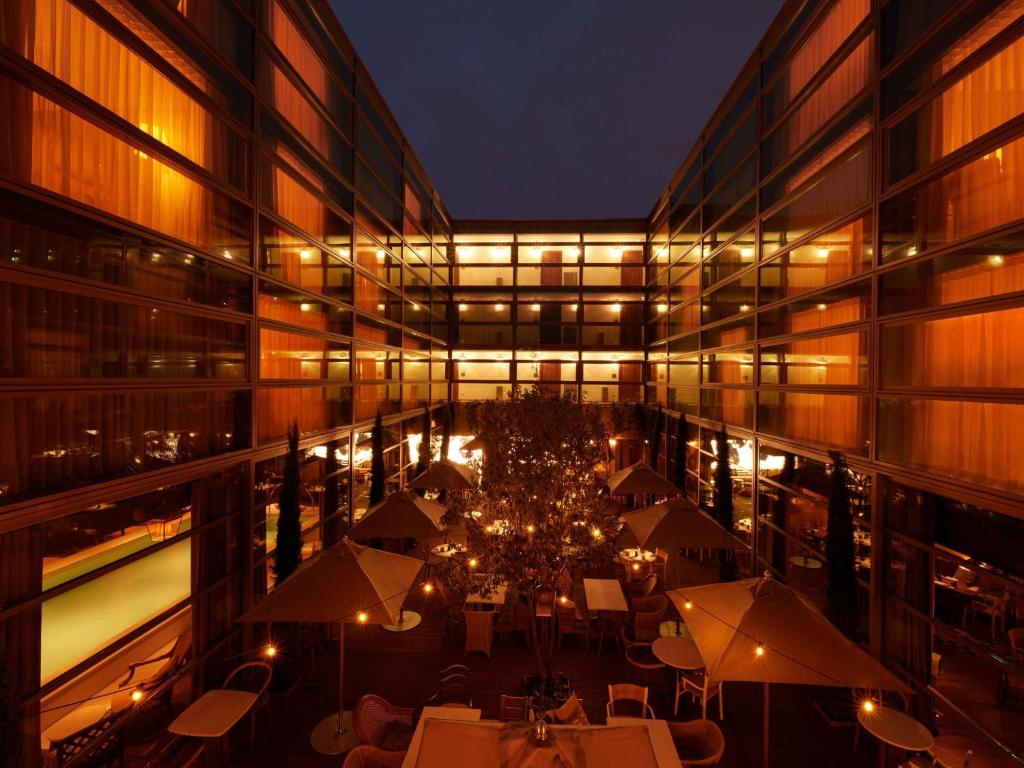
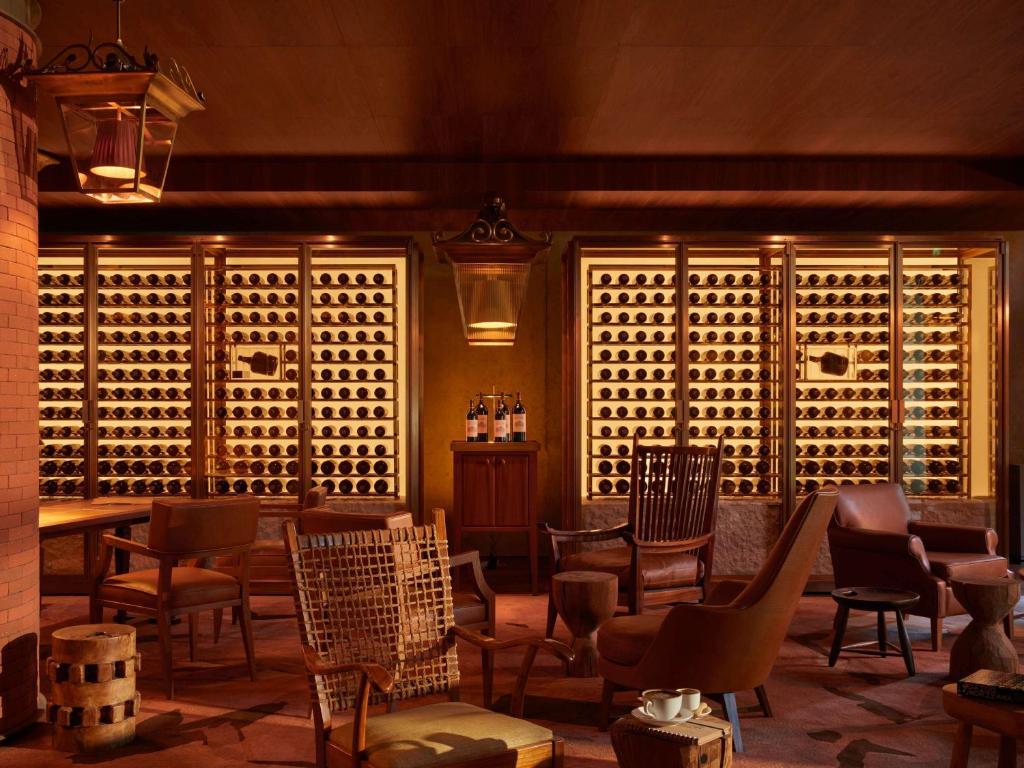
The hotel’s clearest meeting of cultures happens at the table. Morimoto Bordeaux marks Japanese chef Masaharu Morimoto’s first European restaurant, bringing sushi, sashimi, maki, lacquered duck, and his characteristically fluid interpretation of Japanese cuisine into the middle of one of France’s great gastronomic regions. Starck gives the 180-seat restaurant the scale of a theatre. Bordeaux brick columns sit beside glazed wine cellars, while pagoda-like lamps, lanterns, calligraphy, and contemporary Japanese artworks overlay the building’s French architecture. Local produce enters the conversation too, including oysters from the nearby Arcachon Basin. Then there is the wine. Thousands of bottles provide the inevitable Bordeaux counterweight to sake, Japanese flavours, and an inventive cocktail programme. East meets West without either disappearing.
A Spa Beneath the Drama
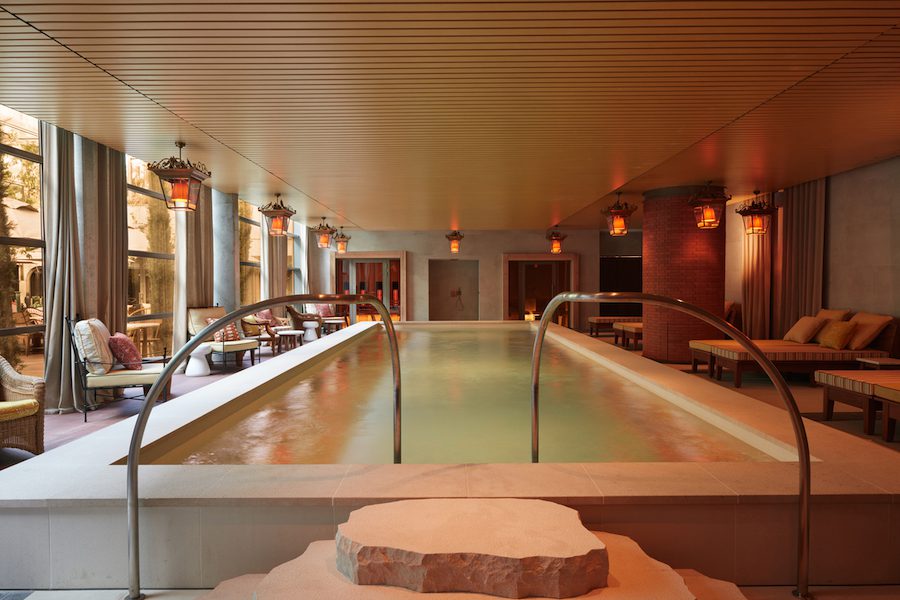
The same material calm continues in the wellness spaces. Daylight enters the spa generously, softening the architecture around a heated indoor pool, hammam, infrared sauna, four treatment rooms, and fitness area. After the darker restaurant and public spaces, the shift feels deliberate. Light replaces shadow. Water replaces wine. Beyond the hotel, Chartrons completes the story. Former wine warehouses have become galleries, restaurants, shops, and homes, turning a district once defined by commerce into one of contemporary Bordeaux’s most desirable neighbourhoods. The hotel belongs naturally within that evolution.
Why It Works
Mondrian Bordeaux Les Carmes succeeds because Philippe Starck does not treat its wine-trading history as something to reproduce nostalgically. He uses it as material. Stone, brick, concrete, shadow, old warehouse proportions, and the neo-Gothic façade remain unmistakably Bordeaux; Japanese references are then layered across them with surprising restraint. Add Jean-François Le Gal’s architectural restoration and Masaharu Morimoto’s first European restaurant, and the result becomes more than another Starck hotel. It is an unusually coherent collision of place, history, food, and design — romantic, slightly mysterious, and unmistakably its own.