Moxy Banff | Alberta, Canada
A 1964 roadside motel reborn as a riot of mid-century ski culture, mountain nostalgia and unapologetically social design.
Why DNA Hotels Loves It
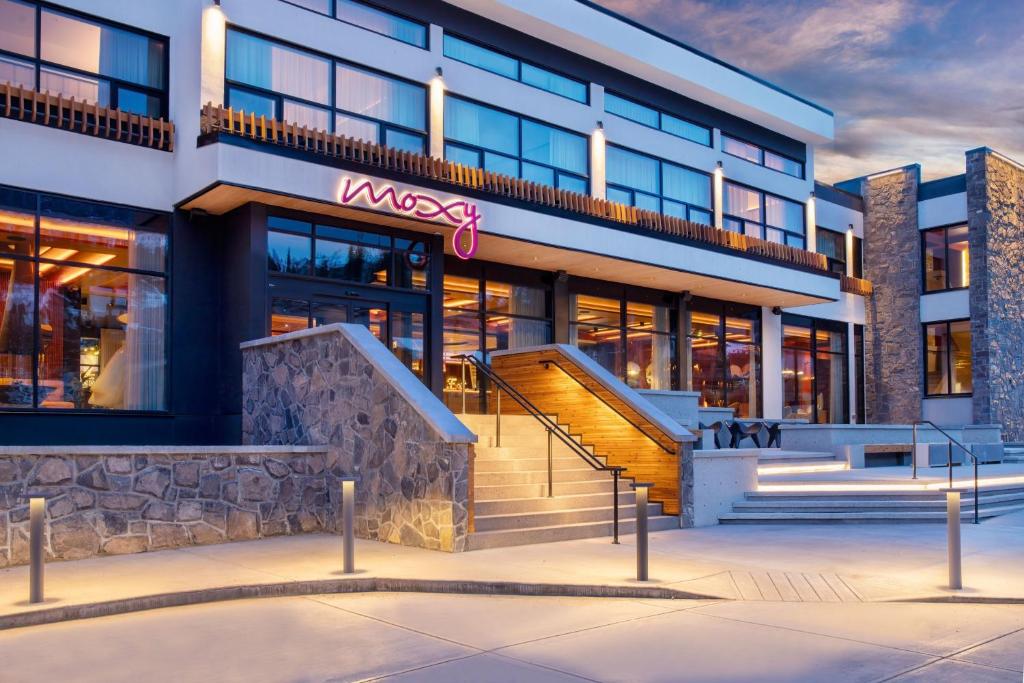
● Workshop/APD preserved Banff’s first commercial motor hotel’s Rundle stone walls and distinctive precast wings, turning a 1964 roadside relic into a convincing piece of contemporary hospitality.
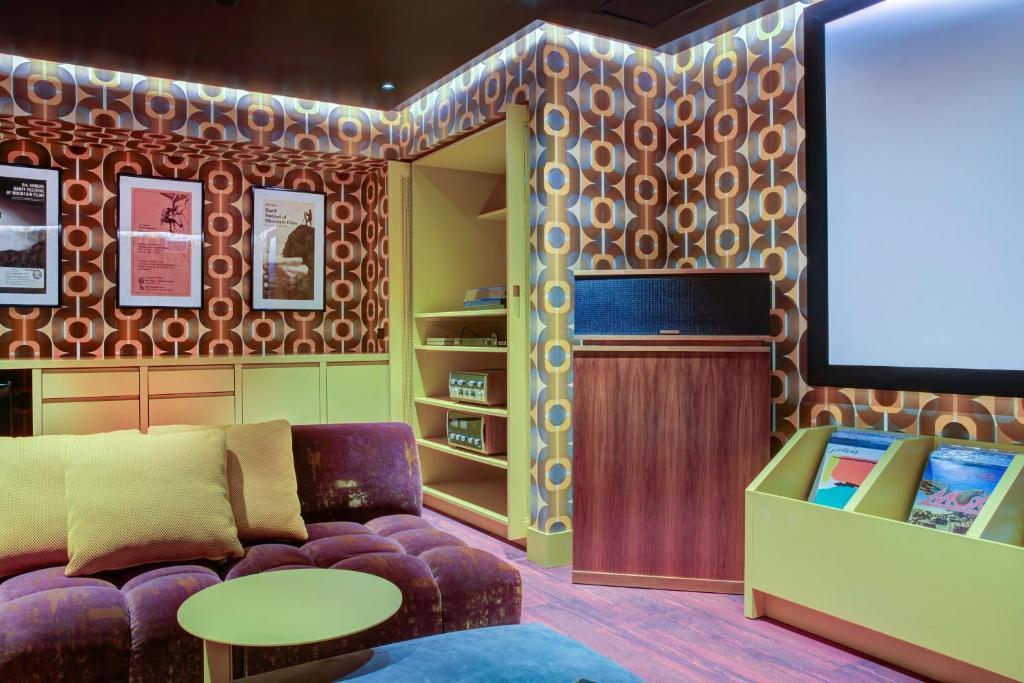
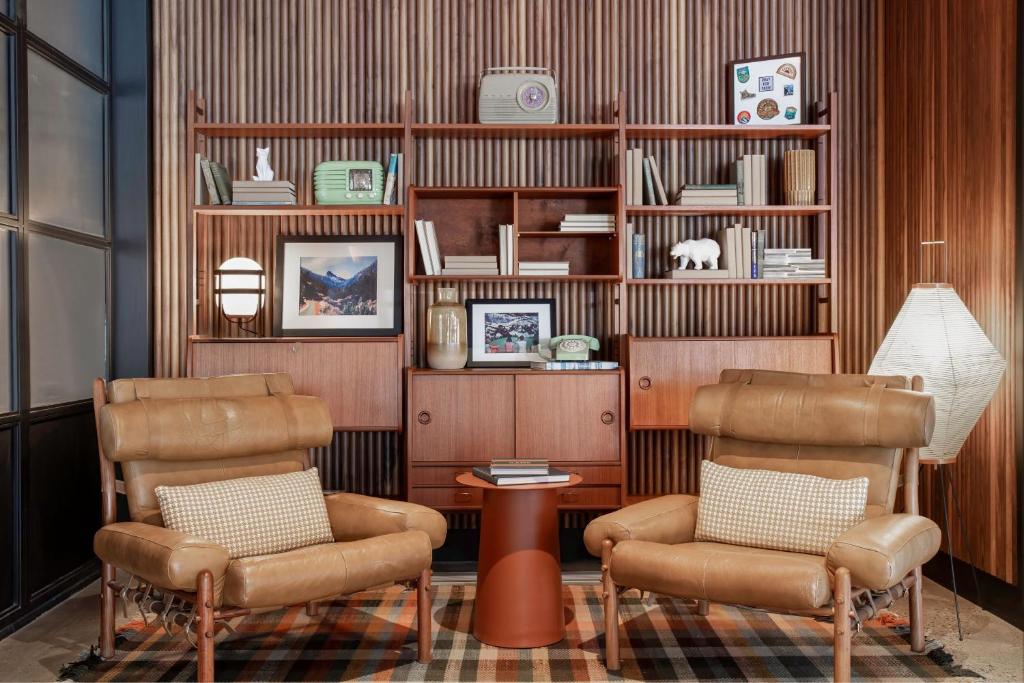
● The retro ski aesthetic is playful rather than precious, with local art, vintage hi-fi equipment, a restored 1966 VW Kombi and enough mid-century references to make the building’s original era feel alive again.
● Instead of demolishing and starting over, the project kept the existing structure — preserving a familiar piece of Banff Avenue while giving it an entirely new purpose.
Banff, 1964
Before Banff became an international mountain destination filled with luxury lodges and resort hotels, road trips ruled. In 1964, the town’s first commercial motor hotel opened on Banff Avenue, its low-slung wings, Rundle stone walls and automobile-friendly layout perfectly suited to travellers arriving in the Canadian Rockies by car. Six decades later, the cars are different. Remarkably, much of the architecture isn’t. Rather than demolishing the old motel, Canalta Hotels and Moxy chose to work with it, commissioning New York-based Workshop/APD to transform the building into a 109-room hotel. The result is less reinvention than resurrection.
Mid-Century Bones Intact
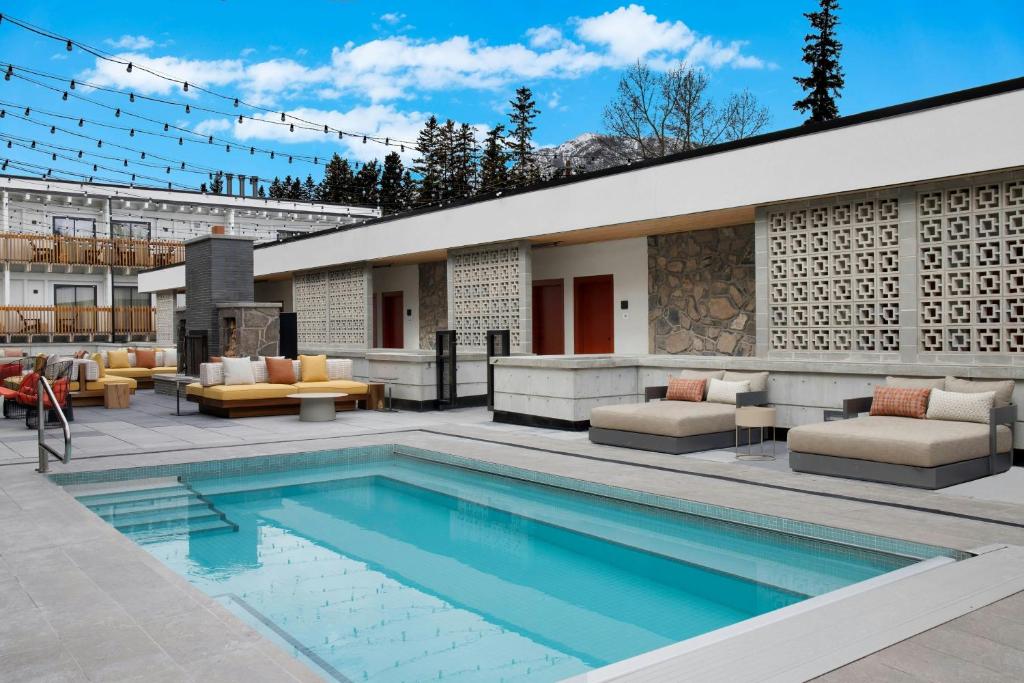
The smartest decision Workshop/APD made was recognising that the old motel already possessed something difficult to manufacture. Character. Its expansive walls of local Rundle stone remain, as do the distinctive precast guestroom wings flanking the central lobby and bar. New interventions amplify rather than disguise those elements. Timber, stone, bold patterns and a warm retro palette channel the optimism of mid-century mountain tourism without turning the hotel into a theme park. It looks new. But it still looks like it belongs on Banff Avenue.
Après-Ski Starts in the Lobby
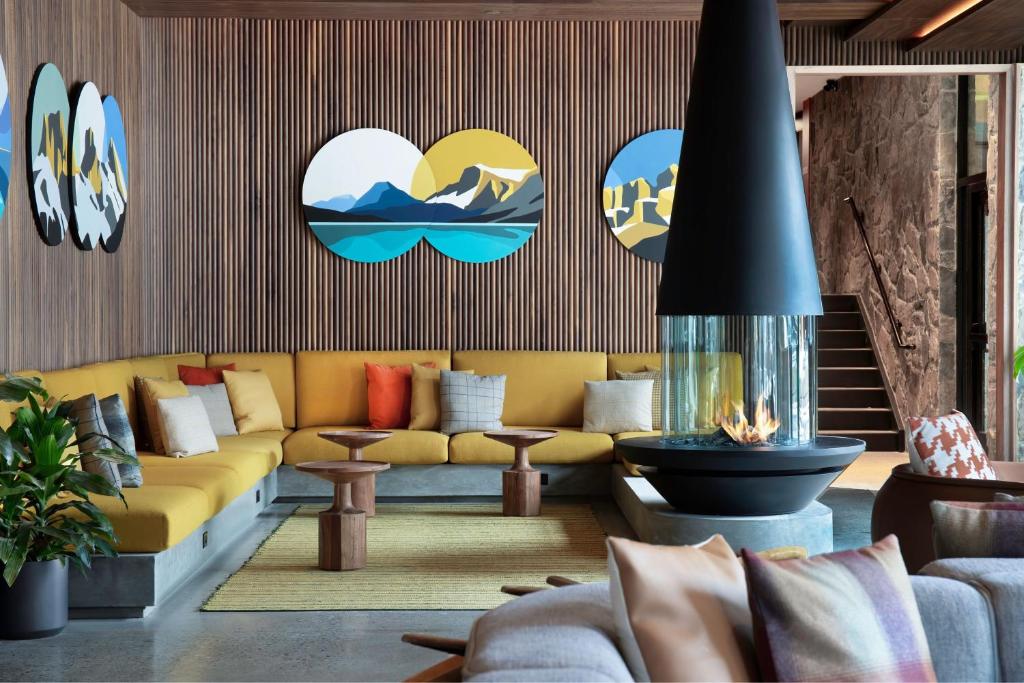
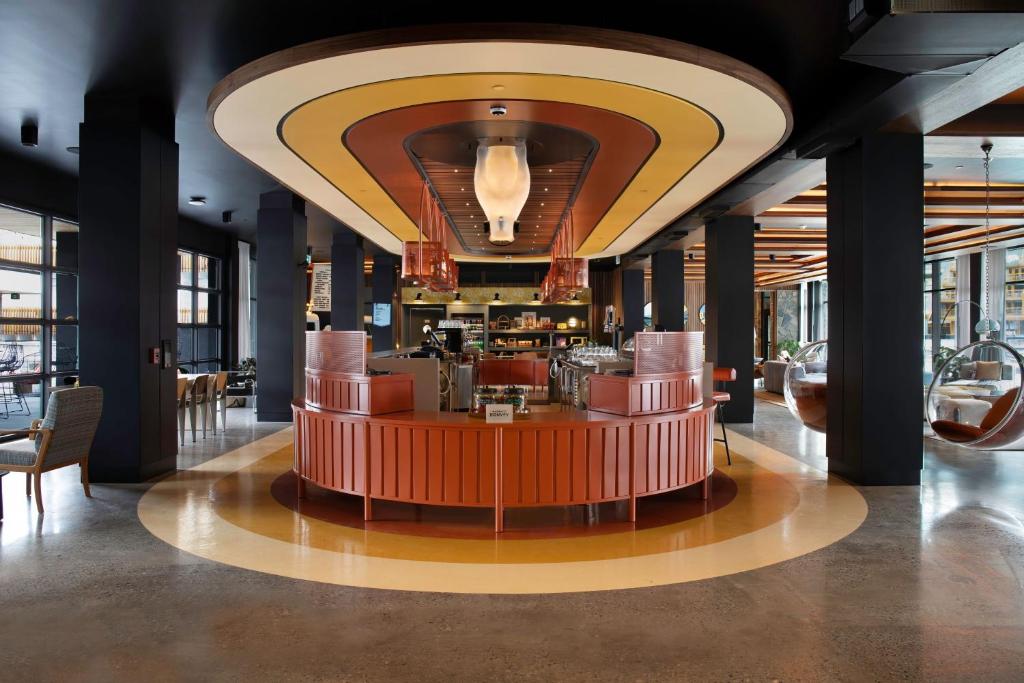
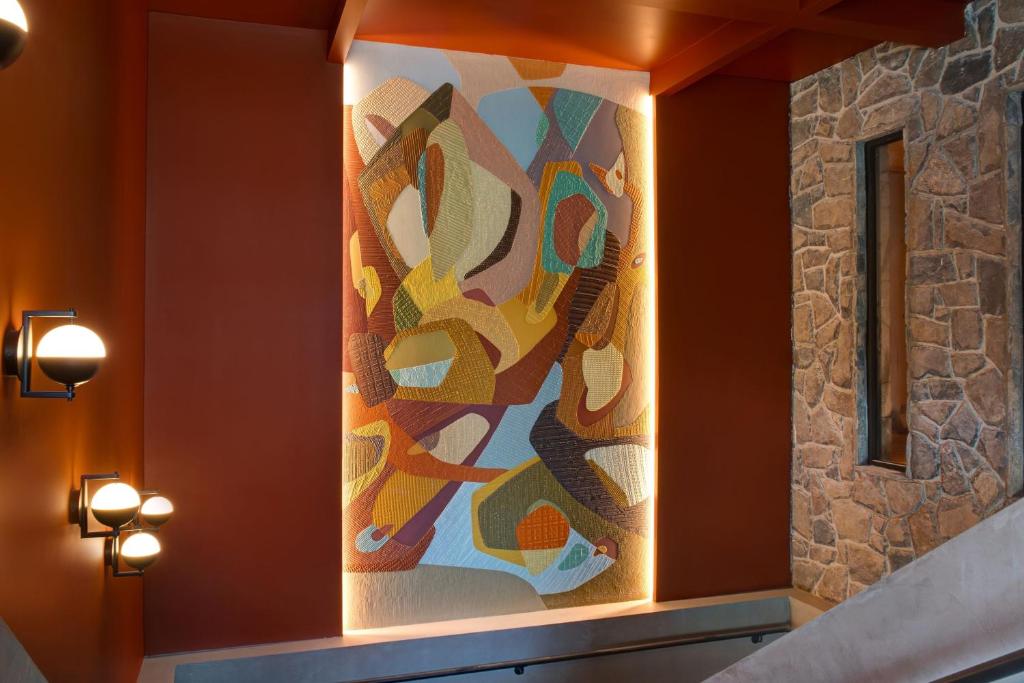
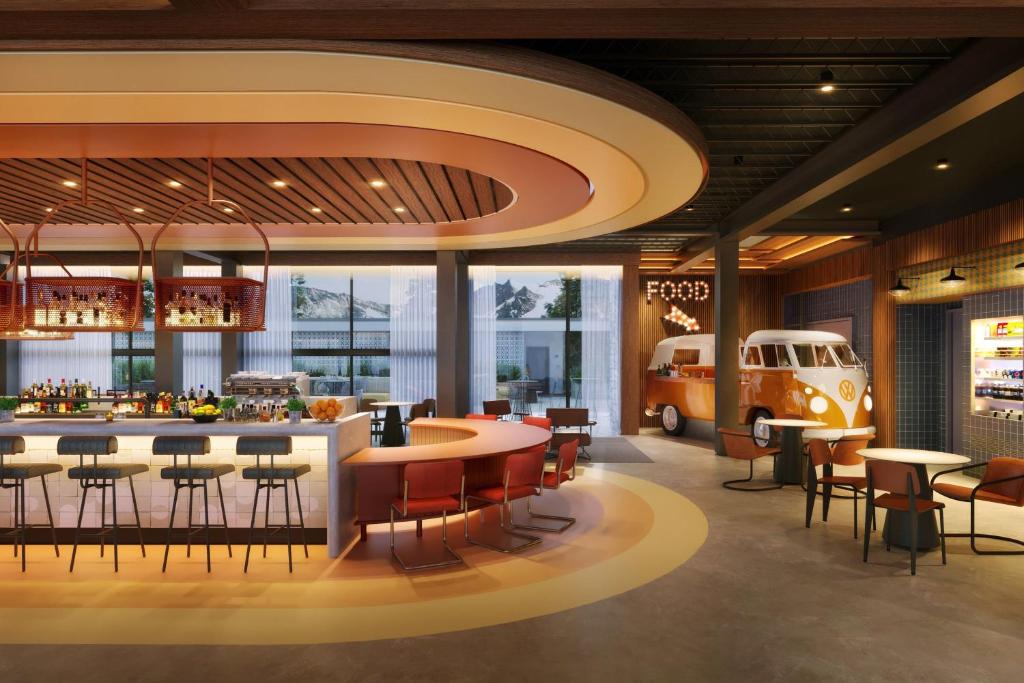
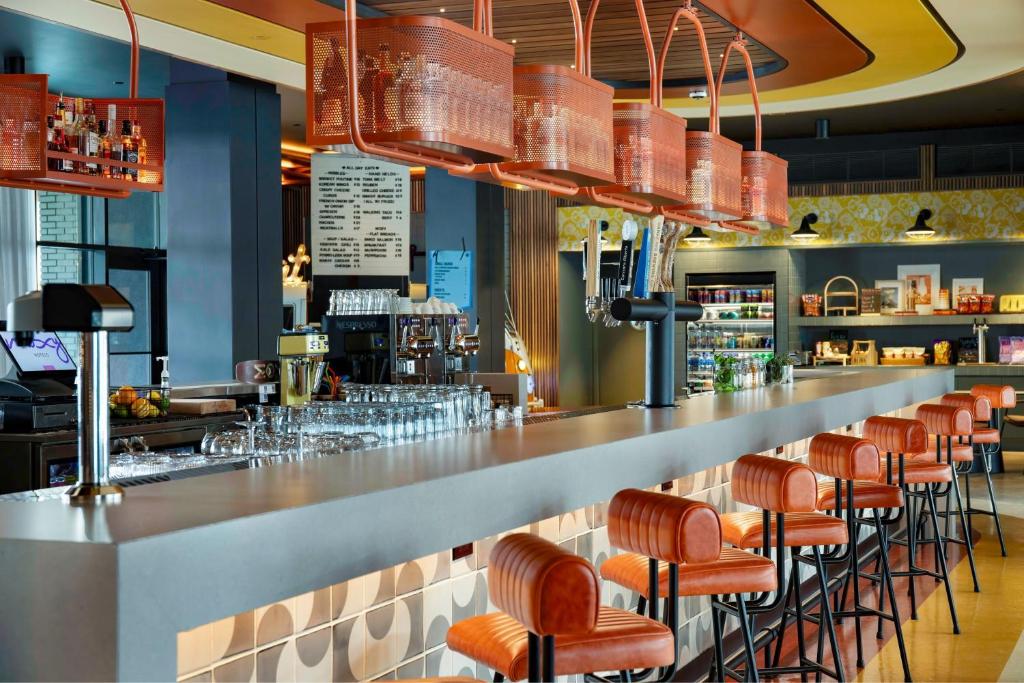
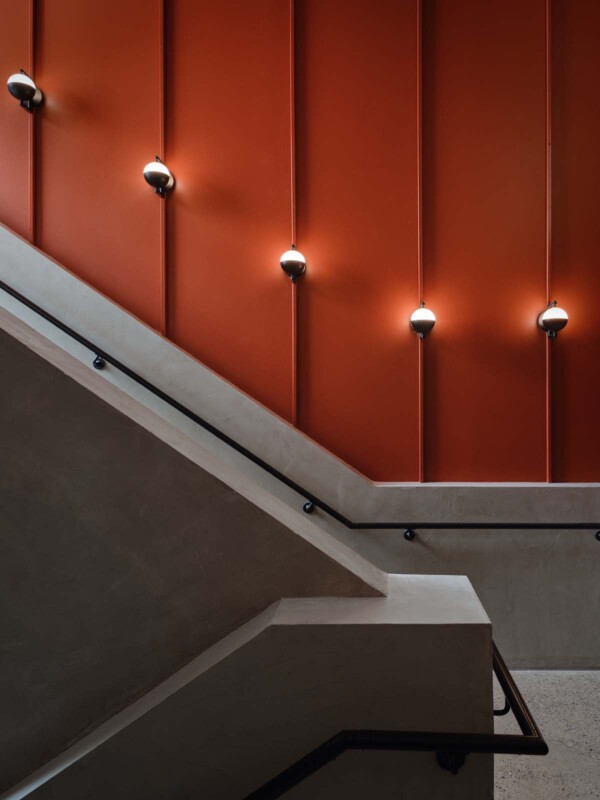
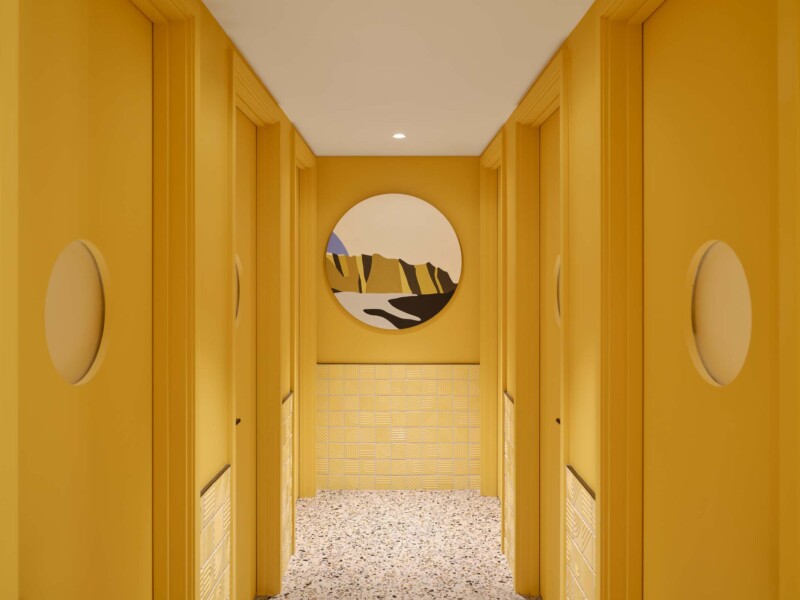
As with most Moxy hotels, reception isn’t really the point. The bar is. Bar Moxy forms the social centre of the building, combining check-in, eating, drinking and hanging out in one animated space. It’s intentionally informal and energetic, designed as somewhere guests might actually spend an evening rather than simply walk through on their way upstairs. Local artists add another layer of Banff identity. Calgary artist Kirsten Bollen created the circular mid-century mountain landscape in the lobby, while large abstract murals by Edmonton-based Tanya Klimp climb the hotel’s grand staircases. This isn’t generic retro. There’s Alberta in the mix.
109 Rooms, Minus the Fuss
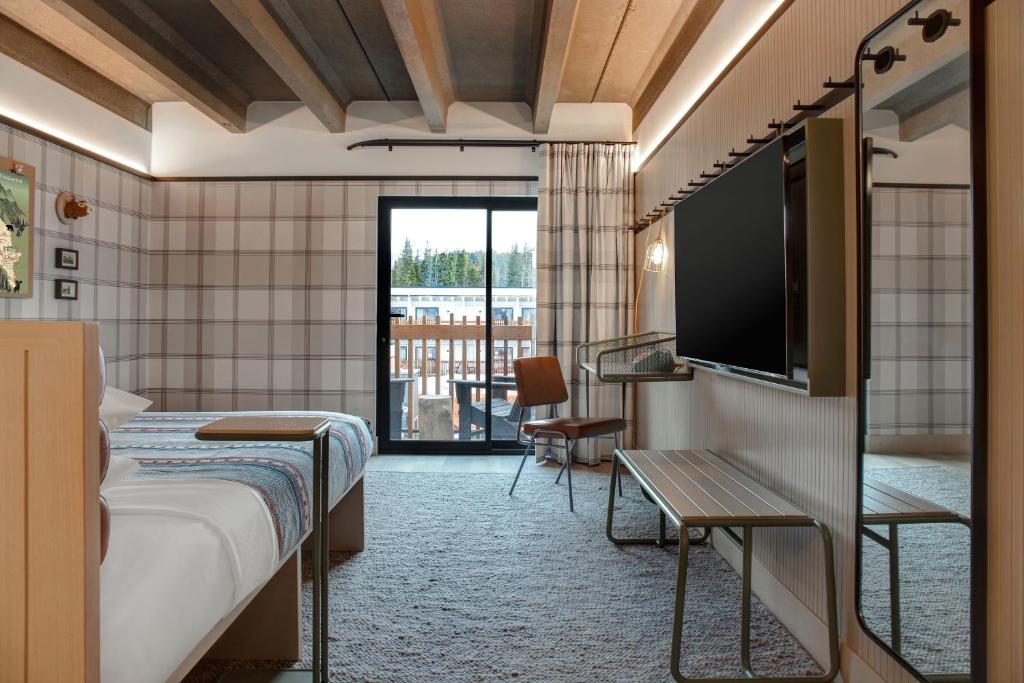
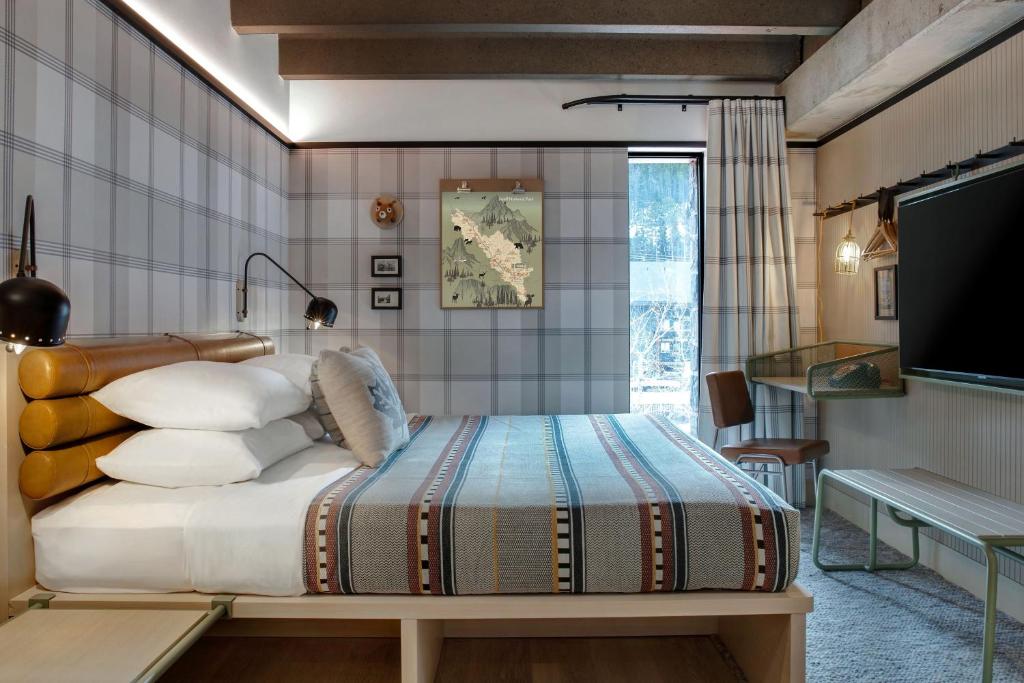
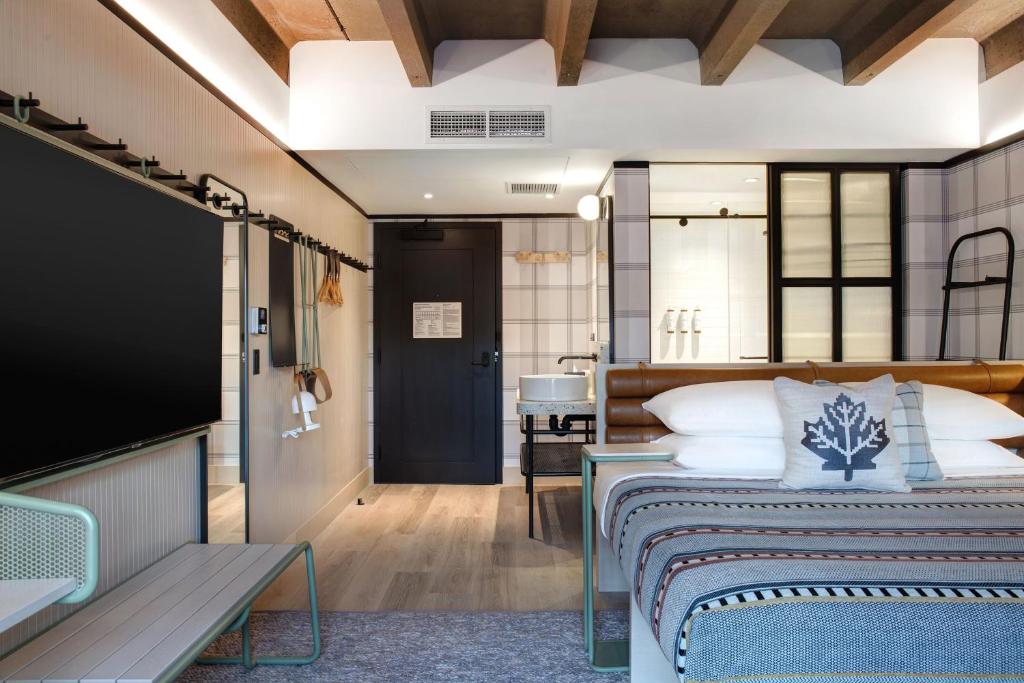
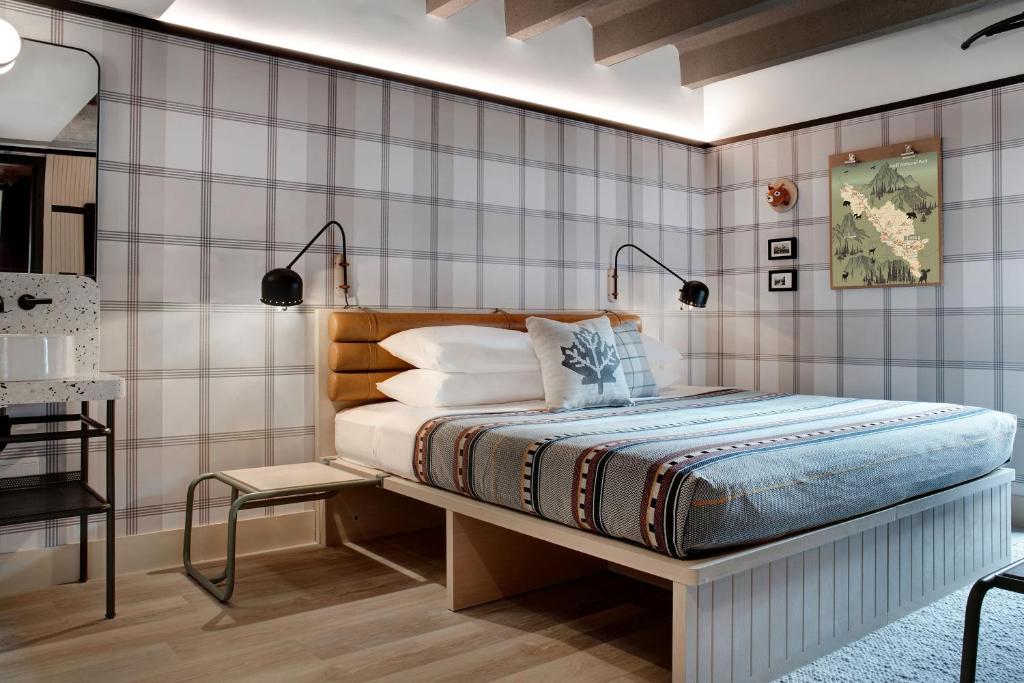
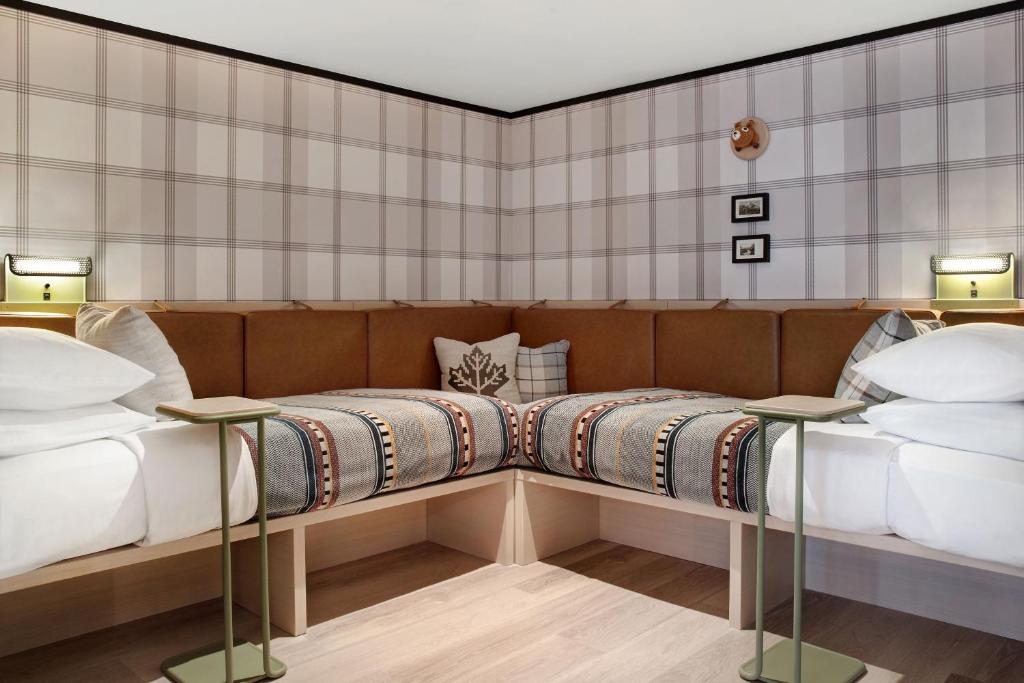
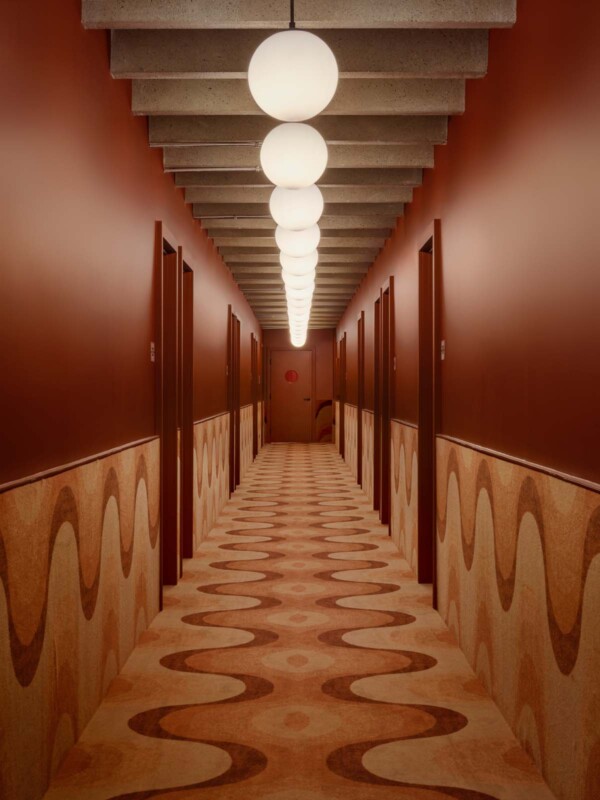
The guestrooms continue the retro ski-lodge language but strip away much of the conventional hotel-room clutter. There are 109 rooms, with configurations ranging from toe-to-toe beds and double bunks to rooms with kitchenettes and combinable lock-off suites. It’s an unusually flexible approach that makes sense in Banff, where the person checking in could be a couple on a weekend escape, four friends with skis or a group halfway through a Canadian Rockies road trip. The aesthetic remains deliberately straightforward: timber, industrial details, graphic accents and just enough nostalgia. Because the mountains should still be the main attraction.
Meet You in the Hot Tub
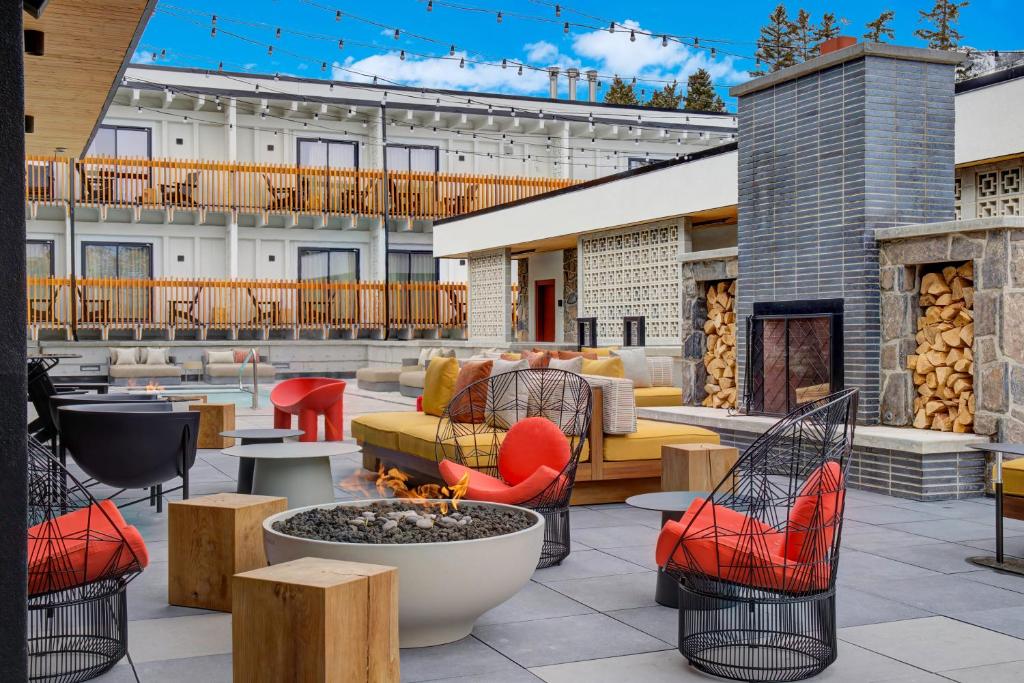
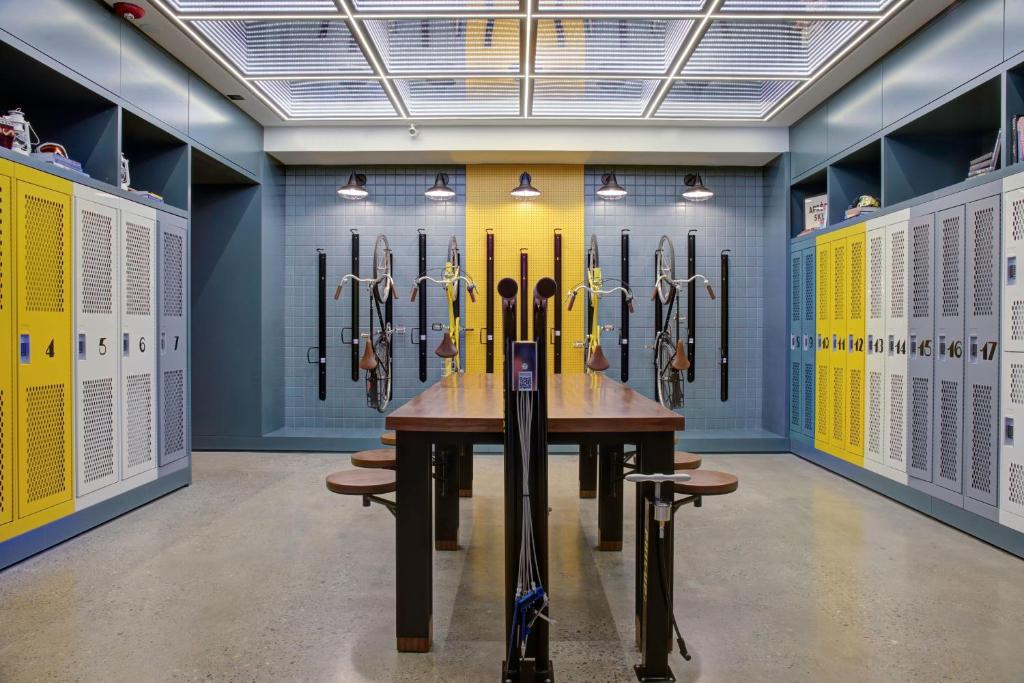
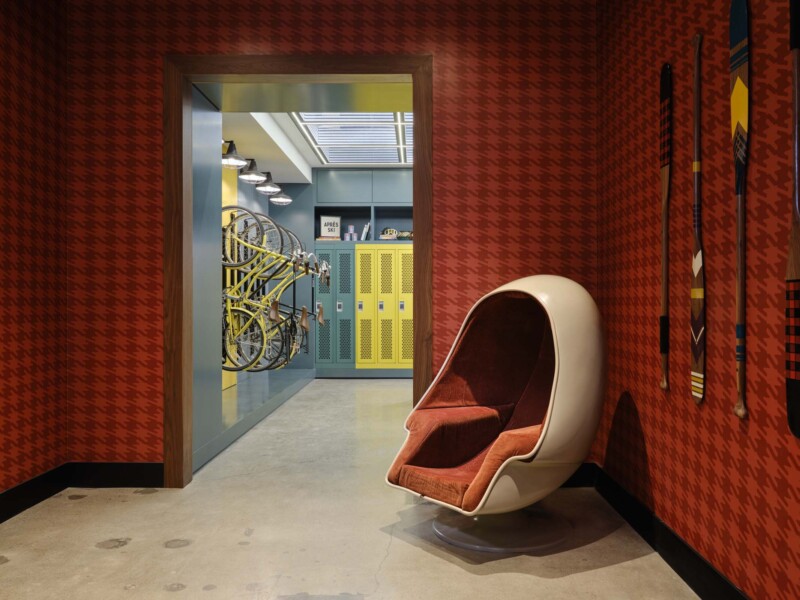
The original motel typology has another advantage. A courtyard. Moxy turned it into a year-round social space with two heated outdoor hot tubs, creating the sort of après-ski scene that practically writes its own itinerary. Ski. Hot tub. Cocktail. Repeat. There’s also a 24-hour room for storing and repairing skis, snowboards and bikes, plus a fitness centre with Peloton bikes. The hotel understands its audience. People come to Banff to get outside.
A 1966 VW Serves Lunch
Then there’s the restored 1966 Volkswagen Kombi. Rather than simply parking it in the lobby as another piece of Instagram bait, Moxy turned the van into an all-day food outlet. Elsewhere, Bar Moxy keeps things appropriately unfussy with comfort food including Alberta brisket poutine and Reuben sandwiches, accompanied by cocktails and local drinks. This isn’t destination fine dining. Nor should it be. Moxy is much happier feeding the après-ski crowd.
200 Records and a Serious Sound System
The hotel’s most gloriously unnecessary space may also be its best. The Voyager Room contains more than 200 vinyl records alongside a vintage Klipsch Heritage sound system and 1970s hi-fi equipment. There’s karaoke. There’s a large screen for classic films. And there’s the distinct possibility that you’ll spend considerably longer here than intended. It’s exactly the sort of space that separates a hotel with amenities from a hotel with personality.
The Greenest Building Is Often the One Already Standing
Moxy Banff’s sustainability story is unusually straightforward. They didn’t knock the old hotel down. By retaining substantial parts of the existing 1964 structure, the redevelopment reduced the need for an entirely new building while preserving a recognisable element of Banff’s streetscape. That’s particularly meaningful in a place where architecture and landscape are so closely intertwined. Adaptive reuse doesn’t always have to involve a centuries-old monastery or abandoned factory. Sometimes a slightly funky 1960s motel is heritage too.
Roadside Architecture Gets Its Second Trip
There is something particularly satisfying about seeing a motor hotel survive. Buildings like this once represented freedom: load the car, hit the highway and wake up somewhere extraordinary. Moxy Banff has retained that spirit while changing almost everything else around it. Workshop/APD didn’t erase the hotel’s 1964 origins; it made them the reason to stay. Original Rundle stone, precast motel wings and mid-century proportions now share space with Alberta art, hot tubs, bunk rooms, cocktails, vinyl records and a 1966 VW serving food. Moxy Banff may belong to an international brand, but the building gives it something a new-build could never quite replicate: six decades of Banff road-trip DNA.