Moxy NYC East Village | New York City, USA
Thirteen Floors of Downtown History, Reworked for a New Generation
Why DNA Hotels Loves It
● Stonehill Taylor and Rockwell Group translate the East Village’s immigrant, artistic, and countercultural history into a layered vertical narrative.
● Salvaged materials, commissioned artworks, graffiti references, and industrial textures give the hotel a stronger sense of place than the average Moxy.
● Multiple bars, restaurants, and social spaces capture the neighbourhood’s restless energy directly opposite the legendary Webster Hall.
A Neighbourhood Told Vertically
Moxy NYC East Village approaches local history as a journey through the building. Conceived by Stonehill Taylor with interiors by Rockwell Group, its thirteen floors form a loose timeline of the neighbourhood—from early immigrant communities and bohemian experimentation to punk, street art, and contemporary creative culture. The references are playful rather than academic. History becomes atmosphere.
An Entrance Built from Fragments
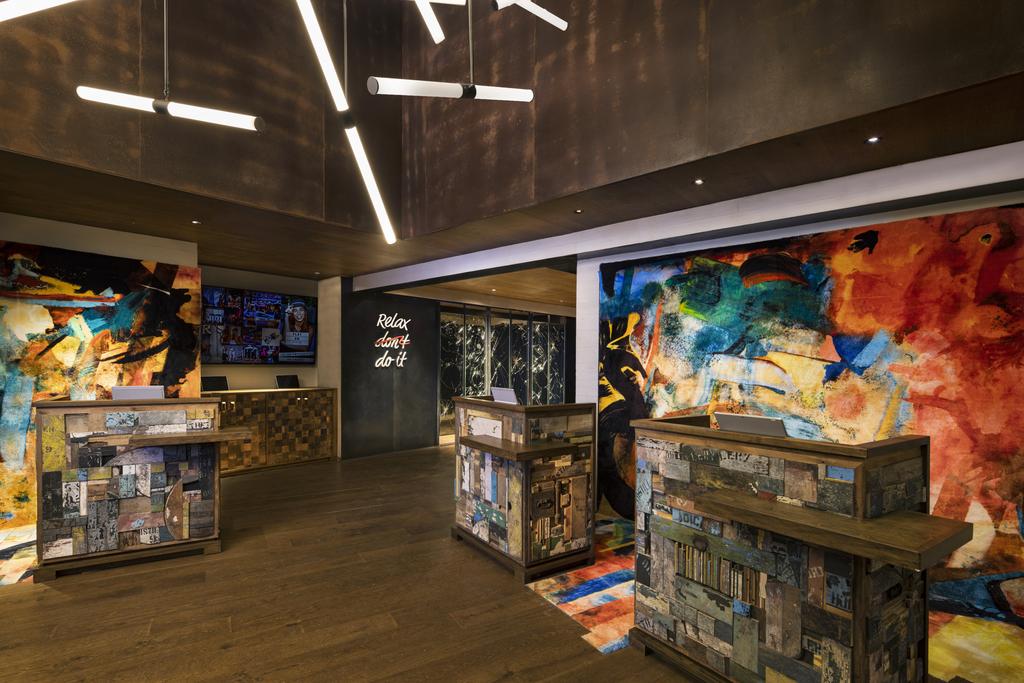
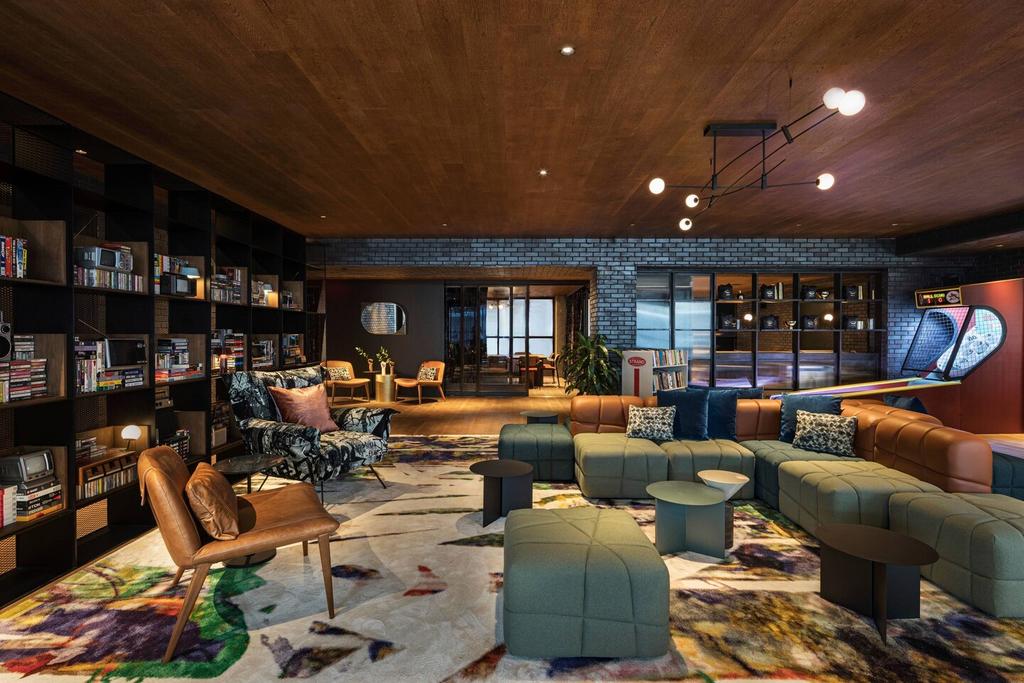
The lobby immediately establishes the hotel’s unconventional character. Three sculptural check-in kiosks by local artist Michael Sanzone combine salvaged materials and found objects, transforming reception into an installation. Graffiti-inspired tapestries, distressed mirrors, neon lettering, vinyl collections, books, and mismatched seating continue the visual language. The space functions as café, bar, workspace, and meeting point. Nothing feels overly ordered. That is part of its appeal.
Compact Rooms, Cleverly Composed
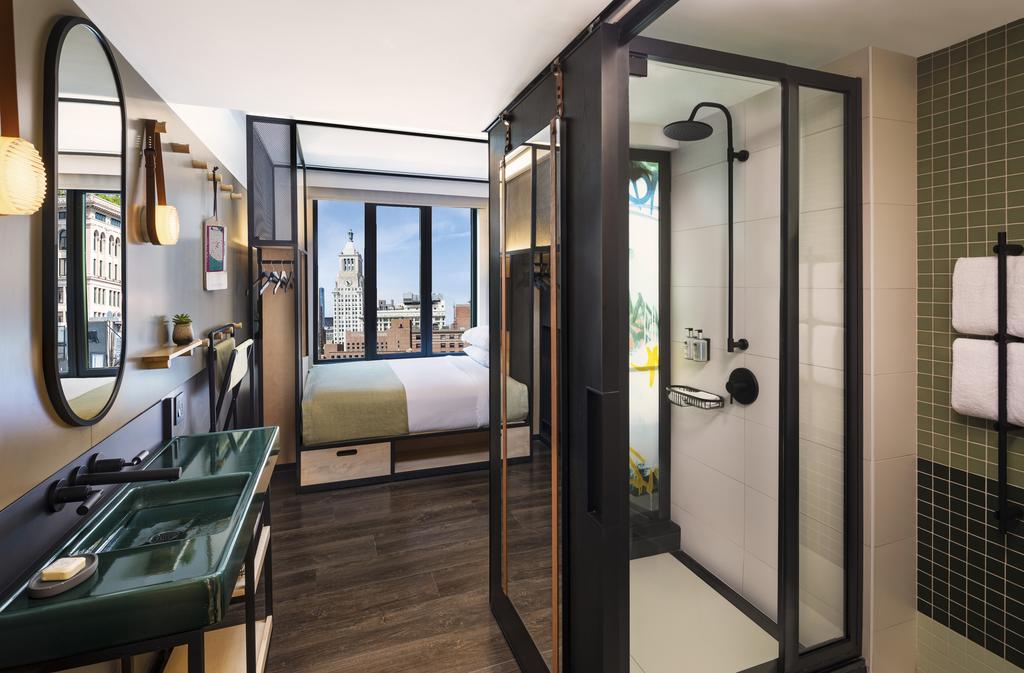
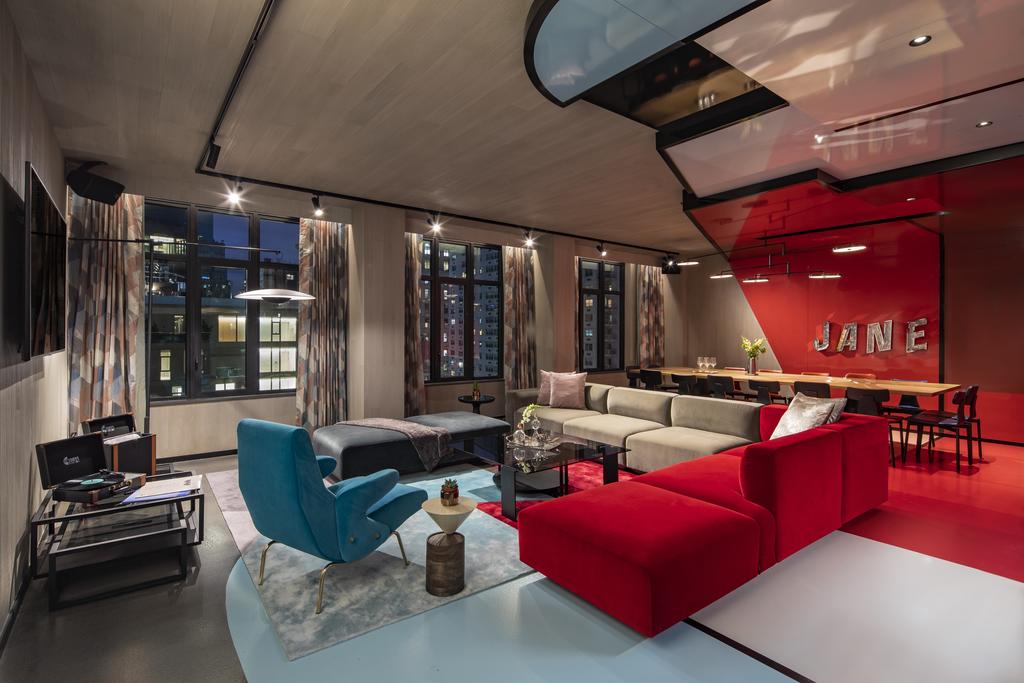
The 286 guestrooms follow Moxy’s familiar compact-room philosophy but adapt it to the East Village setting. Black, brown, and grey tones are warmed by timber, textured fabrics, retro telephones, graphic artwork, and occasional references to New York iconography. Traditional wardrobes are replaced by rails, hooks, hangers, and under-bed storage, while high windows frame the layered rooftops of downtown Manhattan. Sinks sit within the sleeping area, with shower and toilet spaces screened separately. Every centimetre works.
Four Distinct Social Worlds
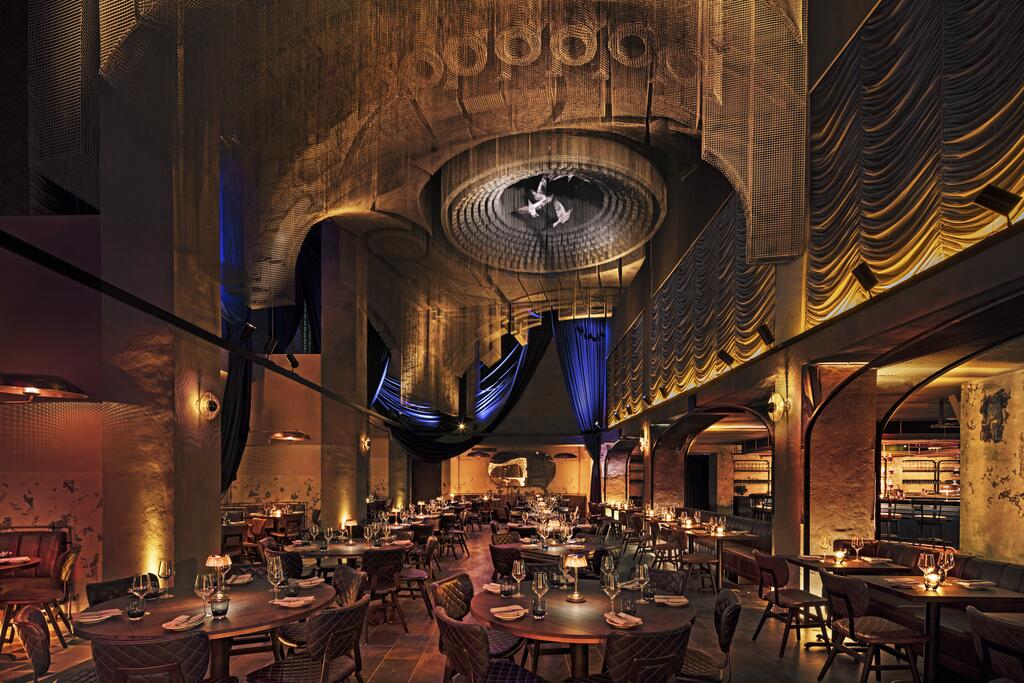
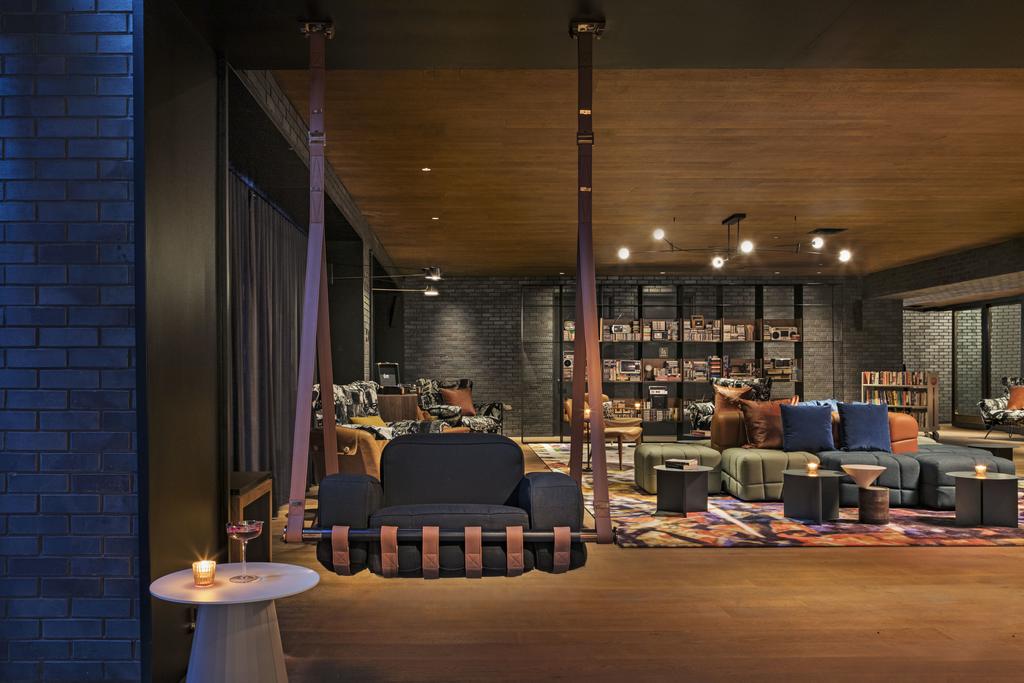
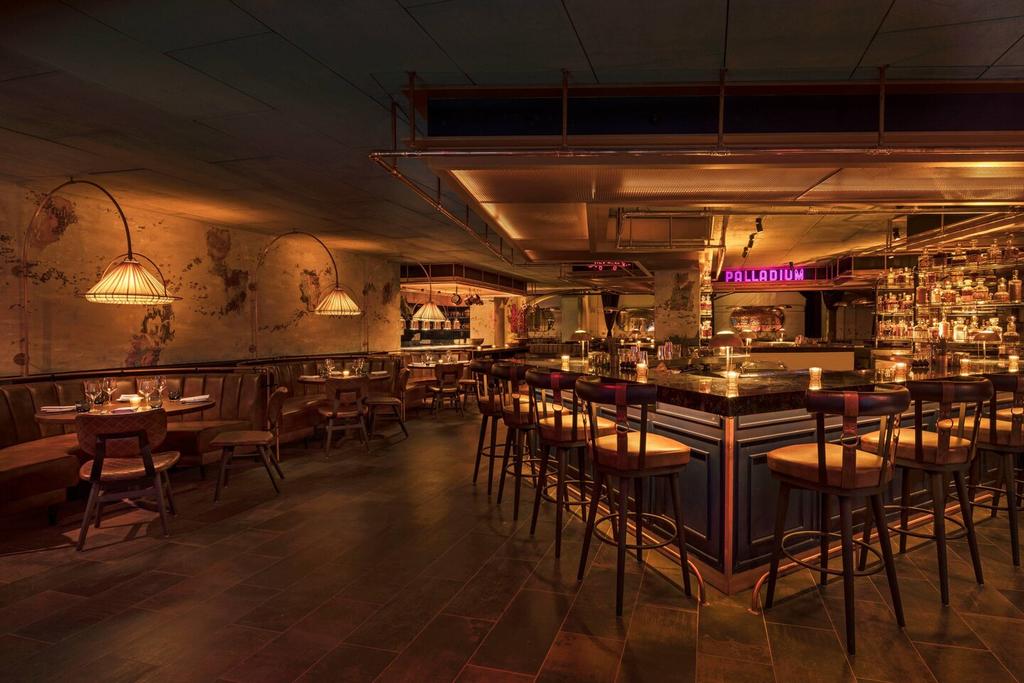
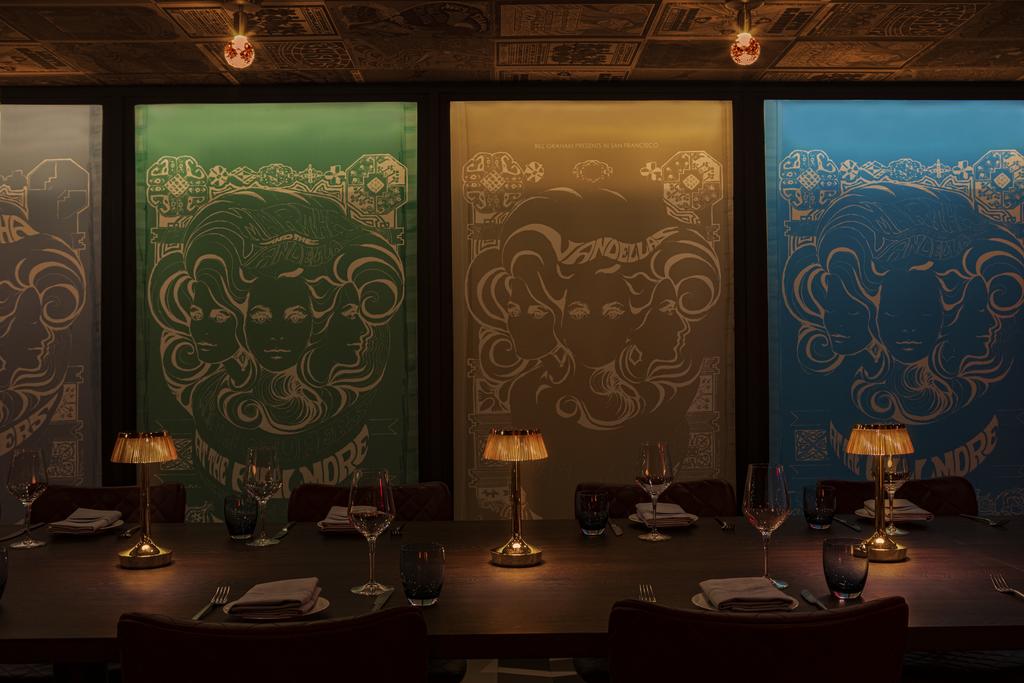
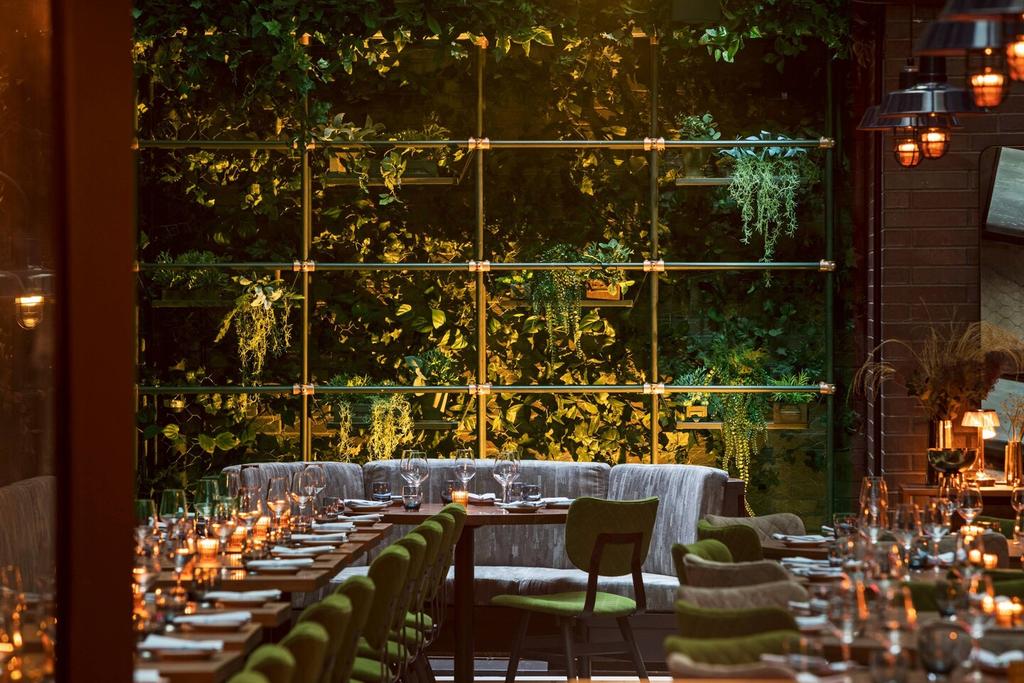
Rockwell Group created a collection of public spaces with noticeably different moods. Alphabet Bar and Café is relaxed and deliberately eclectic, combining low sofas, swing seats, books, records, games, and an outdoor patio. Below ground, Cathédrale introduces a more theatrical scale, its cavernous dining room dominated by Fillmore, Edoardo Tresoldi’s monumental wire-mesh sculpture. Above the rooftops, The Ready offers cocktails, greenery, retractable glass walls, and wide city views. The hotel moves easily from morning coffee to late-night energy.
Downtown at the Door
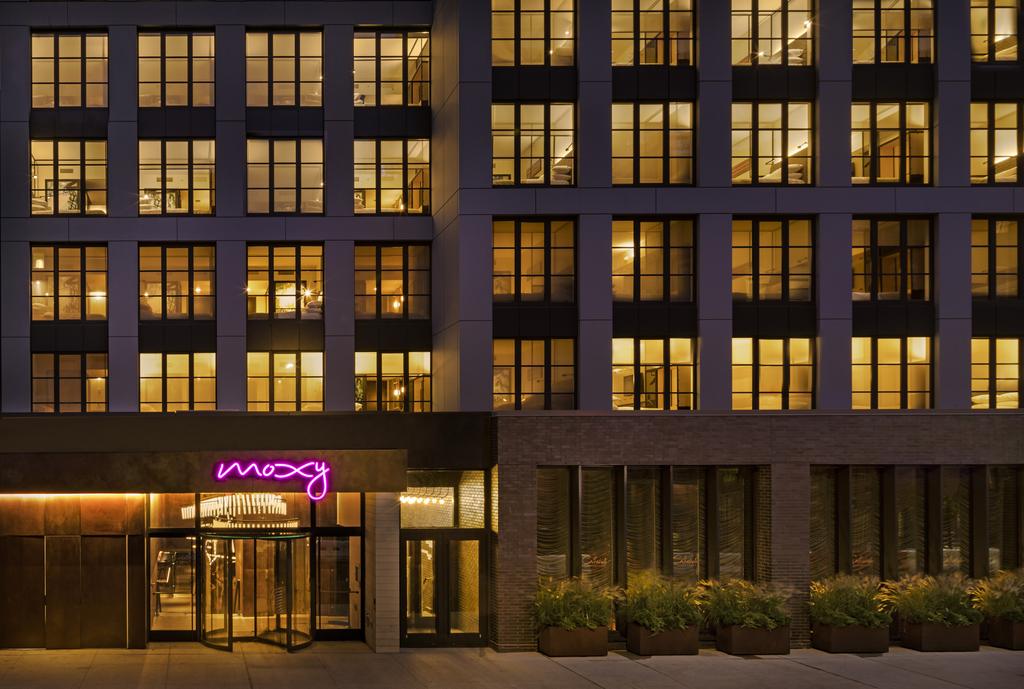
The location places guests directly opposite Webster Hall, one of New York’s longstanding music venues. Union Square is a short walk away, with Greenwich Village, NoHo, the Lower East Side, and the restaurants and bars of downtown Manhattan all easily accessible. The immediate neighbourhood remains dense with independent shops, theatres, cafés, and traces of the subcultures that shaped it. The East Village has changed. Its creative restlessness remains.
Why It Works
Moxy NYC East Village succeeds because its design begins with the neighbourhood rather than the brand. Stonehill Taylor and Rockwell Group use art, salvaged objects, industrial materials, and theatrical public spaces to turn local history into something energetic and contemporary. The rooms are intentionally efficient, leaving the strongest moments to the communal spaces below and above. It feels busy, layered, and slightly unruly—much like the East Village itself.