The Murray, Hong Kong, China
Mid-century architecture transformed into one of Hong Kong’s most impressive adaptive-reuse hotels
Why DNA Hotels Loves It
● A landmark 1969 government building by architect Ron Phillips, preserved rather than demolished and given an entirely new life as a hotel.
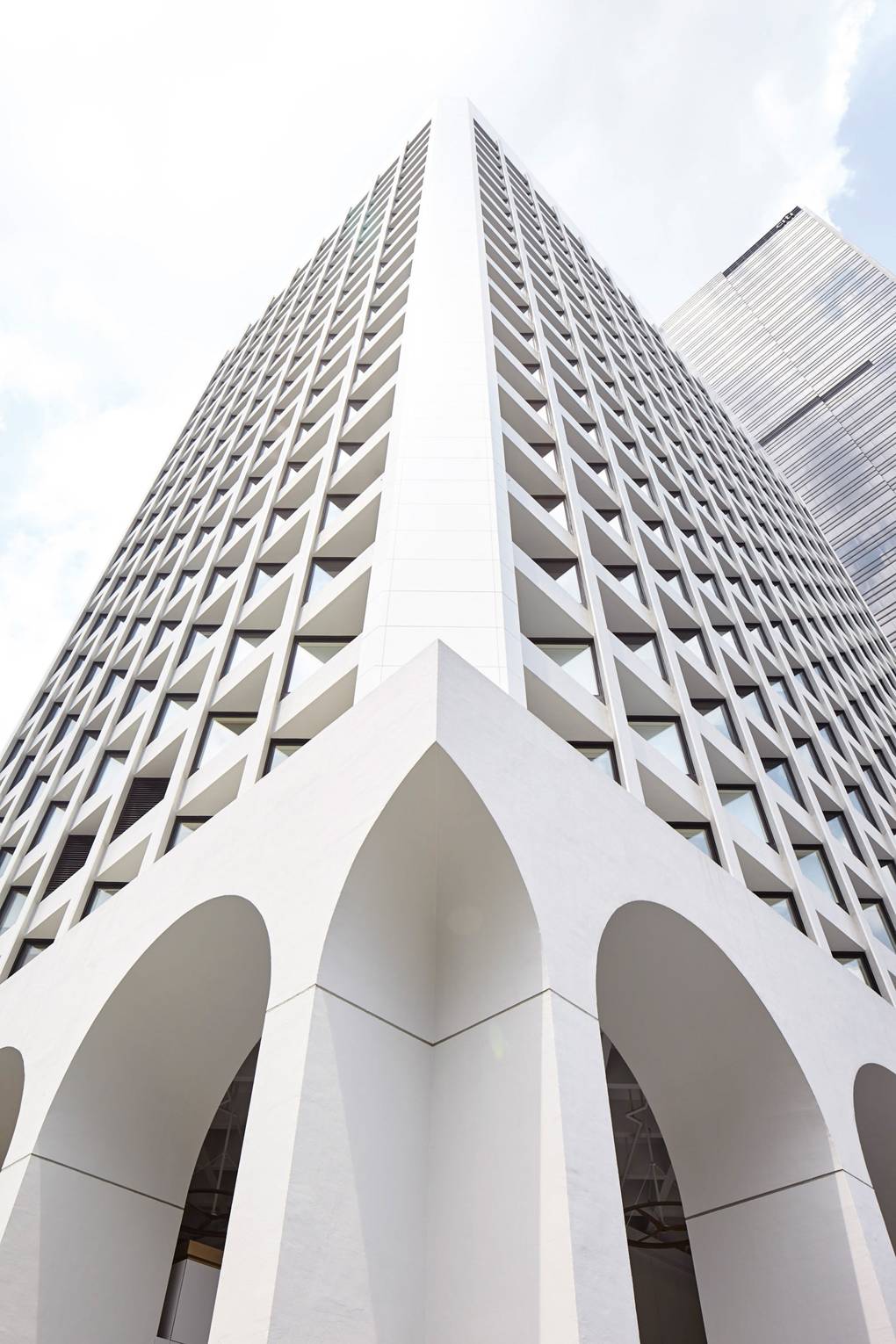
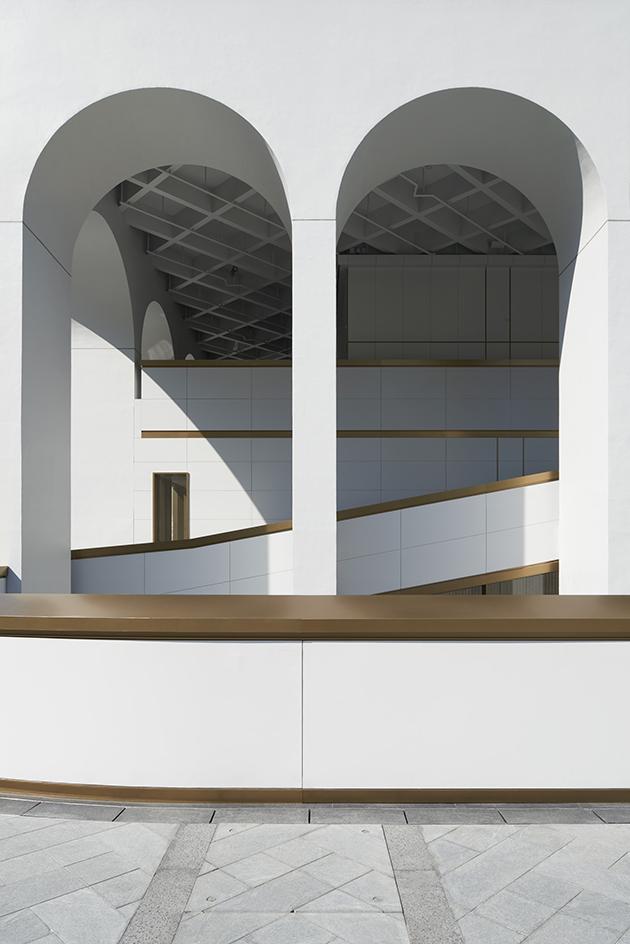
● Foster + Partners retained the extraordinary recessed-window façade, one of Hong Kong’s most distinctive examples of climate-responsive modernism.
● A rare luxury hotel where the architecture itself—not decoration or spectacle—is the real reason to stay.
Modernism in Central
The Murray began life with an entirely different purpose. Completed in 1969 as the Murray Building, it was designed by Ron Phillips of Hong Kong’s Public Works Department as a government office tower. Its location could hardly be more prominent: between Cotton Tree Drive and Garden Road, with Hong Kong Park on one side and the towers of Central rising around it. Yet what made the building remarkable was not its address but its response to Hong Kong’s climate. Deeply recessed windows were carefully angled to limit direct tropical sunlight while still bringing daylight into the offices. Repeated across the white façade, they created the distinctive geometric grid that became the building’s architectural signature. Functional environmental engineering had inadvertently produced something beautiful.
A Landmark Reborn
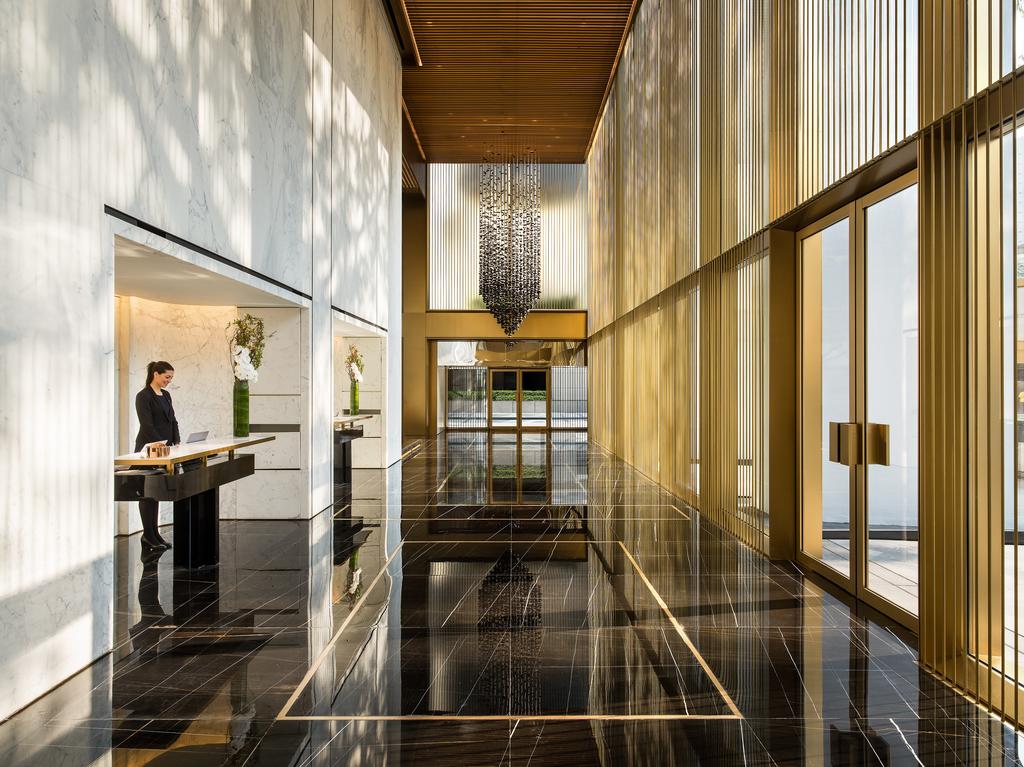
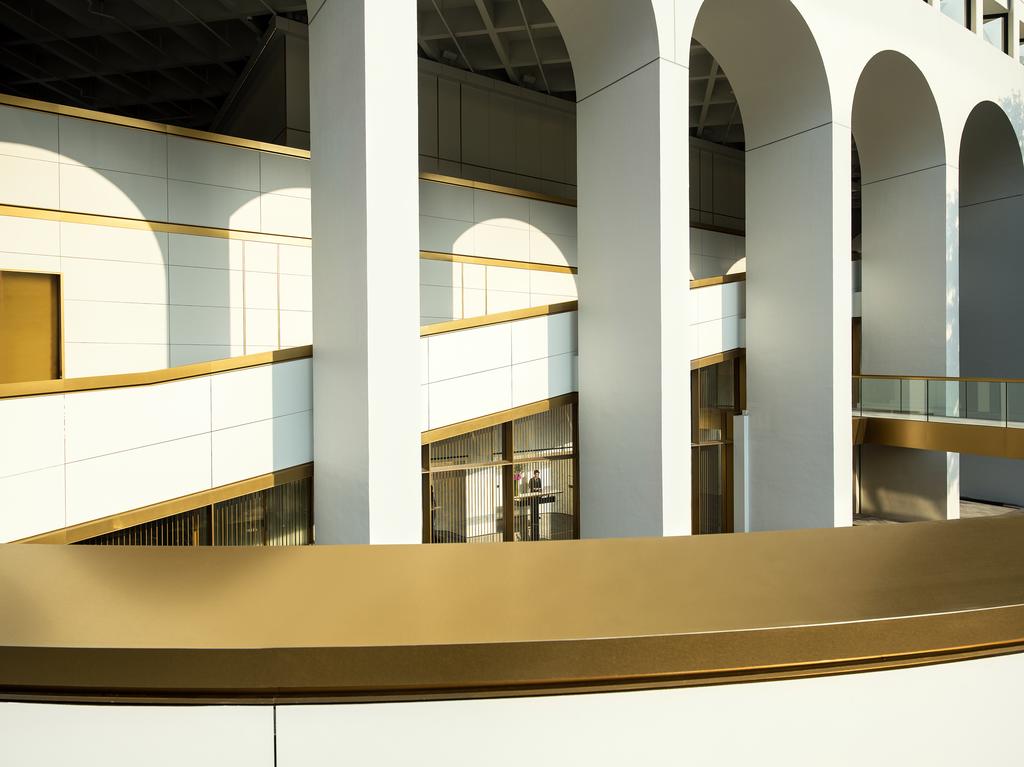
When the former government building was converted into a hotel, Foster + Partners resisted the temptation to disguise its institutional origins. Instead, they made them the starting point. The original façade was preserved, its sculptural arches and deep recesses cleaned and celebrated rather than replaced. Inside, the architects reorganised a building conceived for bureaucracy into one designed around hospitality, opening circulation routes and introducing new spaces while retaining the clarity of the original structure. It is adaptive reuse at an unusually ambitious scale. Walk around the exterior and the Murray Building is still clearly there. Step inside and its second life begins.
From Government Offices to 336 Rooms
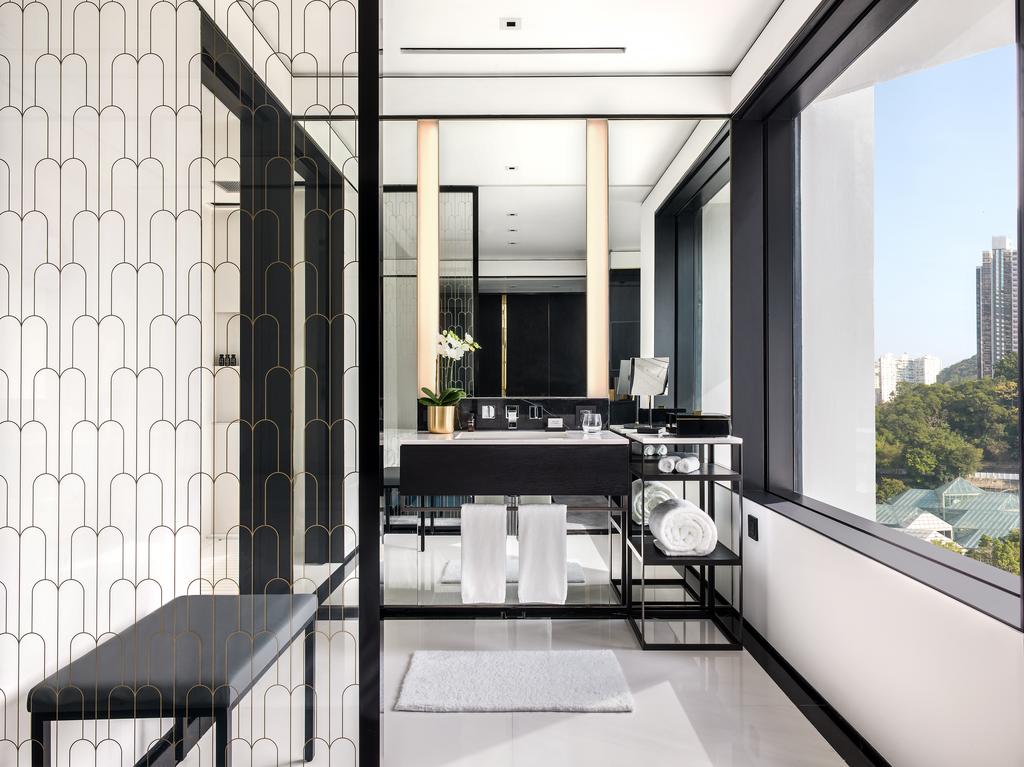
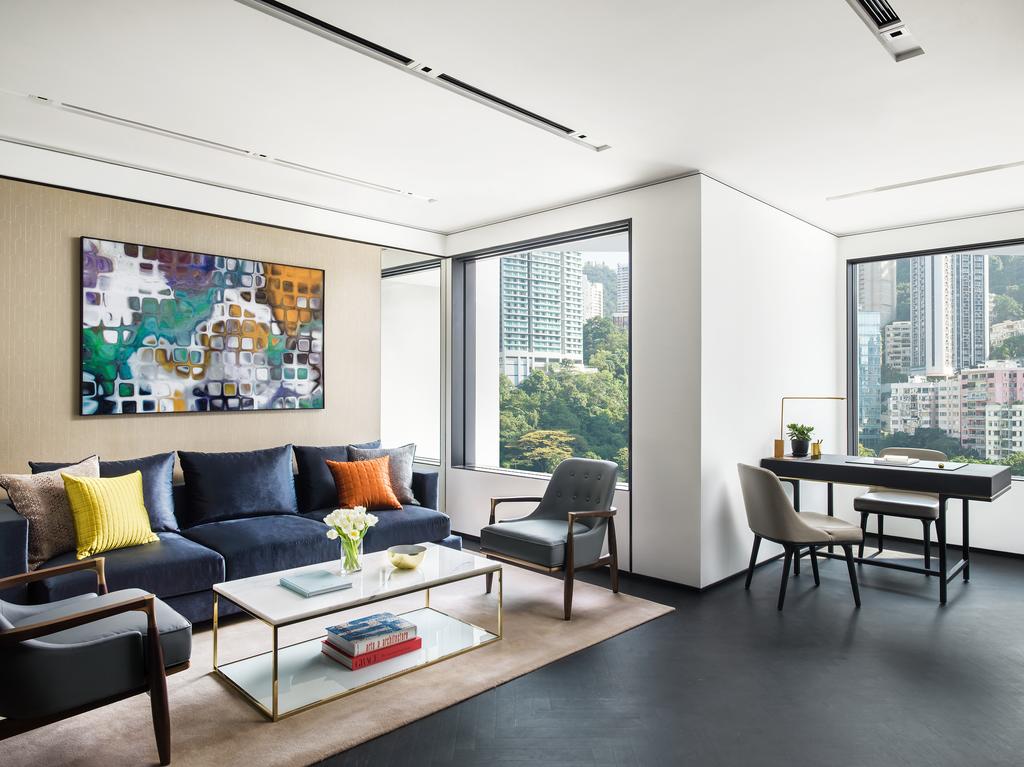
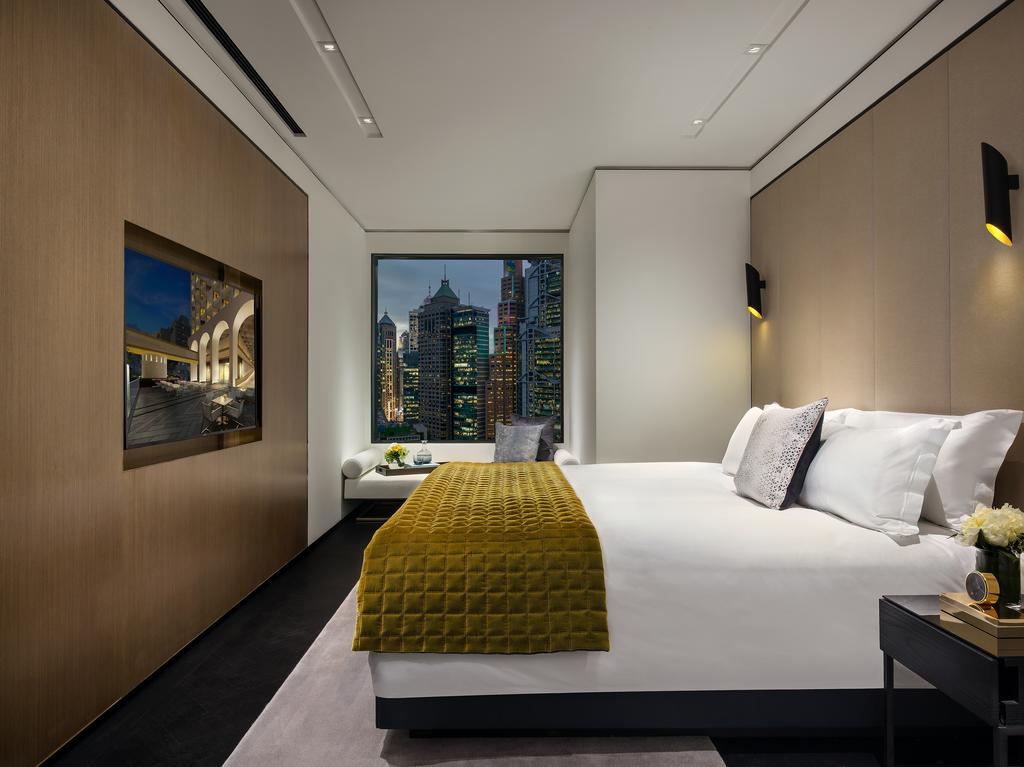
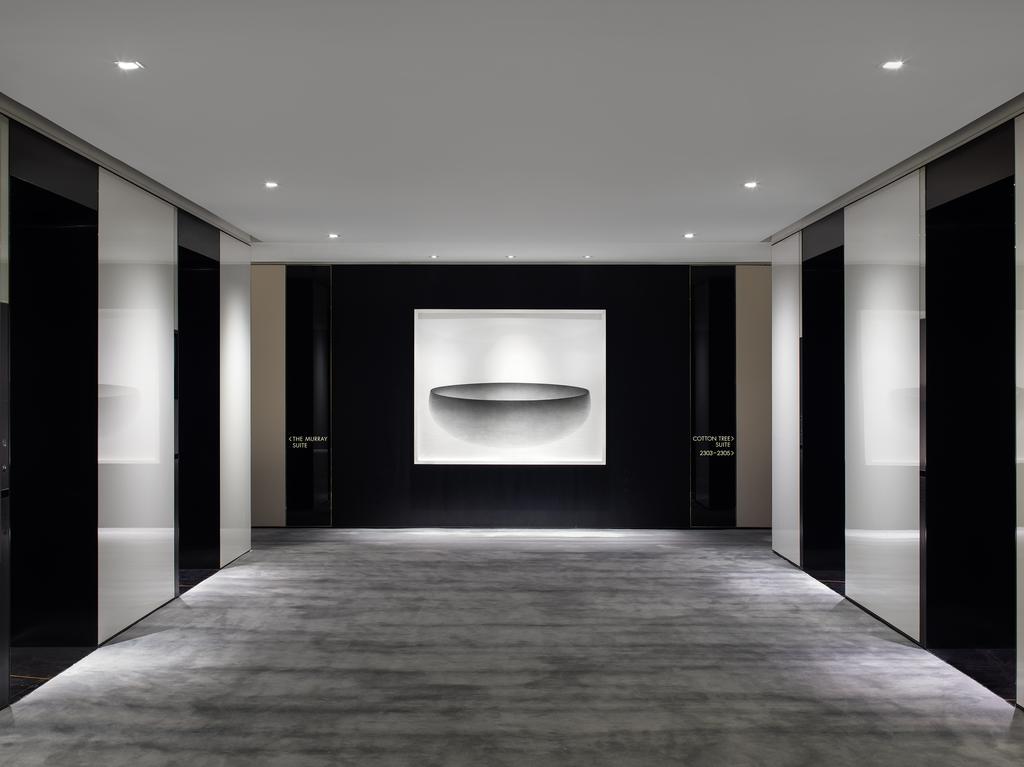
The transformation becomes particularly interesting in the 336 rooms and suites. What were once office floors are now remarkably calm urban retreats, with the building’s original windows framing Hong Kong like individual architectural compositions. Interiors deliberately avoid competing with the structure: neutral tones, timber, stone, marble and carefully detailed furniture create a restrained backdrop. Bathrooms are generously proportioned, while the larger rooms and suites make particularly good use of the building’s unusual depth and geometry. There is luxury here, certainly. But the real pleasure comes from occupying a piece of Hong Kong modernism rather than simply looking at it.
The Arches Continue
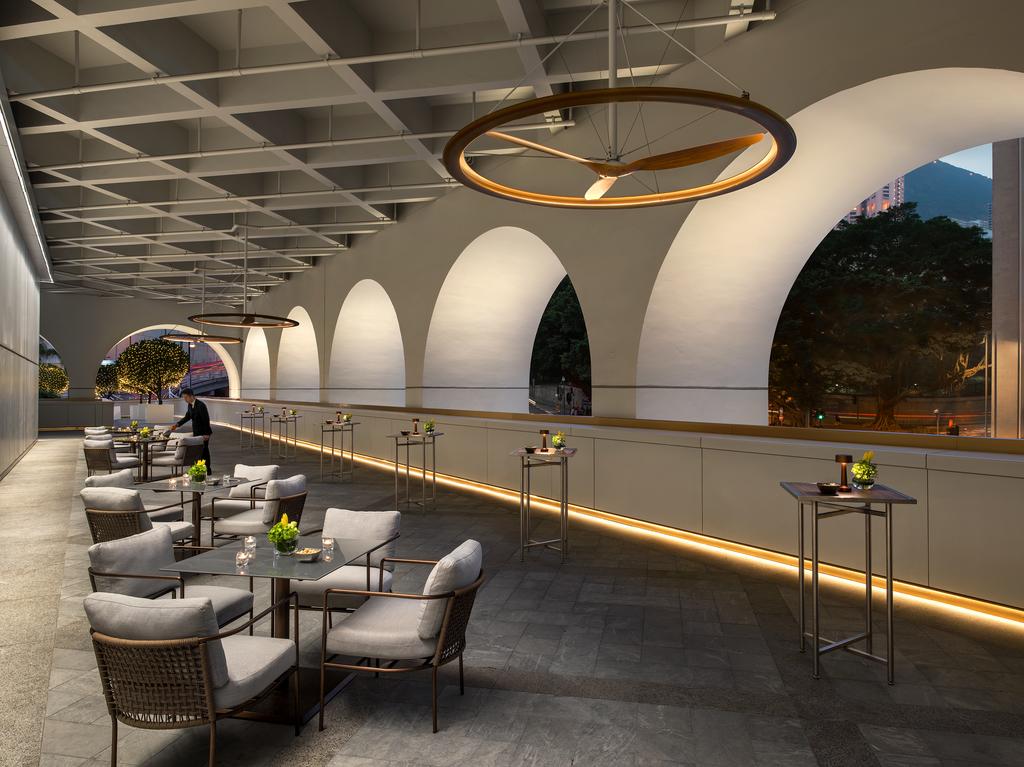
Foster + Partners carried one of Phillips’ strongest architectural gestures beyond the façade. Curves and arches reappear throughout the hotel, establishing a subtle dialogue between the 1960s exterior and the contemporary interventions inside. At ground level, the monumental structure meets landscaped terraces and mature trees, softening what was once a formal government building and connecting it more closely with neighbouring Hong Kong Park. This relationship with greenery is particularly unusual in Central, where hotels more commonly retreat upwards into towers. The Murray feels unexpectedly grounded.
Above the City
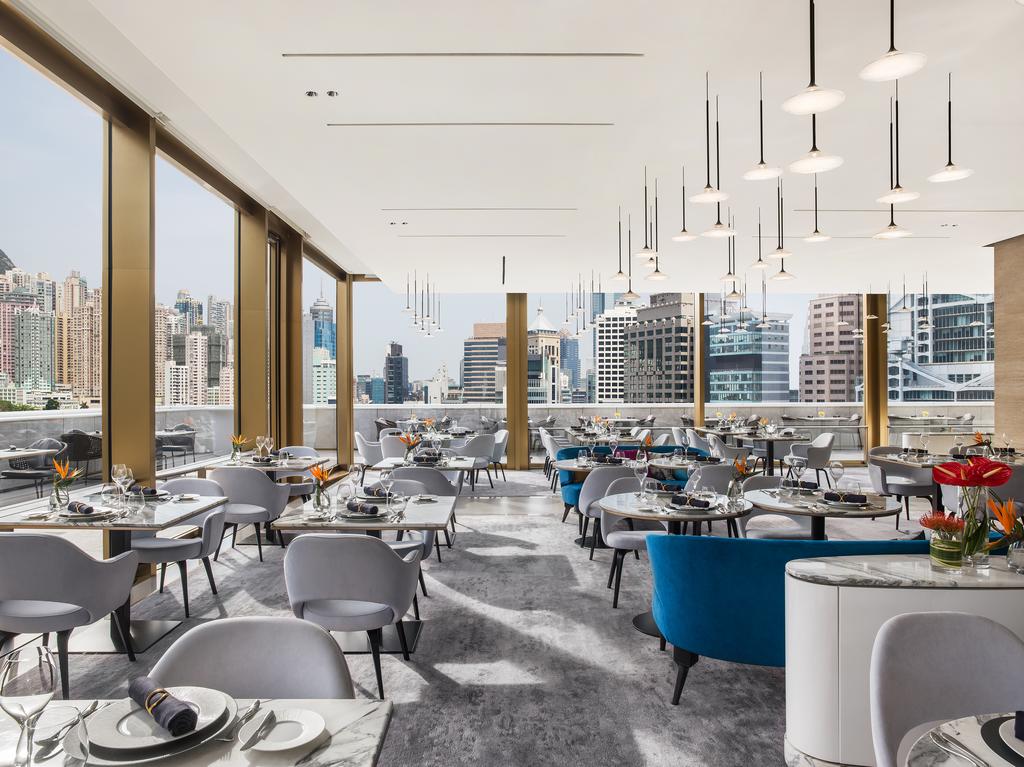
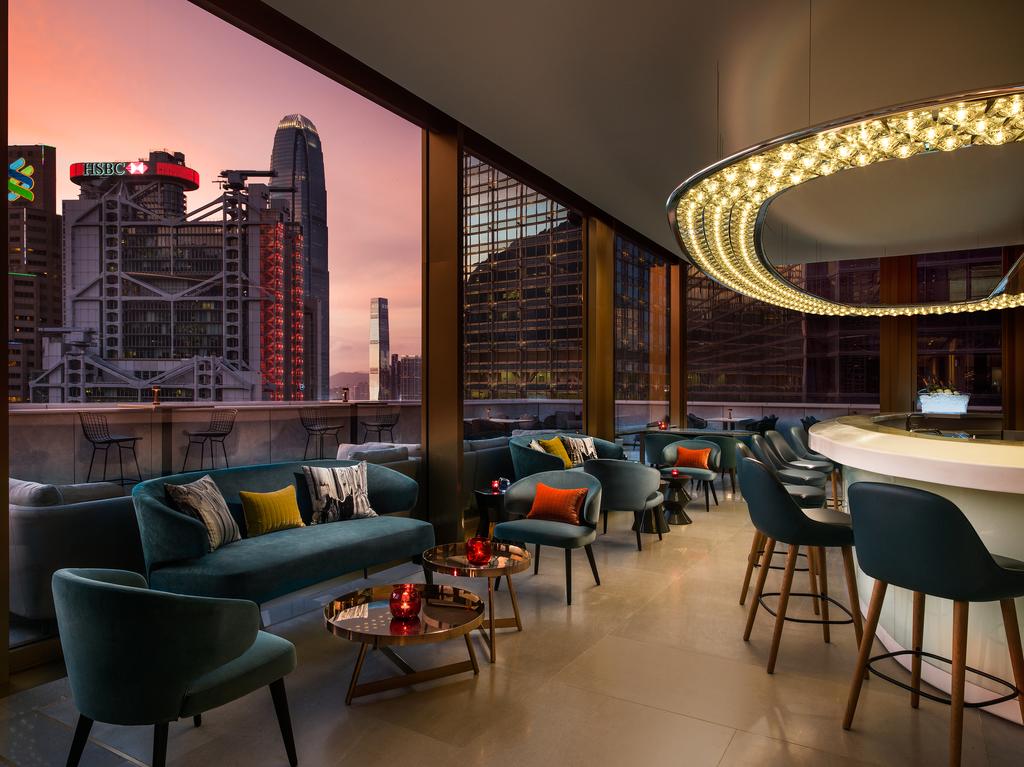
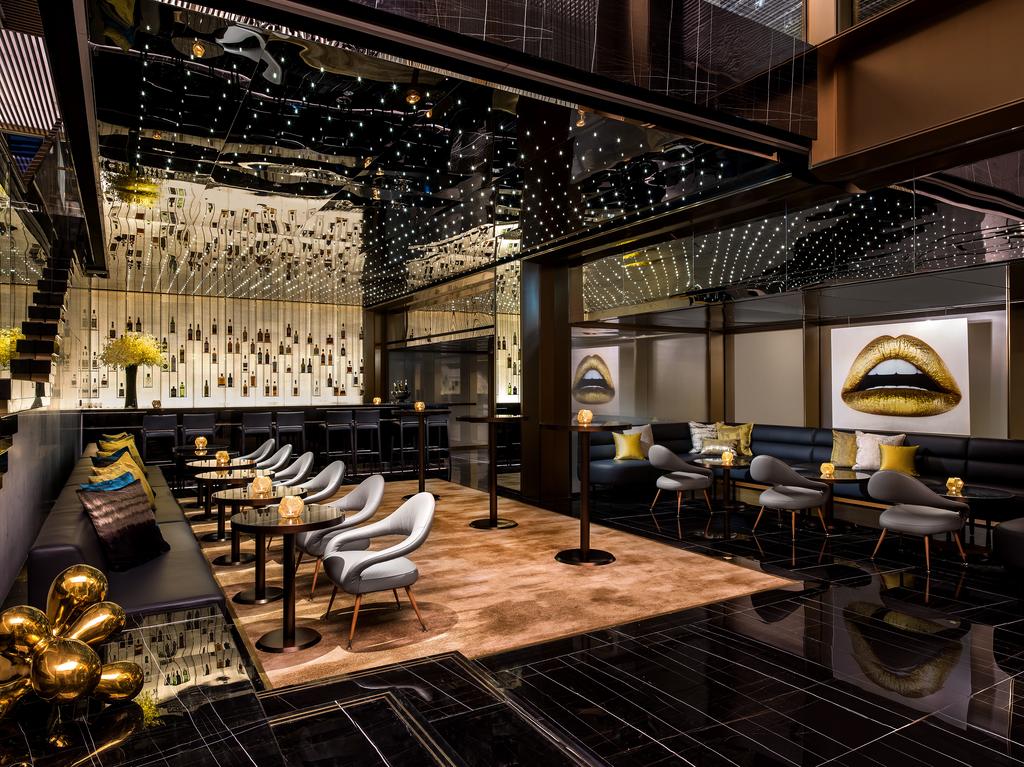
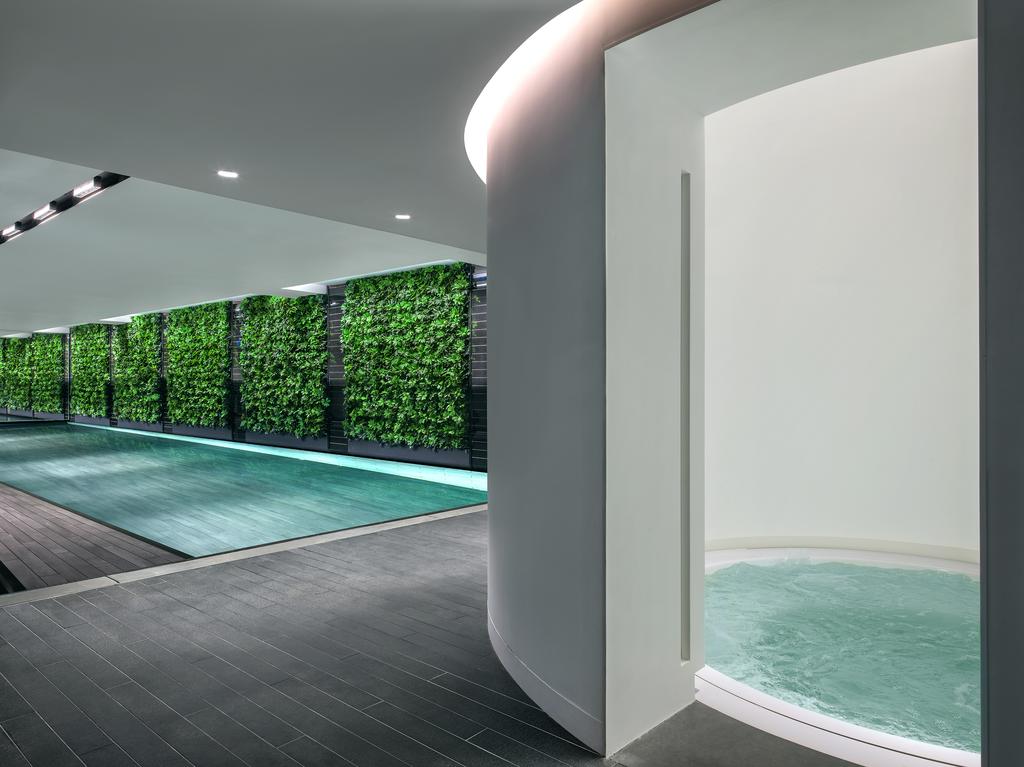
The building eventually does take you upwards. Popinjays occupies the rooftop, combining restaurant, bar and terrace with broad views across Central and the surrounding skyline. Elsewhere, restaurants and lounges range from formal dining to afternoon tea, while the spa, indoor pool and fitness facilities turn the former office block into something approaching an urban resort. Yet the most memorable spaces remain those where old and new visibly meet. A 1969 concrete structure. Contemporary interventions. Tropical vegetation. Hong Kong’s vertical skyline pressing in from every direction.
Why It Works
The Murray could easily have become another polished luxury hotel hidden behind a heritage façade. Instead, the building remains the protagonist. Its recessed windows, repetitive geometry and unmistakably mid-century proportions tell the story of an era when architecture was expected to solve practical problems through intelligent design. Foster + Partners understood that this was precisely what needed protecting. The result is not a recreation of 1960s Hong Kong, but something more convincing: an important piece of the city allowed to evolve. The Murray proves that sometimes the most contemporary thing a city can do is keep what it already has.