node hotel, Kyoto, Japan
Contemporary art, industrial architecture, and collector-style living in a different kind of Kyoto
Why DNA Hotels Loves It
● Contemporary art is fundamental to the experience, with more than 60 works integrated throughout the guestrooms and public spaces.
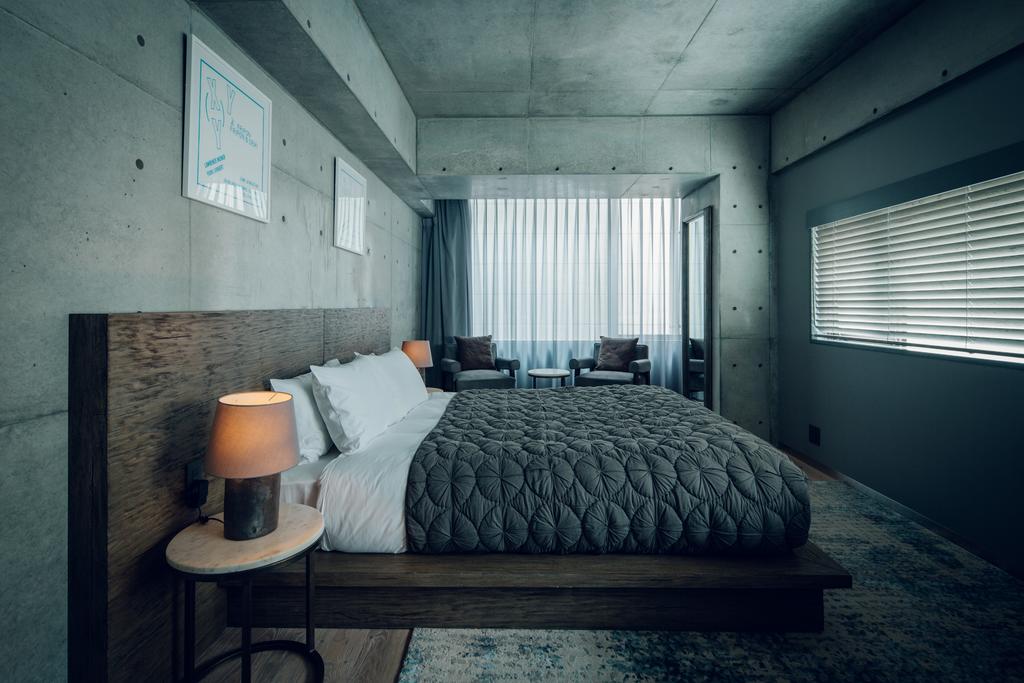
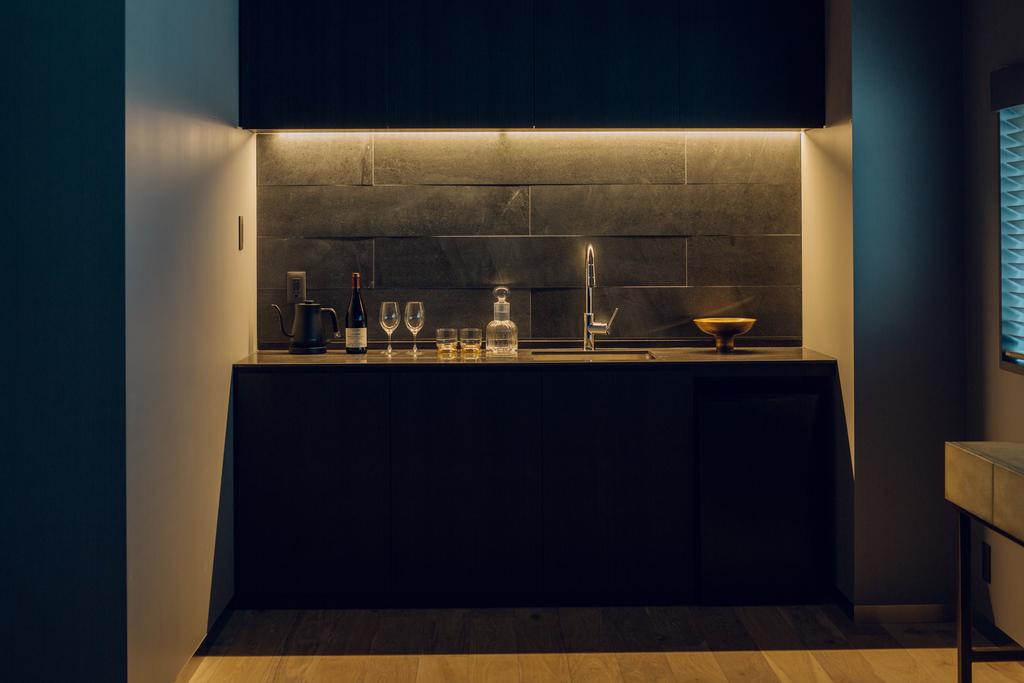
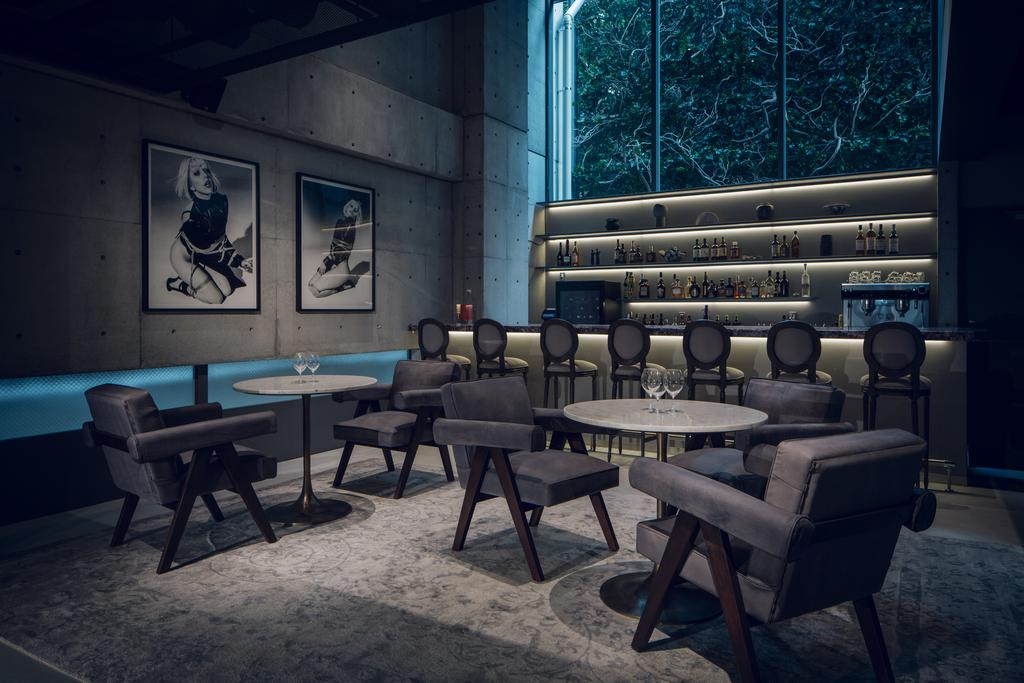
● Raw concrete, steel, marble, aged oak, and atmospheric lighting create an industrial interior that feels sophisticated rather than austere.
● A distinctly contemporary perspective on Kyoto, connecting guests with the city’s galleries, designers, makers, and creative culture beyond its historic image.
A Different Side of Kyoto
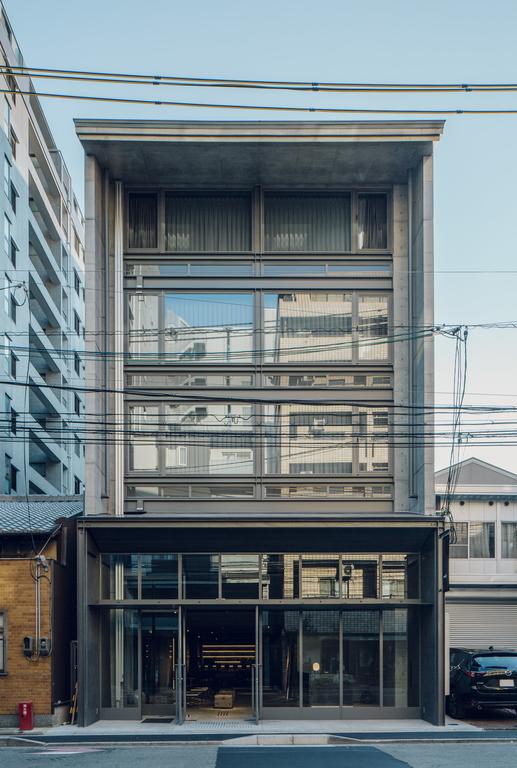
Kyoto is a city defined by history. node hotel looks firmly at the present. Behind an understated façade of glass, steel, and concrete, this intimate boutique hotel brings together contemporary art, architecture, and hospitality in a space that feels somewhere between a private collector’s home and an urban gallery. There are no obvious references to ryokans, temples, or traditional Japanese aesthetics. That’s precisely the point. node reveals another Kyoto—creative, contemporary, and still evolving.
A Hotel Built Around Art
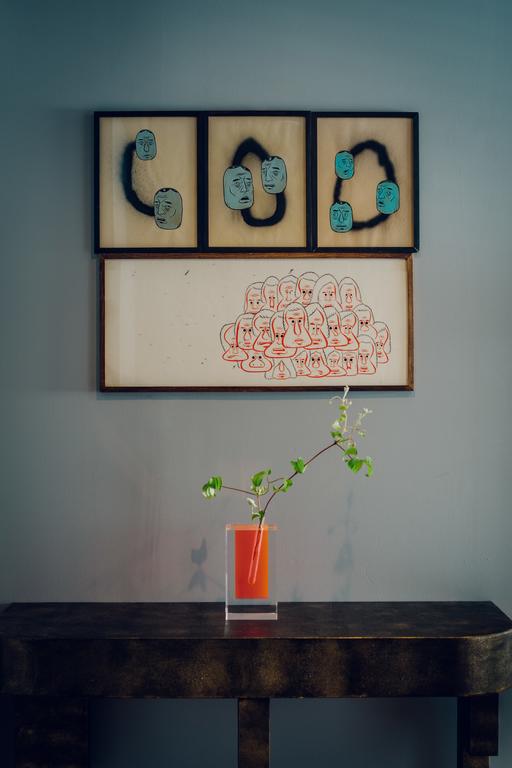
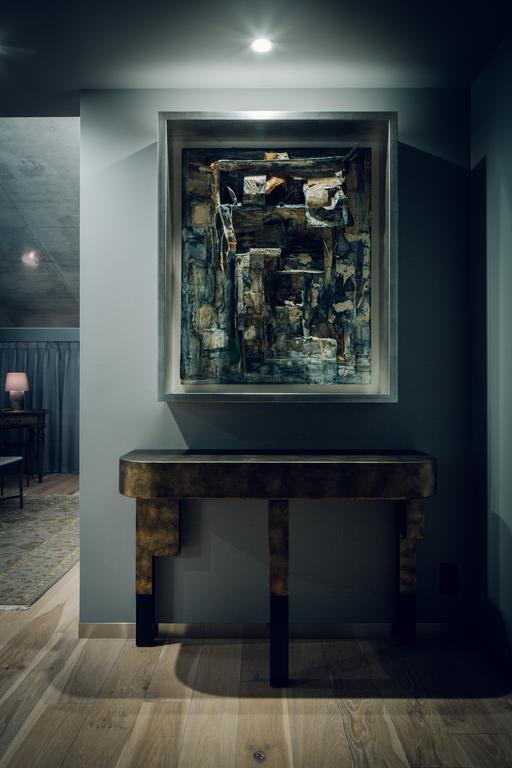
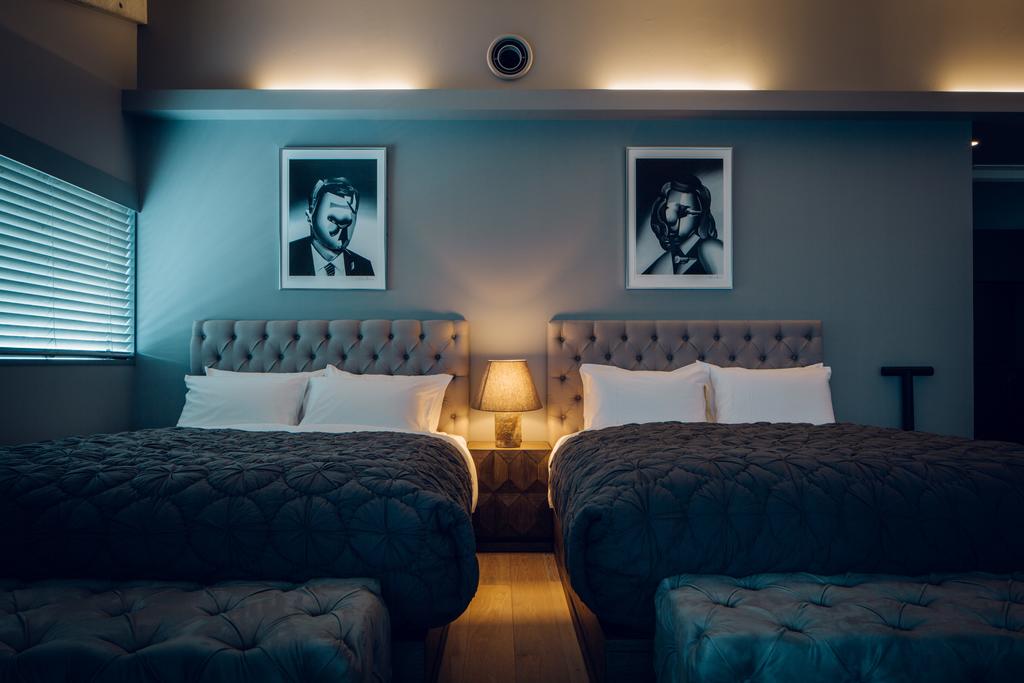
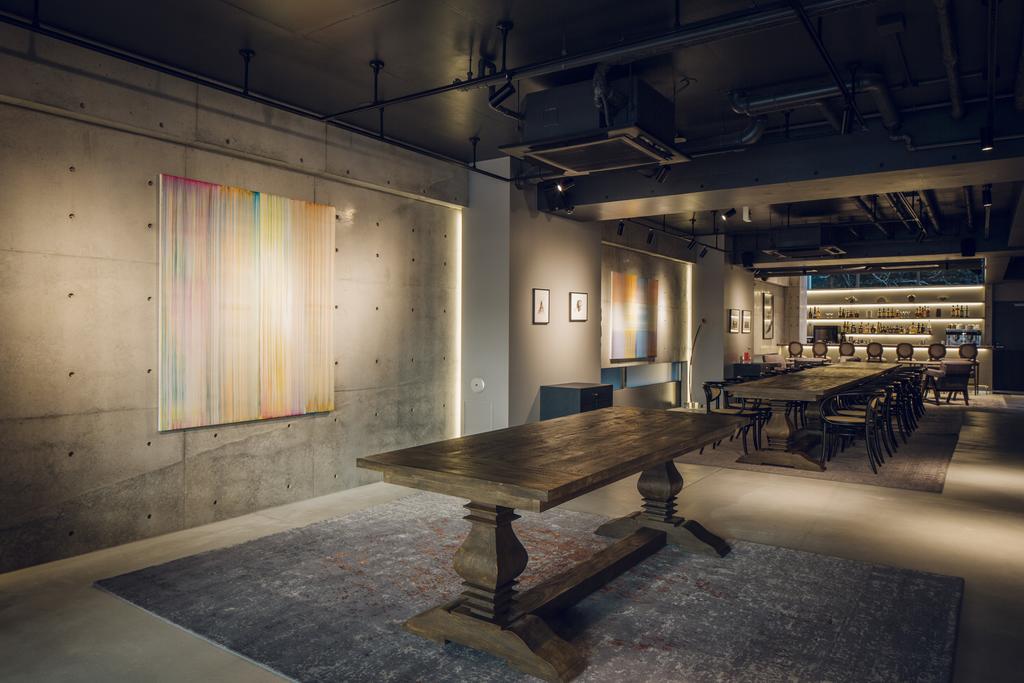
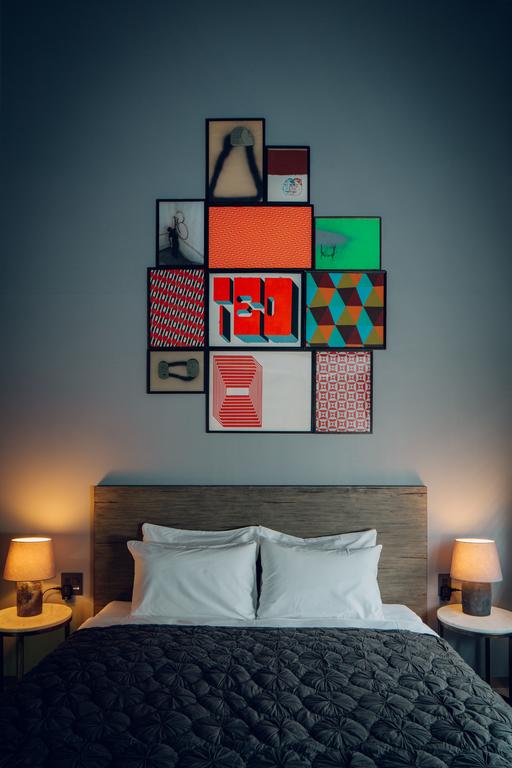
Art here isn’t something added once the interiors were finished. It is the reason the hotel exists. More than 60 contemporary works are integrated throughout the building, appearing in guestrooms, corridors, and communal spaces. Paintings sit alongside photography, sculpture, installations, and collectible design, allowing encounters with art to happen naturally throughout the stay. There is none of the formality of a white-cube gallery. You live with the collection. That makes node feel more like the home of an adventurous collector than an art hotel following a concept.
Concrete, Steel, Oak
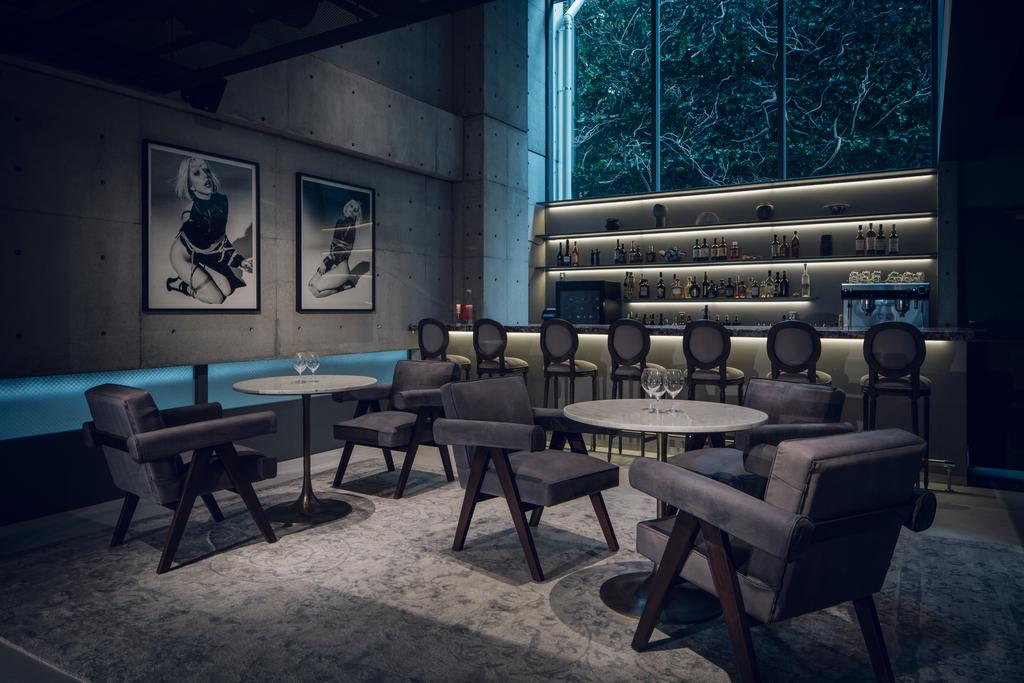
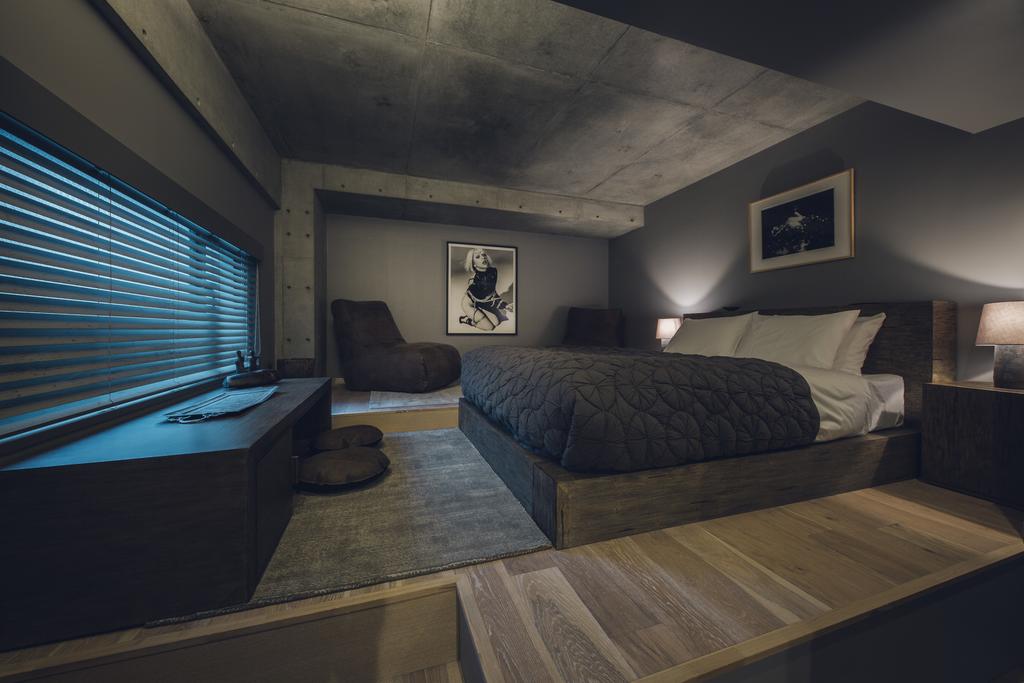
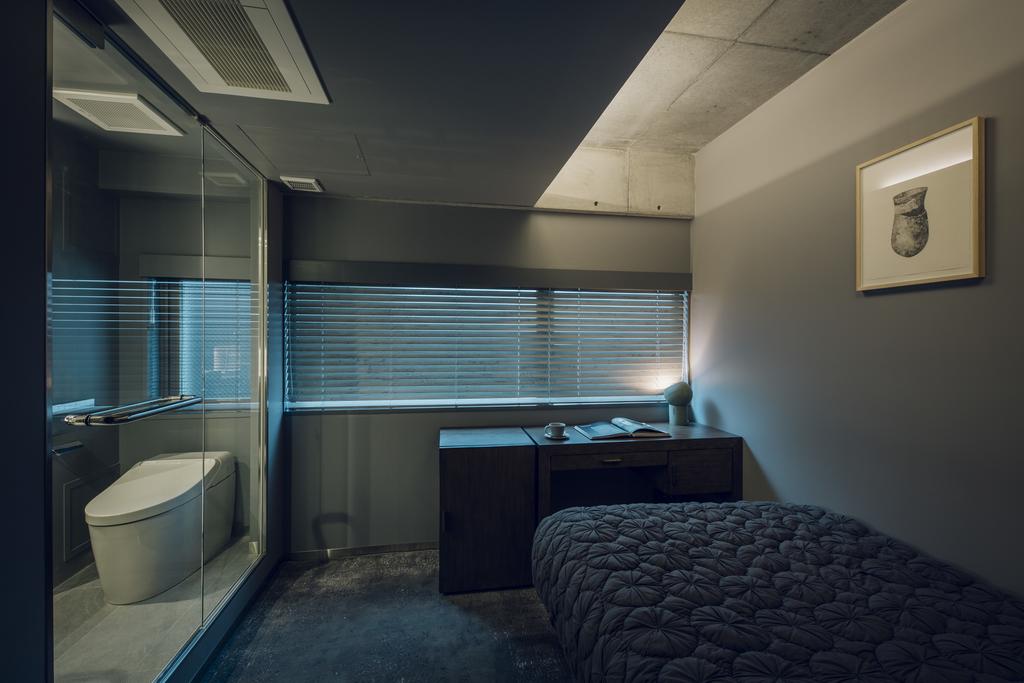
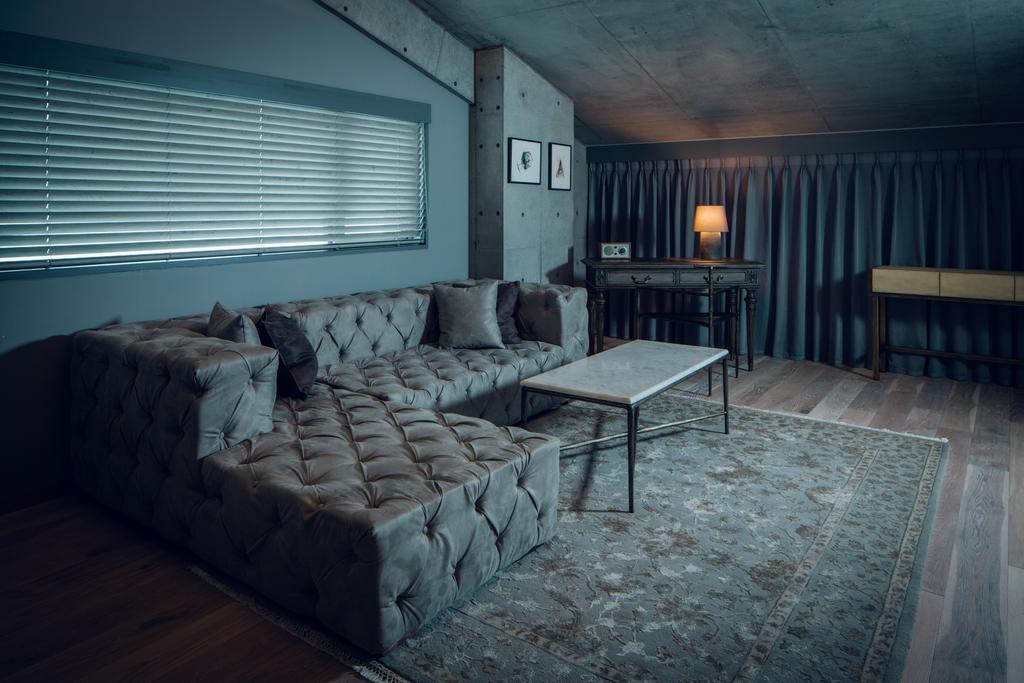
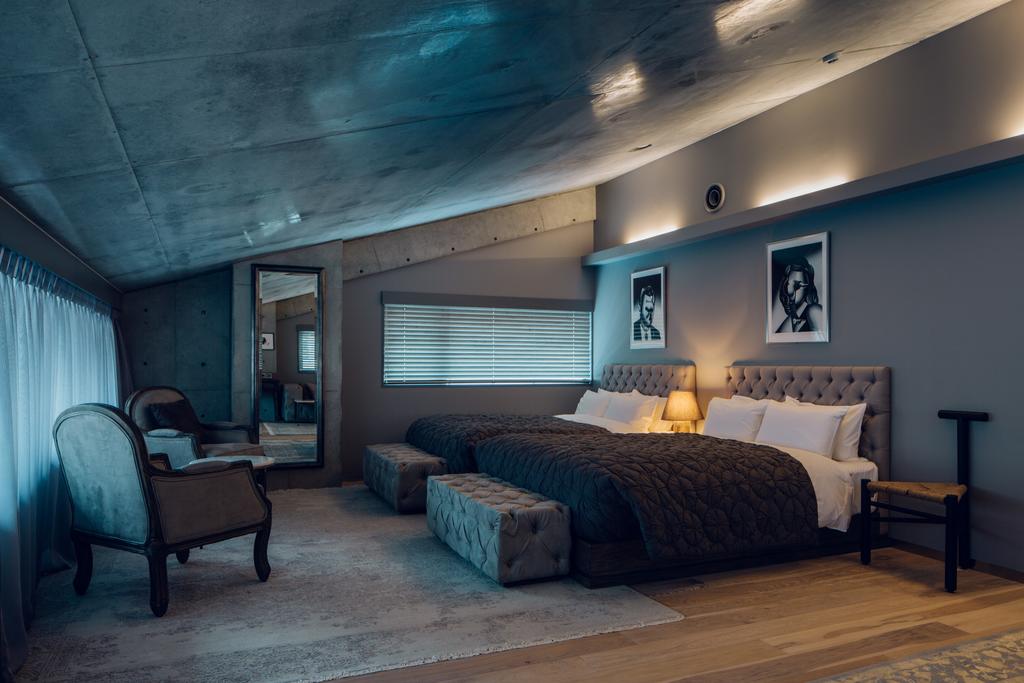
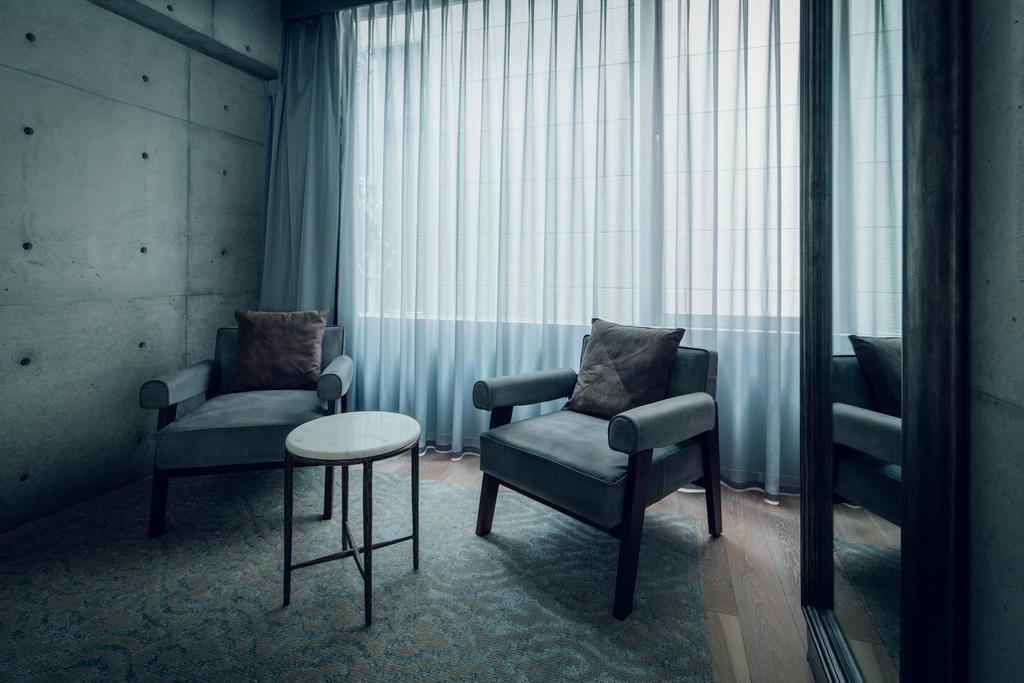
The architecture provides a deliberately raw backdrop. Concrete, steel, marble, dark metal, and exposed structural elements establish an industrial language, but warmth comes through aged oak floors, tactile fabrics, handcrafted furniture, and carefully layered lighting. The tension works beautifully. Diagonal metal-clad ceilings add drama without overwhelming the rooms, while a palette of charcoal, bronze, stone, and timber creates interiors that feel surprisingly cocooning. Minimal, yes. Cold, never.
Rooms for Living with Art
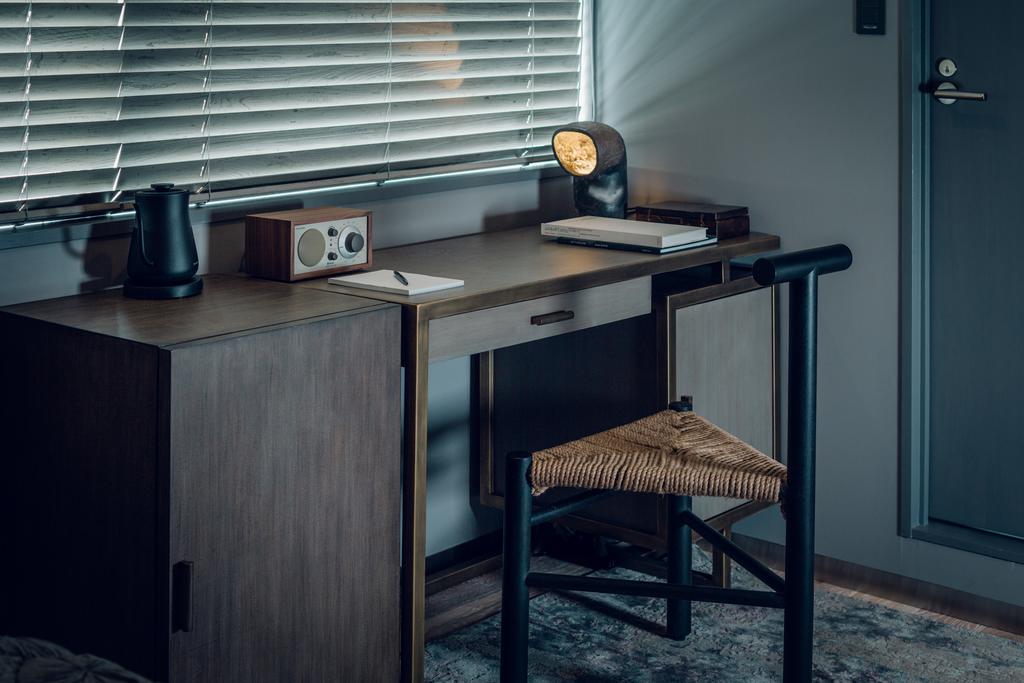
The guestrooms continue the collector’s-residence atmosphere. Custom furniture by Kyoto makers sits alongside contemporary artworks and individually selected objects, giving the rooms a character rarely found in more standardized design hotels. Nothing feels excessively polished. Materials are allowed to show texture and age, while subdued lighting creates intimate spaces that encourage you to settle in rather than simply sleep. The art becomes part of everyday life—something encountered from the bed, beside a chair, or while crossing the room. Exactly as it should be.
The Lobby Is the Living Room
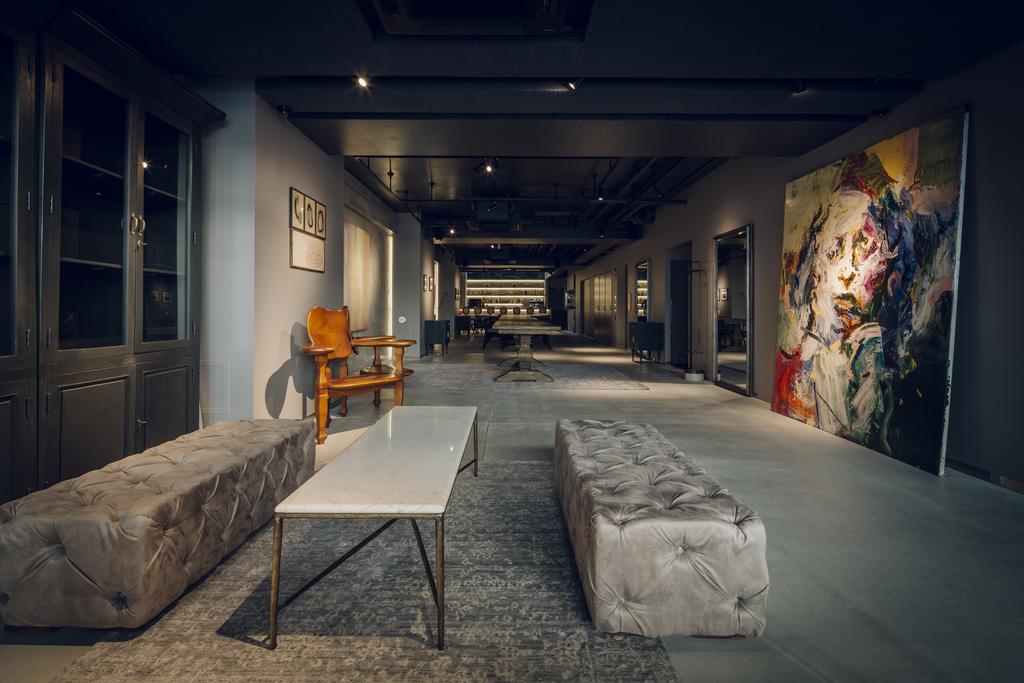
Downstairs, the distinction between hotel lobby, lounge, and creative salon becomes deliberately blurred. Books, plants, artworks, contemporary furniture, and vintage pieces create a space designed for lingering. Guests drink coffee, work, read, meet friends, or simply sit among the collection. It feels sophisticated without becoming precious. And importantly, it connects the hotel to Kyoto’s own creative community rather than functioning purely as a space for visitors.
Kyoto, Now
node is particularly interesting because it challenges the way travelers often experience Kyoto. The temples, gardens, shrines, and machiya remain essential, but they represent only part of the city. Around them exists another Kyoto of independent galleries, young artists, architects, craftspeople, specialty coffee shops, experimental restaurants, and emerging designers. node belongs to that city. It doesn’t reject Kyoto’s extraordinary heritage. It simply reminds us that culture doesn’t stop evolving because a place has a remarkable past.
Why It Works
node hotel gives contemporary Kyoto a place to stay. Its industrial architecture, collector-style interiors, locally made furniture, and extensive art collection create something intimate and culturally relevant without resorting to obvious Japanese design motifs. More private residence than conventional art hotel, node makes art part of daily life—and reveals a Kyoto that is still busy creating its next chapter.