Palau Fugit – Girona, Spain
An abandoned 18th-century palace transformed into a seductive dialogue between Girona’s history, contemporary art and Mediterranean design.
Why DNA Hotels Loves It
● Barcelona studio El Equipo Creativo turns the opulence of a historic Girona palace into something colourful, playful and distinctly contemporary rather than simply preserving it in amber.
● Two contrasting worlds — historic El Palauet and contemporary El Pavelló — allow Gothic stone, fin-de-siècle glamour and Mediterranean modernism to coexist under one roof.
● Girona is everywhere in the details, from colours inspired by the houses along the River Onyar and Temps de Flors to local art, ceramics and Costa Brava craftsmanship.
An Abandoned Palace Comes Back to Life
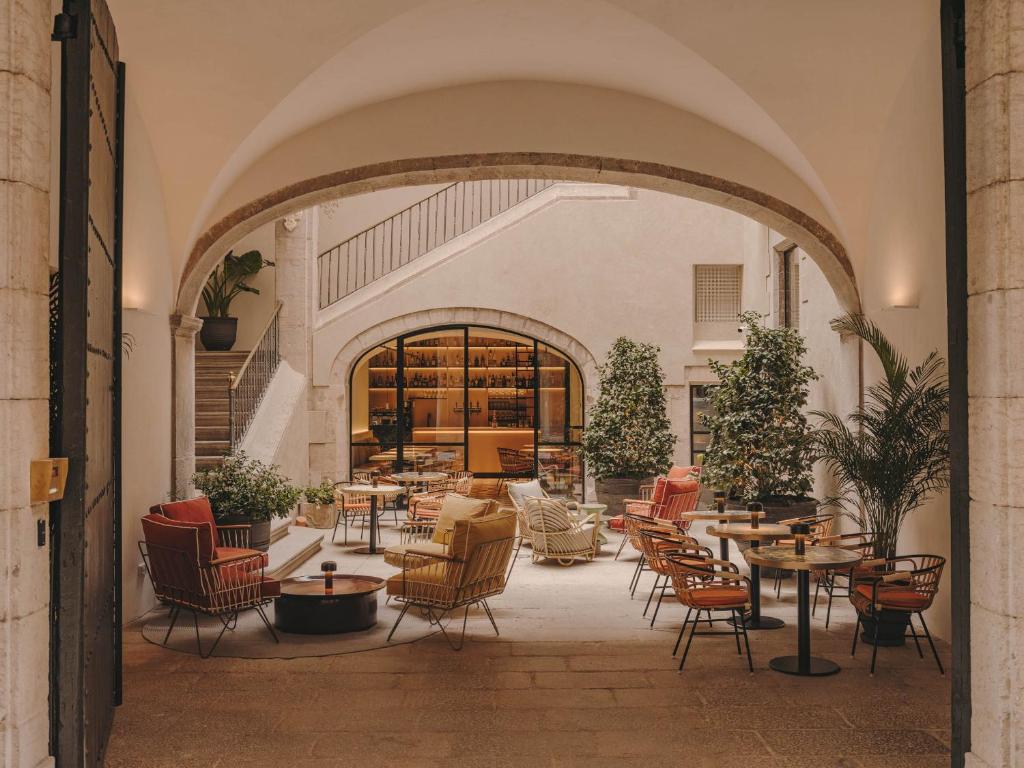
Hidden among the stone lanes, arches and passageways of Girona’s Barri Vell, Palau Fugit begins with a building that already had several centuries of stories to tell. The 18th-century palace had fallen into abandonment before Barcelona architecture practice Isern Associats restored and extended it, while interior studio El Equipo Creativo was given the much more interesting challenge of deciding what its next life should look like. Their answer wasn’t a reverential heritage hotel. Instead, original stonework, vaulted ceilings, carved shutters and grand staircases became the backdrop for vivid colour, contemporary furniture, local art and moments of deliberate eccentricity. As El Equipo Creativo puts it, the ambition was “high luxury minus the pretensions.” That pretty much sums up Palau Fugit.
Two Buildings, Two Personalities
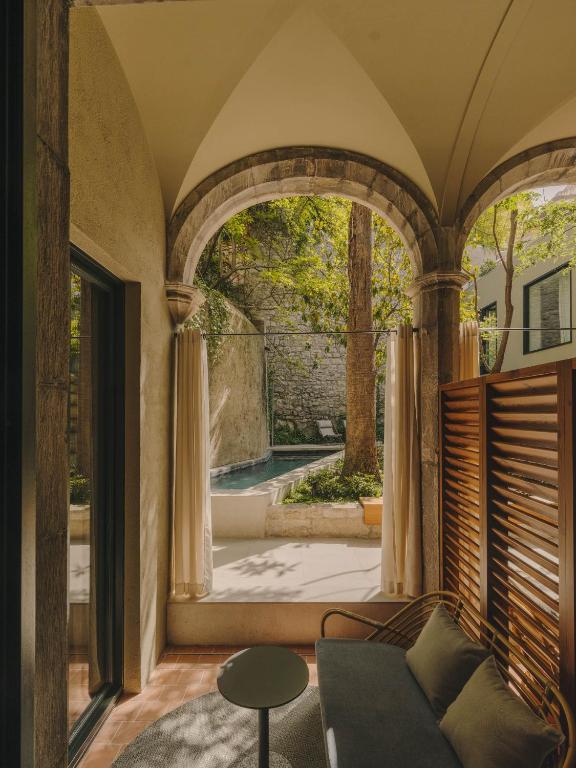
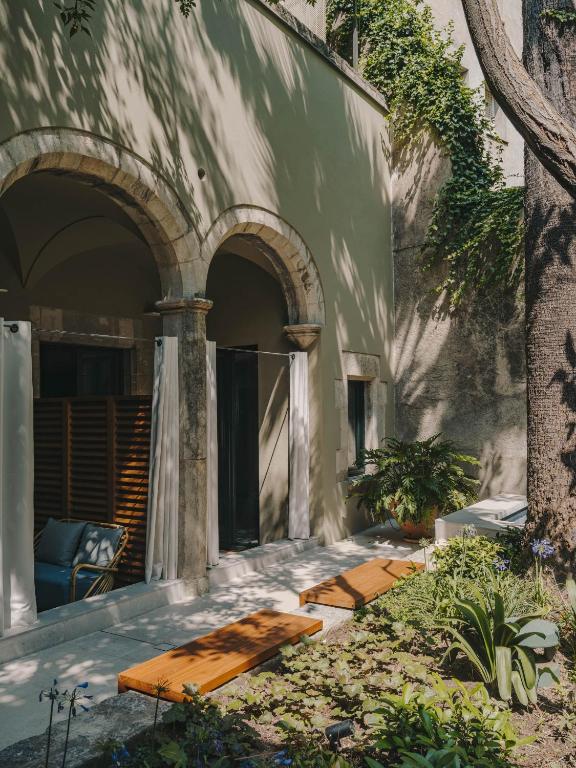
The hotel unfolds across two distinct parts. El Palauet is the historic heart, containing the reception, restaurant, cocktail bar and the wonderfully named La Placeta courtyard. Behind it, El Pavelló is an entirely contemporary addition. Between them sits a surprisingly lush little garden with ferns, terraces and a small swimming pool, centred around Catalan artist Frederic Amat’s Font de Gararotes sculpture. It’s more than a convenient architectural connection. Moving from the atmospheric stone palace through the garden and into the lighter modern pavilion creates a journey from historic Girona towards the Mediterranean beyond it.
Girona, Turned Into Colour
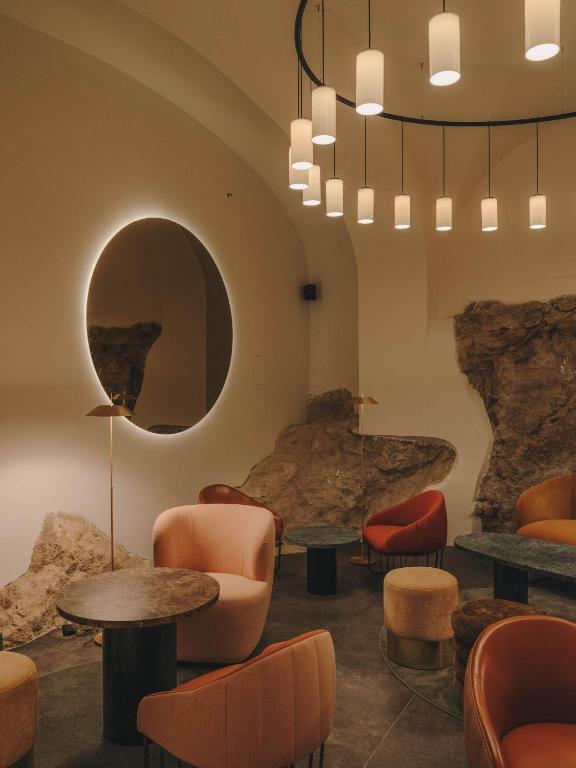
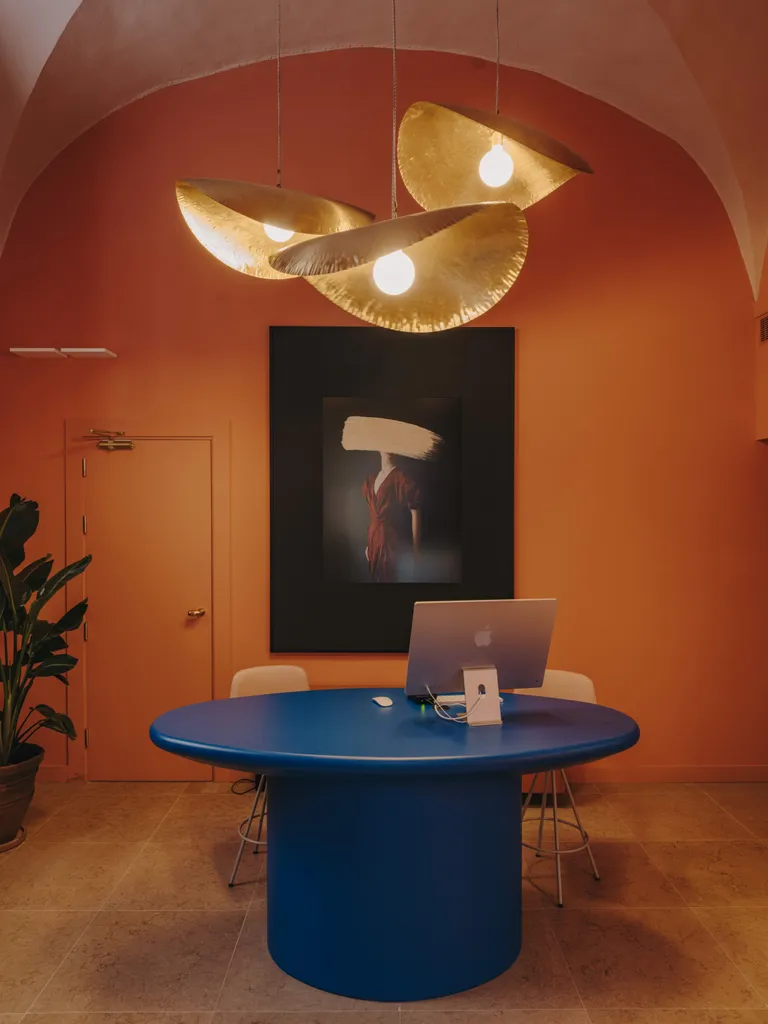
El Equipo Creativo looked beyond the palace walls when developing the interiors. The colourful houses lining the River Onyar supplied one reference; Girona’s spectacular annual Temps de Flors festival supplied another. Hence the unexpected combinations. A reception room washed in warm tangerine revolves around a bespoke Yves Klein blue table, crowned by a sculptural golden chandelier. Elsewhere come blush pinks, mustard, deep blues and greens, alongside stone, marble, timber, rattan and velvet. It’s bold without becoming theatrical. And crucially, it doesn’t attempt to make an 18th-century palace look as though nobody has touched it since the 18th century.
Sleeping in El Palauet
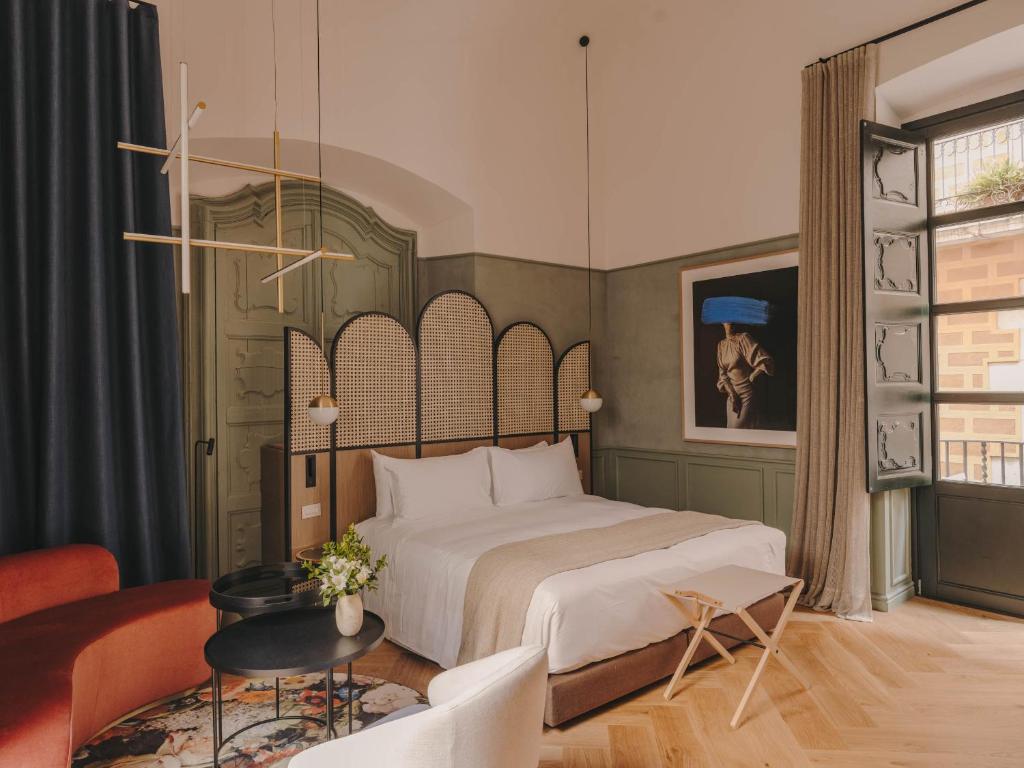
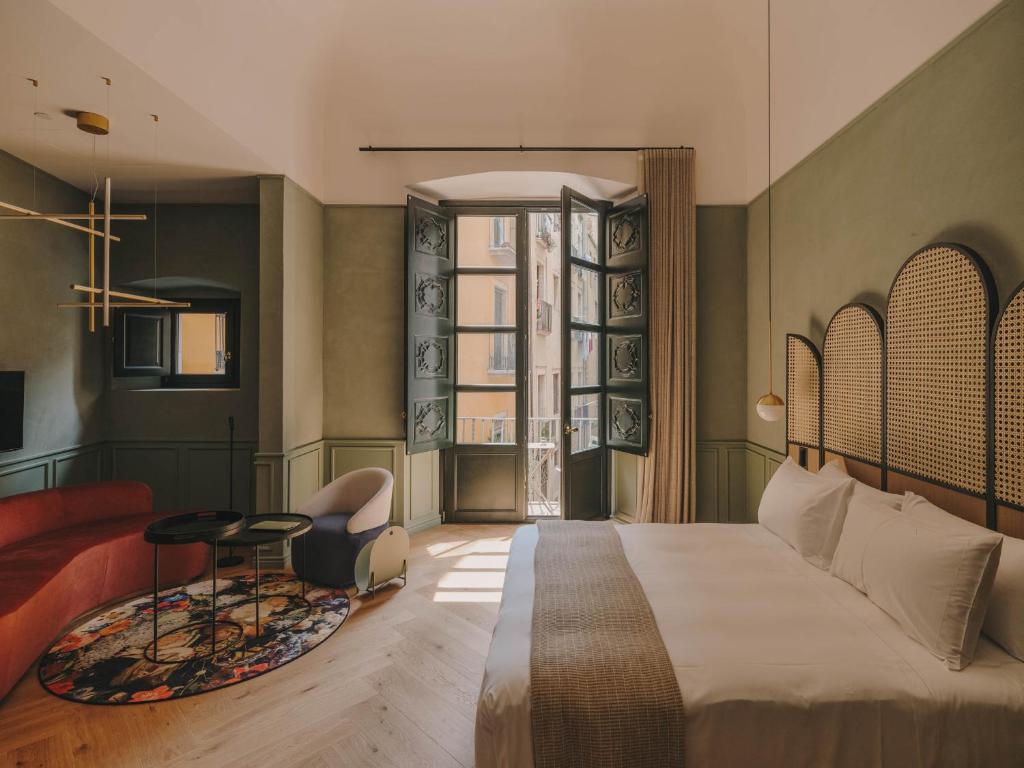
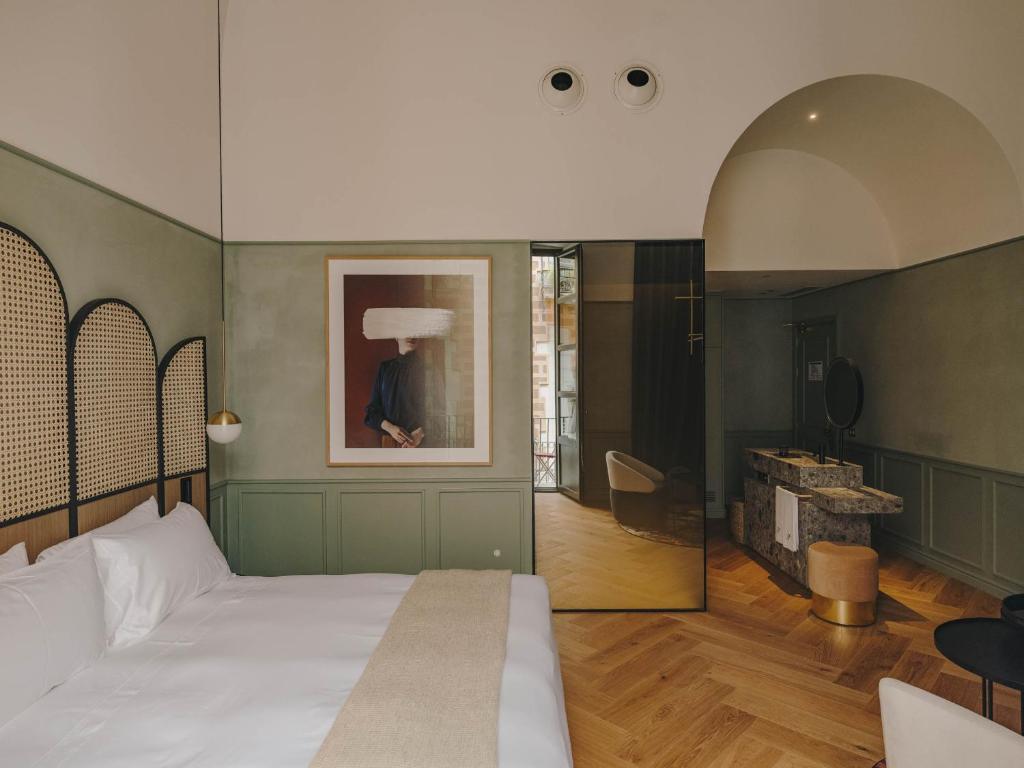
Rooms in the original palace are reached via its historic stone staircase. Here, El Equipo Creativo reinterpreted the atmosphere of a late-19th-century aristocratic home with a softer, more contemporary sensibility. Original ceiling roses and carved balcony shutters meet parquet floors, velvet curtains, curved furniture, rattan headboards and substantial marble vanities inspired by the traditional tocador dressing table. Soft blues, greys, blush and natural stone tones keep things calm, while paintings, photography and sculpture by local artists prevent the rooms from becoming period pieces. No two feel quite the same. The palace’s irregularities become part of their character rather than something architecture has attempted to correct.
Then El Pavelló Changes the Mood
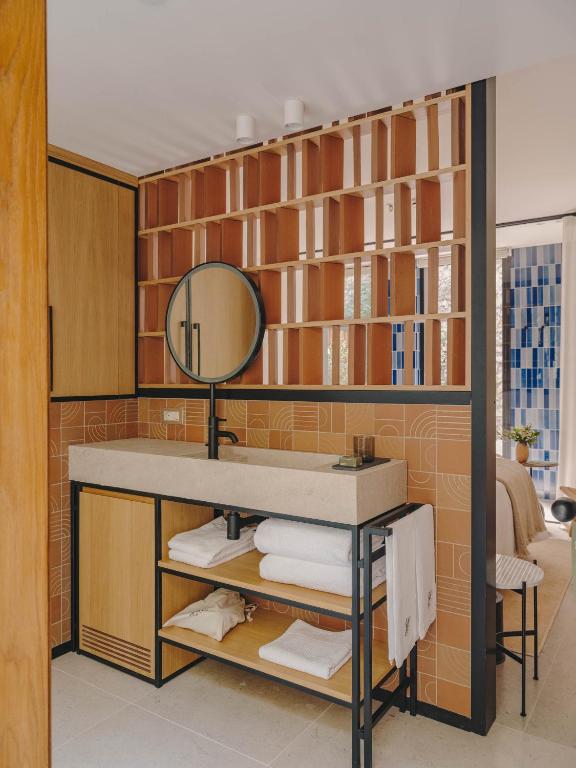
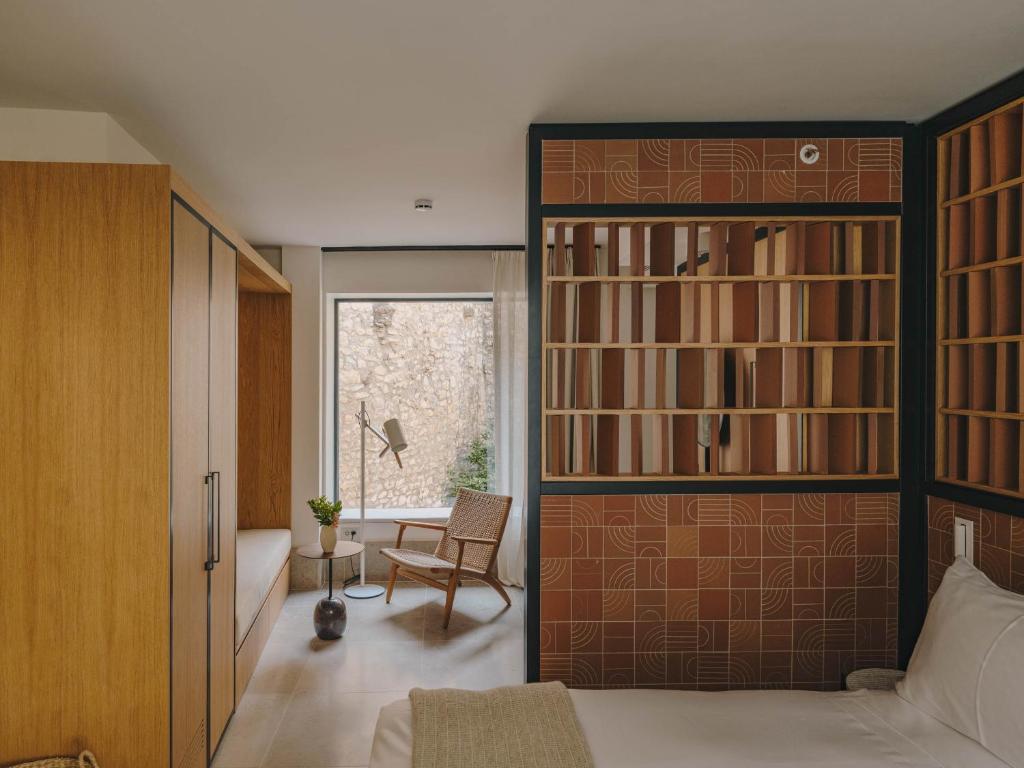
Cross into El Pavelló and Girona’s grand domestic history gives way to something closer to a Mediterranean dolce vita. The palette becomes earthier. Terracotta, timber and stone replace some of the palace’s decorative richness, while handmade ceramic breeze blocks create geometric patterns and filter the light. Rattan furniture and hand-spun textiles reference the craft workshops of the nearby Costa Brava, and larger windows open the rooms towards gardens and intimate patios. The contrast works beautifully. Rather than force one interior concept across fundamentally different architecture, Palau Fugit allows each building to tell its own story.
Casa Heras & a Gipsy
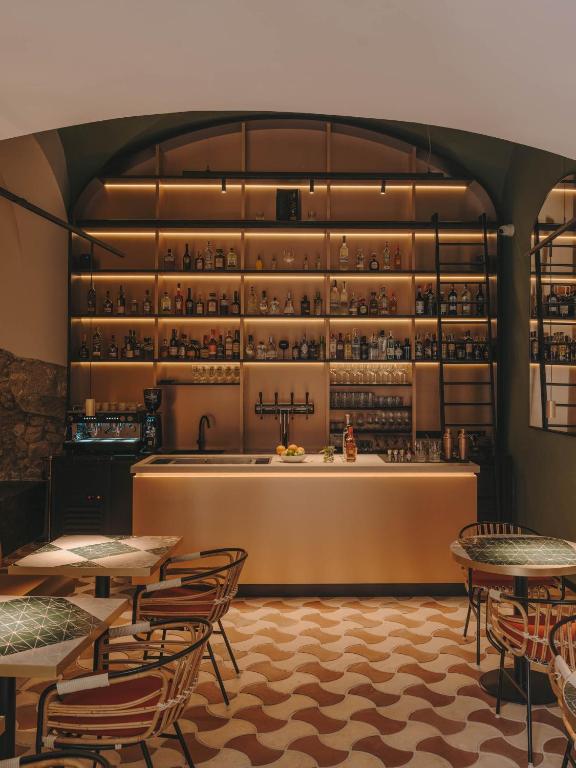
The same layering continues downstairs. Named after the property’s historic Casa Heras de Puig identity, Casa Heras restaurant occupies two very different rooms. One is more formal, with herringbone parquet, banquettes and an expansive monochrome mural by artist Joana Santamans; the other has the relaxed character of a Mediterranean bistro, with fluted ceramics, checkerboard flooring and gleaming copper cookware. The food follows suit, taking Mediterranean and Catalan traditions in a contemporary direction. Then there is Gipsy, the intimate cocktail bar tucked into the historic fabric of the palace and named after a legendary Girona bar. Old stone, rich colour, cocktails and late-night conversation. Exactly where you want to end up after dinner.
A Tiny Urban Escape
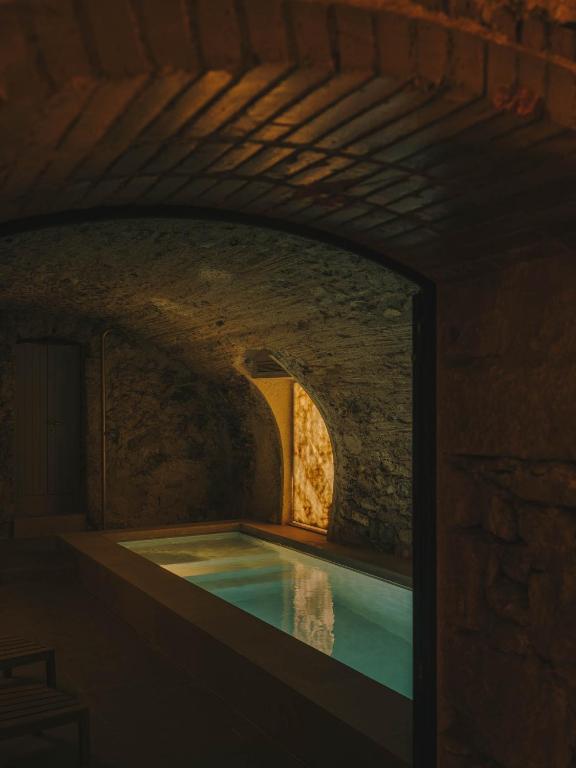
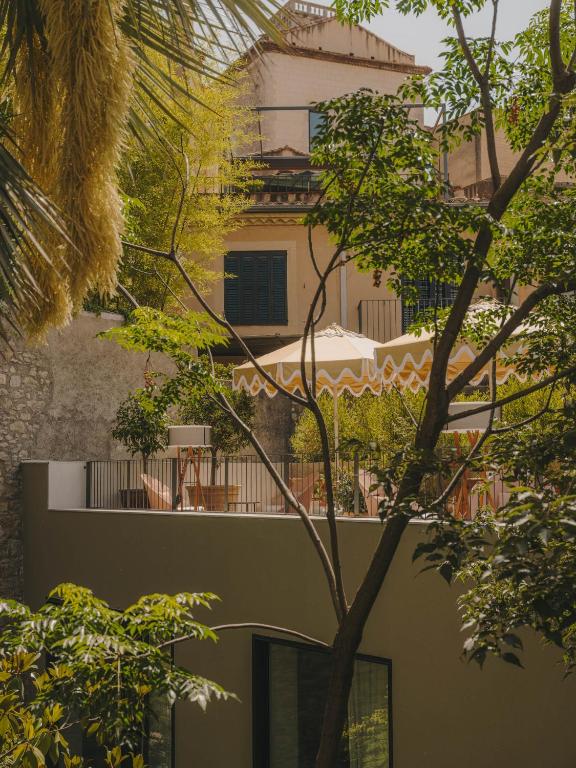
For a hotel buried deep inside Girona’s old town, Palau Fugit contains a surprising number of places to disappear. There’s the garden and little pool between the two buildings, tucked-away patios and lounges, and even an intimate spa designed for one guest at a time. Yet the greatest amenity remains outside the front door. Girona’s cathedral, Jewish Quarter, medieval walls, arcaded streets, restaurants and cafés are woven tightly around the hotel. You aren’t observing the Barri Vell from a resort on its outskirts. You’re sleeping inside it.
Why It Works
Historic hotels often face a choice: preserve the past or deliberately contrast with it. Palau Fugit demonstrates that the answer can be both. Isern Associats gave the abandoned palace a future without erasing its scars and irregularities. El Equipo Creativo then filled that architecture with colour, contemporary Catalan art, craft and just enough irreverence to stop history becoming heavy. The result feels unmistakably connected to Girona but never trapped by it. Palau Fugit doesn’t recreate the Girona of another century. It takes the city’s stone, colour, art and Mediterranean spirit and lets them escape into something new.