Palazzetto Rosso – Siena, Italy
A 13th-century Sienese palazzo where worn brick, Gothic architecture and centuries of history collide with unapologetically contemporary design.
Why DNA Hotels Loves It
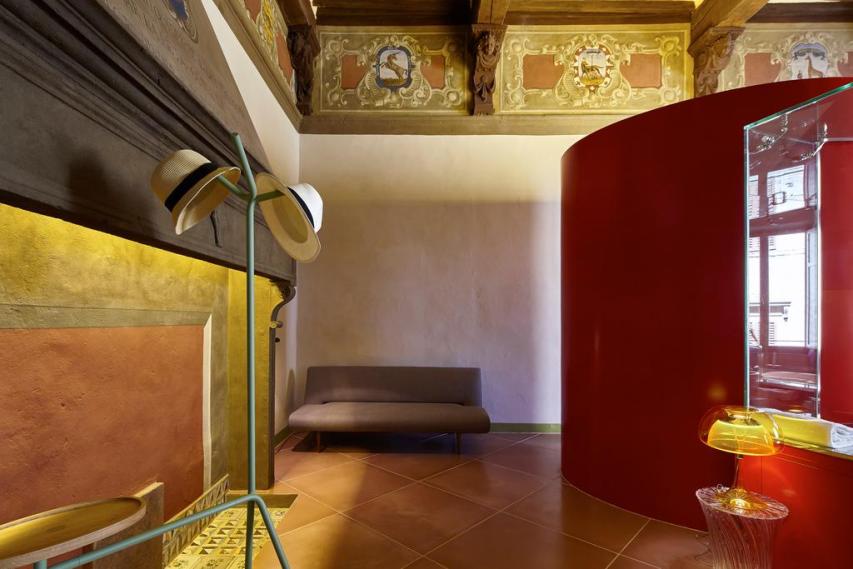
● The building itself is extraordinary: a 13th-century brick palazzo in Siena’s medieval centre, complete with Gothic arches, frescoes, timber ceilings and an ancient staircase worn smooth by centuries of footsteps.
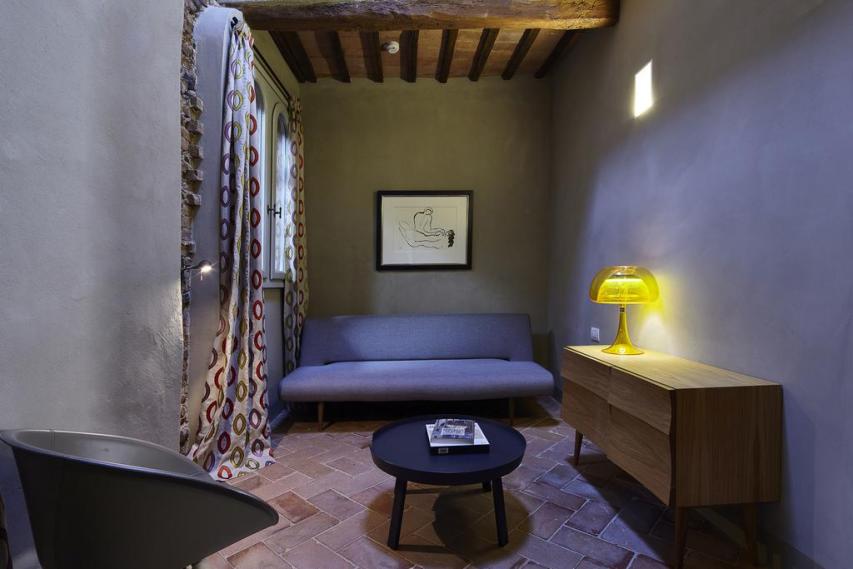
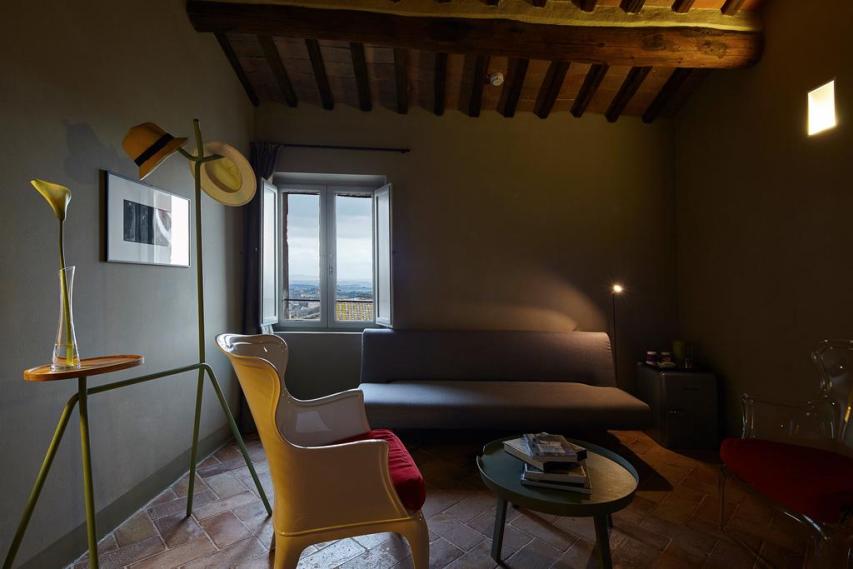
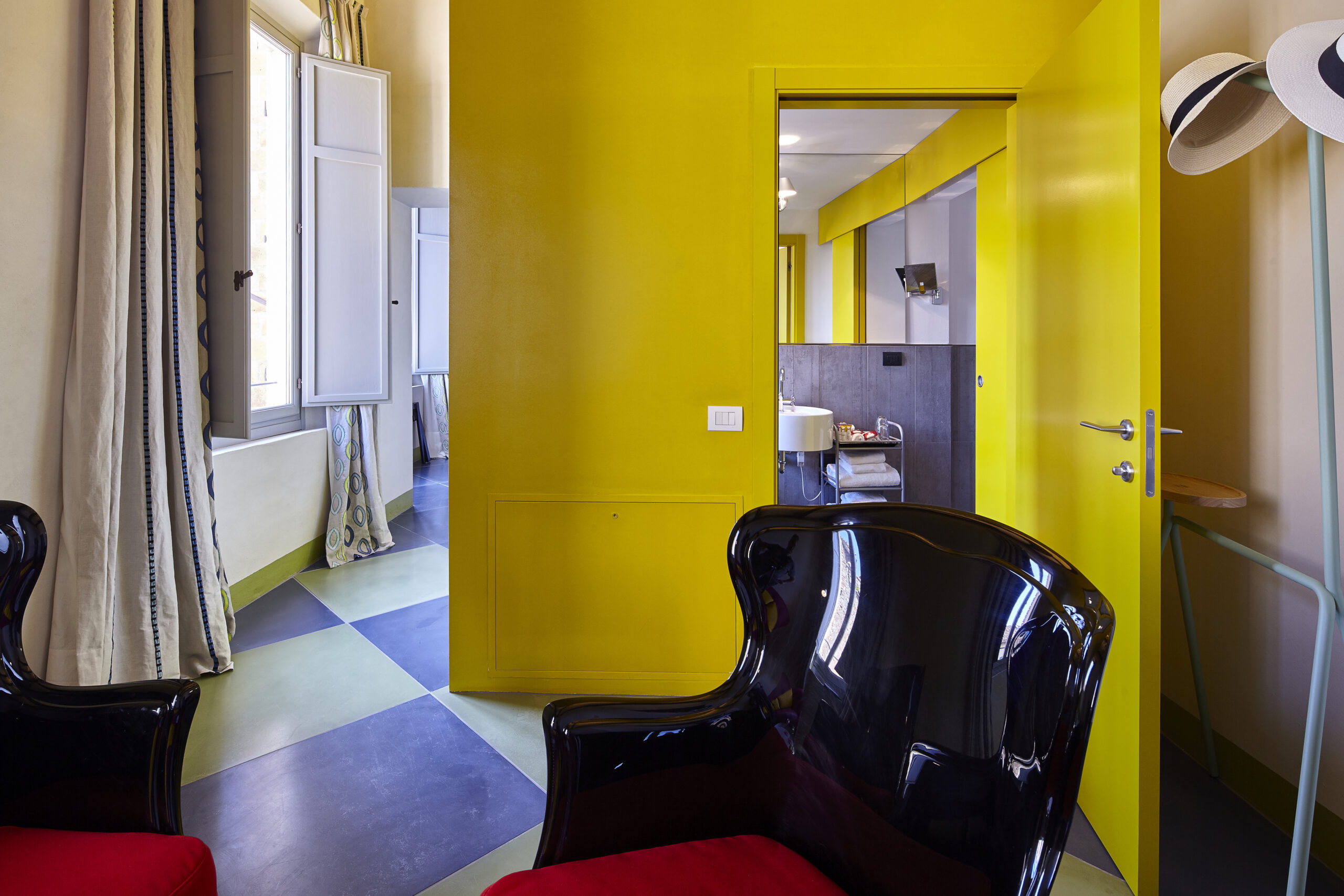
● Rather than recreating a historical interior, Palazzetto Rosso deliberately introduces contemporary Italian and European design from names including Luca Nichetto, Pedrali, Artemide, Kartell, Muuto and Seletti.
● With just nine individually designed rooms and suites, the hotel makes Siena’s architectural history something you actually live inside rather than simply admire from the street.
Eight Centuries Under One Roof
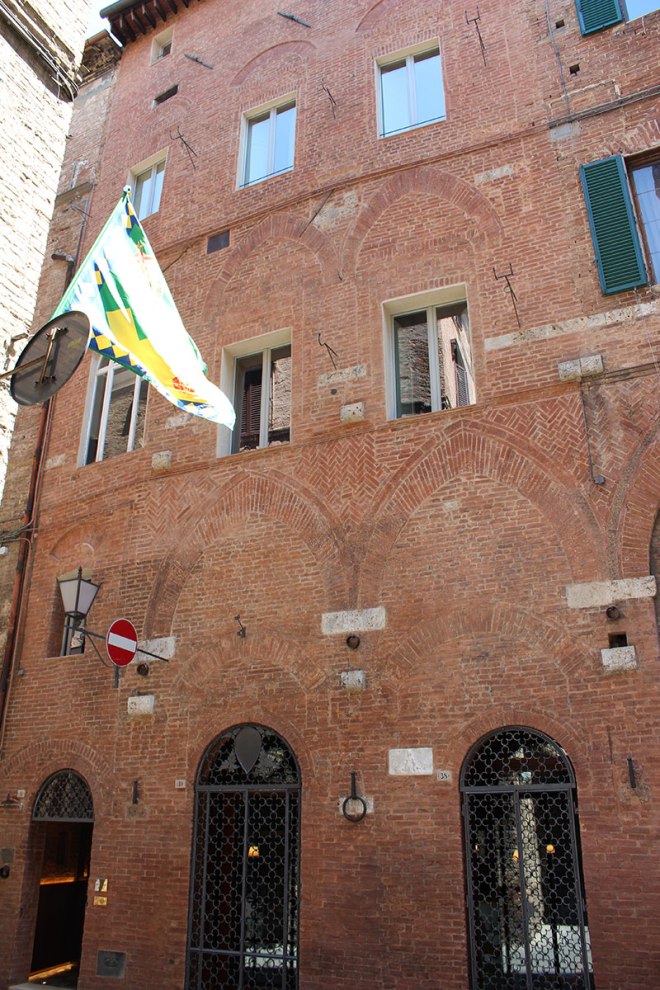
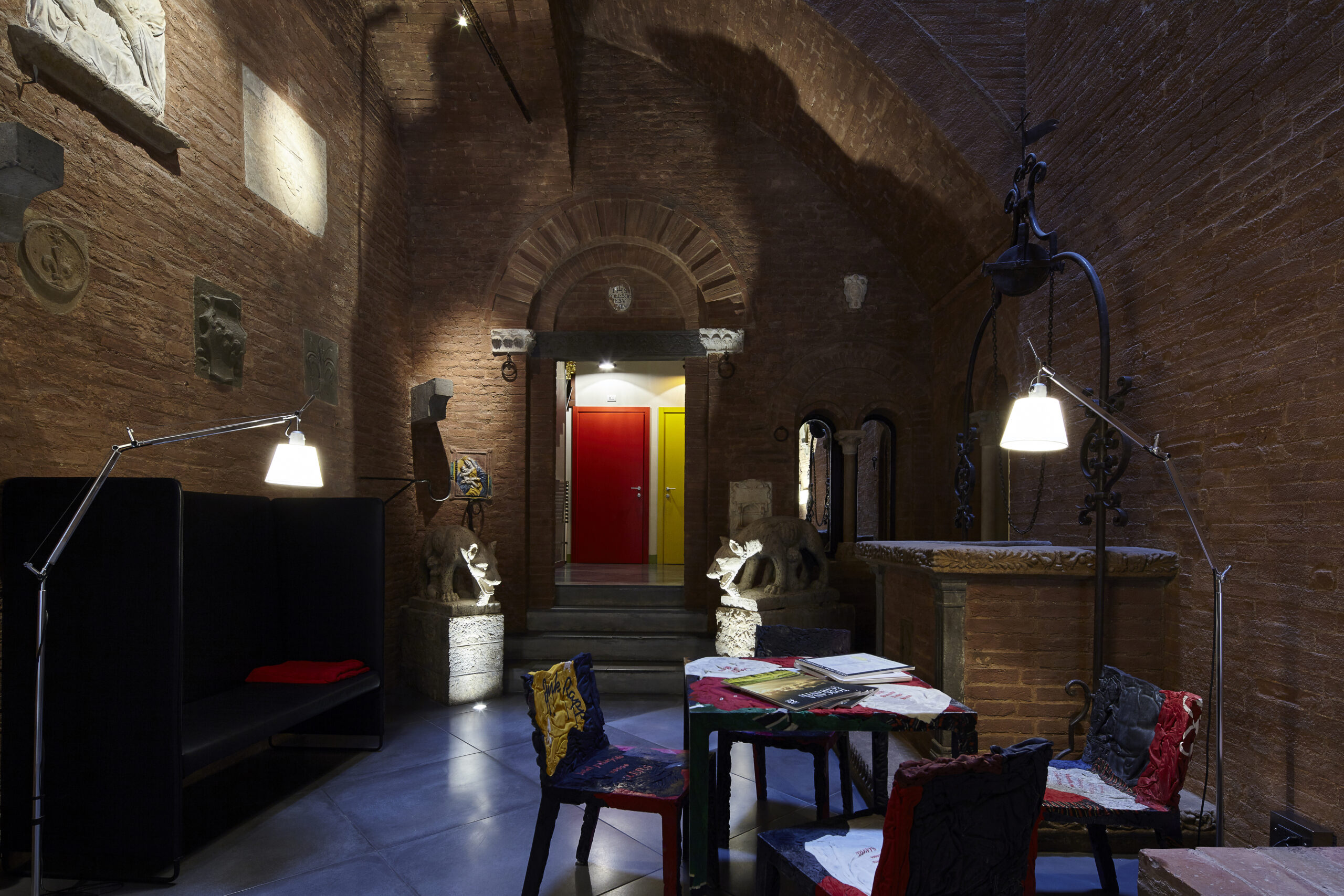
In Siena, history is difficult to escape. At Palazzetto Rosso, you sleep in it. The building dates from the 13th century, when Siena’s increasingly powerful bankers and merchants were reshaping the city and brick became the defining material of its civic architecture. Its façade still carries evidence of that medieval world: pointed Gothic arches, elaborate brickwork and original wrought-iron elements once used to support wooden structures projecting from the building. Step through the door, however, and Palazzetto Rosso refuses to become another Tuscan exercise in antique furniture and Renaissance nostalgia. This is where things get interesting.
The Staircase
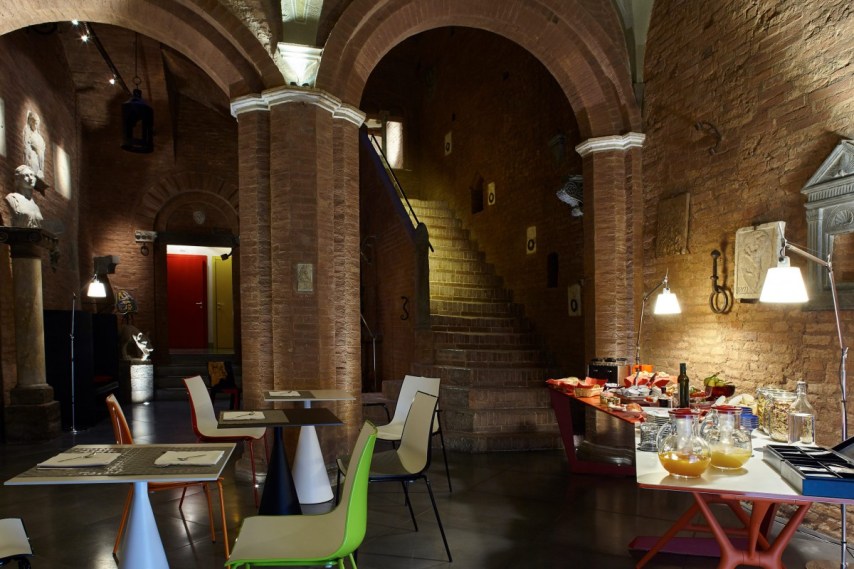
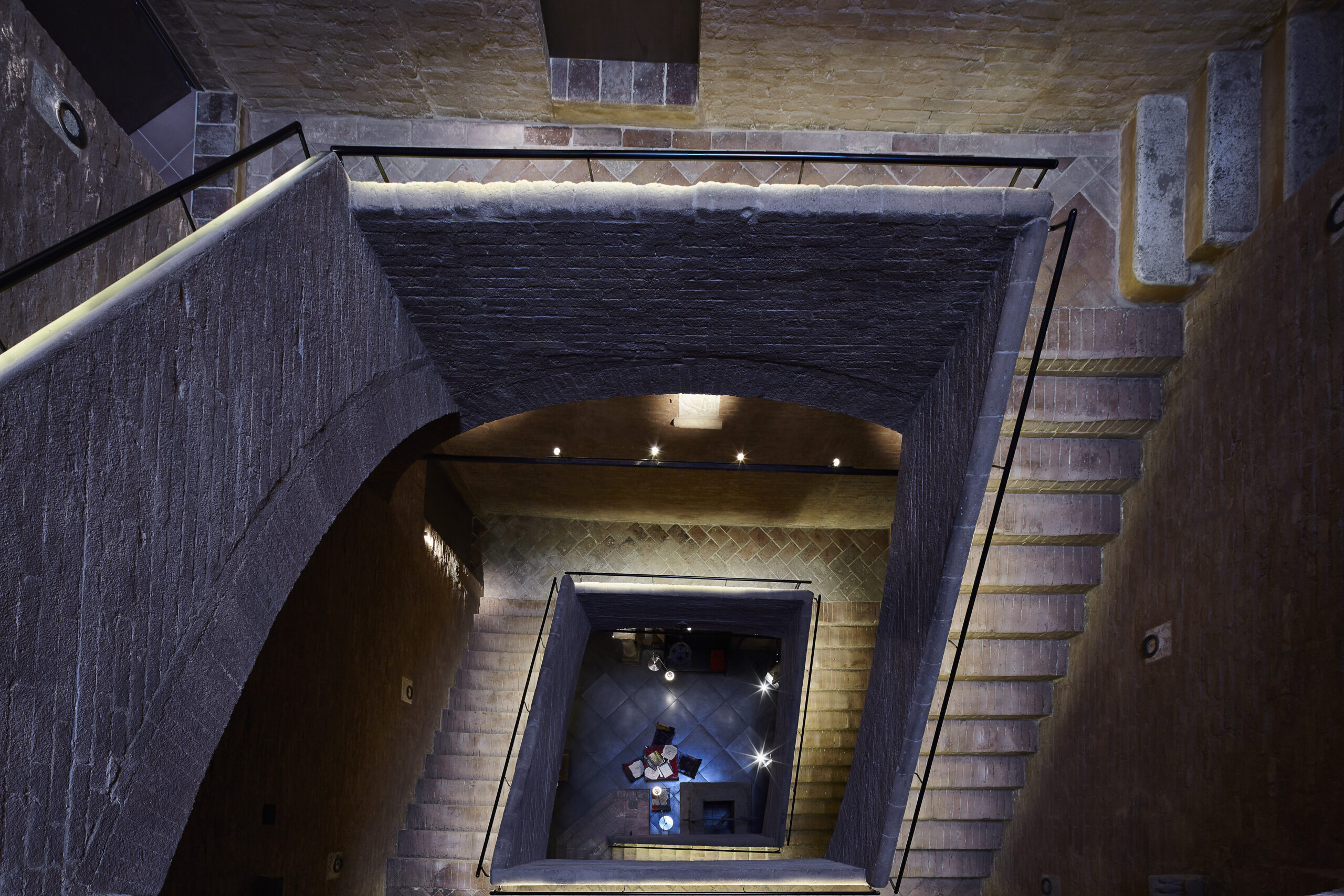
At the centre of the palazzo is its architectural showstopper. A monumental brick staircase spirals around an old well, climbing towards a square skylight high above. Look closely at the steps. They are no longer straight. Hundreds of years of people walking up and down them have gradually rounded their edges and created an irregular surface that no contemporary designer could convincingly reproduce. Palazzetto Rosso wisely hasn’t tried. Instead, the restoration treats these imperfections as part of the architecture.
Medieval Siena Meets Modern Italy
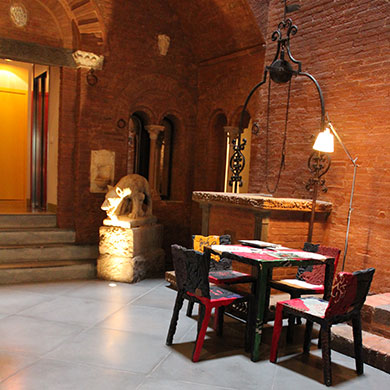
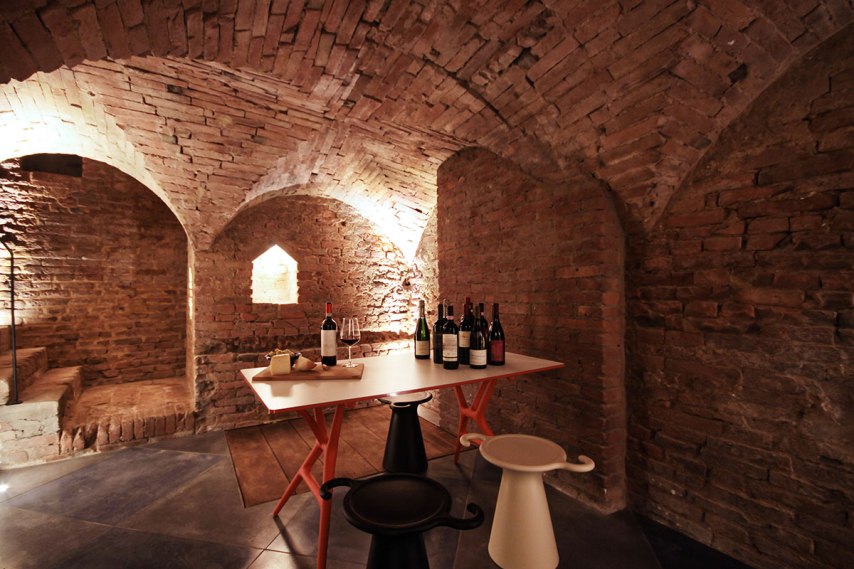
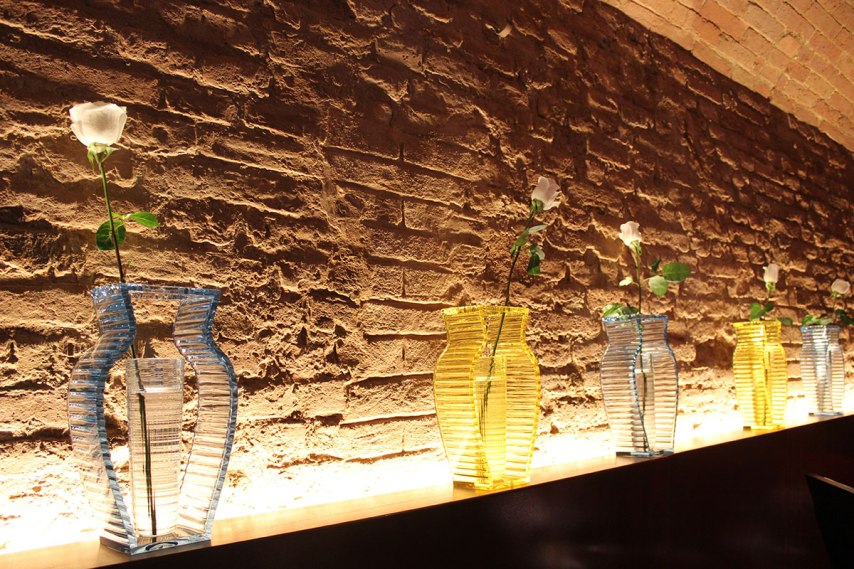
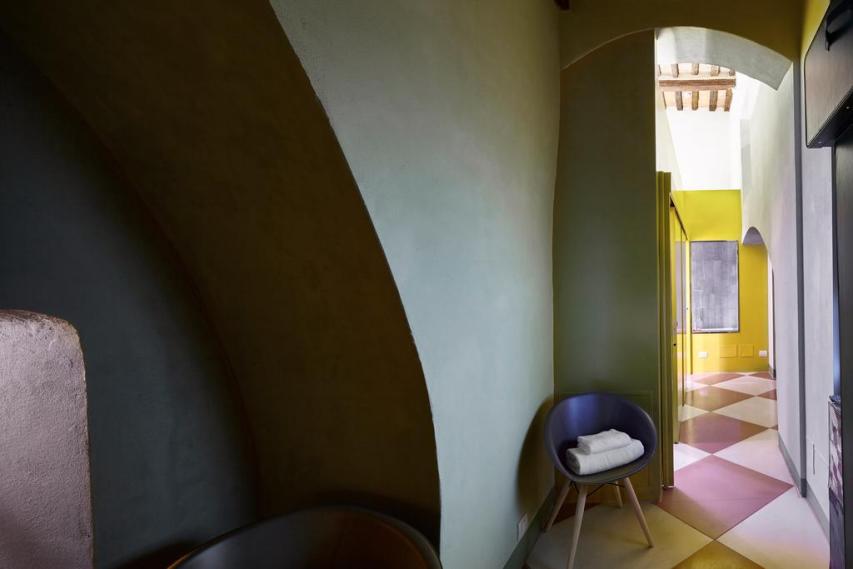
Downstairs, a six-metre-high vaulted hall retains a 19th-century fresco created during Siena’s Purist period, when architects sought to reconnect buildings with their medieval origins. Then come the interventions. Large grey floor tiles by 14Oraitaliana sit beneath black-and-white tables designed by Luca Nichetto for Casamania — their monochrome palette referencing Siena’s traditional colours. Bright Pedrali chairs and Zippo seating inject colour. A glossy contemporary bar provides another deliberate disruption, while lighting by Michele De Lucchi and Giancarlo Fassina for Artemide picks out the architecture rather than competing with it. Elsewhere you’ll encounter pieces by Kartell, Muuto and Seletti. Nothing attempts to pretend it has been here for 500 years. That’s precisely why it works.
Nine Rooms, No Formula
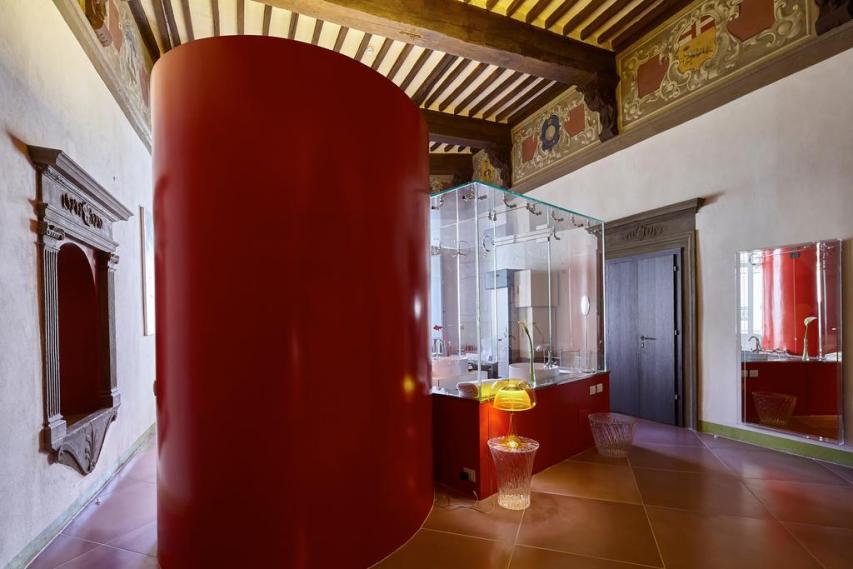
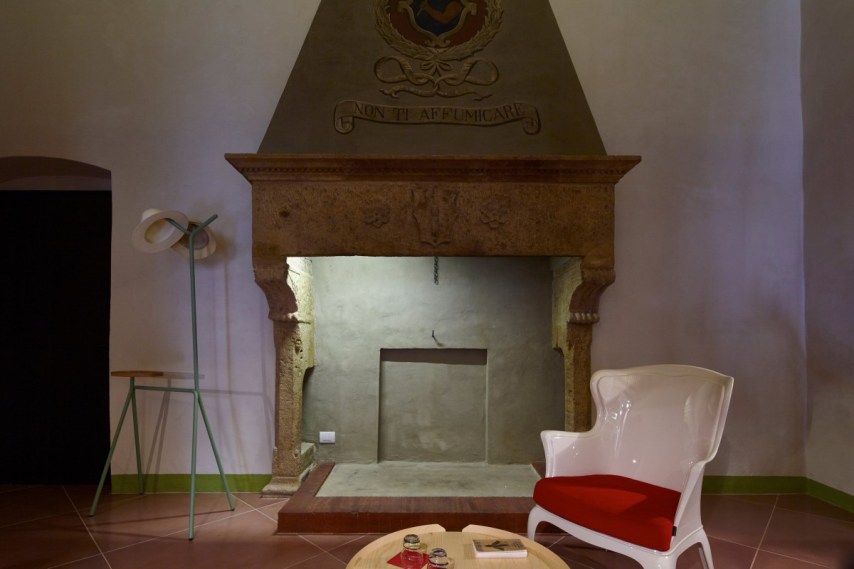
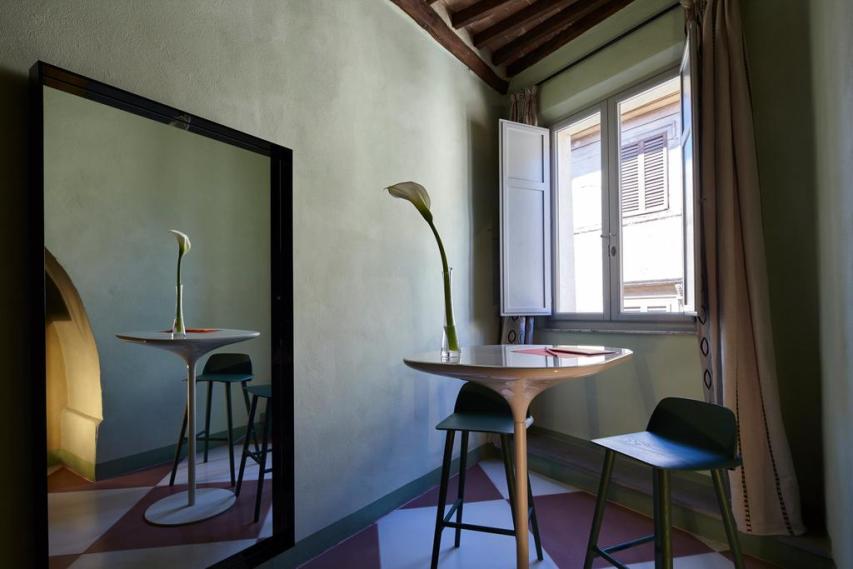
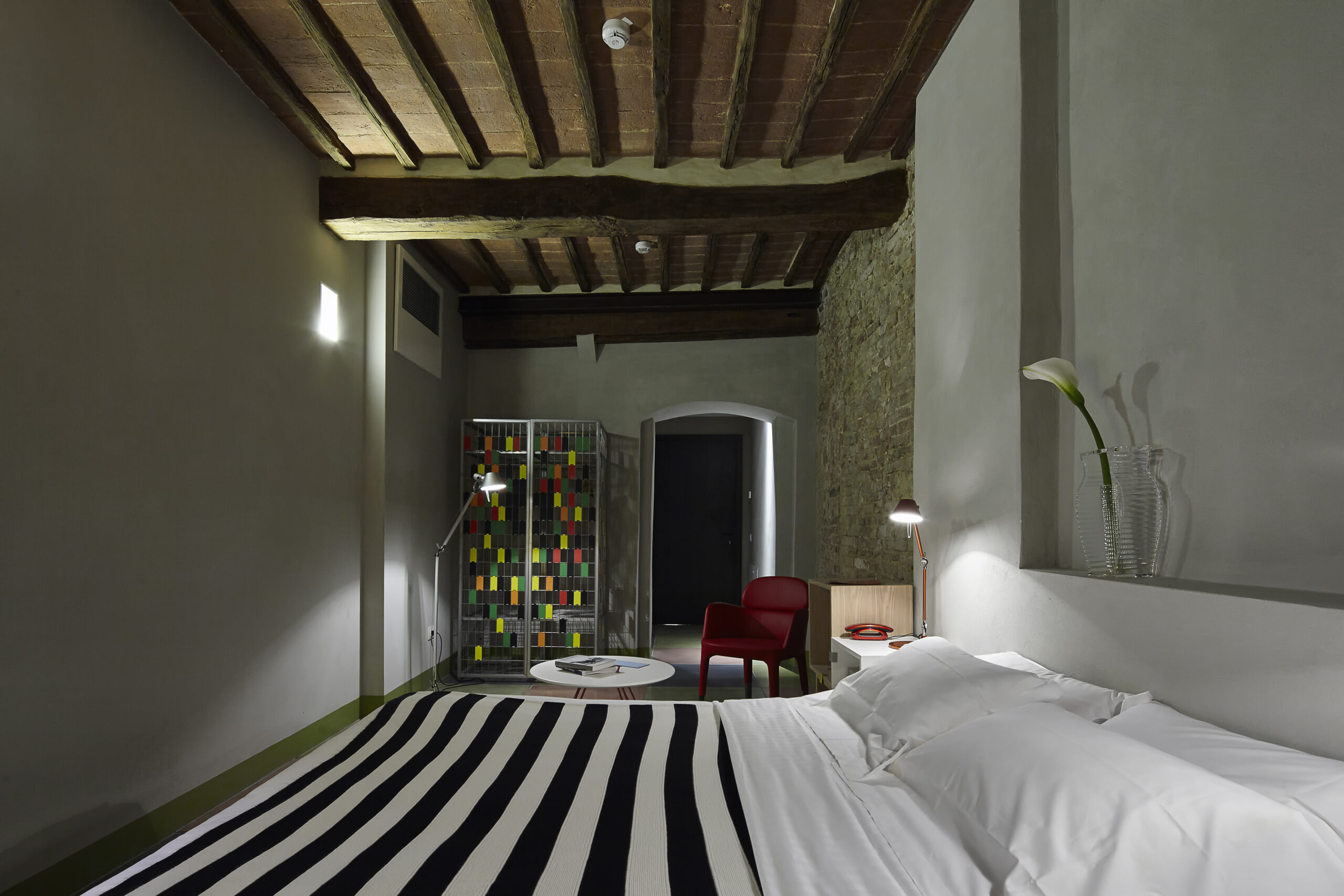
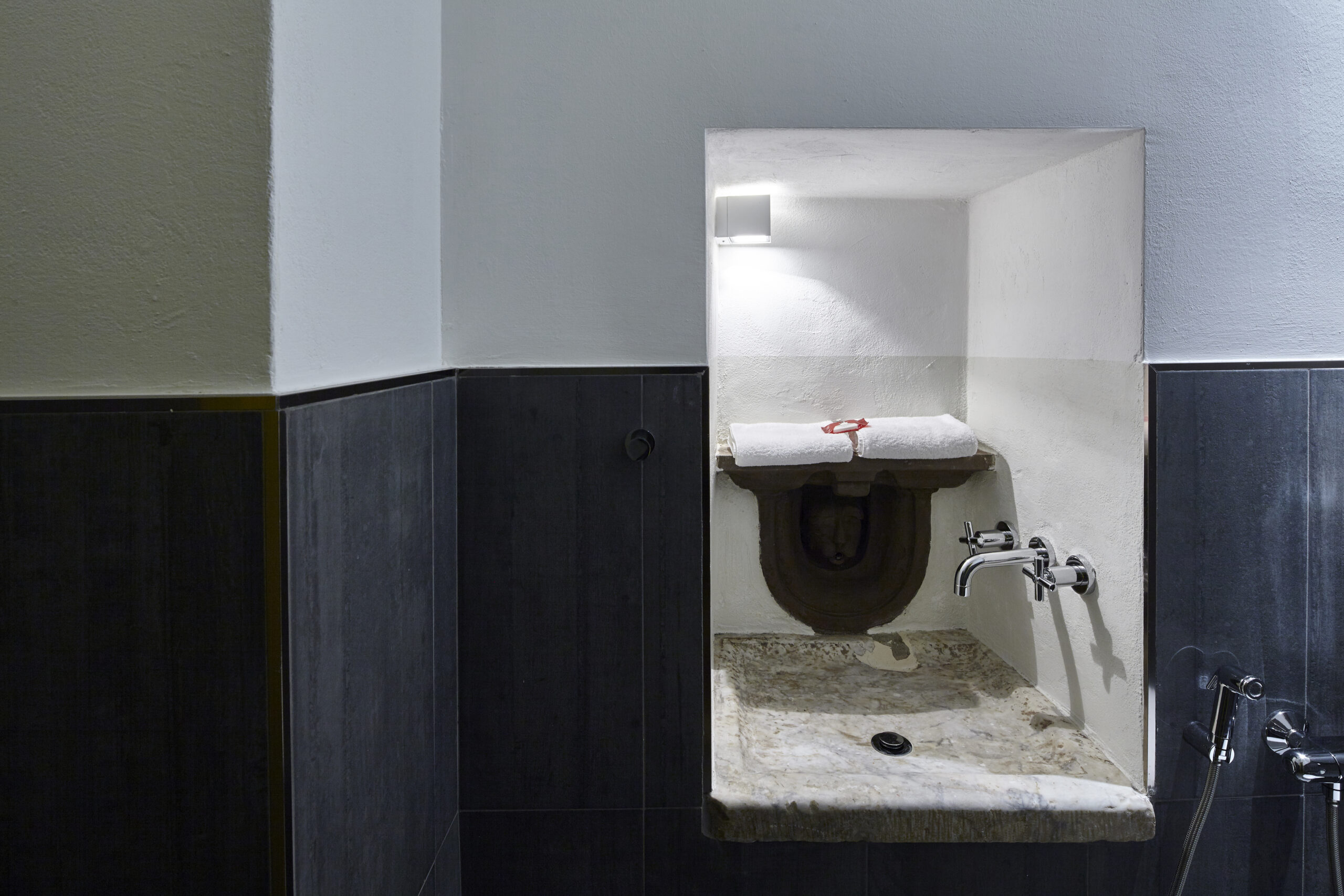
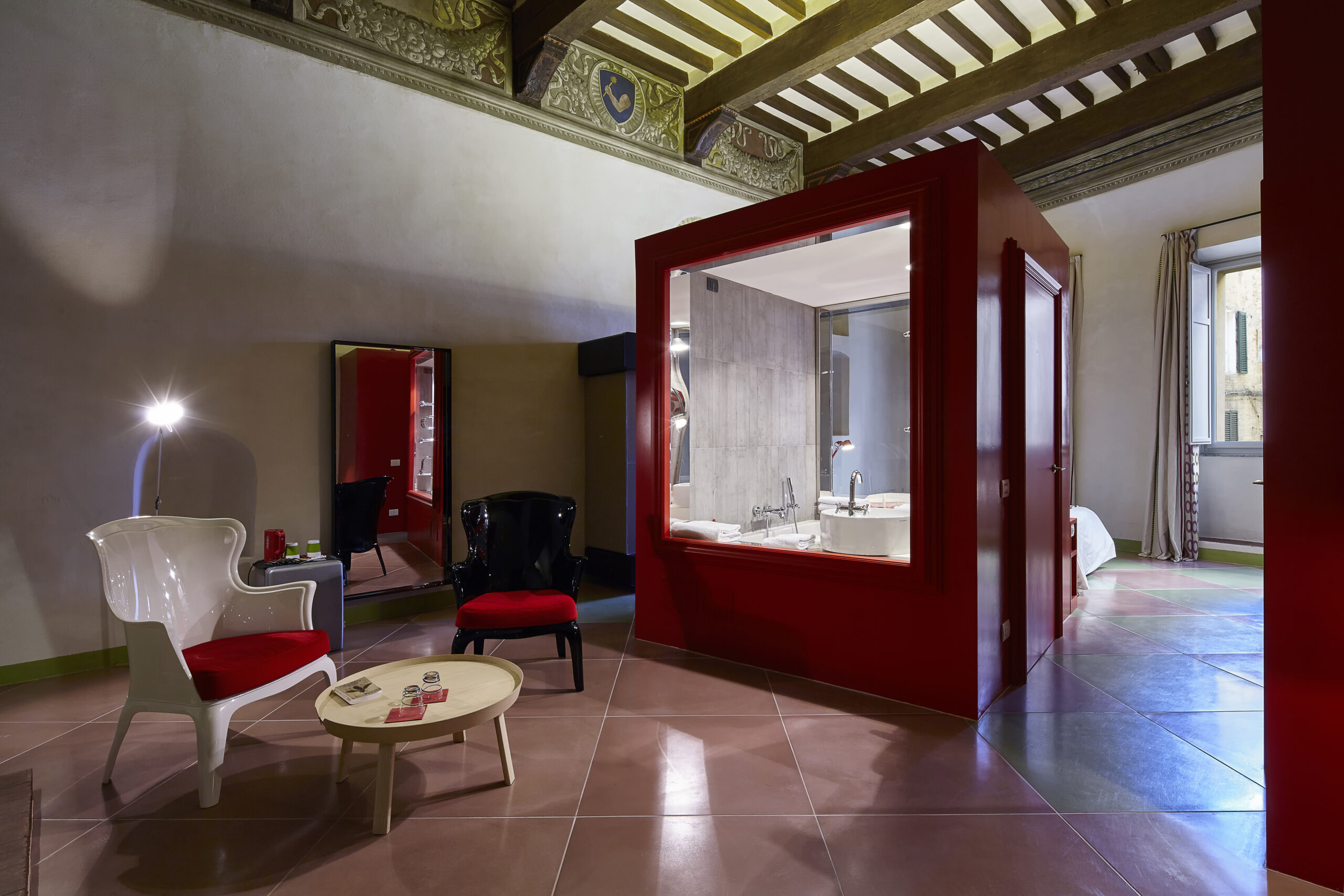
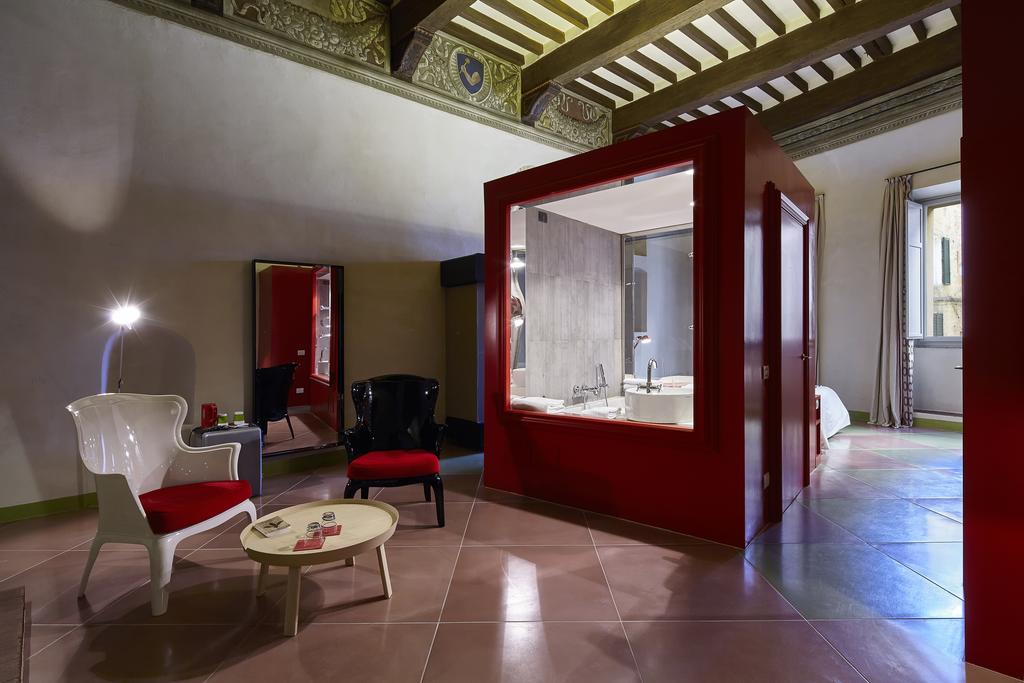
There are only nine rooms and suites, and the architecture dictates their personalities. Where original cotto floors, timber beams, painted friezes and frescoes survive, they remain. Contemporary furniture, art and lighting are then inserted around them. One of the most dramatic interventions places an entire bathroom inside a glass and concrete cube in the centre of the room — a strikingly modern solution that allows the historic architecture surrounding it to remain visually intact. Elsewhere, old fireplaces, Renaissance marble and even an antique fountain used as a basin become part of rooms equipped for an entirely different century. It is restoration through contrast rather than imitation.
Black, White and Siena Red
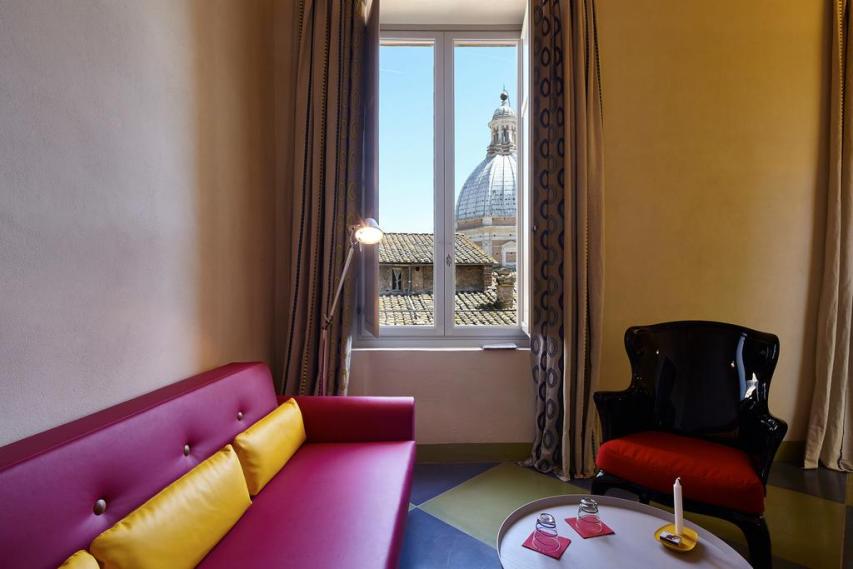
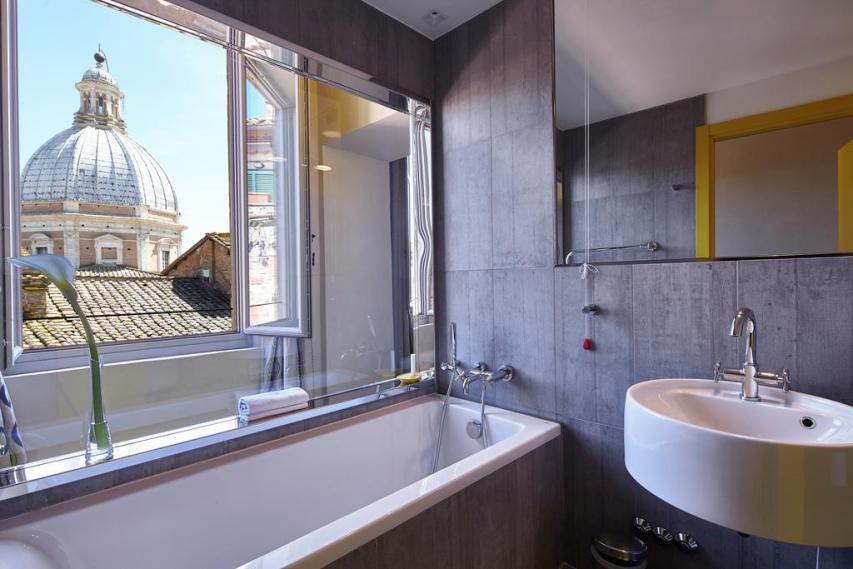
The design becomes even more meaningful once you walk outside. Palazzetto Rosso sits within Siena’s historic centre, surrounded by the brick architecture that gives the city its unmistakable colour. From different rooms you might glimpse the dome of Santa Maria in Provenzano, the Basilica of San Francesco, Rocca Salimbeni, Torre del Mangia or the Cathedral. Walk a little further and Siena opens up around you. Piazza del Campo, neighbourhood enoteche, medieval lanes and centuries-old palazzi are all part of the experience. The hotel doesn’t need to manufacture a sense of place. It is already embedded in it.
Why It Works
Palazzetto Rosso could easily have become a very beautiful historical hotel filled with antiques. Instead, it allows eight centuries of Siena to remain visible while adding another layer of its own. The rounded staircase stays rounded. The frescoes remain. The brick is allowed to look ancient. And beside all of it sit contemporary chairs, sculptural lighting, modern art and uncompromising architectural interventions. Past and present aren’t blended until the difference disappears. They are deliberately allowed to confront each other. And in a city where almost every stone carries history, that feels surprisingly fresh.