Palazzo Talìa, Rome
A cinematic Roman palazzo where Renaissance grandeur, contemporary design, and timeless glamour unfold scene by scene.
Why DNA Hotels Loves It
● Luca Guadagnino has created one of Europe’s most atmospheric hotel openings, transforming a Renaissance palazzo into a living work of art.
● A masterclass in balancing heritage and contemporary design, where centuries-old frescoes coexist effortlessly with bold colors, bespoke furnishings, and modern craftsmanship.
● Intimate, theatrical, and unmistakably Roman—a hotel that feels less like accommodation and more like starring in your own Italian film.
A Renaissance Palazzo Reimagined
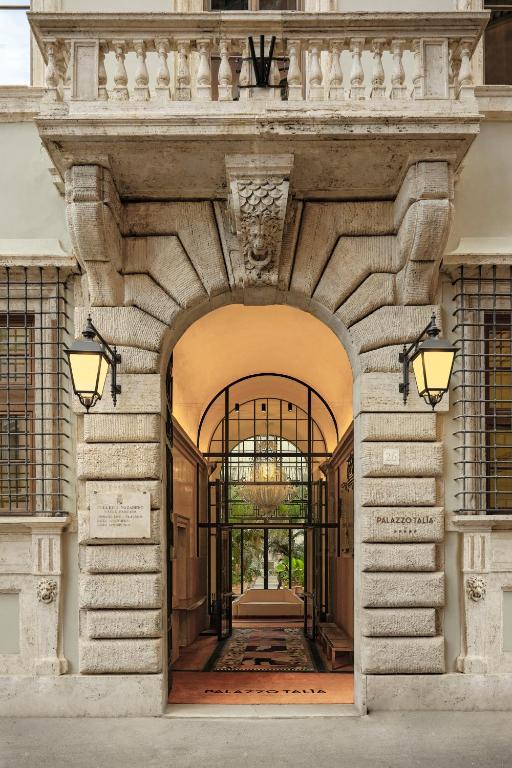
Rome is filled with historic palazzi transformed into luxury hotels. Most preserve their past behind velvet ropes and museum-like reverence. Palazzo Talìa takes a different approach.
Built in the sixteenth century as the residence of a papal secretary, the building later became one of Rome’s most prestigious schools, educating generations of diplomats, politicians, and cultural figures. After decades of decline and years standing largely dormant, the Federici family embarked on an ambitious restoration, reopening the palazzo in 2024 as one of Rome’s most exciting boutique hotels.
Their vision was never simply to restore the building. It was to give it a new life.
The result is Palazzo Talìa: a place where history is not preserved behind glass but actively woven into a contemporary hospitality experience.
Directed by Luca Guadagnino
The creative signature of filmmaker Luca Guadagnino is felt throughout the public spaces.
Working through his design studio, the director of Call Me By Your Name, Challengers, and A Bigger Splash approached the hotel much as he would a film set: through atmosphere, emotion, and visual storytelling.
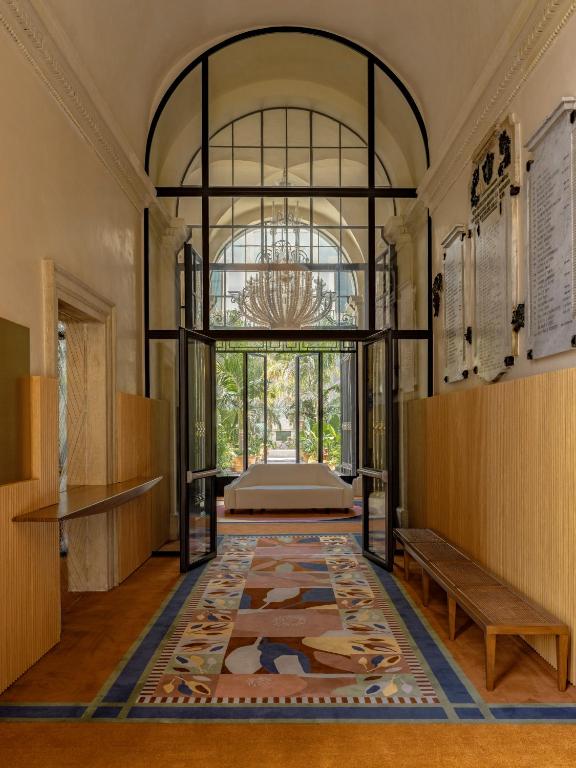
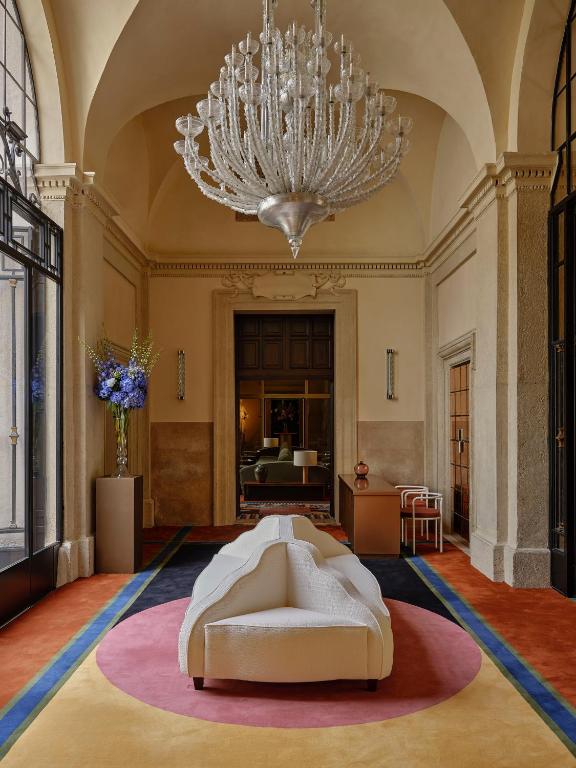
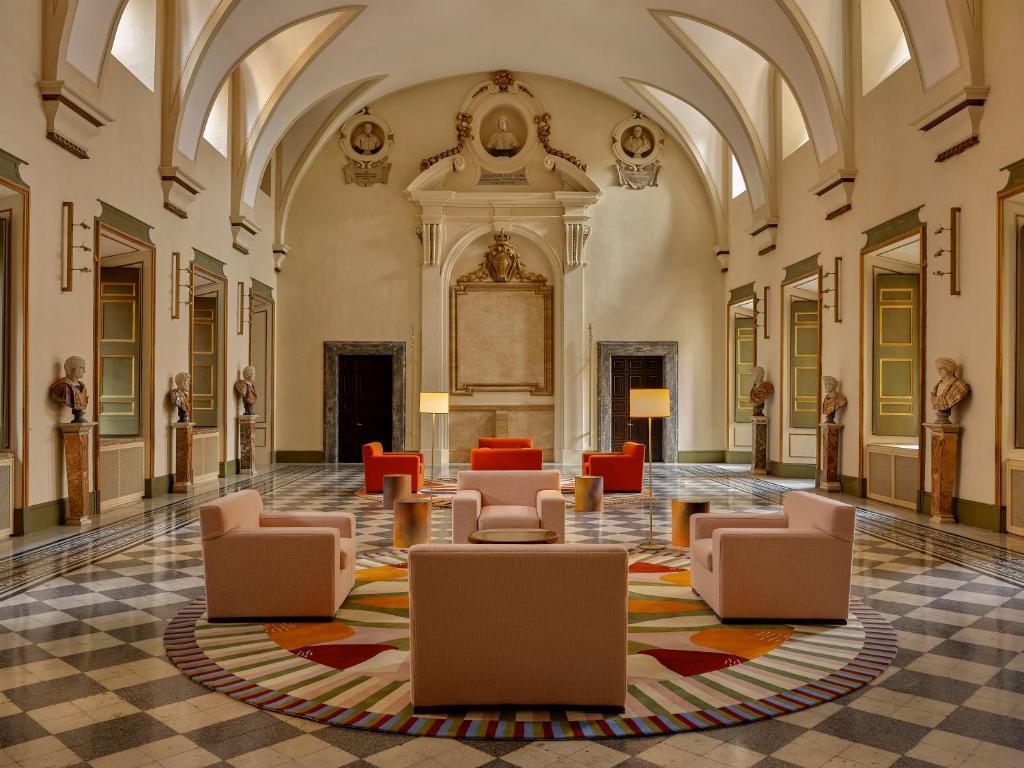
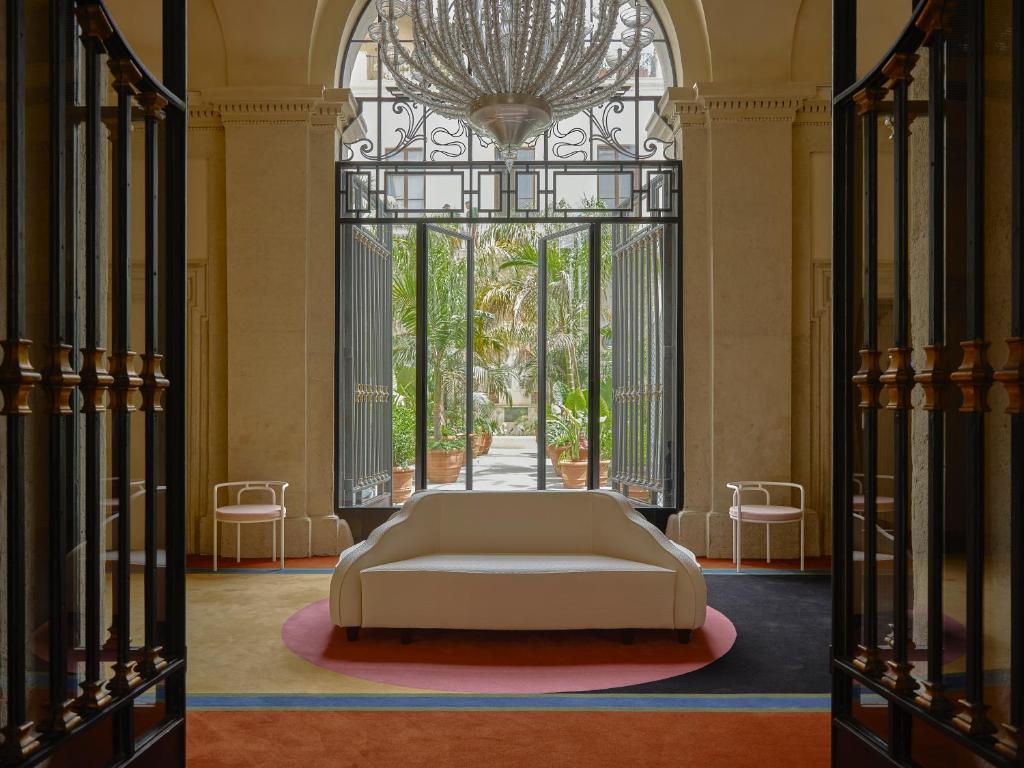
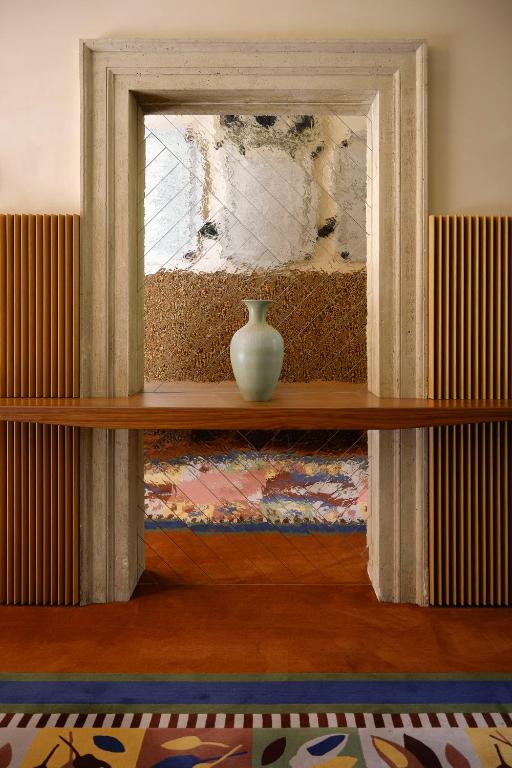
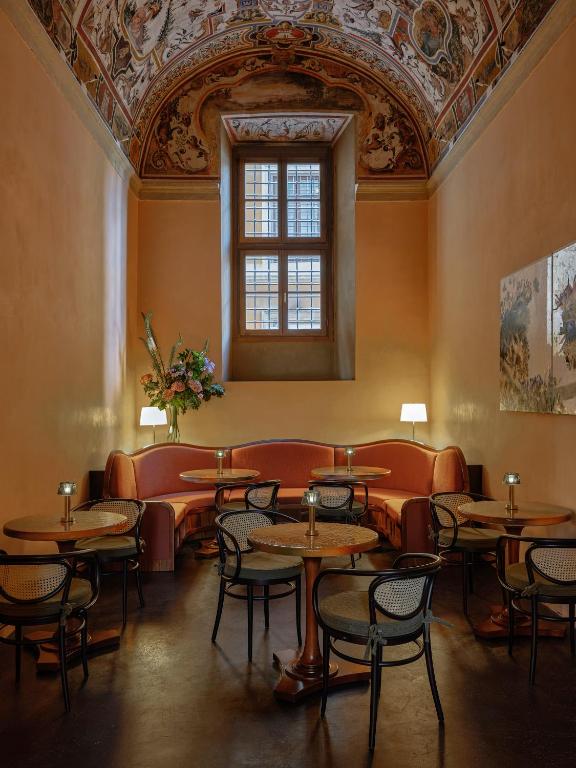
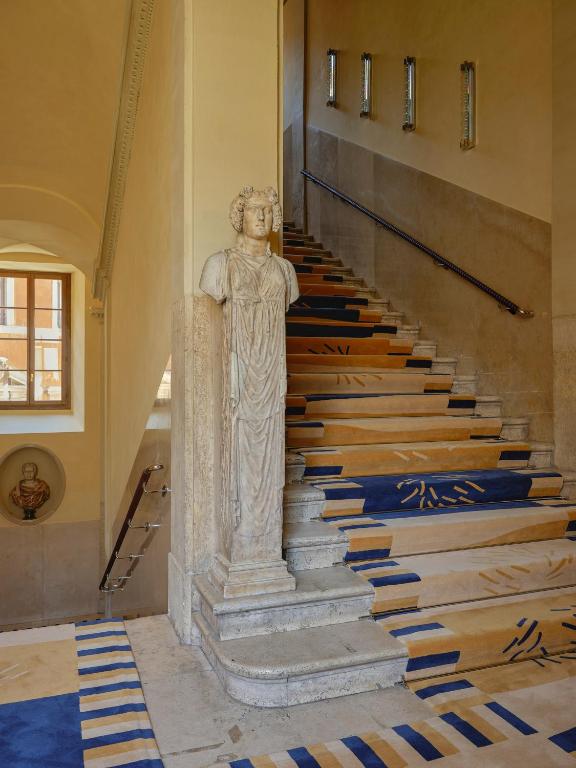
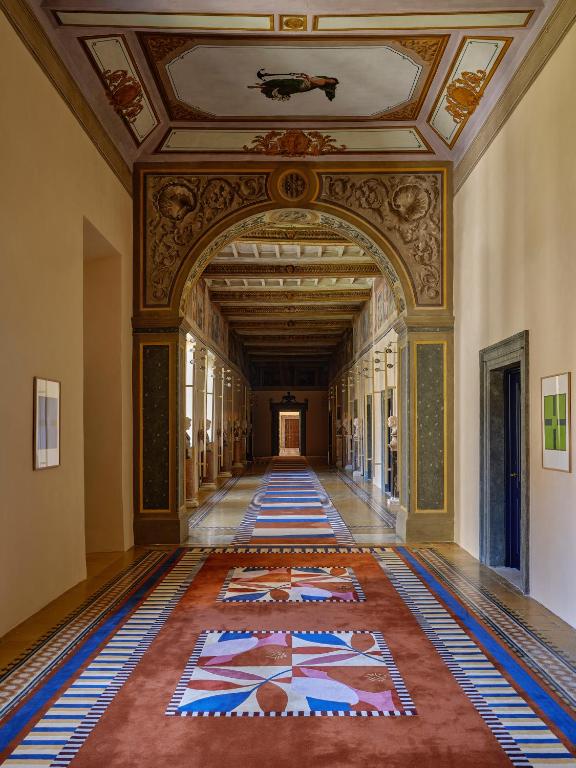
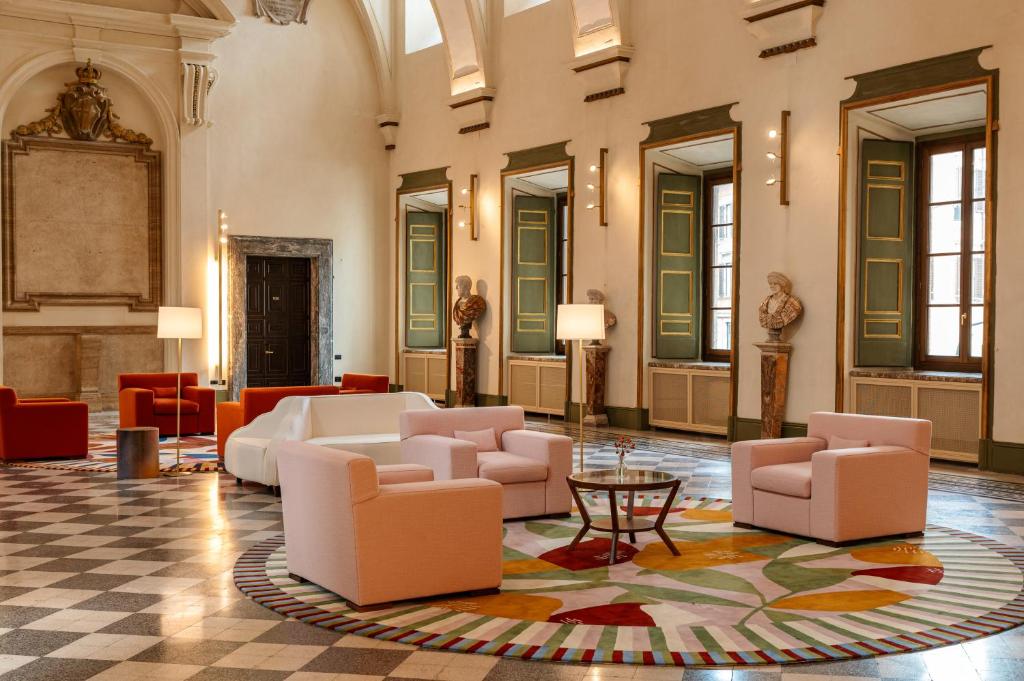
Original frescoes soar overhead. Ancient Roman busts line grand halls. Monumental Murano-glass chandeliers hang above colorful contemporary furnishings. Leather-clad stair railings, mouth-blown mirrors, precious woods, marble surfaces, and bespoke furniture create an environment that feels simultaneously historic and utterly modern.
The magnificent Magna Hall may be the hotel’s most dramatic space. With its eleven-meter-high frescoed ceiling, checkerboard floor, and collection of classical sculptures, it feels like stepping into a forgotten Roman palace—until the contemporary furnishings remind you that this is very much a hotel of today.
Every room, corridor, and salon feels carefully composed, as if waiting for the camera to start rolling.
Suites Bathed in Roman Light
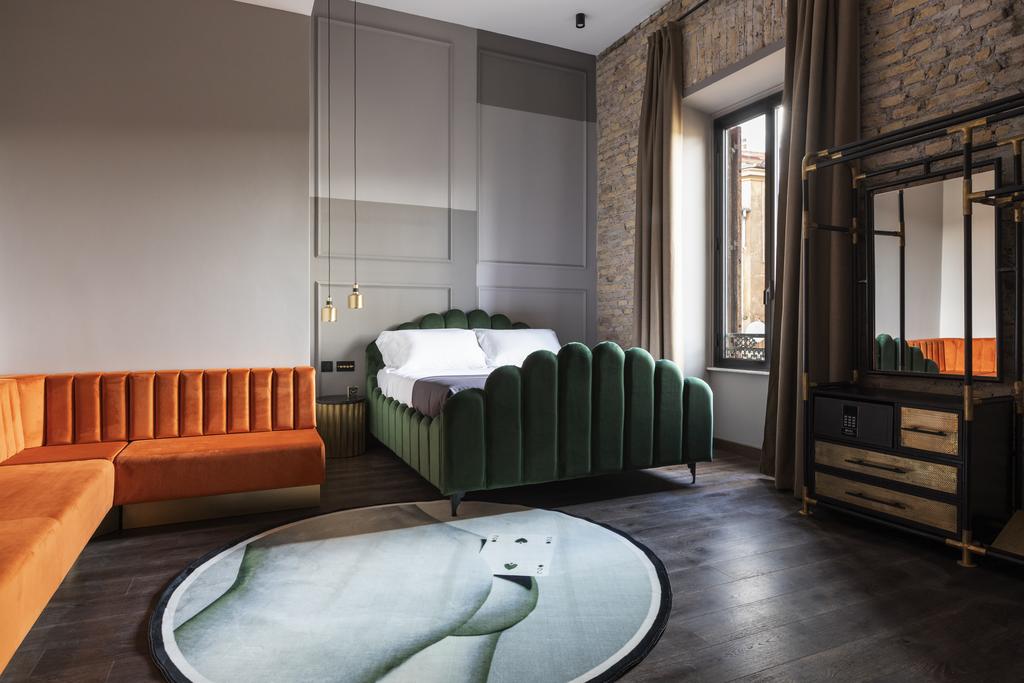
The 26 guestrooms and suites, designed by Marianna Lubrano Lavadera and Laura Feroldi, offer a quieter interpretation of the palazzo’s layered character.
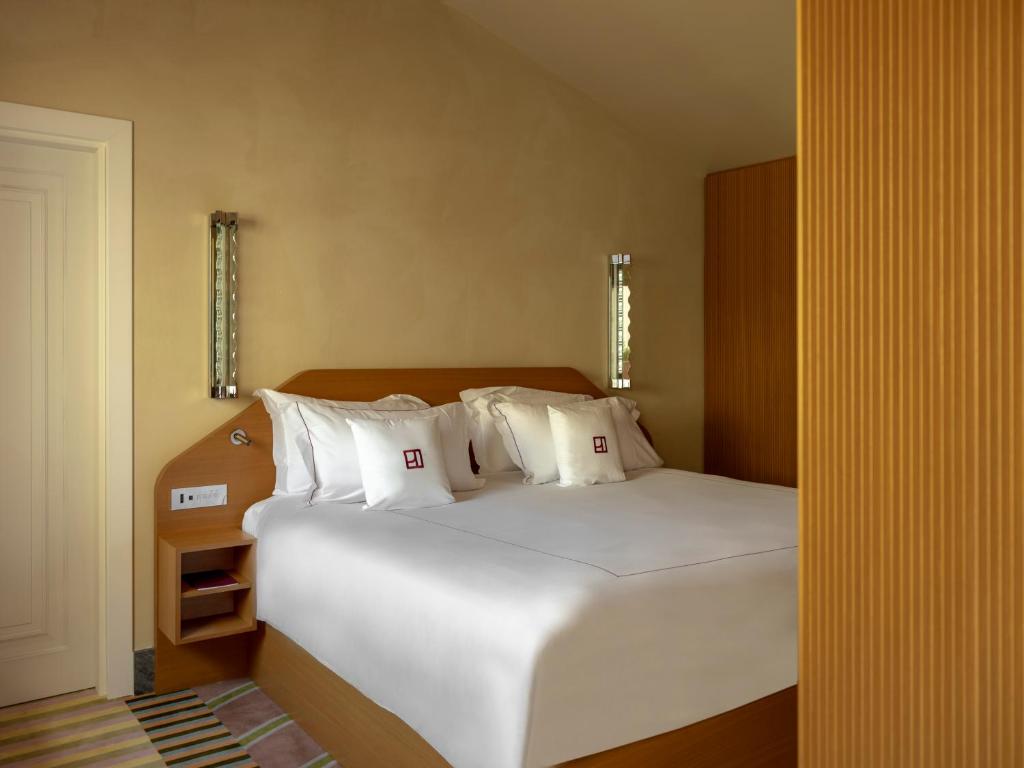
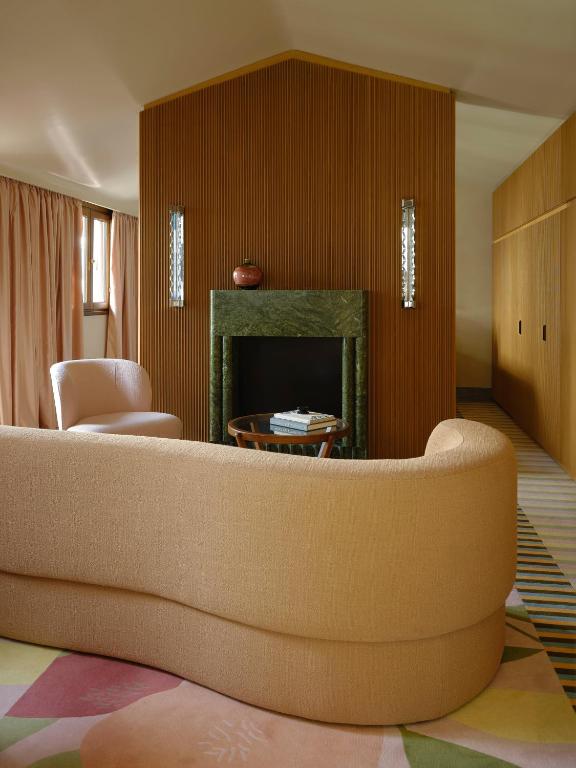
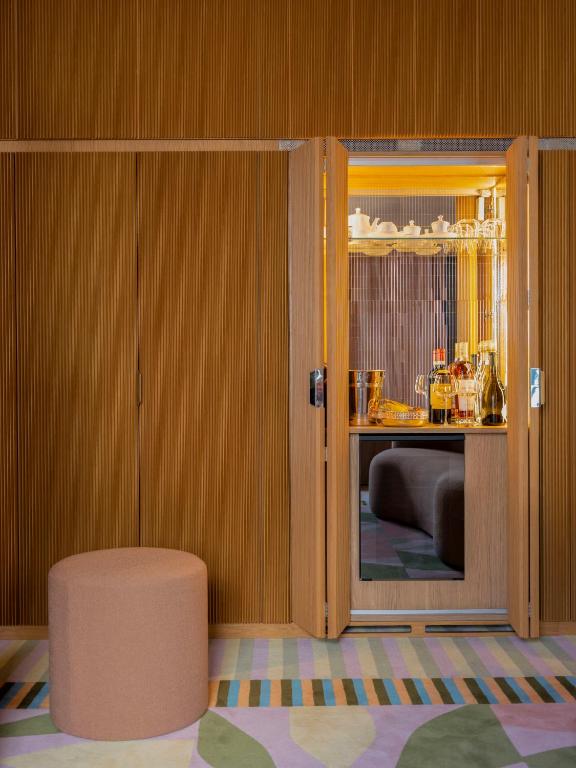
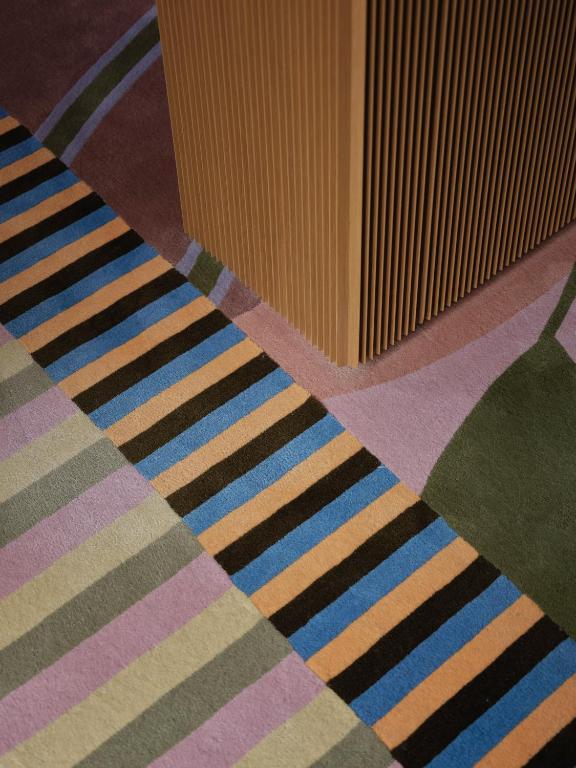
Huge arched windows flood the rooms with Roman sunlight. Four-poster beds, custom carpets, handmade blown-glass sconces, and richly textured furnishings create spaces that feel residential rather than hotel-like. Mauve velvet seating, striped wardrobes, bespoke tables, and carefully selected contemporary artworks from the Federici family collection add personality without overwhelming the historic architecture.
The color palette is particularly memorable. Soft pinks, burnt oranges, deep greens, buttermilk yellows, and rich blues echo the restored frescoes found throughout the building, creating a subtle dialogue between past and present.
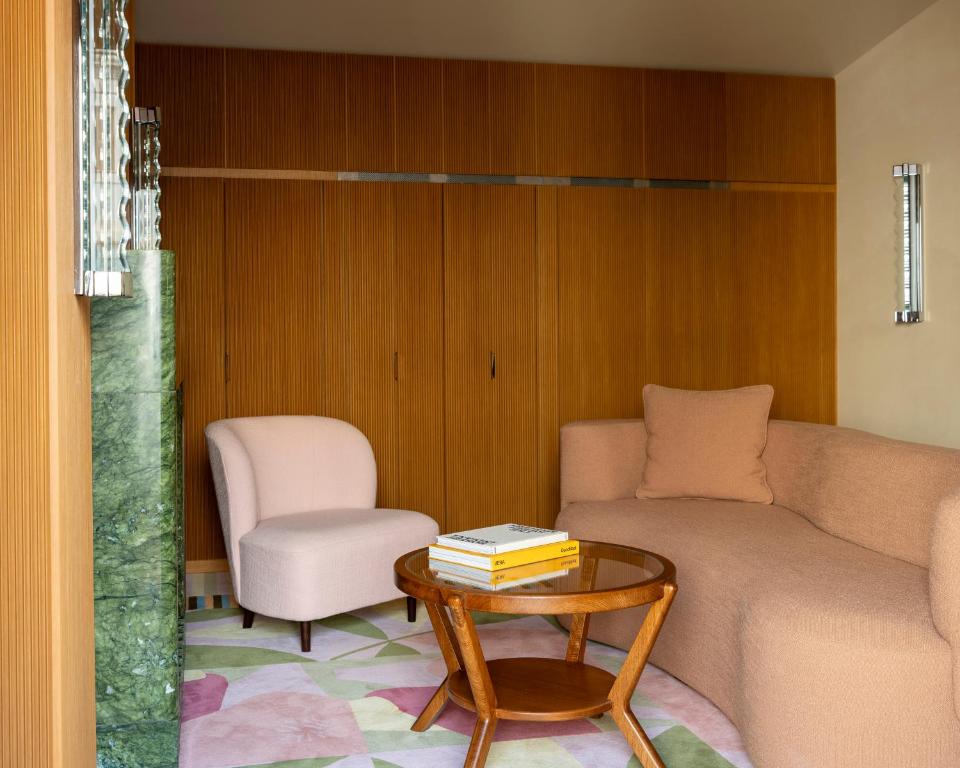
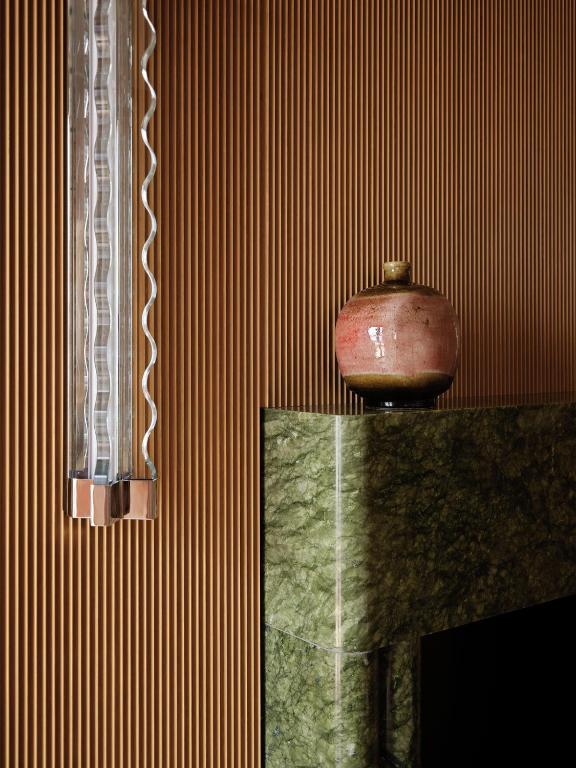
At the very top of the palazzo, the Terrace Suite offers one of Rome’s most seductive urban retreats, complete with wood-paneled walls, a green marble fireplace, and a private terrace overlooking the rooftops of the Eternal City.
The Art of Roman Living
Much of Palazzo Talìa’s charm lies in its ability to create spaces that invite lingering.
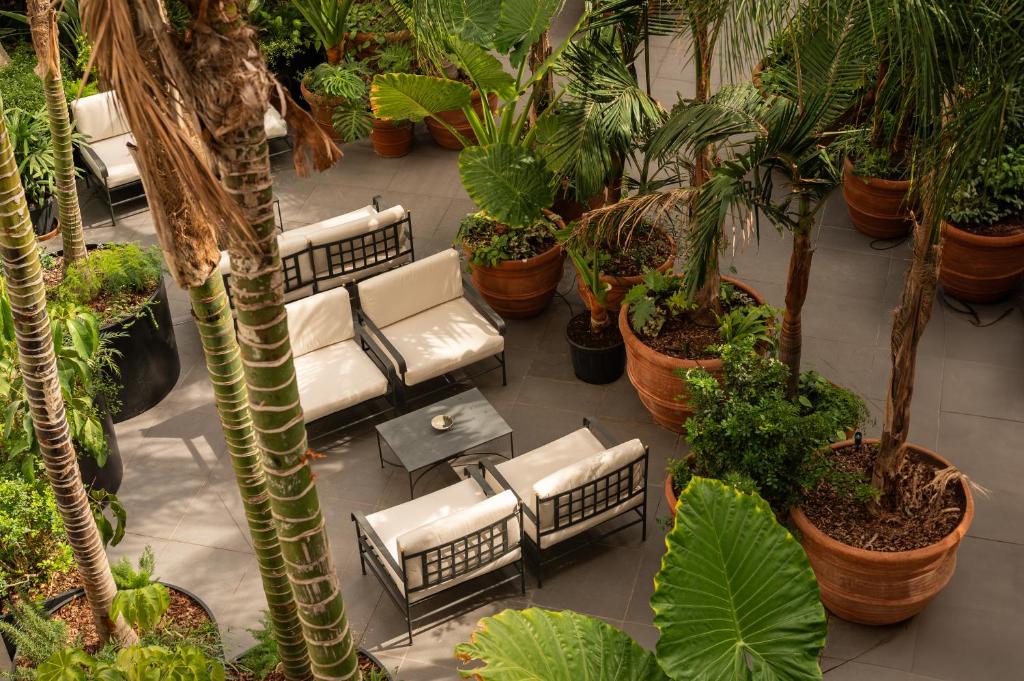
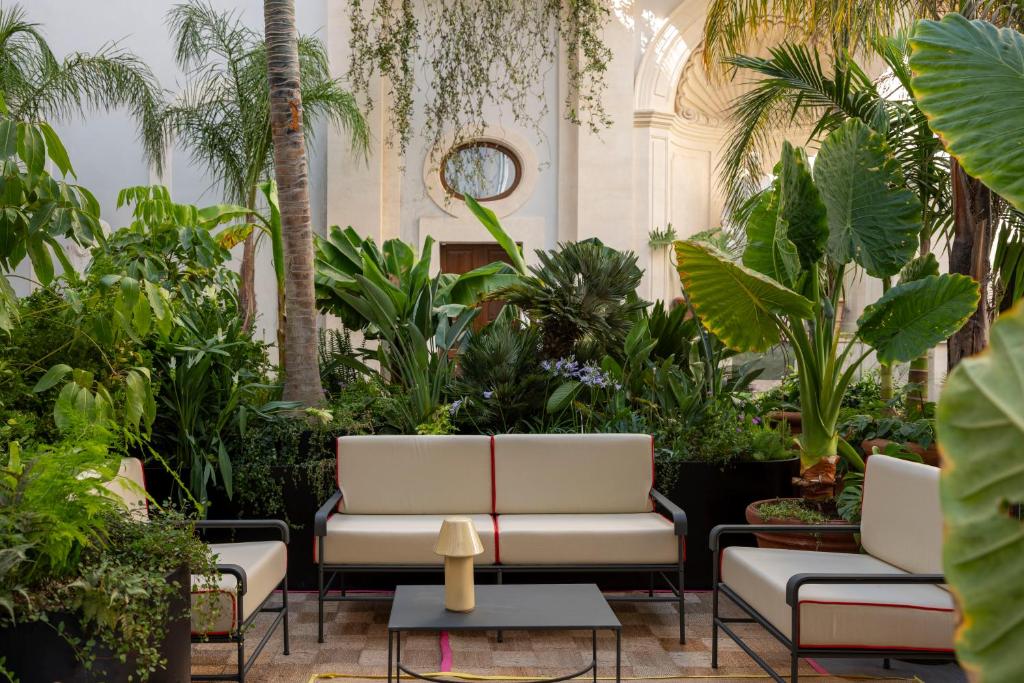
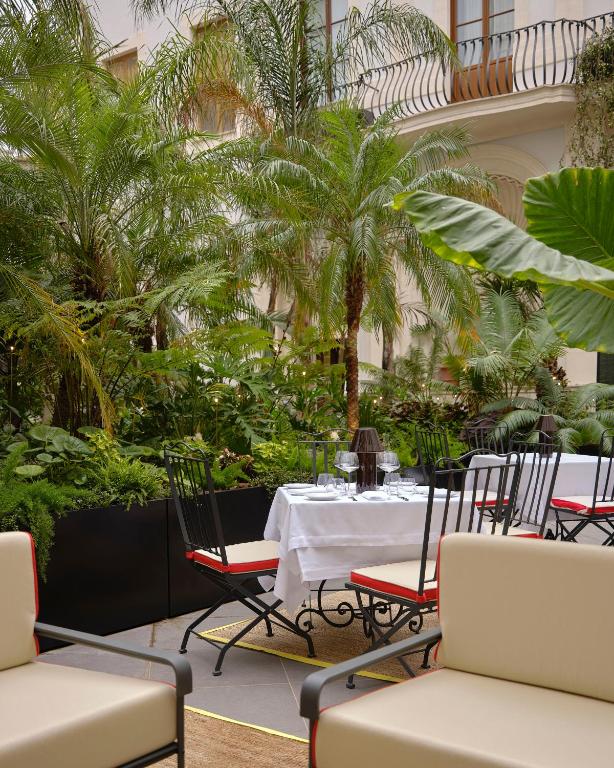
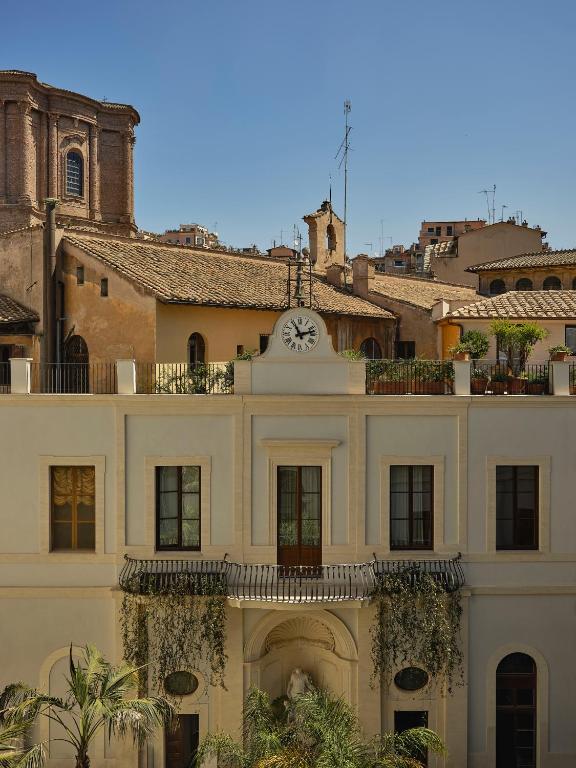
The central courtyard has been transformed into a lush garden oasis filled with potted trees and greenery. Mornings begin with coffee beneath the Roman sky. Evenings unfold over aperitivi as the city softens around you.
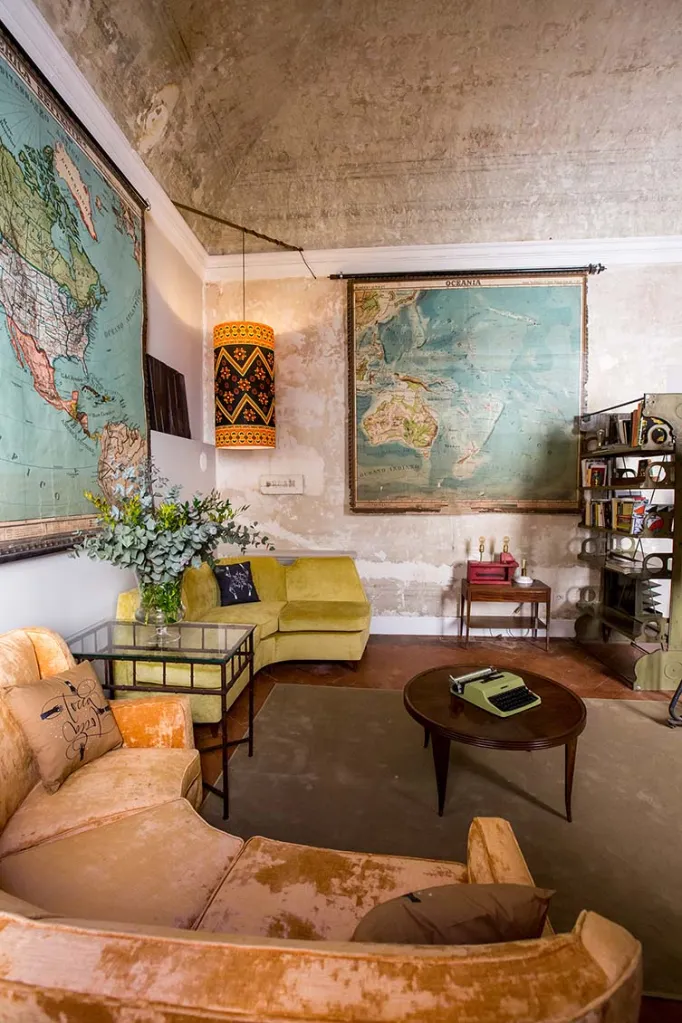
Throughout the hotel, beautifully appointed lounges encourage guests to slow down. There is no pressure to rush through the public spaces. Instead, they function as elegant extensions of the guestrooms—places to read, converse, or simply absorb the atmosphere.
It’s luxury rooted in comfort rather than performance.
Bar della Musa: Rome’s Most Beautiful New Cocktail Bar
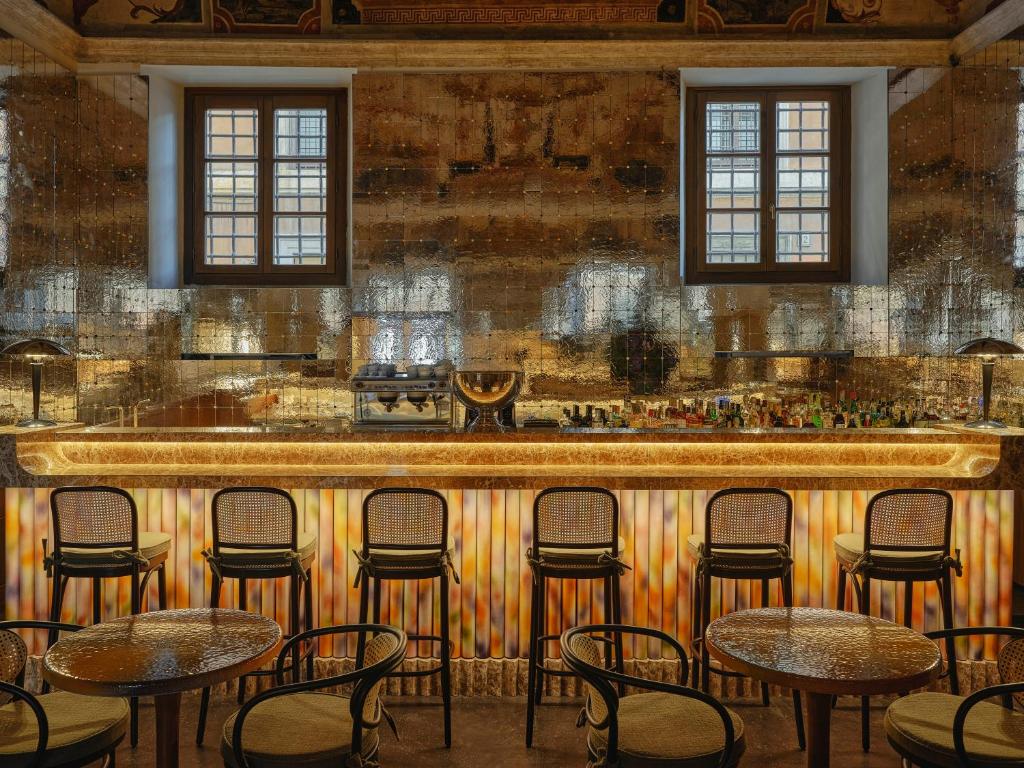
If Palazzo Talìa has a centerpiece, it is surely Bar della Musa.
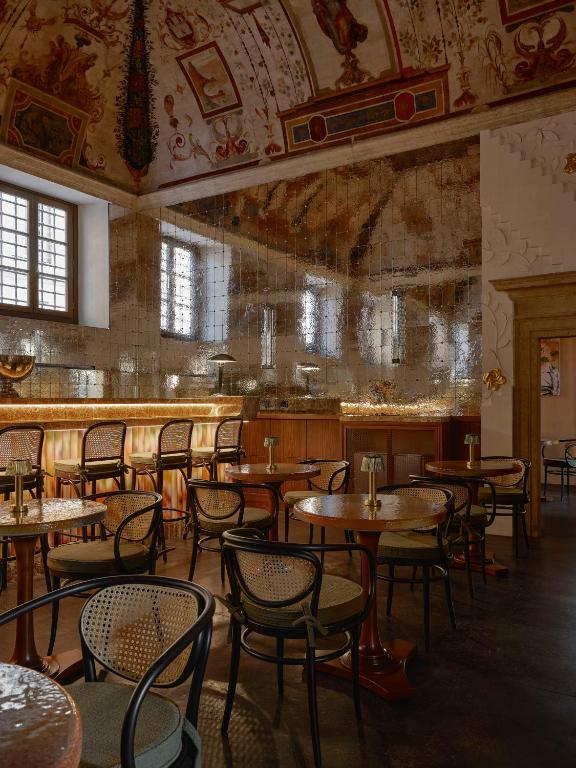
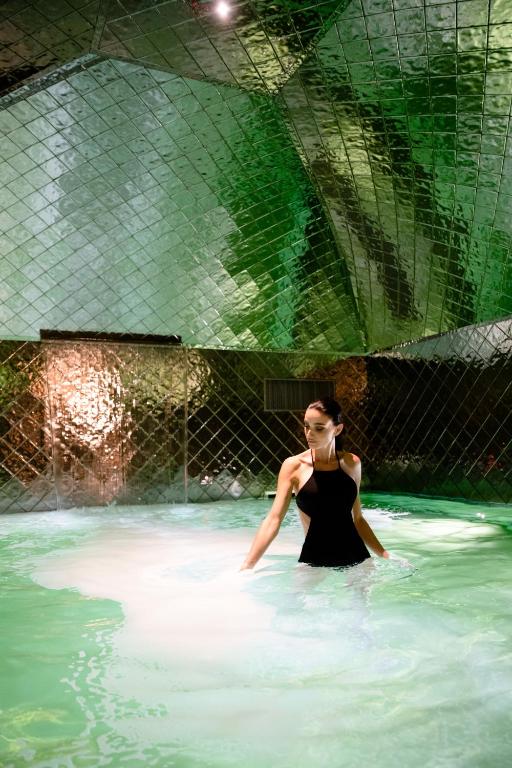
Here, a shimmering wall of polished silver tiles reflects centuries-old frescoes overhead, creating one of the most visually striking bar interiors in Rome. The effect is almost surreal—part Renaissance palace, part contemporary art installation.
Cocktails take inspiration from the Nine Muses of Greek mythology. Clio arrives infused with raspberry. Melpomene blends mezcal with sage and pistachio. Erato explores themes of desire through botanical flavors and subtle complexity.
Served alongside oysters, caviar, and elevated Roman snacks, the experience feels appropriately cinematic.
This is not simply a hotel bar. It is a destination in its own right.
Roman Tradition Through a Contemporary Lens
At Tramae, Executive Chef Marco Coppola continues the hotel’s dialogue between heritage and modernity.
The restaurant combines Roman and broader Italian culinary traditions with contemporary technique and presentation. Seasonal ingredients, elegant restraint, and meticulous execution define the menu.
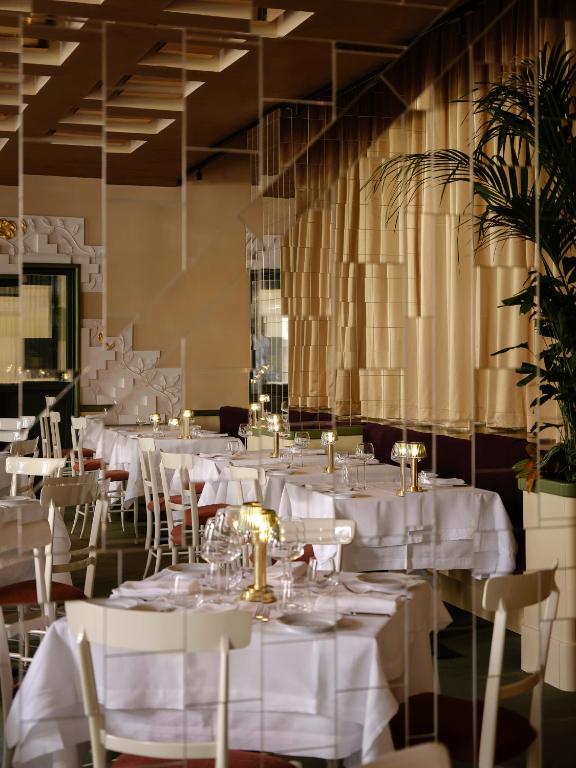
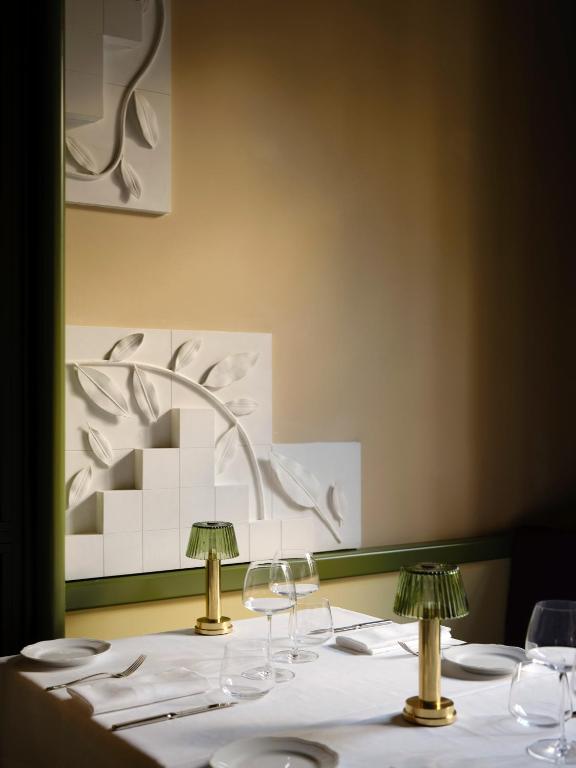
Architecturally, the space is every bit as compelling as the cuisine. Murano-glass mirrors, bronze ceilings, decorative stucco work, and soft lighting create an atmosphere that feels both intimate and grand.
Like the hotel itself, Tramae never chooses between old and new. It embraces both.
An Oasis Steps from the Trevi Fountain
For all its tranquility, Palazzo Talìa sits remarkably close to the heart of Rome.
The Trevi Fountain is just a short walk away. So too are the Spanish Steps, the Pantheon, and countless layers of Roman history. Yet stepping through the hotel’s doors feels like entering a parallel city—one where crowds disappear, voices soften, and time slows.
That contrast is part of the magic.
Rome, Directed Differently
Palazzo Talìa succeeds because it understands that true luxury is emotional as much as physical.
Its Renaissance architecture provides the setting. Guadagnino supplies the atmosphere. The design team introduces warmth and contemporary elegance. Together they create something rare: a hotel that feels deeply Roman without relying on cliché.
Intimate, cinematic, and endlessly beautiful, Palazzo Talìa is not simply one of Rome’s finest new hotels—it is one of its most memorable new stories.