Paragon 700 Boutique Hotel & Spa – Ostuni, Puglia, Italy
An 18th-century red palazzo that breaks every rule of the White City with eclectic interiors, secret gardens and a rebellious sense of glamour.
Why DNA Hotels Loves It
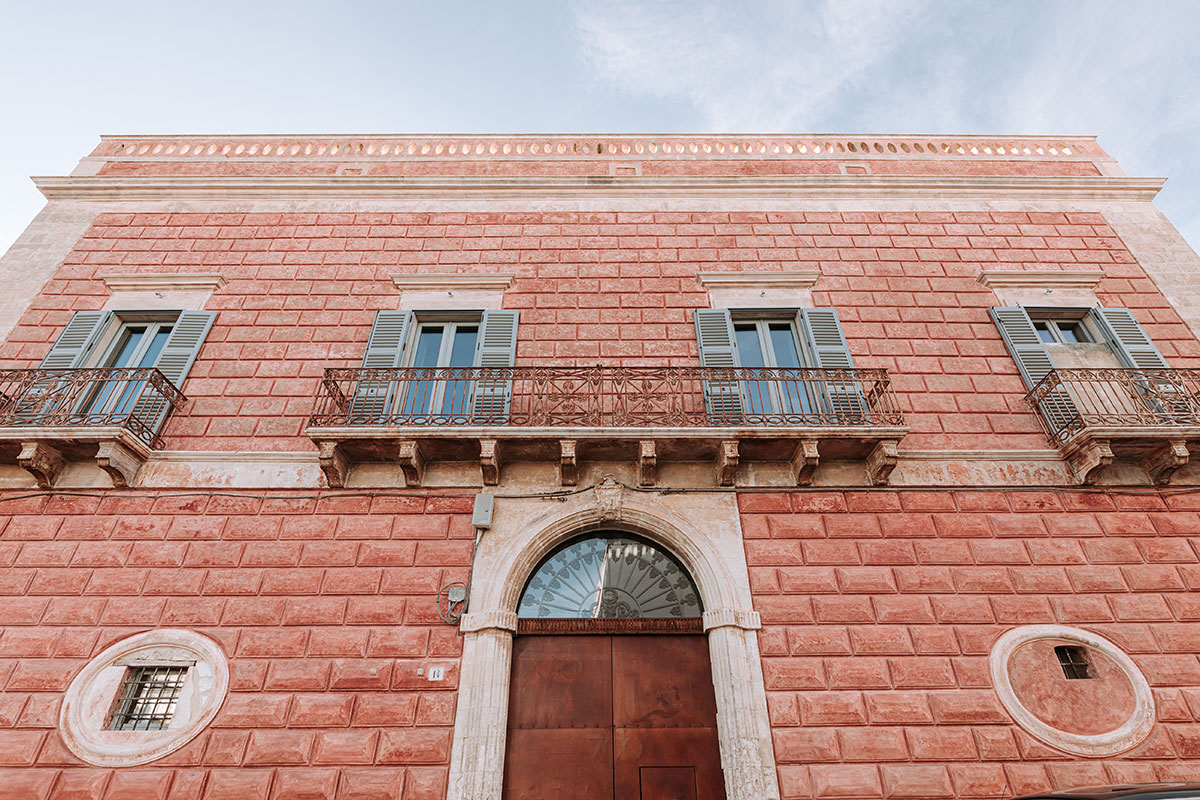
● Ostuni’s unmistakable Pompeian-red Palazzo Rosso, restored by owners and designers Pascale Lauber and Ulrike Bauschke as a deliberate counterpoint to the city’s whitewashed architecture.
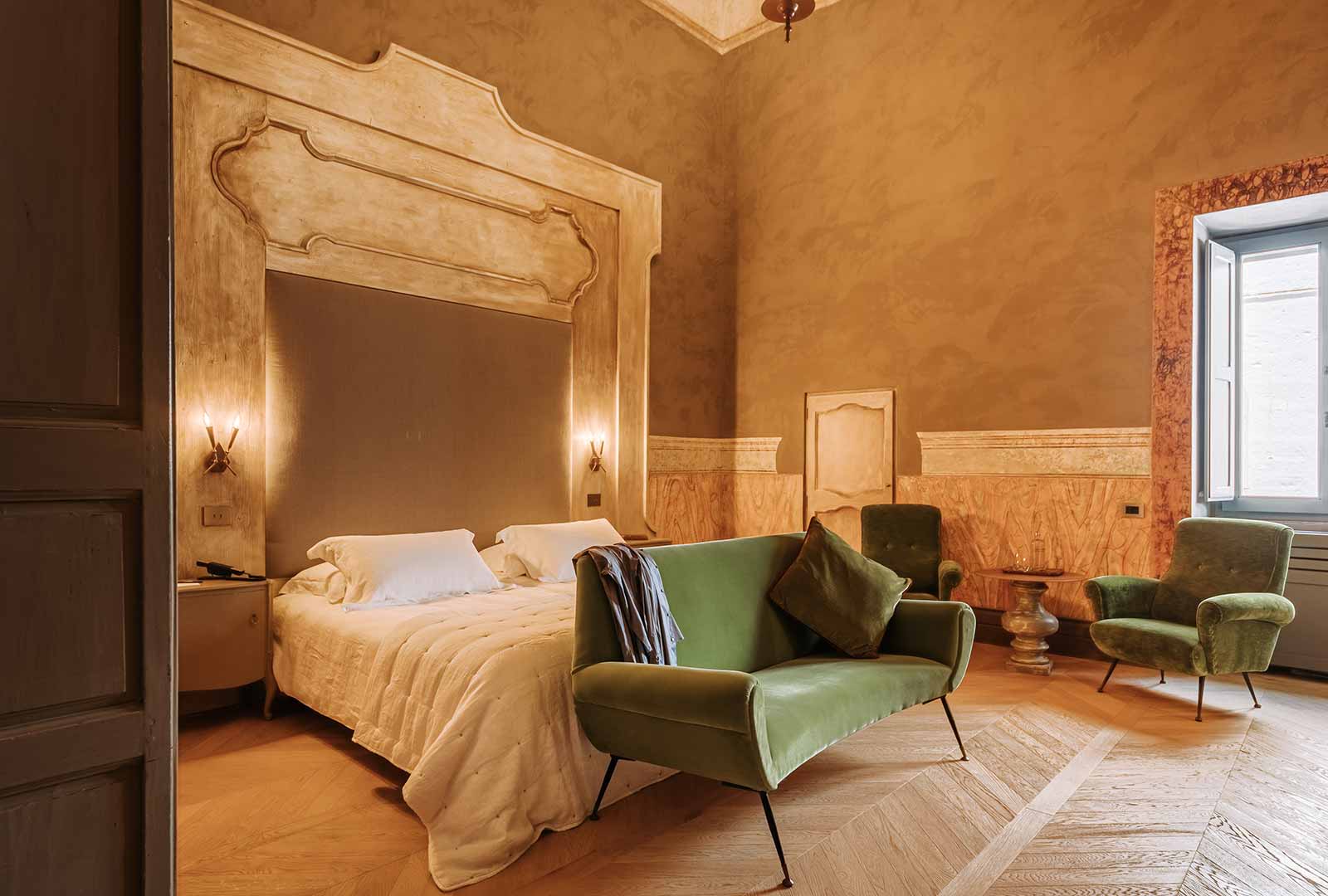
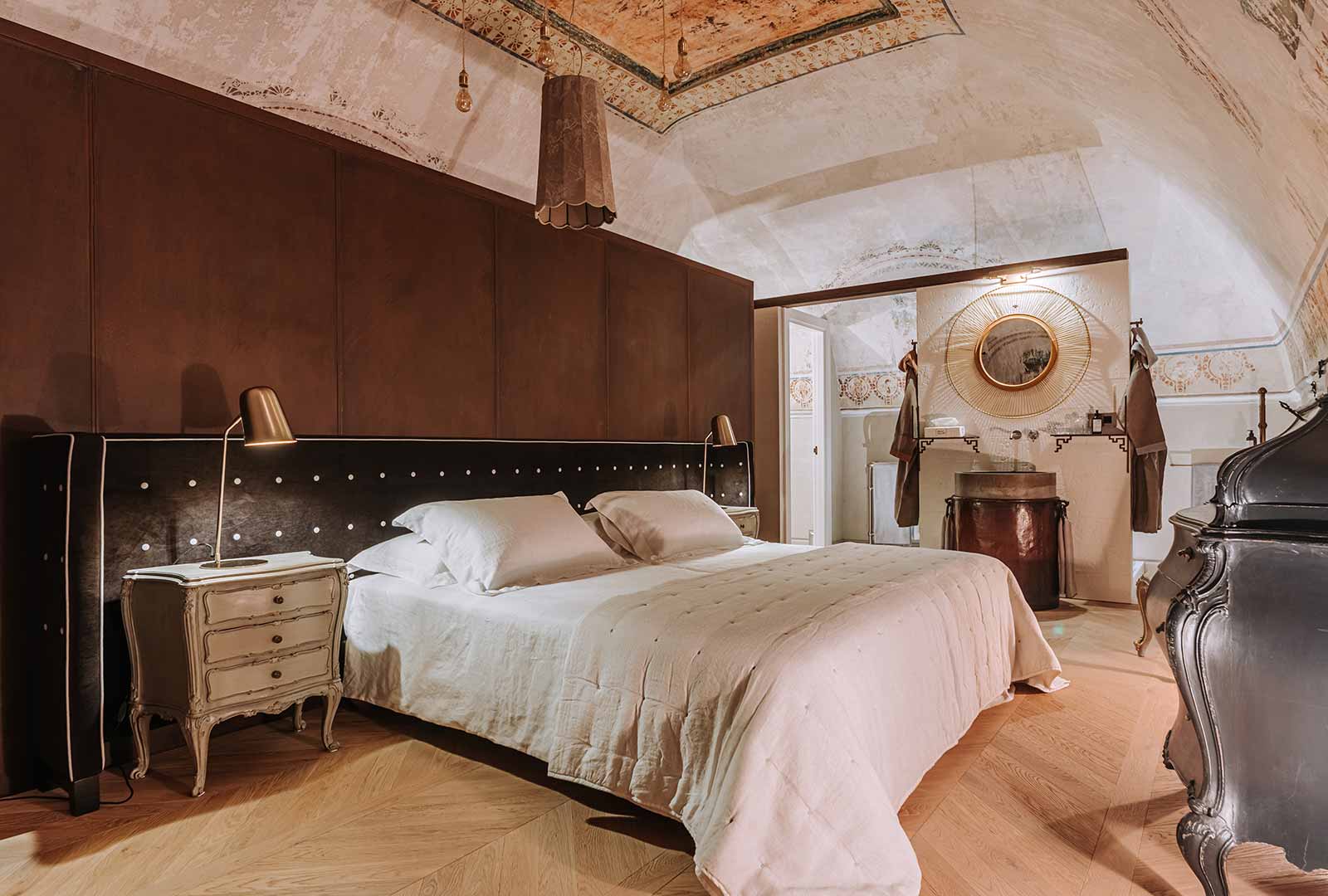
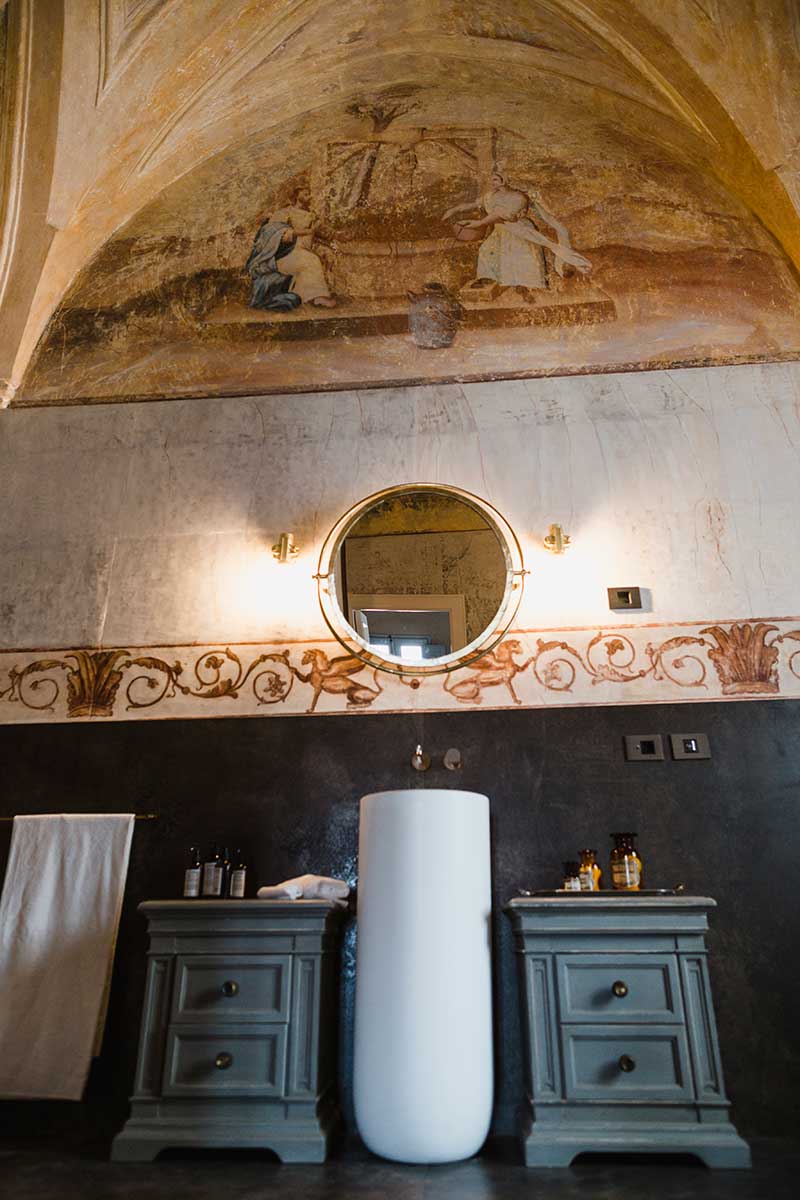
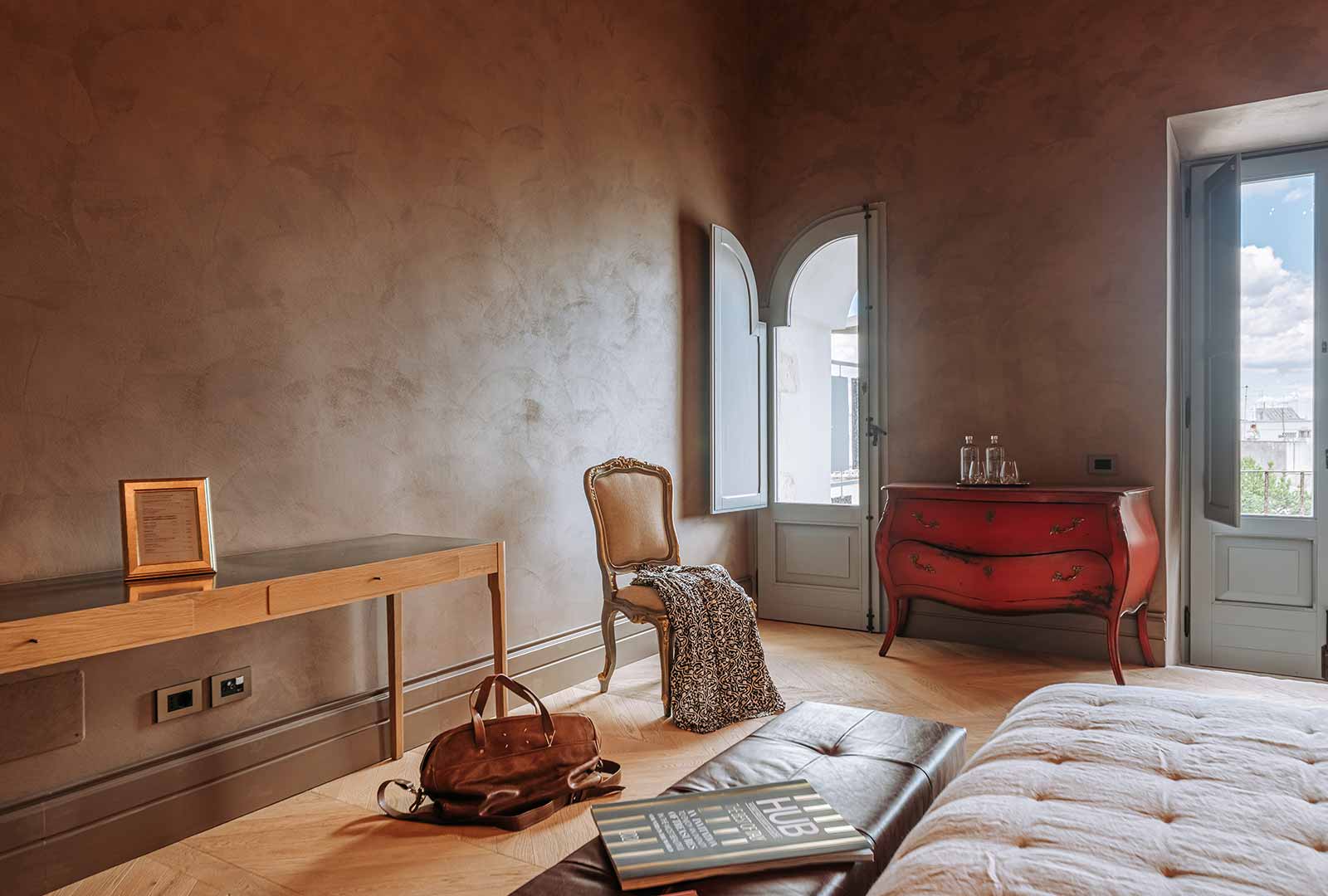
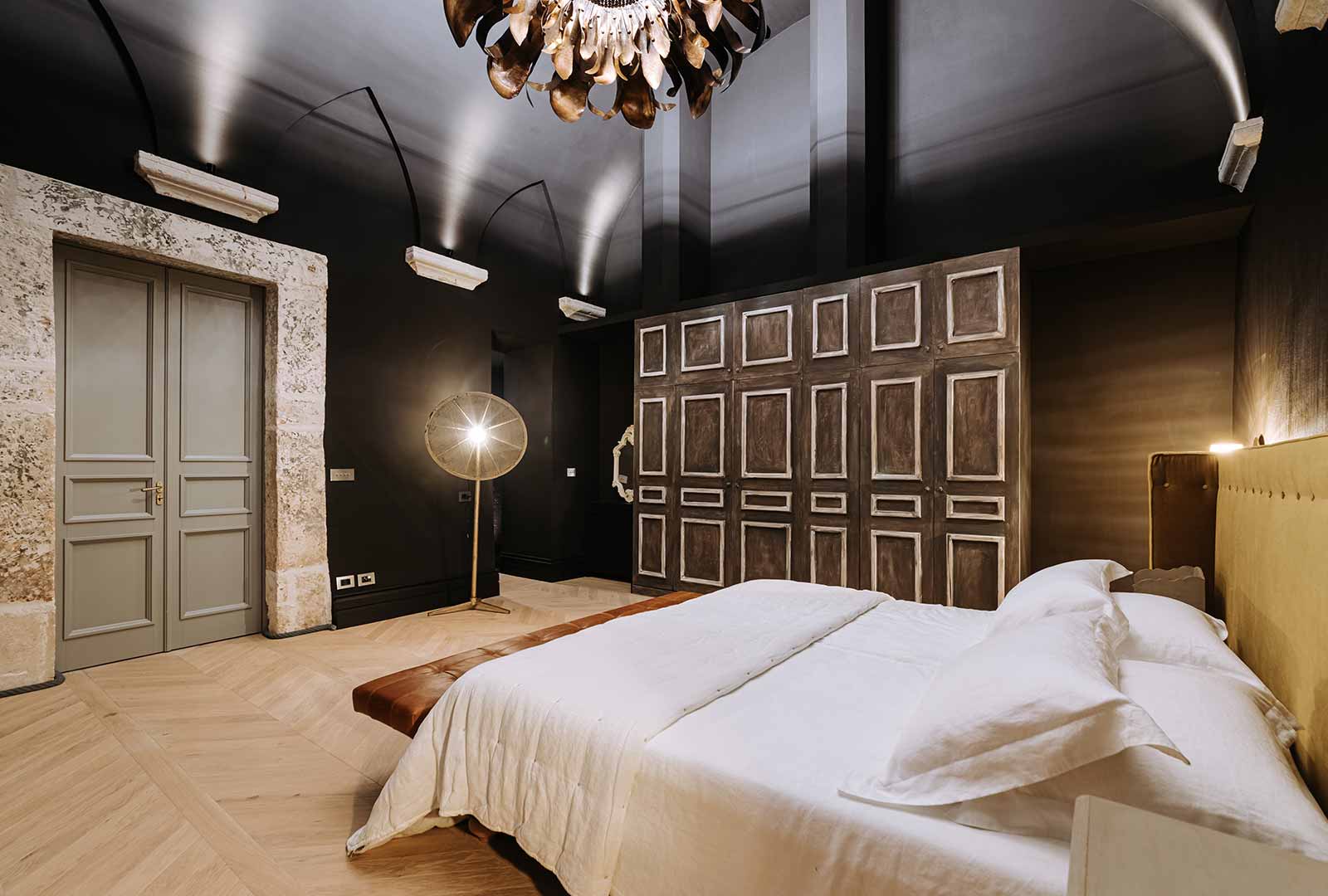
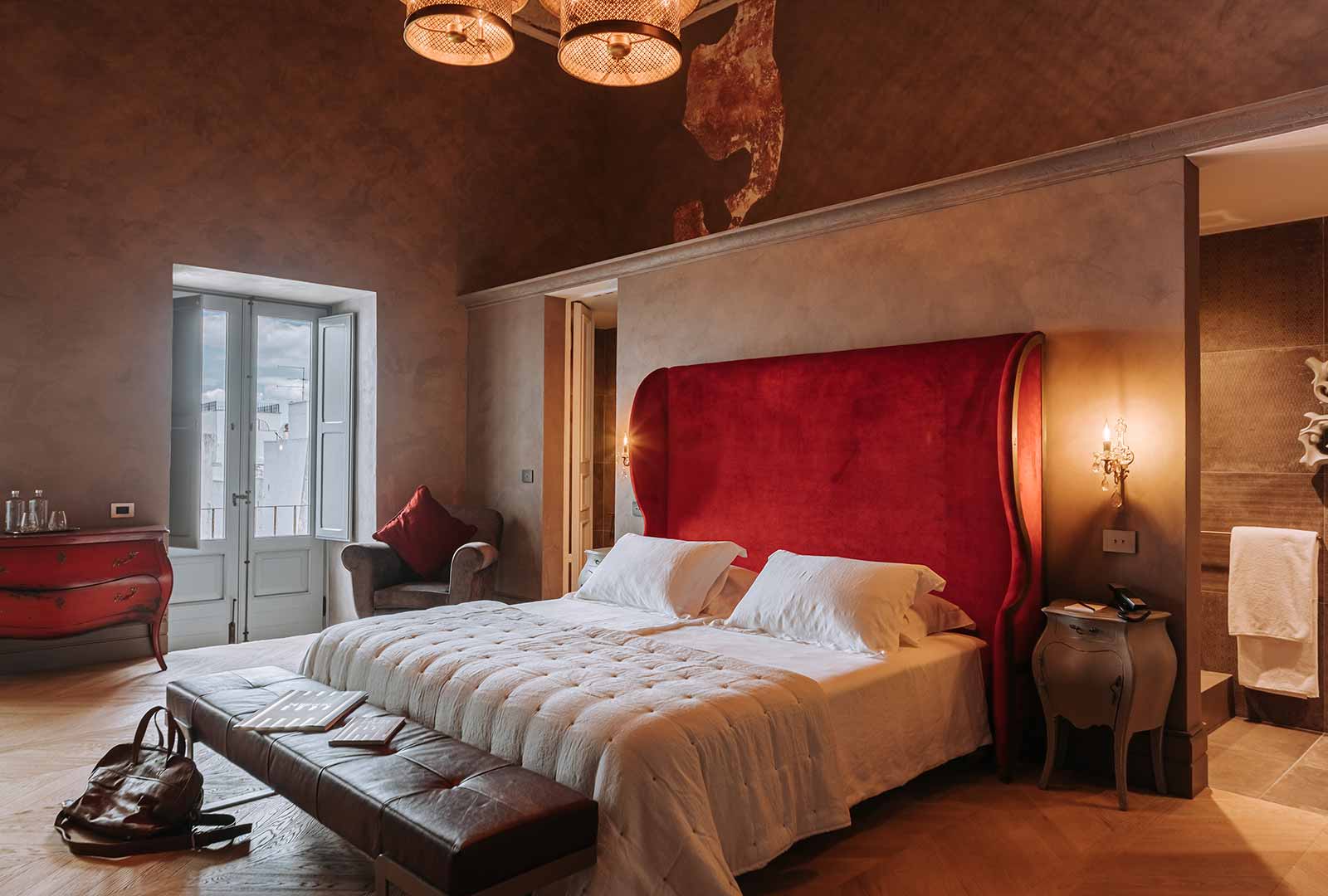
● 15 individually designed rooms and suites mixing faded frescoes, French parquet, global antiques, contemporary art and wonderfully eccentric details.
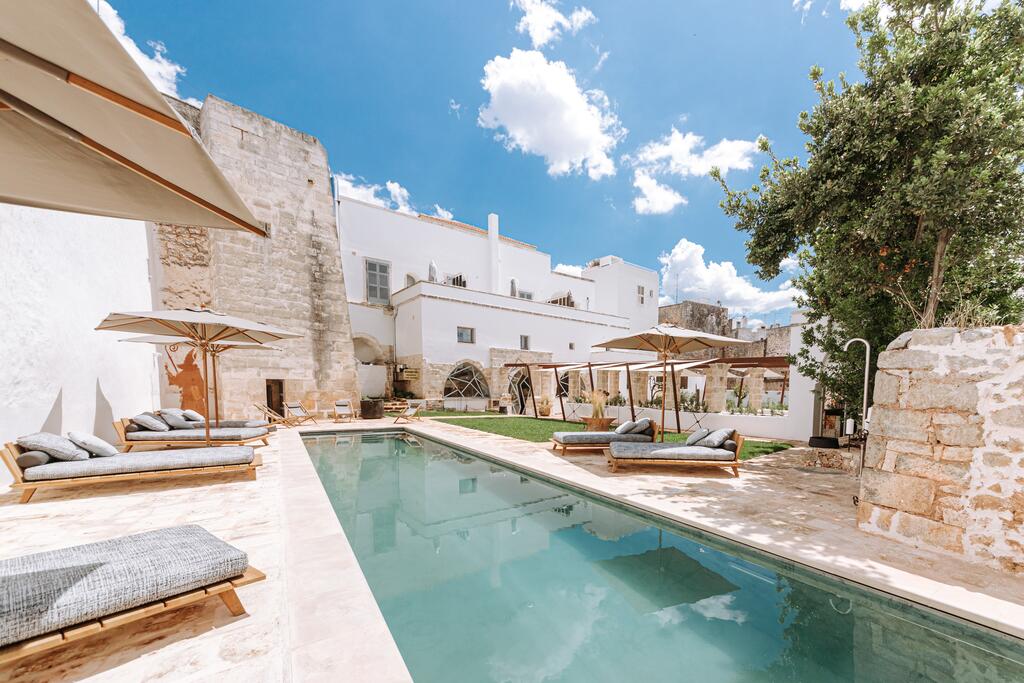
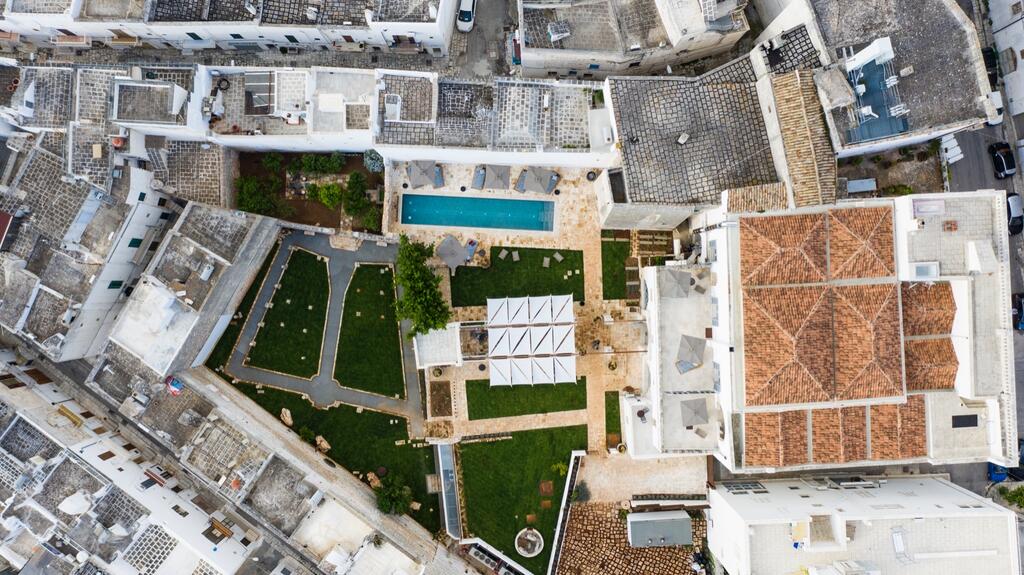
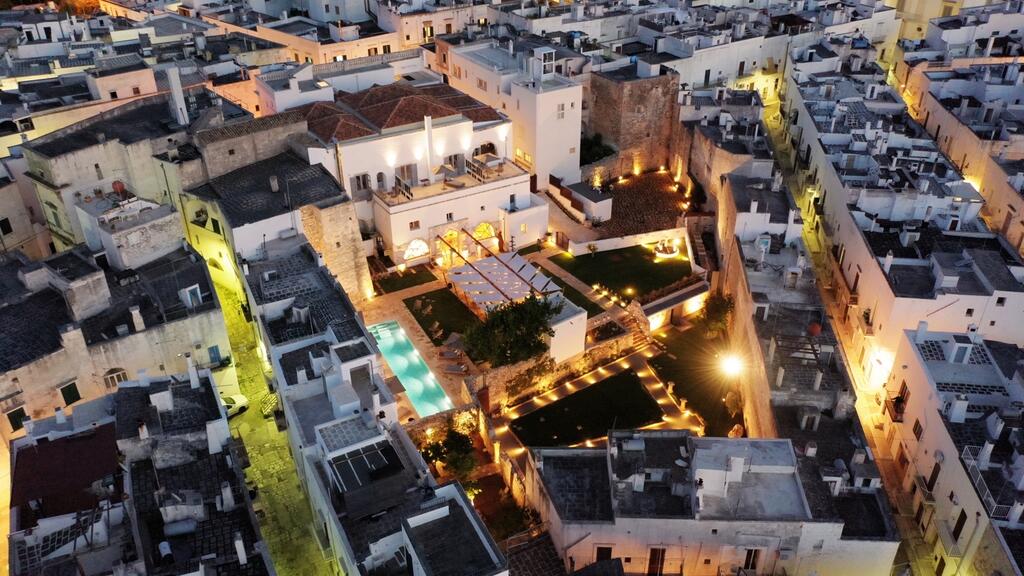
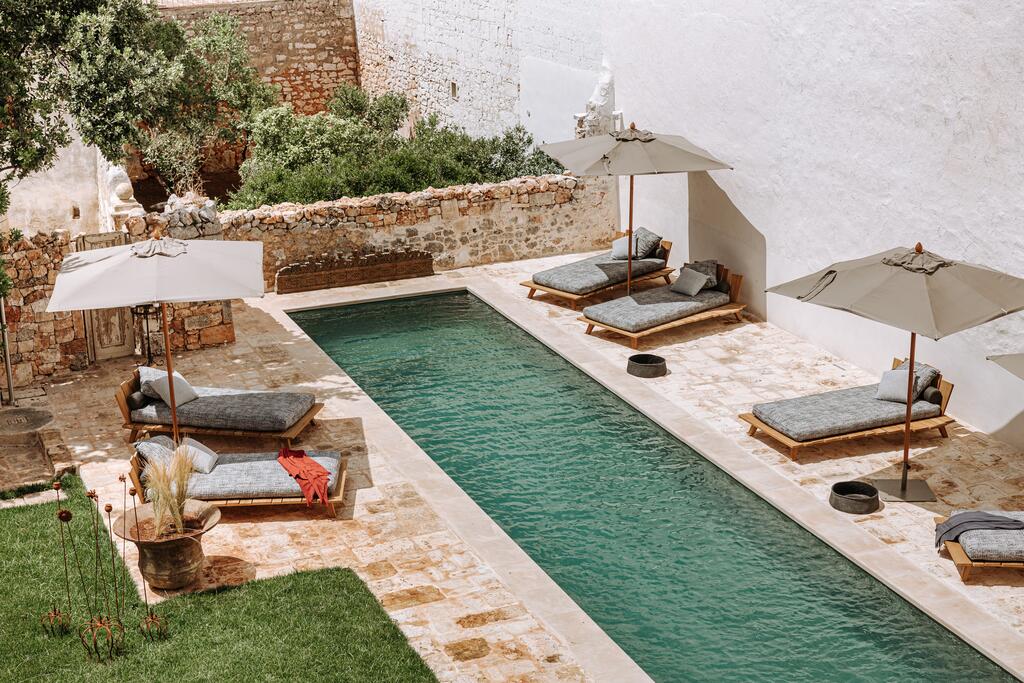
● A remarkable hidden world behind the façade: 1,700 m² gardens, Ostuni’s only hotel swimming pool and a subterranean spa inside the palazzo’s former water cistern.
The Red Rebel of the White City
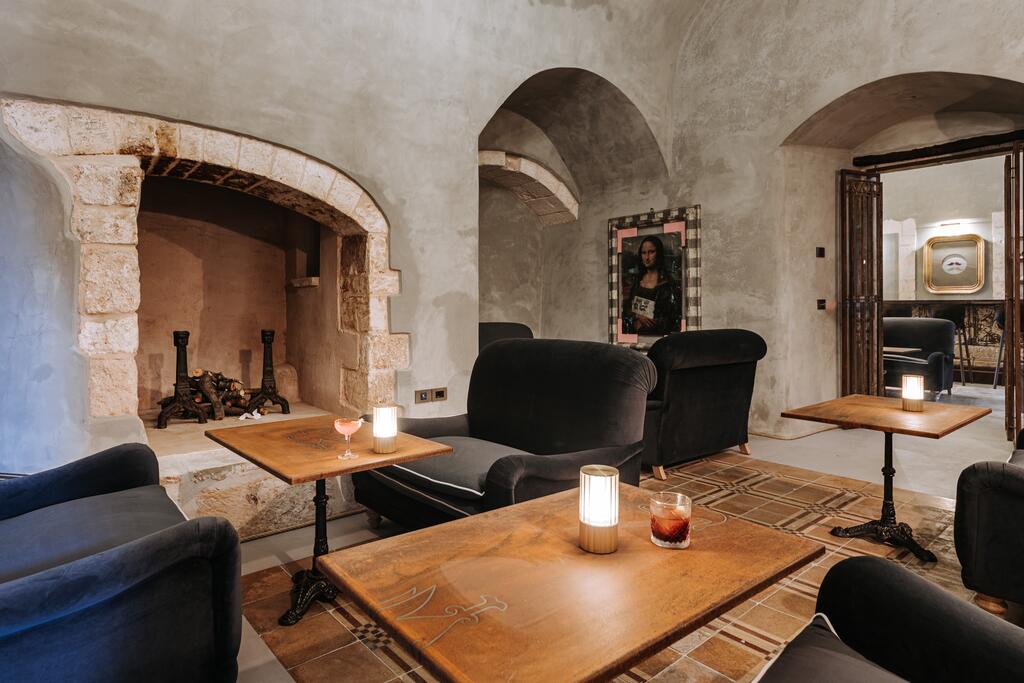
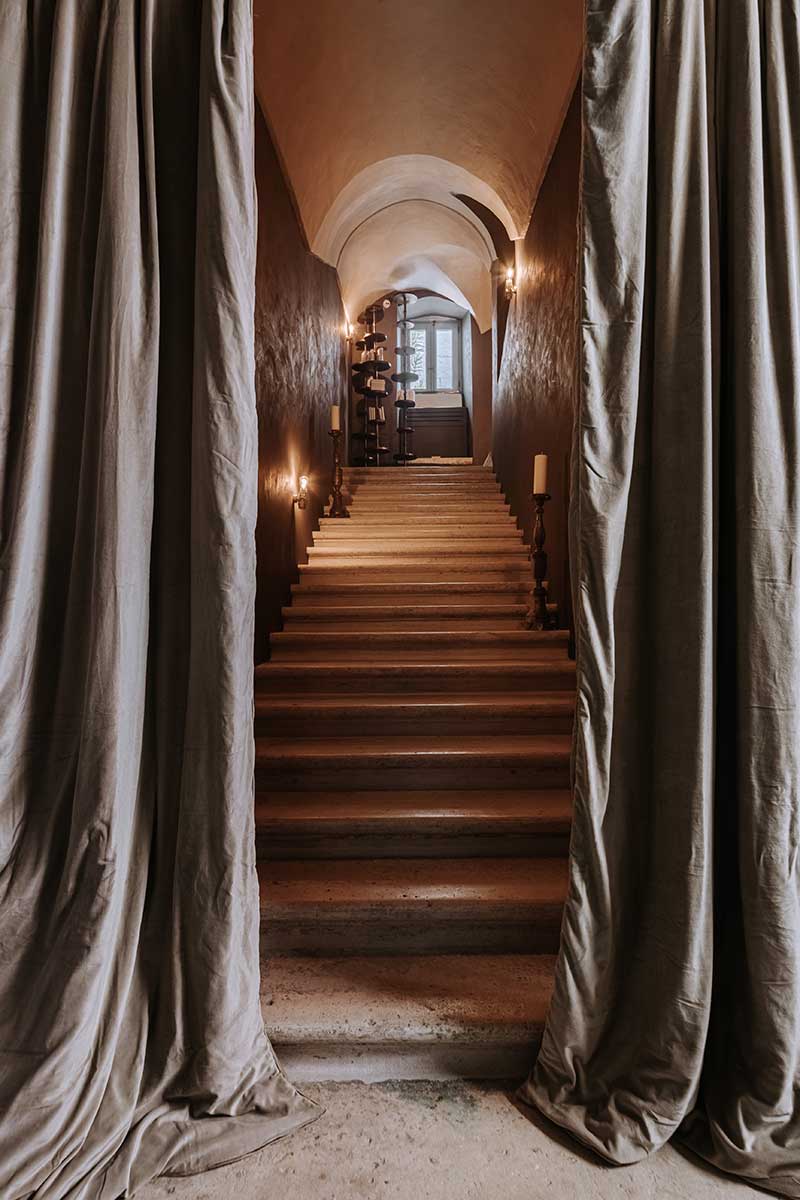
Ostuni built its visual identity on white. Then there is Paragon 700 Boutique Hotel & Spa. Its deep Pompeian-red façade rises almost provocatively among the chalk-white houses of Puglia’s famous Città Bianca. Known locally as Palazzo Rosso, the 18th-century mansion has lived several lives — convent, science institute, police barracks and residence of Ostuni’s first mayor among them — before Swiss owners Pascale Lauber and Ulrike Bauschke turned it into one of southern Italy’s most individual small hotels. Their restoration does not attempt to make the building polite. Faded frescoes remain faded. Stone vaults retain their weight. Historic fireplaces, cathedral-height ceilings and fragments of the palazzo’s previous lives are allowed to coexist with furniture collected across continents. The effect is theatrical, personal and occasionally eccentric. Exactly as intended.
A Palazzo Collected Rather Than Decorated
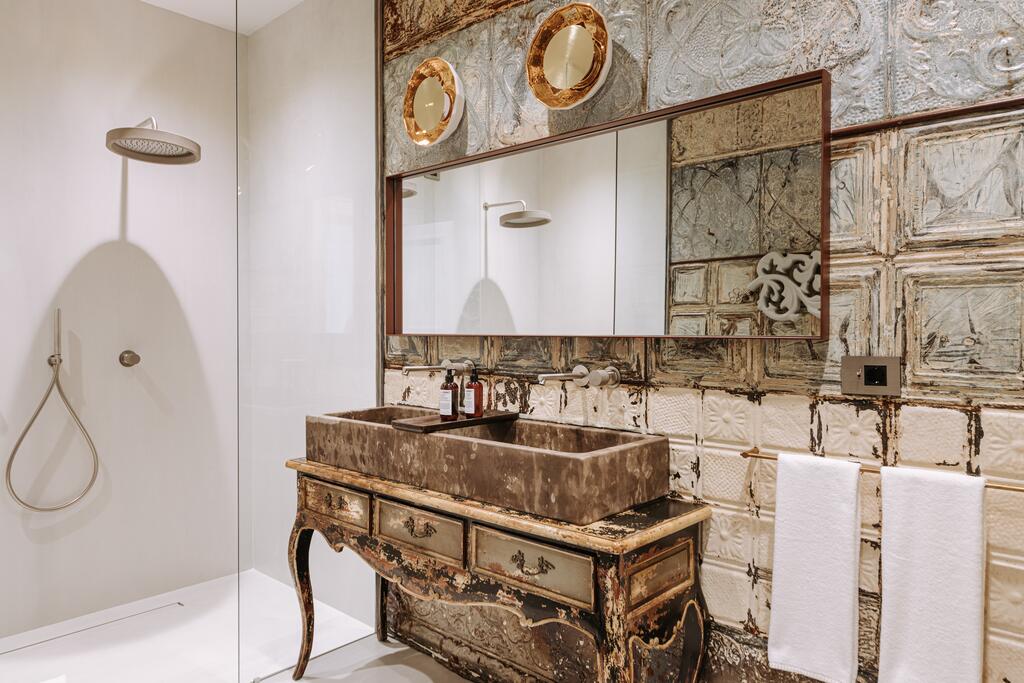
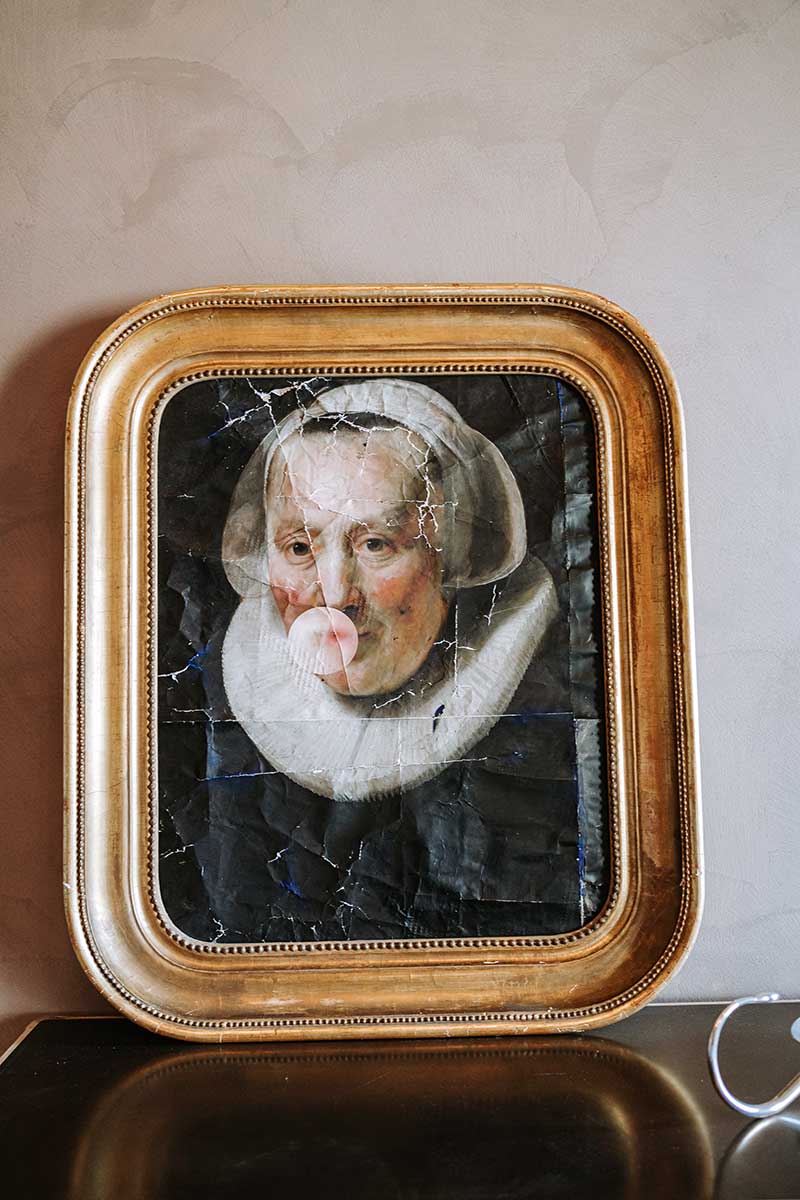
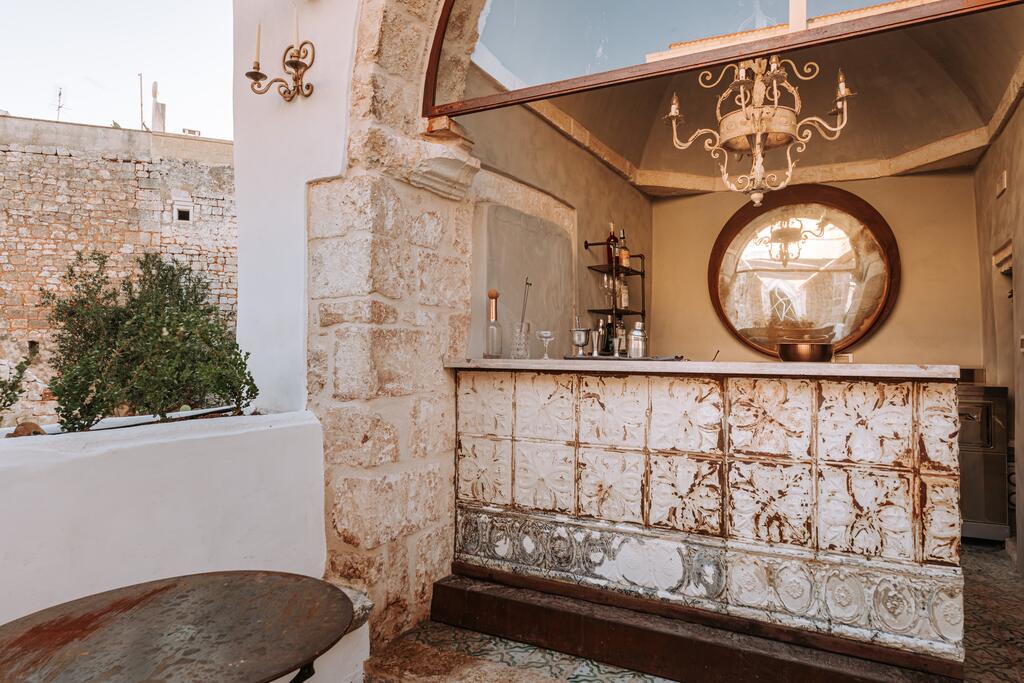
Paragon 700 feels less professionally styled than obsessively accumulated. South African sofas sit alongside antique tin panels from Argentina, Thai lighting, carved Apulian furniture and objects discovered in English flea markets. Contemporary artworks appear beside centuries-old frescoes, while rich velvets, weathered plaster and French parquet create another layer of contrast. Even the bar refuses to behave conventionally. Its extraordinary 8.5-metre counter incorporates vintage Argentinian metalwork, backed by antique majolica tiles recovered from the palazzo. A wooden monkey in a waistcoat surveys proceedings. Nothing quite matches. Somehow, everything belongs. This is maximalism without the visual noise: the connecting thread is not style but personality.
15 Rooms, No Formula
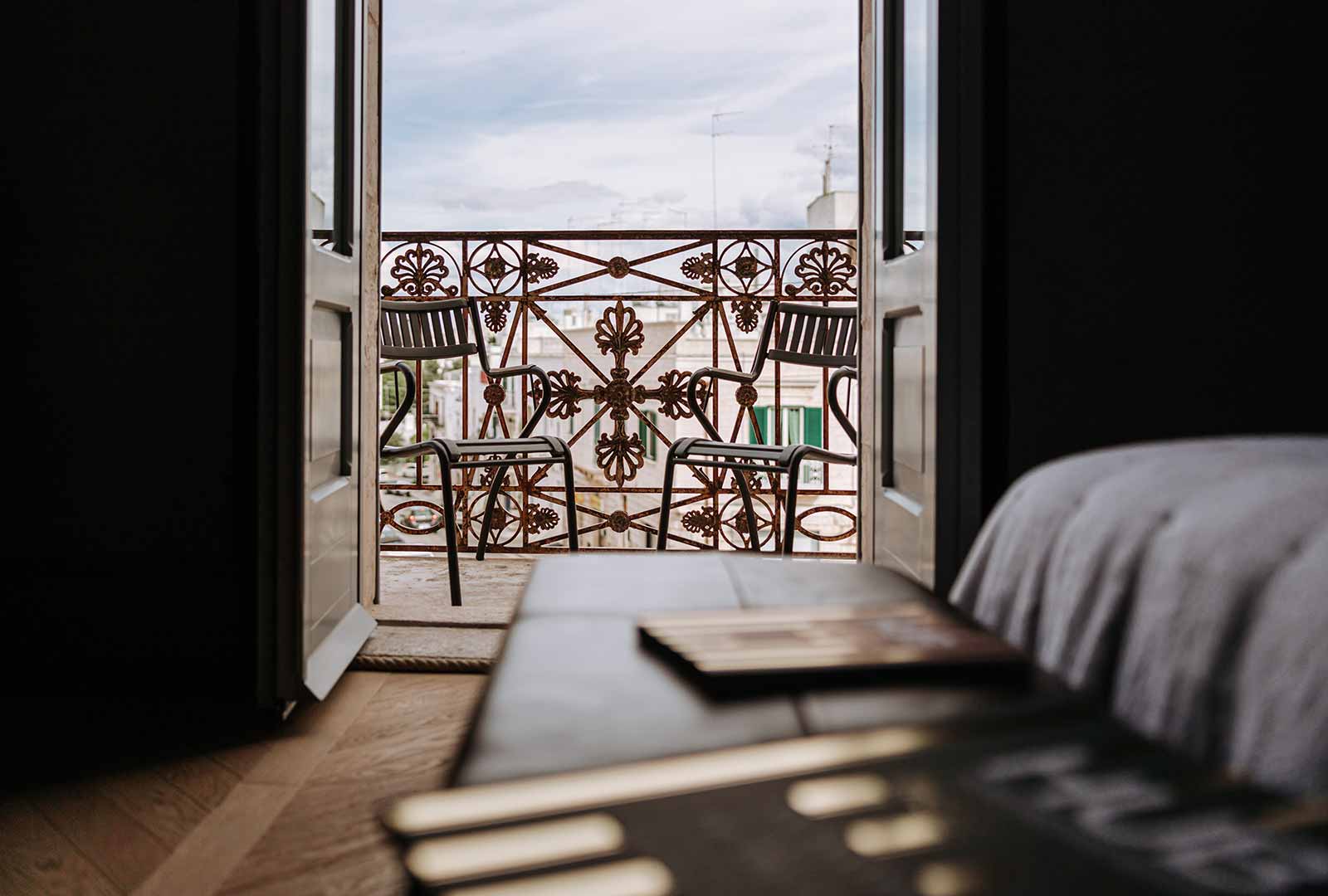
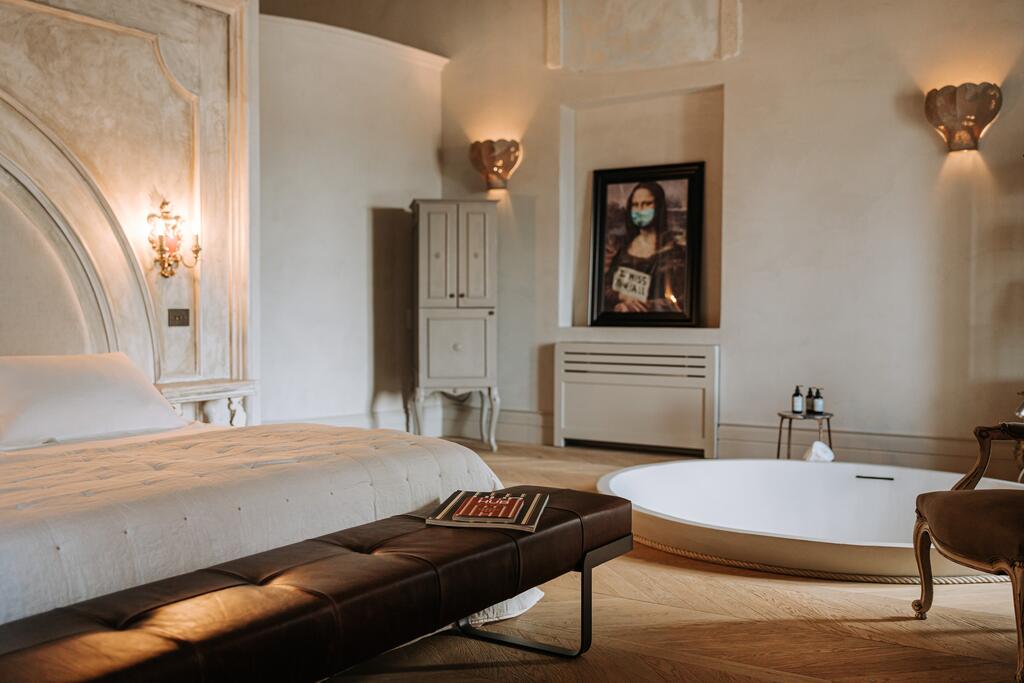
The hotel’s 15 rooms and suites are individually composed rather than repeated from a template. Some retain elaborate historic frescoes depicting landscapes and mythical scenes; others are defined by dramatic colour, stone arches, fireplaces or private terraces overlooking Ostuni. Names such as Amber, Amethyst, Opal, Lapis and Topaz hint at the jewel-box palette, but the most audacious departure is the Onyx Suite, wrapped almost entirely in black. The standout Paragon Suite goes in another direction altogether. A monumental stone arch frames the bed, while a circular bathtub for two is sunk directly into the parquet floor. Its private terrace adds another layer of indulgence. Televisions are intentionally absent unless requested. There is already enough to look at.
A Secret Garden Behind the Palazzo
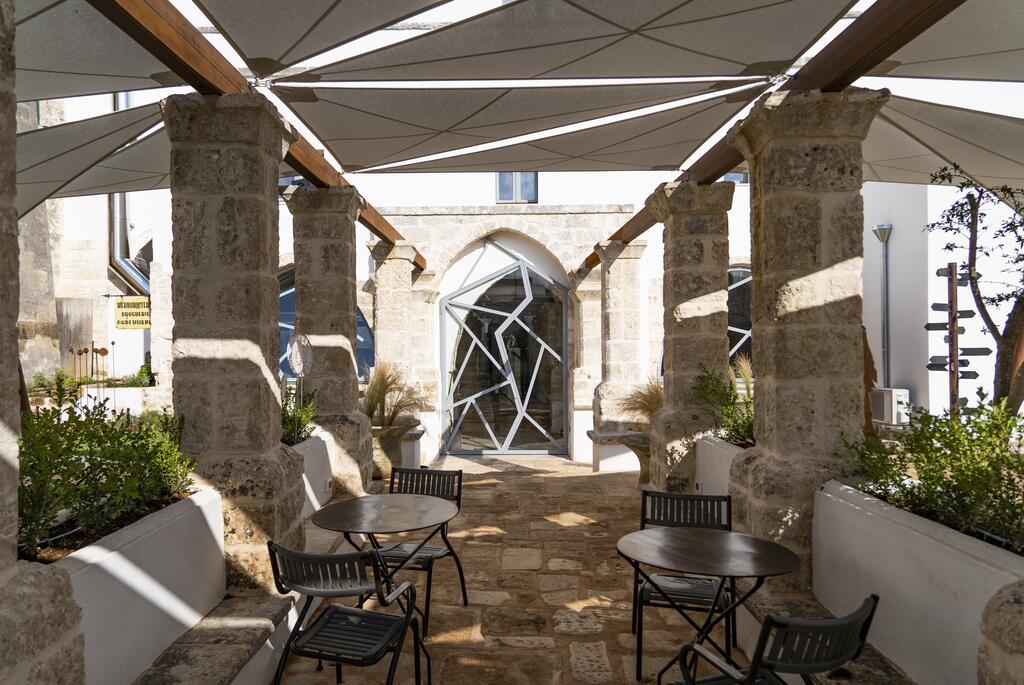
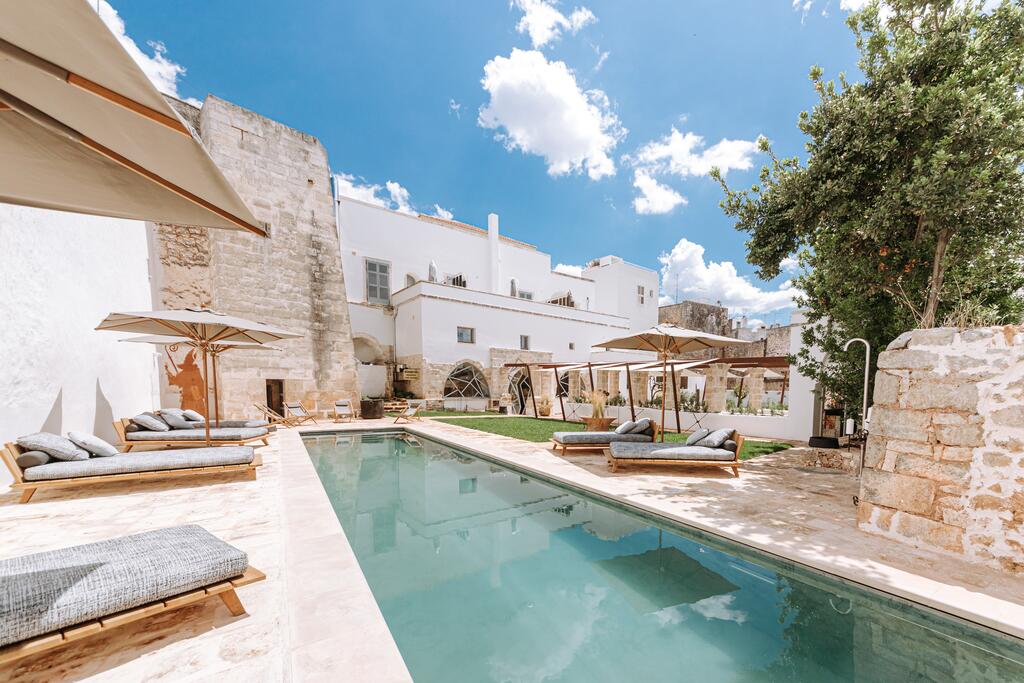
What happens behind the red façade may be even more surprising. The palazzo opens onto 1,700 square metres of enclosed gardens, with lawns, mature orange trees, vegetable and herb beds, shaded pergolas and quiet corners scattered with art and antique stone. At its centre sits a 15-metre swimming pool — an almost improbable luxury inside tightly packed historic Ostuni and the only hotel pool within the town itself. It changes the character of Paragon 700 completely. You can wander Ostuni’s labyrinth of lanes in the morning, disappear behind the hotel’s walls after lunch and spend the afternoon beneath an orange tree with little evidence that an entire city exists outside.
Seven Metres Underground
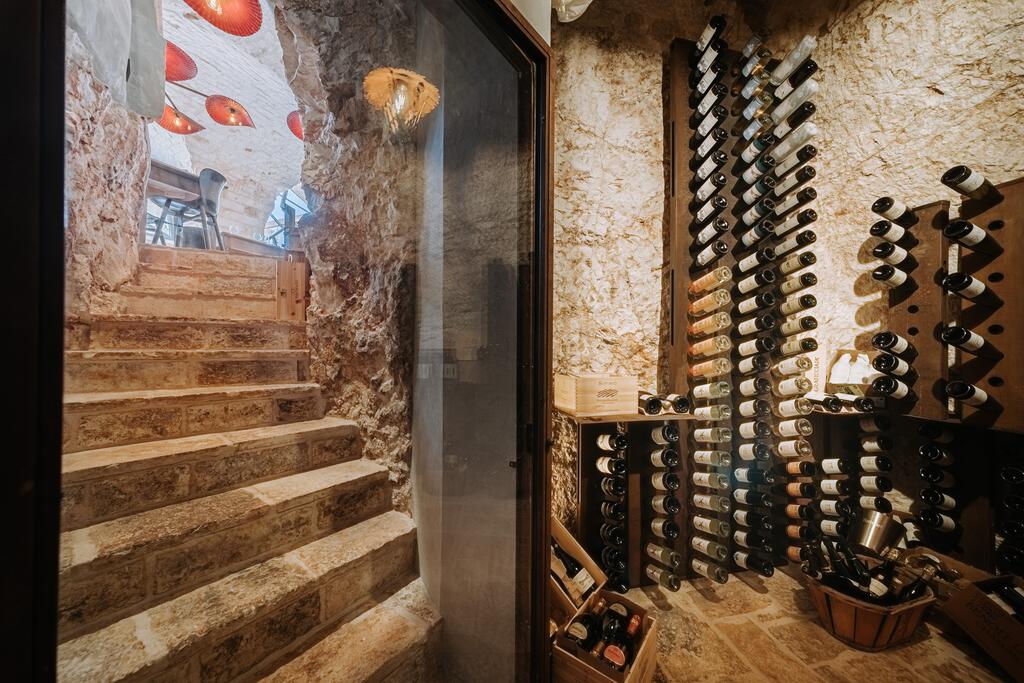
The palazzo’s former water cistern has become one of Paragon 700’s most atmospheric spaces. Seven metres below ground, the compact spa retains the cocooning quality of its original architecture while adding a hydromassage pool, Turkish bath, chromotherapy shower and a relaxation room lined with Himalayan salt. There is something wonderfully appropriate about it. A space once built to hold water now exists entirely for surrendering to it.
Puglia, Rewritten at Restaurant 700
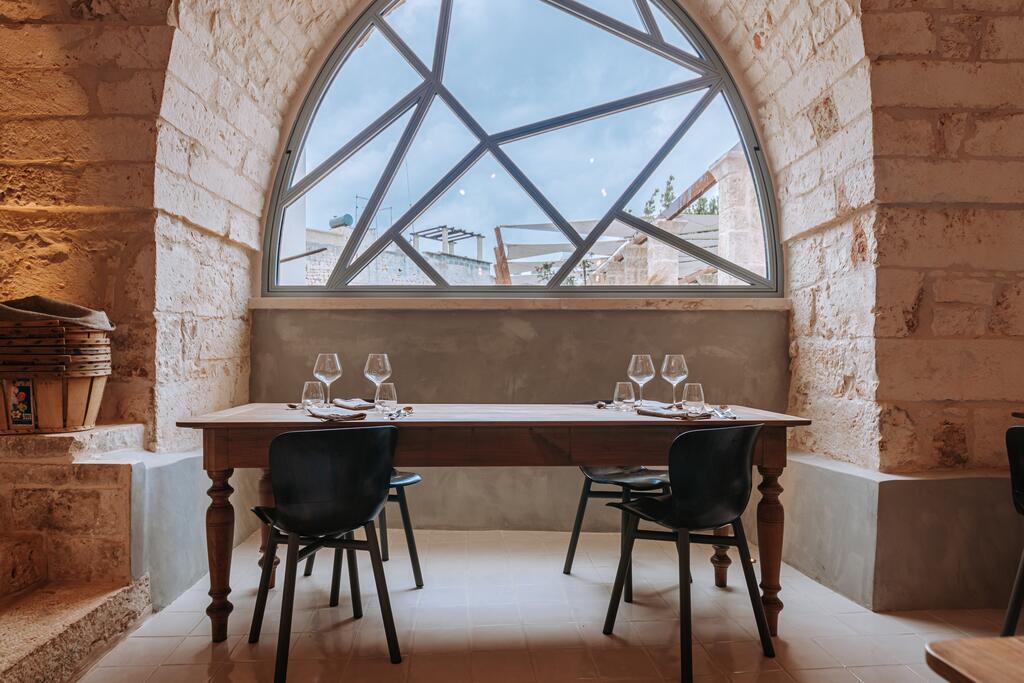
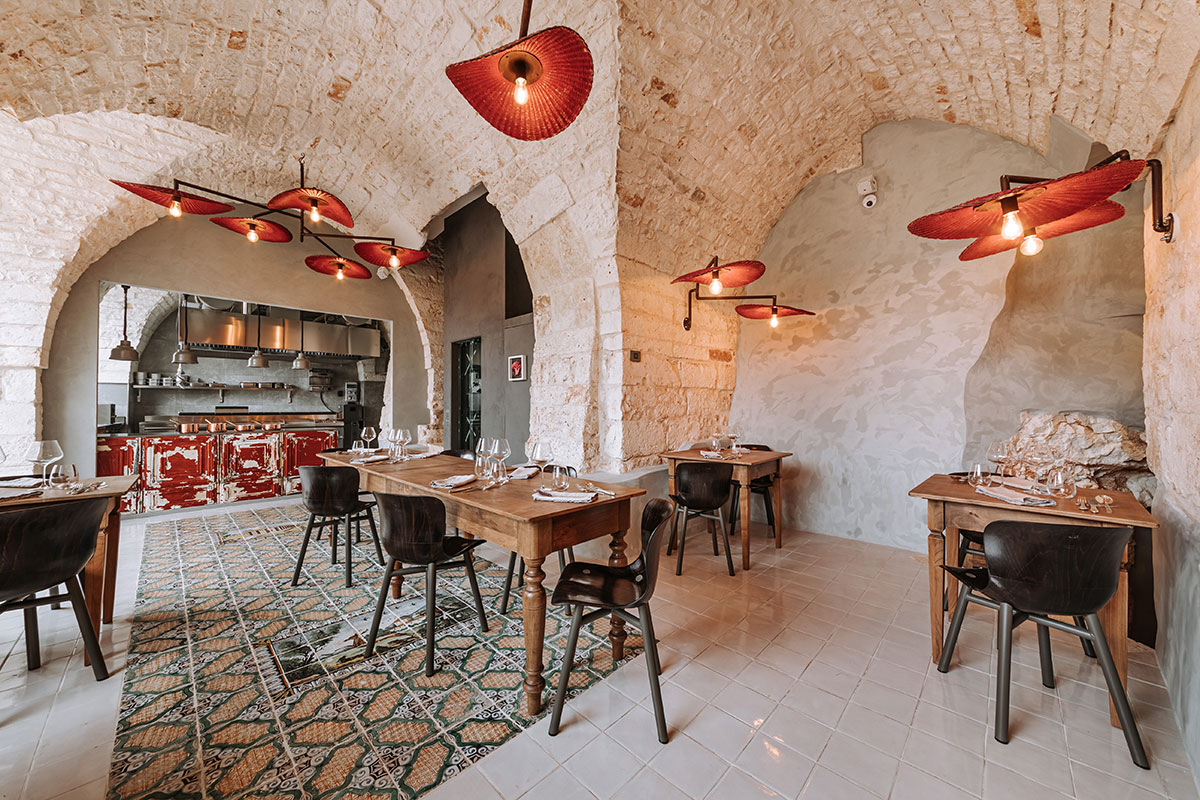
The kitchen follows much the same philosophy as the interiors: respect the region, but don’t imitate the past. Restaurant 700 takes Puglian ingredients and familiar culinary references into decidedly contemporary territory. Produce comes from the hotel’s gardens and nearby farms, while seafood arrives through local fishing communities. Dinner might move from courgette millefeuille to handmade pasta with sea urchin, or rabbit paired with artichoke, sage and black truffle. The setting is equally memorable. An enormous old olive press has been transformed into a communal table beneath the vaulted stone ceilings, while in warmer weather dinner migrates into the garden.
Bar 700 After Dark
Then there is Bar 700, which has become a destination beyond the hotel’s overnight guests. Cocktails lean into the surrounding landscape: local wine, Mediterranean herbs, olive leaves, citrus, chilli and regional spirits find their way into drinks that are often as unconventional as the interiors. The atmosphere becomes particularly good after dark, when locals mix with hotel guests around the long bar and the palazzo begins to feel less like a retreat and more like an eccentric private club. This is an important part of Paragon 700’s character. It may be exclusive, but it is never hermetically sealed from Ostuni.
Why It Works
Paragon 700 could easily have become too much. Instead, its contradictions are precisely what make it memorable. An aristocratic palazzo filled with flea-market discoveries. Ancient frescoes beside contemporary art. A glamorous hotel that doesn’t take glamour too seriously. A red building defiantly planted in Italy’s most famous white city. And beneath all the visual theatre is a genuinely seductive place to stay: 15 singular rooms, extraordinary gardens, a swimming pool hidden within historic Ostuni, serious food and a spa buried inside an ancient cistern. Paragon 700 doesn’t reinterpret the familiar Puglian masseria fantasy. It rejects it altogether — and gives Ostuni something far more surprising.