Pazo da Buzaca – Moraña, Galicia, Spain
A 16th-century Galician manor where historic architecture, contemporary restraint and four hectares of gardens create an atmospheric country escape.
Why DNA Hotels Loves It
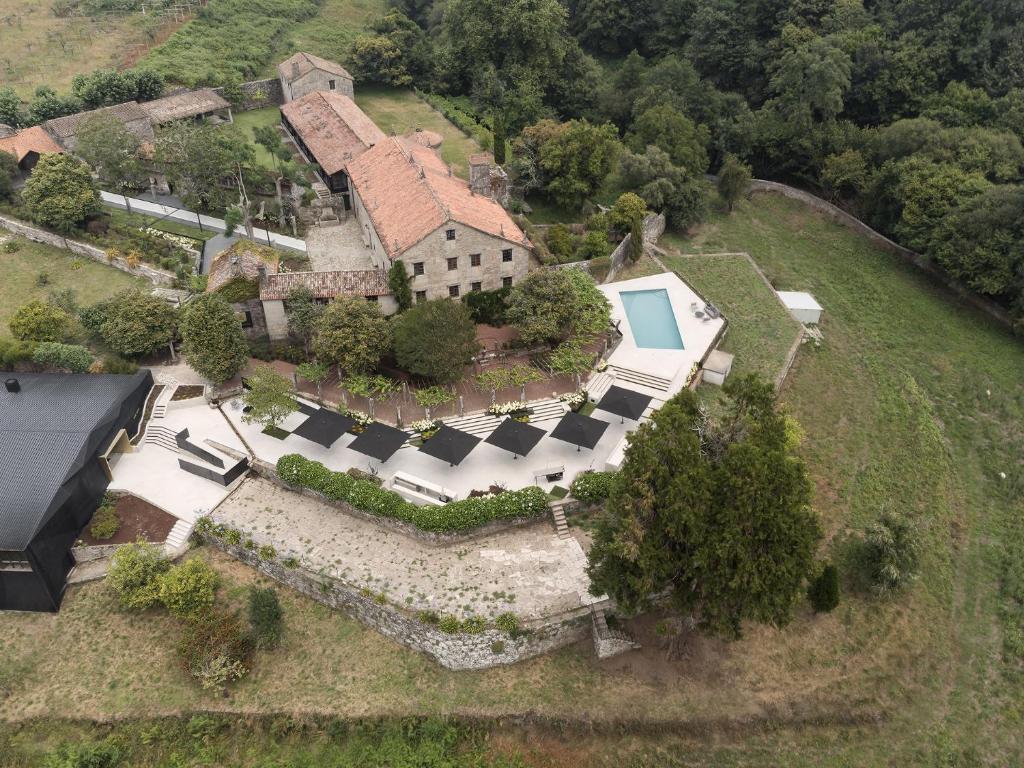
● A historic 16th-century Galician pazo surrounded by 40,000 square metres of gardens, complete with a private chapel, dovecote and traditional agricultural buildings.
● The contemporary intervention deliberately takes a supporting role, using indirect lighting, darkened spaces and clean-lined furniture to reveal rather than compete with the original architecture.
● Just 25 kilometres from Santiago de Compostela, yet immersed in the green landscapes of Galicia, it combines the romance of an ancestral estate with a distinctly modern sensibility.
A Galician Pazo Reawakened
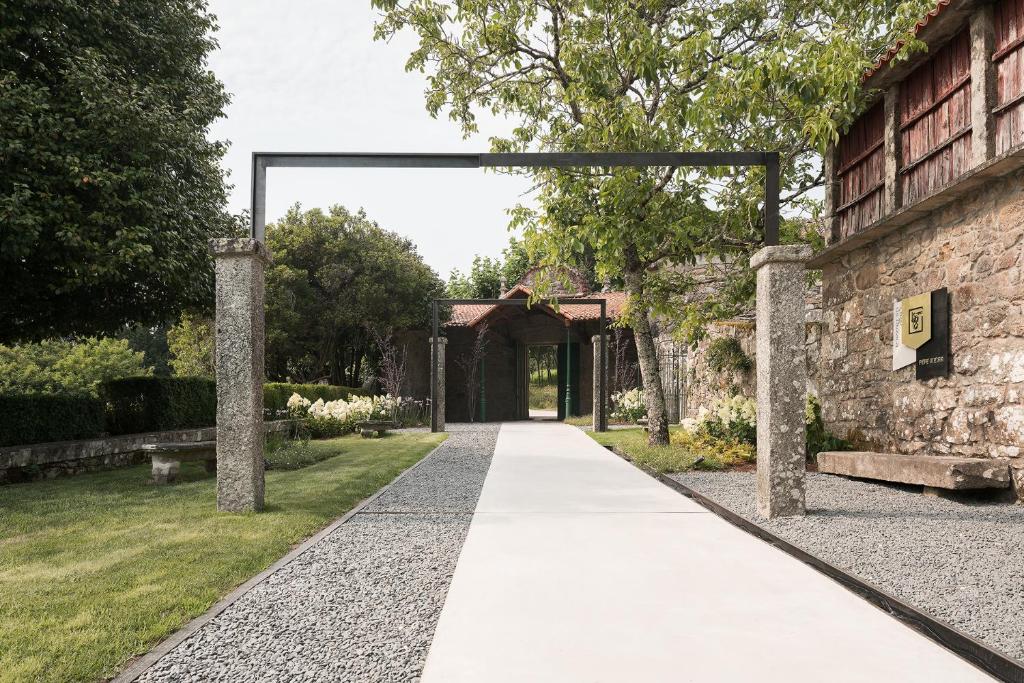
Galicia has its own answer to the château, palazzo and English country house: the pazo. These ancestral manor houses are scattered through the region’s green countryside, typically surrounded by stone walls, gardens, chapels and agricultural buildings. Pazo da Buzaca is an especially evocative example. Dating from the 16th century, the estate unfolds across some 40,000 square metres, with the main stone manor accompanied by a chapel, dovecote, traditional Galician granaries and centuries-old trees. Rather than turning all that history into a period piece, its reinvention has taken the opposite route. The old architecture has been given room to breathe.
Designing with What Was Already There
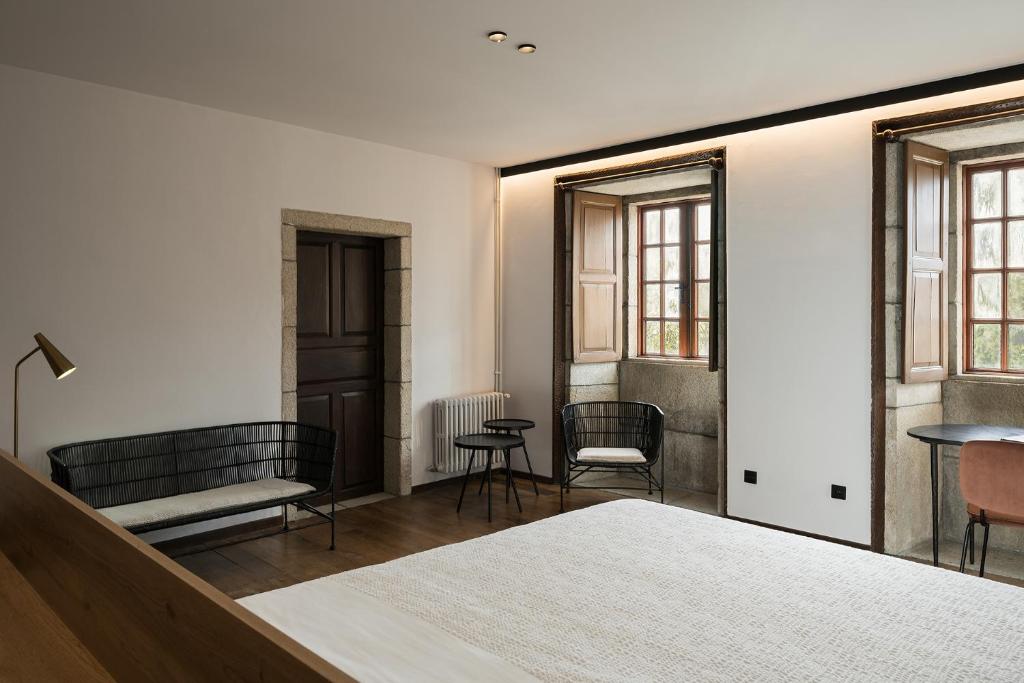
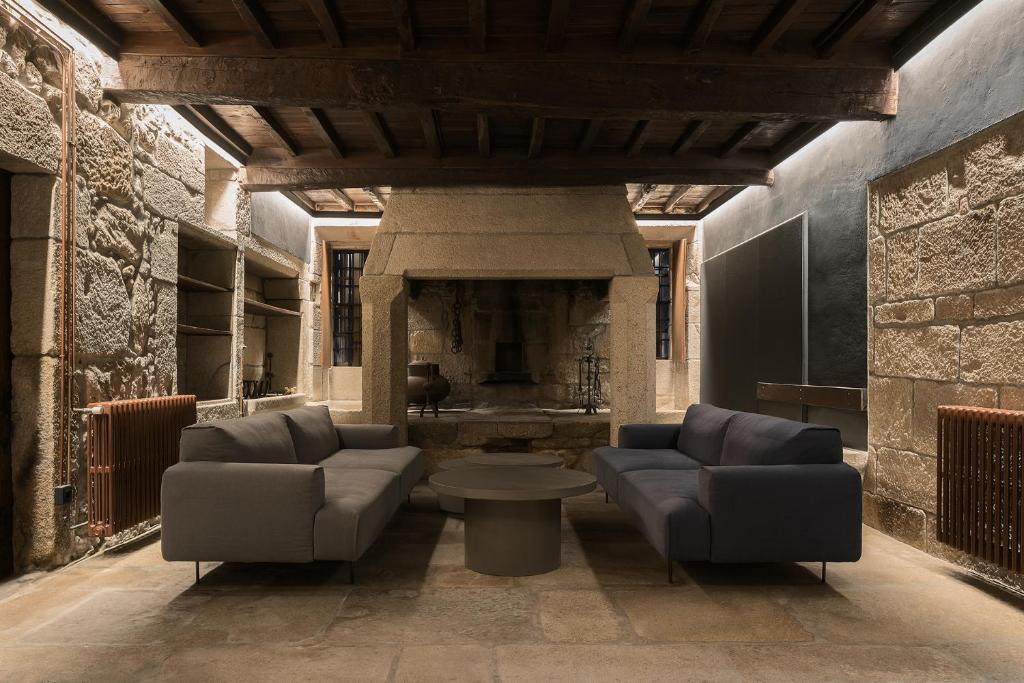
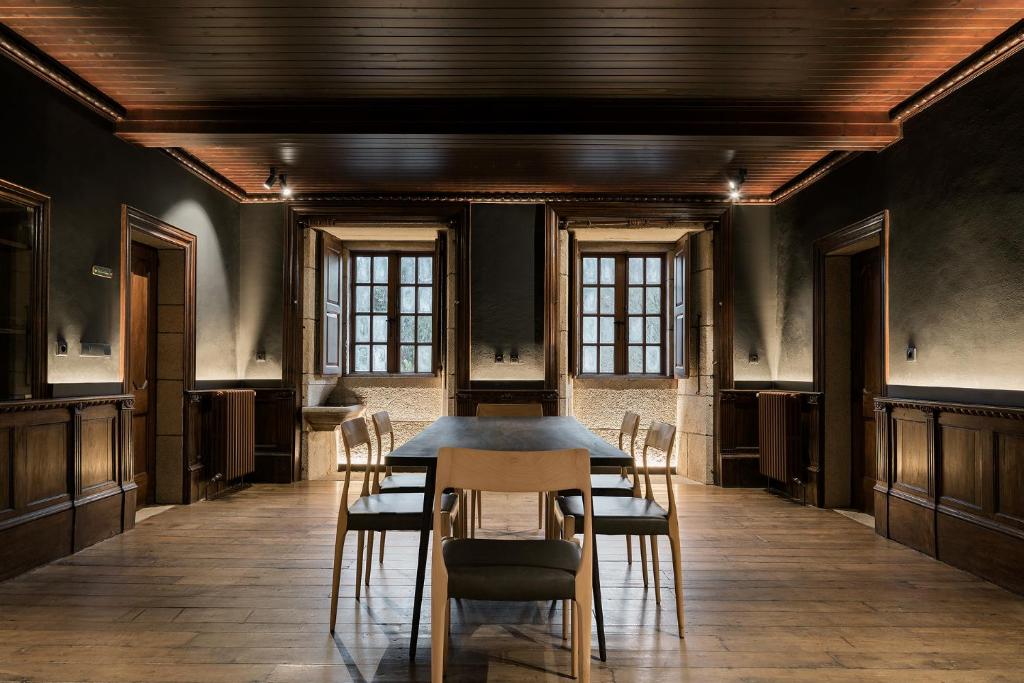
The guiding principle behind the intervention was unusually simple: maximum dialogue with the existing building. Instead of filling historic rooms with decorative references to the past, spaces were emptied and carefully edited. Contemporary furniture with simple lines sits against rough stone, aged timber and the architectural fabric of the pazo. Lighting became one of the project’s most important design tools. Sources are deliberately concealed wherever possible, with indirect illumination washing across original walls and structural details. In some communal spaces, surfaces were painted black to heighten the contrast between darkness and concentrated shafts of light. The result can be surprisingly dramatic. Rather than illuminating everything equally, the design decides what deserves to be seen.
Old Stone, New Rooms
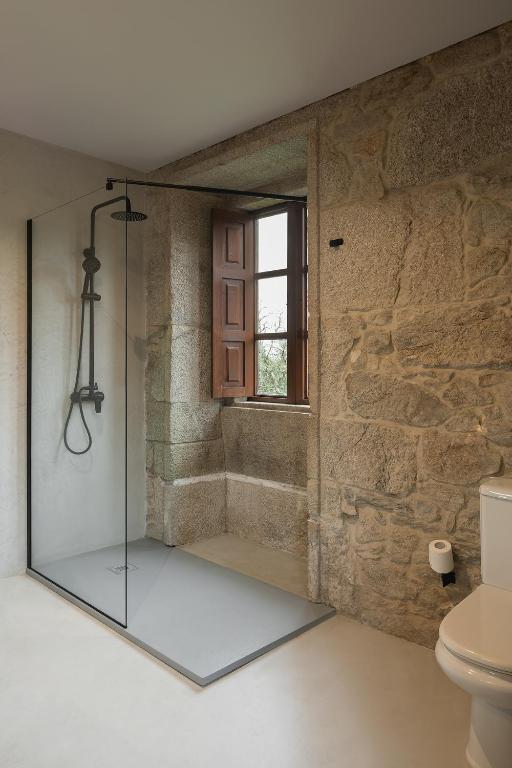
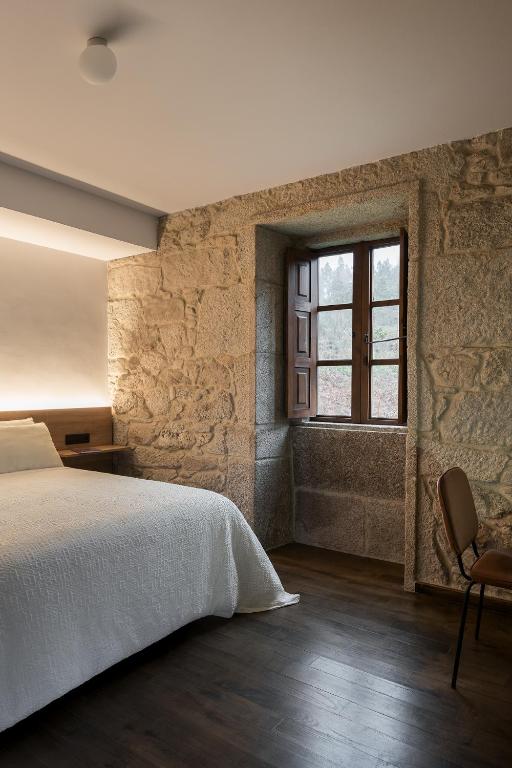
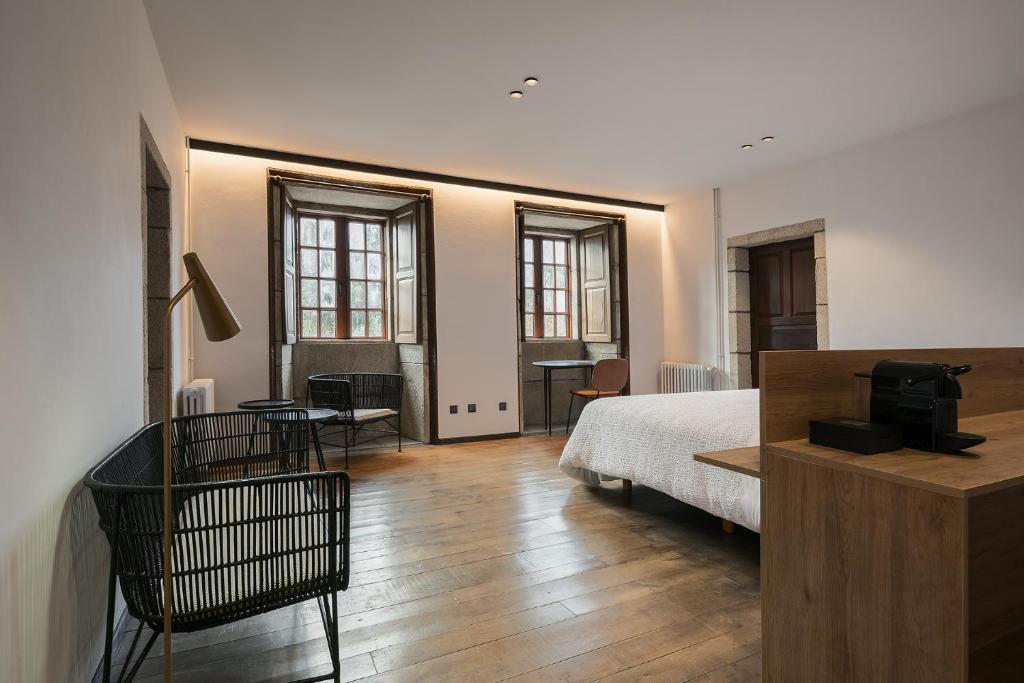
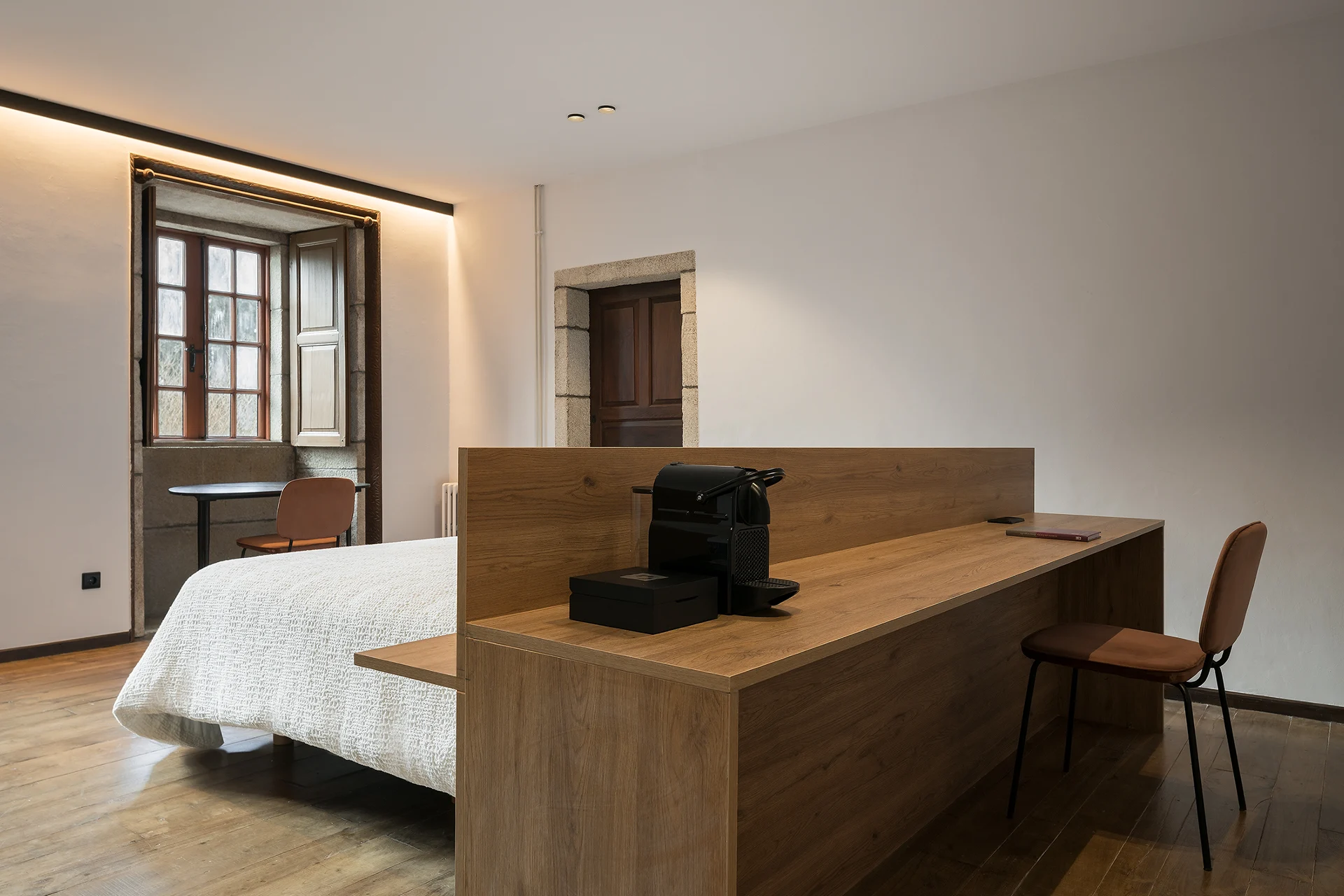
That same philosophy continues in the guestrooms, although here the contemporary intervention becomes more pronounced. Bespoke furniture and newer materials sit alongside the existing architecture, creating rooms that feel unmistakably current without disconnecting them from the centuries-old house around them. There is no attempt to recreate aristocratic Galicia through heavy antiques or historical pastiche. Instead, old stone, timber and architectural irregularities provide the character, while contemporary additions bring comfort and clarity. It is precisely the tension between the two that makes the interiors interesting.
Four Hectares of Galicia
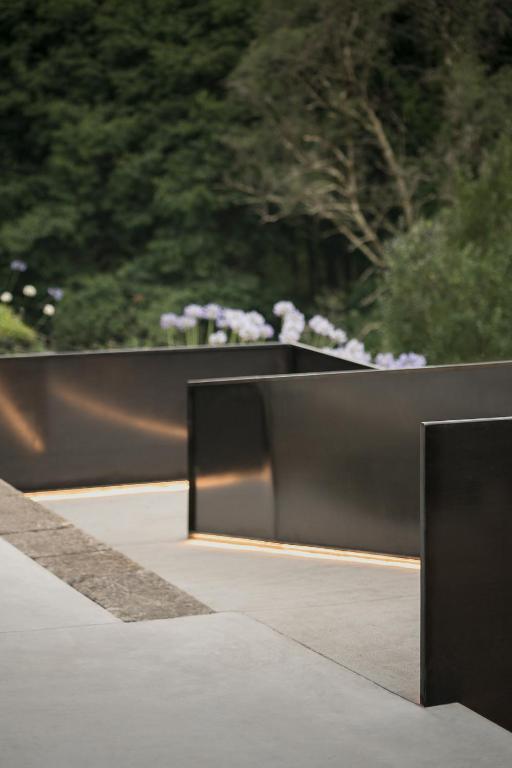
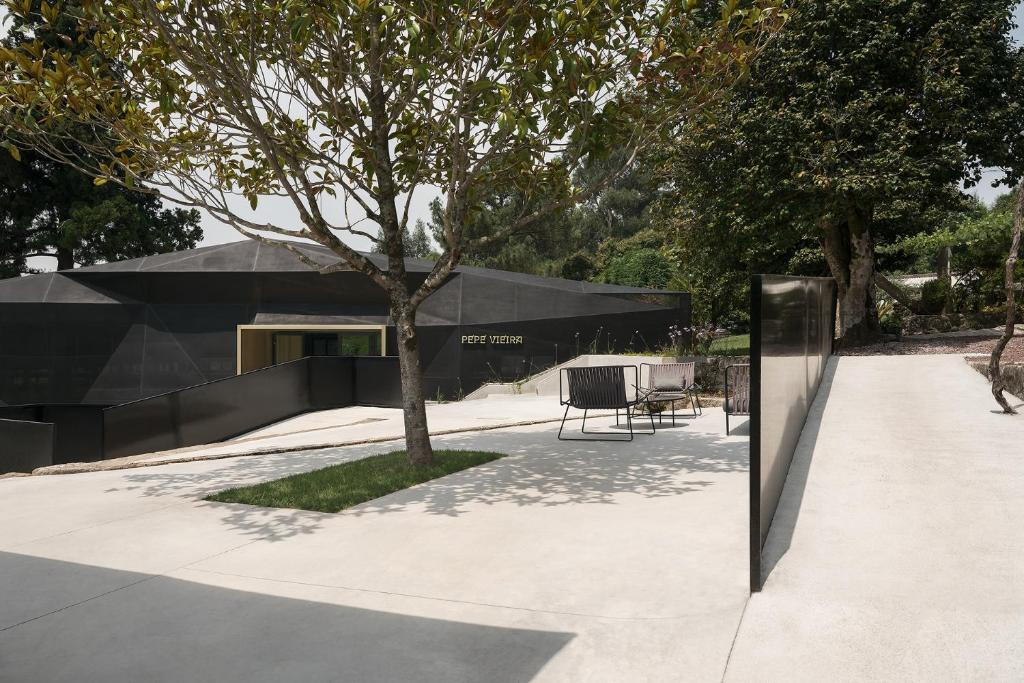
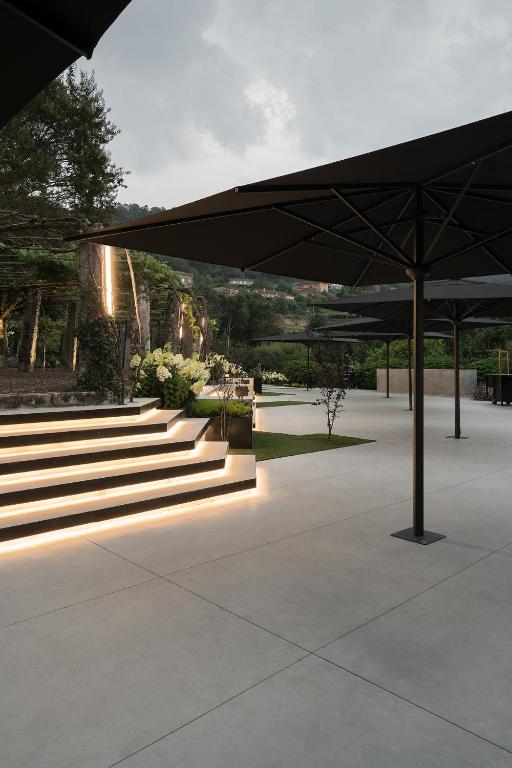
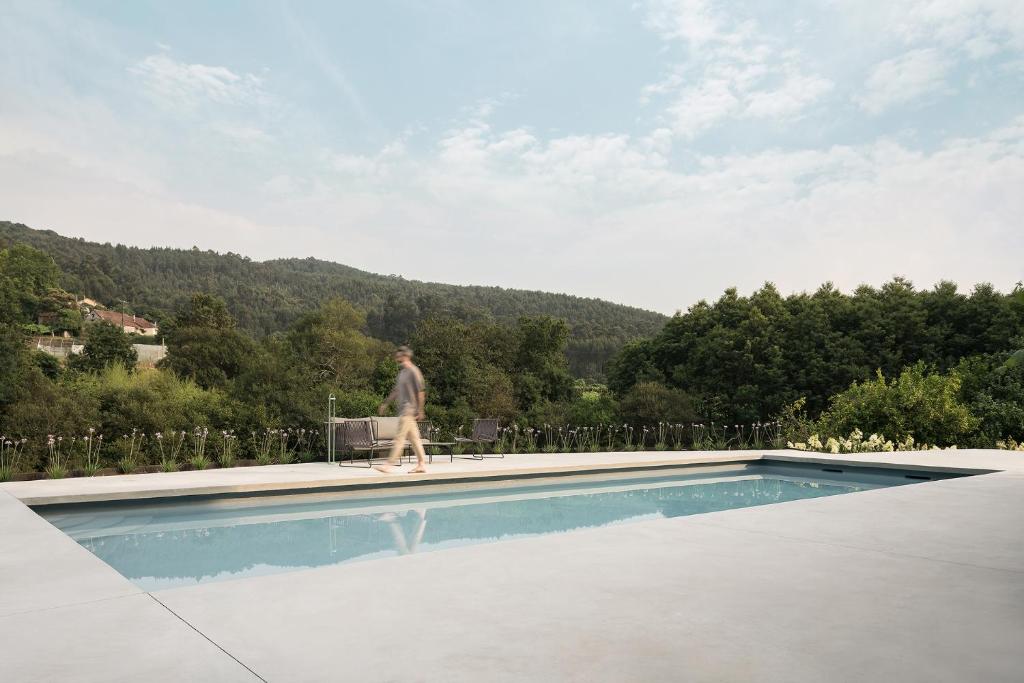
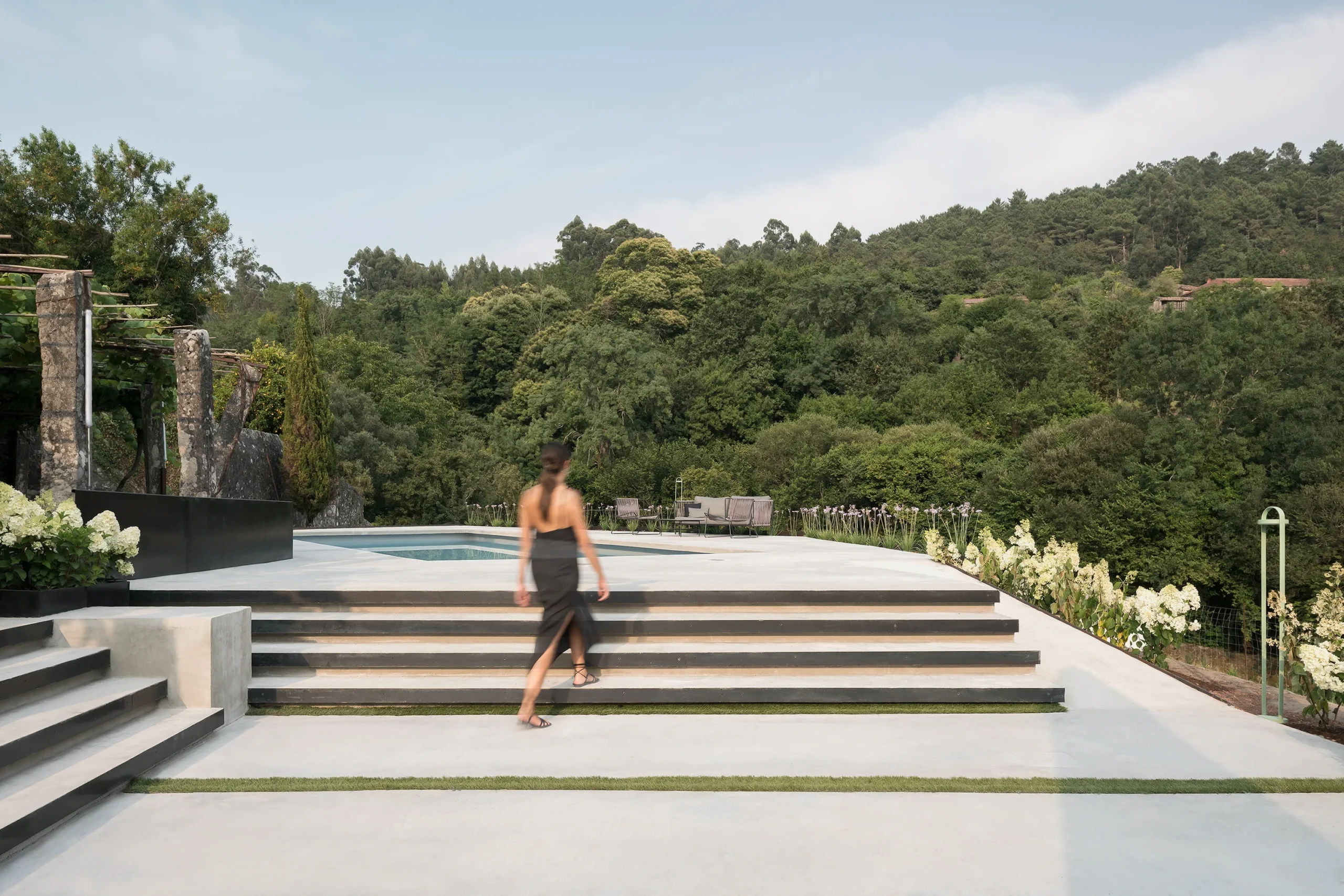
Outside, Pazo da Buzaca becomes another place entirely. The estate’s extensive gardens surround the manor with lawns, mature trees and formal landscaping, while the swimming pool introduces a more leisurely dimension to what was once an aristocratic rural estate. Historic structures remain scattered throughout the grounds, turning a walk into a gradual discovery of the property’s past. The landscape intervention extends the contemporary architectural language beyond the house. Changes in topography are translated into inclined planes, steps and ramps, creating connections between the manor, gardens, pool, access areas and events pavilion. The grounds are also central to Pazo da Buzaca’s role as a setting for celebrations, particularly weddings. Yet outside an event, their scale provides something altogether different: space and quiet.
Galicia Beyond the Gates
The setting makes Pazo da Buzaca particularly appealing as a base for discovering this less predictable side of Spain. It lies in Moraña, in the province of Pontevedra, with Santiago de Compostela around 25 kilometres away and the landscapes and coastal culture of the Rías Baixas within reach. This is Galicia of granite villages, vineyards, forests and long lunches rather than conventional resort Spain. And returning afterwards to a centuries-old manor hidden among four hectares of greenery feels entirely appropriate.
Why It Works
The temptation with a building this old is to make history the theme. Pazo da Buzaca does something more sophisticated. Its contemporary additions are deliberately restrained, allowing light to reveal stone, new furniture to sharpen the character of old rooms and empty space to become part of the design. The result is neither museum nor modern makeover, but a quietly theatrical conversation between 16th-century Galicia and contemporary design — proof that sometimes the most respectful renovation is the one that knows when to disappear.