PURO Warsaw Centrum | Poland
A sophisticated collision of Polish urban energy, mid-century references, contemporary art, and some seriously covetable European furniture
Why DNA Hotels Loves It
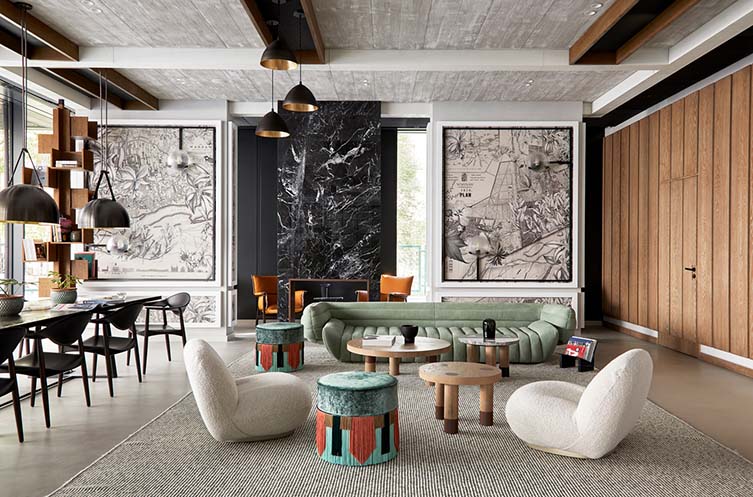
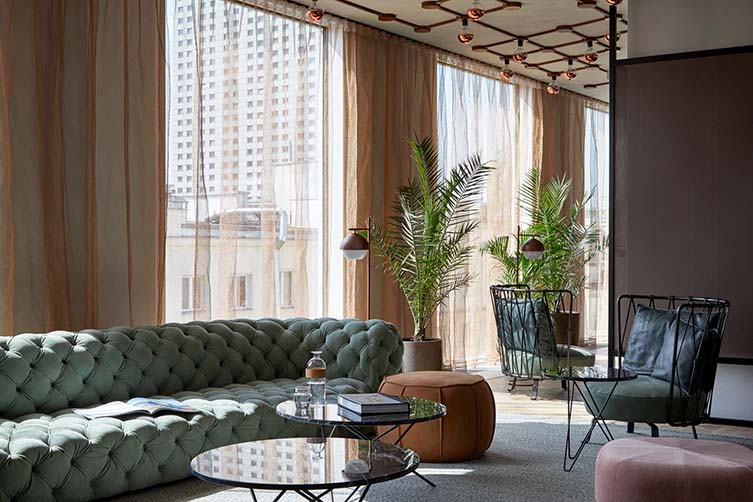
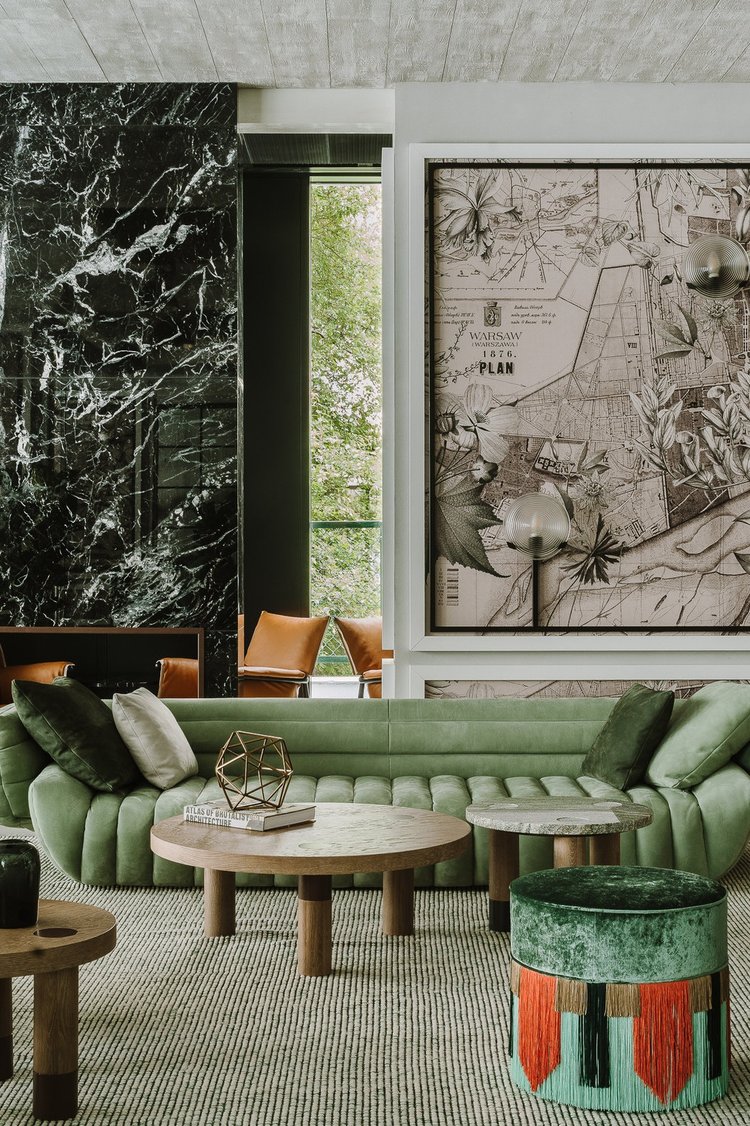
● London studio DeSallesFlint created interiors that feel more like a collection of sophisticated apartments than a conventional 148-room city hotel.
● The furniture list is exceptional: Moroso, GUBI, Carl Hansen & Søn, Fredericia, Fogia, Kettal, &Tradition, and others sit alongside hand-tufted Golran rugs and carefully commissioned art.
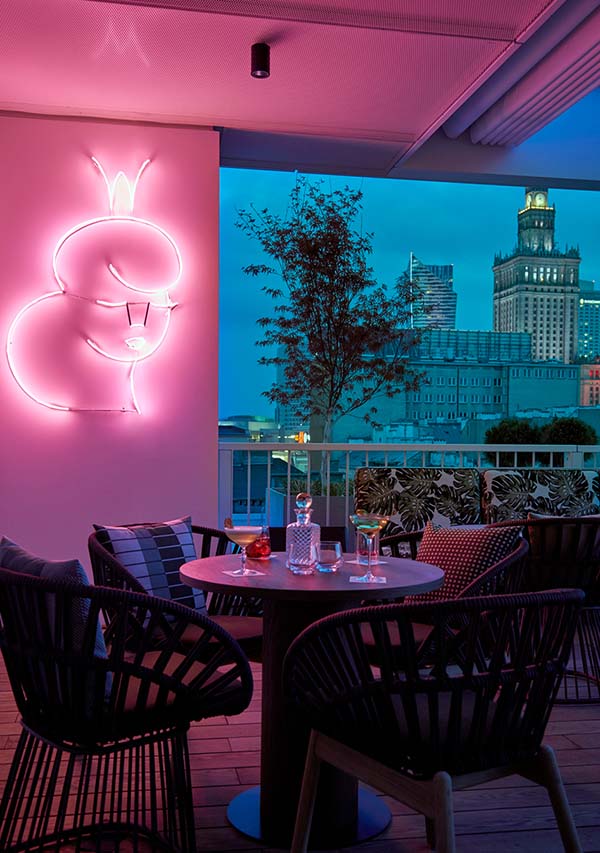
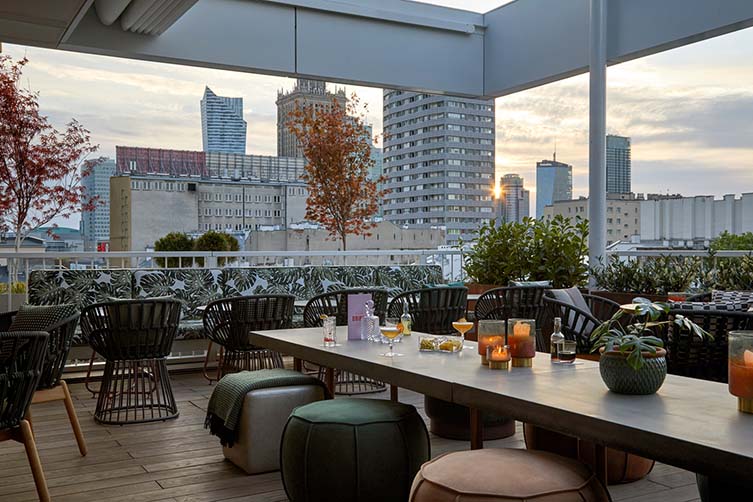
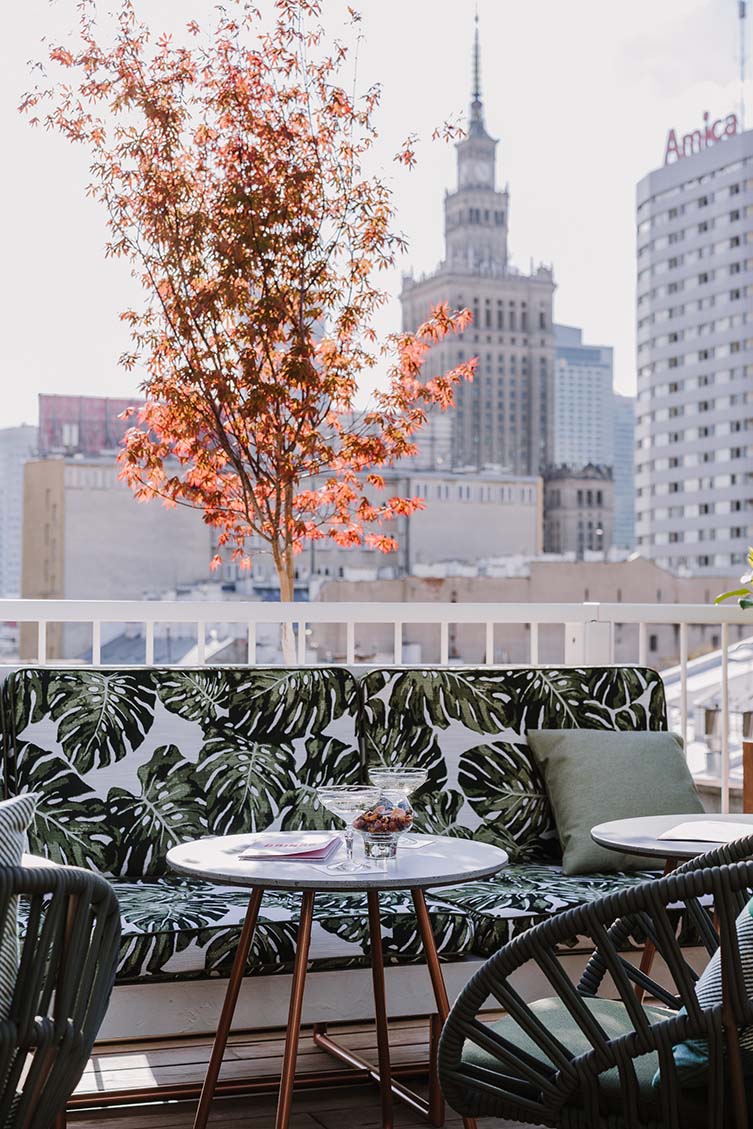
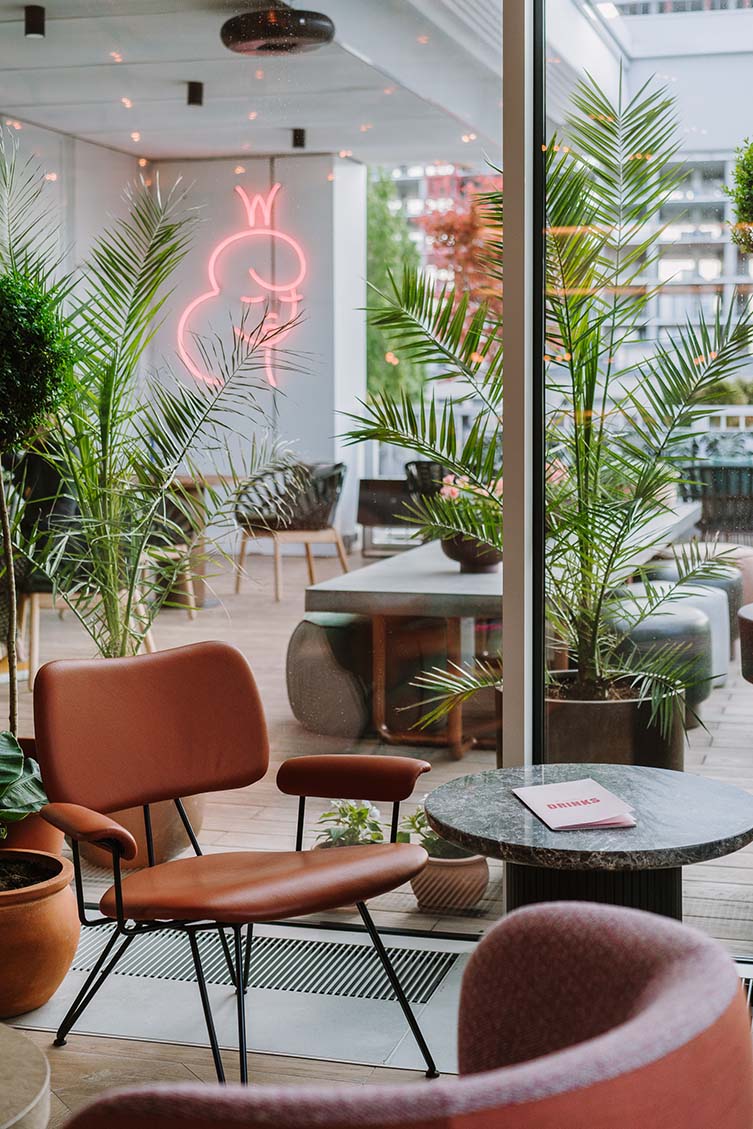
● Loreta rooftop bar captures Warsaw particularly well — a stylish local hangout overlooking a city where historic tenements and contemporary towers continue to collide.
Warsaw, Old and New
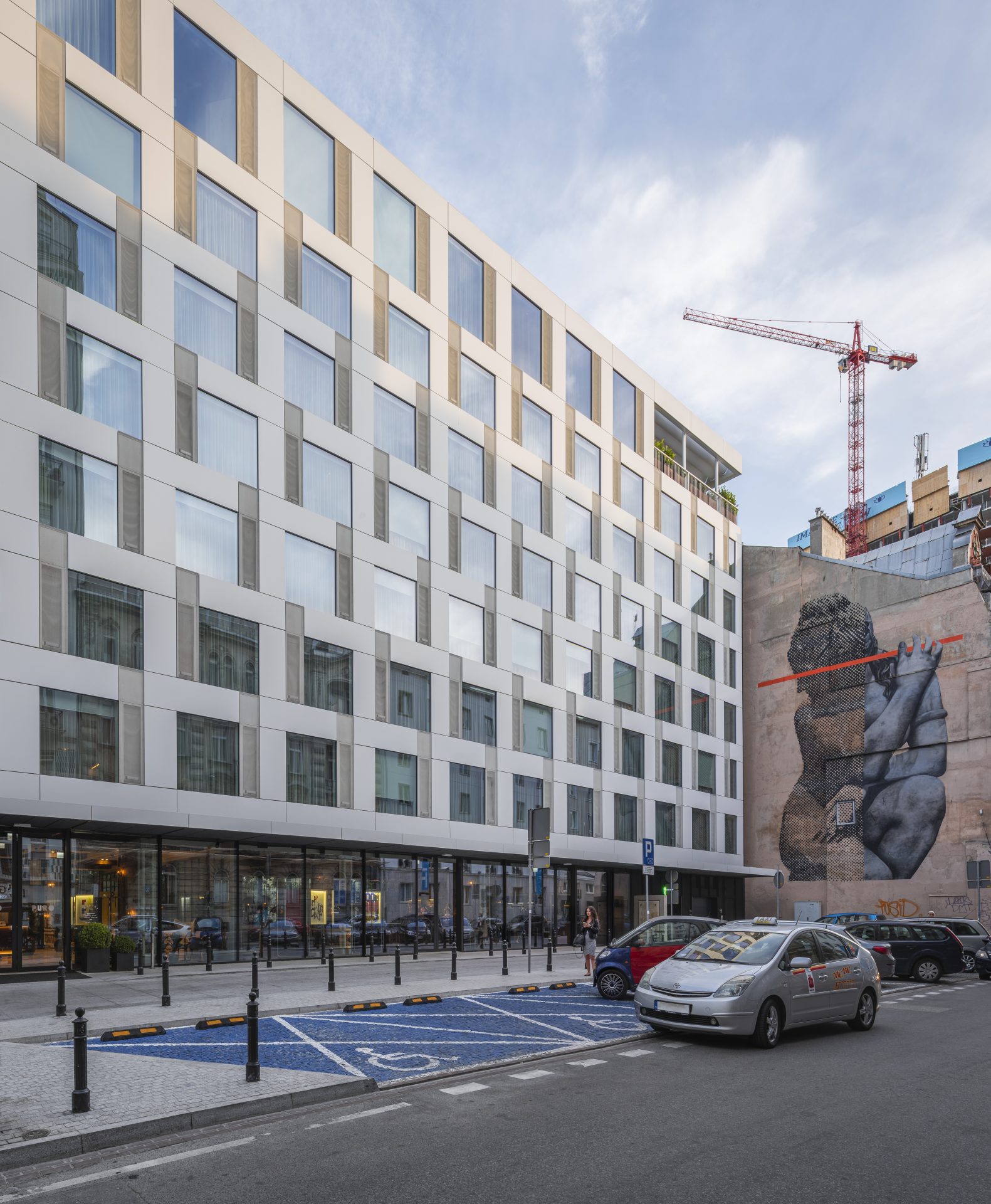
Warsaw has never been an architecturally straightforward city. Historic fragments sit beside socialist monuments. Post-war reconstruction meets glass towers. New architecture fills gaps left by a complicated past. PURO Warsaw Centrum embraces that collision. The building itself, designed by Warsaw practice JEMS Architekci, acts as a transition between the traditional tenement buildings around it and the increasingly vertical architecture of central Warsaw. Inside, DeSallesFlint takes the same idea and runs with it.
A Very Well-Furnished Hotel
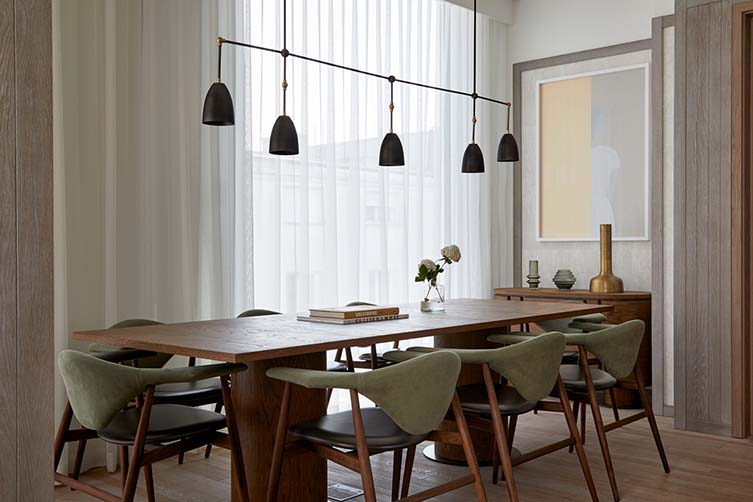
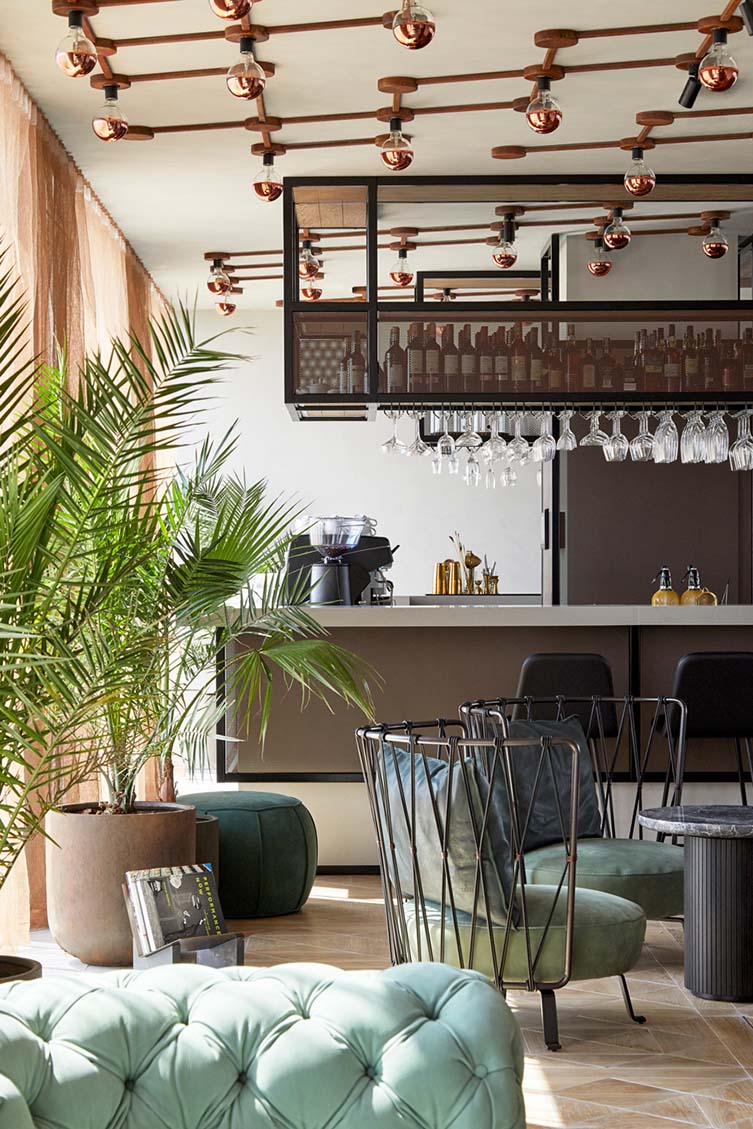
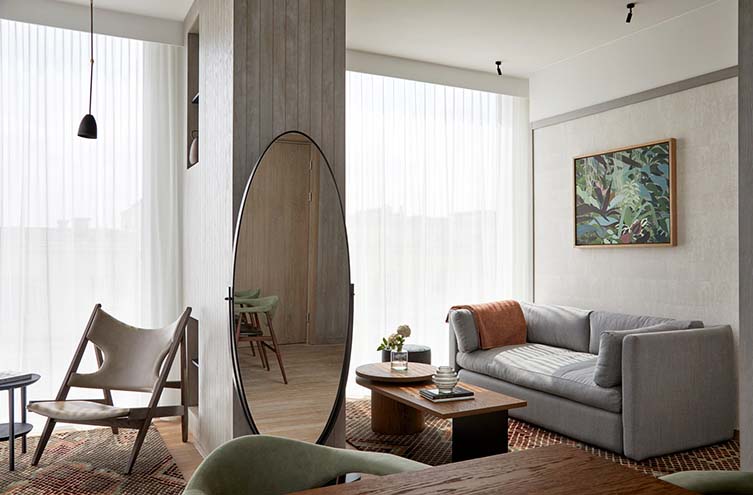
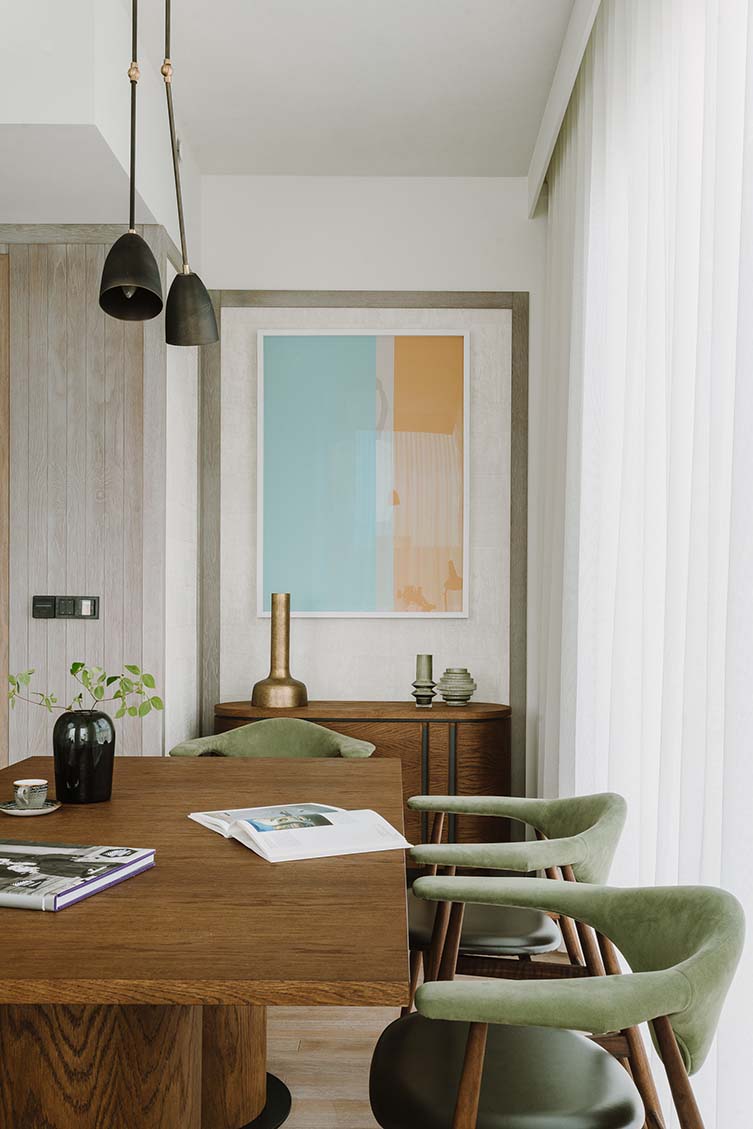
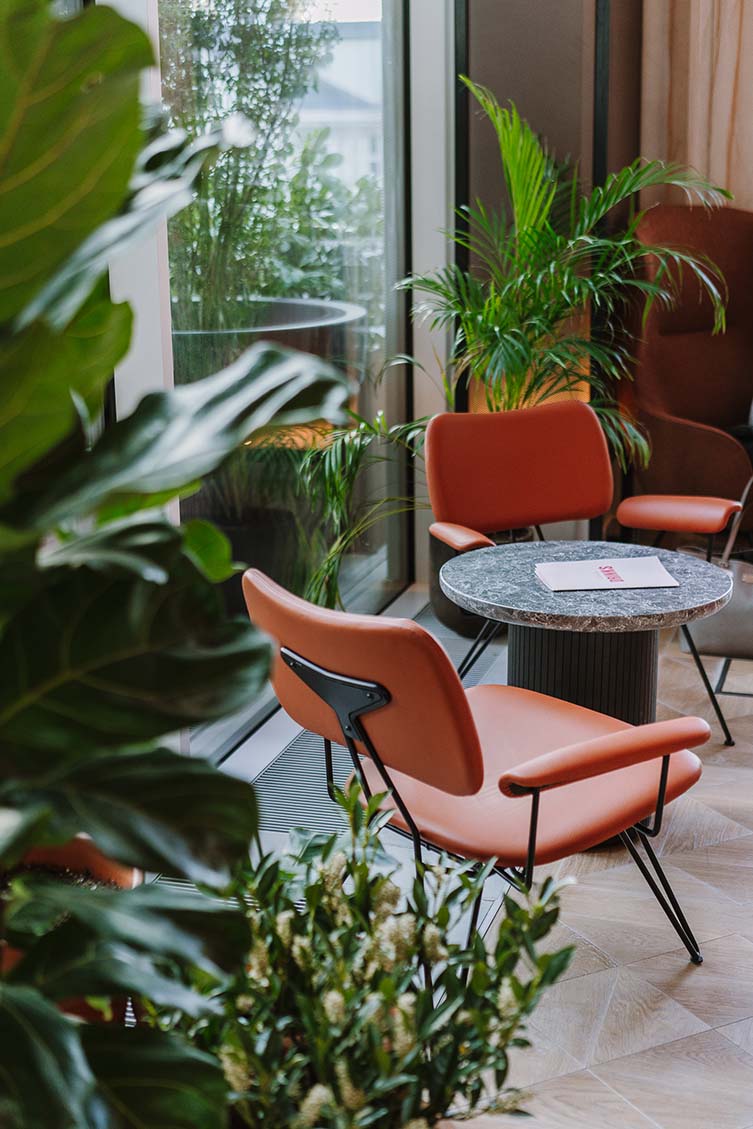
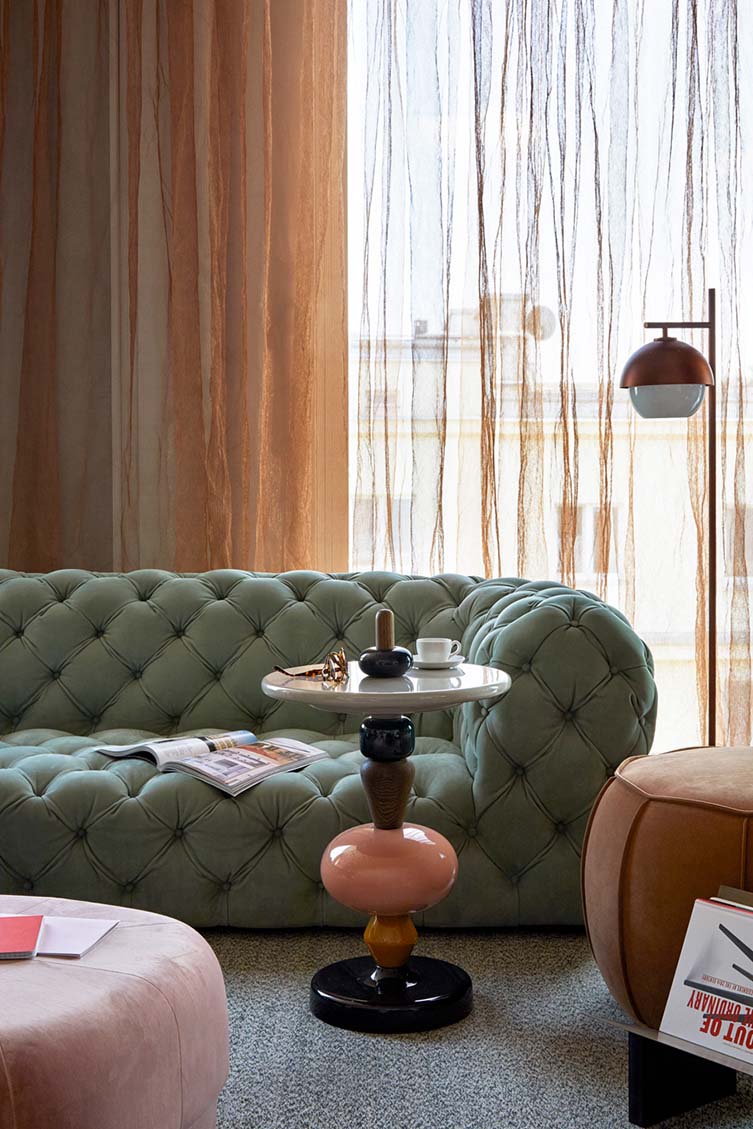
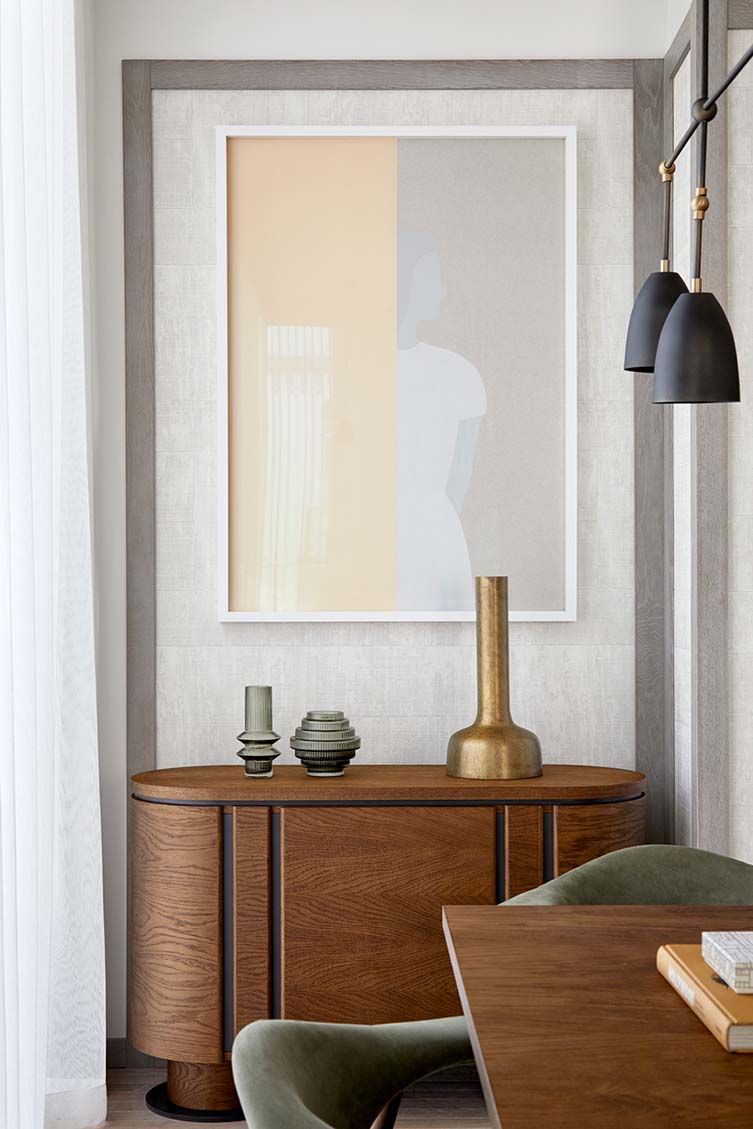
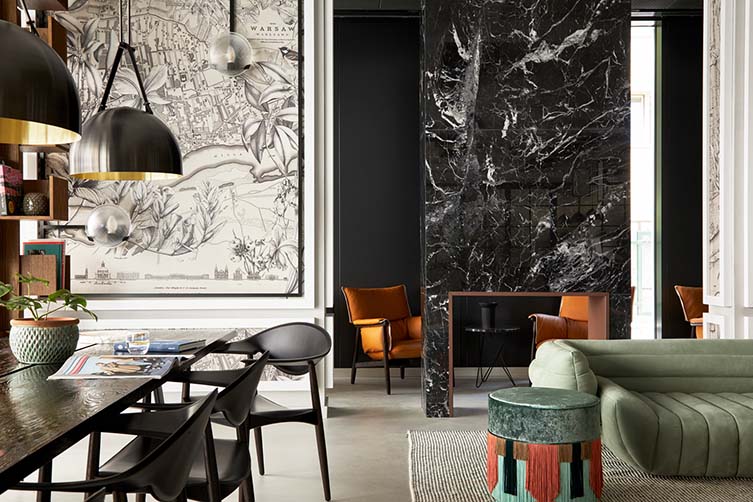
There is plenty to look at. DeSallesFlint mixes mid-century influences with richer, more decorative elements: brushed oak, dark greens, velvet, nubuck suede, bouclé wool, patterned rugs, vintage references, contemporary art, and flashes of stronger colour. Then comes the furniture. Pieces from Moroso, Kettal, Baxter, GUBI, Carl Hansen & Søn, &Tradition, Fredericia, and Fogia appear throughout the public spaces. Mia Hamborg’s colourful Shuffle tables sit comfortably alongside Lorenza Bozzoli’s voluptuous poufs and the sharper geometry of Sovet’s Totem tables. It could have become a furniture showroom. It doesn’t. The layering makes the spaces feel residential, tactile, and remarkably easy to inhabit.
Rooms That Turn Down the Volume
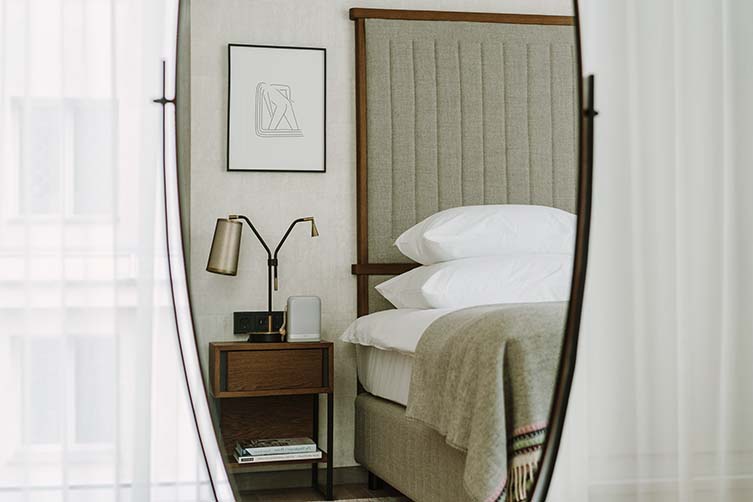
The 148 guestrooms are more restrained. And wisely so. Hand-tufted rugs by historic Milanese rug company Golran add pattern and craft, while timber, subdued colours, clean-lined furniture, and carefully chosen textiles create a softer modernist atmosphere. Hilding beds and Bang & Olufsen speakers bring comfort and technology without disturbing the visual calm. Old maps and references to Warsaw add another local layer. The rooms are not trying to compete with the public spaces downstairs. They are where the design takes a quieter breath.
Art Belongs Here
PURO has always understood that contemporary art can give a hotel identity without turning it into a gallery. Warsaw continues that approach. Local creative culture appears throughout the building, culminating upstairs at Loreta, where Polish artist Maurycy Gomulicki created the striking neon artwork. It reinforces something important about the hotel. This may be an impeccably designed international-looking property, but Warsaw is never far away.
Italian Food, Warsaw Energy
At Magari, the direction heads south. The restaurant brings Italian cooking into a warm, richly textured interior designed for long lunches as easily as evening dinners. It is deliberately approachable rather than ceremonious — the kind of restaurant that needs locals at its tables to feel complete. That philosophy extends throughout PURO. Walking tours, bicycle rides, workshops, masterclasses, and DJ sessions encourage guests to interact with Warsaw rather than simply observe it from their hotel room. For downtime, PRISMA spa adds treatments, a sauna, and space to reset before heading back out.
Loreta Above the City
Then take the lift upstairs. Loreta is where the hotel and Warsaw finally meet in full view. The rooftop terrace looks across a cityscape that explains the architectural concept downstairs better than any design statement could: old roofs, reconstructed streets, the Palace of Culture and Science, and the increasingly confident skyline of contemporary Warsaw. Cocktails, music, Gomulicki’s neon work, and that panorama make Loreta more than the obligatory rooftop bar. It feels like the natural conclusion to the hotel.
Why It Works
PURO Warsaw Centrum understands that good contemporary design does not require a single aesthetic idea repeated everywhere. JEMS Architekci responds to Warsaw through architecture; DeSallesFlint layers mid-century references, tactile materials, serious furniture, and contemporary art inside; quieter guestrooms balance the exuberance of the public spaces; and Loreta reconnects everything to the city outside. It is polished without becoming corporate and fashionable without trying too hard — a homegrown Polish hotel brand confidently showing the international chains how a modern Warsaw hotel should feel.