PURO Warsaw Stare Miasto, Poland
A Scandinavian-modern retreat where GamFratesi brings calm, craft, and contemporary Polish culture to the edge of Warsaw’s Old Town
Why DNA Hotels Loves It
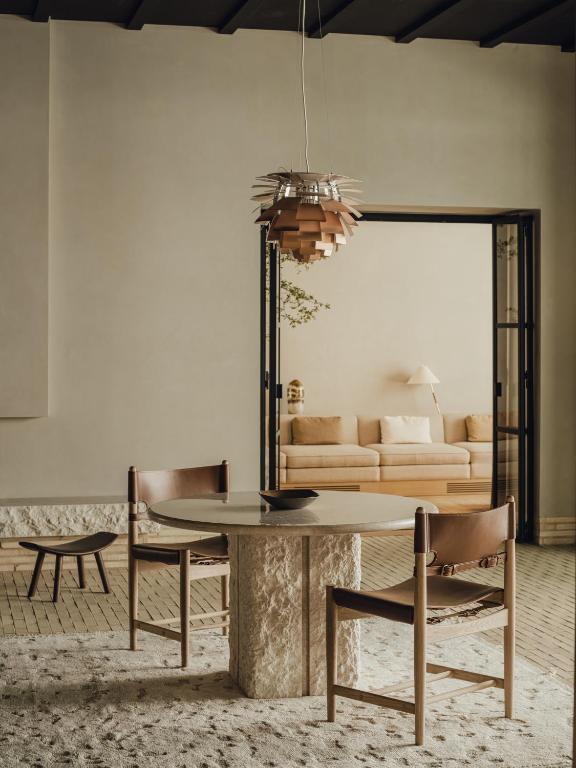
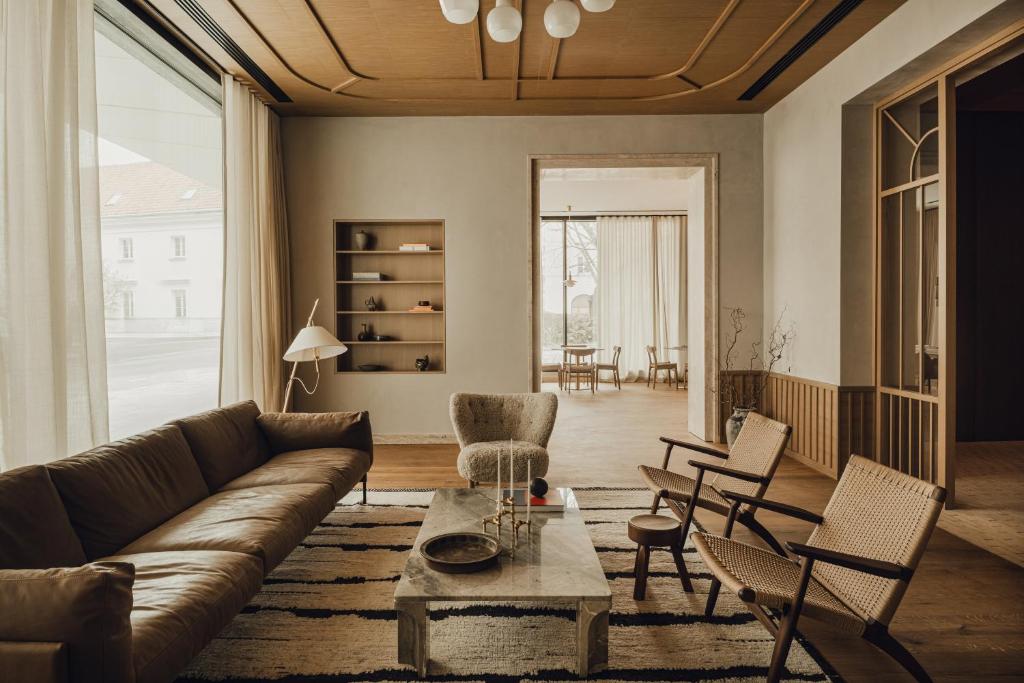
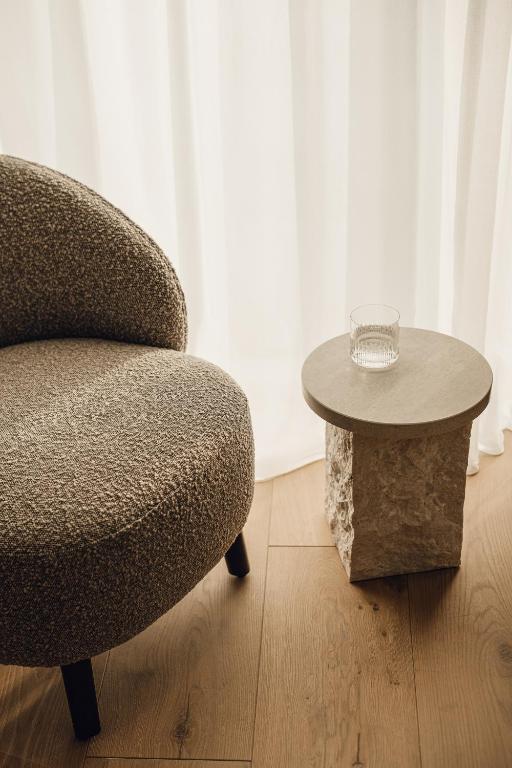
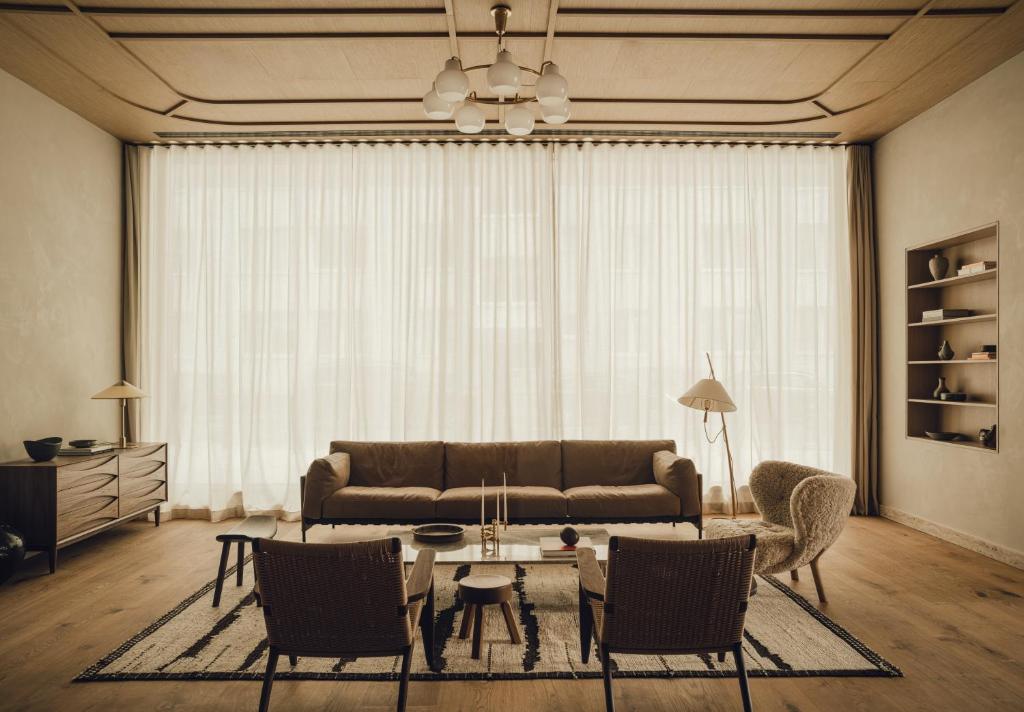
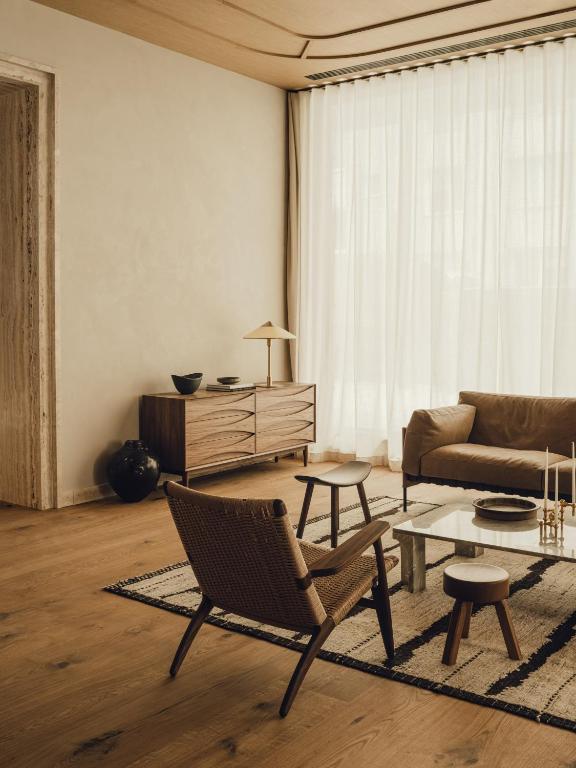
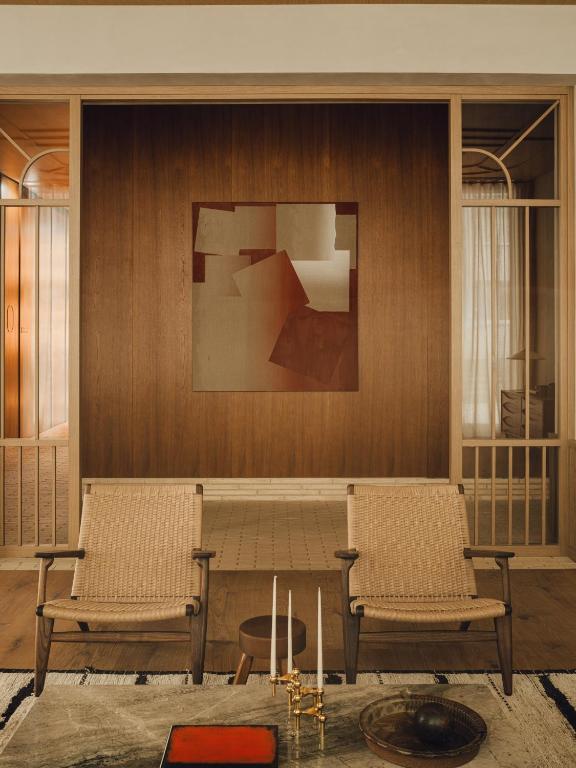
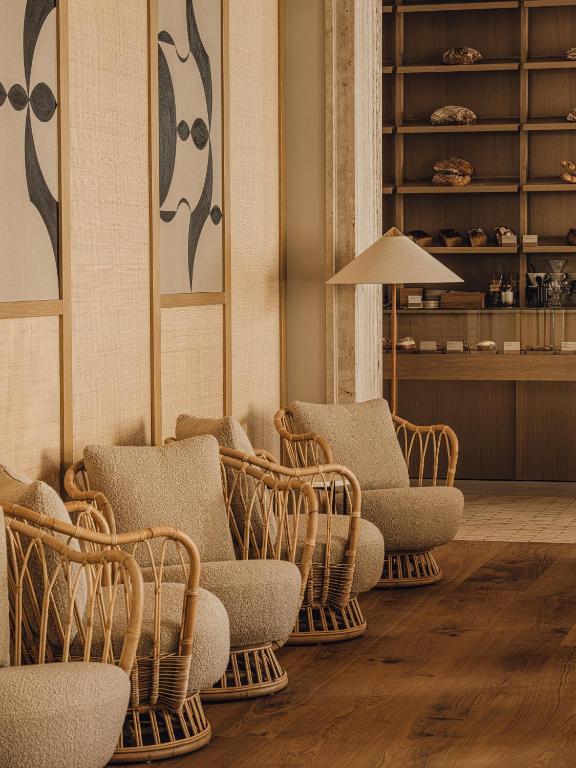
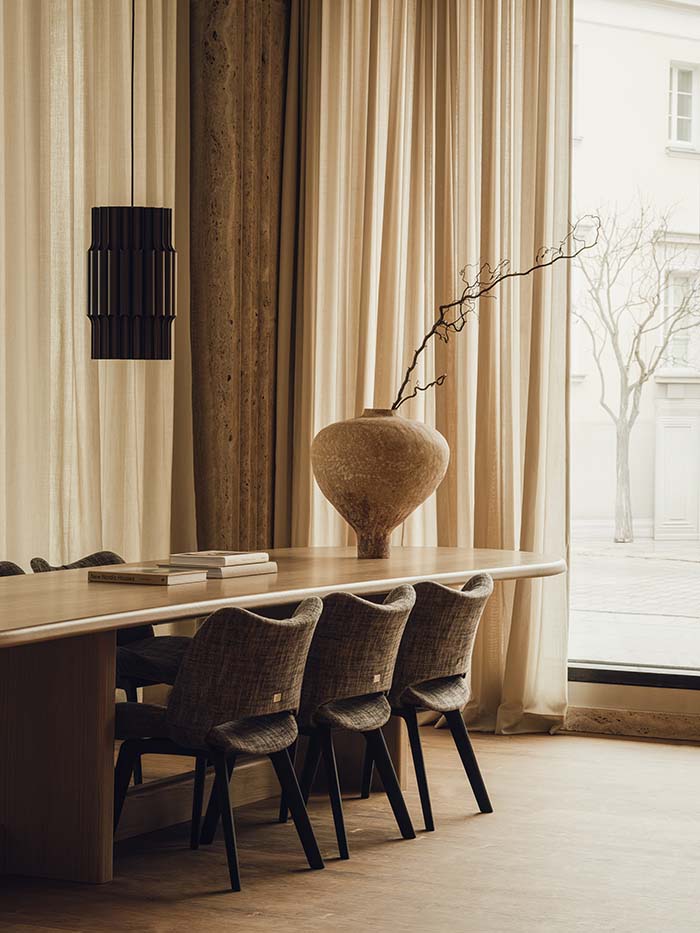
● Copenhagen-based GamFratesi gives the hotel a distinctly residential character, combining custom furniture with pieces by GUBI, Louis Poulsen, &Tradition, Carl Hansen & Søn, Fredericia, Eikund, and other Scandinavian makers.
● The palette draws subtly on Bernardo Bellotto Canaletto’s 18th-century paintings of Warsaw, grounding the muted woods, stone, and soft tones in the city’s visual history.
● Polish art, Nordic design, and an open ground floor with bakery, restaurant, wine bar, and lounge make the hotel feel connected to local life rather than sealed off from it.
A New Building Beside the Old Town
PURO Warsaw Stare Miasto takes an interesting position. It stands beside one of Europe’s most historically charged urban environments, yet refuses to imitate the past. Instead, GamFratesi gives the hotel a contemporary identity built around light, material, proportion, and restraint. That feels appropriate in Warsaw. The city has always been a place where reconstruction and reinvention coexist. PURO simply continues the conversation in a quieter register.
GamFratesi in Warsaw
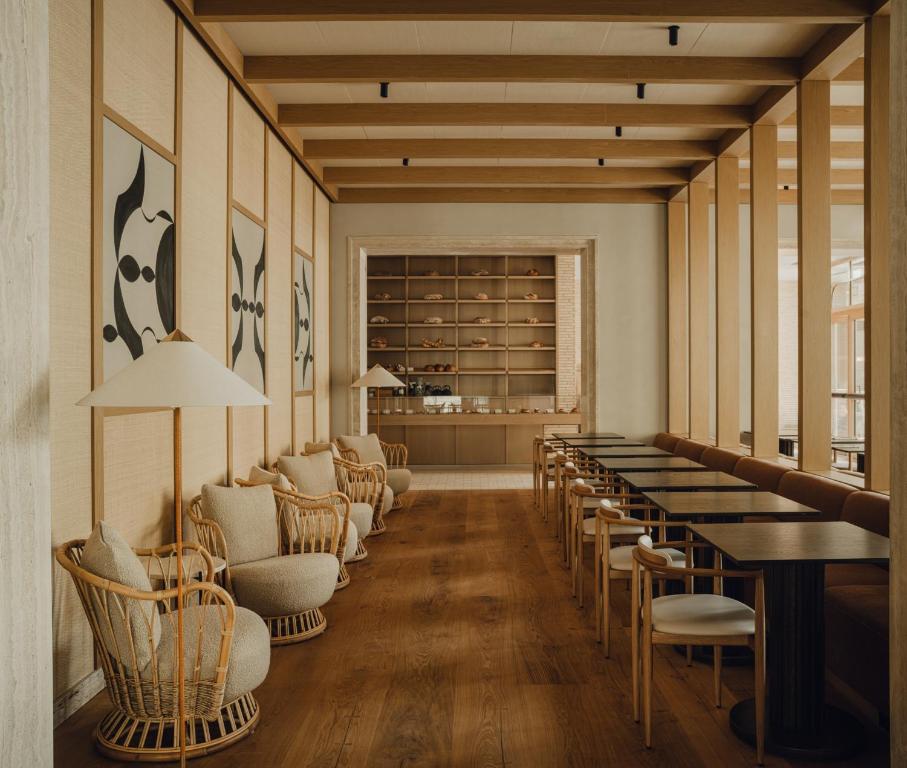
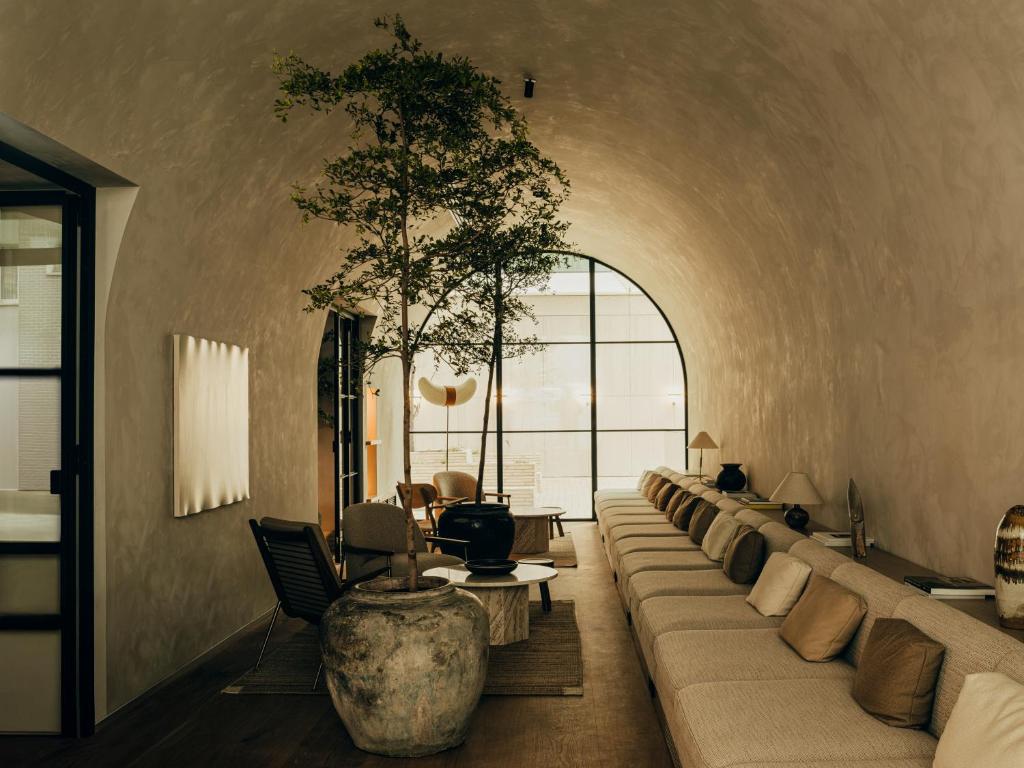
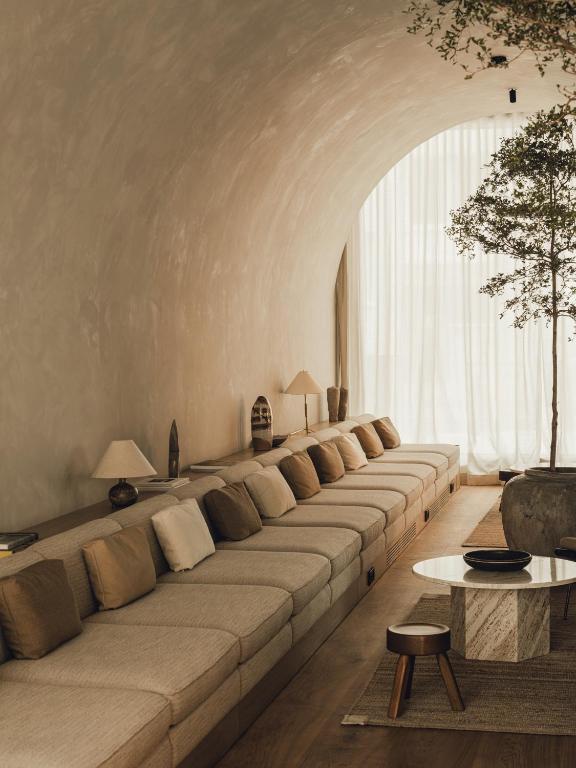
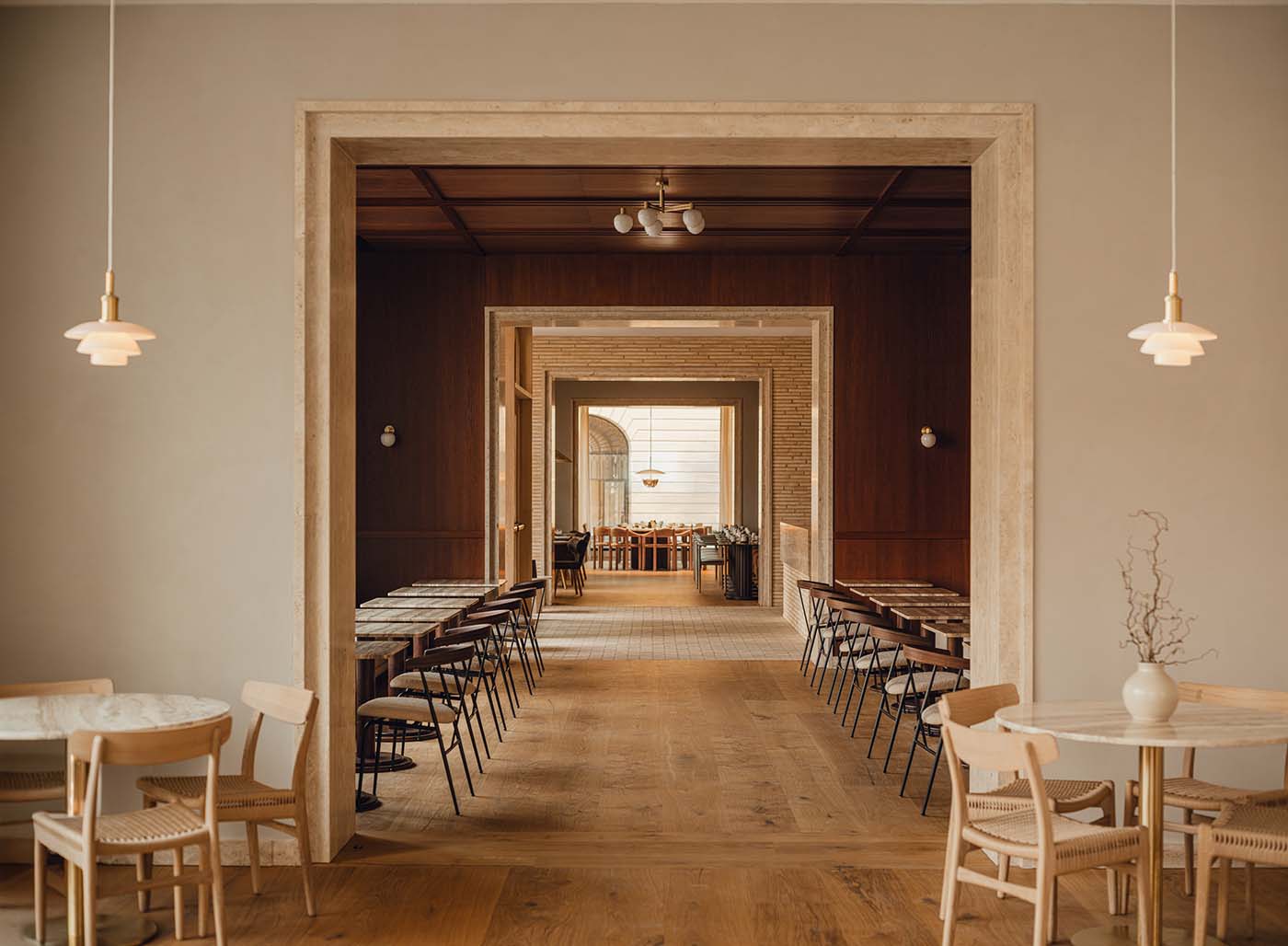
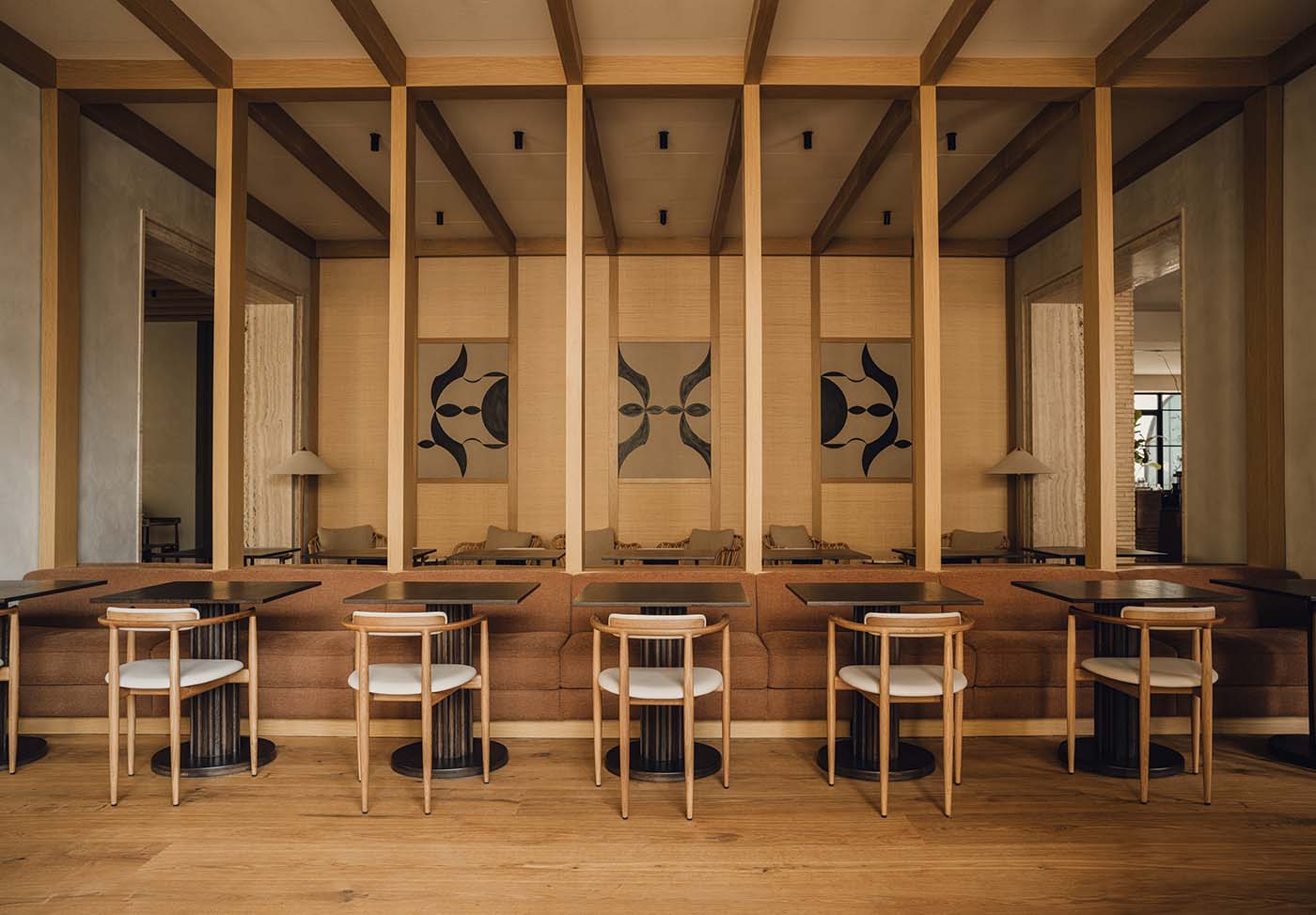
Stine Gam and Enrico Fratesi approach the interiors almost like a large residence. The reception begins with handmade brick flooring, a dark timber cabinet functioning as the desk, and sculptural stone furniture. From there, the ground floor unfolds through a series of interconnected spaces rather than one monumental lobby. A long, tunnel-like lounge. An internal courtyard. Restaurant. Bakery. Wine bar. Seating areas flow into one another without losing intimacy. The result feels domestic despite the scale.
Scandinavian, but Not Generic
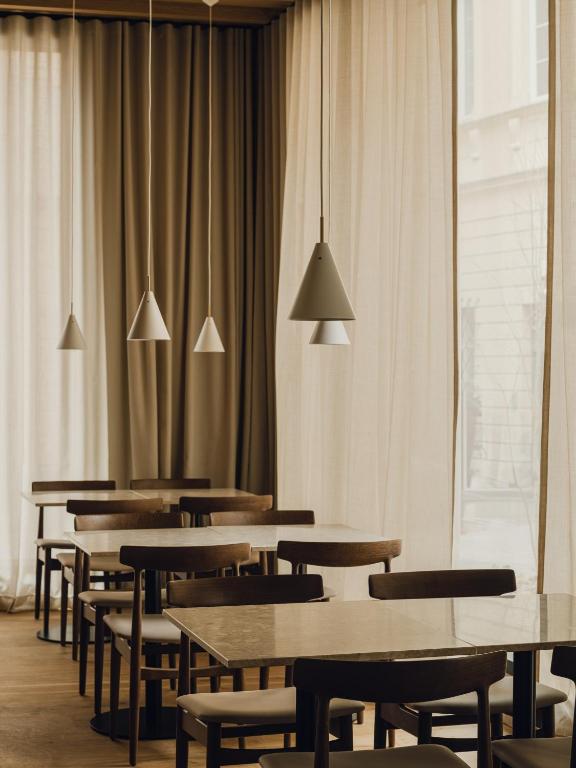
The Nordic influence is clear. Dinesen timber floors, custom cabinetry, softly panelled ceilings, travertine, and carefully controlled lighting establish the material base. Then come the furniture and lighting pieces. GUBI. Louis Poulsen. &Tradition. Carl Hansen & Søn. Fredericia. LYFA. Eikund. Audo Copenhagen. Yet the interiors avoid becoming a catalogue of Scandinavian design. Custom pieces by GamFratesi tie everything together.
Warsaw in the Palette
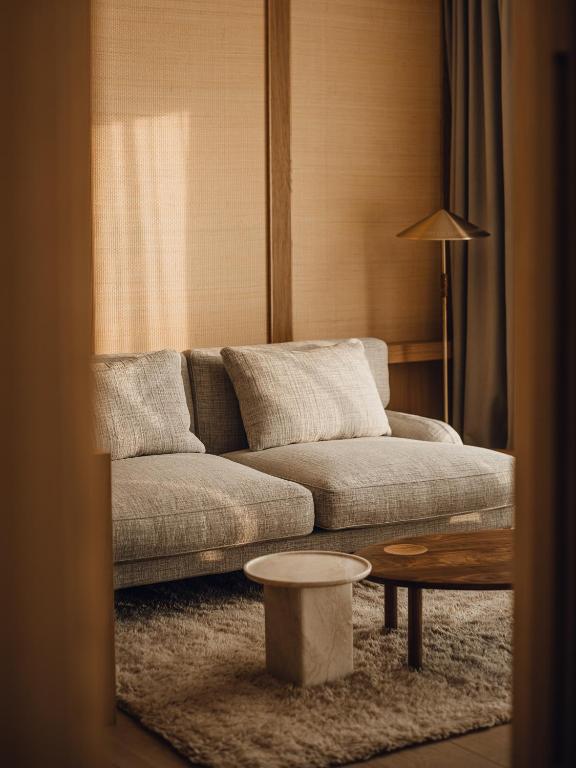
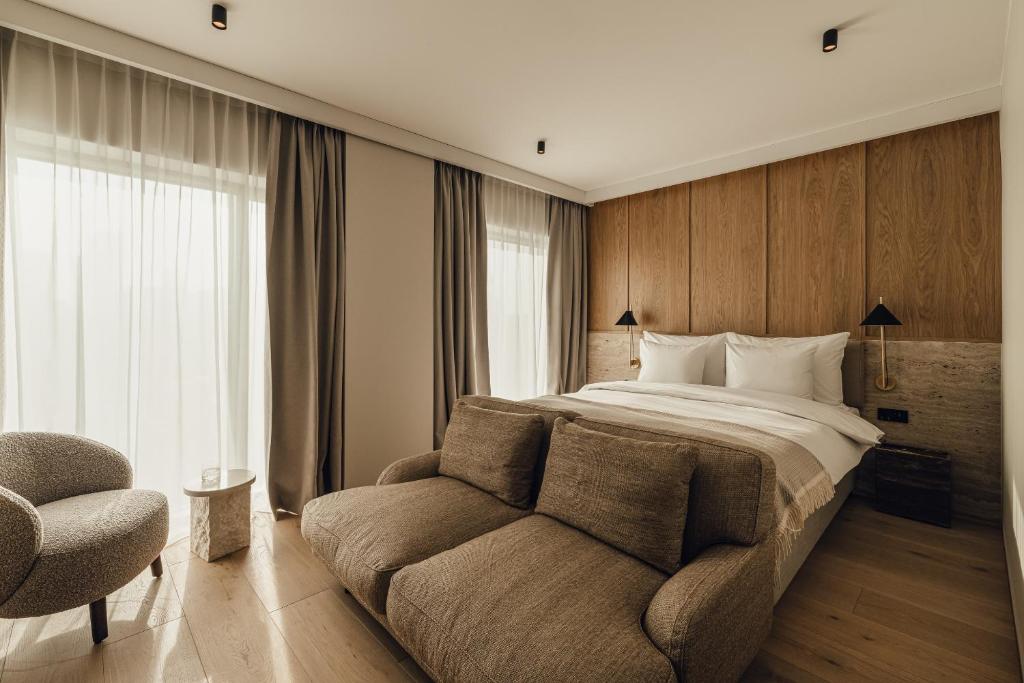
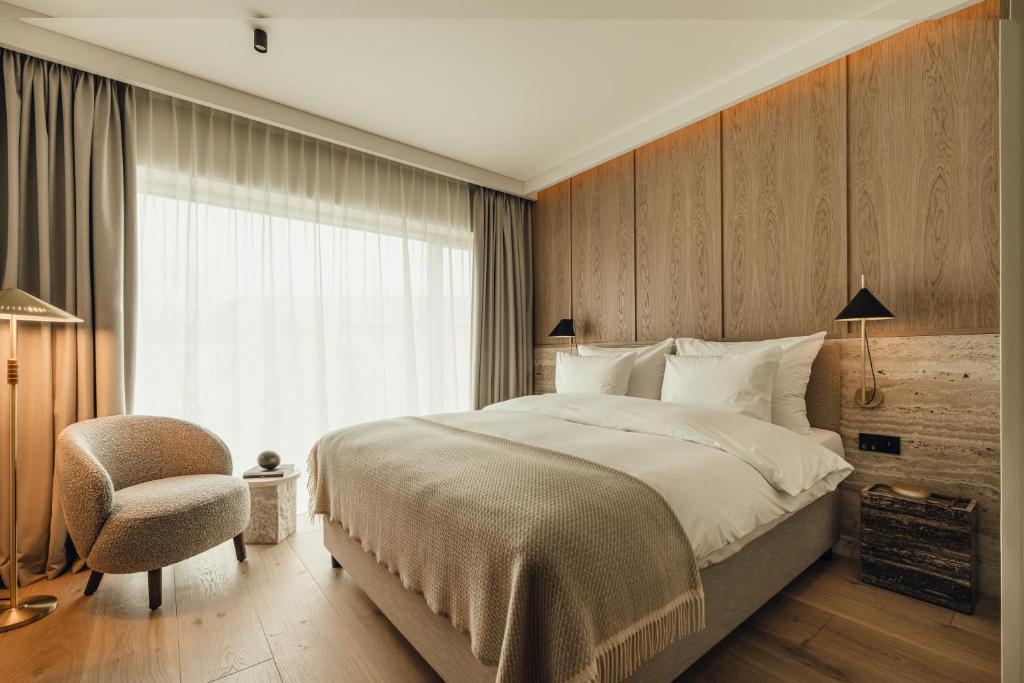
The hotel’s colours were inspired in part by the 18th-century Warsaw paintings of Bernardo Bellotto, known as Canaletto. Muted earth tones, softened greens, pale timber, stone, and restrained accents give the rooms a painterly quality. That reference is subtle. There are no literal reproductions dominating the walls. Instead, the atmosphere borrows something from the old city’s faded tones and filtered light. History becomes mood rather than theme.
192 Rooms of Quiet
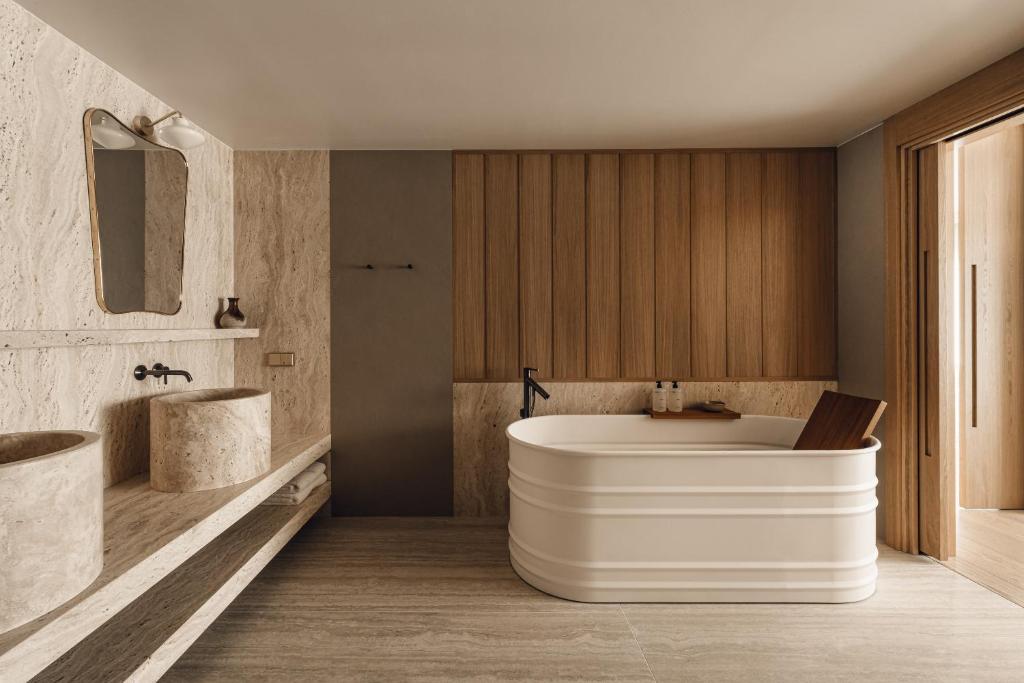
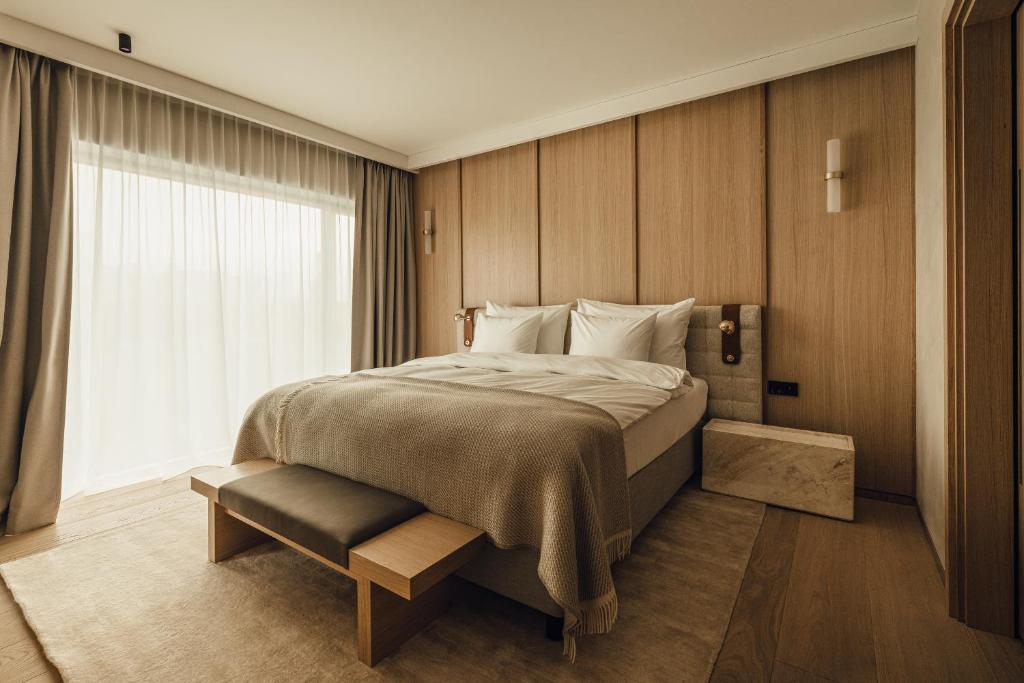
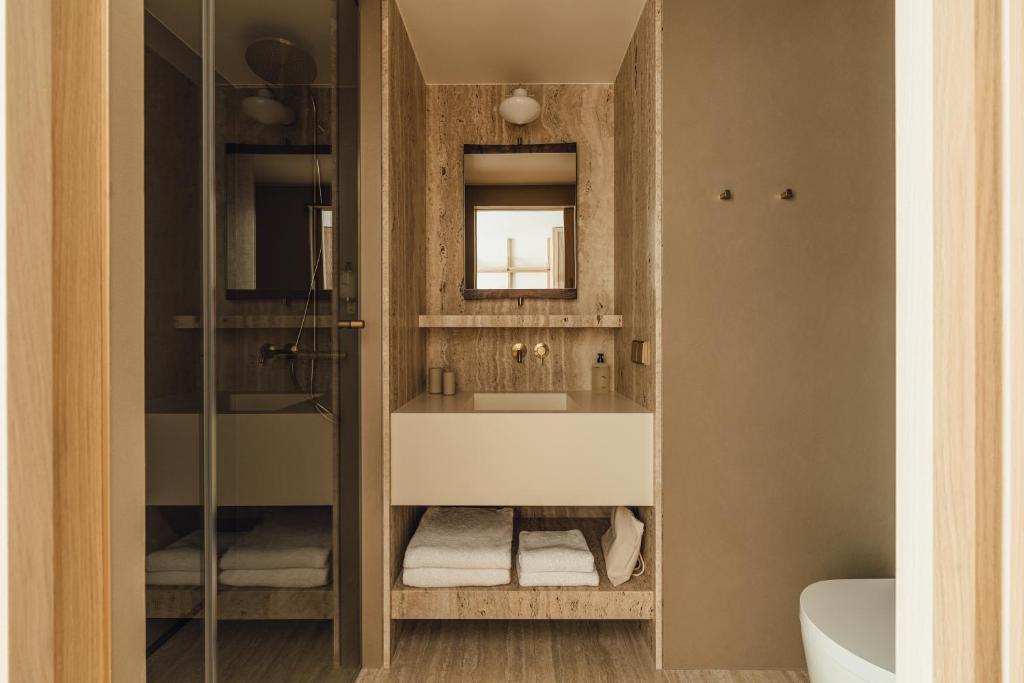
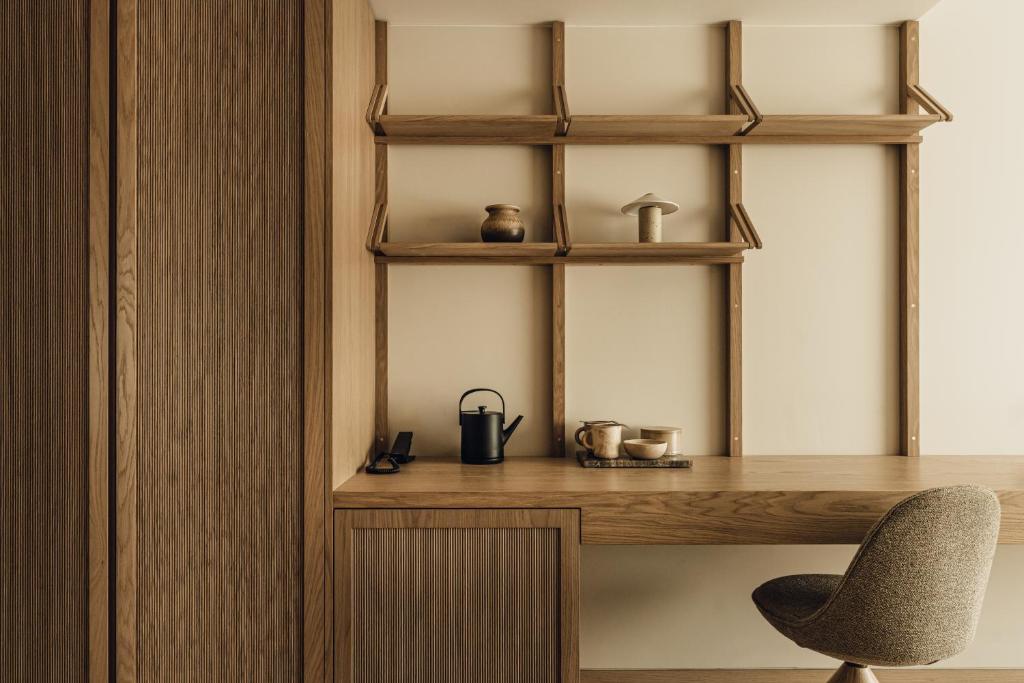
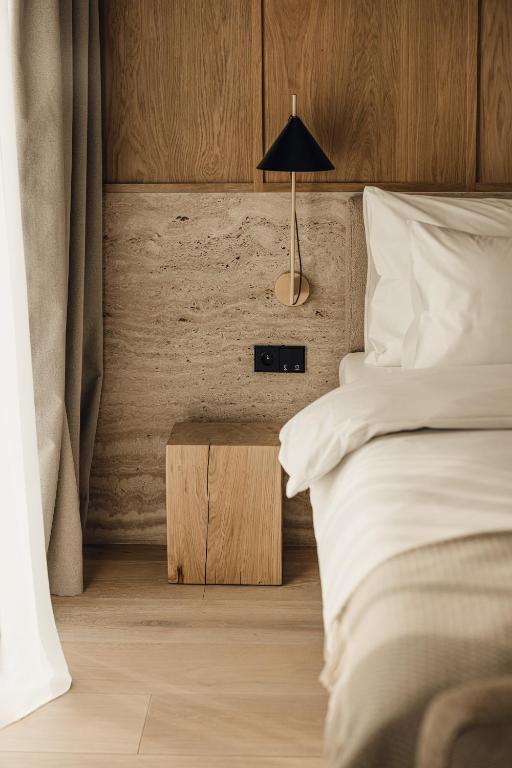
The guestrooms are calm and tactile. Travertine and timber headboards frame the beds, while sculpted tables, bespoke lighting, and wood-framed mirrors bring warmth to the restrained palette. Storage takes on a travel-minded character through trunk-like wardrobes with leather handles. Bathrooms use travertine extensively, including sculptural basins and niches that turn functional elements into architectural details. Larger suites add freestanding bathtubs and, in some cases, balconies overlooking the nearby Grand Theatre. The rooms feel designed to lower the volume after Warsaw outside.
Art Between North and East
The art programme prevents the hotel from becoming purely Scandinavian. Works by Polish artists including Agata Bogacka, Cezary Poniatowski, Cyryl Polaczek, and Karolina Bielawska are integrated throughout the building. Bielawska’s architectural paintings draw directly on the neighbouring Grand Theatre and Opera House. Then comes a particularly fitting Nordic contribution: a wooden relief by Swedish artist Ferdinand Evaldsson exploring the mythology of the mermaid. A symbol shared, intriguingly, by both Warsaw and Copenhagen. Two cities meet in one image.
MUND
At street level, MUND gives the hotel much of its social life. Restaurant, bakery, bistro, and wine bar operate as interconnected parts of the same space, with Nordic flavours sitting alongside Polish ingredients and comfort dishes. Danish pastries and cinnamon rolls share the counter with seasonal jagodzianka. Smørrebrød sits comfortably beside Polish dumplings. Norwegian fish soup meets local produce. It is less fusion than conversation. And because MUND is designed for locals as much as hotel guests, the ground floor retains a genuine city rhythm throughout the day.
Above the Rooftops
The rooftop adds the final layer. Leafy, relaxed, and intentionally low-key, it opens views towards Warsaw’s red roofs, church towers, reconstructed façades, and newer architecture beyond. The perspective makes the hotel’s design philosophy easier to understand. Old Warsaw below. Contemporary Warsaw around it. Scandinavian calm in between.
Why It Works
PURO Warsaw Stare Miasto succeeds because GamFratesi does not treat historic context as an excuse for nostalgia. The hotel is unmistakably contemporary, yet its palette, art, materials, and spatial rhythm remain sensitive to Warsaw. Scandinavian design provides clarity; Polish art gives it identity; MUND connects it to local life. The result is a hotel that feels calm without becoming bland and international without losing its address — a beautifully composed new chapter beside a city built from many old ones.