quartier – Garmisch-Partenkirchen, Germany
Solid-timber lofts, mountain-shaped architecture and a modern answer to Bavarian Alpine tradition
Why DNA Hotels Loves It
● A rare contemporary take on Garmisch-Partenkirchen, replacing decorative chalet clichés with sculptural forms, solid timber and crisp modern interiors.
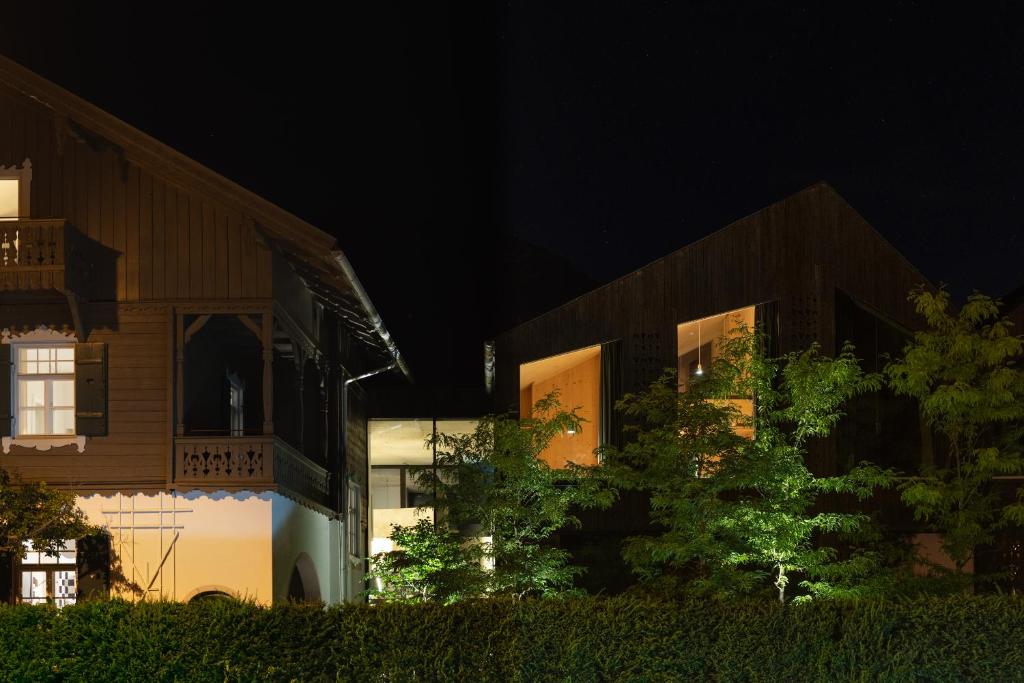
● Sixteen suites and one apartment are arranged around a restored 1906 main building, creating something closer to a small architectural neighbourhood than a conventional hotel.
● Despite its central location, the Alps remain the protagonist — Alpspitze, Waxenstein and Zugspitze are constantly present through the windows.
A New Kind of Alpine Address
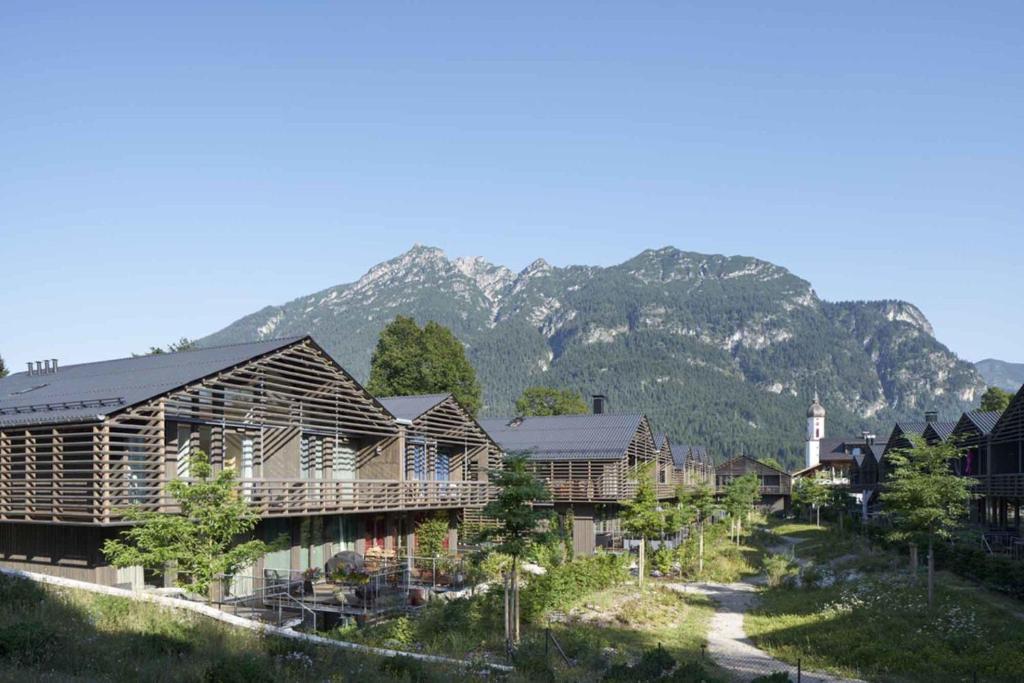
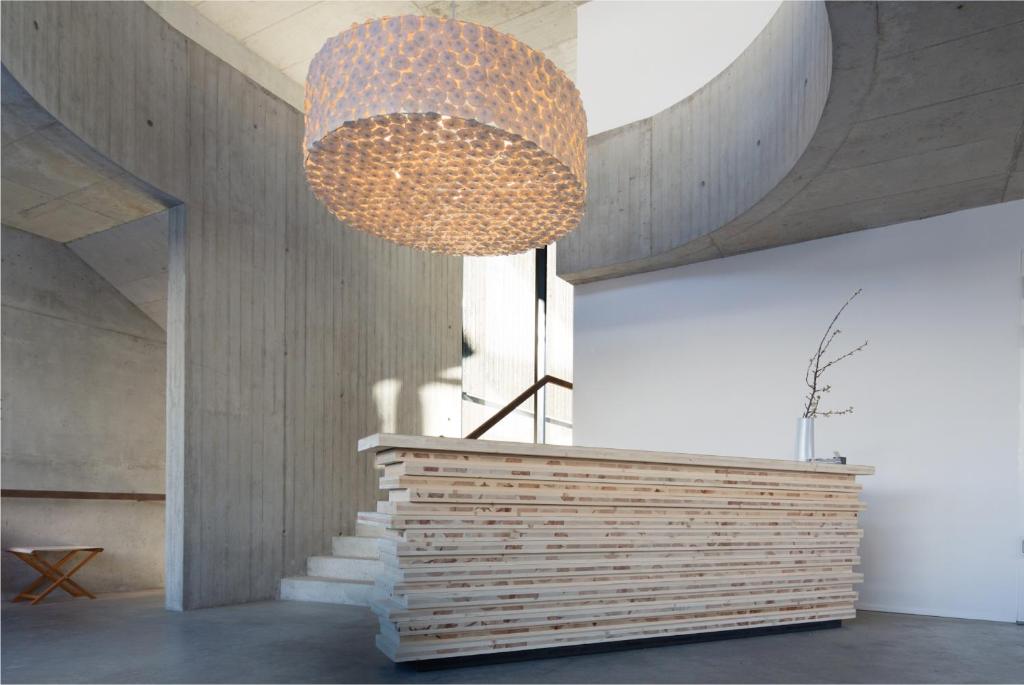
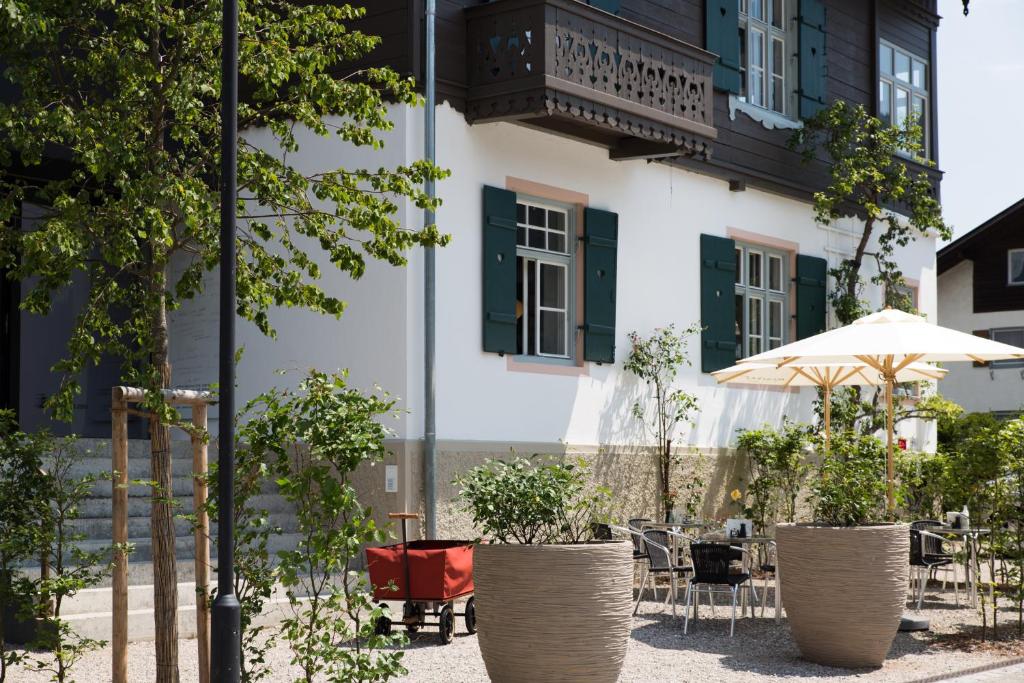
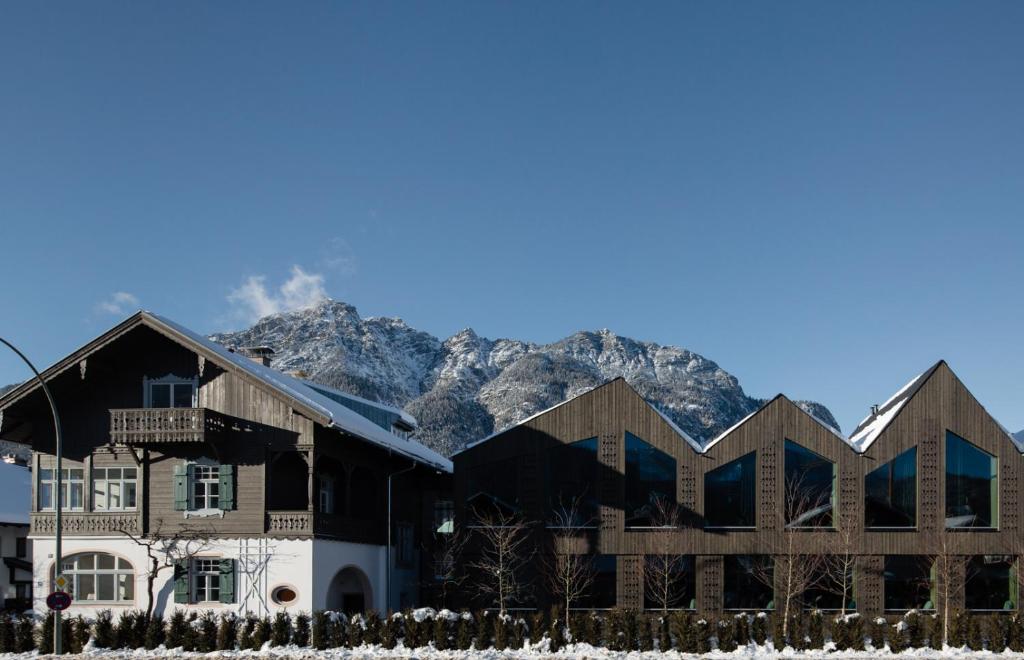
Garmisch-Partenkirchen hardly needs help looking Alpine. Painted façades, carved balconies, shutters, pitched roofs and mountains everywhere you turn have defined the visual identity of this former Olympic town for generations. quartier chooses another route. Rather than reproducing the familiar chalet vocabulary, the hotel reinterprets it through contemporary architecture: sharp rooflines, simple volumes, large windows and interiors built almost entirely around timber. The result still feels unmistakably of the mountains. Just without the cuckoo-clock effect.
A Little Neighbourhood in the Middle of Town
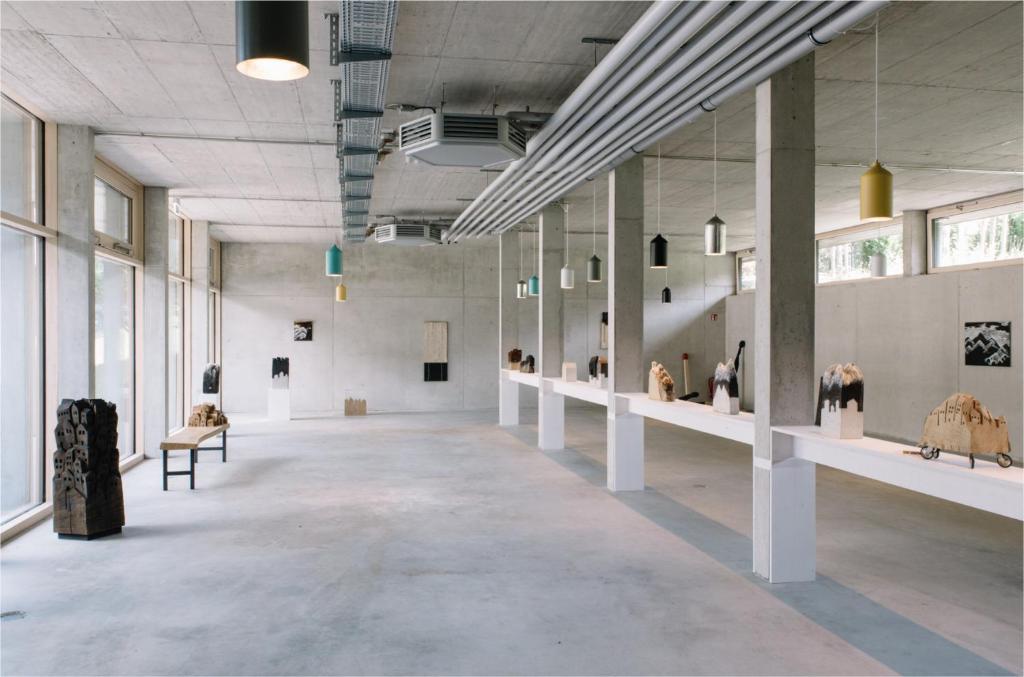
The name says a lot. quartier is not one large hotel block but an ensemble, centred around a carefully renovated main house dating from 1906. This original building contains the breakfast room, day bar, seminar spaces and a large family apartment, while the newer accommodation buildings gather around it like a small modern Alpine settlement. Their pitched silhouettes subtly echo the mountains beyond, creating a visual connection between architecture and landscape without resorting to imitation. It feels deliberately domestic in scale. Less resort. More mountain neighbourhood.
Solid Timber Changes Everything
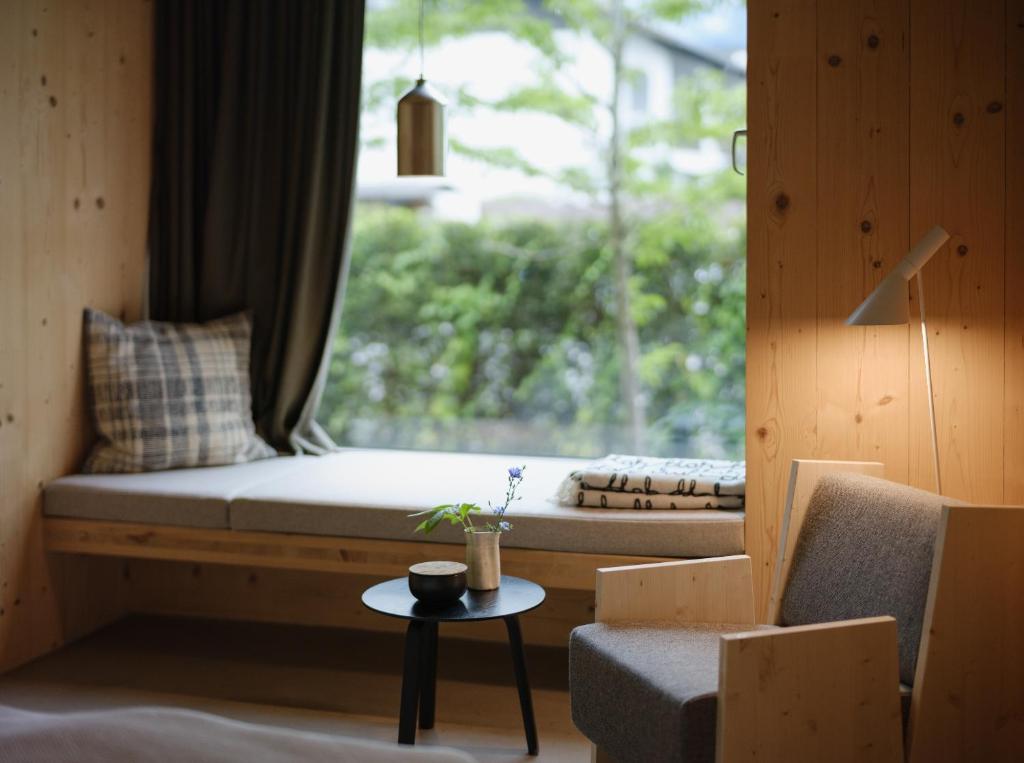
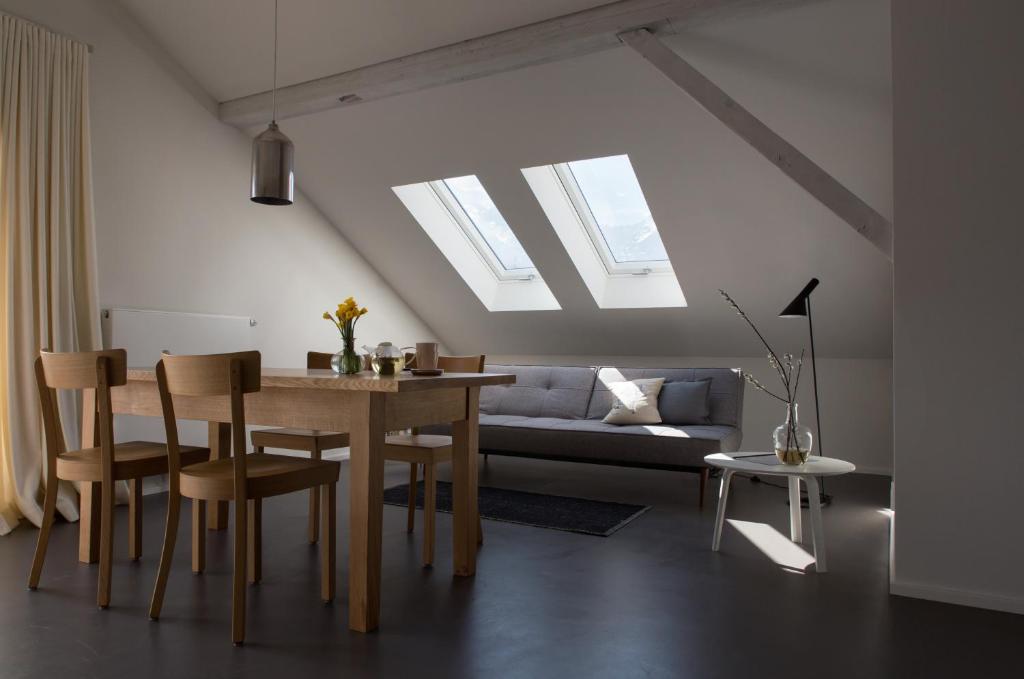
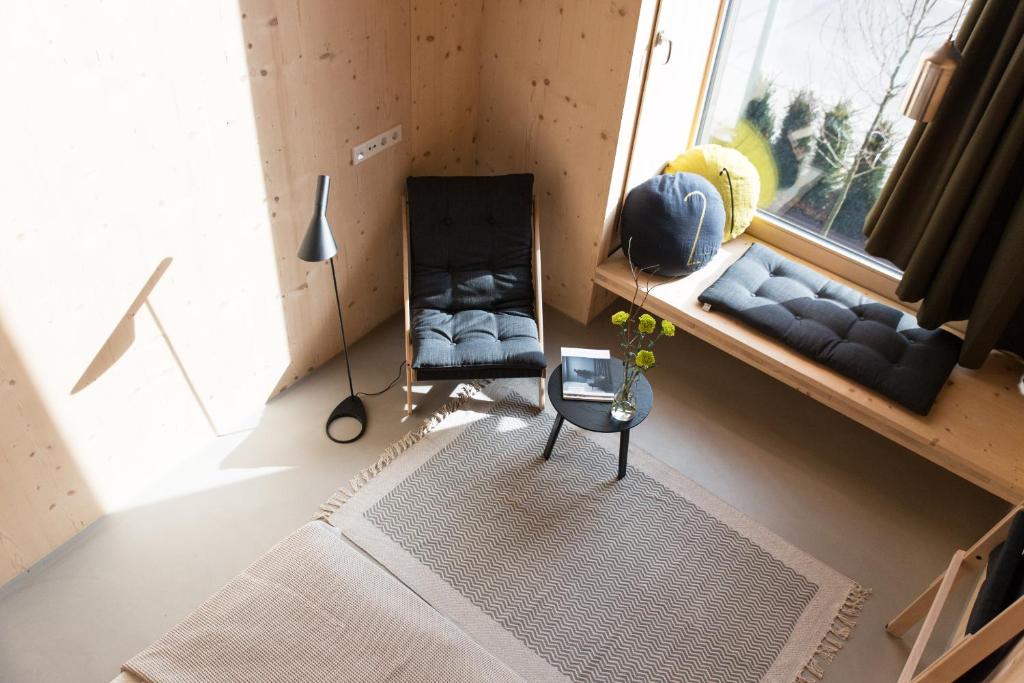
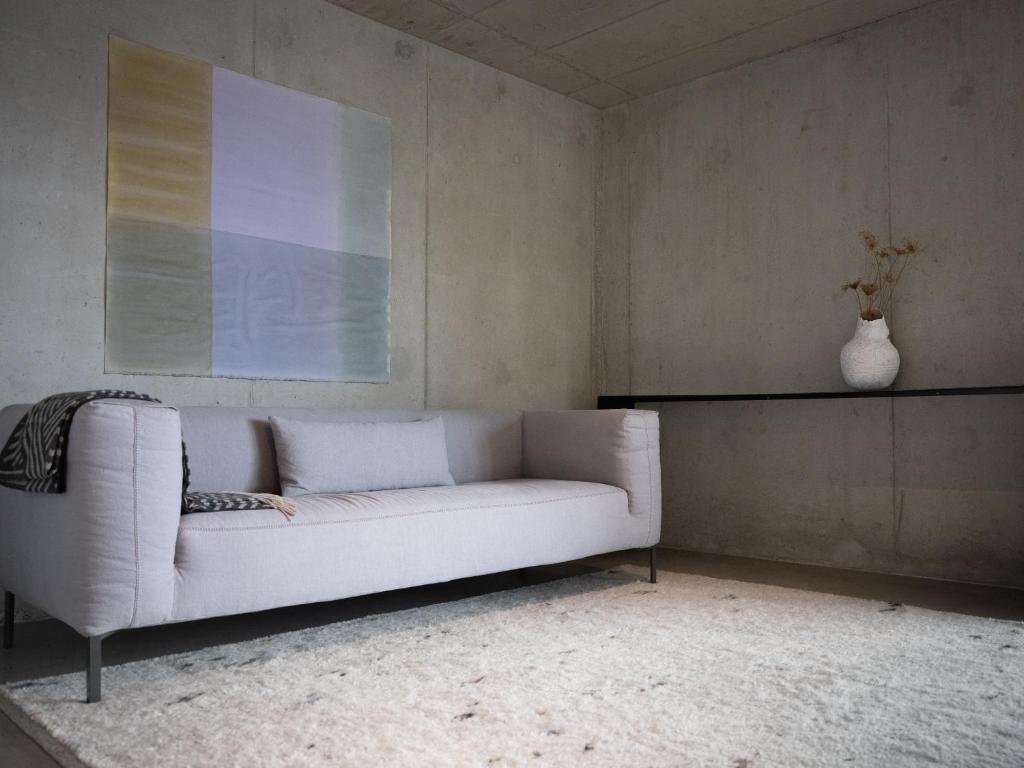
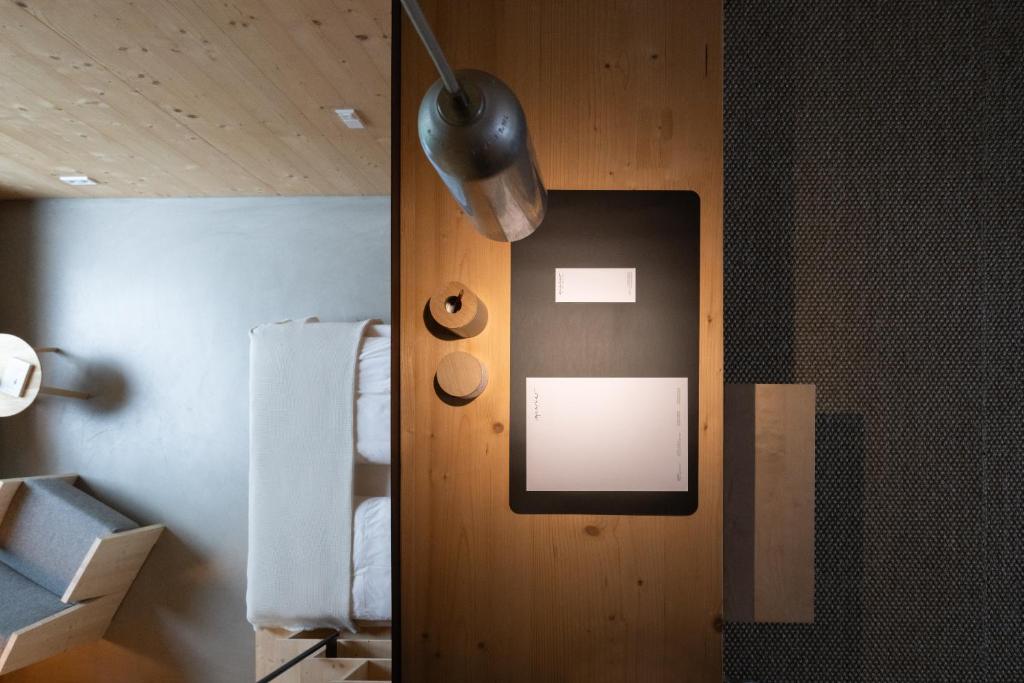
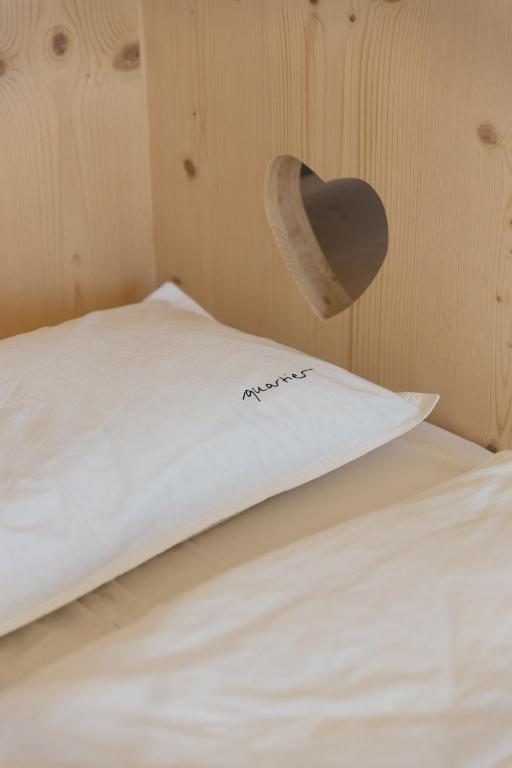
The real character becomes apparent once you step inside the lofts. quartier has 16 suites plus one holiday apartment, and the rooms are defined by one material above all: solid wood. Walls, ceilings and built-in elements create a warm, almost cocooning atmosphere that contrasts beautifully with the clean architectural geometry. The first-floor lofts measure around 32 m², while those on the upper level are arranged across two storeys, adding a surprising sense of volume and space. Large windows keep the interiors from ever feeling enclosed. Instead, all that timber becomes a frame for the landscape outside.
The Mountains Are the Decoration
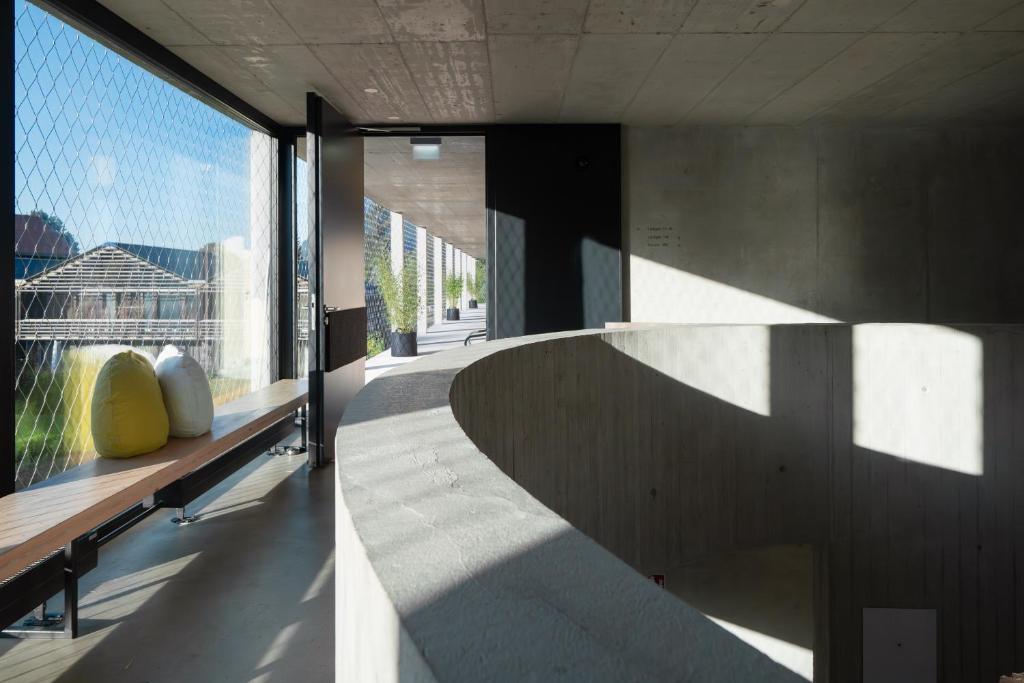
There is very little unnecessary styling. That is the point. quartier doesn’t need faux-fur everywhere or staged collections of antique skis to remind you where you are. The view does the work. From the rooms, Alpspitze, Waxenstein and the nearby Zugspitze remain part of the visual experience, and the changing mountain light continually shifts the mood inside. It is a much more convincing form of Alpine design: one that references the landscape through material, proportion and view rather than decoration.
Lofts for Actually Living In
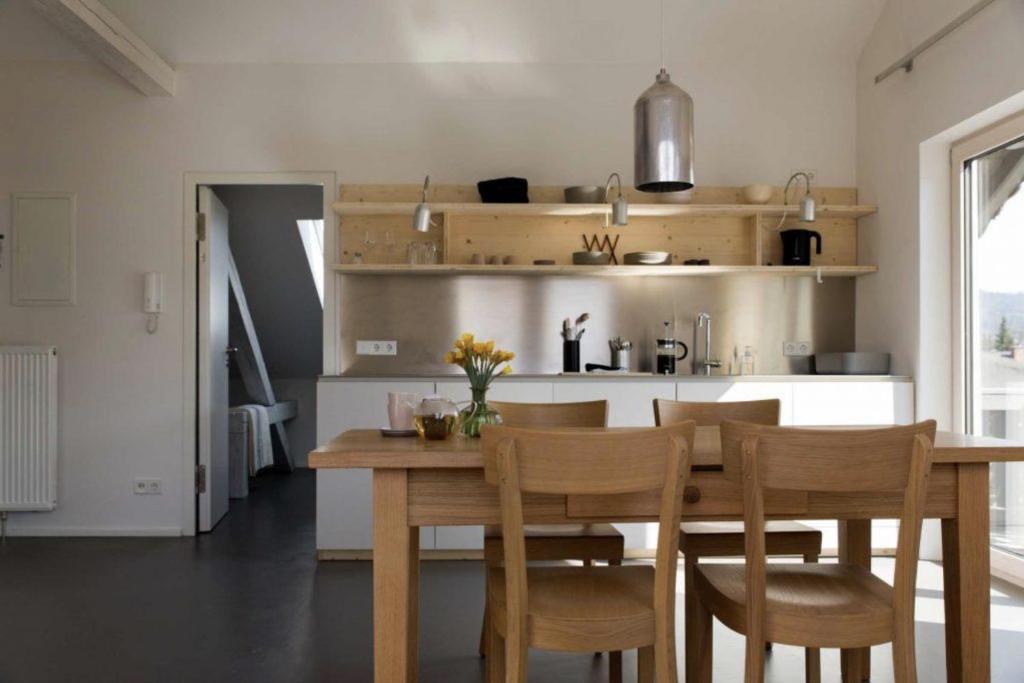
The suites feel closer to compact apartments than conventional hotel rooms. Each comes with a small kitchenette and dining table, useful for breakfast, snacks or a simple meal, although these are not really intended as full-scale kitchens for ambitious cooking. There are generous double beds and, in some rooms, additional smaller beds or bunks that make the format particularly practical for families. The two-level layouts add another layer of informality. You can spread out. A small thing, perhaps, but in mountain hotels that often prioritise traditional cosiness over actual spatial generosity, it makes a difference.
Breakfast, Then Into the Mountains
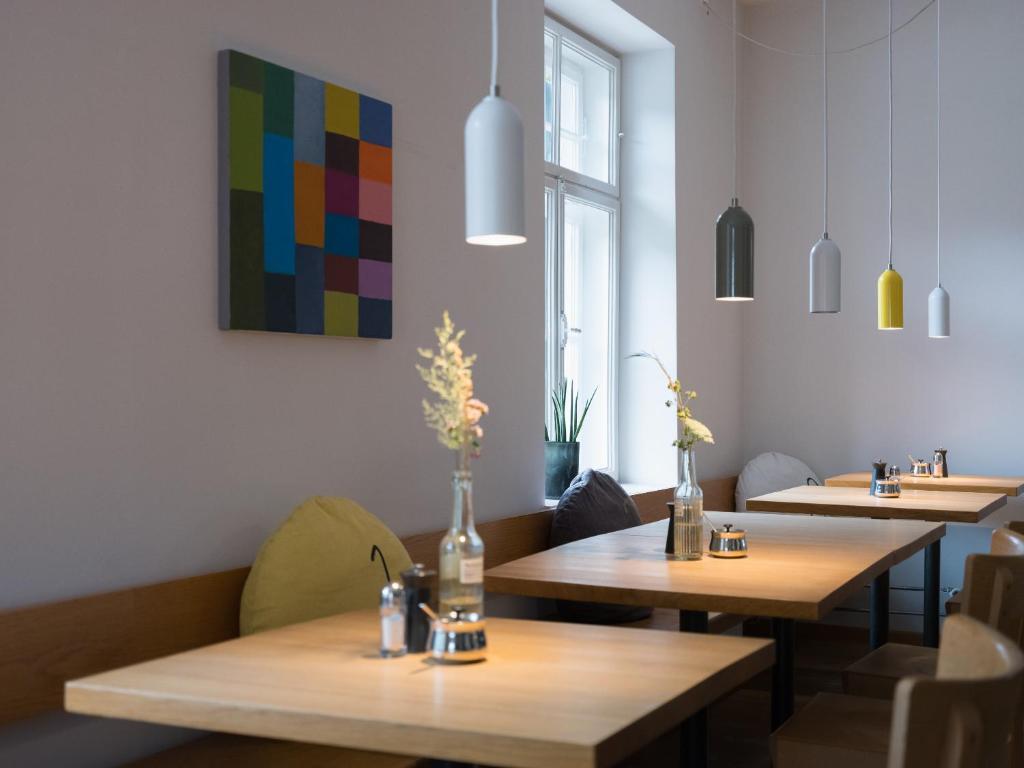
Breakfast is served in the historic main house, keeping some of the communal life concentrated in the older part of the ensemble. The restaurant downstairs follows a similarly grounded approach, with attention to regional producers, organic ingredients and a strong selection of vegetarian dishes. Nothing overly complicated. Food that makes sense before or after a day outside. And outside is really what Garmisch-Partenkirchen is about.
An Olympic Playground on the Doorstep
Garmisch hosted the 1936 Winter Olympics, and the sporting infrastructure still shapes the town today. In winter, multiple ski areas, ski touring and the wider Zugspitze region are close at hand. In summer, the surrounding mountains become a network of hiking and cycling routes, while the Partnachklamm and Höllentalklamm gorges provide some of the region’s most dramatic walks. quartier sits closer to the town centre than to wilderness, but that is part of its appeal. You can walk into town easily, then be in the mountains shortly afterwards.
Modernism Without Losing the Alps
What makes quartier successful is that it doesn’t reject Alpine tradition. It edits it. Timber remains. Rooflines remain. The sense of shelter remains. What disappears is the decorative overload. In its place: clean geometry, solid materials, useful space and windows that keep the mountains in constant view. quartier proves that Bavarian mountain hospitality doesn’t need to look backwards to feel rooted in place. Sometimes the most respectful thing you can do with tradition is simplify it.