THE QVEST Hideaway – Cologne, Germany
Neo-Gothic architecture, Bauhaus icons and contemporary art collide inside one of Cologne’s most extraordinary historic buildings.
Why DNA Hotels Loves It
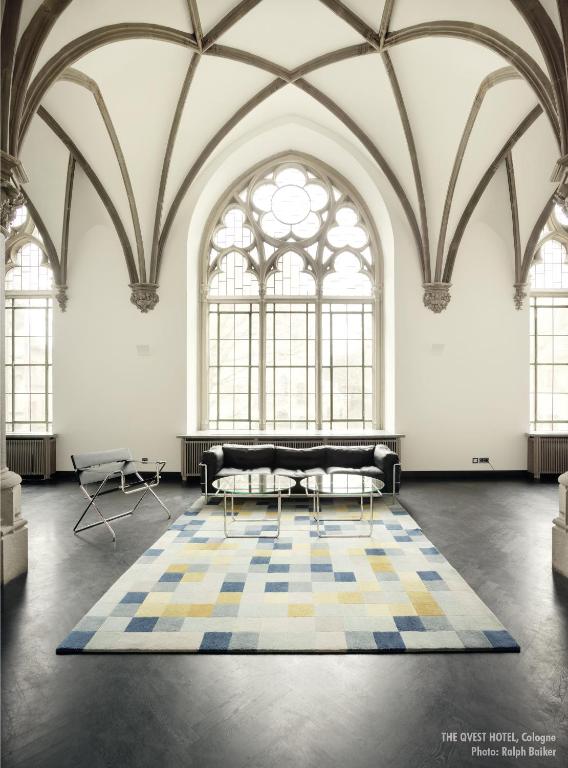
● A remarkable 1897 neo-Gothic former city archive and public library, where ribbed vaults, pointed windows and medieval details provide the backdrop for 20th-century design.
● Owner, publisher and art collector Michael Kaune has filled the hotel with original pieces by Mies van der Rohe, Le Corbusier, Charles and Ray Eames, Arne Jacobsen, Marcel Breuer and other modernist masters.
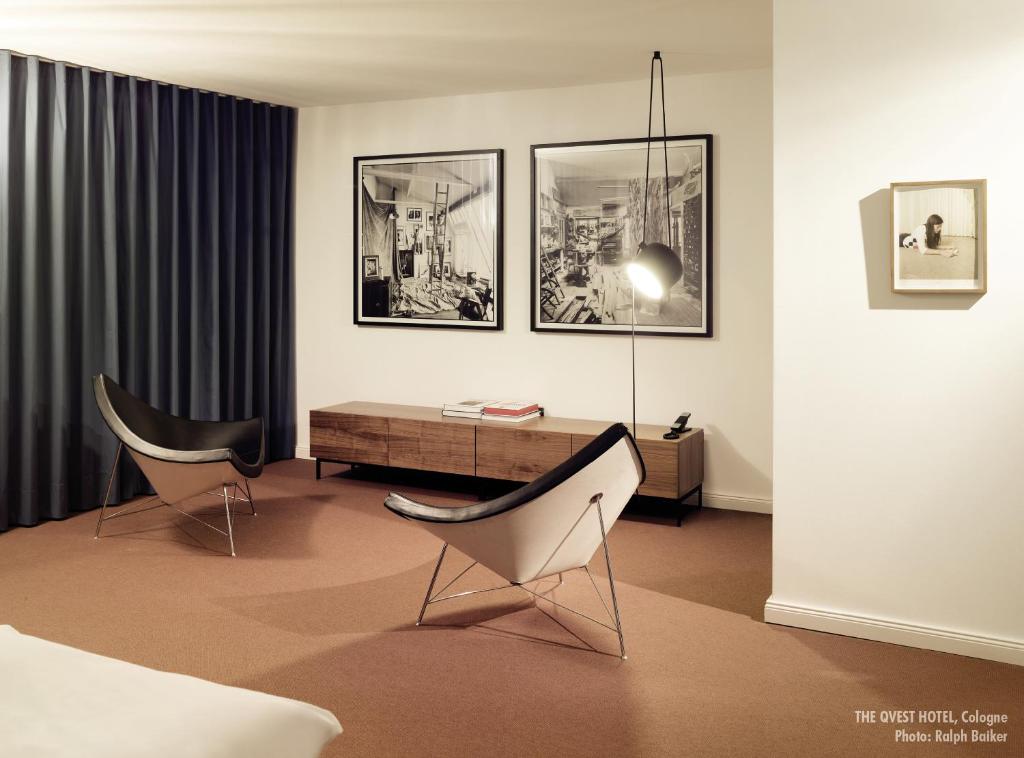
● Rather than reproducing a single hotel look, individually composed rooms turn staying here into something closer to spending the night inside a private design collection.
Gothic Meets Modernism
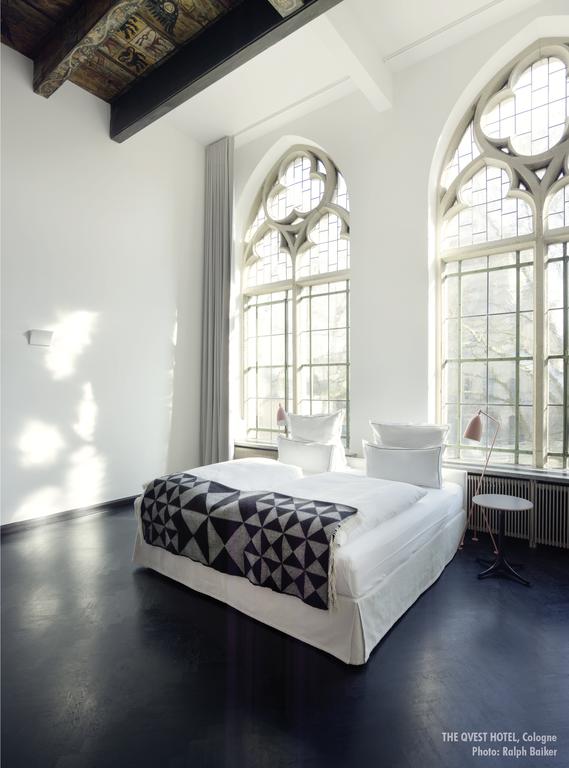
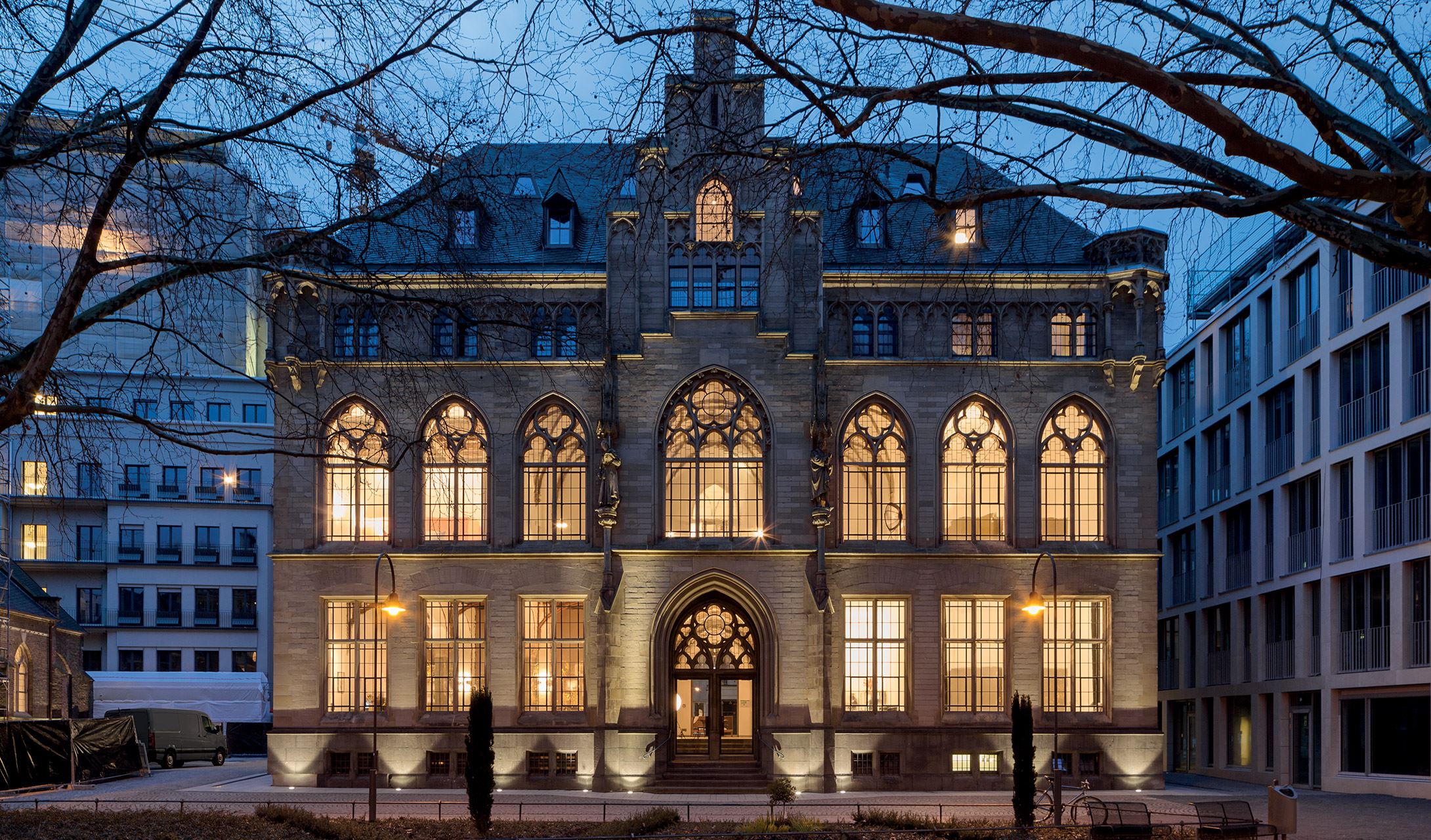
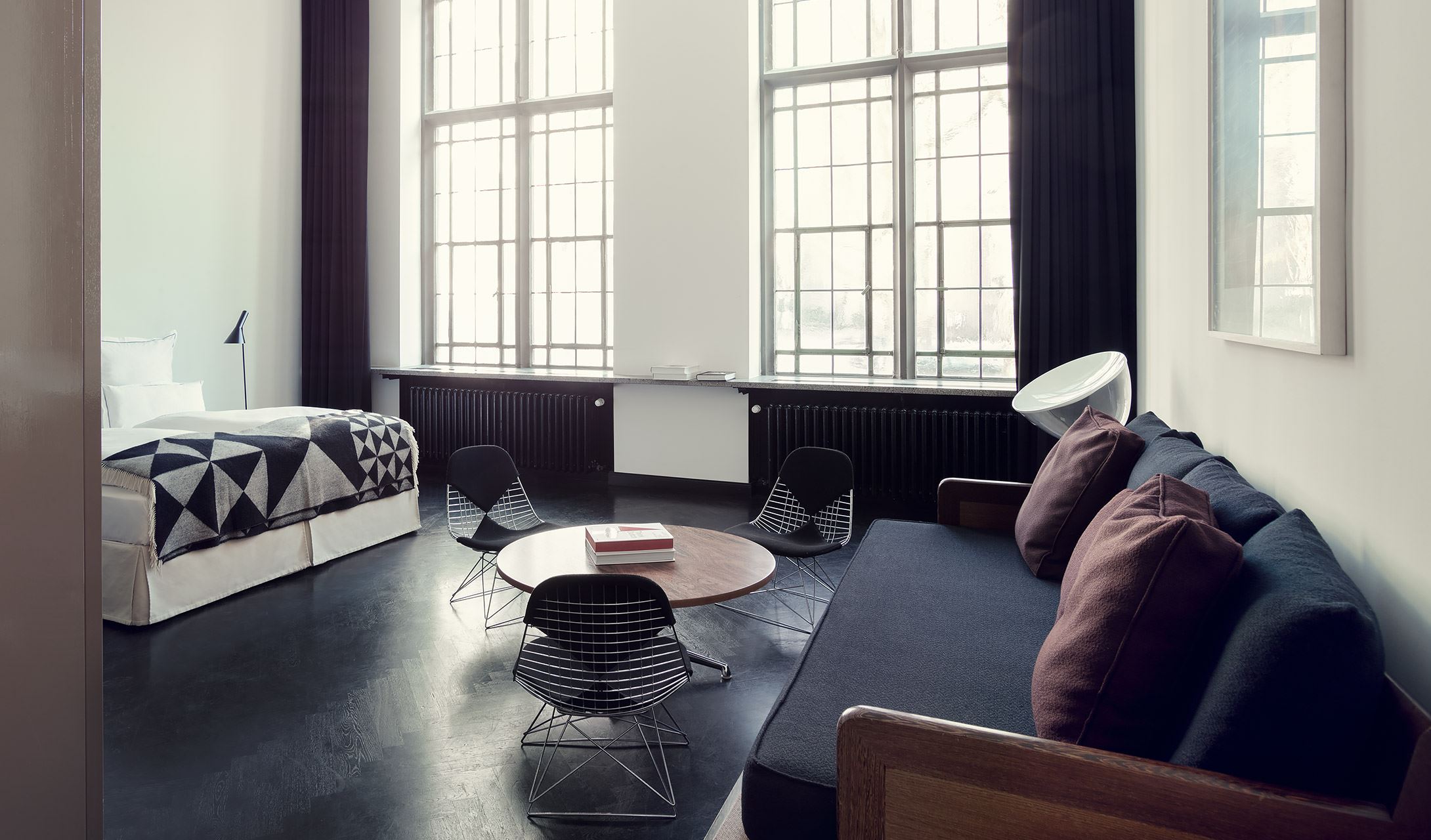
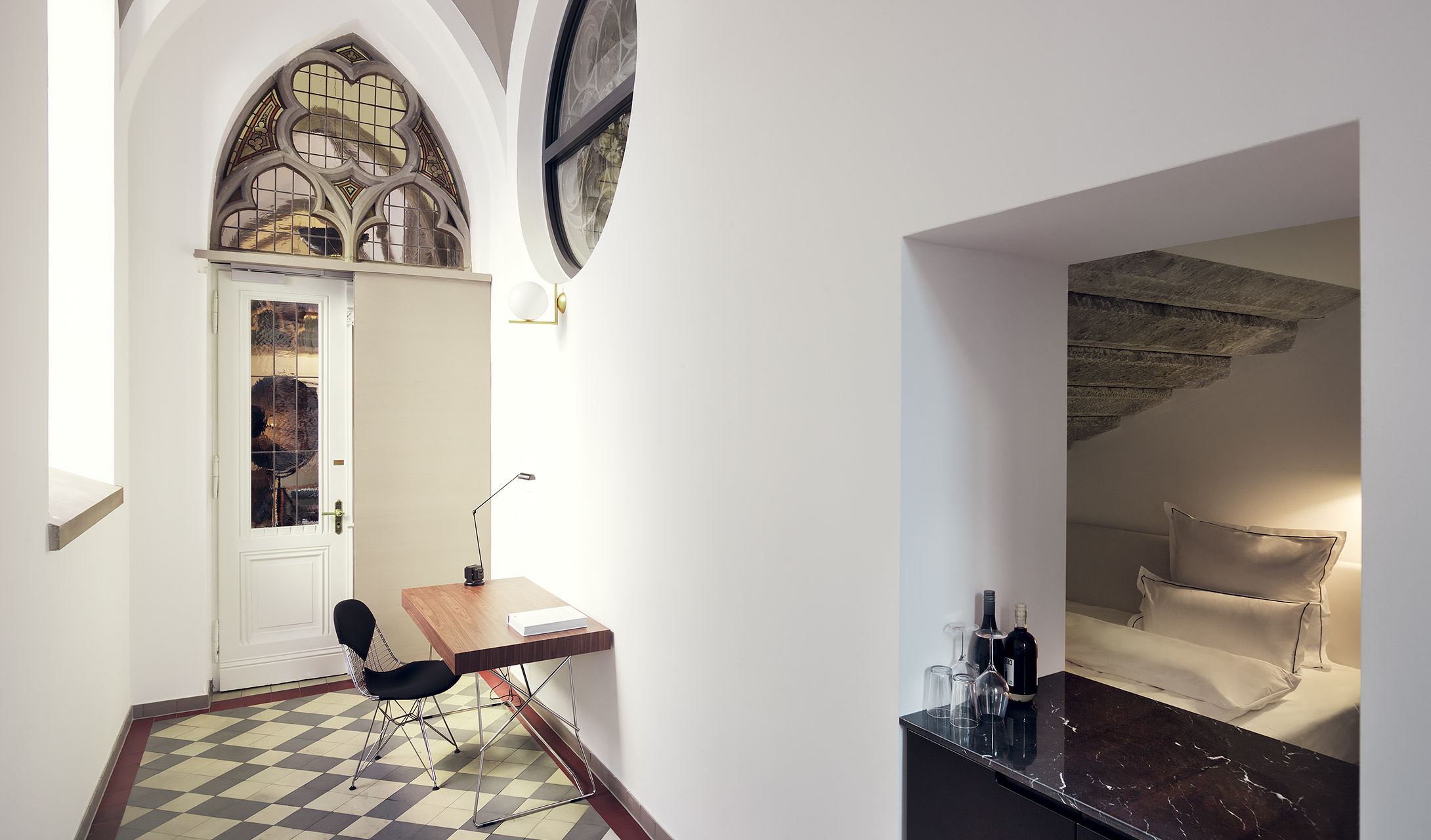
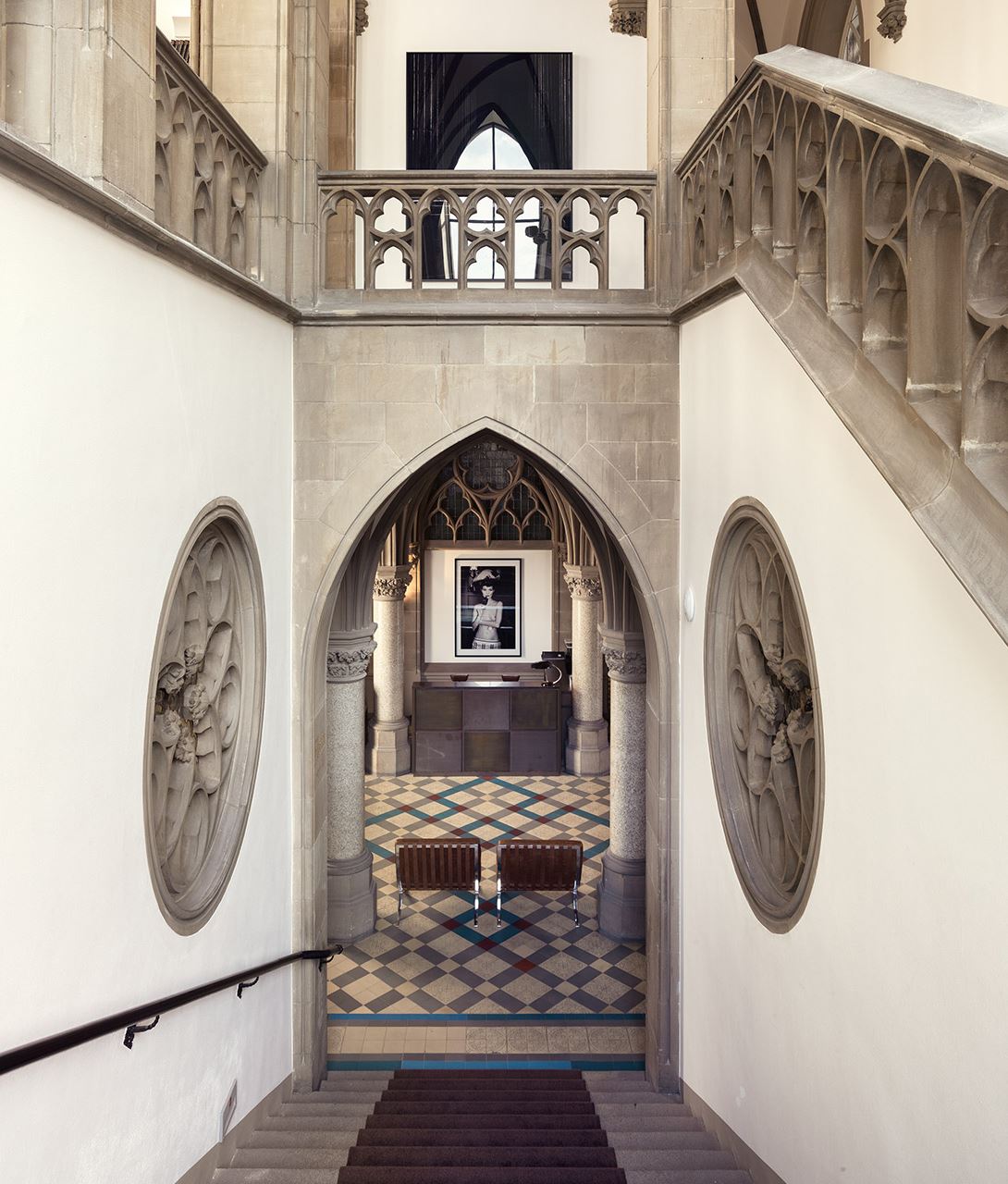
Few hotels make 1897 and 1957 look quite so good together. Behind the imposing neo-Gothic façade of THE QVEST Hideaway, history and modernism exist side by side: pointed arches above Bauhaus furniture, soaring cross vaults over mid-century chairs, centuries-old painted timber beside contemporary photography. The building was completed in 1897, designed by architect Friedrich Carl Heimann in collaboration with Mohr and Brugger to house Cologne’s city archive and public library. Its original purpose explains the almost institutional grandeur. Ribbed vaults, lancet windows, tracery, stonework, dark timber and six-metre-high spaces create an atmosphere somewhere between library, monastery and private Gothic mansion. Remarkably, the building survived the destruction inflicted on much of Cologne during the Second World War. That alone makes sleeping here rather special.
Michael Kaune’s Collection
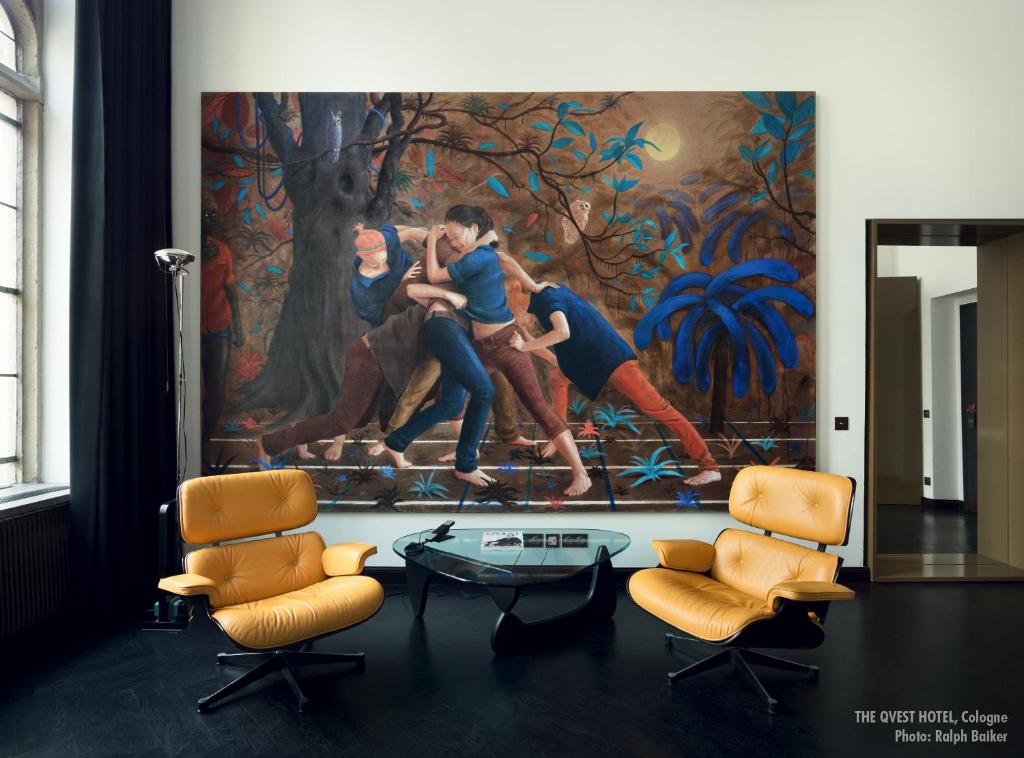
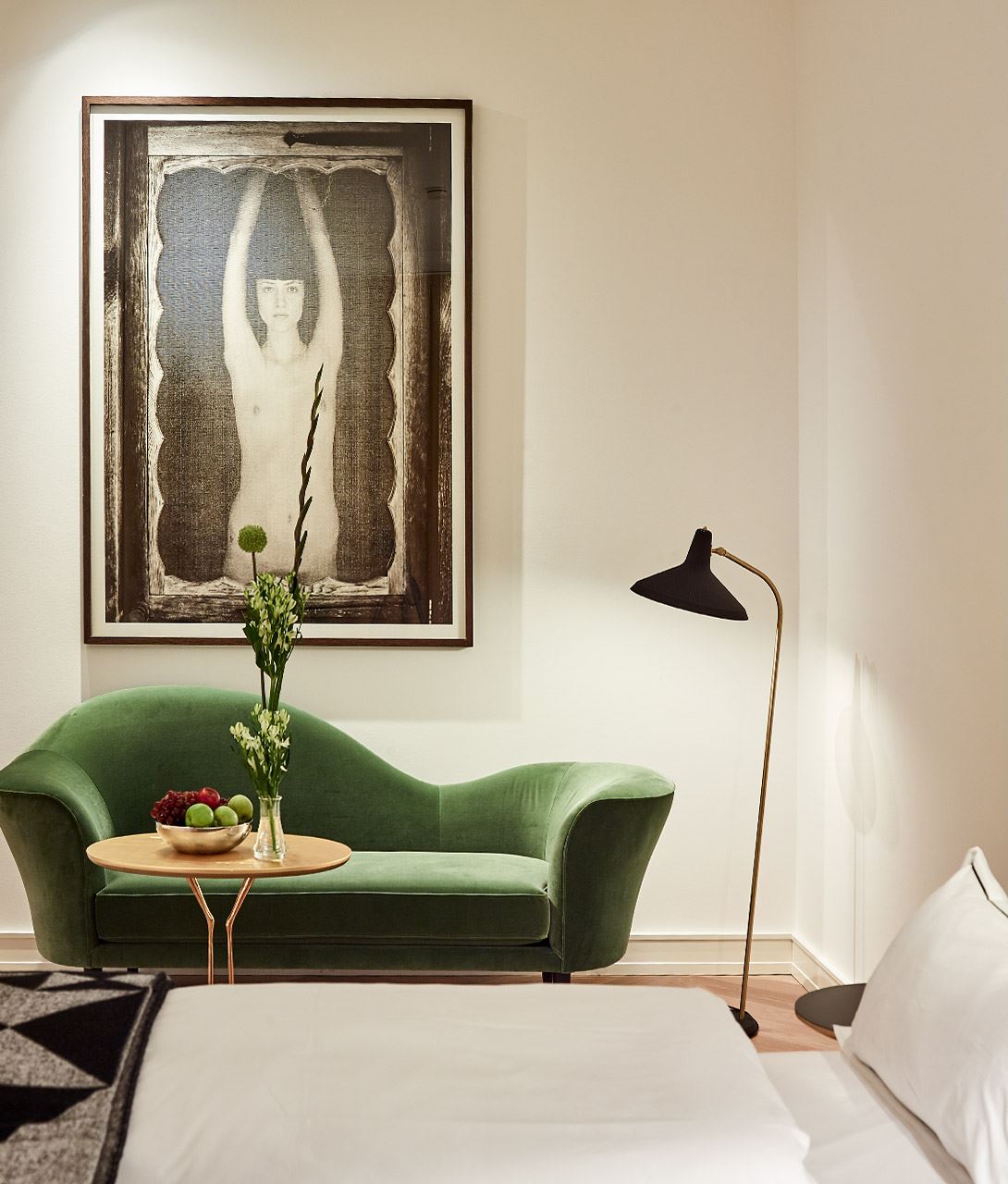
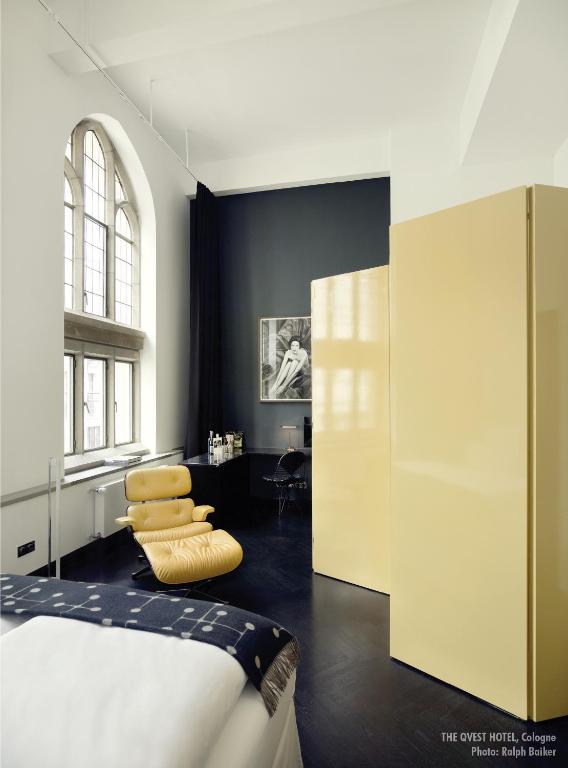
The transformation into a hotel was driven by Michael Kaune, publisher of QVEST magazine, art collector and passionate devotee of 20th-century design. Rather than competing with the architecture, Kaune introduced its apparent opposite. Modernism. Pieces by Ludwig Mies van der Rohe, Le Corbusier, Charles and Ray Eames, Arne Jacobsen, Eileen Gray, Marcel Breuer, Walter Gropius and Verner Panton appear throughout the hotel. And they’re not presented behind ropes. You sit on them. A Marcel Breuer D4 folding chair can occupy a room beneath neo-Gothic vaulting. An Eames chair becomes part of an everyday interior. Greta Grossman lighting appears alongside historic architectural details. The result is less design showroom than an ongoing conversation between two radically different ideas of beauty.
Rooms That Refuse Repetition
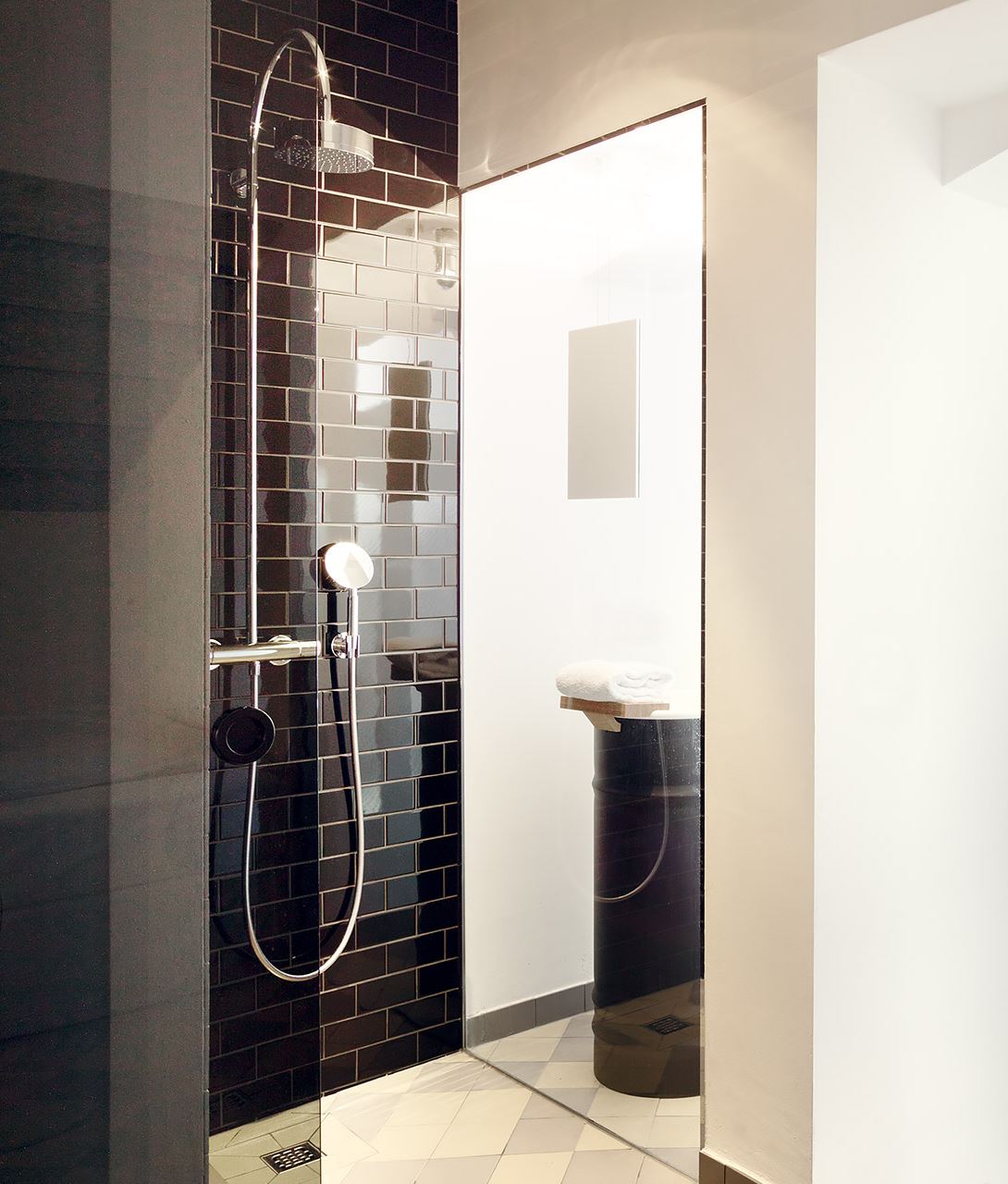
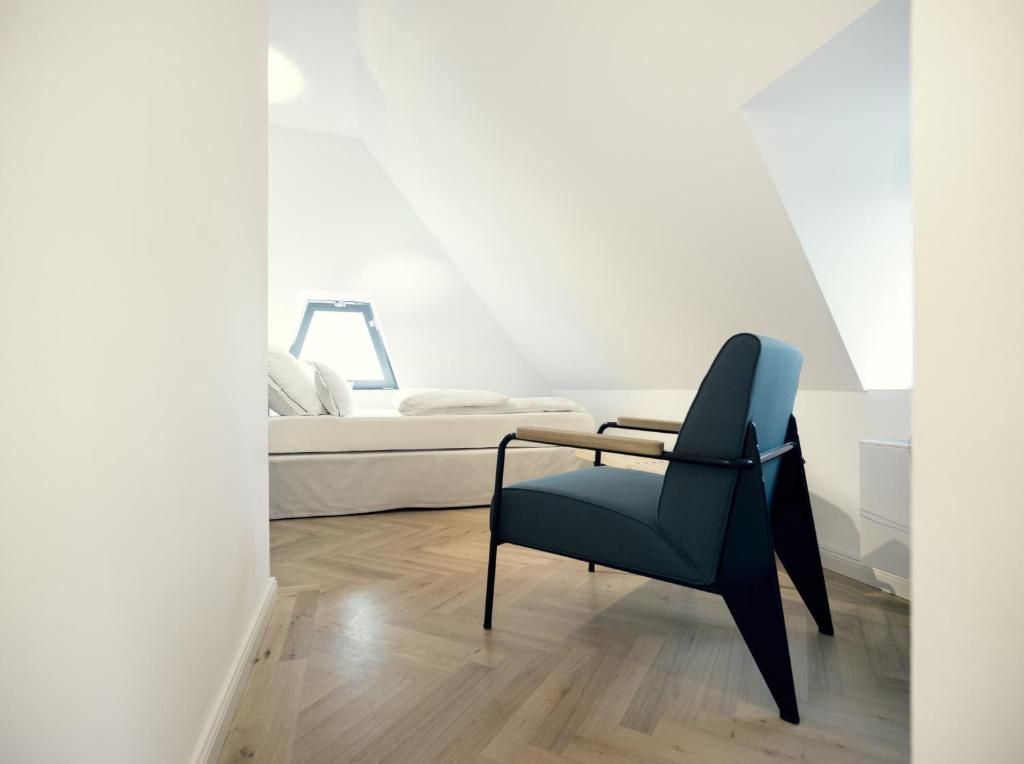
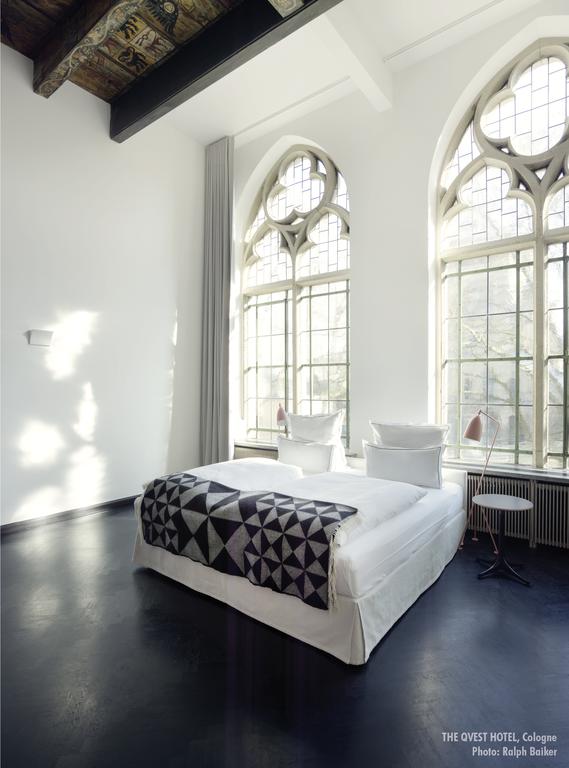
The historic structure ensures that conventional hotel uniformity is virtually impossible. Rooms and suites vary in proportion, architecture and atmosphere, with some rising beneath extraordinary cross vaults and others incorporating stained glass, dark timber or historic architectural fragments. Then there is the Salon Suite. Its extraordinary painted wooden ceiling dates from around 1390, introducing yet another century into a hotel already happily mixing several of them. Furniture and art are individually selected rather than repeated according to a standard room template. Black oak floors, Belgian black-marble window ledges and bathrooms with dark tiles recalling the Paris Métro add a distinctly European mood. Even the mirrors can have a story — including vintage Hermès examples from the 1930s. This is the sort of hotel where looking around your room becomes part of staying in it.
An Archive of Another Kind
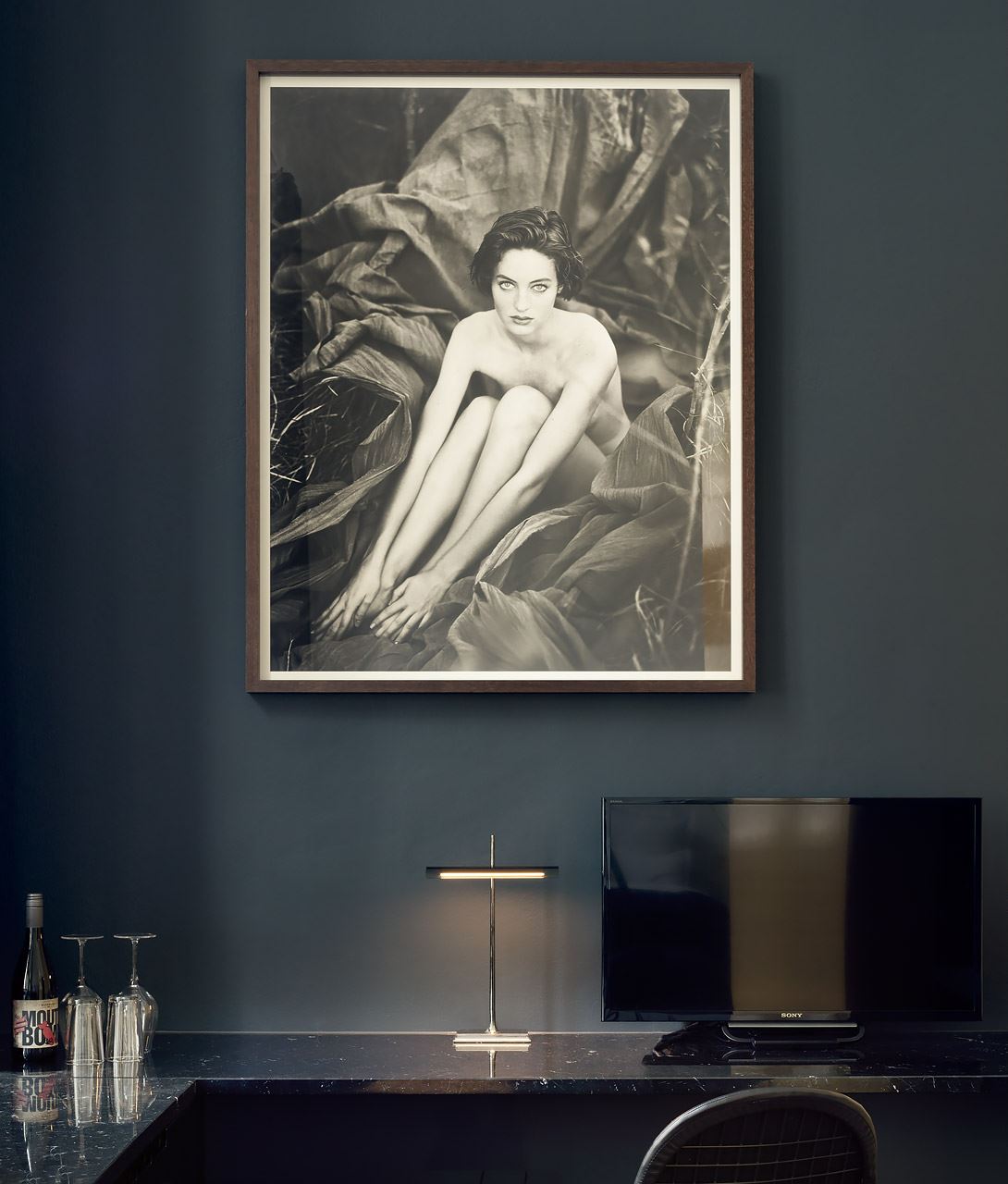
There is a pleasing irony to what happened here. A building once created to preserve Cologne’s historical records has become an archive again — only now the subject is modern art, photography and furniture design. Books and design publications appear throughout. Contemporary photography hangs against historic walls. The library encourages browsing rather than merely functioning as decorative shelving. Even an adjoining former chapel has been used as a photography gallery. QVEST hasn’t erased the building’s intellectual past. It has simply changed the collection.
Bar Rossi
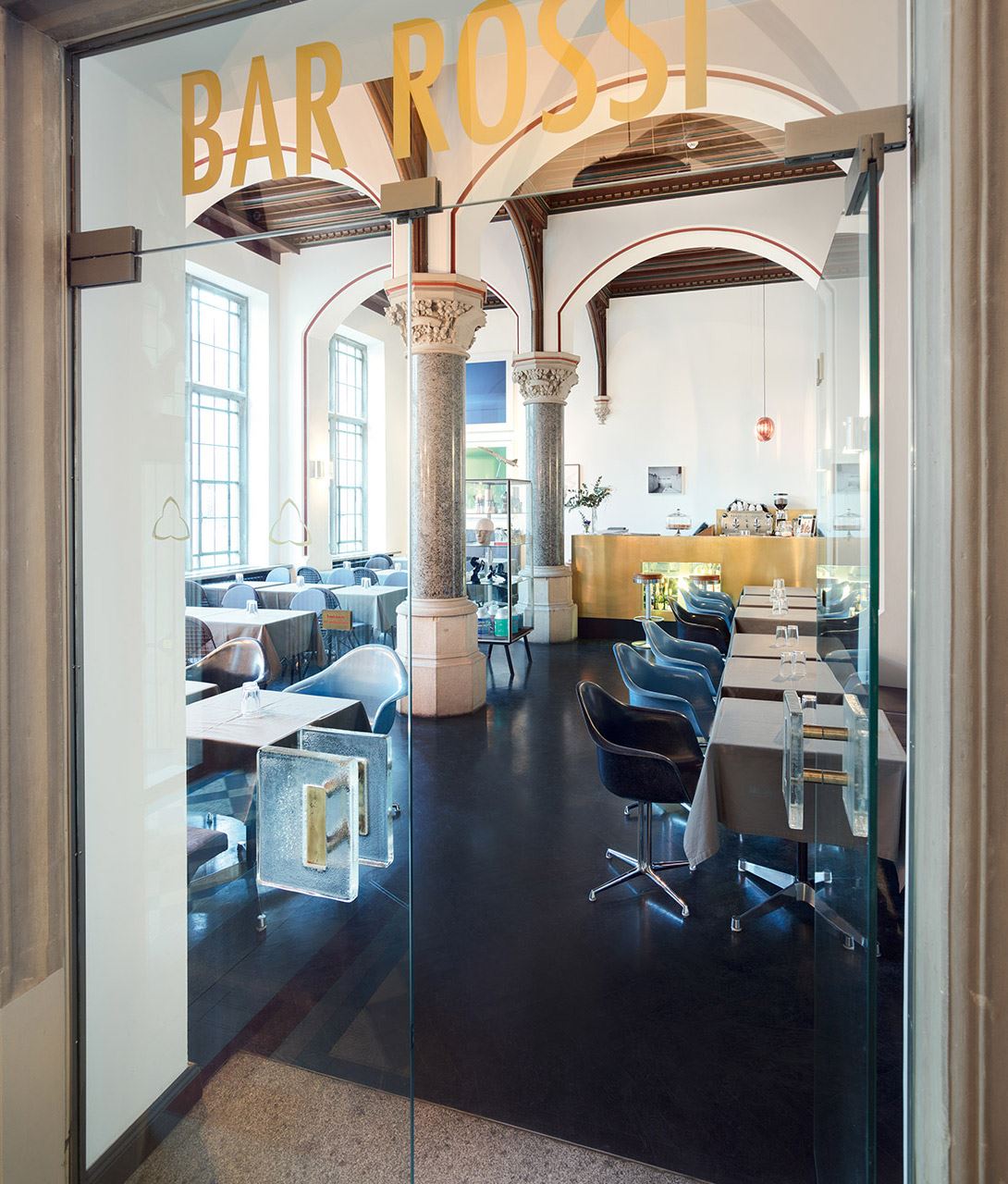
The same philosophy continues at Bar Rossi, where cocktails come surrounded by another carefully assembled collection of design. Authentic Eames shell chairs sit alongside contemporary art and photography, while an original display cabinet by Cologne architect Wilhelm Riphahn adds another local design connection. Kaune’s collaboration with German design company Tecta further strengthens the Bauhaus thread running through the property. This isn’t a bar that has been styled to look mid-century. The furniture actually matters. For serious design lovers, that distinction matters too.
A Different Cologne
THE QVEST sits on the quiet Gereonshof, close to the Romanesque Basilica of St. Gereon. The location feels unexpectedly contemplative for central Cologne. Step outside and the city’s museums, shopping streets and nightlife are close; return and the atmosphere changes almost immediately. There are no giant signs announcing the hotel. No theatrical entrance. Just an imposing historic building on a quiet square and a discreet name above the door. Appropriate for somewhere calling itself a hideaway.
Why It Works
THE QVEST could easily have become either a reverential heritage hotel or an intimidating design museum. It is neither. Its strength lies precisely in the friction between the two worlds: neo-Gothic romanticism against Bauhaus rationalism; medieval craftsmanship beside industrial modernism; historical architecture filled with contemporary art. Nothing matches in the conventional sense. Everything belongs. THE QVEST Hideaway is one of those rare hotels where the building itself, the furniture and the art carry equal weight. You don’t simply sleep among design icons — you experience 600 years of design history arguing beautifully with itself.