REVERB by Hard Rock Hamburg – Germany
One of Hamburg’s most controversial wartime structures transformed into a hotel, music venue and extraordinary public garden above St. Pauli.
Why DNA Hotels Loves It
● Built into and on top of the monumental St. Pauli Bunker, turning one of Hamburg’s most imposing WWII relics into something radically different.
● A spectacular green “mountain path” climbs around the bunker towards gardens and terraces high above the city — architecture that has become a destination in itself.
● Music isn’t decorative branding here: the hotel shares the bunker with Georg Elser Halle, restaurants, bars and cultural spaces, creating an entirely new piece of St. Pauli.
From Flak Tower to Hotel
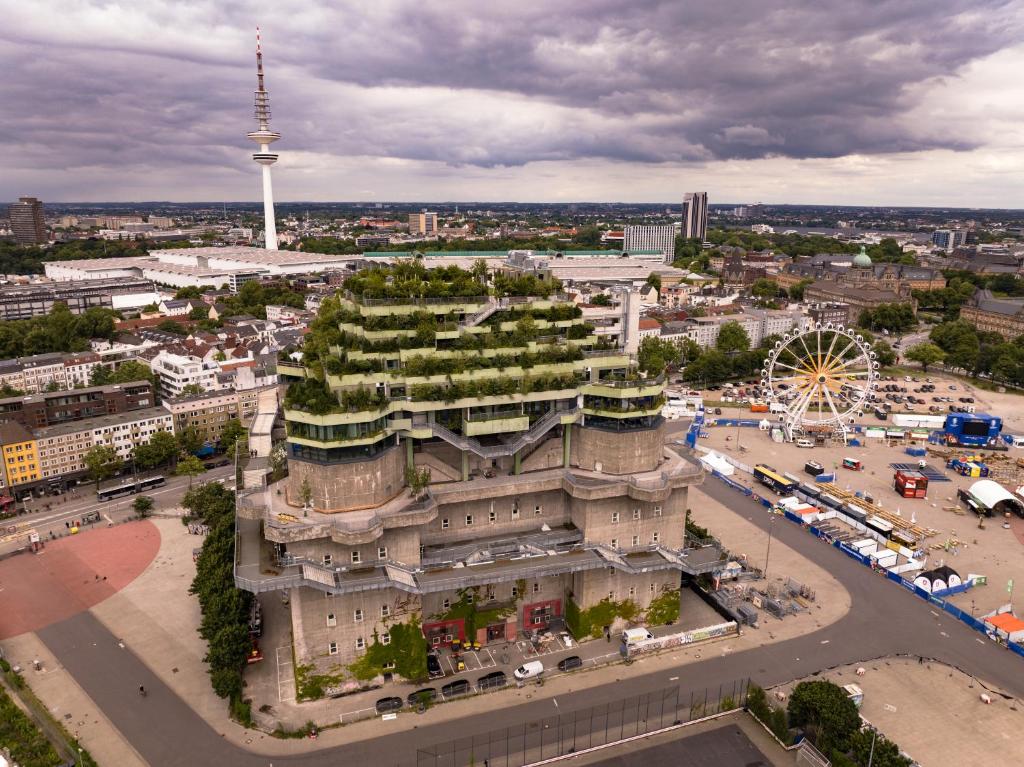
There are conversions. And then there’s REVERB by Hard Rock Hamburg. The hotel occupies perhaps the most unlikely hospitality address in the city: Flakturm IV, better known as the St. Pauli Bunker, the enormous reinforced-concrete anti-aircraft fortress constructed in 1942. For decades its vast grey mass has towered over the neighbourhood beside the Heiligengeistfeld. Demolishing it was hardly an option. The walls are several metres thick and the building itself is a physical reminder of one of Germany’s darkest periods. Instead, Hamburg did something far more interesting. It built upwards.
Five New Floors Above the Concrete
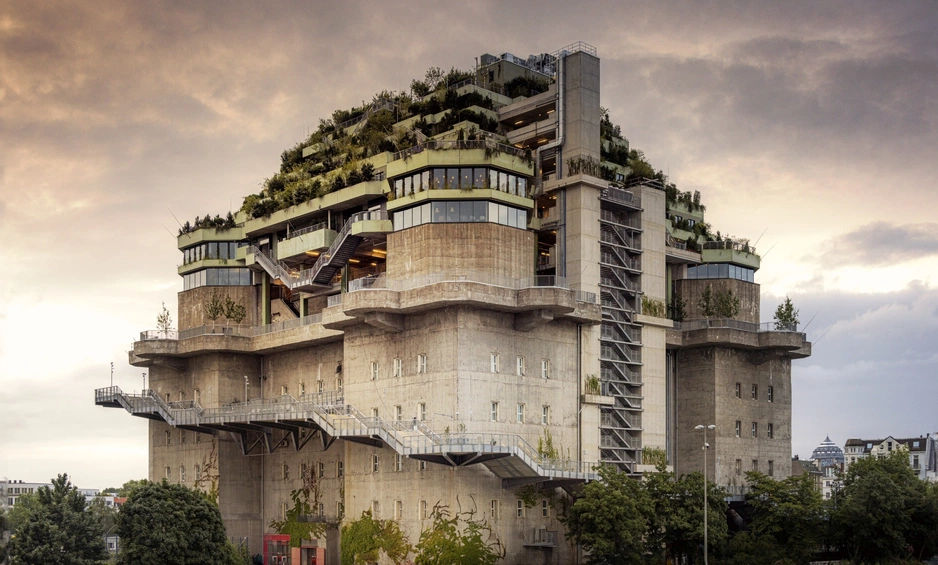
A new stepped structure rises from the roof of the original bunker, adding five storeys and dramatically changing its silhouette. Rather than attempting to disguise the brutal architecture below, the intervention makes the contrast explicit: monumental concrete at street level, increasingly open and green architecture as the building rises. REVERB occupies the new upper levels with 134 rooms, becoming the first European property for Hard Rock’s younger, more informal hotel concept. The result isn’t conventionally beautiful. It isn’t supposed to be. The extraordinary quality lies in the collision between what the building was and what it has become.
The Green Mountain
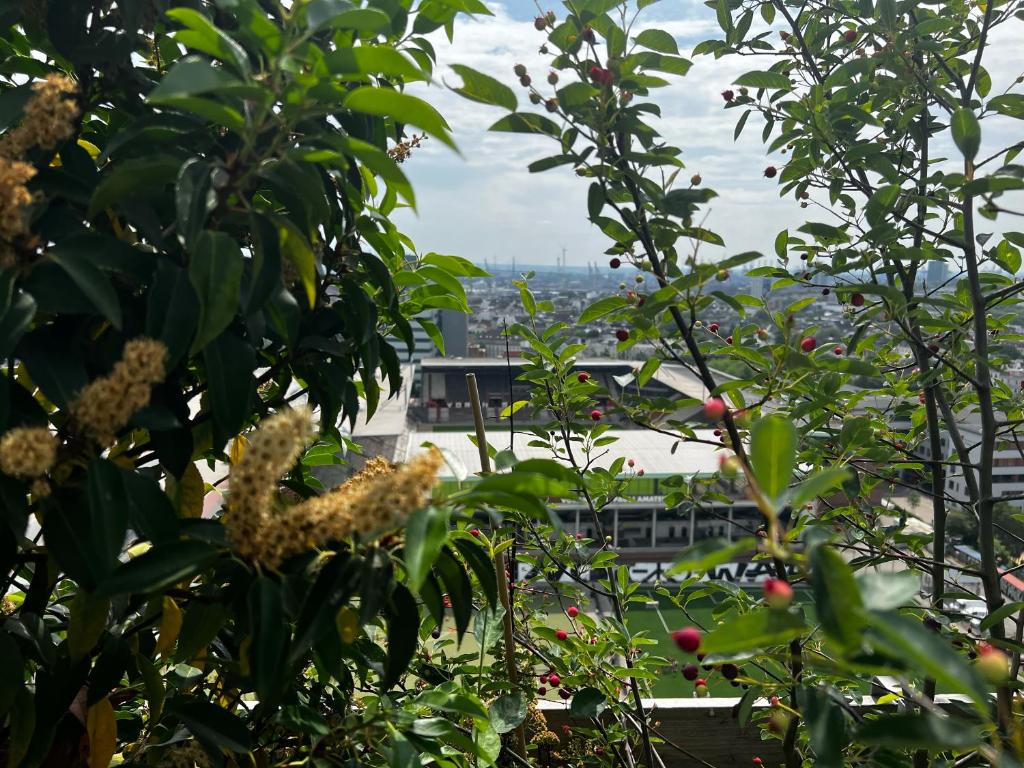
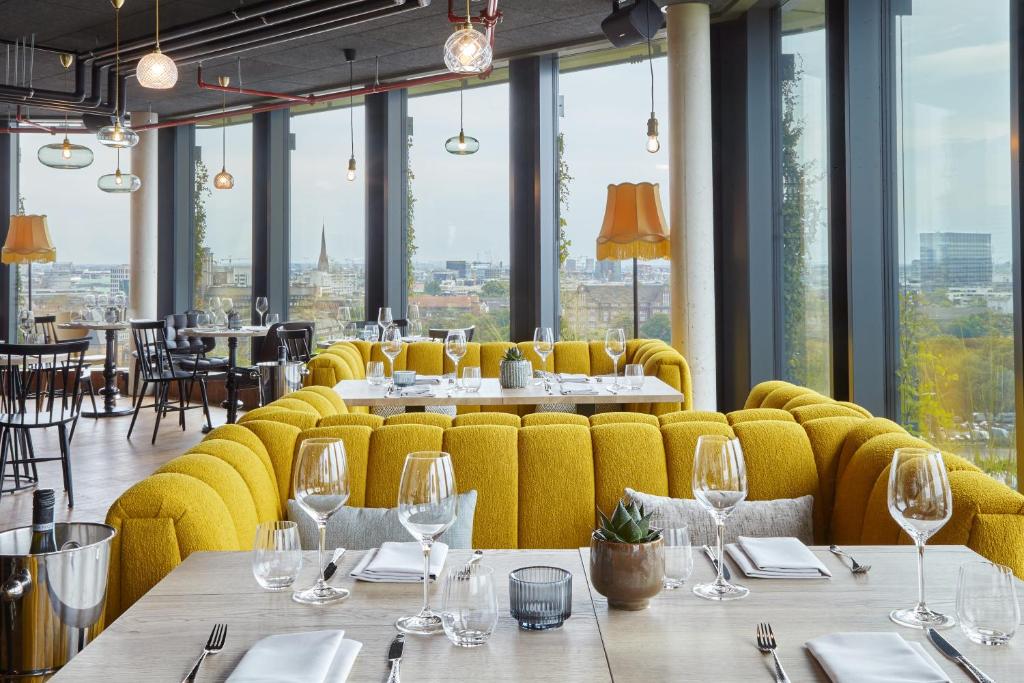
Most hotels discourage people who aren’t staying there from wandering through the building. Here, public access is fundamental to the architecture. A roughly 560-metre green pathway winds around the exterior towards the roof, gradually carrying visitors above St. Pauli through planted terraces. Thousands of trees, shrubs and other plants soften a structure previously defined almost entirely by concrete. At the top, the bunker has effectively acquired its own elevated park. Views stretch across Hamburg towards church towers, harbour cranes and the Elbe, while terraces allow visitors to stop along the ascent rather than treating the roof simply as an observation deck. It’s one of those rare hotel projects where the journey to the top is as important as what waits there.
Sleeping Inside a Hamburg Landmark
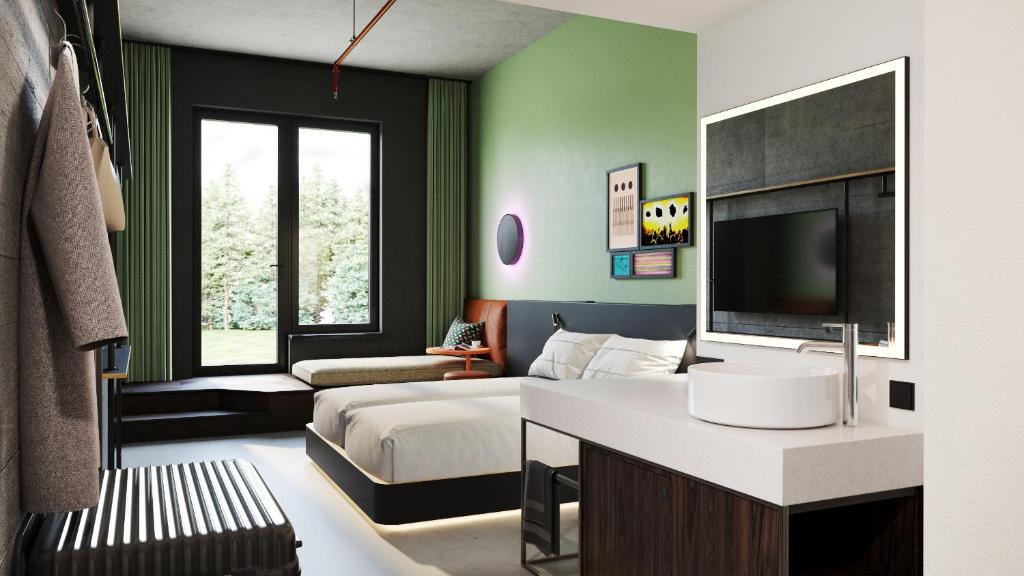
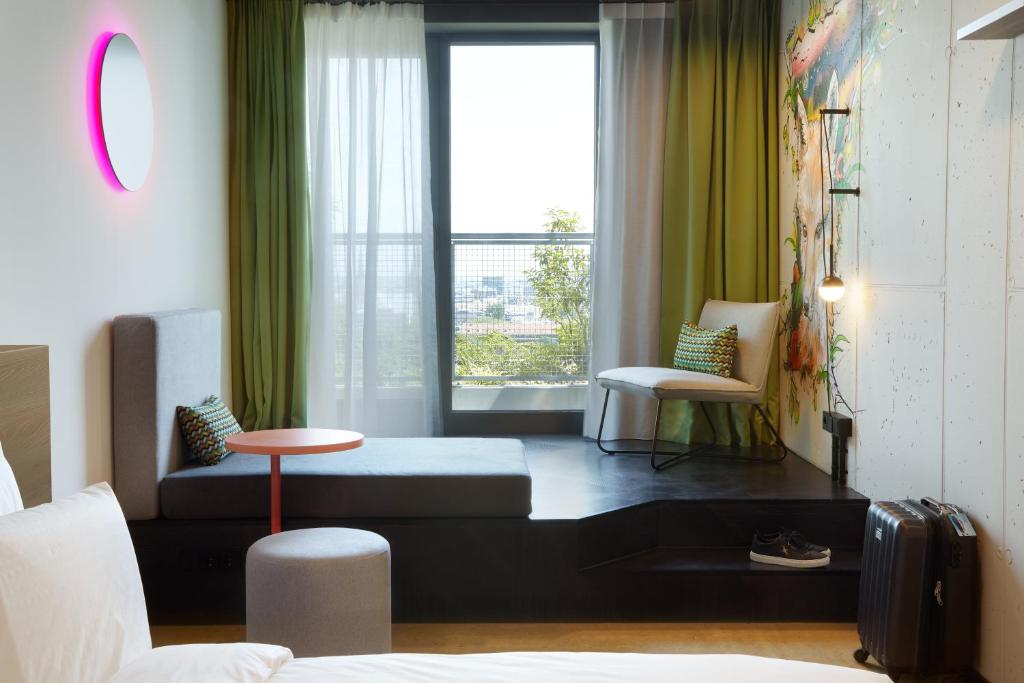
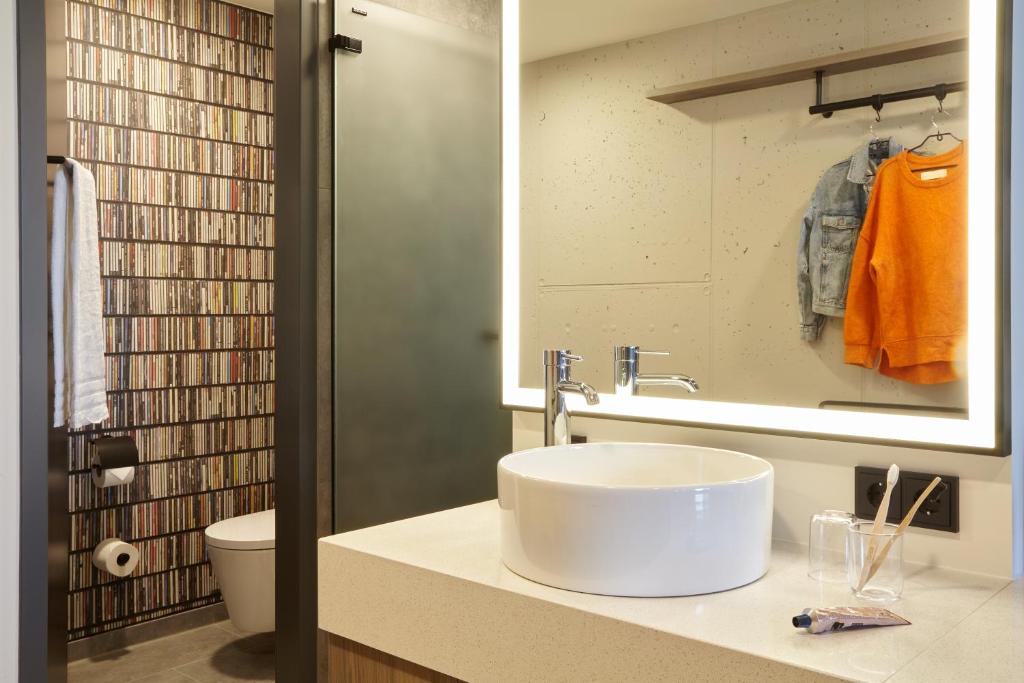
The bedrooms are surprisingly restrained considering the Hard Rock name. REVERB is positioned as the group’s younger, urban concept, and rooms combine an industrial vocabulary with warmer woods, contemporary furniture and injections of colour. Some are compact, others designed for groups, but the building provides the feature no decorator could manufacture: the view. From this height, Hamburg appears differently — rooftops, television tower, harbour infrastructure and the changing skyline spread out below. And despite the hotel’s musical identity, bedrooms are designed as somewhere to retreat when the amplifiers downstairs are switched on.
Music Without the Memorabilia Museum
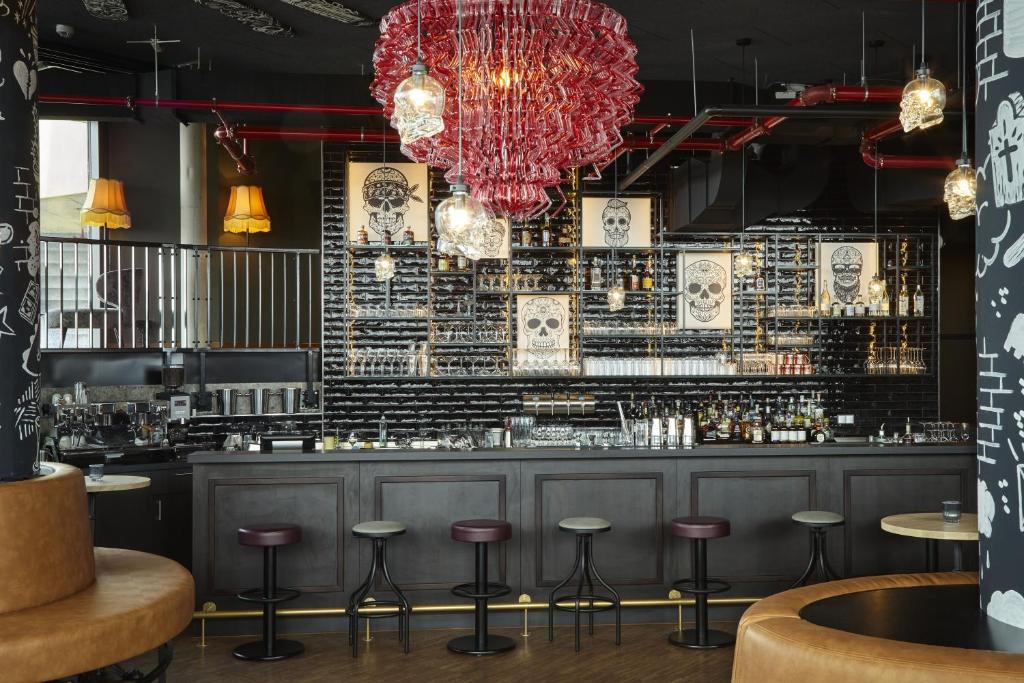
Hard Rock and music are inseparable, but REVERB takes a different approach from the traditional rock-memorabilia formula. The idea is participation rather than reverence. Music, DJs, performances and events are woven into the social life of the building, with spaces intended to bring guests, musicians and Hamburgers together. That makes considerable sense in St. Pauli, where clubs, live venues and counterculture have shaped the neighbourhood for generations. Hamburg doesn’t need a hotel pretending to have a music scene. It already has one.
Georg Elser Halle
The bunker itself adds another dimension. Within the wider redevelopment is Georg Elser Halle, a large concert and event venue with capacity for around 2,200 people. Its name remembers Georg Elser, the German resistance fighter who attempted to assassinate Adolf Hitler in 1939. That matters in a building with this history. The transformation doesn’t erase where the bunker came from. Instead, the new uses — music, hospitality, public space and culture — sit in deliberate tension with its origins. A building constructed for war now fills with audiences. That’s a considerably more powerful story than simply calling this adaptive reuse.
Karo & Paul
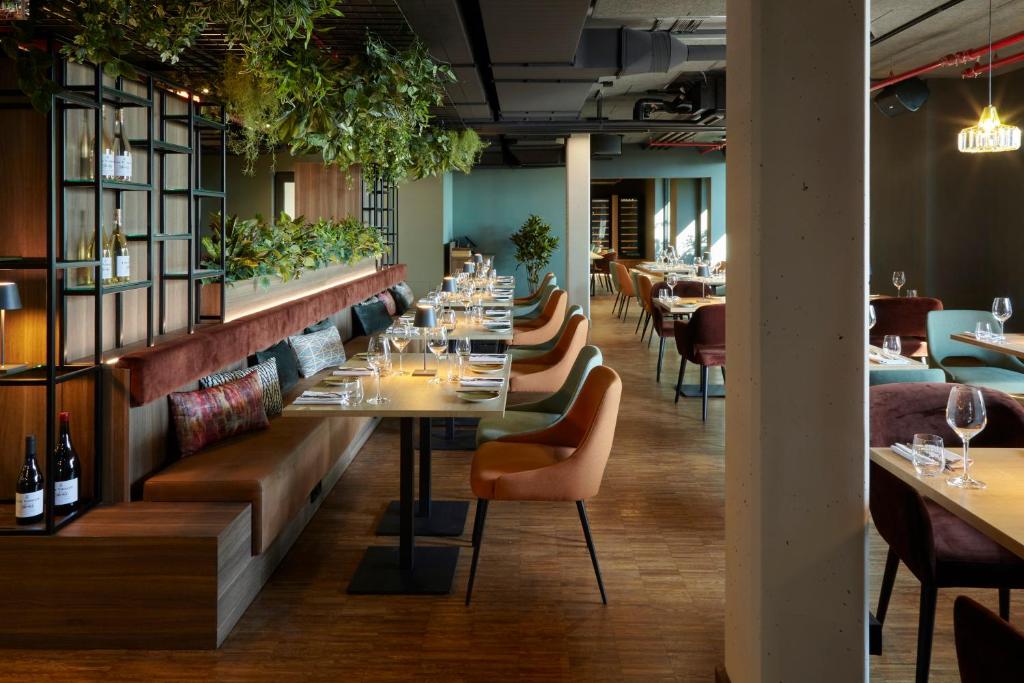
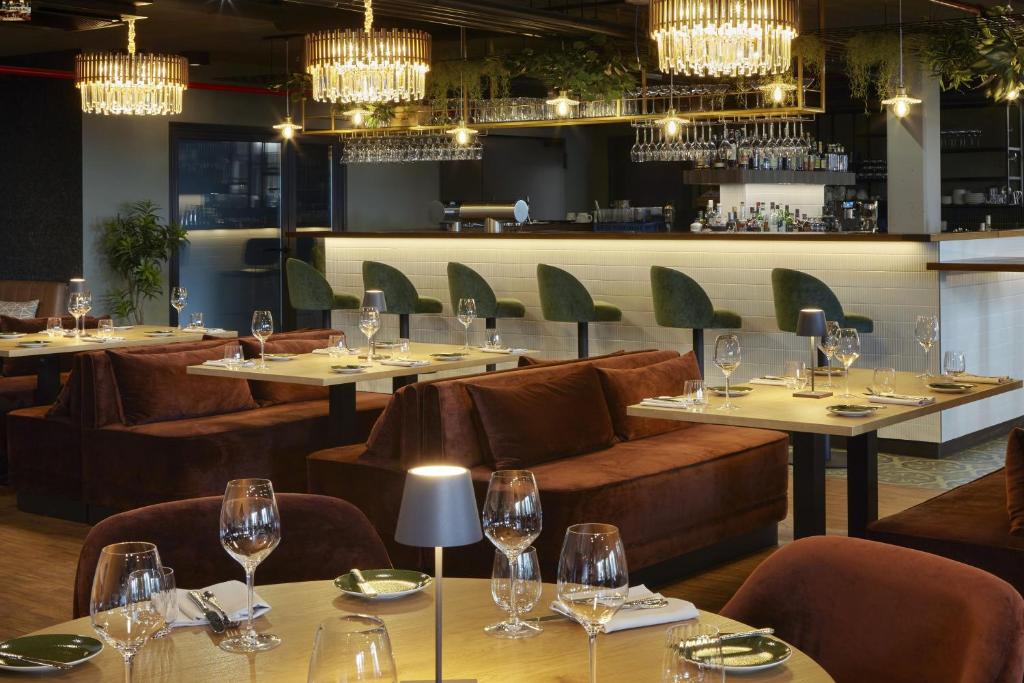
The rooftop development is also somewhere to eat and drink. Karo & Paul, extending across several levels, brings together restaurant, bar, café and outdoor terraces, creating a social destination independent of the hotel itself. The panoramic position inevitably steals some attention from what’s on the plate. But that’s part of the appeal. You can arrive for coffee, dinner or drinks without ever booking a room, reinforcing the idea that the bunker should become part of public Hamburg rather than a private hospitality enclave.
A Difficult Building Gets a New Future
Converting historic architecture into hotels has become commonplace. This is different. The St. Pauli Bunker isn’t a romantic palazzo, abandoned monastery or beautifully weathered industrial warehouse waiting to be rediscovered. Its architecture is inseparable from why it exists. That makes its reinvention complicated — and considerably more interesting. The project doesn’t make the original structure disappear. The bunker remains enormous, uncompromising and visibly present beneath everything that has been added. But now trees grow from it. People walk around it. Music plays inside it. Guests sleep above it. Hamburg has changed the building’s purpose without pretending it never had another one.
Why It Works
REVERB isn’t here because it is the most refined hotel in Hamburg. It’s here because there is nothing else quite like it. The rooms are almost secondary to the extraordinary piece of urban transformation surrounding them: a WWII bunker supporting a contemporary hotel, concert hall, restaurants and a publicly accessible landscape rising high above St. Pauli. The contrast is uncomfortable, ambitious and fascinating. REVERB by Hard Rock Hamburg demonstrates what adaptive reuse can mean when the architecture isn’t easy to love or easy to forget. The bunker remains. What happens inside and above it has changed completely — from fortress to gathering place, from concrete roof to urban garden, and from an architecture built to keep the world out to one deliberately inviting the city in.