The Royal Park Hotel Iconic Nagoya – Japan
Chubu craft, high-rise views and contemporary Japanese restraint above Sakae
Why DNA Hotels Loves It
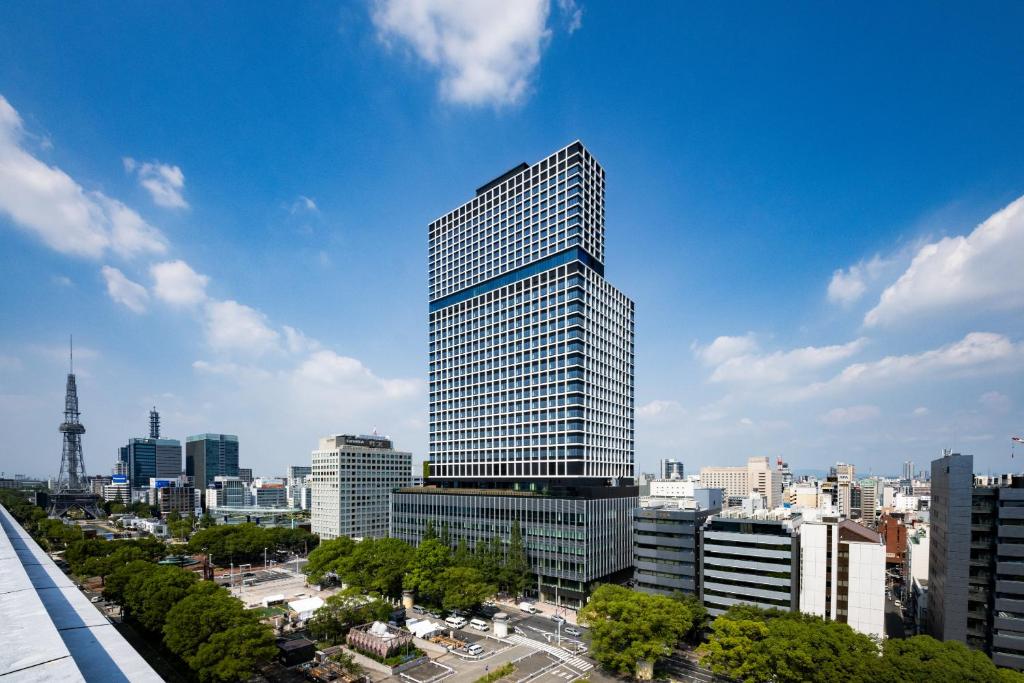
● Occupying floors 24 to 32 of the redeveloped Chunichi Building, the hotel turns one of Nagoya’s long-standing cultural landmarks into a contemporary gateway to the city.
● Regional craftsmanship is woven directly into the interiors through Arimatsu Shibori textiles, Mino washi and ceramics from Tokoname and Seto, giving the hotel a clear Chubu identity.
● Rather than presenting craft as decoration, the design integrates it into rooms and public spaces as something to touch, use and live with — creating a hotel that feels rooted in place without becoming folkloric.
A Landmark Reimagined Above Sakae
For more than half a century, the Chunichi Building formed part of Nagoya’s cultural and commercial identity. Its redevelopment could easily have produced another anonymous mixed-use tower. Instead, the upper floors now house The Royal Park Hotel Iconic Nagoya, a hotel that uses height, local craftsmanship and contemporary Japanese design to reconnect the building with the city around it. Set between floors 24 and 32 in the Sakae district, the hotel looks out across Nagoya’s urban landmarks, including Nagoya Castle, Oasis 21 and the Chubu Electric Power MIRAI TOWER. The city becomes the backdrop. But the design story begins much closer to hand.
Craft as Architecture
Throughout the hotel, regional craft is treated as part of the spatial language rather than as decorative garnish. Arimatsu Shibori, the hand-dyed textile tradition associated with the Nagoya area, introduces pattern and tactility. Mino washi brings softness and filtered light. Ceramics from Tokoname and Seto, two of Japan’s great pottery centres, add weight, texture and a distinctly local material vocabulary. The result is subtle. There are no overloaded displays shouting about heritage. Instead, traditional techniques appear within a contemporary framework of restrained lines, muted colours and carefully controlled lighting. Craft feels alive because it is being used.
A Hotel Between History and Modernity
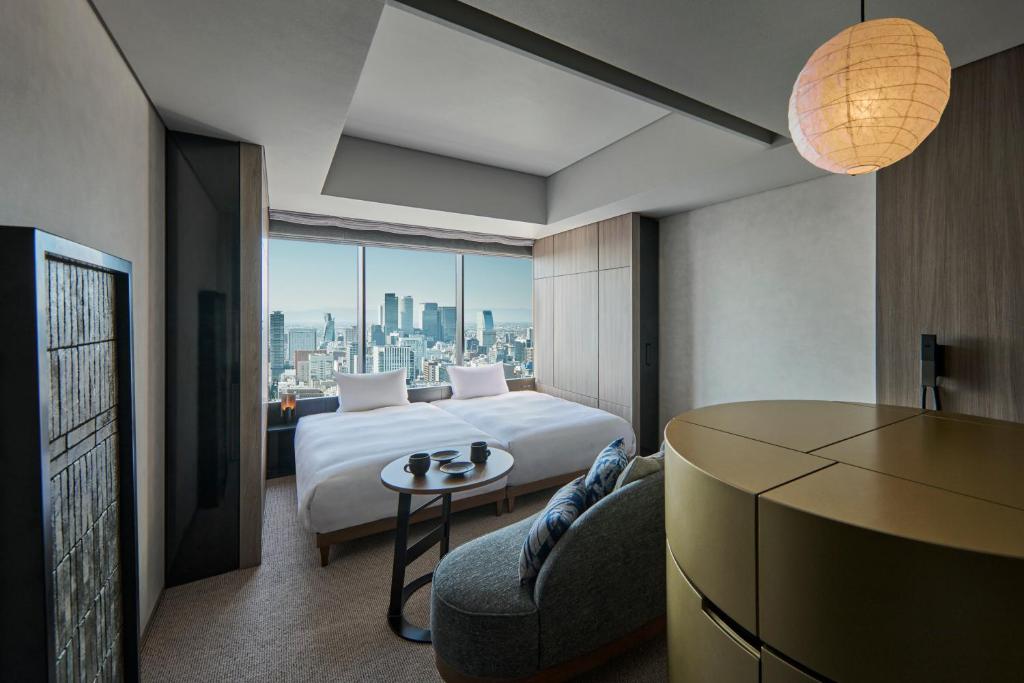
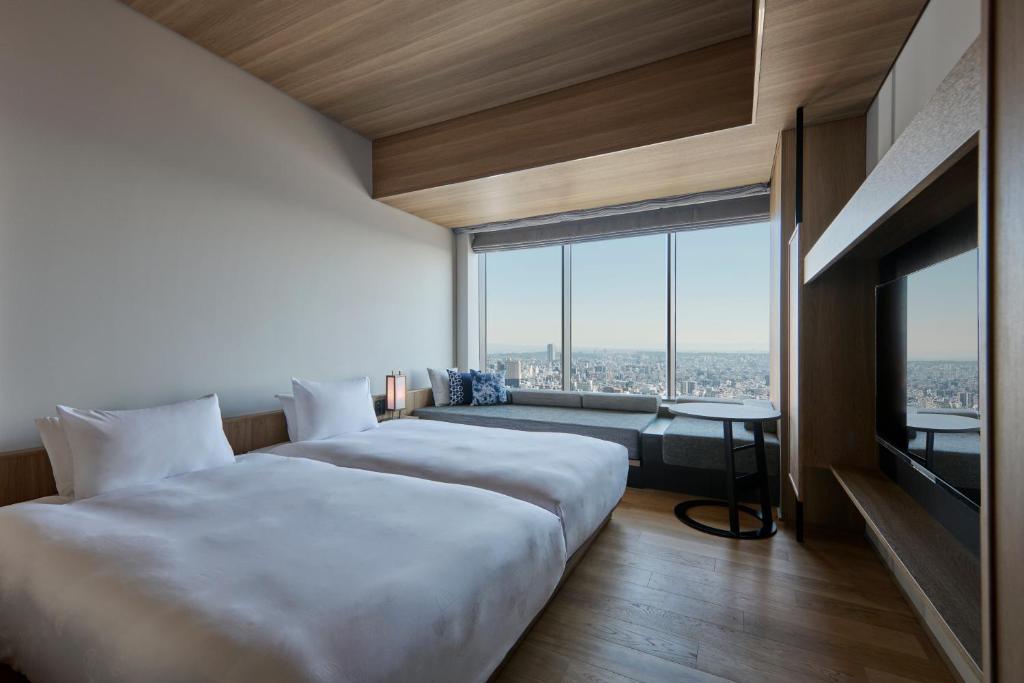
The guestrooms extend the same idea. Rather than applying a single decorative formula, the hotel plays with concepts of history and modernity, using references to the wider Chubu region and Nagoya’s cultural past within an otherwise clean, contemporary setting. Some rooms introduce historical motifs through furniture and objects inspired by the region’s Sengoku-era identity. Others lean more heavily into present-day Japanese minimalism. What connects them is restraint. Natural textures. Calm palettes. Integrated storage. And enough visual quiet to let the views and materials carry the atmosphere.
High Above Nagoya
The elevated position changes the character of the stay considerably. Sakae is one of Nagoya’s busiest districts, but from the upper floors the city becomes almost abstract. Roads become lines. Buildings flatten into geometry. Landmarks appear in the distance like reference points in a map. That separation gives the interiors more calm than their central location might suggest. The hotel feels connected to the city without being consumed by it.
Public Spaces as a Living Gallery
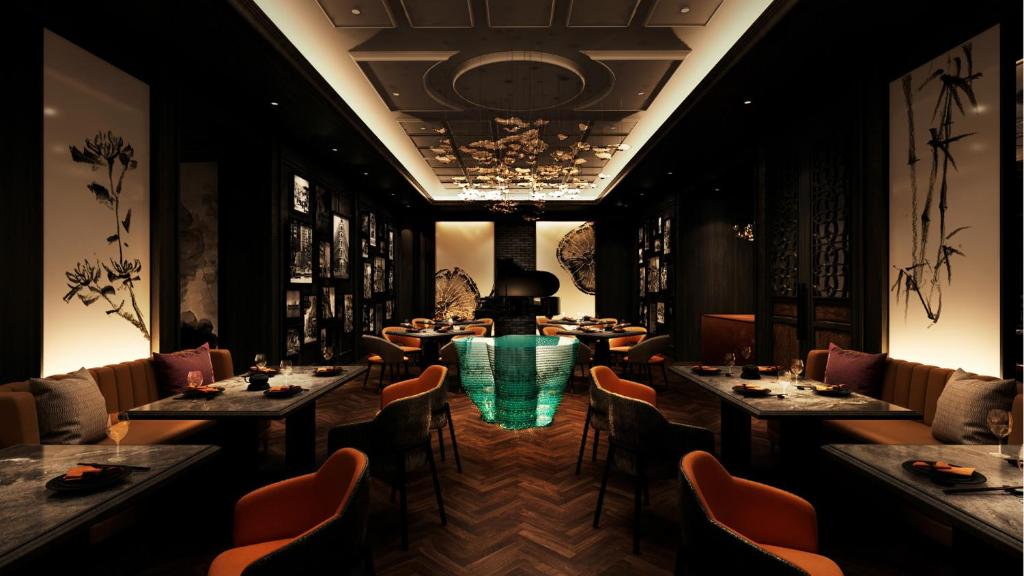
The communal areas continue the conversation between contemporary hospitality and regional making. Textiles soften architectural surfaces. Ceramics punctuate lounges and dining spaces. Paper, wood and crafted objects create moments of visual interest without disturbing the overall sense of order. The effect is closer to a living gallery than a conventional luxury hotel. Not because objects are displayed behind glass. But because they are integrated into daily life. Sit beside them. Touch them. Eat from them. Notice them gradually.
Chubu, Not Generic Japan
One of the hotel’s strongest qualities is its specificity. It would have been easy to create a polished version of generic “Japanese luxury.” Instead, the design looks directly towards Chubu. Arimatsu. Mino. Tokoname. Seto. Nagoya itself. Those references give the hotel a regional identity that international travellers can feel even if they do not immediately recognise every craft tradition by name. That is precisely why it works. The place comes first. The explanation can follow.
A Contemporary Cultural Stay
The Royal Park Hotel Iconic Nagoya sits in an interesting position between business hotel, design hotel and cultural showcase. It is polished enough for an urban luxury stay. Quiet enough to feel residential. And specific enough to communicate something meaningful about its location. There is no need for theatrical design gestures. The strongest moments are smaller. A textile. A ceramic object. A paper screen. A framed view across Nagoya.
Design That Belongs Here
The success of The Royal Park Hotel Iconic Nagoya lies in how naturally local craft has been absorbed into contemporary hospitality. Nothing feels costume-like. Nothing feels museumified. And nothing feels imported without context. It is a high-rise hotel that finds its identity not in the skyline, but in the hands, materials and traditions of the Chubu region below.