Hotel Saint Augustine, Houston
A village-like design retreat where architecture, landscape, and Houston’s creative spirit converge beside the Menil Collection.
Why DNA Hotels Loves It
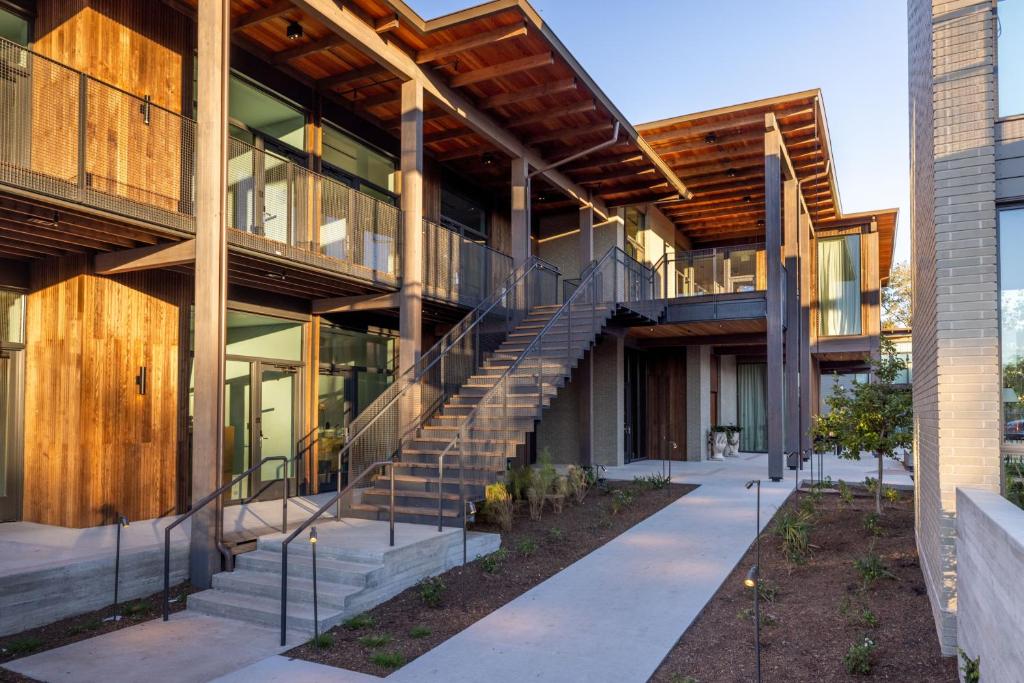
● Lake|Flato’s beautifully restrained architecture creates a rare sense of calm in one of Houston’s most culturally vibrant neighborhoods.
● Post Company’s richly layered interiors balance residential warmth, surrealist touches, and exceptional craftsmanship.
● A thoughtful collaboration between architecture, landscape, and hospitality that feels more like a private compound than a conventional hotel.
A Cultural Retreat Beside the Menil
Tucked into Houston’s leafy Montrose neighborhood, directly adjacent to the Menil Collection campus, Hotel Saint Augustine occupies a unique position within the city’s cultural landscape. Rather than announcing itself through height or spectacle, the hotel embraces a quieter presence, unfolding across 2.2 acres as a collection of interconnected buildings woven into the neighborhood fabric. The location feels particularly fitting. Surrounded by museums, galleries, artists, and creative institutions, Hotel Saint Augustine reflects the intellectual and artistic character of its surroundings while providing a welcome sense of retreat from the city beyond.
Designed as a Contemporary Village
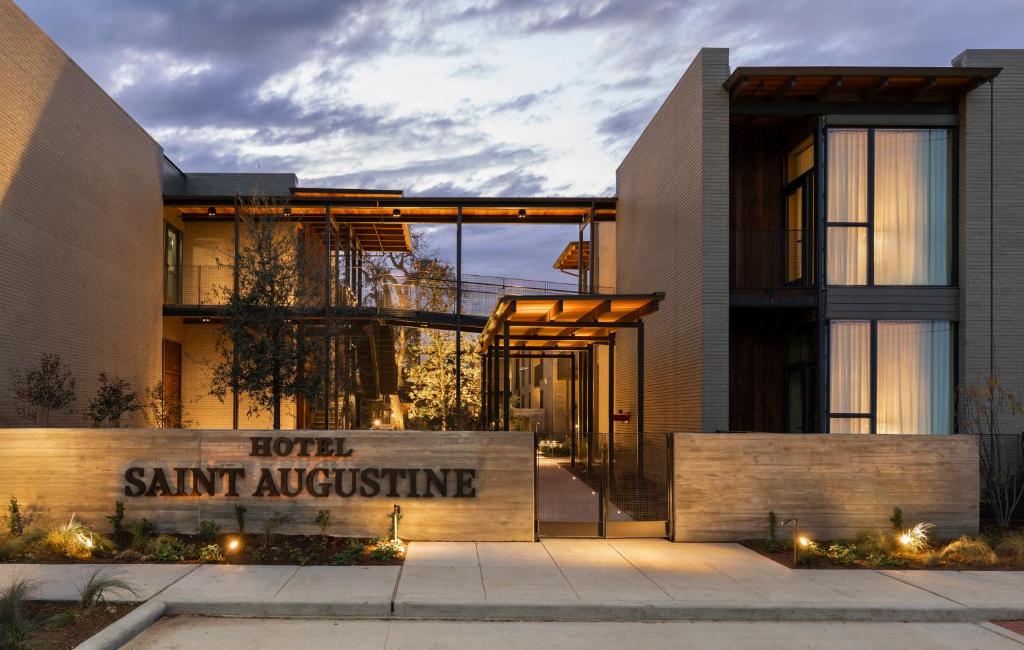
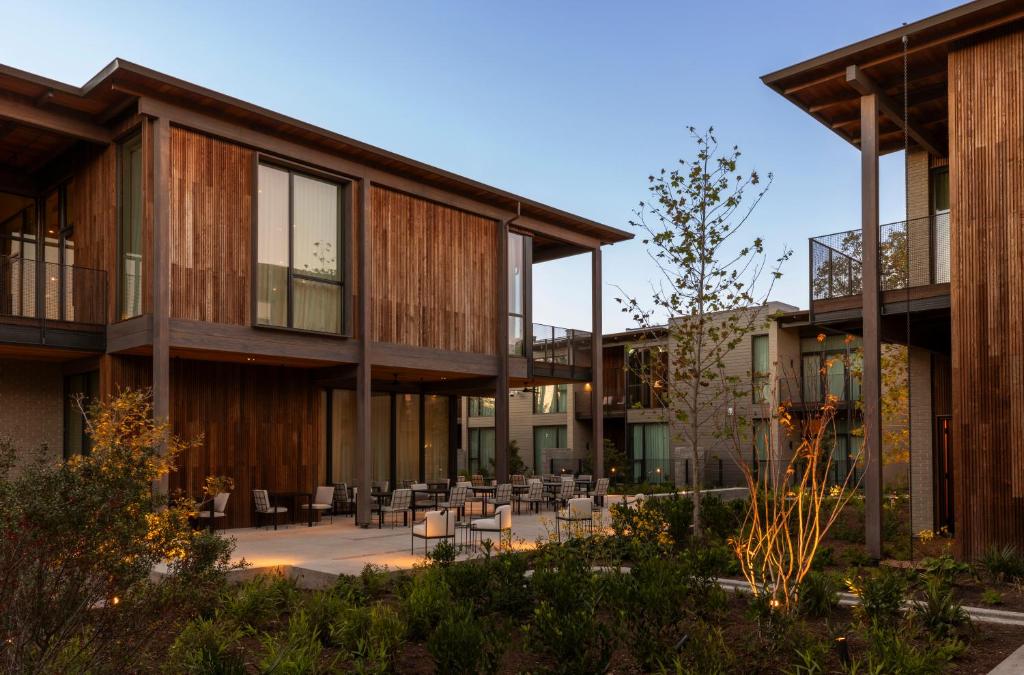
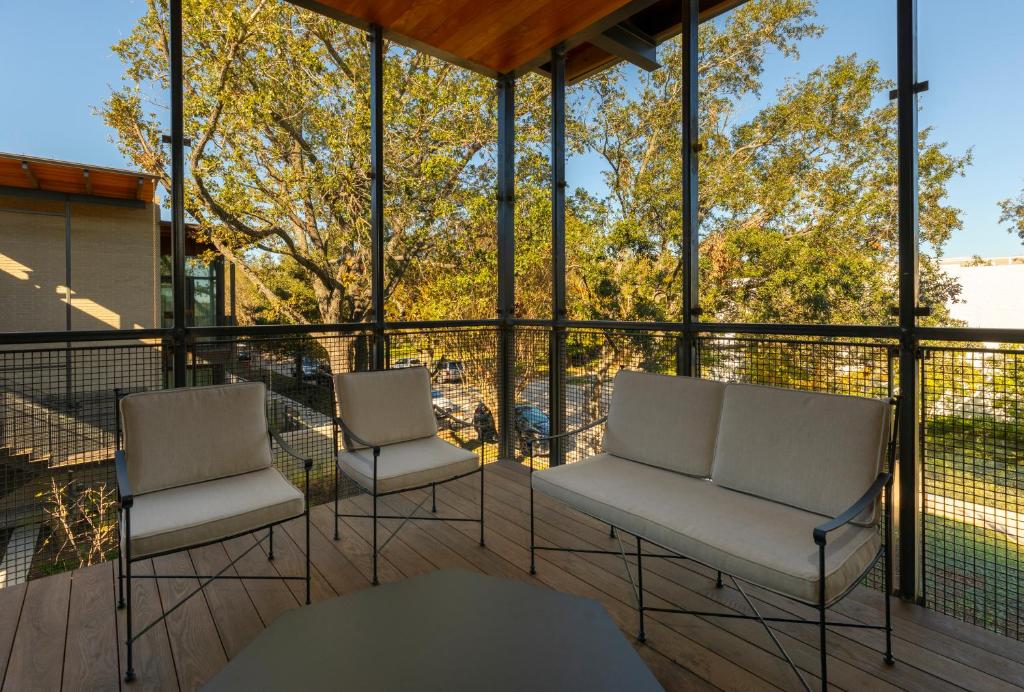
Architecture by acclaimed Texas firm Lake|Flato gives the property its distinctive identity. Instead of a single monolithic structure, the hotel consists of five two-story buildings connected by open-air bridges, terraces, pathways, and courtyards. The composition feels intentionally residential. Elongated gray brick, combed wood siding, screened porches, projecting bays, and shaded walkways create a rhythm that recalls a small neighborhood rather than a hotel development. Guests move through gardens and open-air passages as they travel between rooms, lounges, and public spaces, creating a stronger connection to the landscape and climate. This horizontal approach feels particularly refreshing in Houston, where vertical development often dominates the urban experience.
Landscape as Architecture
The landscape is not merely decorative here—it is fundamental to the experience. Working alongside The John Fairey Garden, landscape architects Ten Eyck created a lush environment that threads through every corner of the property. Four courtyards connect the buildings, while carefully selected native and rare plant species soften the architecture and create moments of discovery throughout the grounds. The gardens establish a constant dialogue between indoors and outdoors, making nature feel inseparable from the hotel itself. The result is a property that seems to emerge from its landscape rather than sit upon it.
Interiors with Residential Warmth
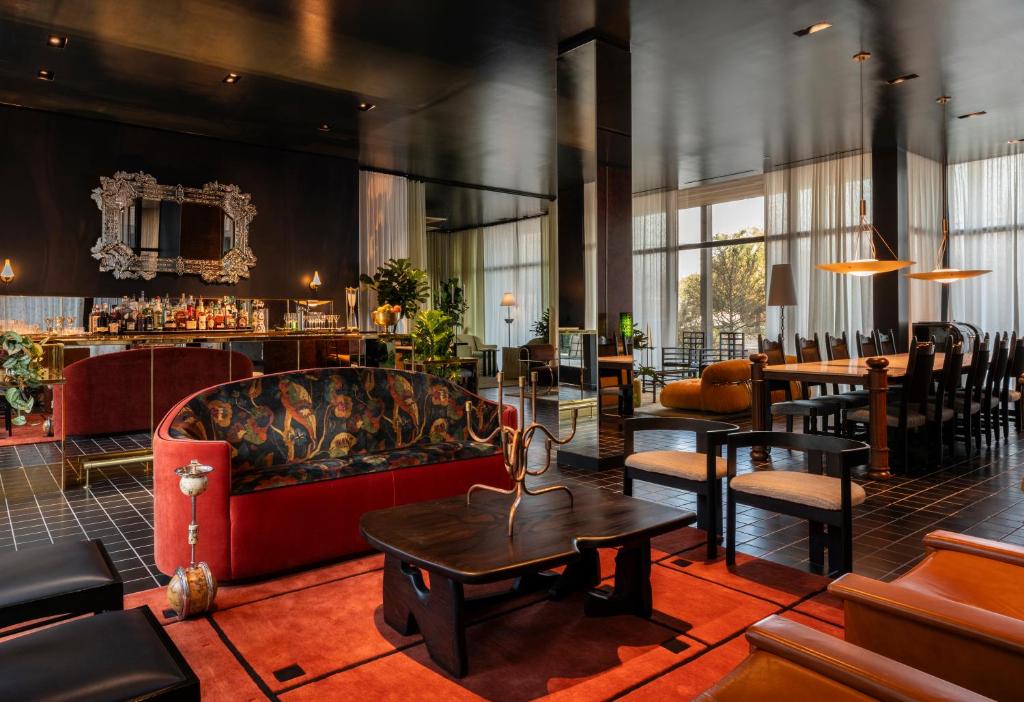
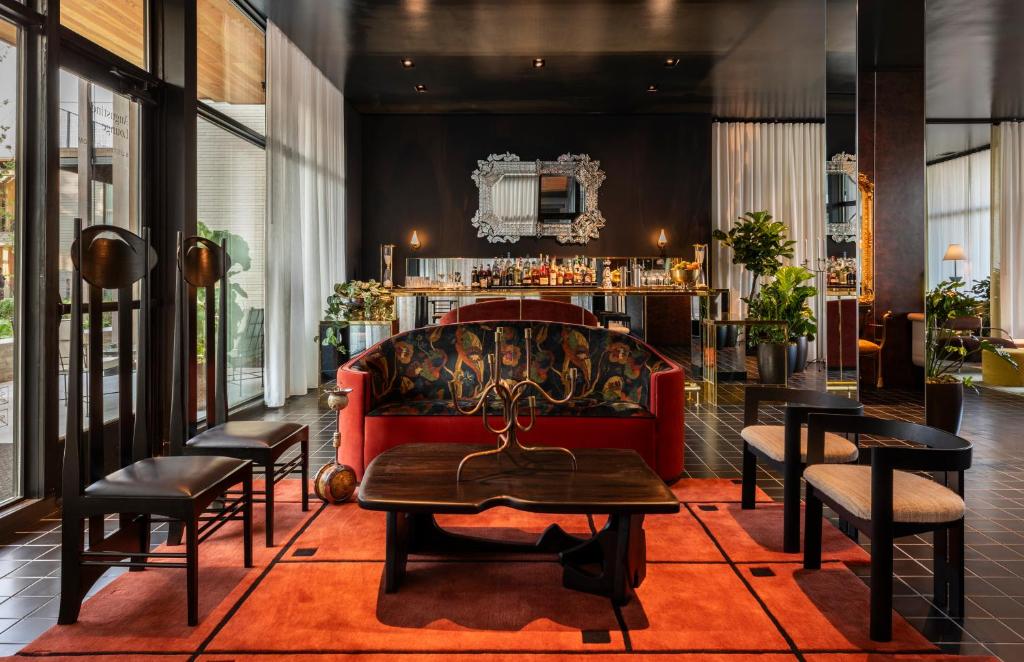
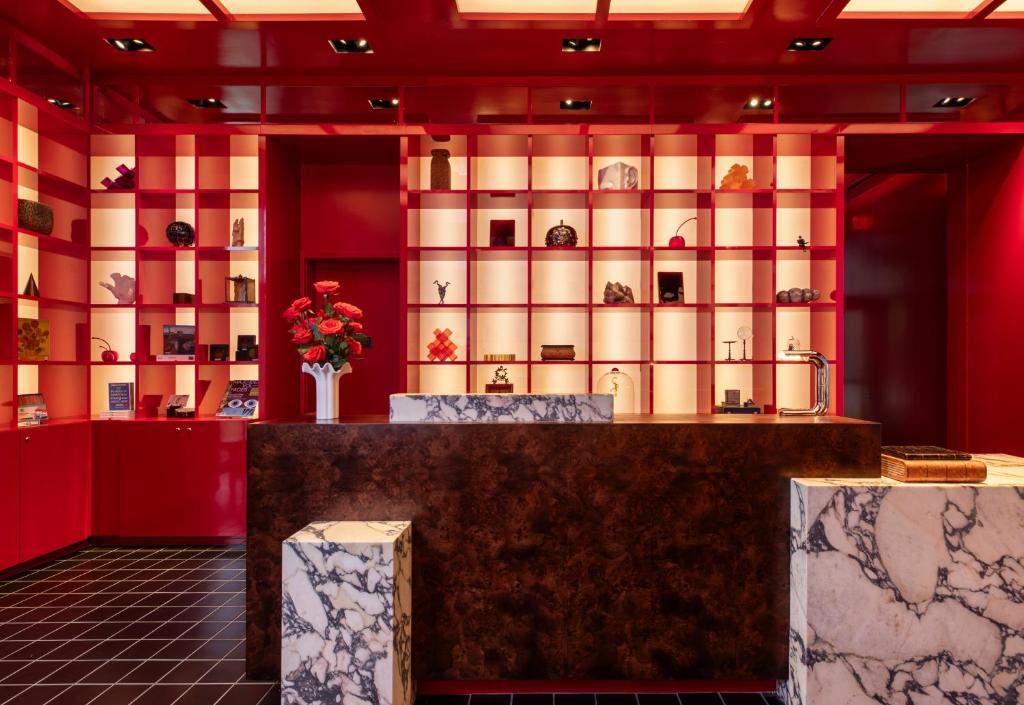
Inside, Bunkhouse Hotels collaborated with Brooklyn-based Post Company to create interiors that feel both sophisticated and deeply personal. The design avoids obvious references to the neighboring museums, choosing instead to create an atmosphere where materials, textures, and objects become the art. The lobby unfolds like a collector’s home. A burled walnut reception desk, marble accents, linen drapery, vintage furnishings, and carefully curated seating areas create a series of intimate rooms rather than a singular public space. Deep blue walls and ceilings add drama and depth, while large windows frame views toward the surrounding courtyards and gardens. Throughout the property, moments of whimsy prevent the design from feeling overly serious, creating spaces that are elegant yet approachable.
Dreamlike Guestrooms
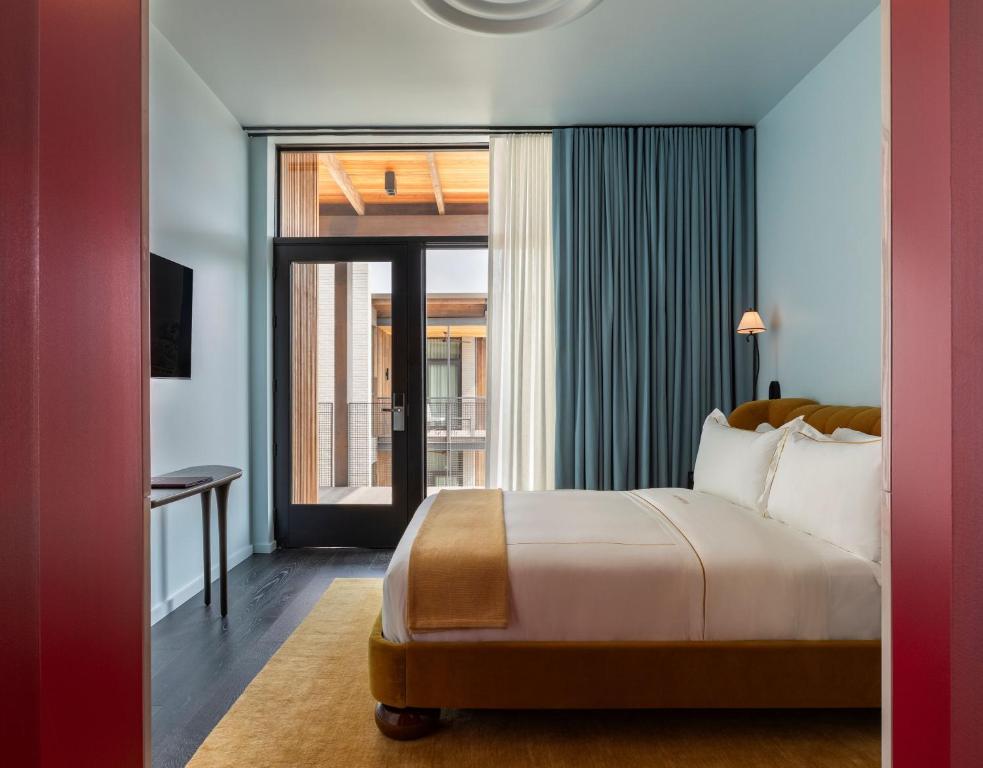
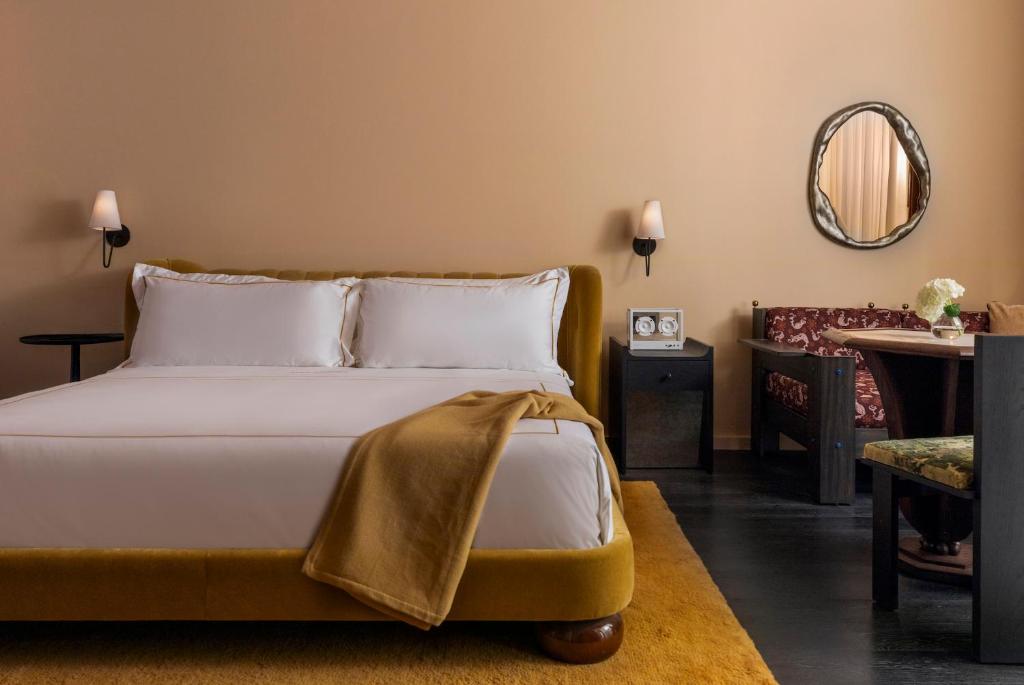
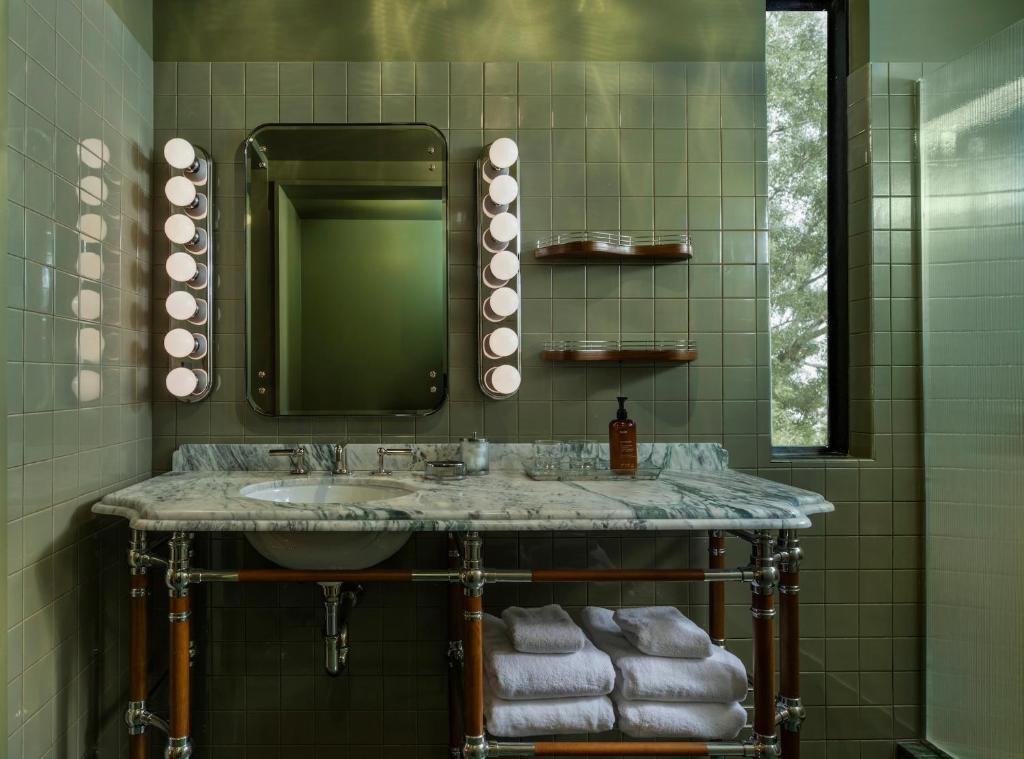
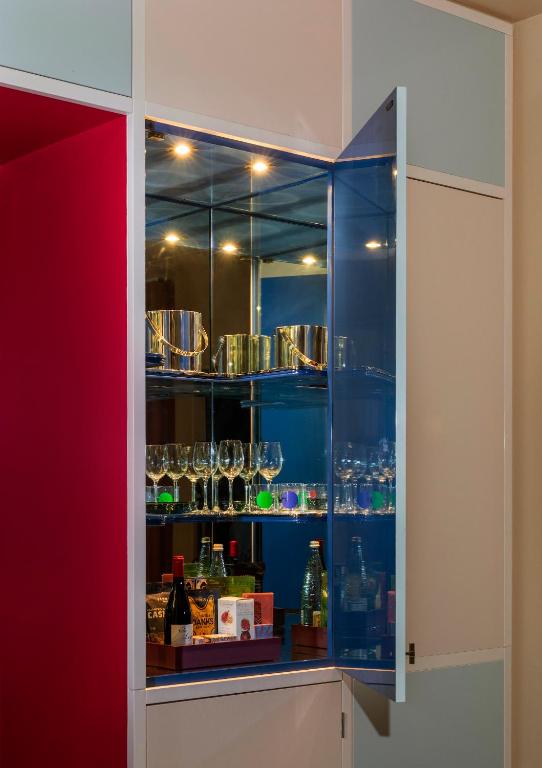
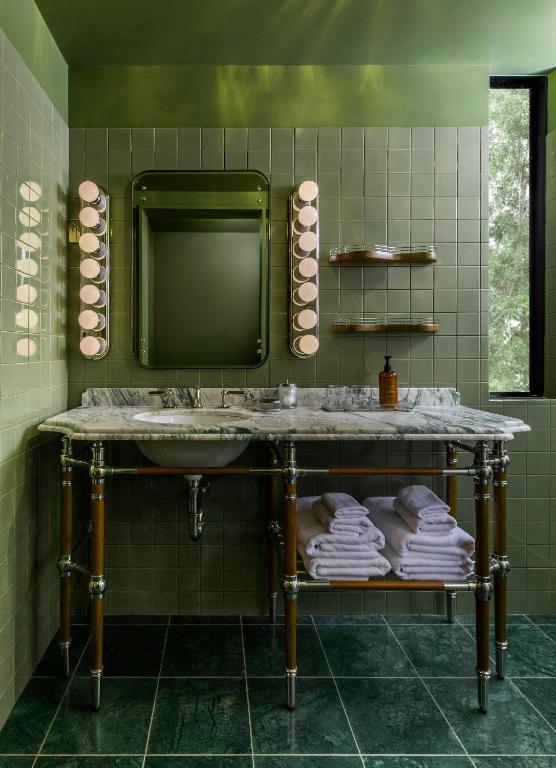
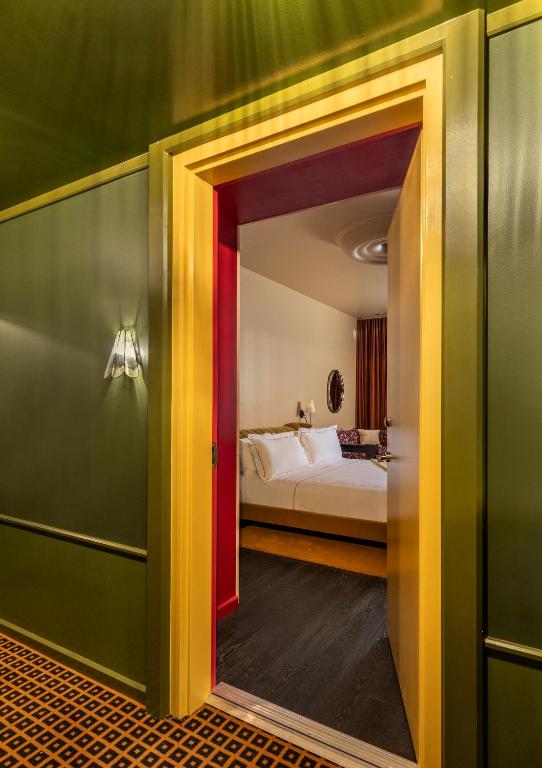
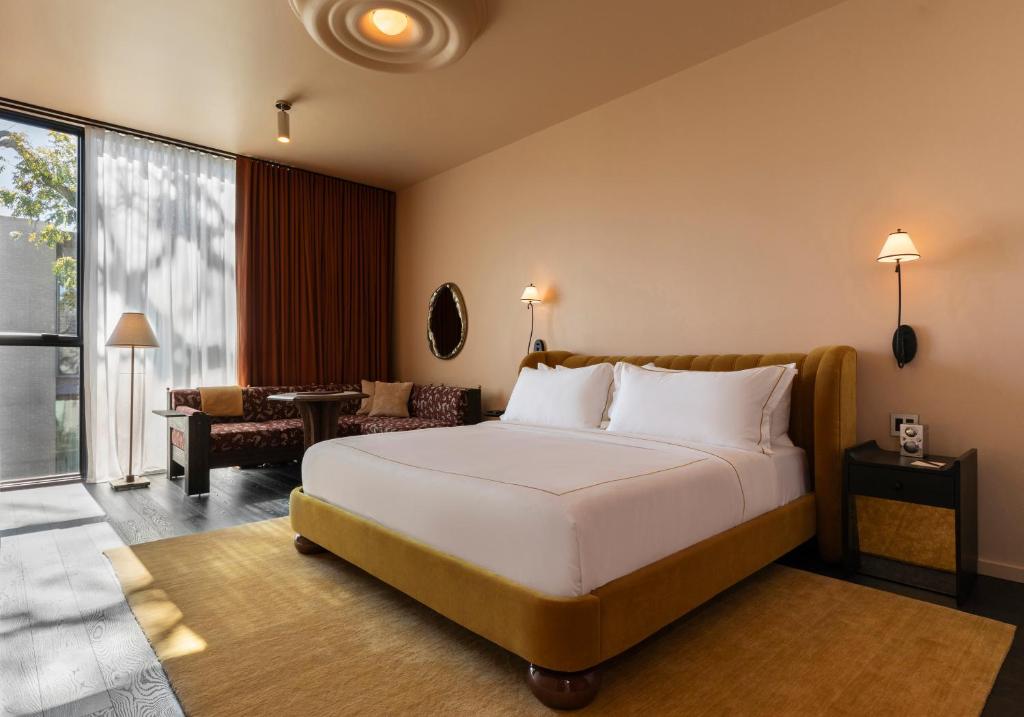
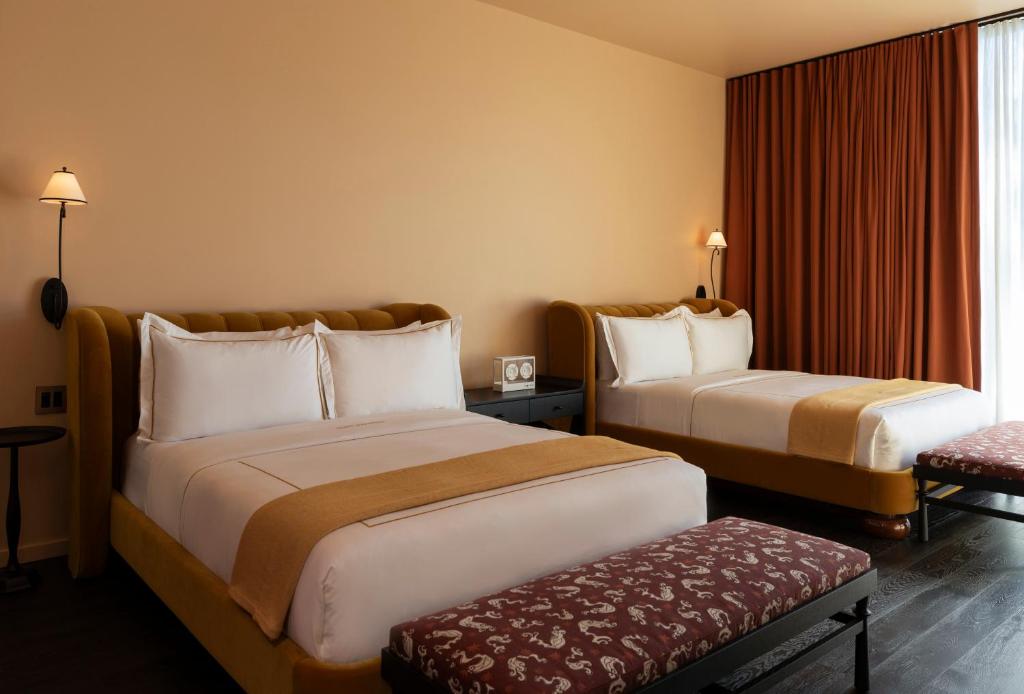
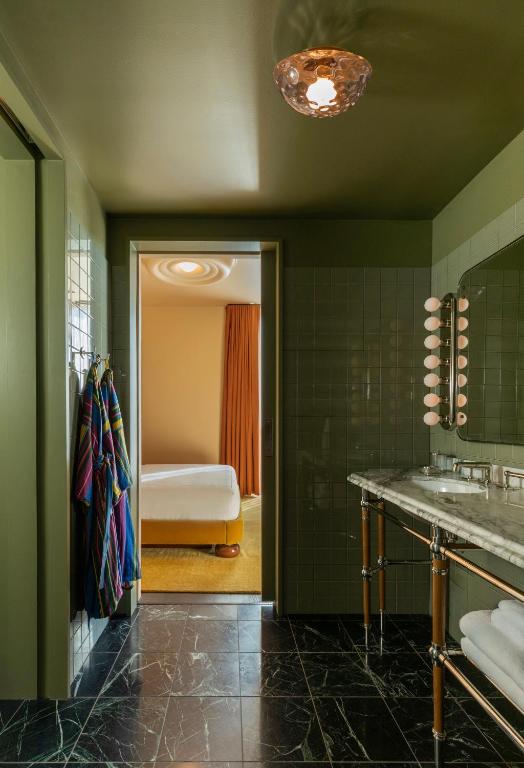
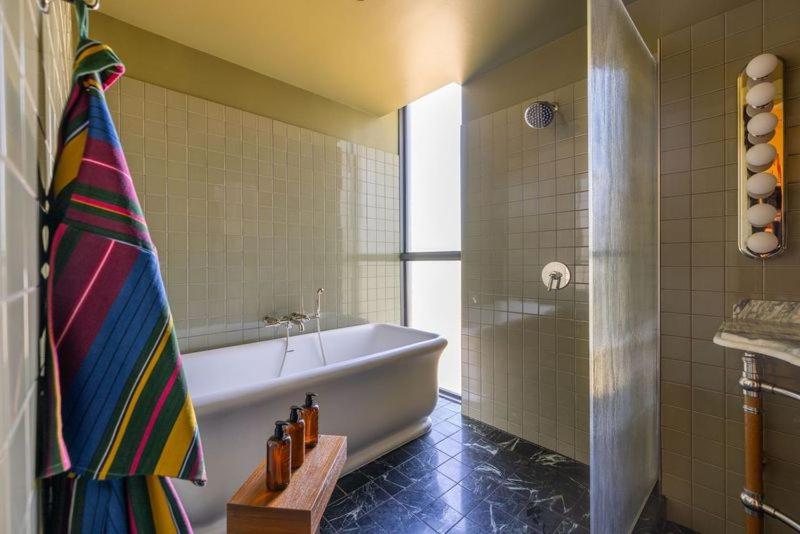
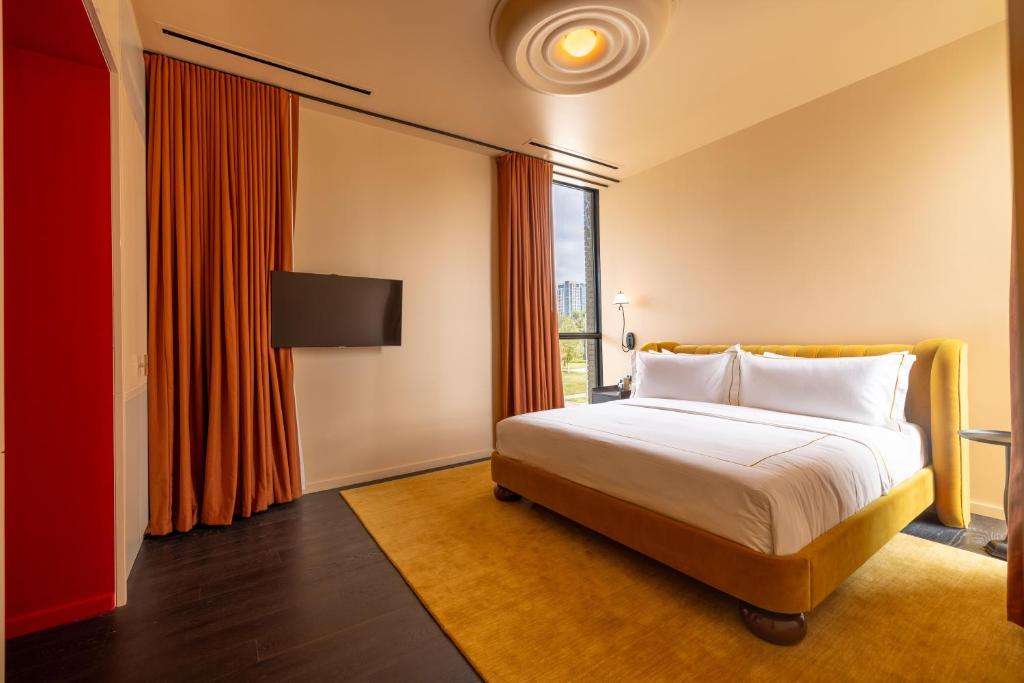
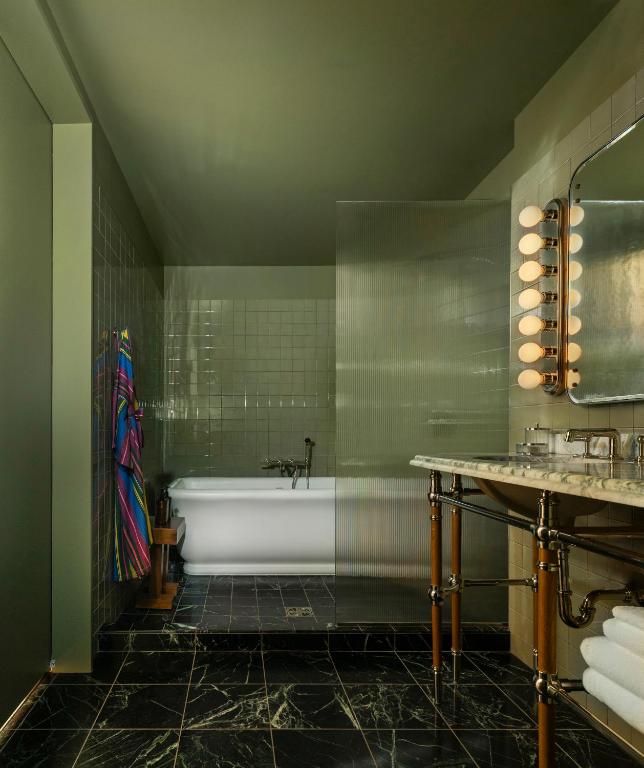
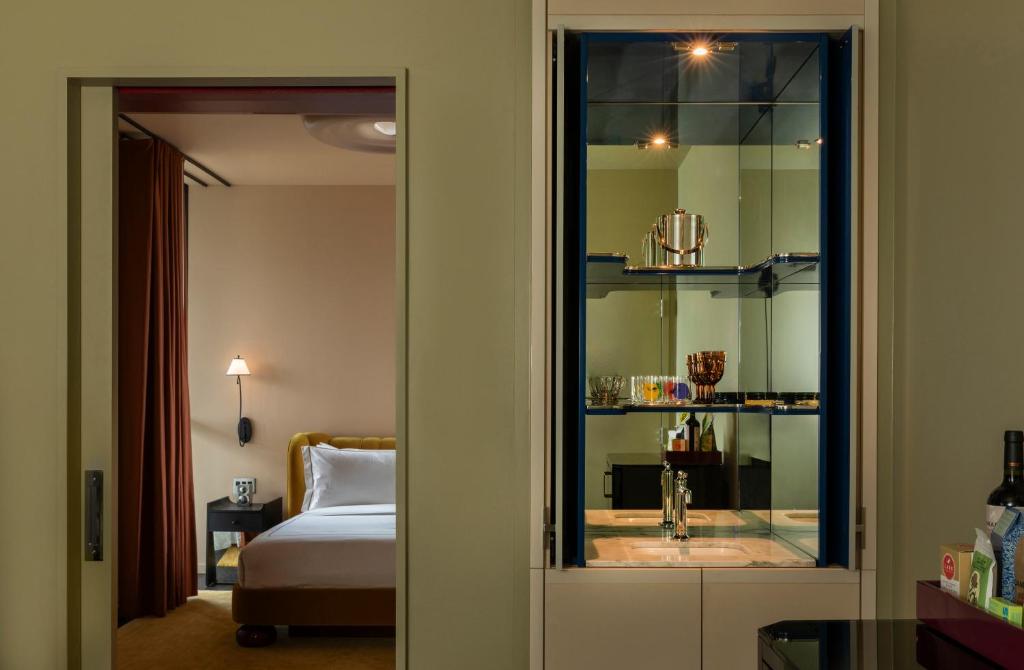
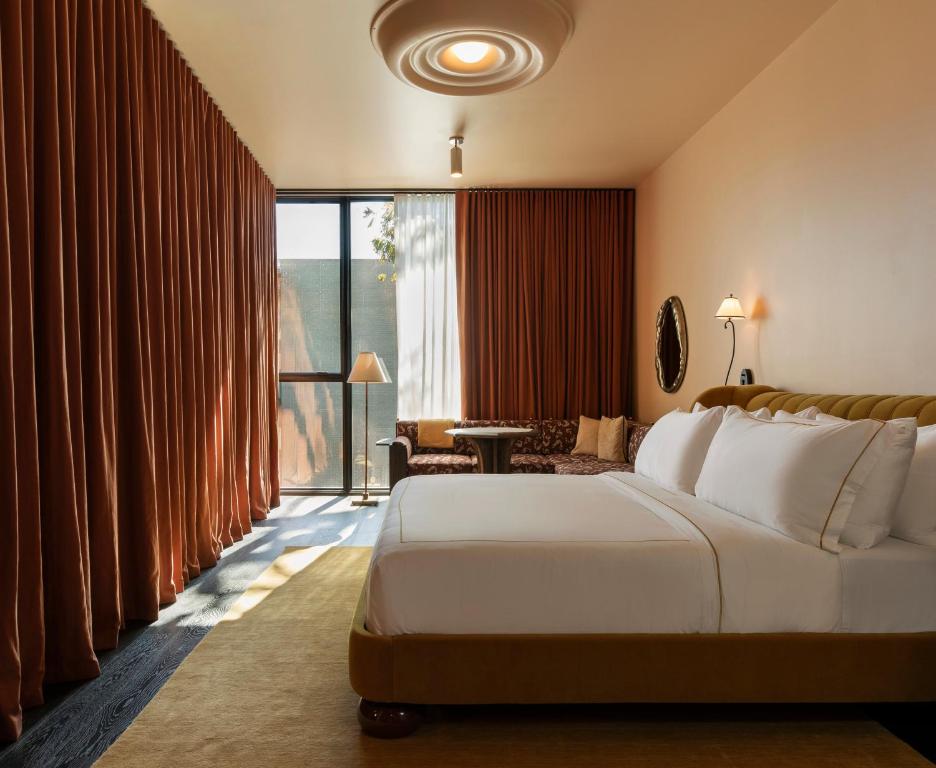
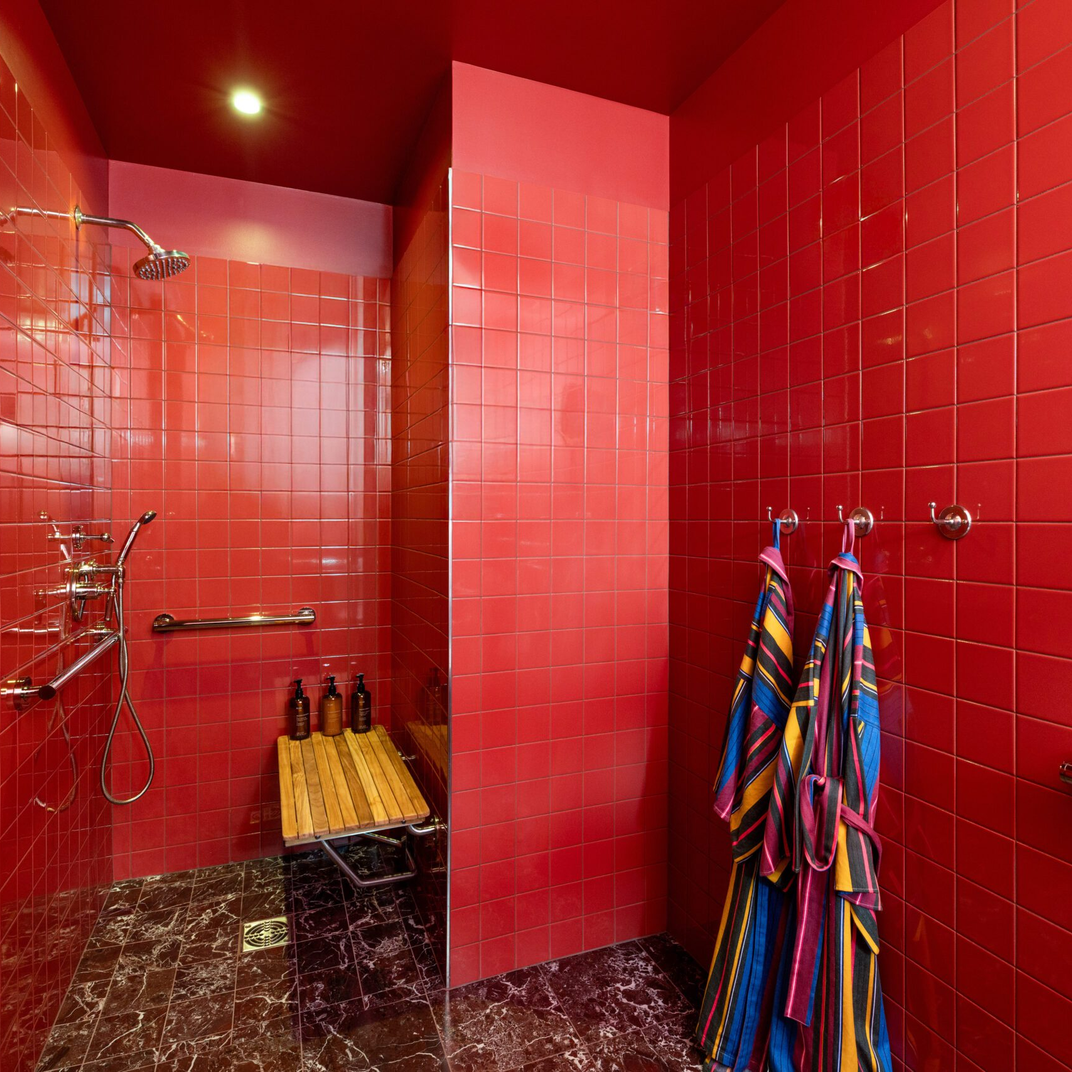
The guestrooms continue the dialogue between restraint and playfulness. While public spaces embrace richness and layering, the accommodations provide a softer, more intimate experience. Rooms are defined by monochromatic palettes of deep blue, sage green, mustard yellow, and rich red, with ceramic wall tiles, velvet drapery, sculptural lighting, and oversized mirrors creating a subtle surrealist edge. Dark oak flooring and carefully chosen furnishings add warmth and texture, while screened porches and outdoor living spaces strengthen the connection to the landscape. No two rooms feel entirely alike, yet all share the same sense of thoughtful composition and quiet individuality.
A Courtyard at the Center
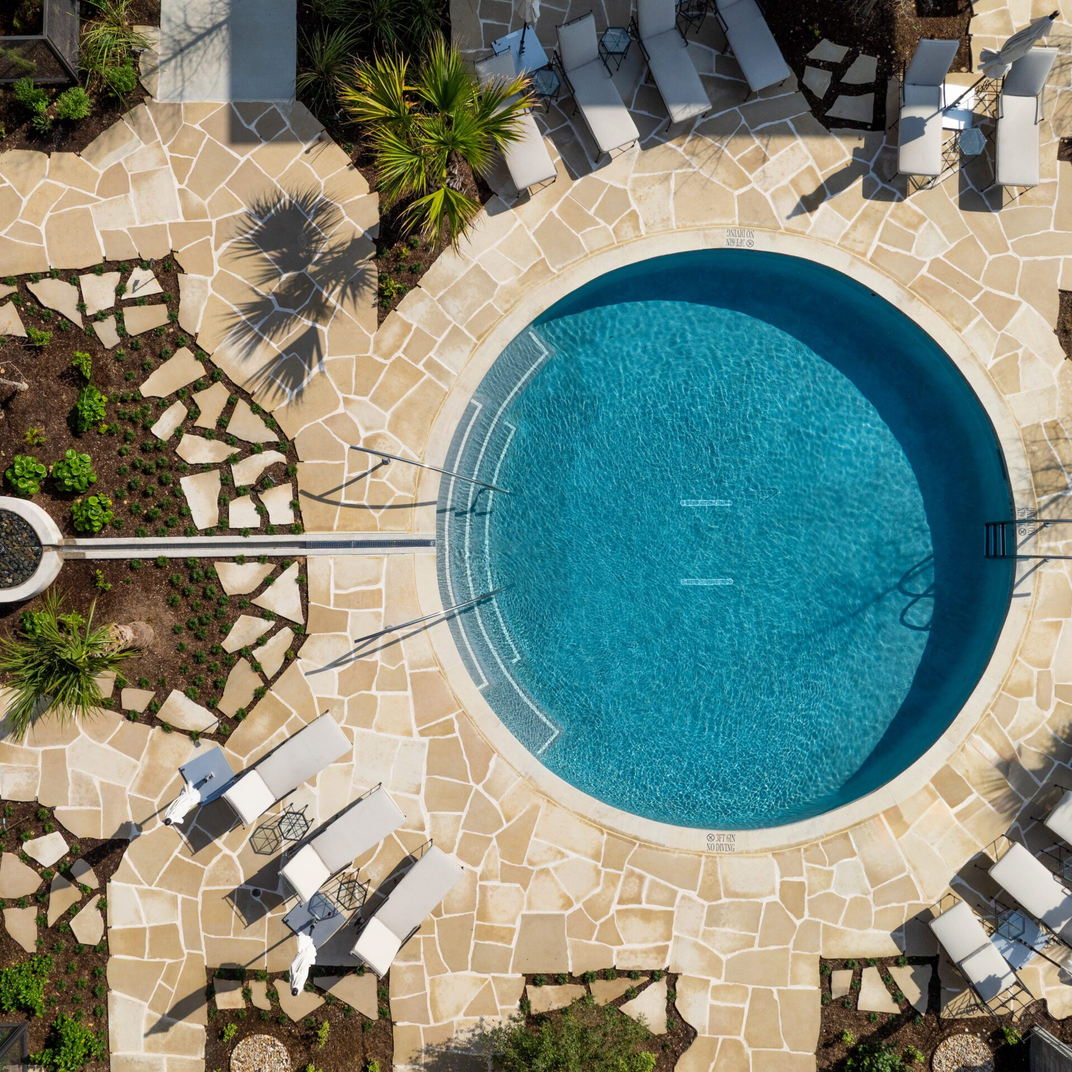
At the heart of the property sits a circular courtyard pool, surrounded by gardens and framed by the hotel’s interconnected buildings. More cloistered than resort-like, it serves as a tranquil gathering point that reinforces the property’s residential character. Rather than competing for attention, the pool feels integrated into the architecture and landscape. Guests drift between shaded porches, garden paths, lounges, and the water itself, creating a rhythm that encourages lingering rather than activity. It is one of many spaces designed for contemplation, conversation, and slow afternoons.
Food, Music, and Neighborhood Life
Hotel Saint Augustine’s public spaces extend beyond architecture and design into Houston’s broader cultural life. Perseid, the hotel’s restaurant by chef Aaron Bludorn, interprets French cuisine through a Texas Gulf Coast perspective, creating a menu that reflects both local ingredients and international influences. Elsewhere, The Augustine Lounge and Listening Room adds another layer to the experience. Records, reel-to-reel tapes, curated playlists, and comfortable seating transform the space into something closer to a neighborhood salon than a hotel bar. Throughout the day, guests move easily between dining, conversation, music, and quiet moments in the gardens. The atmosphere feels deeply connected to the creative energy that defines Montrose.
Houston’s New Design Landmark
Many hotels located near museums attempt to become museums themselves. Hotel Saint Augustine takes a more subtle approach. Rather than filling its walls with art, it allows architecture, landscape, furniture, materials, and atmosphere to carry the experience. The result is one of the most thoughtful new hotel openings in Texas—a property where every element feels carefully considered without ever becoming precious. By combining Lake|Flato’s architectural sensitivity, Post Company’s layered interiors, and Bunkhouse’s distinctive approach to hospitality, Hotel Saint Augustine offers a version of Houston that is creative, intimate, and unexpectedly serene.