Hotel San Cristóbal – Todos Santos, Baja California Sur, Mexico
Whitewashed Baja modernism, Pacific sunsets and a distinctly 1970s sense of escape.
Why DNA Hotels Loves It
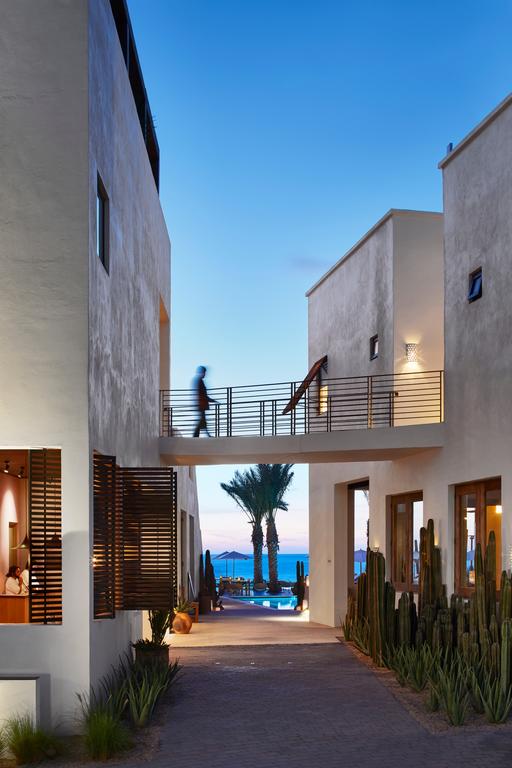
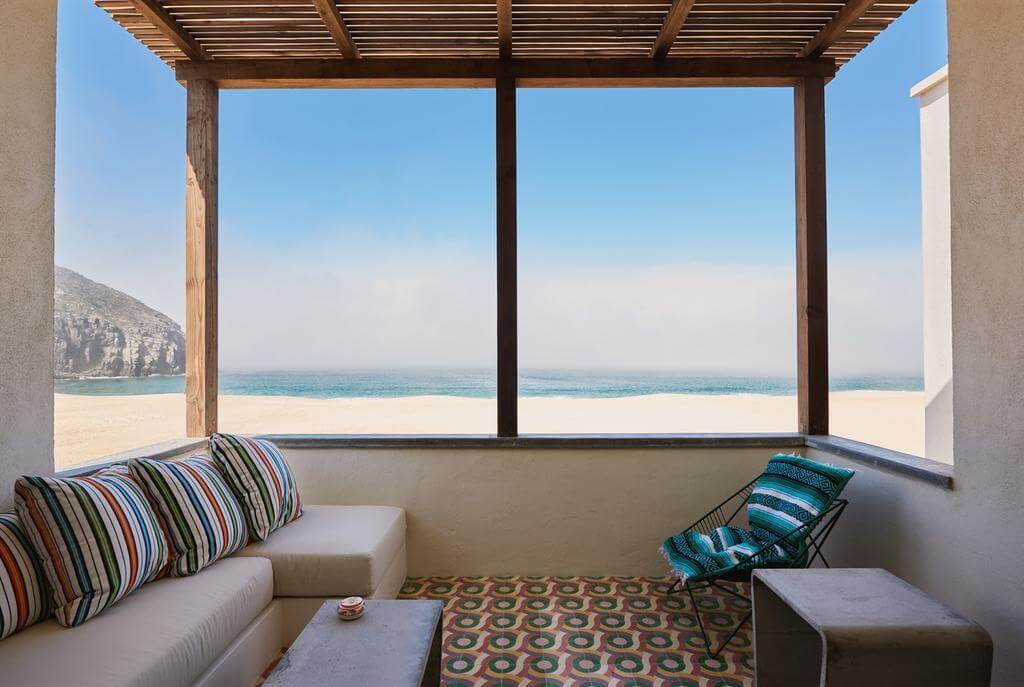
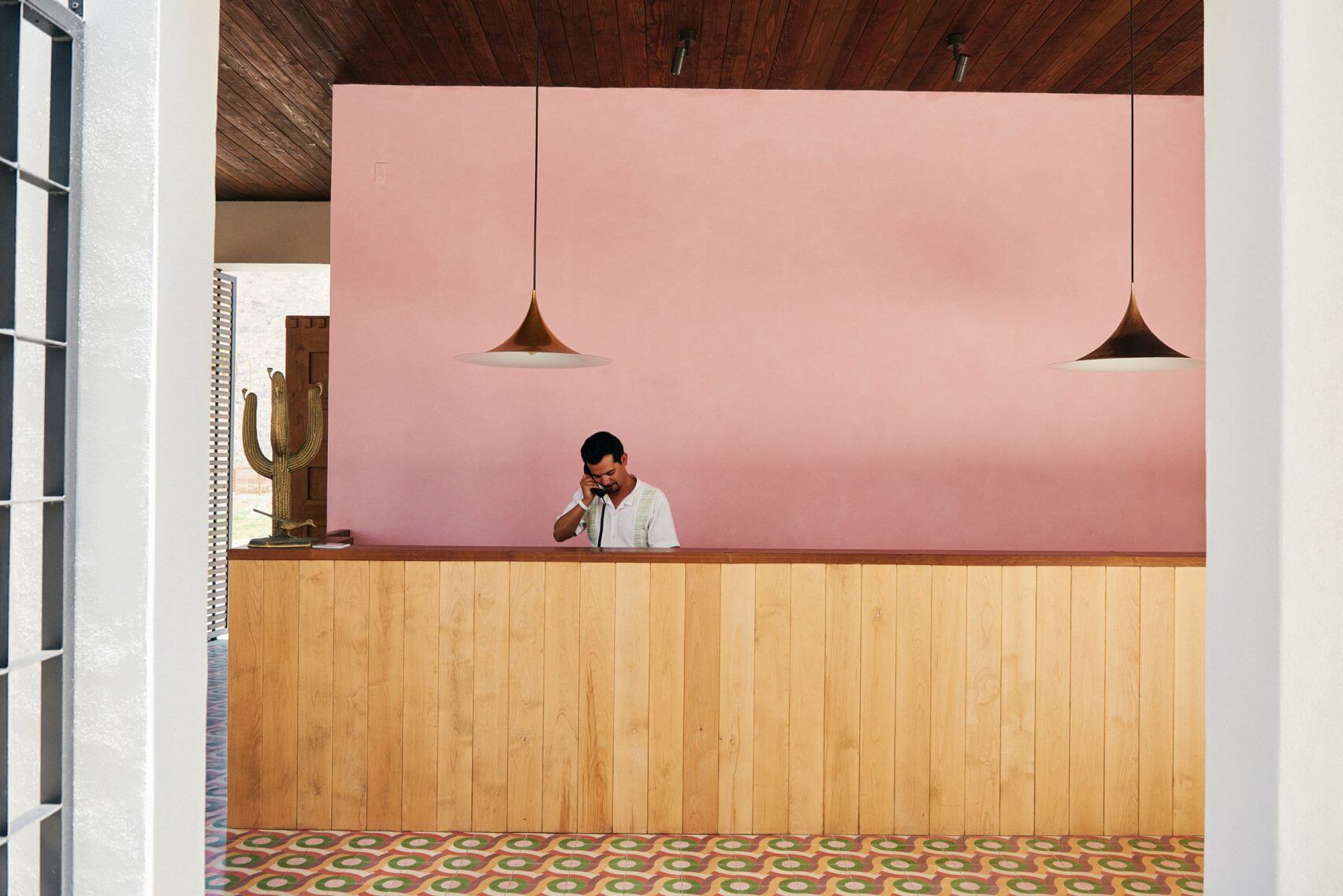
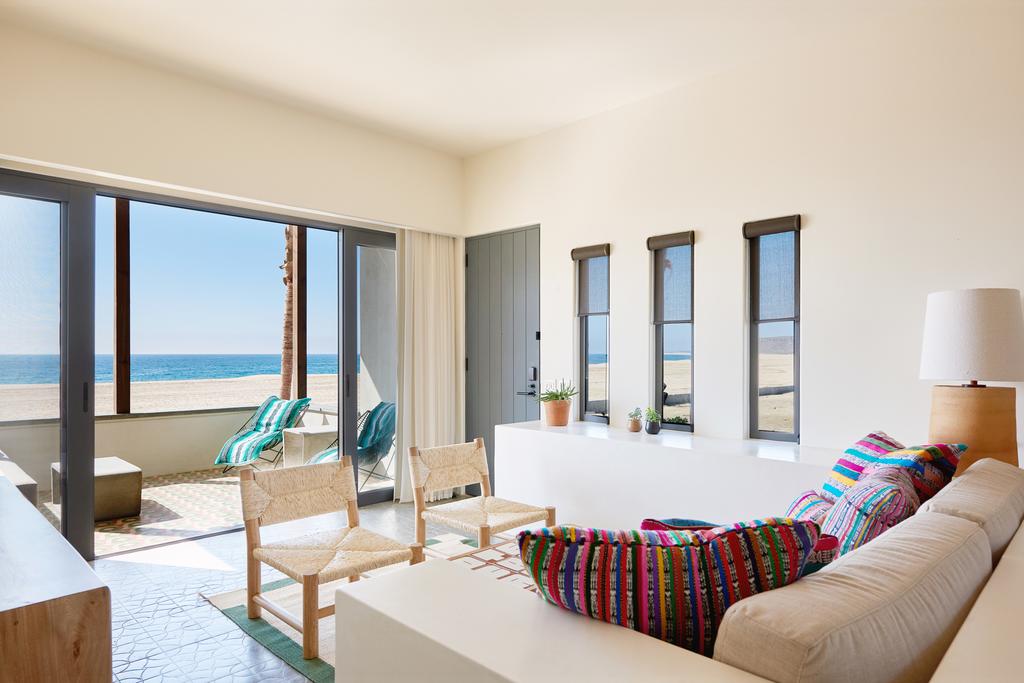
● Lake Flato and Bunkhouse translated the spirit of 1970s Baja into architecture — white plaster, shaded verandas, patterned tiles and low-slung buildings that let desert, mountains and Pacific dominate.
● Mexican craft is integral rather than decorative, from Guatemalan textiles and Guadalajara-made furniture to locally produced ceramics, lighting and woven details.
● The hotel sits directly on Punta Lobos, where fishing boats still come ashore, while its restaurants increasingly connect the experience to Baja’s sea, gardens and seasonal produce.
Baja Before the Gloss
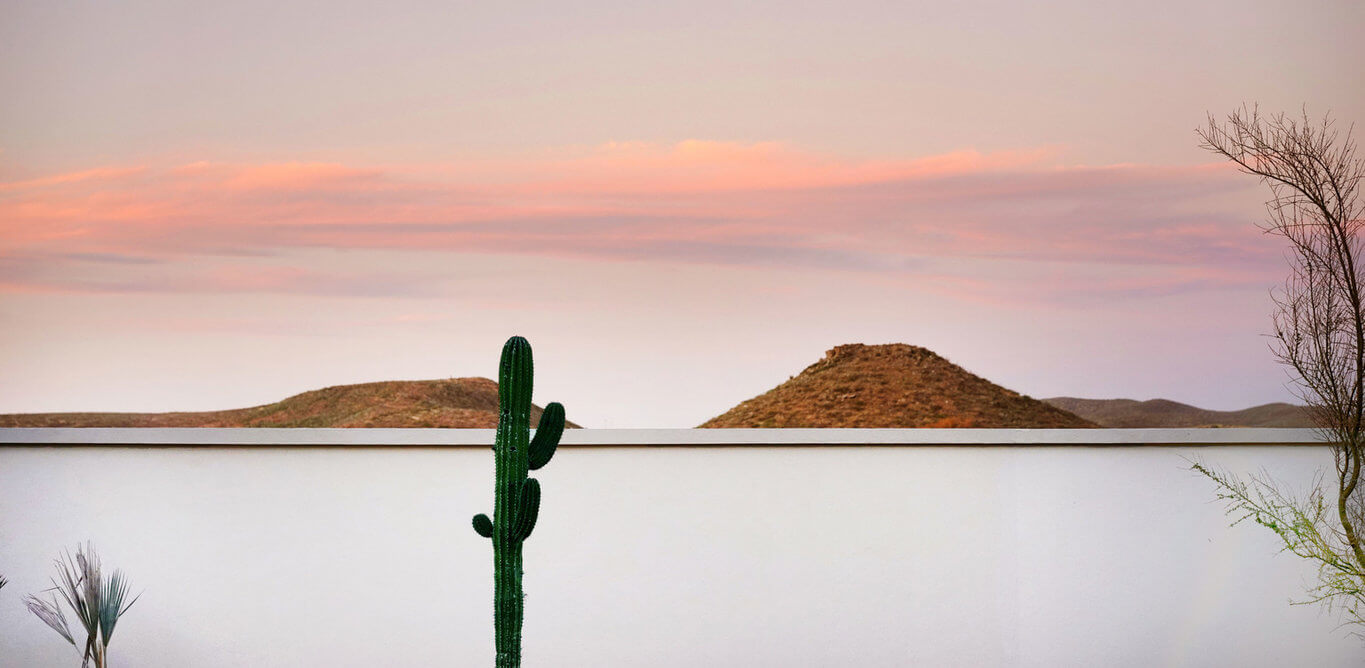
Hotel San Cristóbal arrived in Todos Santos in 2017, when the small town was already evolving from fishing community to artists’ enclave but had not yet become another polished resort destination. For Austin-based Bunkhouse, it was the group’s first hotel outside the United States. Founder Liz Lambert worked with Texas architects Lake Flato to create something that felt less imported than discovered. The reference point was the Baja of the 1970s: uncomplicated, sun-faded and close to nature. Low, whitewashed buildings gather around a swimming pool facing the Pacific. Cacti punctuate bare walls, timber screens temper the harsh sun and broad openings pull sea breezes through the property. There is nothing monumental about the architecture. That restraint is precisely why it works.
White Walls, Blue Water
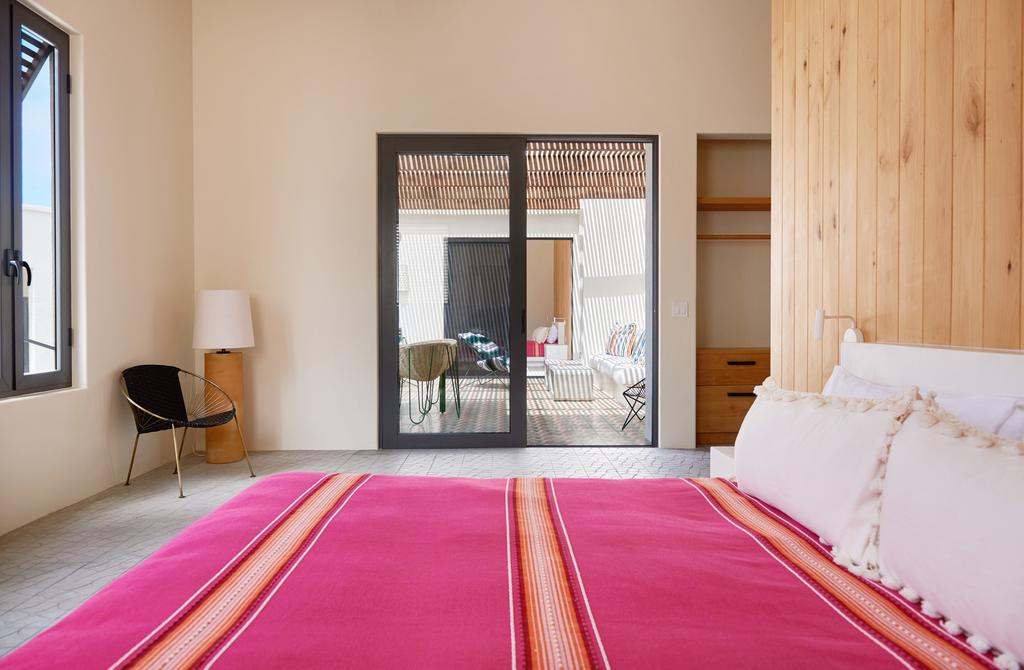
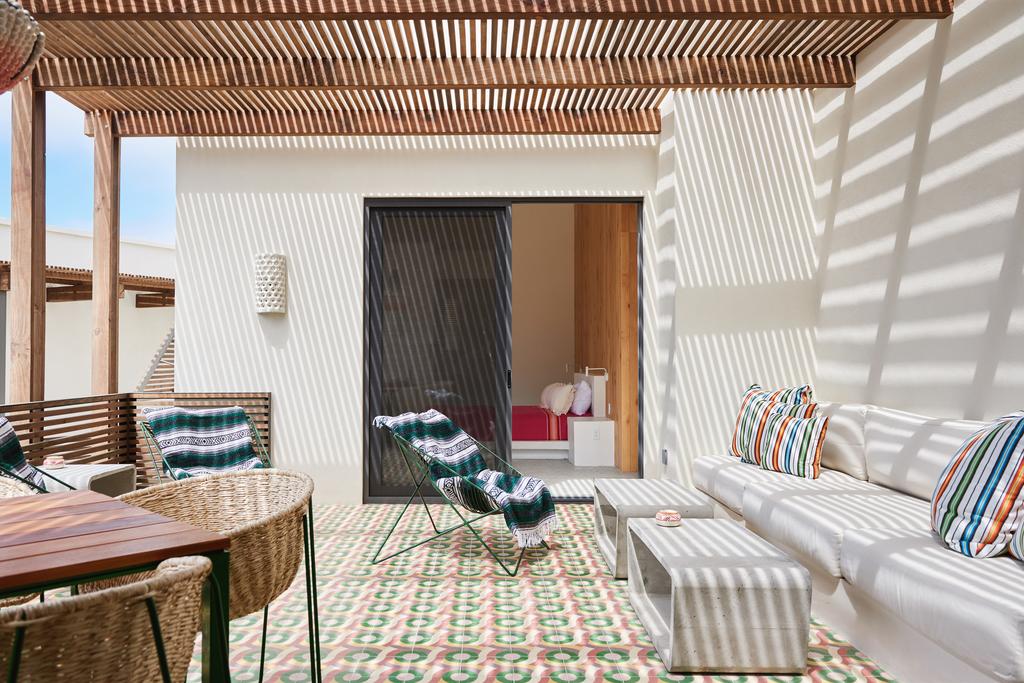
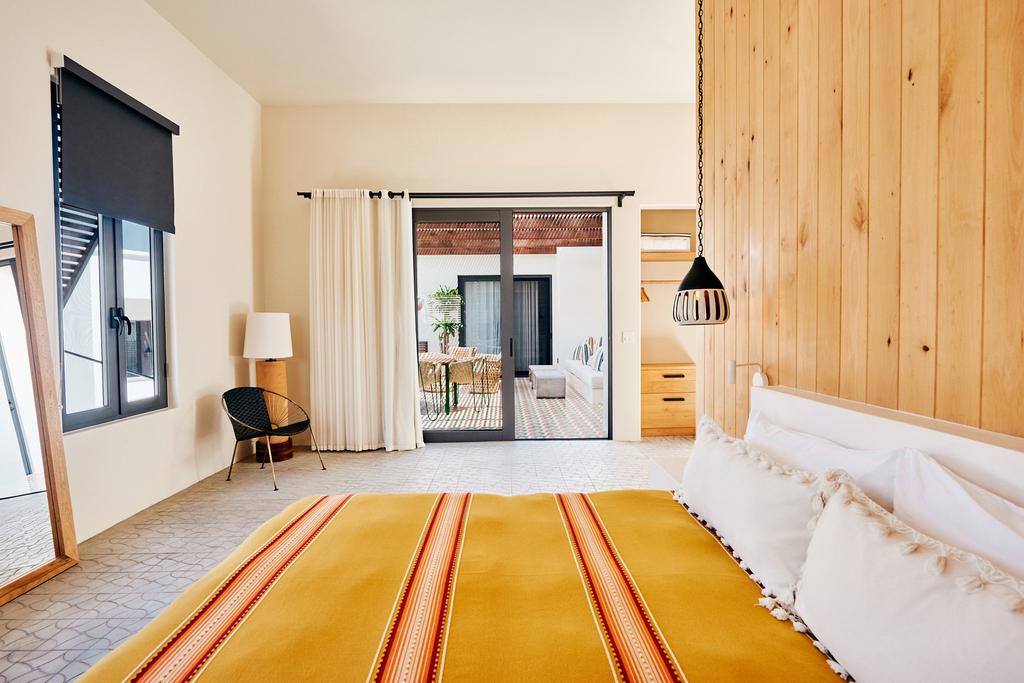
The design begins with an intentionally limited architectural vocabulary: plaster, timber, concrete, tile and colour. Against it, Baja supplies everything else. The buildings are pale enough to almost disappear in the coastal glare, allowing green cactus, rust-coloured mountains and deep Pacific blue to become the real palette. Bedrooms follow the same philosophy. Stamped concrete floors are paired with colourful textiles from Guatemala, handmade Mexican ceramics and bespoke furniture produced by craftspeople in Guadalajara. Patterned tiles add bursts of colour to bathrooms and terraces, while wooden shutters and screens filter sunlight rather than seal guests away from it. Some bathrooms include outdoor showers. The result feels carefully designed without looking overly designed — a quality Bunkhouse has long understood particularly well.
Thirty-Two Rooms Around the Pacific
Hotel San Cristóbal has just 32 rooms and suites, arranged around the central pool and opening towards either ocean, mountains or gardens. Coco-Mat mattresses made from natural materials such as coconut fibre, seaweed and cactus add a surprisingly indulgent detail beneath the otherwise relaxed aesthetic. More recently, six oceanfront rooms have been extended with private saltwater plunge pools and larger terraces, bringing guests even closer to the water. Mexa Design in Guadalajara created new outdoor furnishings, while the original San Cristóbal tiles were retained and reused. Nothing fundamentally changed. The hotel simply moved a little closer to the Pacific.
The Pool as Plaza
At the centre of San Cristóbal is its emerald-green swimming pool. Rooms gather around it on three sides while the fourth remains visually open towards the beach, turning the pool terrace into something between a courtyard, beach club and social plaza. Two hot tubs, shaded loungers and the Pool Bar keep the mood convivial without turning it into a party hotel. There is also a library, yoga deck, small chapel, standalone shop and a dedicated stretch of beachfront known as La Playita. You can participate. Or disappear with a book. Both approaches seem entirely appropriate.
Sea at Benno, Soil at Cosecha
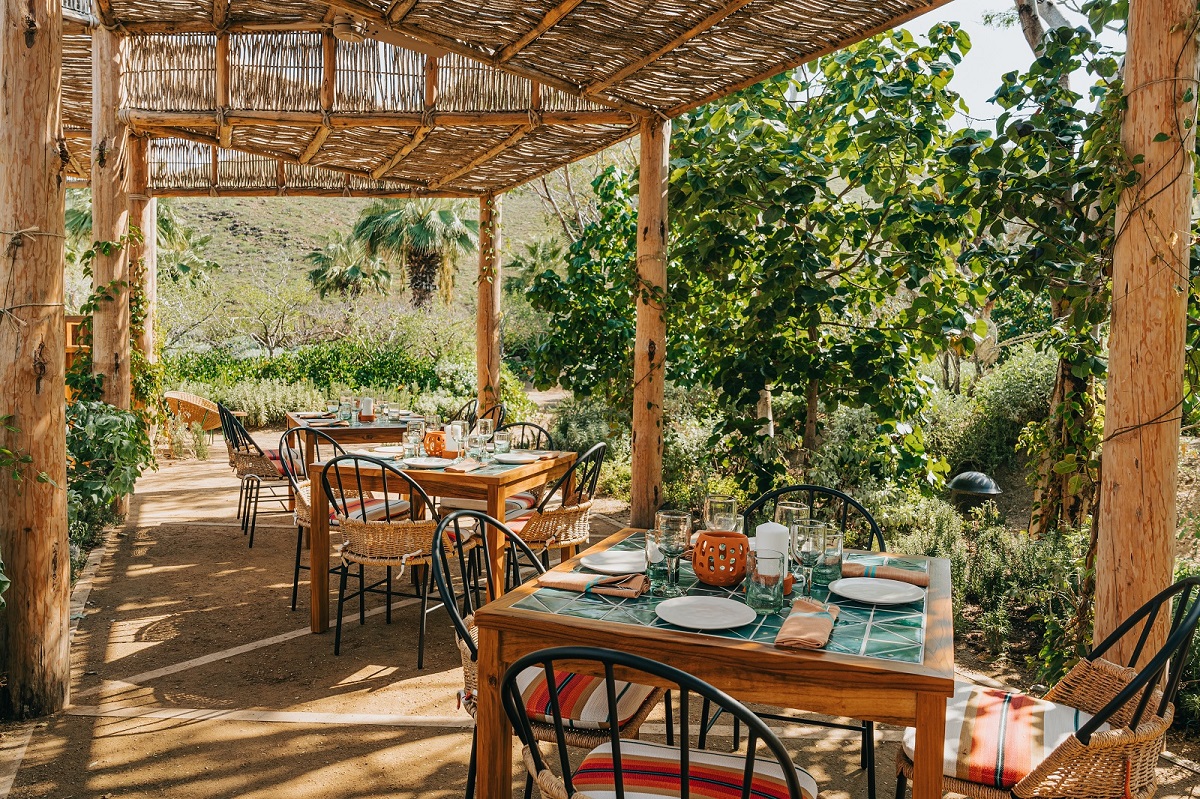
Food increasingly tells the wider Baja story. At oceanfront Benno, the sea remains the starting point, with local seafood interpreted through Mexican and Mediterranean influences. Cosecha — Spanish for harvest — turns inland. Set in the hotel garden, the open-air restaurant by chef Ramón Monteverde follows the seasons and draws ingredients directly from the surrounding beds of herbs, fruit and vegetables. The architecture is deliberately light: palm-woven seating by Mexa Design, tiled tables produced in Guadalajara and an outdoor kitchen built around fire, comal and grill. Whole fish caught directly off the hotel’s beach might arrive alongside vegetables harvested only metres from the table. One restaurant looks to the Pacific. The other looks into the soil. Together they explain Baja rather well.
Todos Santos, Still Becoming
San Cristóbal sits outside the centre of Todos Santos, at Punta Lobos, where the Sierra de la Laguna mountains meet the Pacific. The town itself remains part fishing community, part surf destination and part creative refuge. That tension is important. There are galleries, restaurants and an increasingly international crowd, but the surrounding landscape still feels unmistakably Baja: dusty tracks, desert vegetation, crashing surf and vast skies. Fishing, surfing, hiking and seasonal whale watching form part of the rhythm here, while the hotel has long worked with local people on cultural, wellness and community initiatives. San Cristóbal doesn’t try to manufacture a destination around itself. It depends on the place already being interesting.
Baja, Distilled
There are more spectacular hotels along the Baja peninsula. There are certainly more lavish ones. But Hotel San Cristóbal understands that the magic of this coastline comes from not adding too much. White walls. Mexican craft. A pool facing the Pacific. Fish from the beach. Vegetables from the garden. Mountains behind you and sunset straight ahead. It feels nostalgic without becoming retro theatre and polished without losing the dust around its edges. Which may be exactly what a Baja hotel should be.