Sea Sea Surf Club – Crescent Head, New South Wales, Australia
A 1980s roadside motel reborn as a barefoot clubhouse for surf, music, art and 1970s nostalgia.
Why DNA Hotels Loves It
● George Gorrow, co-founder of Ksubi and the creative force behind The Slow in Bali, has transformed an eccentric old motel without polishing away the character that made it interesting.
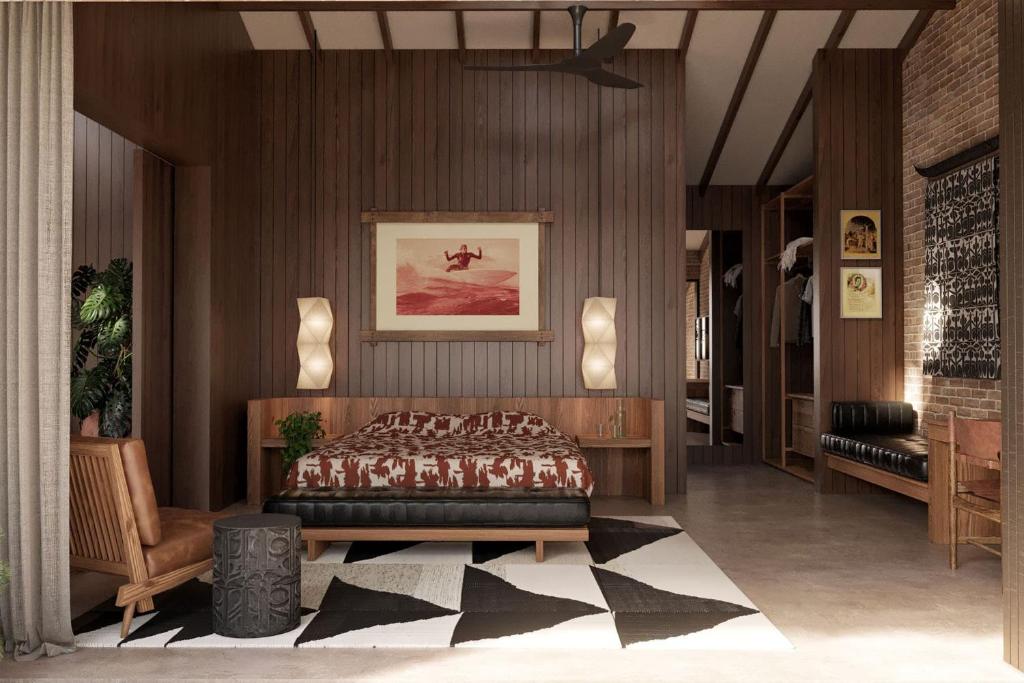
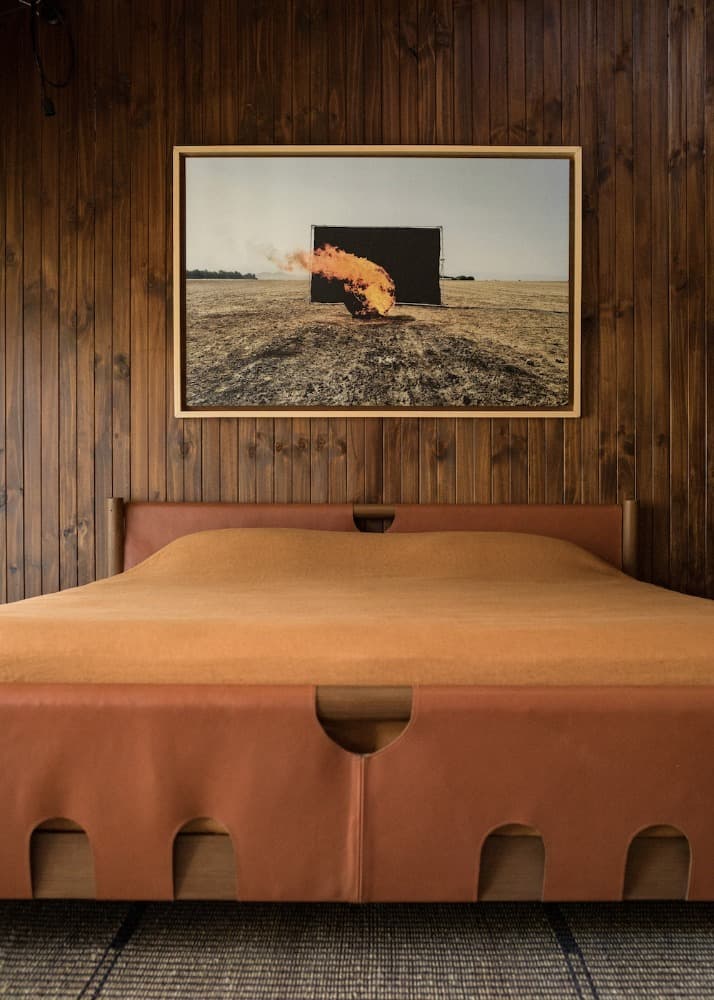
● The 25 rooms combine dark timber, exposed brick, handcrafted furniture, vintage audio and contemporary art in a wonderfully tactile take on 1970s surf culture.
● This is genuinely a surf club as much as a hotel: boards, music, exhibitions, food, natural wine and a listening bar create a social world around one of Australia’s legendary point breaks.
Surf Culture, Without the Clichés
Sea Sea could easily have become another exercise in retro motel nostalgia. Instead, George Gorrow and his wife Cisco Tschurtschenthaler went looking for something less obvious. When they discovered the rambling 1980s motel and former conference centre in Crescent Head, they found stained-glass windows, oversized timber rafters, exposed brick, strange rooflines and a collection of low-rise buildings that reminded Gorrow of old Balinese hotels. Rather than erase those eccentricities, Gorrow Design Studio made them the starting point. The ambition was to capture the freedom and creative cross-pollination of 1970s surf culture — without turning the place into a themed hotel.
Texture Over Trends
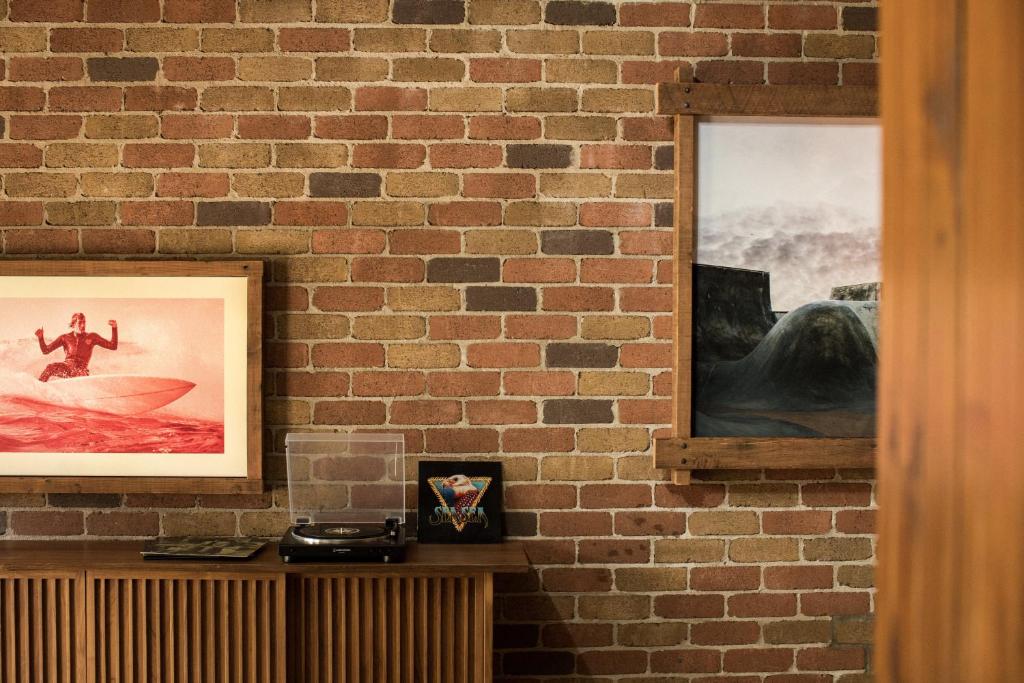
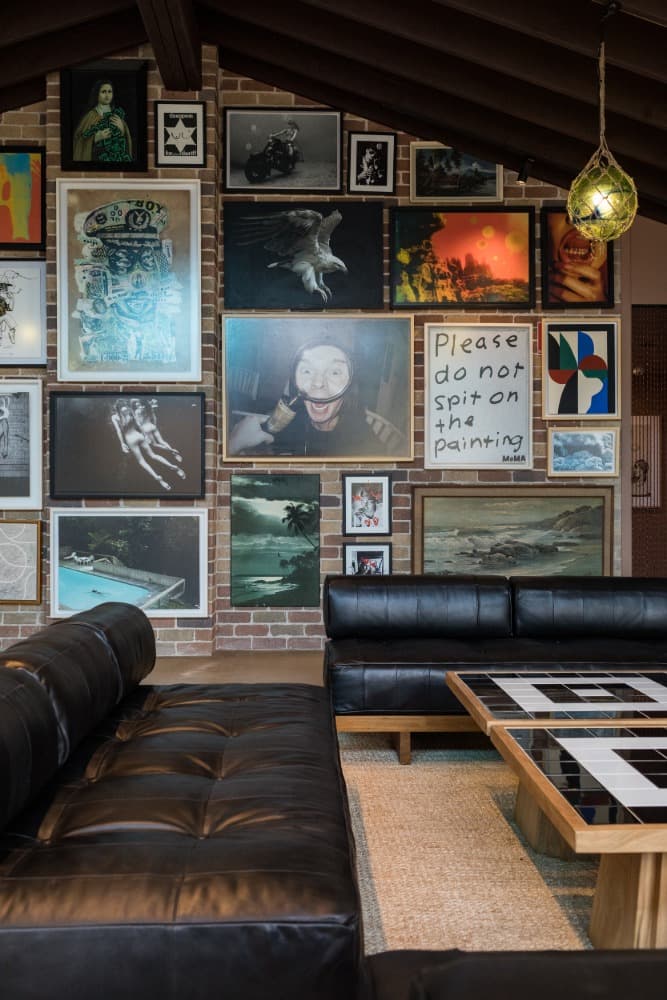
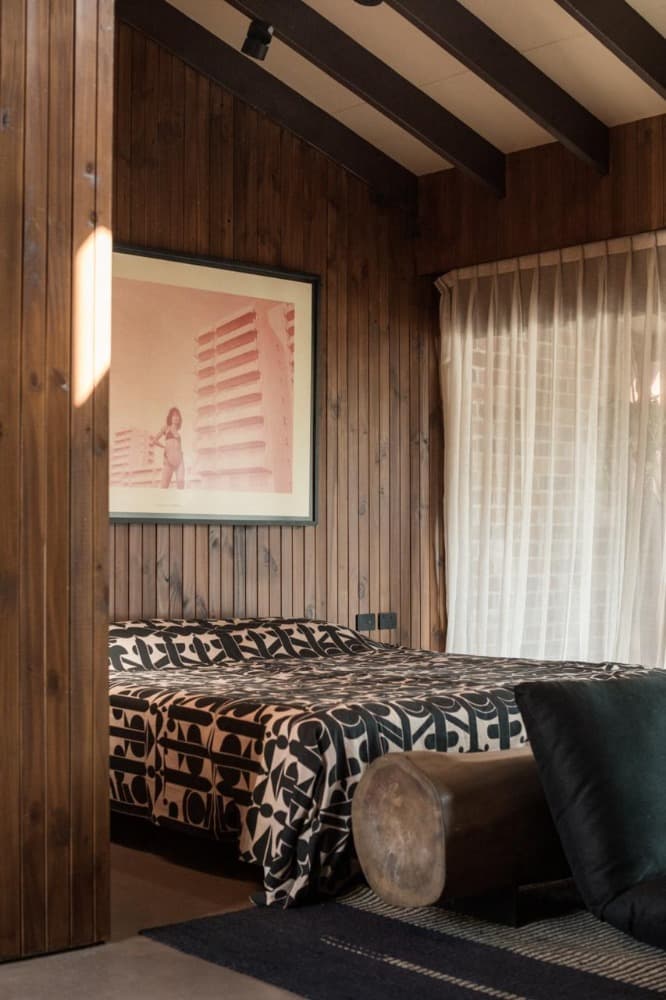
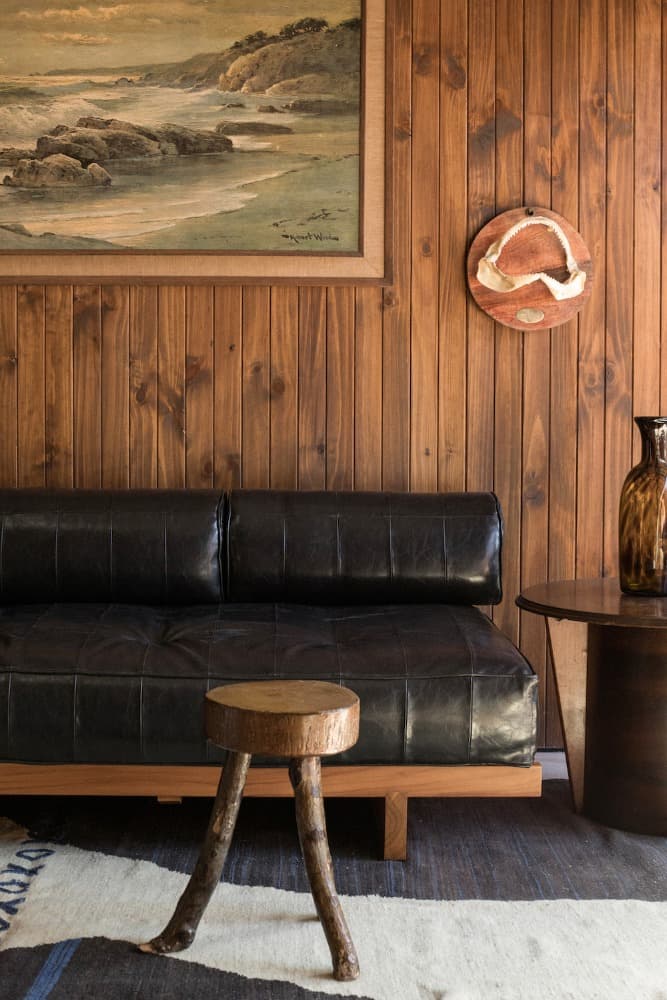
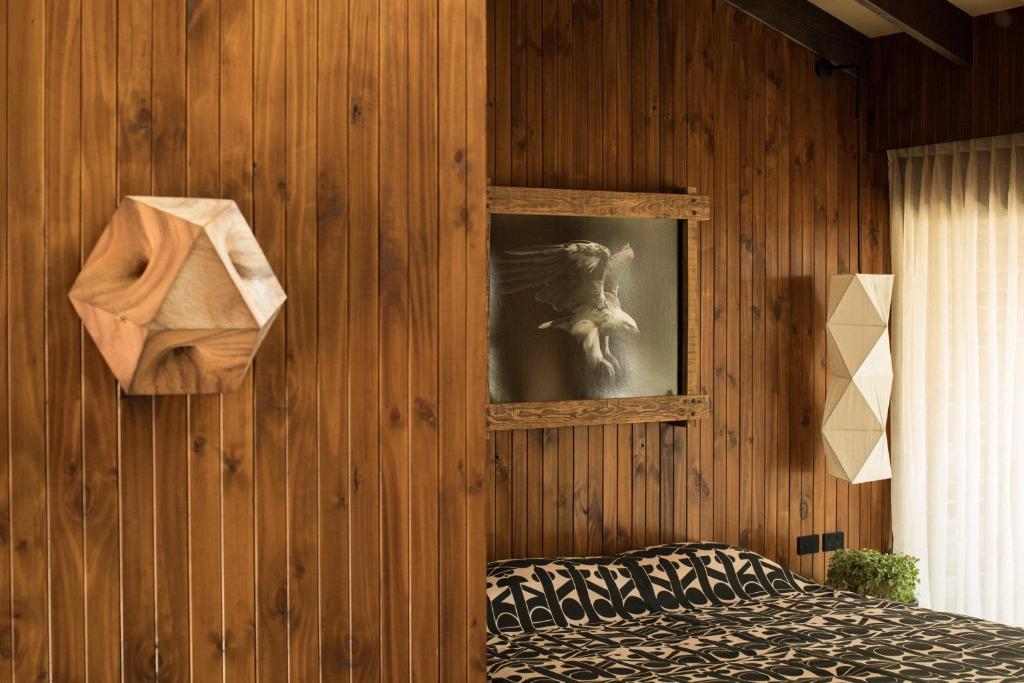
The resulting interiors are dark, warm and surprisingly cocooning. Brown brick, dark-stained pine panelling, exposed timber rafters and naturally pigmented concrete floors create rooms that sit somewhere between an Australian surf shack, an alpine cabin and a vintage Bali hideaway. Furniture sits deliberately low to the floor. Heavy fabrics, handwoven rugs and handcrafted objects add texture. Gauzy curtains soften the light. Sculptor Aleph Geddis created hand-carved wall lights fitted with red-light bulbs, while Korean artist Romon K Yang designed heavyweight cotton-linen bed throws printed with expressive calligraphic forms. Even the bedside tables have another life: custom-made with Italian furniture company Torre and incorporating Bose hardware, they double as speakers. Nothing feels particularly precious. That’s intentional.
25 Rooms, No Hotel Uniform
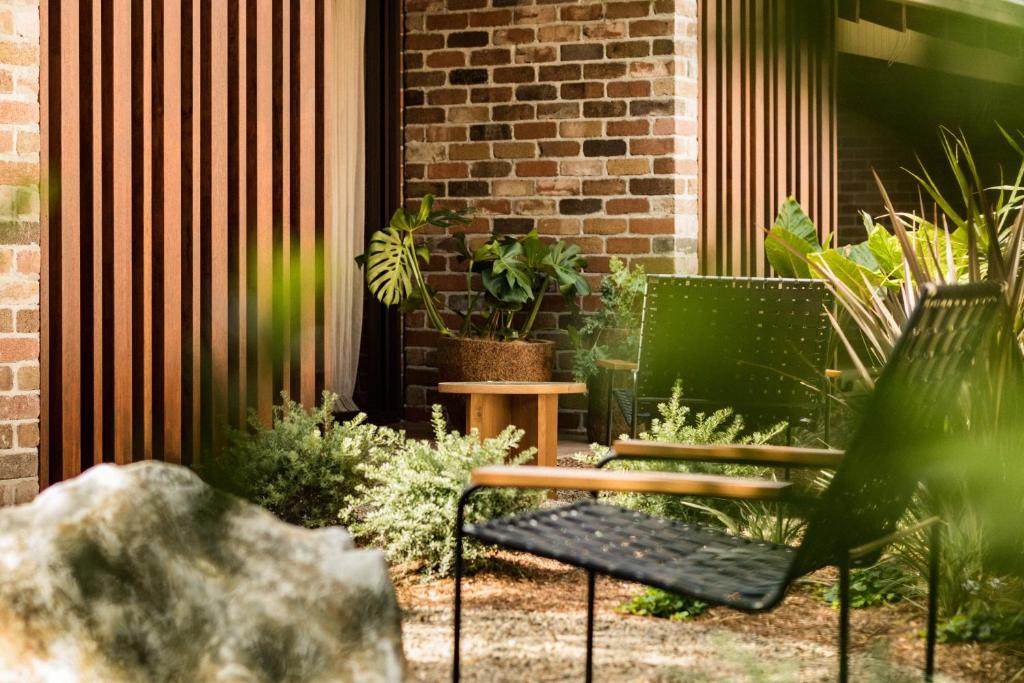
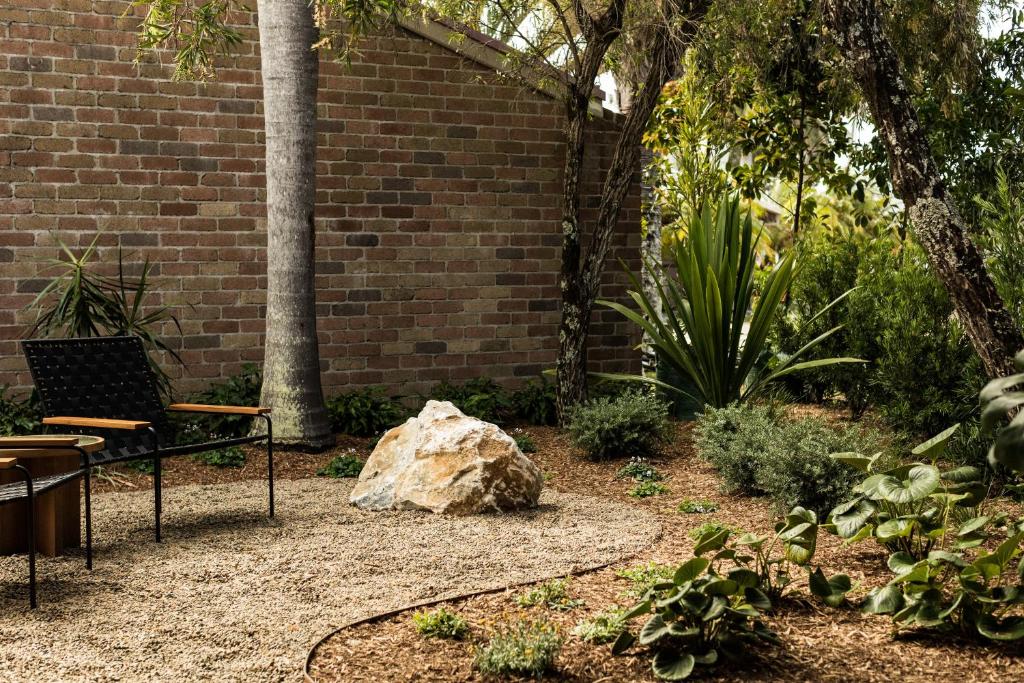
The hotel’s 25 rooms are scattered through small terraces across the 6,000-square-metre site rather than stacked inside a conventional hotel block. Original structures were retained wherever possible, with old bricks reused for privacy screens and pathways repositioned to create a more natural flow through the property. More than 3,000 new plants soften the architecture, framing views and creating pockets of privacy without sacrificing the communal character. It’s less like walking through a resort than wandering through an unusually stylish little coastal settlement.
Welcome to the Clubhouse
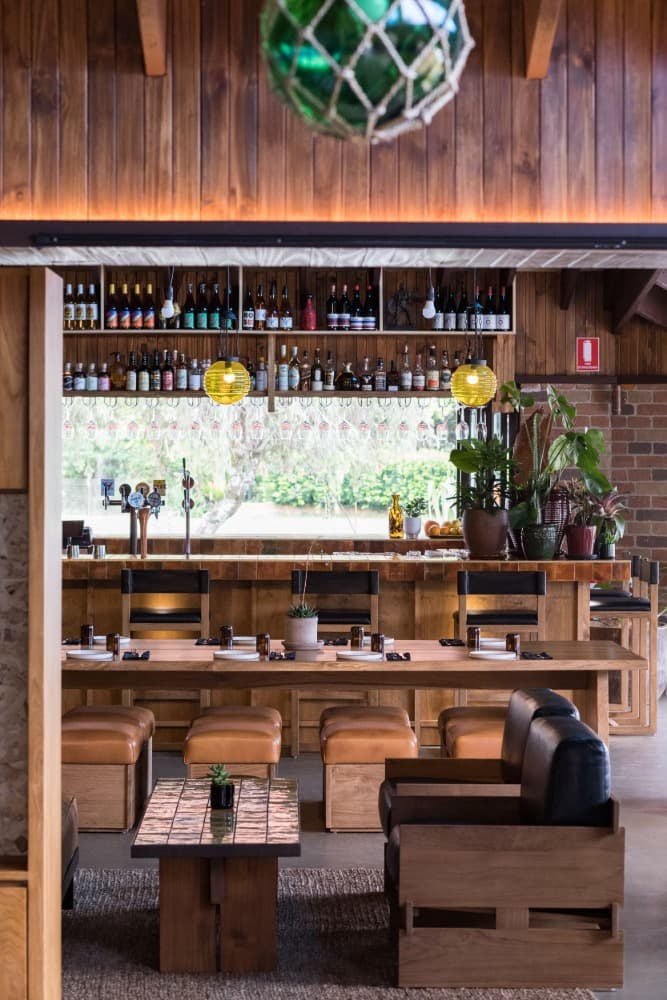
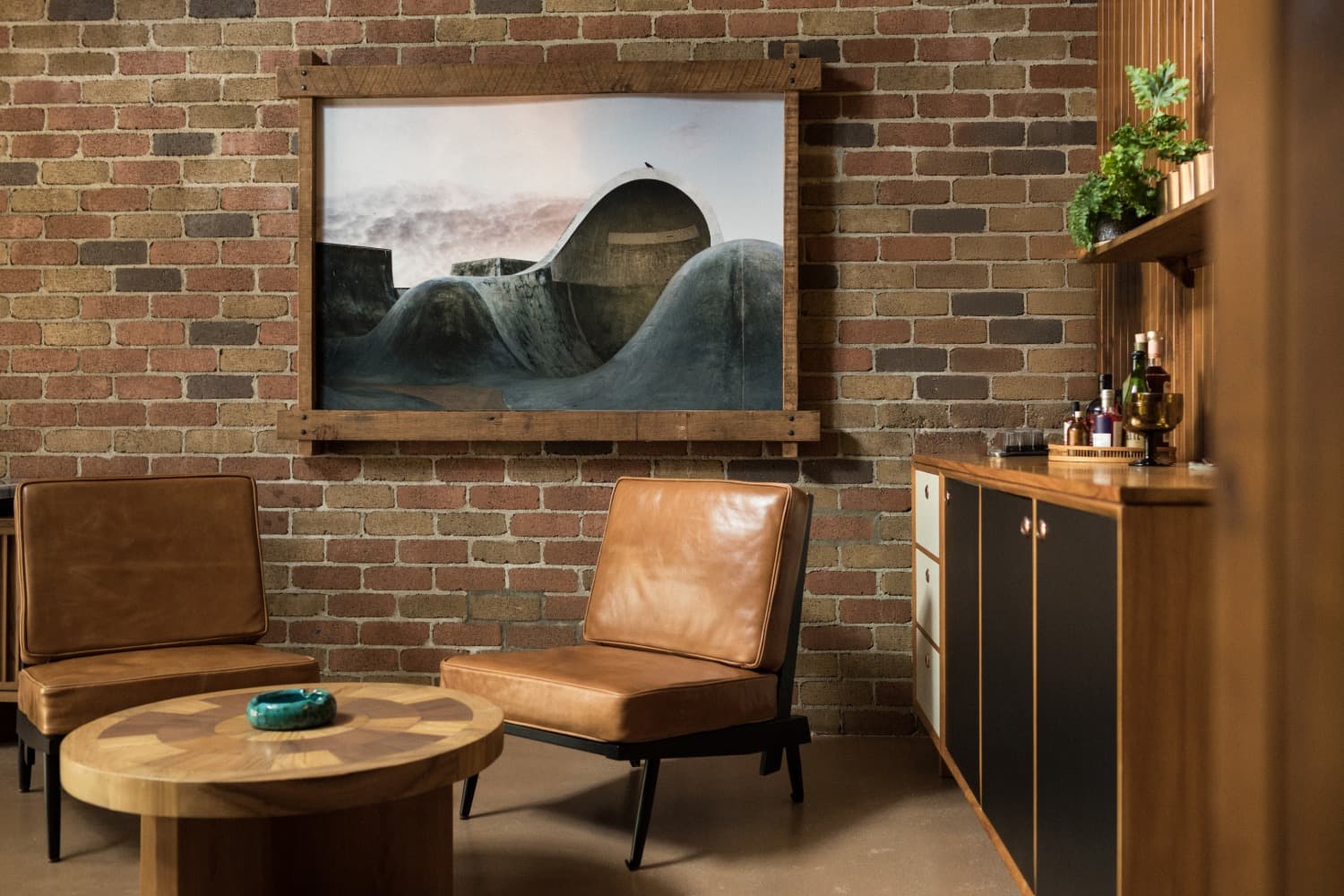
Sea Sea’s real personality emerges in the former conference spaces, now collectively known as the Surf Club. Reception shares its world with a shop, art gallery, surf hire, restaurant, cocktail lounge and listening bar. At its centre are Gorrow’s own vintage Klipsch La Scala speakers, incorporated into a bespoke wall of vinyl. A large fireplace, low plywood-lined seating and records turn the room into the sort of place where staying for one drink can easily become an evening. Music follows you upstairs too. Sea Sea TV is the hotel’s own 24-hour in-room music-video channel, curated by Wesley Herron of Reverberation Radio — essentially an alternative MTV for people whose cultural reference points include surf films, obscure records and road trips.
Crescent Head Comes First
For all the design, Sea Sea makes sense because of where it is. Crescent Head sits roughly halfway between Sydney and Byron Bay and has long been part of Australian surf mythology. Its famous right-hand point break is within easy reach of the hotel, while two beaches stretch away on either side of town. Boards can be hired directly from the hotel and surf lessons arranged, making surfing part of everyday life rather than a packaged resort activity. Gorrow knows the place personally: he grew up surfing and visited Crescent Head on childhood trips with his father. That connection matters. Sea Sea doesn’t feel like surf culture imported by a hospitality brand. It feels like someone returning to a place he already understood.
Poolside, Barefoot
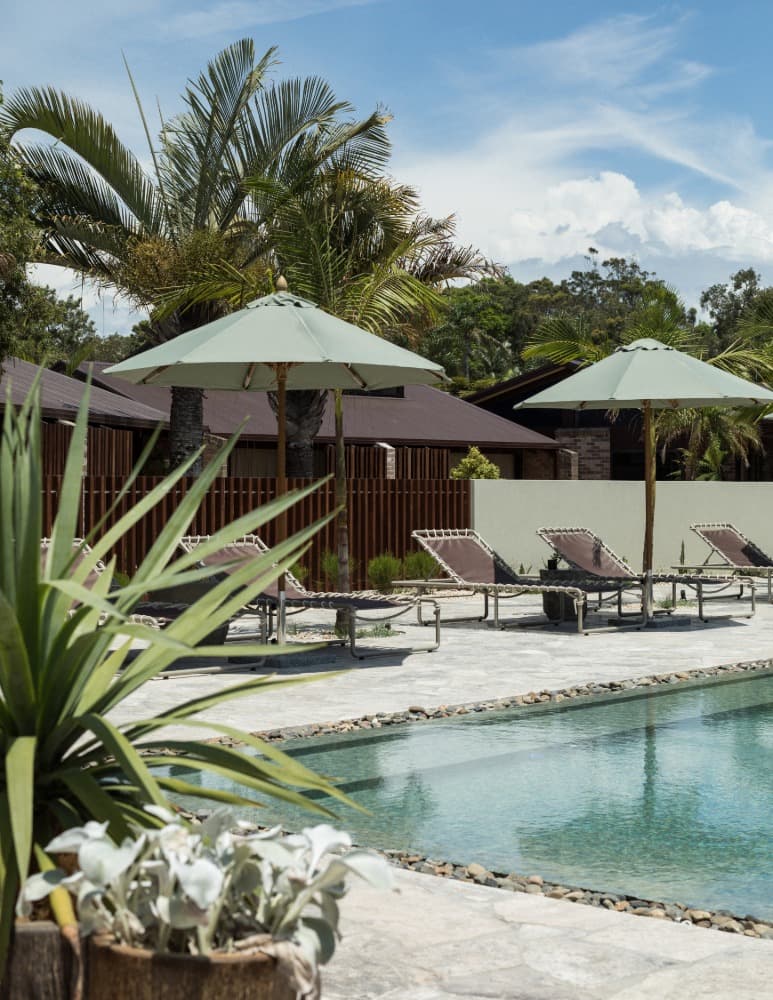
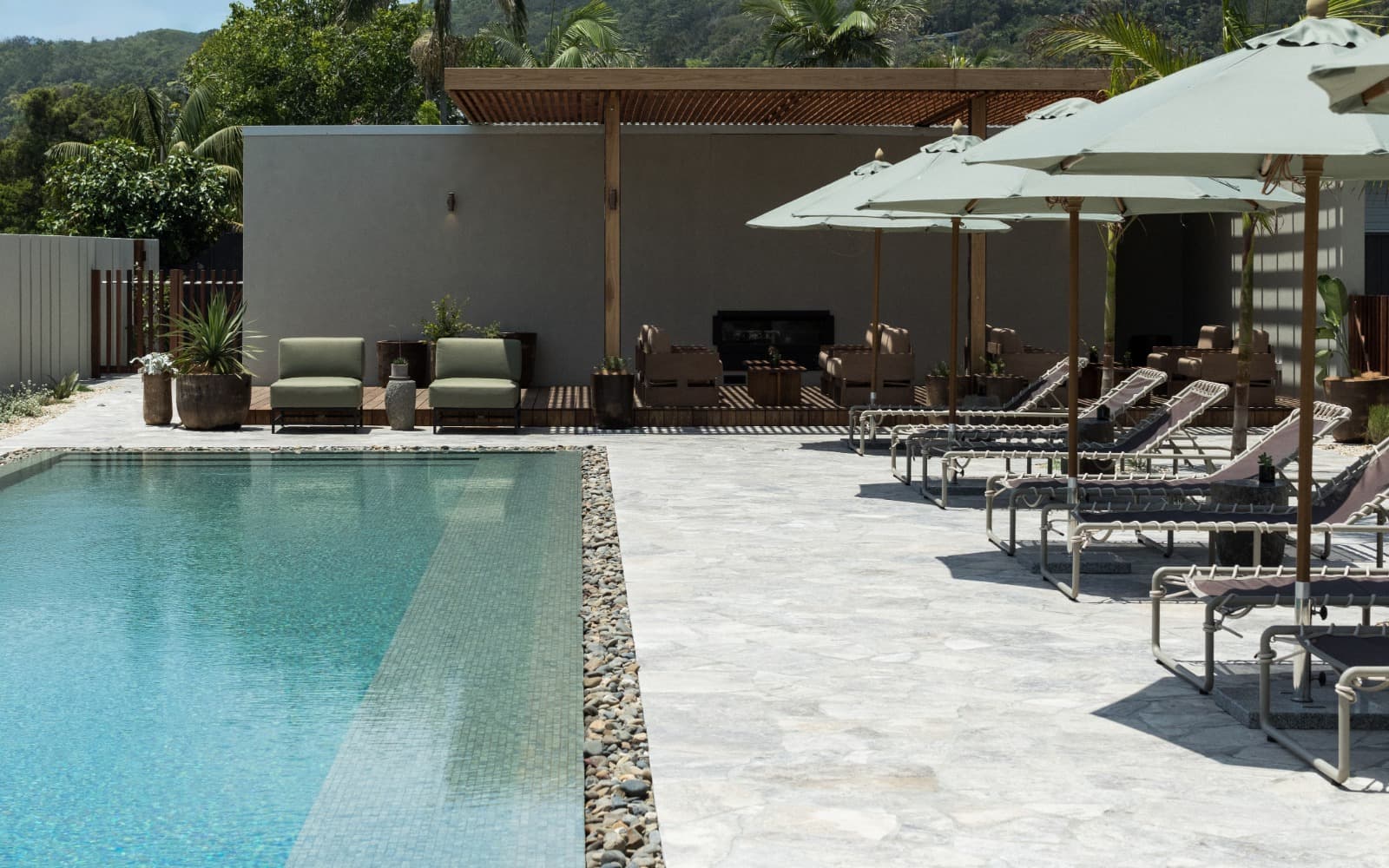
Back at the hotel, crazy-paved paths of silver travertine wind between the rooms towards a turquoise-tiled swimming pool surrounded by pebbles, cacti and custom loungers inspired by 1970s daybeds. The pool was enlarged during the renovation, but the atmosphere remains deliberately informal. The idea of furniture being “grounded and barefoot” runs throughout the property: oversized cushions, low seating, rope-strung loungers and materials that become better rather than worse when people actually use them. It’s a subtle distinction, but an important one. This isn’t a hotel designed primarily to photograph well. It’s designed to be lived in.
Seafood, Natural Wine and No Rush
The restaurant keeps the same philosophy on the plate, drawing heavily on produce from the surrounding Macleay Valley and the nearby coast. Fresh seafood and produce-driven dishes come with a strong selection of natural wines, while the adjoining bar and street-facing dining terrace ensure the hotel remains connected to Crescent Head rather than becoming a private enclave for guests. Locals, surfers and visitors mix naturally. That’s exactly how a surf club should work.
More Than Retro
Plenty of new hotels borrow the visual language of the 1970s. Sea Sea is more interesting because Gorrow understands that nostalgia isn’t really about brown timber, vintage speakers or the right shade of orange. It’s about atmosphere. Sea Sea Surf Club preserves the oddities of an old Crescent Head motel and layers them with music, art, craftsmanship and genuine surf culture. The result feels neither new nor artificially vintage, but strangely timeless — the sort of place where you surf in the morning, disappear beside the pool in the afternoon and discover a record you’ve never heard after dark. George Gorrow calls it “a new form of home that reminds you of the past.” We can’t think of a better description.