Seda Club – Granada, Spain
Silk Road glamour, Alhambra geometry and the intimacy of a private club in the heart of Granada.
Why DNA Hotels Loves It
● Just 21 rooms and suites, yet an extraordinary amount of design detail, with Rockwell Group turning a near-ruin on Plaza de la Trinidad into something closer to a private members’ club than a conventional five-star hotel.
● A richly layered interior that connects Granada’s Moorish heritage and historic silk trade with British tailoring, contemporary art and bespoke furniture rather than simply reproducing the city’s past.
● From hidden library bar El Clandestino to rooftop La Pájara, the tiny Roman bath-inspired spa and a serious restaurant, an unusually complete hotel experience has been fitted into a remarkably intimate footprint.
Silk, Spies and a Little Seduction
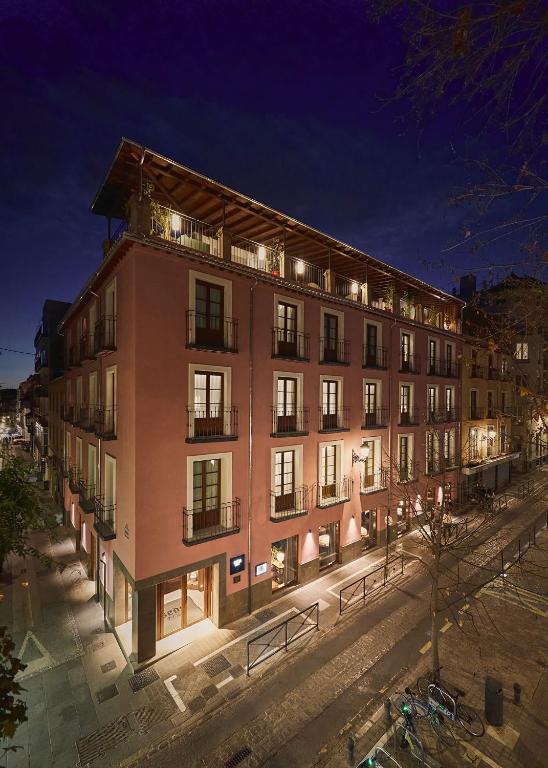
Granada is not a city that lends itself naturally to minimalism. The Alhambra alone is an argument for pattern, colour, ornament and the idea that practically every surface deserves attention. Seda Club understands the assignment. Opened in 2023 by Hidden Away Hotels, the family-owned Spanish group behind Madrid’s Gran Hotel Inglés, this tiny hotel occupies the restored Los Guerrilleros building overlooking leafy Plaza de la Trinidad, a few minutes’ walk from Granada Cathedral. Its name provides the first clue. Seda means silk, referencing Granada’s importance in the medieval silk trade and its position within the commercial networks connecting Islamic and Christian worlds. Inside, that history becomes something far more interesting than a decorative theme.
Rockwell Group Goes to Granada
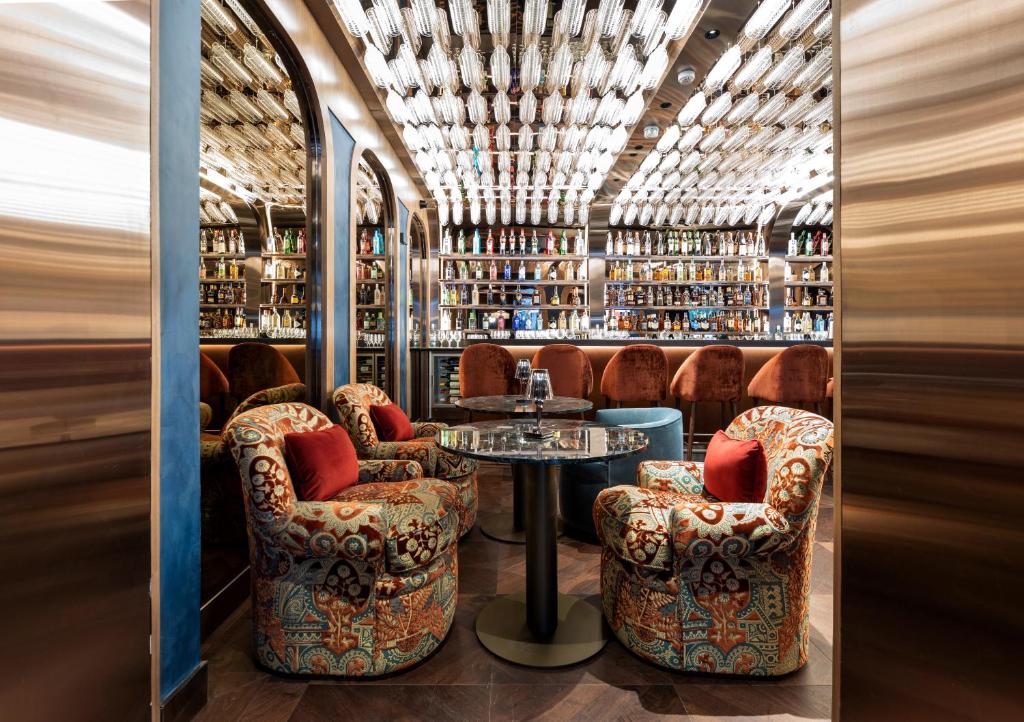
Hidden Away Hotels reunited with Rockwell Group, which had previously transformed Gran Hotel Inglés in Madrid. Working with Quintect Arquitectura, the designers faced a building that was reportedly close to falling apart. The pink exterior was restored. Behind it, they created another world. Guests enter through a quiet library before arriving in a lobby wrapped in walnut, velvet, bronze and softly curving forms beneath a dramatic coved timber ceiling. Jewel-like lighting, deep colours and polished surfaces give the hotel the atmosphere of an exclusive club that has somehow existed for decades. But look closer and Granada begins revealing itself. A sweeping bronze-and-glass installation behind the bar takes its form from archery bows, referencing the warriors associated with the final stages of the Reconquista. Islamic geometry appears elsewhere, while the elegance of British tailoring becomes another strand in a story inspired by the cultural forces converging on Granada during the 15th century. It is history interpreted rather than reconstructed.
21 Rooms, Almost 21 Different Designs
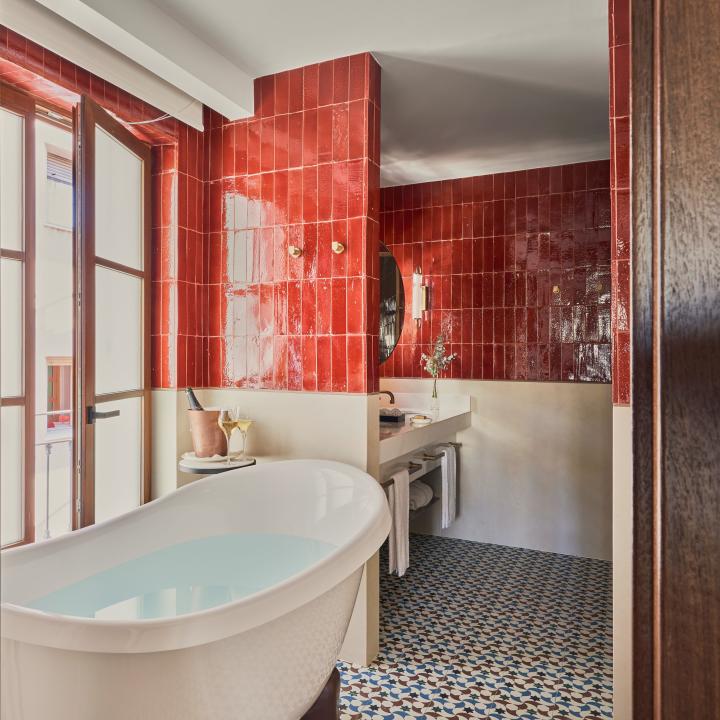
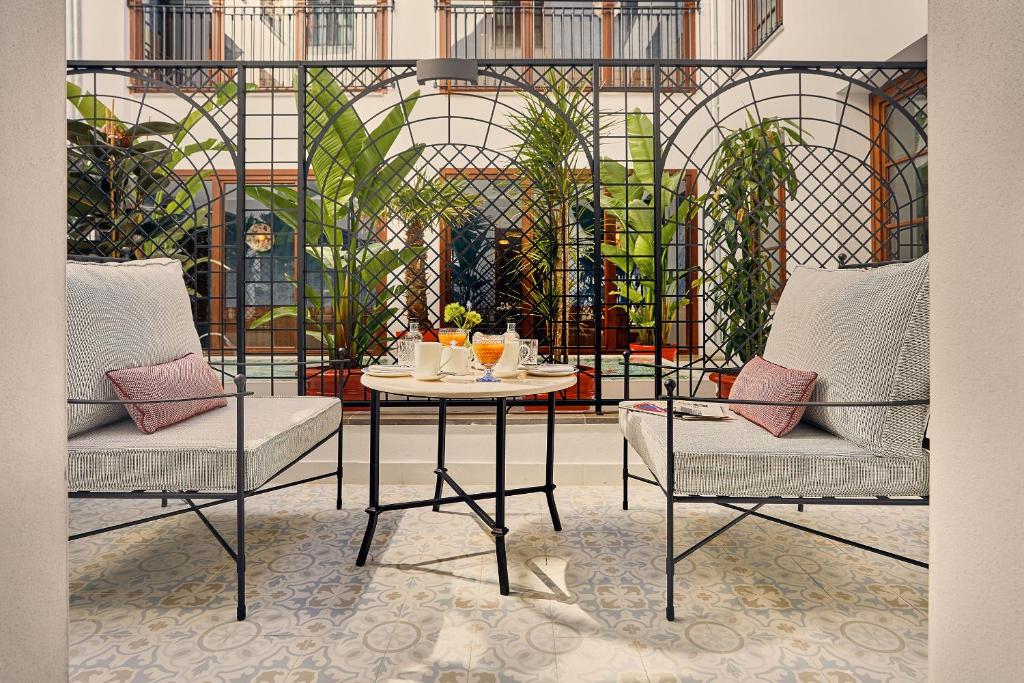
Only two of Seda Club’s 21 rooms and suites share precisely the same layout. That irregularity is part of the charm. Rockwell Group treated them almost like bespoke suits, combining chevron timber floors, velvet curtains, leather headboards and slender brushed-brass detailing with a palette of saturated greens, blues and warm metallic tones. Then come the bathrooms. Intricate floor and wall tiles deliberately recall the geometric mosaics of the Alhambra, providing perhaps the hotel’s clearest reminder that this could only be Granada. Some rooms face the interior courtyard scented with orange blossom and jasmine; others have balconies overlooking Plaza de la Trinidad towards the cathedral. The largest, La Alcoba Real, feels more like a glamorous private apartment than a hotel suite.
Art You Don’t Just Walk Past
Seda Club’s club-like personality comes partly from the art. Rather than filling walls with anonymous decoration, the collection includes contemporary works such as Debbie Lawson’s three-dimensional textile art and a carpet created by Iranian artist Abolfazl Shahi in collaboration with traditional weavers from his hometown of Kashan. It is a subtle but intelligent extension of the hotel’s Silk Road narrative. Objects, textiles and artworks feel collected rather than specified. That makes the difference between a hotel designed to photograph well and one that becomes more interesting the longer you stay.
A Secret Behind the Library
The best clubs need somewhere to disappear. Here it is El Clandestino, a concealed salon reached through the library wall — an intimate place for a drink that plays perfectly into Seda Club’s slightly conspiratorial atmosphere. The main cocktail bar is considerably more theatrical: bronze surfaces, parquet flooring, velvet stools and rows of faceted lights give it the sparkle of an elegant 1930s drinking den. And despite the hotel’s miniature dimensions, there is even a spa. Hidden behind the bar, its intimate layout references a Roman bath, with a plunge pool and treatment room. Guests can reserve the space privately, which makes far more sense here than attempting to squeeze in a conventional hotel spa. Small can be an advantage.
Granada on a Plate
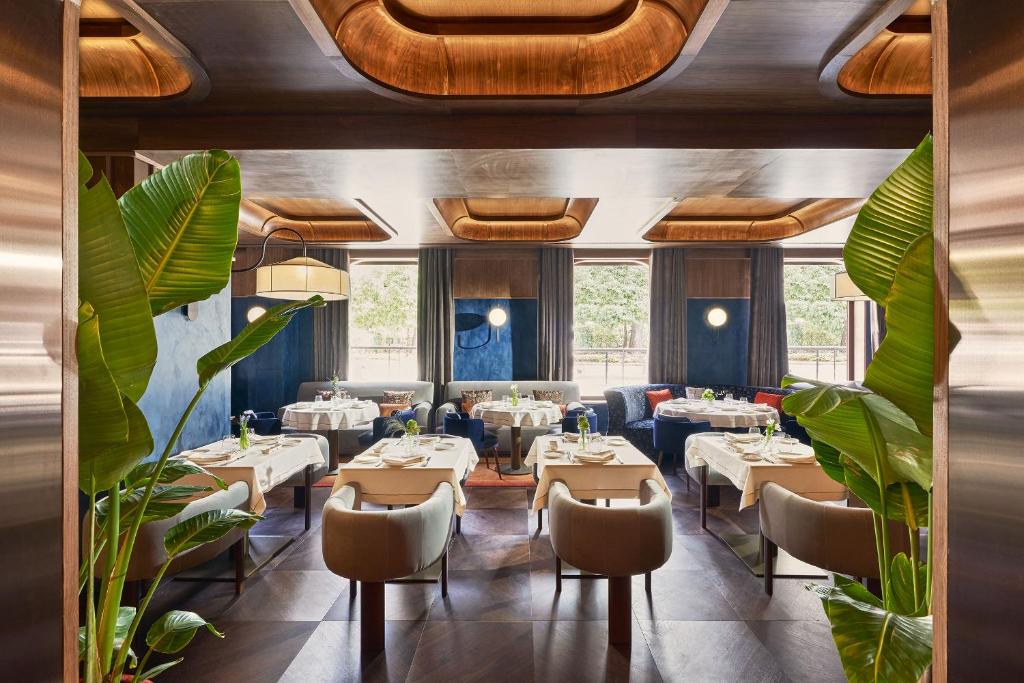
The ground-floor restaurant looks directly onto Plaza de la Trinidad and continues the visual richness of the hotel with bronze panels, curved ceilings, velvet seating and flattering low light. The cooking looks south. Local ingredients and Andalusian references meet more contemporary techniques, with seafood from the coast, produce from Granada’s markets and ingredients such as organic caviar from nearby Riofrío appearing on the menu. Afternoon tea introduces another layer of the hotel’s Anglo-Spanish narrative, while the bar moves easily from sherry and Spanish wines to proper late-night cocktails. Seda Club may have only 21 bedrooms, but it behaves like a much larger grand hotel when it comes to eating and drinking.
La Pájara Above the Rooftops
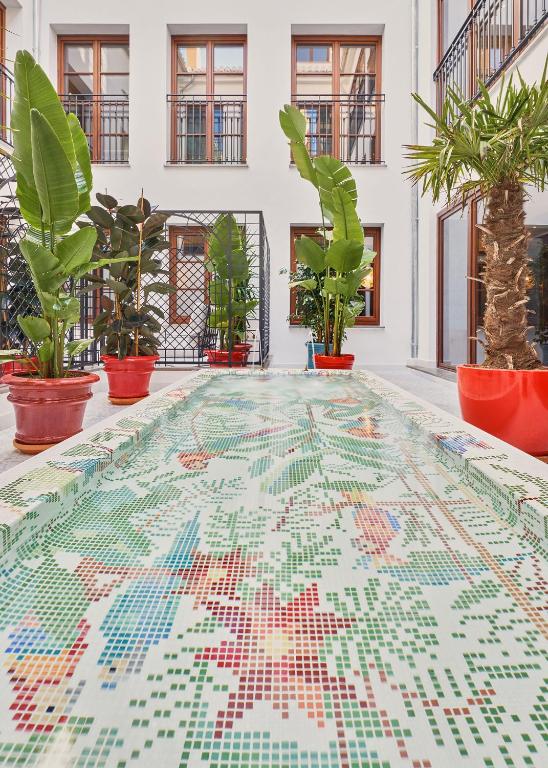
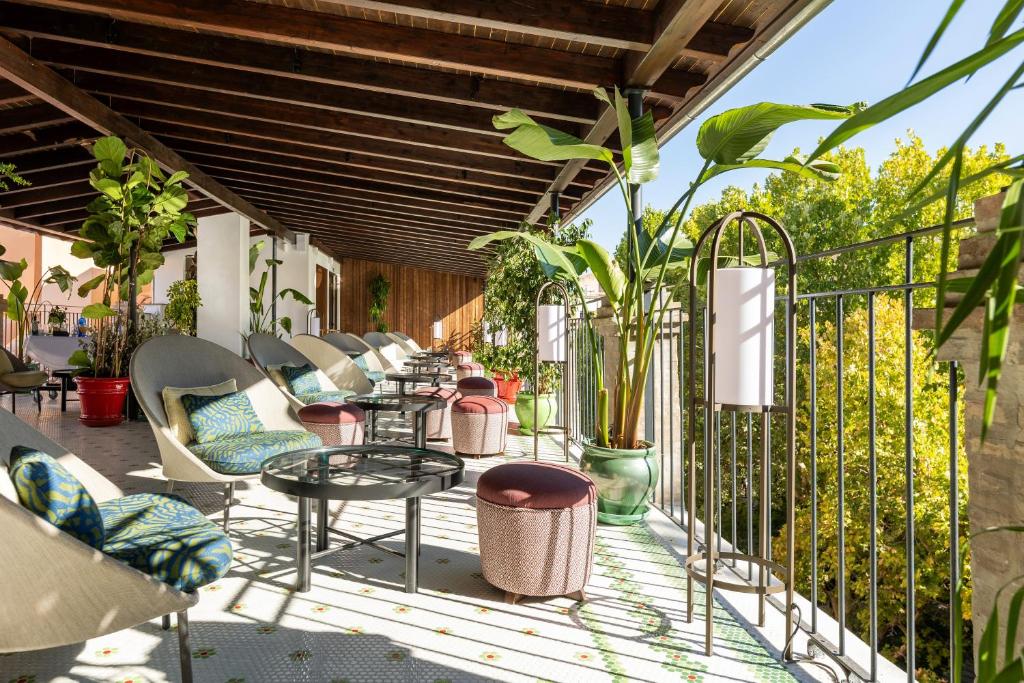
Then there is the roof. La Pájara takes its name from the birds that had colonised the abandoned building before its transformation. Rockwell Group responded with exuberance. Floral patterns, strong colours, planting and water turn the rooftop into a small urban oasis above Granada’s rooftops. Cocktails and tapas come with views towards the cathedral and the city’s historic skyline. After a day navigating Granada’s steep lanes and crowded monuments, it is precisely where you want to land.
Why It Works
Seda Club could easily have become another hotel filled with predictable Moorish arches, lanterns and Alhambra references. Instead, Rockwell Group went deeper. Silk trading, Islamic Granada, the Reconquista, British influence, Persian craftsmanship and contemporary art are woven together without turning the hotel into a history lesson. And the “Club” in its name matters just as much as the “Seda.” With only 21 rooms, hidden drinking spaces, intensely personal interiors and staff able to deliver the kind of service impossible in a 200-room property, it feels deliciously private without actually excluding anyone. Granada provides the history. Seda Club dresses it for dinner.