Hotel Seeko’o, Bordeaux, France
An immaculate Corian-clad landmark bringing uncompromising contemporary architecture to Bordeaux’s historic waterfront
Why DNA Hotels Loves It
● Atelier King Kong turned a difficult corner site between Chartrons and Bacalan into one of Bordeaux’s most recognisable pieces of contemporary hotel architecture.
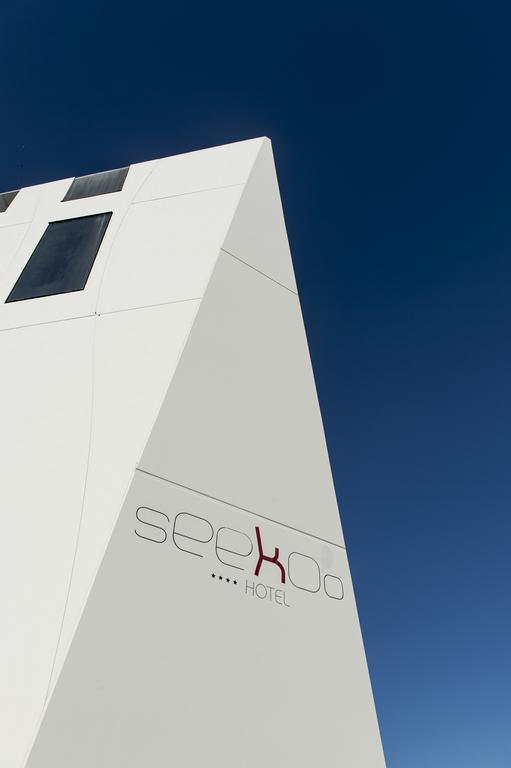
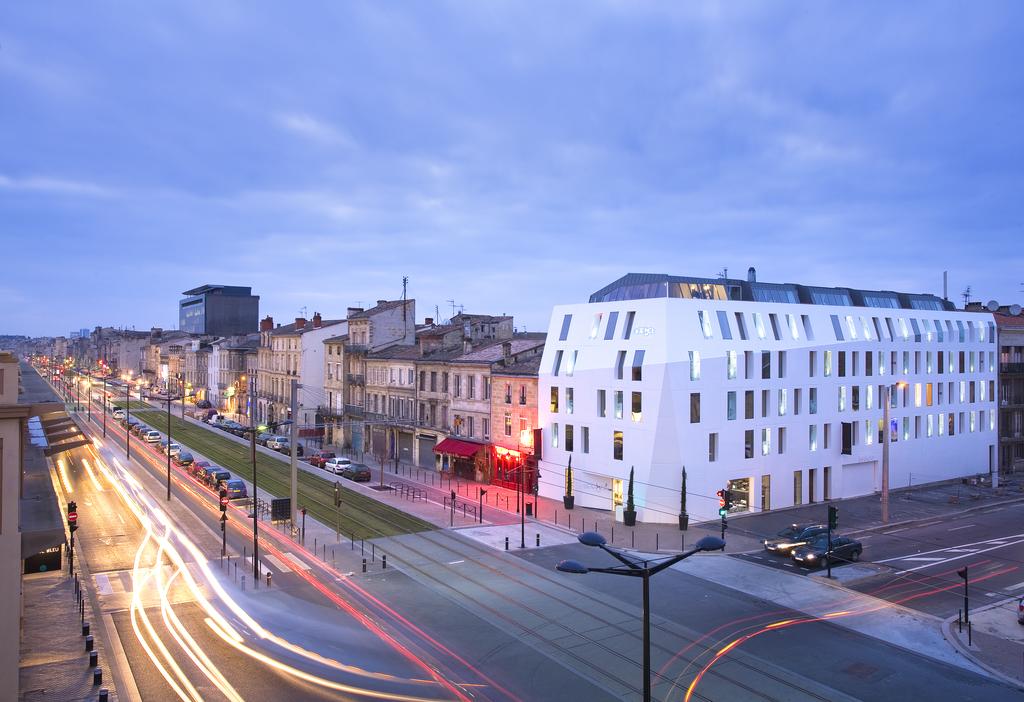
● Its seamless white Corian skin, prow-like corner and sculpted roofline deliberately reject historic pastiche while still responding intelligently to the proportions of the 18th-century waterfront.
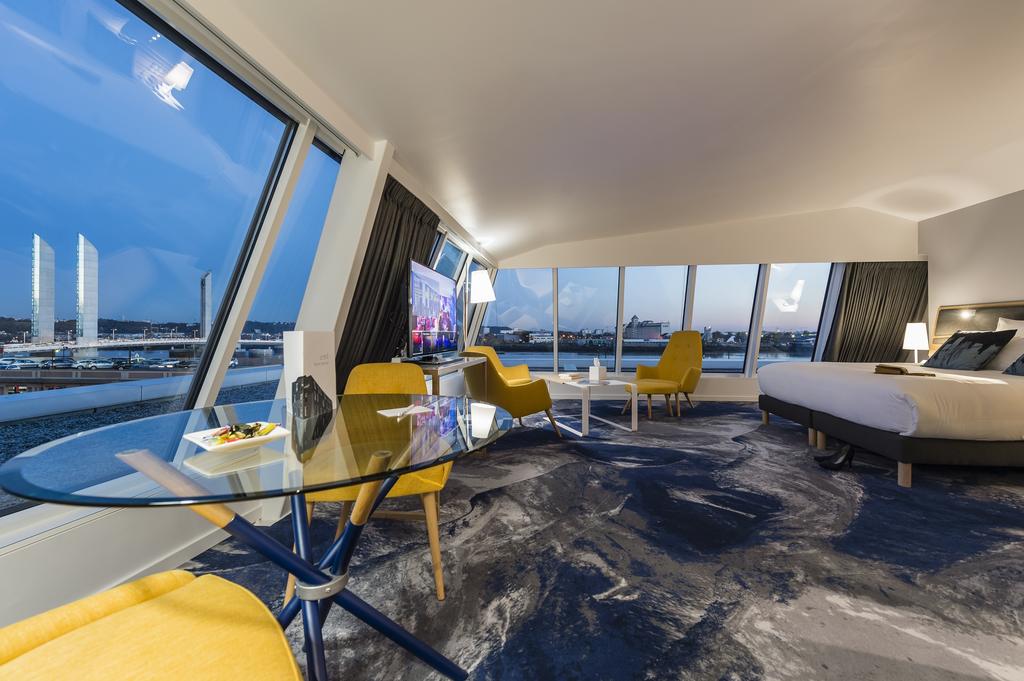
● Spacious minimalist interiors, panoramic upper-floor rooms and a sauna overlooking the Garonne extend the architectural idea beyond the façade.
An Iceberg on the Garonne
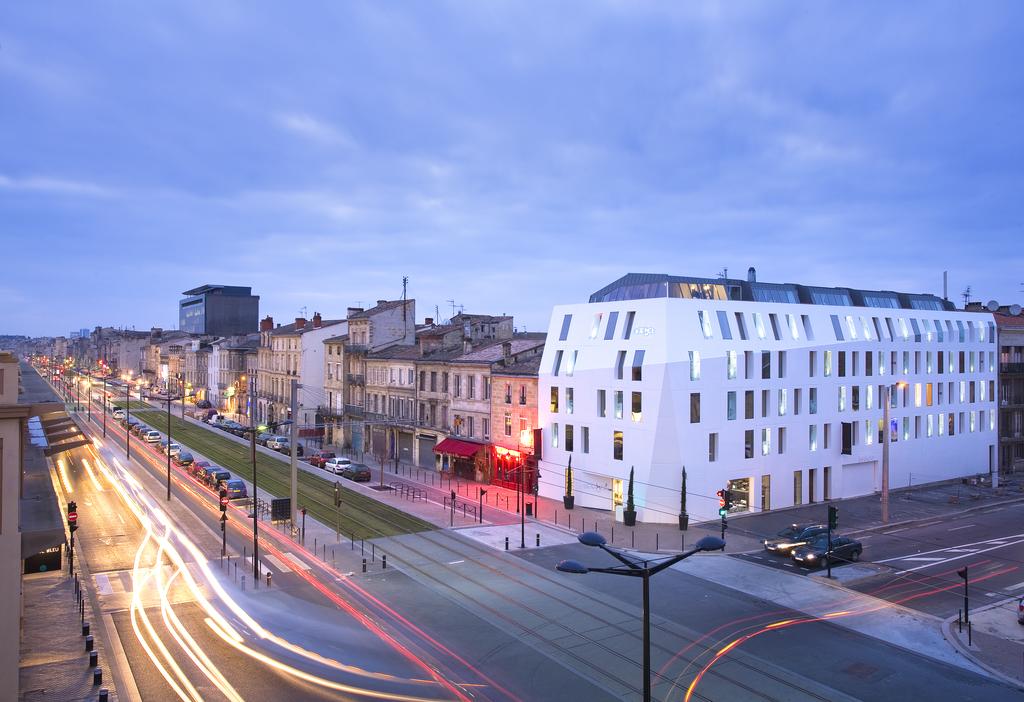
Bordeaux is a city defined by stone. Along much of the Garonne, an extraordinary procession of 18th-century façades creates one of Europe’s most coherent historic waterfronts. Hotel Seeko’o appeared further north as something deliberately different: smooth, white, abstract and almost geological. Its name derives from an Inuit word for ice, and the comparison is immediate. Large immaculate Corian panels wrap the façade and roof into a continuous pale surface, making the building seem carved rather than conventionally constructed. Yet this was never architecture conceived simply to provoke. Atelier King Kong designed Seeko’o as part of the transformation of the former docklands between Chartrons and Bacalan — an area whose fragmented industrial landscape allowed Bordeaux to experiment with a much more contemporary architectural language. The hotel became one of its early markers.
A Façade Without Ornament
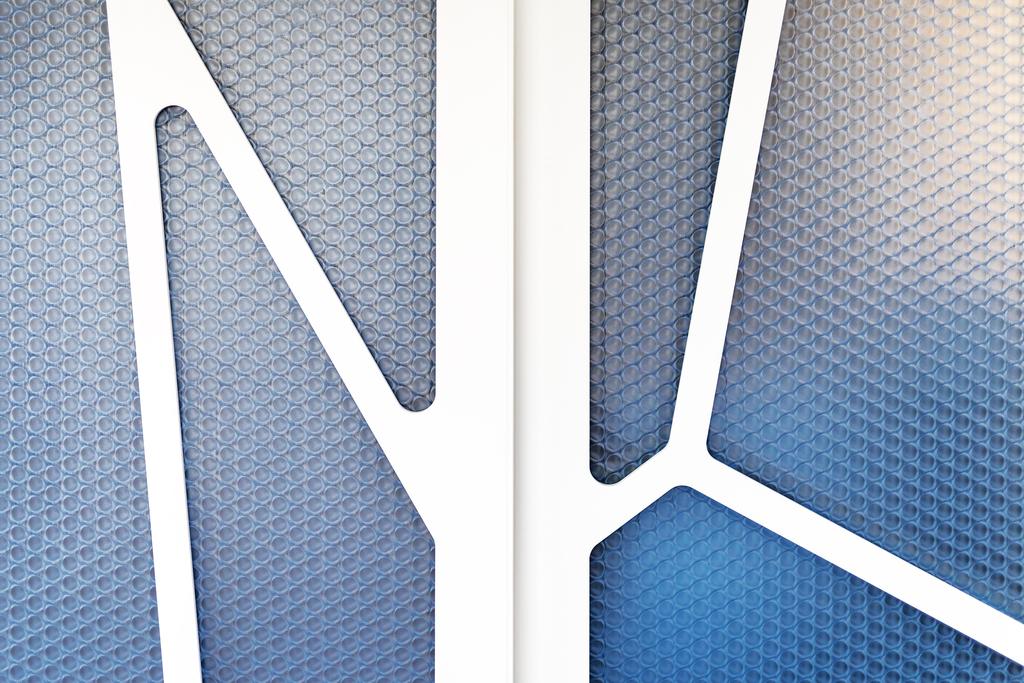
The strength of Seeko’o lies in how little it needs. There are no historical motifs and almost no applied decoration. Instead, architecture comes from proportion, surface and geometry. Regular vertical windows continue the rhythm of Bordeaux’s traditional façades, but their alternating recessed and flush glazing creates an entirely different play of shadow and reflection. Subtle folds in the Corian skin allow the roof and walls to become one continuous form, while slight shifts in the profile reconnect the new structure with the cornice heights of its neighbours. At the corner, the building pushes forward like the prow of a ship. It is an appropriate gesture for a hotel facing the river and docks. Rather than imitate old Bordeaux, Seeko’o acknowledges its urban rules and then speaks another language.
Minimalism Behind the White Skin
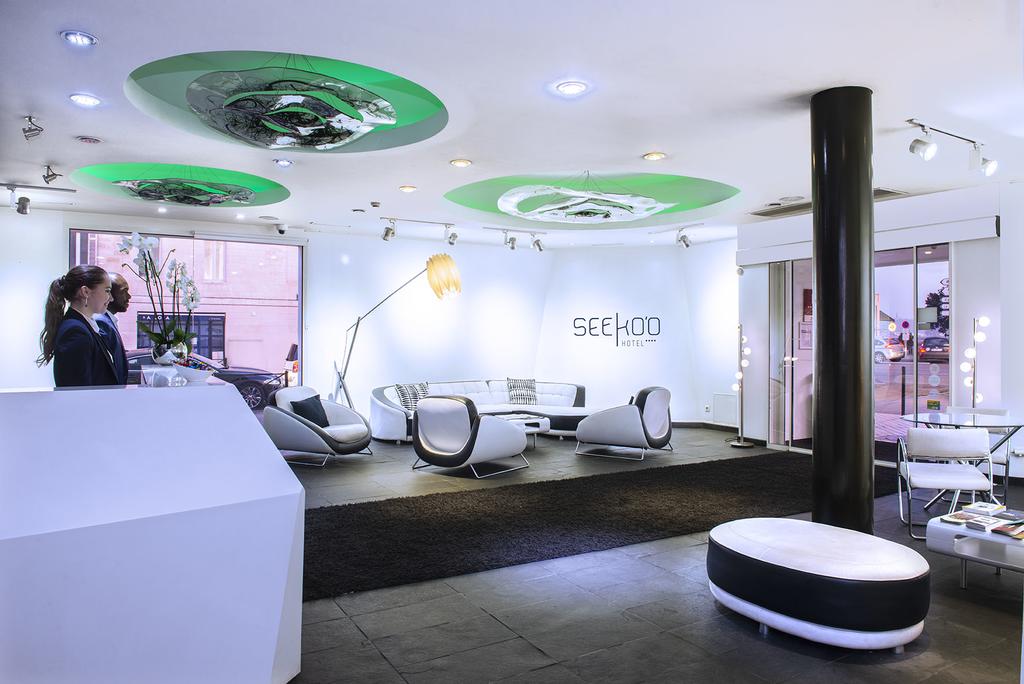
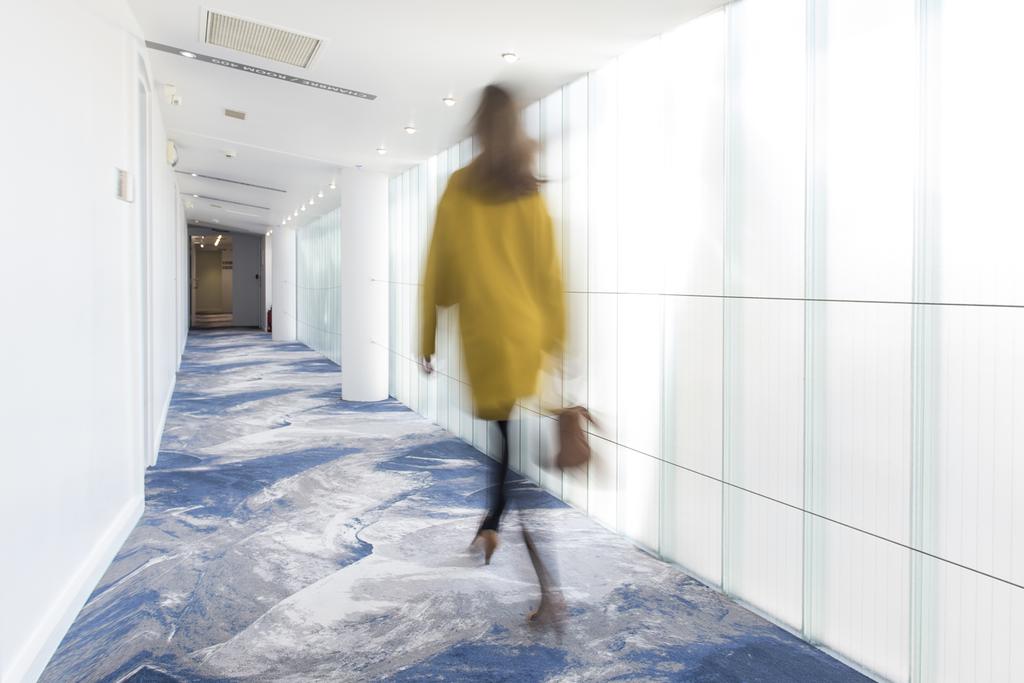
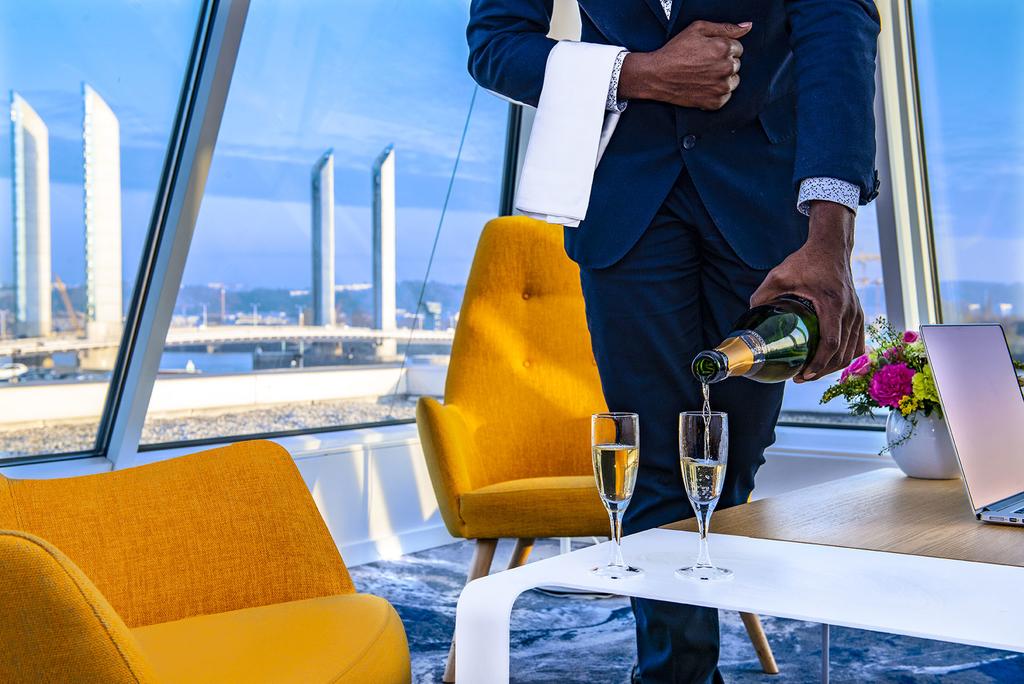
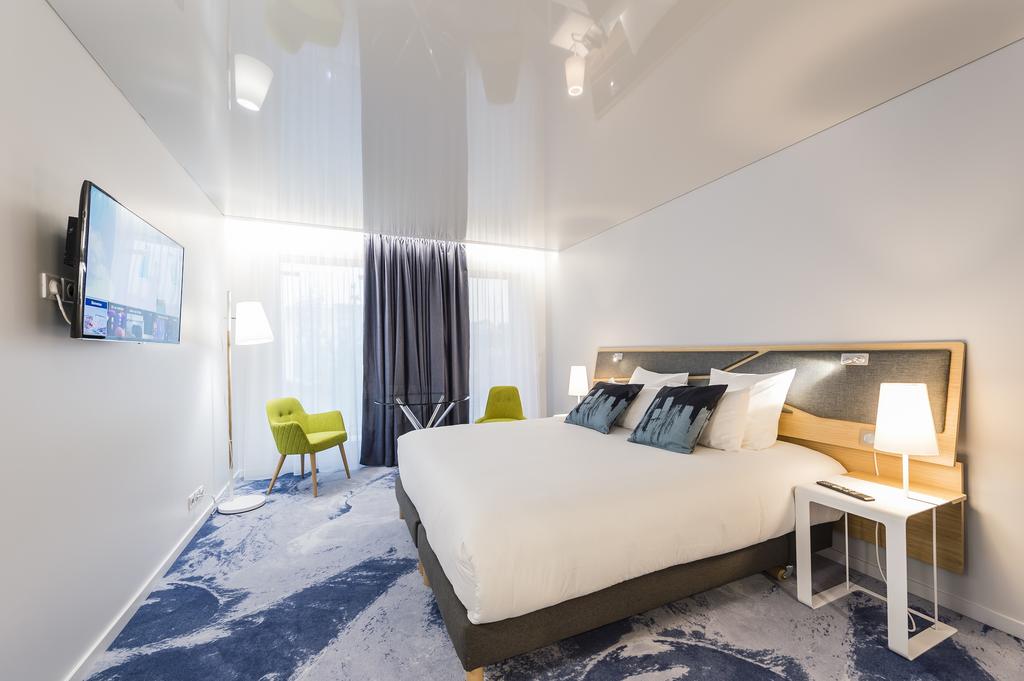
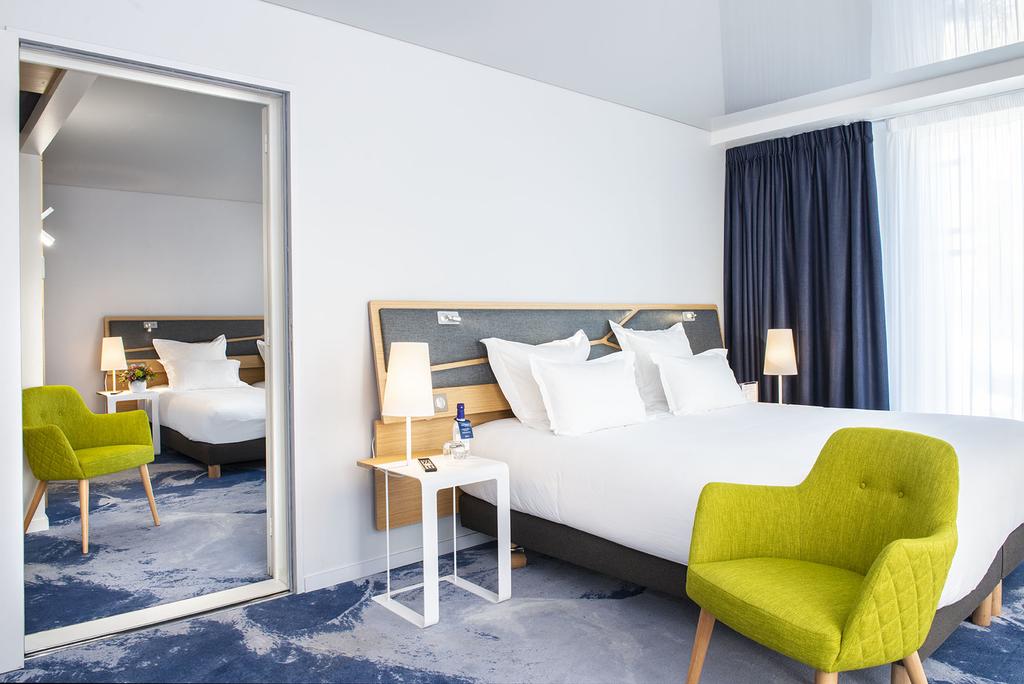
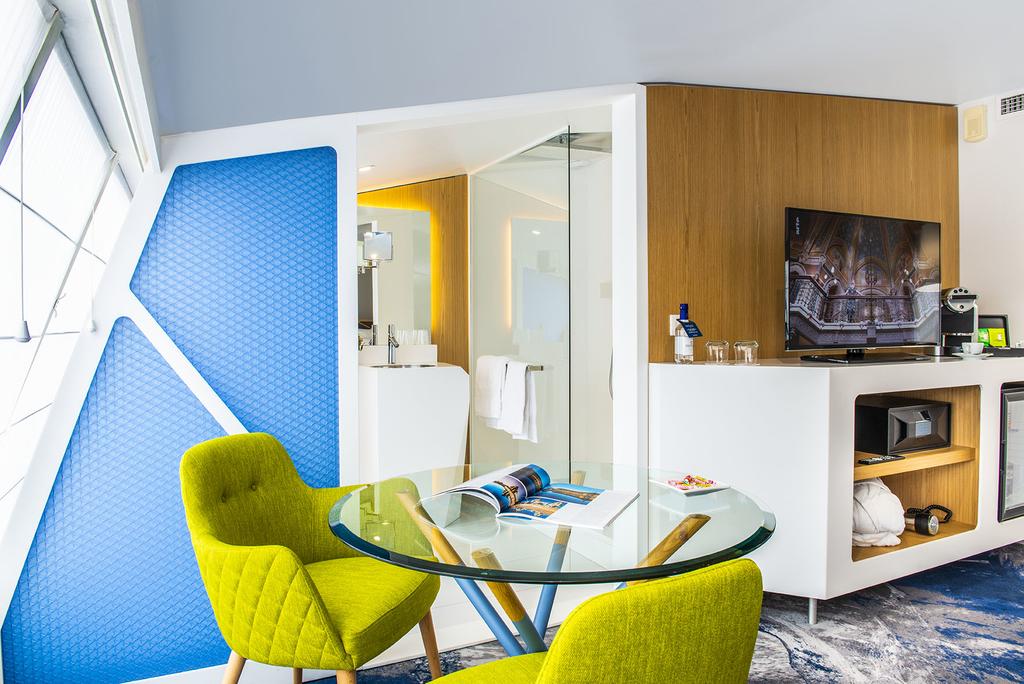
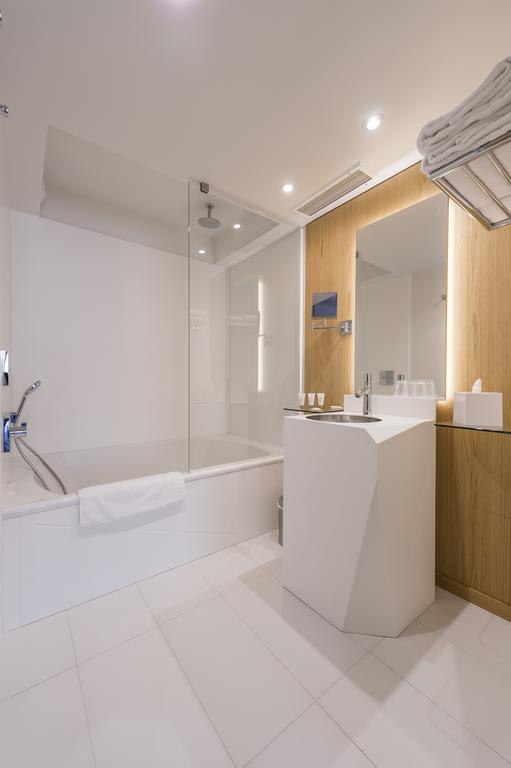
Inside, the architecture becomes calmer. Rooms are unusually generous, ranging from approximately 28 to 55 square metres, with every one facing outward while naturally lit corridors occupy the centre of the unusual plot. White and grey dominate, softened by blonde timber and occasional shots of colour. The Scandinavian influence is apparent in the clean furniture, uncluttered layouts and precise detailing. The glacial references continue more subtly underfoot, with swirling blue, grey and white carpets inspired by the Mer de Glace at Chamonix. Bathrooms retain the graphic restraint of the bedrooms, while acoustic glazing shields rooms from the activity of the waterfront. On the recessed upper floor, the experience changes again. Views open across the Garonne, Bassins à Flot and Bordeaux’s evolving northern skyline, turning the city itself into the decoration.
Bordeaux Beyond the Classical Centre
Seeko’o makes particular sense because of where it stands. This is not the Bordeaux of symmetrical limestone squares and aristocratic façades. Bacalan and the neighbouring docks have become the city’s laboratory for reuse, cultural architecture and contemporary urban development. The Cité du Vin, Halles de Bacalan and maritime attractions are all nearby, while the historic centre remains easily accessible along the river. The hotel consequently feels less like an isolated architectural object than part of a wider shift in Bordeaux. Warehouses became restaurants. Quays became promenades. Industrial land became a new cultural district. Architecture becomes the evidence of that transition.
A Different Kind of Urban Retreat
Facilities remain deliberately compact rather than resort-like. A sauna and hammam provide a quiet counterpoint to the city, with elevated views over rooftops and river, while a fitness area adds another layer of contemporary functionality. Downstairs, the low-lit bar is open to locals as well as hotel guests, bringing some urban life inside the otherwise restrained building. There is no conventional restaurant, keeping the emphasis firmly on Bordeaux itself — a city where increasingly interesting places to eat and drink lie immediately beyond the door. That restraint suits Seeko’o. The building is the principal experience.
Why It Works
Hotel Seeko’o remains compelling because it captures a moment when Bordeaux began confidently adding contemporary architecture to a city famous for preserving its past. Atelier King Kong did not disguise the hotel as another stone building; instead, the architects created a new waterfront landmark using proportion, rhythm and context rather than imitation. The white Corian skin still gives it the presence of an urban sculpture, while the interiors deliberately step back and let light, views and geometry take over. In a city dominated by heritage, Seeko’o works because it had the confidence to become part of Bordeaux’s next chapter.