The Society Hotel Hood River | Bingen, Washington | USA
A 1930s schoolhouse reborn as a social, design-led basecamp in the Columbia River Gorge.
Why DNA Hotels Loves It
● Waechter Architecture and Blossom Design retained the school’s original character while turning it into an unusually stylish mix of hotel, hostel and wellness retreat.
● Reclaimed chalkboards, green lockers, maple floors and cafeteria lights keep the building’s past visible without turning it into a theme.
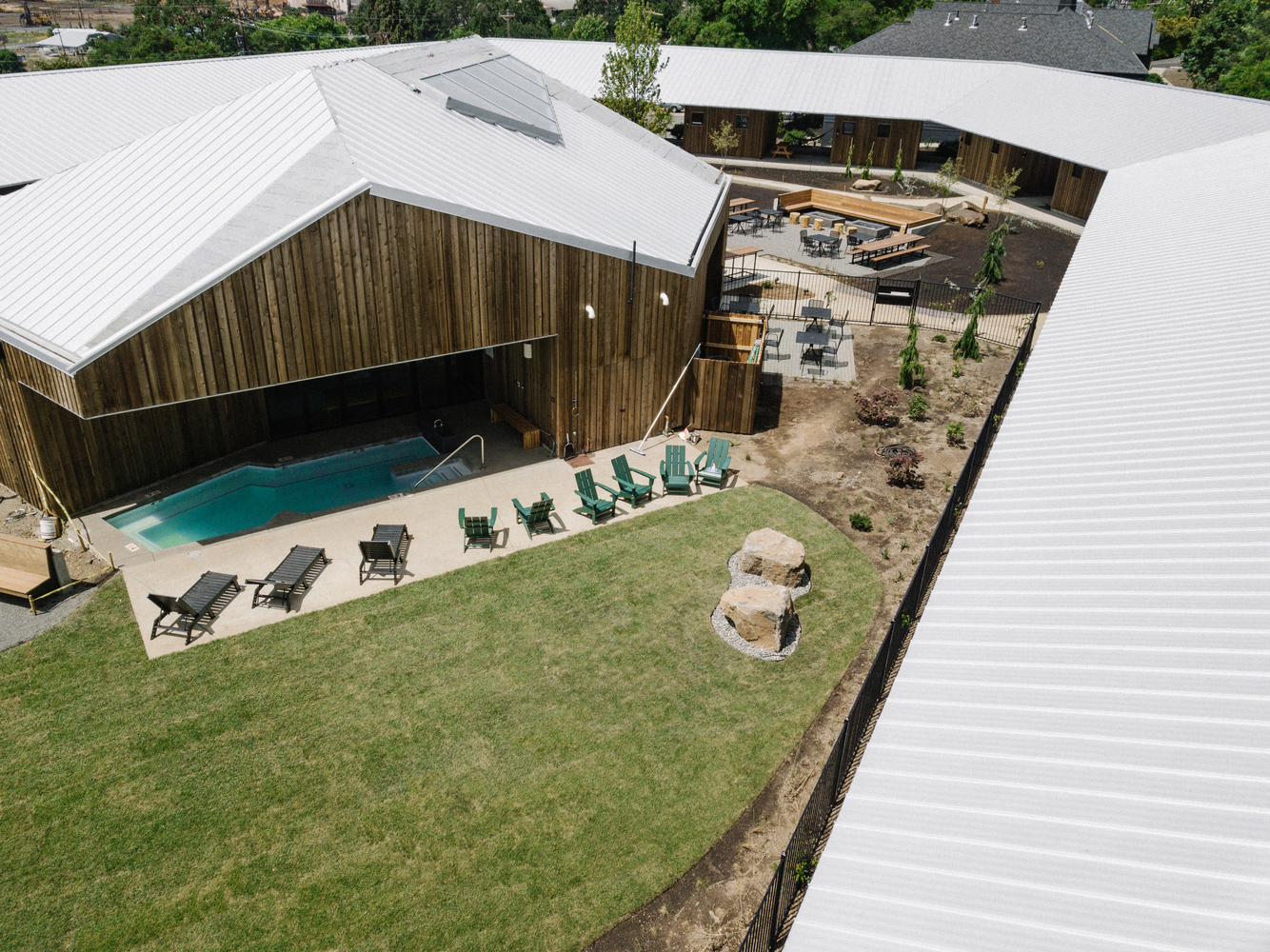
● The circular cedar cabin complex and saline spa transform the former school grounds into a contemporary gathering place for outdoorsy travellers.
Back to School
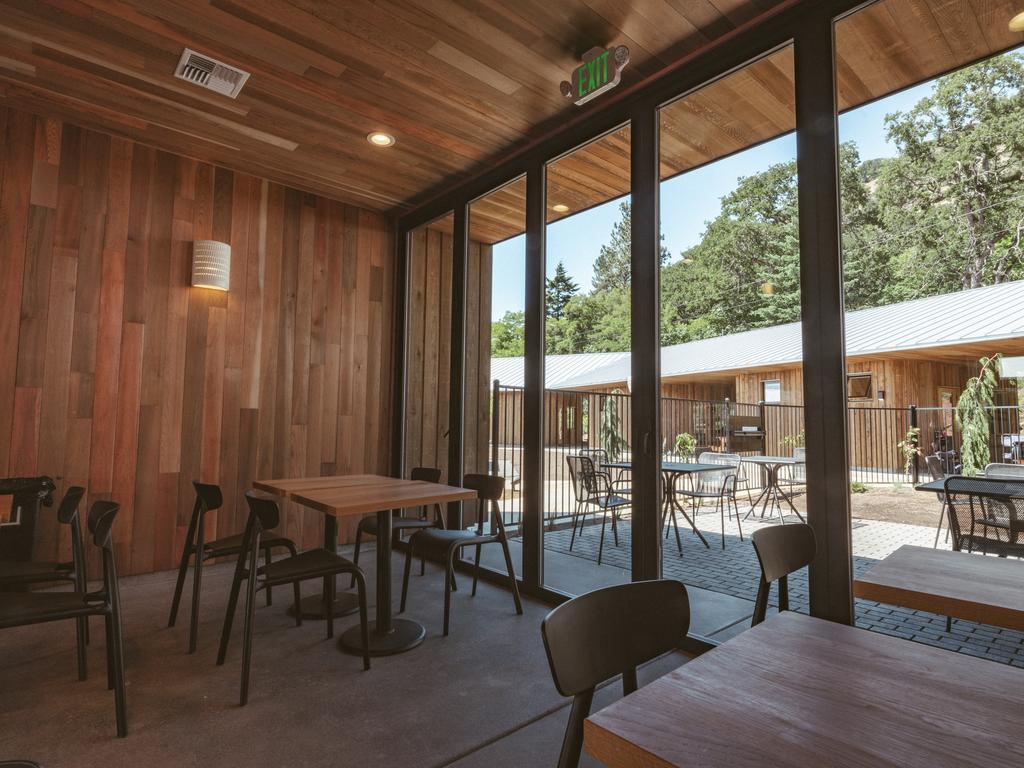
In the small Washington town of Bingen, just across the Columbia River from Hood River, The Society Hotel occupies a 1930s schoolhouse that has been given a remarkably thoughtful second life. Portland-based Waechter Architecture and Blossom Design resisted the temptation to erase its institutional past. Old classroom slate became the backdrop to reception and guestroom signs, original green lockers line the halls, maple flooring survives underfoot and former cafeteria lighting has been repurposed in the café. The result feels unmistakably contemporary, but the building never forgets what it used to be.
A Hotel Built Around Sharing
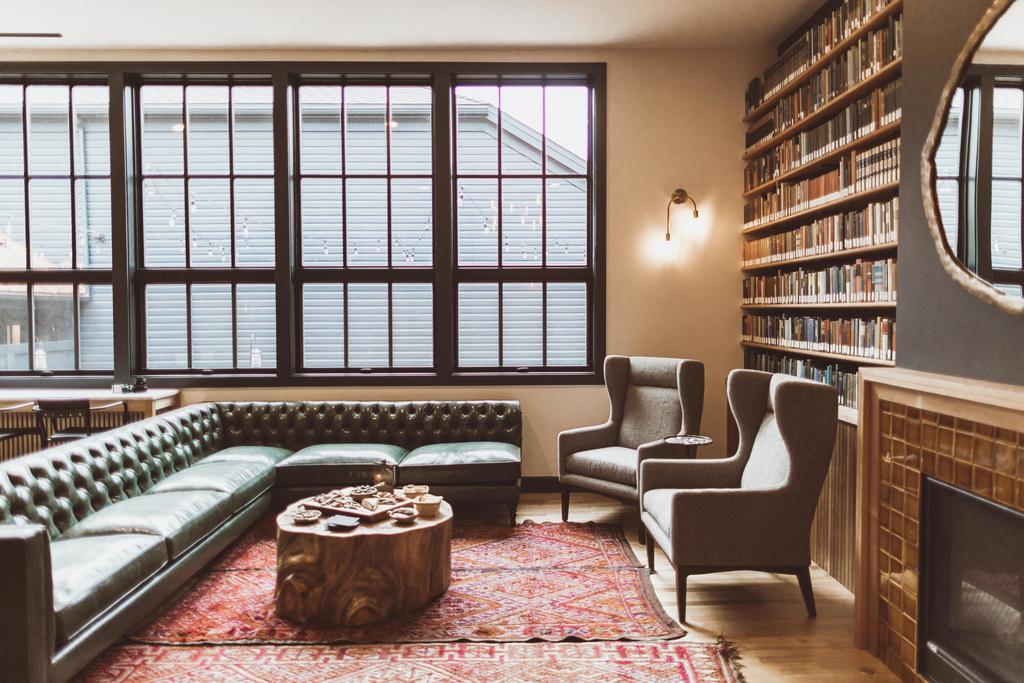
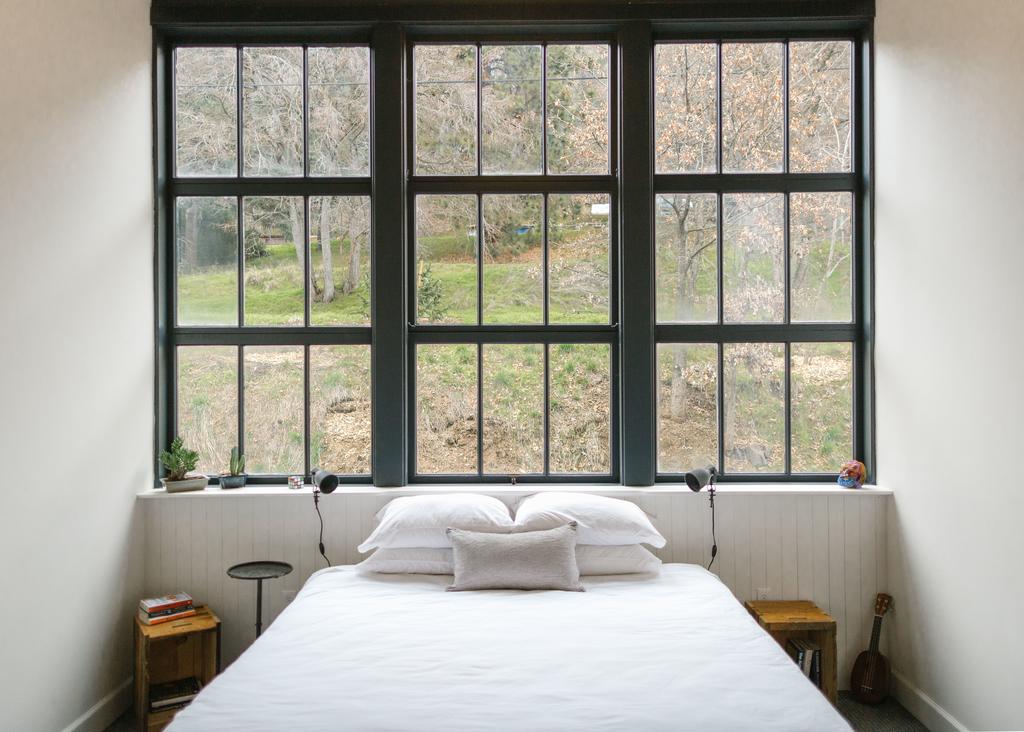
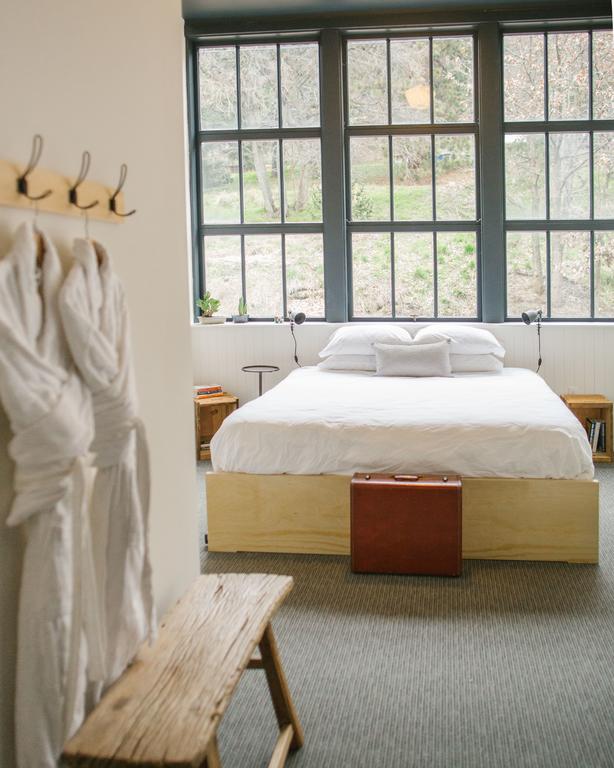
The Society follows a more European idea of hospitality, mixing private rooms with hostel-style accommodation and generous communal spaces. Inside the original schoolhouse are compact private rooms as well as two dormitories fitted with custom triple bunks. Some private rooms share bathrooms, deliberately keeping rates accessible while directing more attention toward the spaces everyone uses together. There are no televisions. Instead, the social focus sits downstairs around the café, library and lounge, where deep green sofas, vintage books and a mustard-tiled fireplace create something between a school common room and a particularly stylish mountain clubhouse.
Cabins Around the Courtyard
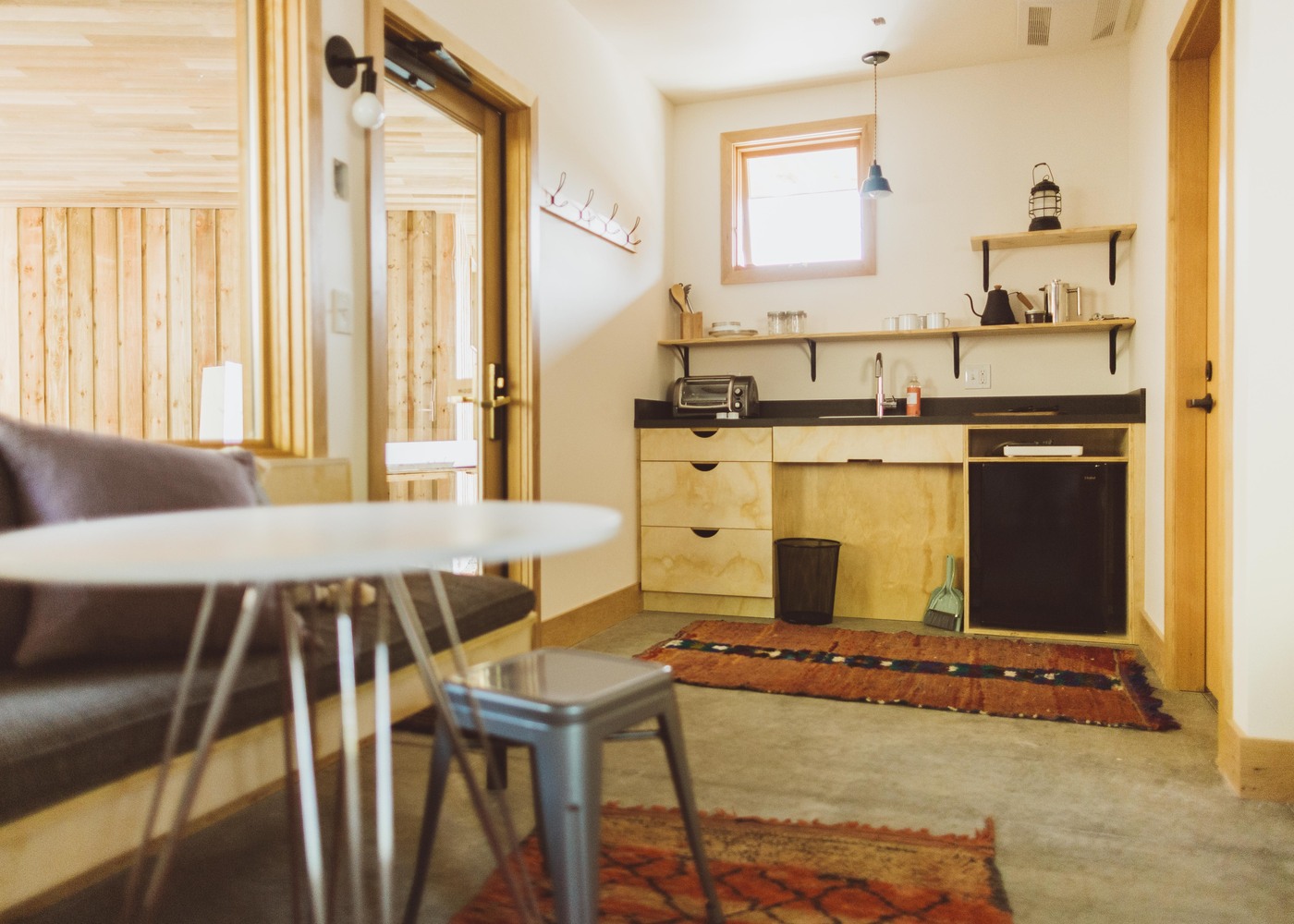
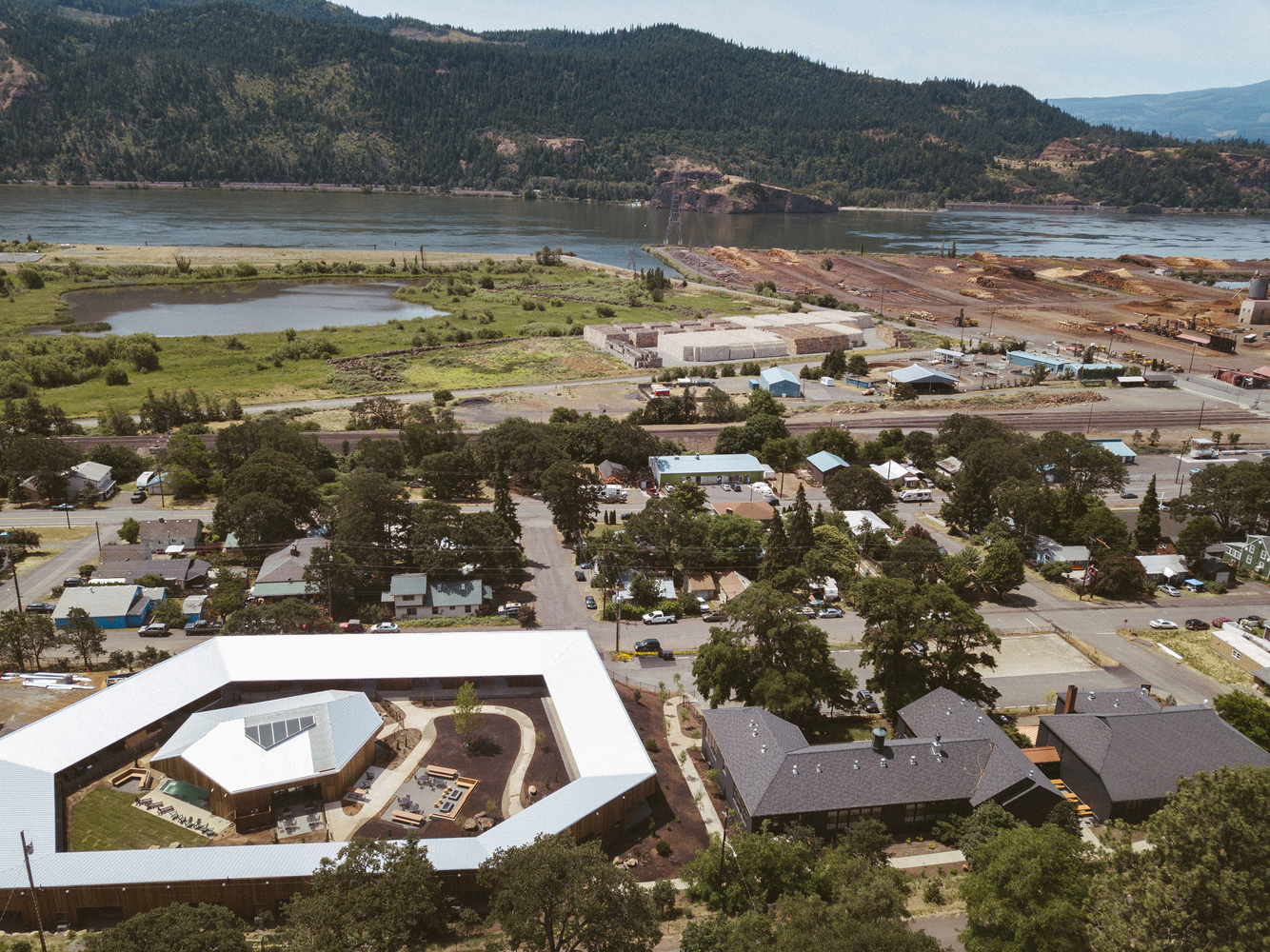
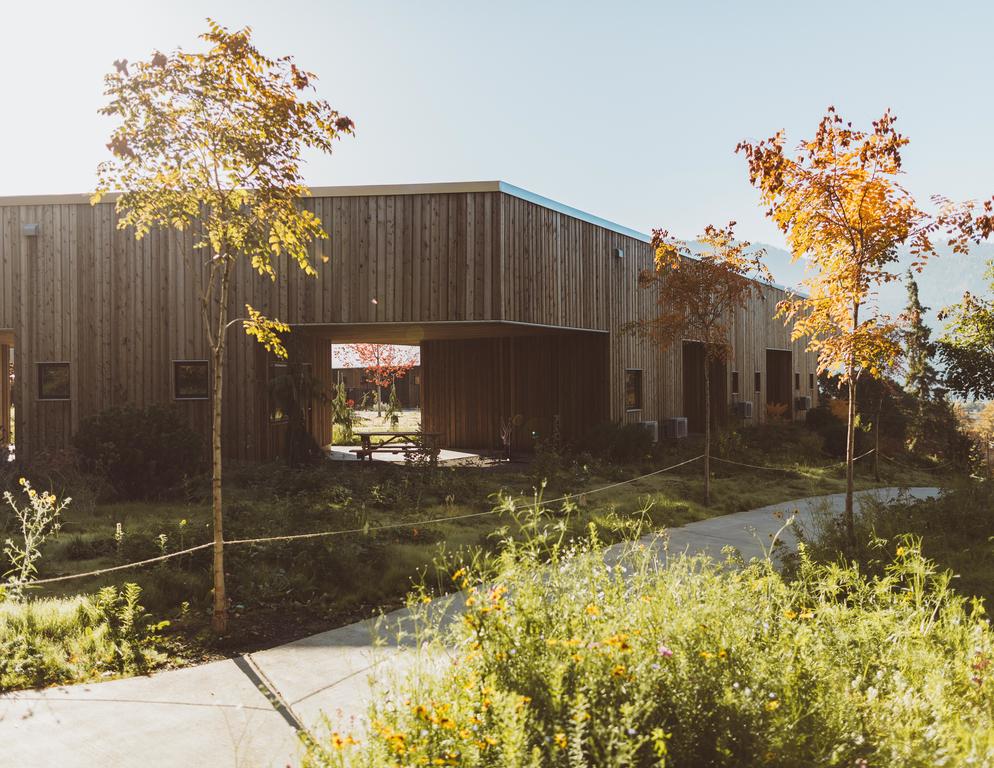
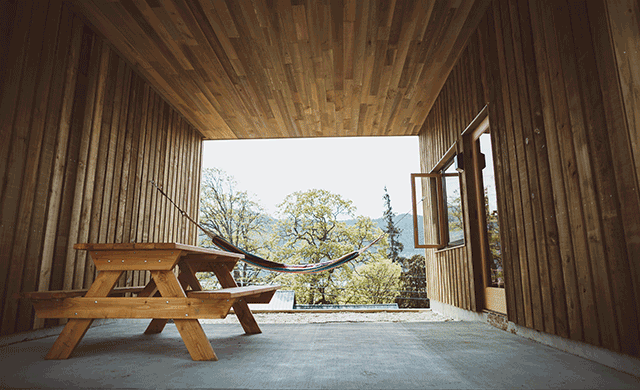
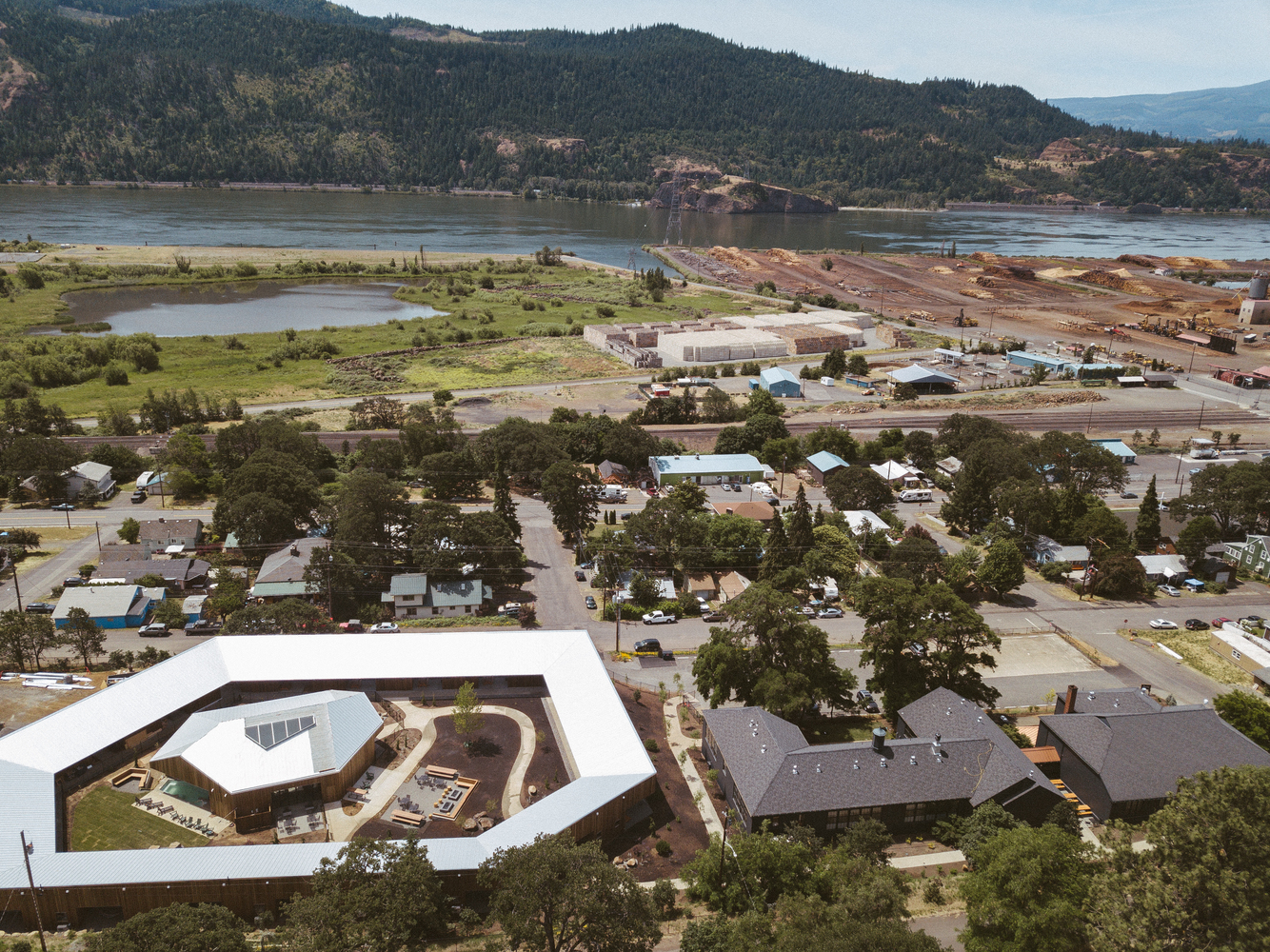
Beside the schoolhouse, Waechter Architecture added 20 cedar cabins arranged in a distinctive hexagonal ring. A continuous roof links them together, creating covered porches and breezeways around a shared central courtyard. The arrangement feels communal without sacrificing privacy and avoids placing a solid barrier between the hotel and its residential surroundings. Inside, the cabins are simple and efficient, with navy accent walls, built-in plywood furniture, ensuite bathrooms and small kitchenettes. Each opens to its own outdoor space, complete with a hammock, picnic table and somewhere to secure a bike.
The Sanctuary
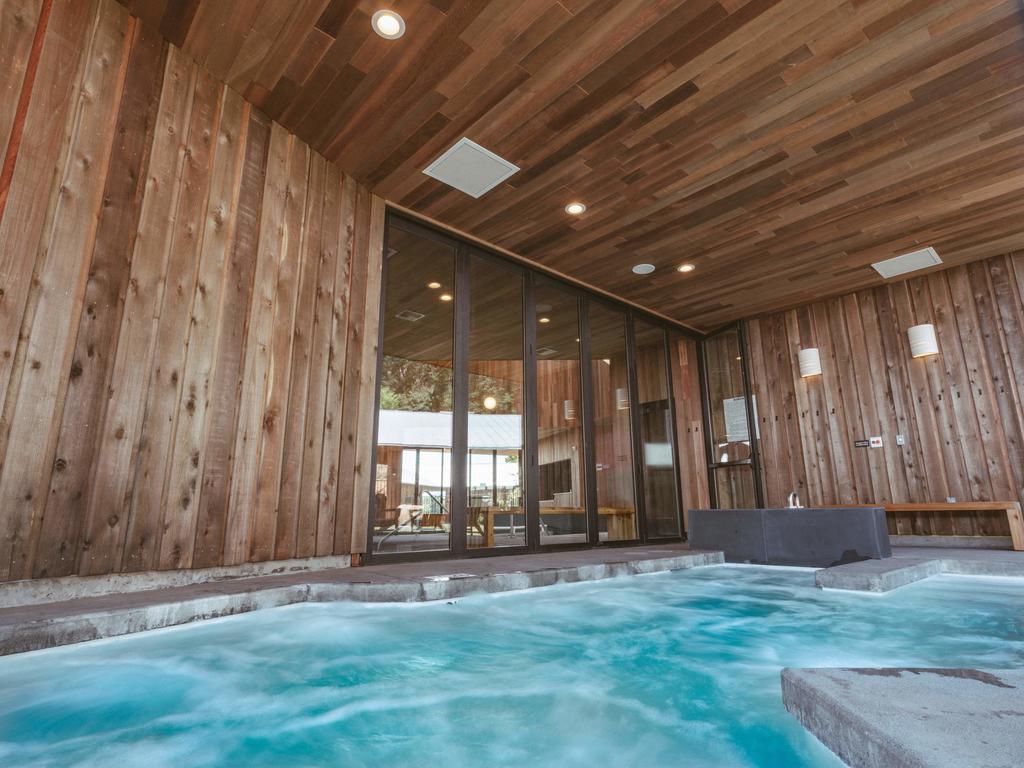
At the centre of the new complex is the real surprise: a bathhouse and spa built partly into the hillside. The bright, pared-back space contains saline soaking pools, a cold plunge, outdoor hot tub and sauna, while a circular Sanctuary provides a quiet setting for yoga, meditation and retreats. Above the indoor pools, a large skylight brings daylight deep into the structure. It gives the property another identity entirely. The Society may have the informal energy of an upscale hostel, but after a day hiking, rafting, cycling or kiteboarding in the Gorge, the spa makes it feel considerably more indulgent.
The Gorge as Playground
The Columbia River Gorge is the reason to come. Hiking trails, waterfalls, white-water rafting, cycling and some of North America’s best windsurfing and kiteboarding are all close by, with Hood River’s restaurants, breweries and shops around ten minutes away across the river. Back at the hotel, guests gather around outdoor firepits or drift between the café, spa and cabins. Food is deliberately uncomplicated — local coffee and pastries in the morning, then salads, sandwiches, bowls, beer and cocktails later in the day.
Affordable Luxury, Reconsidered
What makes The Society Hotel interesting is not simply that it occupies an old school. It is the way the project questions how much of a hotel really needs to be private. Bedrooms can be compact. Bathrooms can sometimes be shared. But the spaces between them — the lounge, courtyard, spa, firepits and café — become richer as a result. It is hospitality built around community rather than isolation, and in a landscape like the Columbia River Gorge, that feels entirely appropriate.