The Standard, Ibiza | Ibiza Town, Spain
A former cinema reborn as a layered mix of Californian mid-century ease, Mediterranean restraint, and unmistakable Standard energy
Why DNA Hotels Loves It
● The design bridges two very different references — The Standard’s Californian roots and Ibiza’s vernacular architecture — through travertine, timber, hessian, cotton, vintage European furniture, and a soft, sun-washed palette.
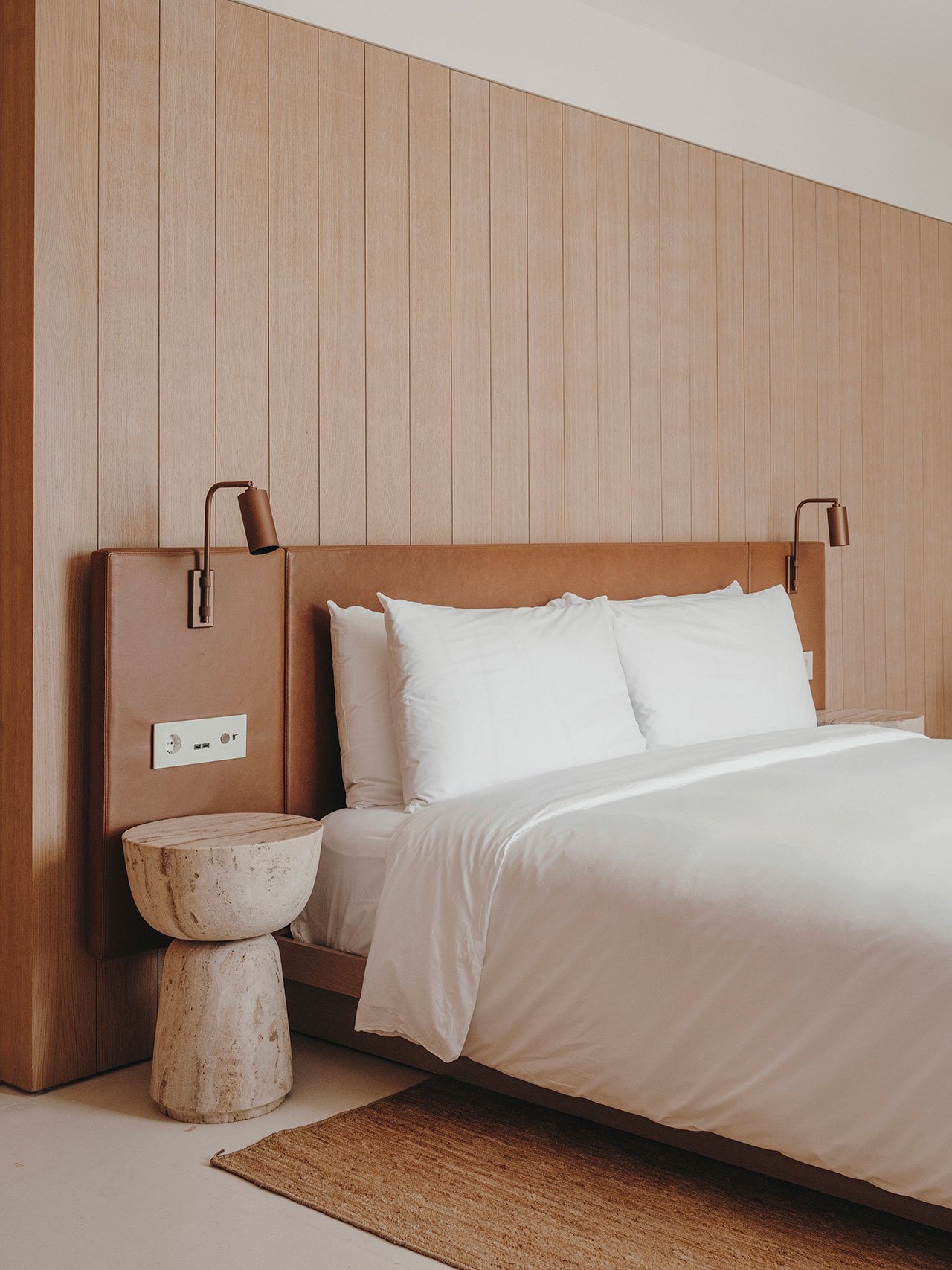
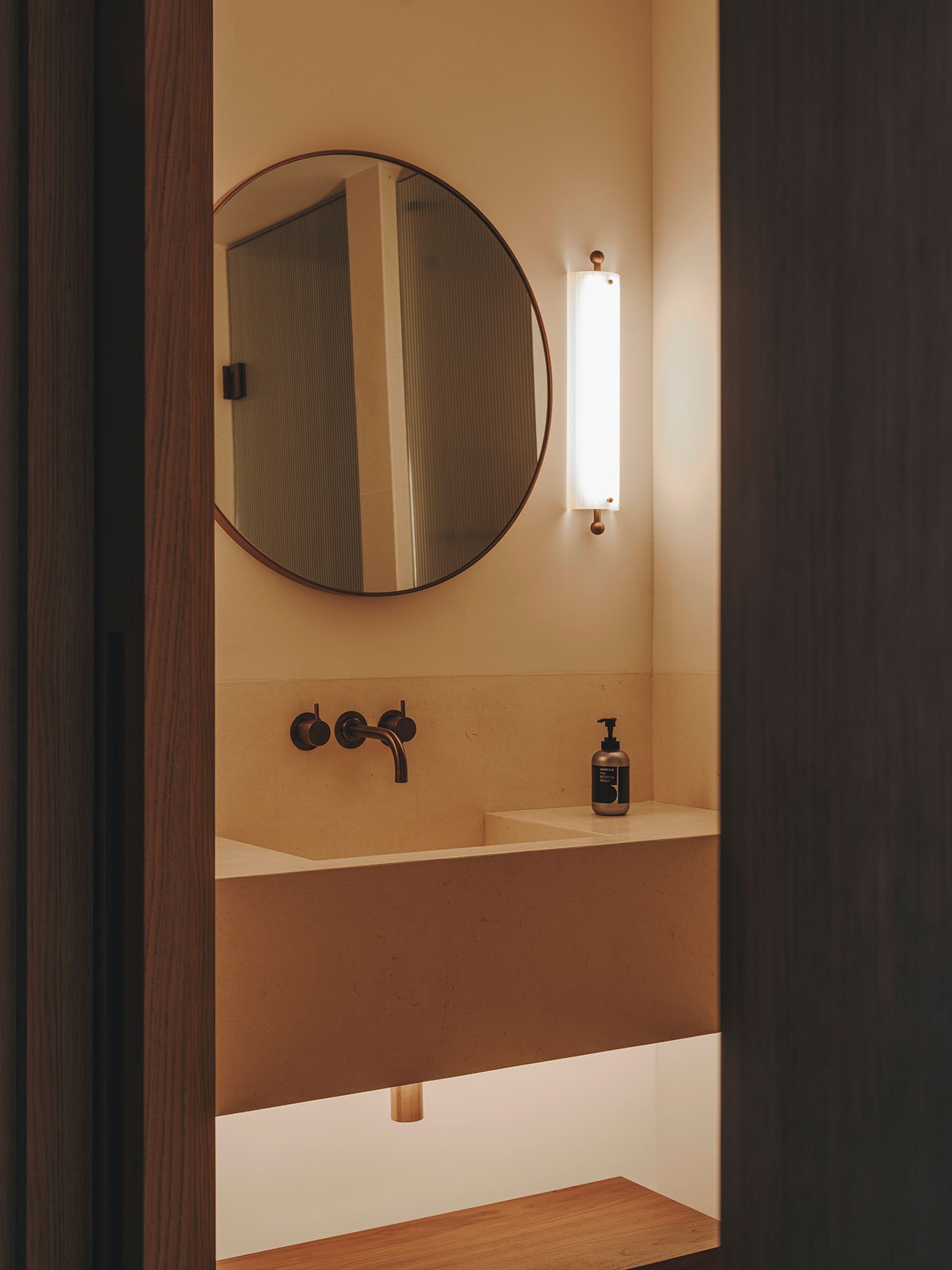
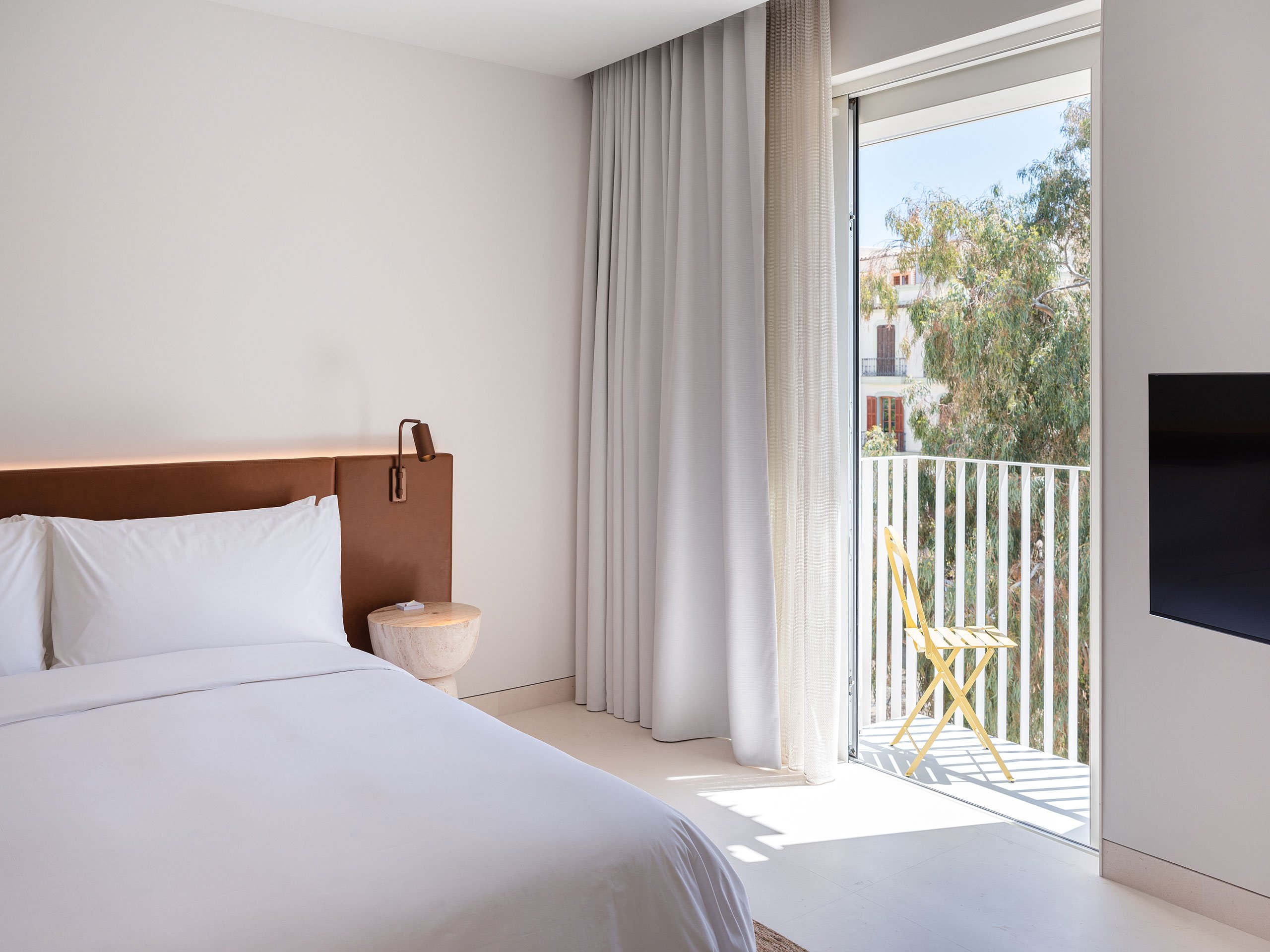
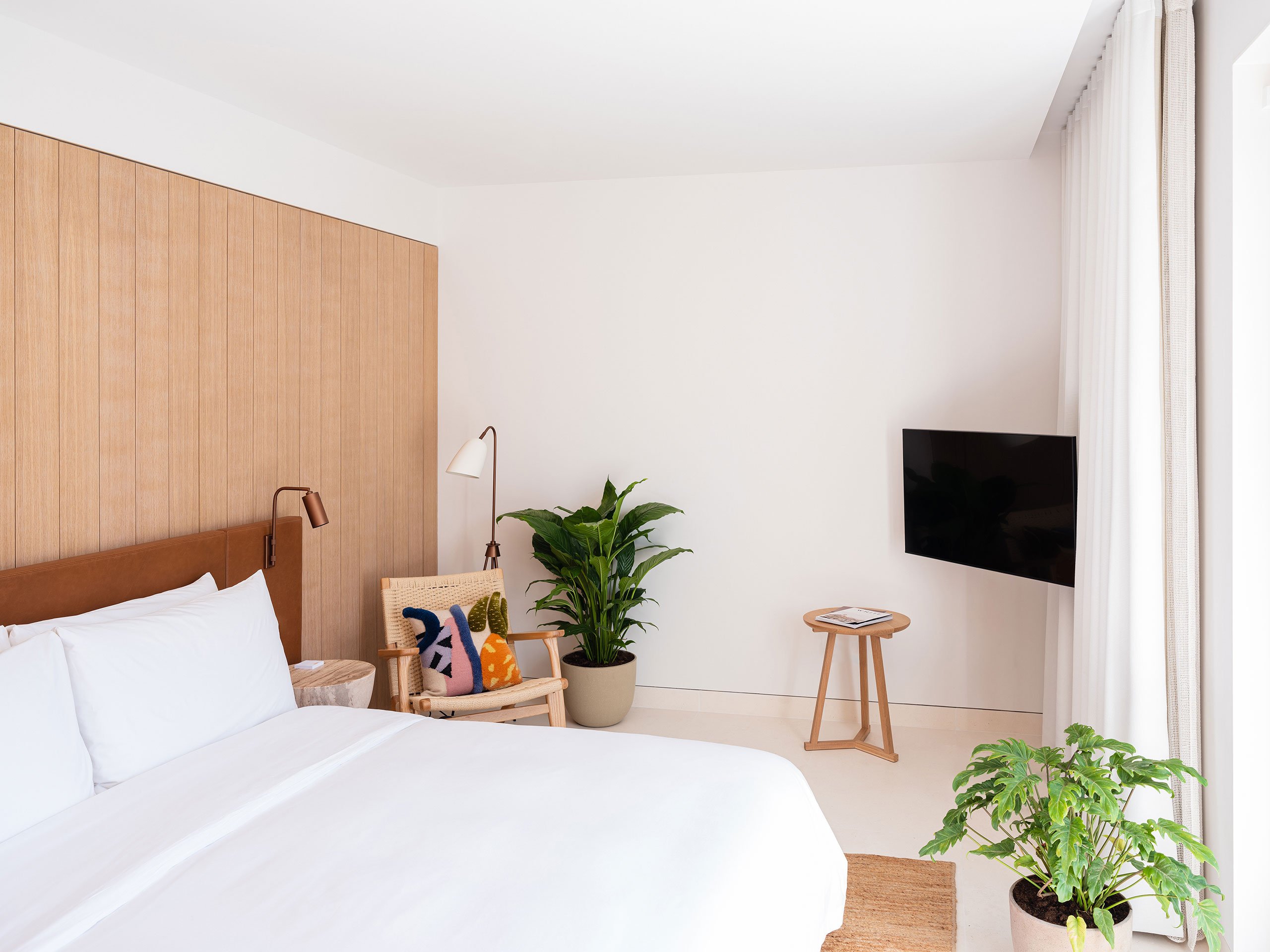
● The 67 guestrooms deliberately retreat from the visual energy of the public spaces, creating calm, pared-back interiors that feel appropriate to Ibiza’s climate rather than theatrically “designed.”
● Casa Privada adds an unusually flexible second layer to the hotel: 14 more rooms in a separate building with its own rooftop pool, bar, yoga space, and lounge.
A Cinema Becomes a Hotel
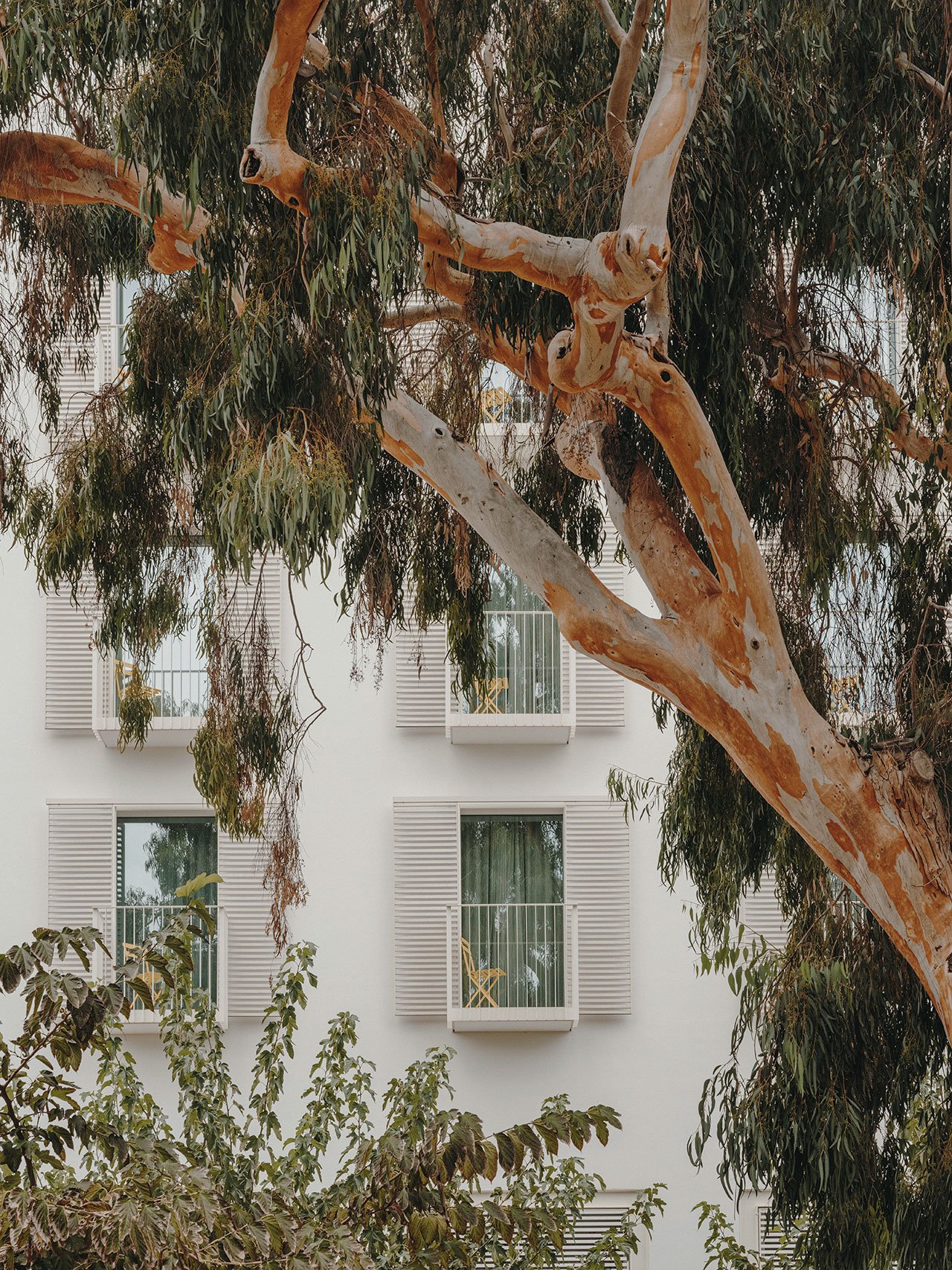
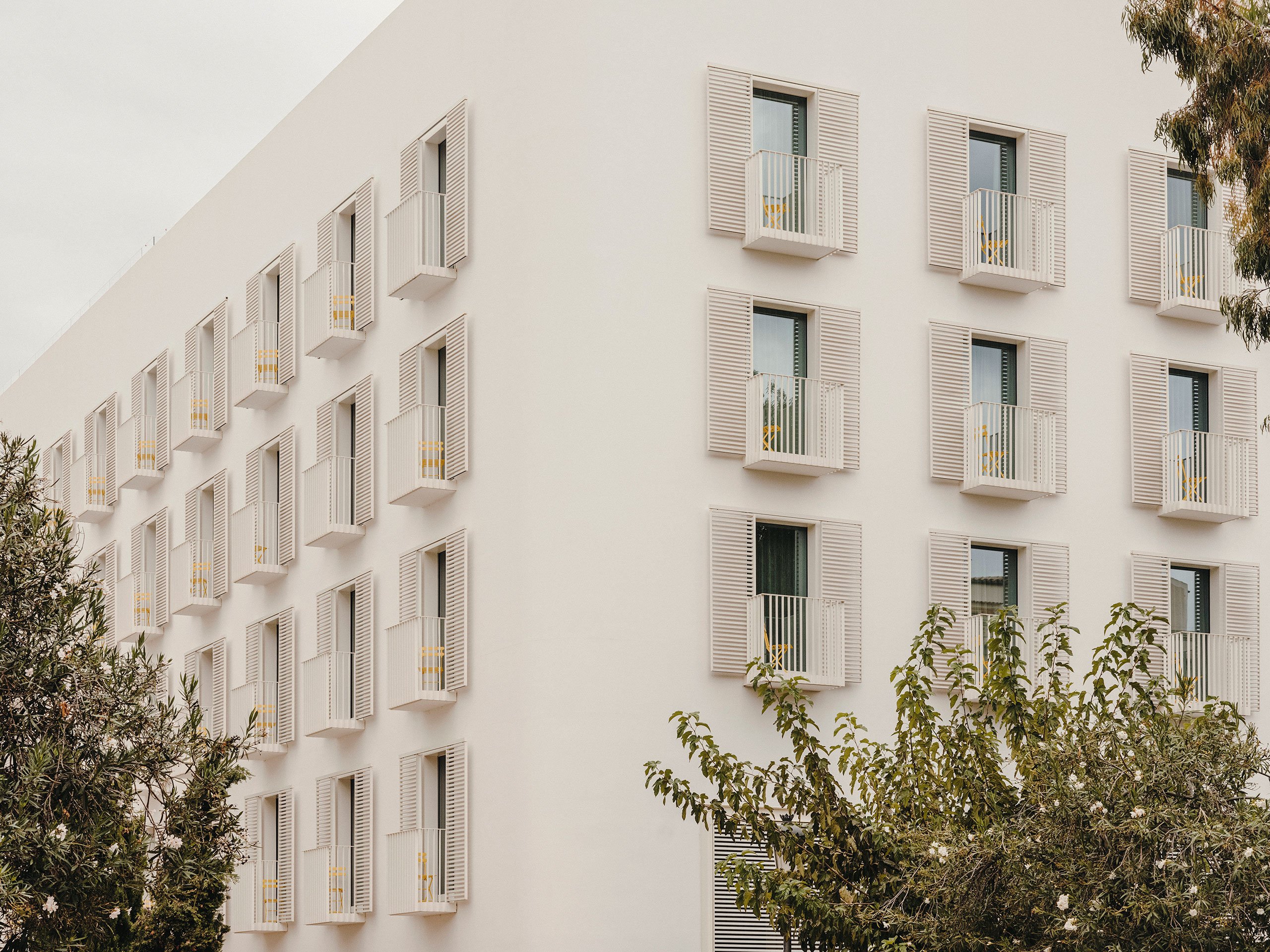
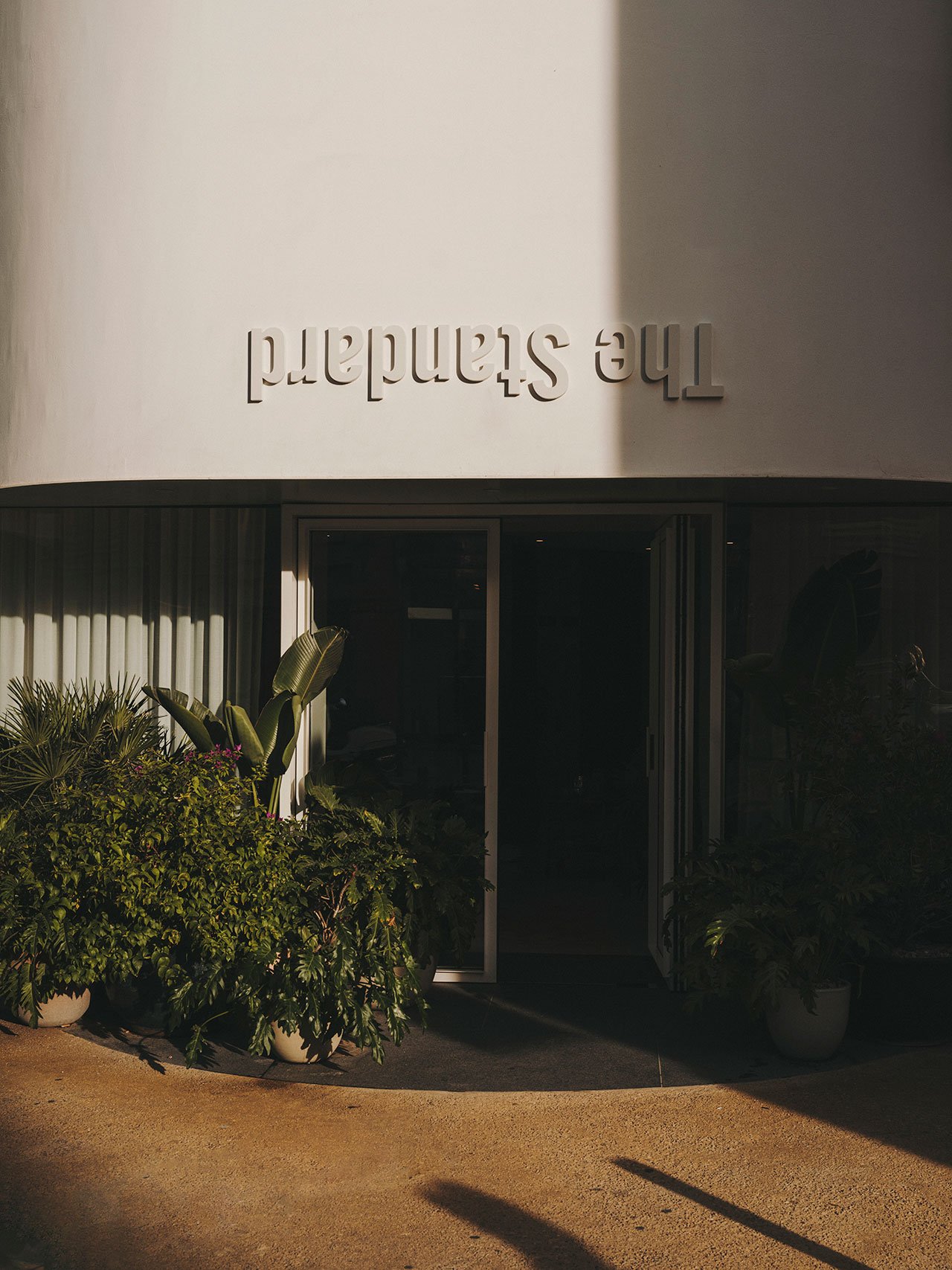
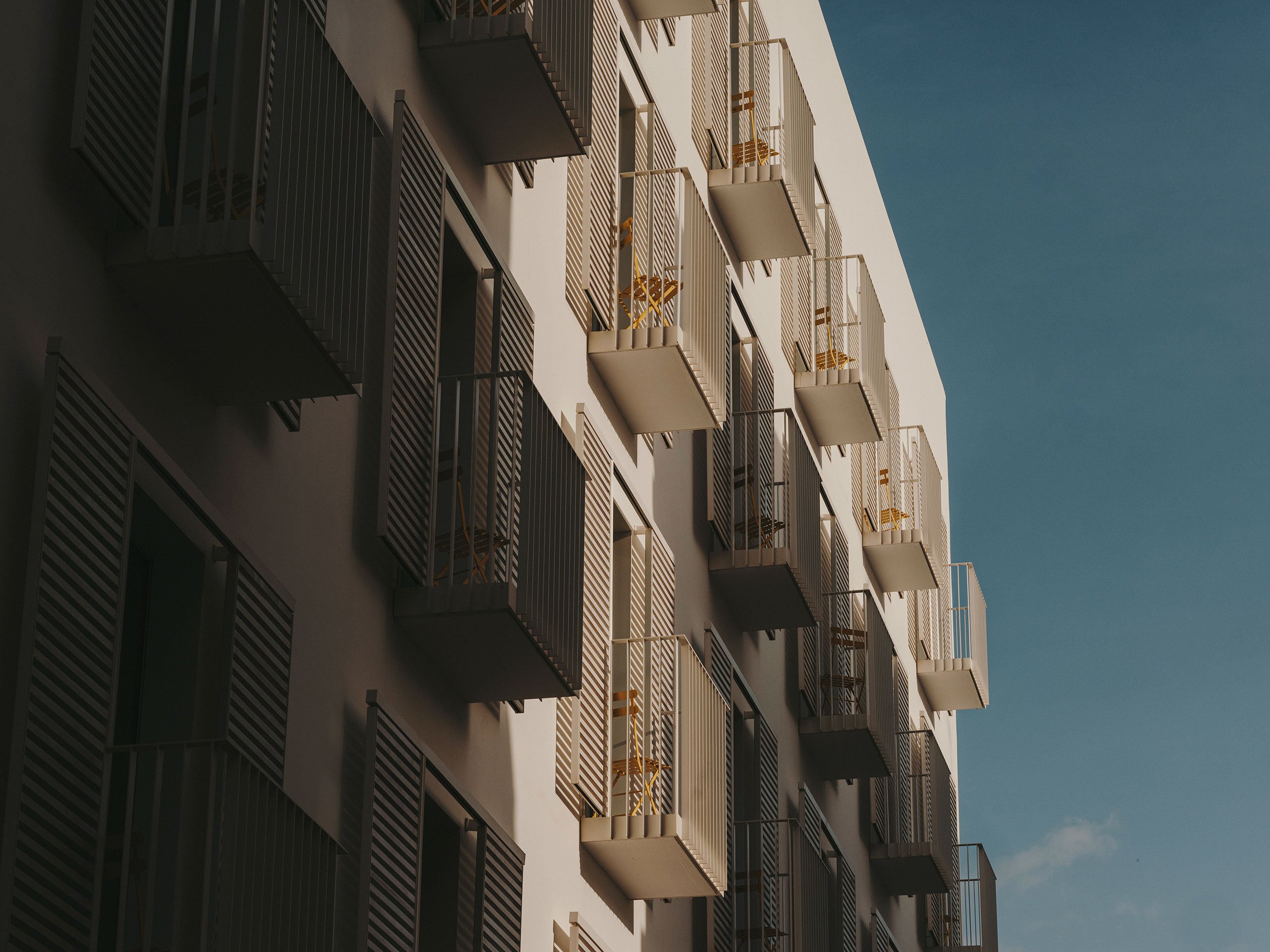
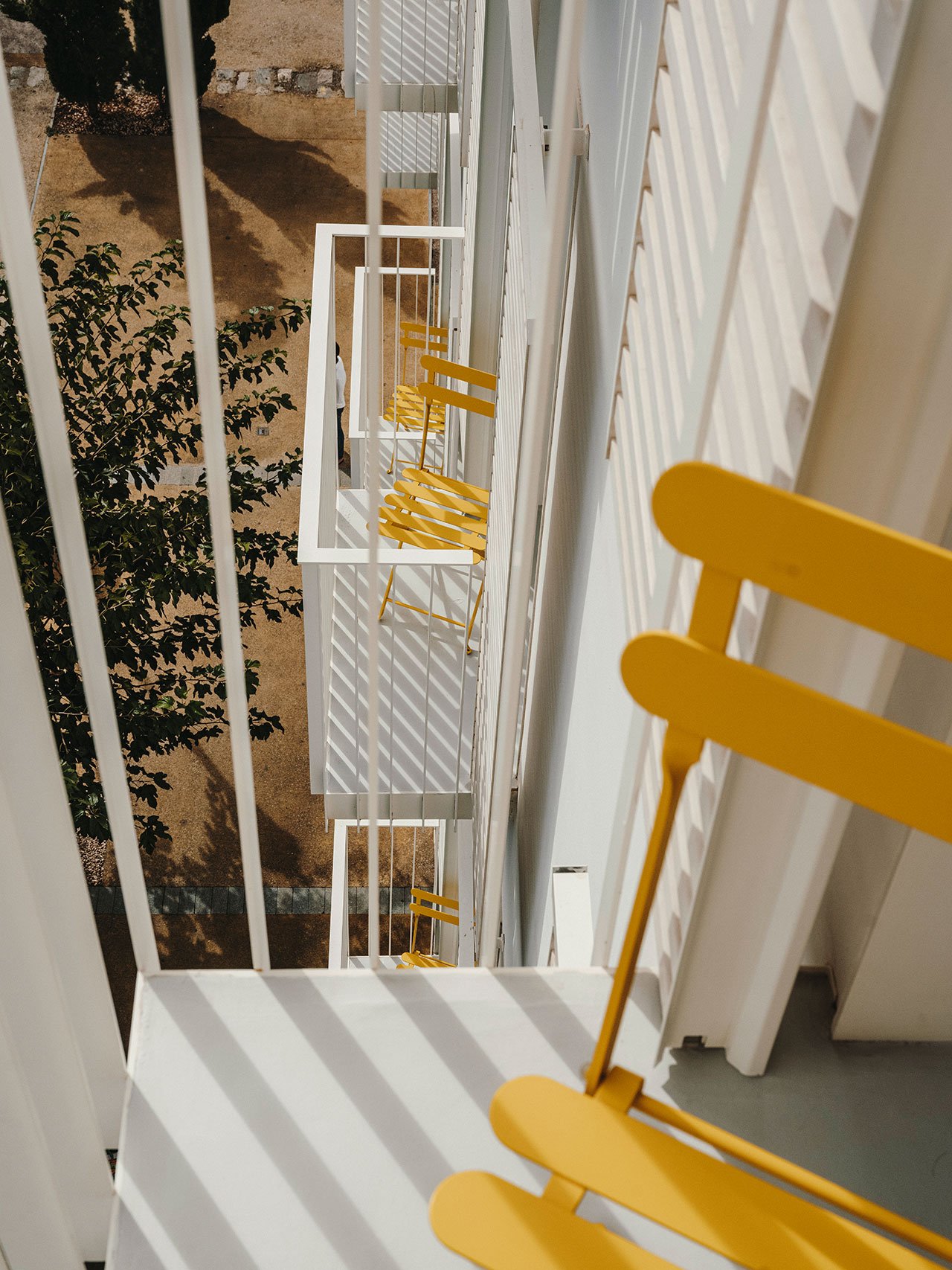
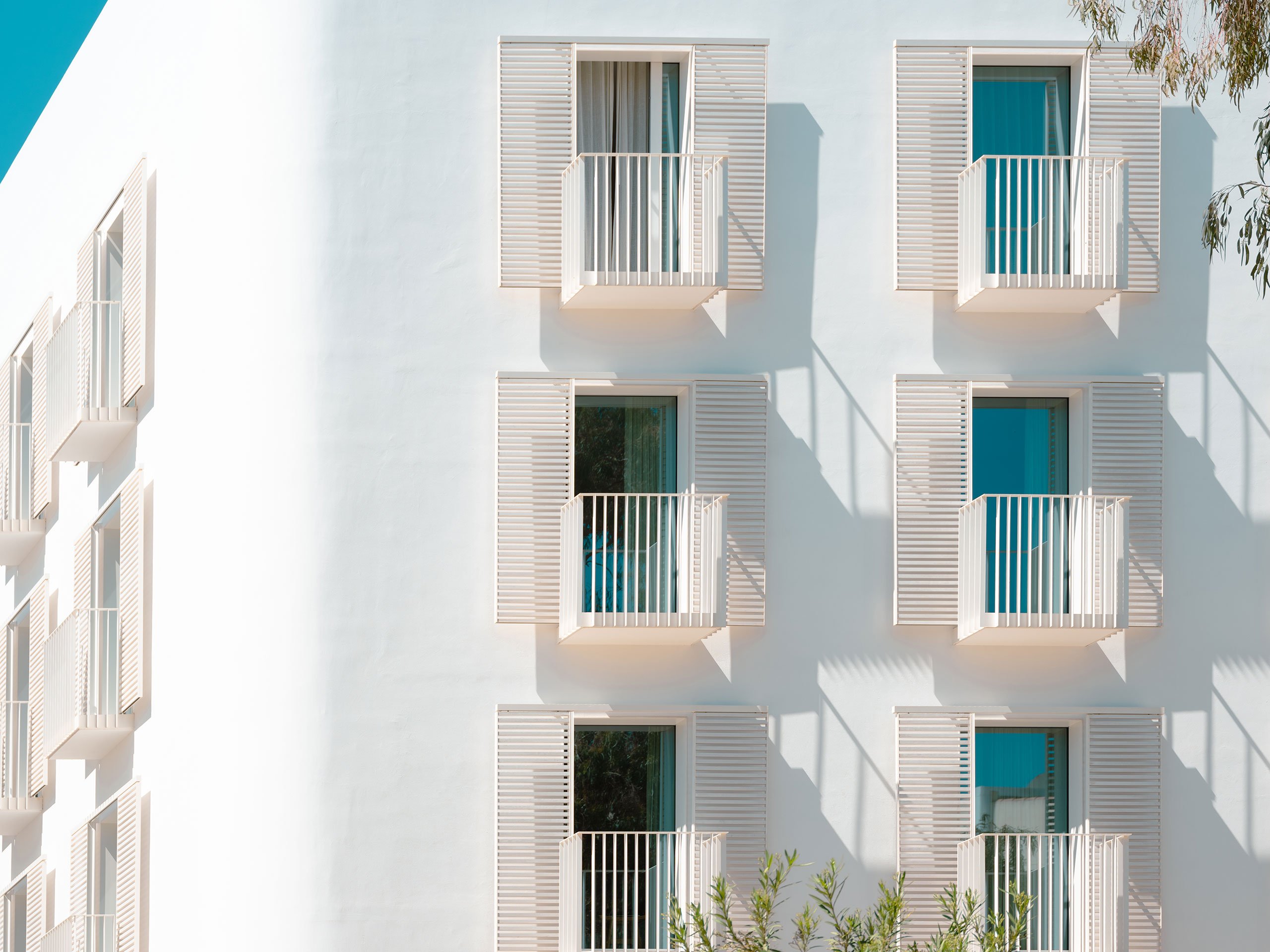
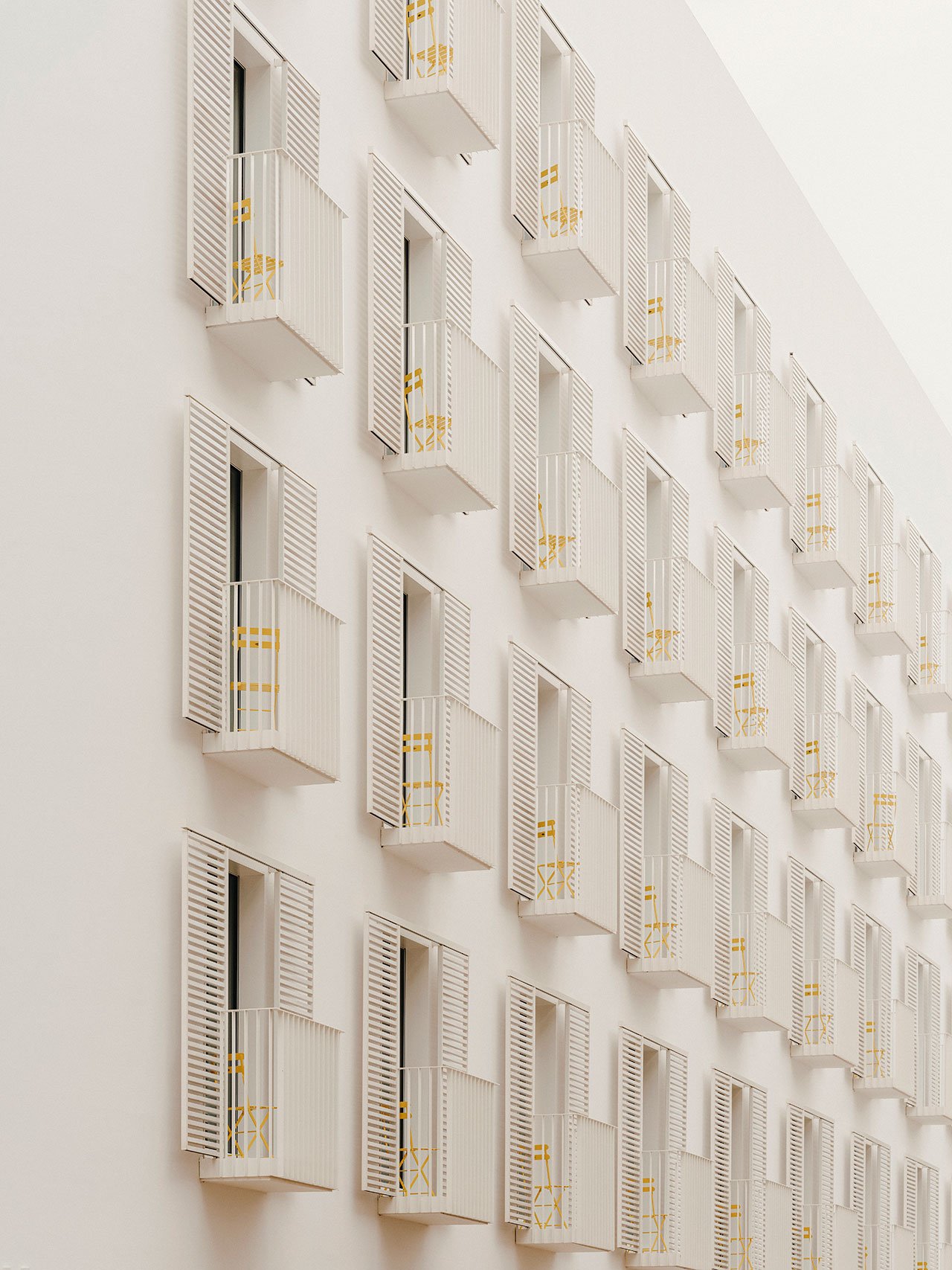
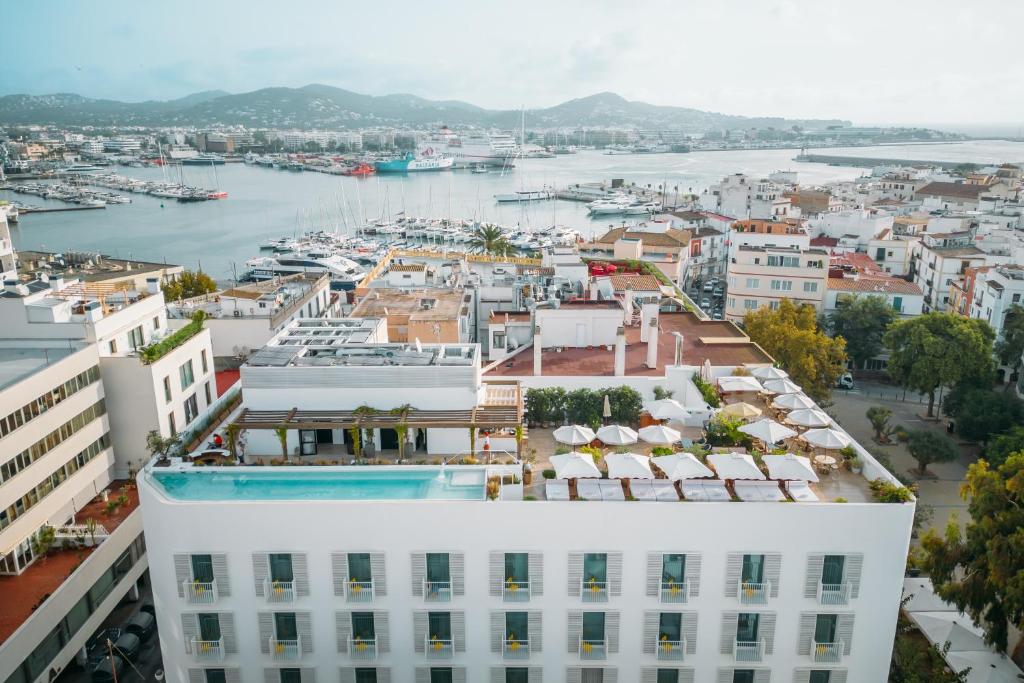
The Standard, Ibiza occupies the former site of a local cinema in the heart of Ibiza Town. That history matters. The building was once a civic place — somewhere locals gathered year-round — and The Standard’s reinvention tries to preserve that social role rather than simply insert another luxury hotel into the historic centre. Architectural direction came from Lázaro Rosa-Violán and Carlos Ferrater, with the exterior resolving itself in crisp white volumes and shuttered balconies that reference Ibiza’s traditional architecture while also carrying a faint echo of The Standard’s former Sunset Strip home in Los Angeles. Urban Ibiza meets California.
Mid-Century, Softened
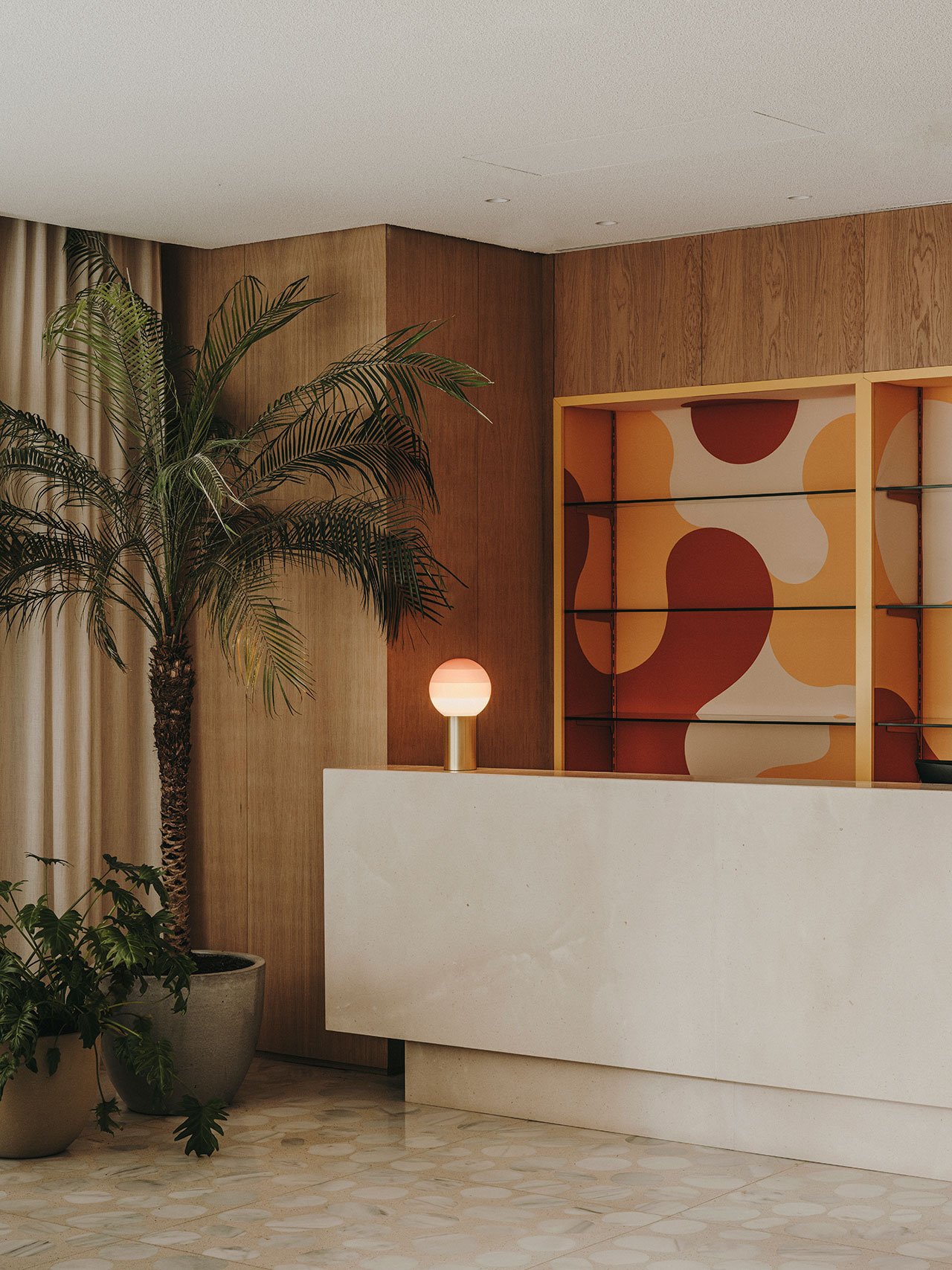
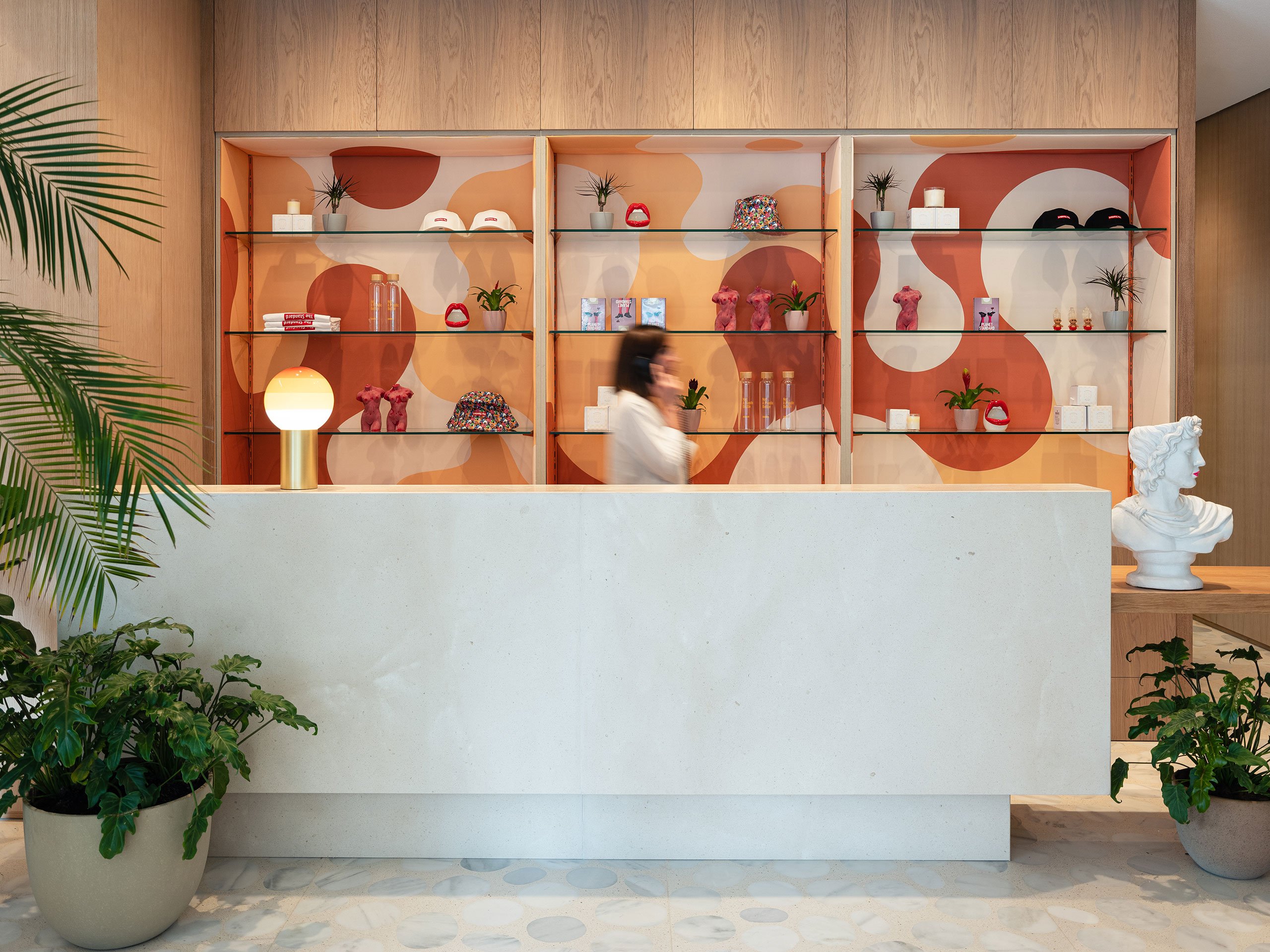
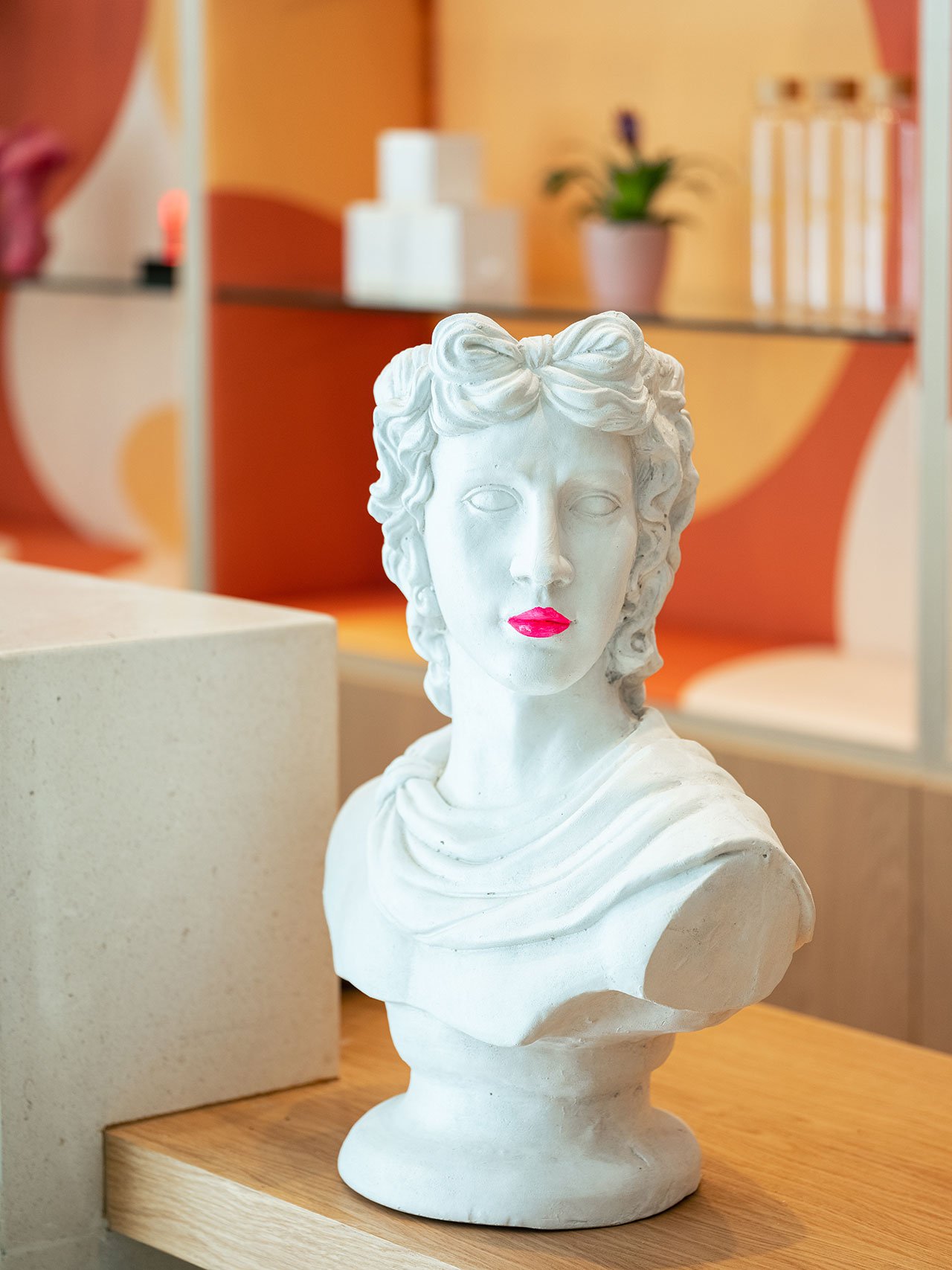
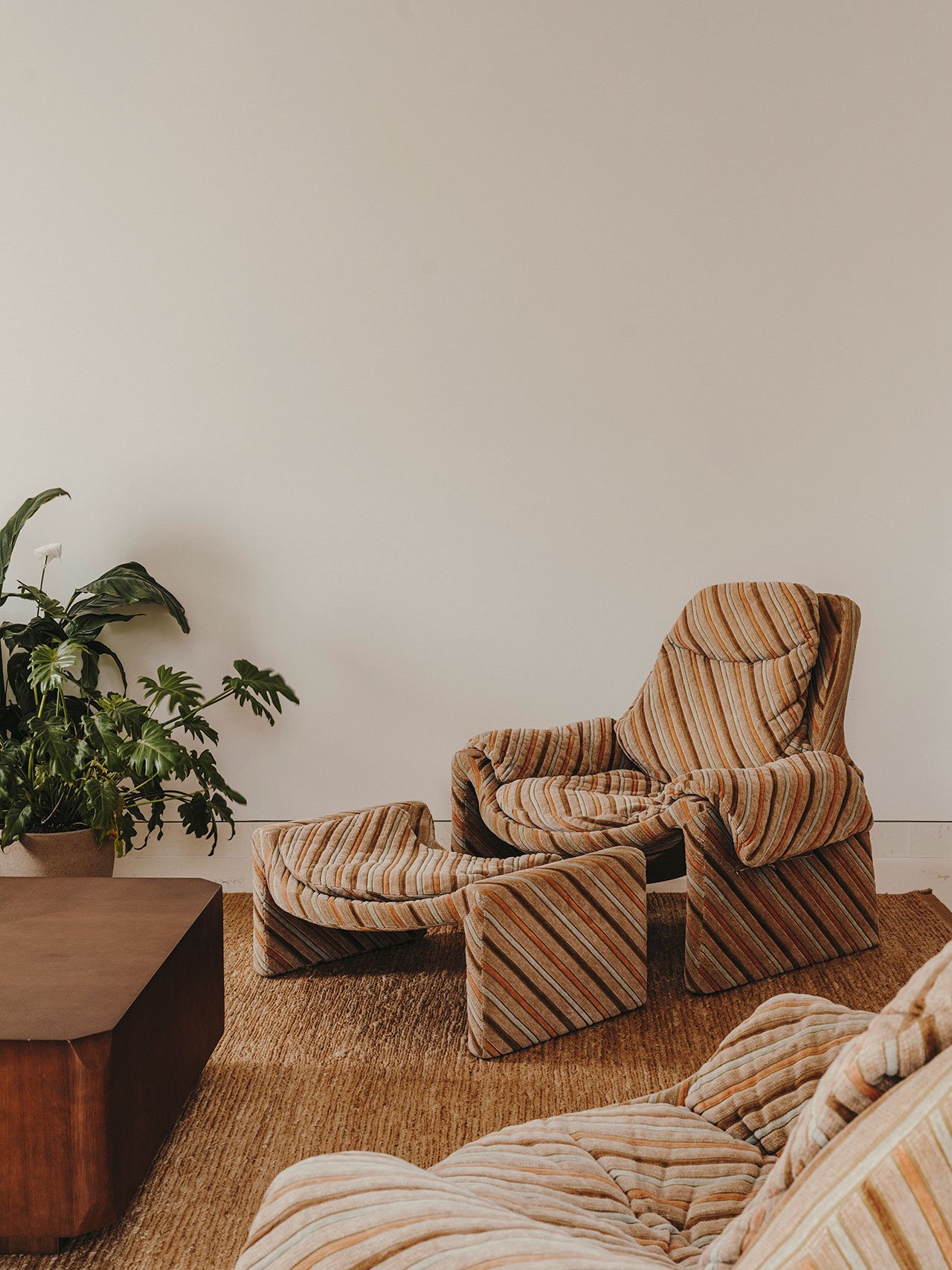
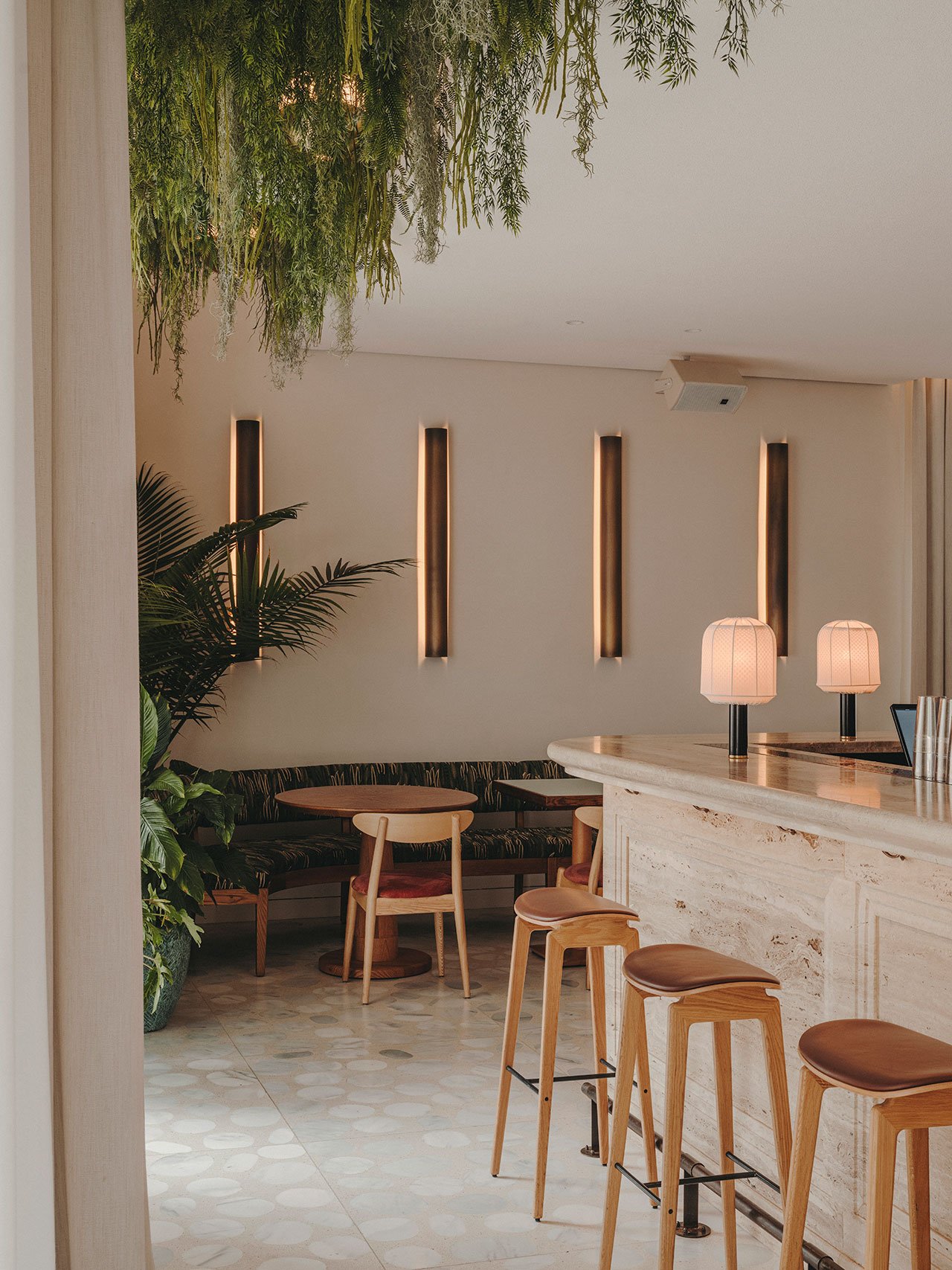
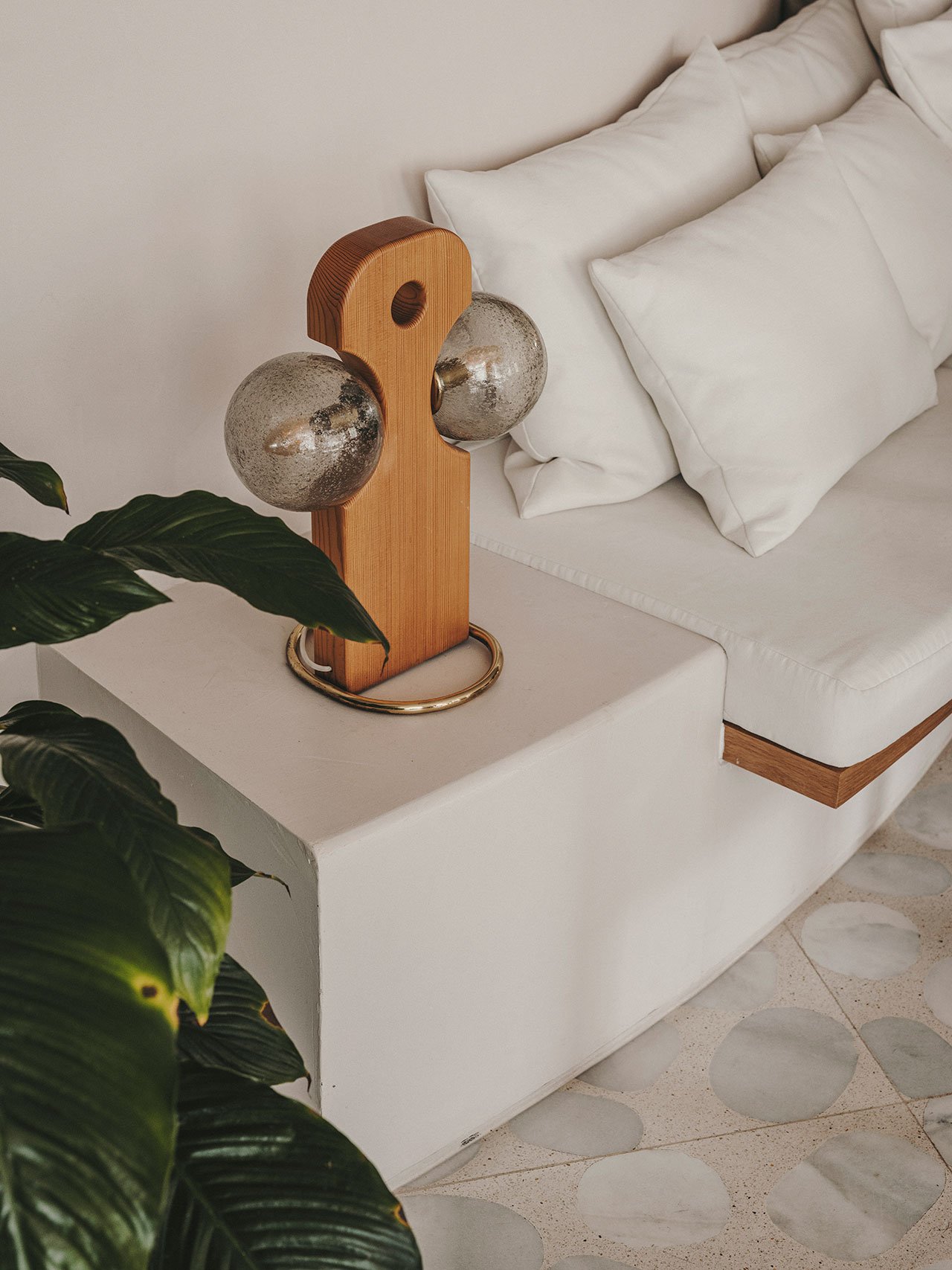
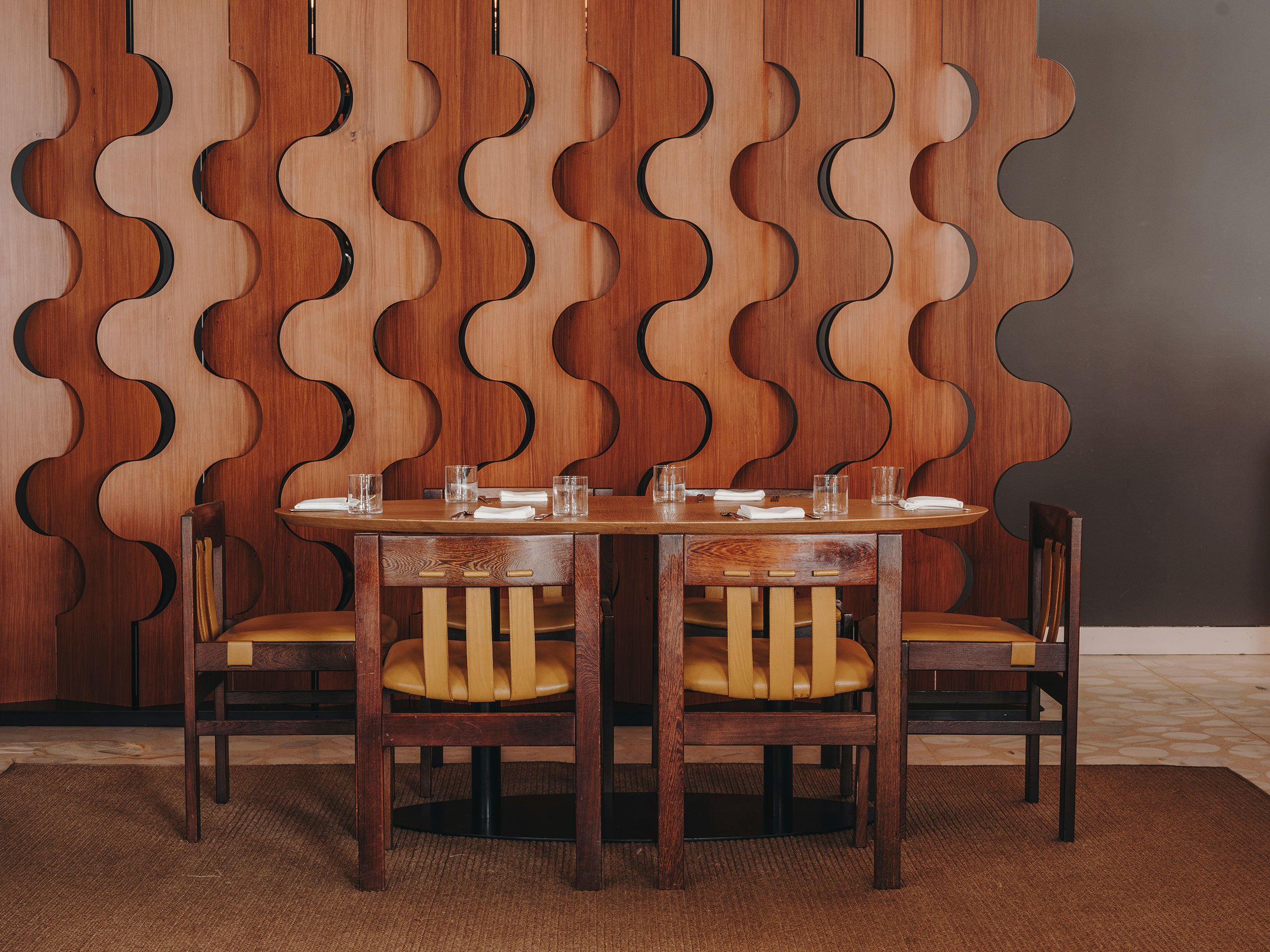
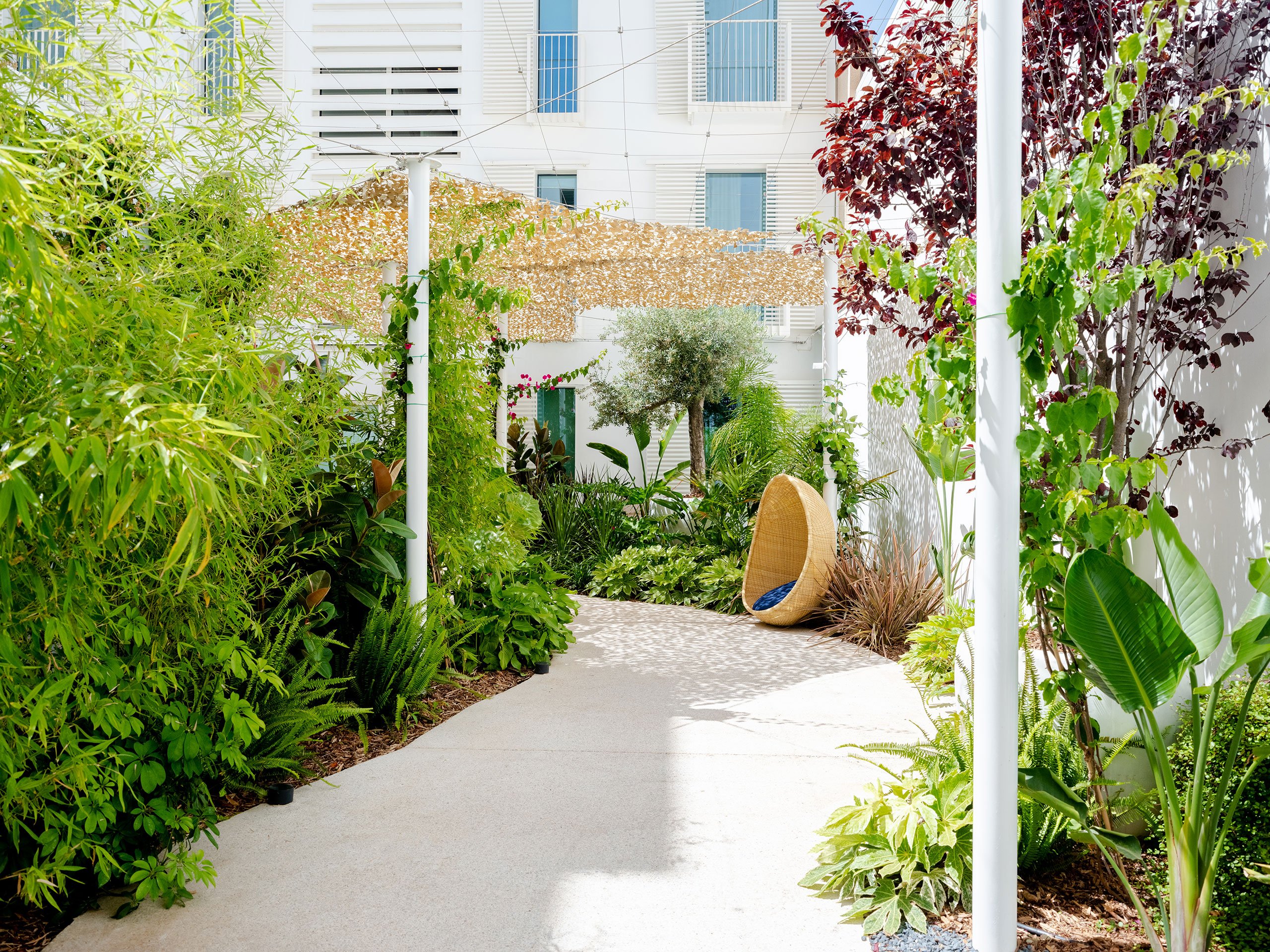
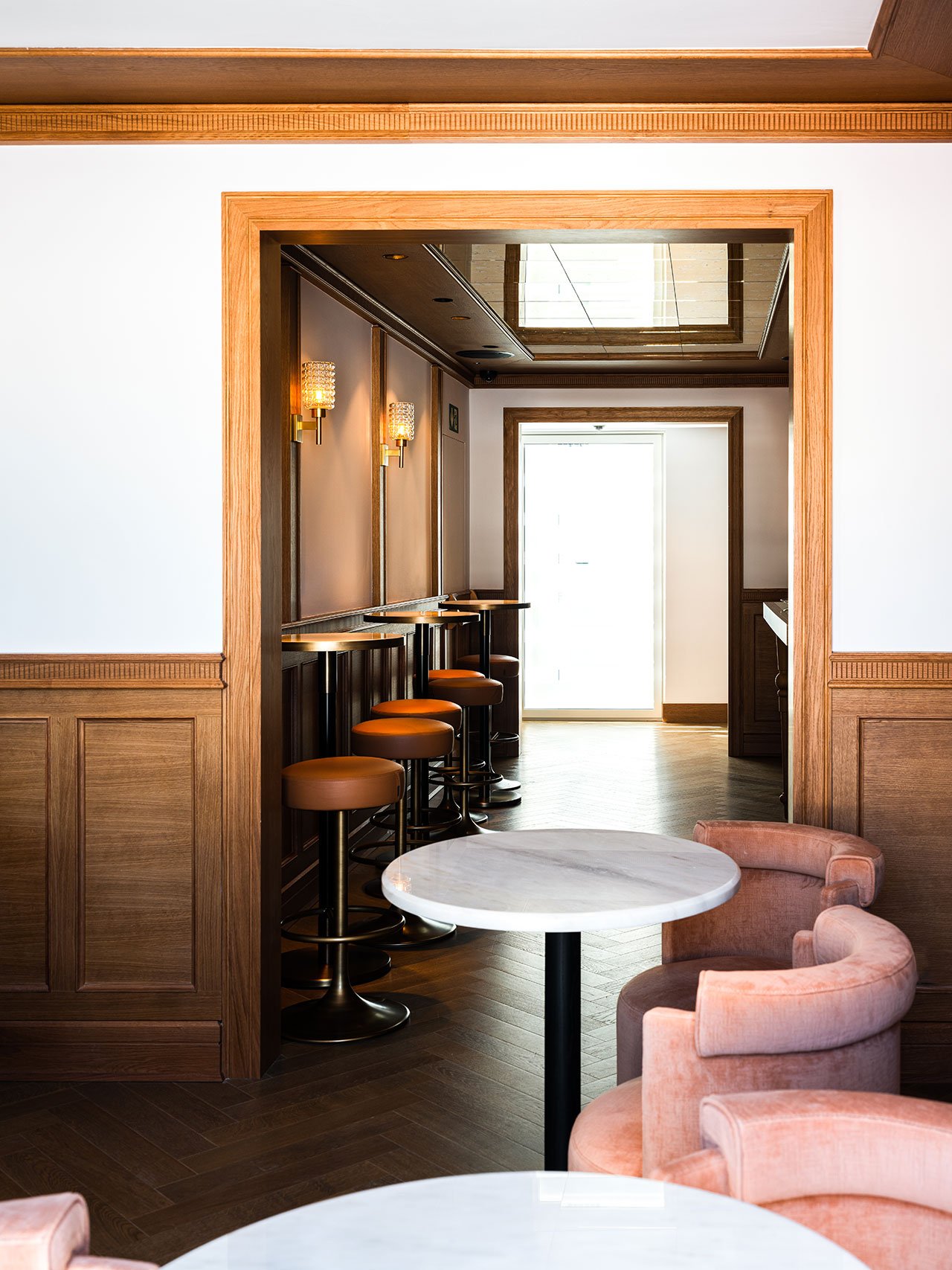
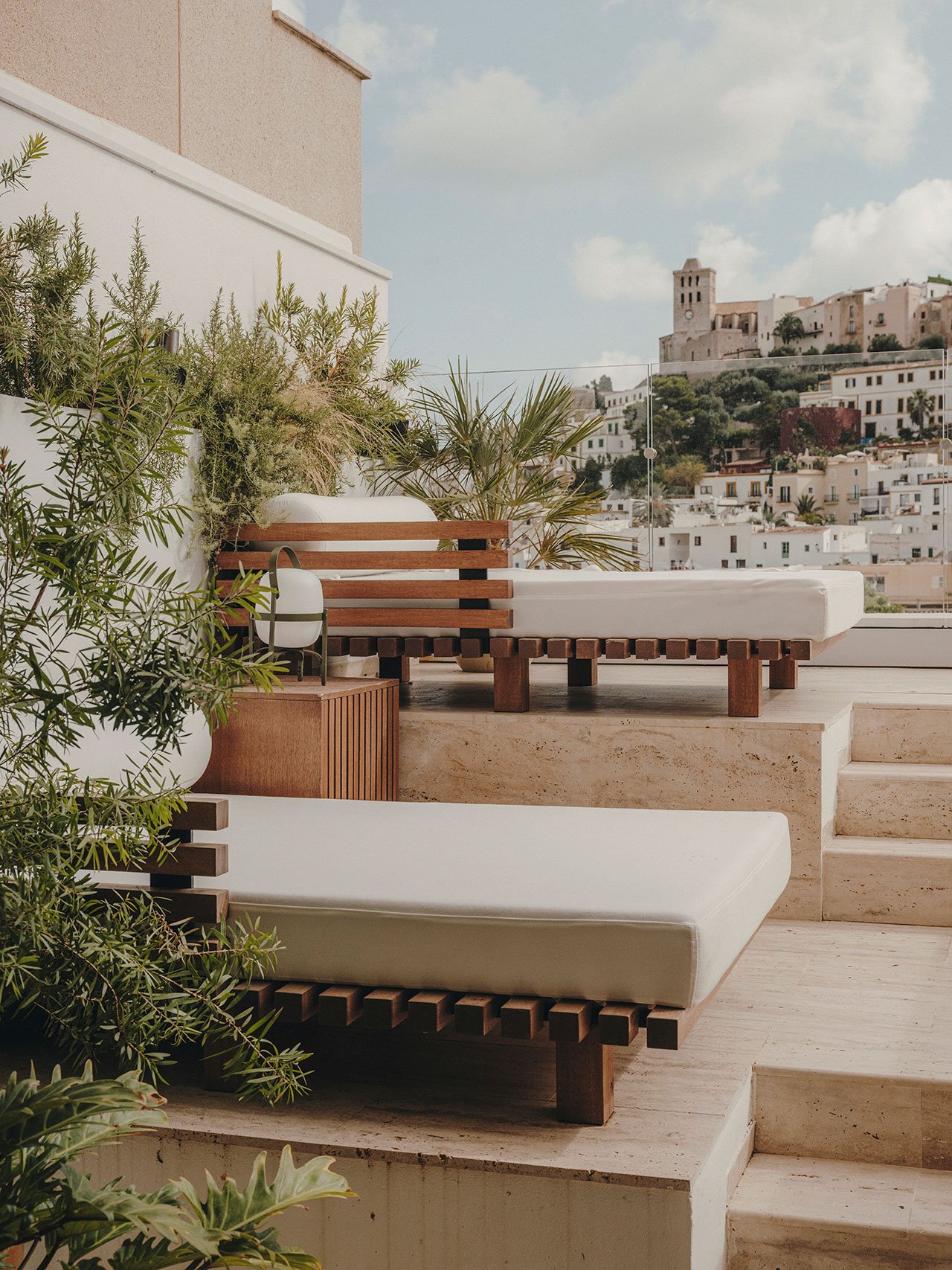
Inside, Oskar Kohnen Studio took that Los Angeles connection and filtered it through Mediterranean materiality. Travertine. Wood. Cotton. Hessian. Earthy whites and creams. Vintage European furniture introduces age and irregularity, stopping the new-build interiors from becoming overly polished. There are mid-century references everywhere, but they are softened by texture, vegetation, and Ibiza’s strong natural light. Nothing feels museum-like. The atmosphere is more relaxed than referential.
Rooms as Respite
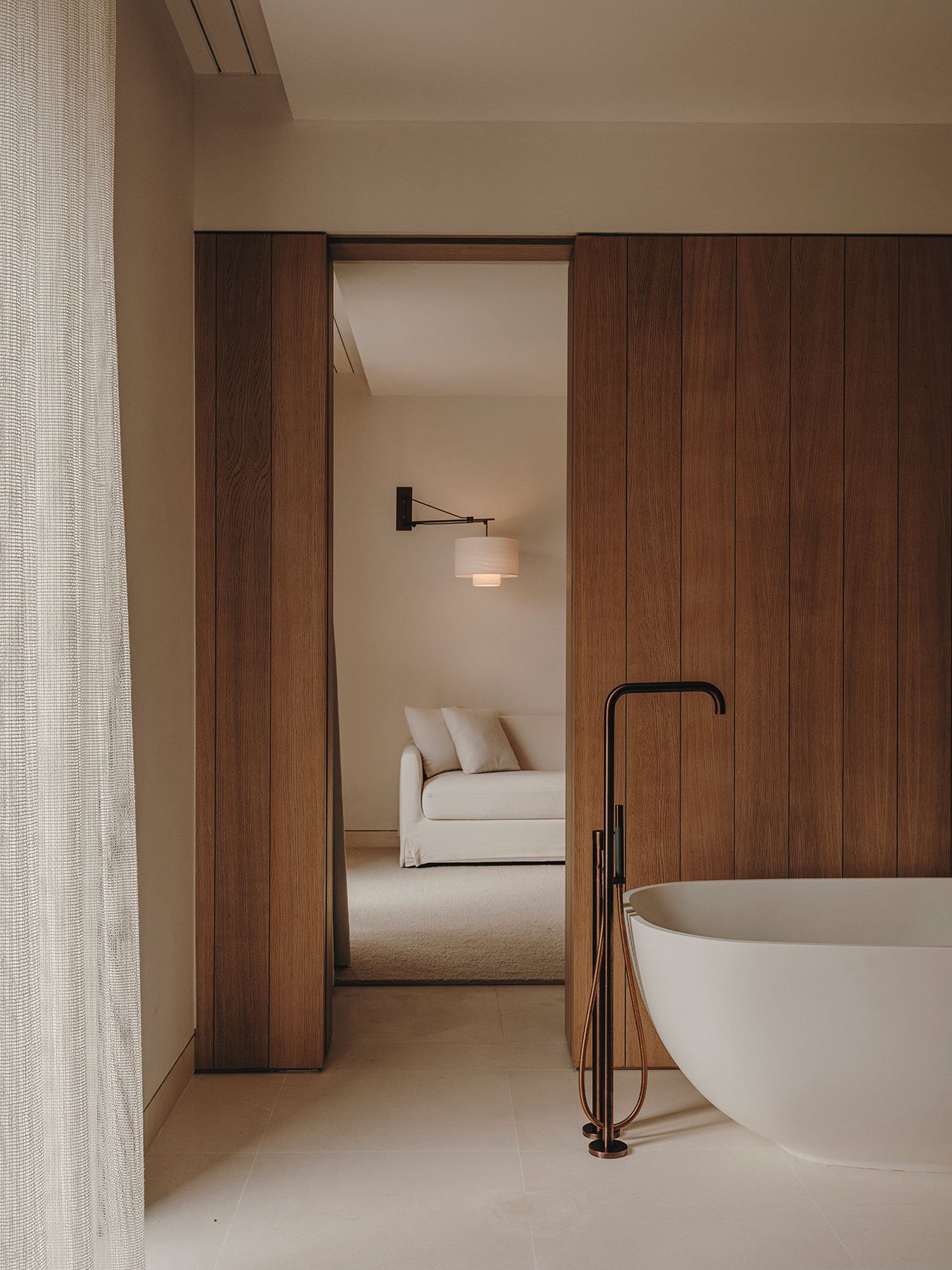
The 67 rooms move even further towards restraint. The intention was deliberately sparse. In a hot climate, visual lightness matters. So the rooms pare everything back to muted tones, natural materials, simple furniture, and controlled detailing. The result is not minimalism for its own sake. It is a practical kind of calm. A counterpoint to the noise, colour, and energy happening outside. This contrast is one of the strongest aspects of the hotel. Public space stimulates. Private space resets.
Jara at Street Level
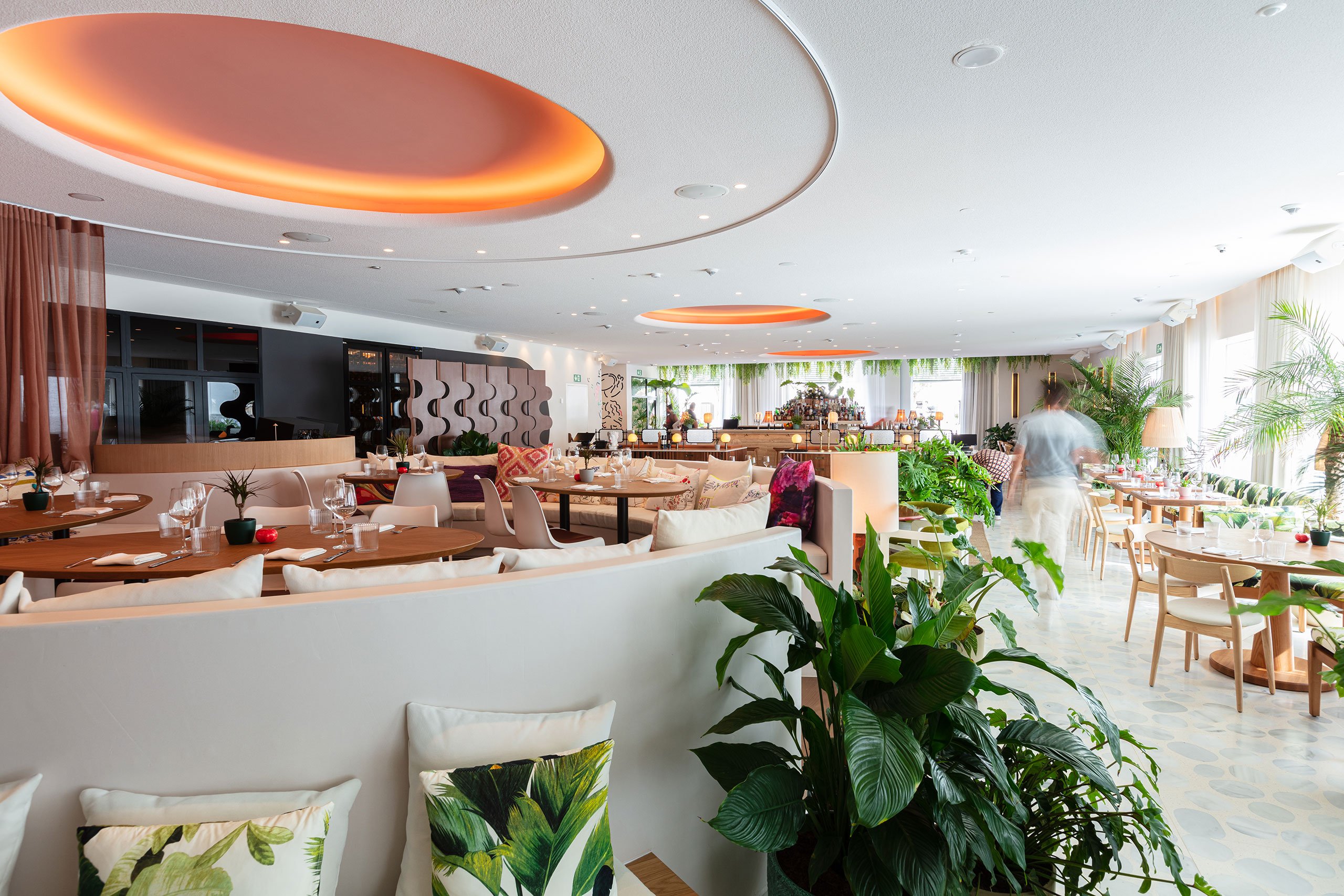
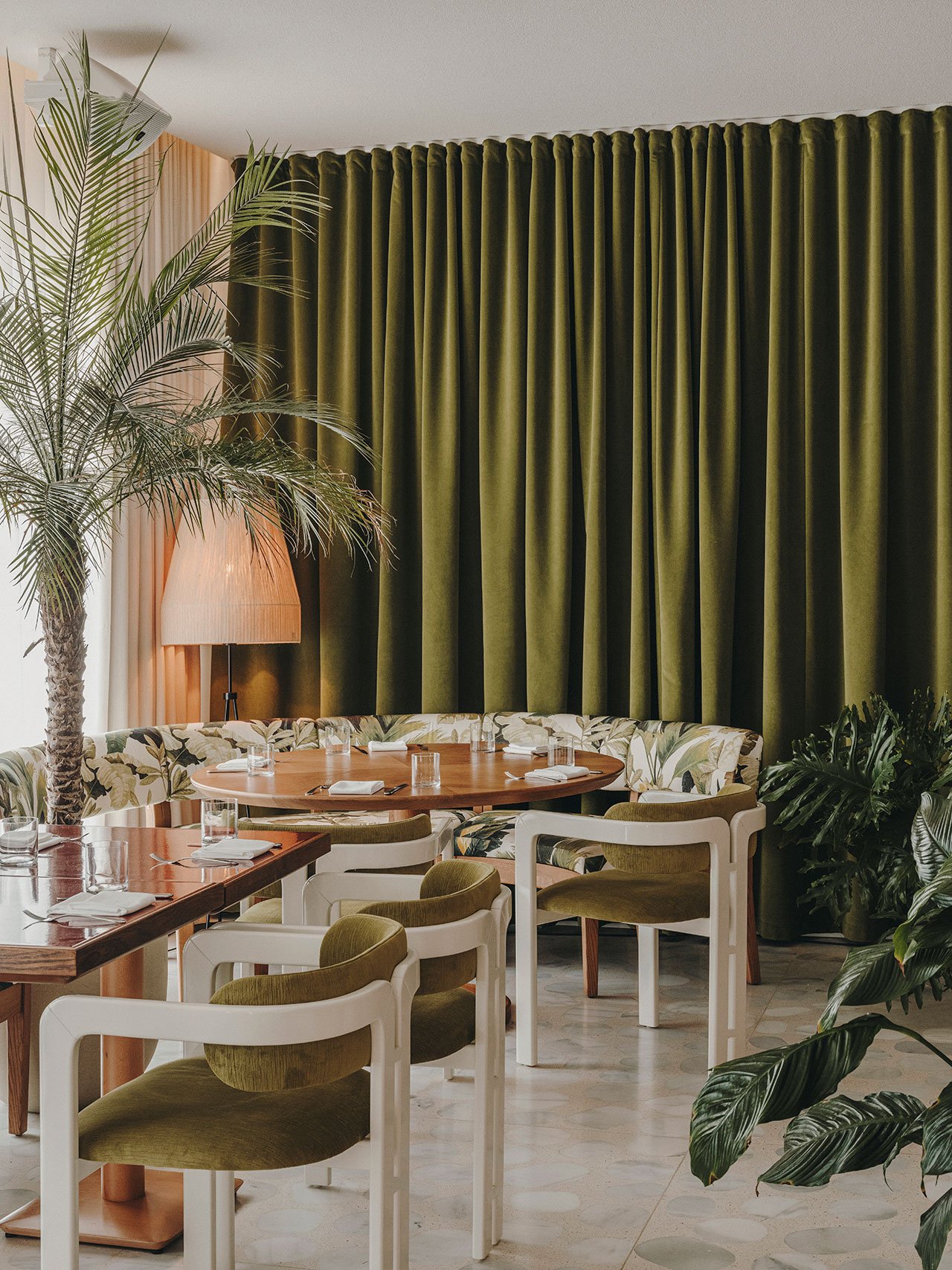
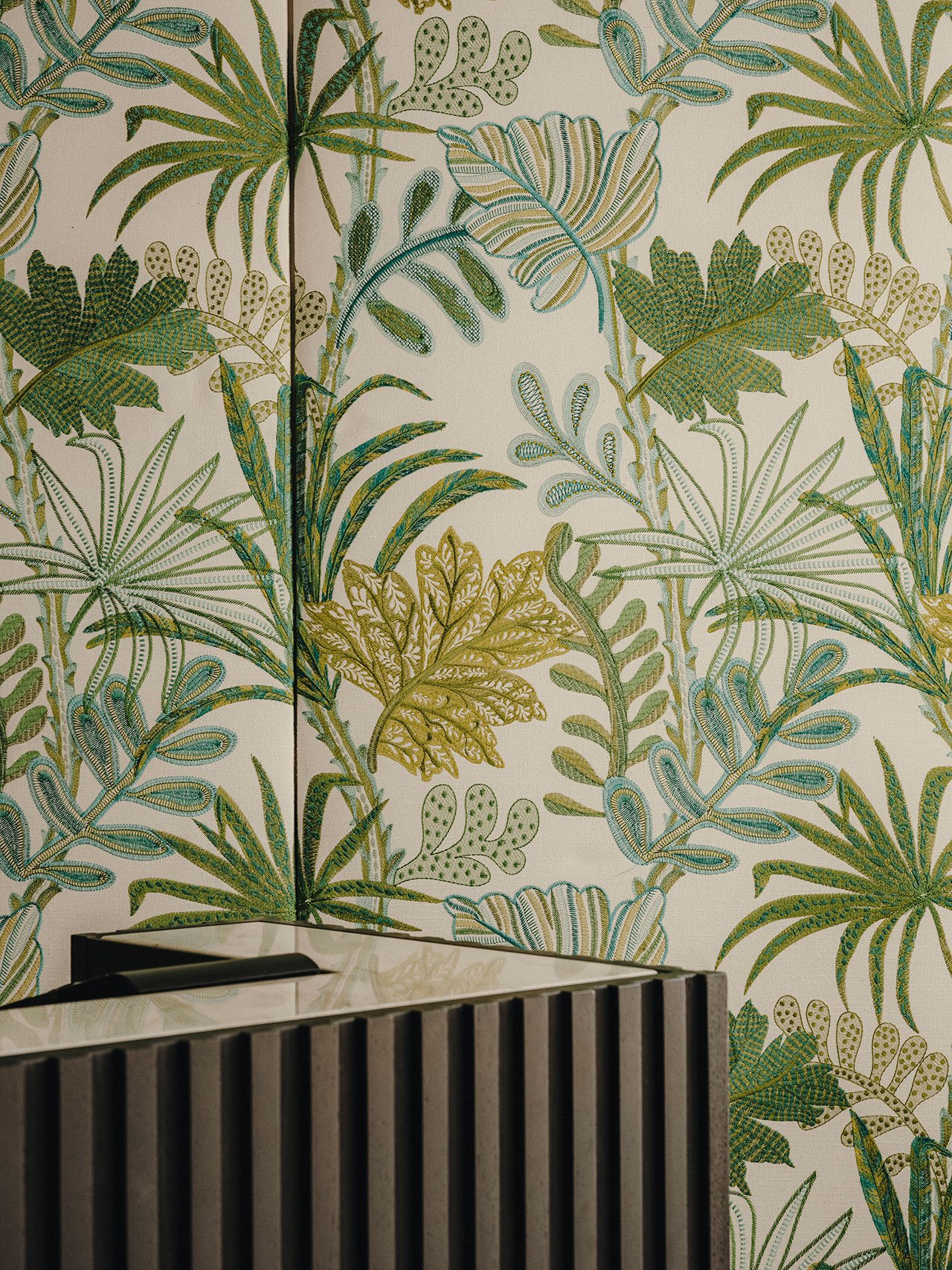
Jara is where the hotel meets the city. Located at street level and opening directly onto Vara de Rey, it behaves less like a conventional hotel restaurant and more like a contemporary neighbourhood brasserie. The interiors push beyond the guestroom palette with greens, floral fabrics, tropical planting, and more expressive retro shapes. The name refers to a Mediterranean flowering plant, and that verdant identity runs through both the design and food. Farm-to-table cooking, Spanish classics, paellas, and produce-led dishes keep the menu grounded in place. The important part is not just what is served. It is that locals actually have a reason to come in.
Up on the Roof
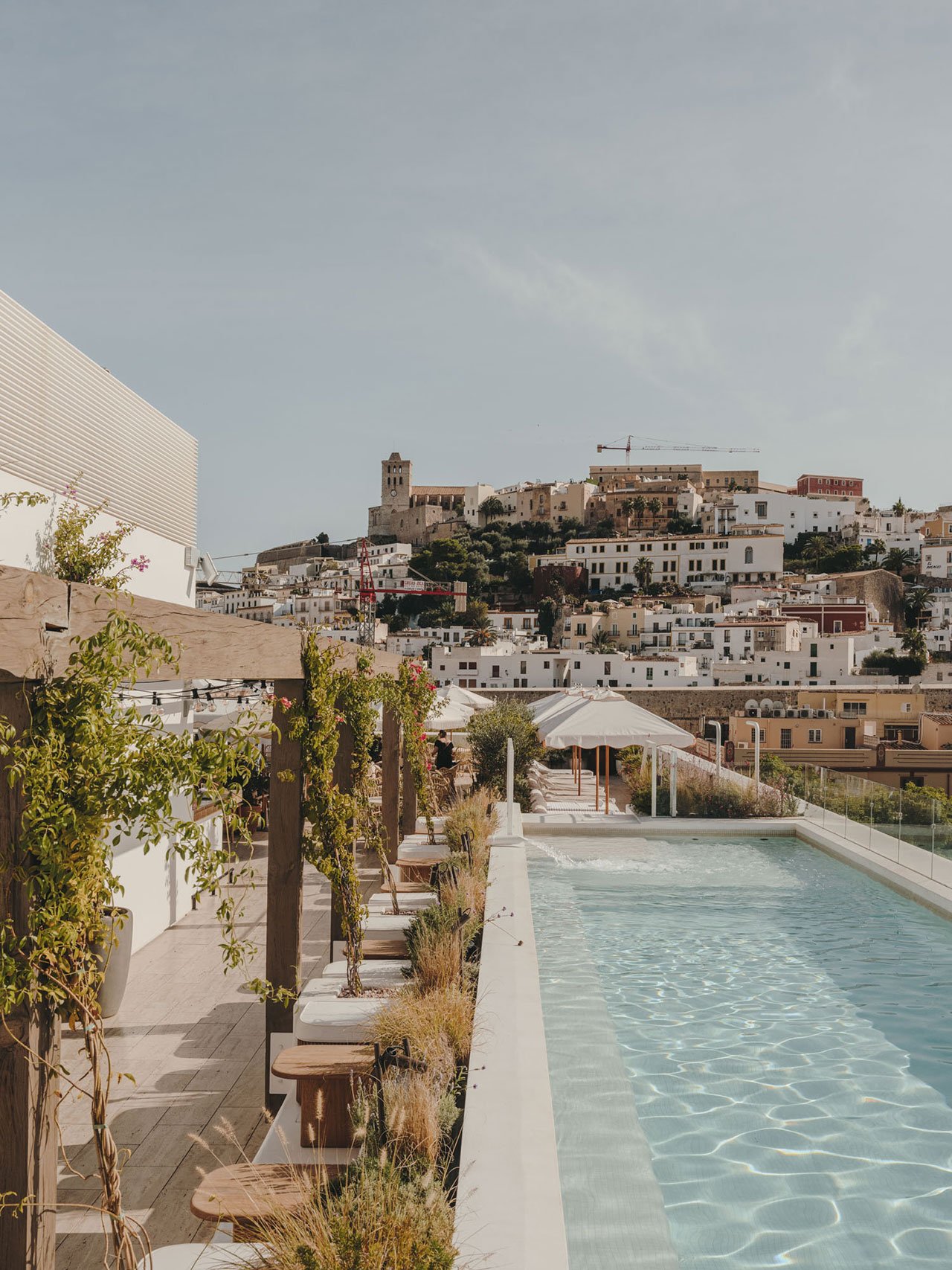
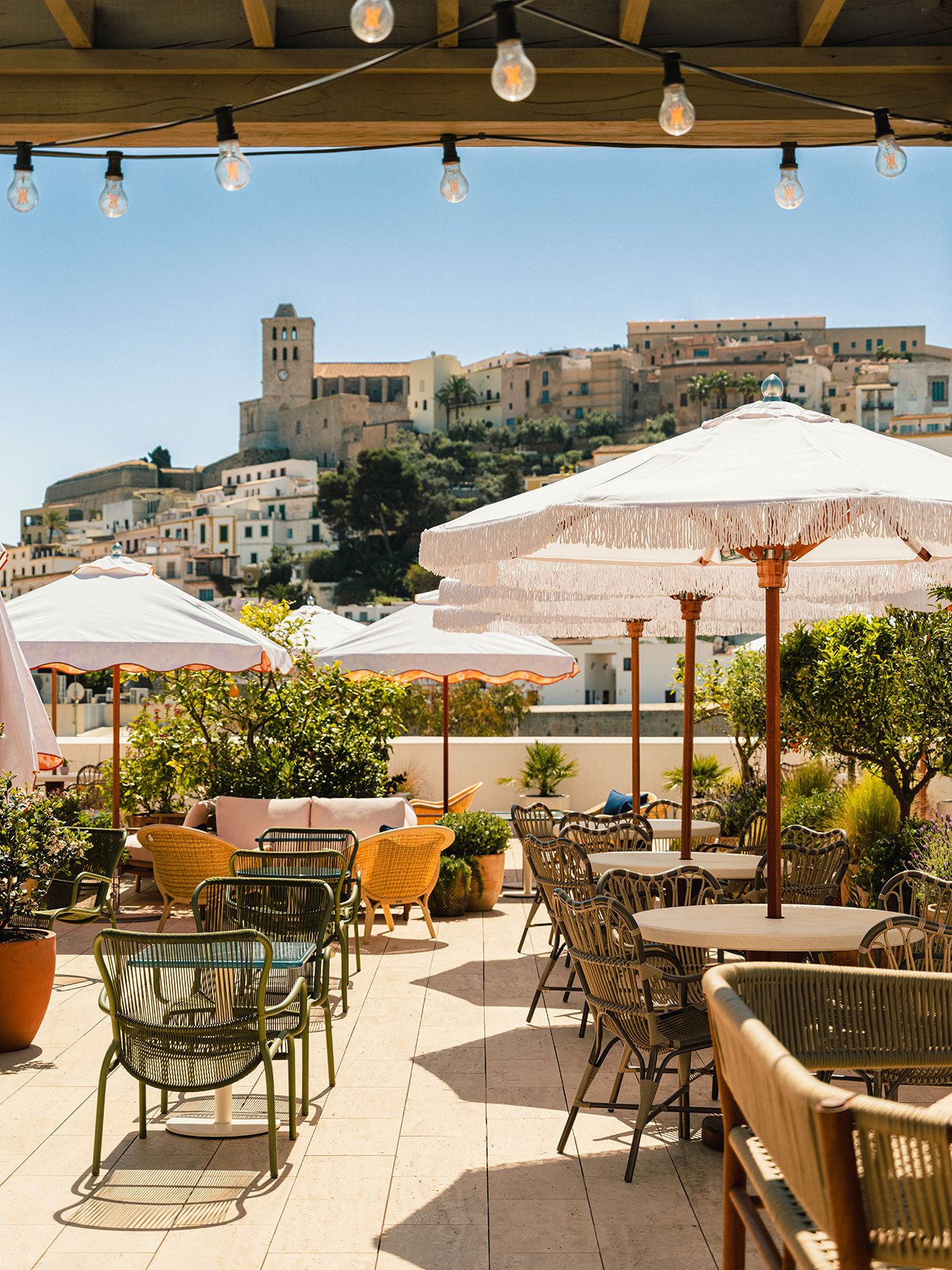
Then there is Up. The rooftop is where The Standard becomes unmistakably itself. Pool. Bar. Restaurant. Cocktails. DJ sets. Acoustic sessions. Ibiza Castle rising beyond the rooftops. By day, it is a pool terrace. By sunset, aperitifs. By night, something much more social. It does not try to out-club the clubs. That would be pointless. Instead, it creates a smaller, more urbane form of Ibiza nightlife within the hotel itself.
Casa Privada
One block away sits the hotel’s most interesting addition. Casa Privada is effectively a hotel within the hotel. Fourteen rooms are spread across five floors, with two terrace suites featuring outdoor tubs. Guests have their own rooftop pool and bar, yoga studio, and private lounge. Groups can take over part or all of the building. That changes the way The Standard Ibiza can be used. It can function as a lively city hotel. Or something much more private. The two experiences sit surprisingly comfortably beside each other.
Golden-Age Ibiza, Reinterpreted
The interiors also look backwards. Not to nightclub Ibiza. But to the island’s 1960s and 70s bohemian period — when Ibiza attracted artists, outsiders, and people escaping more conventional lives elsewhere. That history appears in pattern, texture, loose forms, plants, and occasional flashes of colour rather than literal hippie nostalgia. Street-art-style murals by Nicolás Villamizar add another contemporary layer. The result feels connected to Ibiza’s creative mythology without becoming costume.
Why It Works
The Standard Ibiza understands contrast. The façade is controlled; the interiors loosen up. The guestrooms are quiet; Jara and Up are social. The main hotel puts you in the middle of Ibiza Town; Casa Privada gives you somewhere to disappear. Oskar Kohnen Studio’s mix of Californian mid-century design and Mediterranean materials avoids the usual Ibiza clichés, while the rooftop and street-level spaces keep the building genuinely connected to the city. It is not a beach resort pretending to be urban. It is an urban Ibiza hotel that knows exactly when to turn the volume up.