Superbude St. Georg – Hamburg, Germany
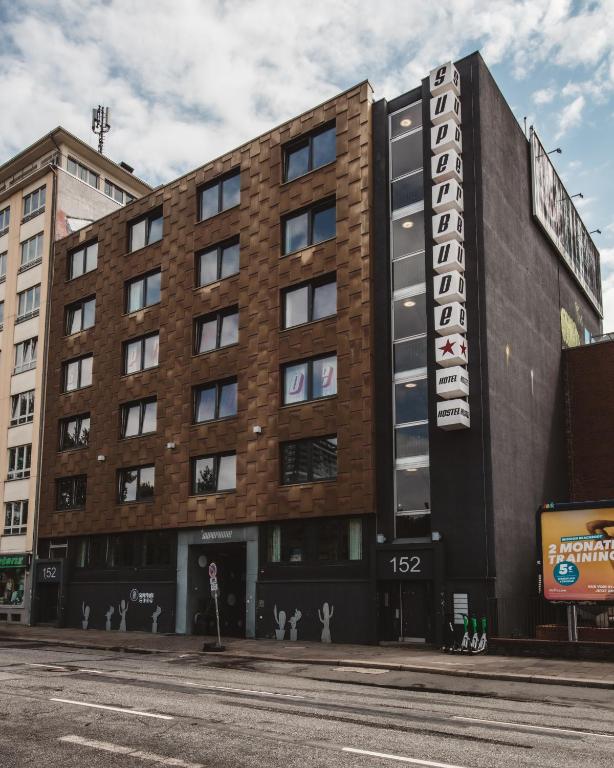
The original Superbude turned a former printing house into a playful hybrid of hostel, hotel and Hamburg living room.
Why DNA Hotels Loves It
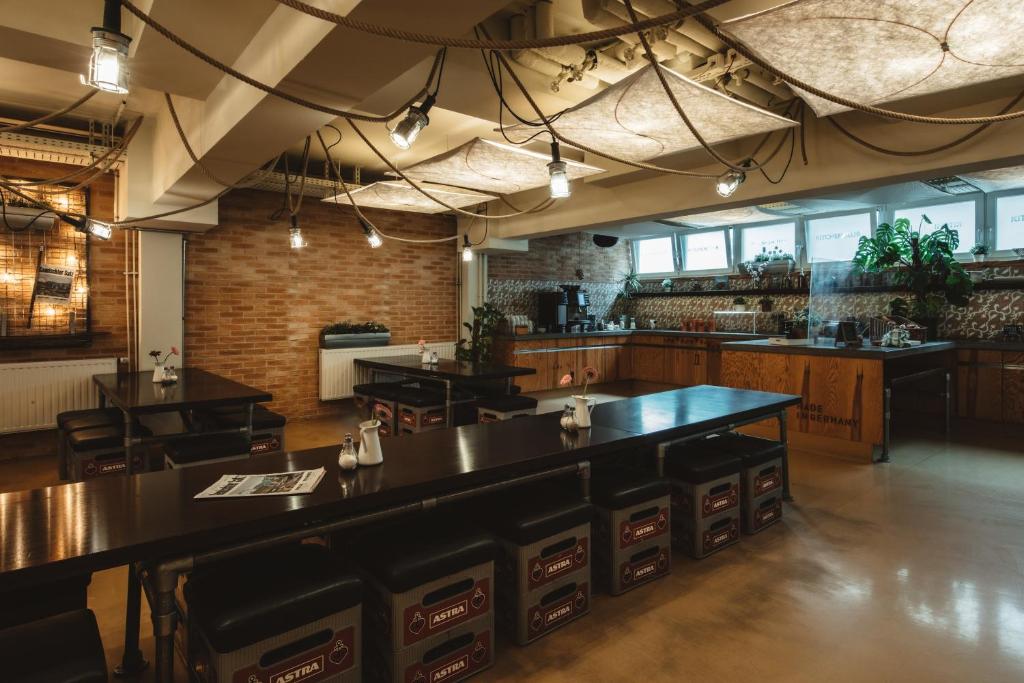
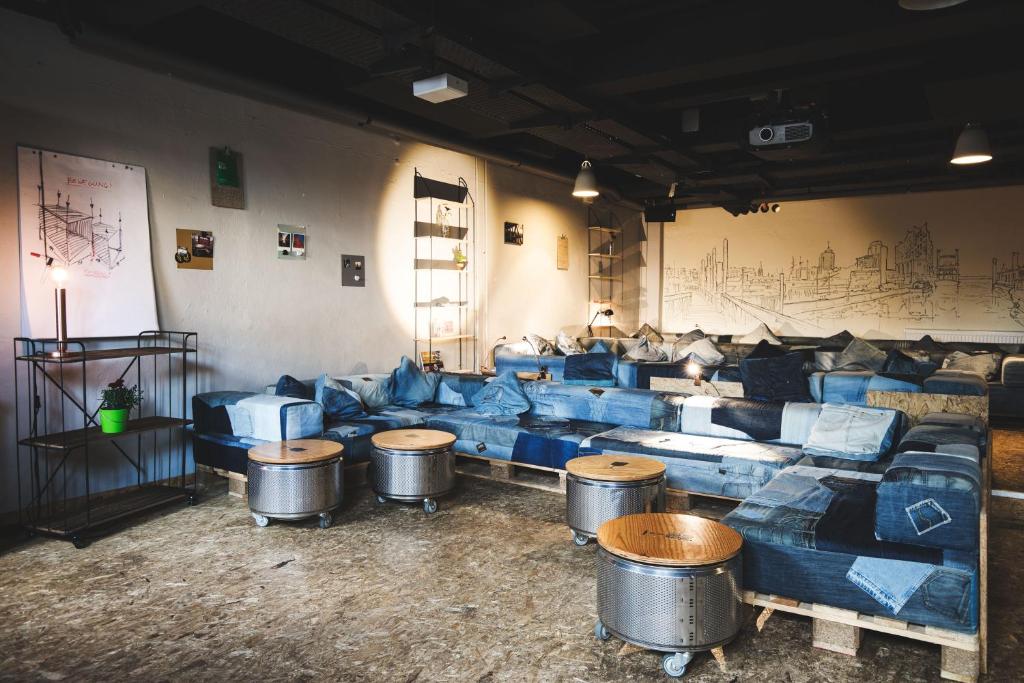
● Dreimeta transformed ordinary, inexpensive materials — beer crates, Euro pallets, scaffold pipes, washing-machine drums and old denim — into one of Hamburg’s most characterful budget hotel interiors.
● Its flexible 74-room concept deliberately mixes couples, solo travellers, families and groups rather than dividing the world into hotel guests and hostel guests.
● The Kitchen Club puts community at the centre: part breakfast room, part communal kitchen, part hangout — informal hospitality without the usual hotel choreography.
Before Hybrid Hotels Became a Thing
Superbude St. Georg opened with an idea that now sounds remarkably familiar: why should travellers have to choose between the sociability and affordability of a hostel and the privacy and comfort of a hotel? The answer was to combine them. Hotelier Kai Hollmann had a former printing plant on the edge of Hamburg’s St. Georg district and brought in Dreimeta, the Augsburg design studio led by Armin Fischer, to transform it. Rather than disguising the building’s utilitarian origins, they embraced them. And because this wasn’t supposed to become an expensive design hotel pretending to be industrial, they worked with materials that were genuinely inexpensive. That limitation became the concept.
Beer Crates, Pallets and Washing Machines
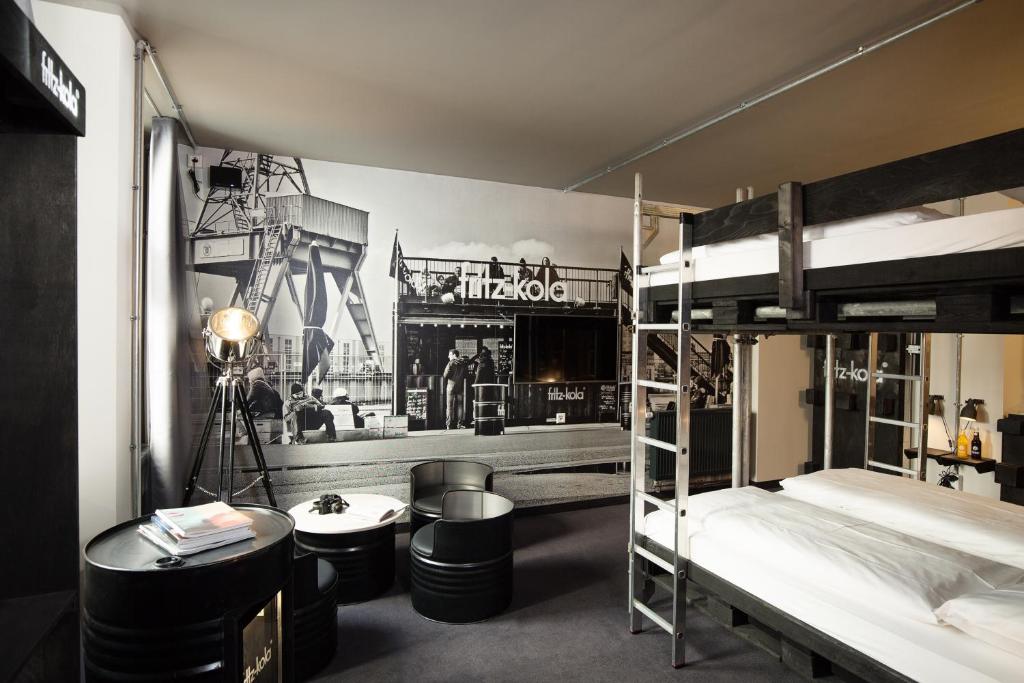
Superbude’s interiors are essentially an exercise in creative misuse. Beer crates from a Hamburg brewery become stools. Euro pallets become furniture. Thick ropes reference Hamburg’s harbour. Old jeans are stitched into sofa upholstery. Shipping crates appear in kitchenettes. Scaffolding pipes become clothes rails. Even washing-machine drums find a second career as bedside tables. It’s upcycling with humour rather than earnestness — everyday objects given completely different jobs simply because someone looked at them differently. The result has considerably more personality than many hotels built with ten times the furniture budget.
Choose Your Colour
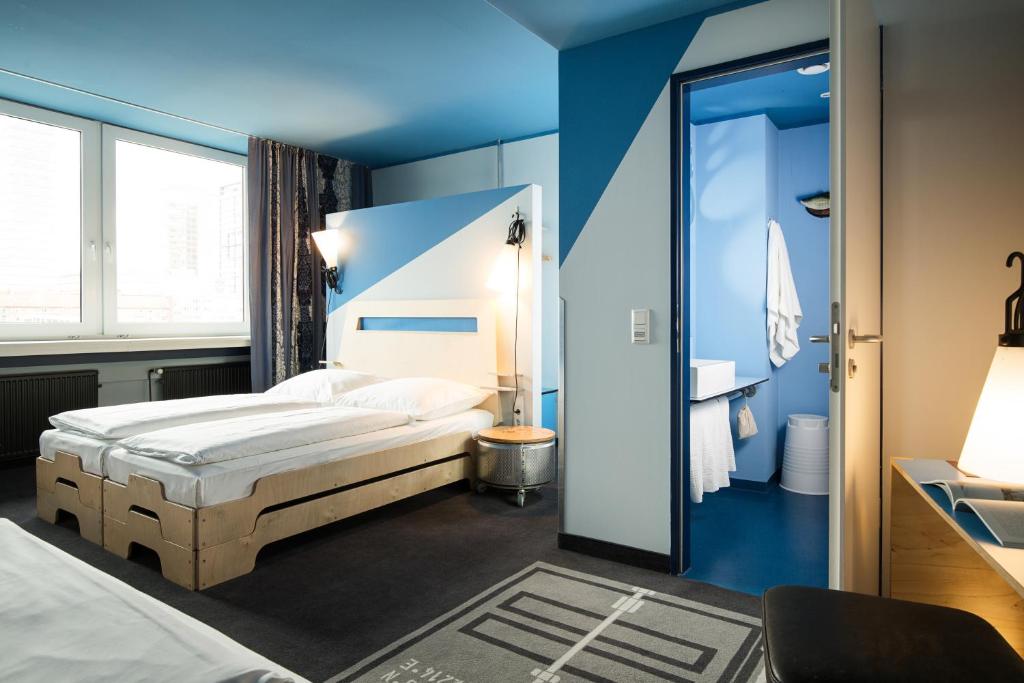
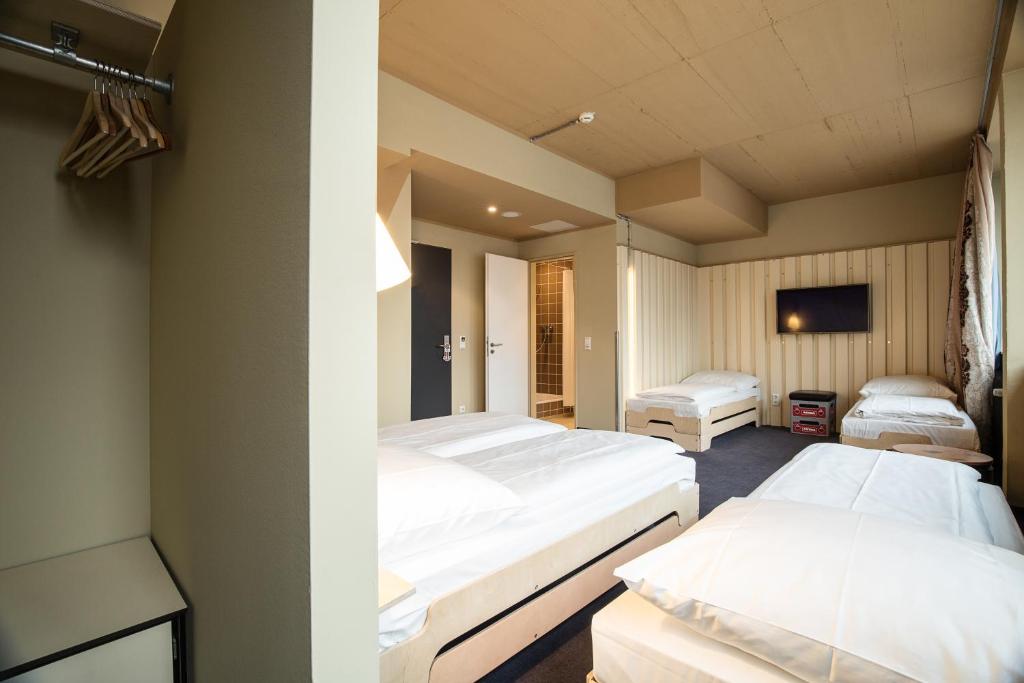
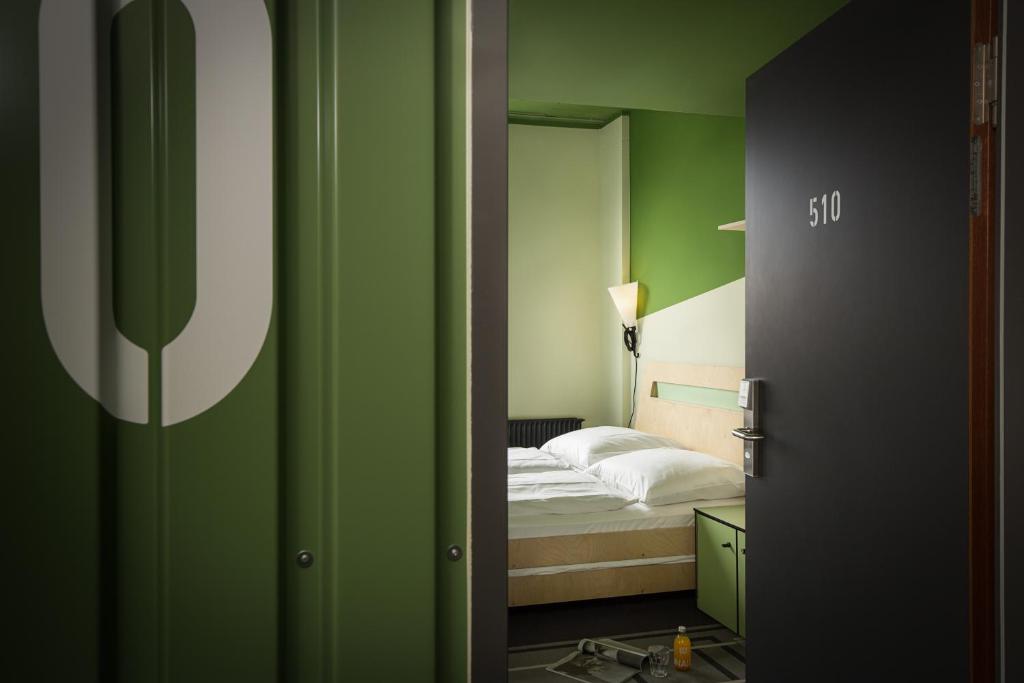
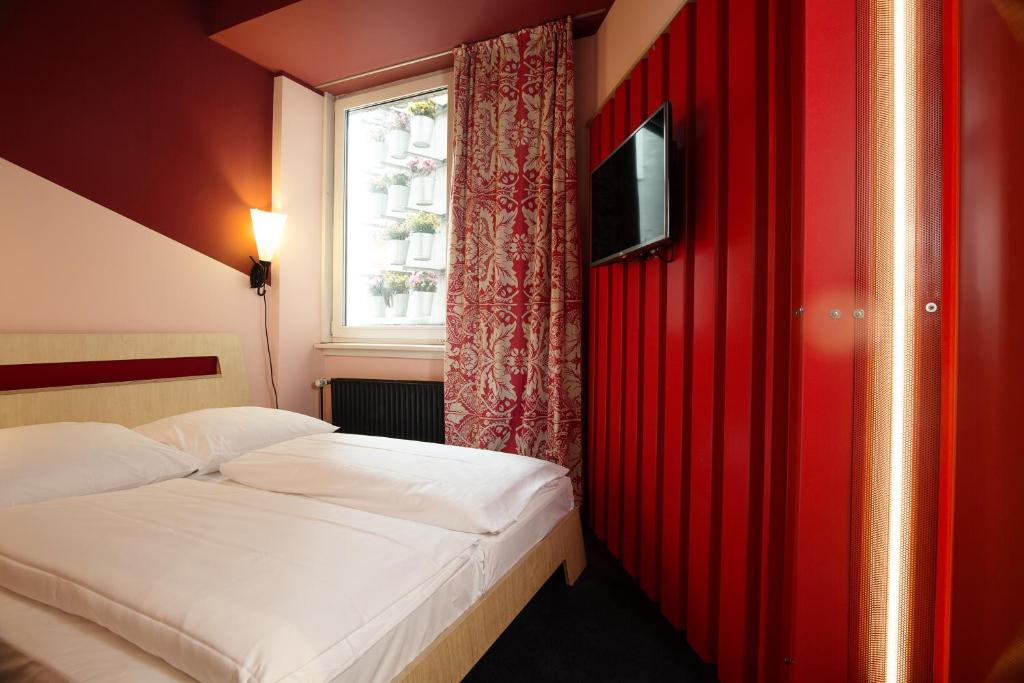
The 74 rooms continue the same philosophy. Different floors and room categories are distinguished through colour, creating shifts in mood as you move through the building. But the cleverest element isn’t decorative. It’s the beds. Dreimeta designed the accommodation around flexible occupancy, using stackable beds to allow conventional doubles to become three- or four-bed rooms with relatively little effort. Larger configurations accommodate families and groups, helping the building sleep as many as 240 guests across just 74 rooms. Every room still has its own bathroom and WC. That distinction matters. Superbude borrowed the communal spirit of a hostel without insisting that everyone embrace communal bathrooms too.
The Kitchen Club
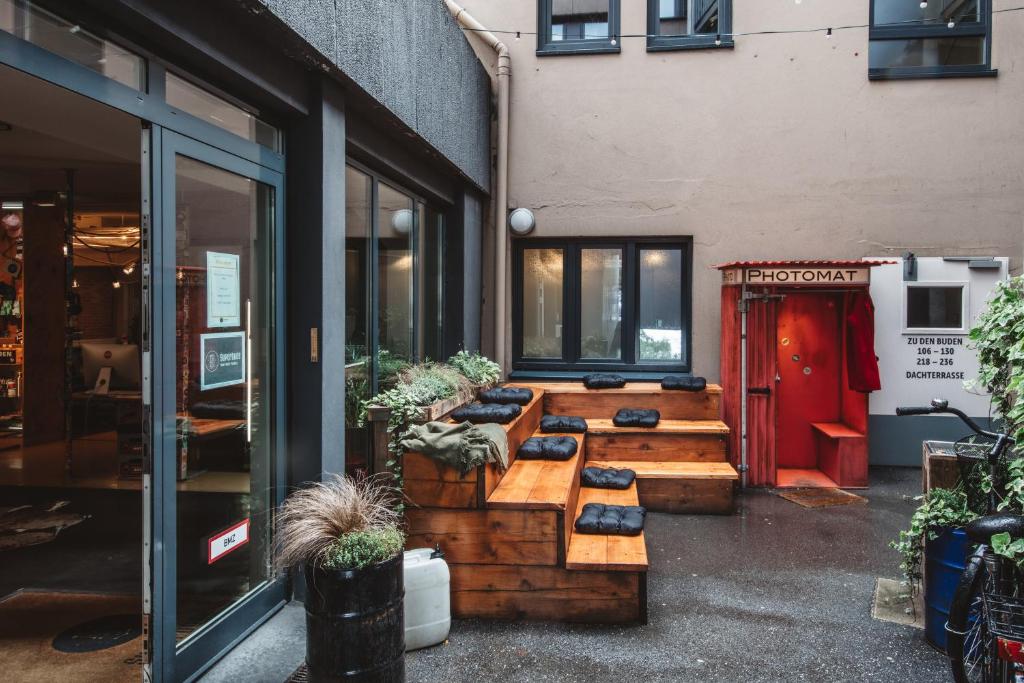
If the rooms explain the economics of Superbude, the Kitchen Club explains its personality. It serves as the breakfast room in the morning and then becomes a communal meeting place where guests can use microwaves and ovens later in the day. It’s deliberately domestic. Eat something. Work for a while. Meet somebody. Stay longer than expected. Reception, bar and shop are similarly combined rather than separated into formal hotel departments, while additional communal facilities including a cinema and event spaces extend the idea that much of the experience should happen outside the bedroom. The staff are part of that equation too: less traditional concierge, more plugged-in Hamburg insider.
Design Without Preciousness
What’s particularly appealing about Superbude St. Georg is that the design isn’t pretending to be more expensive than it is. Quite the opposite. The humble origins of its materials are visible. A pallet remains recognisably a pallet. A beer crate doesn’t suddenly become artisanal modular seating. A piece of scaffolding still looks like it belongs on a construction site. Dreimeta simply gives these things enough imagination to make them desirable. That creates an atmosphere where guests don’t have to behave carefully around the design. You can actually use it.
Between St. Georg and the City
The location reinforces the slightly unconventional character. Superbude isn’t sitting on Hamburg’s grandest boulevard. It occupies a more functional part of St. Georg, within reach of Hauptbahnhof, Mönckebergstraße and the city centre, with HafenCity beyond. That suits it. This was never conceived as a hotel where you retreat behind velvet curtains from the city outside. It’s a base camp. Come back, grab something from the kitchen, collapse onto a pallet sofa, talk to somebody you didn’t arrive with and work out where you’re going next.
Why It Works
Superbude St. Georg demonstrates something DNA Hotels strongly believes: good hotel design has very little to do with how much something costs. Dreimeta took a limited budget, an old printing plant and materials most designers would have discarded and turned them into an identity strong enough to help launch an entire hotel concept. There are more polished hotels in Hamburg. More luxurious ones. Certainly more expensive ones. But Superbude has something harder to manufacture: generosity of spirit. It’s colourful, clever, social and completely comfortable with not taking itself too seriously. Sometimes a beer crate really is all the design statement you need.