The Sukhothai Shanghai | China
An urban oasis where Neri&Hu translate Thai serenity into contemporary Shanghai.
Why DNA Hotels Loves It
● Neri&Hu created a distinctly Shanghai interpretation of the legendary Sukhothai Bangkok, replacing resort grandeur with intimacy, texture and calm.
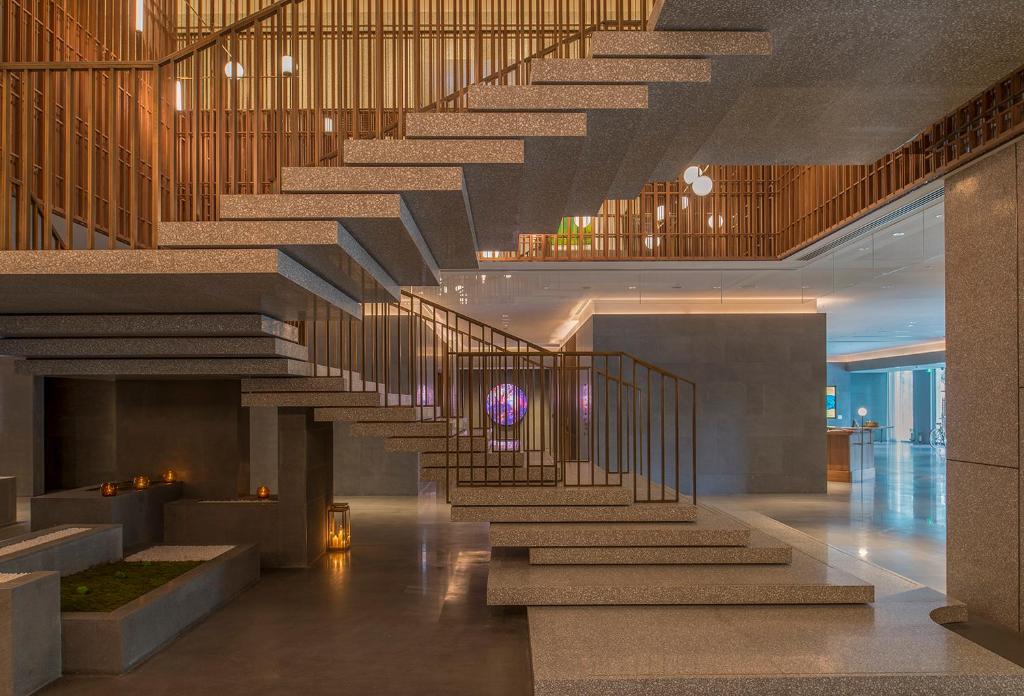
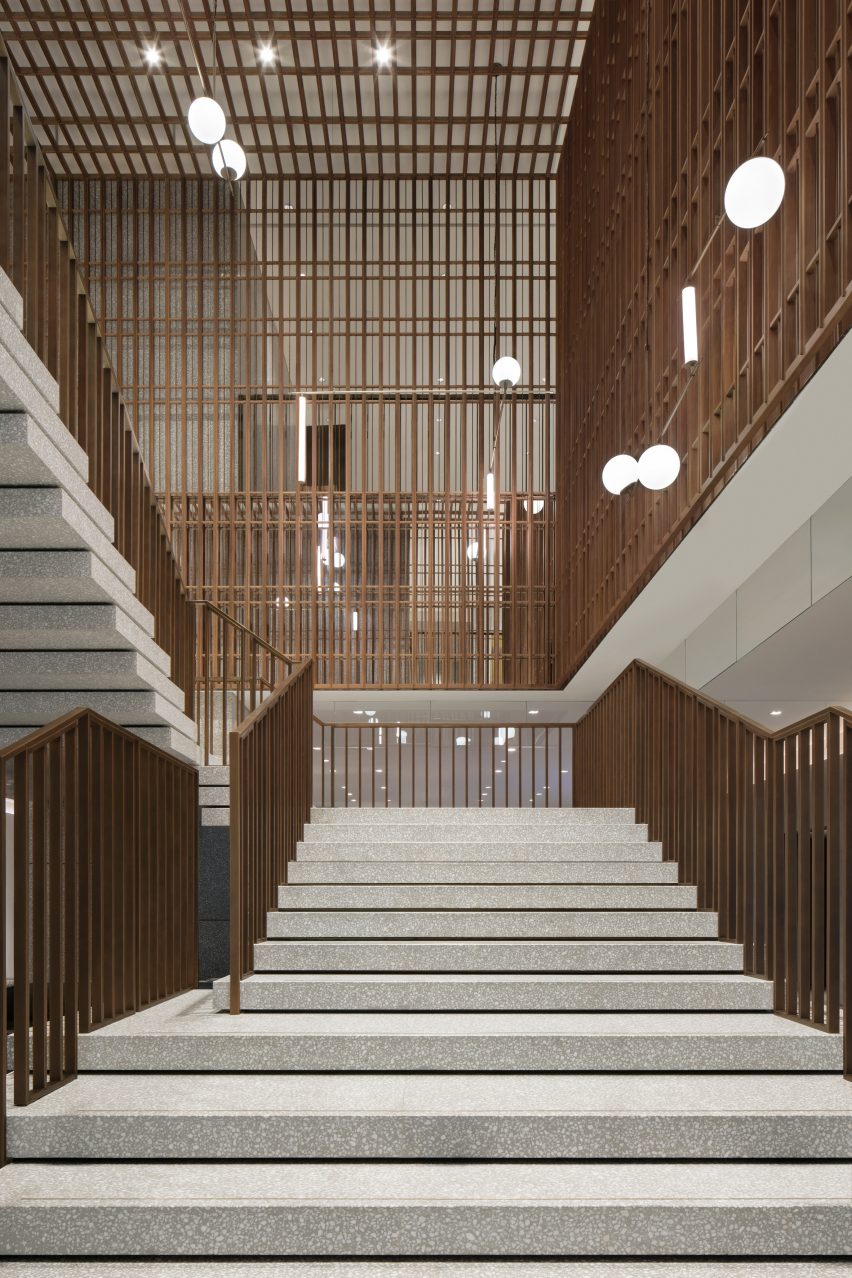
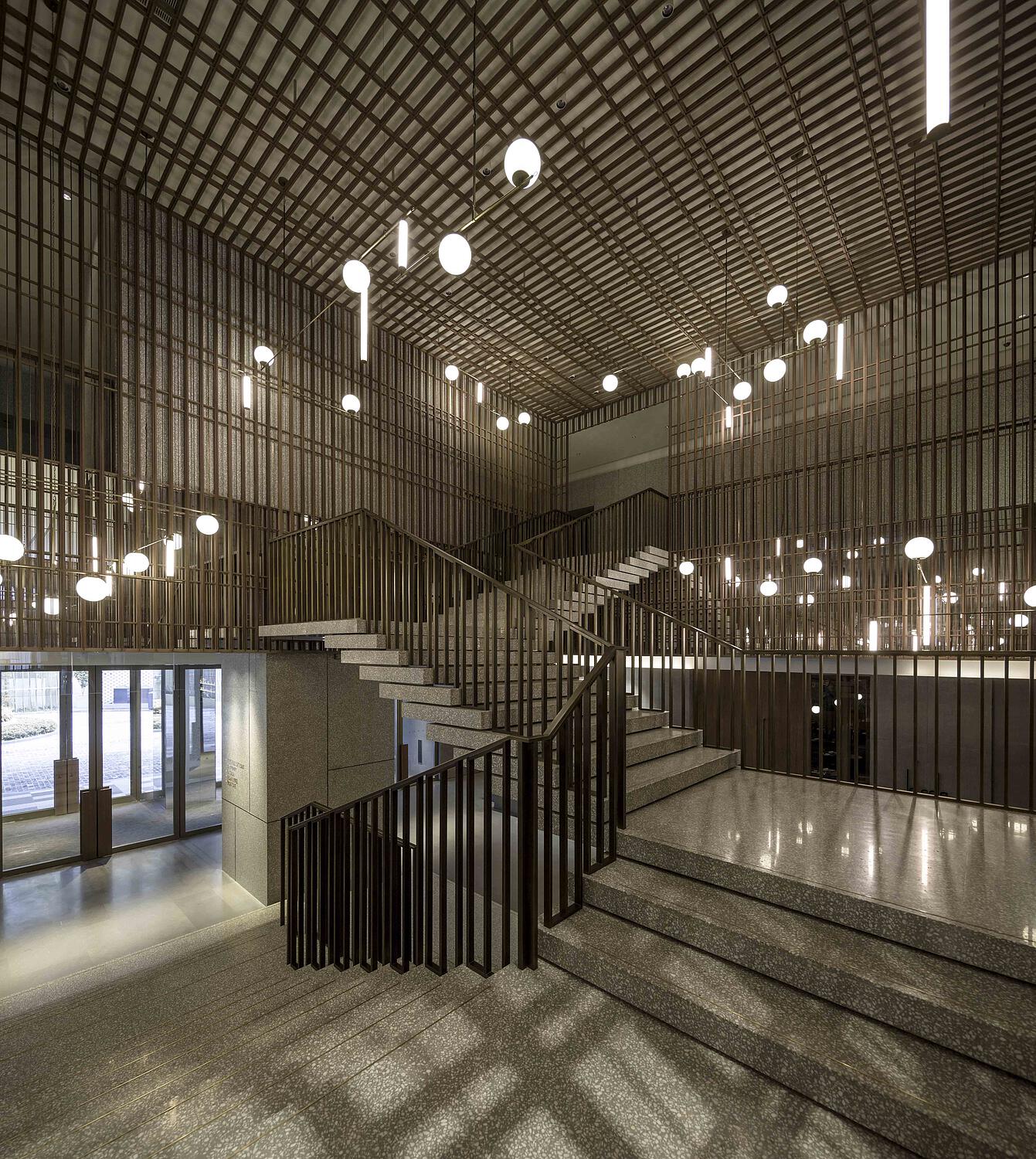
● The monumental terrazzo-and-bronze staircase is one of the hotel’s defining architectural moments, wrapped in a timber lattice like an oversized lantern.
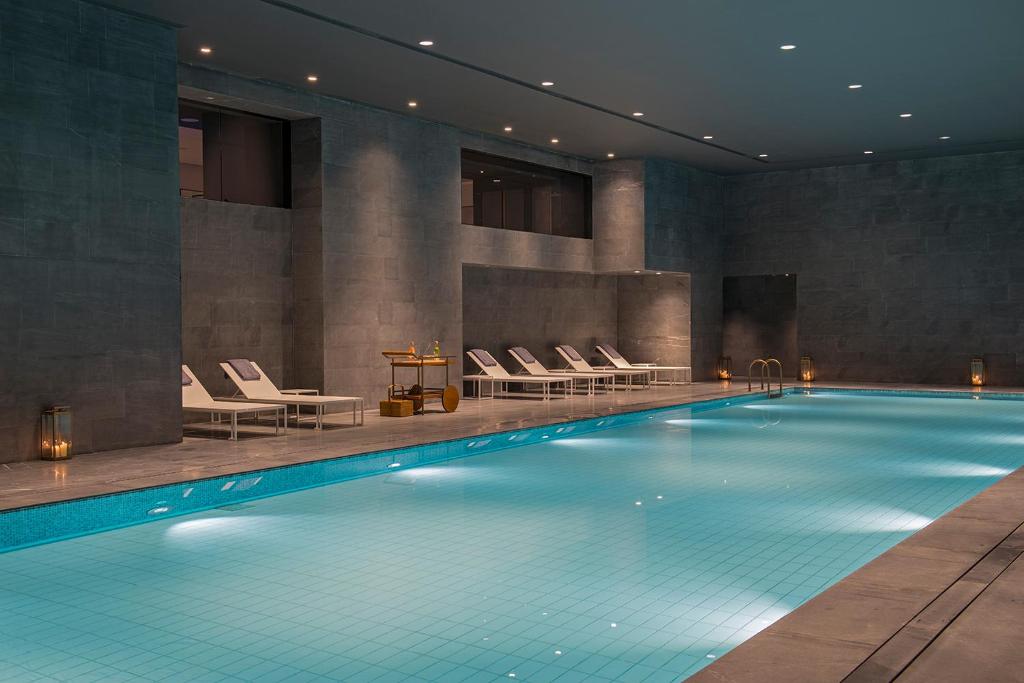
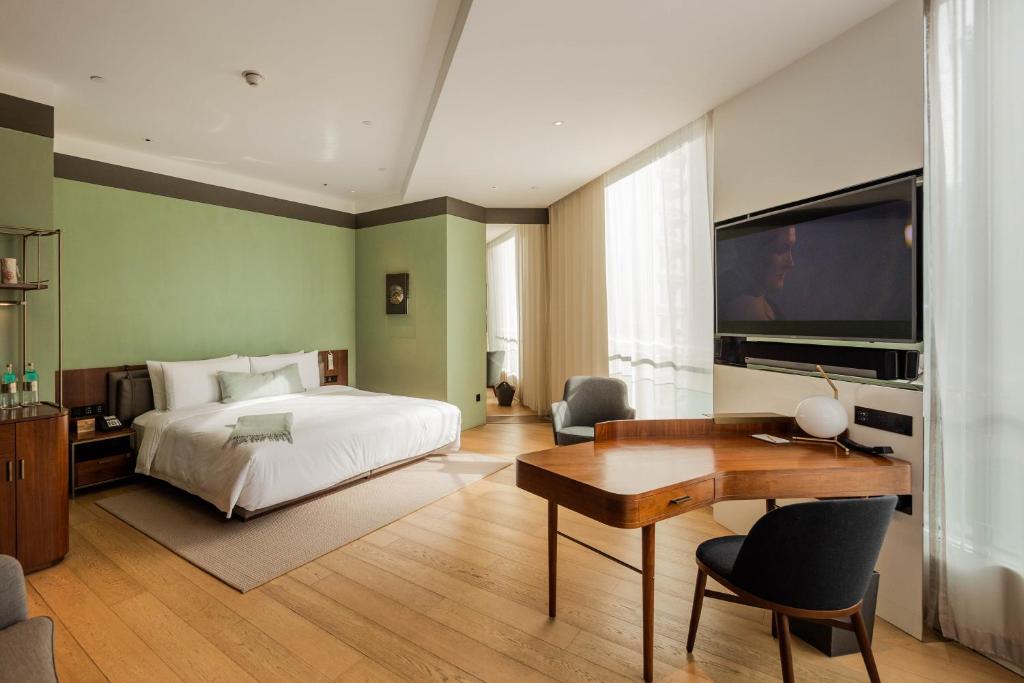
● Nature runs through the entire concept — from jade-toned rooms and garden-inspired restaurants to a green-tiled pool and spaces designed as urban retreats.
Bangkok Spirit, Shanghai Context
The Sukhothai Shanghai had a difficult brief: how do you translate the atmosphere of one of Bangkok’s most iconic hotels into the middle of dense, hyper-urban Shanghai? Neri&Hu’s answer was not to imitate the original. Instead, the designers focused on what connects both cities: congestion, intensity and the need for somewhere to breathe. The result is a hotel conceived as an urban oasis — contemporary and distinctly metropolitan, but grounded in the Sukhothai brand’s long-standing relationship with nature, serenity and refined Thai hospitality.
The Staircase as Architecture
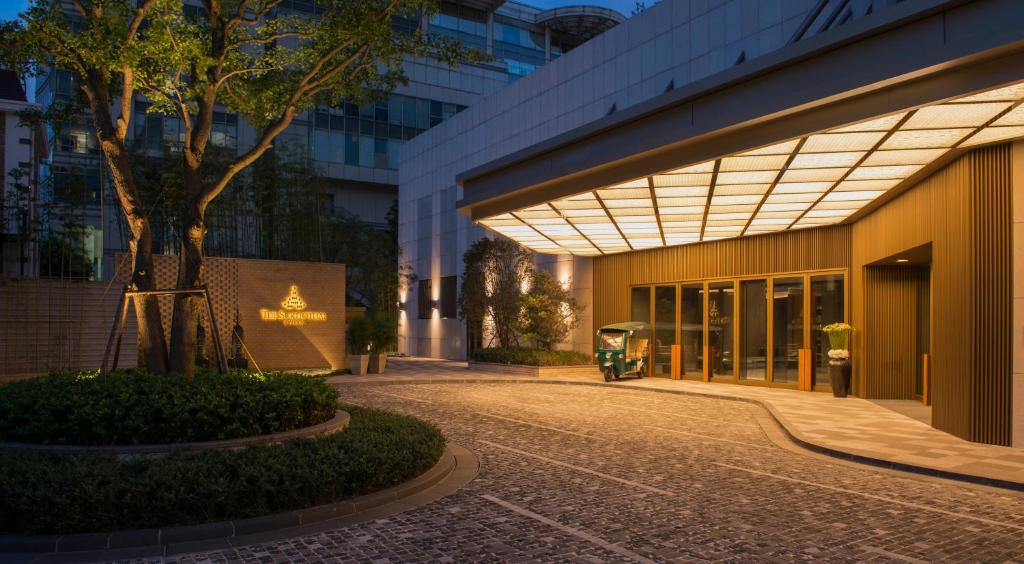
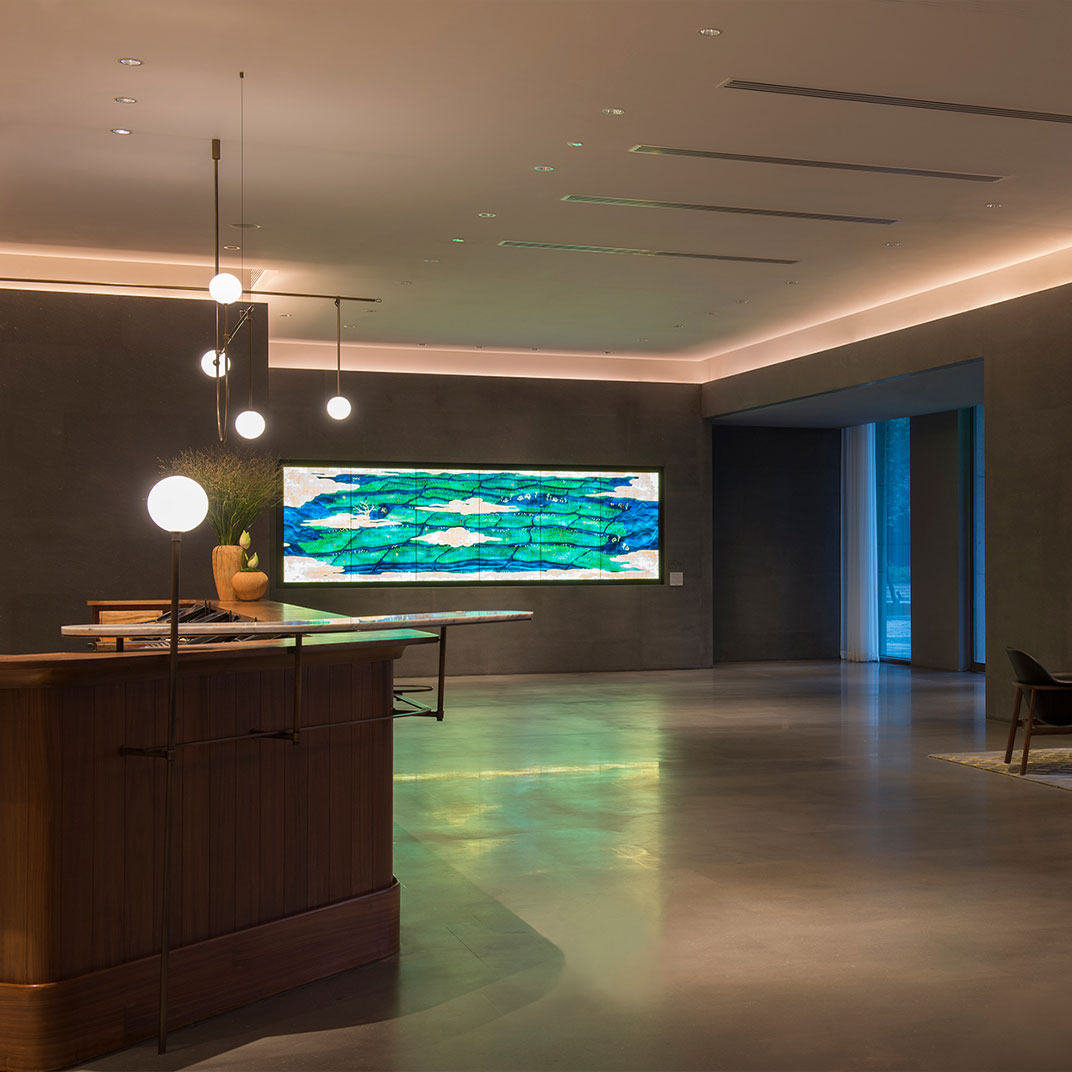
The arrival sequence immediately establishes the hotel’s character. A dramatic staircase of slender grey-terrazzo slabs appears to float upwards through the lobby, edged by a delicate bronze balustrade. Around it, a large timber grid rises like a lantern, enclosing the space without making it feel heavy. As guests ascend, bronze and glass pendant lights appear within the latticework, turning a simple transition between floors into one of the hotel’s most memorable spatial experiences.
A Hotel Imagined as a Garden
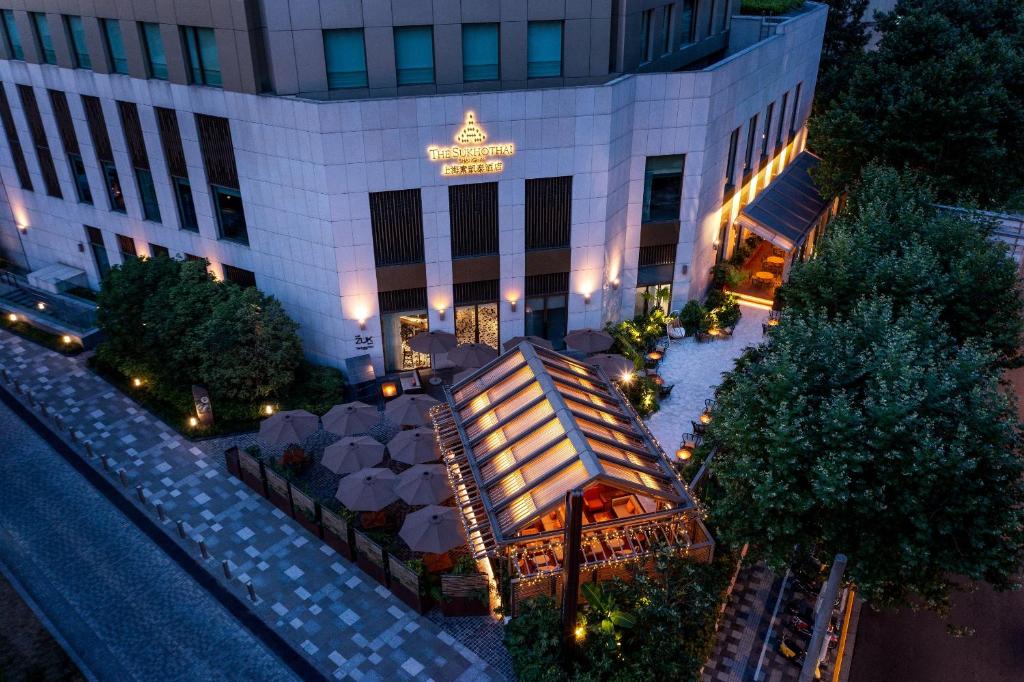
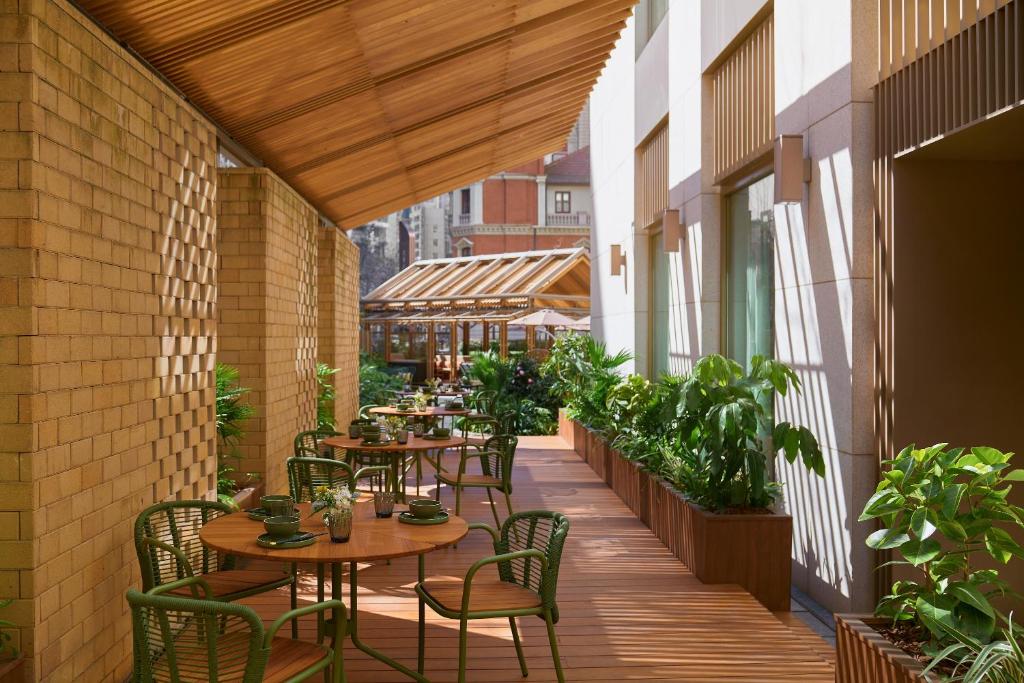
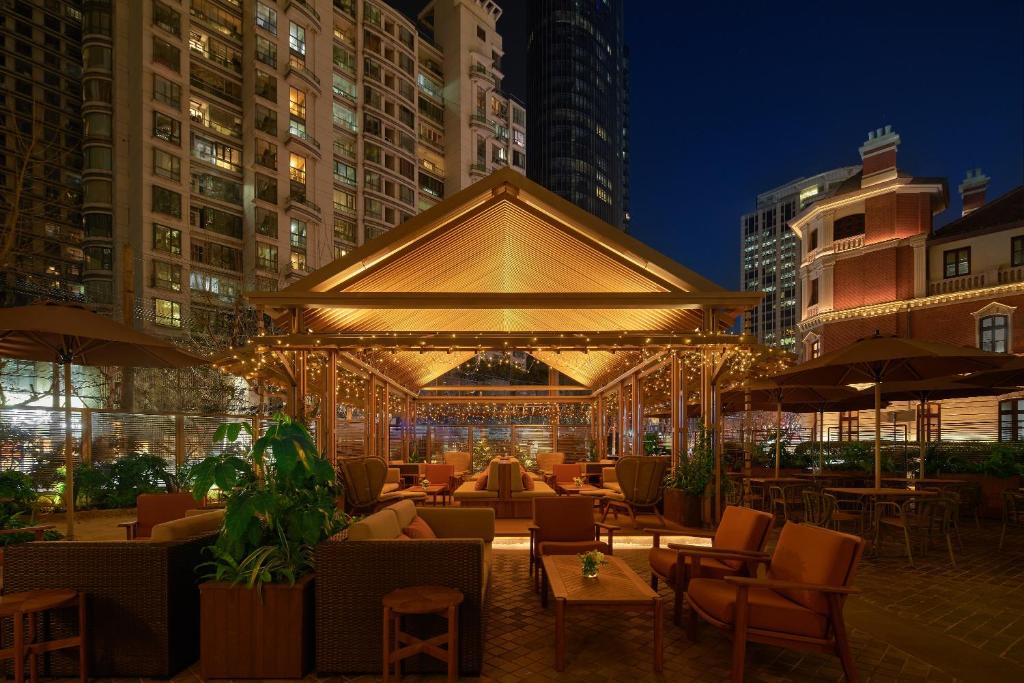
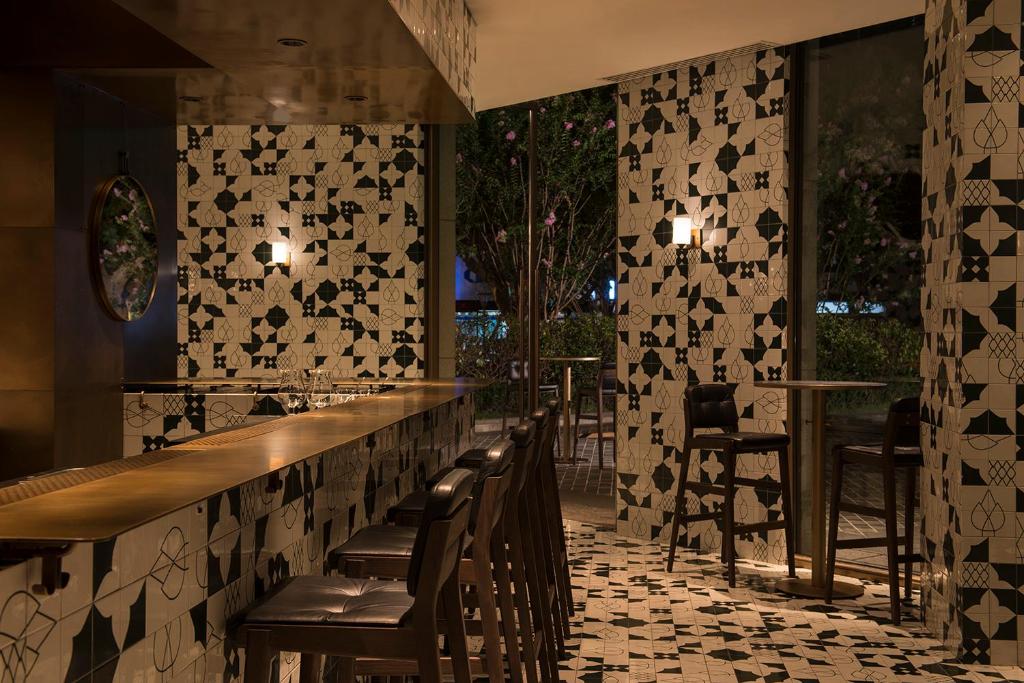
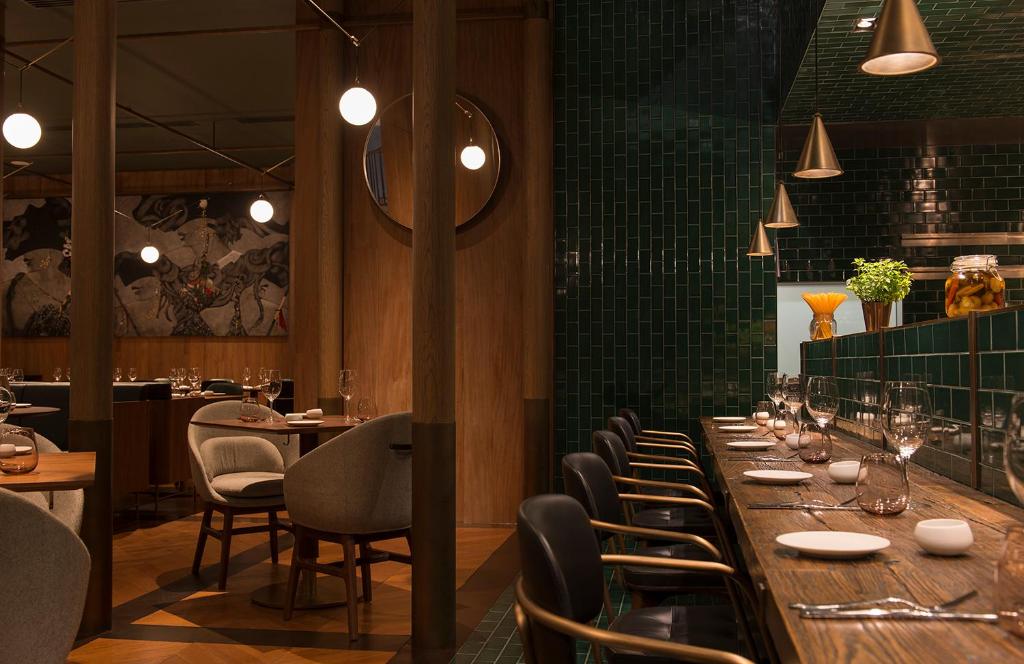
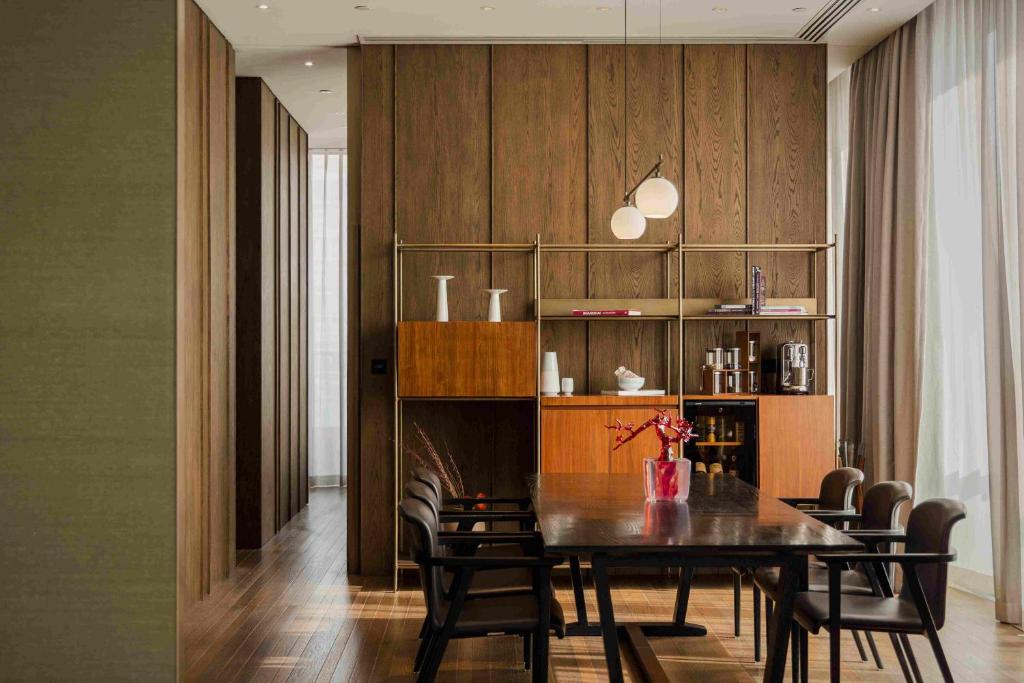
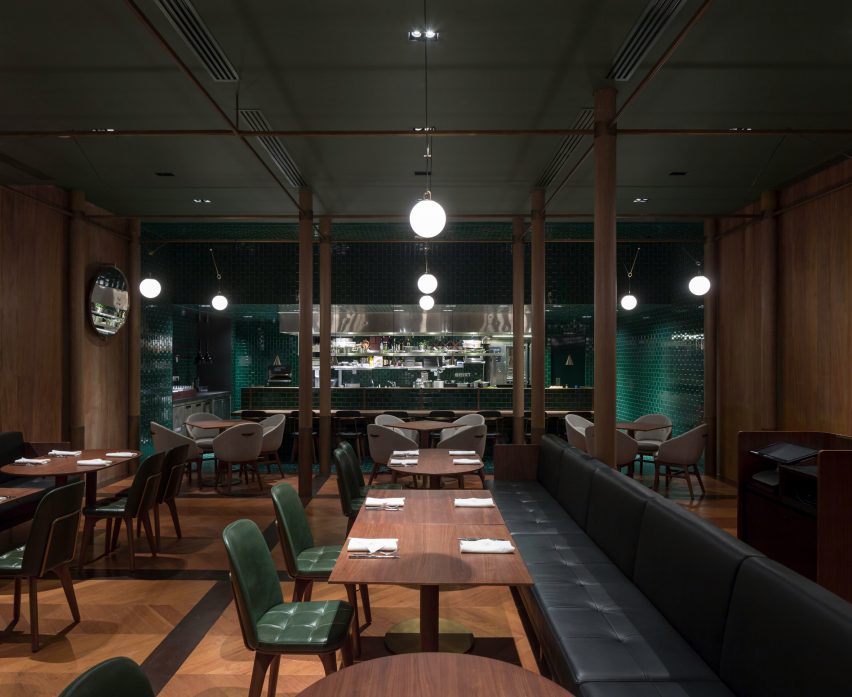
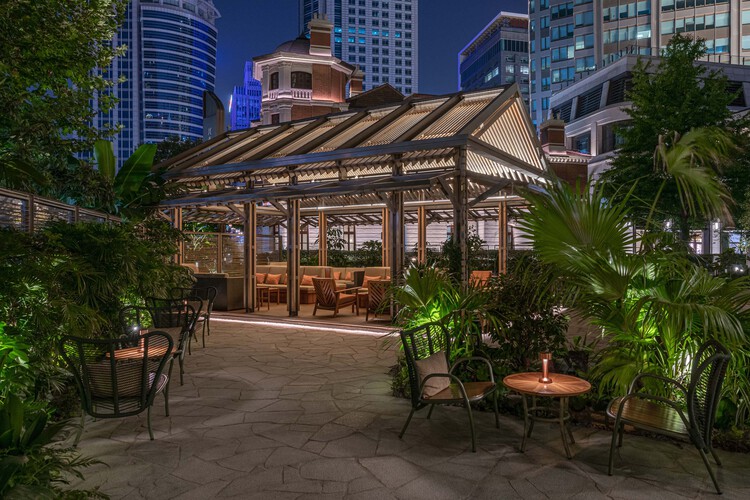
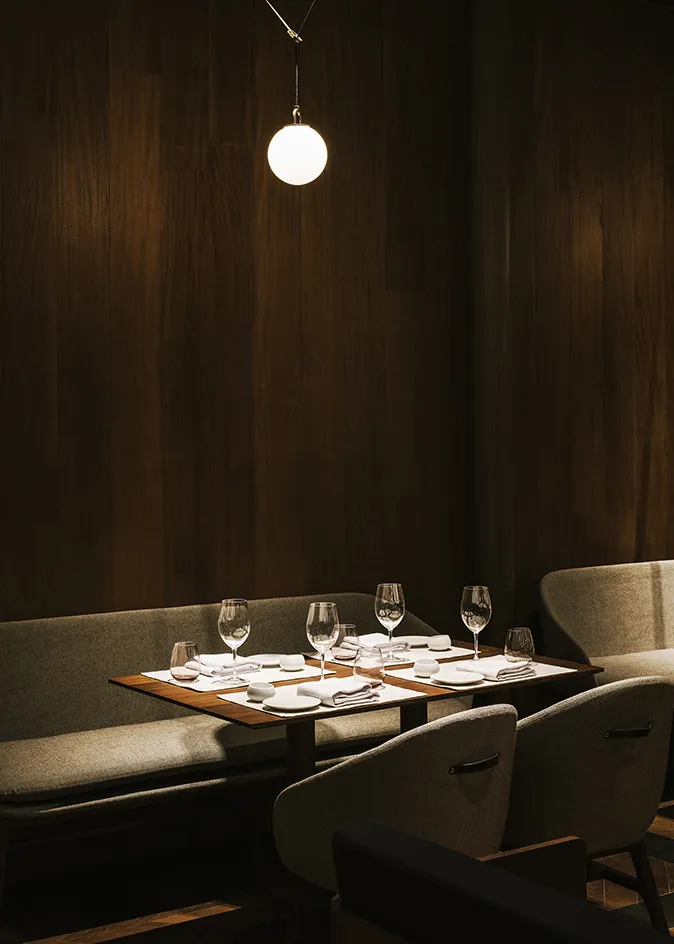
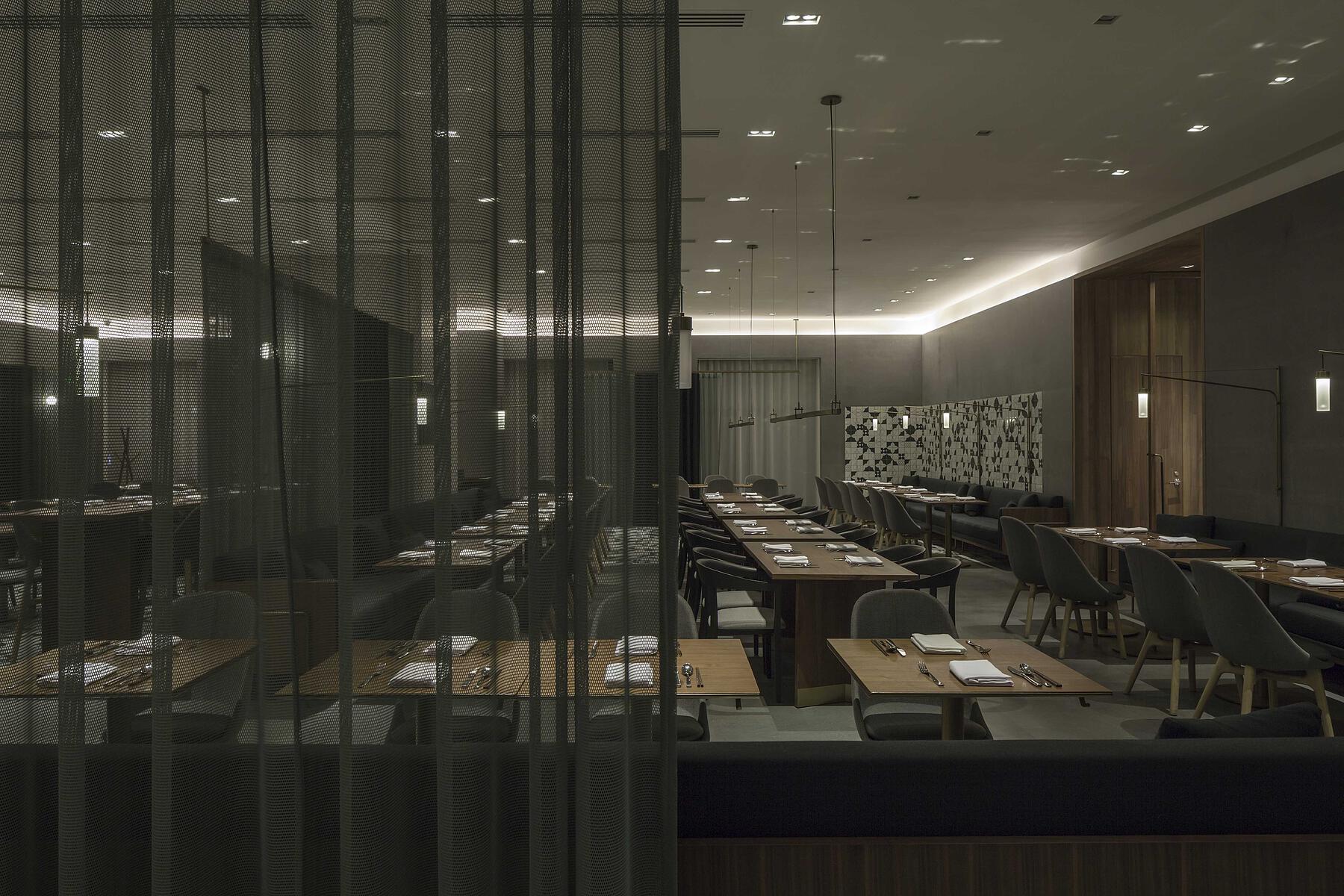
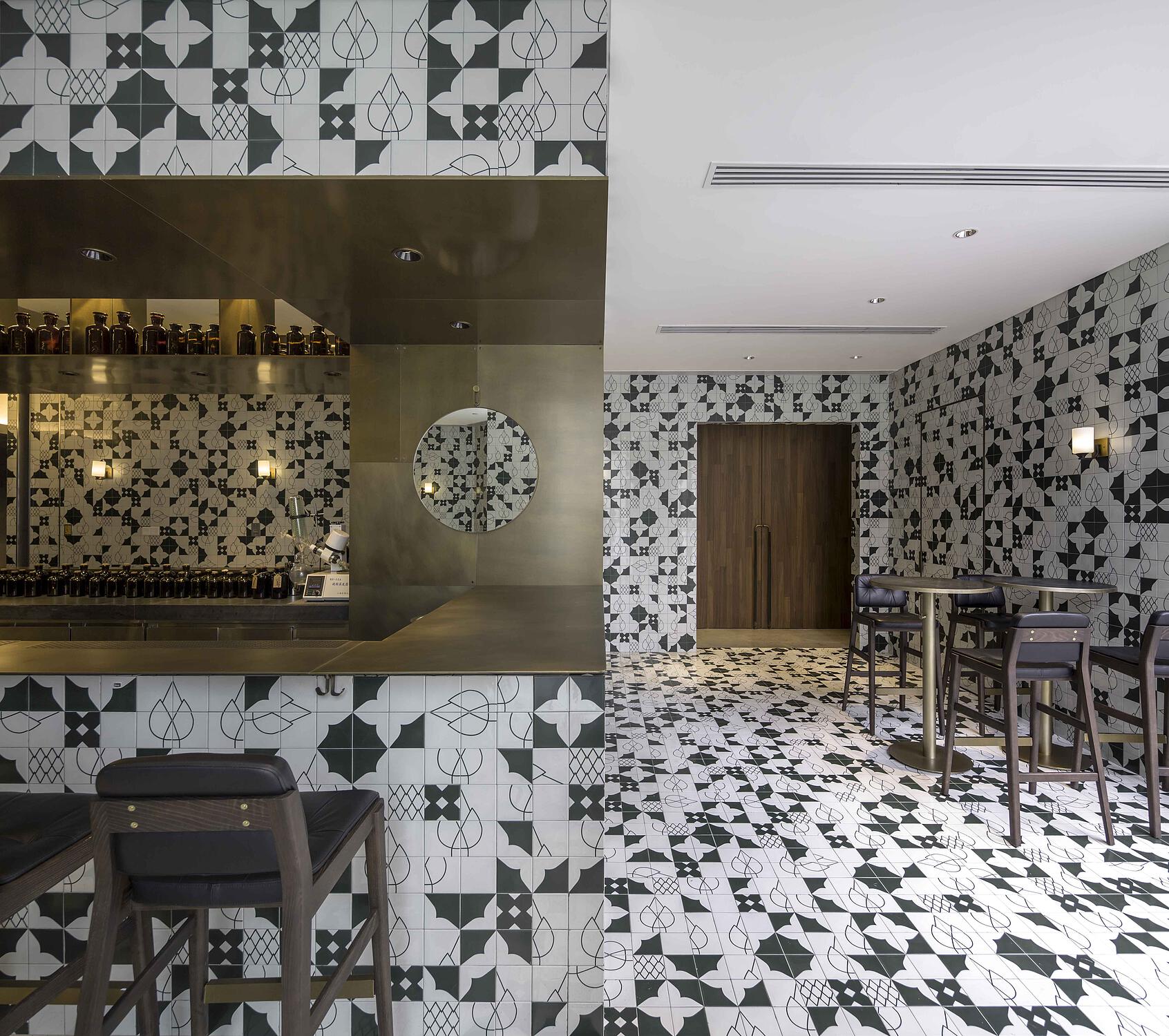
Gardens became the central metaphor for the interiors. Restaurants, bars and circulation spaces are treated almost like a series of outdoor rooms. Columns evoke the ordered landscapes of Renaissance gardens, deep greens appear in leather seating and hand-glazed tiles, and timber, stone and bronze introduce warmth and tactility. The public areas function like a piazza from which different “gardens” unfold — each with its own atmosphere, but all connected by the same sense of calm.
Rooms as Private Retreats
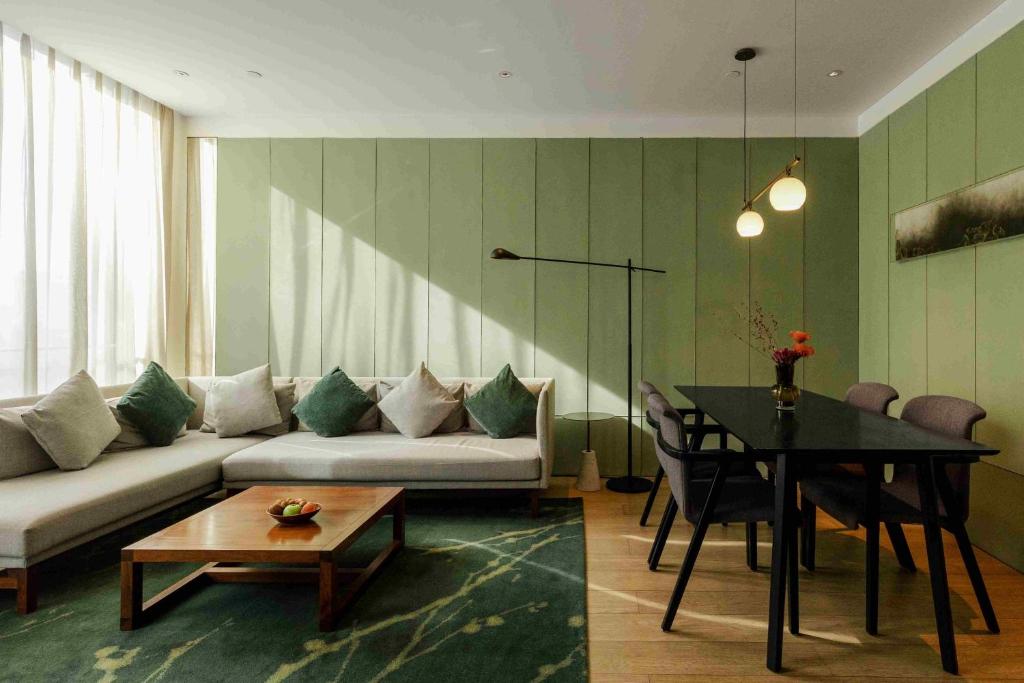
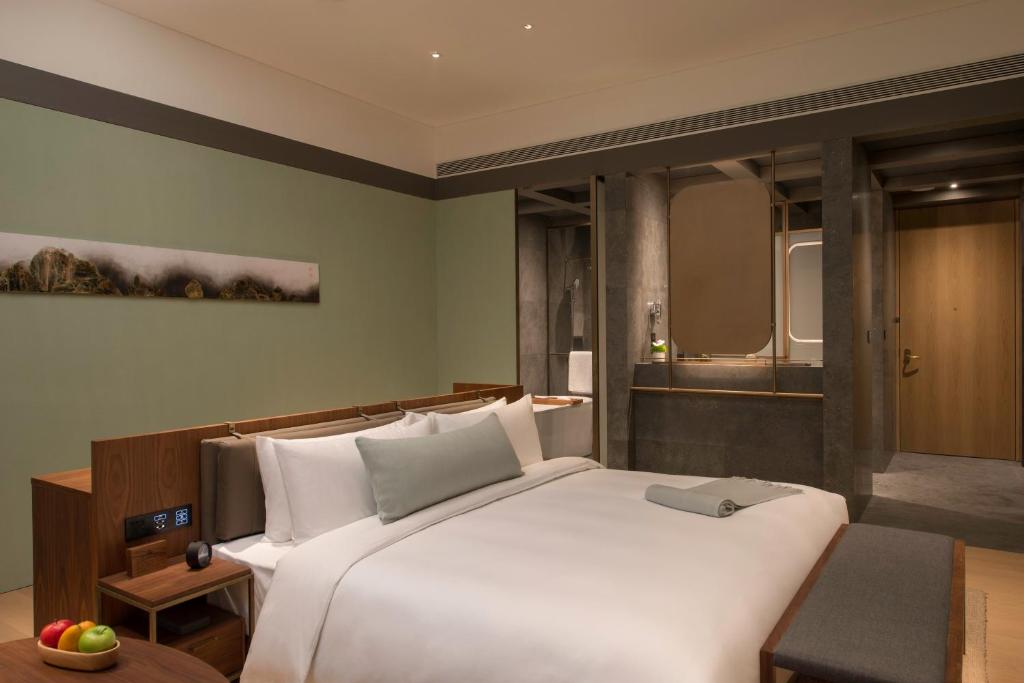
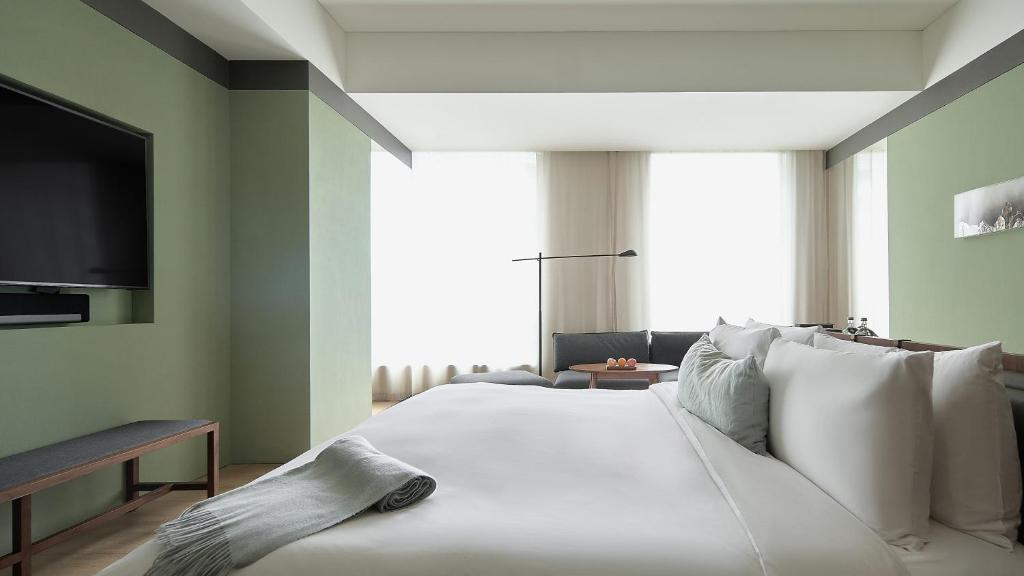
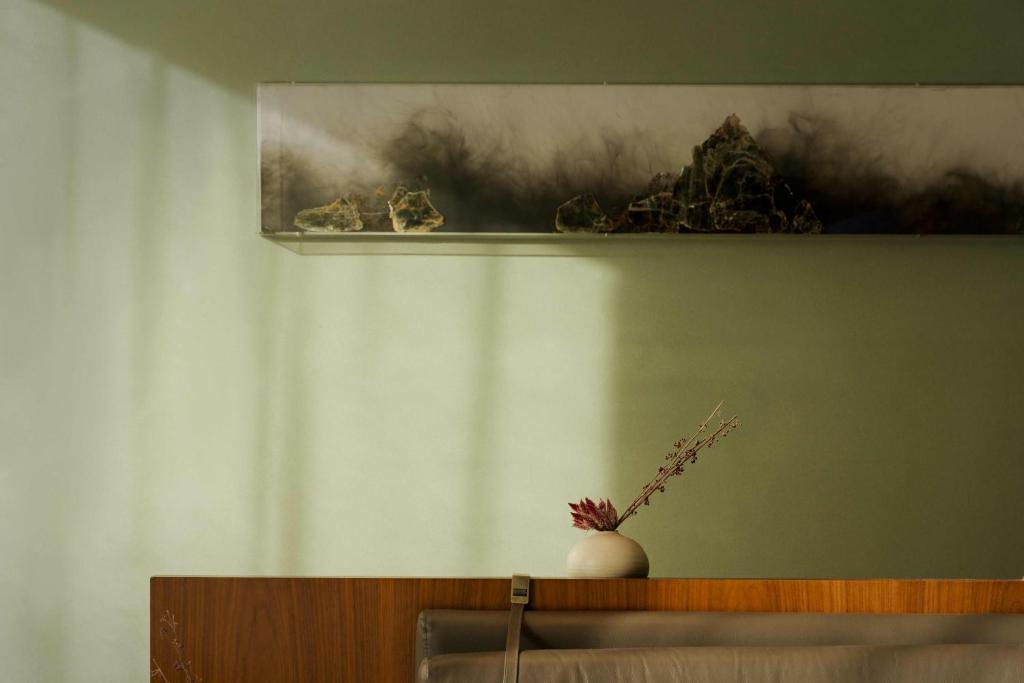
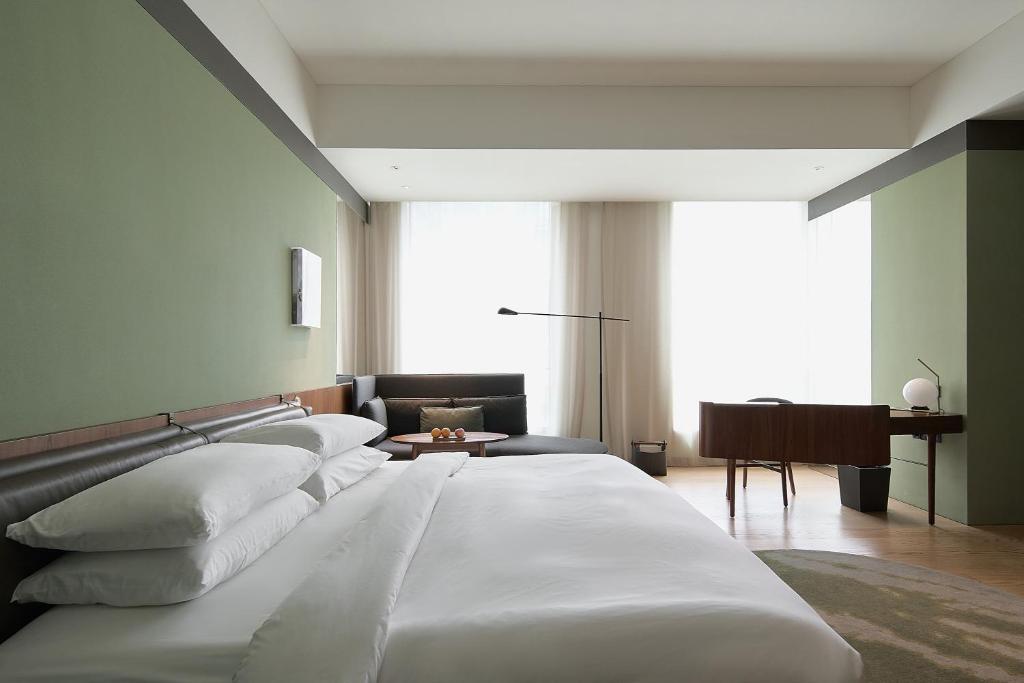
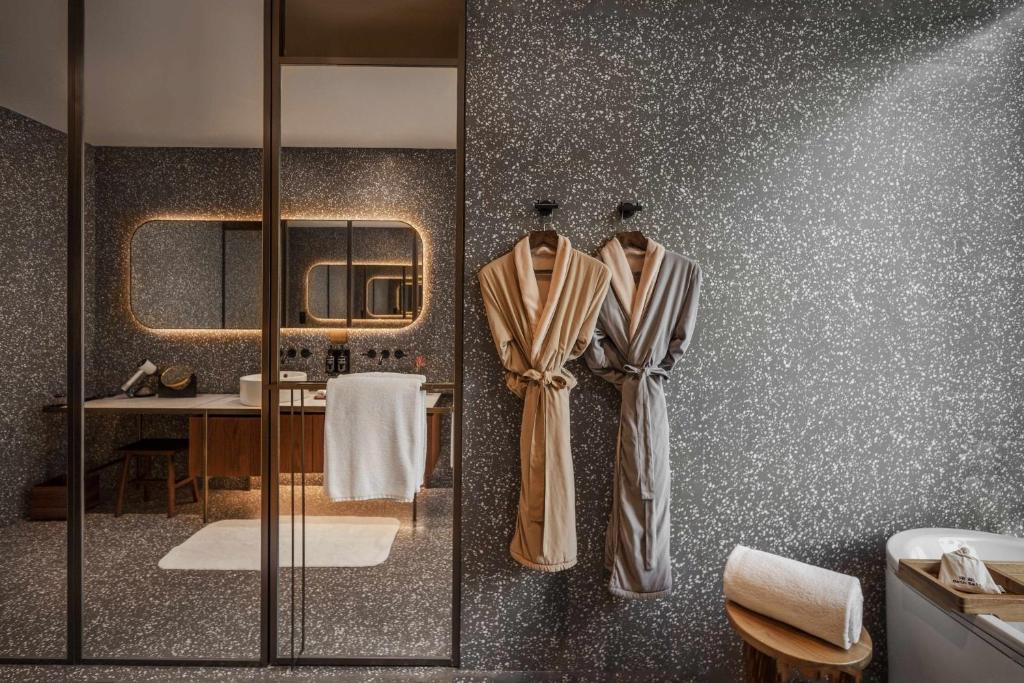
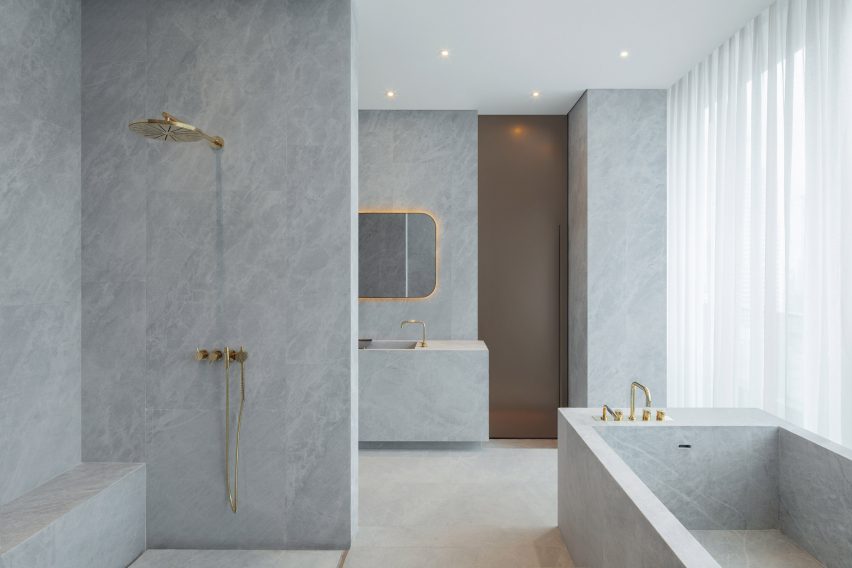
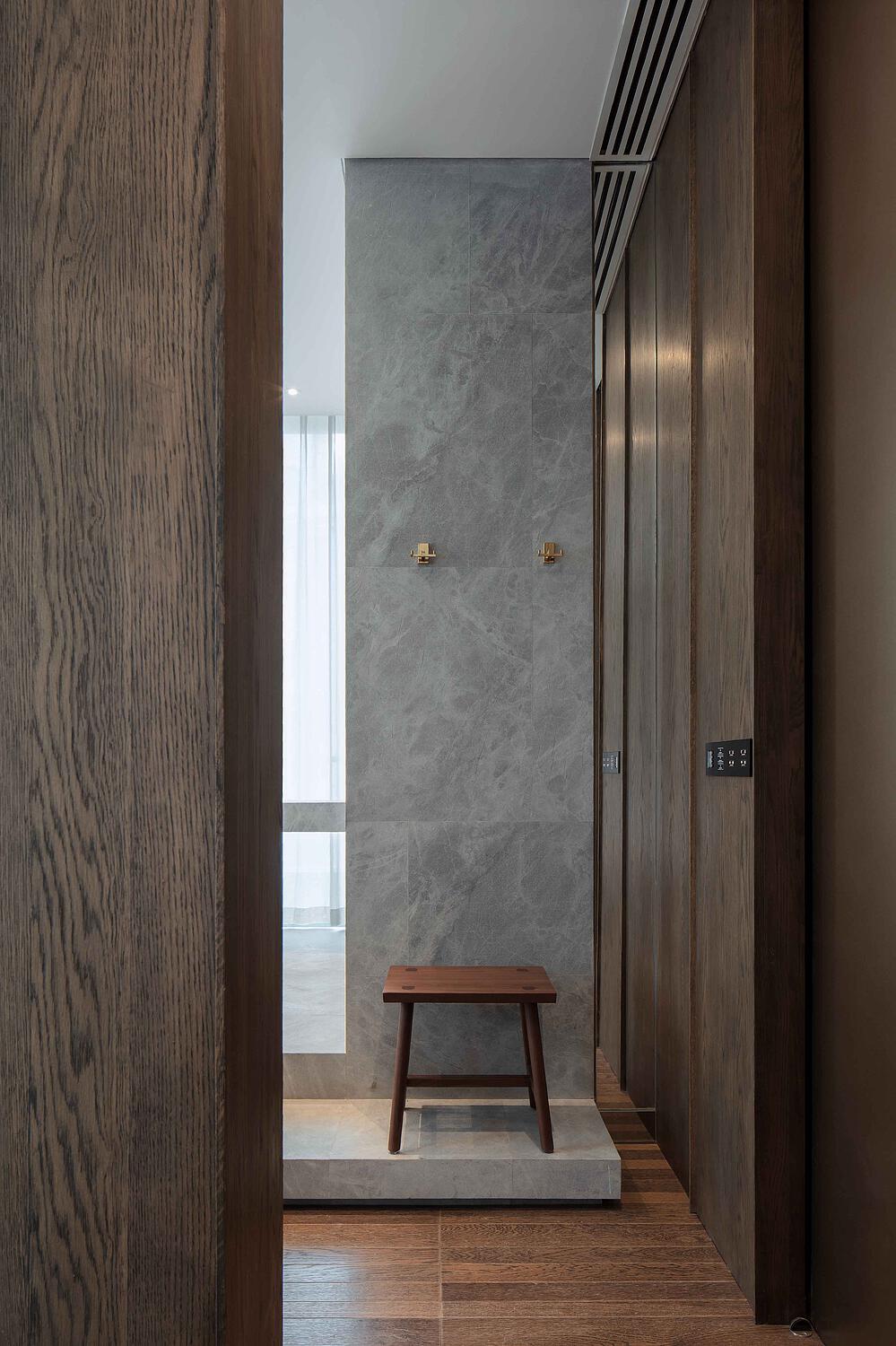
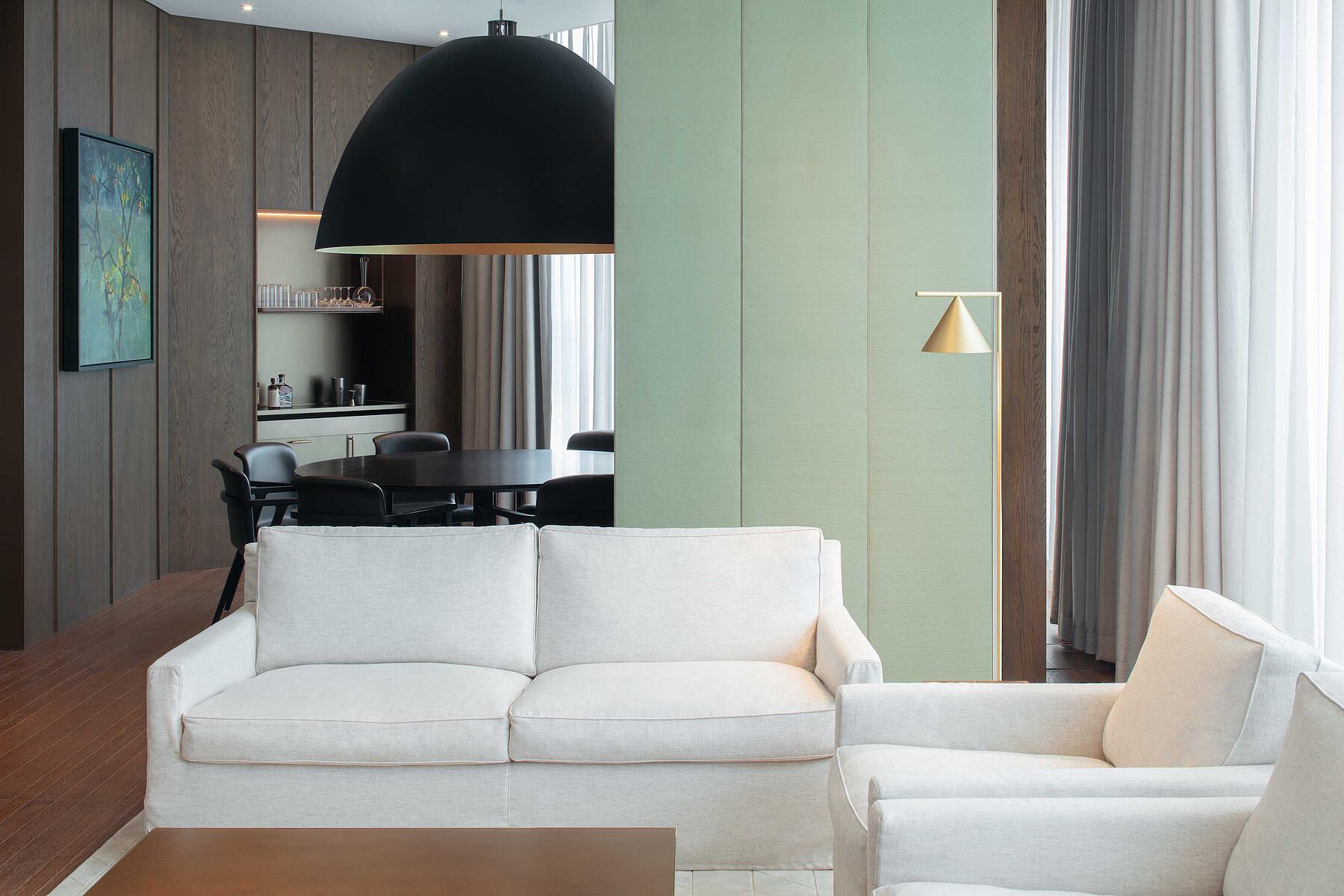
The 201 guestrooms continue the nature-driven language but become softer and more residential. Jade, pale pink and cream tones are paired with timber floors, textured clay walls and carefully selected contemporary furniture. Neri&Hu conceived each room almost as a small house, framed by substantial stone elements and timber beams before opening towards natural light and the city beyond. Bathrooms are wrapped in pebble-grey Carrara marble, while some room layouts blur the conventional separation between bedroom and bath to create a more generous sense of space.
From Green Tiles to Italian Dining
The garden idea extends throughout the hotel’s food, drink and wellness spaces. La Scala brings a contemporary Italian restaurant into an environment of blue-green glazed tiles and open-kitchen theatre, while other dining venues reinterpret herb gardens and landscaped courtyards through colour, pattern and material. Even the pool becomes part of the concept, lined in a mosaic-like mix of green tiles that gives the water an unusually lush quality.
Quiet Luxury, Before It Became a Phrase
The Sukhothai Shanghai succeeds because it never tries to compete with the city outside. Instead of spectacle, Neri&Hu created intimacy. Instead of decorative Thai references, they distilled the original Sukhothai into something more abstract: gardens, warmth, serenity and a close connection between architecture and nature. In the middle of Shanghai, that restraint feels almost radical.