The Westin Xi’an | China
Ancient Chinese courtyard architecture reimagined by Neri&Hu — with a museum hidden beneath.
Why DNA Hotels Loves It
● Neri&Hu designed the hotel as a contemporary interpretation of Xi’an’s monumental architecture, courtyard houses and 3,100 years of history.
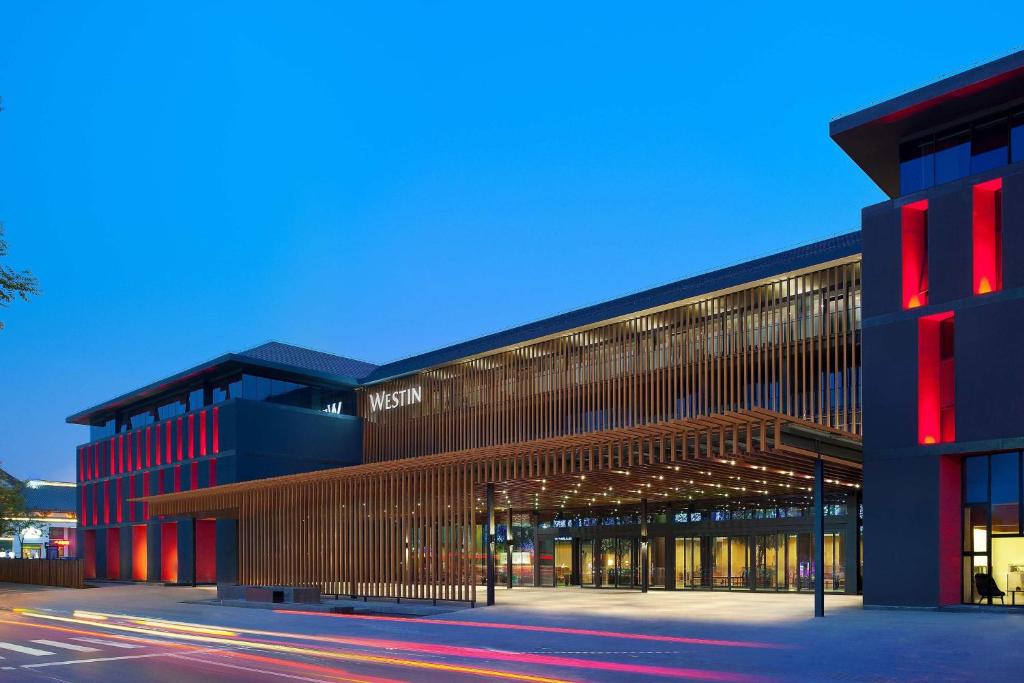
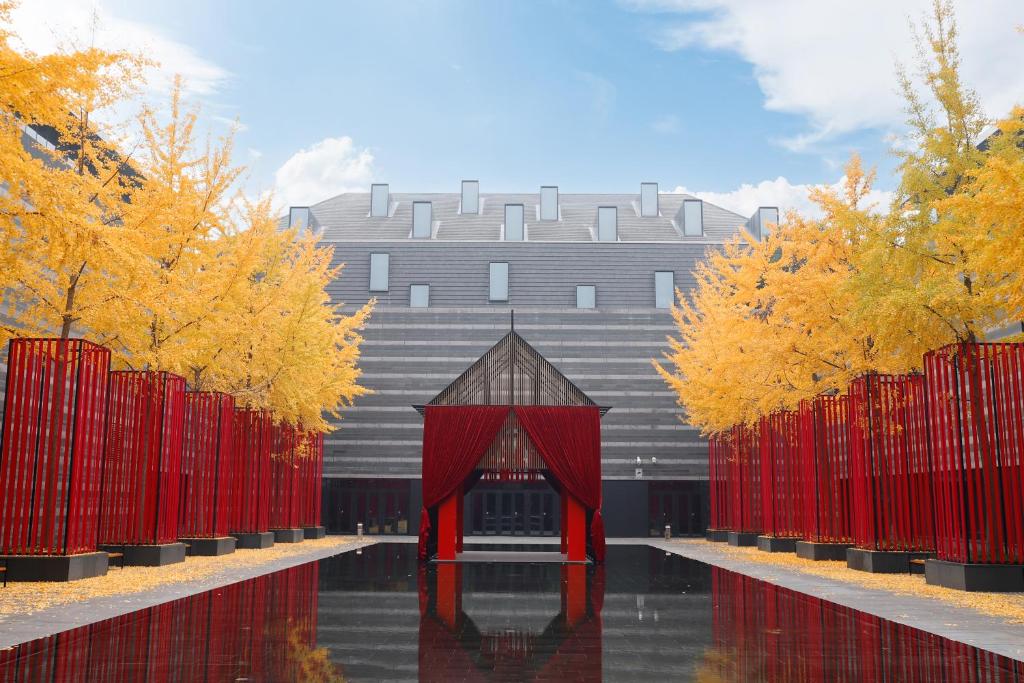
● Architecture does the storytelling: floating pitched roofs, deep red window reveals, reflective pools and sunken gardens reinterpret traditional Chinese forms without copying them.
● An underground museum displaying historic mural art makes this far more than an unusually accomplished international-chain hotel.
A Hotel Rooted in 3,100 Years of History
Few cities present architects with a context quite like Xi’an. Once an imperial capital and one of the great cradles of Chinese civilisation, its city walls, archaeological sites and ancient monuments remain a powerful presence. For The Westin Xi’an, Neri&Hu used that history as the foundation for an unapologetically contemporary building. Rather than creating another vertical hotel tower, the architects spread the property horizontally across a series of low-rise volumes gathered around courtyards and gardens. It feels less like a conventional Westin and more like a modern interpretation of a Chinese compound.
Monumental, but Almost Floating
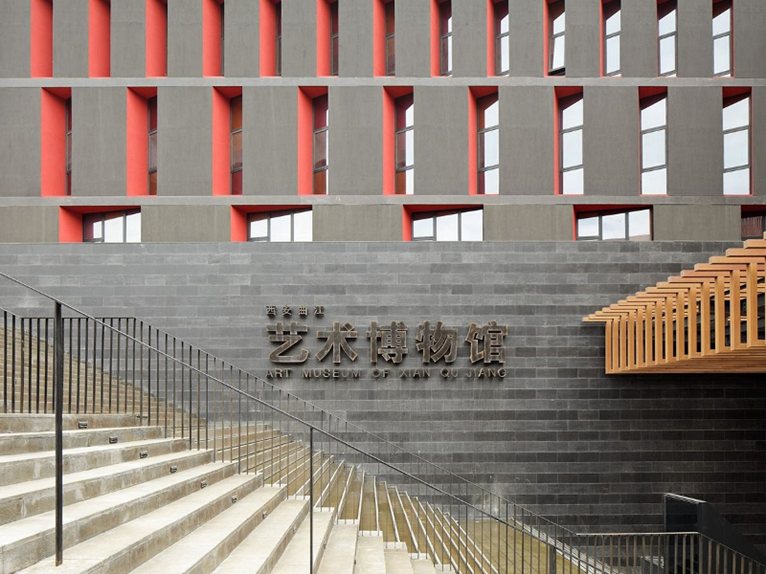
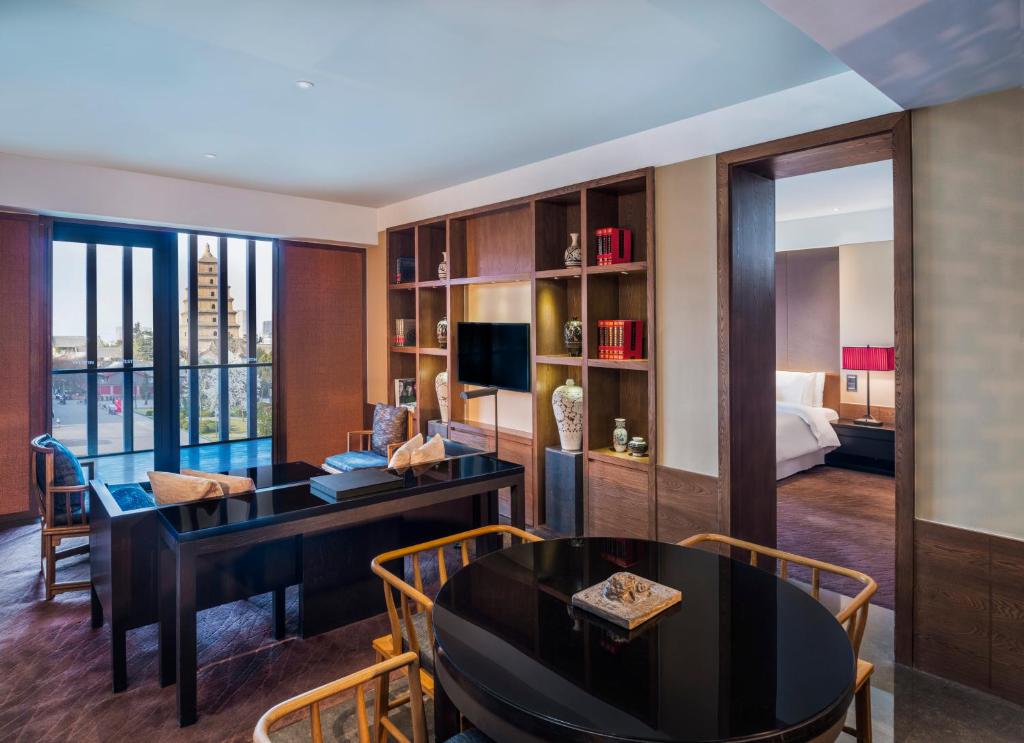
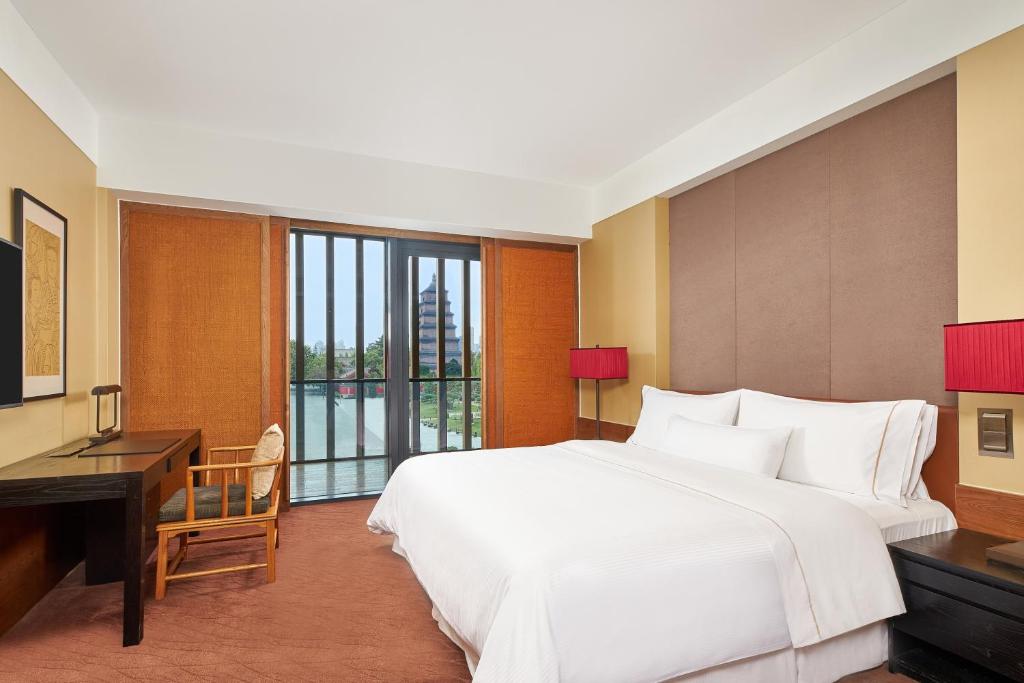
The dark stucco and stone façades take their weight and solidity from Xi’an’s fortress-like city walls. Deep window openings gradually become smaller as the five-storey buildings rise, visually reducing their mass. Their vivid red interiors reference traditional Chinese architecture, while angled openings deliberately frame views towards the nearby Giant Wild Goose Pagoda. Above, Neri&Hu stripped the familiar pitched Chinese roof of ornament and separated it from the building with a narrow band of glass, making the roof appear to float. Reflecting pools surrounding the buildings create another illusion: these heavy architectural volumes seem almost suspended above water.
The Unfolding Courtyard
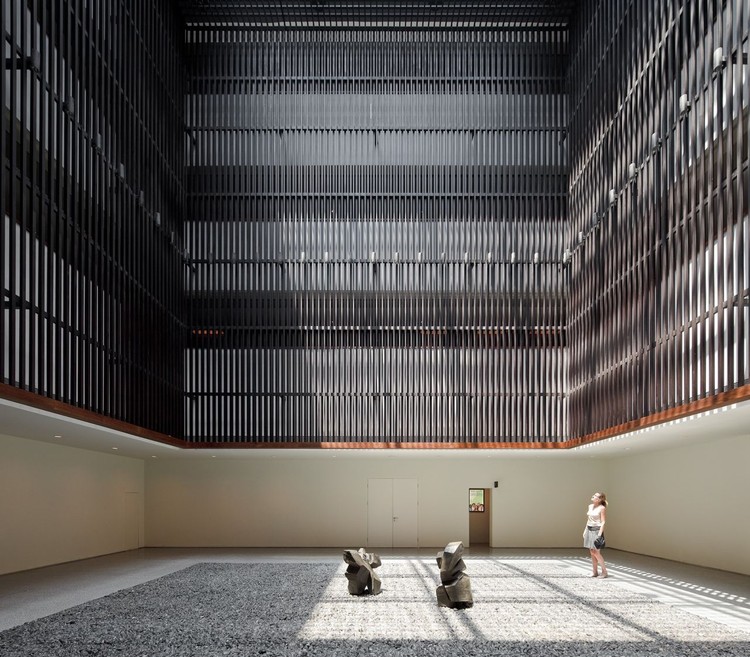
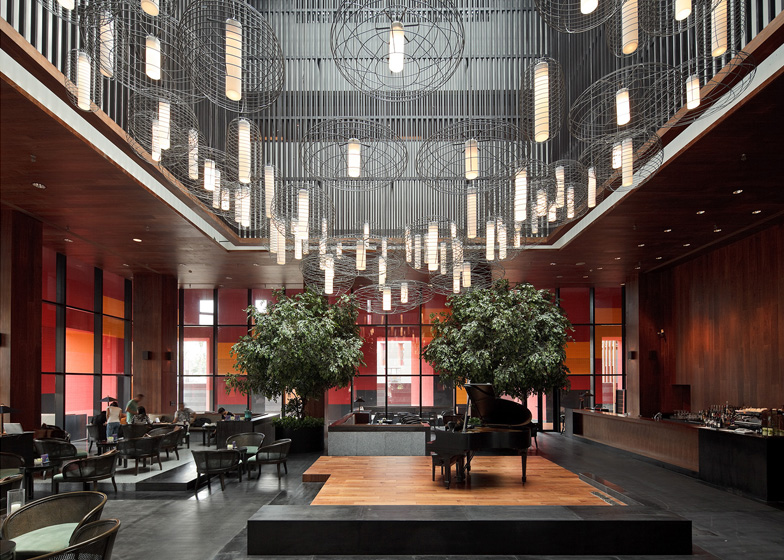
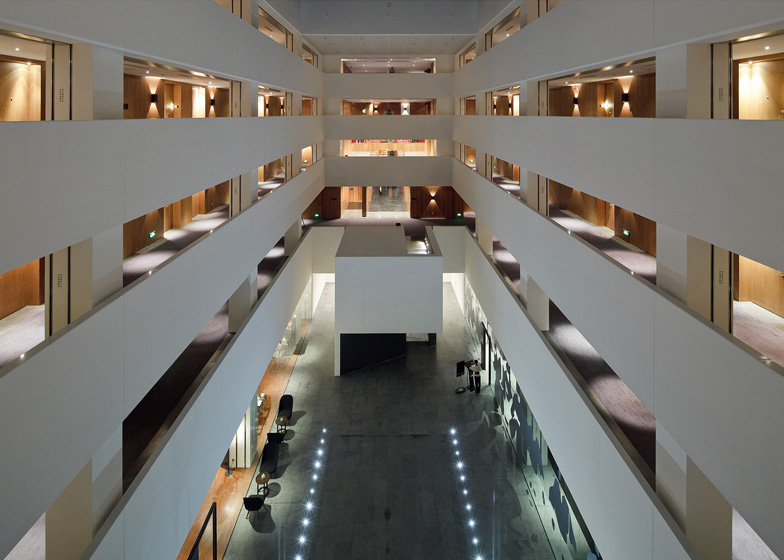
At the centre of the design is one of Chinese architecture’s most enduring ideas: the courtyard. Neri&Hu reinterpret the traditional Tian Jing — literally a “sky well” — through gardens and top-lit internal courts that pull daylight, landscape and sky deep inside the building. The most dramatic sequence begins at the eastern entrance, where a broad staircase descends two levels into a sunken garden. Rather than treating the underground spaces as secondary, the architects make descending into the earth part of the experience — an idea particularly resonant in a city famous for archaeological treasures buried beneath its surface.
A Museum Beneath the Hotel
Hidden underground is perhaps the hotel’s greatest surprise: a museum dedicated to historic mural art from the region. Instead of presenting the murals within a conventional white-cube gallery, Neri&Hu designed individual climate-controlled display cases that detach the works visually from the surrounding walls. Each fragment becomes an object in its own right. The museum isn’t simply an amenity added to the hotel. Architecture, archaeology and hospitality become part of the same journey.
Dining as Theatre
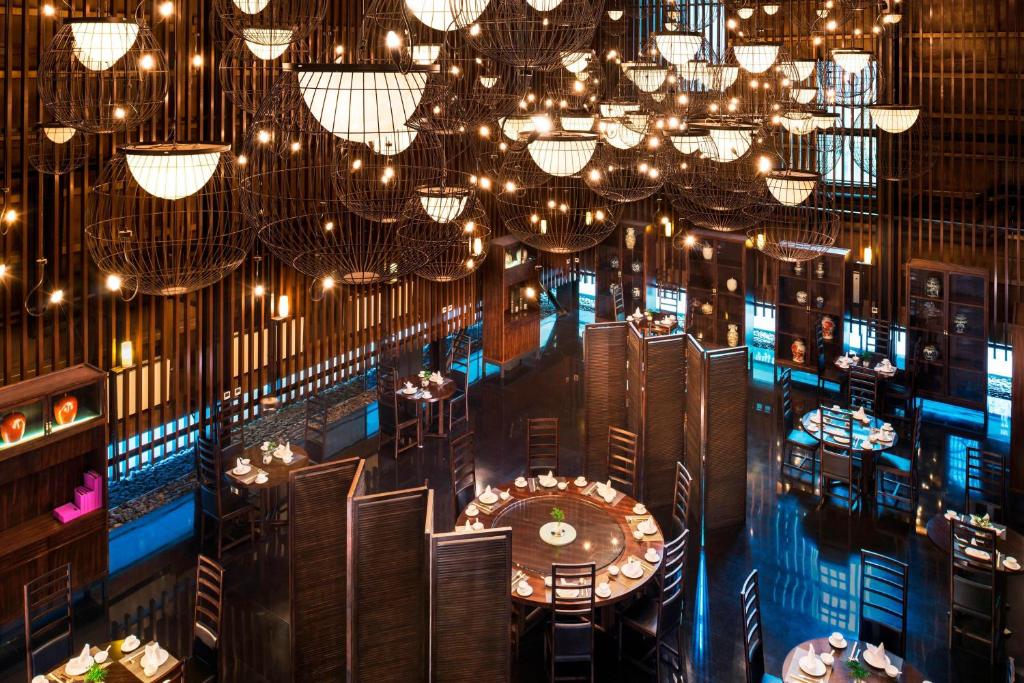
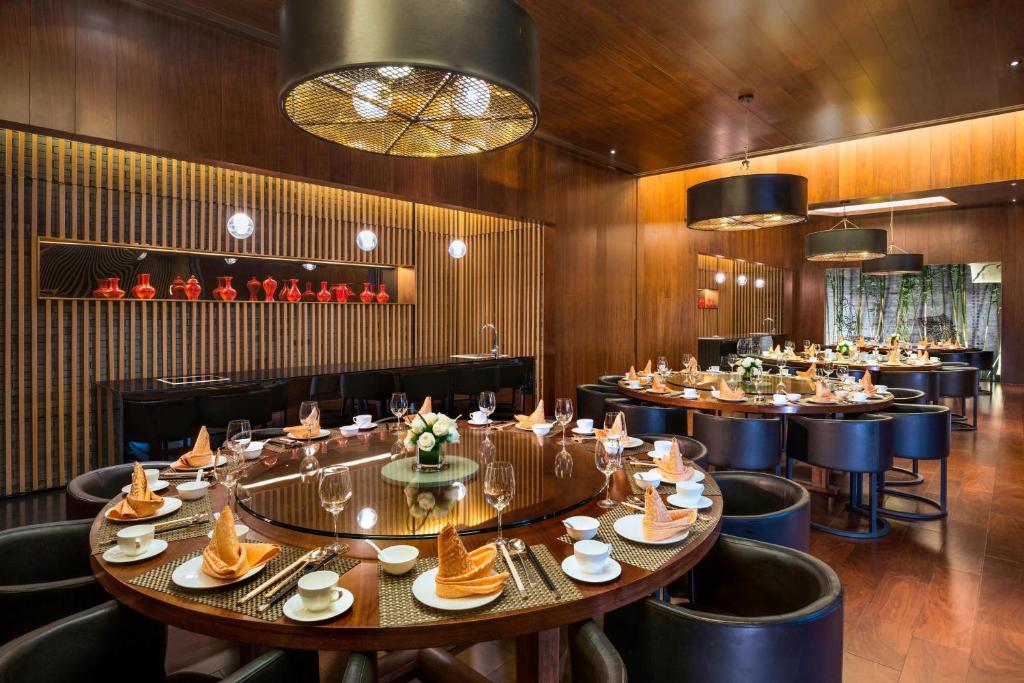
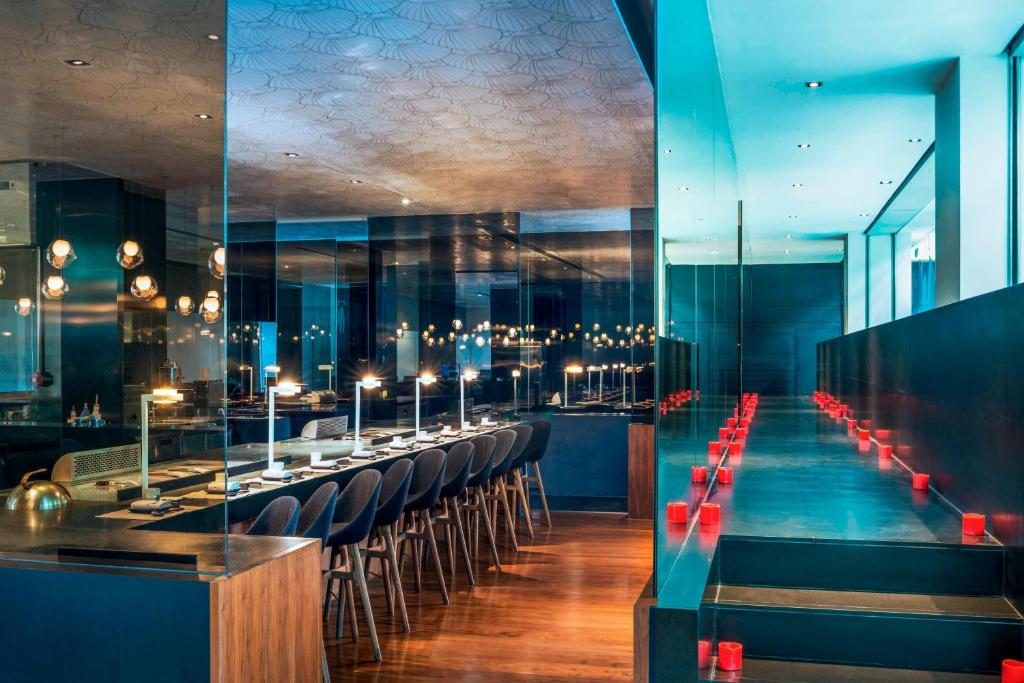
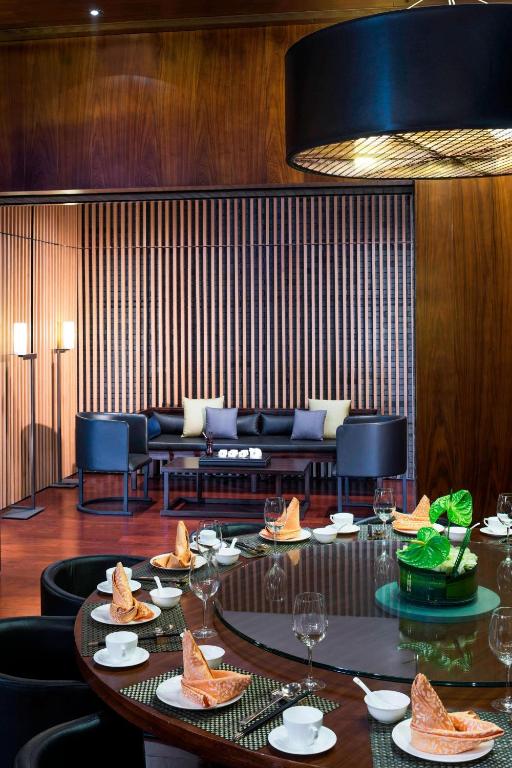
Neri&Hu also designed the hotel’s three restaurants, giving each a different architectural narrative. The freestanding Chinese restaurant is conceived almost entirely as an enormous roof hovering just above the ground. Inside, exposed roof construction and brick private-dining volumes reinforce the sense of inhabiting the architecture itself. The Japanese restaurant takes inspiration from Kabuki theatre. Circulation routes are raised around a sunken dining area, turning servers and passing guests into performers surrounding the audience. In the all-day restaurant, glass-enclosed dining and buffet spaces transform food and dining into another form of display.
History Without Imitation
What makes The Westin Xi’an remarkable is how little it relies on obvious historic decoration. Neri&Hu take recognisable elements — courtyards, pitched roofs, red architectural details, thick walls, water and gardens — and reduce them to their underlying ideas. The result respects Xi’an without turning its history into a theme. For a 300-room international chain hotel, that architectural conviction is particularly unexpected. The Westin name may be on the door, but the DNA of this place belongs unmistakably to Xi’an — and Neri&Hu.