The Tokyo EDITION, Ginza, Tokyo, Japan
Kengo Kuma and Ian Schrager turn Ginza intimacy into a seductive new expression of Japanese luxury
Why DNA Hotels Loves It
● Kengo Kuma gives EDITION’s familiar minimalism a distinctly Ginza identity, using dark walnut, Japanese latticework, woven details, and a deliberately intimate residential scale.
● With just 86 rooms and suites, this is the quieter, sexier sibling of Tokyo EDITION Toranomon—less skyscraper spectacle, more private club hidden among Ginza’s backstreets.
● From the eccentric Punch Room to Sophie at EDITION and the greenery-wrapped rooftop natural wine bar, the social spaces give the hotel personality far beyond its guestrooms.
The Other Side of Ginza
Forget the monumental flagships lining Chuo-dori. Kengo Kuma found his inspiration for The Tokyo EDITION, Ginza in the streets behind them. Ginza’s uradori form an intimate network of narrow lanes filled with tiny restaurants, bars, galleries, and generations-old businesses. It is here, rather than among the district’s glossy luxury façades, that Kuma discovered the character he wanted the hotel to capture. The result is deliberately human in scale. Spread across 14 floors but containing only 86 rooms and suites, EDITION Ginza feels closer to a sophisticated private residence than a conventional luxury hotel. Even the entrance is discreet. For a brand created by Ian Schrager, the man who has spent a career understanding the theatrical possibilities of arrival, that understatement feels particularly confident.
Kengo Kuma Weaves Ginza Together
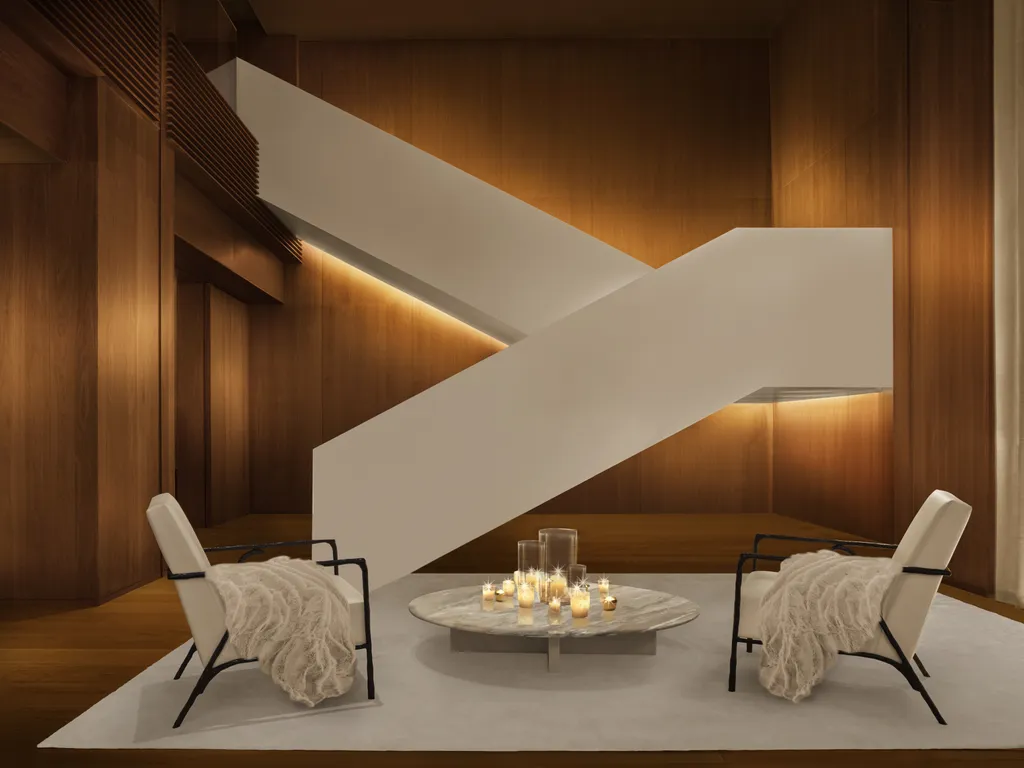
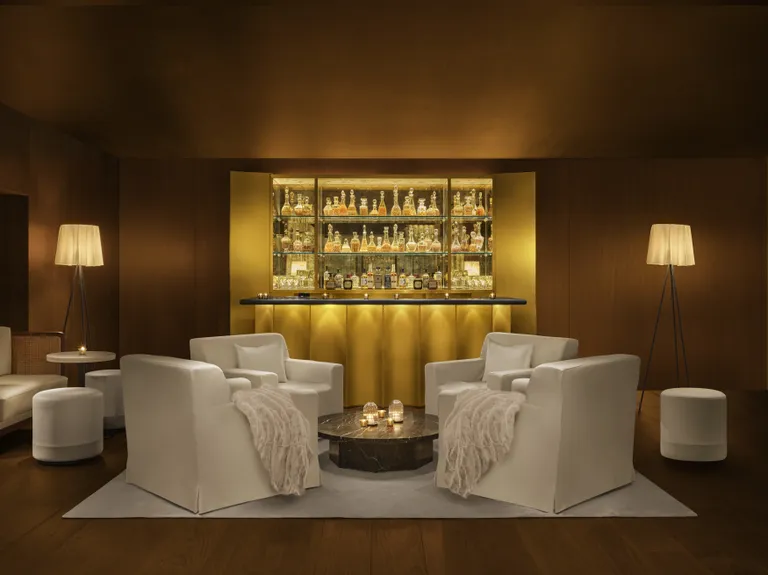
Outside, Kuma translates Ginza’s history into architecture. Extruded aluminium elements in three tones criss-cross the façade like irregular threads, referencing the textile businesses once important to the district. Vertical planting interrupts the geometry, while the apparently random composition gives the building something closer to the irregularity of handwoven fabric than an industrial curtain wall. Inside, the palette becomes richer and more sensual. Deep walnut replaces the pale oak Kuma used at EDITION Toranomon. Ivory and lavender upholstery softens the darkness, a scalloped gold bar provides just enough glamour, and a dramatic white scissor staircase slices through the otherwise restrained lobby. Kuma describes the atmosphere as “warm, intimate and spiritual.” It feels unmistakably EDITION, but the architecture has been recalibrated for Ginza.
86 Rooms in Walnut and Ivory
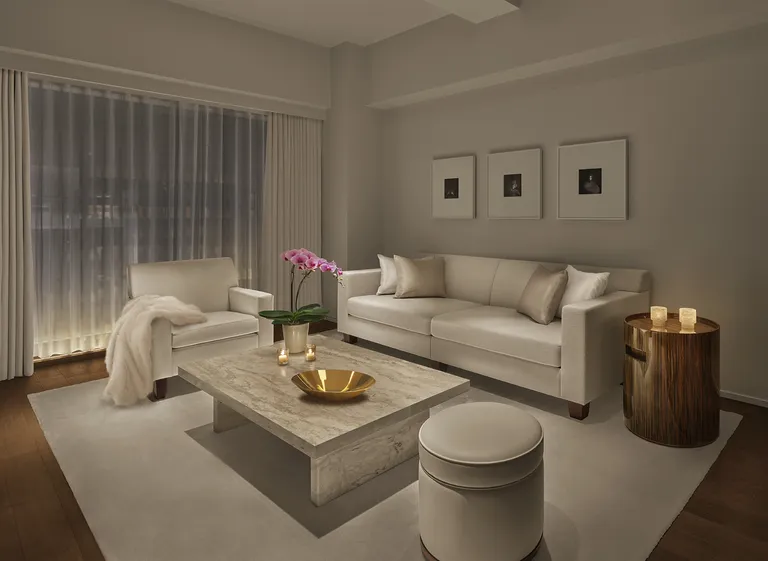
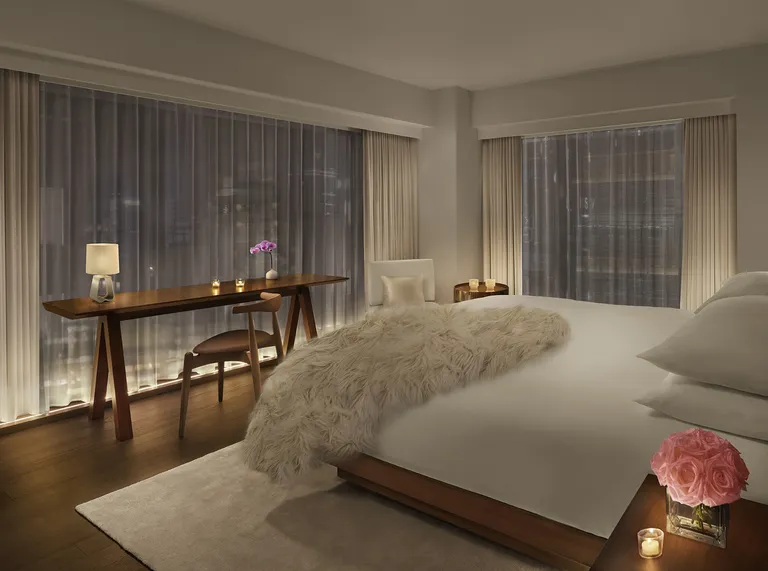
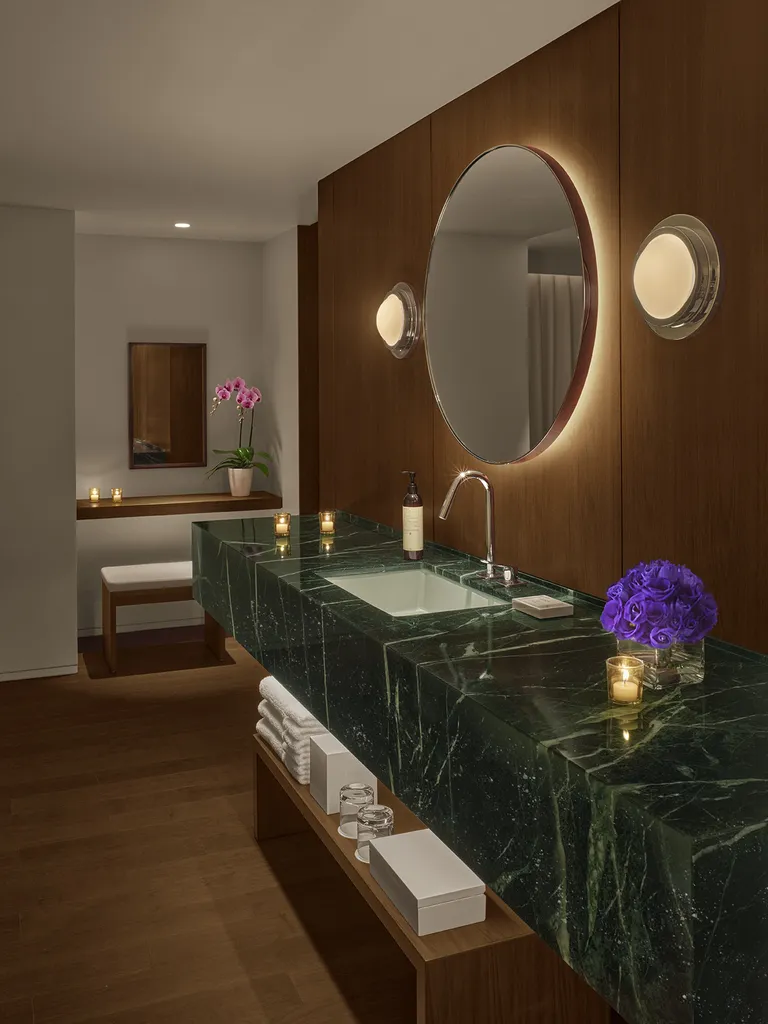
The guestrooms continue that darker, residential mood. Walnut panelling wraps the spaces, contrasted by ivory textiles, cream leather, travertine, faux-fur throws, and monochrome photography by Japanese artists. The palette is restrained without becoming austere; tactile materials do much of the work. Bathrooms introduce another layer of drama through dark green marble, circular mirrors, and, in selected suites, freestanding white bathtubs. And then there are the windows. Unlike Toranomon, where Tokyo becomes a vast aerial panorama, Ginza keeps you close to the city. Look outside and you see rooftops, narrow streets, neighbouring buildings, and people moving through the district below. The view is less spectacular—and arguably much more interesting.
A Japanese Home Meets a London Club
The Punch Room may be the hotel’s most unexpected space. Kuma wraps it in koshi-inspired timber latticework, borrowing an architectural vocabulary traditionally associated with Japanese houses and shops. Ian Schrager’s EDITION world then takes it somewhere else entirely. Leather Chesterfields, electric-blue sofas, lantern-like lighting, and silver punch bowls introduce the eccentricity of a slightly louche London members’ club. It shouldn’t necessarily work. It does. And that cultural friction is precisely what makes the room memorable: Japanese architectural references without pastiche, British clubland without becoming themed, all filtered through EDITION’s instinct for creating somewhere people actually want to spend the evening.
From Sophie to the Roof
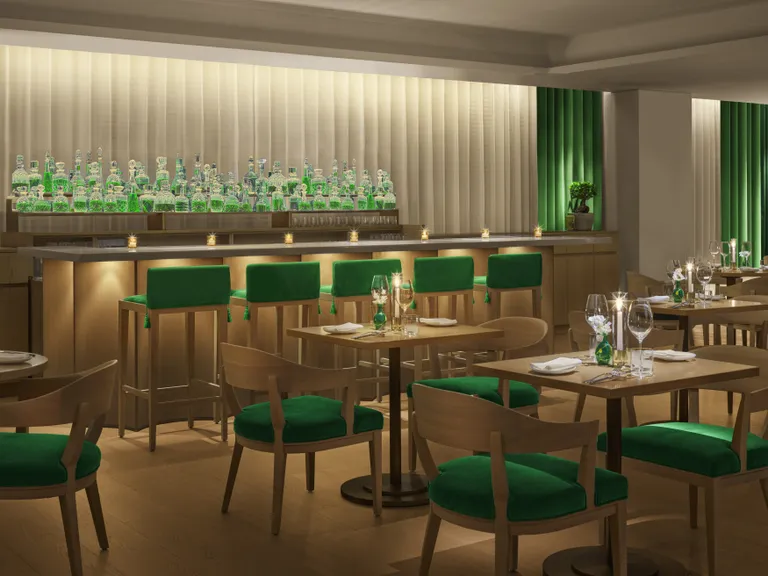
Upstairs, the mood changes again. Sophie at EDITION is brighter and more playful, with whites, pale timber, citrus-toned seating, plants, and walls of Tokyo street photography. Its modern brasserie menu looks locally rather than internationally for its identity, incorporating ingredients including Tokyo-made miso and soy sauce, locally produced burrata, and even honey harvested from Ginza rooftops. Above it, The Roof provides one of the hotel’s loveliest surprises. Rather than chasing the biggest possible skyline spectacle, the greenery-filled terrace creates a protected garden above Ginza, with natural wine, open sky, and enough enclosure to maintain the intimacy found throughout the hotel. In one of Tokyo’s most intensely urban districts, Kuma creates a small pocket where you can feel the breeze.
Why It Works
The Tokyo EDITION, Ginza succeeds because it doesn’t try to outdo its Toranomon sibling. Kengo Kuma instead responds to the smaller scale and hidden life of Ginza’s uradori, exchanging pale oak and skyscraper drama for walnut, woven textures, intimate rooms, and a much closer relationship with the street. Ian Schrager’s instinct for social theatre adds the counterpoint: a gold lobby bar, the wonderfully eccentric Punch Room, Sophie, and a rooftop made for natural wine after dark. With only 86 rooms, the whole thing feels unusually personal for a major luxury brand. This is EDITION at its most tightly edited—warm, sensual, sophisticated, and completely at home in Ginza.