Treehotel – Harads, Swedish Lapland
Eight extraordinary treehouses turn a pine forest near the Arctic Circle into an open-air gallery of Scandinavian architecture.
Why DNA Hotels Loves It
● One of the original icons of experiential hotel design, where each treehouse is a completely different architectural experiment rather than another variation on the same room.
● A remarkable roll call of Scandinavian architects, from Tham & Videgård and Snøhetta to BIG, Bjarke Ingels Group, has created everything from a mirrored cube to a UFO and a sphere covered in birdhouses.
● Despite its international design credentials, Treehotel remains deeply rooted in Harads and Swedish Lapland, with forest, silence, local food and the changing Arctic seasons at the heart of the experience.
A Hotel Hidden in the Trees
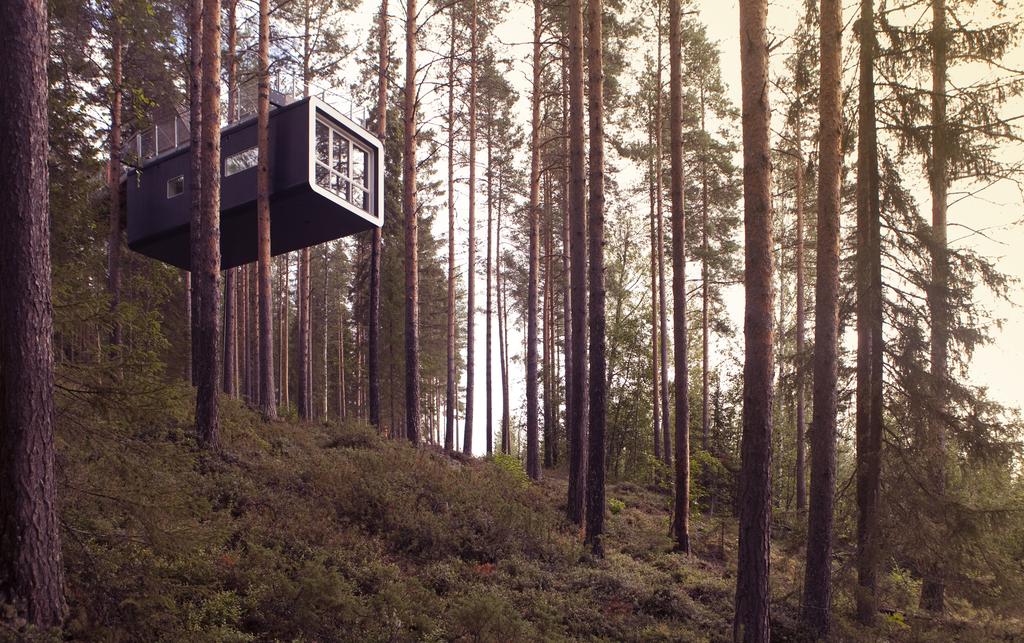
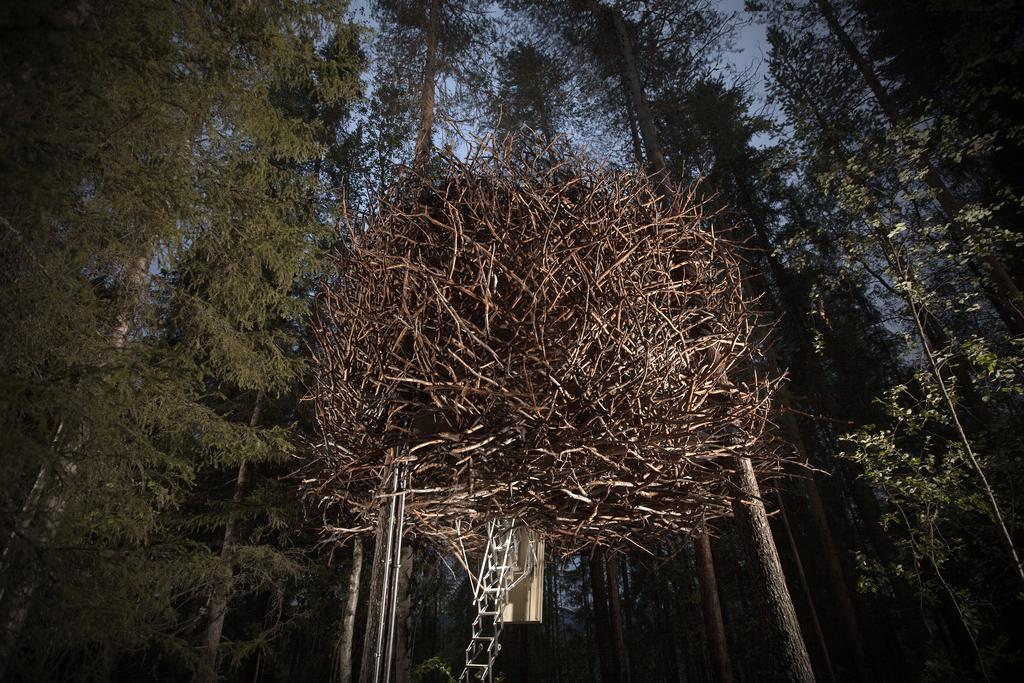
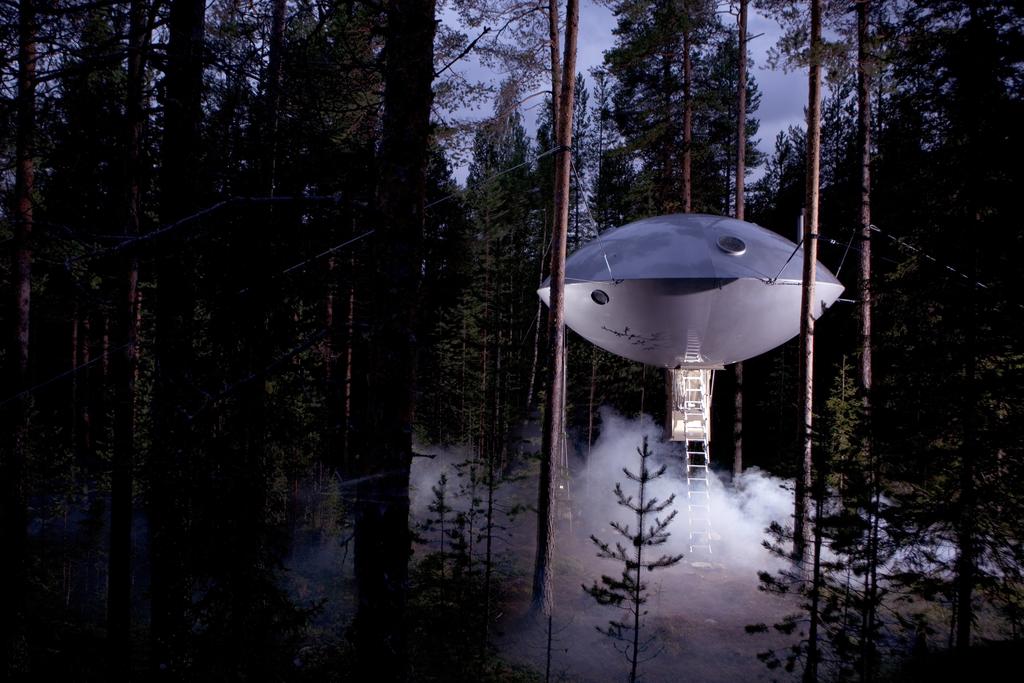
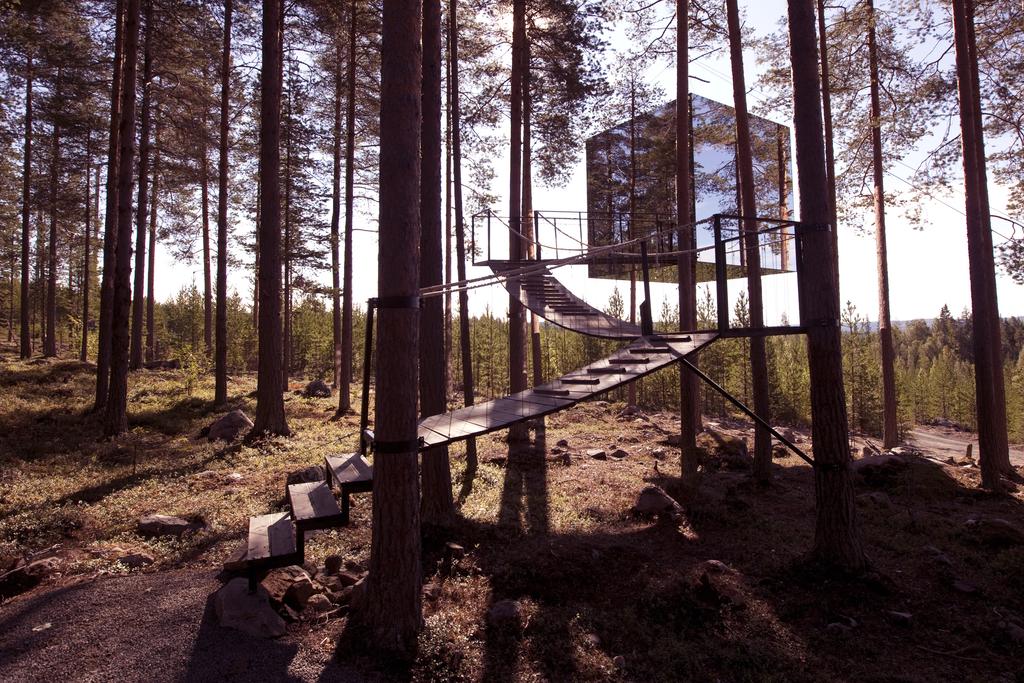
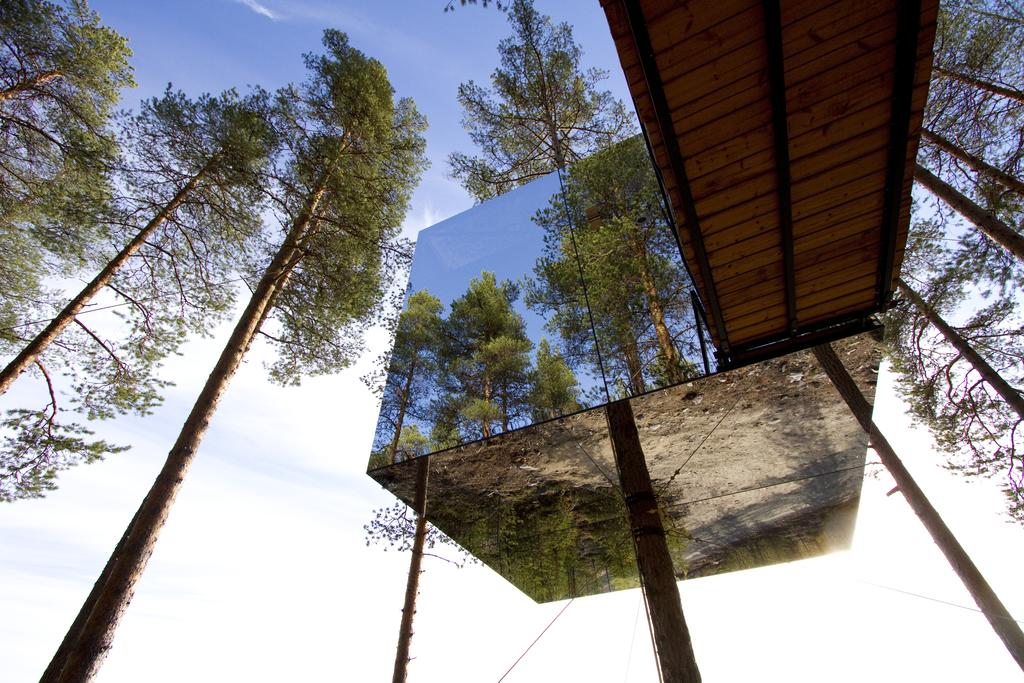
A mirrored cube disappears between pine trunks. A giant bird’s nest hangs among the branches. Nearby, something resembling a flying saucer appears to have made an emergency landing in the forest. Welcome to Treehotel. Set outside the tiny village of Harads in Swedish Lapland, just south of the Arctic Circle, Treehotel took one of childhood’s simplest fantasies — sleeping in a treehouse — and handed it to some of Scandinavia’s most interesting architects. The result isn’t really one hotel at all. It is eight individual pieces of architecture suspended within the forest, each proposing a completely different relationship between guest, building and landscape.
Eight Rooms, Eight Architectural Ideas
Treehotel began with owners Britta and Kent Lindvall, whose 1930s guesthouse became the unlikely starting point for an architectural experiment inspired in part by Jonas Selberg Augustsén’s film The Tree Lover. Instead of asking one architect to create a collection of identical cabins, they invited different designers to interpret the idea of living among trees.
- Mirrorcube – a near-invisible retreat by Tham & Videgård
- The Bird’s Nest, UFO & sauna – fantastical forms by Bertil Harström
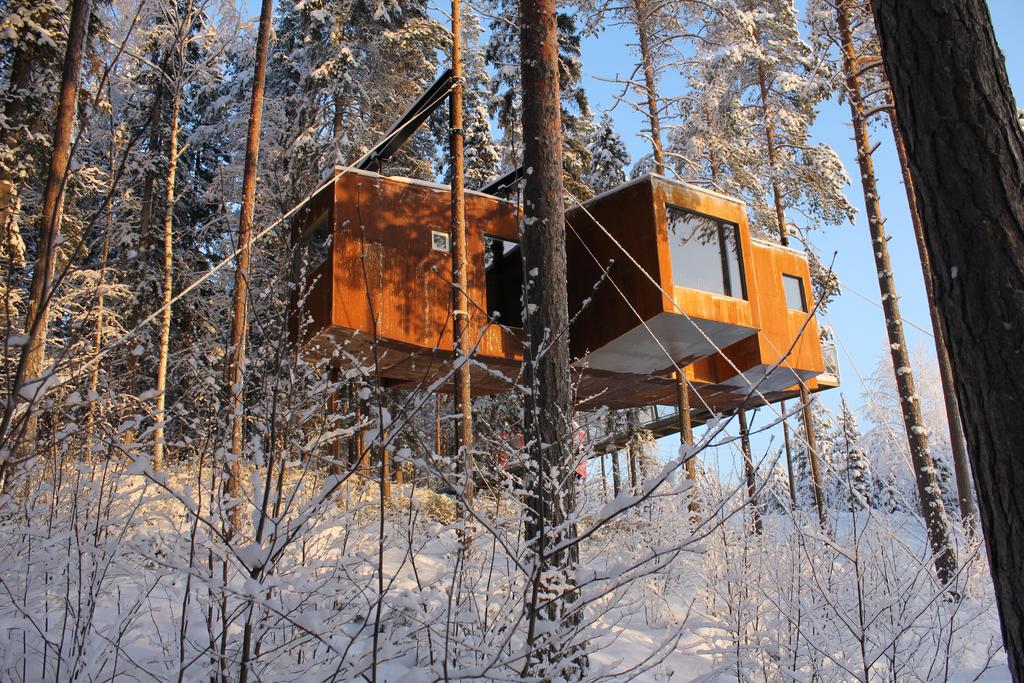
- The Cabin – a sleek hideout by Mårten & Gustav Cyrén
- The Dragonfly – part retreat, part conference space by Rintala Eggertsson
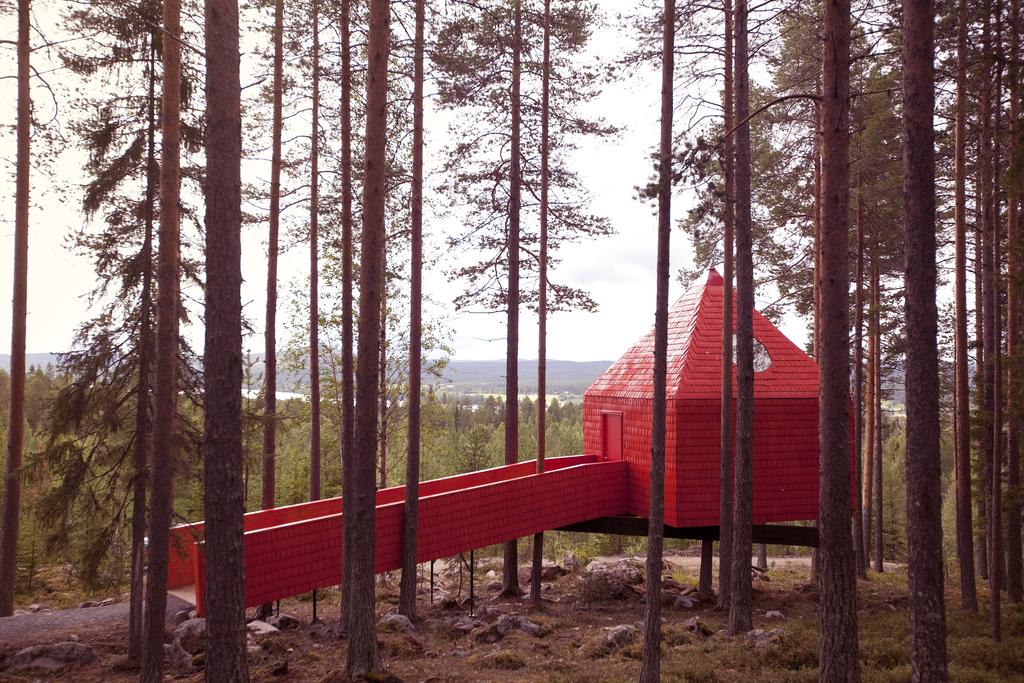
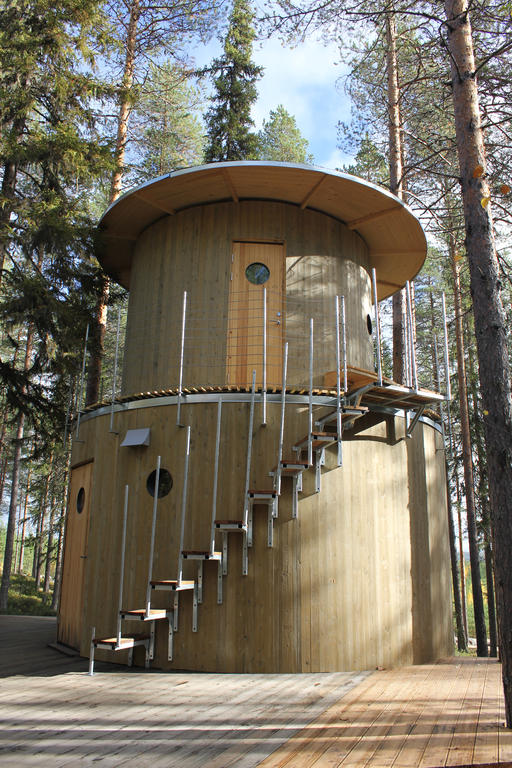
- The Blue Cone – playful minimalism by sandell sandberg
- The 7th Room – Snøhetta’s signature synthesis of modernity and nature
- Biosphere – where nature and sustainability unite by BIG, Bjarke Ingels Group
Every one is different. And that’s precisely the point.
Snøhetta Above the Canopy
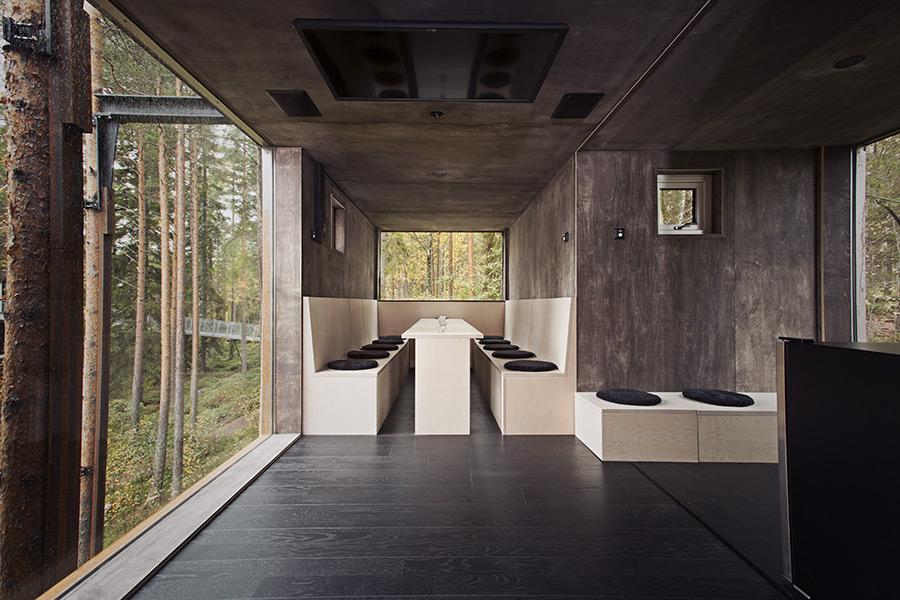
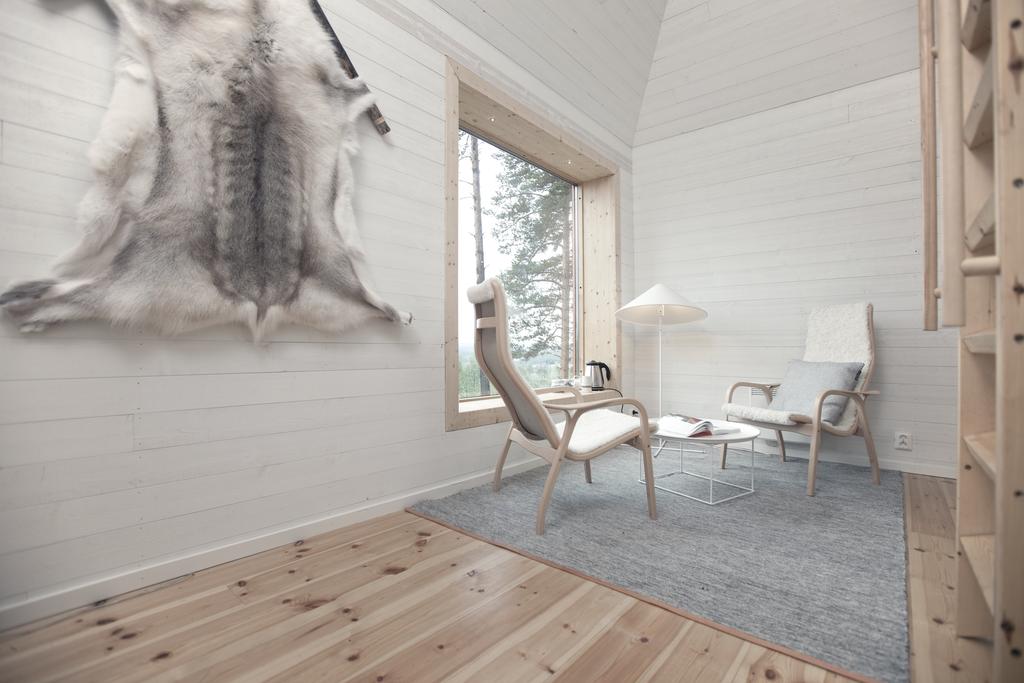
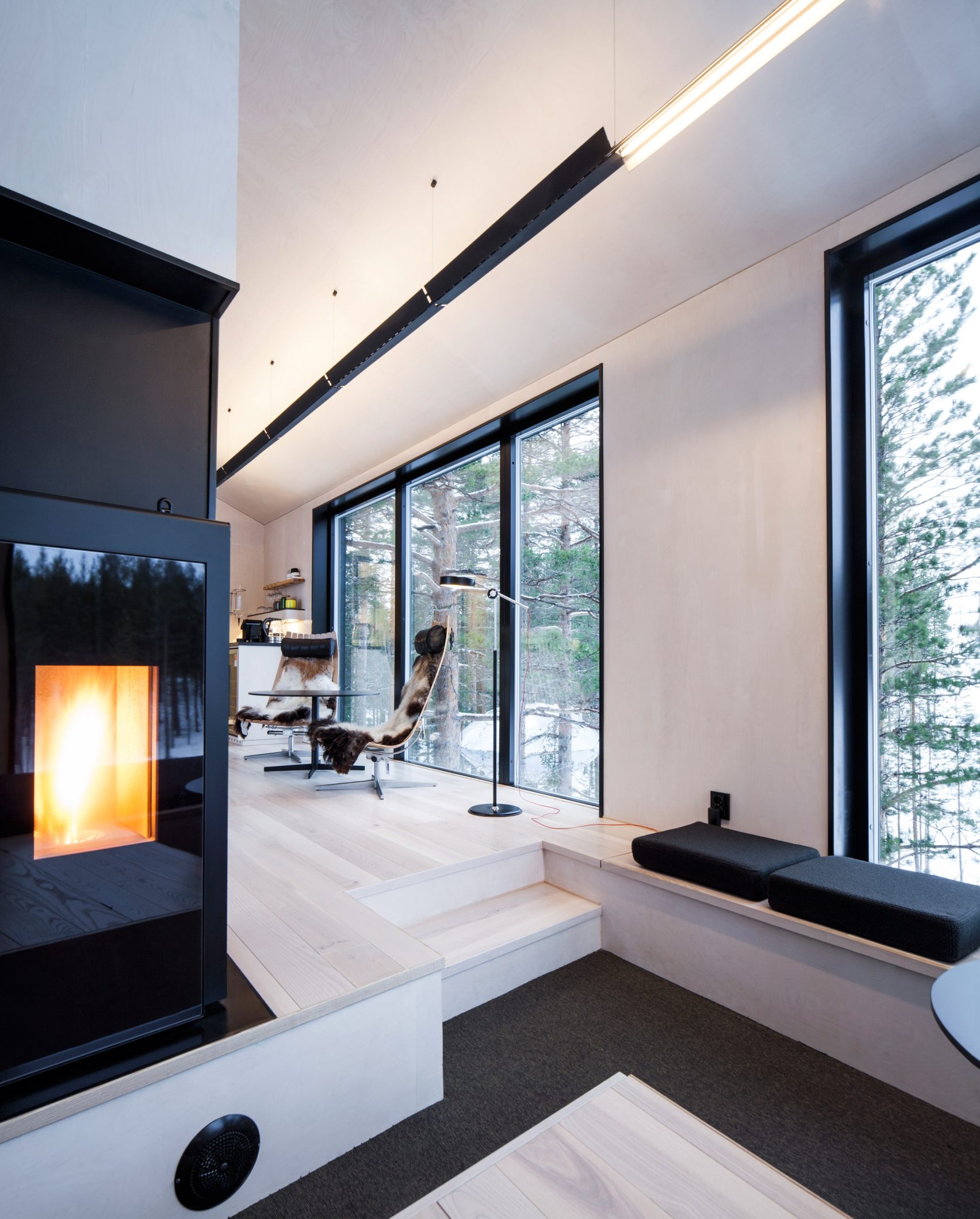
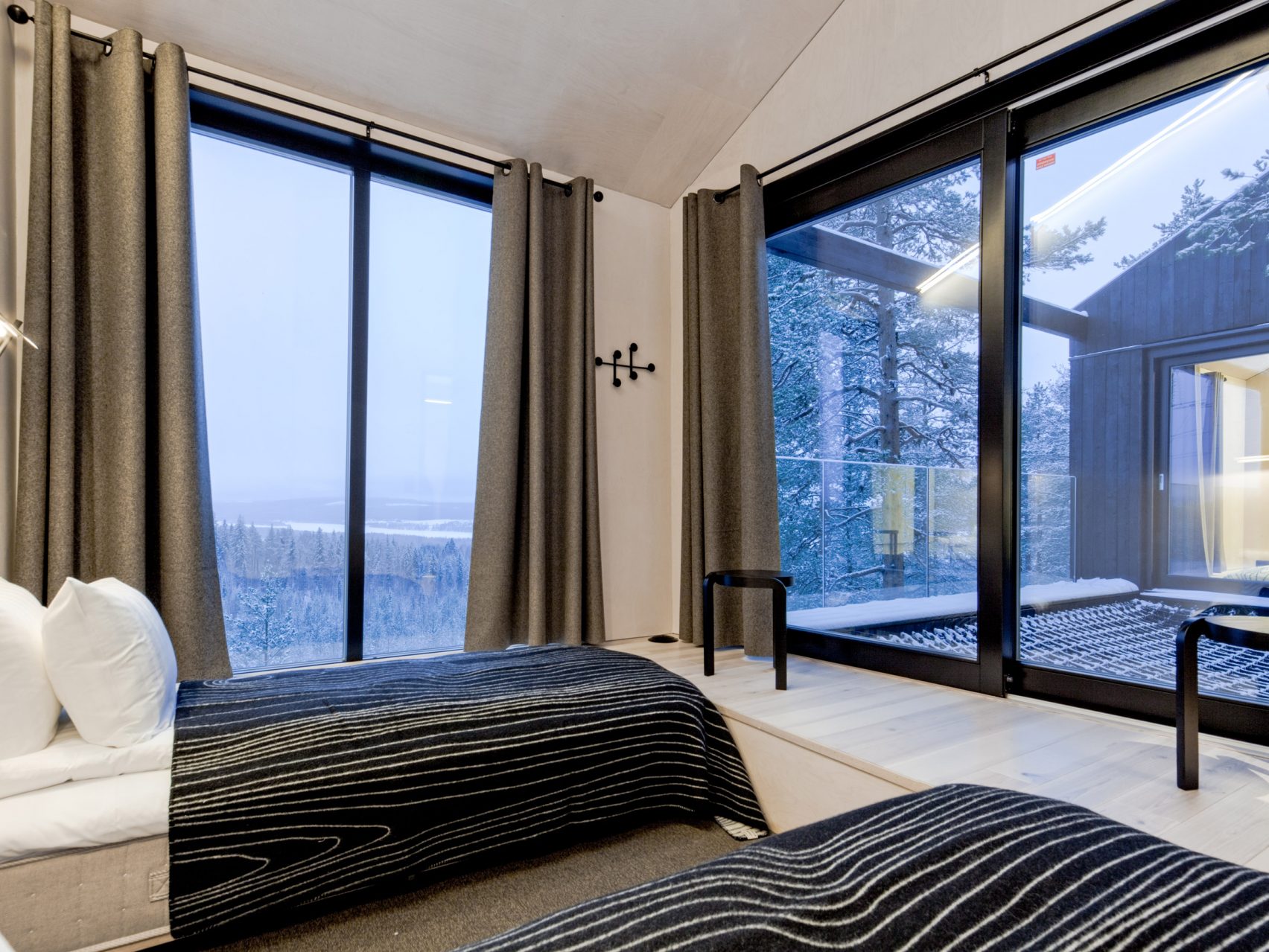
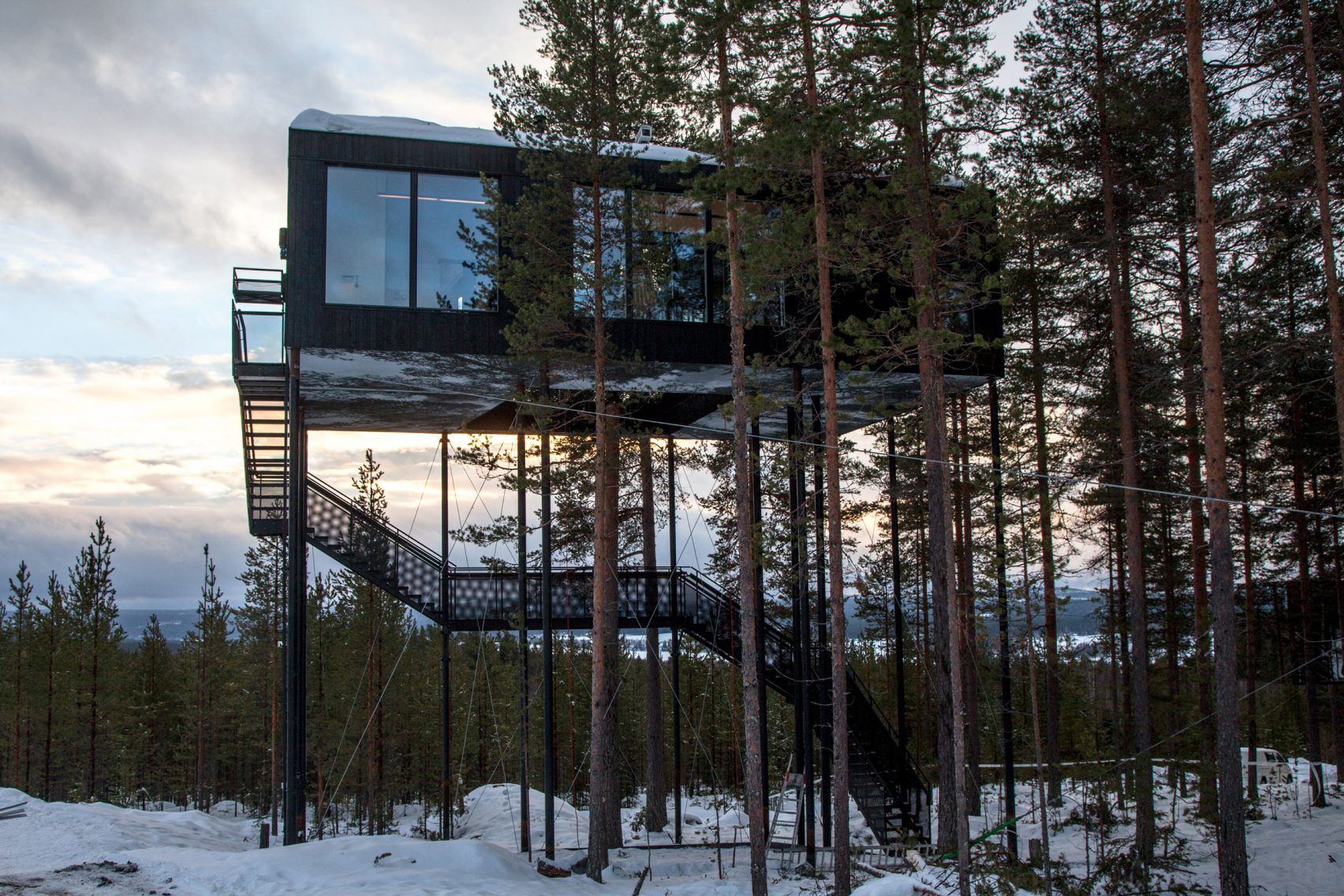
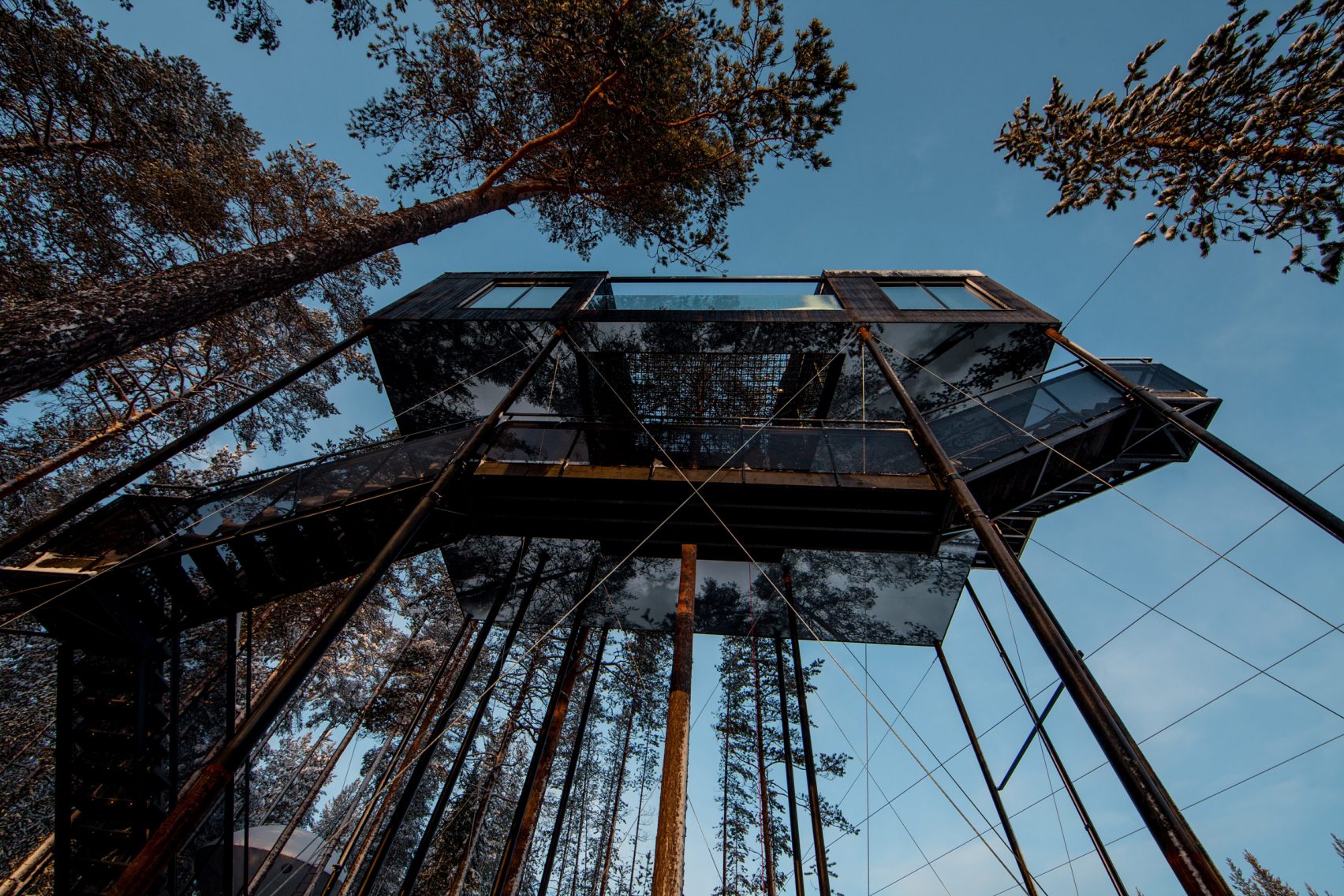
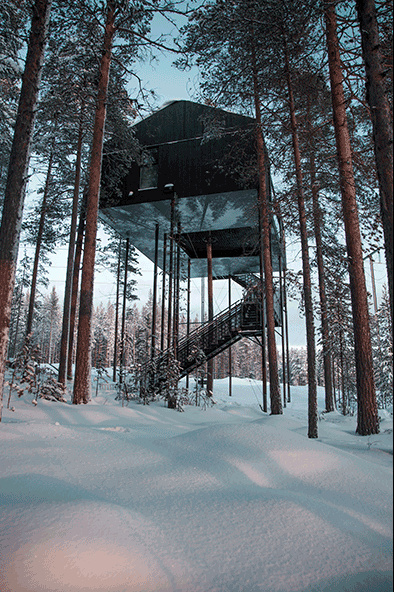
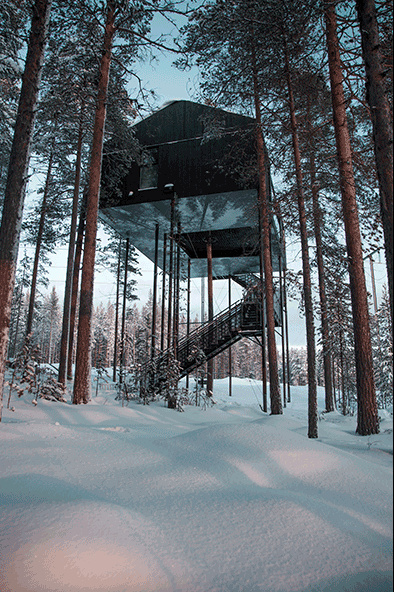
Treehotel’s architectural ambitions became even clearer with the arrival of The 7th Room by Snøhetta. Raised high among the pines, the dark timber structure almost seems to float above the forest. Inside, pale Scandinavian timber, large windows and carefully chosen furniture — including Hans Brattrud’s classic Scandia chair — keep attention firmly directed towards the landscape. Its most memorable feature is outside. A large netted terrace stretches between the trees, allowing guests to lie suspended above the forest floor with a pine trunk rising straight through it. Architecture becomes viewpoint, playground and connection to nature simultaneously.
BIG Builds for the Birds
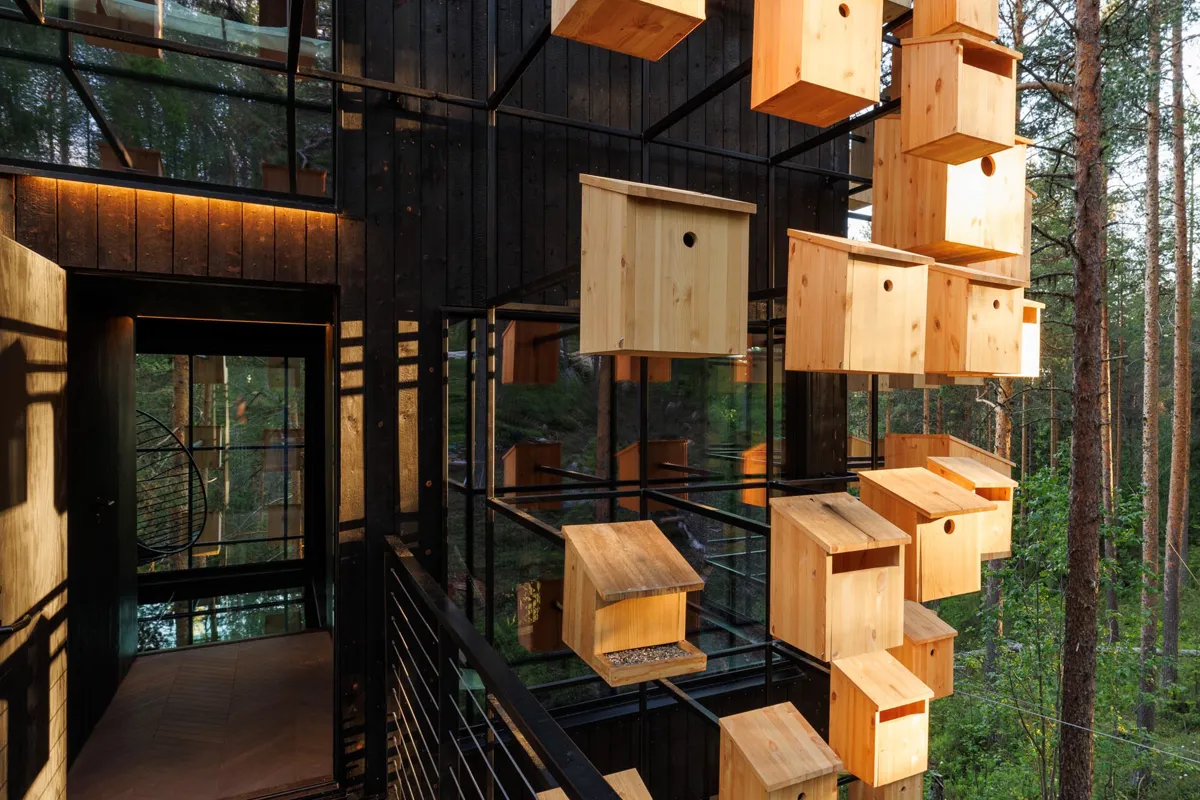
The latest addition pushes the idea somewhere else again. Designed by BIG – Bjarke Ingels Group, Biosphere is surrounded by hundreds of birdhouses, creating a spherical cloud around the accommodation. From a distance, the room appears almost to dissolve behind them. The concept isn’t merely decorative. By integrating nesting spaces into the architecture, Biosphere turns the presence of local birdlife into part of the building itself — an intriguing reversal in which the human guests occupy the centre while the forest’s smaller residents take over the façade. After the Mirrorcube, UFO and Bird’s Nest, Treehotel had somehow found yet another answer to the same question: How do you build a room in a forest without treating the forest simply as scenery?
Luxury Without the Usual Luxury
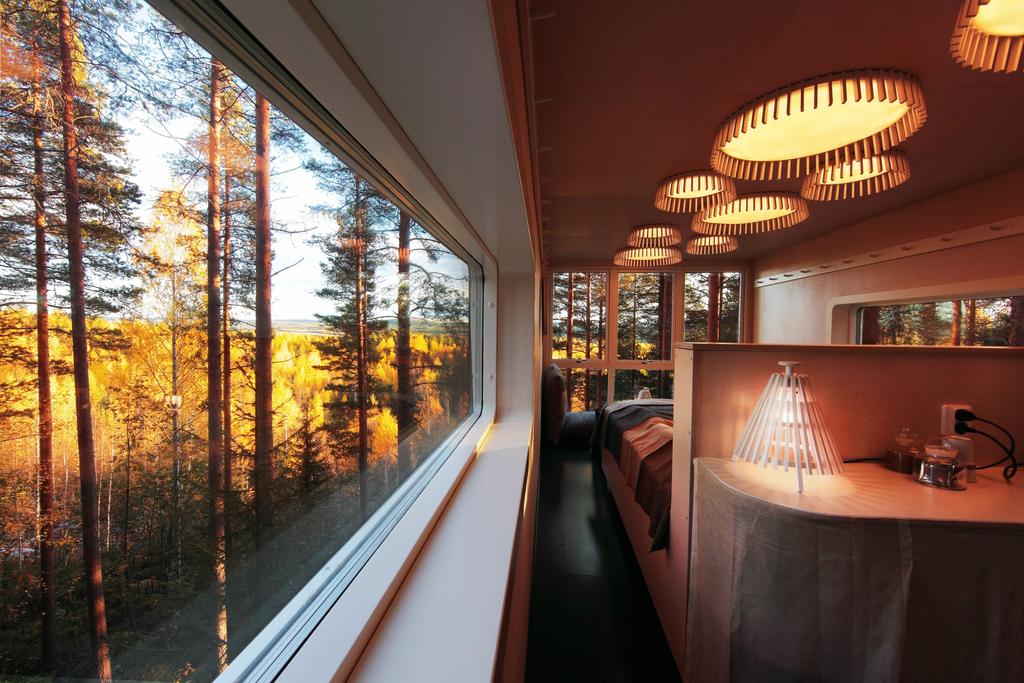
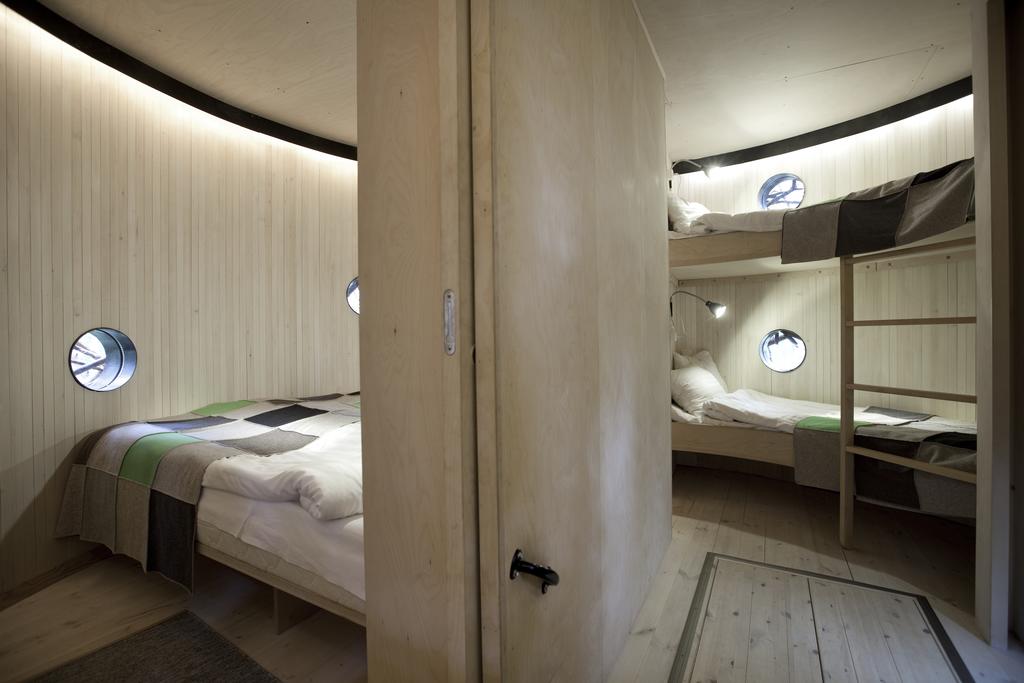
Treehotel’s sophistication comes with deliberate limitations. Some treehouses have no conventional shower. Space can be compact. Getting to your room may involve stairs, ramps or walking through snow. But conventional hotel luxury would almost miss the point. Instead, interiors use Scandinavian restraint to make the architecture and surroundings dominant. Timber, simple furniture, warm textiles and carefully framed windows provide comfort without competing with what lies outside. There is a woodland sauna and an outdoor hot tub, but no sprawling wellness centre. This is a place where silence, snow and forest are the amenities.
Britta’s Guesthouse
Back on the ground, Britta’s Guesthouse provides Treehotel with something its futuristic architecture might otherwise lack: a sense of home. Its warm, slightly nostalgic interiors are almost comically different from the architectural experiments outside. This is where guests check in, gather and eat, with mismatched crockery and an atmosphere closer to a family pension than an international design destination. The restaurant looks towards northern Sweden for inspiration, with ingredients such as reindeer, moose, local fish, berries and Arctic herbs appearing on the menu. Meals can also move outdoors, including dinners around a fire in the forest — because at Treehotel, the distinction between hotel and landscape is intentionally thin.
Two Completely Different Laplands
Come in winter and the forest becomes almost monochrome. Snow muffles the landscape, daylight contracts and evenings are spent searching for the Northern Lights, dog sledding, snowmobiling or returning through the darkness towards the glow of your treehouse. Summer changes everything. Long days become almost endless beneath the midnight sun, forests turn intensely green and the Lule River Valley opens up for hiking, cycling and exploring. The architecture remains the same. The hotel around it does not.
Why It Works
Treehotel could easily have become an architectural gimmick. It hasn’t. The UFO is funny. The Bird’s Nest is fantastical. The Mirrorcube is spectacularly photogenic. But behind those instantly recognisable images lies a serious collection of contemporary Scandinavian architecture exploring the same idea from radically different perspectives. And then there is the setting. Remove the forest and Treehotel loses its meaning. The trees aren’t landscaping around the architecture. They are part of the architecture. That is why, years after opening, Treehotel still feels original. It doesn’t ask you merely to look at great design. It lets you climb into it, close the door and spend the night among the pines.