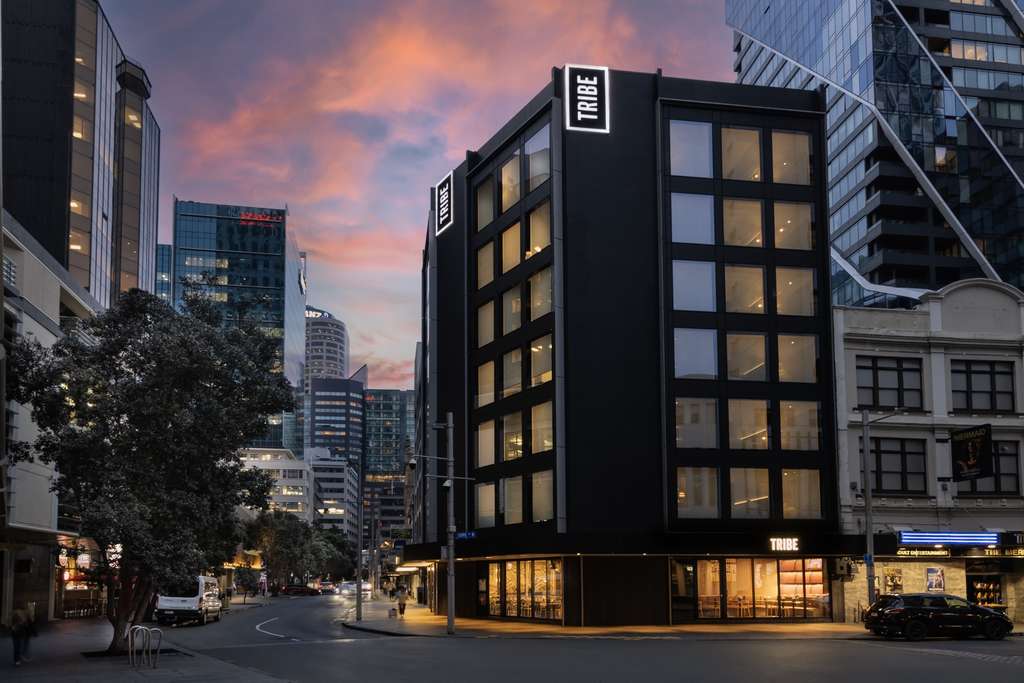
TRIBE Auckland Fort Street, New Zealand
Compact rooms, bold design and big-city energy at an accessible price point.
Why DNA Hotels Loves It
● TRIBE’s “everything you need, nothing you don’t” philosophy turns compact rooms into sharp, design-conscious urban spaces without the boutique-hotel price tag.
● A lively ground floor shifts the emphasis from private room to shared experience, with social spaces, a bar and Sienna restaurant at the centre of the action.
● Its downtown location puts Auckland’s waterfront, Britomart and ferries within easy reach — exactly where a contemporary city hotel should be.
Small Footprint, Big Ambition
Luxury used to mean more. More square metres. More marble. More things waiting in the room that nobody actually needed. TRIBE Auckland Fort Street takes the opposite approach. The first New Zealand address for the Australian-born TRIBE brand pares the contemporary hotel back to what matters: good design, a great bed, smart technology, social spaces and a location that lets you get straight into the city. With just 60 rooms, this is a surprisingly compact addition to Auckland’s hotel scene — and one with a clear point of view.
Everything You Need
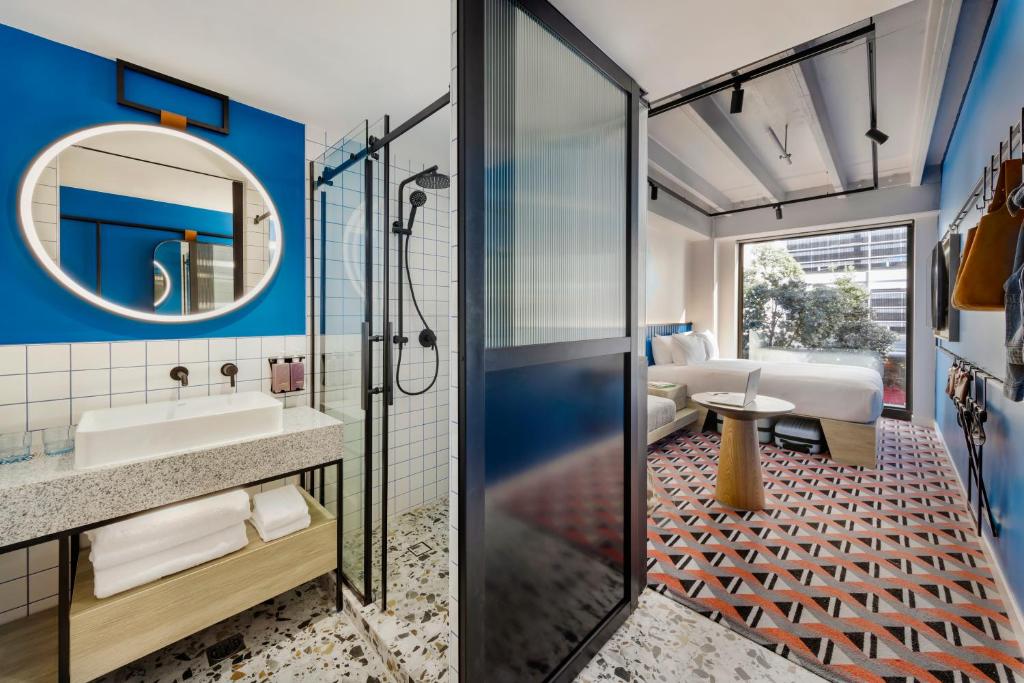
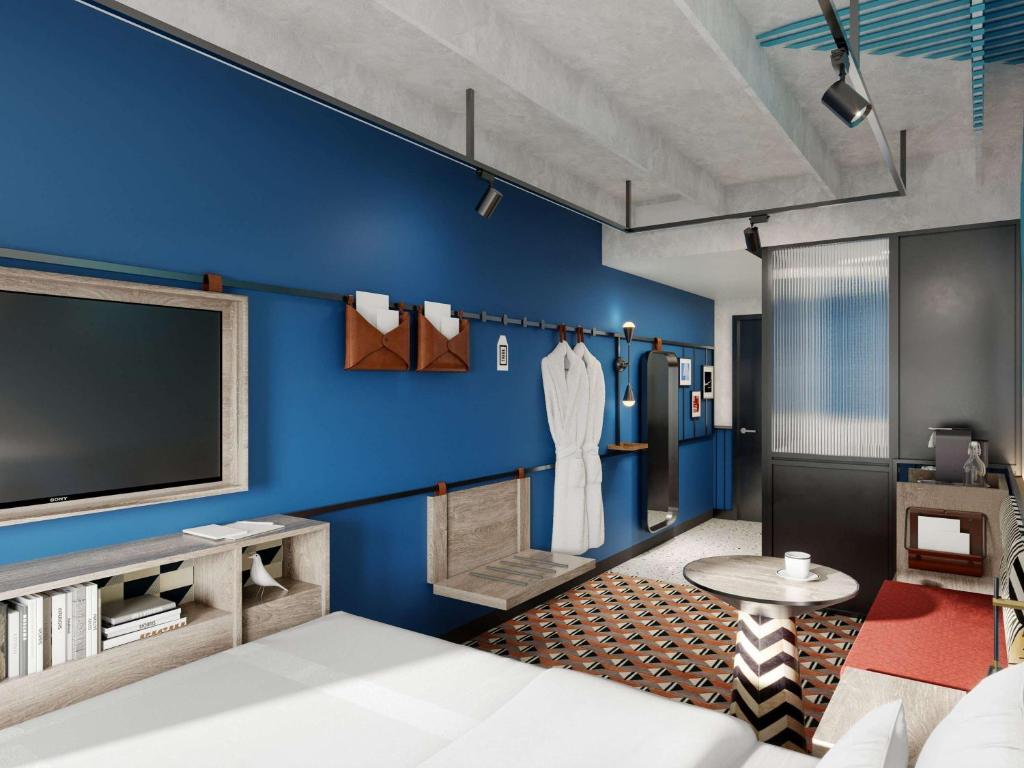
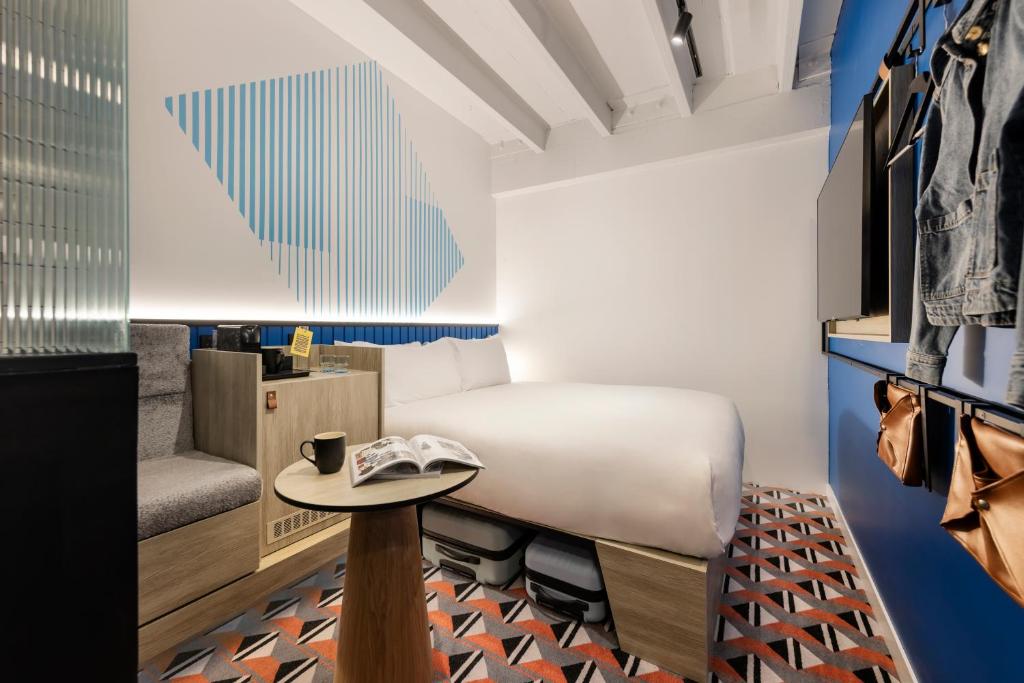
TRIBE was founded in Australia in 2017 by Mark and Melissa Peters around a deceptively simple idea: design-led hotels shouldn’t automatically come with luxury-hotel prices. That thinking shapes the rooms in Auckland. They’re compact, but deliberately so. Furniture is streamlined, storage is integrated and lighting is layered, leaving little room for the superfluous. Instead of trying to make a small room pretend to be a suite, TRIBE embraces its proportions. The result feels more urban studio than conventional hotel room. There is colour and personality, but also discipline. Every centimetre has a job.
Come Downstairs
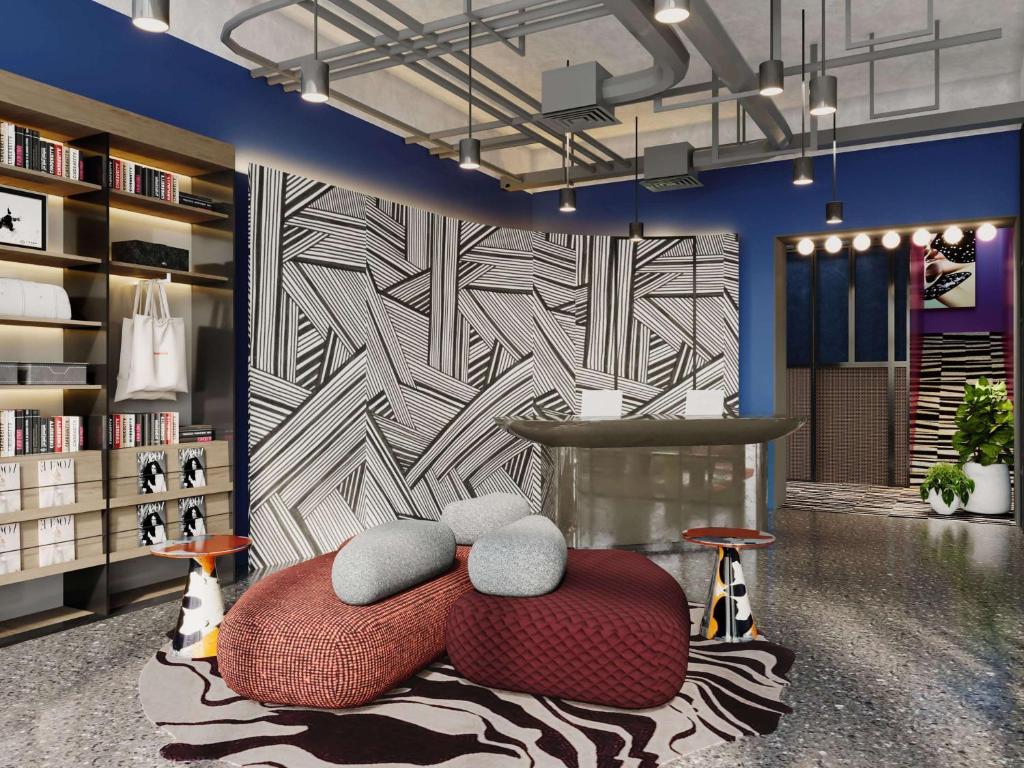
The trade-off for smaller bedrooms is a hotel that puts much more emphasis on life beyond them. Communal seating, statement furniture and playful design turn the lobby into a social space rather than somewhere to hurry through after check-in. You can work here, meet someone, have a drink or simply watch Auckland pass by. It is an approach increasingly familiar in contemporary hospitality, but particularly convincing at TRIBE: spend less space on corridors and oversized bedrooms, and more on the places where people actually meet. At Sienna, the hotel’s restaurant, the mood continues with relaxed So-Cal-inspired food and drinks, while a grab-and-go offer caters to guests who would rather take breakfast or lunch out into the city.
Auckland Outside the Door
And this is a hotel designed to make you leave it. Fort Street places TRIBE between downtown Auckland and the waterfront, within easy reach of Britomart, Commercial Bay, Viaduct Harbour and the ferry terminal. That last one matters. Auckland is a city whose geography only really makes sense once you acknowledge the water. From here, a ferry can take you away from the towers towards beaches, islands and the vineyards of Waiheke — turning a very urban hotel into an unexpectedly useful base for exploring beyond the CBD.
Democratic Design
TRIBE belongs to a generation of hotel brands questioning whether good hospitality really requires all the traditional trappings of luxury. Its answer is emphatically no. Instead, money and attention are concentrated on the things guests notice: mattresses, showers, lighting, technology, furniture, food, coffee and atmosphere. It is democratic design rather than diluted luxury. And that distinction is important. TRIBE isn’t pretending to be a five-star hotel for less money. It is proposing a different hierarchy altogether — one where thoughtful design can be accessible, bedrooms can be small and the lobby can matter just as much as the room.
Why It Works
There is something refreshingly straightforward about TRIBE Auckland Fort Street. It knows what it is. You won’t find sprawling suites, grand staircases or hushed formality. Instead, there are 60 efficiently designed rooms, energetic communal spaces and downtown Auckland waiting outside. For travellers who would rather spend their money experiencing the city than paying for unused square metres, that equation makes considerable sense. Less hotel, perhaps. But more of what matters.