University Arms Hotel, Autograph Collection – Cambridge, England
Cambridge tradition, rewritten with wit, colour and a distinctly literary spirit.
Why DNA Hotels Loves It
● A landmark Cambridge hotel dating back to 1834, brilliantly reinvented by architect John Simpson and interior designer Martin Brudnizki.
● A wonderfully specific sense of place, from Cambridge Blue panelling and university-tie carpets to books curated by legendary Mayfair bookseller Heywood Hill.
● Parker’s Tavern, the club-like library and 192 individually detailed rooms turn the traditions of college life into a grand hotel that feels anything but stuffy.
Cambridge’s Grand Hotel Reborn
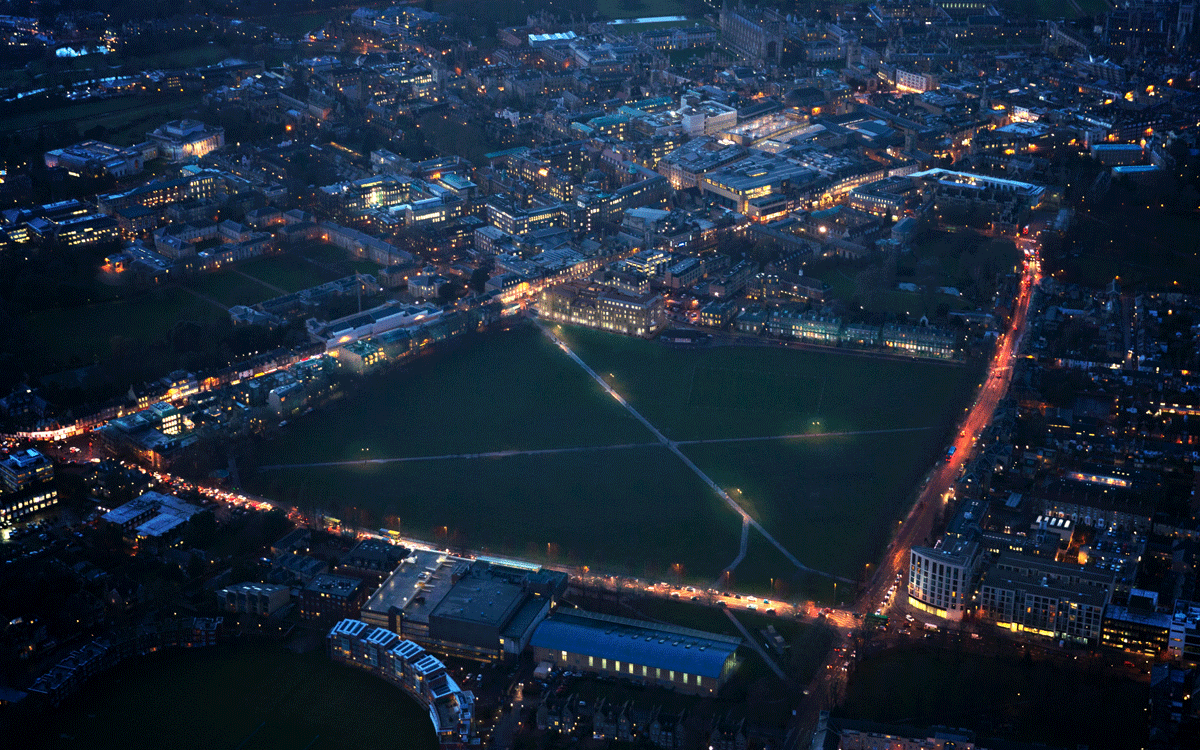
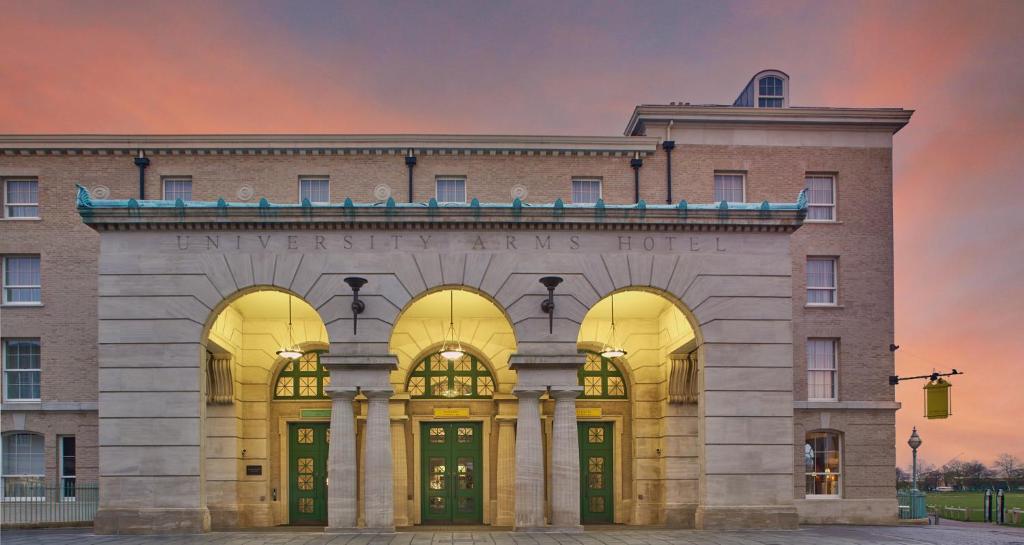
Overlooking Parker’s Piece, University Arms has been part of Cambridge life since 1834, when it opened as the city’s original hotel. After decades of alterations had diluted much of its architectural character, an £80 million, four-year transformation set out to give it back its place among the city’s landmarks. Architect John Simpson—whose work ranges from Buckingham and Kensington Palaces to several Cambridge colleges—removed unsympathetic 1960s and ’70s additions and introduced a grand neoclassical frontage and porte-cochère that look entirely at home among Cambridge’s historic architecture. Inside, Martin Brudnizki Design Studio approached the city’s academic heritage with rather more playfulness. Instead of recreating an old-fashioned university hotel, Brudnizki drew on college common rooms, libraries, dining halls, university colours and the eccentricities of English academic life. The result is unmistakably Cambridge, but never feels like a theme.
Cambridge Blue and Collegiate Wit
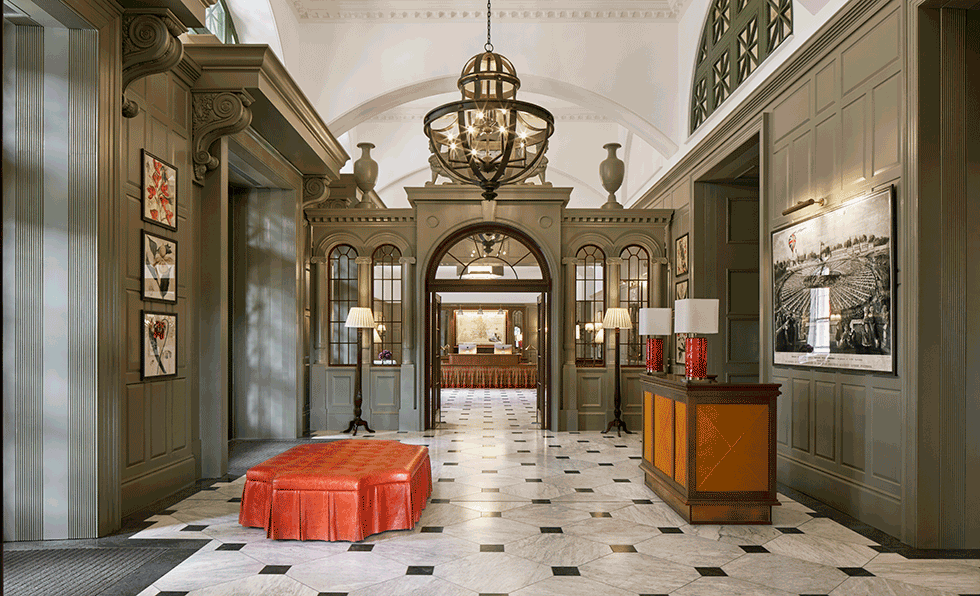
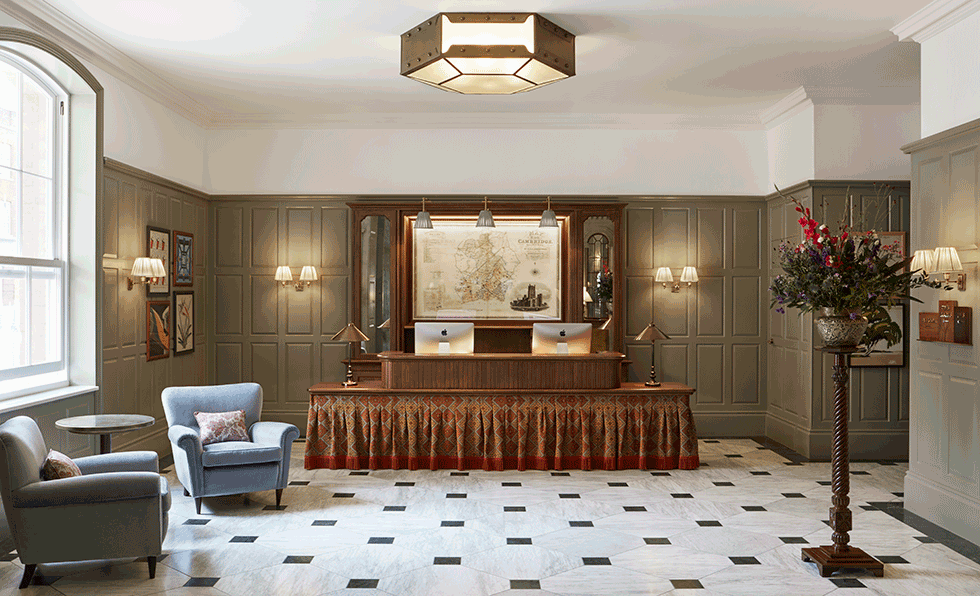
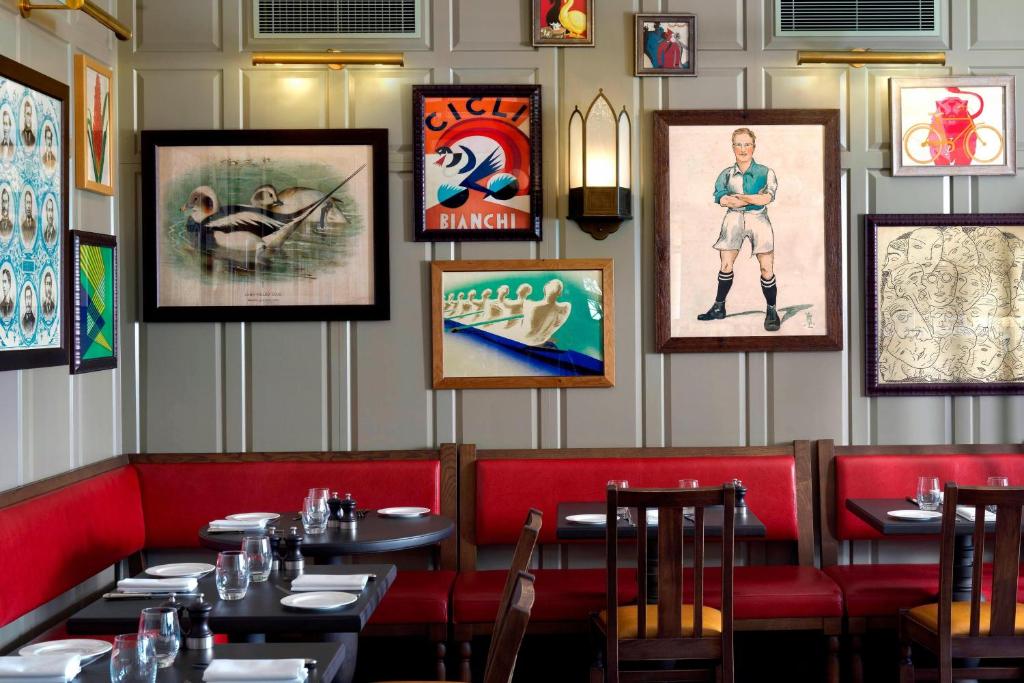
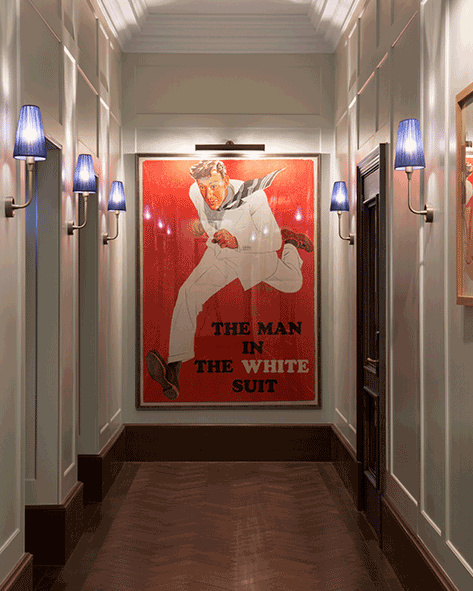
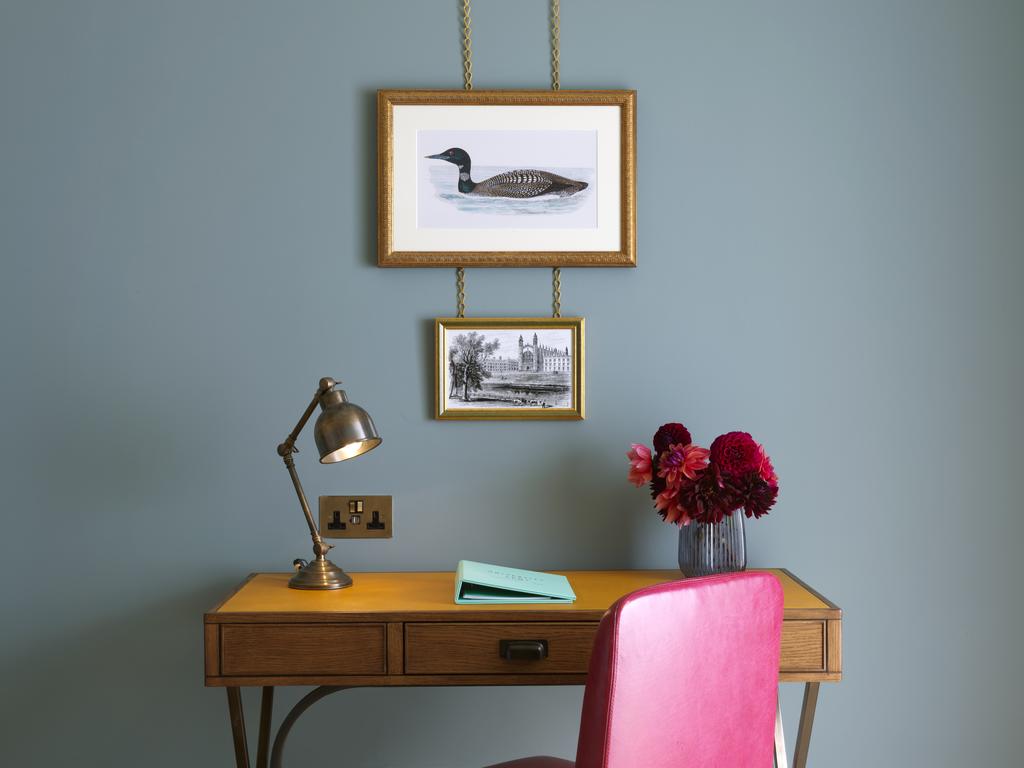
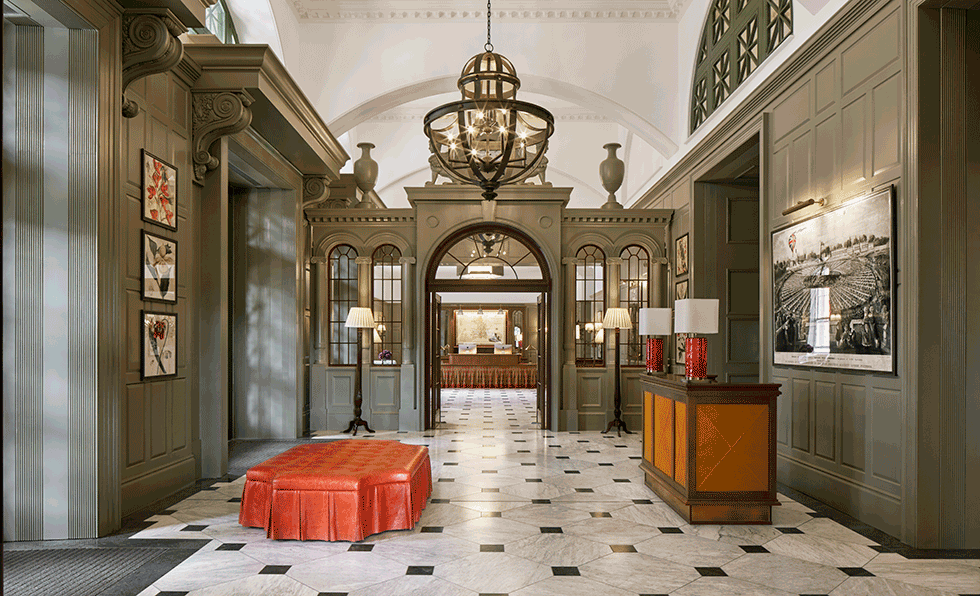
The references begin in the double-height lobby, where Cambridge Blue timber panelling meets patterned grey-and-green marble flooring, Art Deco-inspired lighting and a deliberately informal fabric-fronted reception desk. A large photograph of Winston Churchill in his famous siren suit, cigar in hand, watches over the concierge—a suitably eccentric reminder that this is a hotel comfortable enough with history not to take it too seriously. Look more closely and the details become even more specific. Corridor carpets reinterpret the broad red and navy stripes of the University of Cambridge tie, while botanical prints, historic film posters, maps, portraits and contemporary works fill the walls. Brass, dark timber and leather provide the traditional framework, enlivened with Cambridge Blue, mustard yellow, red and orange. Brudnizki describes these references as little winks rather than pastiche, and that distinction is precisely why the interiors work.
A Hotel That Takes Books Seriously
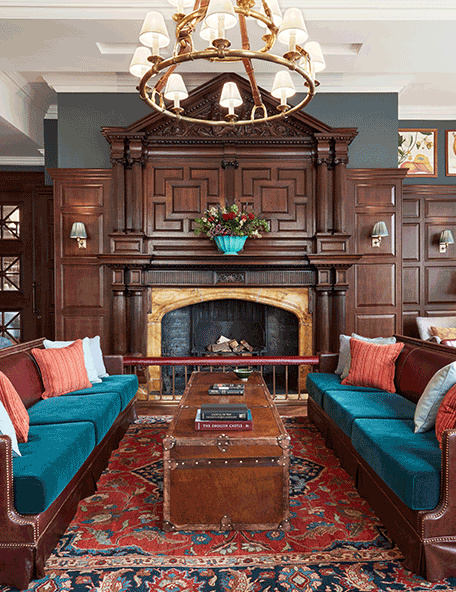
Few cities could carry off a hotel library without it feeling contrived, but in Cambridge it seems almost obligatory. University Arms does it particularly well. Dark timber panelling and walls of books surround deep sofas, armchairs and the hotel’s original carved oak fireplace, creating a room that feels somewhere between a college common room, an old Mayfair club and the private library you wish you had at home. The collection has been curated by Heywood Hill, the legendary Mayfair bookshop, and books continue throughout the hotel rather than remaining decorative props downstairs. Some suites have their own bookcases and private libraries, while the hotel’s Book Butler can select reading material according to a guest’s interests. Even the suites themselves are named after writers and notable figures associated with Cambridge. In a city built around ideas and the written word, it is a rare example of a hotel amenity becoming a genuine expression of place.
Rooms with an Edwardian Accent
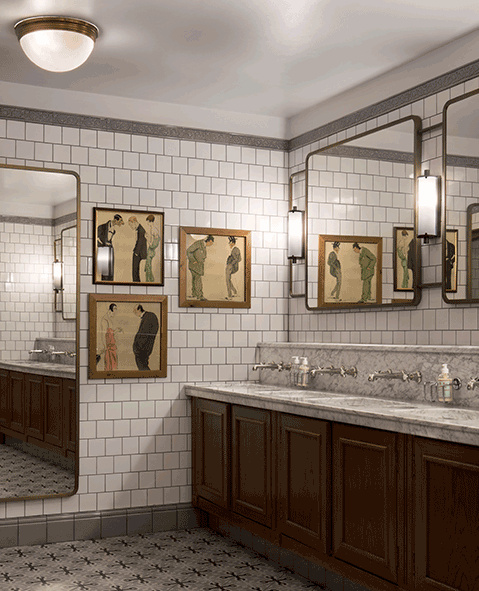
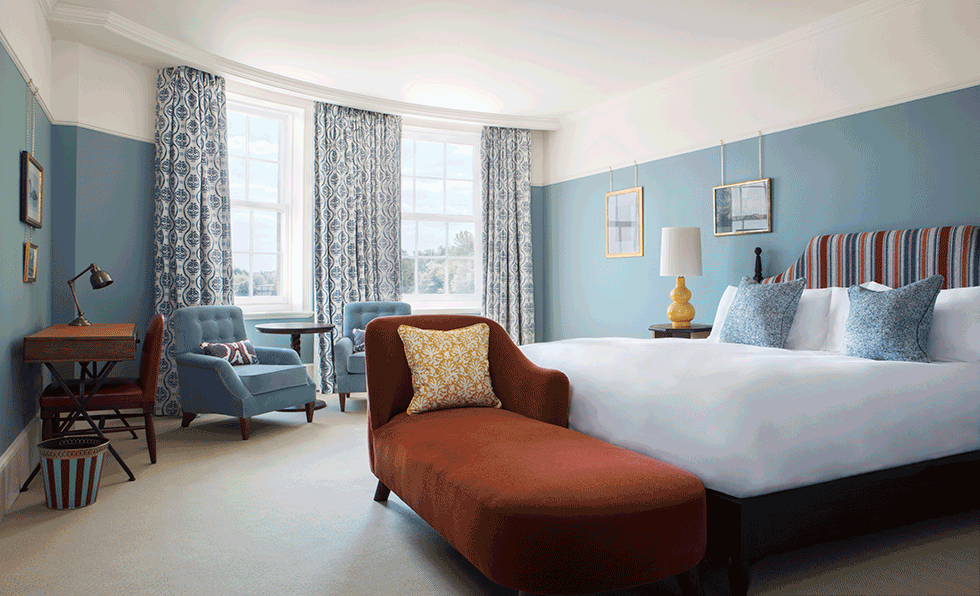
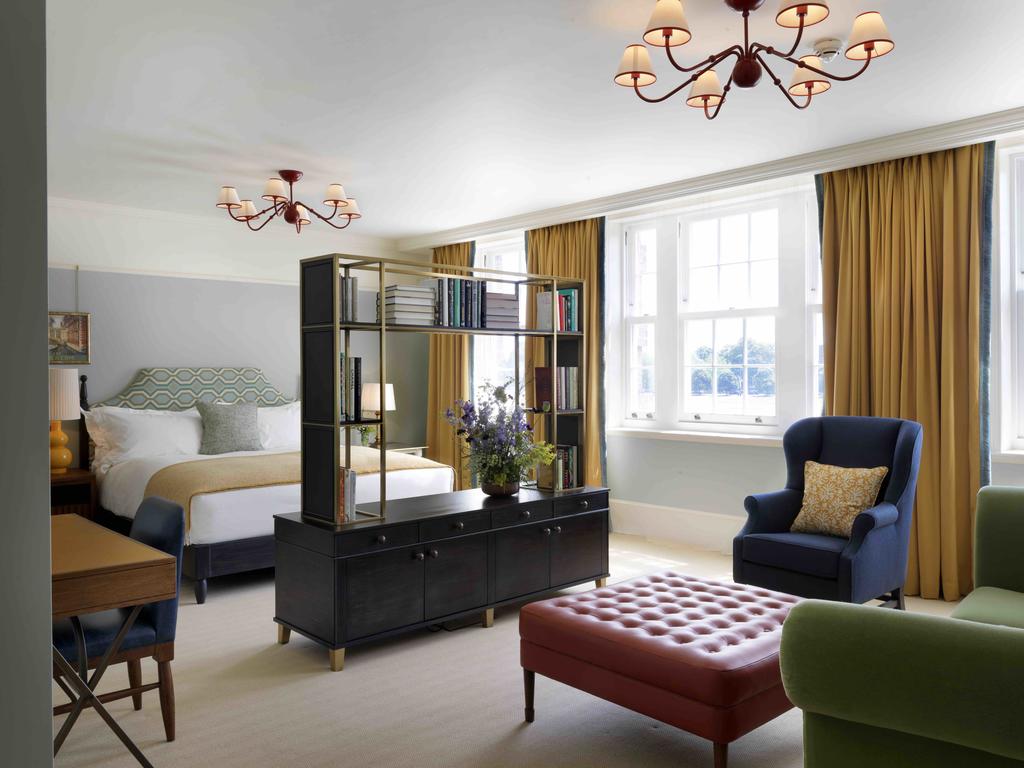
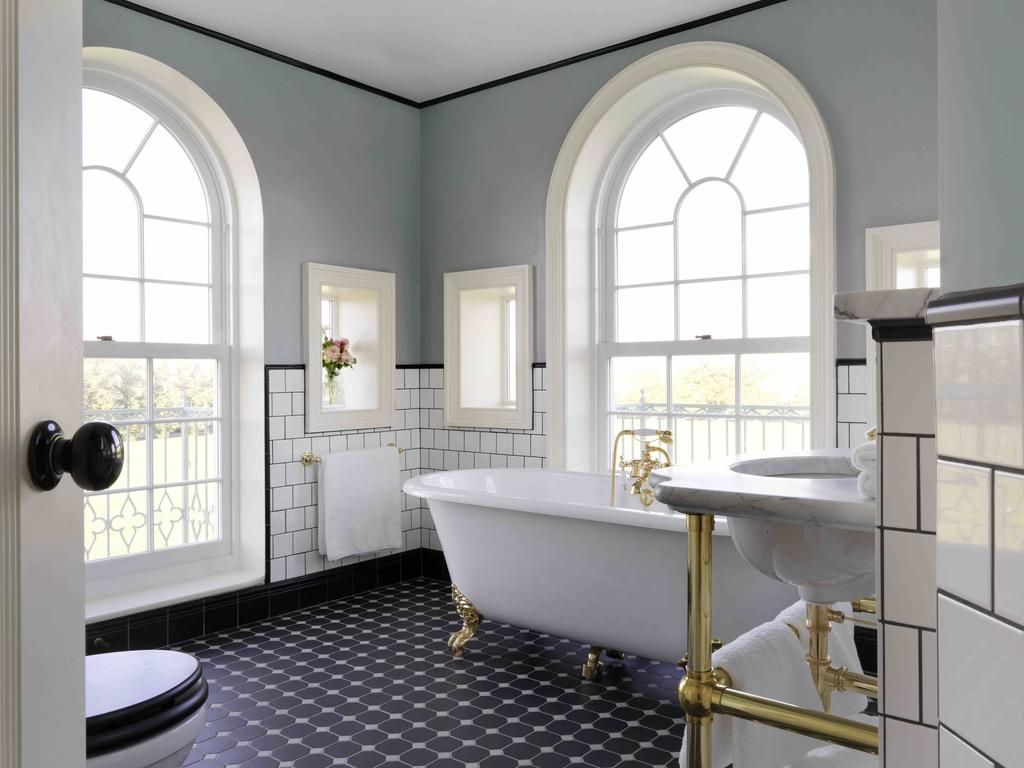
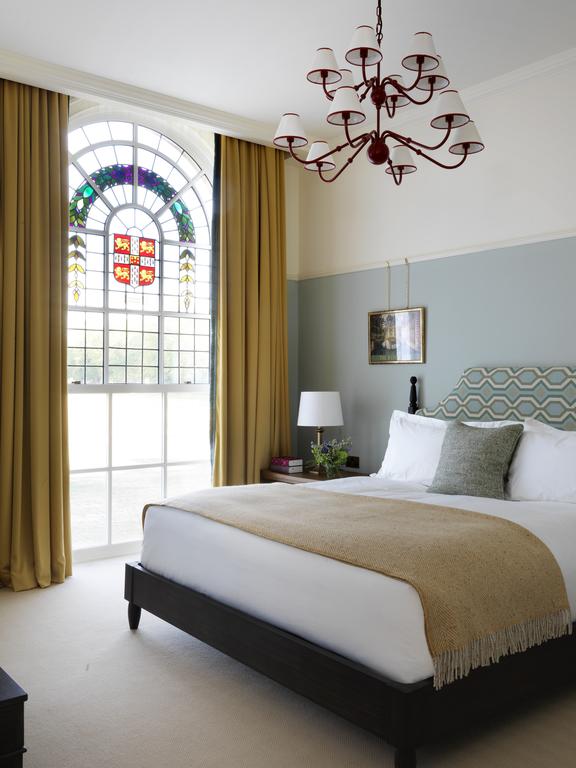
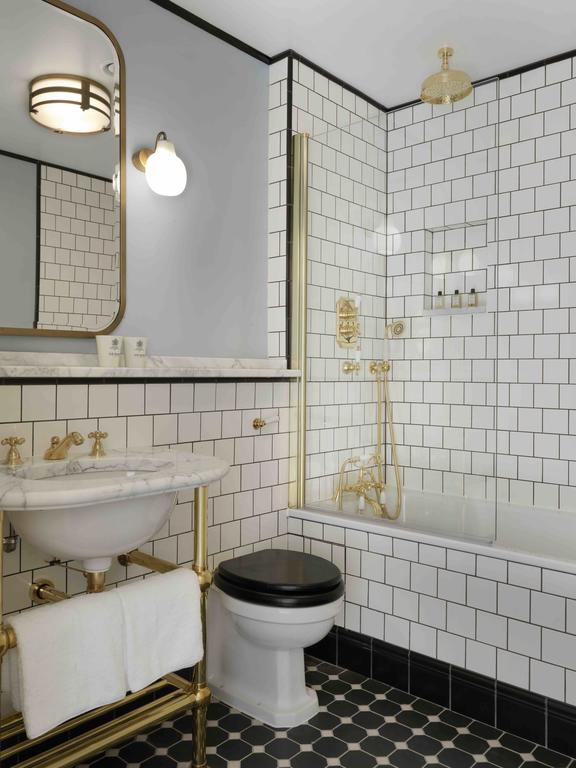
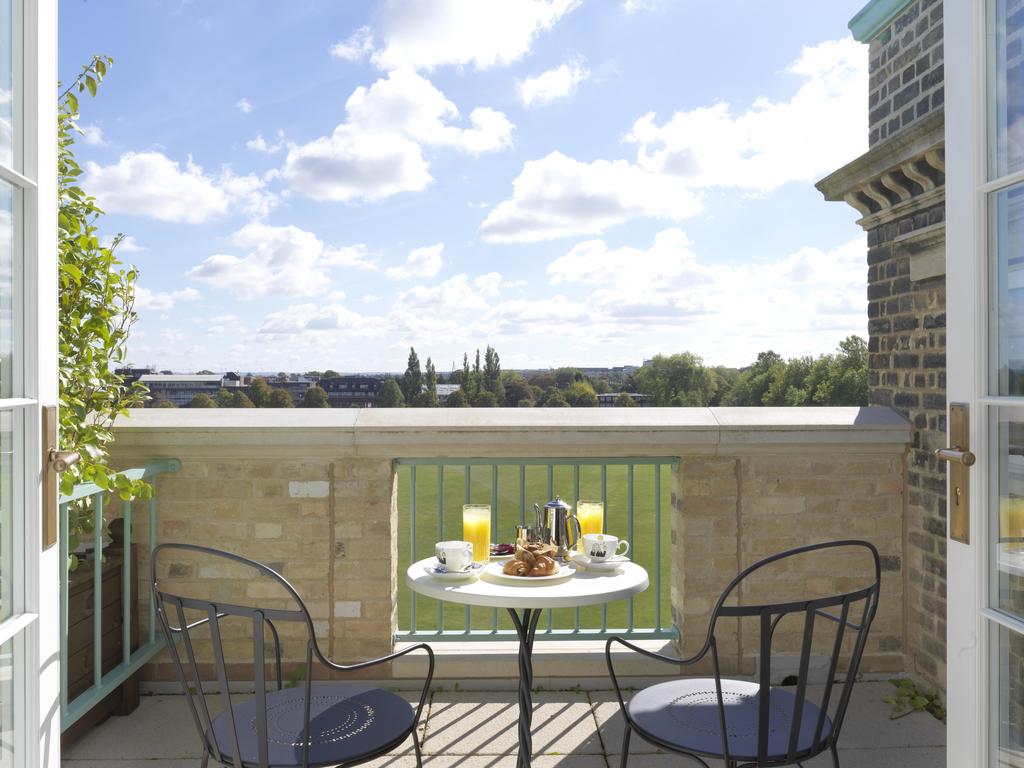
The 192 rooms and suites are calmer than the public spaces, with Brudnizki tempering his usual theatricality in favour of a light, contemporary interpretation of Edwardian style. Striped and patterned headboards, bespoke armchairs, leather-topped writing desks and statement chandeliers sit against a restrained backdrop punctuated by Cambridge Blue, yellow and red. Depending on the room, windows look across Parker’s Piece, historic Regent Street or the hotel’s inner courtyard. The suites push the literary theme further. Bookcases can act as room dividers, velvet chaise longues provide an obvious place to settle down with a novel, and some of the building’s turrets conceal wonderfully indulgent bathrooms with freestanding clawfoot tubs. Black-and-white tiles, marble, brass fittings and underfloor heating add polish without erasing the slightly eccentric English character.
From College Dining Hall to Parker’s Tavern
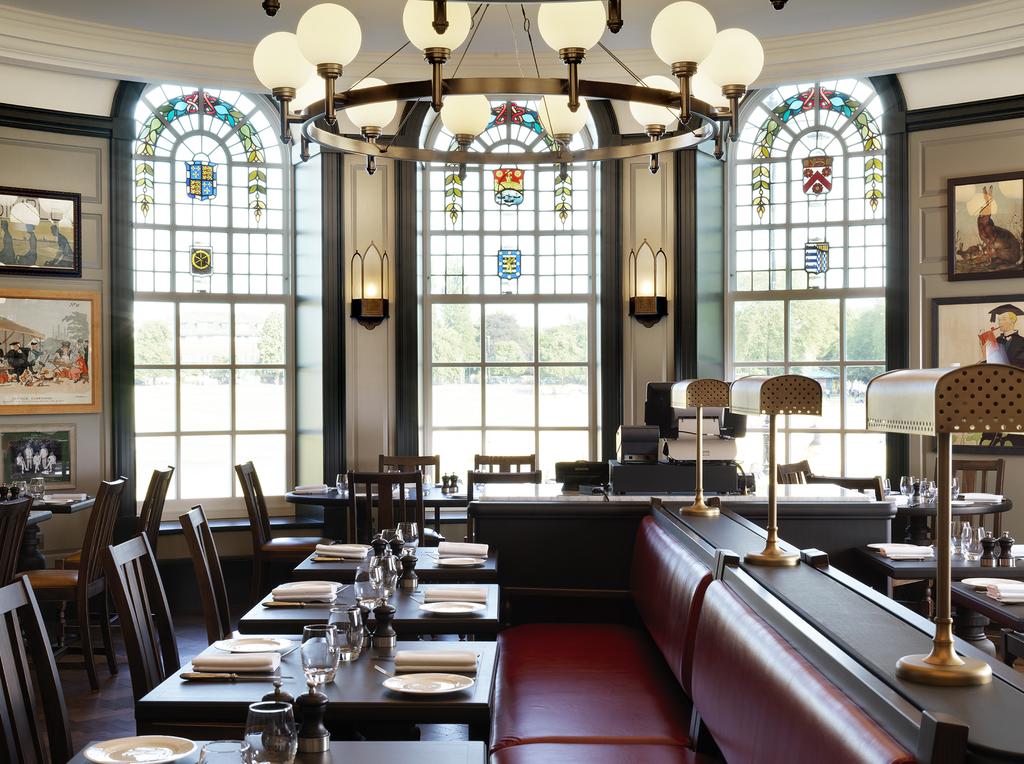
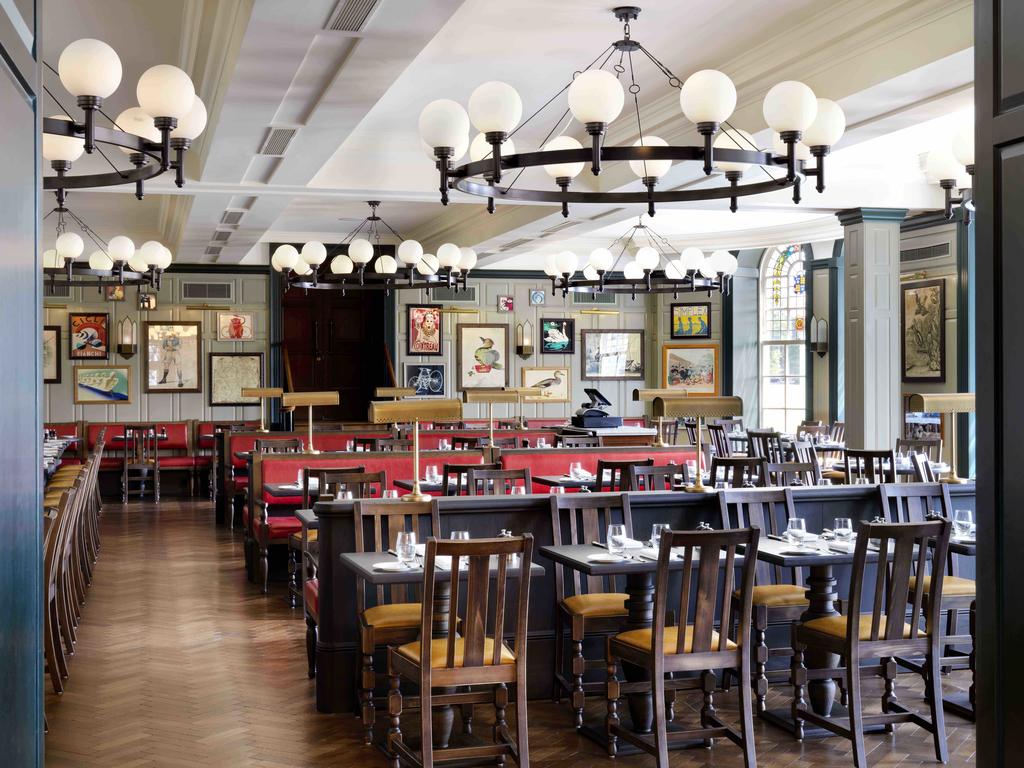
Parker’s Tavern takes one of Cambridge’s most familiar institutions—the college dining hall—and gives it a Brudnizki makeover. Original stained-glass windows and Cambridge Blue panelling are paired with dark herringbone parquet, red and mustard leather, gold banker’s lamps and walls crowded with maps, local landmarks and portraits. It feels established rather than newly decorated, somewhere designed as much for people who live and work in Cambridge as for hotel guests. The food follows the same philosophy. British cooking and produce from Cambridgeshire farms form the backbone of the menu, moving easily between polished brasserie dishes and comforting classics such as steak and ale pie. Afternoon tea feels particularly appropriate here, while regular jazz evenings add another layer to the hotel’s social life.
Books by Day, Drinks by Night
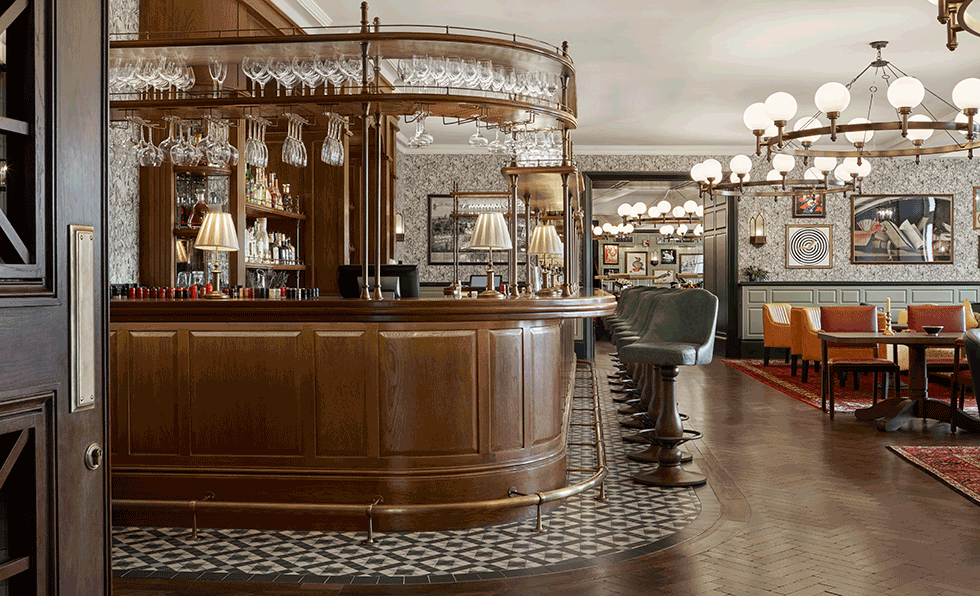
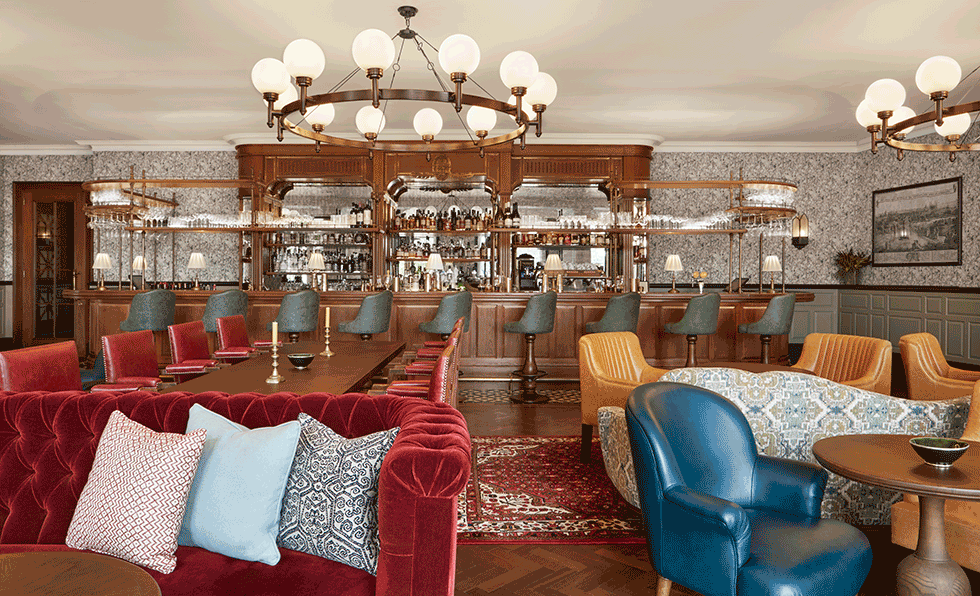
The library flows naturally into the bar, where the mood becomes darker and more intimate. Custom wallpaper swirls like the marbled endpapers of an antique book, while dark timber, loose rugs, traditional furniture and statement lighting create the atmosphere of a particularly glamorous don’s sitting room. It is another clever example of Brudnizki taking something deeply associated with Cambridge and translating it into hospitality rather than simply reproducing it. That is ultimately what makes University Arms so successful. The restoration respects a hotel with almost two centuries of history, but refuses to preserve it behind glass. Cambridge is everywhere—in its colours, books, architecture, writers, college dining rooms and eccentric details—but filtered through contemporary design. It is scholarly without being serious, grand without becoming formal and historic without feeling trapped in the past.