Vermelho | Melides, Portugal
Christian Louboutin turns a small Alentejan hotel into a joyful collision of Portuguese craft, Mediterranean fantasy, and unapologetic colour
Why DNA Hotels Loves It
● Christian Louboutin and architect Madalena Caiado created one of Portugal’s most personal hotels, layering Alentejan vernacular with French, Egyptian, and Mediterranean influences.
● Exceptional craftsmanship is everywhere, from custom azulejos and hand-painted frescoes to a hammered-silver bar, sculptural ceramics, and one-off pieces by artists and artisans from across Europe.
● With just 13 rooms and two newly added private villas nearby, Vermelho feels more like entering Louboutin’s private world than checking into a conventional luxury hotel.
A Fashion Designer Checks In
Christian Louboutin doesn’t do beige. So when the French shoe designer decided to create his first hotel in Melides, restraint was never likely to be the defining idea. Vermelho—Portuguese for red—opened in 2023 in the small Alentejan village that Louboutin had quietly fallen for years earlier. Working with local architect Madalena Caiado, he created something that feels less like a brand extension than a highly personal collection of obsessions gathered under one roof. Portuguese tiles. Egyptian references. French antiques. Italian sculpture. Seville silverwork. Hand-painted frescoes. Somehow, it all holds together.
White Outside, Technicolor Within
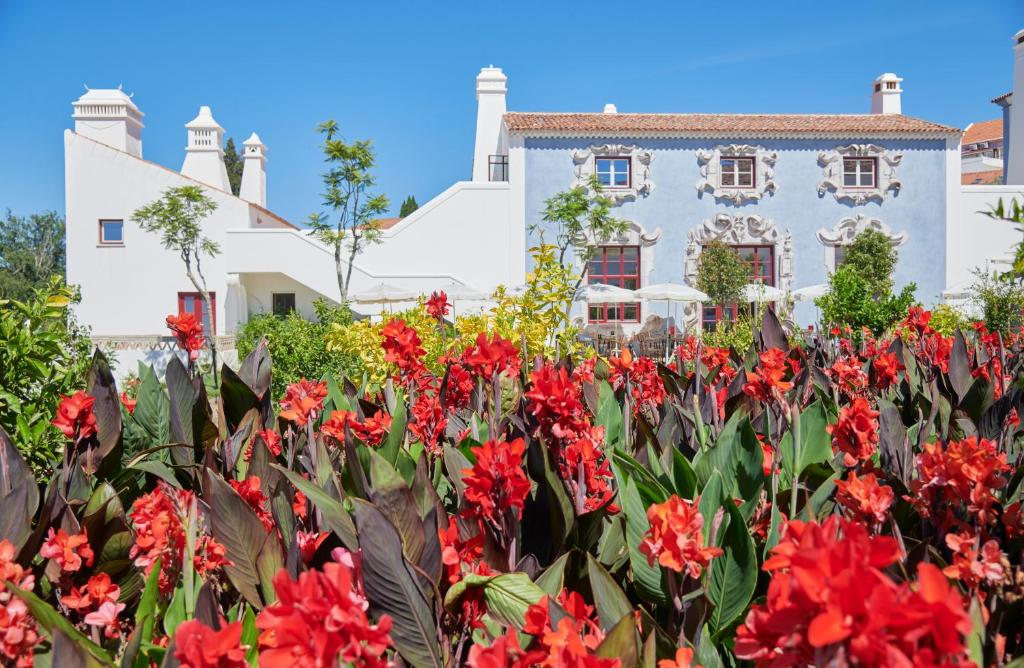
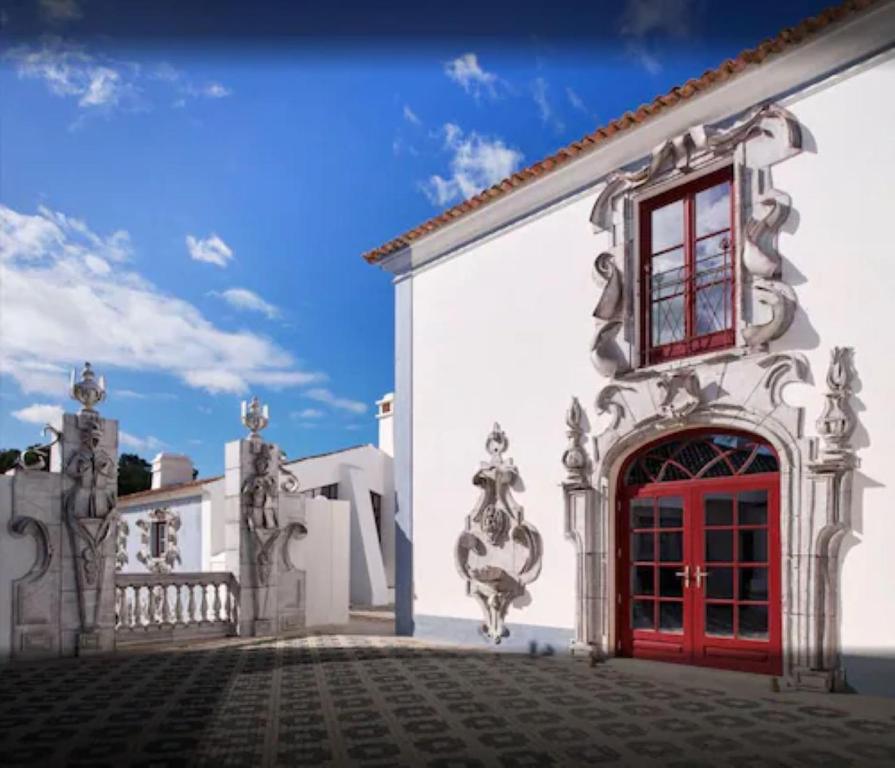
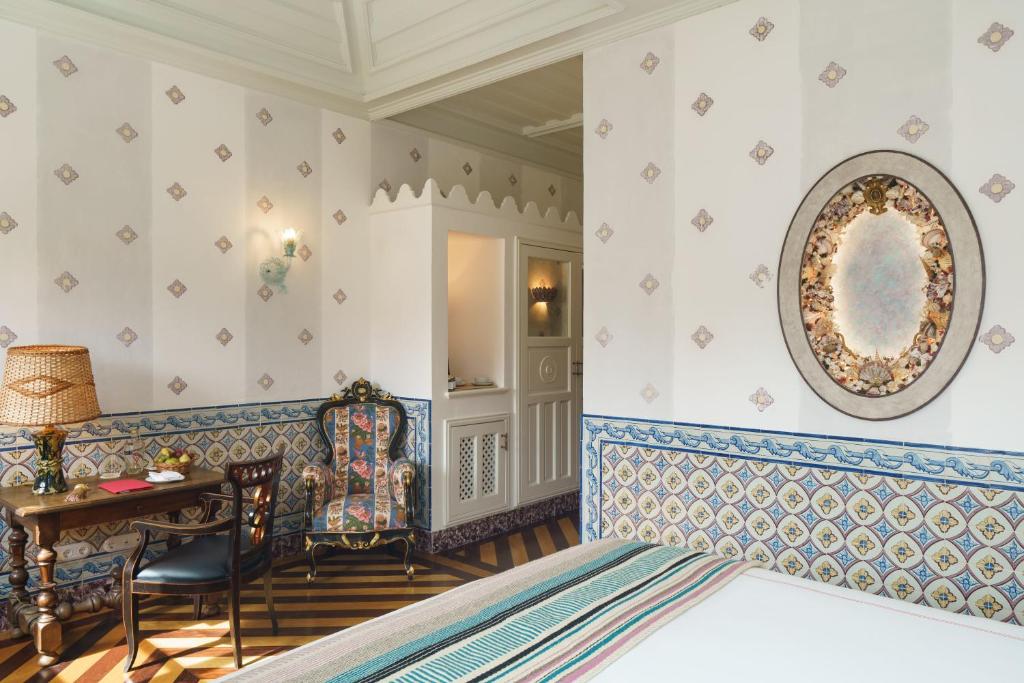
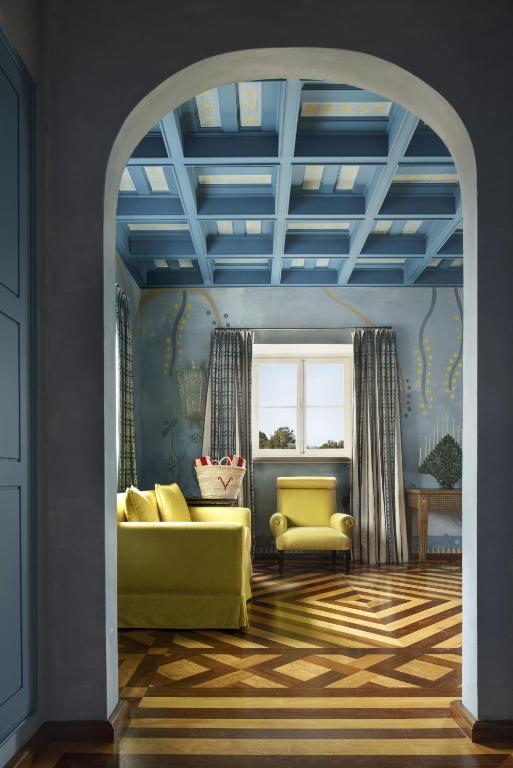
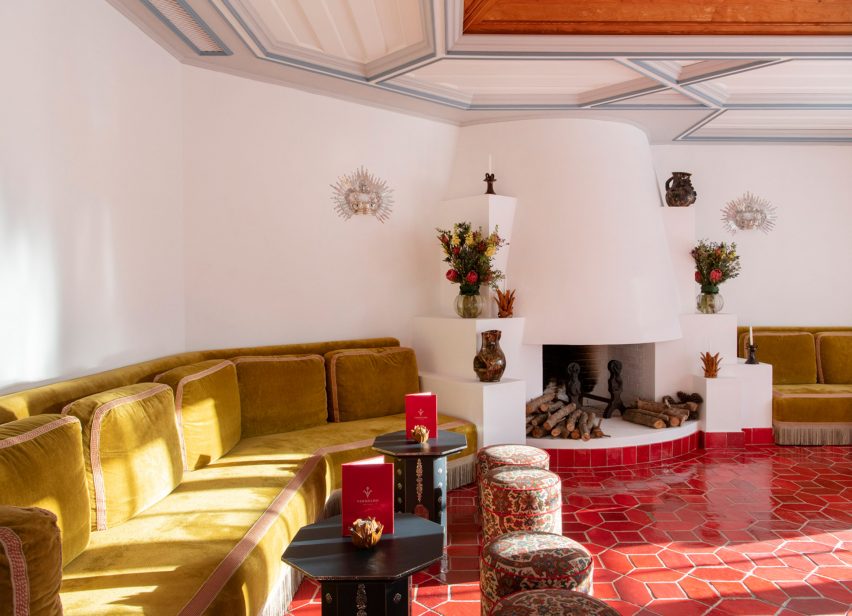
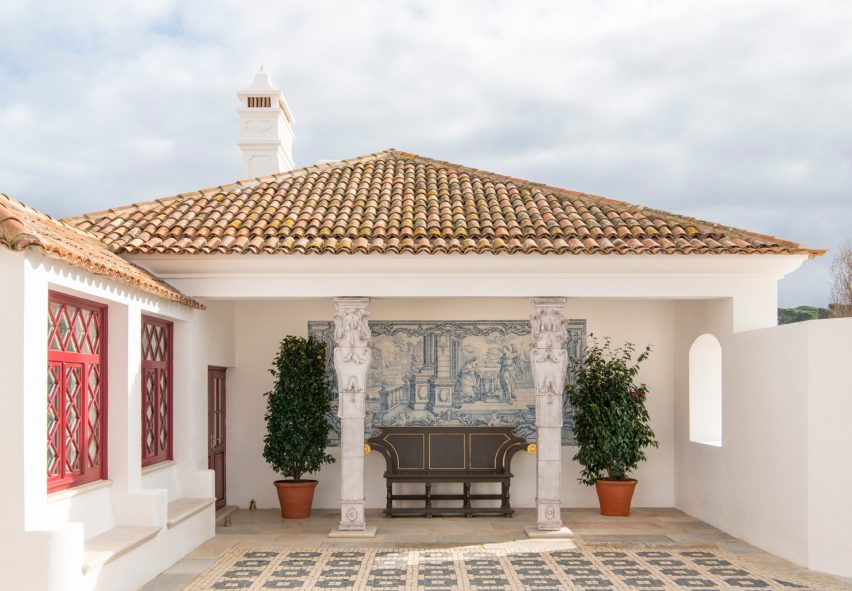
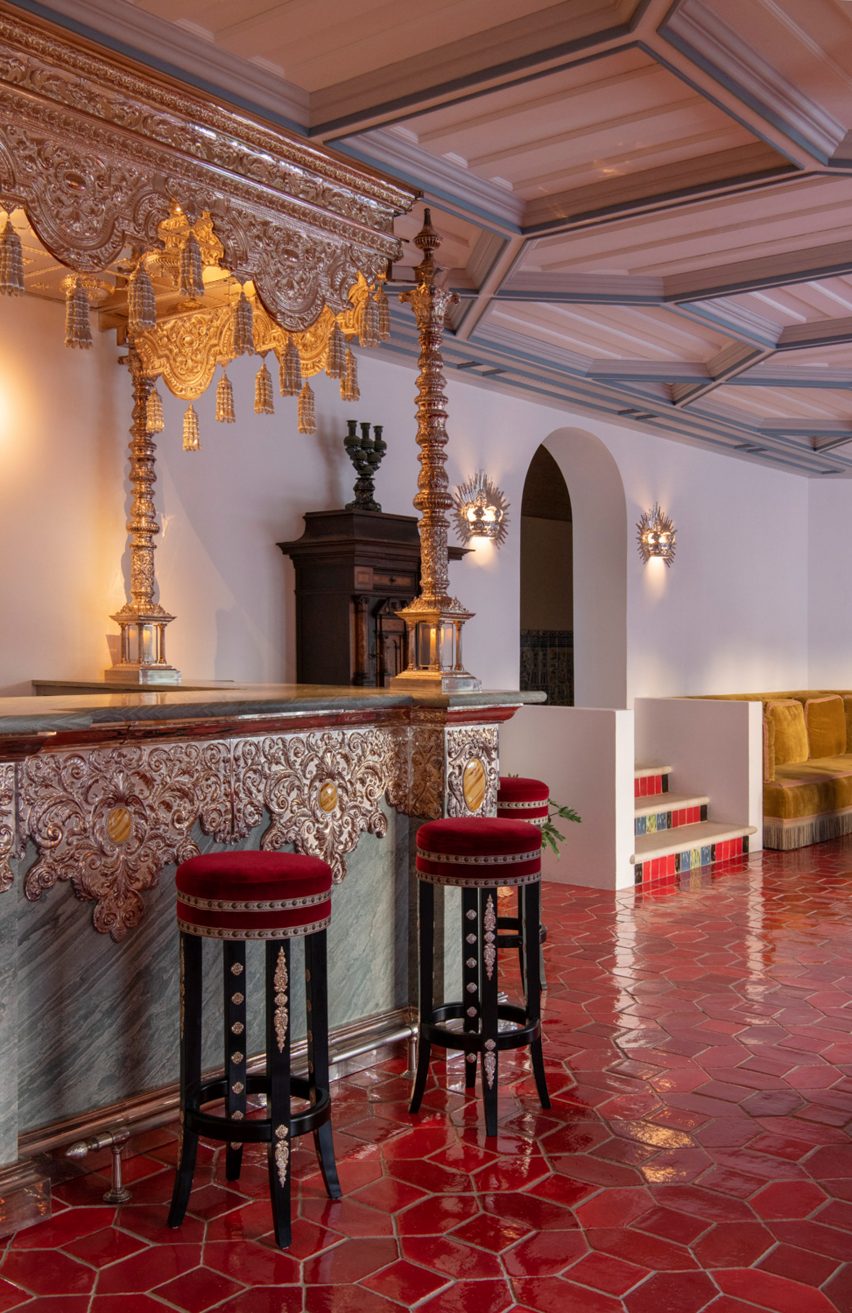
From the street, Vermelho behaves itself. The whitewashed exterior sits comfortably within the architectural language of Melides, with proportions and materials that feel connected to the village rather than imposed upon it. Inside, all restraint disappears. Red tiled floors collide with blue-and-white azulejos. Velvet sits beside carved timber. Hand-painted walls meet sculptural ceramics. Antique furniture appears next to custom pieces and objects collected by Louboutin over decades. The interiors were never conceived as a coordinated hotel scheme. They feel accumulated. That distinction gives Vermelho its charm.
Craftsmanship Everywhere
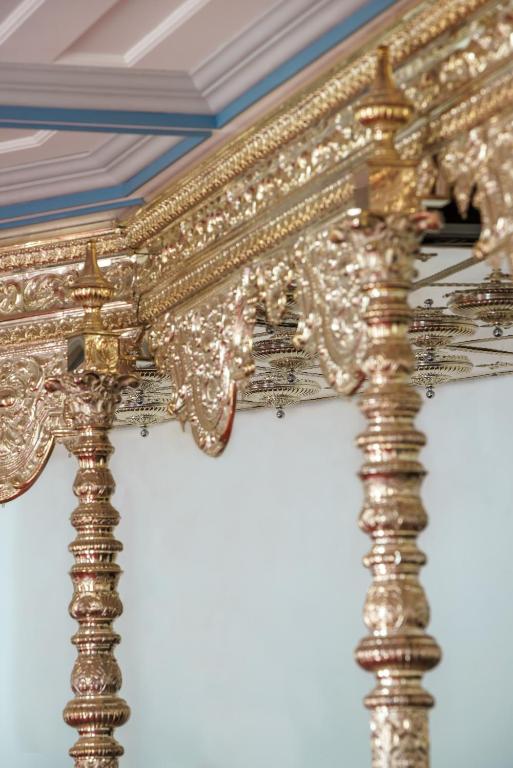
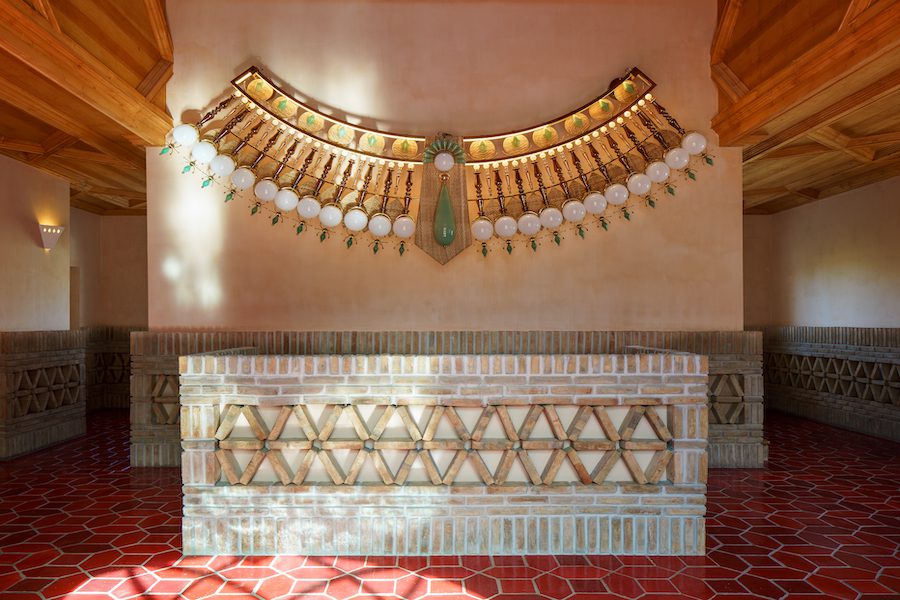
Look closely and almost every surface has a story. Fábrica de Azulejos de Azeitão produced custom tile panels for the guestrooms. Greek artist Konstantin Kakanias created exuberant frescoes. Italian sculptor Giuseppe Ducrot contributed to the garden and architectural decoration. Klove Studio designed a spectacular hand-blown glass chandelier, while Sevillian workshop Villarreal created the hammered silver-leaf bar. Then come 19th-century Maison Gatti bistro chairs, ceramics and objects from Vida Dura, fabrics advised by Carolina Irving, and pieces from Louboutin’s own collection. Nothing feels selected from a hospitality catalogue. The hotel is essentially one enormous commission.
Thirteen Rooms, Thirteen Personalities
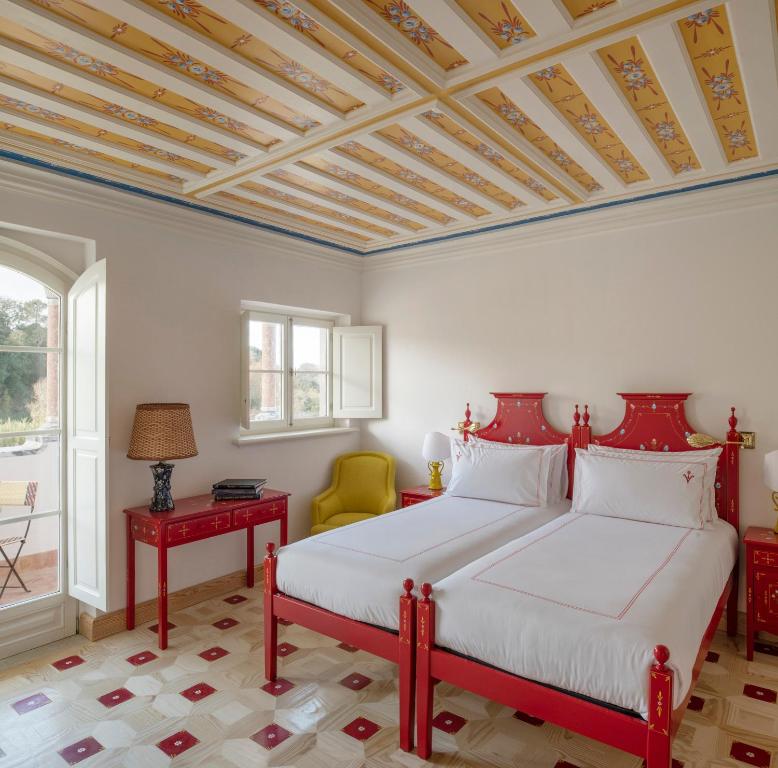
There are only 13 rooms, and no two are alike. Some lean heavily into cobalt and white. Others are saturated with reds, ochres, green, or pattern. Headboards become decorative statements. Floors glow with terracotta or lacquered colour. Antique pieces sit beside custom furniture and contemporary art. Yet underneath the visual exuberance, the rooms remain intimate and comfortable. The maximalism works because it is personal rather than performative. You never get the sense that someone sat down and asked what would photograph best. It feels more like Louboutin opened his storage rooms, invited his favourite craftspeople over, and kept going until the spaces felt right.
Xtian at the Centre
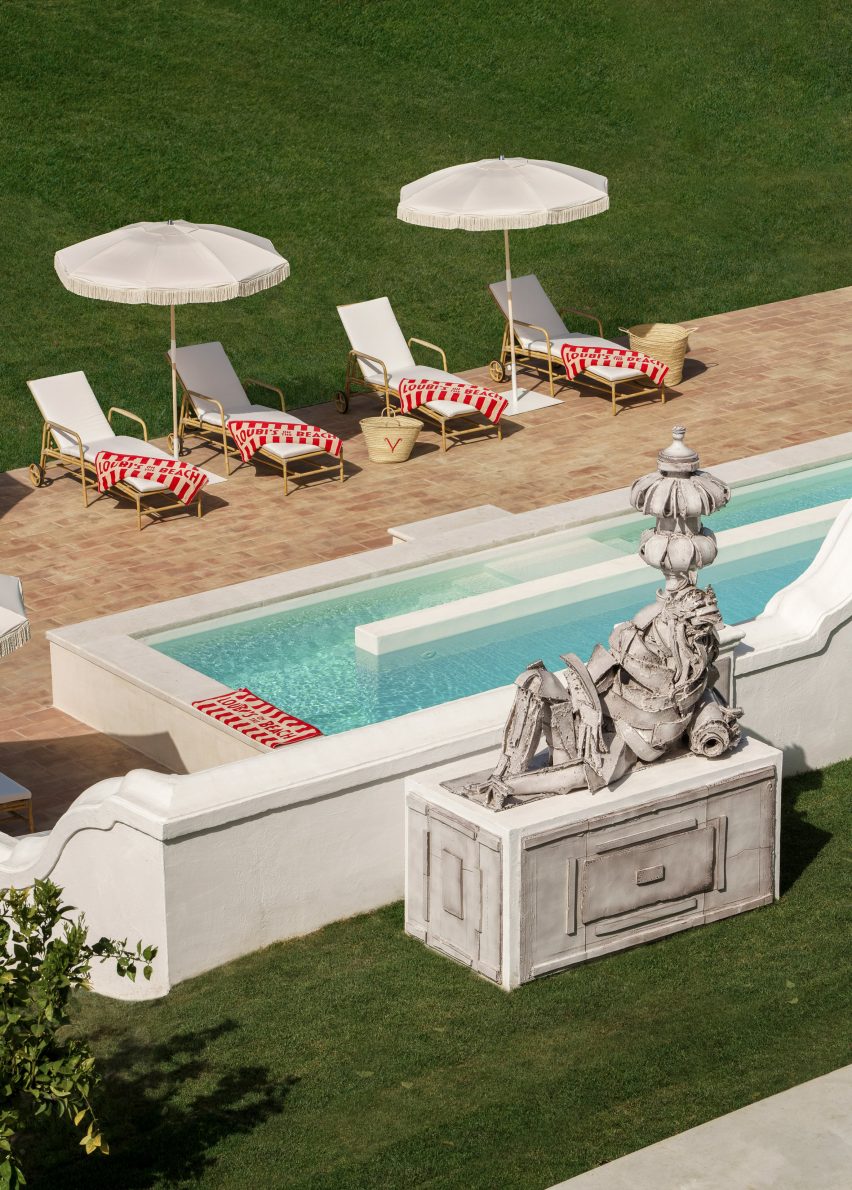
The restaurant is called Xtian—an affectionate abbreviation of Christian. Chef Emanuel Machado anchors the menu in the Alentejo, working with regional produce and Portuguese flavours rather than attempting to match the interiors with culinary theatrics. That balance is welcome. Hand-thrown tableware, crafted objects, and expressive surroundings keep the dining room unmistakably Vermelho, but the food maintains a clear relationship with the landscape beyond the hotel. There is also a small wellness space and a natural pool set within the garden. The scale remains deliberately intimate.
Two New Houses, Two New Worlds
Vermelho’s story now extends beyond the original hotel. Two separate villas nearby allow Louboutin’s imagination to move in completely different directions. La Salvada, created with Egyptian designer Tarek Shamma, rises from a wildflower meadow in dusty pink, its kasbah-like form containing high ceilings, antiques, flashes of indigo and red, and multiple rooftop terraces. La Maison des Bateaux is quieter and more rustic. Set among rice fields, the whitewashed house takes its cues from an Alentejan boathouse, with deep blue, terracotta, maritime objects, and a secluded garden pool. They don’t replicate Vermelho. They expand its universe.
Melides, Not Comporta
Location matters here. Melides still feels quieter and less polished than neighbouring Comporta, with pine forest, dunes, rice fields, and the lagoon shaping the landscape around the village. That sense of discovery is central to Vermelho’s appeal. Louboutin didn’t build a resort beside the beach. He created a deeply personal house inside a small village he had grown to love. The difference is visible in every room.
Why It Works
Vermelho succeeds because it ignores nearly every rule of contemporary boutique-hotel design. There is no neutral palette, no universally flattering minimalism, no attempt to please everyone. Christian Louboutin and Madalena Caiado instead created a hotel from craft, memory, colour, antiques, art, and sheer personal instinct. The result could easily have become chaotic; instead, it feels wonderfully alive. With only 13 rooms, exceptional artisan work, and two new villas pushing the story even further, Vermelho is not simply Louboutin’s hotel. It is his imagination made habitable.