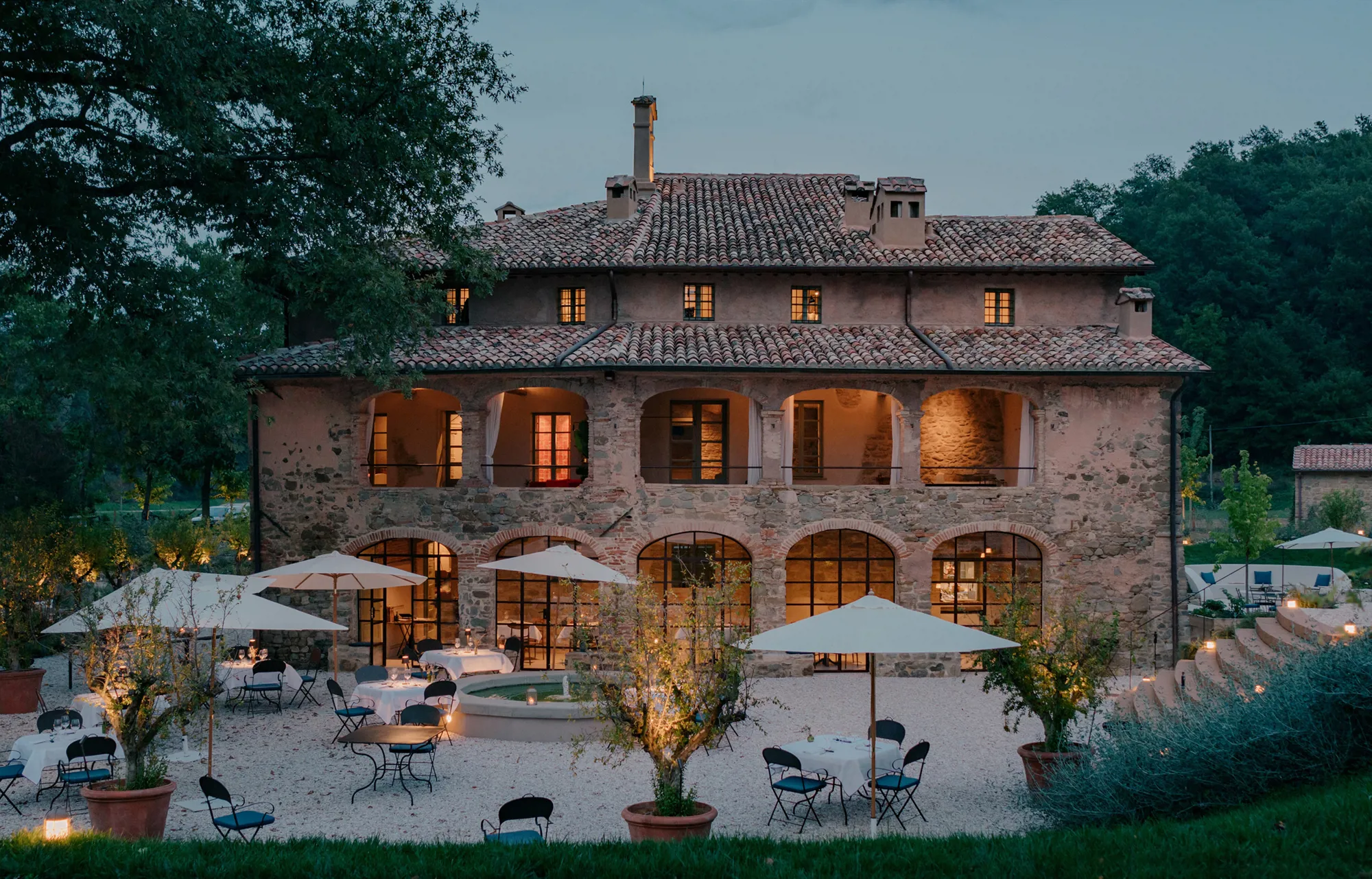
Vocabolo Moscatelli – Umbertide, Italy
A soulful monastery retreat where eight centuries of history, contemporary design, and Umbrian craftsmanship converge in remarkable harmony.
Why DNA Hotels Loves It
● A beautifully restored 12th-century monastery where historic architecture and contemporary design exist in perfect balance.
● Architect Jacopo Venerosi Pesciolini’s sensitive intervention preserves the soul of the building while introducing a distinctly modern aesthetic.
● One of Umbria’s most intimate luxury retreats, with just 12 suites surrounded by forests, gardens, and centuries of history.
Eight Centuries in the Making
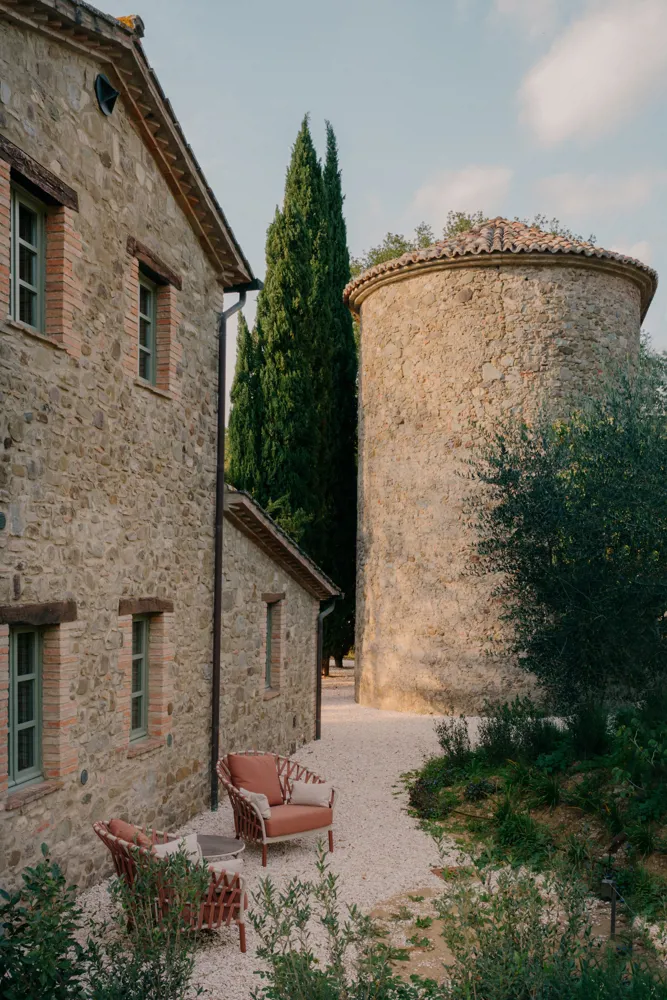
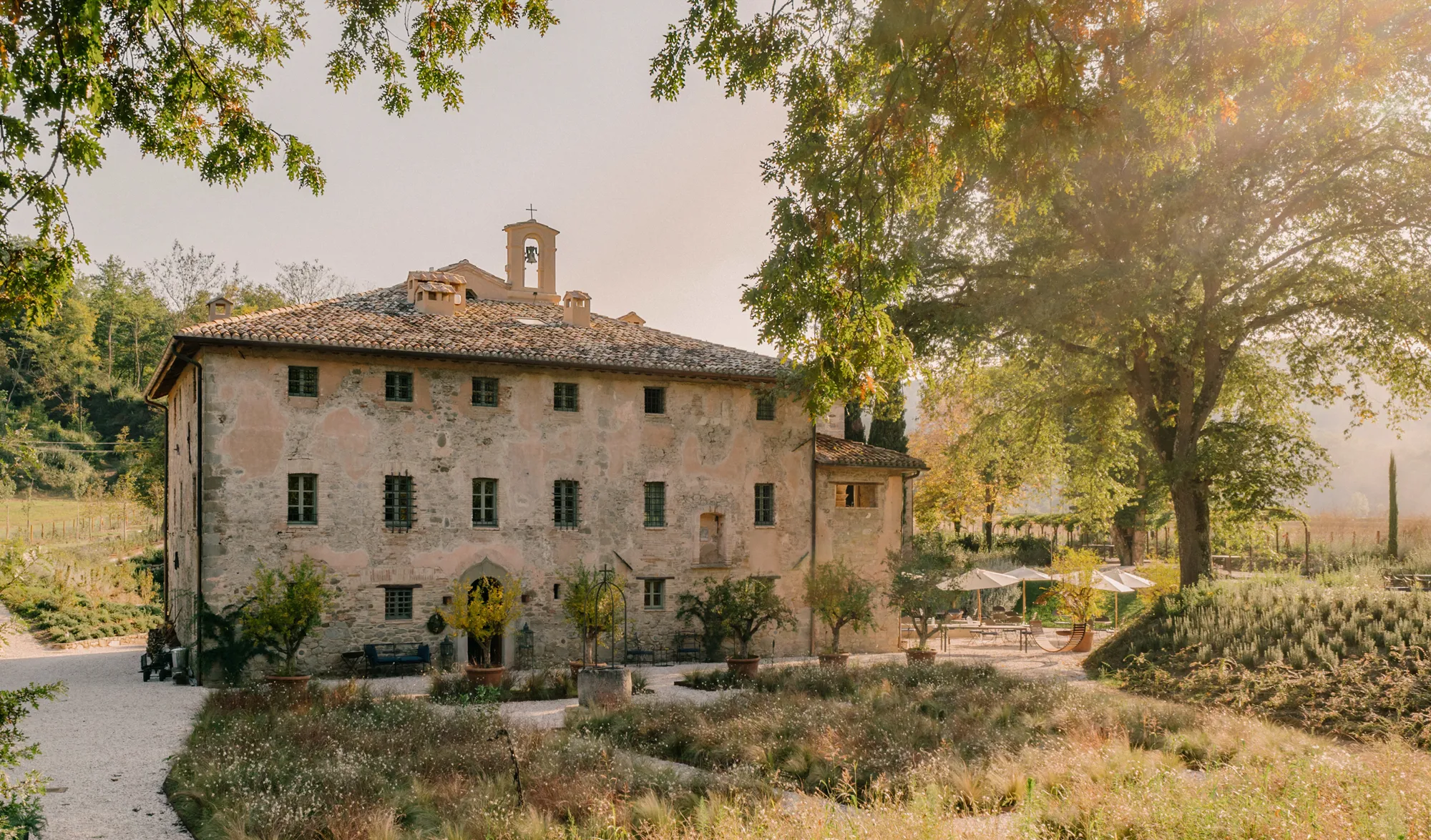
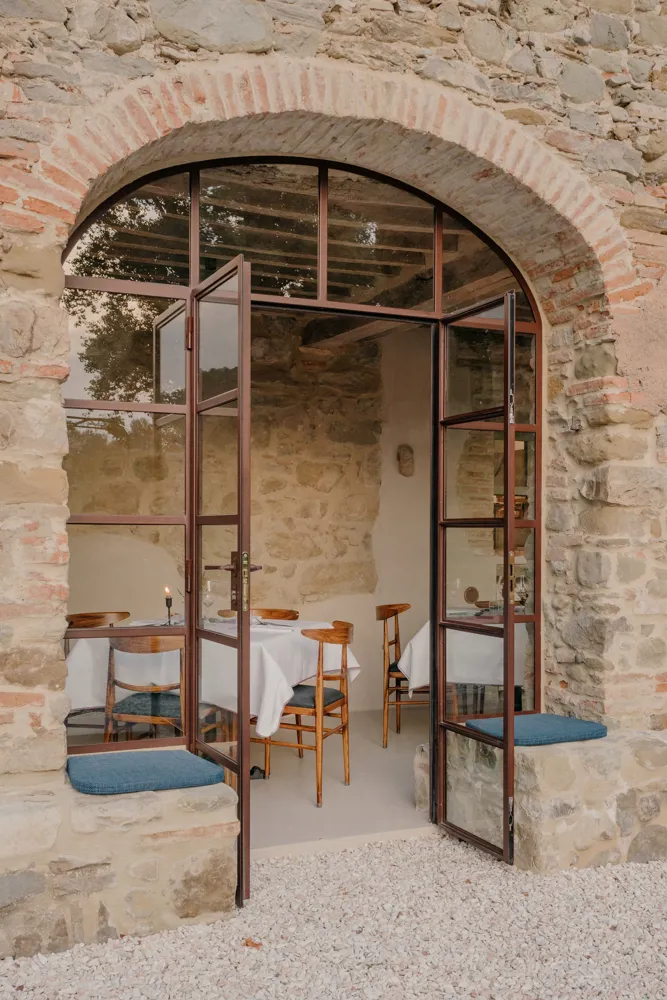
Hidden among the forests and rolling countryside of northern Umbria, Vocabolo Moscatelli occupies a former monastery whose origins stretch back more than 800 years. Thick stone walls, exposed terracotta brickwork, original wooden lintels, and a centuries-old bell tower remain as reminders of its sacred past. Yet this is far from a heritage museum. Under the stewardship of owners Frederik Kubierschky and Catharina Lütjens, the monastery has been transformed into an intimate design hotel that feels entirely contemporary while remaining deeply respectful of its history. The result is a place where past and present exist in quiet conversation rather than competition.
A Monastery Reimagined
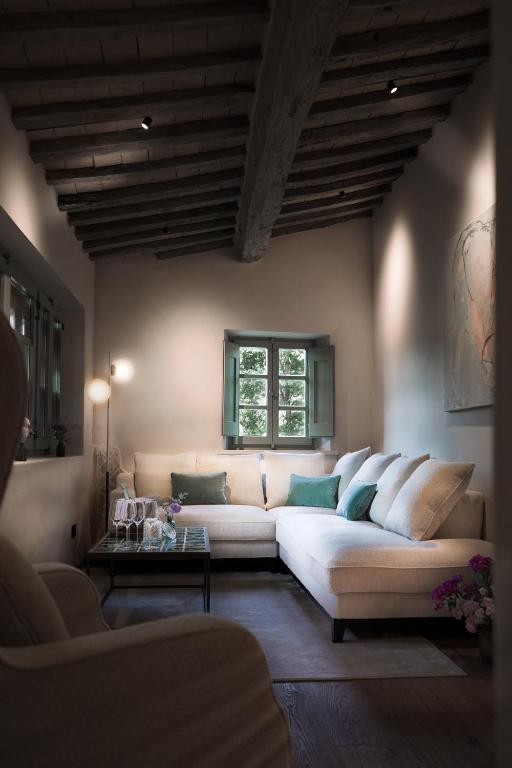
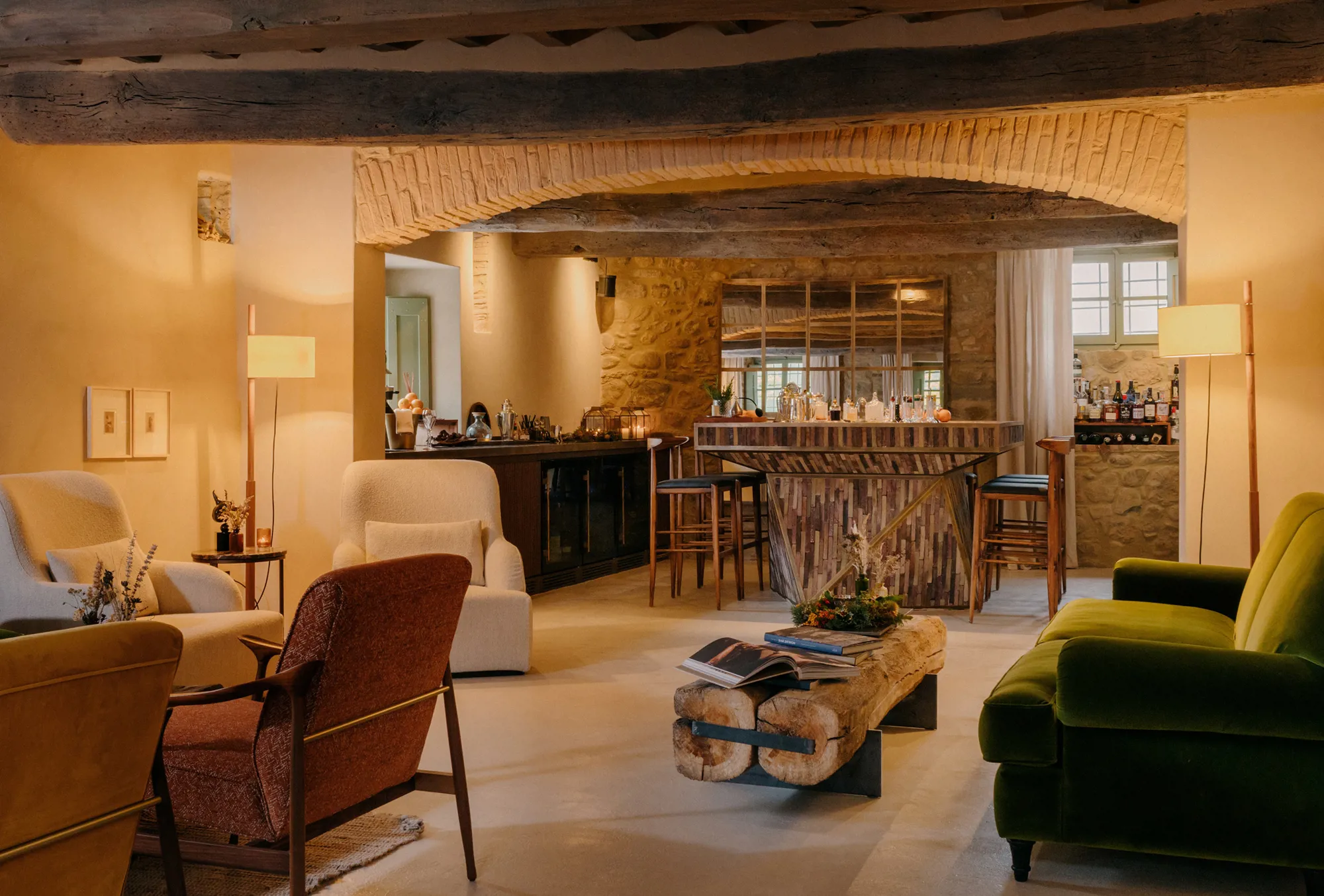
The architectural transformation was led by Florentine architect Jacopo Venerosi Pesciolini of Studio Archiloop, whose approach focused on preserving the authenticity of the original structure while introducing a refined modern sensibility. Historic elements remain intentionally visible throughout the property. Beamed ceilings, stone walls, terracotta floors, and exposed masonry provide a rich architectural backdrop, while contemporary interventions introduce openness, light, and simplicity. Rather than restoring the monastery to a specific moment in time, the design allows multiple centuries to coexist. Ancient craftsmanship meets contemporary furniture, monastic austerity meets modern comfort, and rustic character meets understated luxury.
Like a Small Umbrian Village
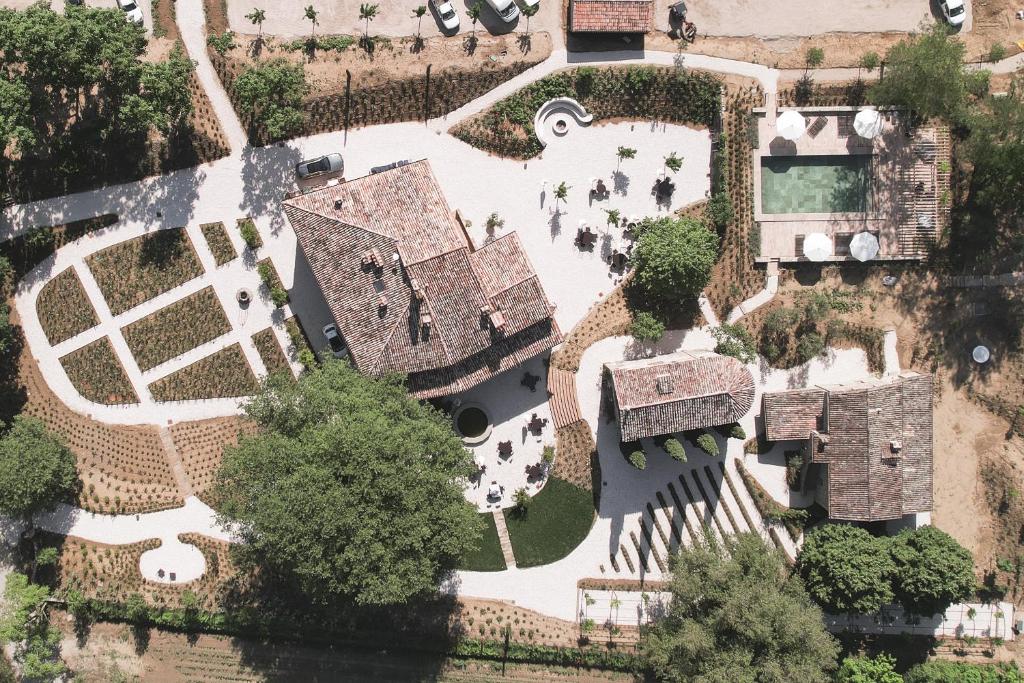
One of the property’s most distinctive qualities is its layout. Rather than functioning as a conventional hotel, Vocabolo Moscatelli feels like a miniature Italian village. At its center lies a piazza framed by rosemary bushes, Mediterranean gardens, and outdoor dining spaces designed for long, unhurried afternoons. The former church has been reimagined as a minimalist event space, while pathways connect the monastery, gardens, pool, and annex suites in a way that encourages exploration. The atmosphere is remarkably relaxed, shaped as much by nature and landscape as by architecture itself.
Design with a Sense of Play
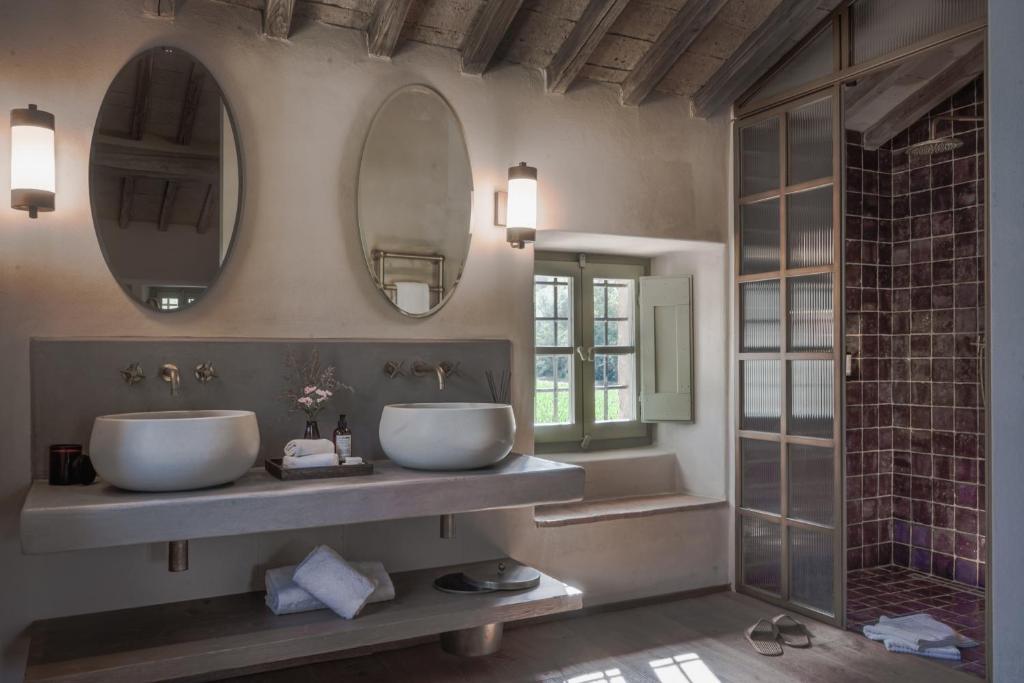
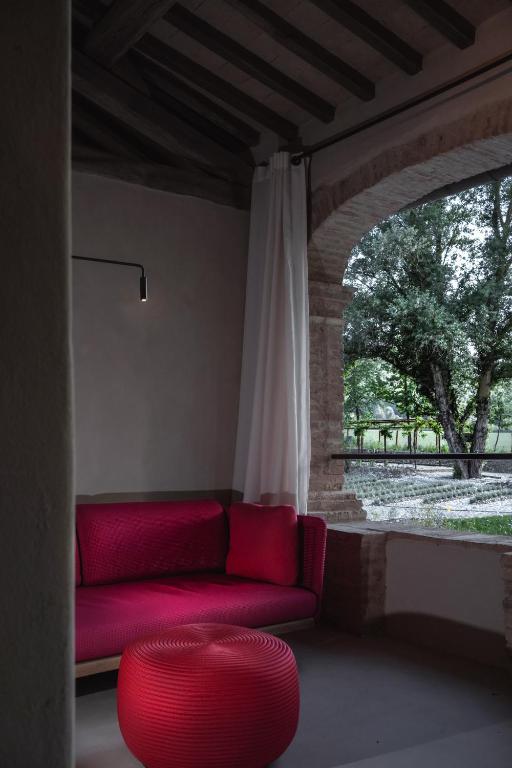
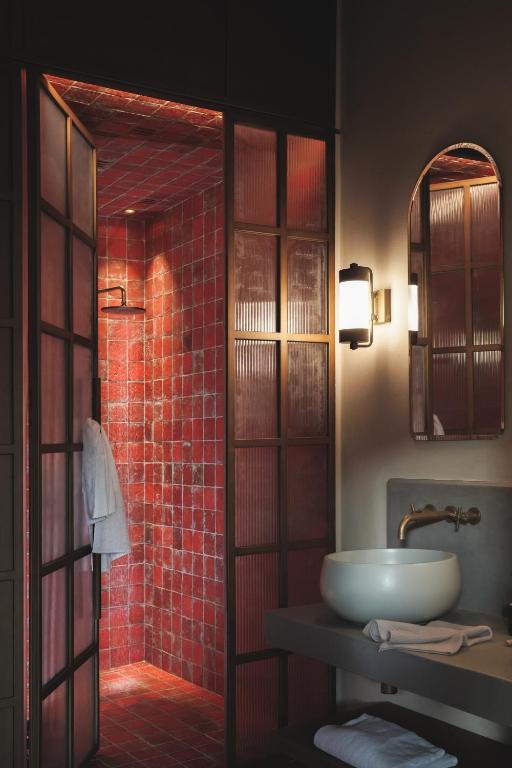
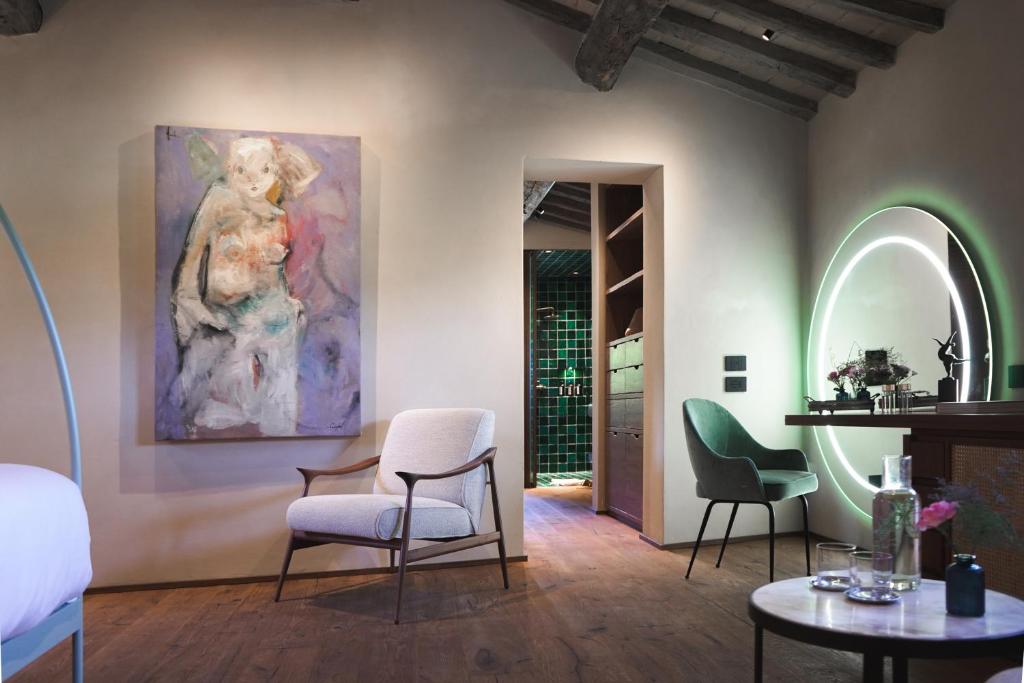
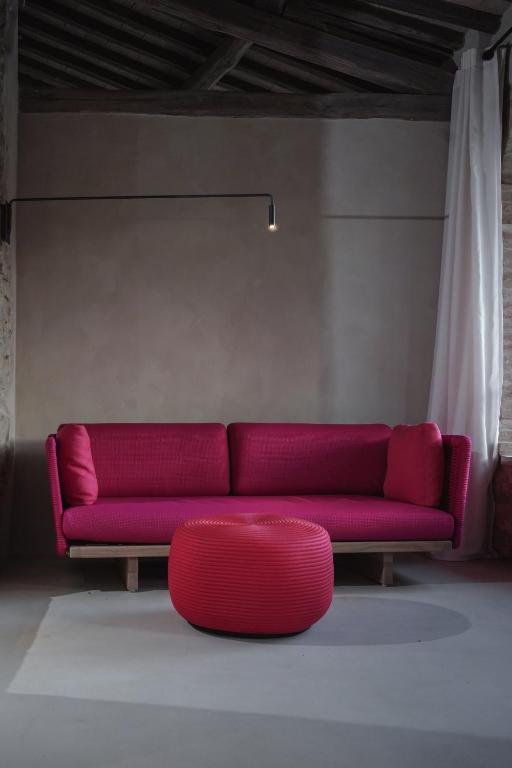
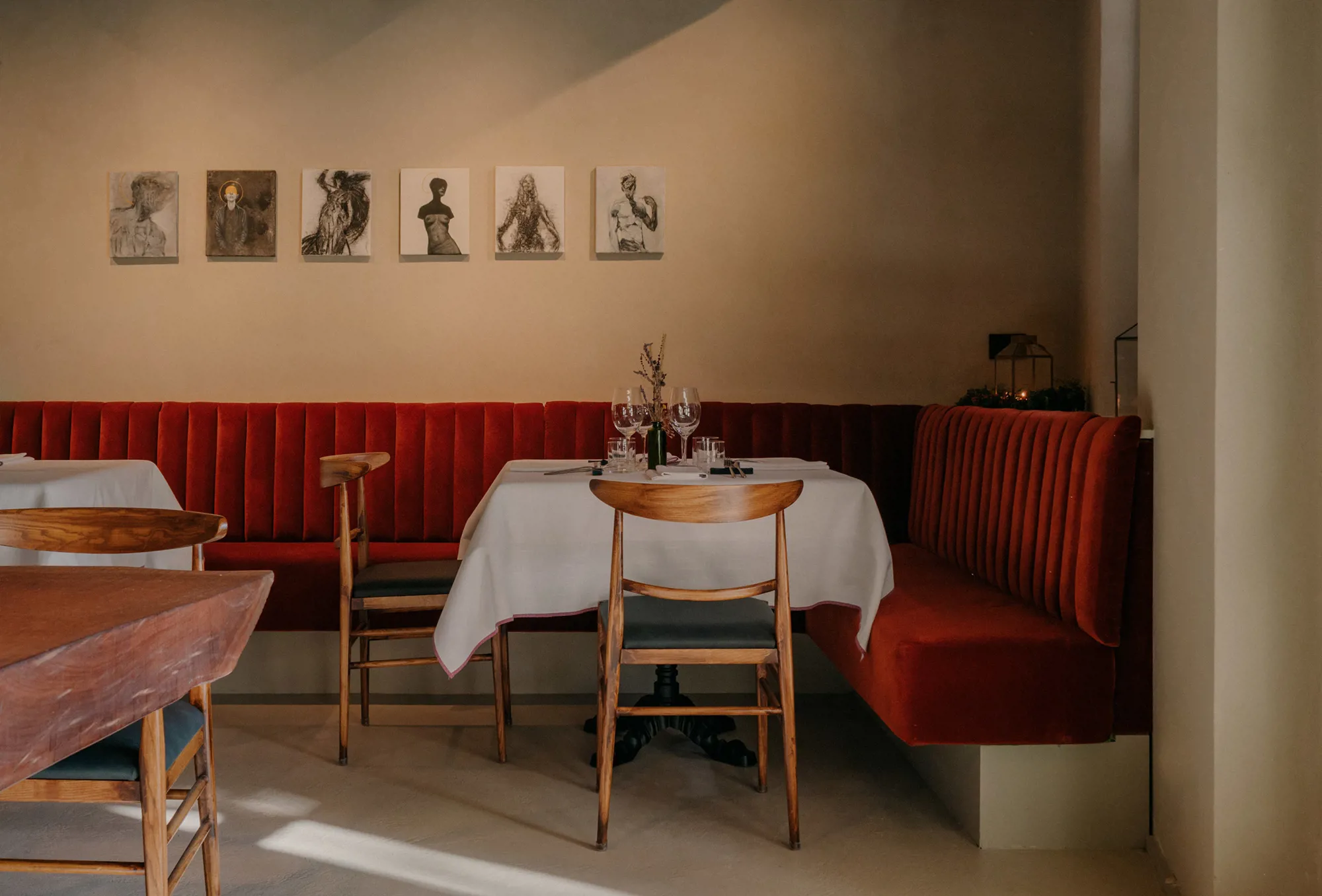
While many historic conversions lean heavily into nostalgia, Vocabolo Moscatelli introduces moments of unexpected personality throughout its interiors. Minimalist furniture sits alongside handcrafted local pieces. Muted tones dominate, yet occasional bursts of color—a vivid pink sofa, richly glazed tiles, bold artwork—add energy and character. Brass, iron, stone, wood, and ceramics create a tactile material palette that feels deeply connected to the region. The effect is sophisticated without becoming precious. Every space feels carefully curated yet entirely livable.
Twelve Suites, Twelve Personalities
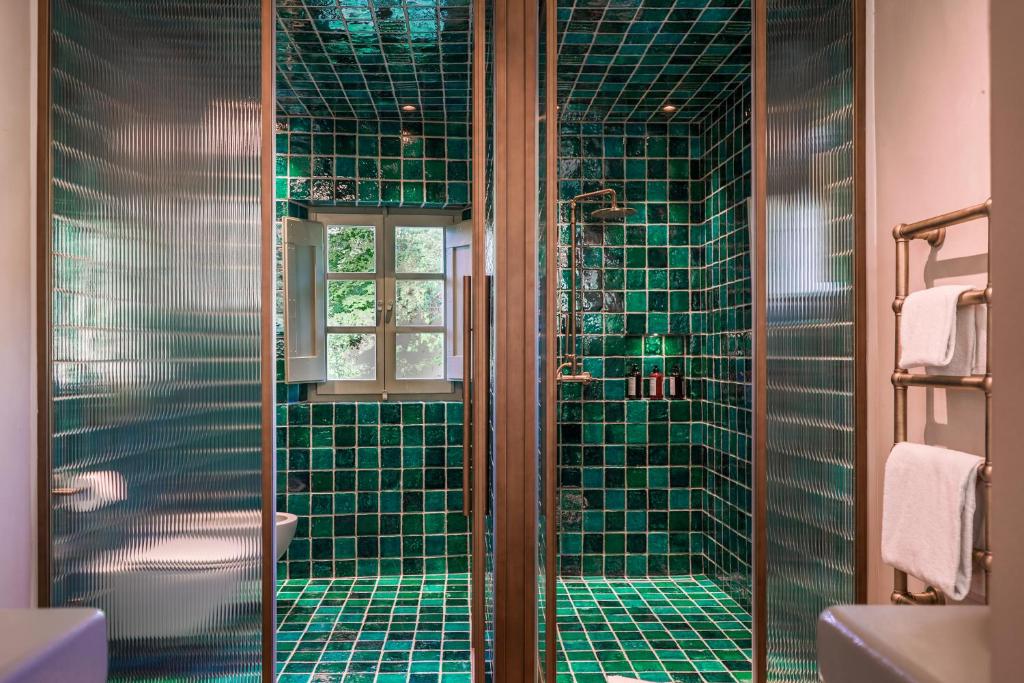
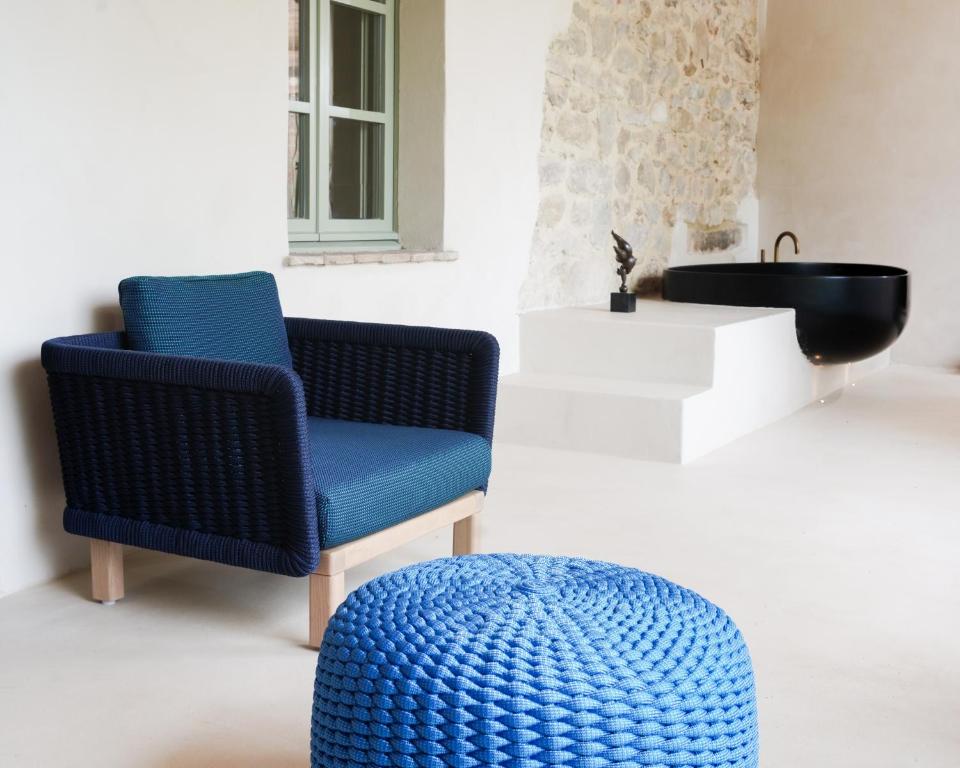
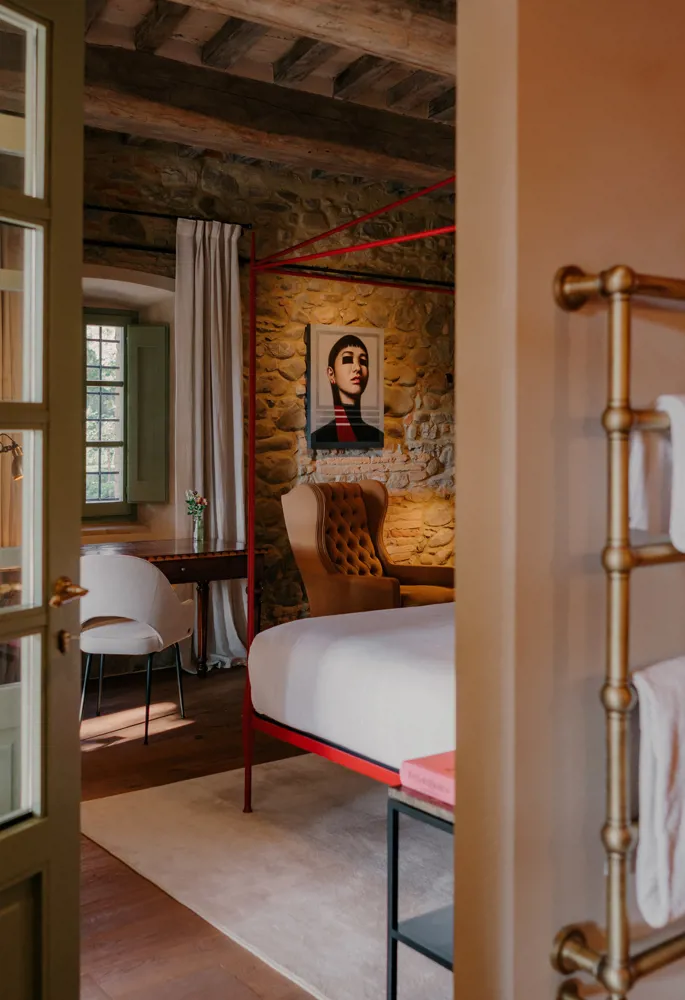
The hotel’s intimate scale is one of its greatest luxuries. With just twelve suites, guests experience a level of privacy rarely found in properties of this size. Eight accommodations occupy the original monastery, while four additional suites are located within a separate annex, each with its own private garden furnished by Varaschin. Throughout the property, rooms combine mid-century influences, custom furnishings, contemporary artwork, and local craftsmanship. Bathrooms feature handmade glazed tiles by Umbrian ceramic specialists Cotto Etrusco, while many suites include dramatic freestanding bathtubs positioned beside loggias, private gardens, or panoramic windows. Some accommodations add private saunas, jacuzzis, and outdoor wellness spaces, creating deeply personal retreats within the larger property.
The Umbrian Good Life
Life at Vocabolo Moscatelli revolves around many of the pleasures that define Umbria itself: food, wine, nature, and time. Guests are encouraged to move slowly. Breakfast can be enjoyed whenever they choose. Long lunches unfold beneath pergolas and olive trees. Evenings often begin with cocktails at Bar Matite before drifting naturally into dinner beneath the stars. The atmosphere feels less like a luxury hotel and more like staying at a beautifully designed country estate.
A Culinary Love Letter to Umbria
The restaurant embraces a contemporary interpretation of Umbrian gastronomy, celebrating the extraordinary produce of the surrounding countryside. Vegetables take center stage, while fish and meat are treated as supporting players rather than the focus of the menu. Chef Lorenzo works closely with local producers, farmers, and artisans, creating dishes that reflect both the season and the region. Truffles, lentils, olive oil, honey, and vegetables sourced from nearby farms appear throughout the menu, often presented with surprising creativity. At nearby Bar Matite, local wines and regional liqueurs replace international brands, reinforcing the property’s commitment to place and authenticity.
Nature, Water, and Wellbeing
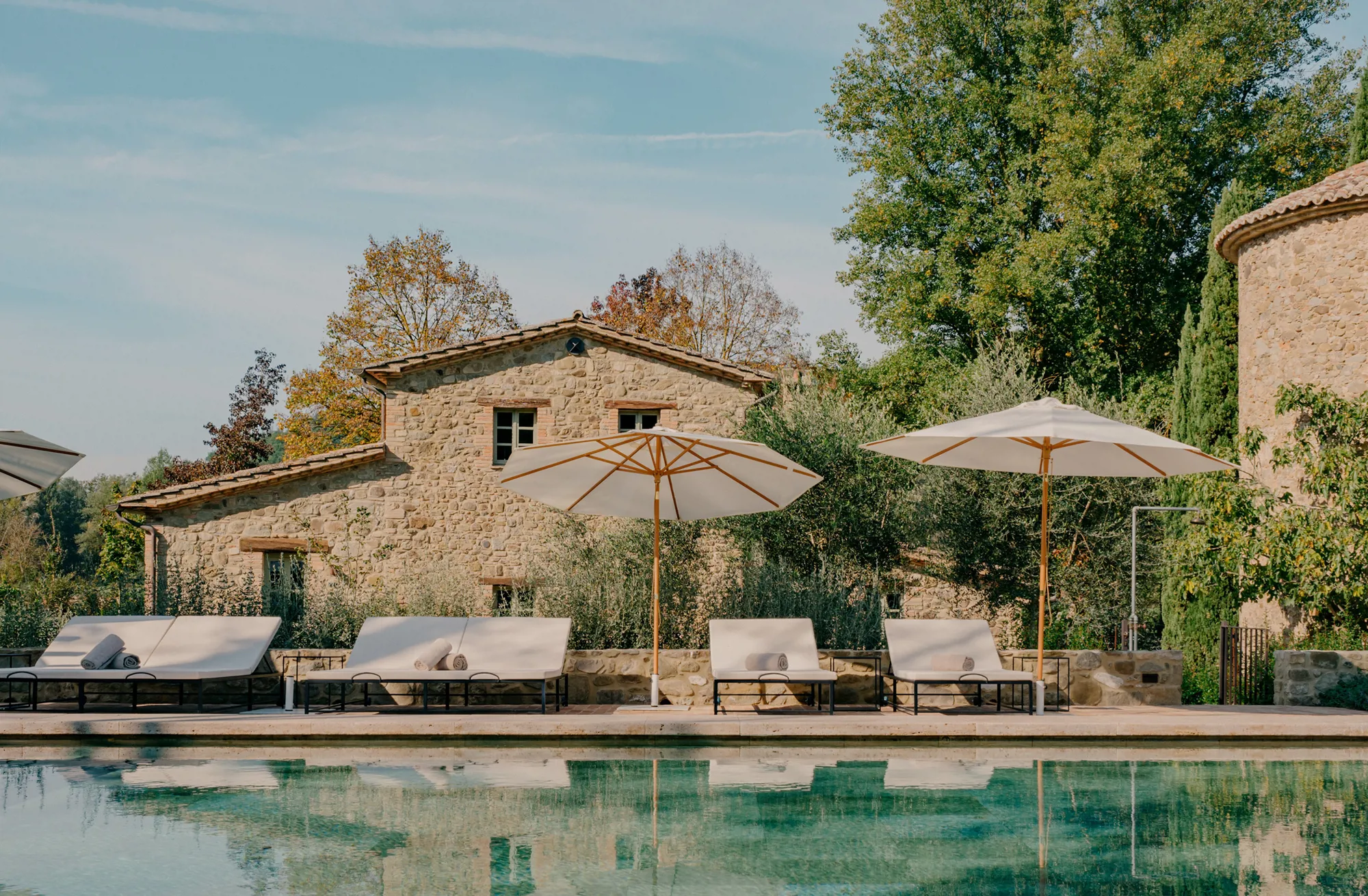
Surrounded by forests, vineyards, and Mediterranean gardens designed by landscape architect Fabiano Crociani, Vocabolo Moscatelli offers a profound sense of connection to its environment. At the center of the grounds lies a striking travertine swimming pool whose tones were carefully chosen to blend with the surrounding landscape. Furnished with pieces by Paola Lenti and Lispi, the pool area remains elegant yet understated, equally suited to quiet morning swims and long summer evenings. Beyond the property, guests can explore medieval villages, vineyards, hiking trails, truffle forests, pottery workshops, and the rich cultural landscape that has shaped Umbria for centuries.
A Contemporary Monastic Escape
Many historic hotels celebrate their past. Vocabolo Moscatelli goes further by allowing history to shape every aspect of the experience without ever becoming constrained by it. The monastery’s architectural heritage, local craftsmanship, contemporary design, and deep connection to the Umbrian landscape create something genuinely distinctive. It is a place of stillness, beauty, and thoughtful simplicity—a retreat where luxury emerges not from excess, but from space, craftsmanship, and a profound sense of belonging. For travelers seeking the quieter side of Italy, Vocabolo Moscatelli offers one of the country’s most compelling design-led escapes.