VOLGA, Mexico City
A monolithic urban retreat where Brutalist architecture, contemporary art, music, and Mexico City energy converge
Why DNA Hotels Loves It
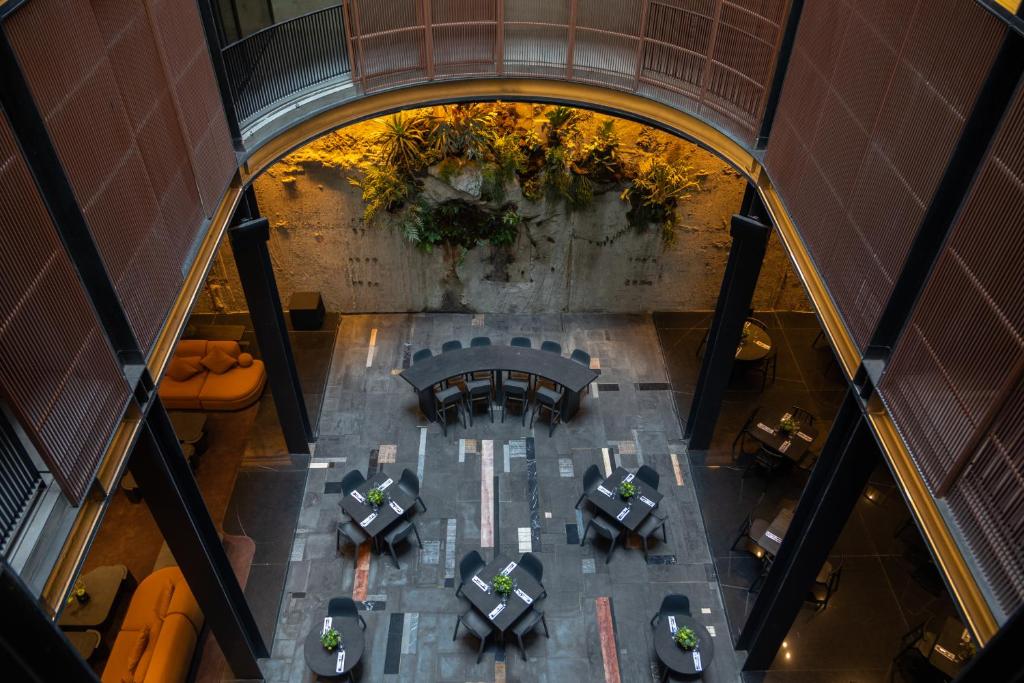
● JSa Arquitectura turns an inward-looking concrete building into a dramatic “urban cenote,” with 49 rooms arranged around a monumental atrium extending from basement to rooftop.
● Natural stone, dark Turkish marble, brass, timber, volcanic rock, and large-scale work by Perla Krauze soften the Brutalist architecture without diluting its power.
● Restaurant, mezcal tasting room, concept store, underground music venue, rooftop pool, and live cultural programming make VOLGA an immersive creative destination rather than simply a hotel.
An Urban Cenote
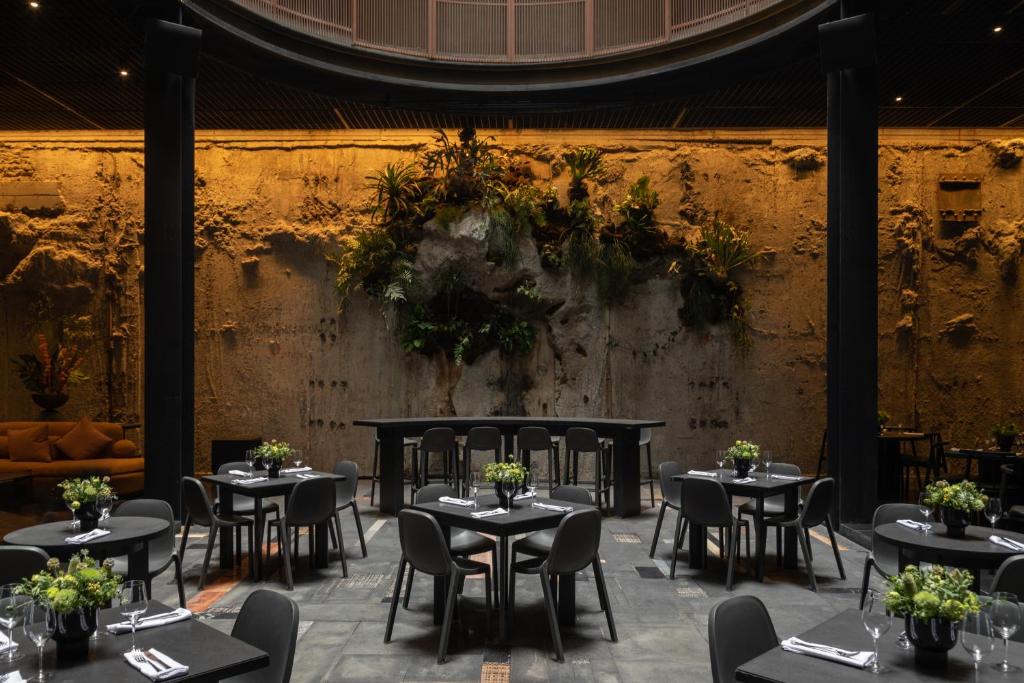
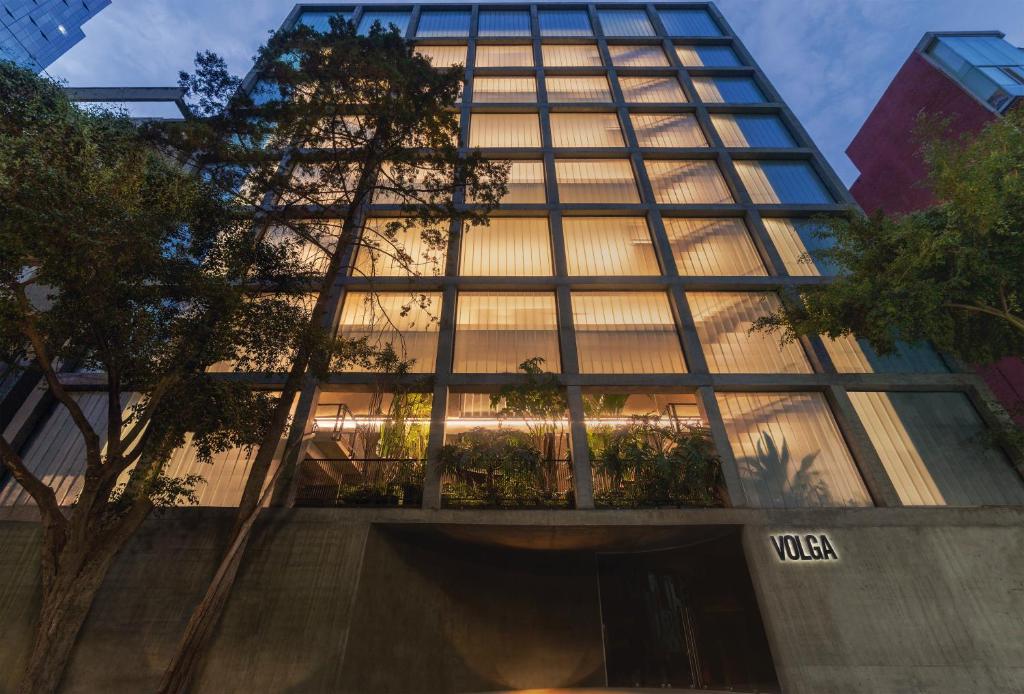
From the street, VOLGA appears almost impenetrable. Its concrete façade rises with the weight and severity of a Brutalist monument, offering only carefully controlled glimpses of what lies inside. On a narrow street in Cuauhtémoc, surrounded by taller, largely unremarkable buildings, that inward-looking character was partly born from necessity. JSa Arquitectura turned it into the central idea. Beyond the façade, the hotel opens around a vast U-shaped atrium that stretches from the basement to a rooftop skylight. Light falls dramatically through the building, iron screens create shifting layers of privacy, and rooms face inward towards a social core filled with plants, art, dining, and movement. The architects describe it as an urban cenote. The comparison feels entirely appropriate.
Brutalism with a Softer Side
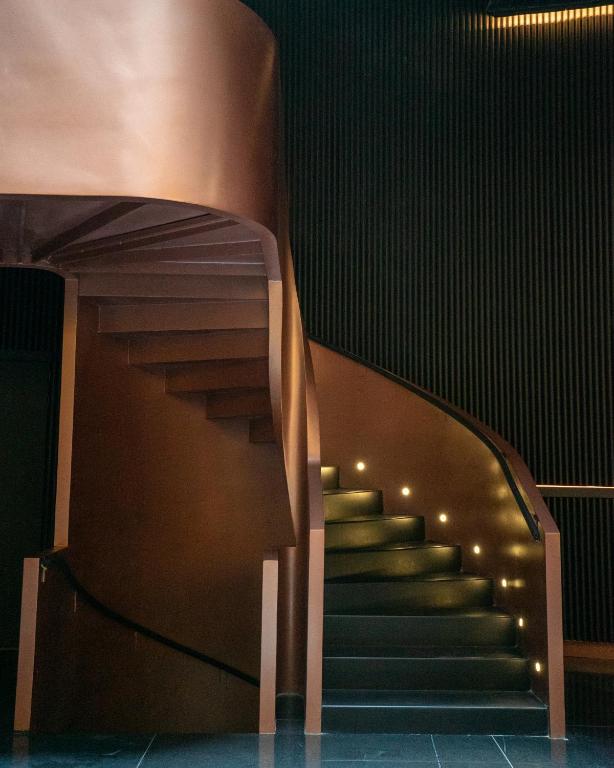
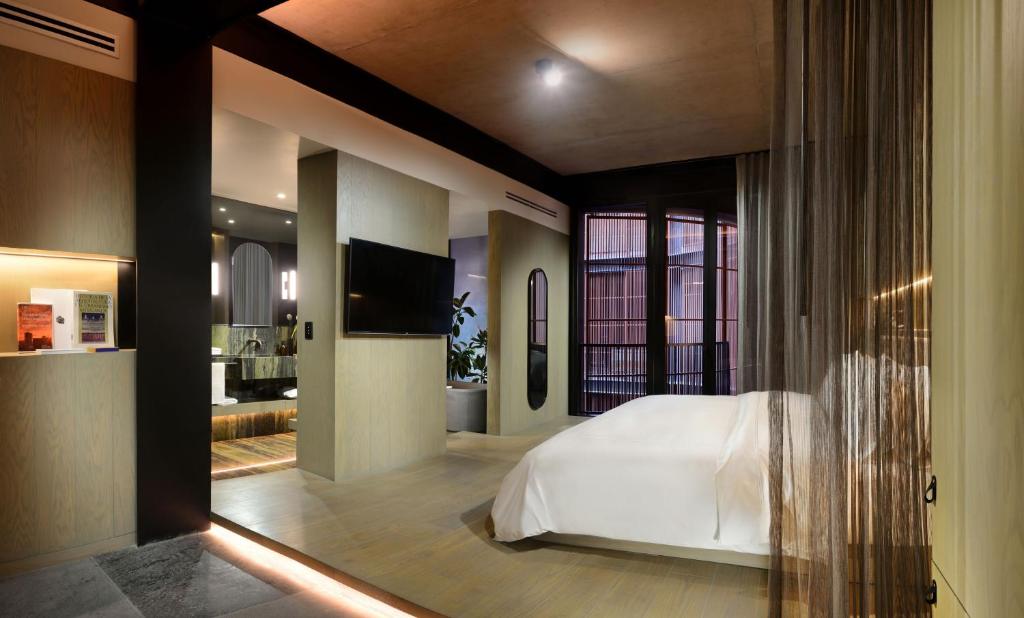
Concrete provides the architectural framework, but VOLGA is far from cold. Dark Turkish marble, volcanic stone, travertine, warm timber, brass, soft upholstery, and abundant planting bring texture and intimacy to the interiors. Cast concrete appears throughout, from the façade and atrium walls to ceilings and custom bathtubs, yet every hard surface is balanced by something tactile or organic. The contrast is what gives the hotel its atmosphere. Monumental architecture meets carefully controlled light. Rough surfaces sit beside polished stone. Black metal and concrete are softened by wood, textiles, vegetation, and muted natural tones. It is Brutalism interpreted as shelter rather than severity.
49 Rooms Around the Atrium
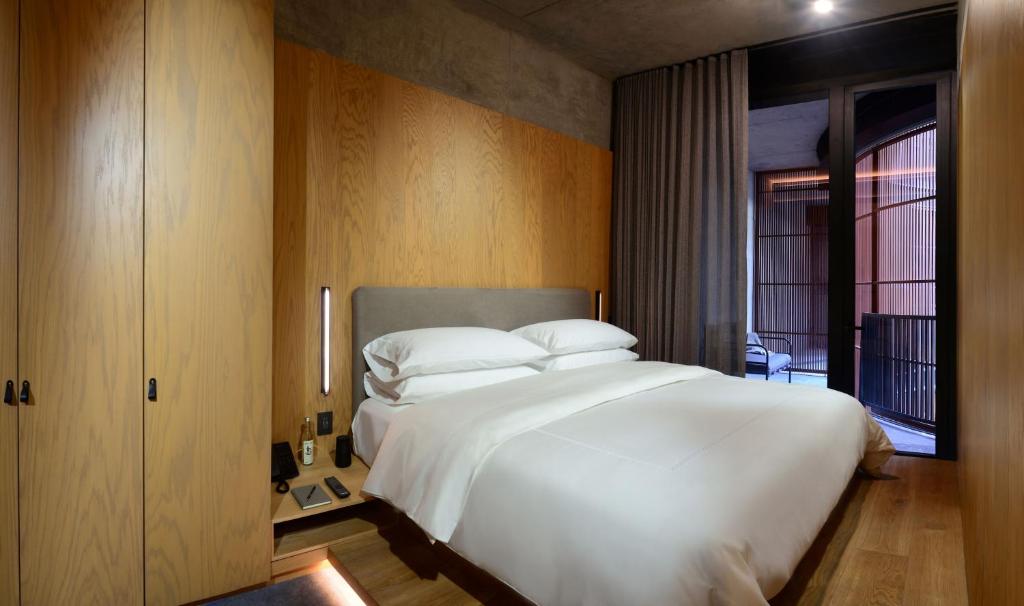
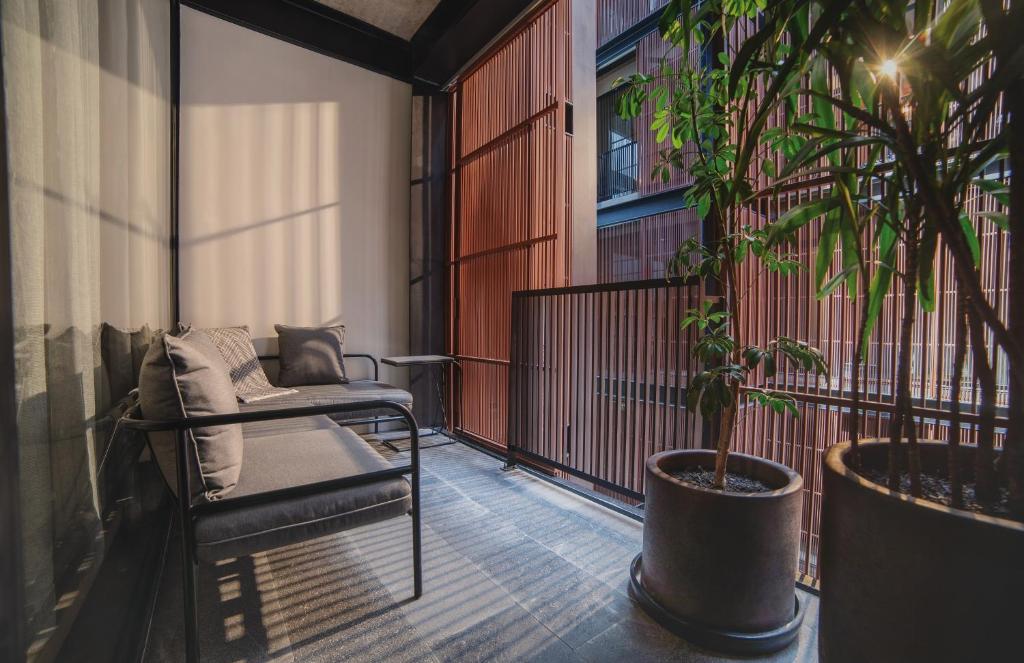
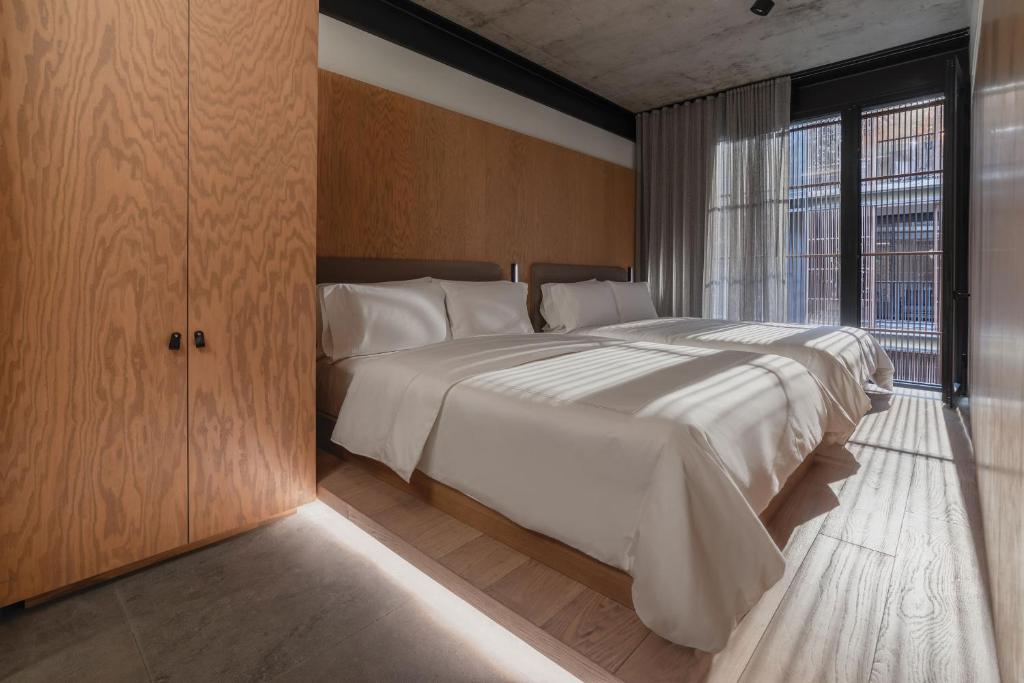
VOLGA contains 49 guestrooms, including 33 deluxe rooms, 14 suites, and two grand suites. Each opens towards the central void, with iron screens that can be adjusted to control privacy while maintaining a visual relationship with the life unfolding below. This creates an unusual tension between retreat and participation: guests can disappear into their rooms or remain subtly connected to the building’s social energy. Inside, the palette remains restrained. Timber panelling, dark marble, custom furniture, atmospheric lighting, and tactile fabrics create rooms that feel calm without becoming anonymous. Suites add sculptural concrete bathtubs, while balconies and screens frame views inward rather than across the city. In a neighbourhood where external vistas were limited, VOLGA creates its own landscape.
Perla Krauze and the Geology of Place
Art is not used as decorative punctuation here. Mexican sculptor and painter Perla Krauze created one of the hotel’s defining installations, drawing on the geology of El Pedregal de San Ángel and the volcanic landscape beneath Mexico City. Lava stone, brass, travertine, and other mineral materials echo both the architecture and the unstable terrain on which the city was built. The work feels less like something placed inside the lobby than another geological layer of the building itself. Smaller artworks appear throughout the hotel, while furniture and objects by young Mexican studios and local makers reinforce the sense that VOLGA belongs to the city’s current creative moment.
A Hotel Built Around Experience
VOLGA was conceived as much around programming as accommodation. At ground level, restaurant Elora brings a Mediterranean perspective through the Japanese-Mexican Edo Kobayashi group, creating a culinary identity as international and hybrid as Mexico City itself. Elsewhere, a mezcalería and tasting table explore one of the country’s most important spirits, while a concept store curated by local tastemaker Sally Gallante introduces fashion, design, and objects into the mix. The hotel also includes exhibition spaces, a meditative garden, and social venues designed to change character throughout the day. Nothing feels fixed. VOLGA operates more like a cultural platform than a traditional luxury hotel.
Music Below, Sky Above
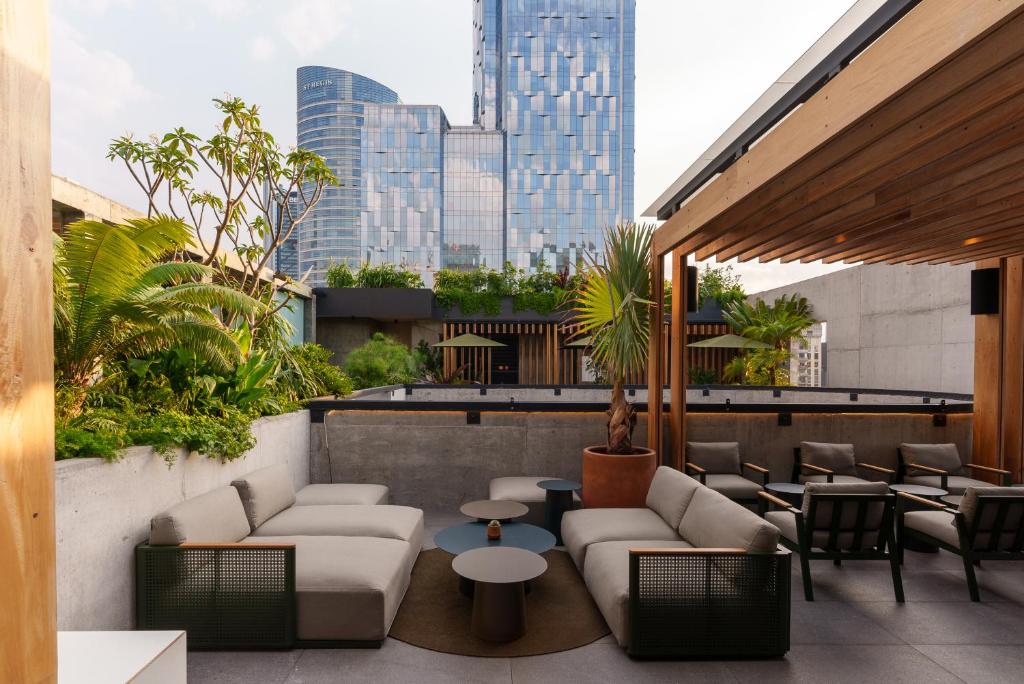
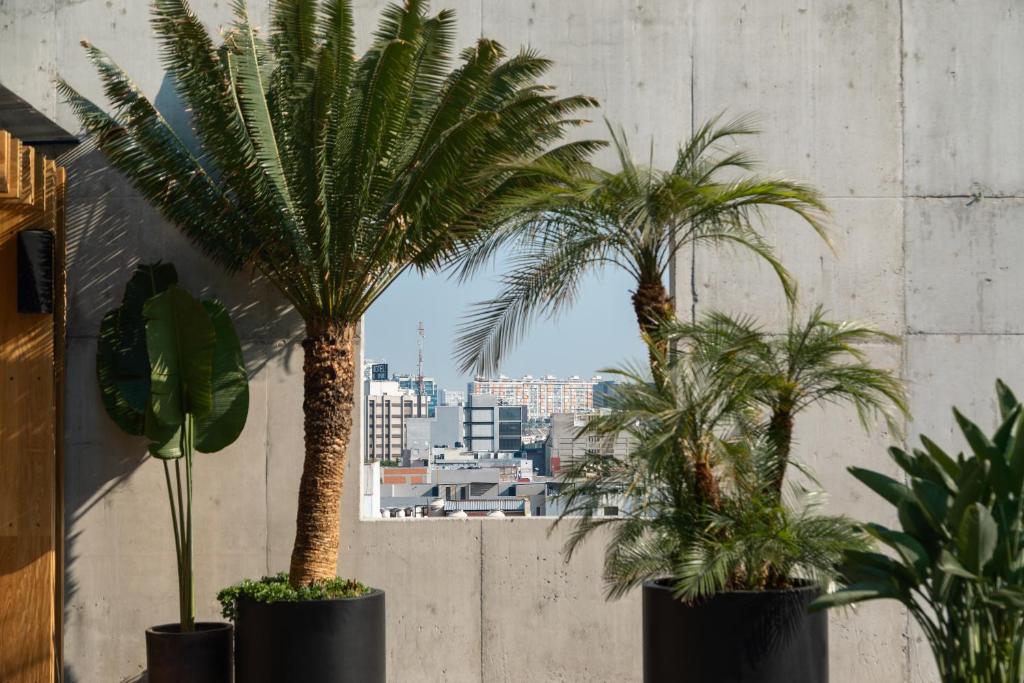
Some of the hotel’s strongest spaces are hidden underground. A private music room and Minos cocktail bar shift into DJ-driven nightlife after dark, using the building’s subterranean levels to create something intimate, immersive, and slightly cinematic. Upstairs, the rooftop offers a complete change of mood. A compact pool, sun deck, planting, live performances, and views across the surrounding city introduce air and openness after the compressed drama below. The vertical journey through the building becomes part of the experience: concrete darkness underground, filtered light through the atrium, then open sky at the top.
Cuauhtémoc at the Door
VOLGA sits one block from Paseo de la Reforma, between the energy of Roma, Juárez, and Mexico City’s financial centre. Restaurants, galleries, bars, design studios, and cultural institutions are all close at hand, yet the hotel does not depend entirely on its neighbourhood for atmosphere. It creates a self-contained world of its own. That could easily have resulted in an isolated luxury bubble. Instead, events, music, exhibitions, food, and collaborations continuously reconnect the building with the creative culture outside. The hotel looks hermetic. Its personality is anything but.
Why It Works
VOLGA succeeds through contradiction. Its exterior is monumental, but its interiors feel intimate. Its architecture is Brutalist, yet filled with warmth, art, and vegetation. It offers retreat, but is built around music, food, events, and cultural exchange. JSa Arquitectura turned an awkward urban site into a powerful inward-looking world, while Perla Krauze, local designers, artists, and hospitality concepts give that world soul. Bold, atmospheric, and constantly evolving, VOLGA feels less like somewhere to observe Mexico City from a distance than a concentrated expression of its creative intensity.