W Sardinia – Poltu Quatu, Italy
W grows up on the Costa Smeralda, trading glossy excess for Sardinian craft, coastal textures and a hidden harbour
Why DNA Hotels Loves It
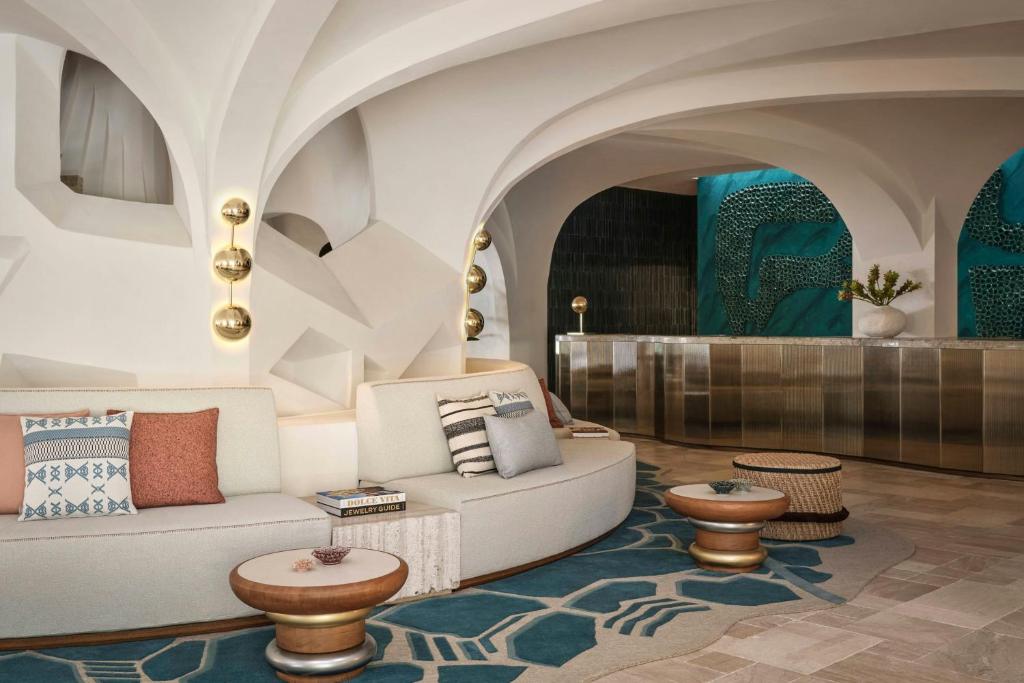
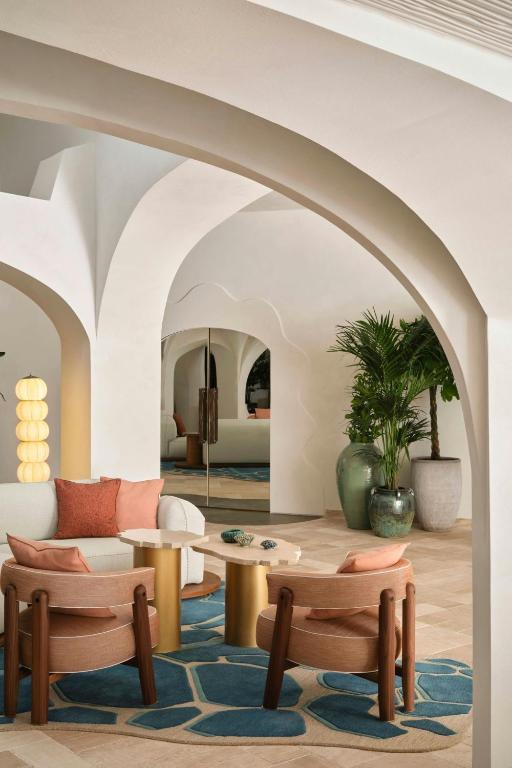
● Meyer Davis gives the W formula a distinctly Sardinian identity, replacing the brand’s old high-gloss aesthetic with tactile materials, organic forms, local stone and an impressive collection of island-made art and craft.
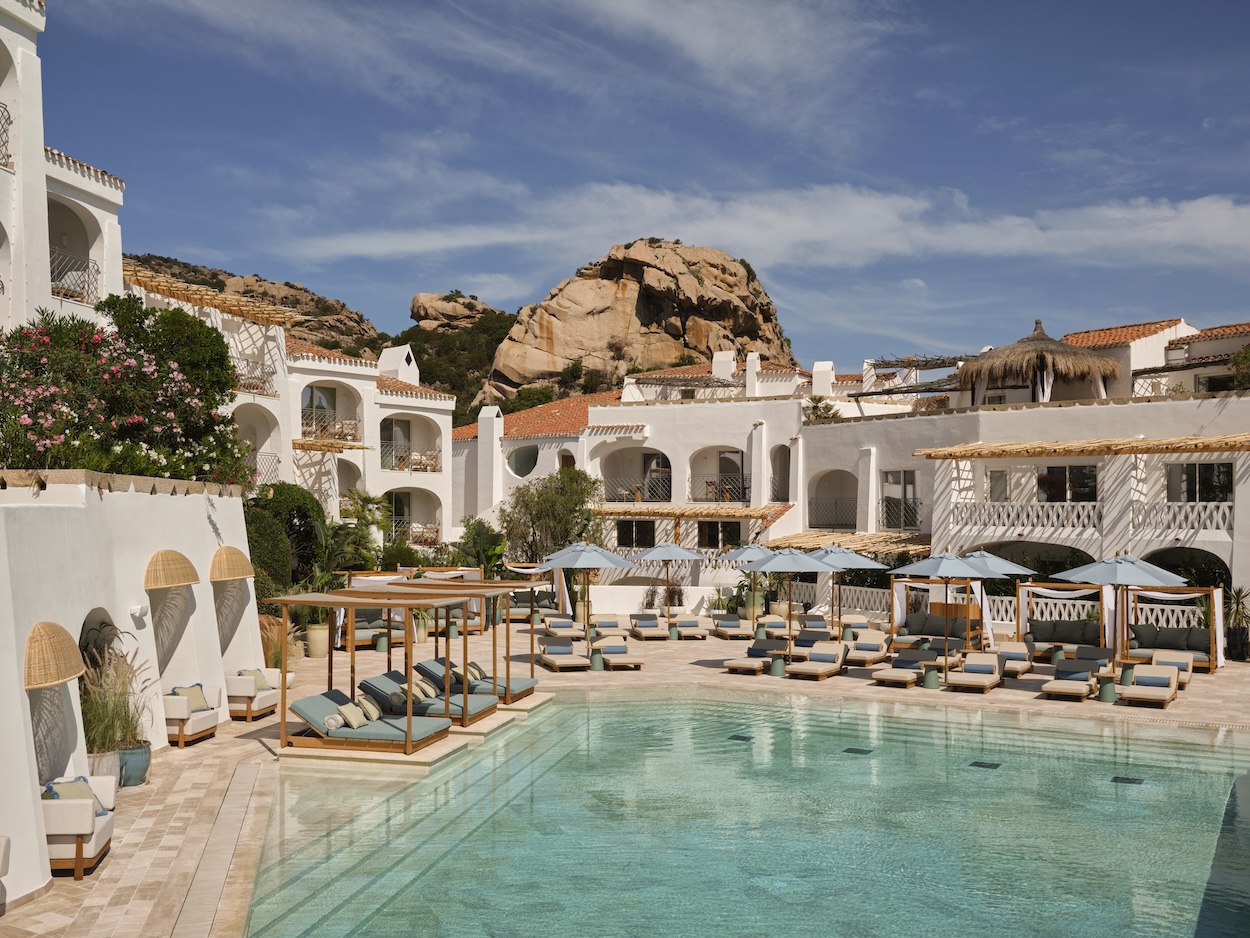
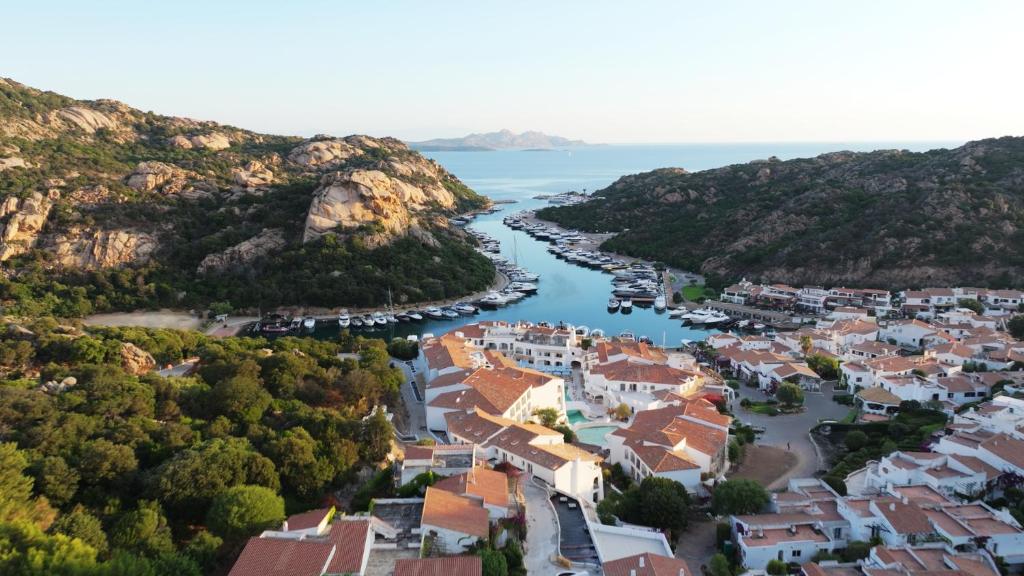
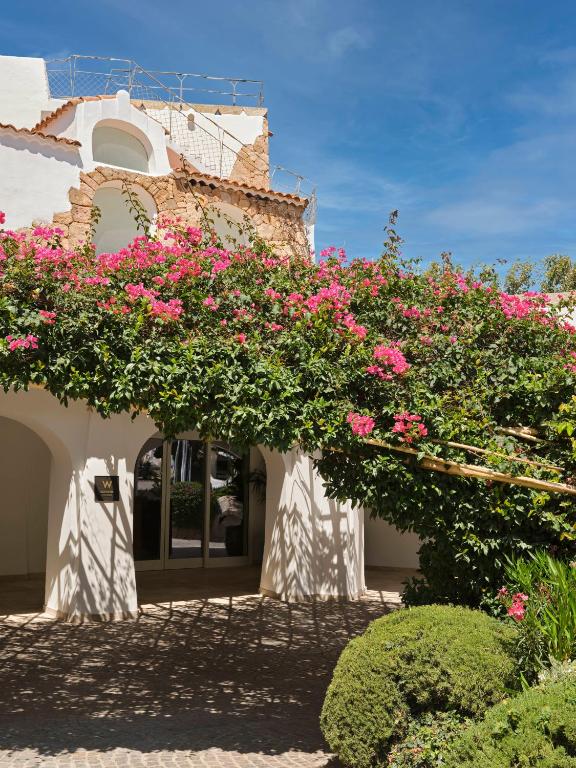
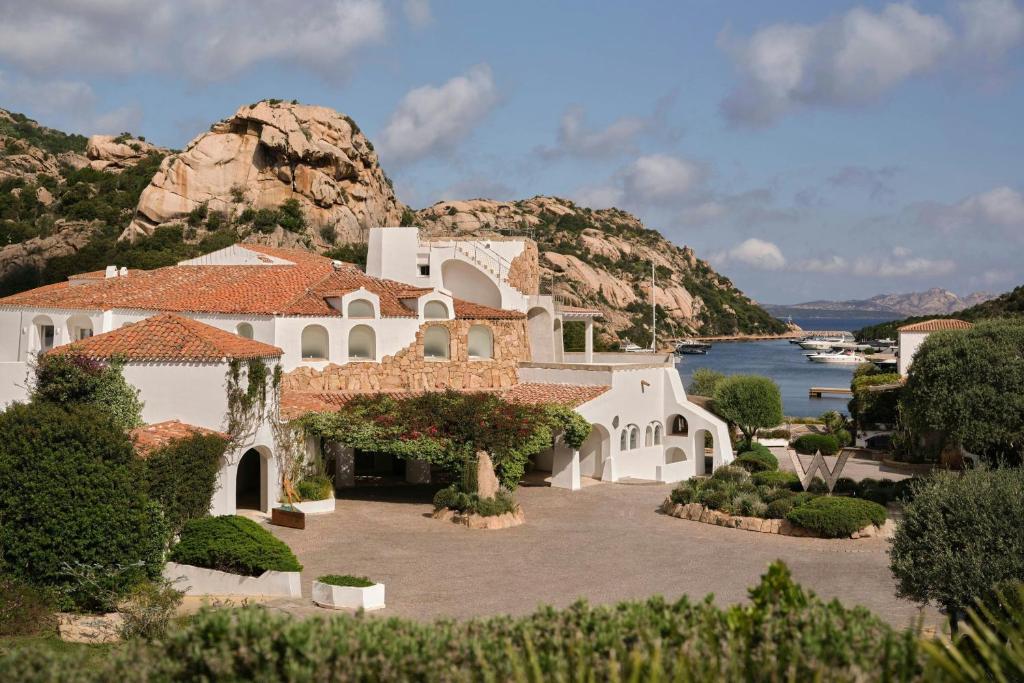
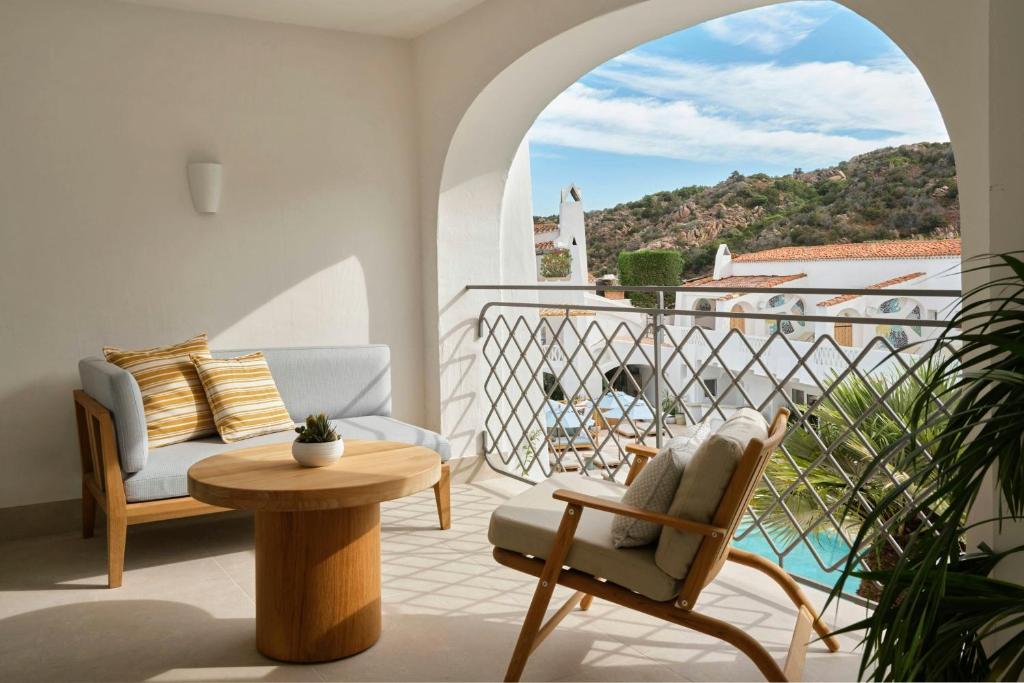
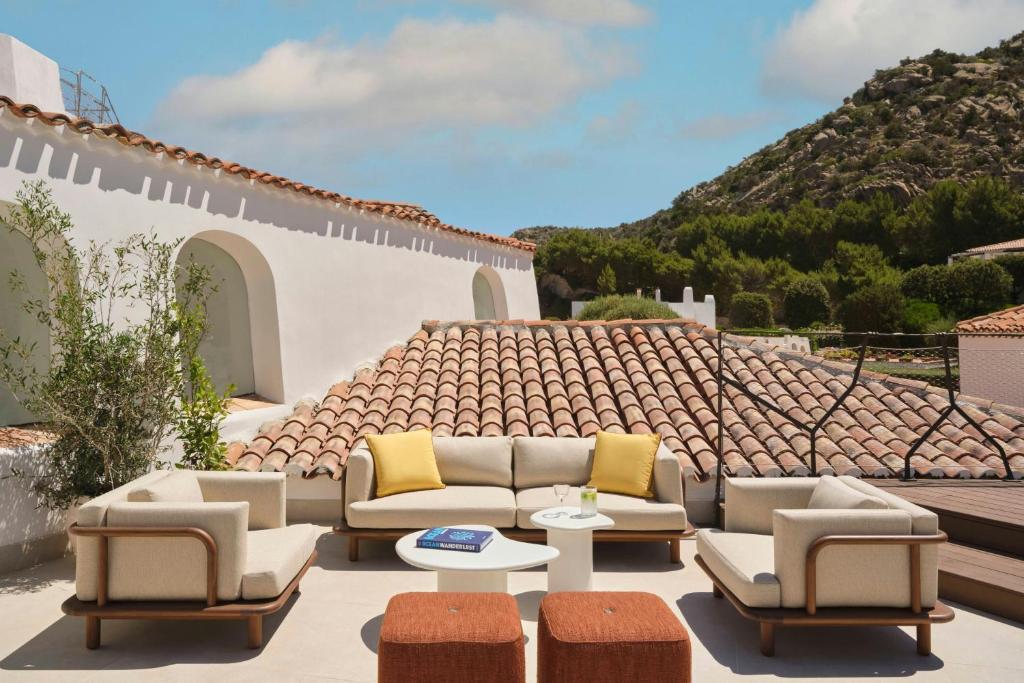
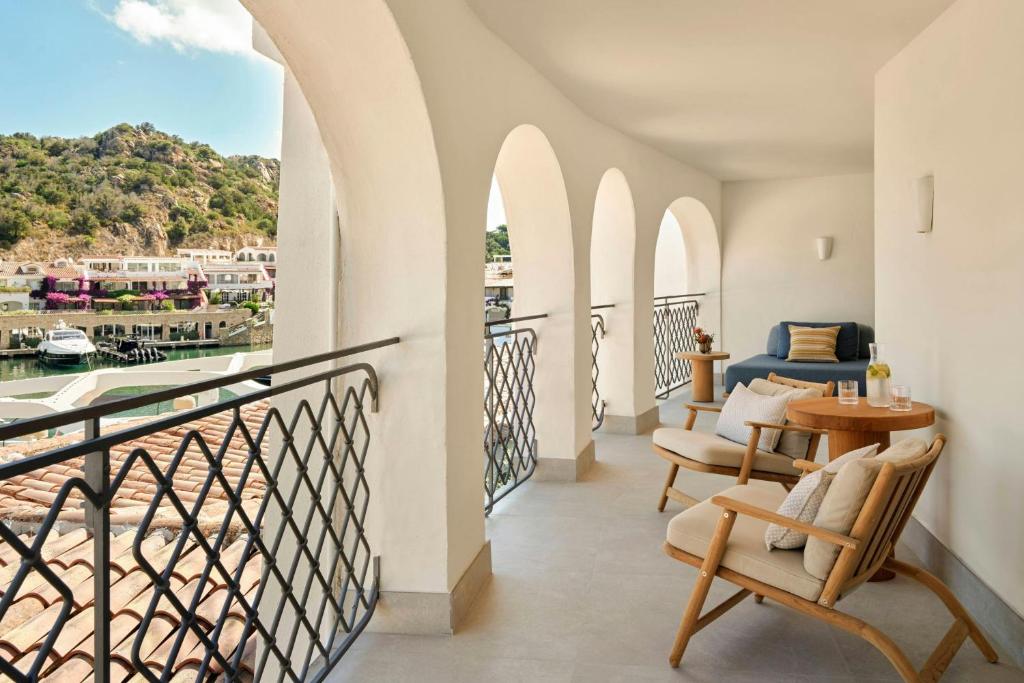
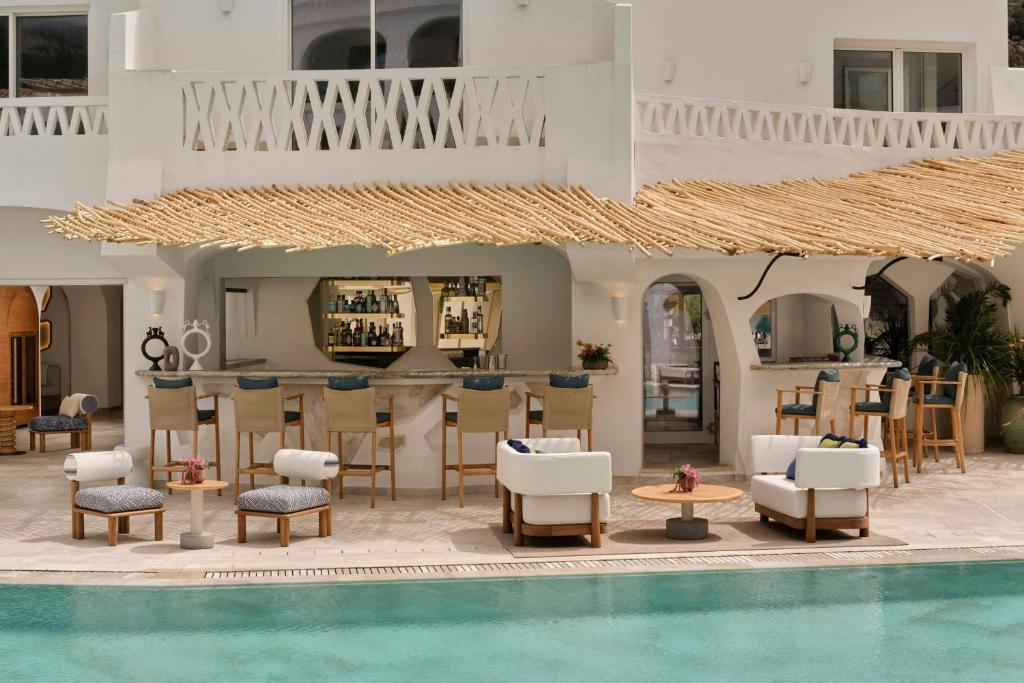
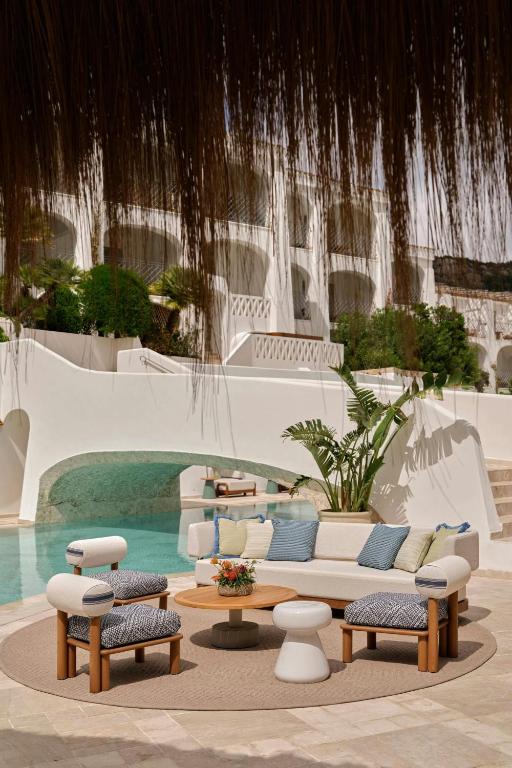
● The existing whitewashed architecture by Jean-Claude LeSuiss tumbles down towards the natural fjord of Poltu Quatu, its irregular arches, terraces and original pool making the resort feel part of the village rather than dropped onto the coast.
● It still has the social energy you expect from W—poolside music, sunset aperitivos, TANIT overlooking the marina and late-night DJ sets—but this time the party comes wrapped in a much more sophisticated sense of place.
W, But Not as You Know It
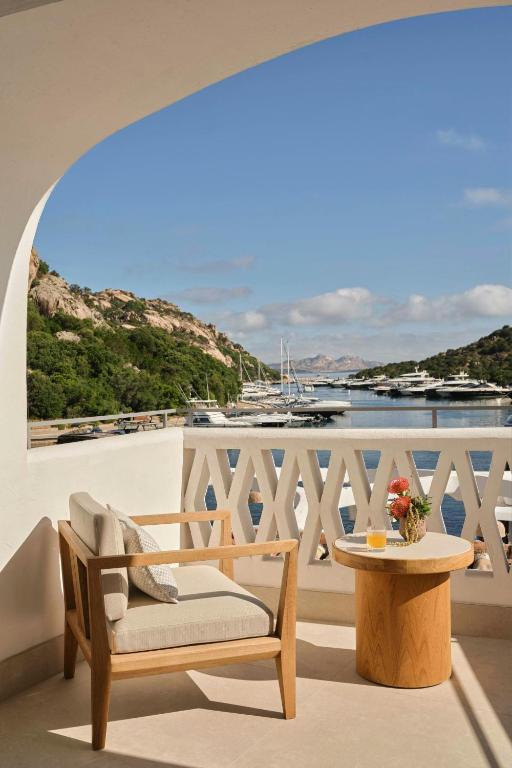
For anyone who remembers W Hotels at its early-2000s peak, there was a fairly recognizable formula: dark interiors, shiny surfaces, purple lighting and a lobby that desperately wanted to become a nightclub after sunset. W Sardinia – Poltu Quatu suggests the brand has grown up. Set between Porto Cervo and Baia Sardinia on Sardinia’s spectacular northeast coast, the hotel occupies a natural fjord whose name, Poltu Quatu, translates as “hidden port.” Granite cliffs almost conceal the marina from the open sea, while white buildings cascade towards turquoise water below. It would have been easy to import another piece of international lifestyle-hotel theatre here. Instead, W has looked at Sardinia. And the result is considerably more interesting.
A Village Already Written into the Landscape
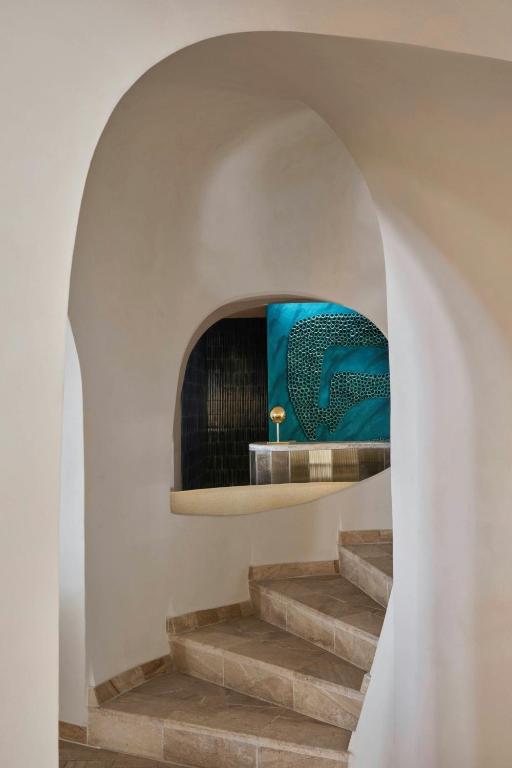
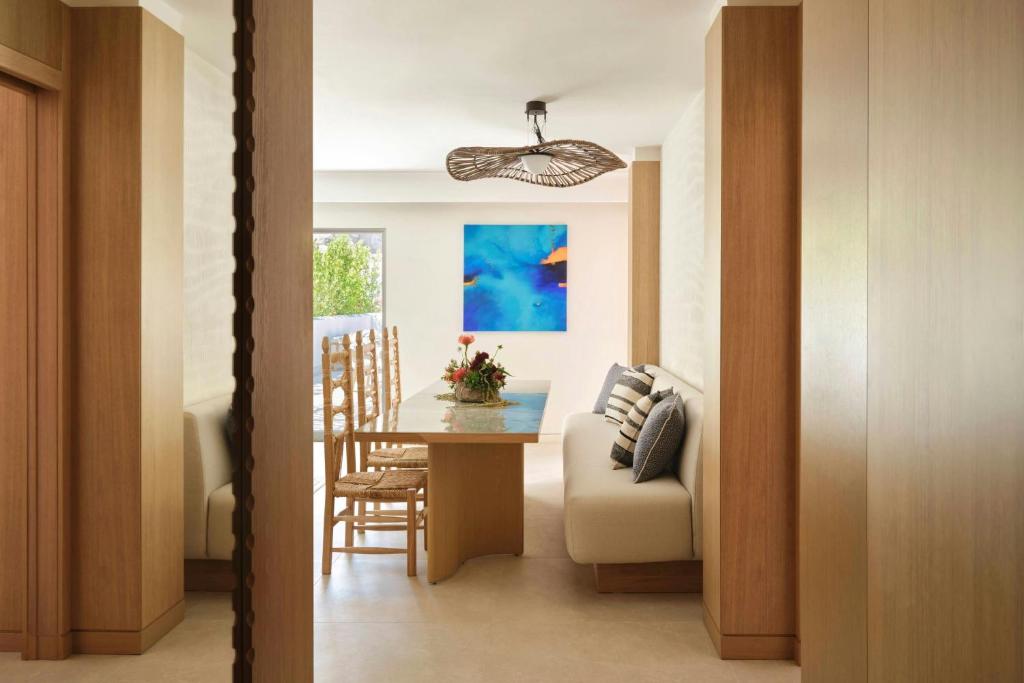
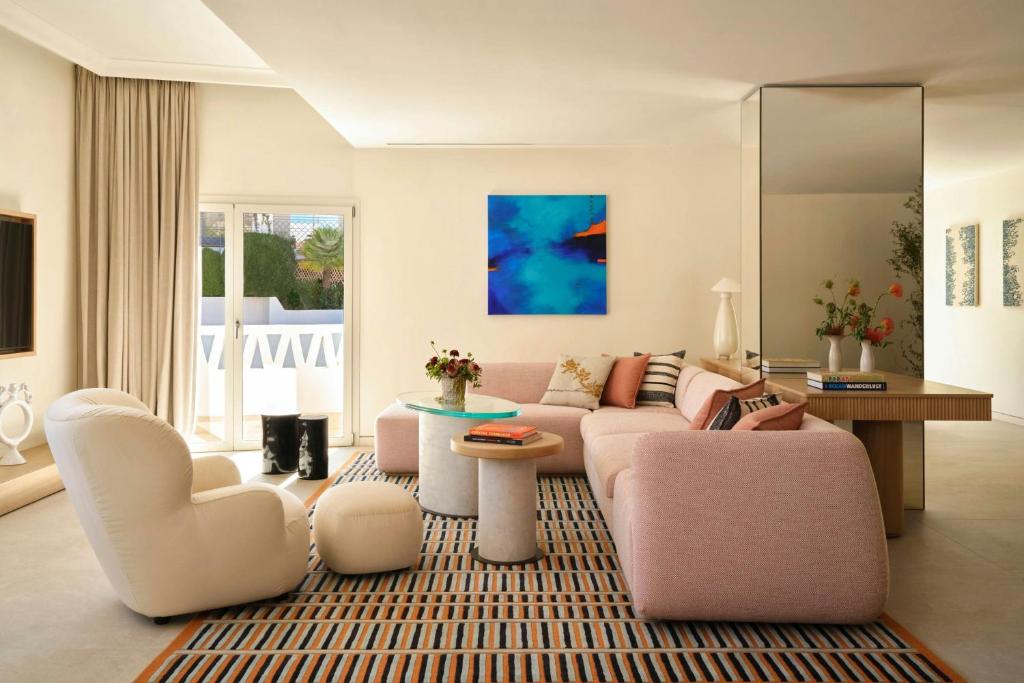
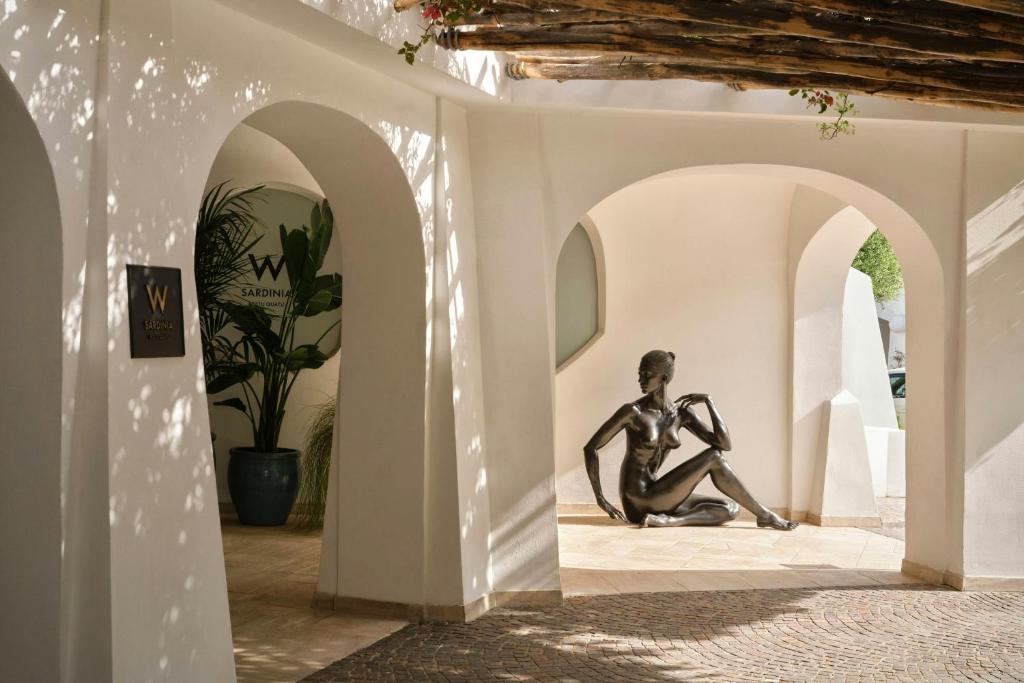
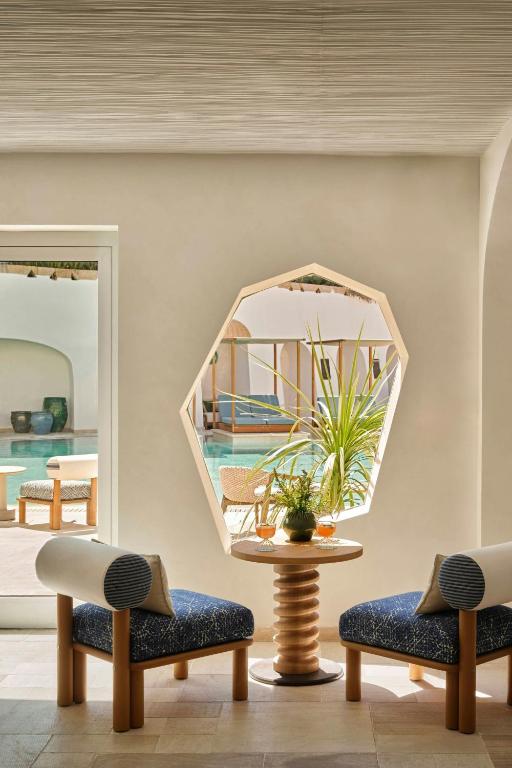
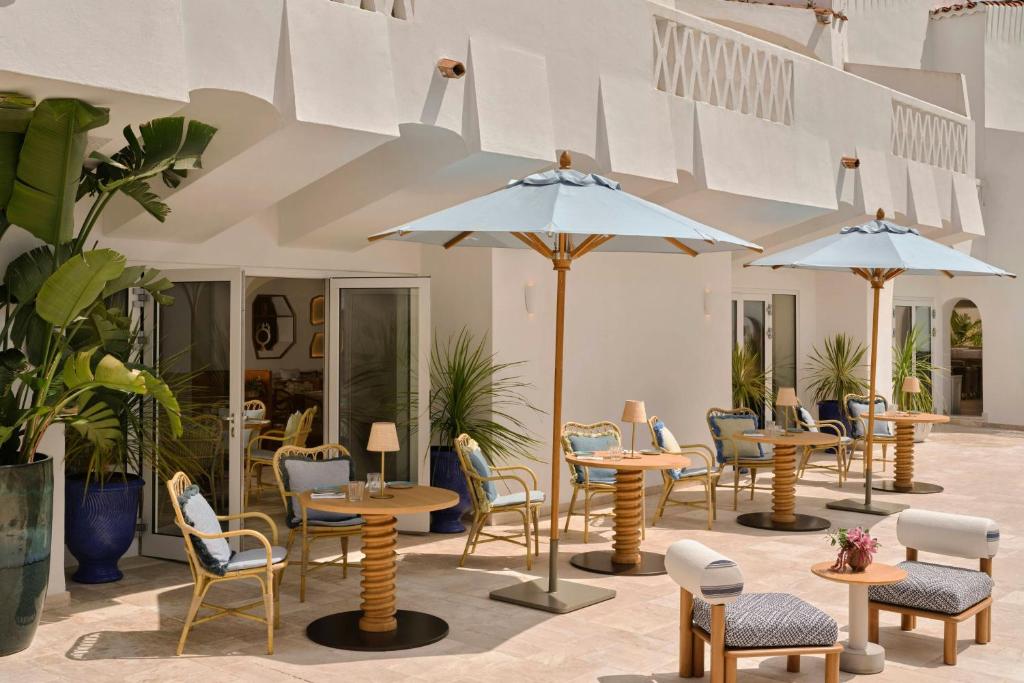
The starting point was unusual because much of the architecture was already here. The original resort was designed by Jean-Claude LeSuiss, who created a collection of whitewashed buildings that climb and descend with the rocky terrain. Their irregular arches—including the distinctive occhio di bue, or bull’s-eye openings—give Poltu Quatu an almost dreamlike Mediterranean character. Architecture studio DE.TALES worked with that existing fabric rather than erasing it, while New York design studio Meyer Davis, also responsible for W Rome, transformed the interiors. Crucially, some of the strongest elements were left alone. The architecture, much of the flooring and even the original swimming pool were retained. Against them, Meyer Davis introduced a softer vocabulary of sand, stone, cedar, sun-washed timber, marine blues and the pink-orange tones of a Sardinian sunset. The hotel feels less designed for Instagram than many earlier W properties. That is progress.
Sardinia, Layer by Layer
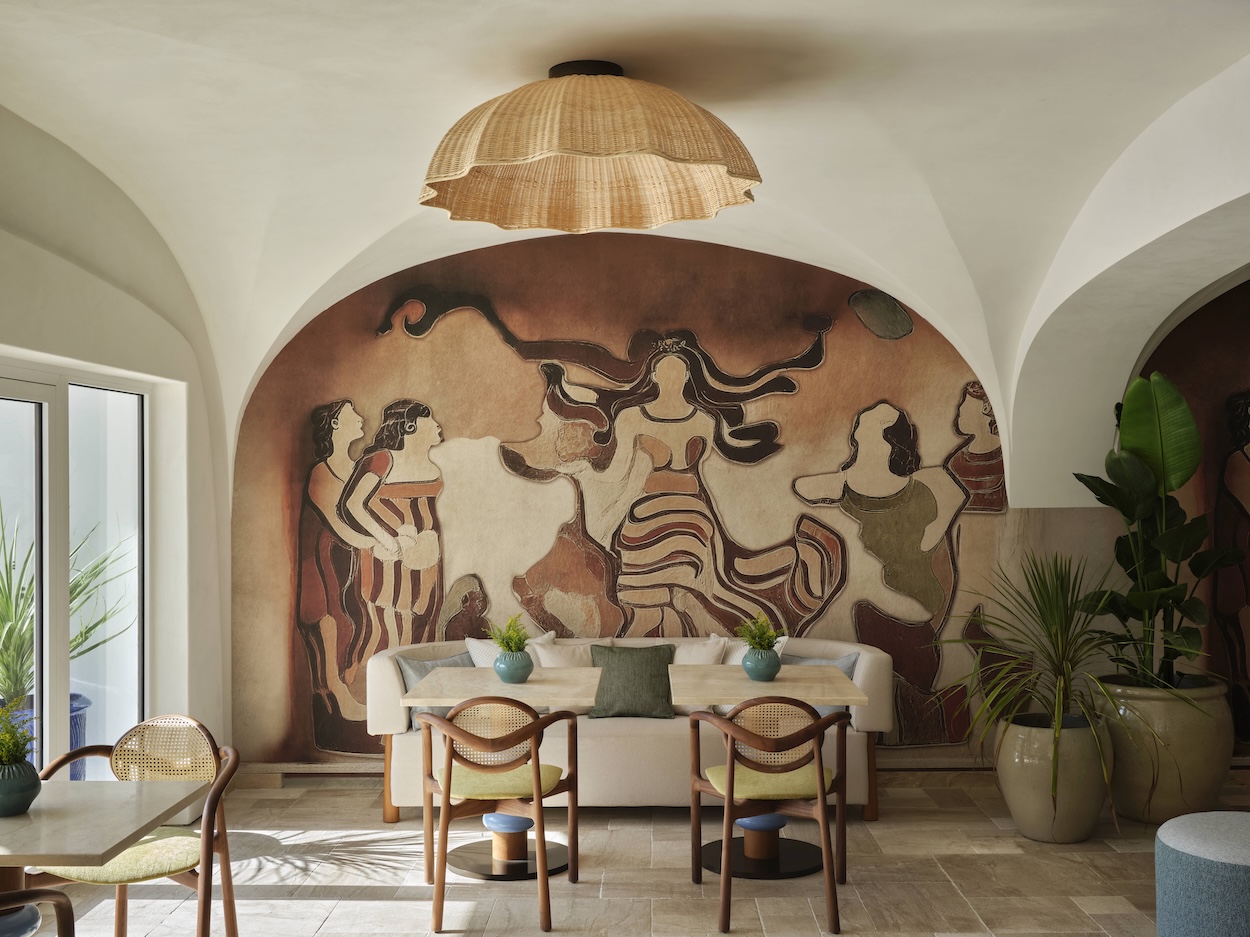
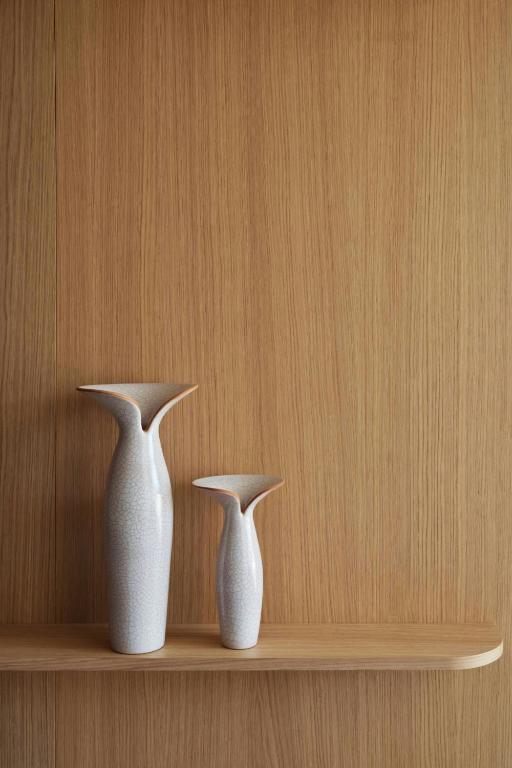
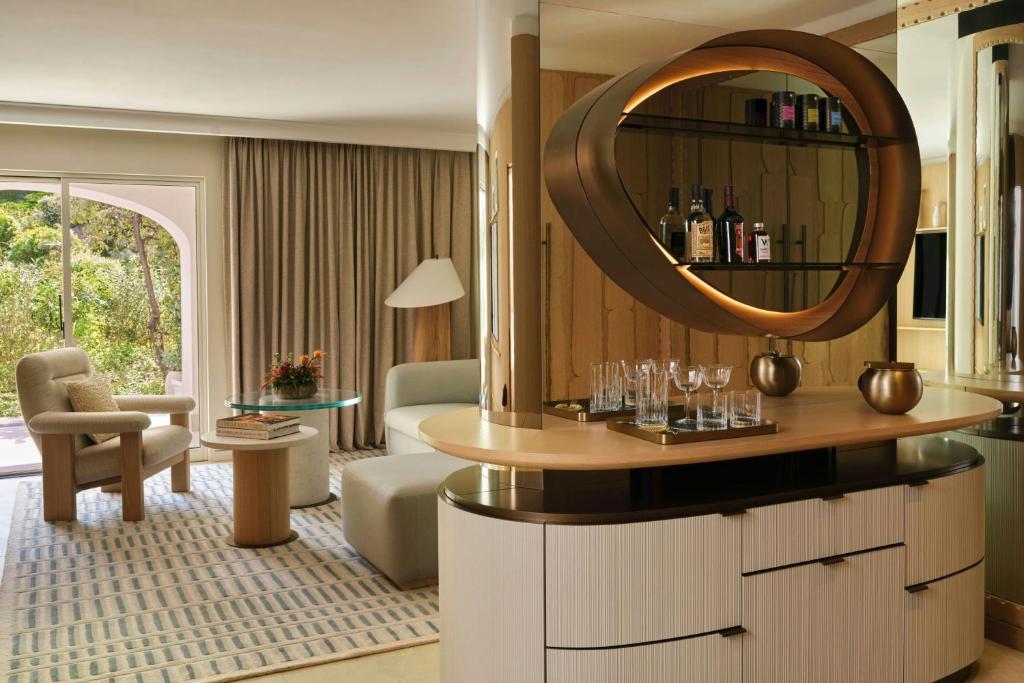
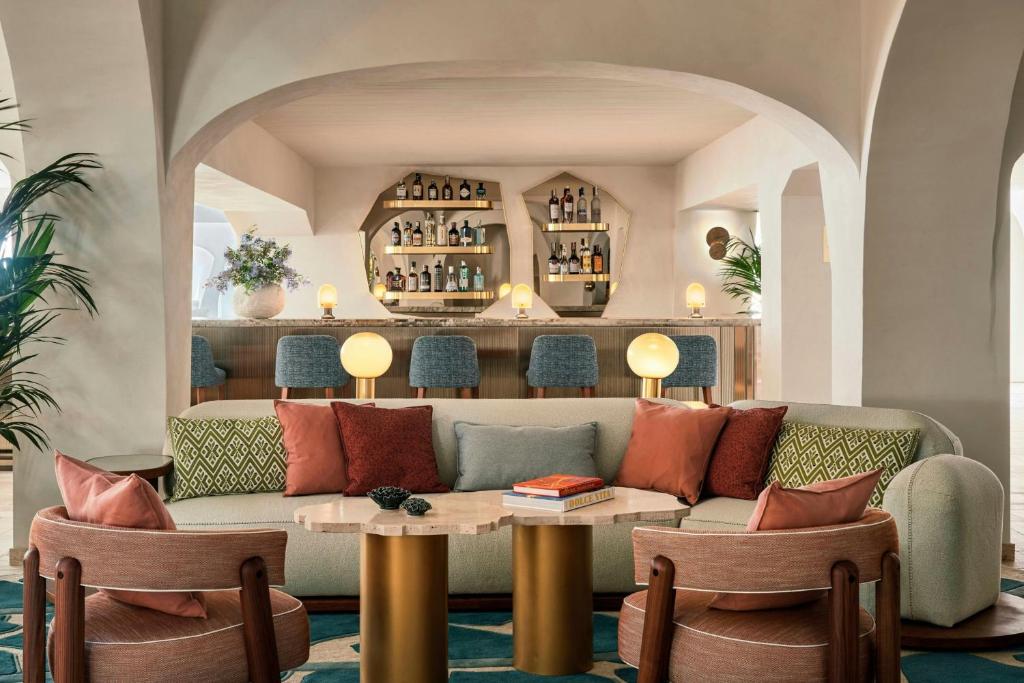
The real strength of the transformation is how deeply the designers have mined the island without resorting to obvious Mediterranean clichés. In the W Lounge, the starting point is the legend of the Janas, mysterious fairy-like figures said to inhabit Sardinia’s ancient rock-cut chambers. Cave-like forms, hammered metals, mirrored surfaces and Orosei marble evoke grottoes and submerged archaeological fragments. Elsewhere, the references become more contemporary. A steel-and-clay W sculpture by Sardinian artist Nicola Filia marks the arrival. Ceramist Luca Scassellati created a sculptural wall inspired by underwater forms, while works by Sardinian artists and makers appear throughout the property: ceramic vessels by Walter Usai, tapestries by Fabrizio Sanna, paintings by Cinzia Murgia and aerial photography by Giuseppe Chironi. It gives the hotel something that large international lifestyle brands frequently struggle to achieve: local character that doesn’t feel like decoration added at the end.
157 Rooms, One Island Palette
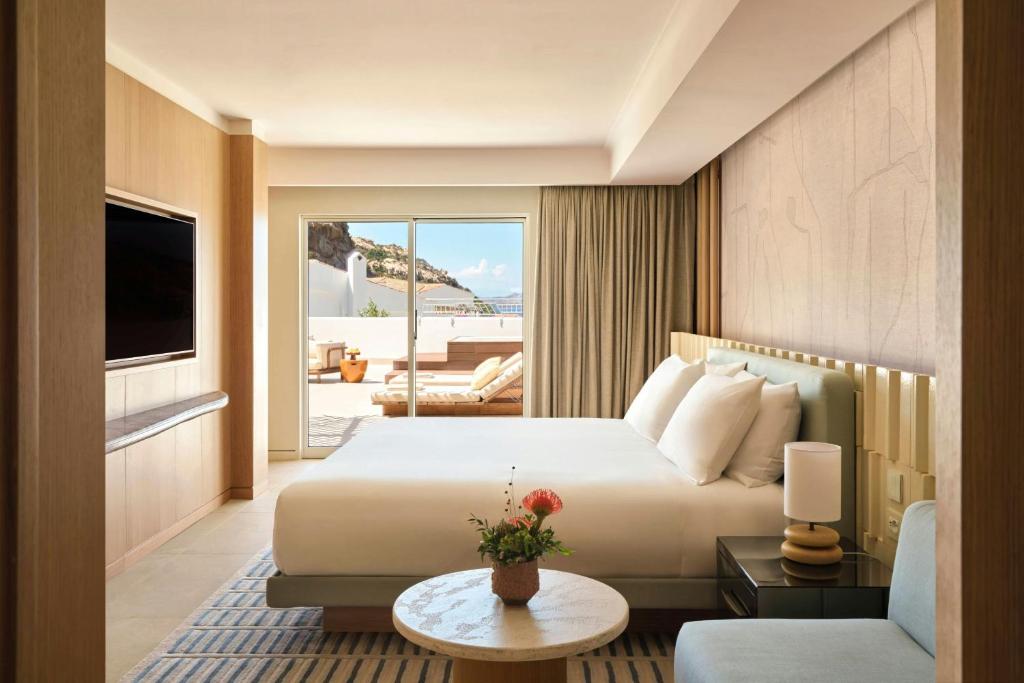
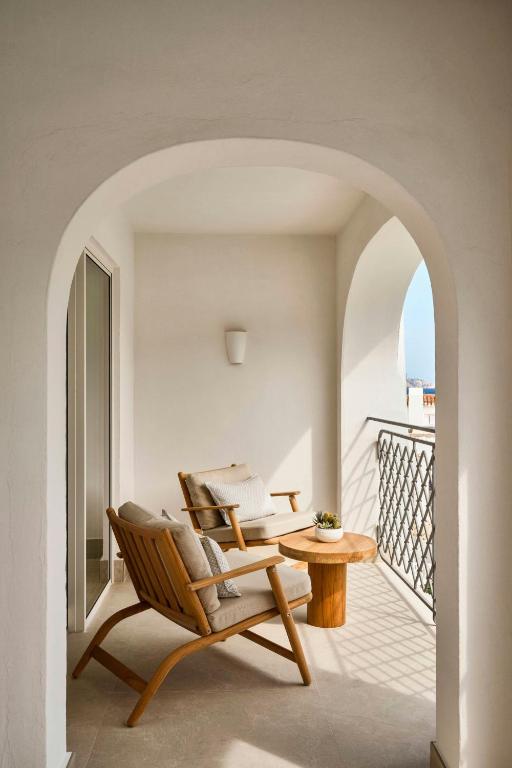
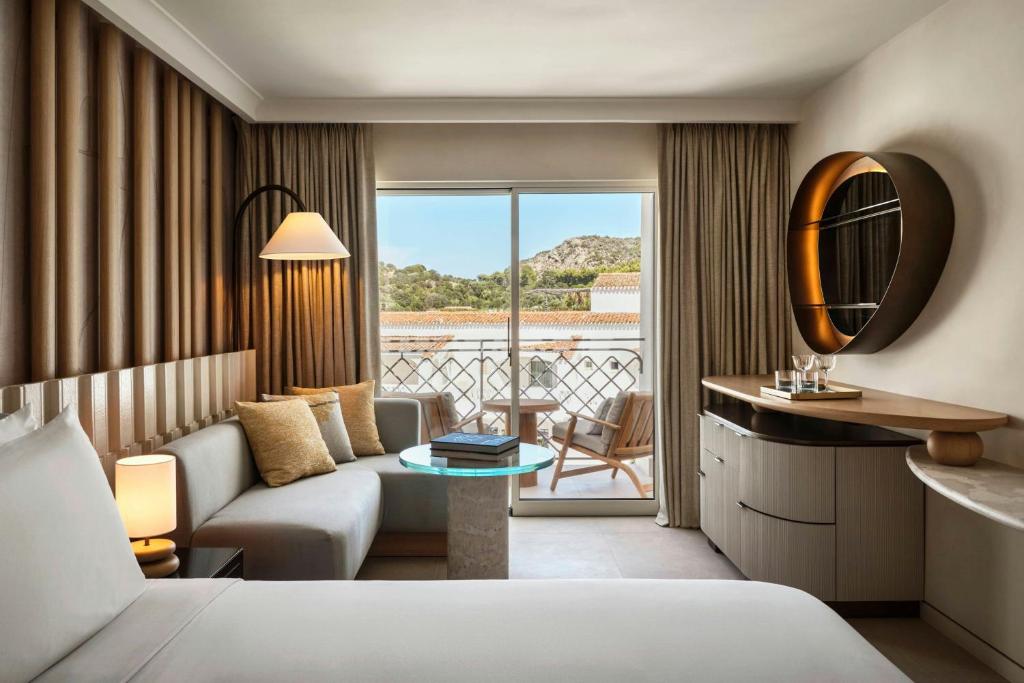
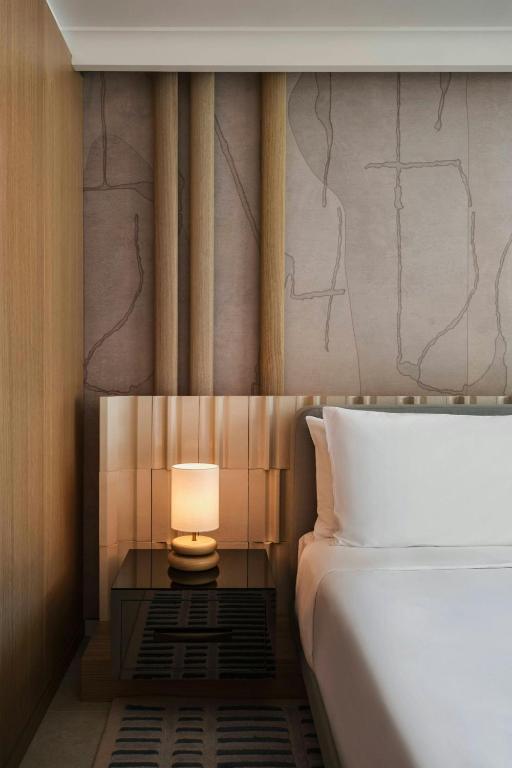
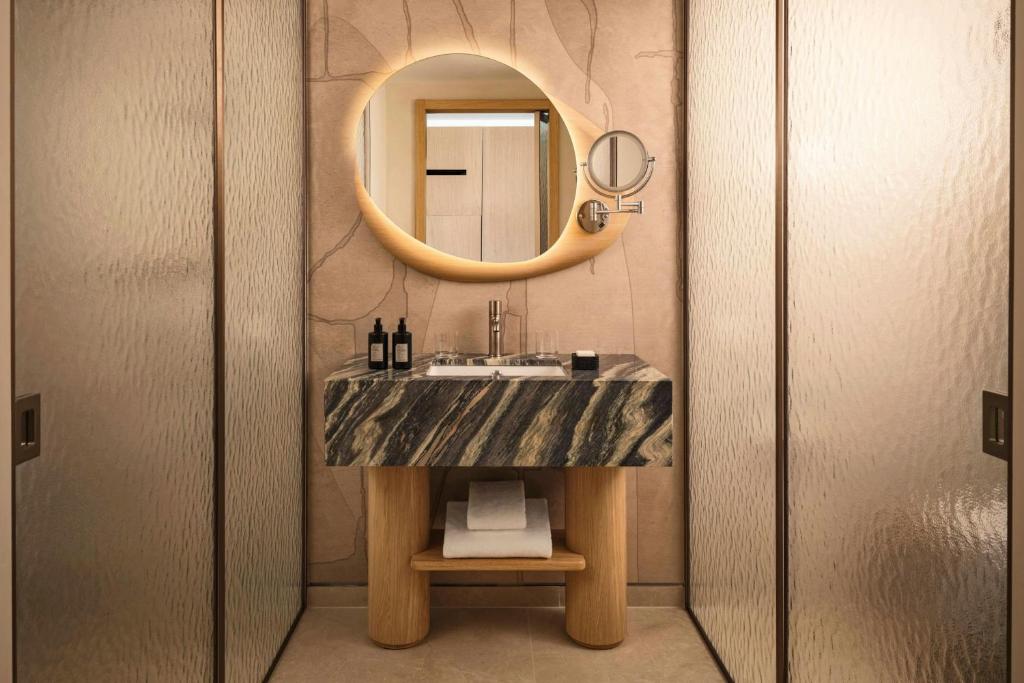
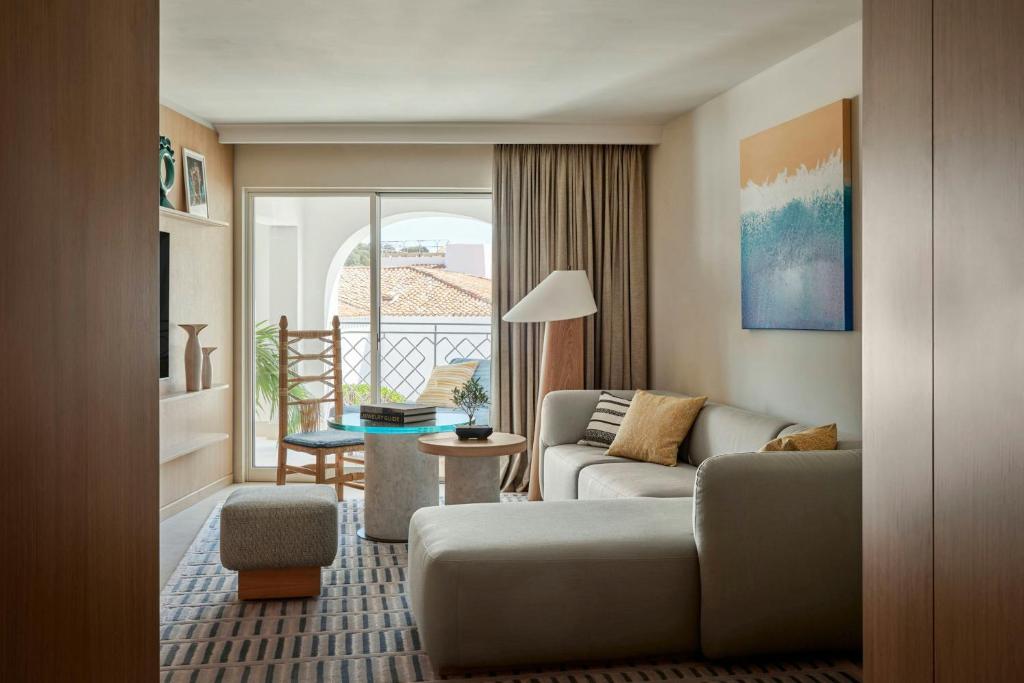
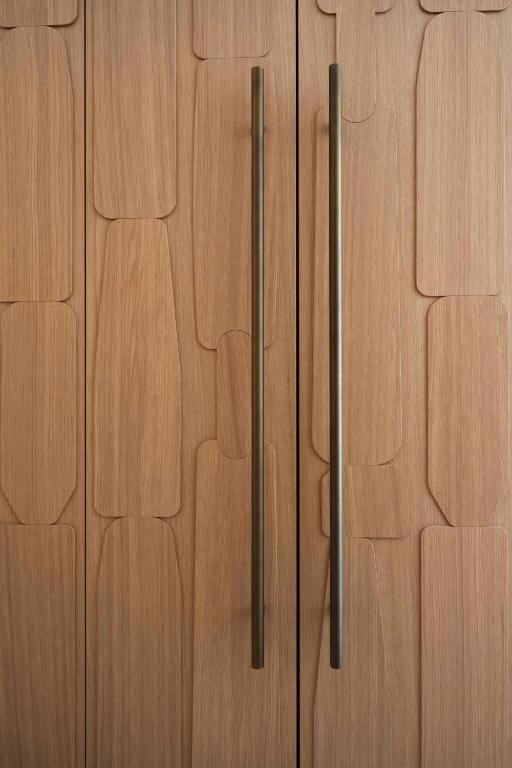
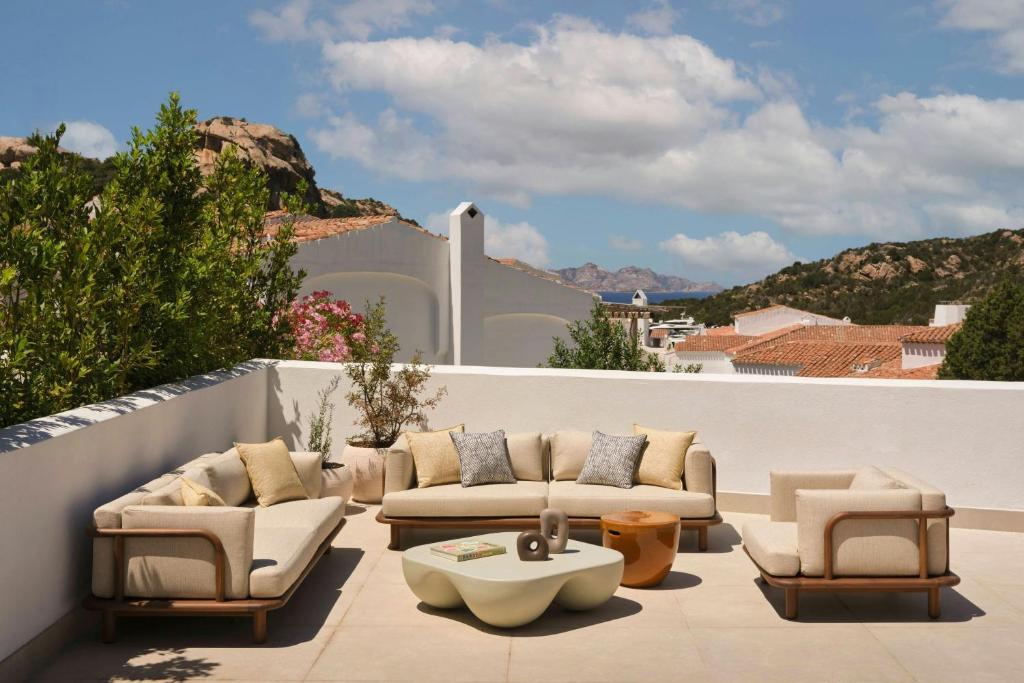
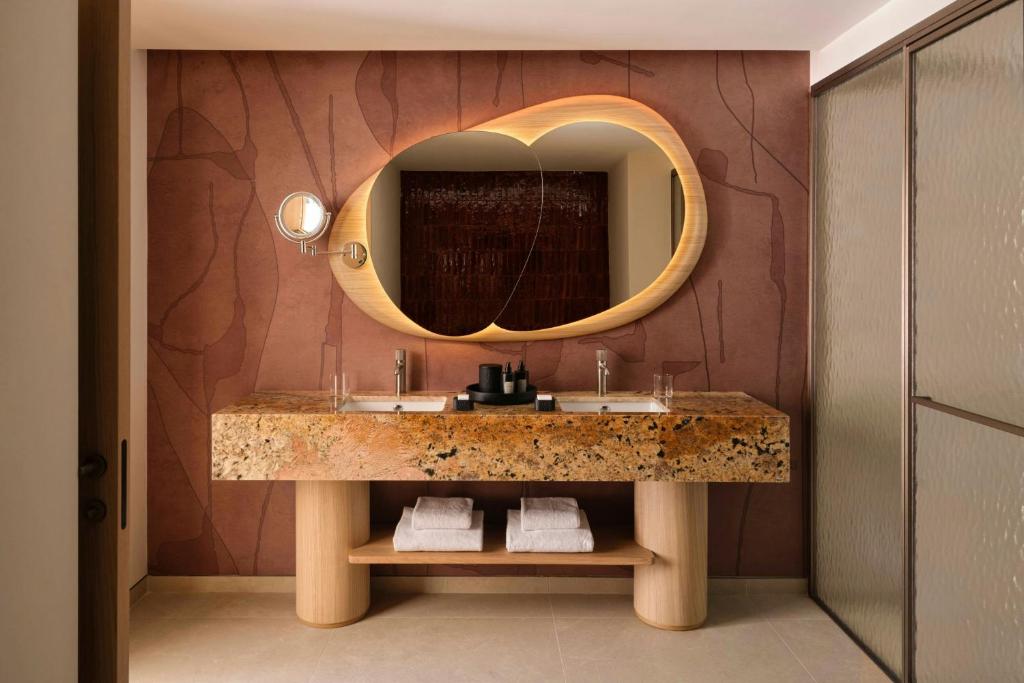
The 157 rooms and suites continue that quieter approach. Forget nightclub glamour. Here there are whitewashed walls, cedar joinery, rounded forms, textured surfaces and colours borrowed from the landscape outside. Stone cabinetry brings its own dramatic veining. Mirrors overlap like ripples on water. Sea blues interrupt otherwise sandy, sun-bleached palettes, while locally produced pieces and artworks add personality. Some suites have private plunge pools, while the two Penthouse Suites turn the experience into something closer to a private Mediterranean residence, with large terraces, their own pools, kitchens and bars overlooking the coastline. It is still unmistakably W. Just with the volume turned down.
The WET Deck Still Has a Pulse
Don’t misunderstand that newfound restraint as silence. This remains a W Hotel, and its WET Deck is very much designed to be seen. The pool sits among the resort’s sculptural granite landscape, surrounded by daybeds and architectural cabanas. A bridge crossing above it functions suspiciously well as a catwalk, while music gradually shifts gear as afternoon becomes evening. The difference is that the social energy now feels integrated into the resort rather than defining the entire experience. Spend the morning by the pool. Take a boat from the private marina to hidden coves and islands. Return for an aperitivo. Stay as the DJs arrive. Or don’t. For once, W seems comfortable giving you the choice.
TANIT and the Taste of the Island
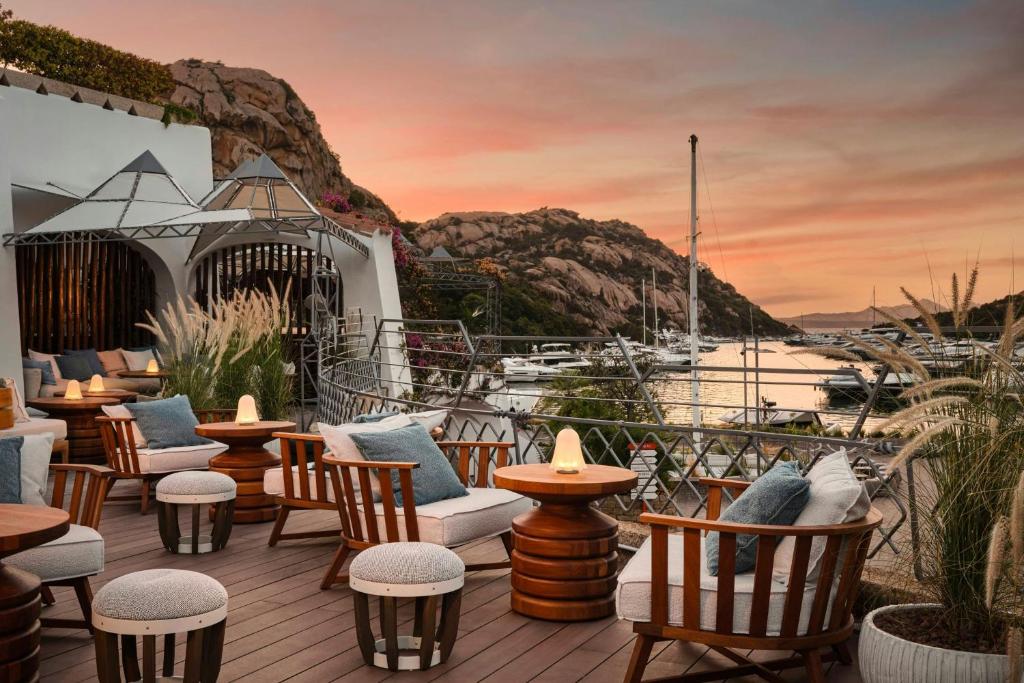
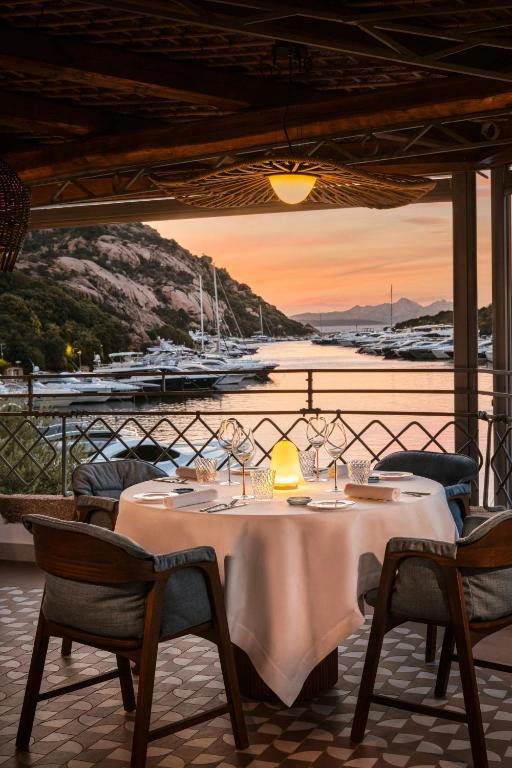
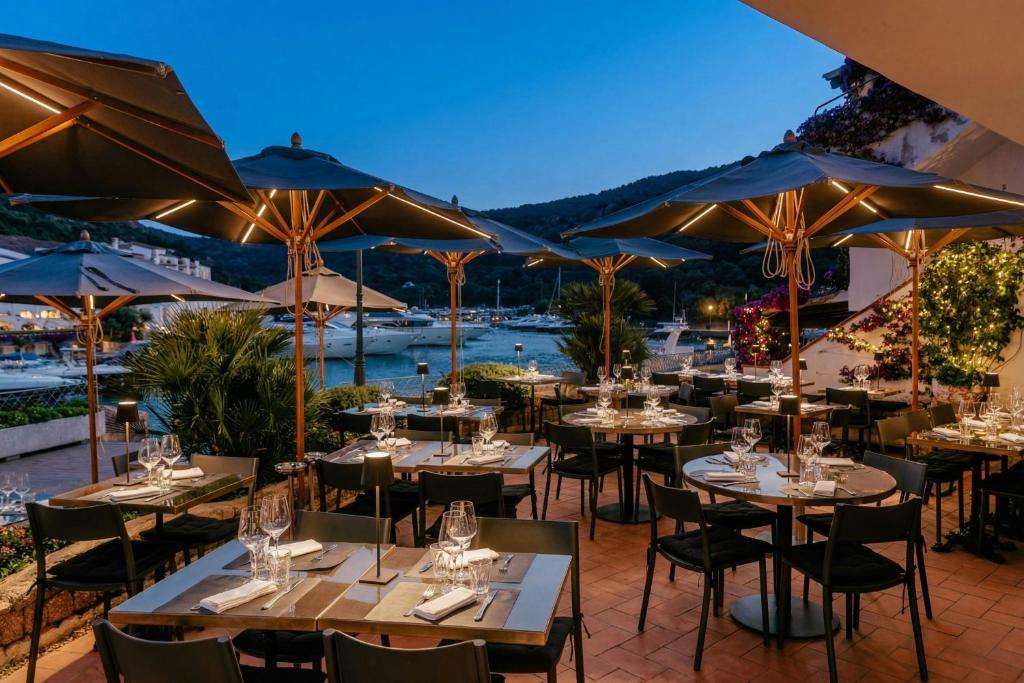
Food follows the same principle. At marina-facing TANIT, named after the ancient Mediterranean goddess of abundance, chef Antonio Bitetto puts seafood at the centre of a contemporary Sardinian menu. The setting does much of the work: yachts moving through the tiny harbour, granite rising behind the village and evening light bouncing off the water. Elsewhere, the W Lounge handles more casual eating and drinking, while the Dolce Room, overseen by pastry chef Fabrizio Fiorani, takes Italian dessert culture in a deliberately playful direction. The hotel also pushes beyond the resort through a seasonal programme involving Sardinian chefs, makers and artists—from ceramic workshops and pasta-making to guided hikes through the island’s less manicured landscapes.
A Different Costa Smeralda
The location makes the new direction particularly convincing. Costa Smeralda already has more than enough polished luxury. Superyachts, beach clubs and extremely expensive sunglasses aren’t exactly in short supply. Poltu Quatu offers another side of it. The marina is glamorous, certainly, but the landscape remains the dominant presence: weathered granite, thick Mediterranean vegetation, narrow coves and water of almost implausible clarity. From the hotel’s marina, boats can head towards secluded swimming spots and nearby islands. On land, hiking trails lead quickly away from the manicured world of the coast. And that tension—wild Sardinia versus polished Costa Smeralda—is precisely where this hotel becomes interesting.
W Grows Up
W Sardinia matters beyond Sardinia itself. It demonstrates what can happen when a global lifestyle brand stops imposing its identity quite so forcefully and starts allowing the destination to do some of the talking. Meyer Davis hasn’t removed the fun. The cocktails, music, pool scene and fashionable crowd are all still here. But they now coexist with Jean-Claude LeSuiss’s eccentric architecture, Sardinian marble, mythology, ceramics, textiles and art. W Sardinia – Poltu Quatu feels like a turning point for the brand: less nightclub, more destination; less manufactured lifestyle, more genuine sense of place. And hidden among the granite cliffs of northern Sardinia, W may finally have discovered that growing up doesn’t have to mean becoming boring.