Hôtel William Gray – Montréal, Canada
Eighteenth-century stone houses, contemporary glass and one of Old Montréal’s most sociable rooftops
Why DNA Hotels Loves It
● Two historic buildings and a contemporary glass addition create a convincing dialogue between Old Montréal’s architectural past and its modern identity.
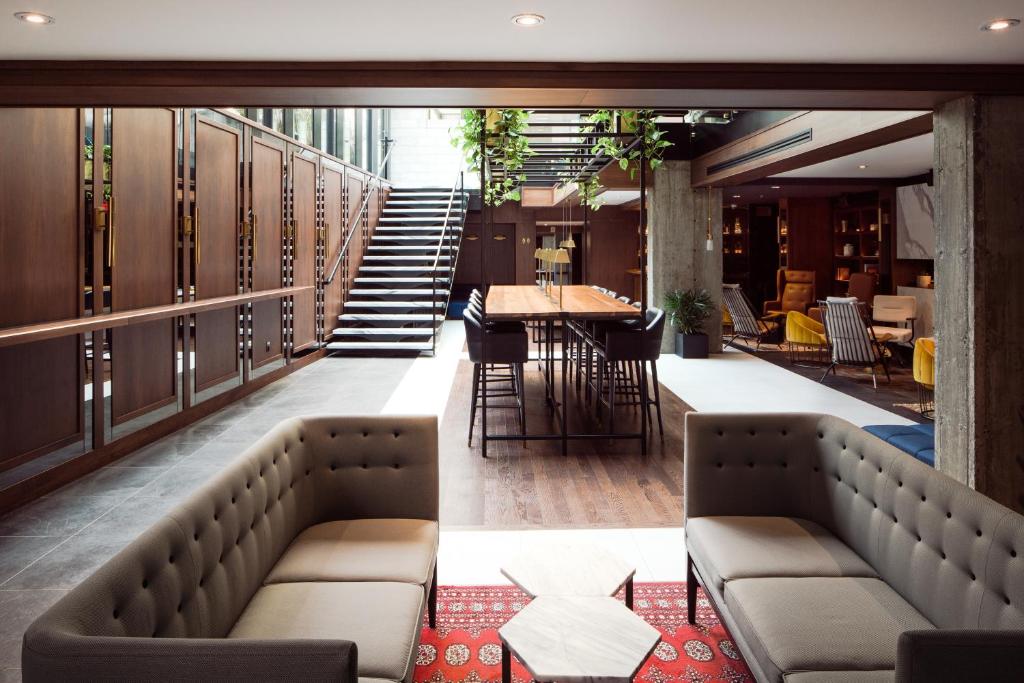
● The light-filled central atrium and relaxed Living Room turn what could have been a conventional heritage hotel into an open, genuinely social urban space.
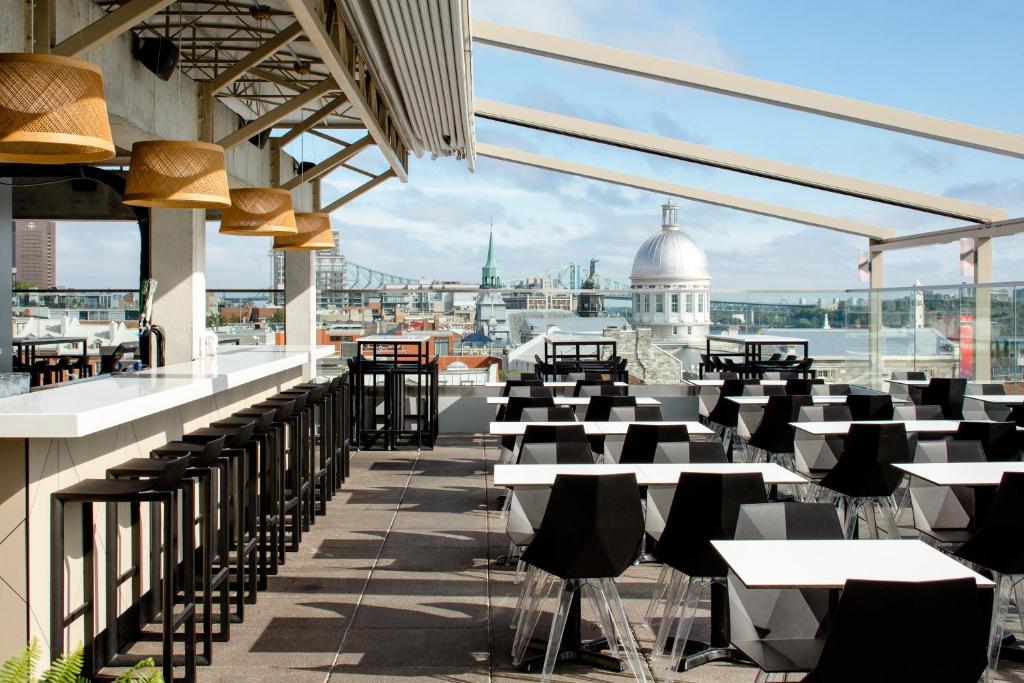
● Its rooftop terrace adds another dimension, looking across the old city, St. Lawrence River and Montréal skyline while bringing locals as well as hotel guests into the mix.
Old Montréal Without the Nostalgia
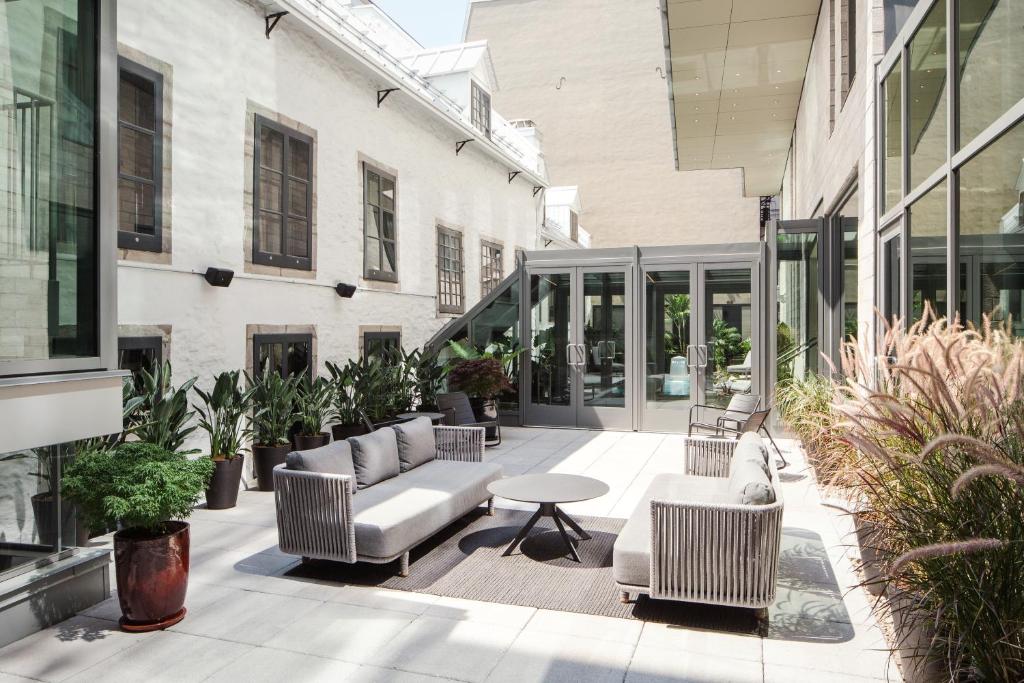
Old Montréal gives hotels an enviable starting point: cobbled streets, monumental stone façades and centuries of architectural history. Hôtel William Gray could easily have relied on all of that. Instead, it does something more interesting. The hotel brings together two 18th-century heritage buildings with a contemporary addition of glass and steel, allowing the different periods to remain clearly legible. Original masonry isn’t disguised and the modern architecture makes no attempt to pretend it has always been there. That contrast is precisely what gives the hotel its character. Rather than recreating an imagined historic Montréal, William Gray places the old city in conversation with the contemporary one.
Stone Meets Glass
The architectural heart of the hotel is its soaring central atrium. Glass bridges, skylights and open sightlines connect the historic structures with the newer building, pulling daylight into spaces that might otherwise have inherited the enclosed character of Old Montréal’s traditional architecture. From here, rough stone, brick and historic façades continually appear alongside glass and contemporary structural elements. The architecture becomes part of the experience rather than merely the container for it. It also gives William Gray an unusual openness. Despite occupying substantial historic buildings, the hotel rarely feels heavy.
A Lobby Made for Living
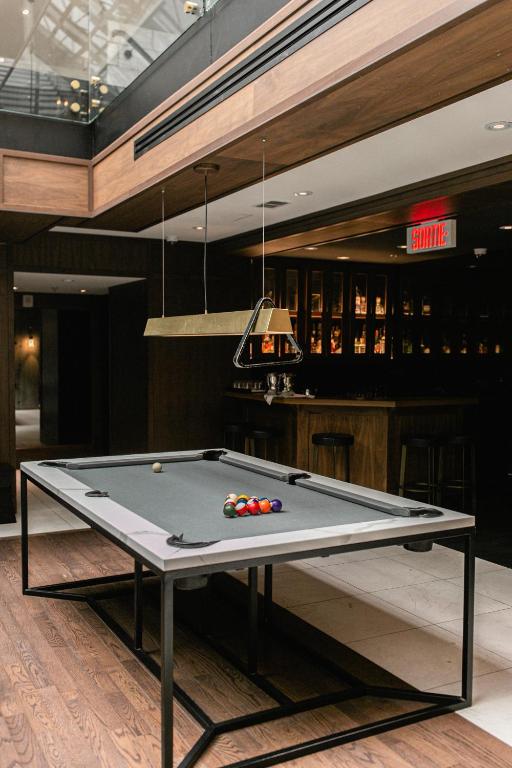
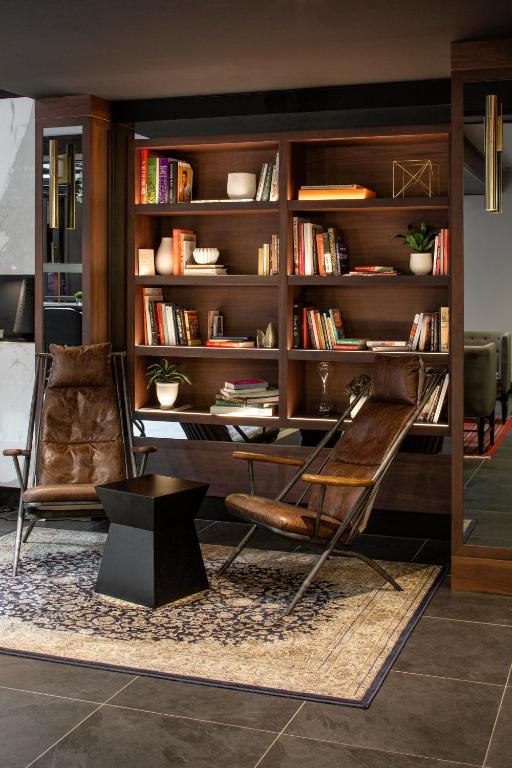
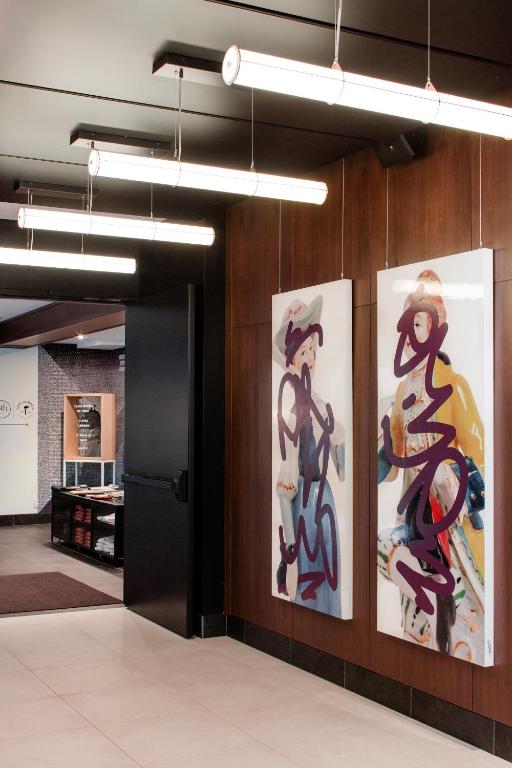
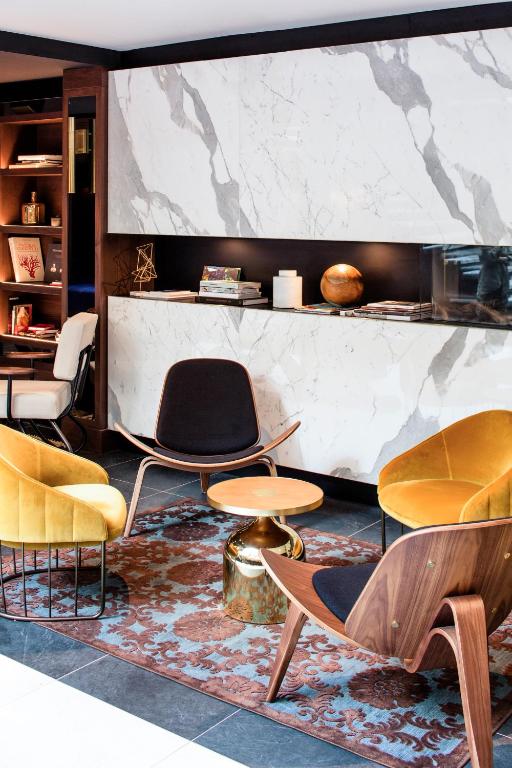
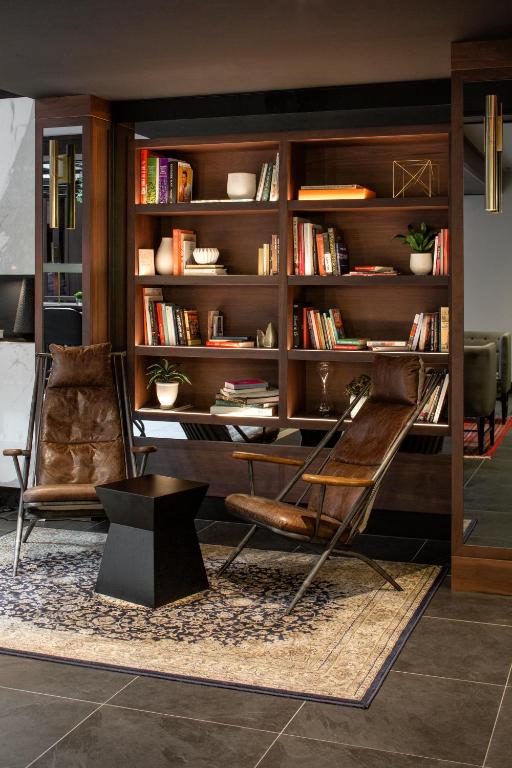
That openness continues in the Living Room, conceived more as an urban salon than a conventional hotel lobby. A communal table creates an easy place to work, meet or linger over coffee, while sofas and quieter corners encourage guests to settle in rather than simply pass through on the way to the lift. Wood, leather, stone and contemporary art soften the architectural framework and give the space a residential quality. Add the bar and a steady mixture of visitors and Montréal locals, and the ground floor develops its own rhythm throughout the day. It is a simple idea, but an important one: the public spaces actually feel lived in.
Rooms Between Two Centuries
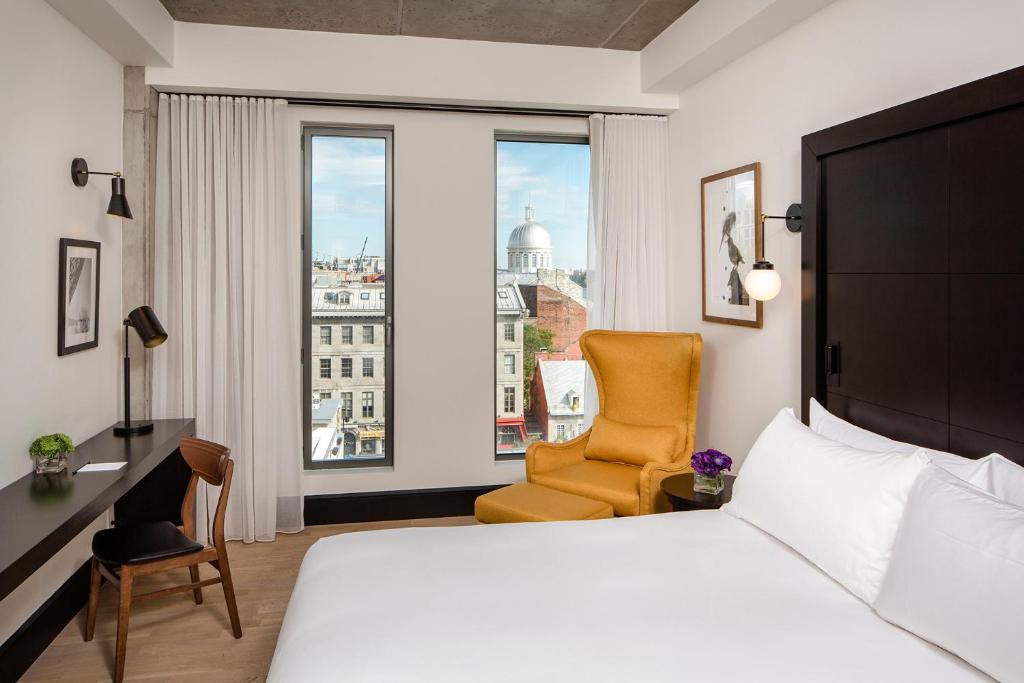
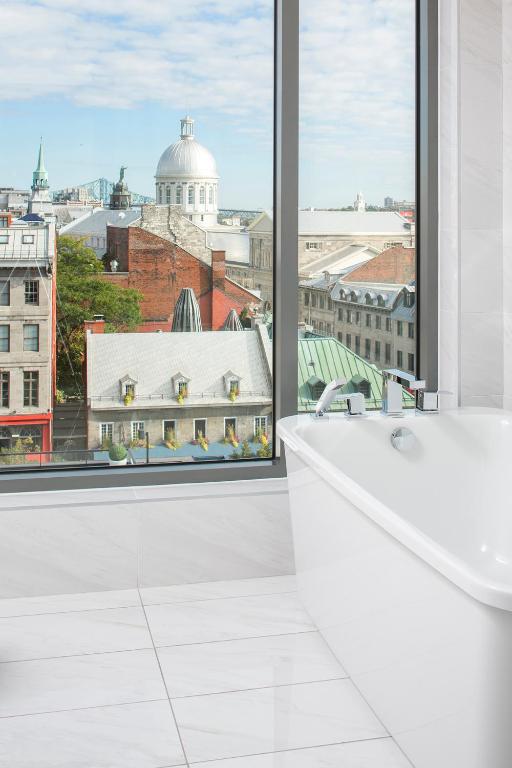
The guestrooms reveal different sides of the building depending on where you stay. In the heritage sections, exposed stone and architectural irregularities provide texture and a direct connection to the property’s past. Elsewhere, larger expanses of glass, cleaner lines and contemporary detailing shift the emphasis towards modern Montréal. Throughout, the approach remains restrained. Warm timber, tactile fabrics, understated furniture and soft lighting prevent the historic elements from becoming theatrical and the contemporary rooms from feeling sterile. The best spaces capture both worlds at once: old stone close enough to touch, with modern Montréal visible beyond the windows.
Dinner, Drinks and the City Outside
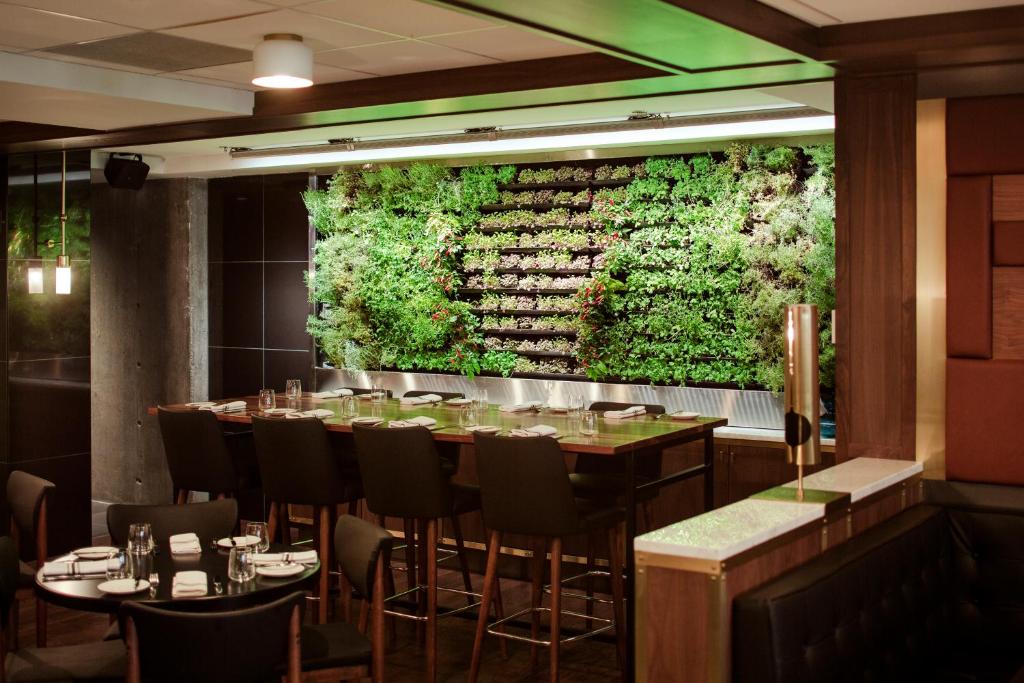
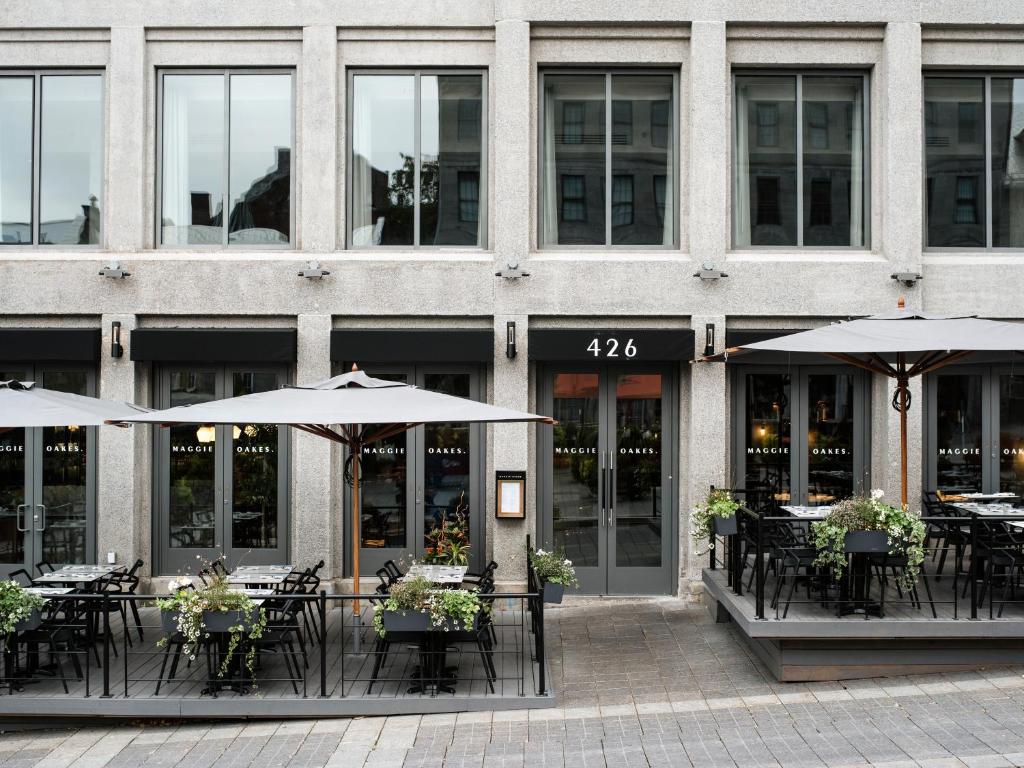
William Gray is designed to participate in the neighbourhood rather than retreat from it. Its food, drink and public spaces contribute to that connection, but the defining social destination is Terrasse William Gray, high above the streets of Old Montréal. From here the perspective changes completely. Church towers and historic rooftops spread out below, with the St. Lawrence River and contemporary skyline beyond. In summer, it becomes an animated destination for cocktails, dinner and long evenings outside. It is one of those hotel spaces where the location suddenly makes complete sense.
Old City, New Energy
Step outside and Place Jacques-Cartier, the Old Port, galleries, restaurants and some of Montréal’s most recognisable historic architecture are immediately around you. Yet William Gray doesn’t try to compete with that history by becoming another romantic recreation of the past. Its strength lies in contrast: old masonry and new glass, intimate historic rooms and open contemporary spaces, quiet corners and a busy rooftop. For DNA Hotels, that makes William Gray particularly interesting. It demonstrates that preserving architectural history doesn’t require freezing it in time. Sometimes the best way to respect an old building is to let the new architecture be unmistakably new.