



When a Sugar Factory Meets a Chinese Landscape Painting
A 1969 sugar factory reinvented through bold contemporary architecture, where industrial relics, concrete structures and a spectacular riverside pool contrast with Yangshuo’s limestone mountains.

Why DNA Hotels loves it
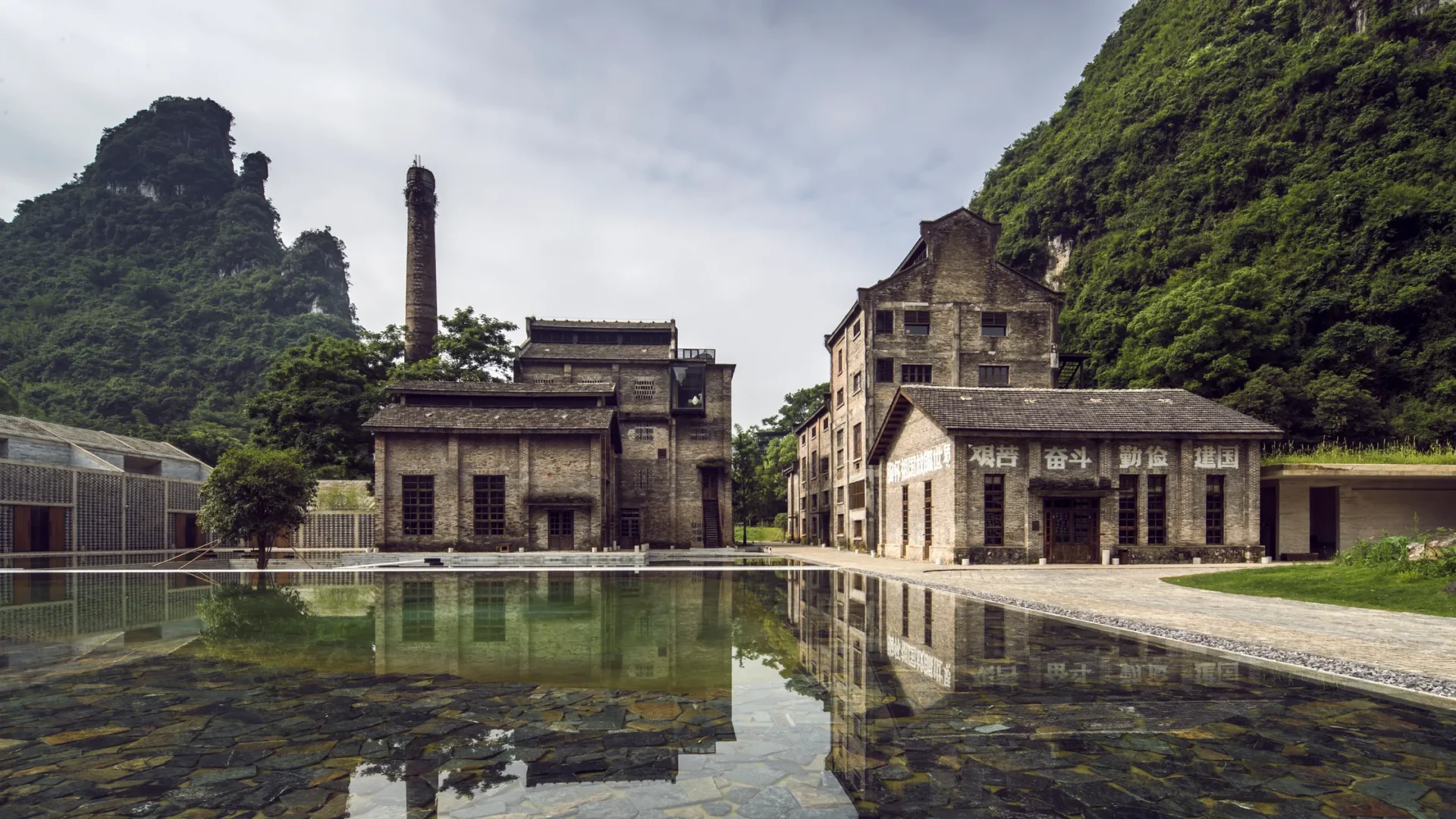
An imaginative transformation of a 1969 sugar factory by Dong Gong of Vector Architects, preserving industrial buildings, steel trusses and Cultural Revolution-era slogans against the dramatic limestone scenery of Yangshuo.
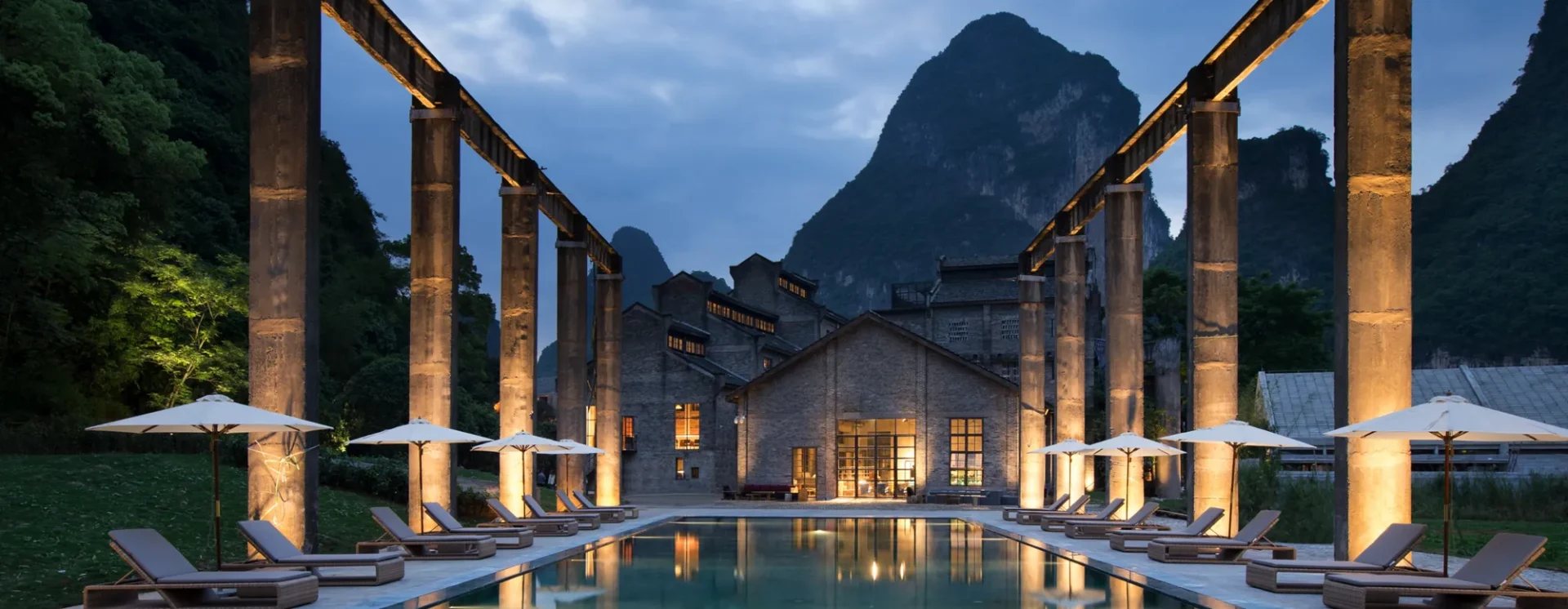
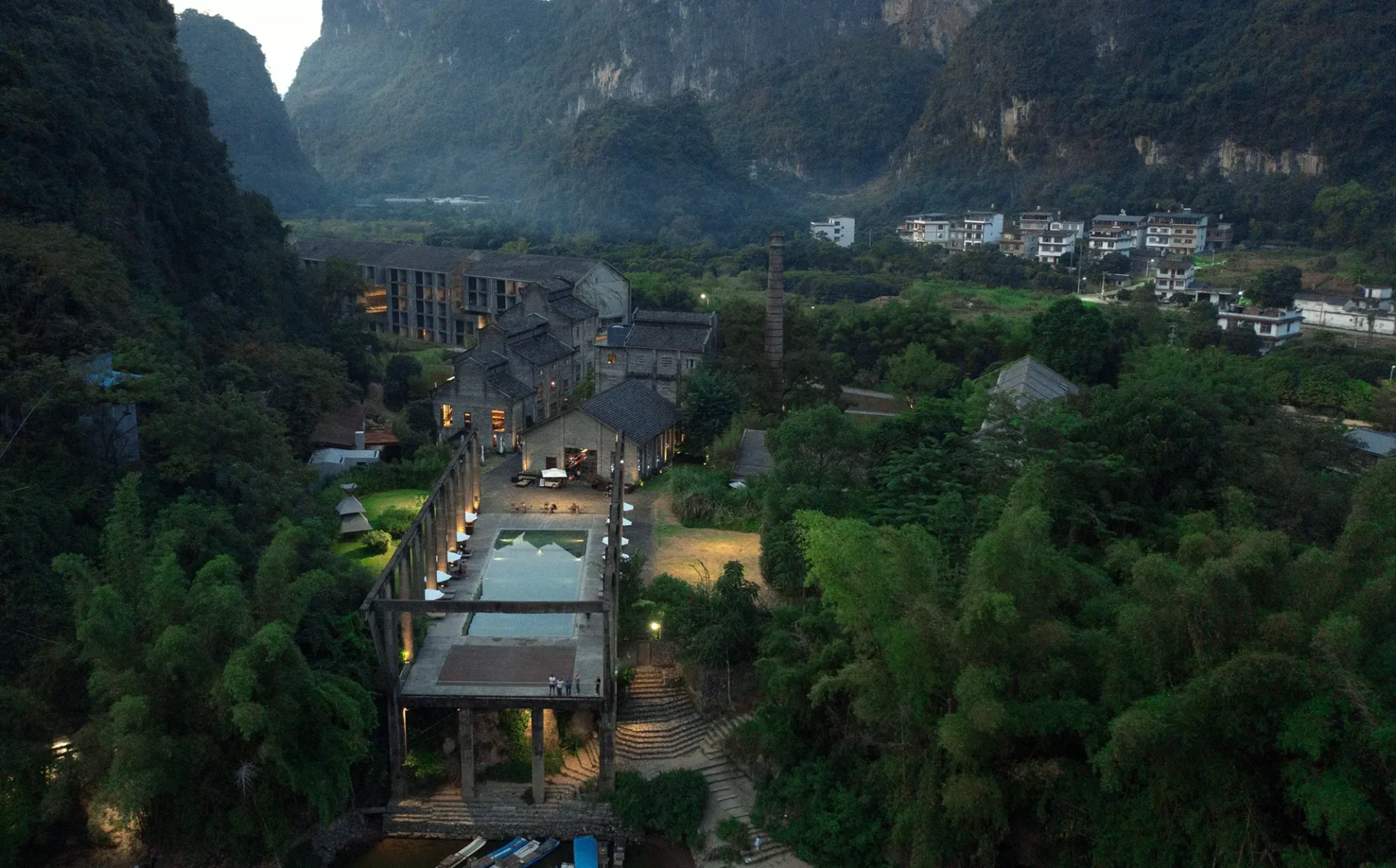
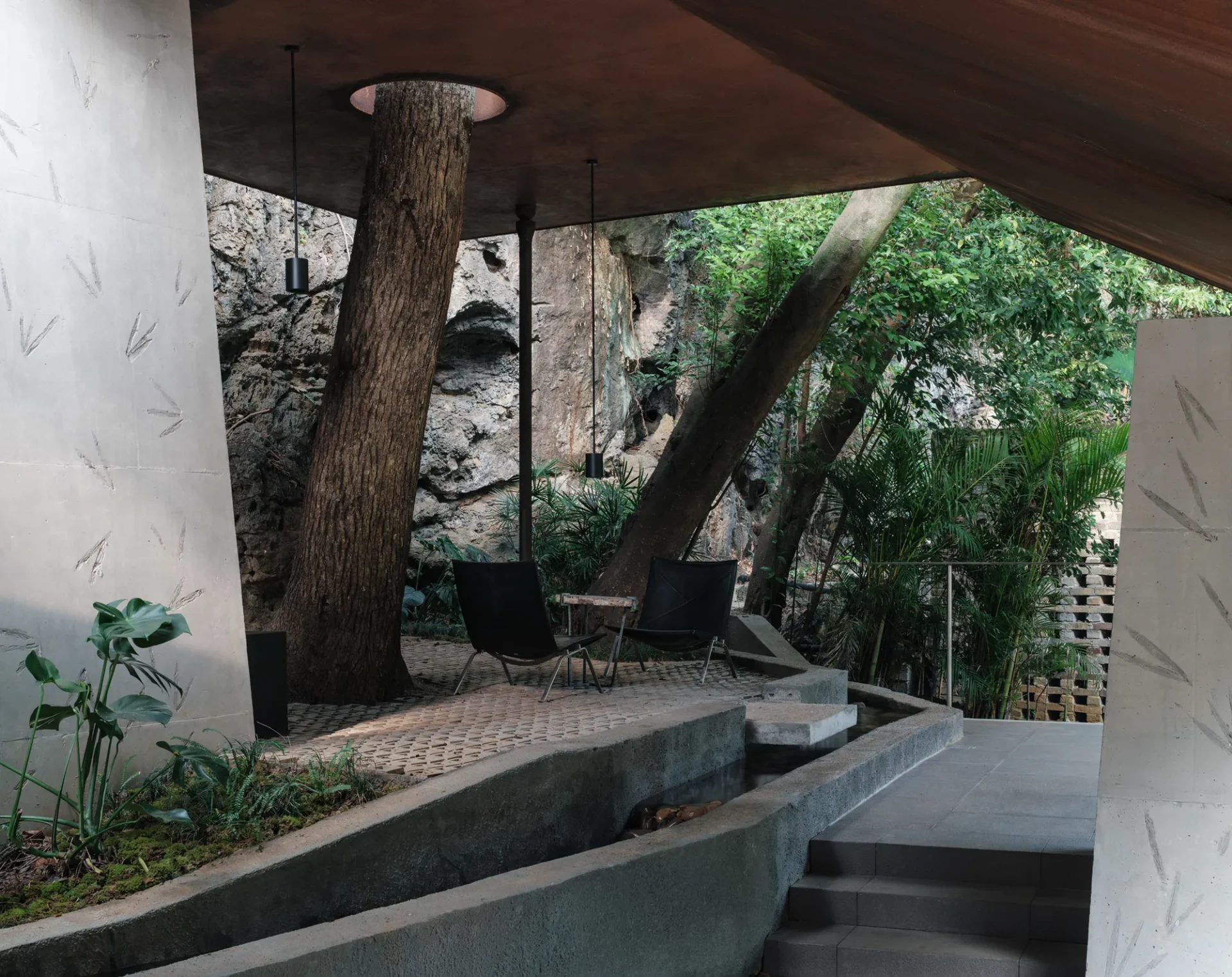
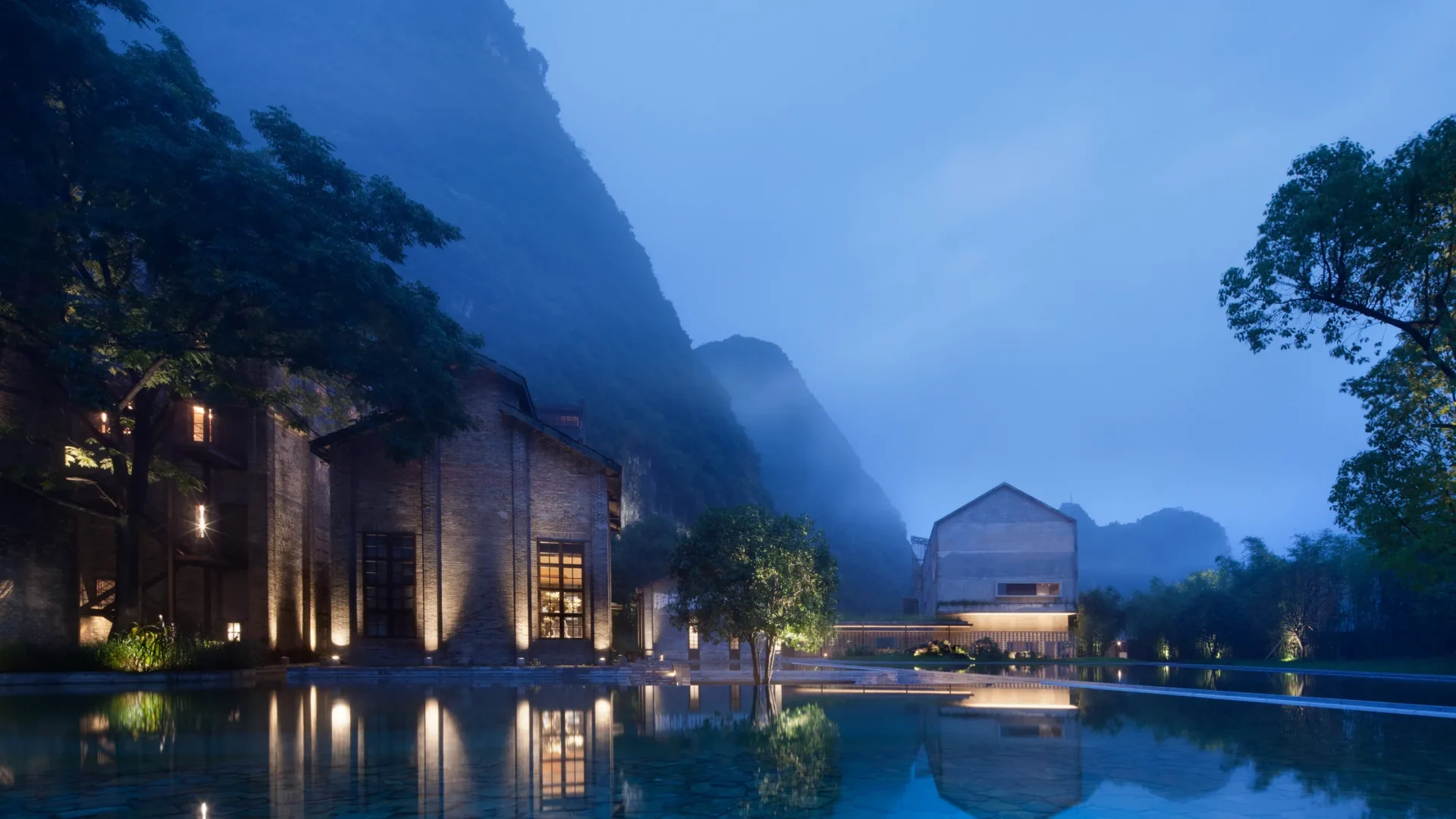
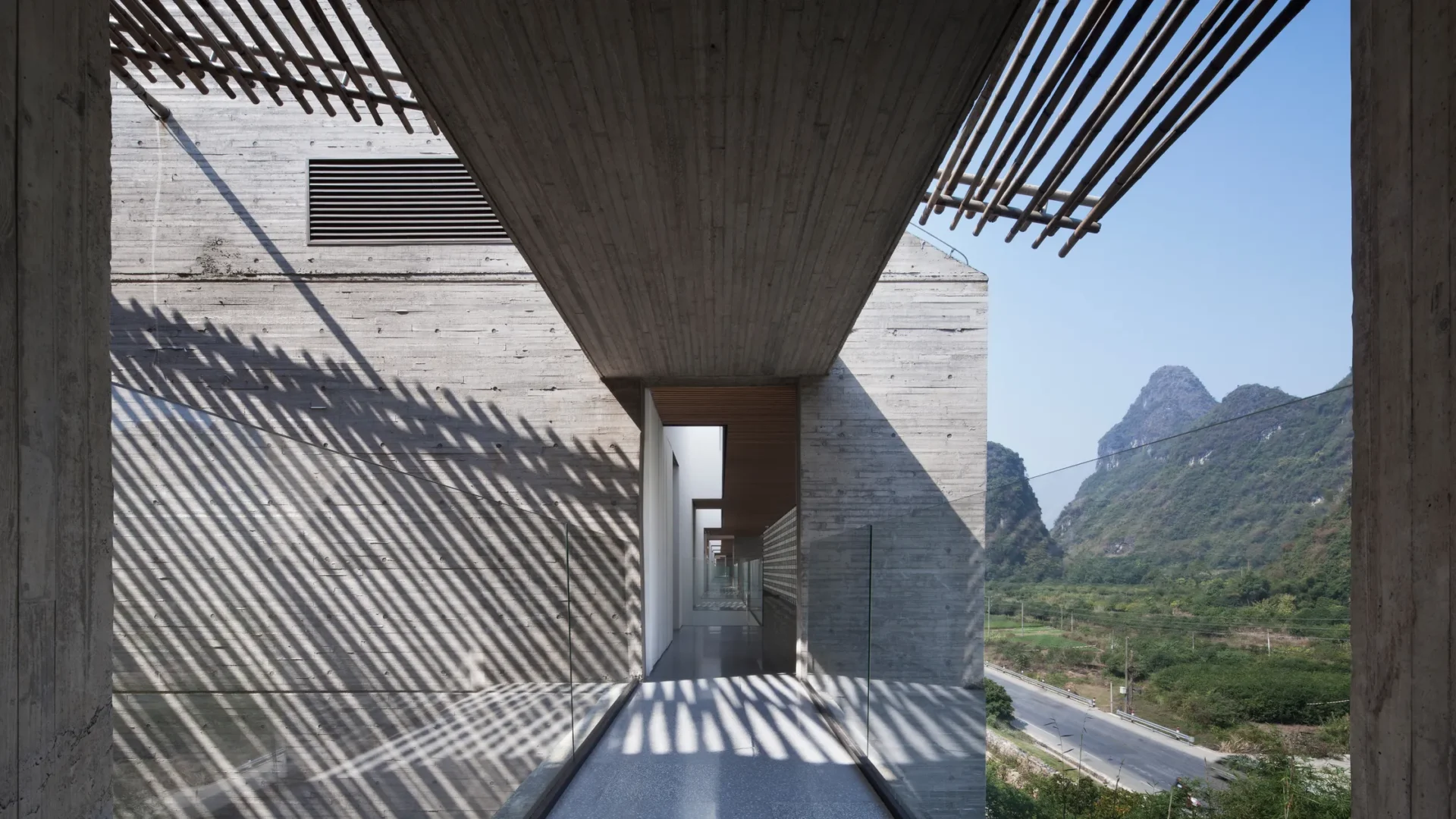
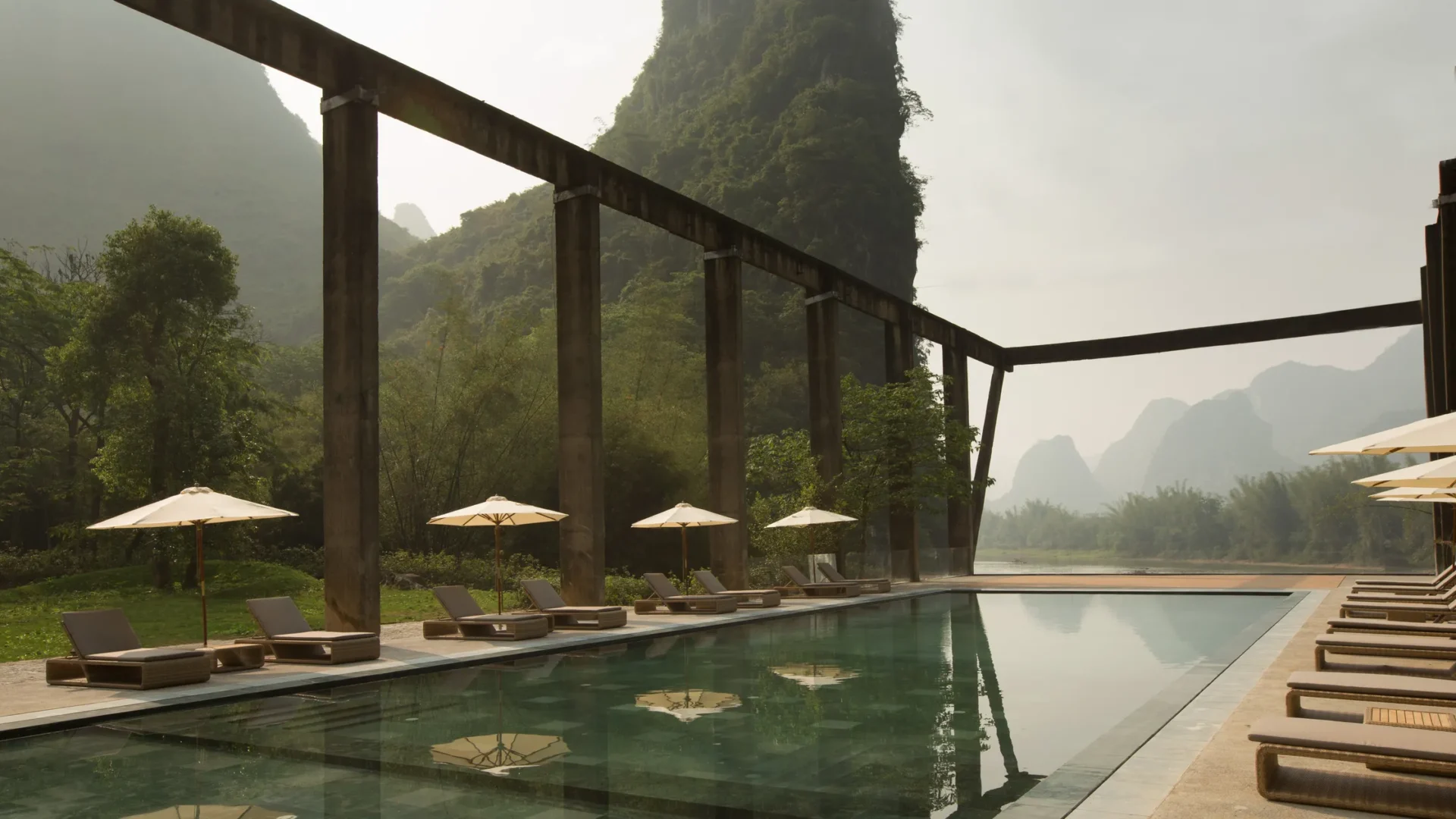
A thoughtful architectural dialogue between weathered brick, perforated concrete, bamboo and the surrounding mountains, with a riverside swimming pool framed by the factory's original industrial structures.
An engaging combination of contemporary Chinese design, art installations, regional gastronomy, sugarcane-inspired cocktails and outdoor adventures, from rock climbing to bamboo rafting on the Li River.
The Stay
Industrial Archaeology Meets the Karst Landscape of Southern China
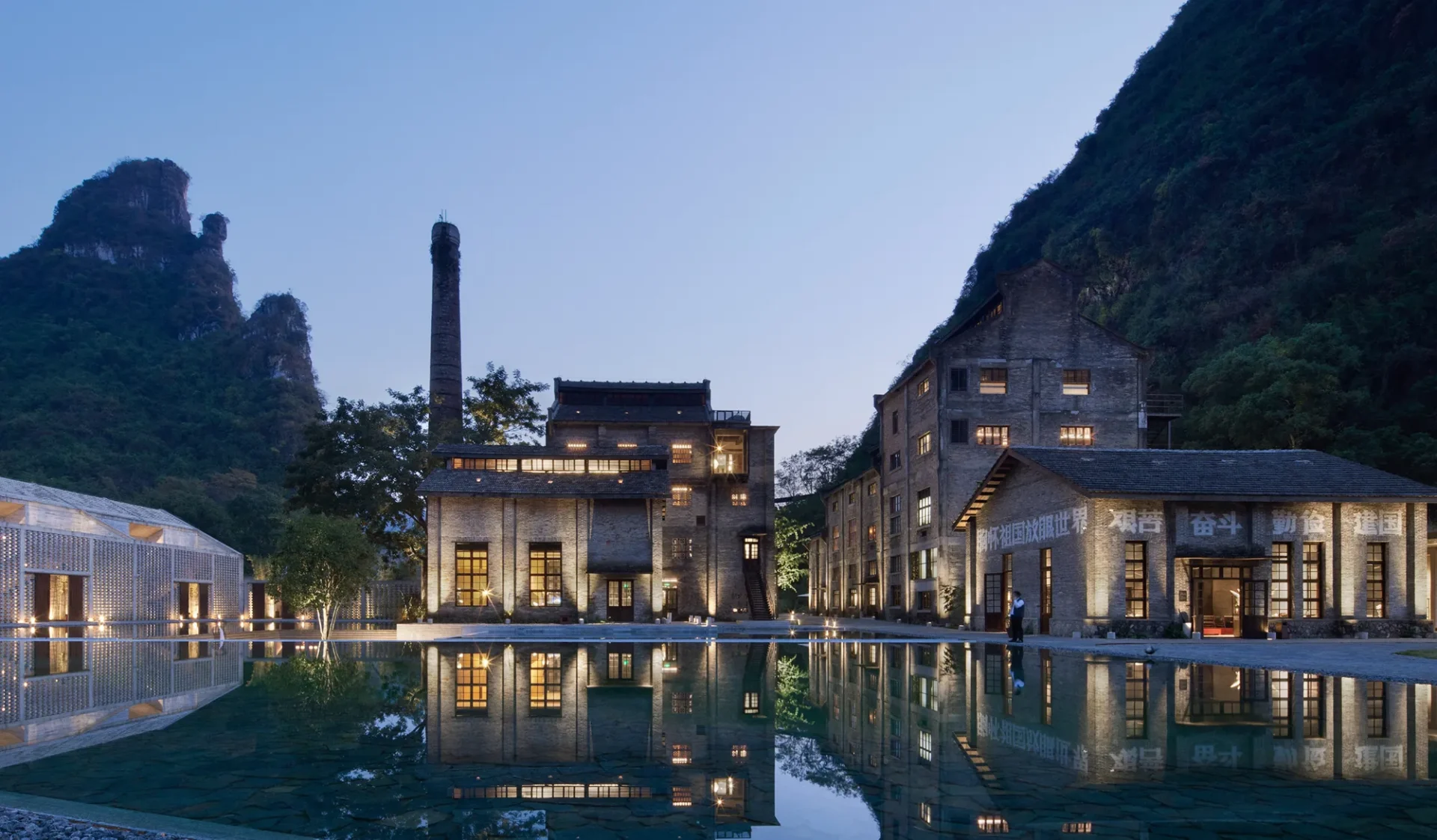
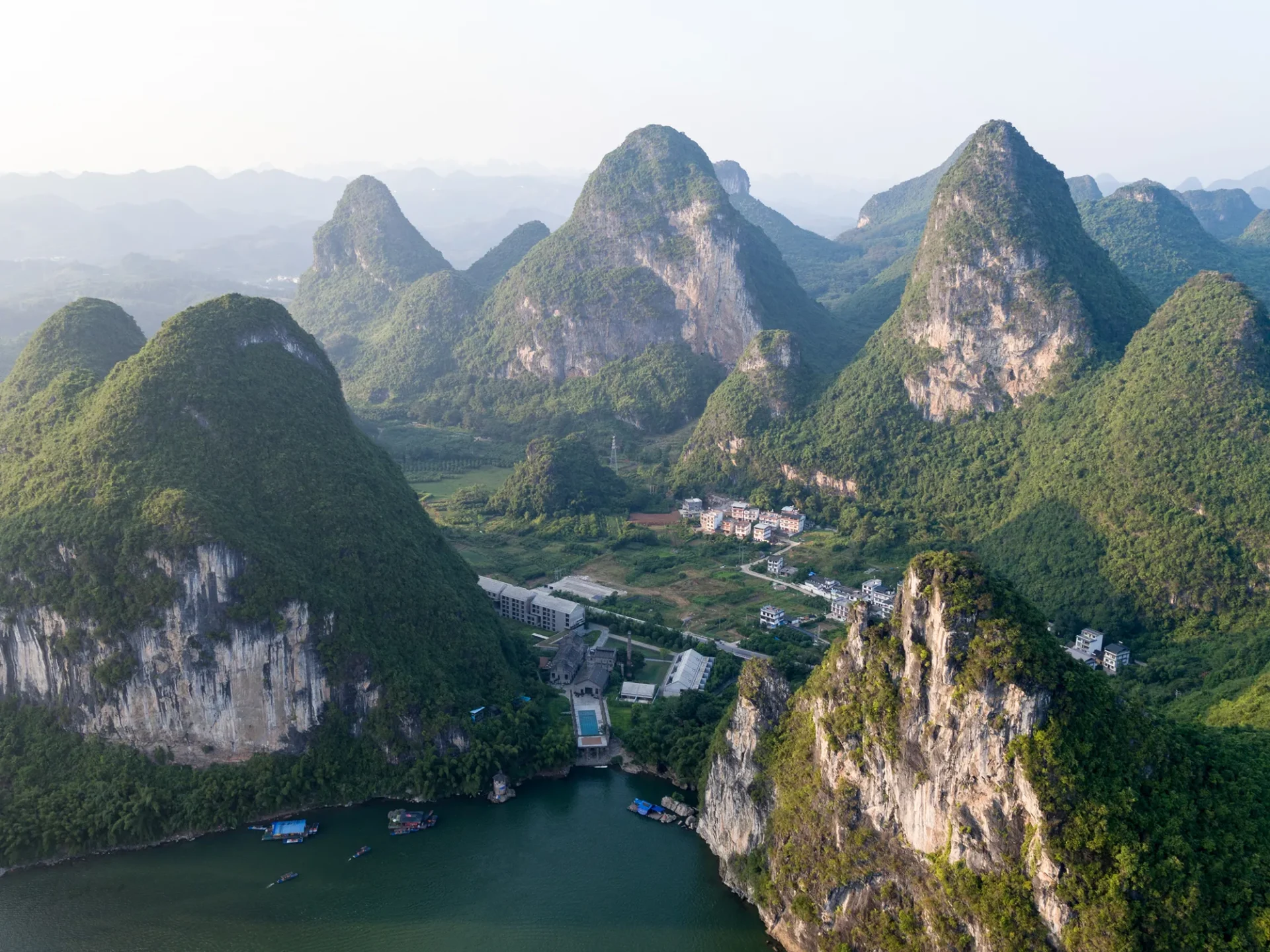
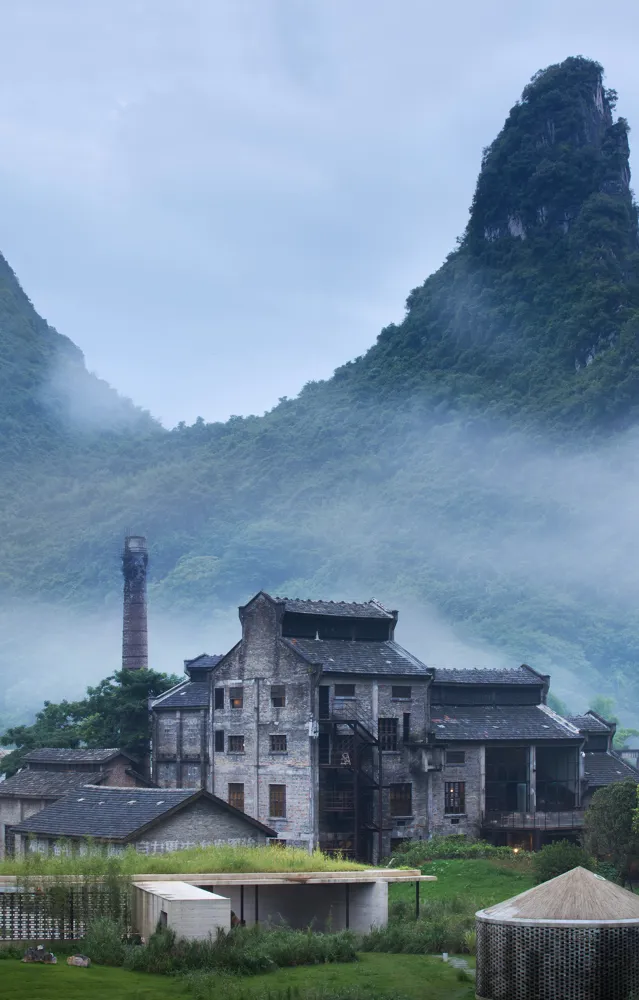
Imagine an abandoned sugar factory, complete with rusting steel structures, old machinery and political slogans from China’s Cultural Revolution. Now place it beside the Li River, surrounded by those extraordinary limestone mountains that look as though someone has painted them onto the landscape. Not the most obvious ingredients for a luxury resort. But that is exactly what makes Yangshuo Sugar House so interesting. The factory dates from 1969, and rather than clearing the site for another anonymous five-star development, Beijing-based Vector Architects, led by Dong Gong, decided to work with what was already there. Together with interior designer Ju Bin of Horizontal Space Design, they have created a hotel that is as much about architecture and industrial history as it is about the surrounding landscape. And what a landscape. Yangshuo’s dramatic karst formations have inspired Chinese painters for centuries, and the Li River winding between them remains one of the country’s most recognisable natural scenes.
Industrial Archaeology Meets Contemporary Architecture
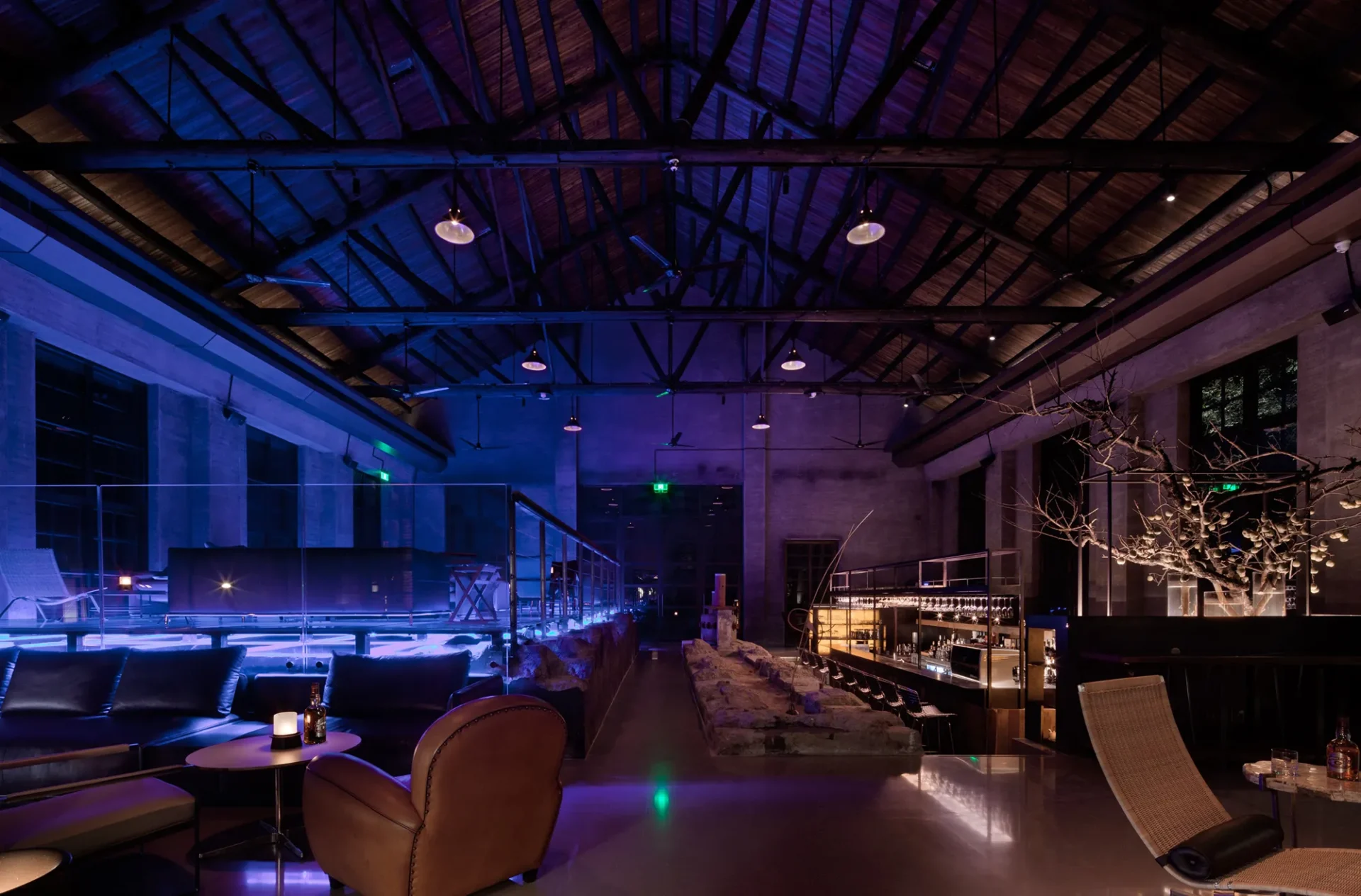
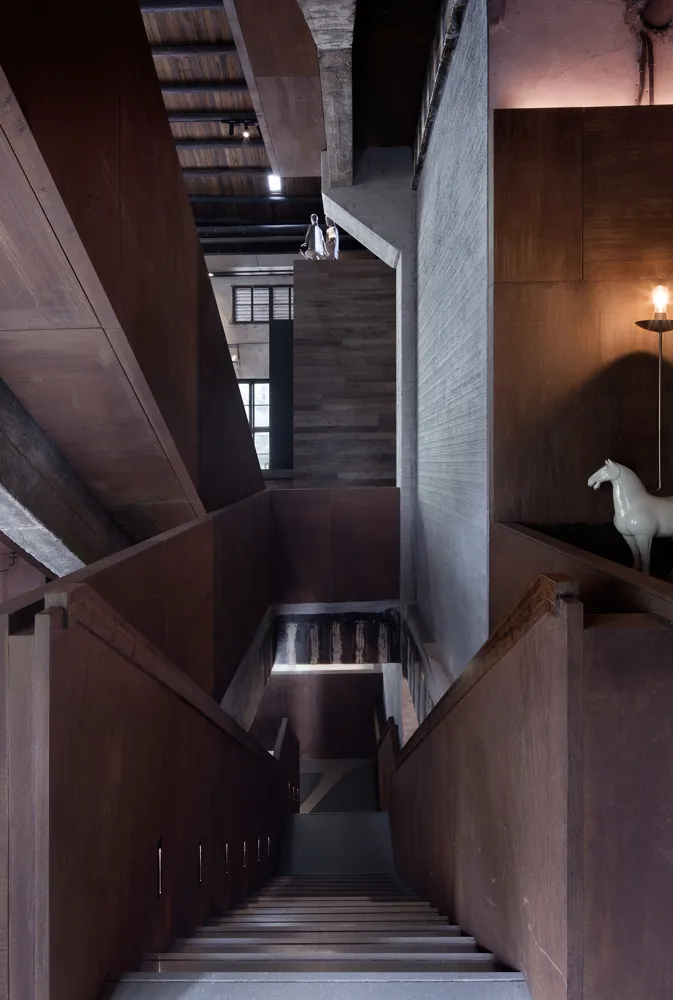
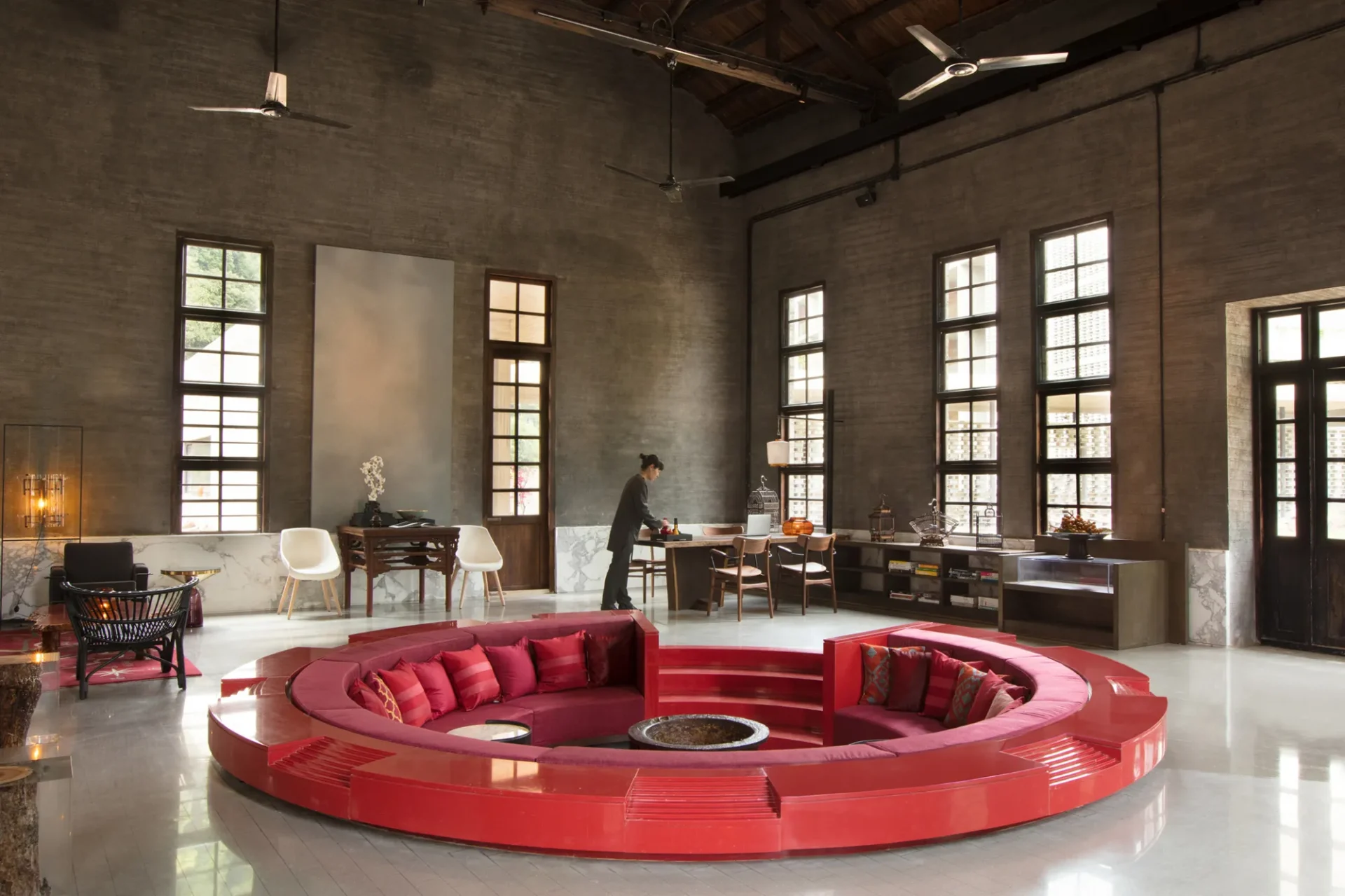
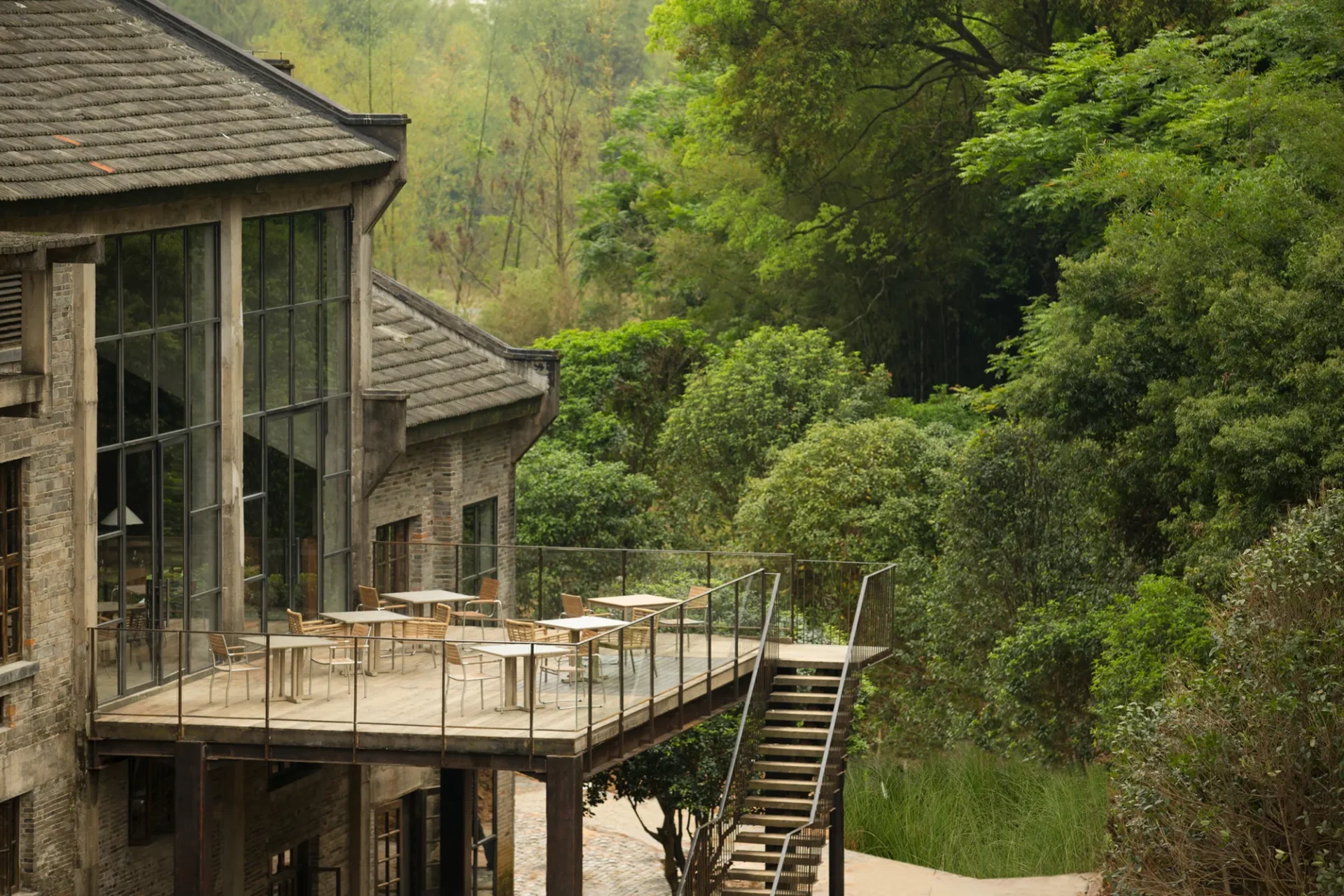
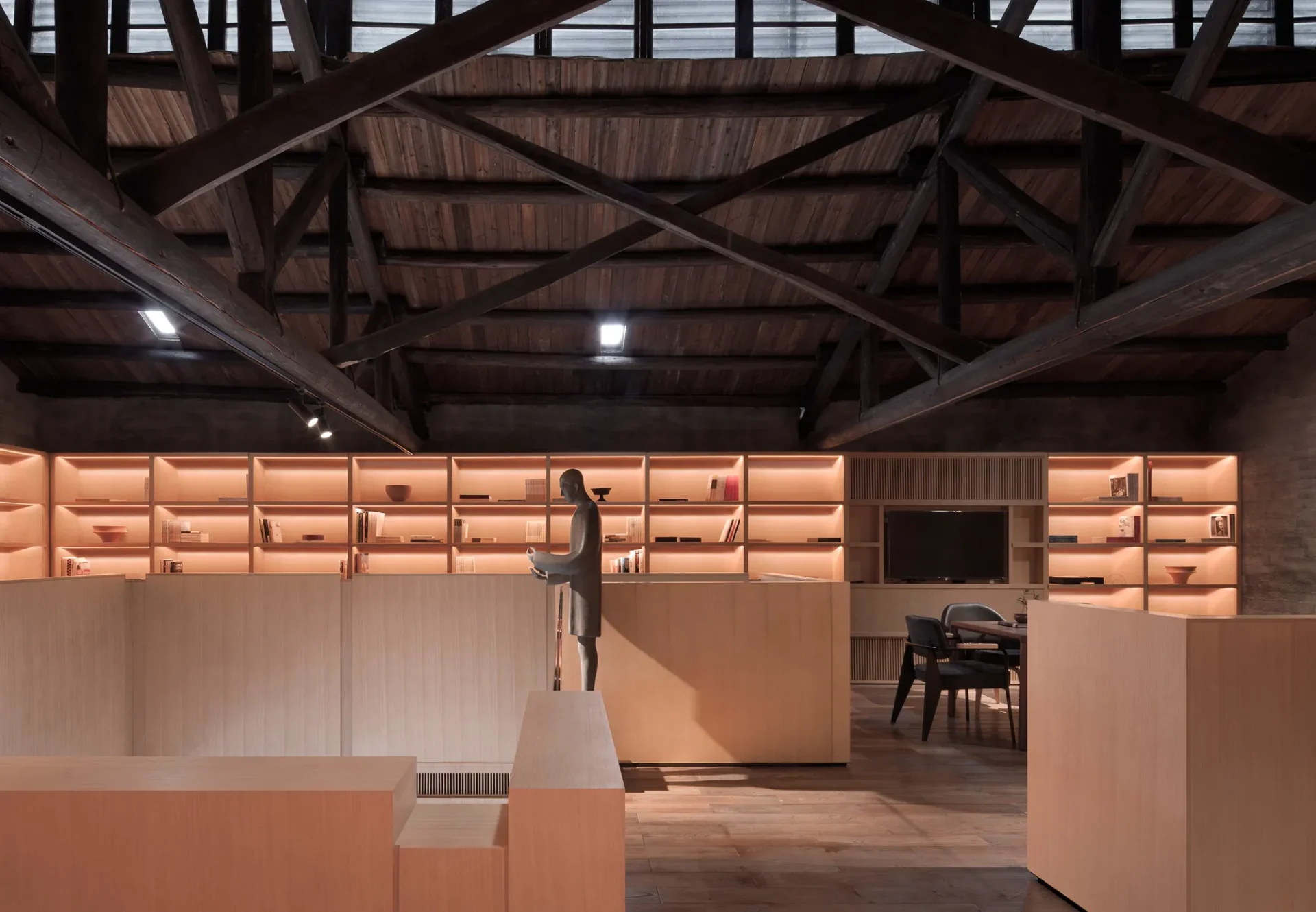
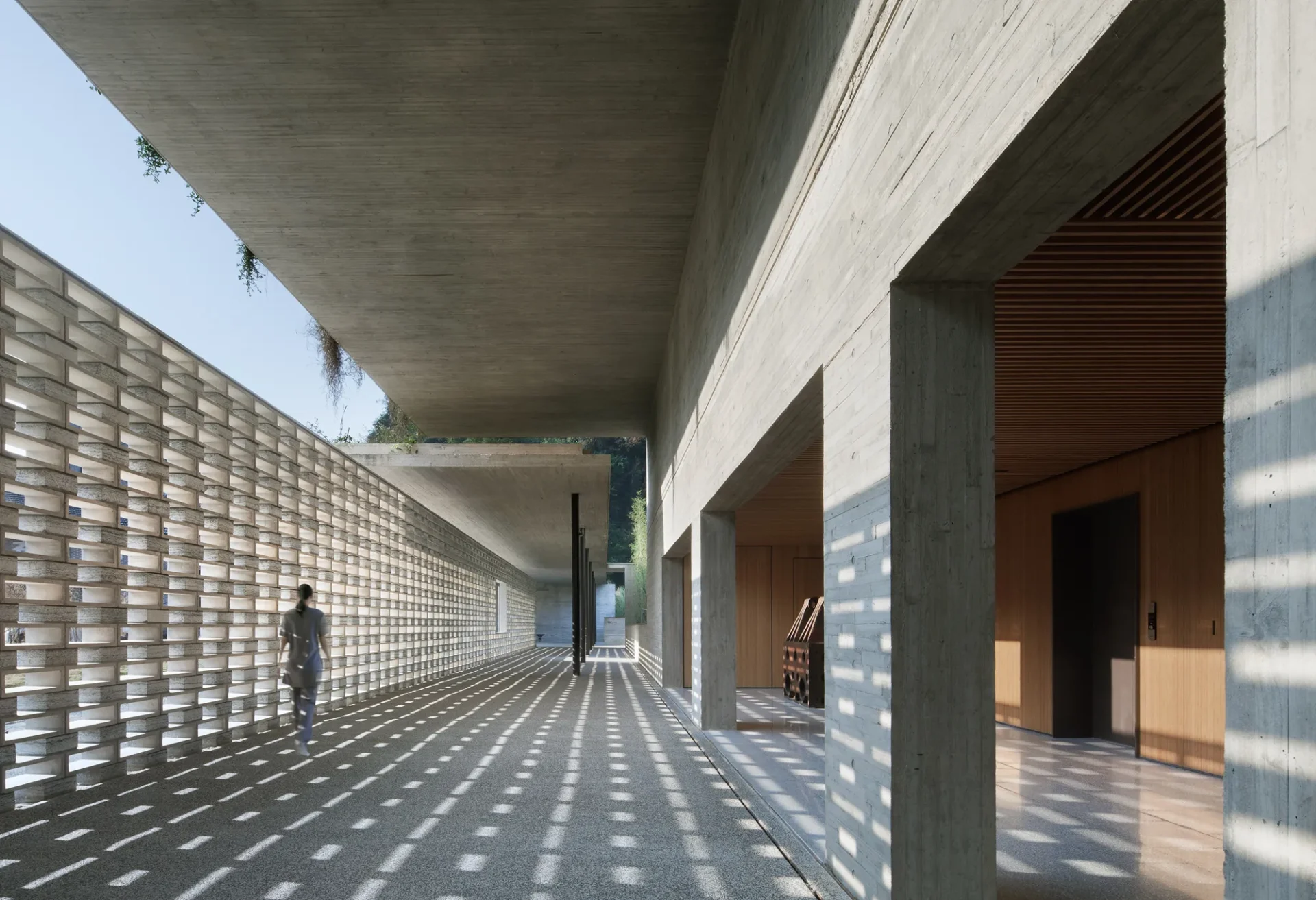
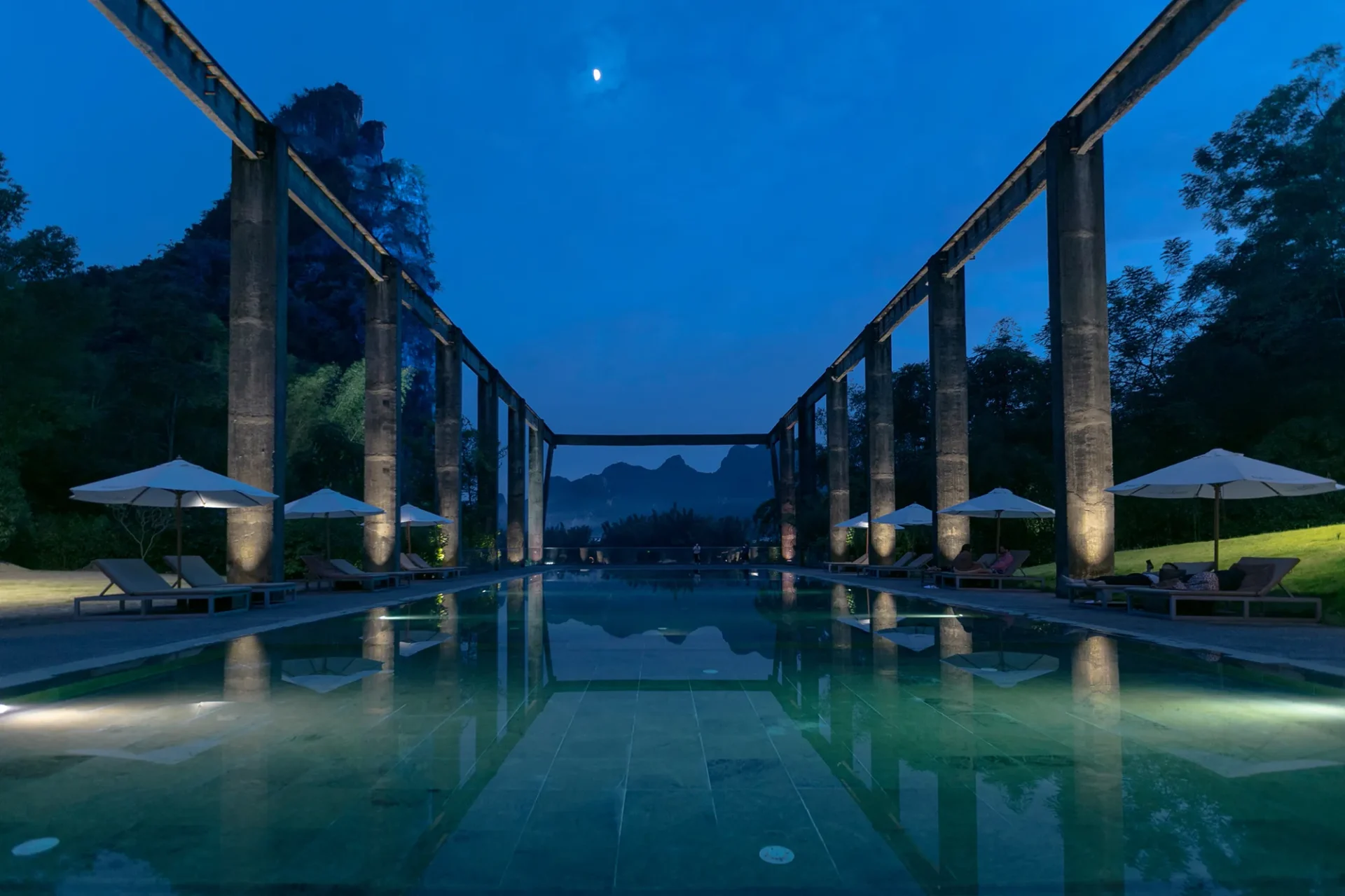
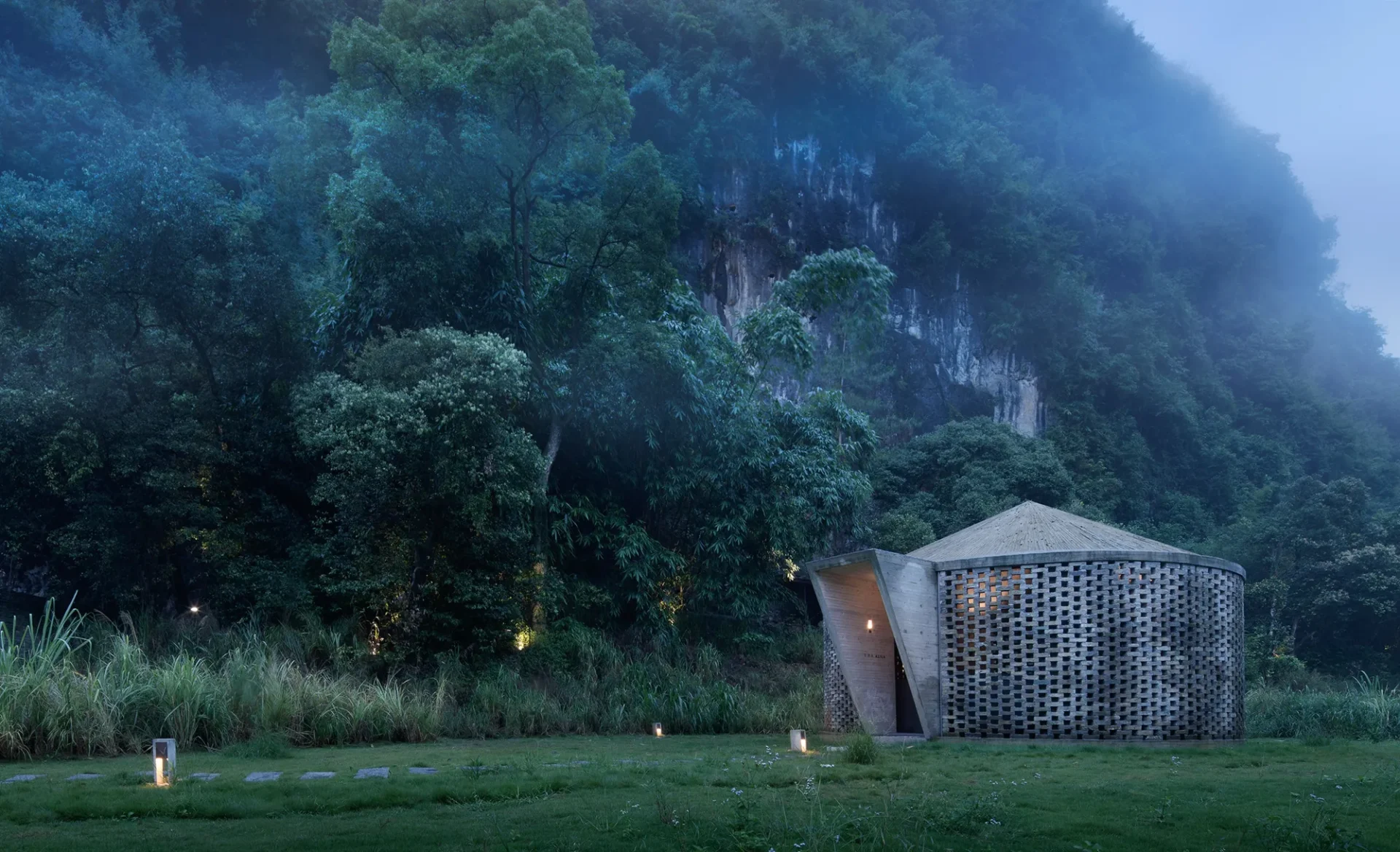
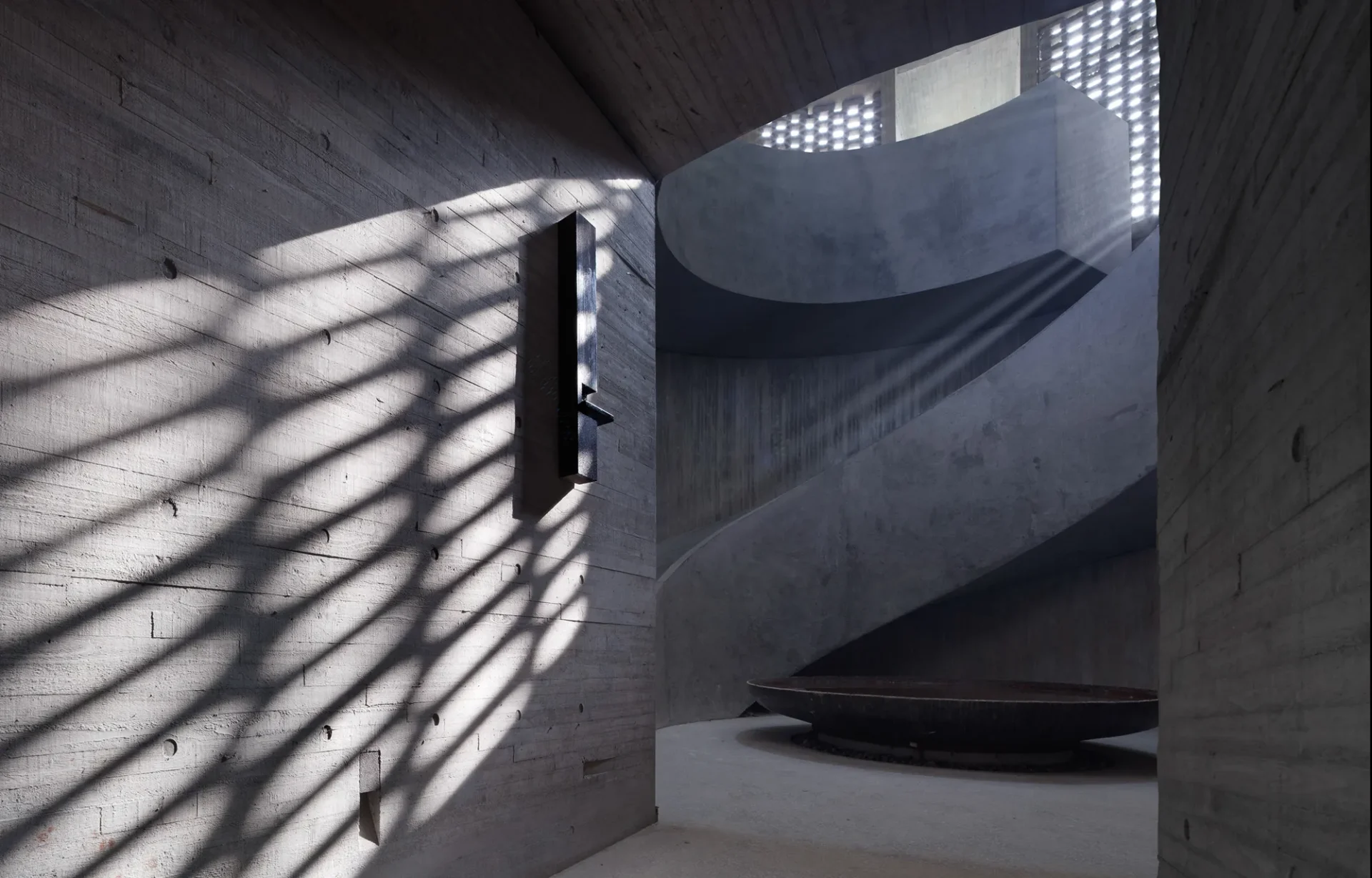
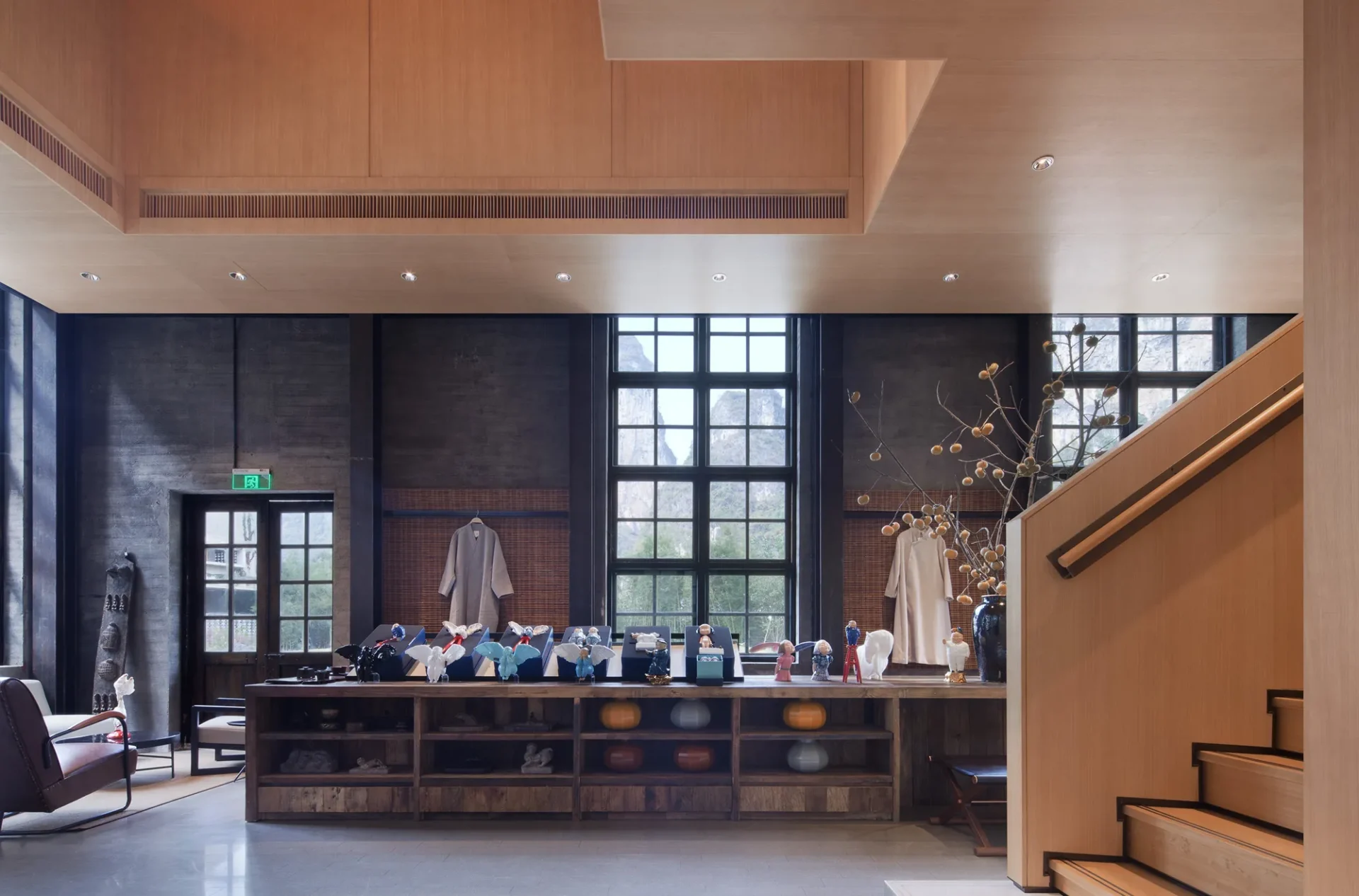
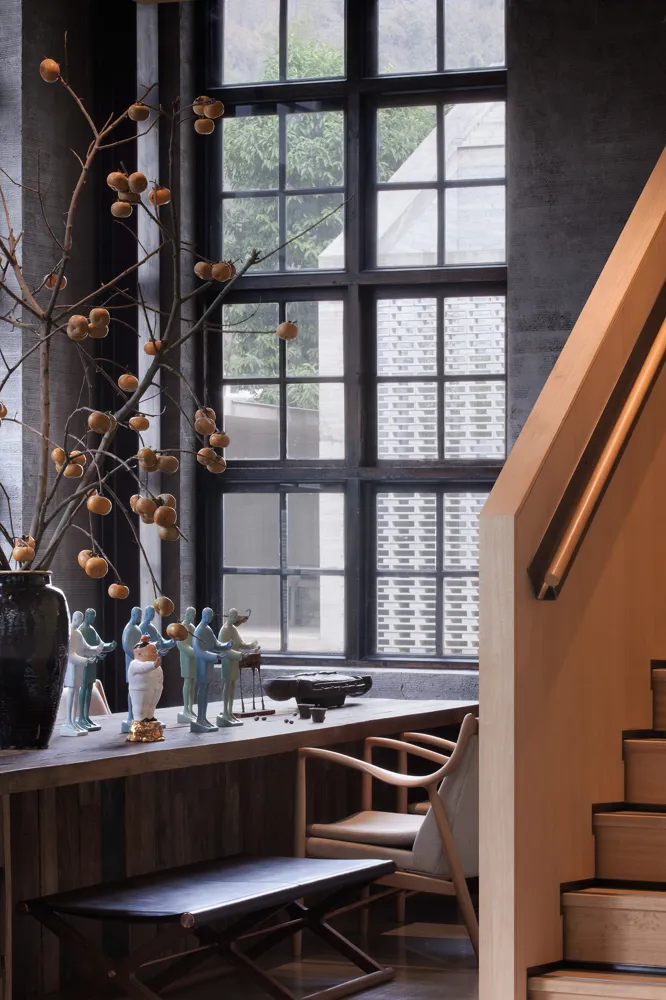
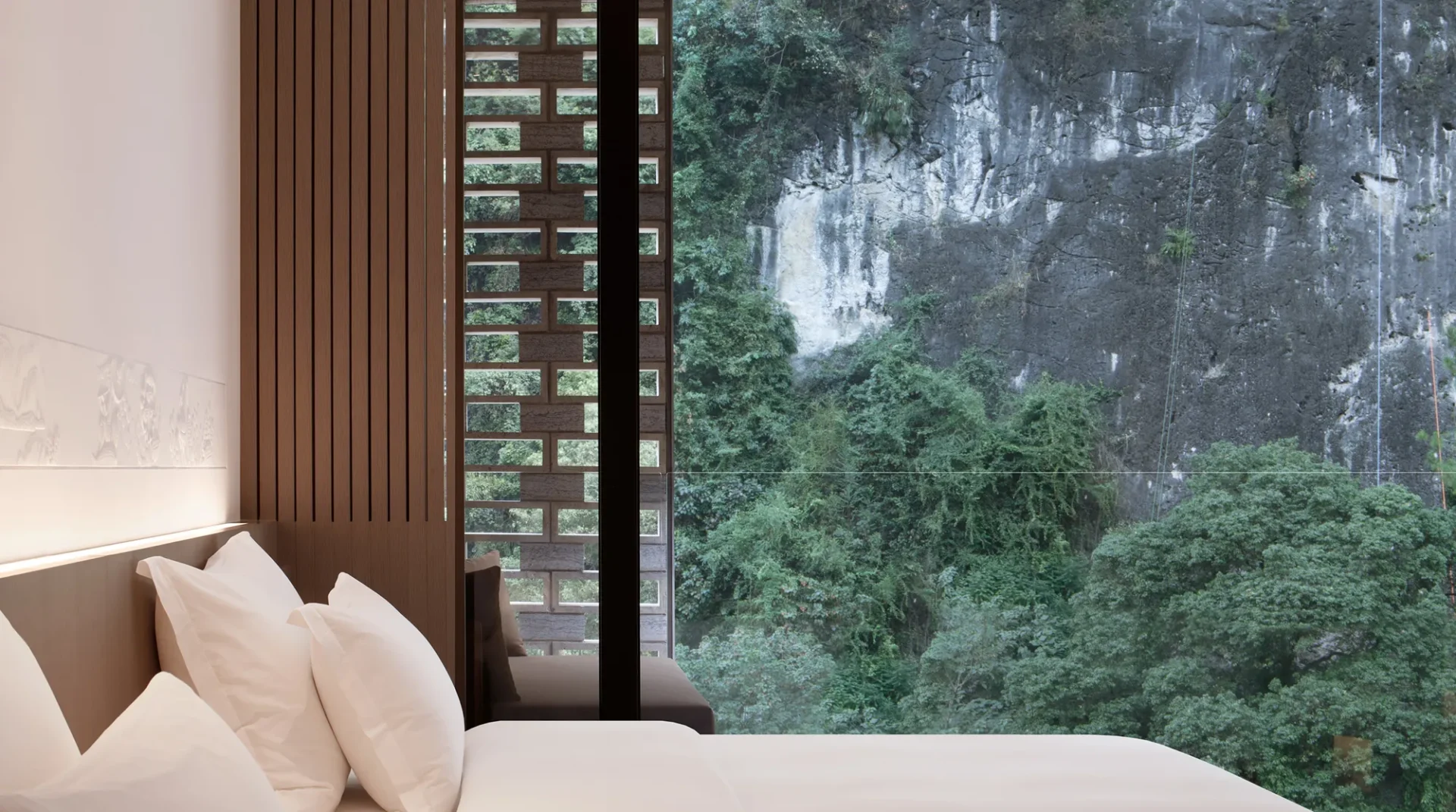
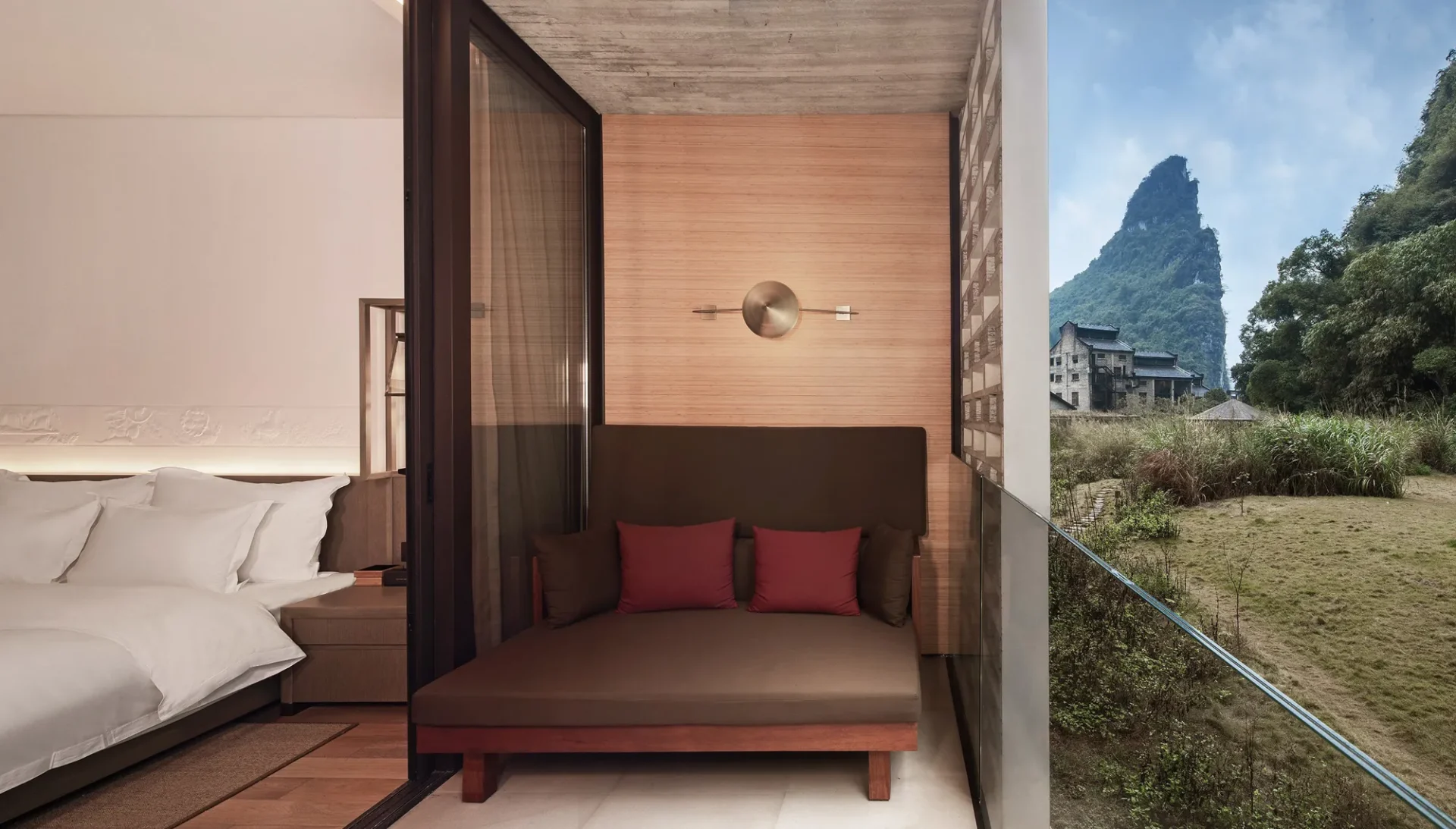
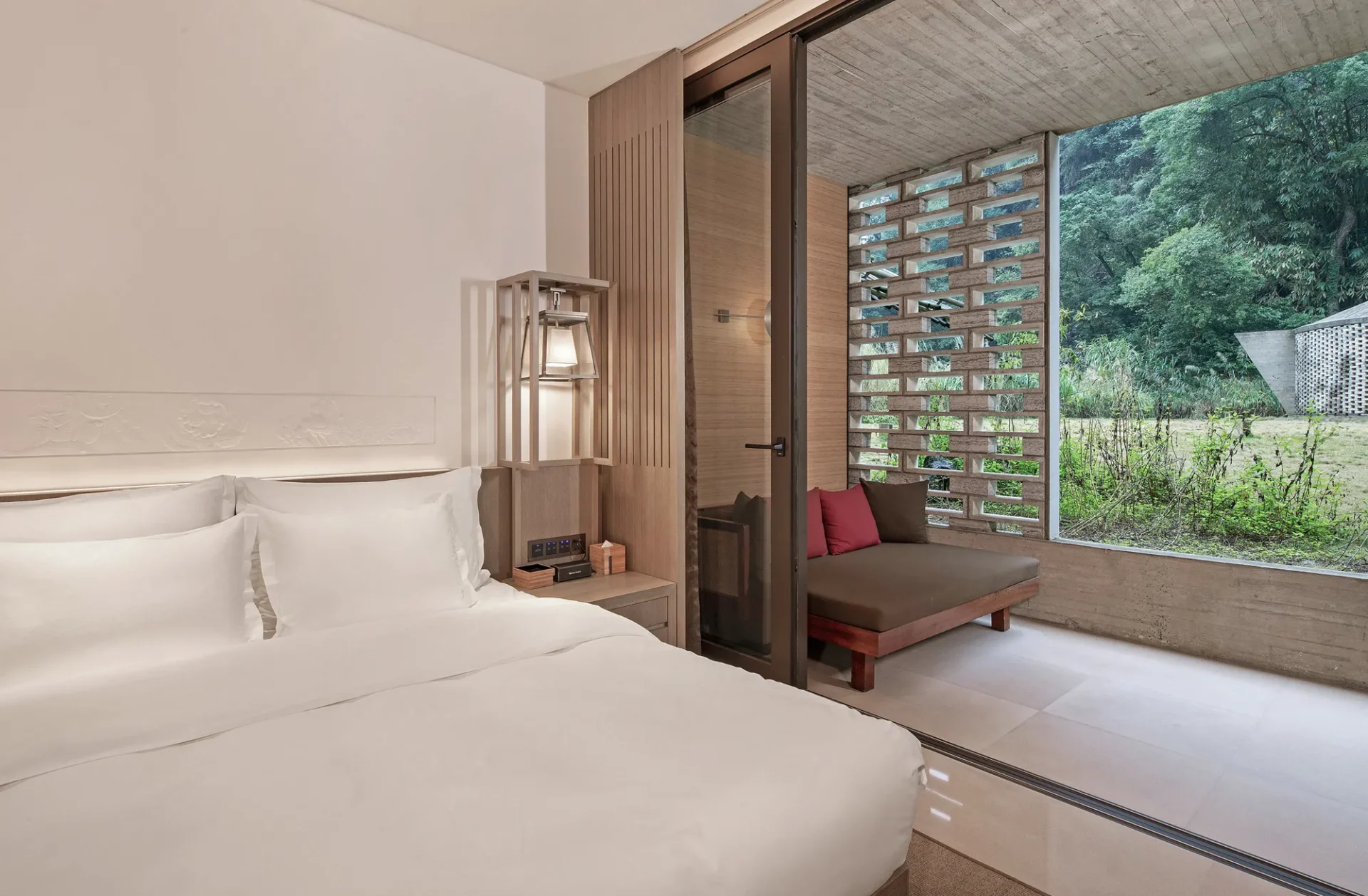
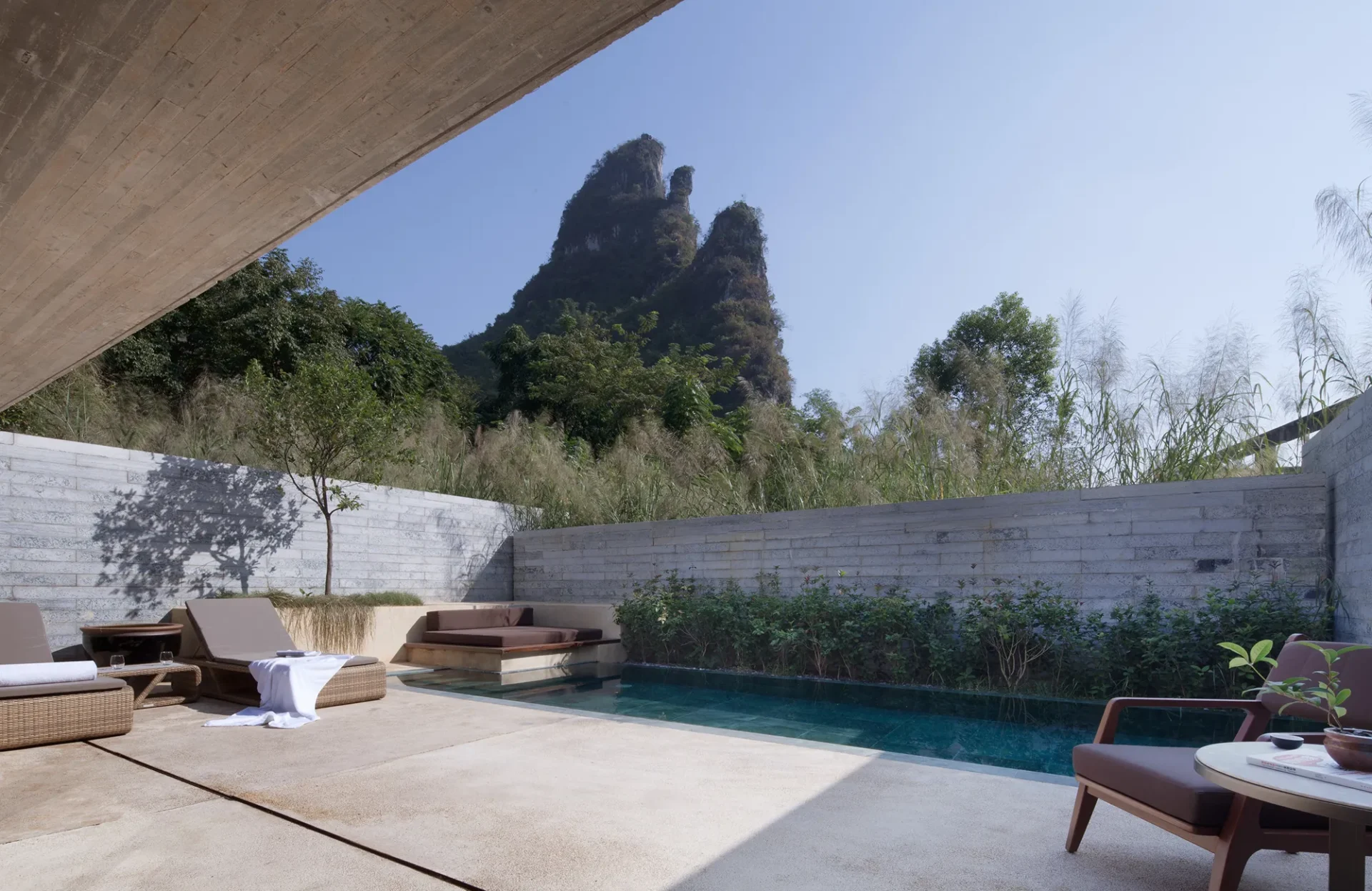
The original pressing and refining rooms, boiler house, power plant and steel trusses have been preserved, along with traces of the factory’s former life. Even the faded revolutionary slogans remain visible, a reminder of the period in which the complex was built. The new architecture is deliberately contemporary. Perforated concrete screens, handmade bricks and geometric structures contrast with the weathered industrial buildings, while open courtyards and carefully framed views connect the complex to its surroundings. It is a fascinating architectural exercise. Concrete, normally associated with weight and solidity, becomes surprisingly light through perforated surfaces that filter sunlight and cast intricate shadows. The most recognisable feature is the riverside swimming pool, positioned beneath the factory’s original steel trusses. With the Li River and towering limestone peaks beyond, it has become one of those hotel images that regularly appear in architecture magazines and on Pinterest. For once, the reality has a story to match the photograph.
A Softer Side of Industrial Design
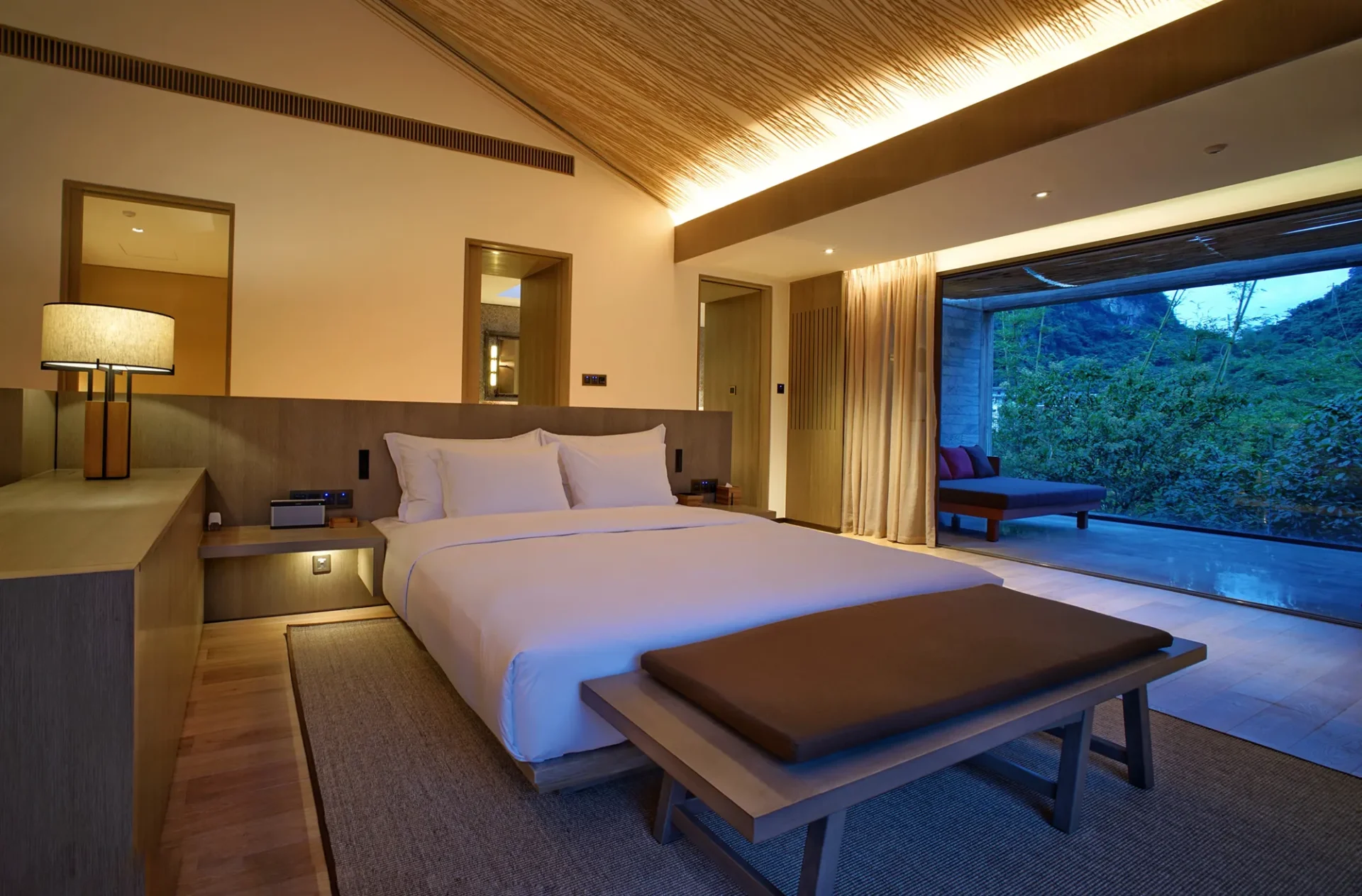
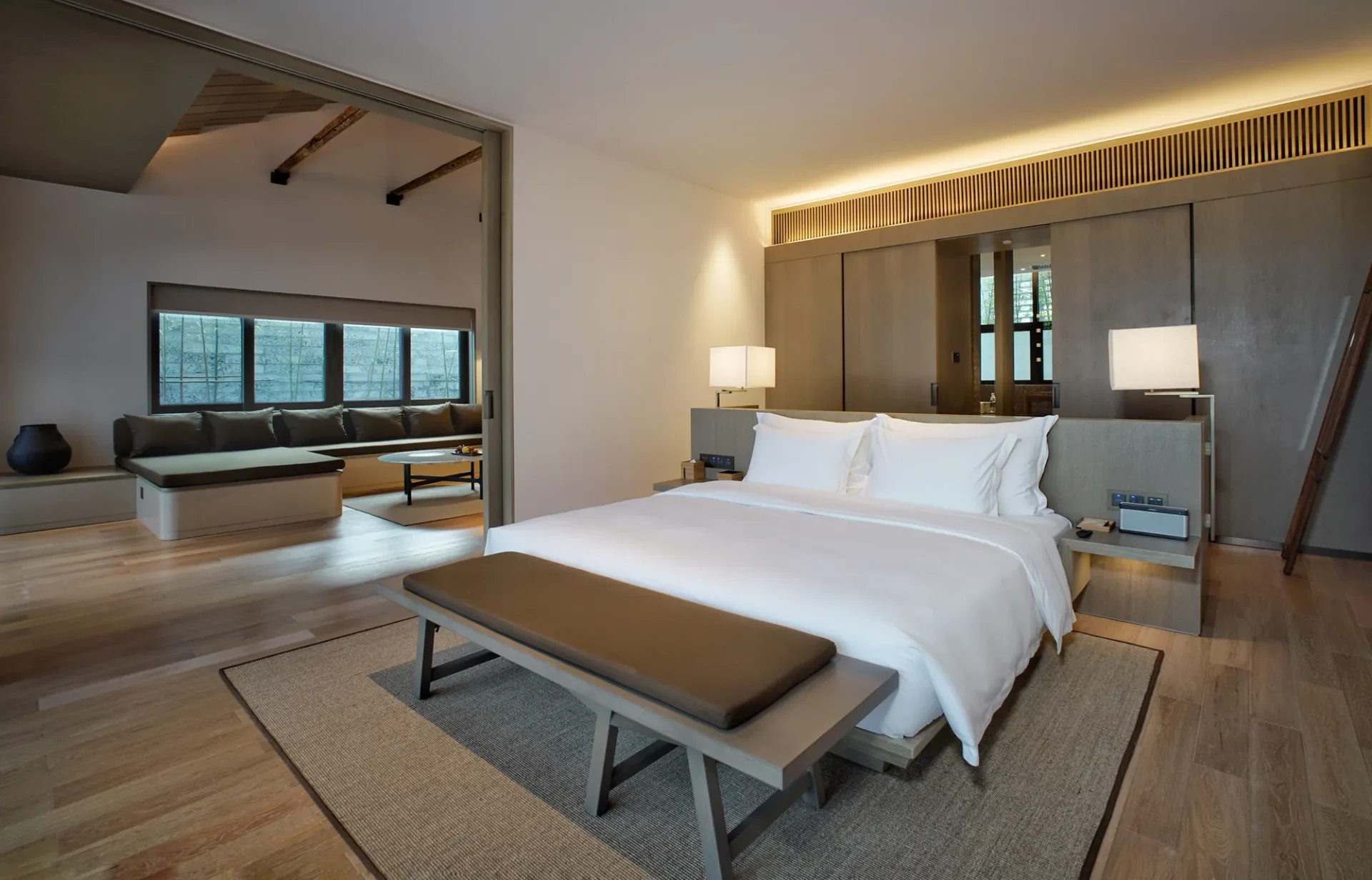
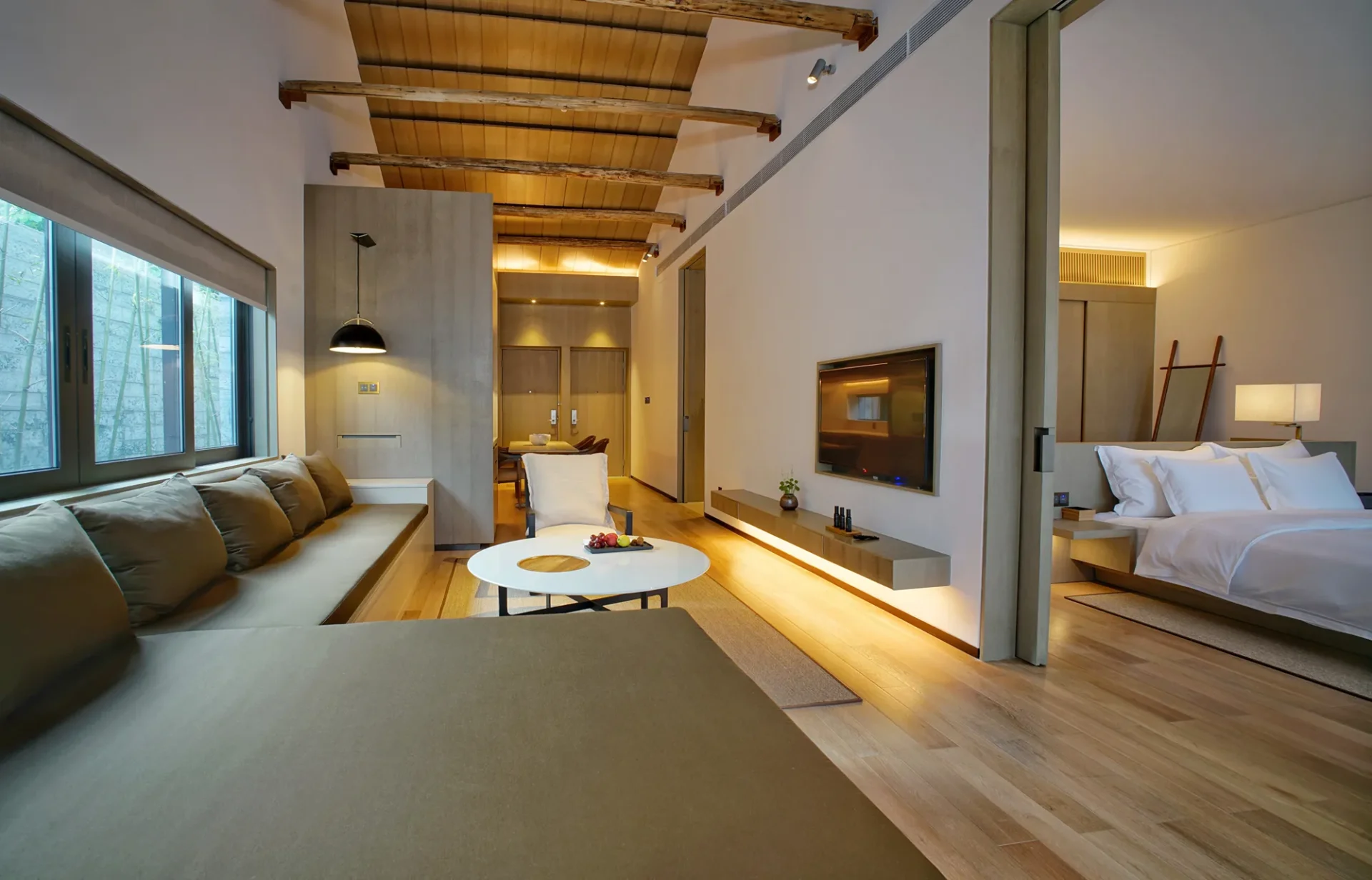
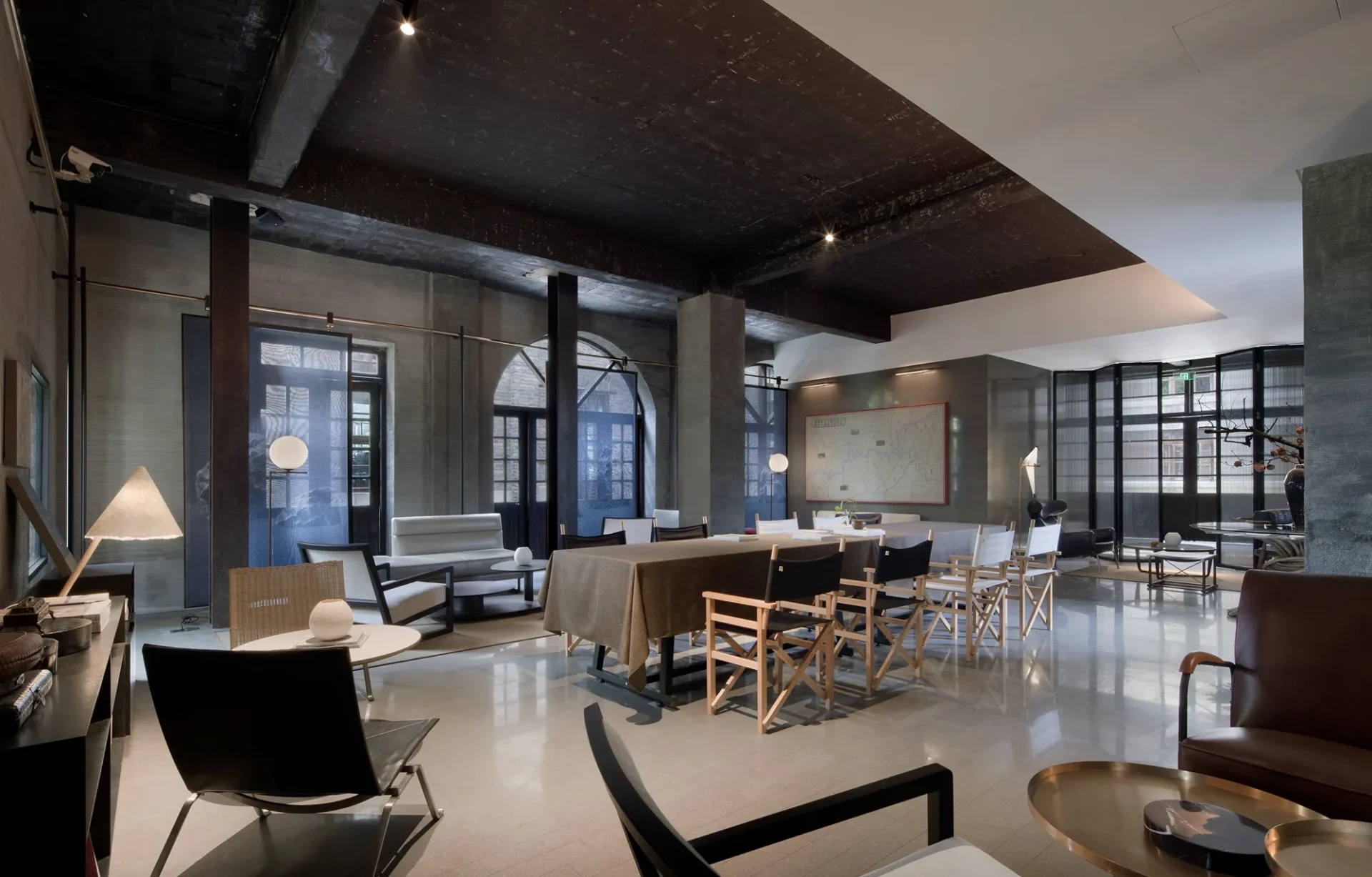
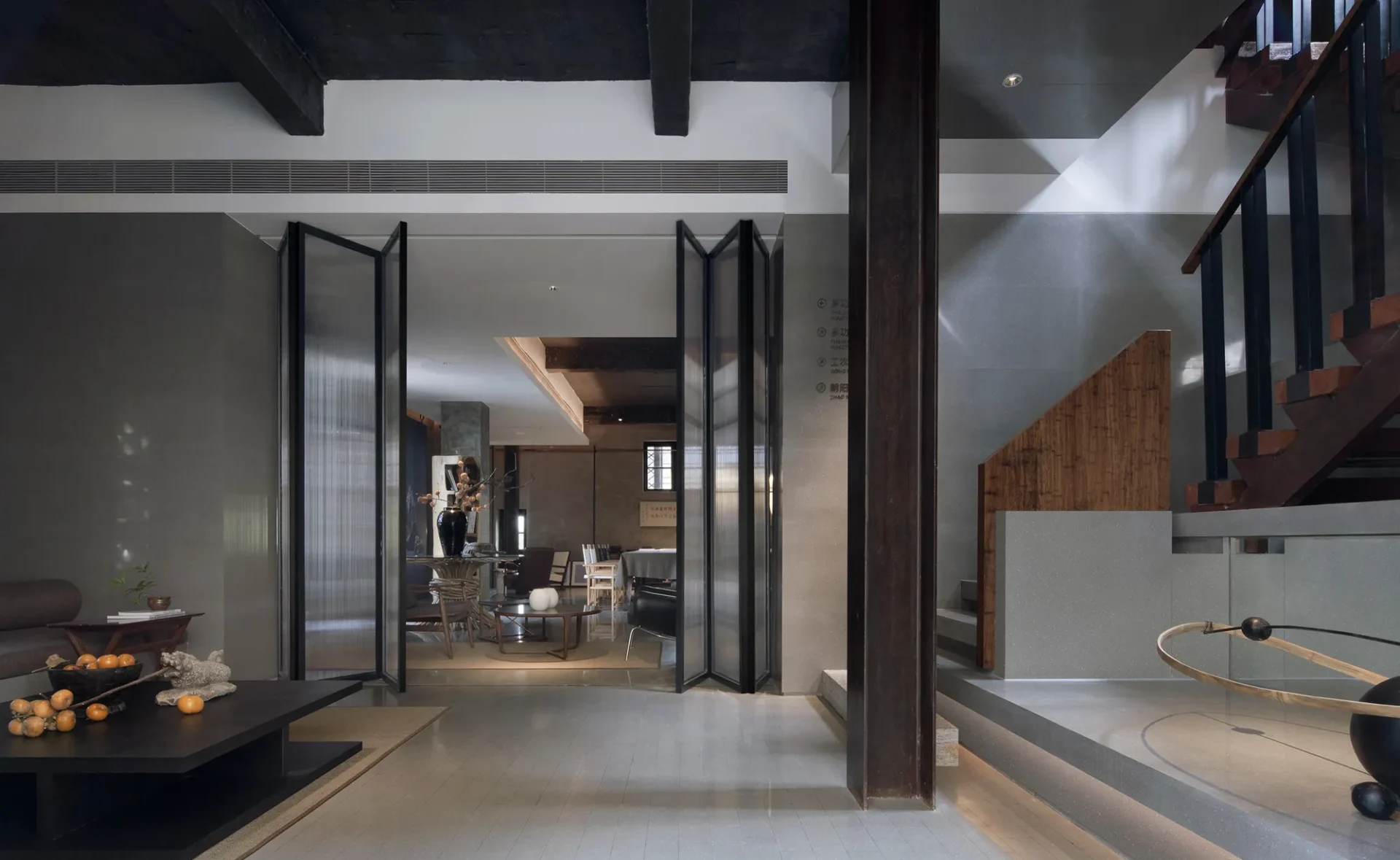
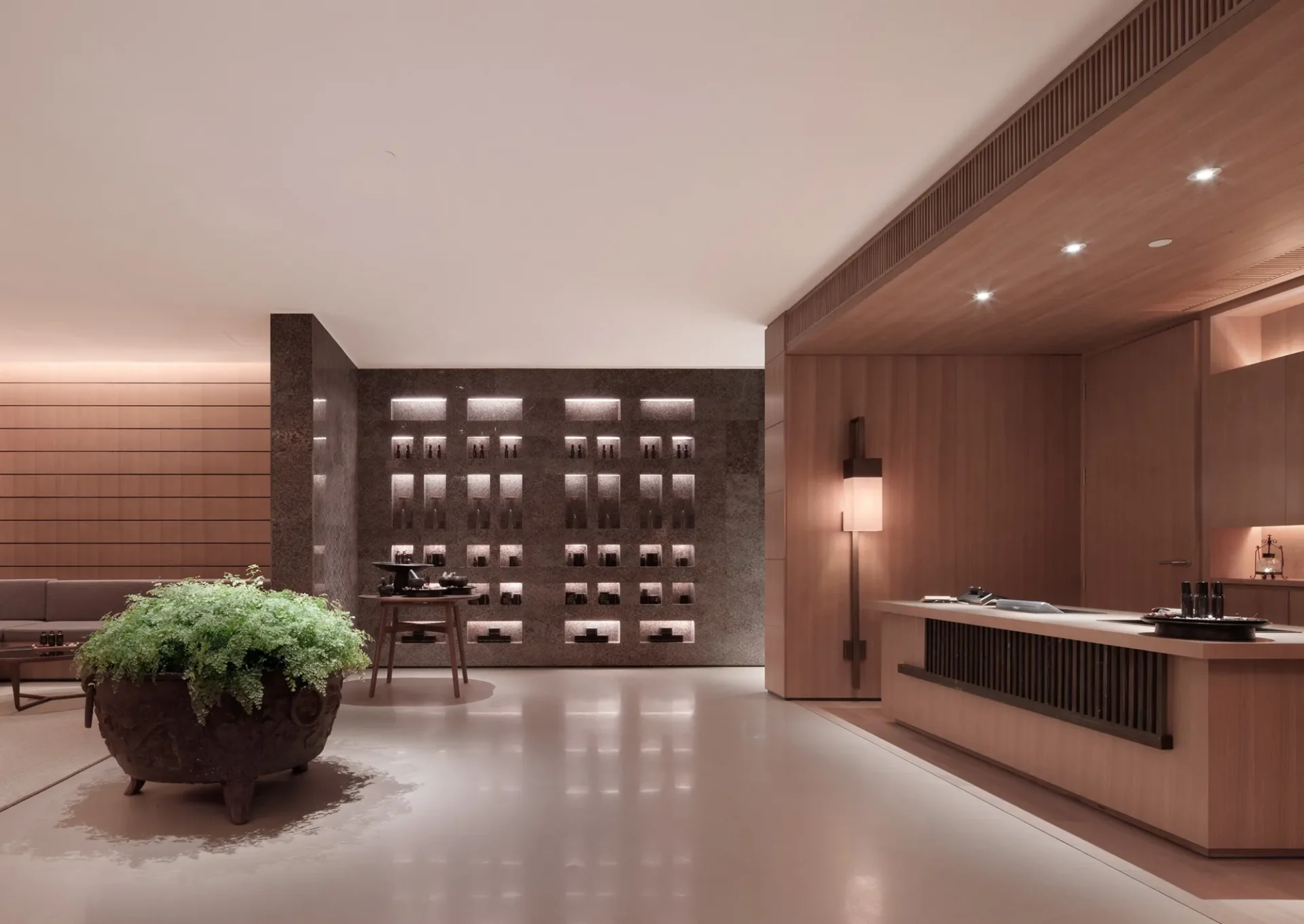
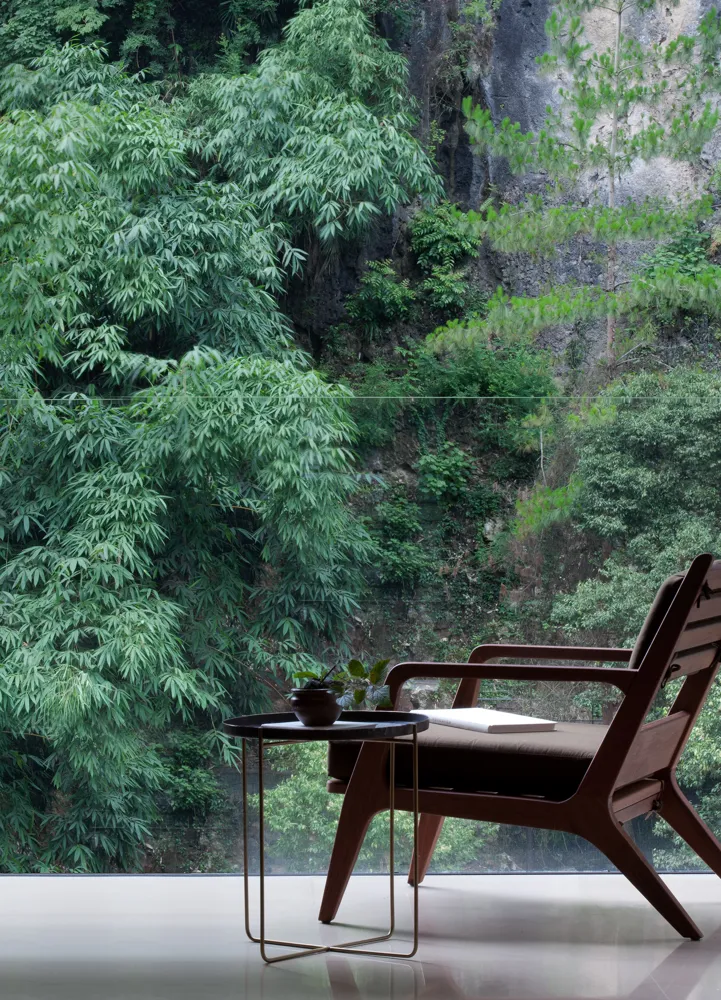
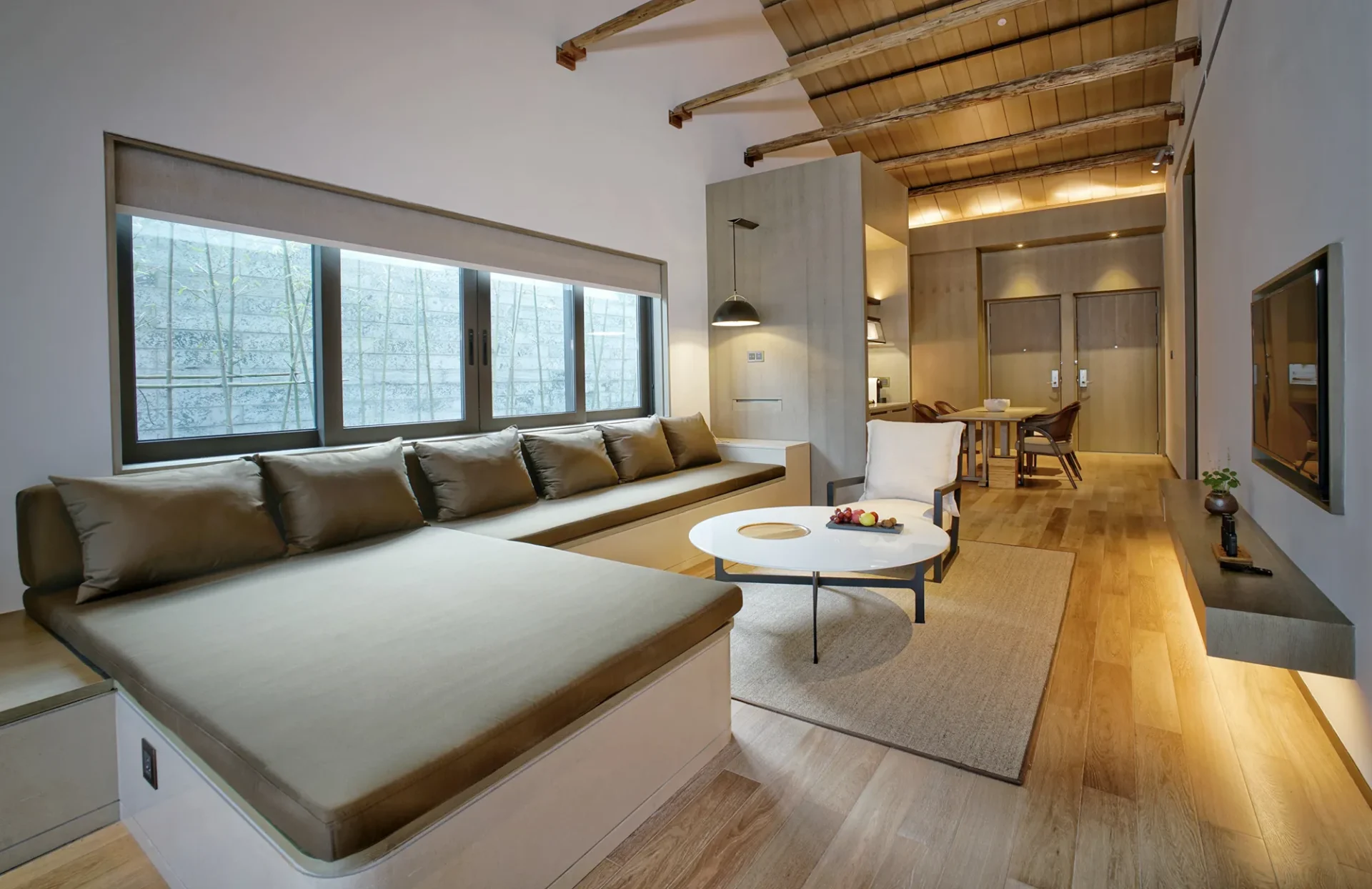
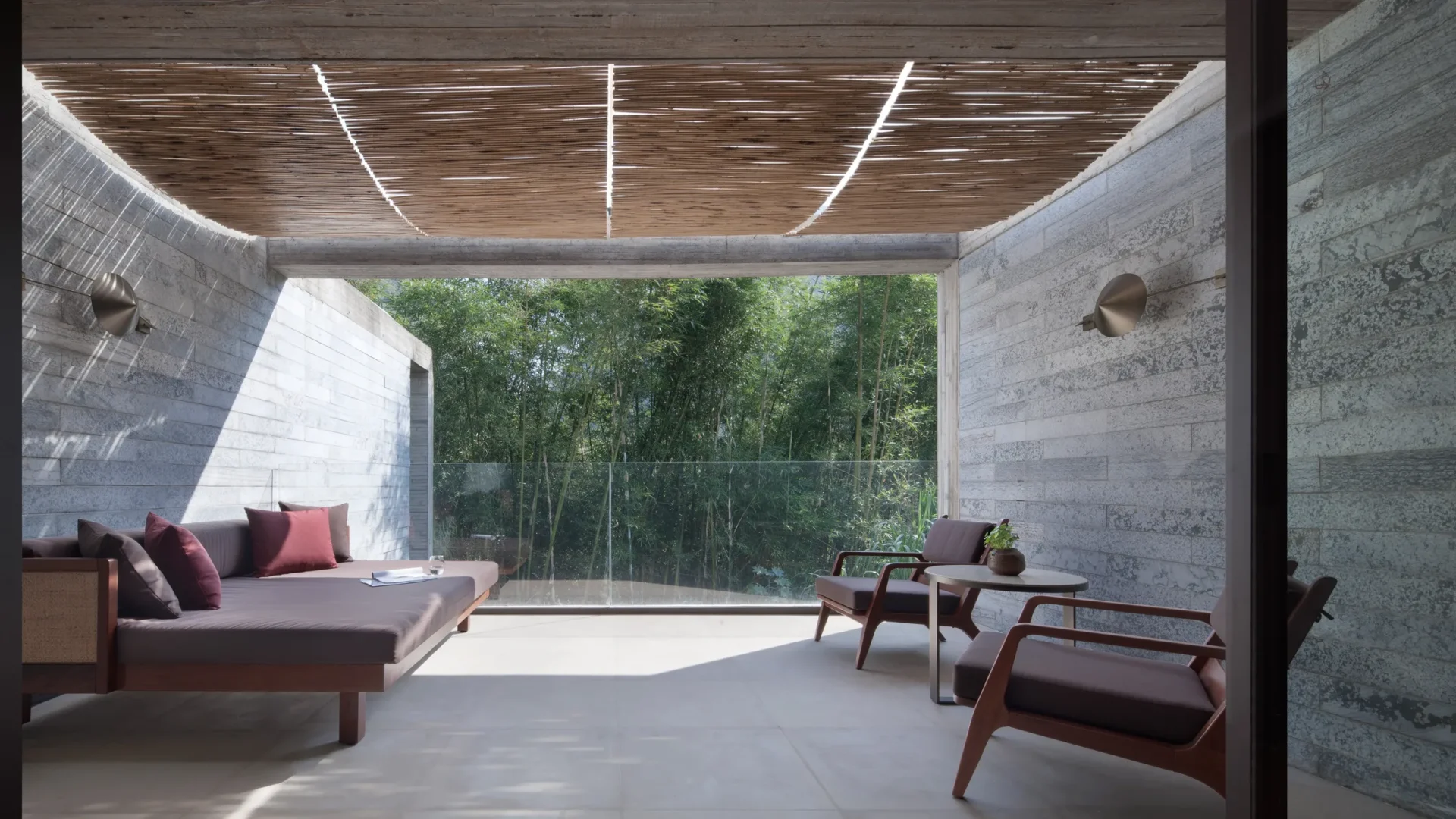
Inside, the 113 rooms and suites take a more restrained approach. Ju Bin combines bamboo, natural stone, reclaimed timber and concrete with minimalist furnishings and generous proportions. The interiors are deliberately calm, providing a welcome contrast to the strong architectural character of the former factory. Large windows bring the landscape into the rooms, while some of the larger retreats, lofts and villas offer private terraces and additional living space. Art also plays an important role. Installations, exhibitions and cultural events bring contemporary creativity into the industrial setting, while the hotel’s library provides a quieter place to explore books on art, architecture and design.
From Sugar Production to Sugarcane Cocktails
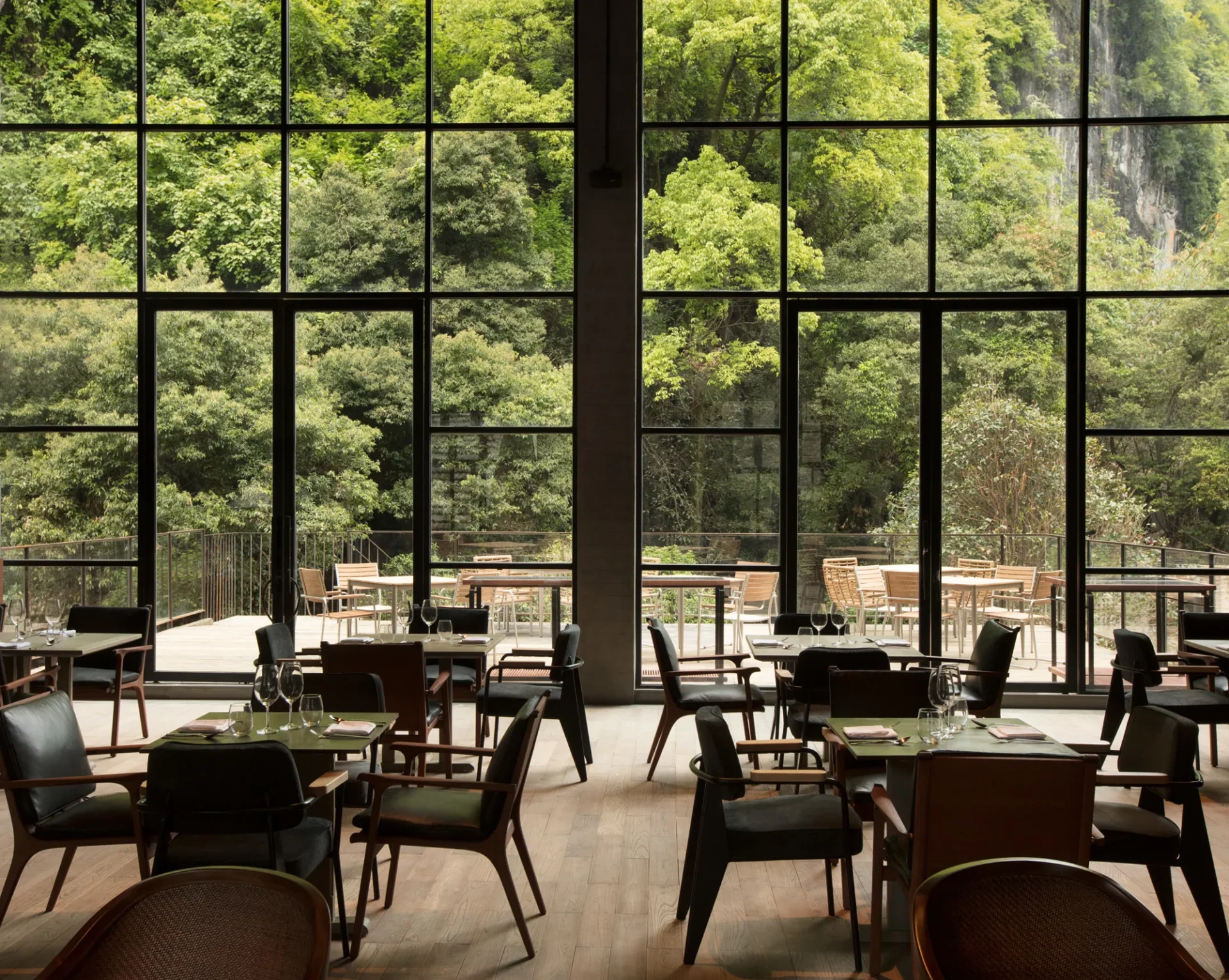
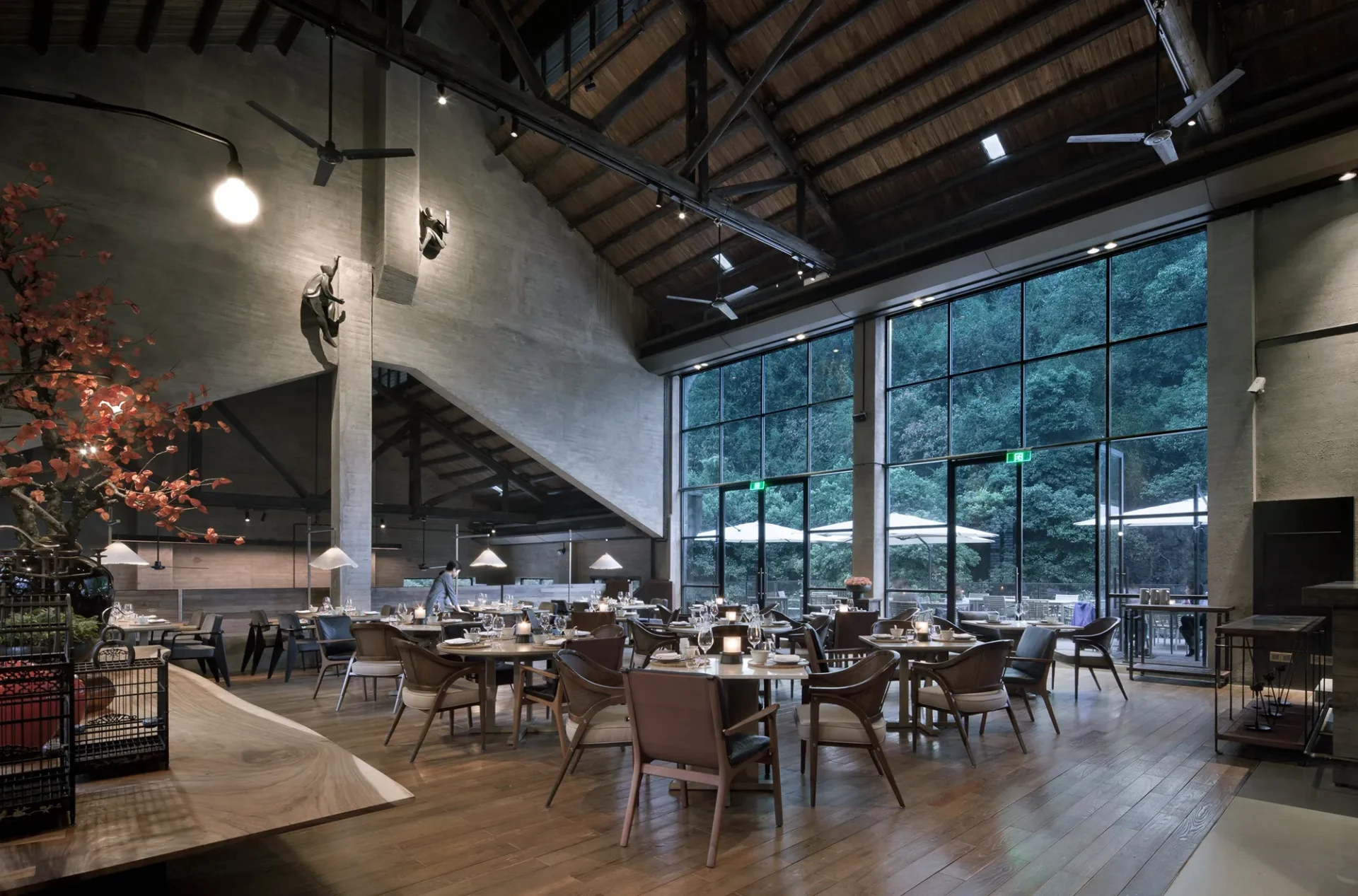
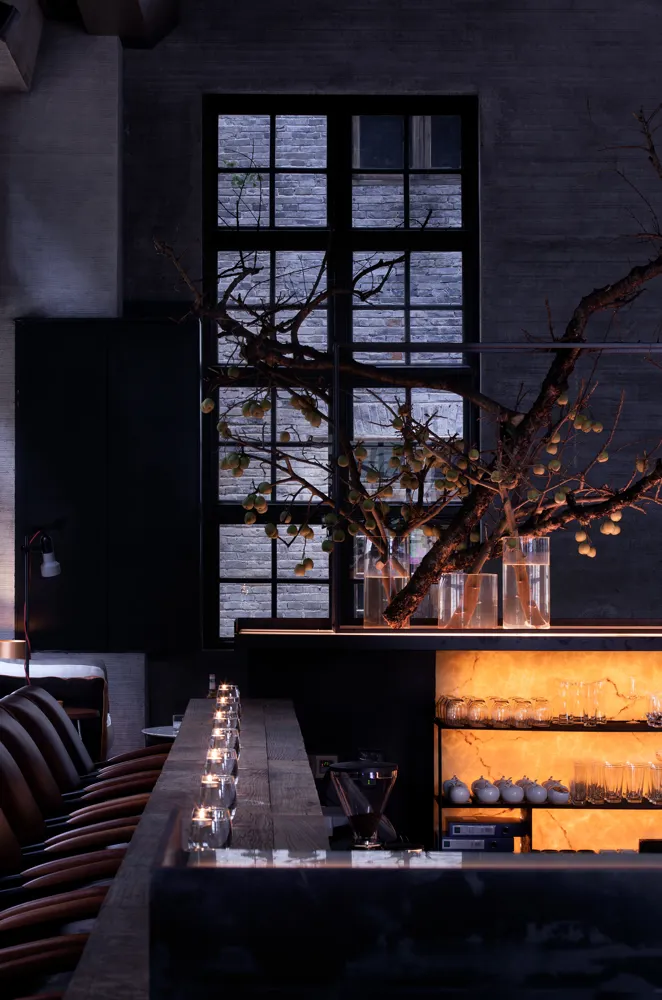
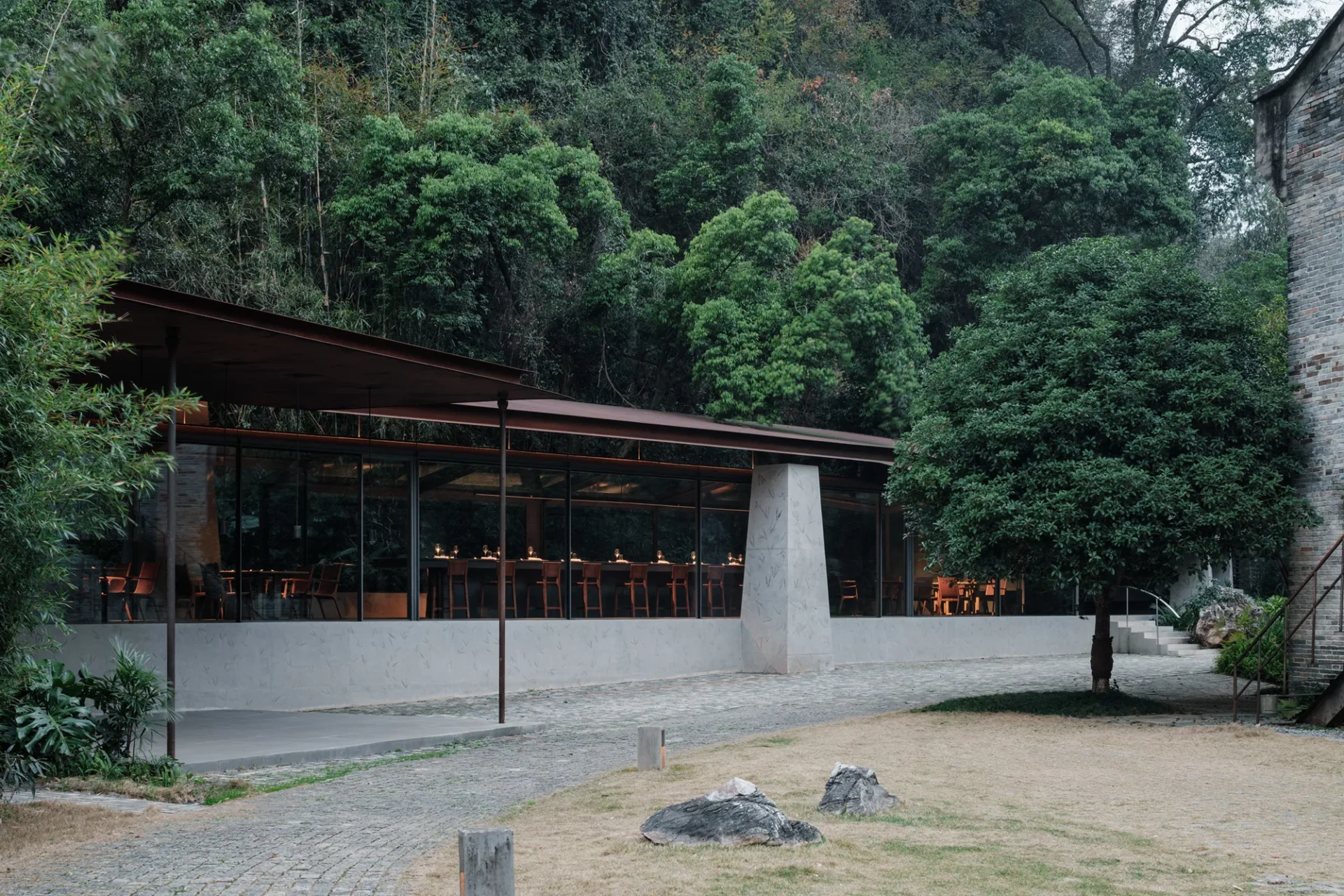
One of the pleasures of staying in a converted industrial building is discovering what has become of its original spaces. At Sugar House Restaurant, the emphasis is on the regional cuisine of Guangxi, including Guilin rice noodles, local fish, rice cakes and produce from nearby farms. Stream Restaurant introduces contemporary Western cuisine in a striking architectural setting beside a historic canal, with a sculptural roof framing the surrounding mountains. The 1969 Bar occupies the former pressing room, where the factory’s industrial character provides a particularly appropriate setting for rum and sugarcane-inspired cocktails. Local craft beers are also on the menu. A sugarcane cocktail in an old sugar factory may be an obvious idea, but it is a rather good one.
More Than a Beautiful View
The hotel makes excellent use of its surroundings, offering everything from bamboo rafting on the Li River and rock climbing on the limestone cliffs to hiking, caving, yoga and tai chi. There are also activities exploring the site’s sugar-making history, adding a welcome connection between the hotel’s past and its present. For something less energetic, the spa takes inspiration from the region’s karst caves, with natural stone, atmospheric interiors and treatments incorporating local brown sugar.
Why This Hotel Matters
China has built some extraordinarily ambitious luxury hotels, often with spectacular architecture and equally spectacular budgets. Yangshuo Sugar House takes a different approach. Its appeal lies in the decision to preserve an industrial complex that many developers would have demolished without a second thought. The old buildings are neither disguised nor romanticised. They remain recognisably industrial, with contemporary additions that are clearly of their own time. That relationship between old and new, between man-made structures and an almost surreal natural landscape, gives the hotel its identity. For DNA Hotels, this is exactly what makes a hotel worth discovering. Not another luxury resort that could be anywhere, but a place whose architecture, history and surroundings are impossible to separate. And it all began with a sugar factory built in 1969.
Information
At a glance
Architecture
Vector Architects
Opened / Renovated
2017 (previously Alila Yangshuo)
Size matters
113 rooms, suites & villas (66-186m2) (710-2,002 sq ft)
Interior design
Horizontal Space Design
Featured in
Don't take our word for it

Handpicked worldwide
A carefully curated collection of exceptional boutique and design hotels across the globe.
Design with soul
Architecture, atmosphere and craftsmanship come together in stays with a clear identity.
Hidden, not hyped
Independent boutique hotels you rarely find on mainstream booking platforms.
Travel guidance
Personal recommendations and thoughtful support from people who actually know the places.